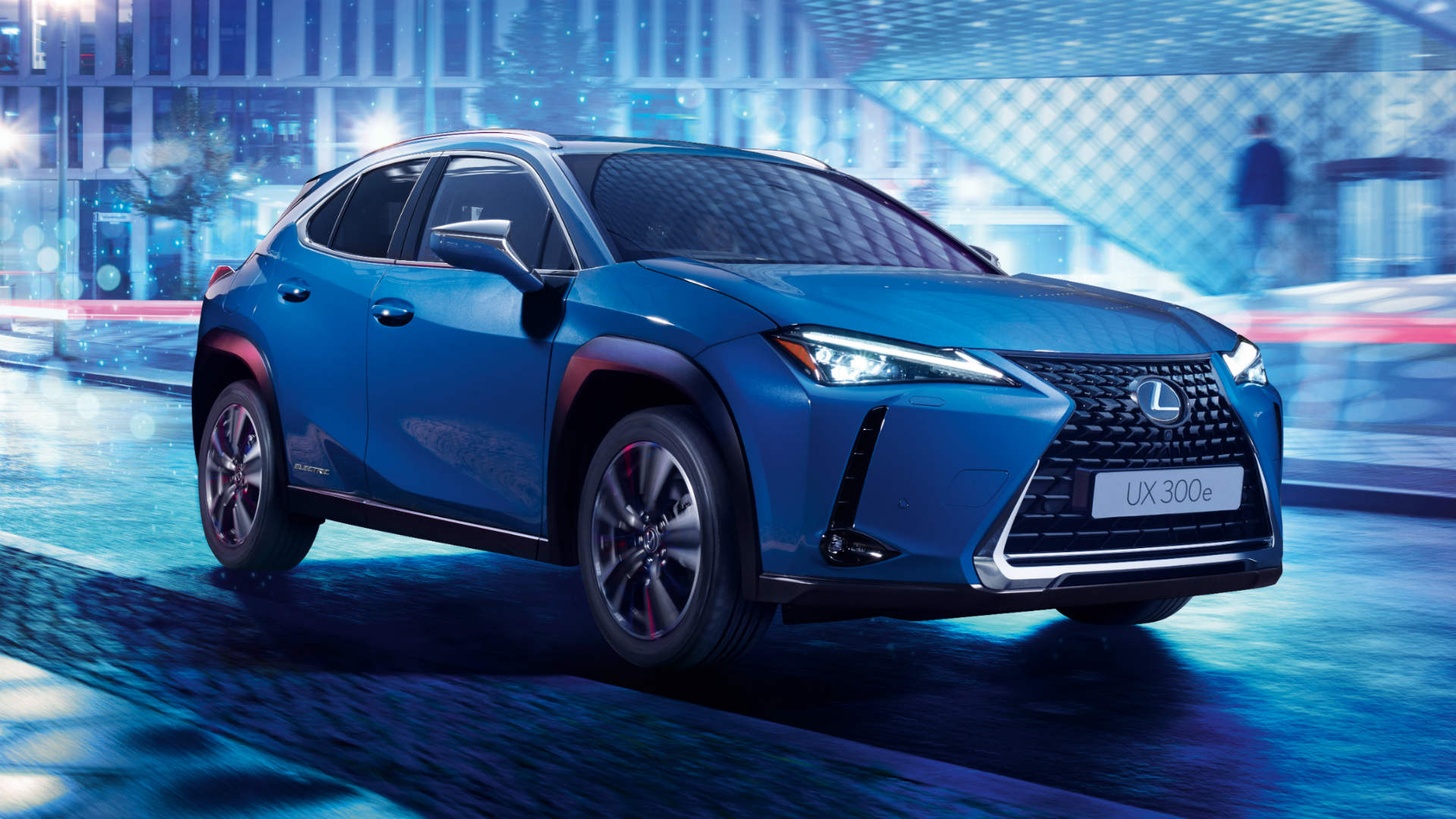
Lexus has unveiled its first battery-electric vehicle in China. The UX 300e will go on sale in the UK in 2021, following a launch in China next year.
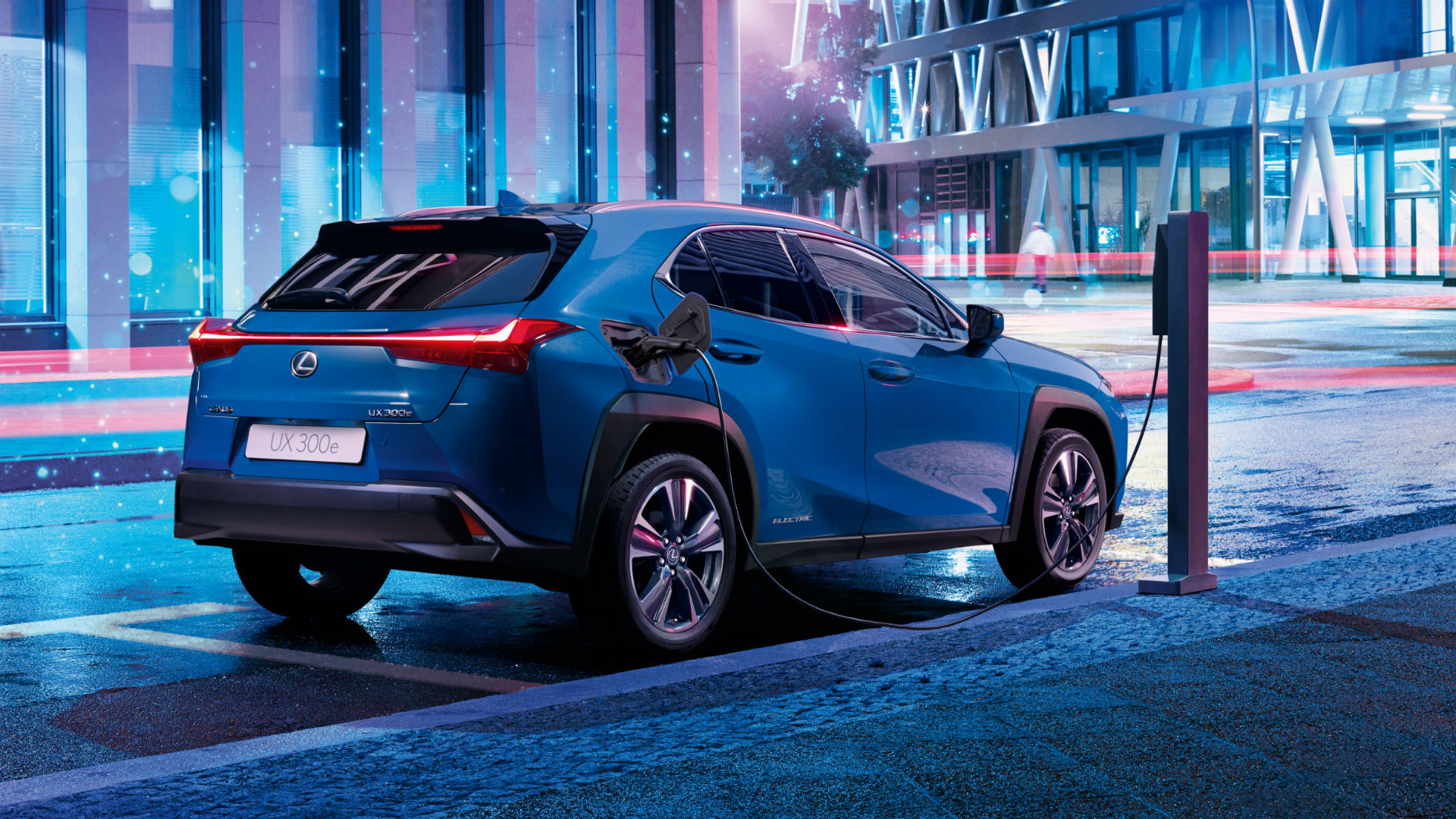
Power is sourced from a 54.3kWh lithium-ion battery, which offers a claimed driving range of 250 miles. The maximum charging speed is 50kW.
The UX 300e looks similar to the standard Lexus UX compact SUV but gains a new grille, more aerodynamic wheels and electric badges. The charging port is located where the fuel filler cap is normally situated.
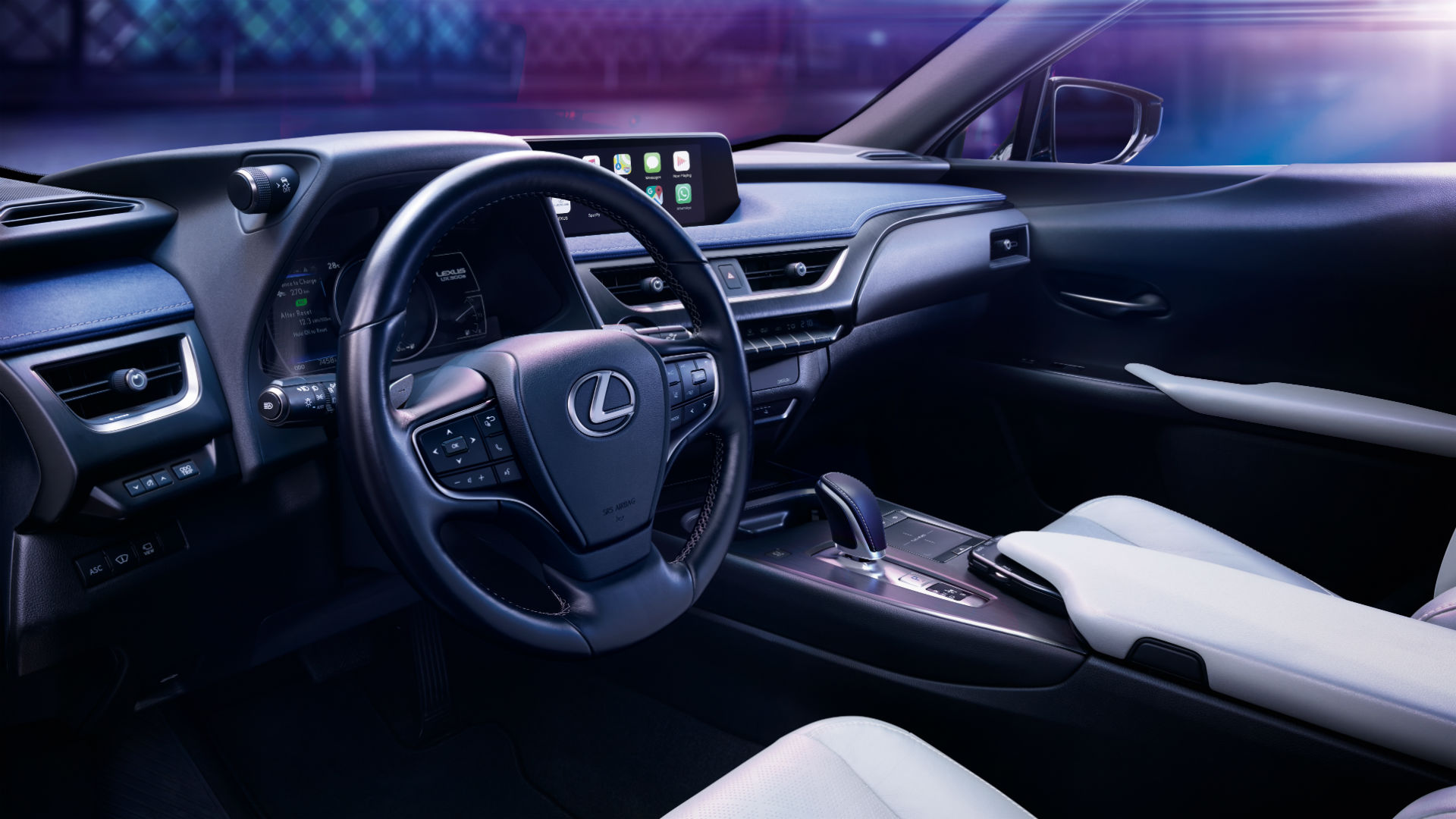
Lexus says the UX 300e has ‘one of the quietest cabins in its class’, but Active Sound Control (ASC) transmits natural, ambient sounds to communicate the driving conditions to the driver.
Drivers can also link their smartphone to an app to check battery status and driving range. The app will also say when a full charge is reached and when to charge based on low energy prices.
Although performance figures haven’t been released, Lexus says the UX 300e will deliver ‘brisk performance’. A Drive Mode Select function allows the driver to manage smooth acceleration and declaration according to the driving conditions.
There’s no word on price, but the standard Lexus UX costs upwards of £30,000. You can expect to pay a significant premium for the electric version.
It’ll launch under a new Lexus Electrified banner. The company is ‘targeting a fundamental leap in vehicle performance, handling, control and driver enjoyment’.
Not for the United States
Why did Lexus choose to unveil its first electric vehicle at the Guangzhou International Automotive Exhibition and not at the LA Auto Show? Quite simply, because the UX 300e will not be sold in the United States.
China is likely to be a key market for the electric compact SUV, and it’ll launch there ahead of its European debut in 2021.
Visitors to a major U.S. car museum can see how Volkswagen ID. electric cars are designed and assembled.
The ‘Building an Electric Future’ exhibit is in residence at the Petersen Automotive Museum until September 2022.
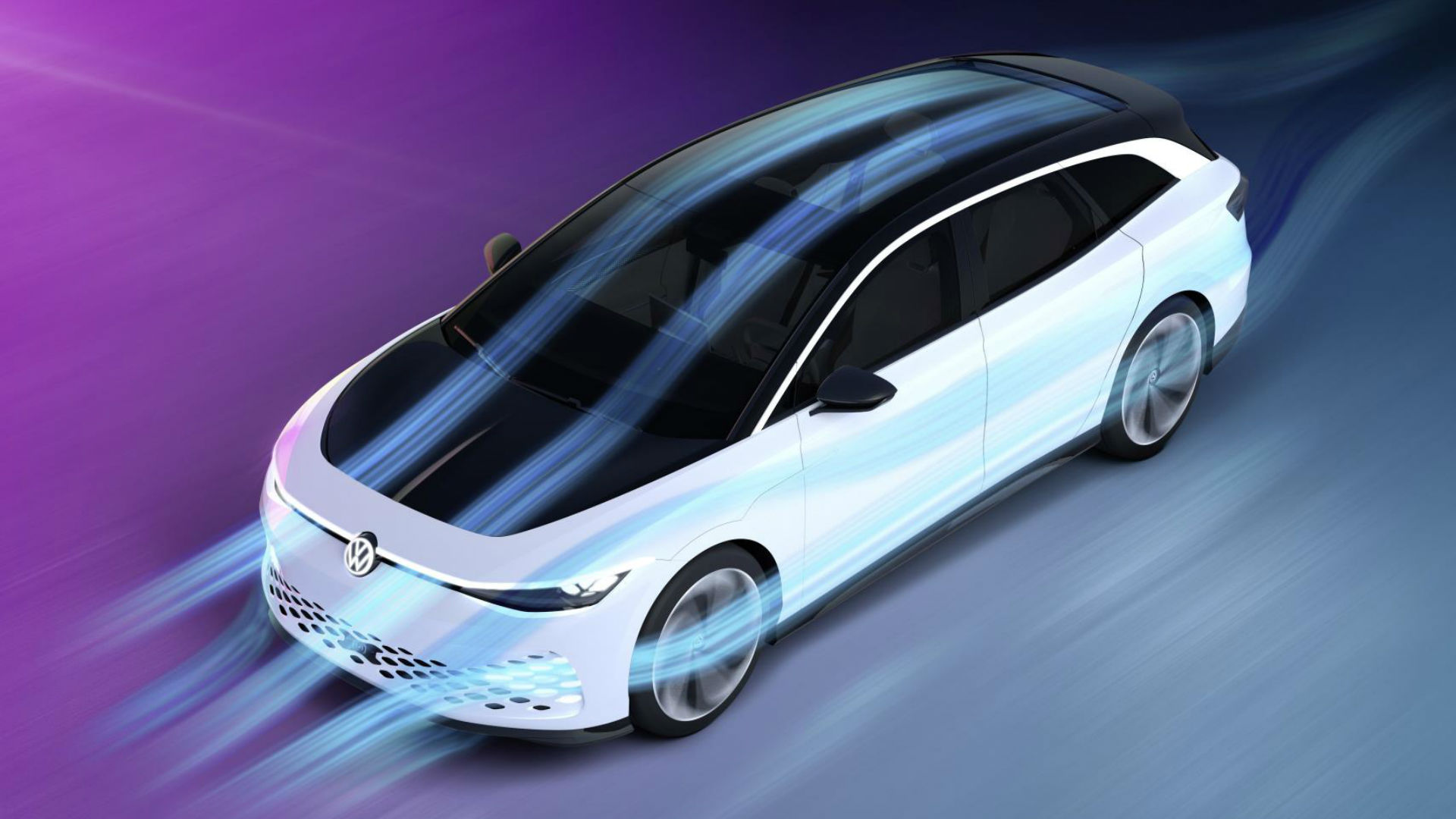
This follows the global reveal of the Volkswagen ID. Space Vizzion at the Petersen. The all-electric concept previews a production estate that will be launched in different variants in Europe, China and North America.
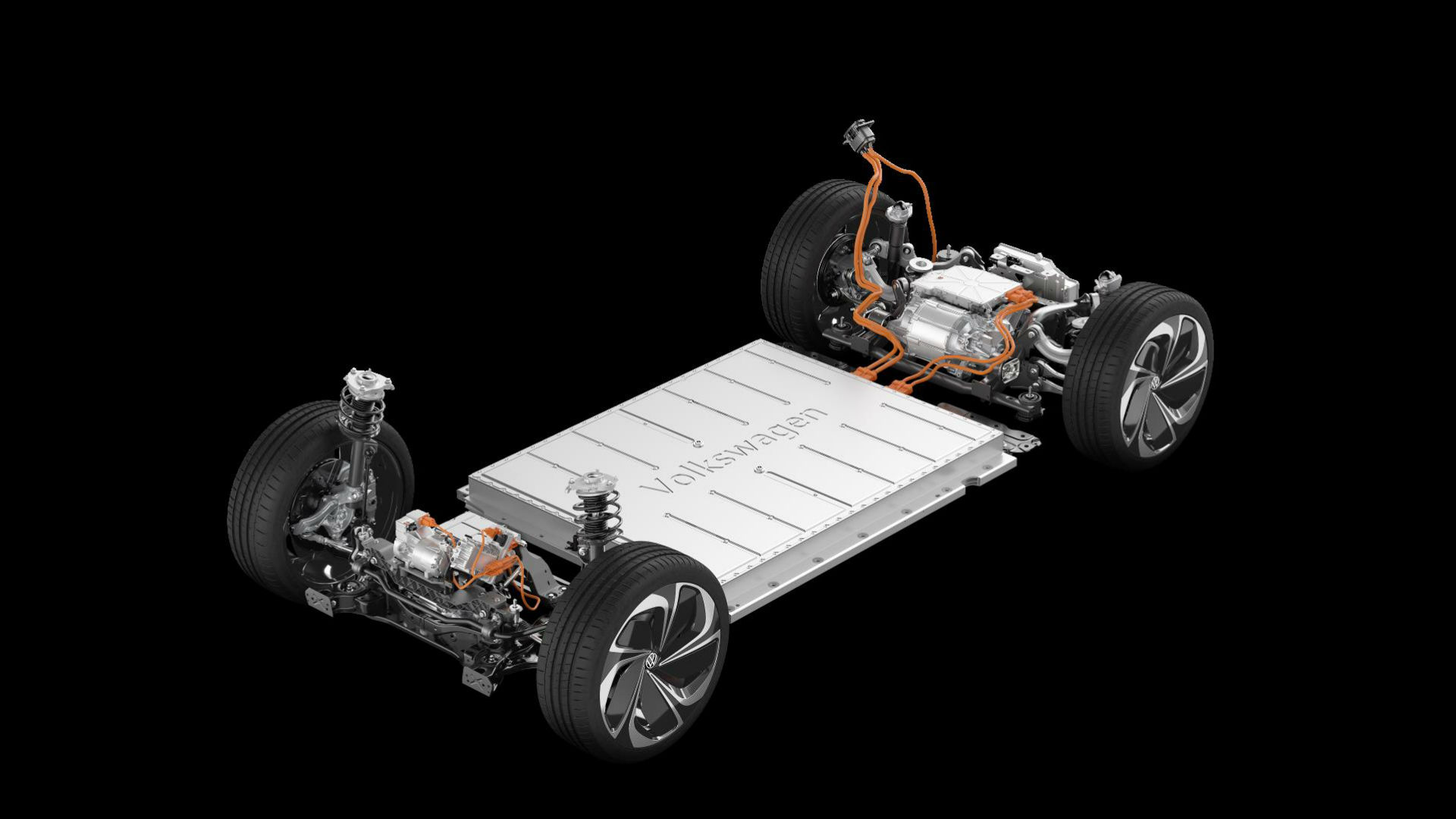
‘Building an Electric Future’ consists of five rooms that incorporate interactive features and showcase how Volkswagen’s MEB modular electric vehicle platform is engineered.
It also shows how ID. electric vehicles are assembled.
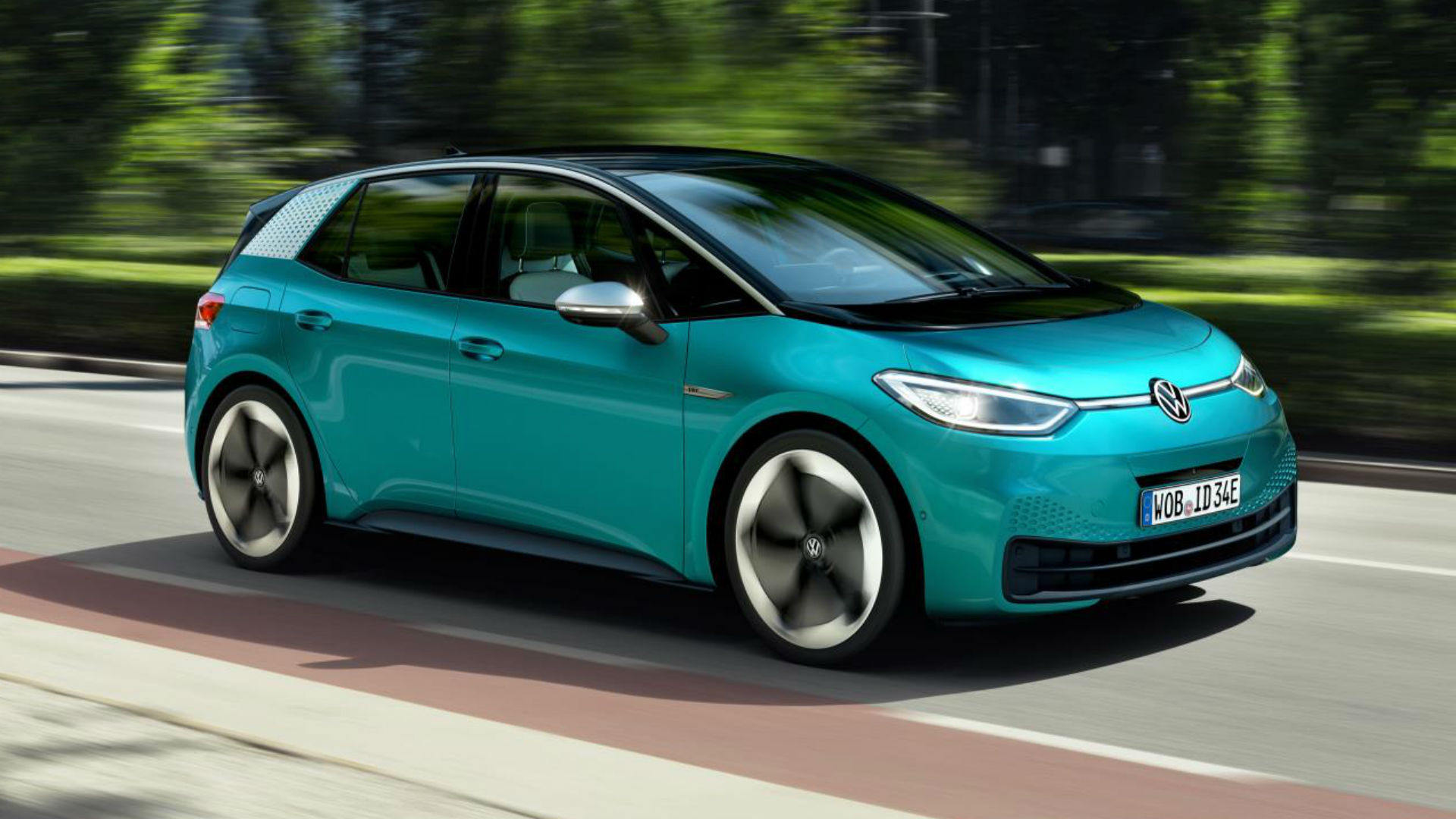
Three battery size options are available, with the entry-level version boasting a 205-mile range from its 45kWh battery. The larger 58kWh and 77kWh batteries are good for 260 and 341 miles of range respectively.
Prices start from around £27,000 for the 205-mile capable car. The top-end First Edition cars are available from £35,000.
‘Paving the way’
Commenting on the exhibition, Terry L. Karges, Petersen executive director, said: “Through our partnership with Volkswagen, we are exploring the impact an electrified future will have on a local and global scale.
“We are thrilled to collaborate with the manufacturer to present ‘Building an Electric Future.’ The exhibit offers visitors an interactive behind-the-scenes look at how the world’s largest automaker is paving the way for the future of mobility.”
The Petersen Automotive Museum Is located on Wilshere Boulevard in Los Angeles. There are more than 250 vehicles on display, including the first Ferrari and King George V’s 1910 Daimler.
Tickets cost $11 for children, $14 for seniors and $16 for adults. For opening times, visit the Petersen website.
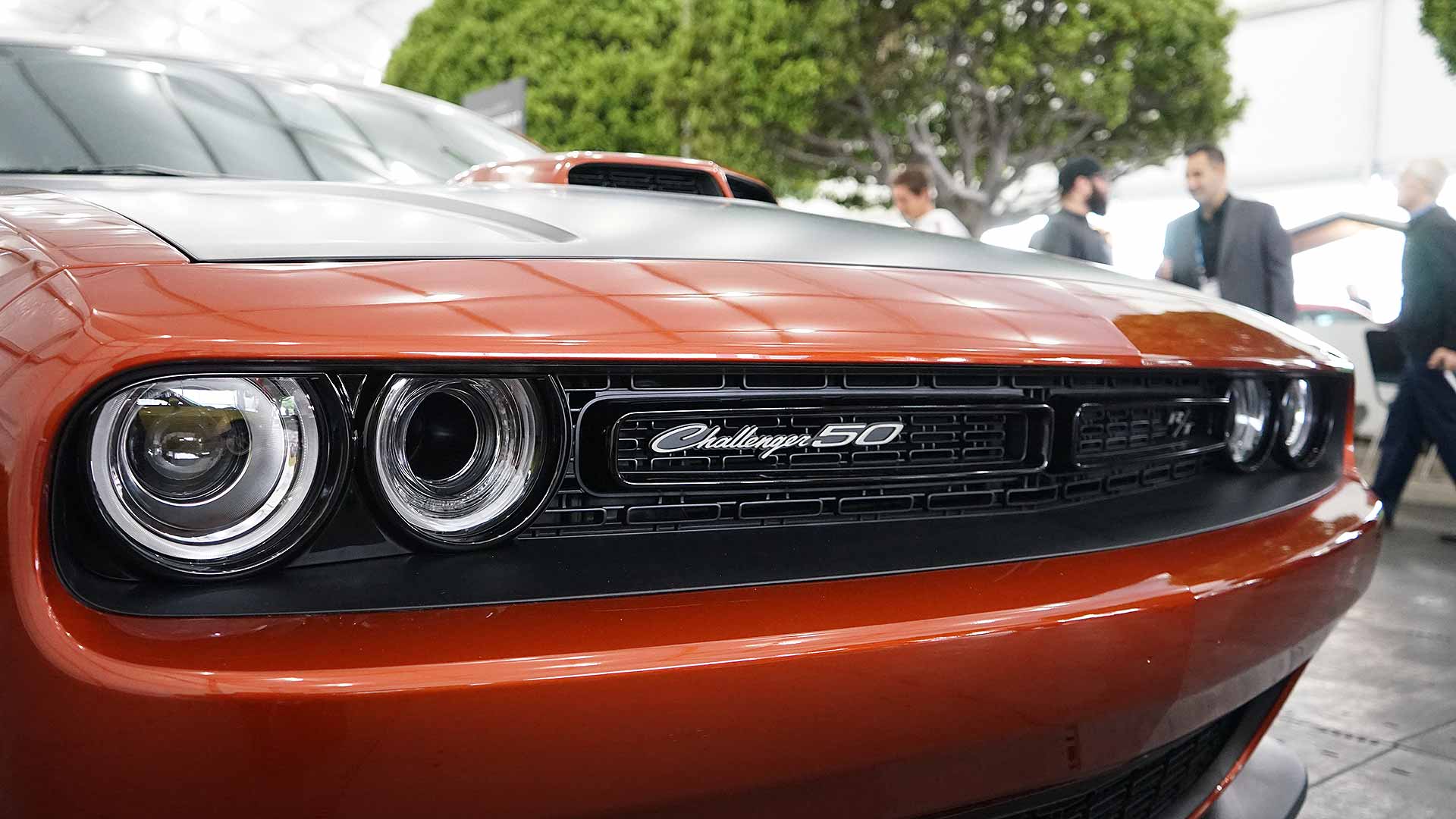
One of the major attractions at the 2019 Los Angeles Auto Show is a celebration of the Dodge Challenger’s 50th anniversary, and a special new version.
To help get in the party mood, we have dived into the archives to see the Challenger go from a young pony car, through to a modern muscle machine. We have even included the awkward teenage years, too.
More on Motoring Research:
Yee-haw! The Dodge Challenger is 2019’s official Car of Texas
Dodge announces 50th Anniversary Editions in Los Angeles
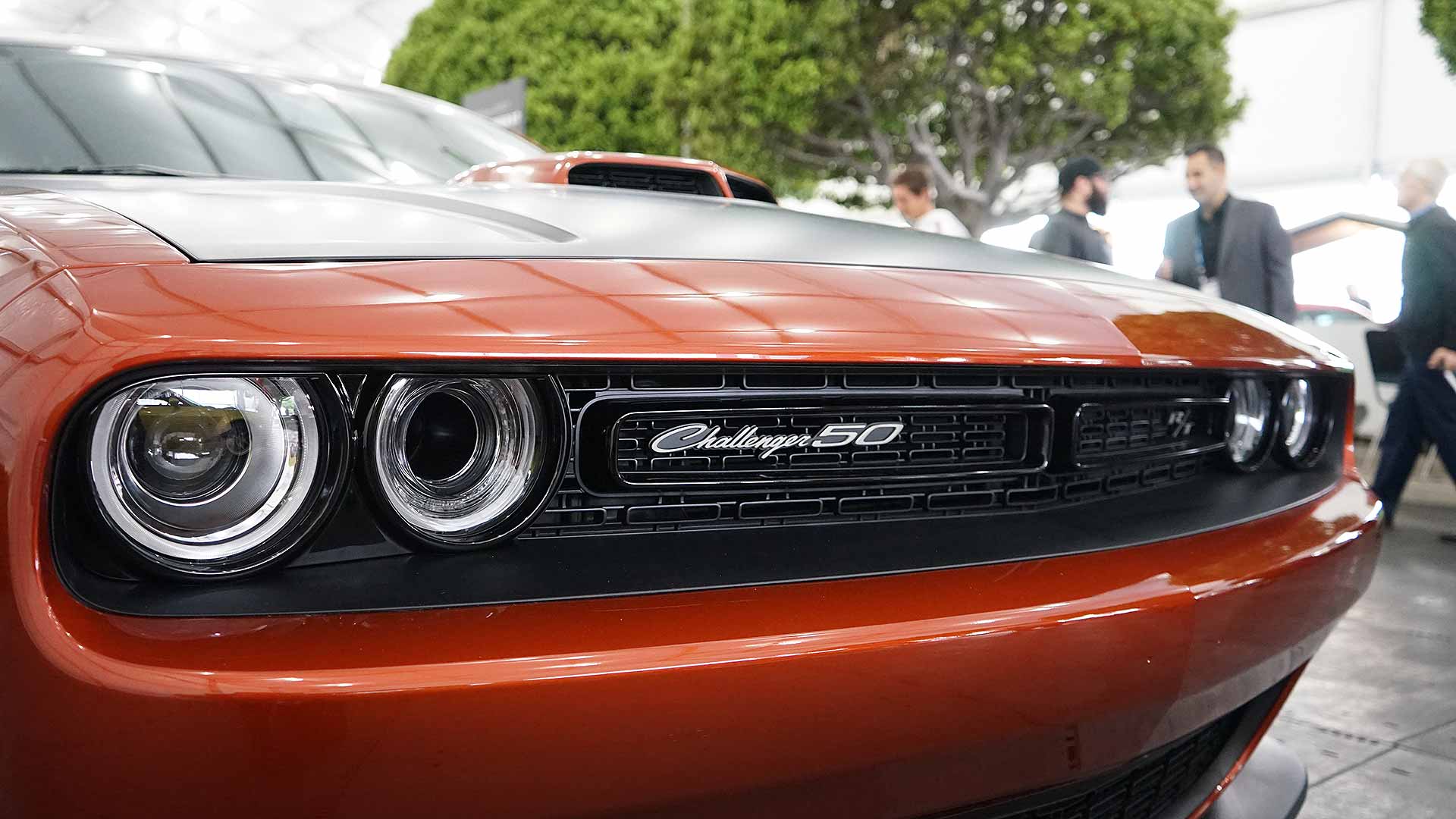
As part of the opening day of the 2019 LA Auto Show, Dodge used a special ‘Power Breakfast’ event to unveil limited edition versions of the 2020 Challenger (more on this later). Special paint and badging are the main attractions, along with neat interior details.
The 50th Anniversary package can be added to any 2020 Challenger model, with the Hellcat and Redeye models also receiving special badging.
However, before we get to them, let us take a look back at how the Dodge Challenger got to being 50 in the first place.
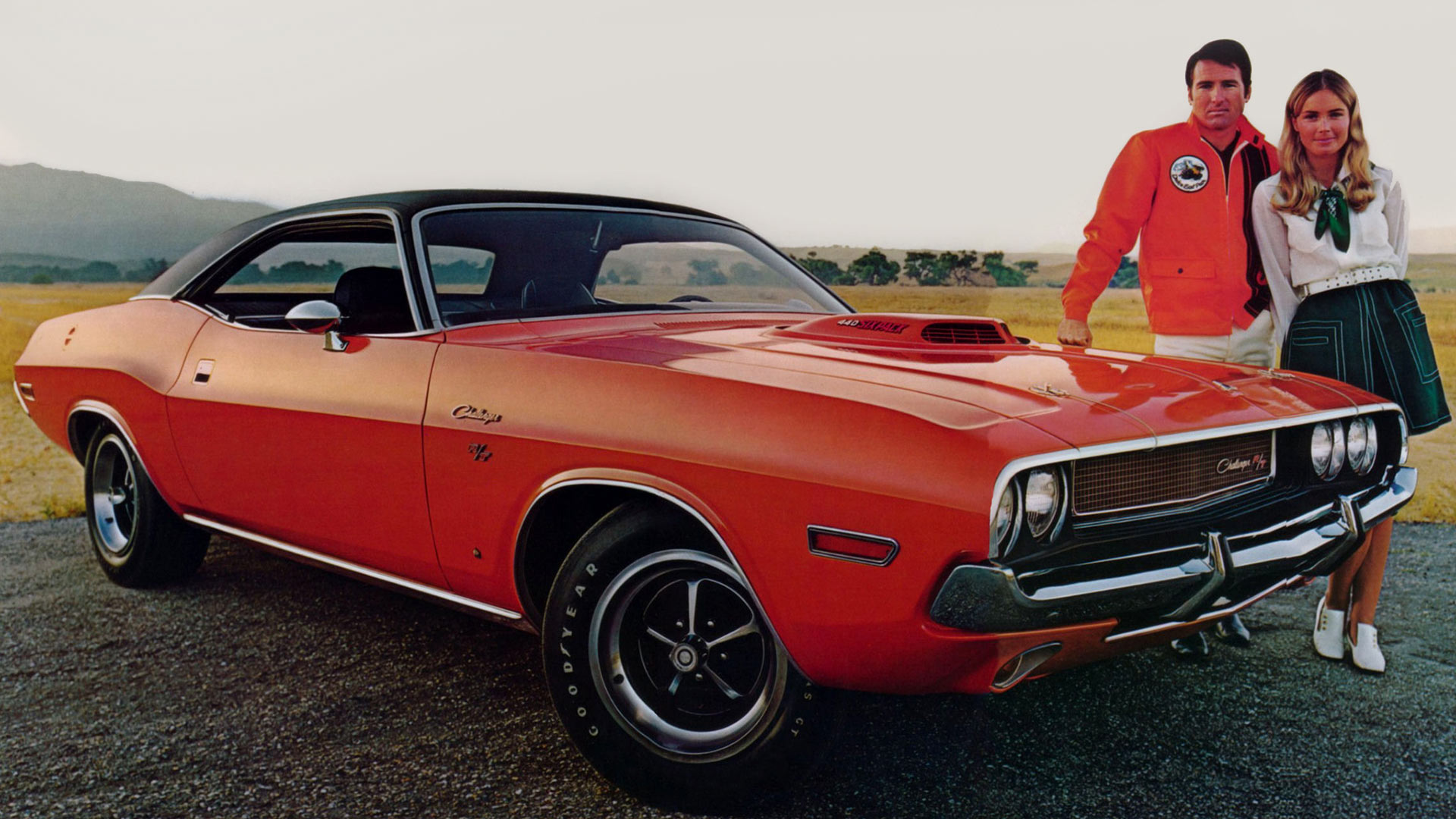
1970 Dodge Challenger RT 440 Six Pack
Despite the Ford Mustang having debuted in 1964, it took Chrysler until late 1969 to finally reveal its own pony car contenders. Built on the Chrysler E-body platform, the Dodge Challenger slotted into the Mopar performance lineup below the larger Charger.
Engine options ranged in size from the entry-level 225-cubic inch slant-six, all the way to the huge 440-cubic inch RB V-8. When fitted with the optional Six Pack carburettor setup, the 440 engine could produce an incredible 390 horsepower and 490 lb-ft of torque.
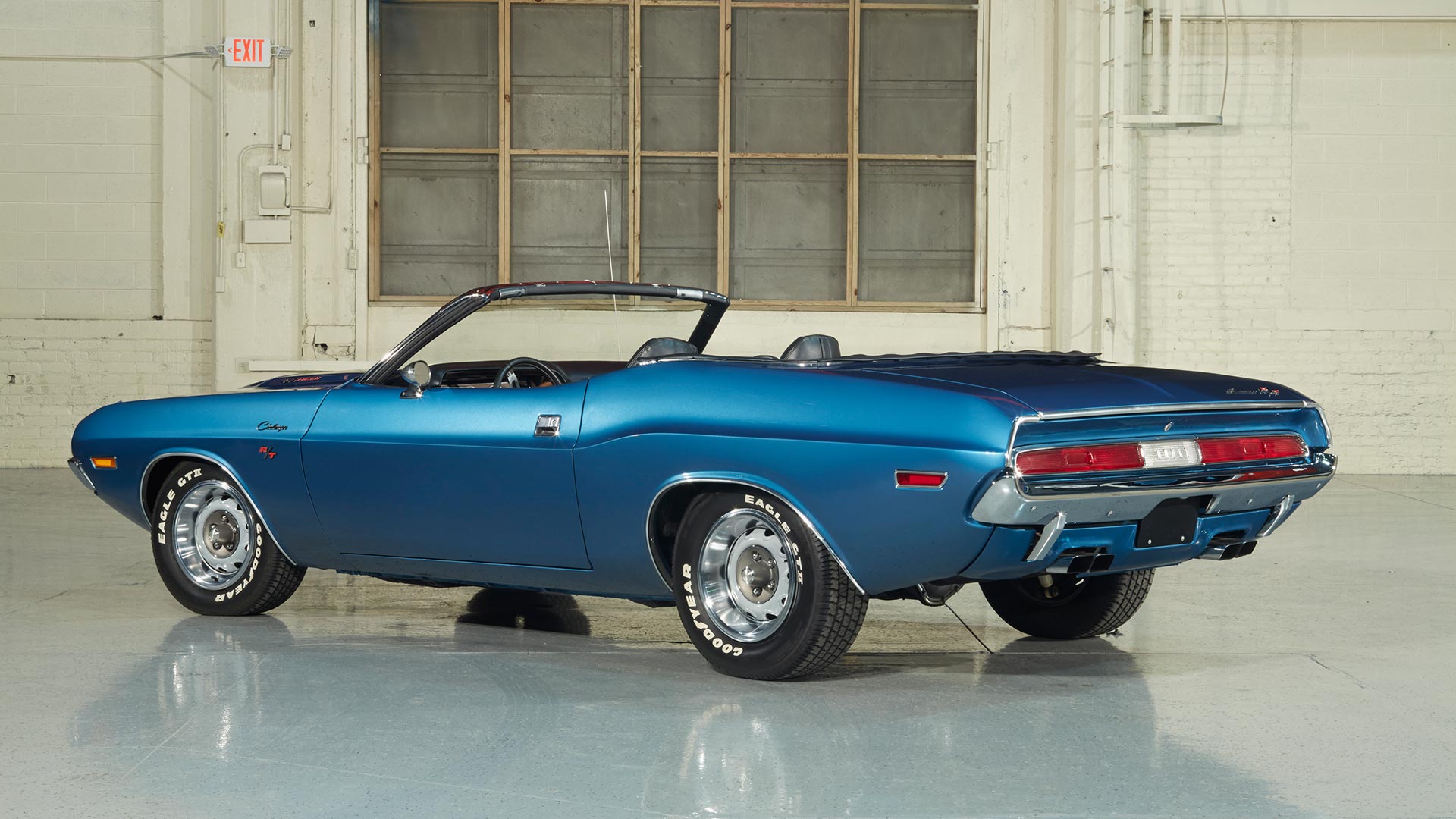
1970 Dodge Challenger RT Convertible
The most impressive engine option of all for the 1970 Challenger was the, now legendary, 426-cubic inch Hemi V-8. This road-going version of an engine intended for use in motorsport offered Challenger buyers serious performance. Officially rated at 425 horsepower and 490 lb-ft of torque, their rarity has made them serious collector items.
Along with the two-door hardtop coupe, Dodge also launched the Challenger as a convertible in 1970. However, the vast majority of customers opted for the coupe version, leaving open-top R/T models to be some of the rarest Challengers produced.
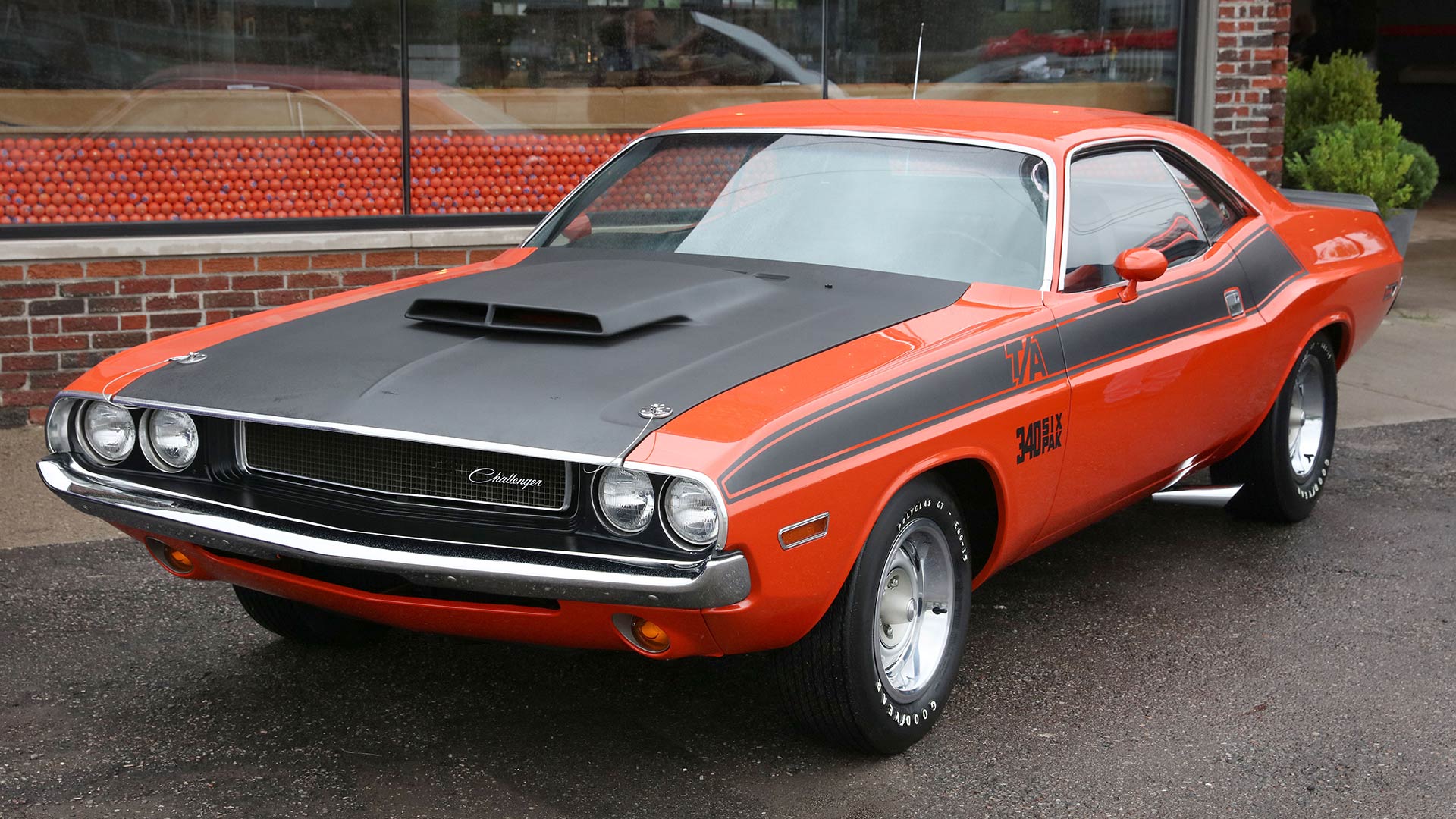
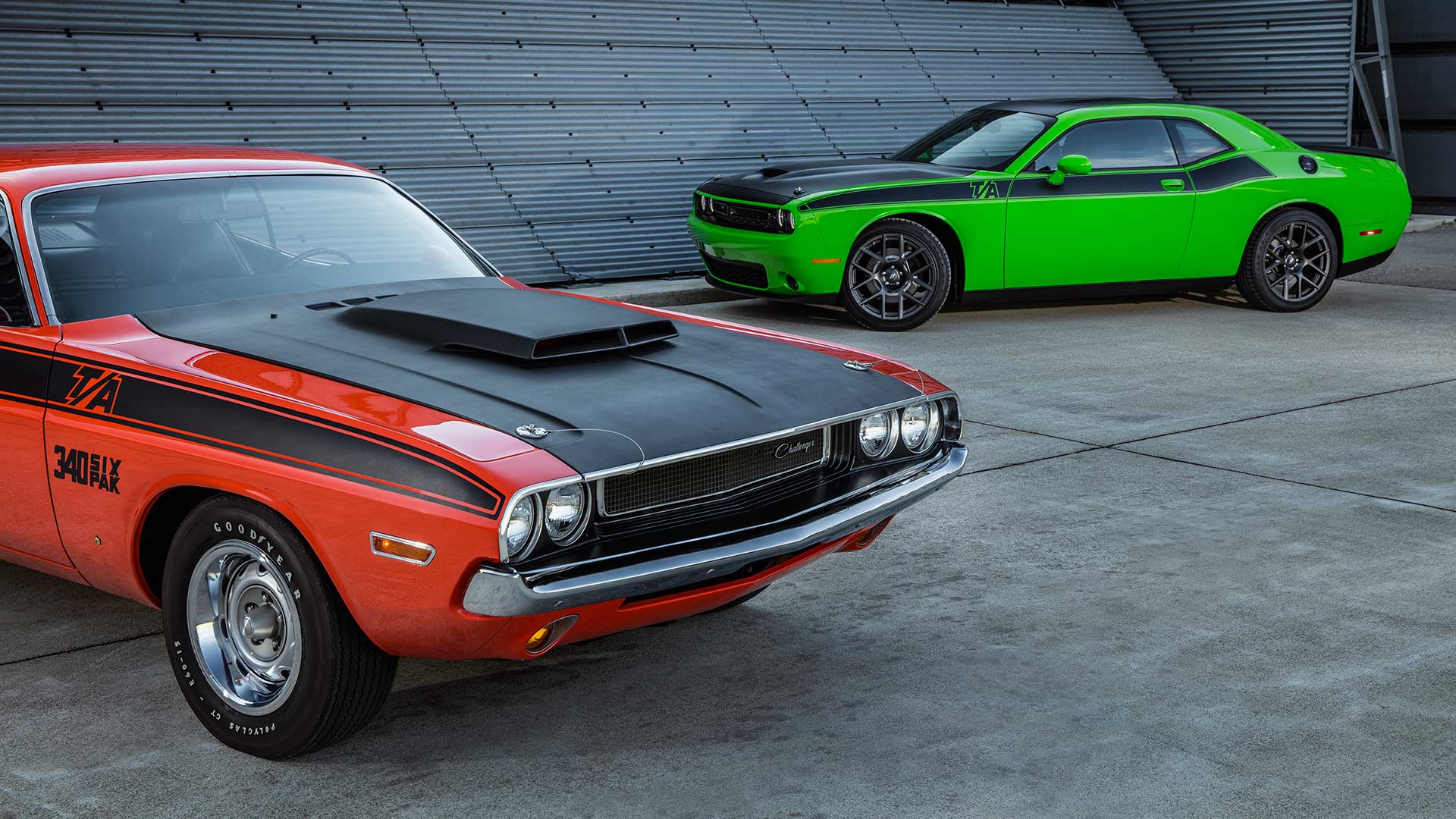
1970 Dodge Challenger TA
Offered solely for the 1970 model year, the Challenger T/A was made to allow Dodge to homologate the Challenger for SCCA Trans Am sports car racing. All road-going units of the T/A featured a 290 horsepower 340-cubic inch V-8 engine, along with a four-speed manual transmission.
The biggest changes were on the outside. A matte black fiberglass hood included a giant ram air intake, whilst the exhaust gases exited through megaphone-style tailpipes ahead of the rear wheels. Only two race cars were completed, and Dodge failed to take any wins during the 1970 Trans Am season.
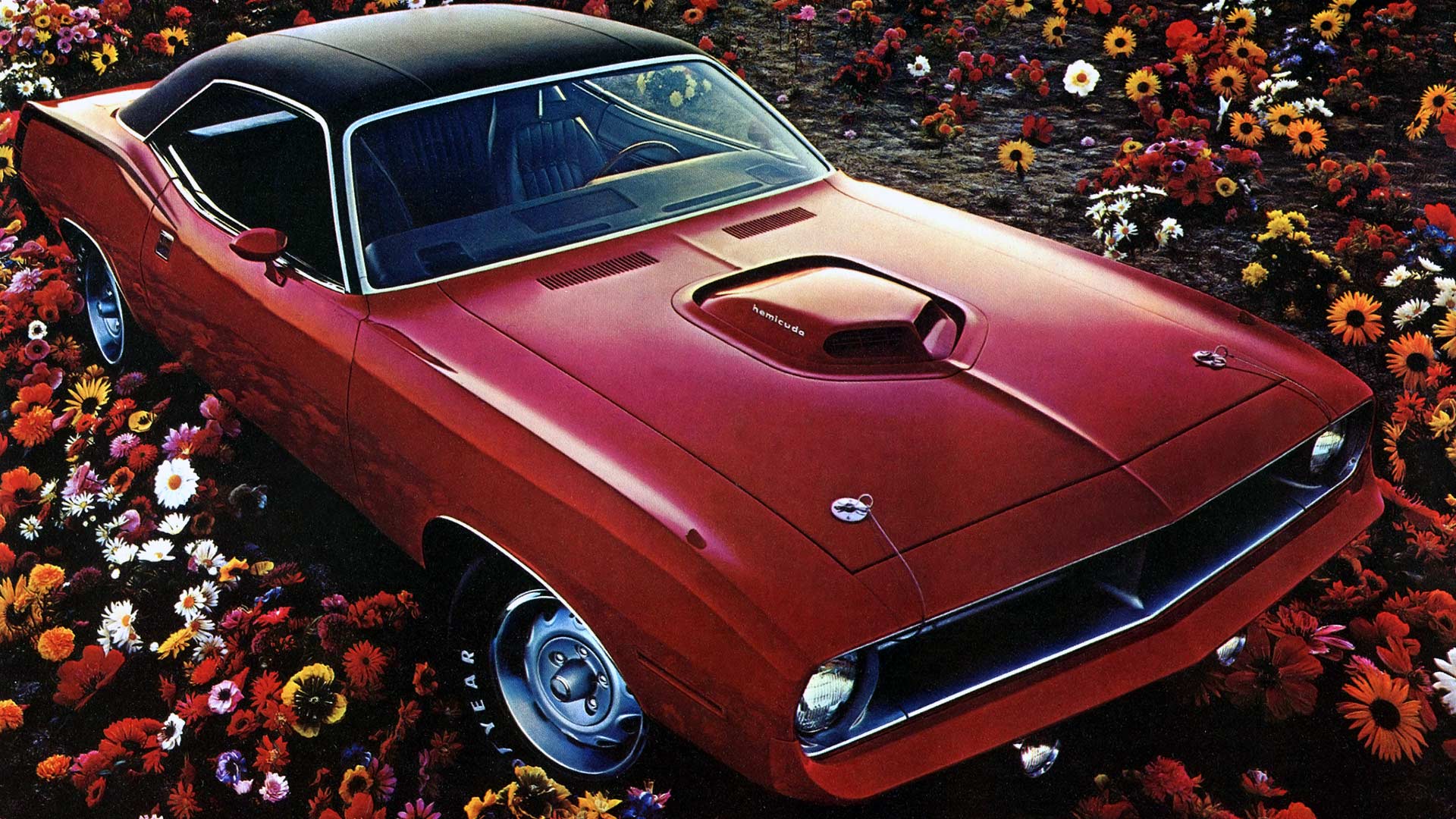
1970 Plymouth Hemi Cuda
Sharing the E-body platform with the Challenger was the third-generation Plymouth Barracuda. The Barracuda shared no body panels with the Challenger, and used a slightly shortened wheelbase.
Plymouth presented the Barracuda as the marginally more affordable version of the Challenger, despite most engines and options being the same. As with the Challenger, the rare ‘Cuda versions using the 426-cubic inch Street Hemi engine remain some of the most valuable muscle cars ever made.
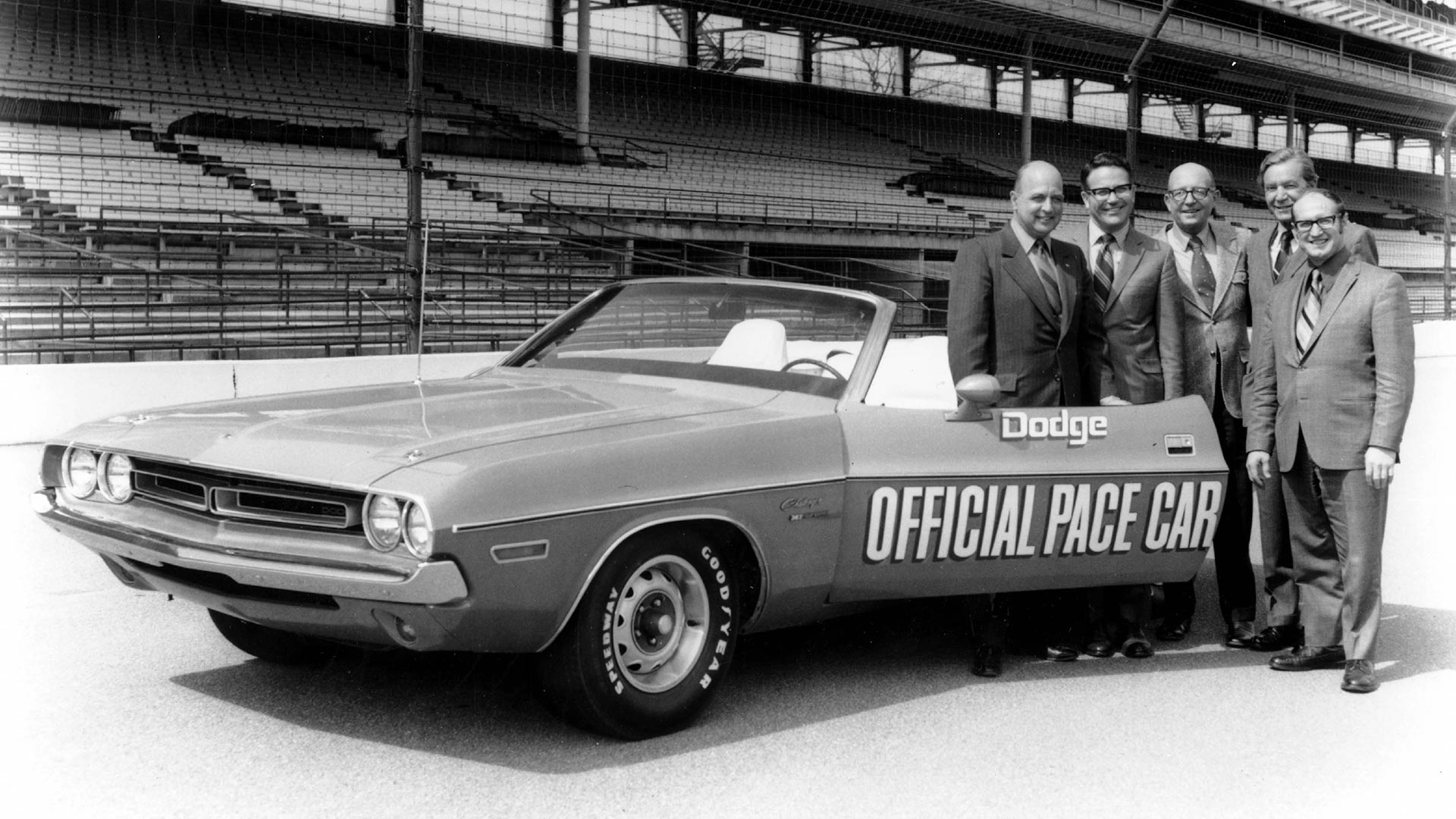
1971 Dodge Challenger Indy 500 Pace Car
For 1971, Dodge left the Challenger mostly unaltered. The most obvious change was a redesigned front grille, whilst the tail lights also gained a new look. Dodge introduced a new ‘Challenger Coupe’ version, intended to be the cheapest model in the range.
During 1971, the Challenger gained notable exposure by being the official pace car of the Indianapolis 500 race. Provided by a collection of local Dodge dealerships, the Challenger was involved in a high-speed collision with a photographers’ stand when pace car driver Eldon Palmer lost control.
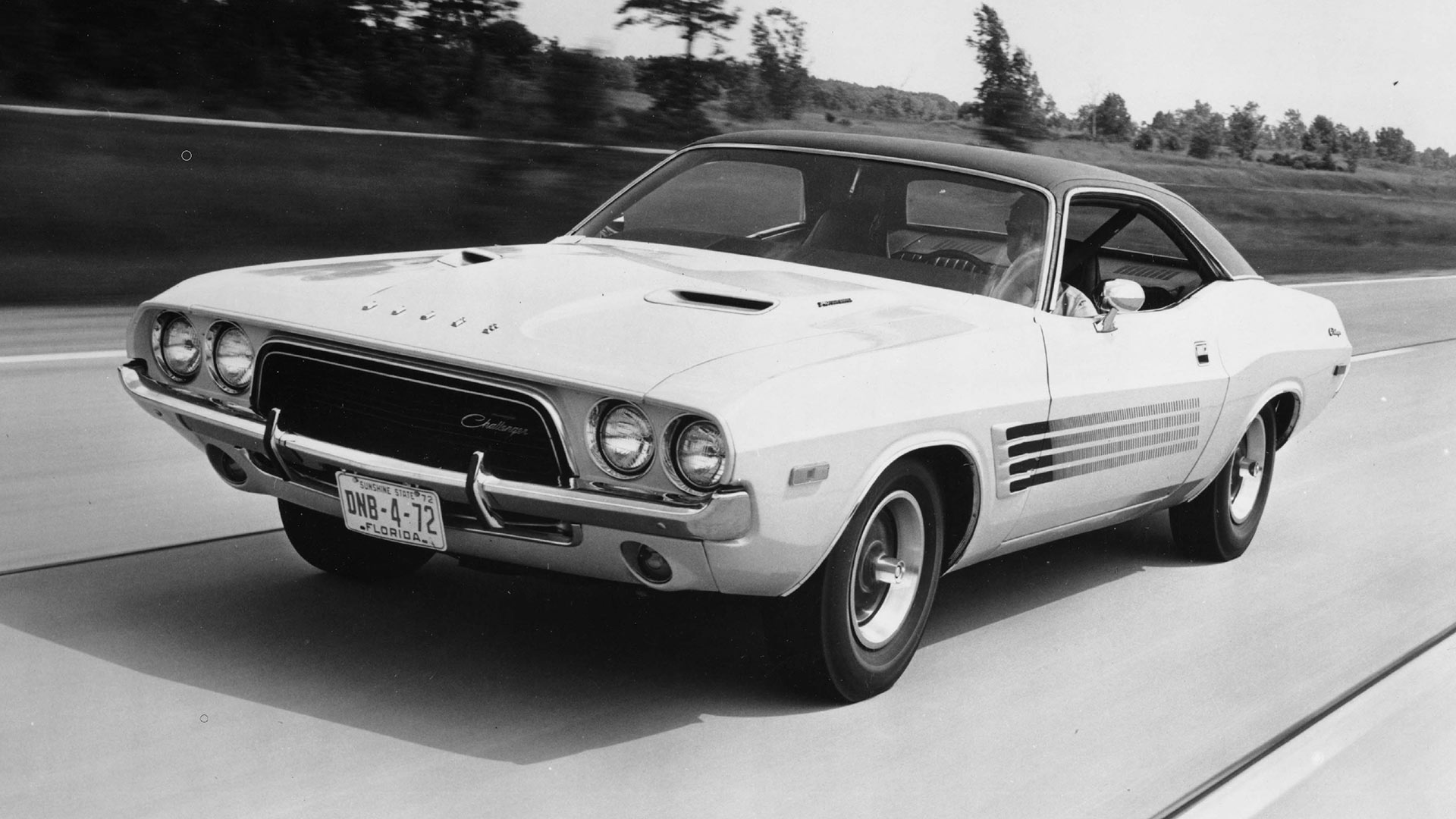
1972 Dodge Challenger Rallye
Another subtle facelift was undertaken for 1972, with the Challenger’s front grille changed yet again. Now extending below the front bumper, it gave the car a mildly unhappy appearance. The convertible Challenger was also dropped, leaving the entire Dodge range of cars without an open-top model.
Pressure from insurance companies, and the need to meet new EPA emissions regulations, saw the engine options reduced and detuned. Dodge also ended the R/T model as the performance variant, replacing it with the Rallye name instead.
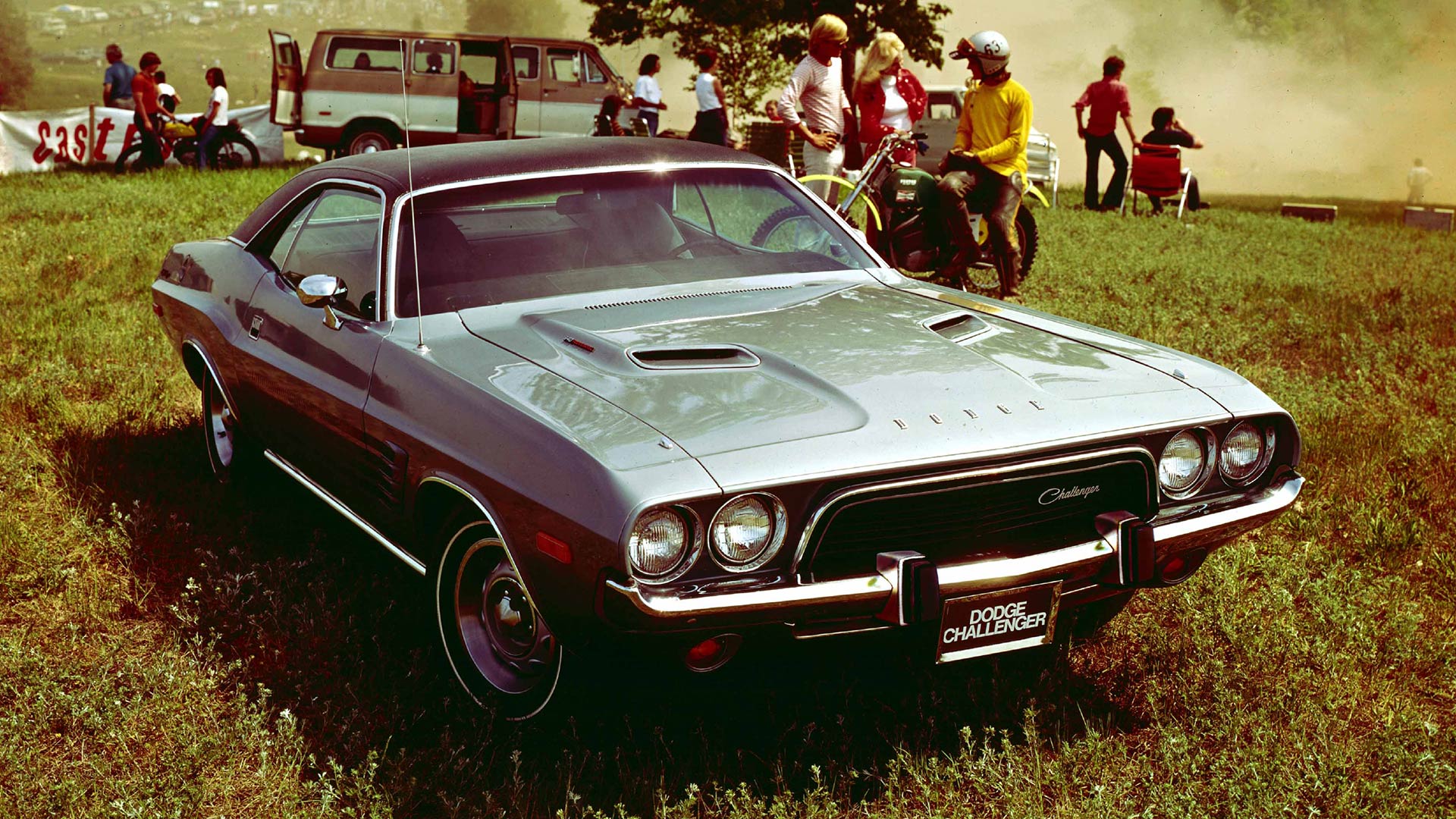
1973 Dodge Challenger Rallye
As the market for muscle cars continued to shrink, Dodge made only minor changes to the Challenger for 1973. Federally mandated bumpers were added, spoiling the previously clean lines of the Challenger.
Engine choices were reduced again, with only the 150 horsepower 318-cubic inch V-8 and 240 horsepower 340-cubic inch V-8 units remaining. That these engines were now rated at net output, not gross, also made them appear even less powerful than before.
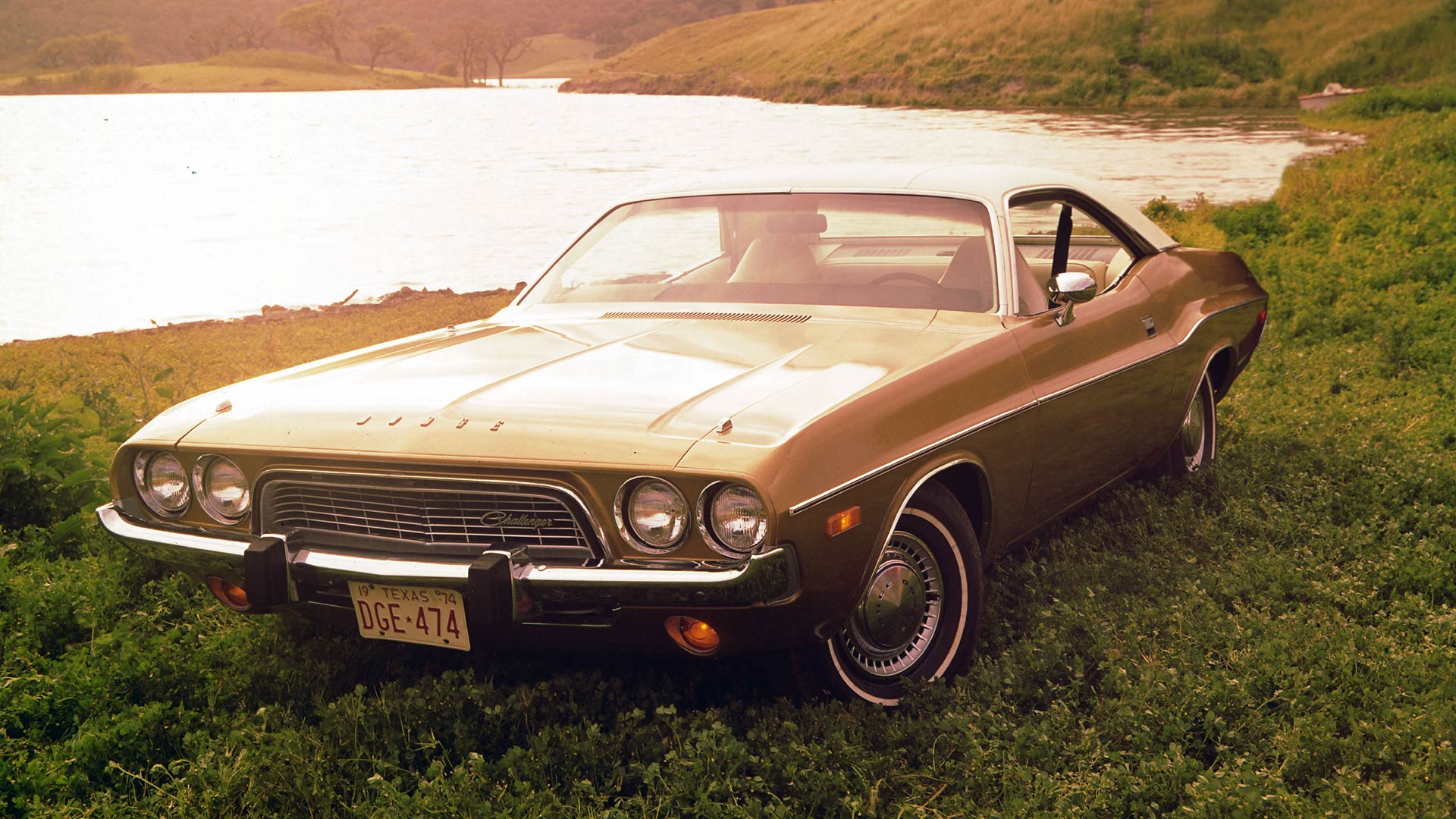
1974 Dodge Challenger
By 1974 the writing was on the wall for the Challenger, with Dodge making no changes other than adding extra safety equipment. This included upgraded seat belts, and a federally mandated ignition lock.
Insurance prices, emissions regulations, and higher fuel prices meant that the first-generation Challenger came to an end in 1974. The motoring public had fallen out of love with monstrous muscle cars, with more fuel efficient offerings were in vogue. In total Dodge produced over 188,000 Challengers during the initial run from 1970 to 1974.
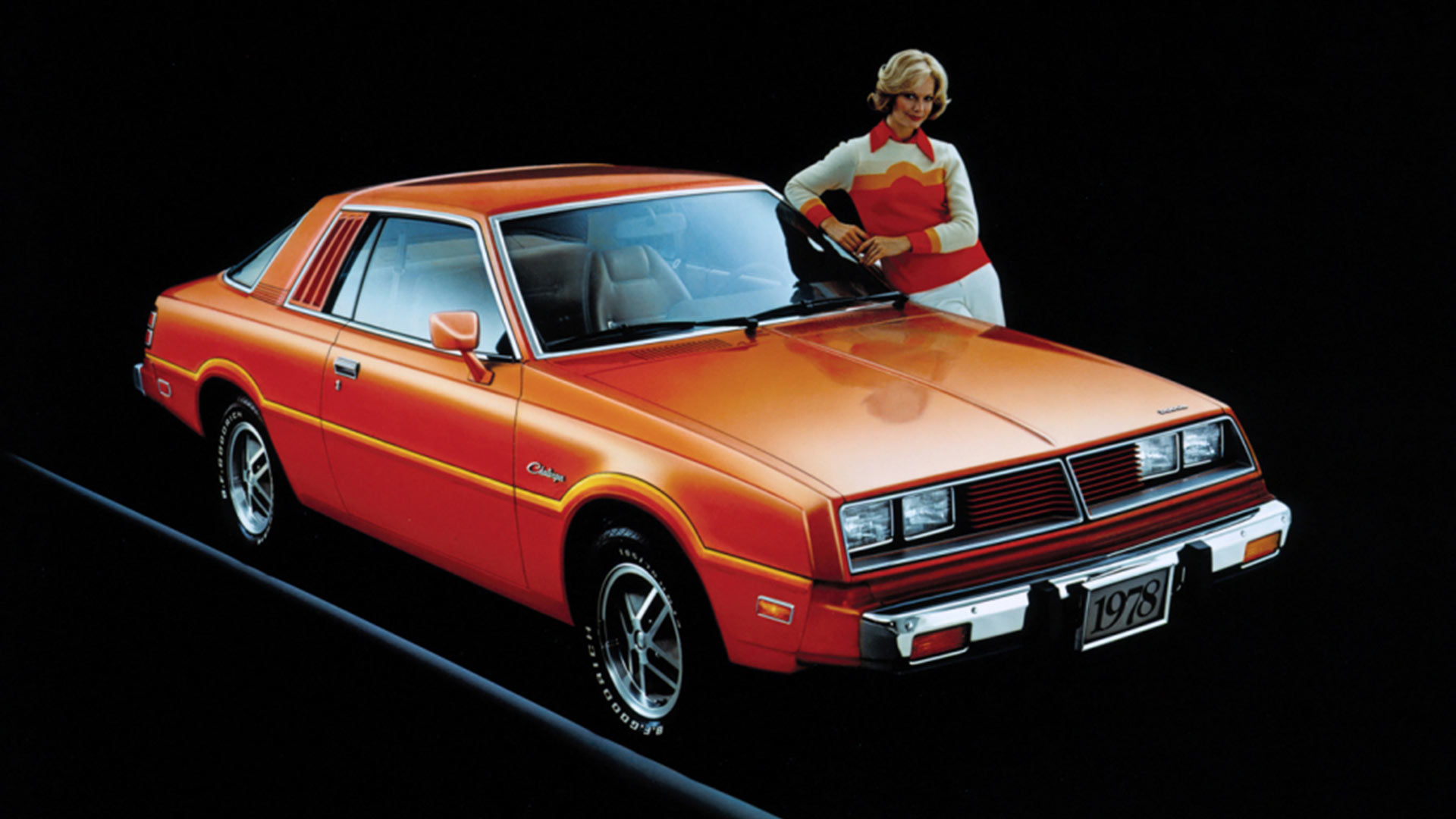
1978 Dodge Colt Challenger
Four years after disappearing, the Challenger name reappeared attached to a Dodge-branded version of the Mitsubishi Galant Lambda coupe. Along with the Plymouth Sapporo, these Japanese-imported vehicles were aimed at helping Chrysler meet the U.S. Corporate Average Fuel Economy requirements.
Whilst the Mitsubishi-derived models were at least rear-wheel drive, there were obviously no large V-8 engines beneath the hood. Instead, a 1.6-liter four-cylinder unit with 77 horsepower was standard with a 2.6-liter 105 horsepower version available as an option.
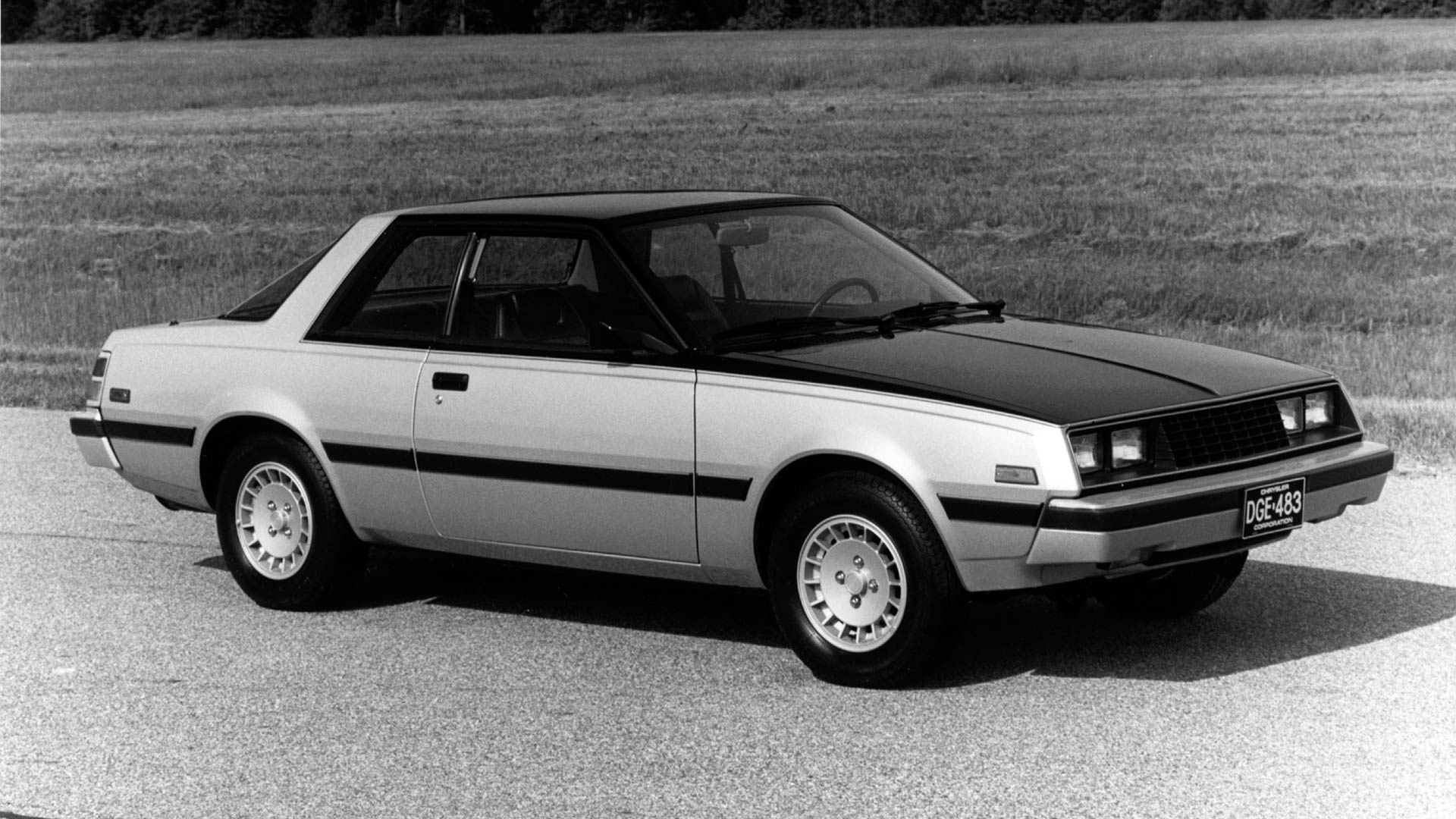
1983 Dodge Challenger
As Chrysler continued to improve its relationship with Mitsubishi, the Challenger gained a mild restyle for the 1981 model year. The car also dropped the ‘Colt’ name, simply being sold as the Dodge Challenger.
Sales of the imported Challenger averaged around 13,000 units each year, until the model was withdrawn in 1983. Chrysler would go on to form Diamond-Star Motors with Mitsubishi, developing bespoke models for production in the United States.
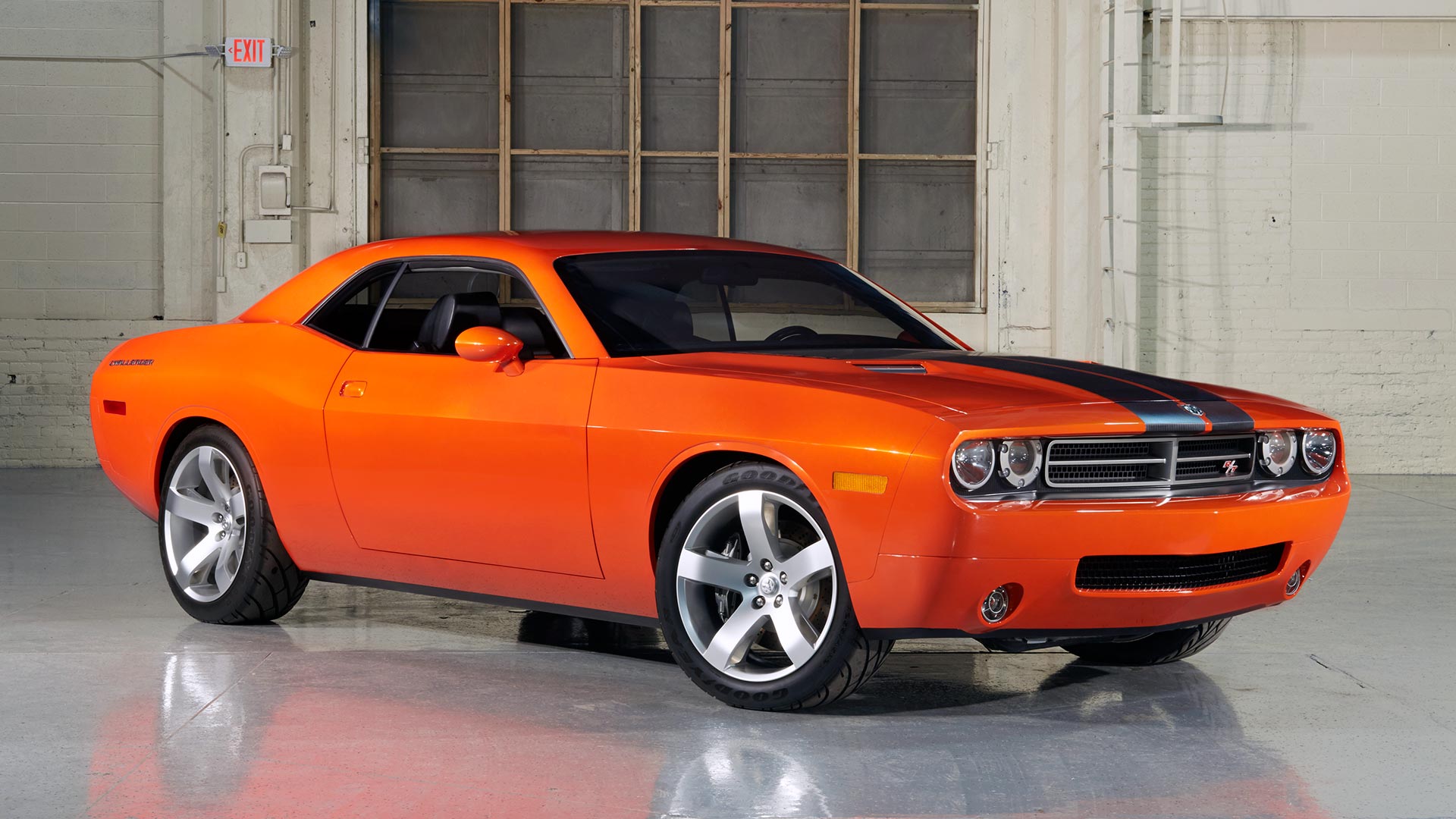
2006 Dodge Challenger Concept
More than 30 years after the first-generation Challenger had disappeared from sale, Dodge presented a new concept version of it at the 2006 Detroit Auto Show. The two-door coupe maintained all the proportions and details of the original Challenger, but updated to meet the requirements of the 21st century. A Hemi engine could be found beneath the hood, and it sent its power to the rear wheels.
The 2005 Ford Mustang had already demonstrated the appeal of retro-styled muscle cars, and the Challenger received substantial attention at the Detroit event. Mopar fans pleaded with Dodge to make it real.
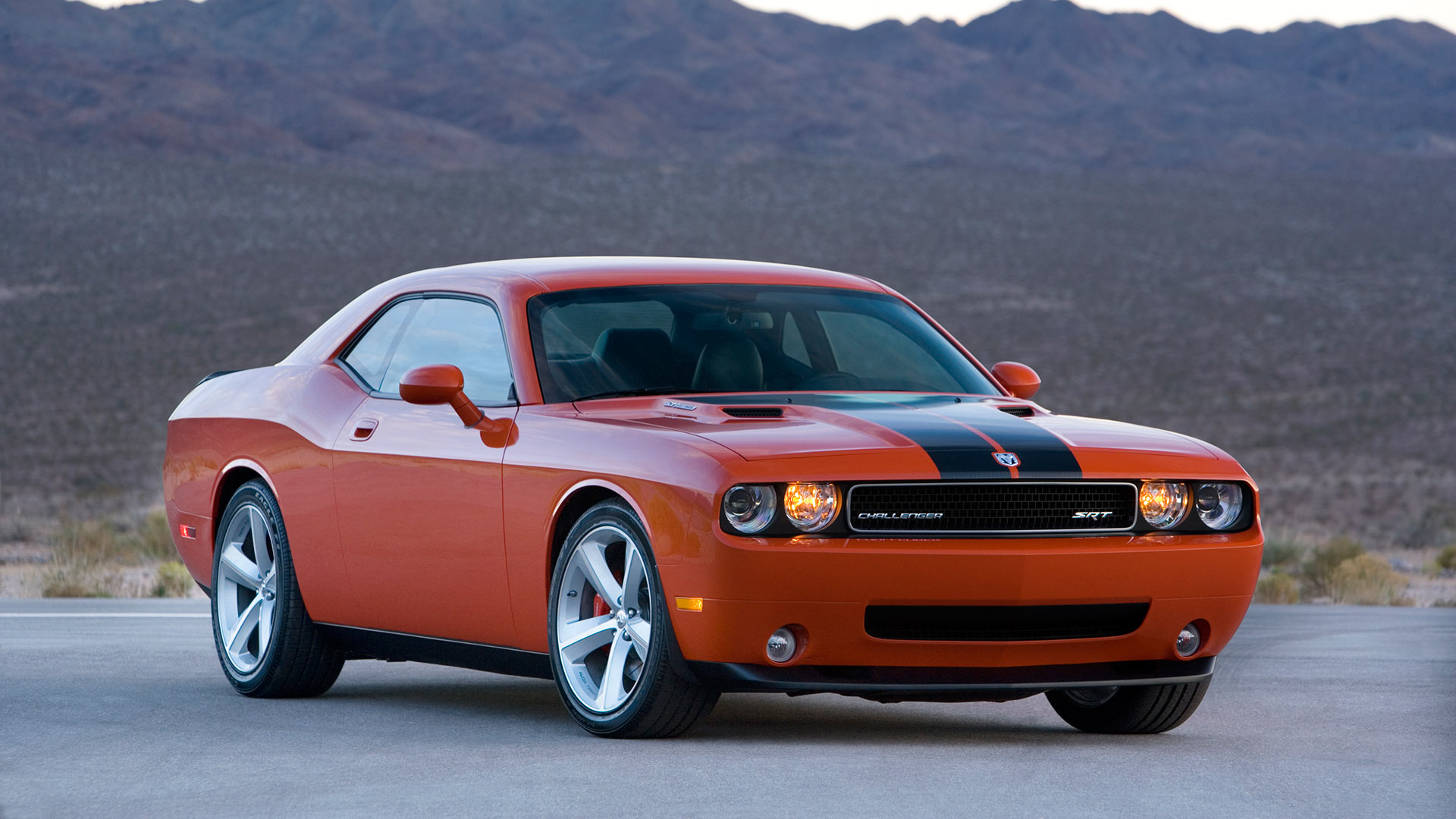
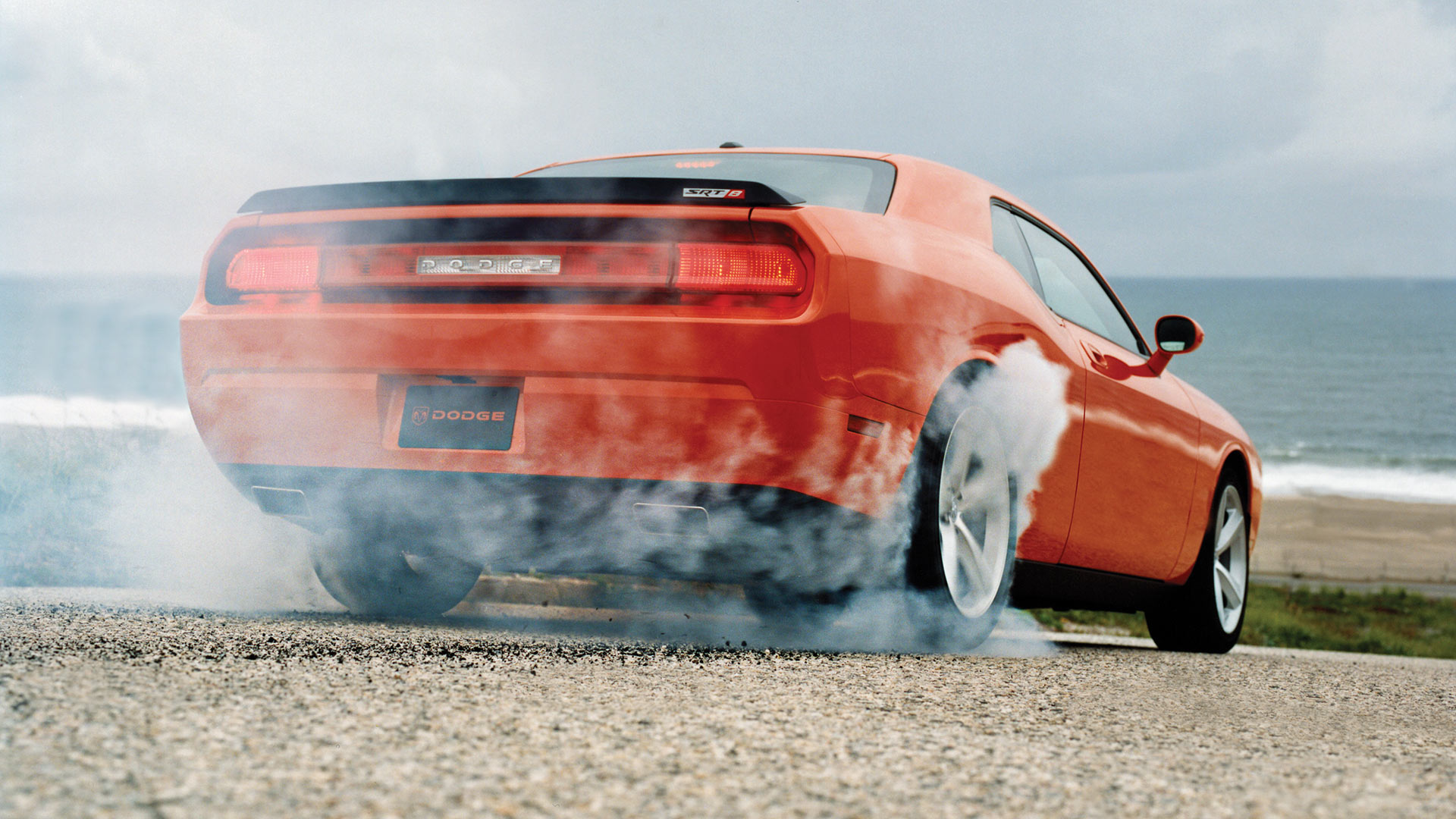
2008 Dodge Challenger SRT8
Less than two years later, Dodge revealed the production-ready version of the third-generation Challenger. Most notable was the fact that the styling had evolved only slightly from the concept version, leaving the finished product still resembling the 1970 original.
Beneath the retro styling was a version of the Chrysler LX platform. Whilst the Challenger used a bespoke shortened version, the basic underpinnings still were shared with the Chrysler 300 sedan and Dodge Charger.
The Challenger SRT8 was the main focus of the launch for the new Challenger. Powered by a 6.1-liter Hemi V-8 engine, the outputs of 425 horsepower and 420 lb-ft of torque meant it was close in spirit to the legendary first-generation Challengers. However, those 1970 cars did without Brembo brakes, or optional Goodyear Eagle F1 tires.
A total of 6,400 units of the new Challenger SRT8 found owners for 2008. The very first production car was sold at the Barrett-Jackson Scottsdale auction, achieving a total of $400,000 for charity.
2008 Dodge Challenger SRT10 Concept
Dodge added additional engines to the third-generation Challenger range, including a 3.5-liter V-6 for the SE model, and a 5.7-liter Hemi V-8 for the mid-range R/T version. All of these attempted to capture a broad spectrum of potential buyers, just like the original car from 1970.
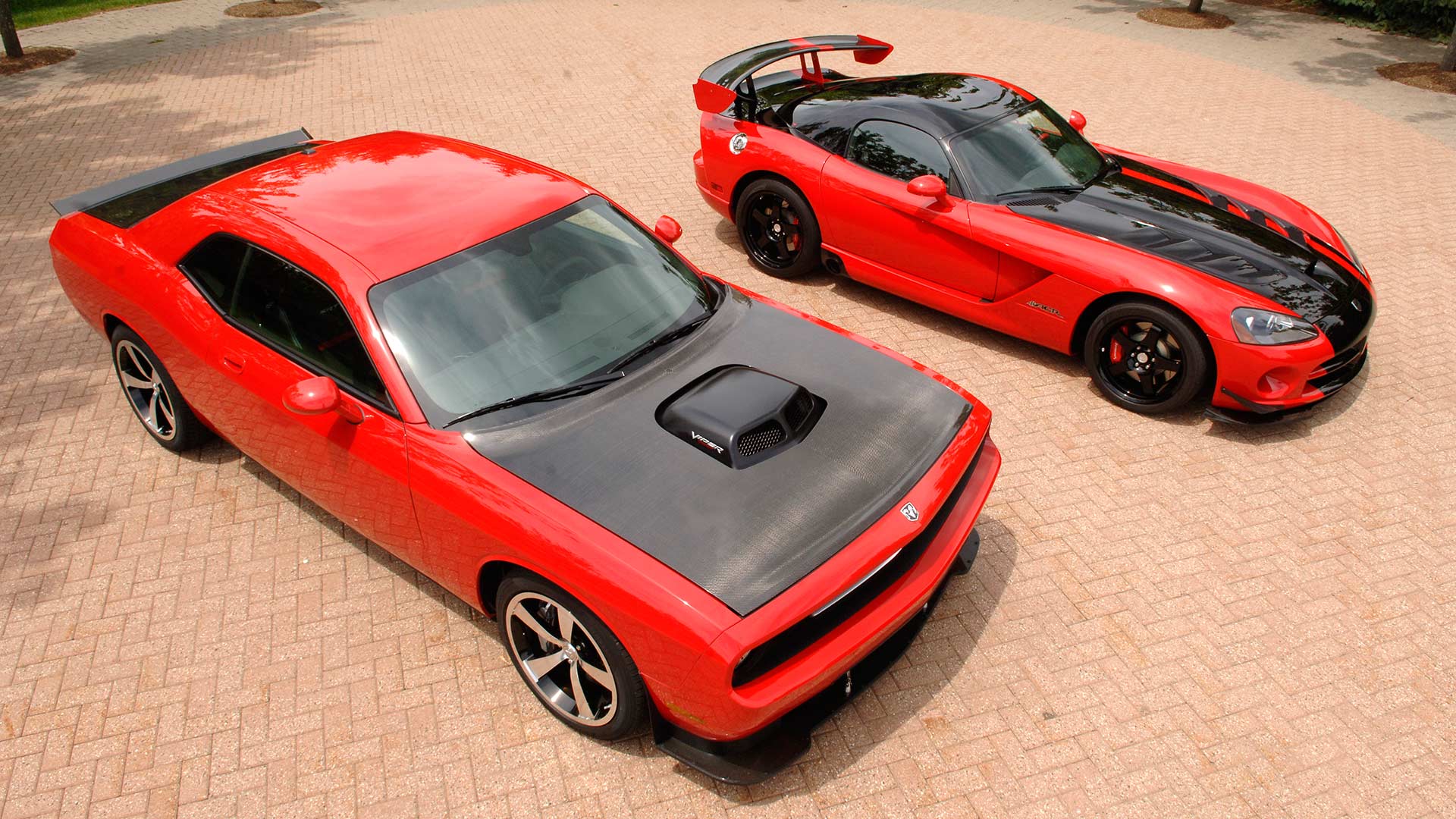
2008 also saw Dodge experiment with an extreme Challenger concept. The SRT10 featured the 8.4-liter V-10 engine from the Viper sports car. With 600 horsepower and 560 lb-ft of torque, it endowed the Challenger with serious pace, but sadly, it was only an engineering concept to prove what SRT could do.
2010 Dodge Challenger NASCAR Nationwide race car
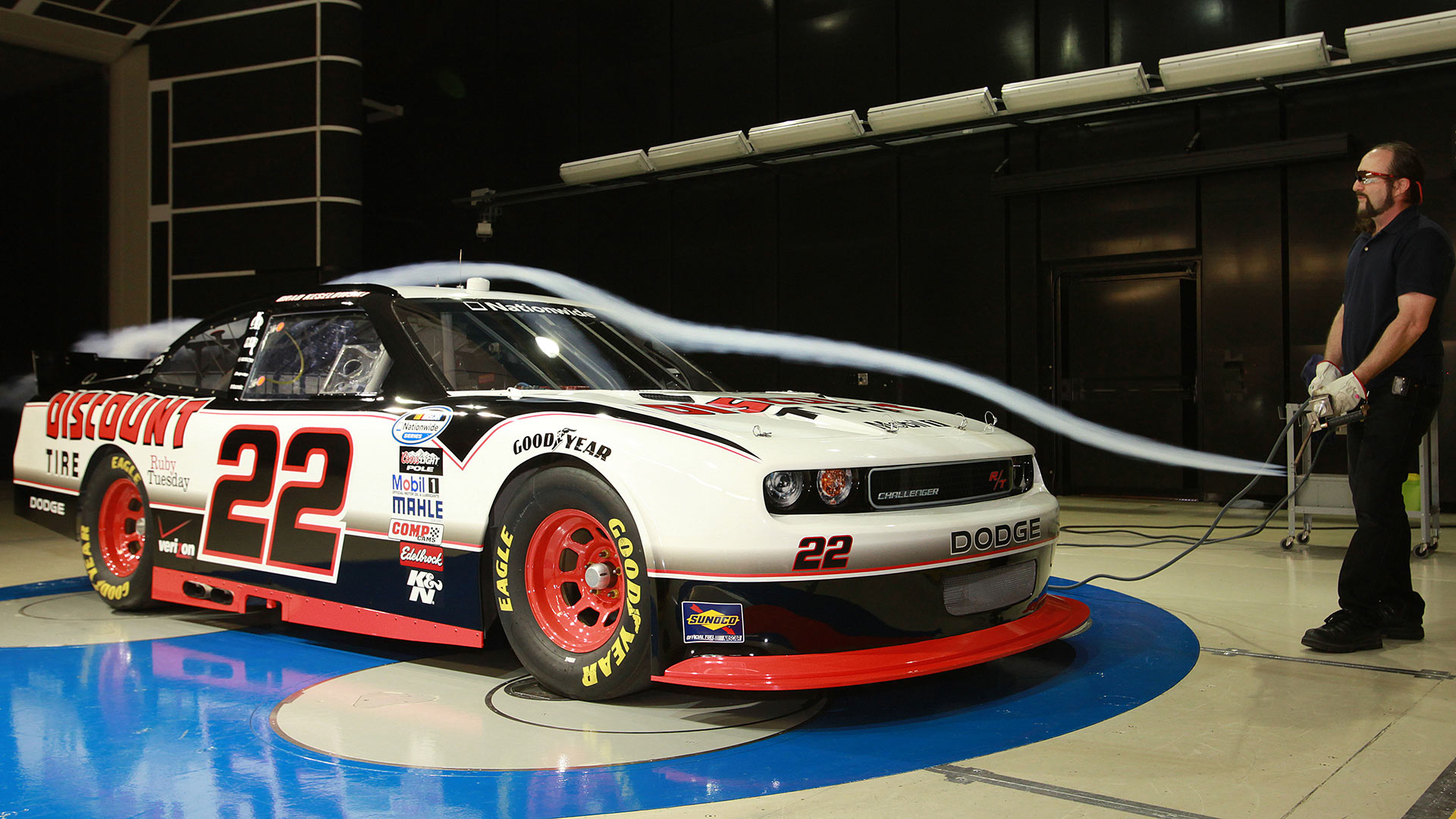
To help promote the new Challenger, Dodge also worked with Penske Racing to develop the car for use in the NASCAR Nationwide Series. This decision was undoubtedly spurred on by the announcement that Ford would use the Mustang as the basis for its Nationwide race programme.
Dodge would ultimately abandon all tiers of NASCAR racing at the end of 2012, leaving the Challenger project unsupported. Privateer teams would continue to use the Challenger, with it continuing in competition until 2018.
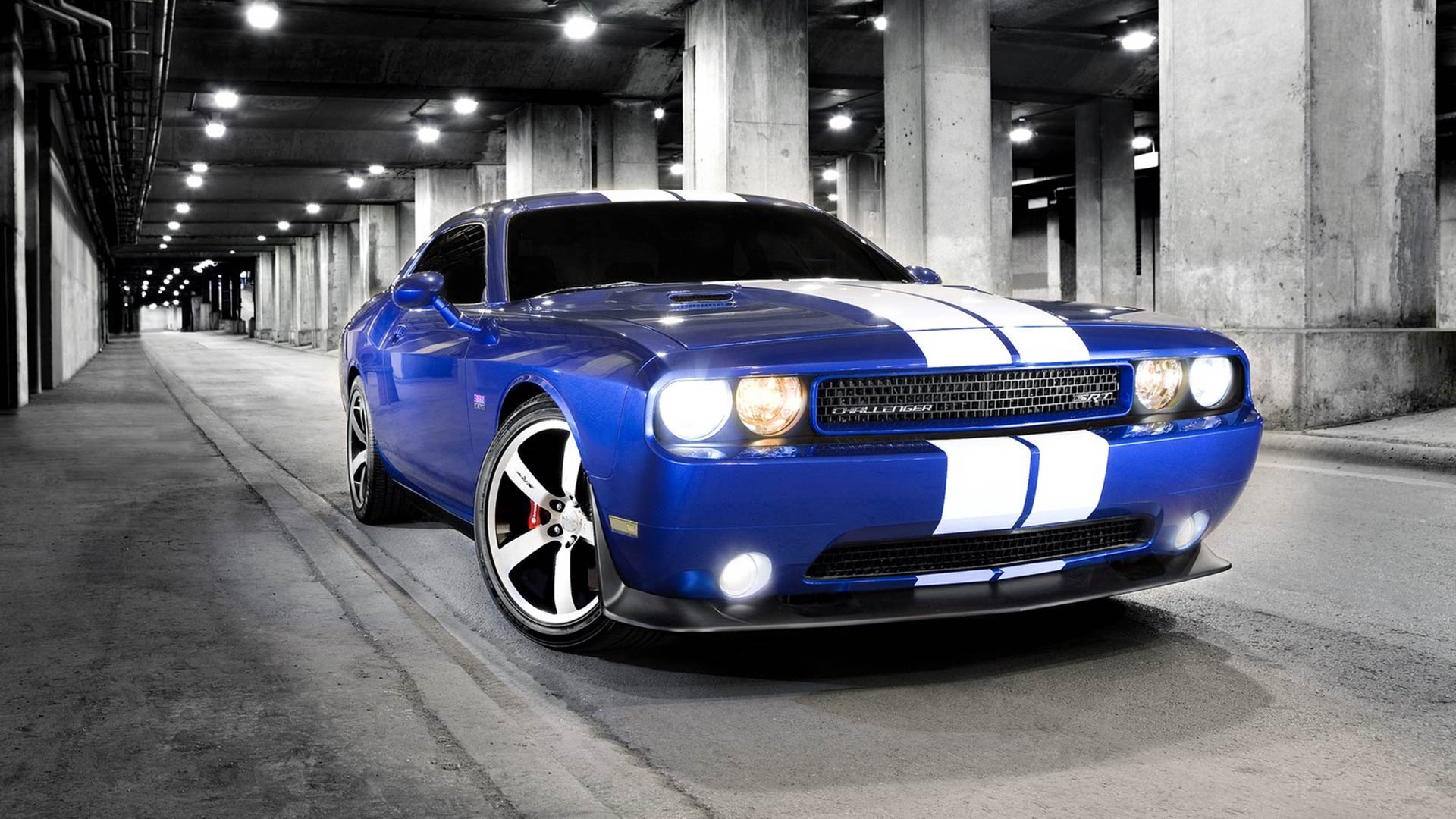
2011 Dodge Challenger SRT8 392
Back on the street, Dodge continued to improve and evolve the Challenger, with a host of changes made for 2011. Whilst the entire range of engines received improvements, it was the introduction of the new 392-cubic inch (6.4-liter) version of the Hemi V-8 for the SRT8 that made the most noise.
Output was increased to 470 horsepower and 470 lb-ft of torque, with the exhaust note enhanced for a deeper bass burble. Dodge promised a 0-60 mph time in under 5 seconds, along with a quarter-mile time in the high 12 second range.
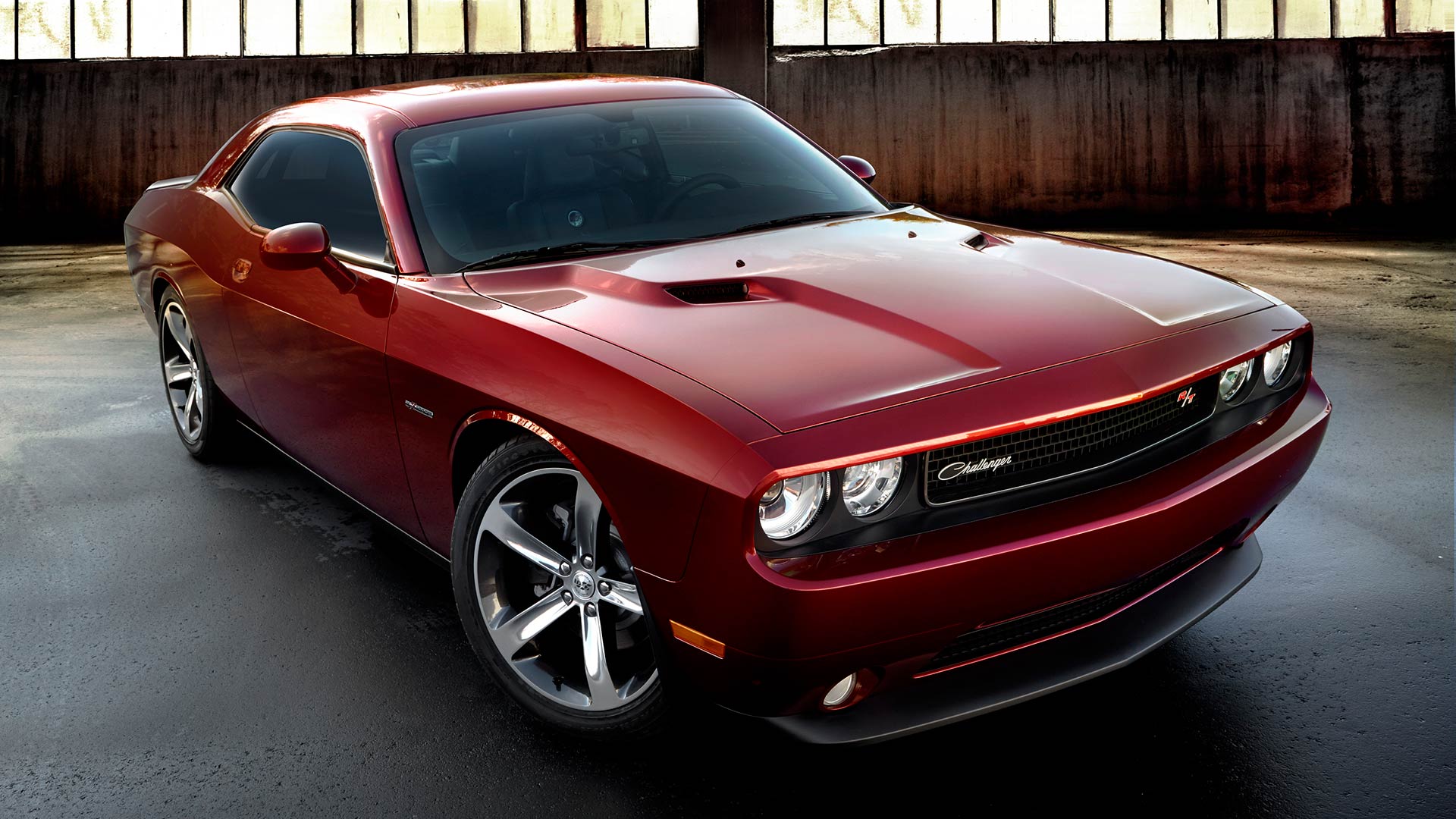
2014 Dodge Challenger 100th Anniversary Edition
Helping mark the centenary of the Dodge brand were a number of special edition models for 2014. Naturally, this included the Challenger, with the 100th Anniversary package offered for the SXT Plus and R/T Plus variants.
A choice of paint colors could be had, but the stand out choice was the unique High Octane Red Pearl Coat. Special exterior badges and wheel center caps were also included, with Nappa leather seats on the inside. Brass-colored accent stitching, and more 100th Anniversary badging, completed the interior makeover.
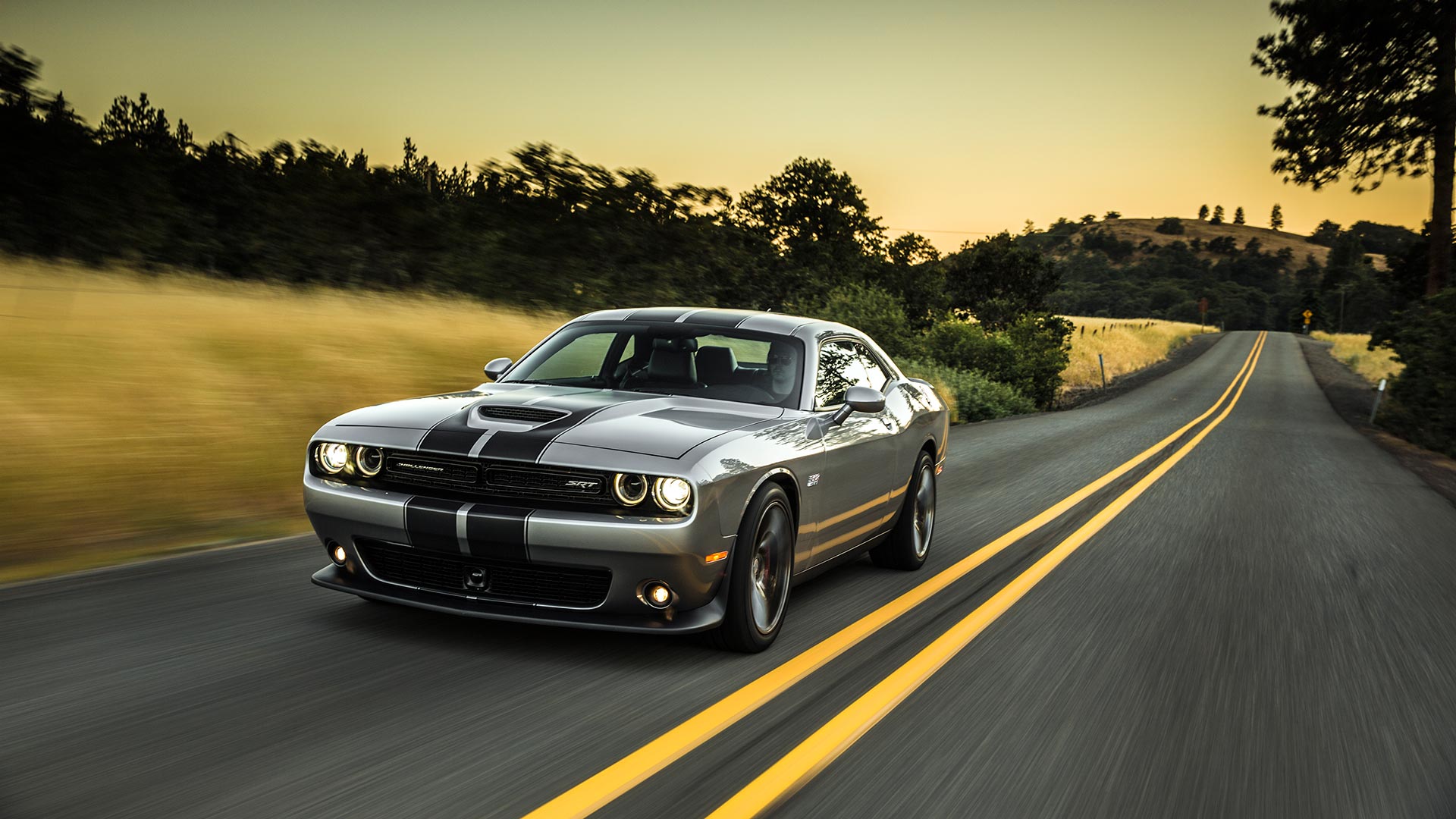
2015 Dodge Challenger SRT 392
After seven years on sale, the time was ripe in 2015 for the Challenger to undergo a more substantial overhaul. This included an updated version of the LX platform, branded as the LA, which allowed the Challenger to use the eight-speed TorqueFlite automatic transmission.
On the outside, the 2015 Challenger gained a front grille which borrowed in style from the 1971 model year version. New split tail lights were also inspired by the 1971 car, whilst tweaks were made to the rear fenders. The SRT8 name was dropped, whilst the interior of the Challenger was also updated to feature a new 7-inch multimedia screen.
2015 Dodge Challenger SRT Hellcat
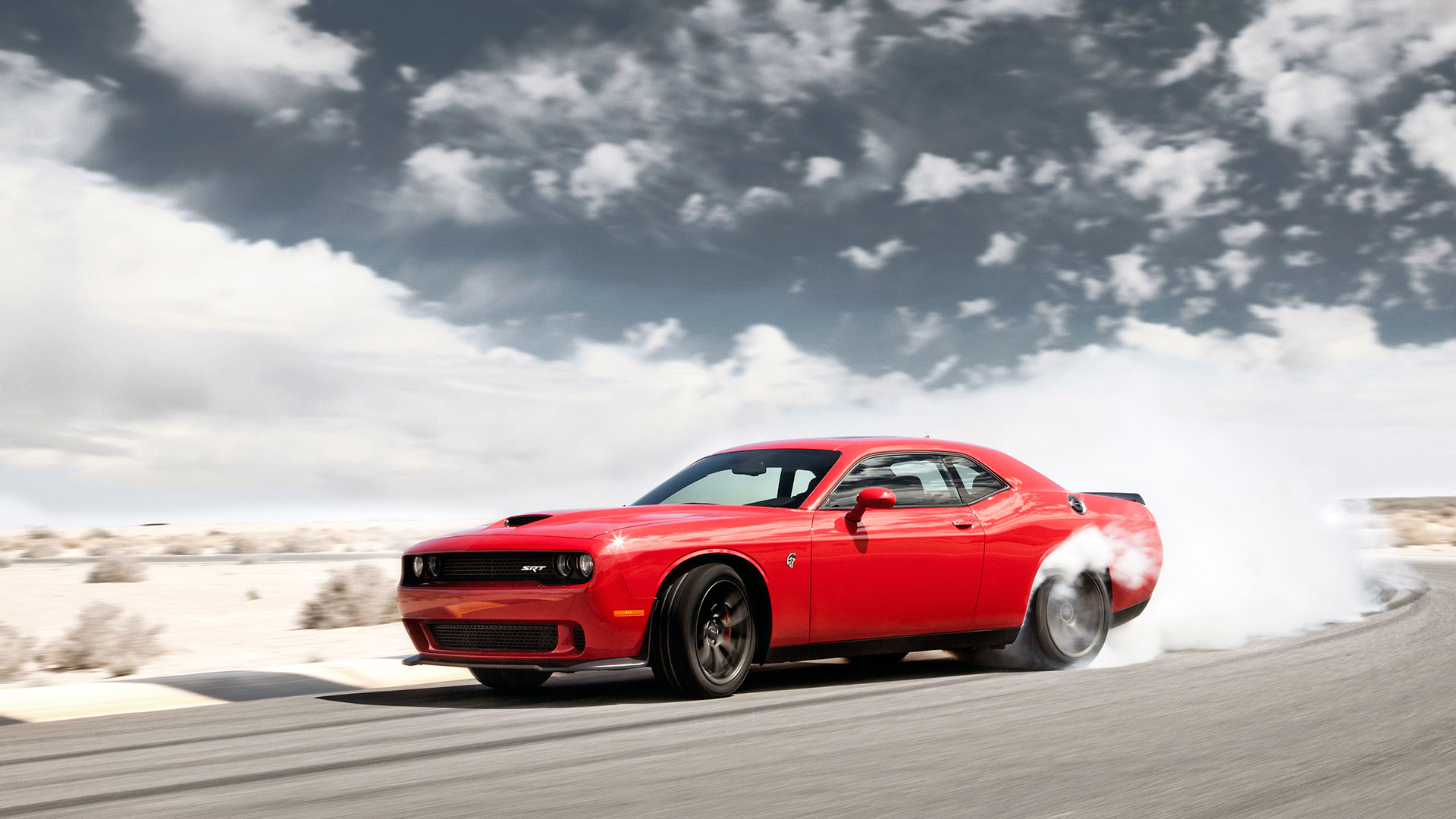
The biggest news for the 2015 model year was the announcement of the SRT Hellcat. Proving that the muscle car horsepower war was truly in effect, Dodge announced the new model with a supercharged 6.2-liter Hemi V-8 engine.
Peak power of 707 horsepower, with torque rated at 650 lb-ft, created the most powerful production muscle car made to date. To further emphasis how much power the Hellcat offered, Dodge supplied it with two keys. Drivers needed to use the special red key in order to unlock the full 707 horsepower potential, much like a Bugatti Veyron.
2015 Dodge Challenger SRT Hellcat
Making the Hellcat was not simply Dodge dumping a large engine into the Challenger. The company had worked hard to develop the first supercharged Hemi engine, and included features like the air intake within the driver’s side parking lamp.
Being priced from $59,995, the Hellcat appeared an absolute performance bargain compared to traditional sports cars. The NHRA confirmed it was capable of a quarter-mile sprint in 10.85 seconds, whilst a top speed just shy of 200 mph was also possible.
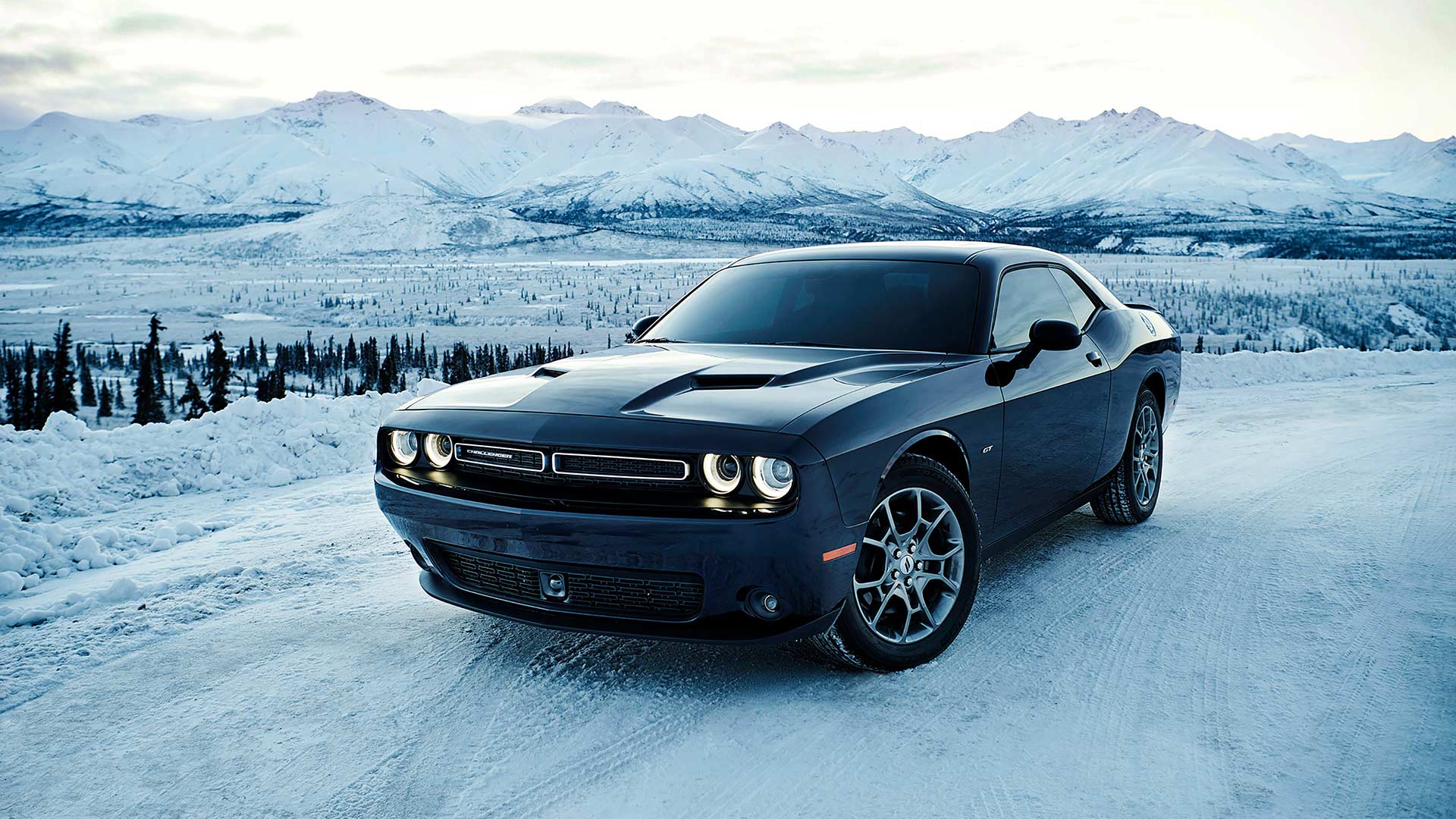
2017 Dodge Challenger GT AWD
New in 2017 was the unveiling of a Challenger with all-wheel drive ability. The new Challenger GT AWD meant that Mopar fans could potentially enjoy their Dodge coupe all year round. Whilst the AWD system was normally biased towards the rear wheels, it could send up to 38% of torque to the front axle.
The GT AWD version of the 2017 Challenger could only be had with the 3.6-liter Pentastar V-6 engine, producing 305 horsepower and 268 lb-ft of torque. Dodge’s eight-speed TorqueFlite automatic transmission is also standard, along with heated leather seats to help in cold climates.
2017 Dodge Challenger TA 392
The first-generation Challenger T/A may have been a short lived offering, with just 2,399 examples built for the road. Yet its legacy amongst Mopar fans made it ripe for a revival in 2017. Offered on three different Challenger models, the T/A package was most potent with the 392 engine with its 485 horsepower.
The satin black hood and body stripes were the most noticeable changes, and were matched with wider 20-inch lightweight alloy wheels. Retro color choices were also on the cards, with buyers even able to specify old-school hood pins. The T/A made use of the Air Catcher headlights from the Hellcat, whilst the 392 version used a special hood design.
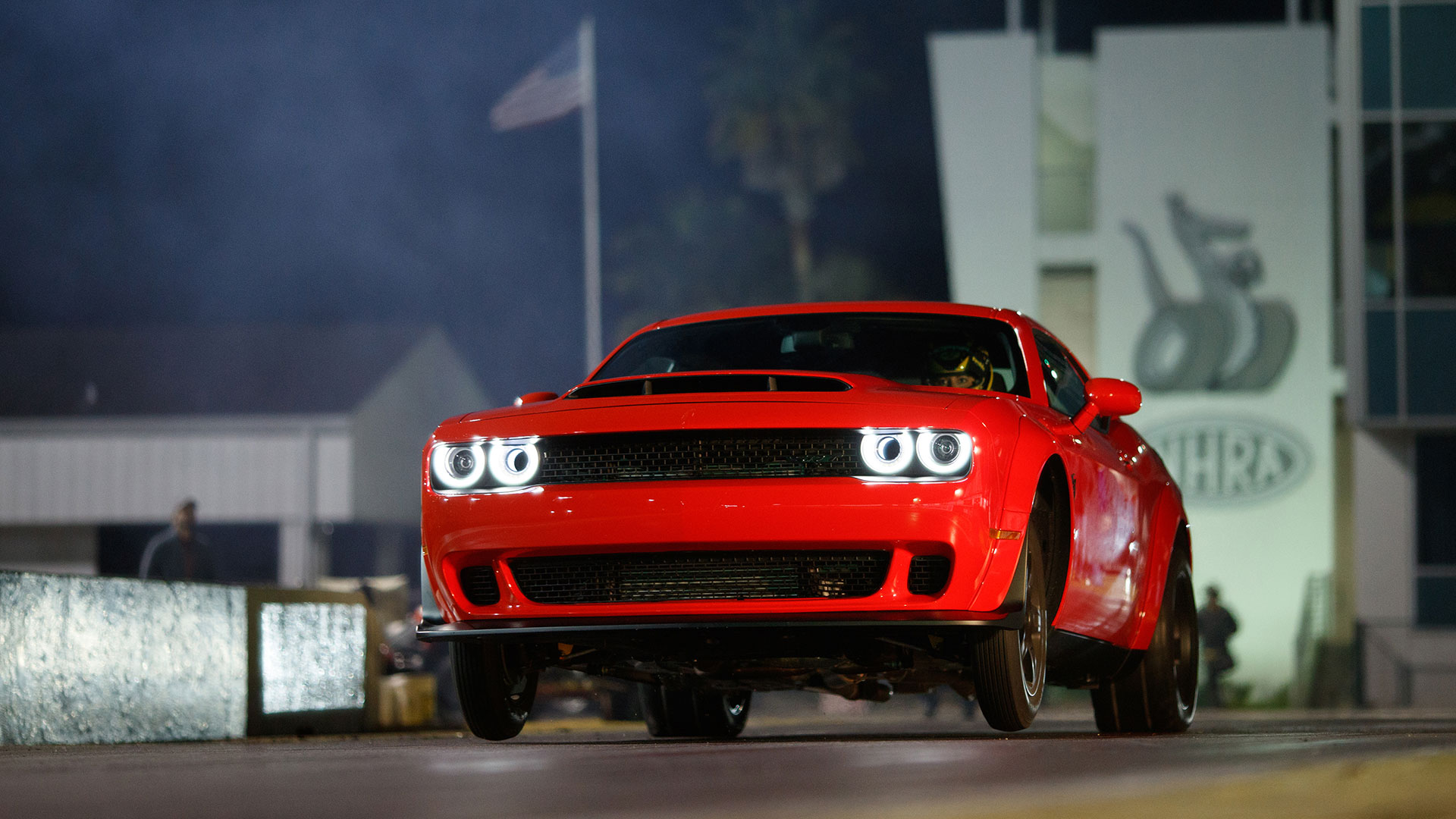
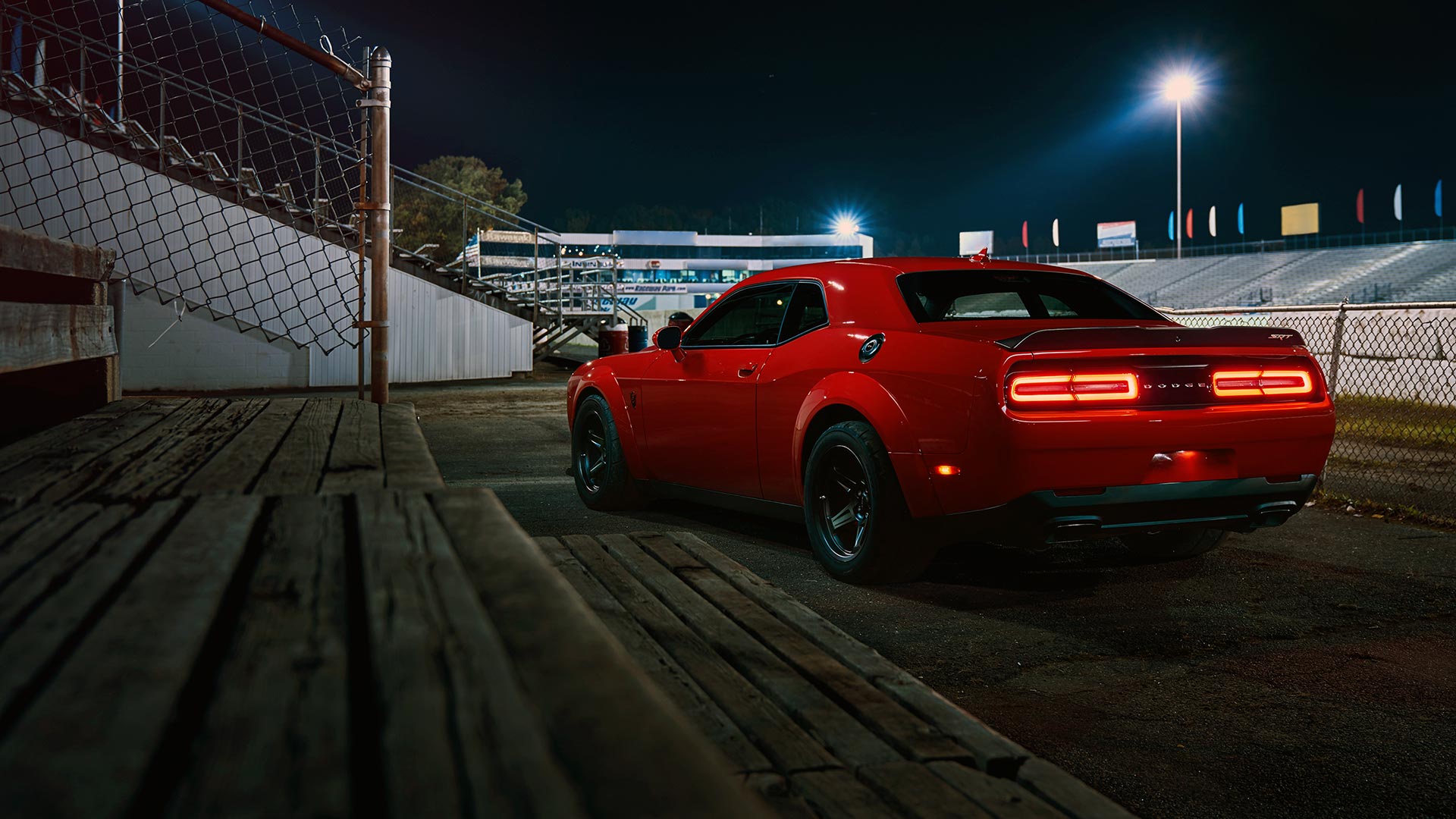
2018 Dodge Challenger SRT Demon
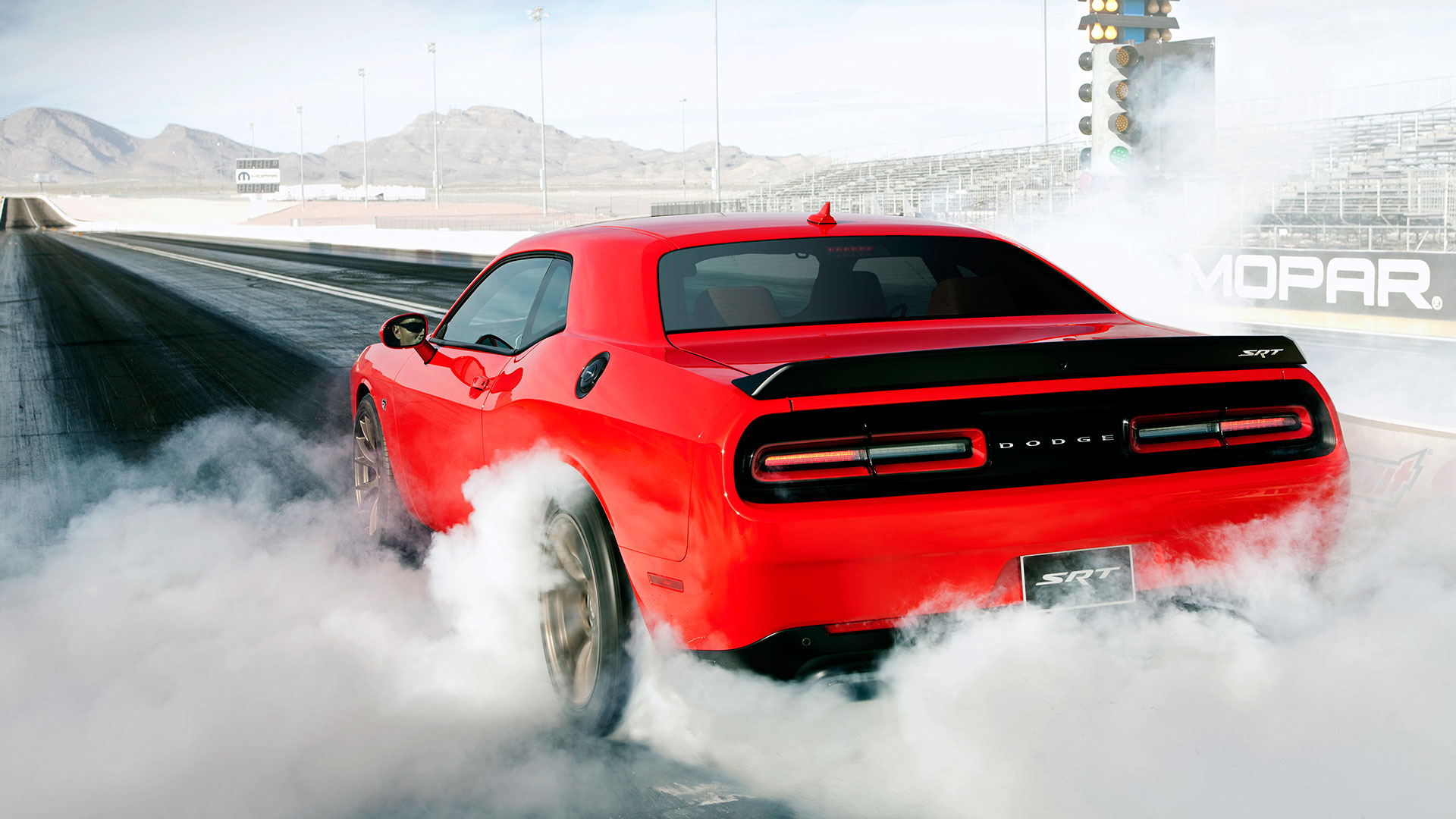
Dodge was clearly on a roll with the Challenger, and opted to push things even further for 2018 with the shocking SRT Demon. Essentially a street-legal dragster, the limited edition Demon set out to capture numerous world records and achievements.
At the heart of the SRT Demon could be found an enhanced version of the 6.2-liter Hemi V-8 from the Hellcat, but with a larger supercharger and the ability to rev higher. A potential for 840 horsepower and 770 lb-ft of torque pushed the Demon into true supercar territory. A special chiller for the air fed into the supercharger, and a transmission brake, were ideas taken from the drag strip.
All the technology, and the weight-savings from having no passengers seats as standard, helped the SRT Demon become the fastest accelerating car from 0-60 mph. This sprint took just 2.3 seconds, and also saw the Demon become the first production car to pull a wheelie.
The NHRA certified that the Demon could cover a quarter-mile in just 9.65 seconds, but then acted to ban it from production-based drag racing due to being too fast. Ultimately, the SRT Demon demonstrated that Dodge had found a particular niche for the modern Challenger, and would stop at nothing to maximise its appeal.
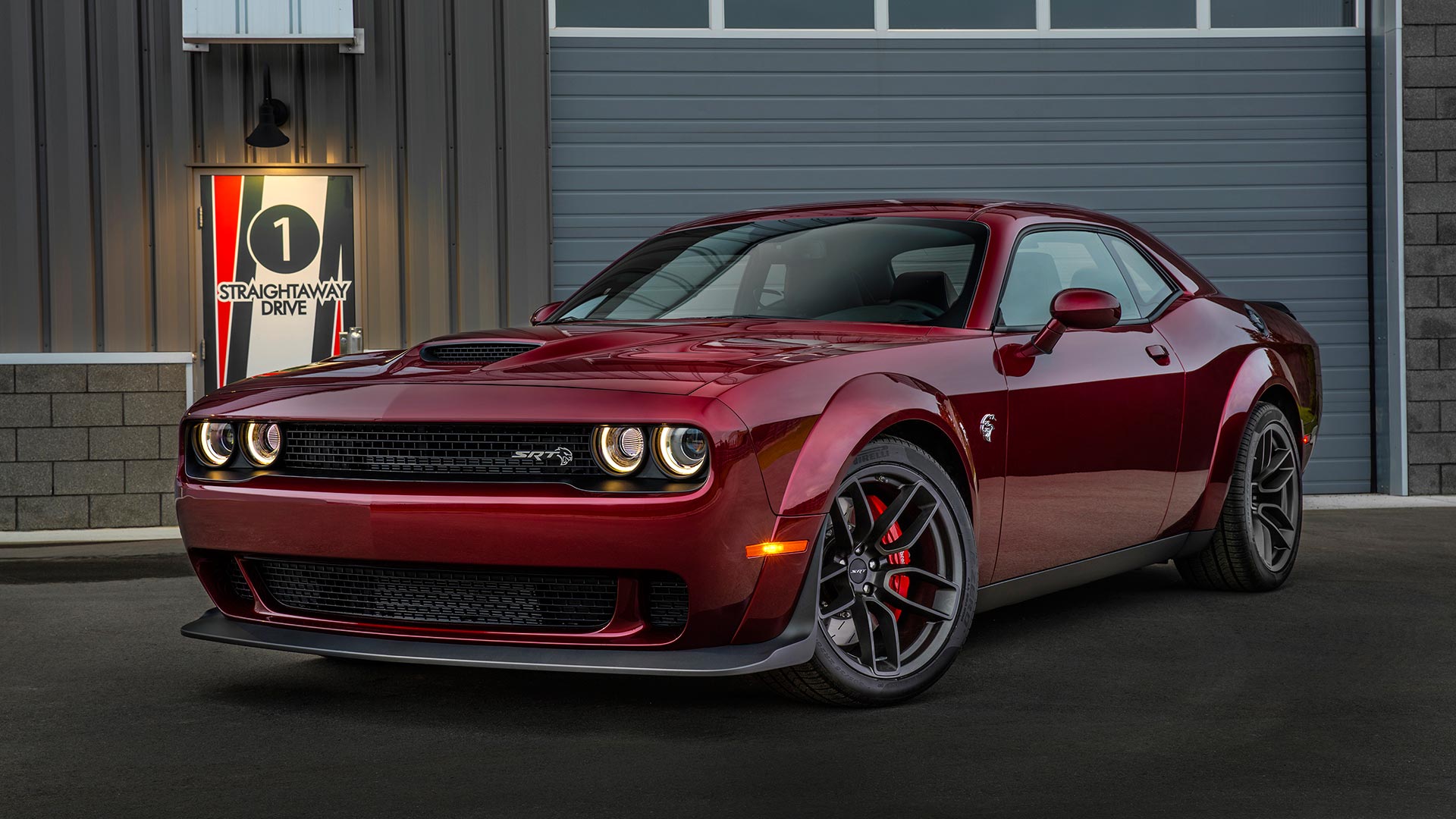
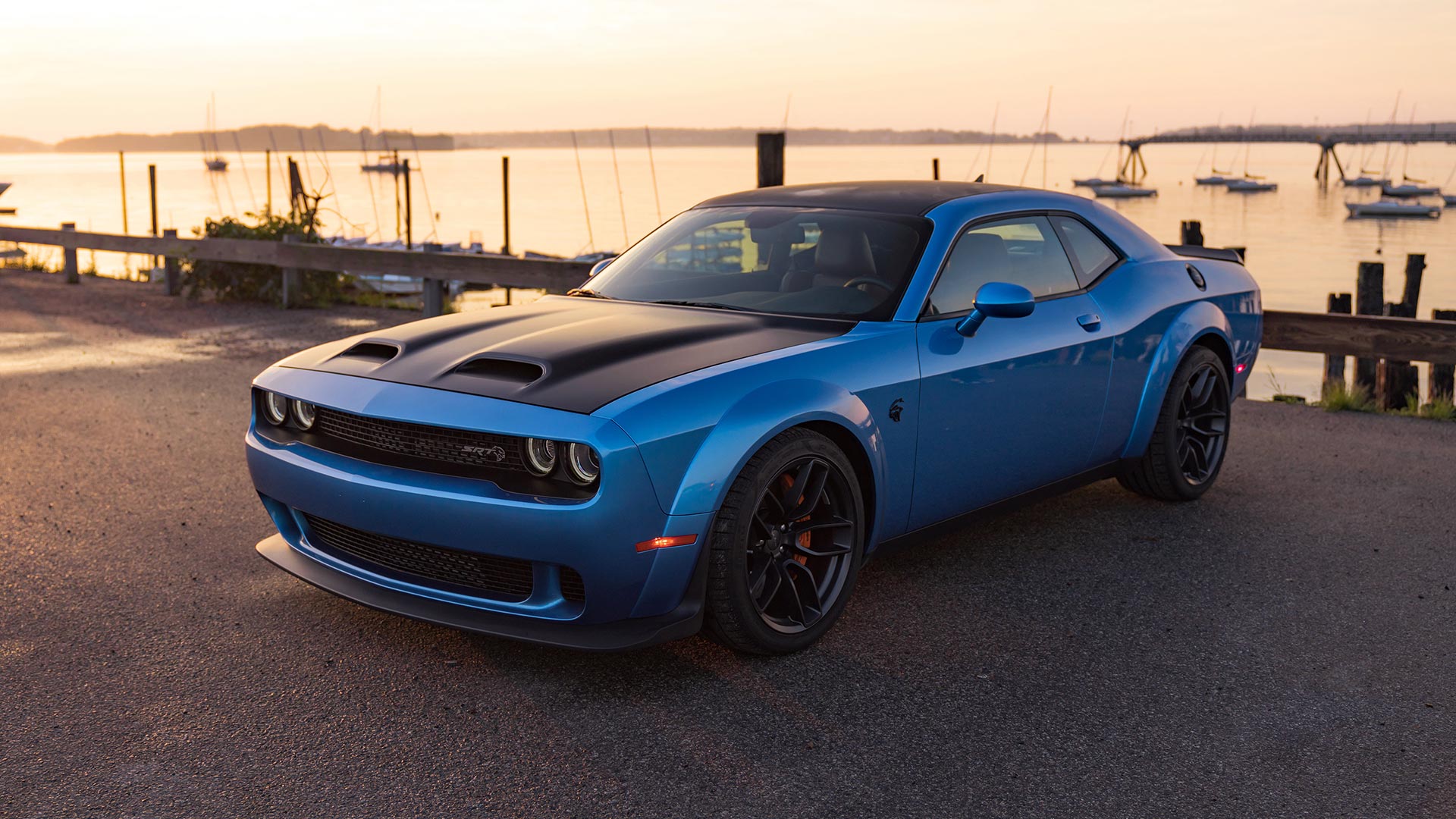
2018 Dodge Challenger SRT Hellcat Widebody
Although the SRT Demon may have been stealing most of the attention for the 2018 model year, Dodge also rolled out updates to other models in the range. Whilst the Demon was all about straight line performance, the SRT Hellcat gained updates to help it go faster around corners.
Central to this was the addition of the stretched Widebody kit, adding an extra 3.5-inches of girth compared to the regular Hellcat. This allowed for wider wheels, along with special Pirelli rubber and retuned power steering. Dodge reported the Hellcat Widebody to both be quicker in acceleration runs, and around a race track, justifying the changes.
2019 Dodge Challenger SRT Hellcat Redeye
With the SRT Demon only a one-year limited edition offering, Dodge overhauled the Challenger range and offered a more powerful version of the Hellcat. Branded the ‘Redeye’, this Challenger uses a 797 horsepower version of the 6.2-liter supercharged Hemi V-8 found in the Demon.
Other items borrowed from Demon included the special Power Chiller, a torque reserve function, and upgraded drive shafts. Keen Challenger fans could spot the special model thanks to the new hood with its dual snorkels.
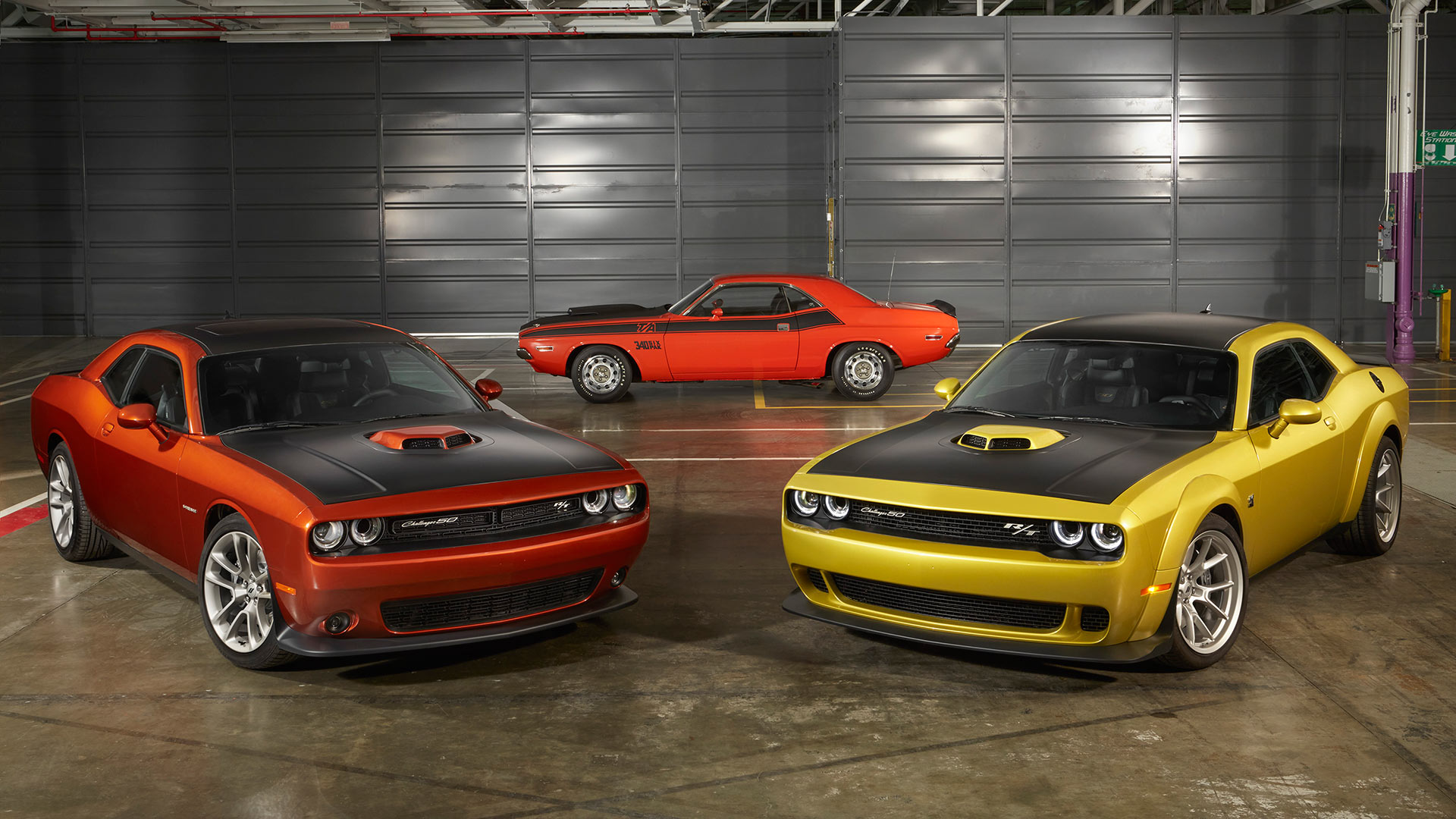
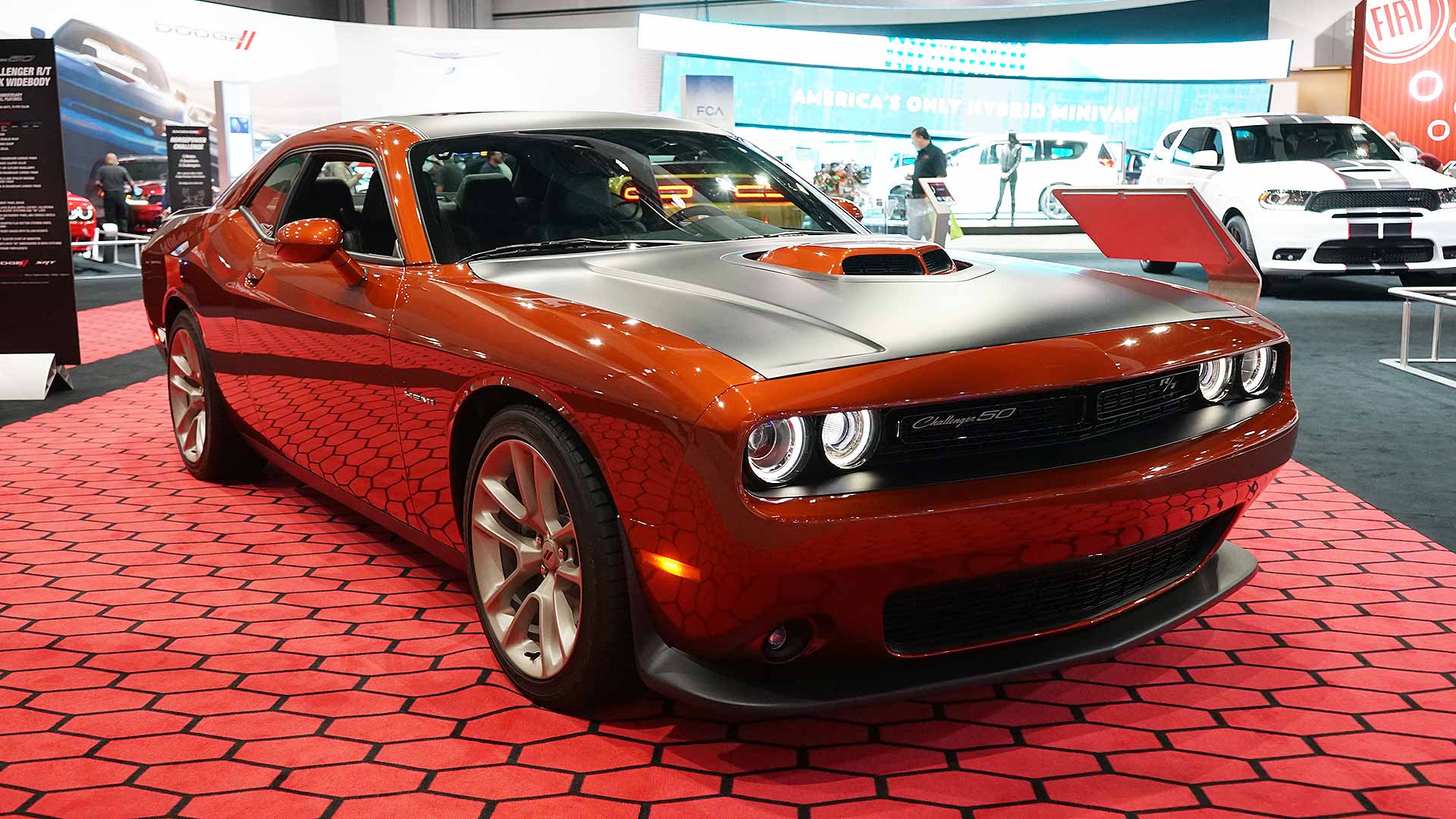
2020 Dodge Challenger RT 50th Anniversary
The limited edition Challenger 50th Anniversary package can be added to a number of models, running from the GT through to the R/T Scat Pack versions. Priced from $4,995, the package can be ordered at Dodge dealerships from December 2019. Hellcat models will simply receive the 50th Anniversary badging for the 2020 model year.
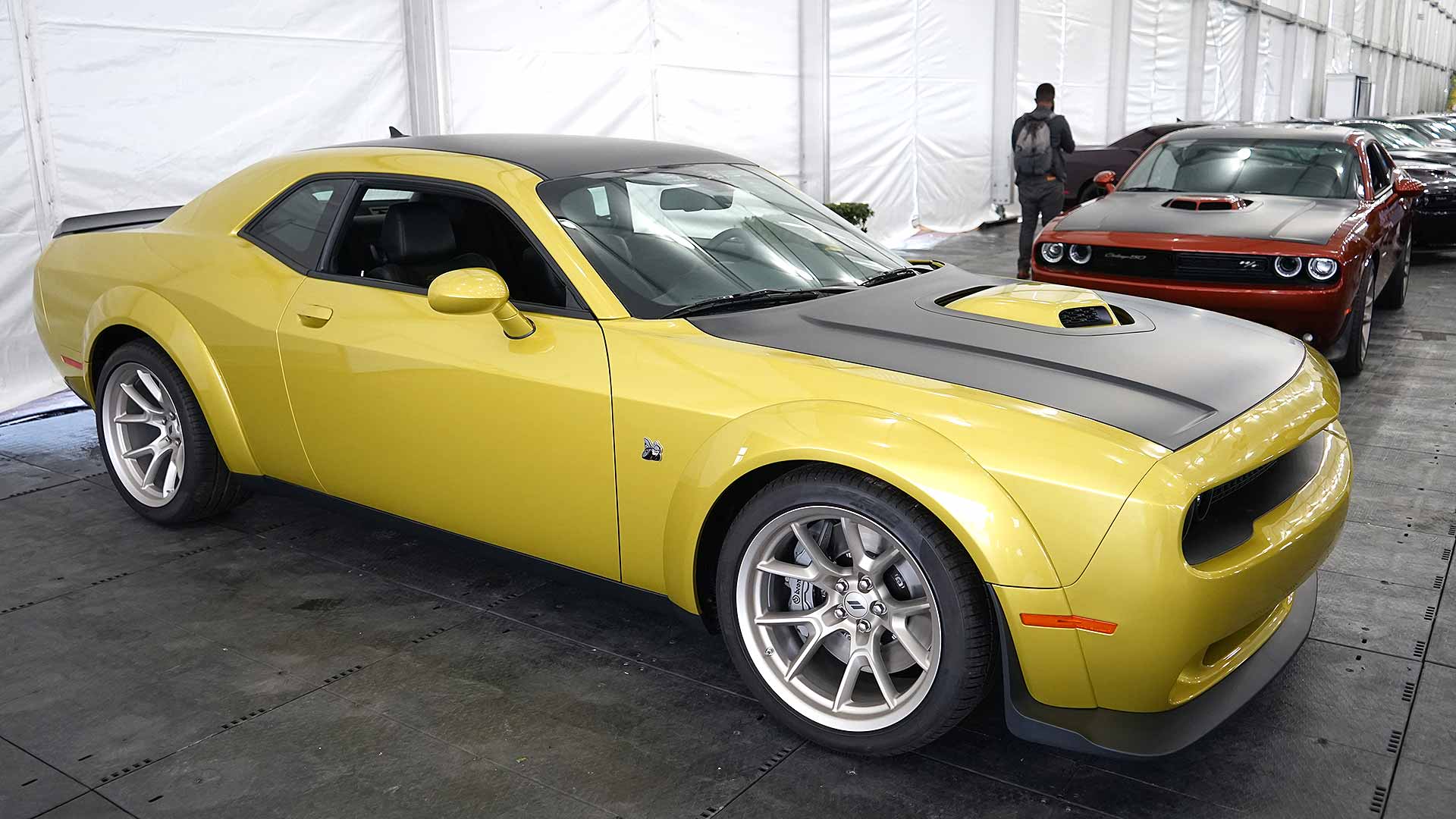
Key to 50th Anniversary are a range of classic High Impact Paint Mopar colors, including Go Mango, Tor Red, and F8 Green. A satin black hood and roof are standard, along with special 50th Anniversary badging. Unique 20-inch wheels, branded as ‘Gold School’ are also fitted to all models.
Those opting for the R/T Challenger with the 50th Anniversary package also gain another retro treat. An actual Shaker hood is fitted, directing air into the 5.7-liter or 392-cubic inch Hemi V-8 engines, just like the original 1970 Challenger. Naturally, it does shake with the engine!
Inside, all 50th Anniversary Challengers will have Sepia tones for stitching and trim, along with genuine carbon fiber elements. Most importantly of all will be a color-coded plaque, identifying which one of the 70 examples planned for each paint color and engine configuration you are in.
As parts of the UK struggle with flooding, retail website BuyACar has registered increased searches for off-roaders, notably flood-capable machines that can wade through deep water. And as we’ll discover, that doesn’t automatically mean large expensive trucks.
“As soon as the recent catastrophic floods in parts of the UK hit the headlines, we saw website traffic to our articles about driving in floodwater surge, along with searches for cars with off-road capabilities,” said Christopher Lloyd, editor of BuyaCar.
“The lesson is that a rugged image isn’t always the best indicator of a car’s capabilities and that some tough-looking models can barely cope with water any deeper than an ordinary hatchback. So, if you want an SUV that offers true ability in flooding and off-road, make sure you do your homework to ensure you pick a suitable model.”
10 of the best cars for wading depth
So without further delay, let’s take a look at 10 of the best cars for when the going gets nautical, from the Ford Ecosport to the Toyota Hilux.
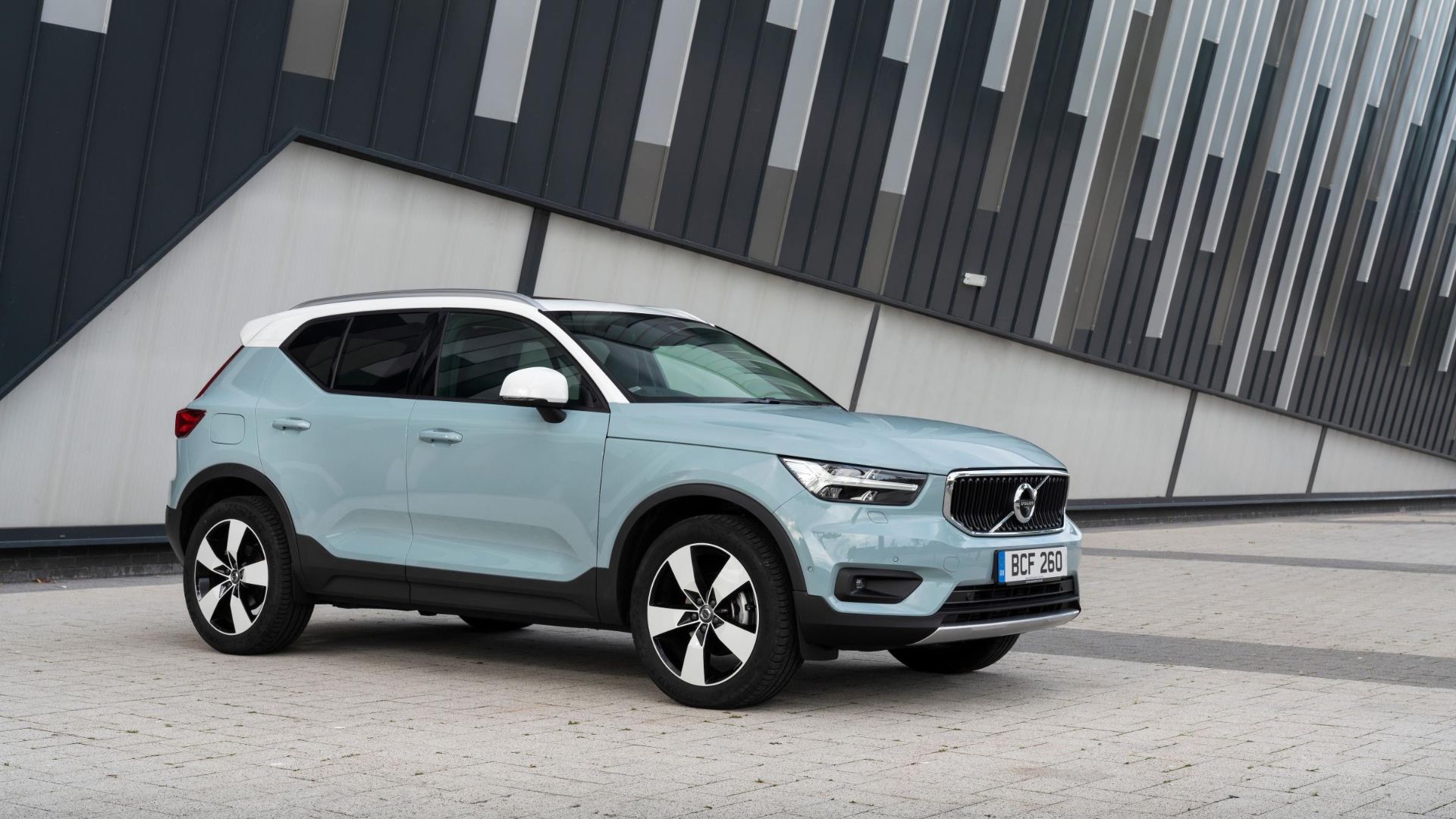
Volvo XC40
We begin with one of our favourite compact SUVs. Lovable and lauded though the XC40 is (it’s a multiple award-winner), traversing rivers isn’t high on its expected list of talents. Yet with a wading depth of 450mm, it’s a capable family car.
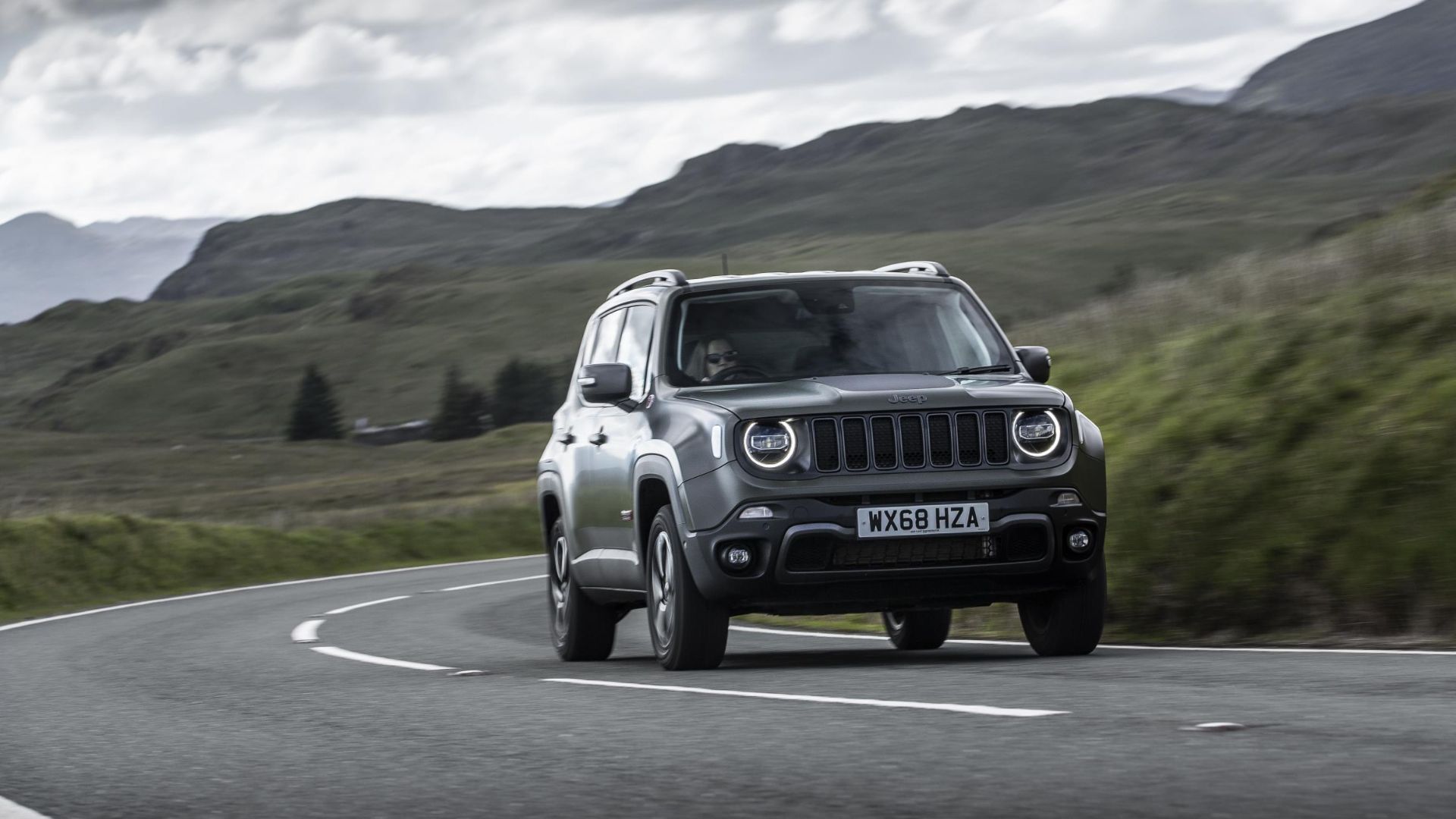
Jeep Renegade Trailhawk
With a name like ‘Jeep Renegade Trailhawk’, you’d hope this little SUV would be able to traverse the seabed. So its actual wading depth of 480mm seems slightly disappointing.
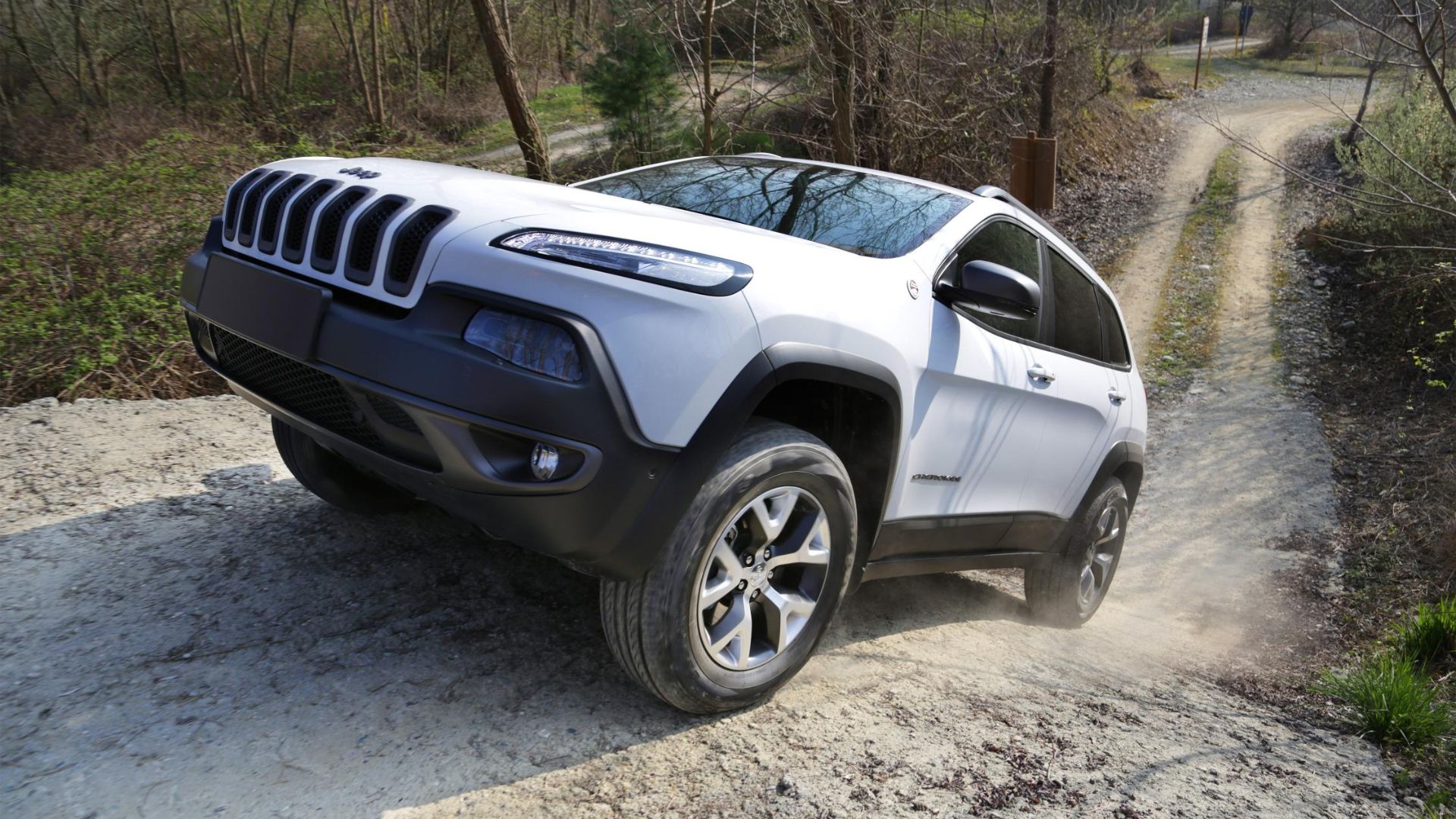
Jeep Cherokee Trailhawk
The Cherokee betters that, with a wading depth of 508mm. It’s also larger and more practical than the Renegade.
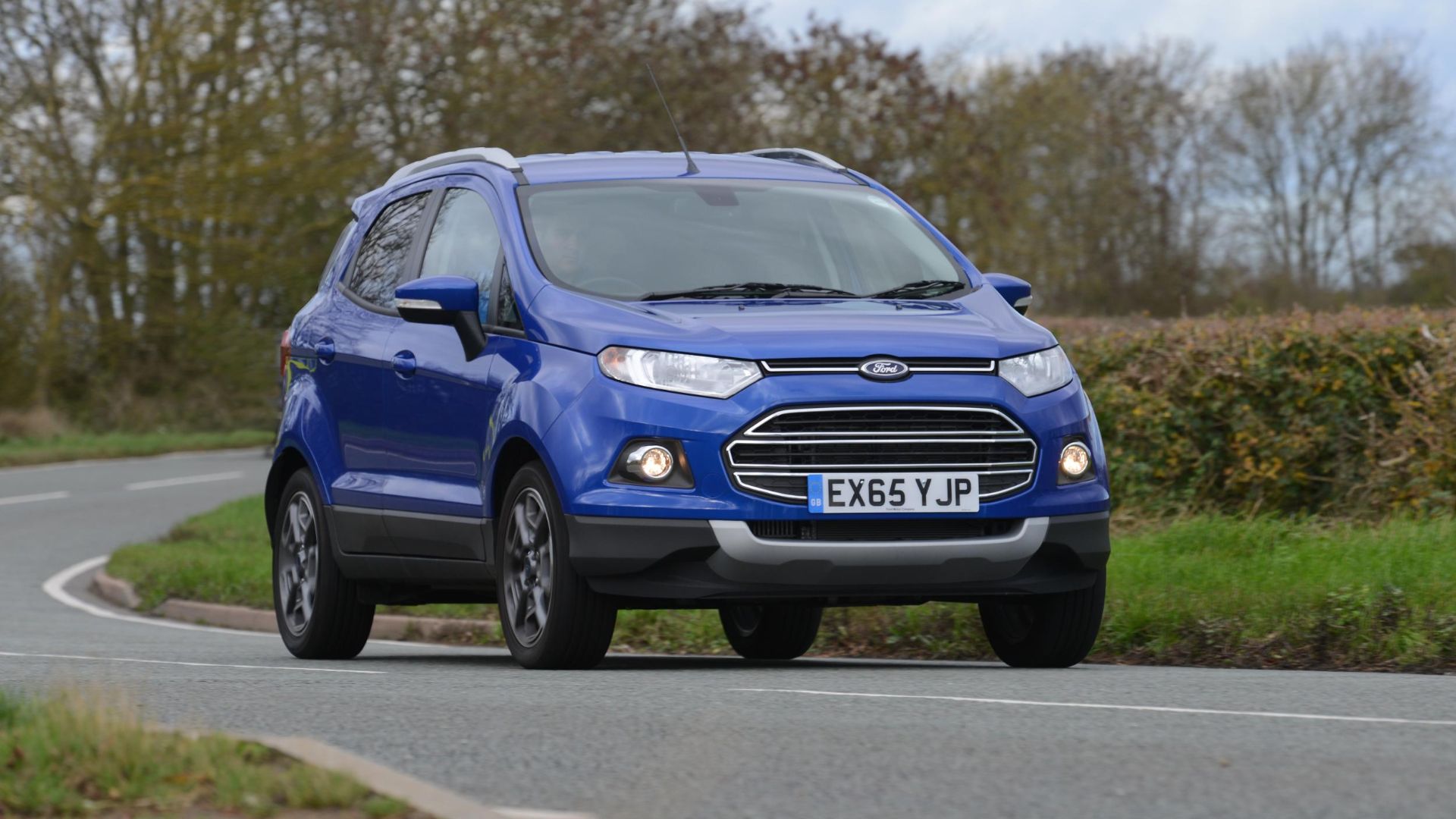
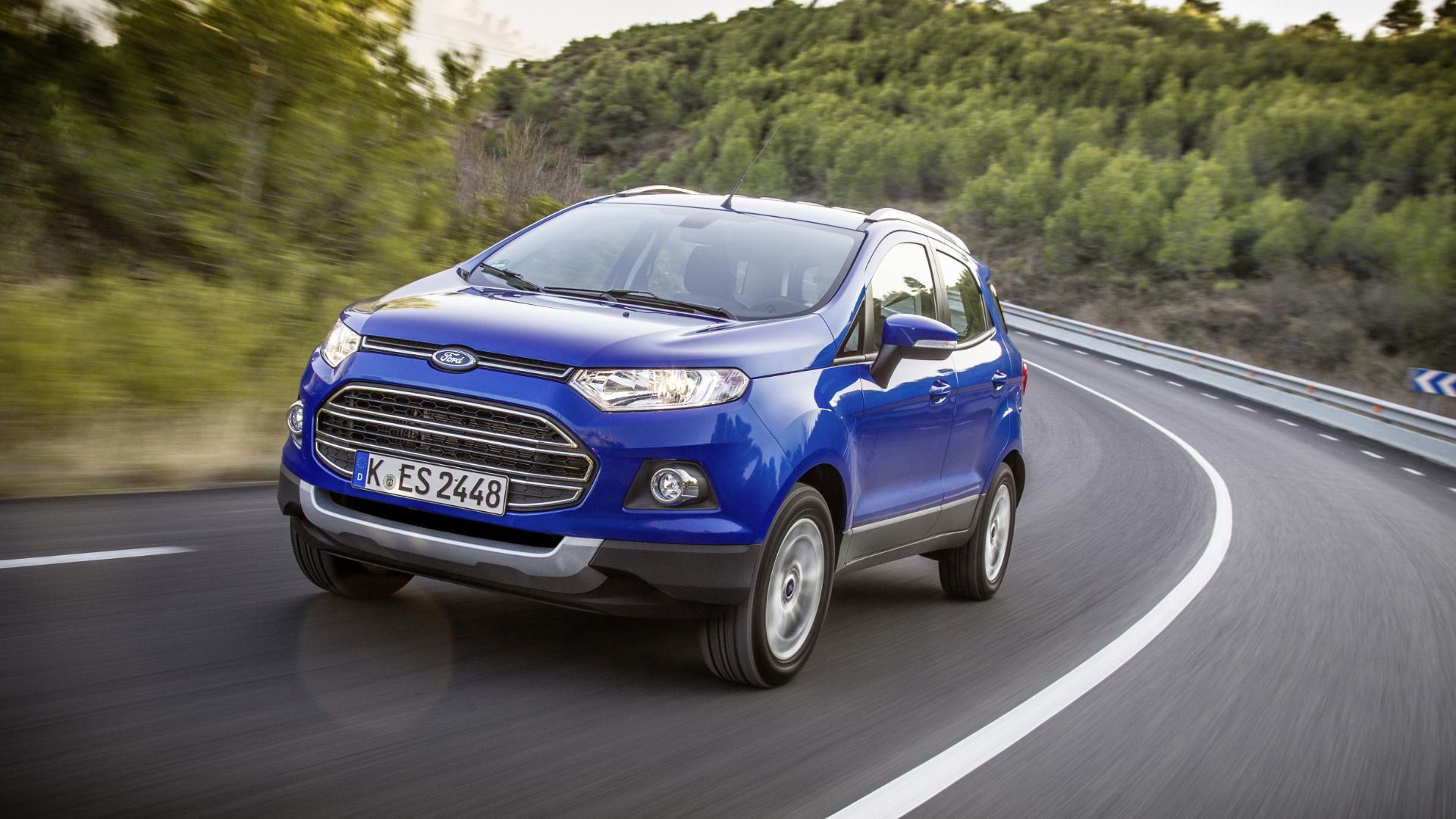
Ford Ecosport
Prepare to be surprised: Ford’s dinky little crossover can wade to an impressive 550mm. The rest of the car isn’t so impressive, but a 2014-2017 model can be bought for less than £7,000.
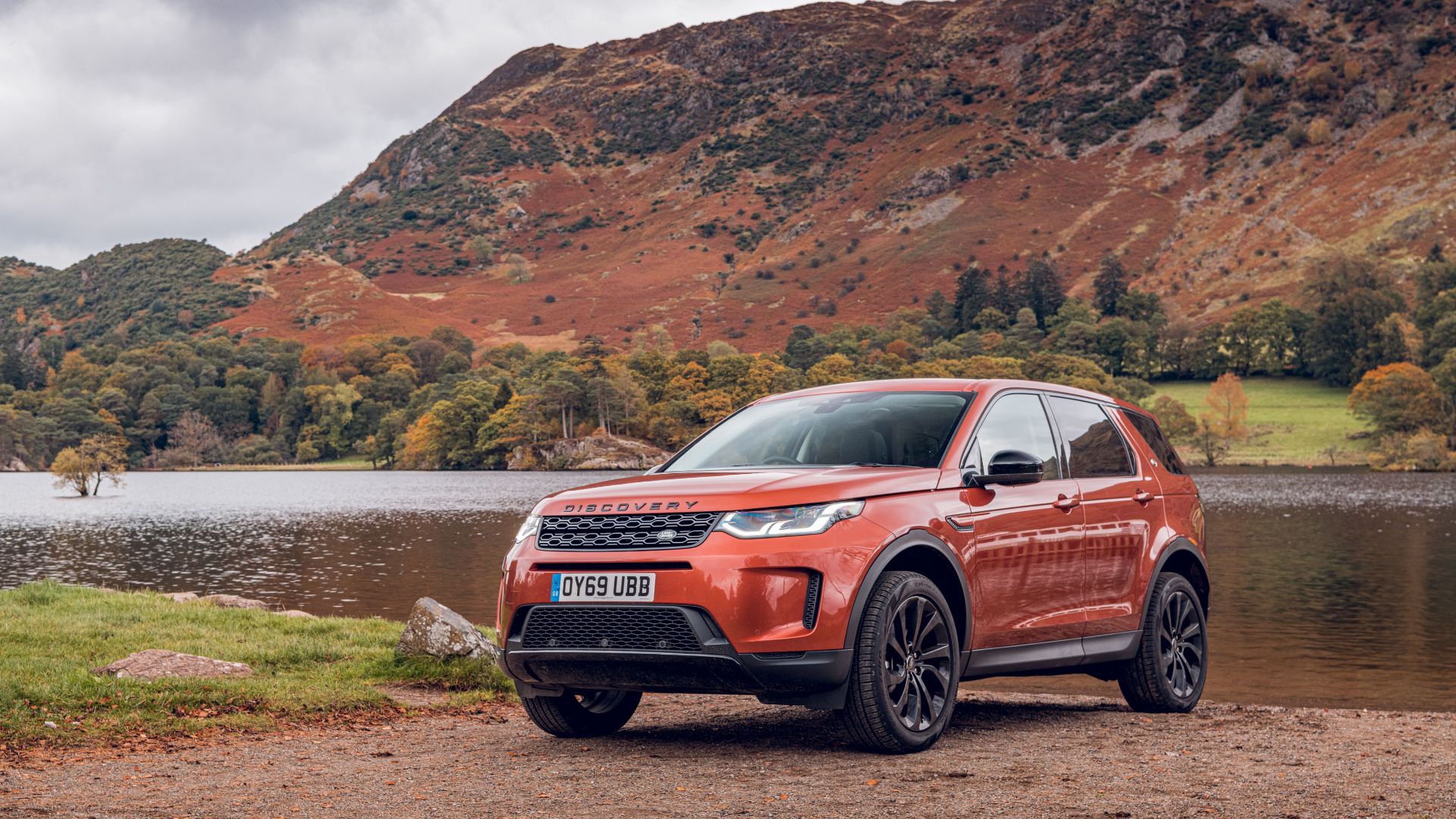
Land Rover Discovery Sport
What kind of list would this be if it didn’t include a Land Rover? The Discovery Sport lives in the shadow of the full-size Discovery, plus various plusher Range Rovers. It’s still a comfortable and rugged SUV, however, with a wading depth of 600mm.
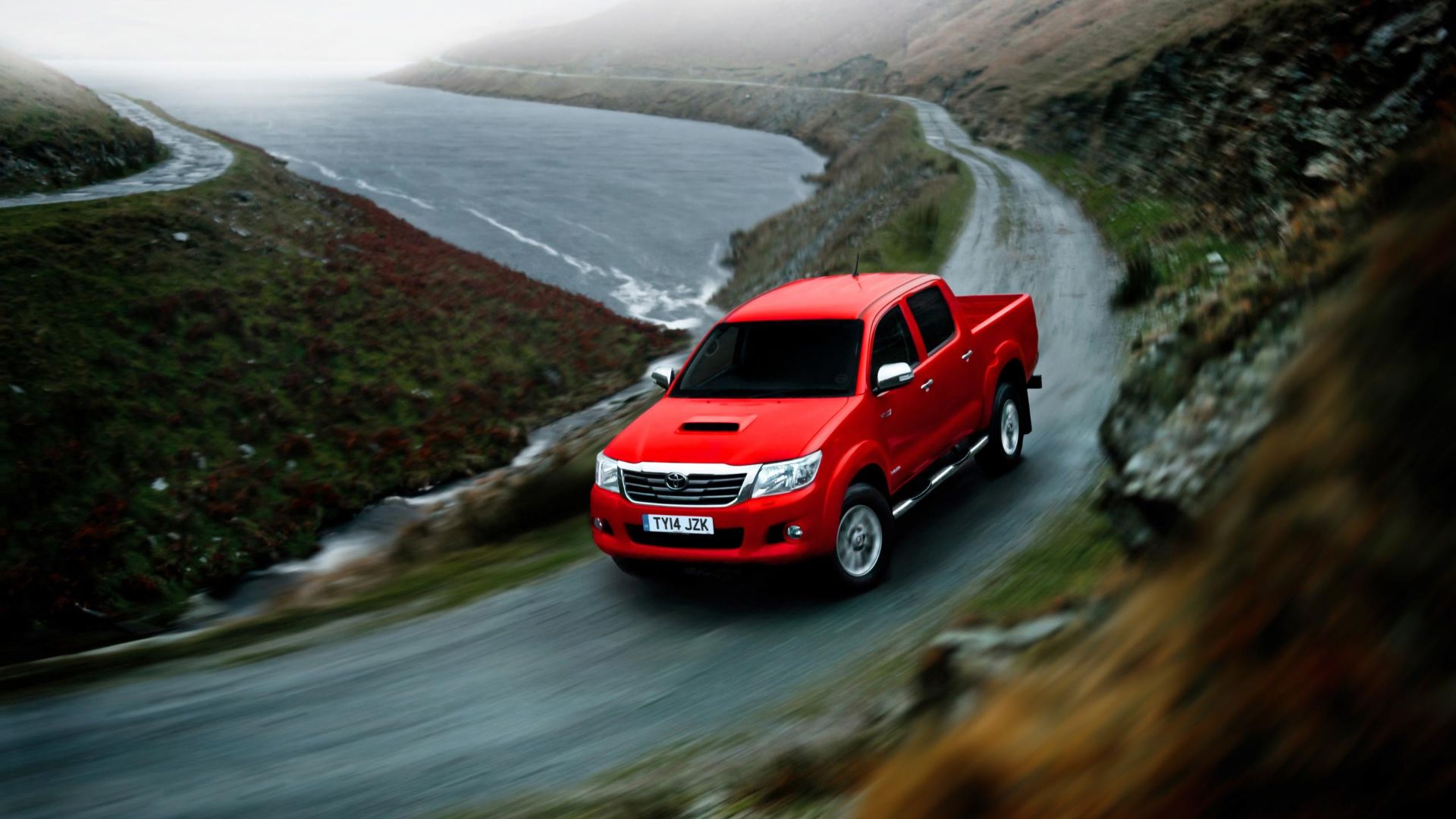
Toyota Hilux
The car that Jeremy Clarkson couldn’t kill is, of course, an off-road hero. The iconic Toyota Hilux will wade through 700mm of water, and is the first of a trio of Japanese models on this list.
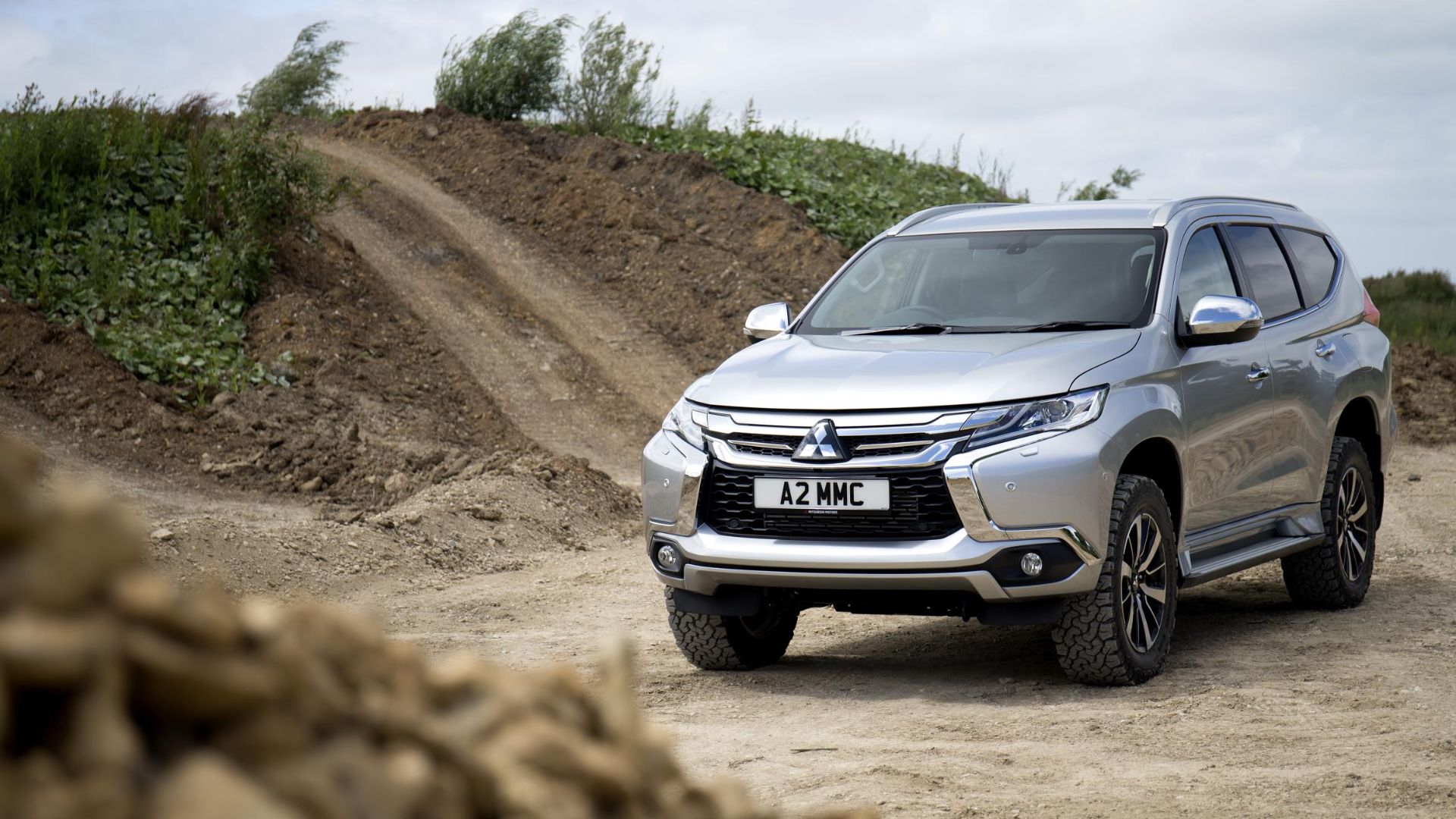
Mitsubishi Shogun Sport
The next is the Mitsubishi Shogun Sport. Living up to its esteemed name, it’ll get through 700mm of water.
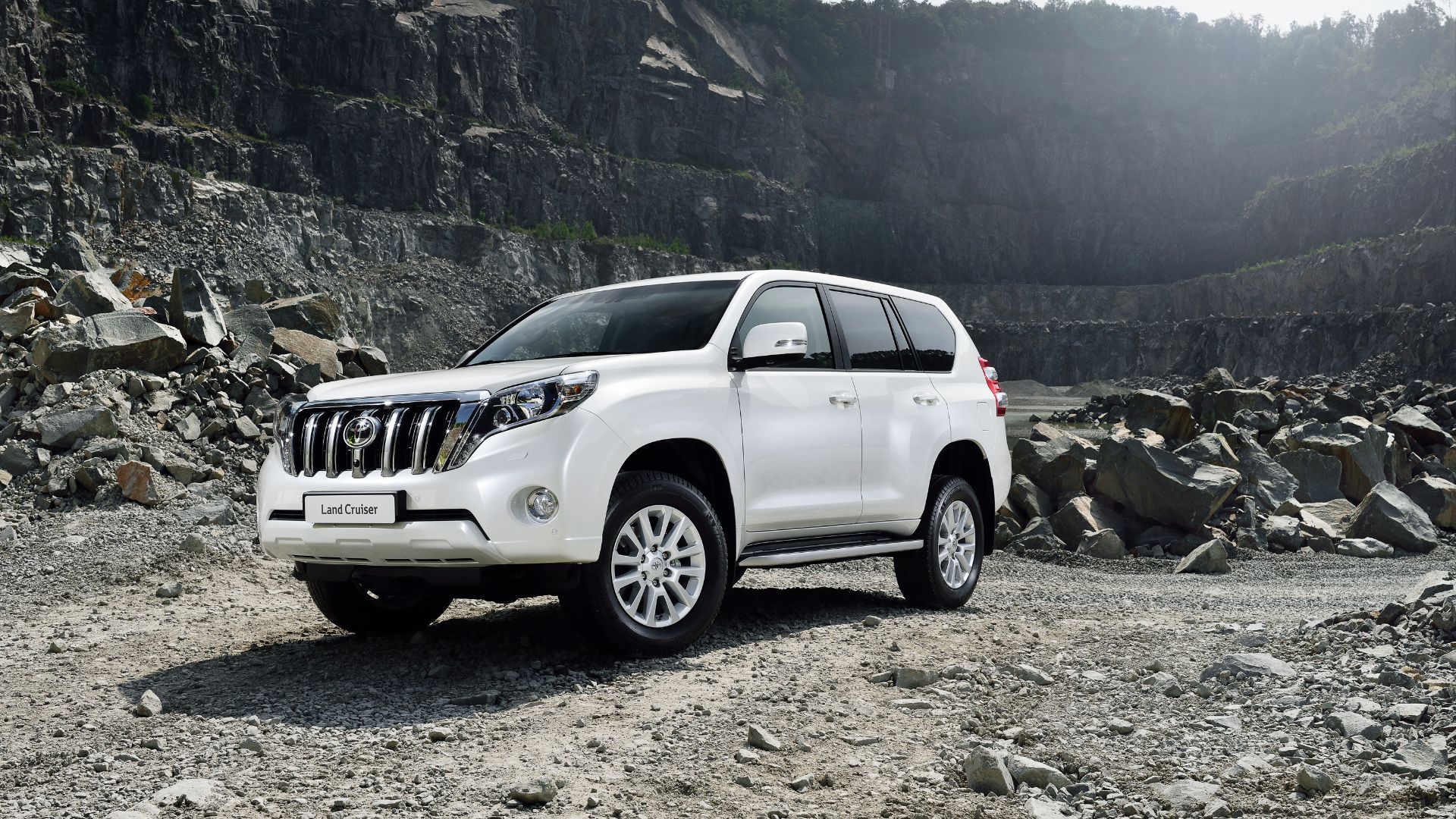
Toyota Land Cruiser
Further up the Toyota hierarchy is the luxurious Land Cruiser. But just because it has leather seats, that doesn’t make it a softie. It’ll wade up to 700mm, and there’s certainly less risk of being swept away.
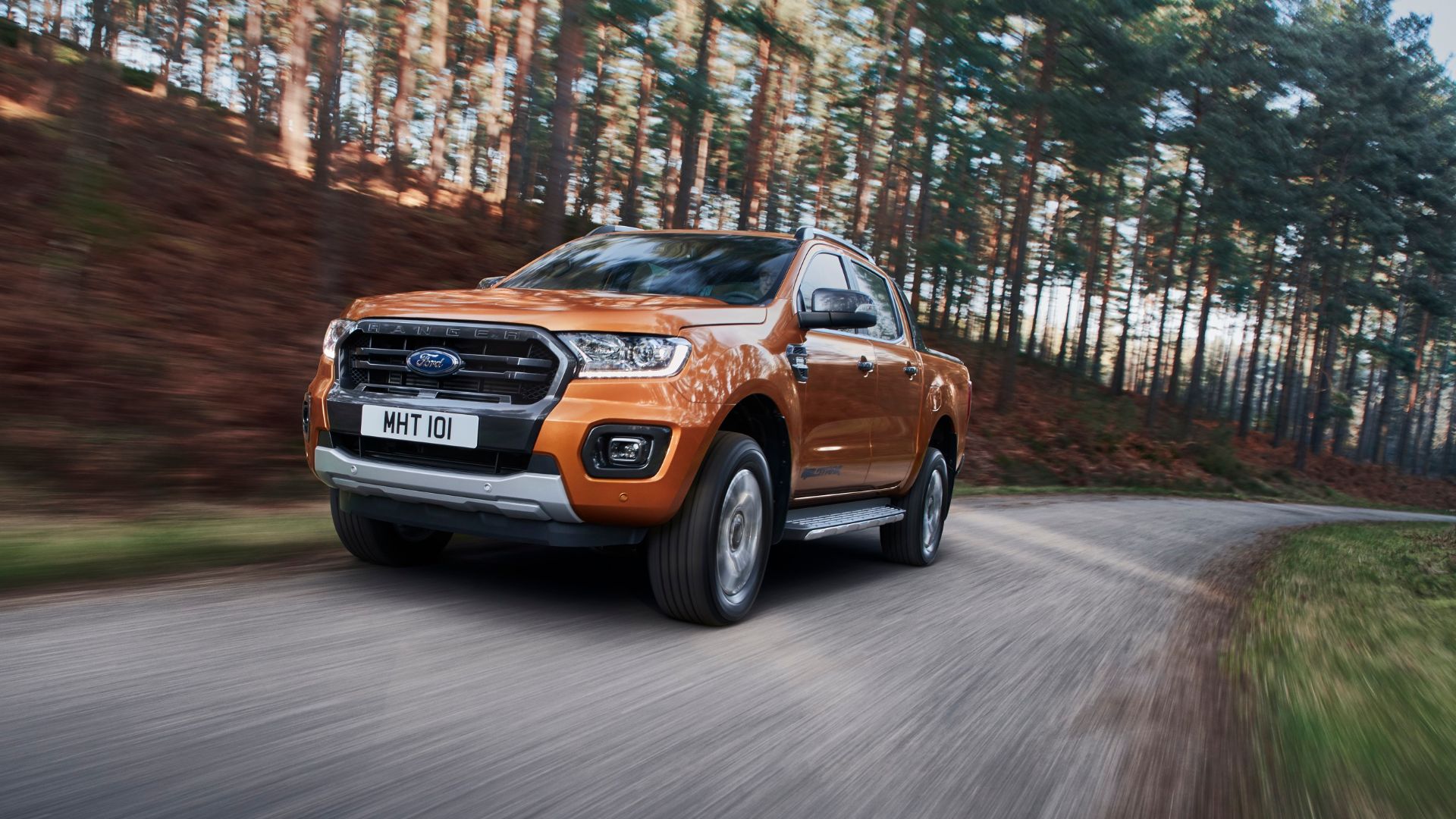
Ford Ranger
The Ford Ranger is the default pick-up of the moment. It’ll wade to a very impressive depth of 800mm, which is the best you’ll get (on this list).
Land Rover Defender
Until Land Rover starts delivering these, anyway. The hotly-anticipated new Defender has a lot to prove, and muddy boots to fill. The figures are promising, with a best-ever wading depth of 900mm. We can’t wait to test that. Customers will start getting their cars early next year.
Honourable mentions
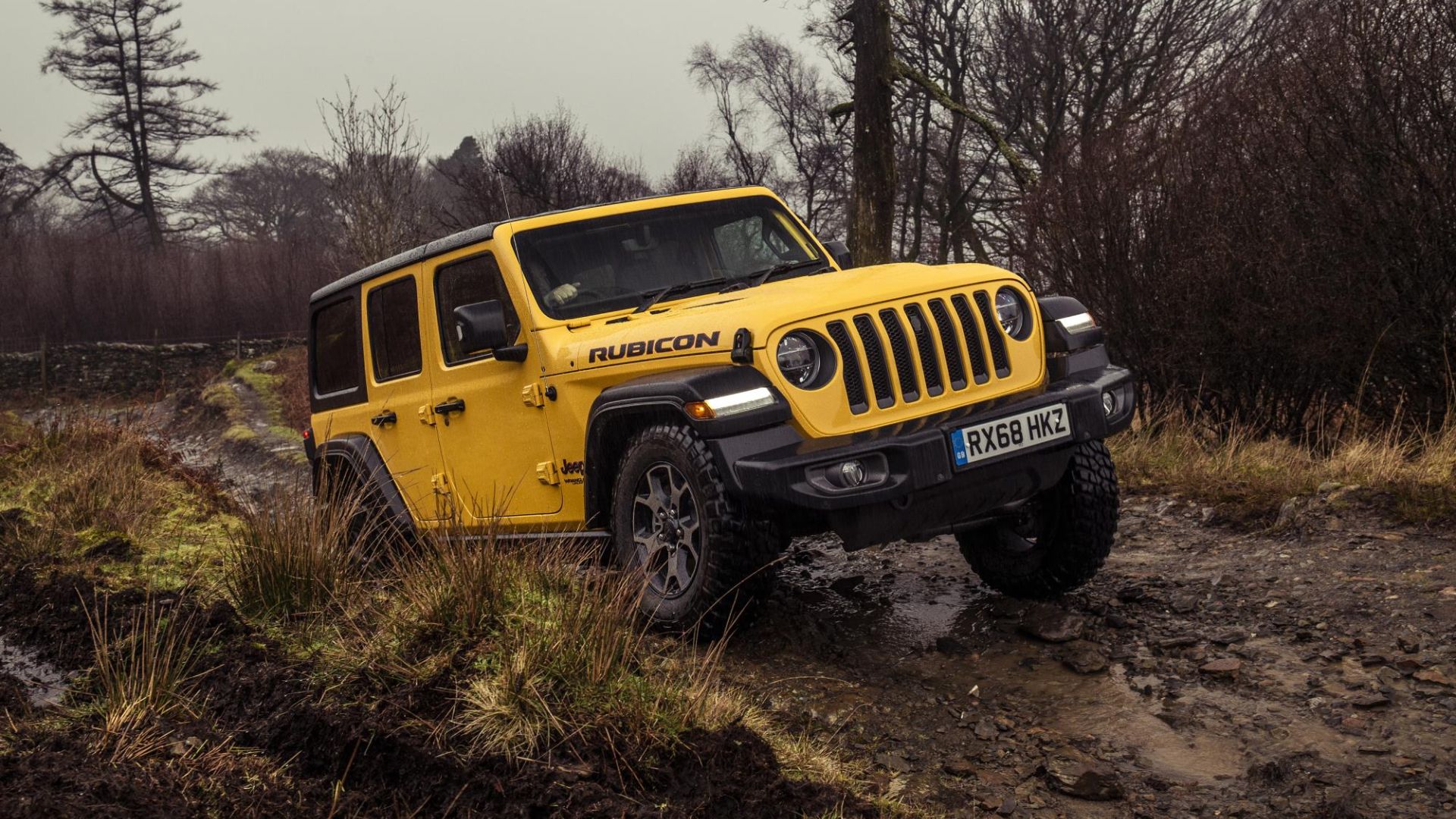
Although not on the BuyaCar list, you could also consider the Jeep Wrangler or Range Rover. The Wrangler betters its softer Jeep siblings, with a wading capability of 760mm. The big Rangie can handle more than 800mm, and tell you how deep the water is in real-time. Even the baby Range Rover Evoque is good for 600mm, which is equal to the old Mercedes G-Class, although not the new one’s 700mm capability.
Less honourable mentions
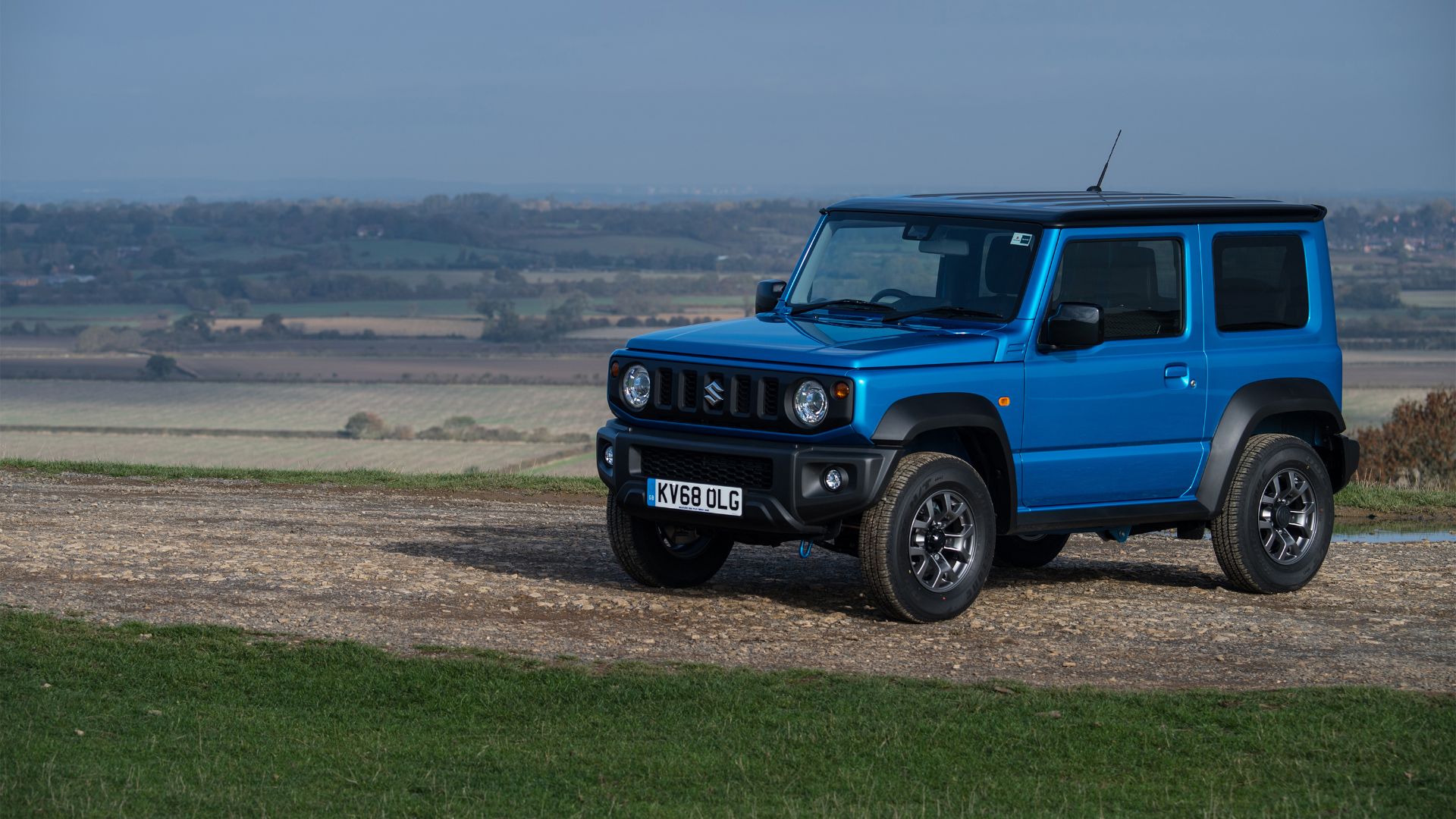
Not such a great performer in this respect is the new Suzuki Jimmy. Officially, it’s only good for 320mm. Proof it’s worth doing your homework when buying a flood-capable car.
As the last international motor show of the year, the LA Auto Show has an end-of-term feel to it. It’s a chance to recap on the motoring year just gone and look forward to the most important new releases of the next 12 months. Here are some of the hottest new cars on show.
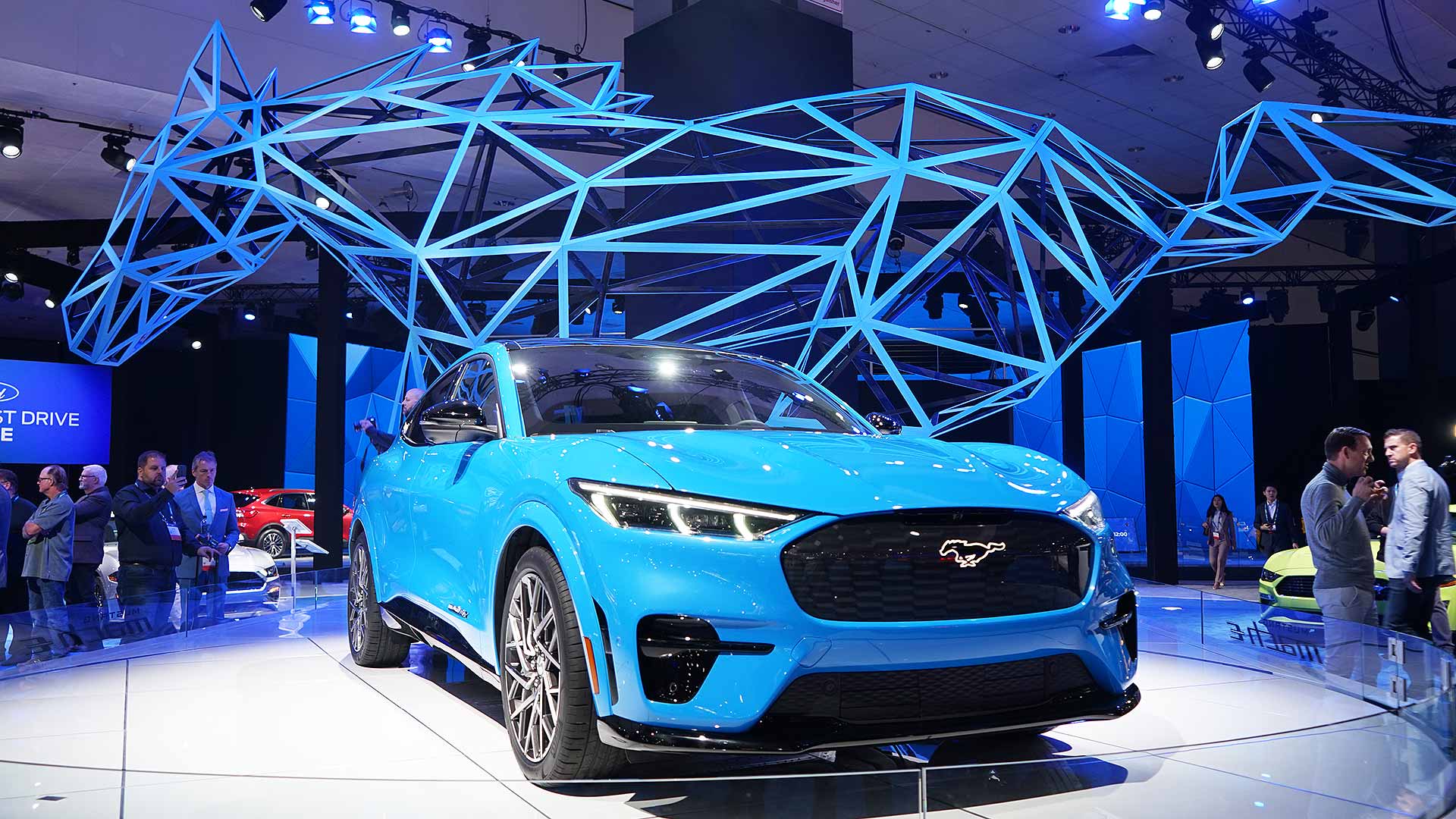
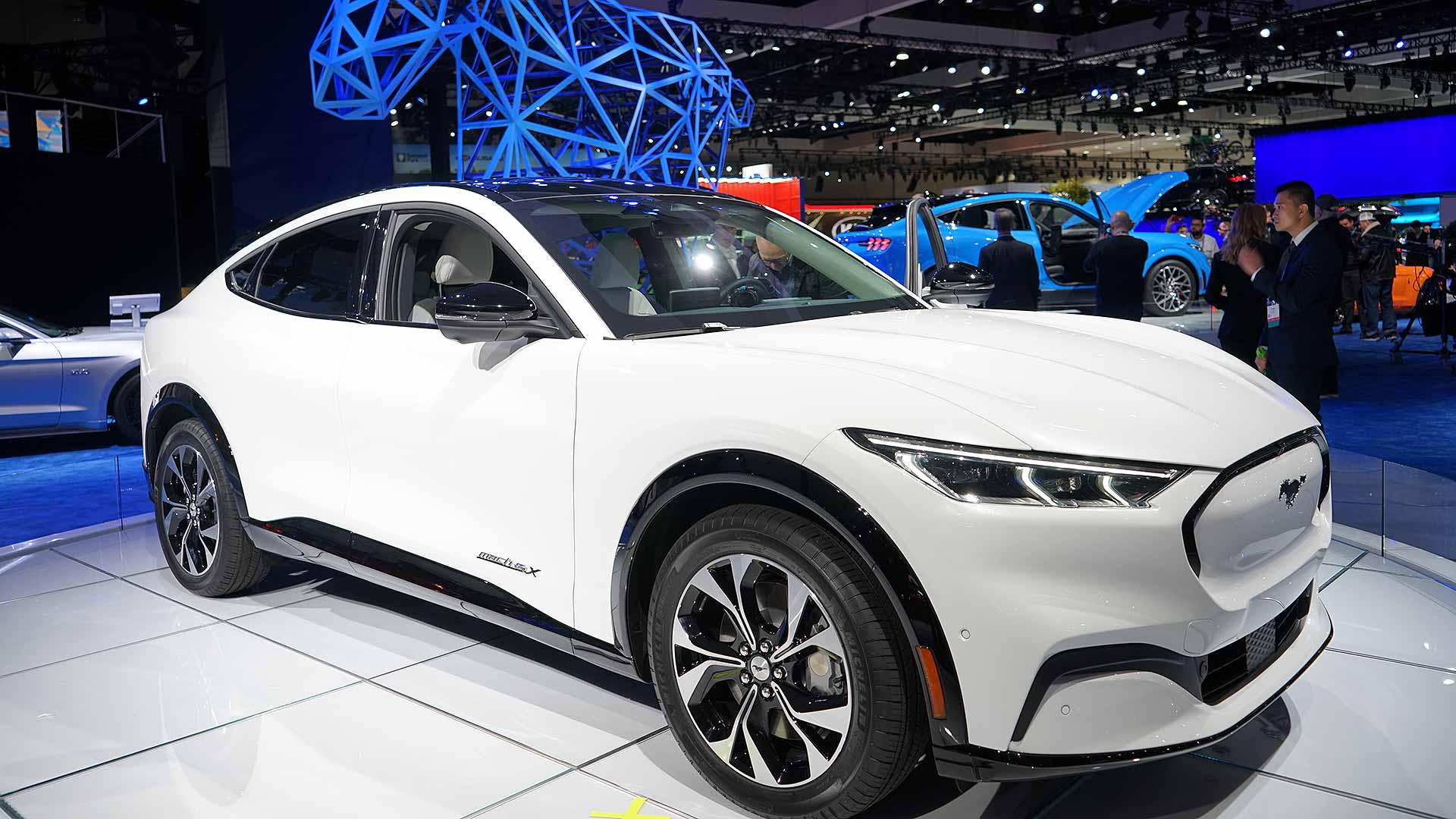
A new Ford Mustang will always grab top billing at a U.S. motor show, but this one is a little different. The fact that it’s electric will have some raising a few eyebrows, but the use of the Mustang name makes a lot of sense. As does the fact that it’s an electric SUV, because that’s what the world is demanding. Available with a choice of two batteries and three power outputs, the Mach-E could offer up to 370 miles of electric range. It’s packed with the latest tech, while a large 402-liter boot and 100-liter ‘frunk’ mean it’s practical, too. Still want that V8, etc, etc?
BMW M2 CS
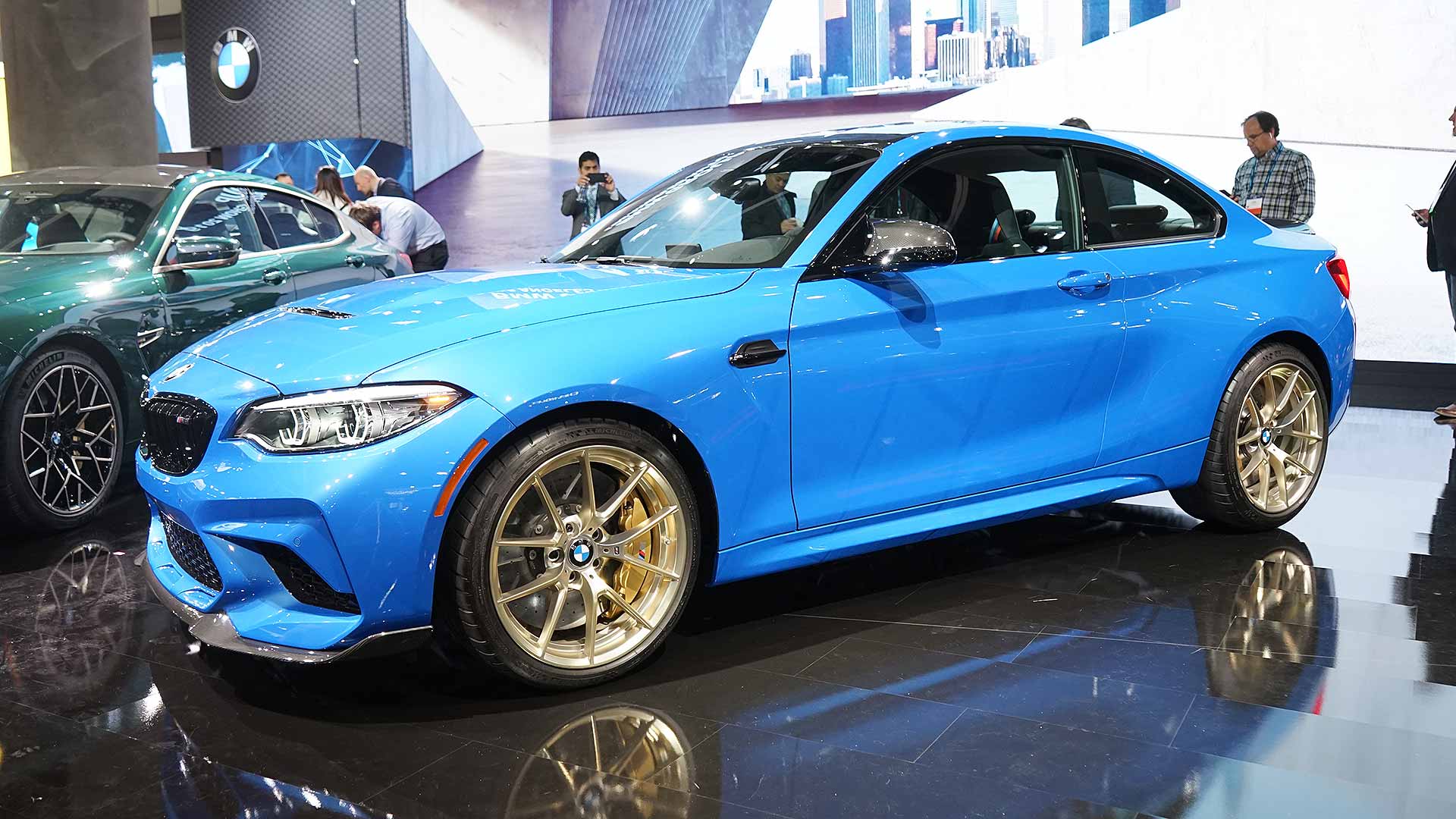
From the dawn of a new era to a last hurrah. The BMW M2 CS is a run-out special before this compact coupe is discontinued. Its 3.0-liter twin-turbocharged straight-six engine has been tweaked to deliver an extra 40 horsepower, while a strict diet has saved a few kilos. The front splitter, boot spoiler and rear diffuser are all carbon fiber, and the vented carbon hood is half the weight of a standard steel item. The 19-inch forged wheels weigh 9 kg at the front and 10 kg rear (and are available in gold finish).
Audi E-tron Sportback
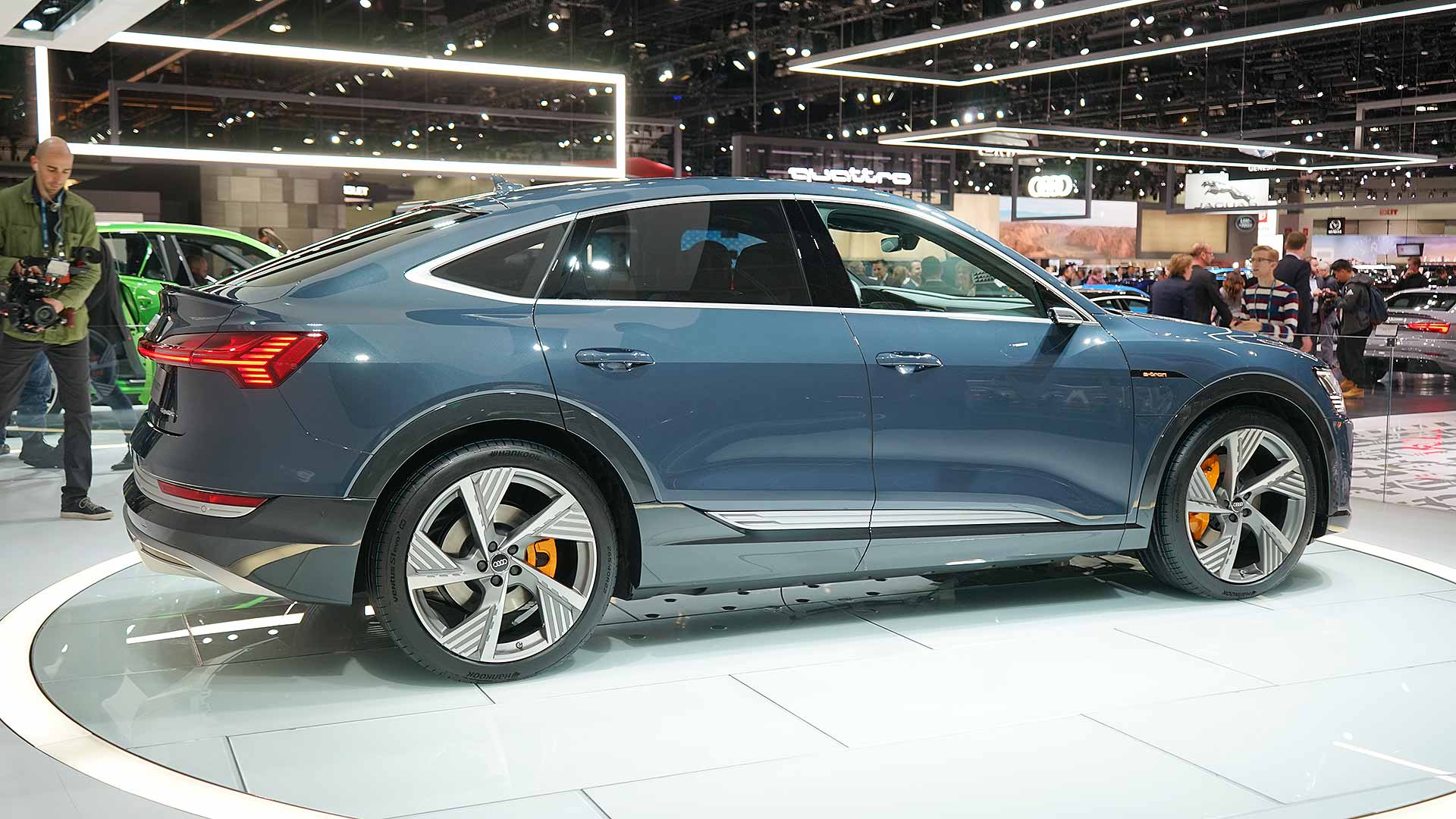
One of two Audi debuts, the E-tron Sportback shares its platform with the E-tron SUV and will be built in the same Brussels factory. The styling is very conventional, with a face that’s similar to the SUV and a more sloping roofline at the rear. Audi says its Digital Matrix headlights are a first for a production vehicle. They use around a million micro-mirrors to illuminate the road ahead with ‘unprecedented precision’, the company claims. Key figures are a 277-mile electric driving range, a 0-60 mph time of under 5.7 seconds and an ability to recharge to 80 percent capacity in just 30 minutes.
Lexus LC 500 Convertible
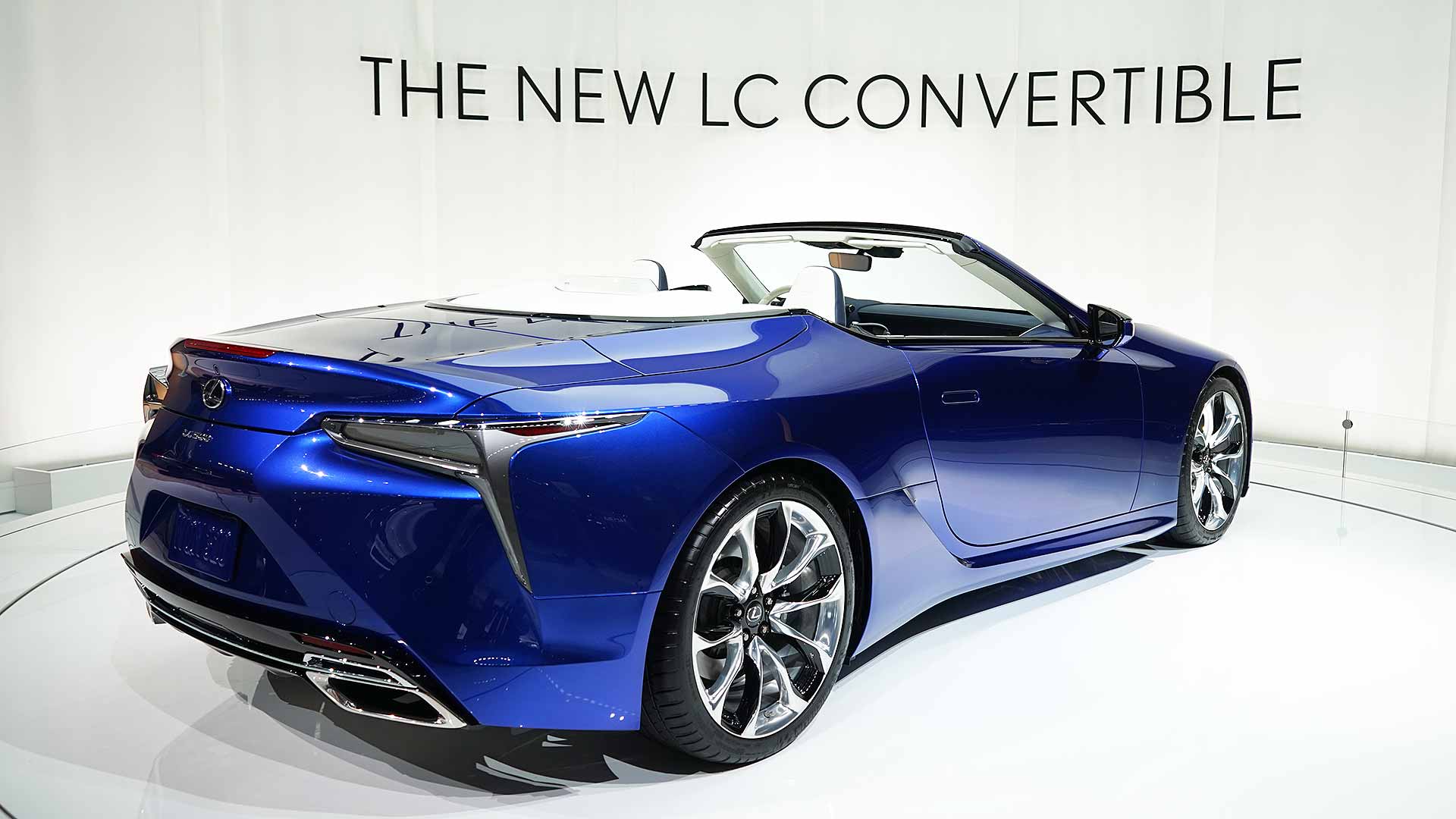
If they were dishing out awards for the most alluring car at the LA show, the Lexus LC 500 Convertible would waft away with a prize. It’ll go on sale next summer, with power sourced from a 5.0-liter V8 engine mated to a 10-speed automatic transmission. The four-layer soft top – which is available in black or beige – takes 15 seconds to open and 16 seconds to close. The LA show car is one of 100 models offered in Structural Blue paint with white leather and a unique blue top. There’s no word on the price, but you can expect to pay a premium for the convertible.
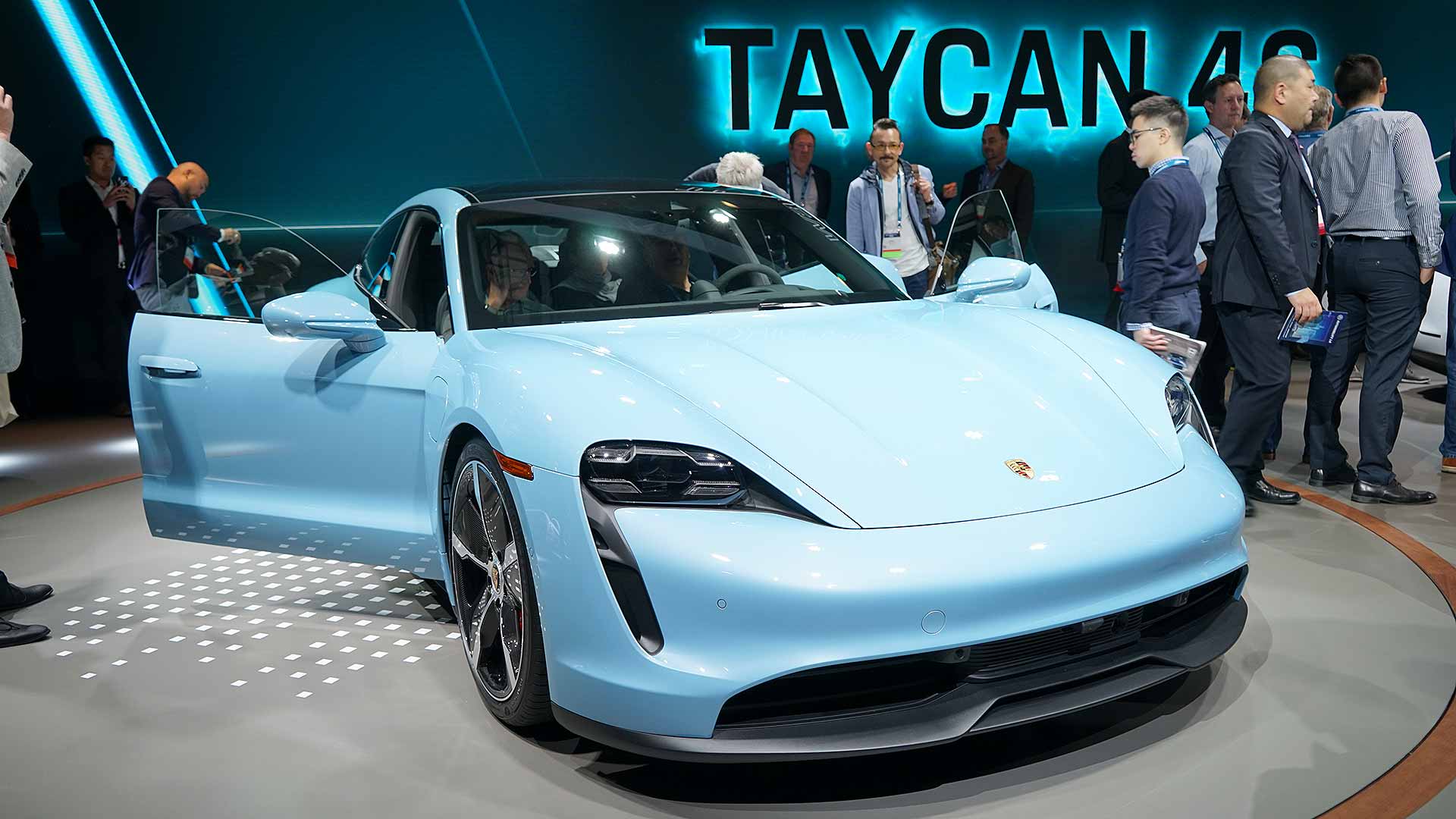
Porsche Taycan 4S
The 4S follows the Turbo S and Turbo as the third member of the Porsche Taycan family. The entry-level Taycan is available with two battery sizes and delivers up to 390 kW (530 hp) with the Performance battery or 420 kW (571 hp) with the Performance battery Plus. In both cases, the Taycan 4S sprints to 62 mph 4.0 seconds, before hitting a top speed of 155mph. Its range is 407 km (253 miles) with the Performance battery and 463 km (288 miles) with the Plus.
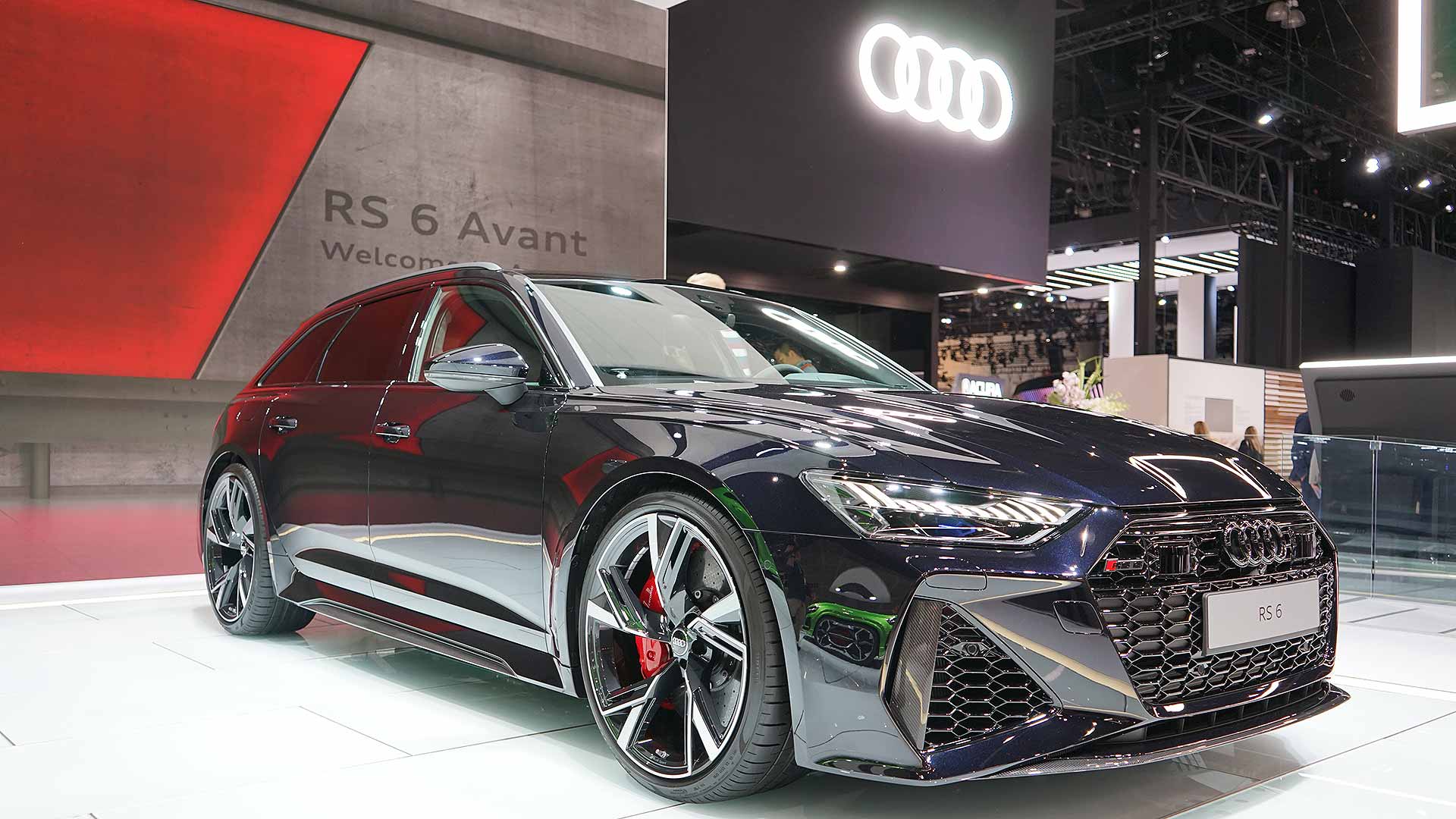
Audi RS6 Avant
At last, Audi is offering its famed RS6 Avant wagon to North American enthusiasts. It goes on sale in 2020 and, judging by the interest it’s generated at the 2019 LA Auto Show, it’s certain to prove popular. Prices and U.S. power figures will be announced nearer to launch: in Europe, it puts out a full 600 horsepower, so fingers crossed Audi can match it here.
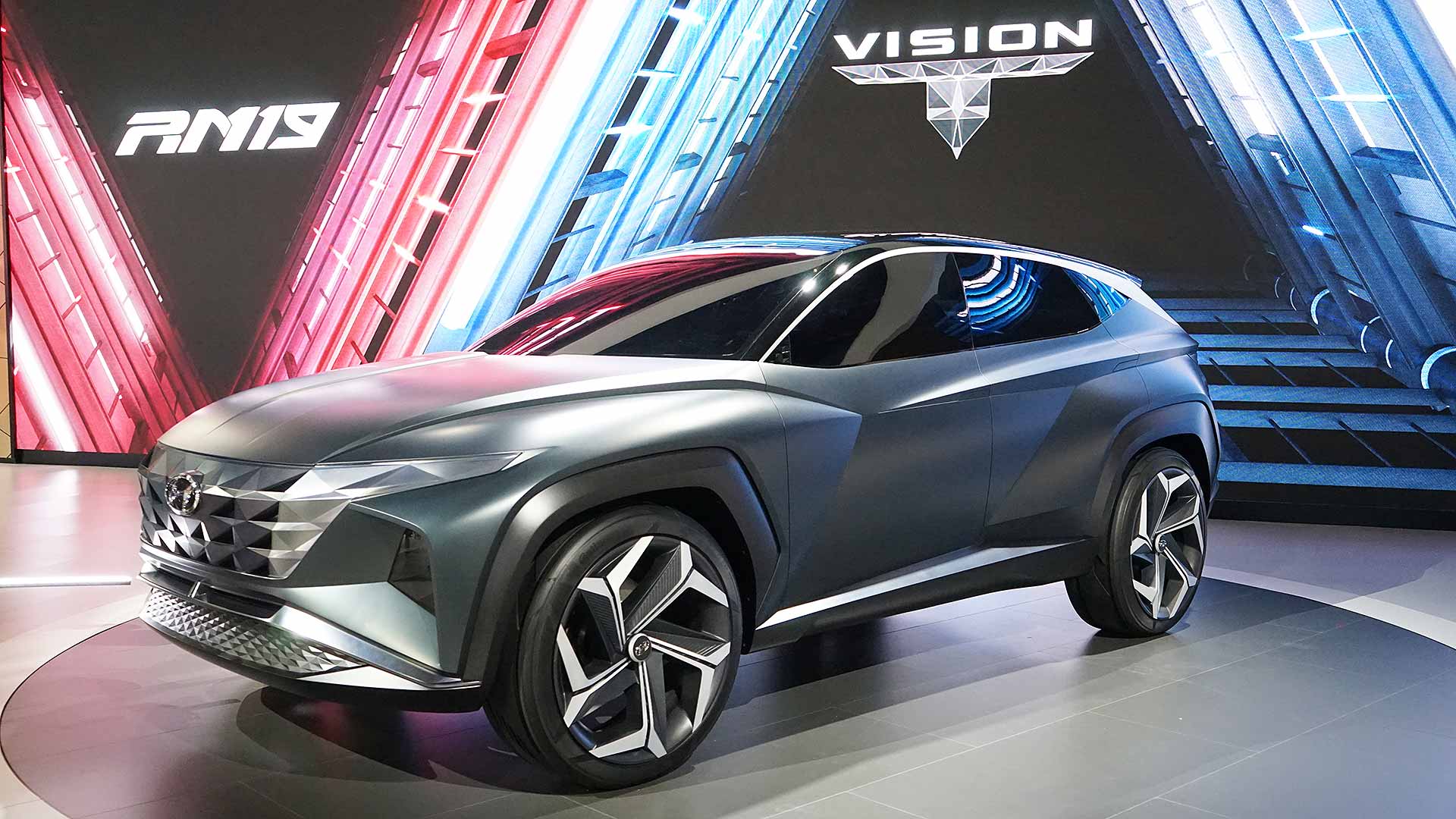
Hyundai Vision T Plug-in Hybrid SUV Concept
Meet the seventh concept from the Hyundai Design Center. It’s described as evolving the firm’s Sensuous Sportiness global design language, and teases the upcoming new Tucson urban SUV. The plug-in hybrid drivetrain gives a useful slice of all-electric running and warrants the matte-green exterior finish, says design chief SangYup Lee.
Dodge Challenger 50
The Dodge Challenger is 50 in 2019, and to celebrate, FCA is launching a special 50th Anniversary Edition custom pack, priced at $4,995. It’s offered on Challenger GT RWD, R/T Shaker, R/T Scat Pack Shaker and R/T Scat Pack Shaker Widebody. There’s 70 of each, all individually numbered, and a bold new colour called Gold Rush also joins the range. Certain to be collectable, the 2020 Dodge Challenger 50th Anniversary Edition arrives in dealers early spring 2020; ordering opens next month.
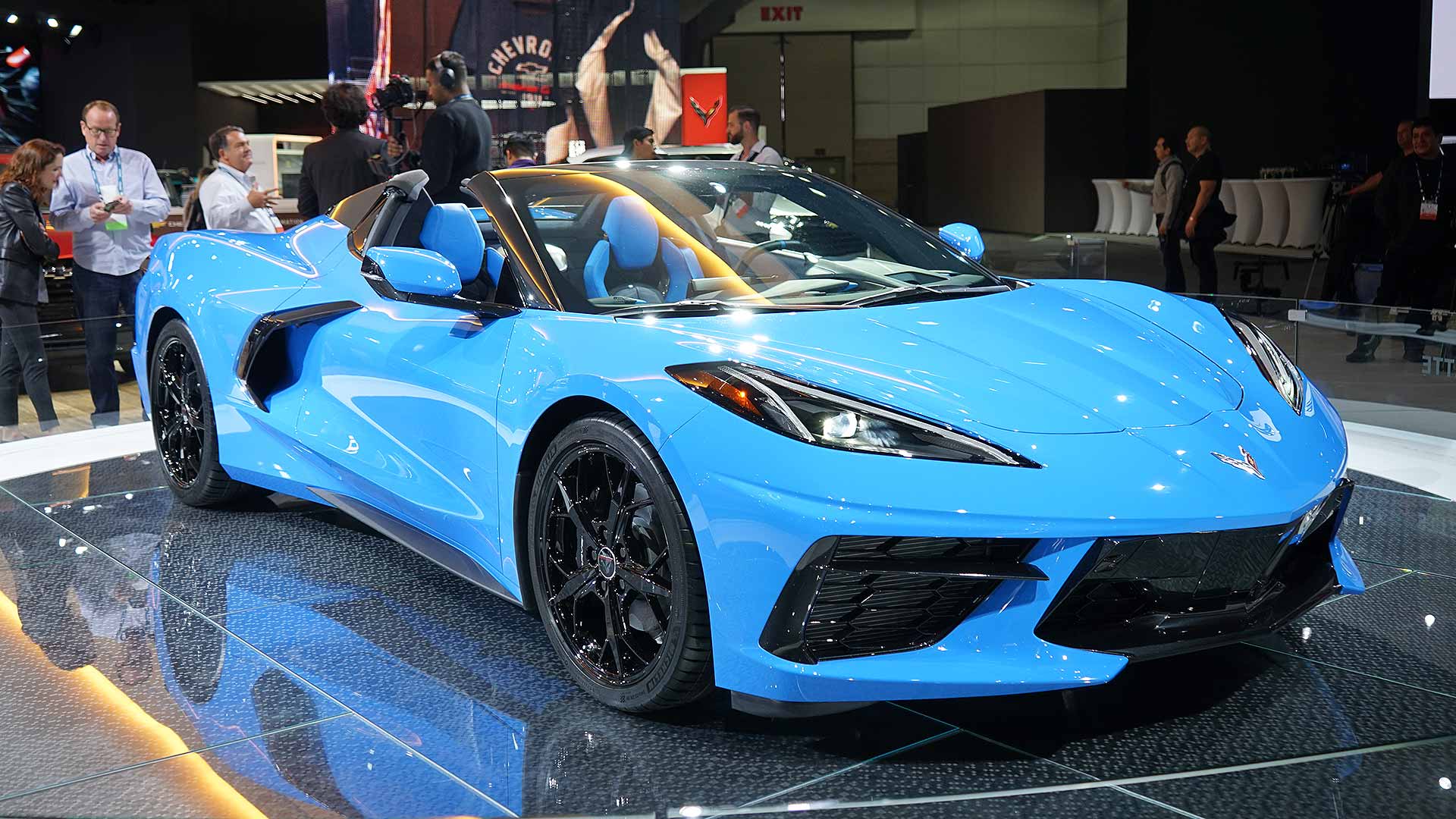
Chevrolet Corvette Convertible
We’ve seen the new mid-engined Corvette, and Motor Trend has recently voted it car of the year, but that didn’t stop the crowds from gathering here in LA. Both coupe and Convertible models were on display.
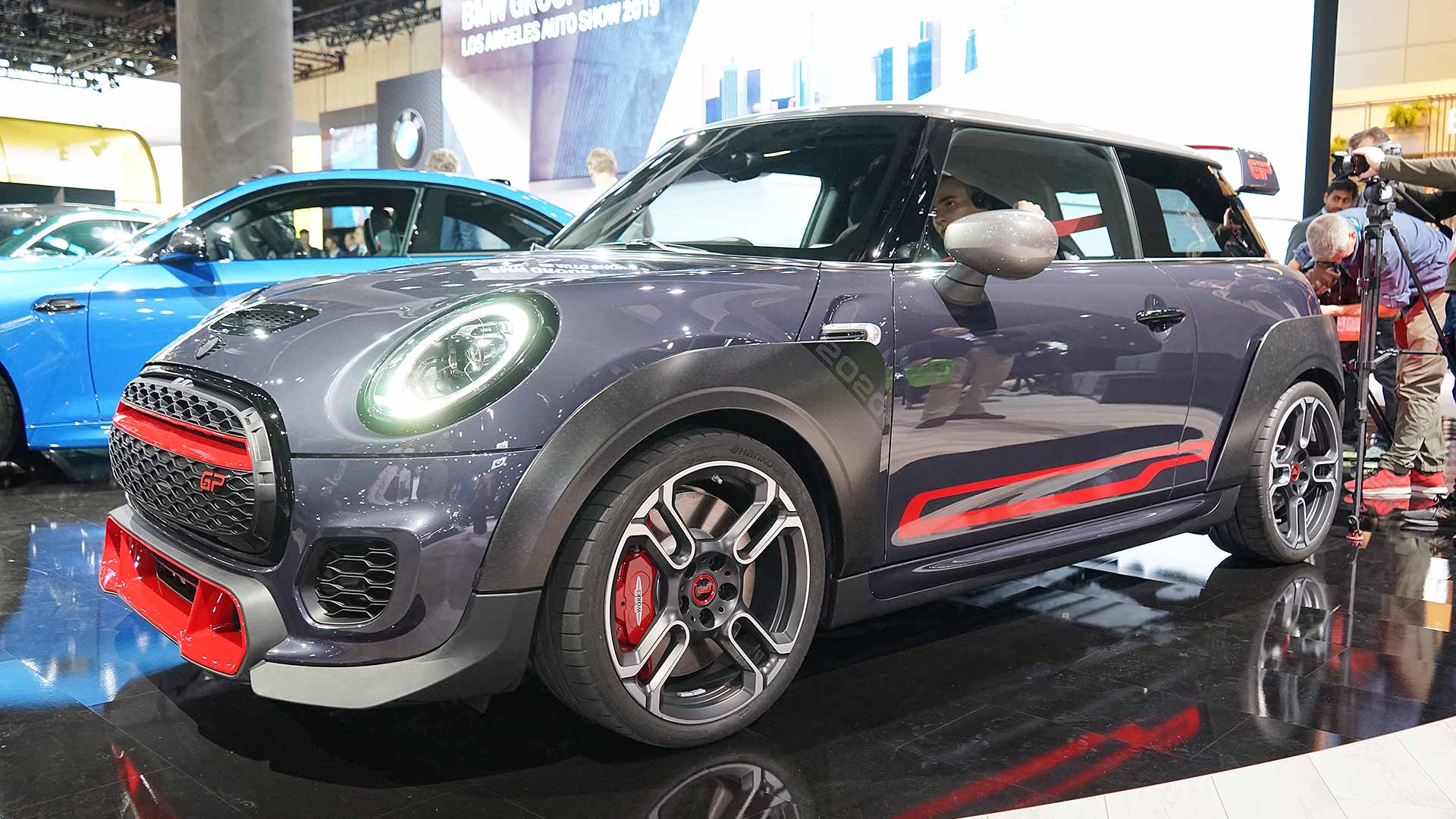
Mini John Cooper Works GP
How much would you pay to get your hands on the hottest Mini? The John Cooper Works GP will cost from $45,750 (plus $850 destination), and 3,000 will be built. Each car will pack 306 hp, new chassis technology, bespoke aerodynamics and the bragging rights associated with a sub-eight-minute Nurburgring lap time. What a way to celebrate 60 years of the Mini nameplate.
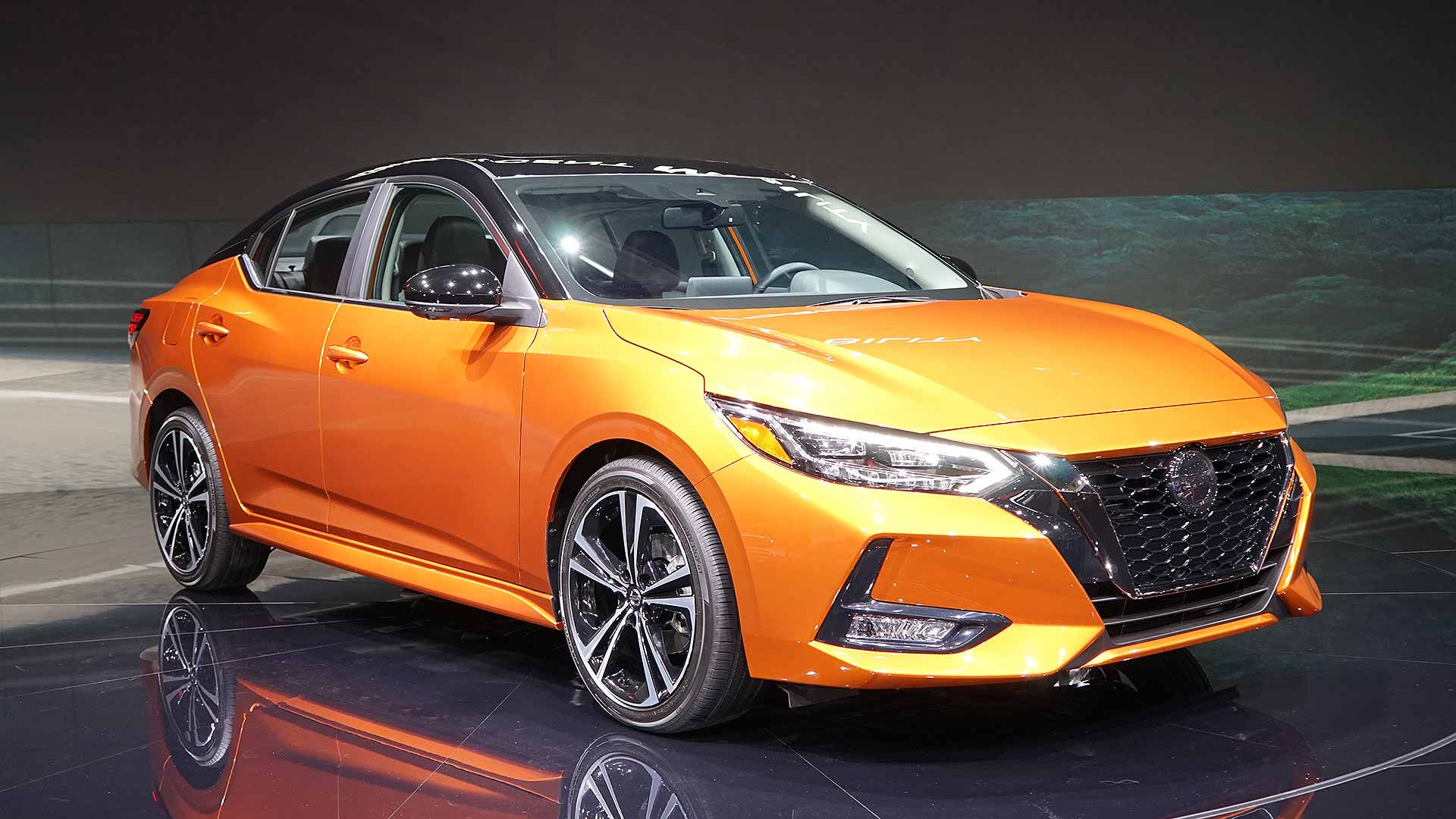
Nissan Sentra
“The lower stance and more athletic design cues from the Maxima sports sedan give Sentra a sexy new look,” said a Nissan spokesperson. While ‘sexy’ might be a stretch, it’s certainly a good looking saloon. It’s Nissan’s best-selling U.S. model of all time, so the launch of the eight-generation Sentra is a big deal. Highlights include a new 2.0-liter four-cylinder engine, a more upmarket interior, a full range of safety assistance systems and a ‘floating’ eight-inch touchscreen display.
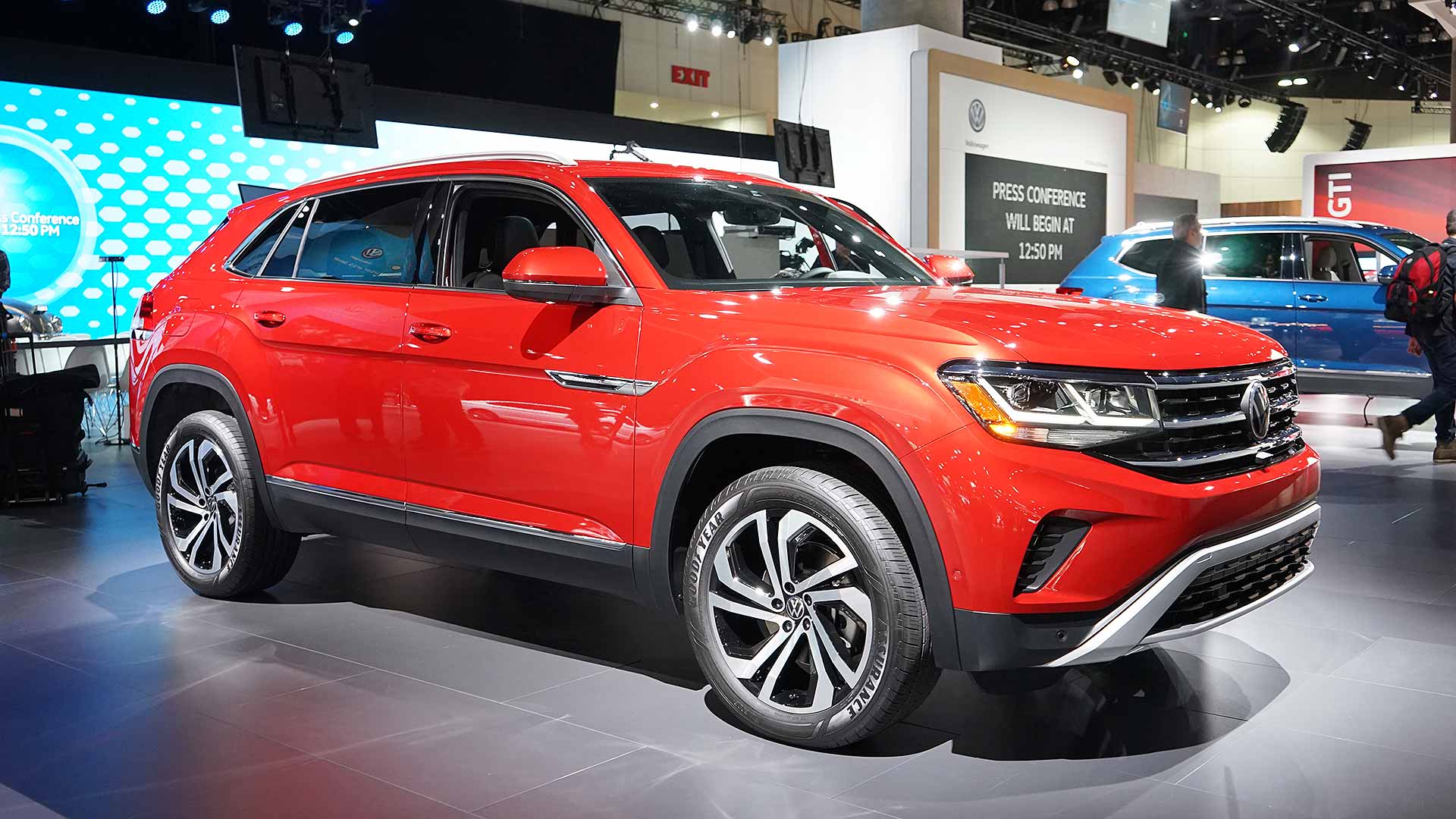
Volkswagen Atlas Sport Cross
Volkswagen has been building the regular seven-seat Atlas SUV in Tennessee for almost three years. The new Cross Sport version is shorter than its more practical sibling, but keeps the same width and wheelbase. There’s a choice of a naturally aspirated 3.6-liter V6 with 276 hp or a 2.0-liter four-cylinder turbo gasoline with 235 hp, while an eight-speed automatic transmission is standard. Luxury options include wireless smartphone charging, a 12-speaker audio system and a Digital Cockpit instrument display.
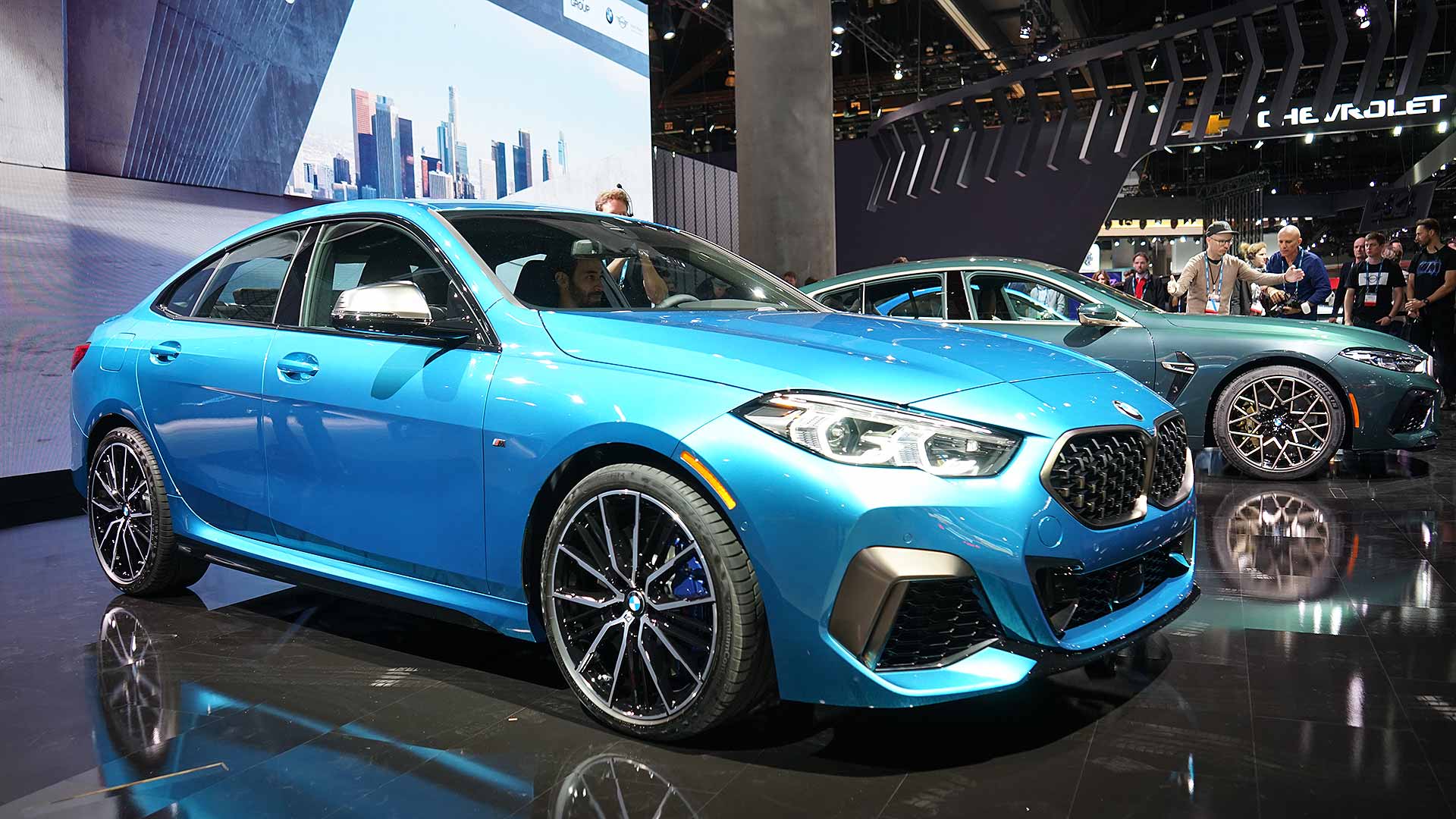
BMW 2 Series Gran Coupe
A month on from its online debut, time has done little to improve the aesthetics of the BMW 2 Series Gran Coupe. Not that this will stop it from selling like hot cakes. It’s one of five 2 Series variants available and it sits alongside the 2 Series Coupe, 2 Series Convertible, 2 Series Active Tourer and 2 Series Gran Tourer. Three trim levels are offered – Sport, M Sport and M235i.
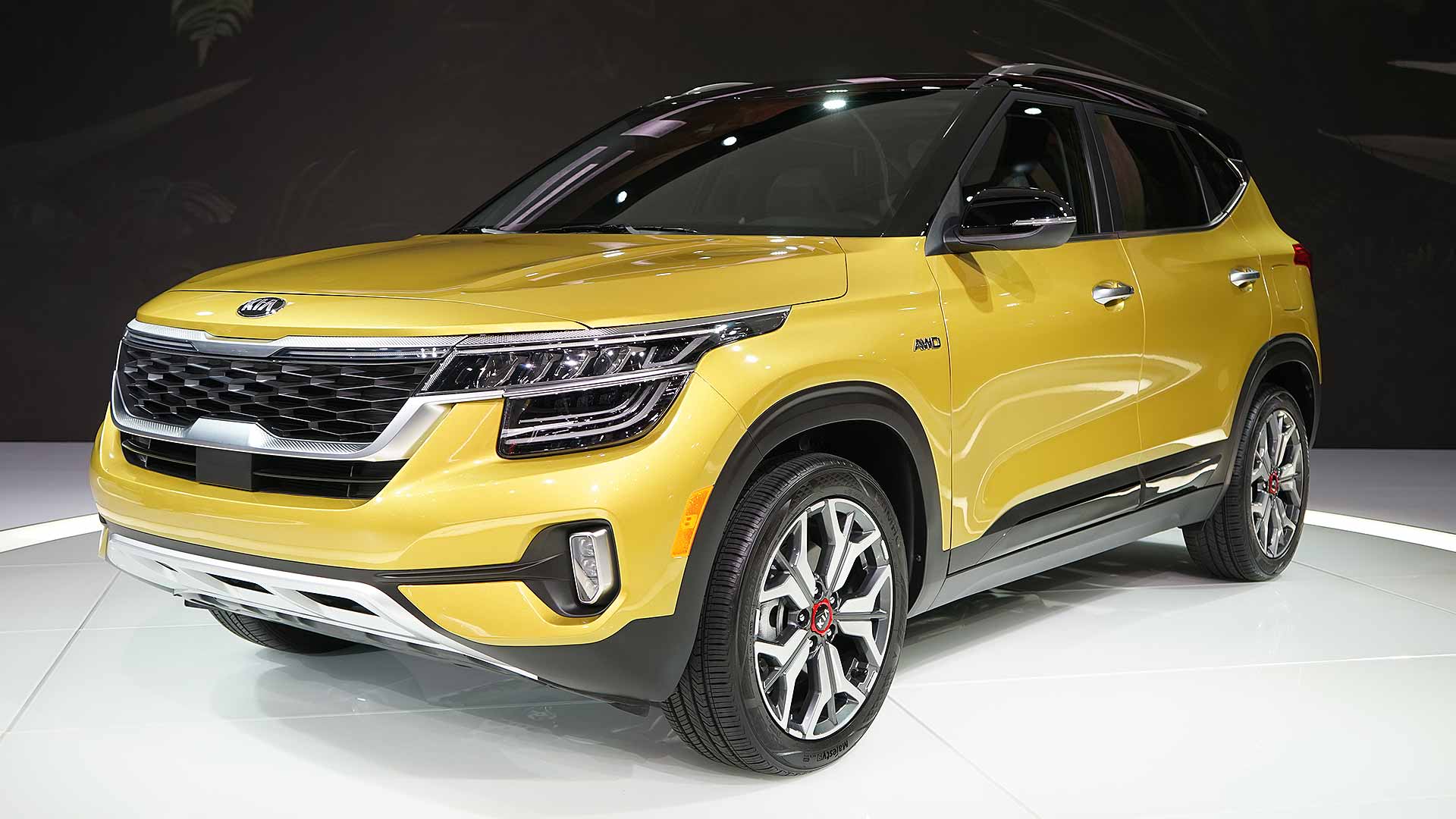
Kia Seltos
The Kia Seltos is an entry-level new SUV that’s been inspired by the award-winning Telluride luxury seven-seater. Kia is planning a starting price from under $22,000, and is offering either a 2.0-litre gasoline engine or a 1.6-litre turbo. It slots into the gap between Soul and Sportage and, says Kia, completes its SUV line-up – for now, at least.
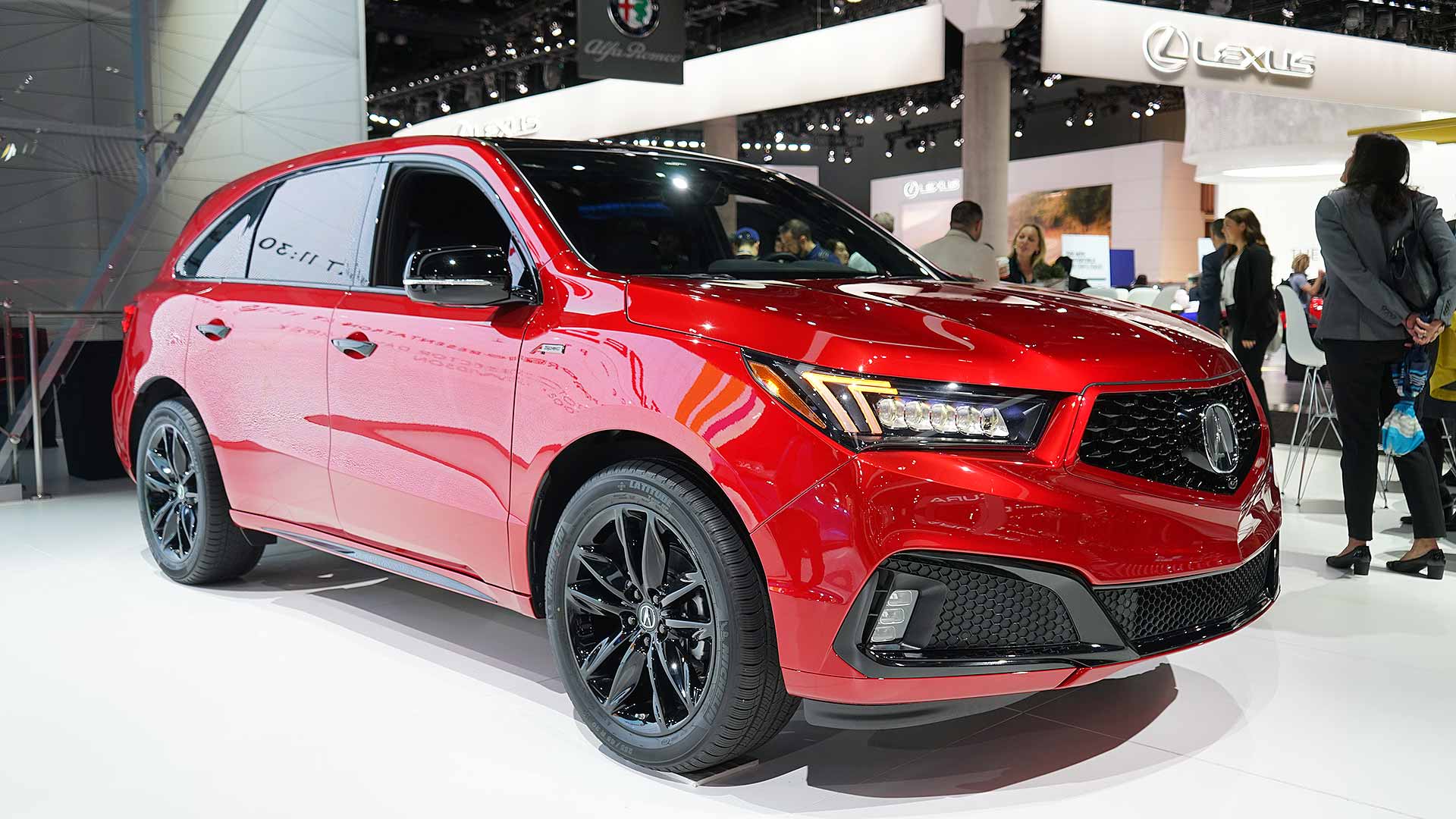
Acura MDX PMC Edition
Acura will build just 330 MDX PMC Edition models at its Ohio factory, with 300 for the U.S. market and 30 destined for Canada. Each one will be powered by a 3.5-liter V6 gasoline engine developing 290 hp, mated to a nine-speed automatic transmission. Highlights include Valencia Red Pearl paint, 20-inch alloy wheels, leather seats and an individually numbered plaque.
Fiat 500X Sport
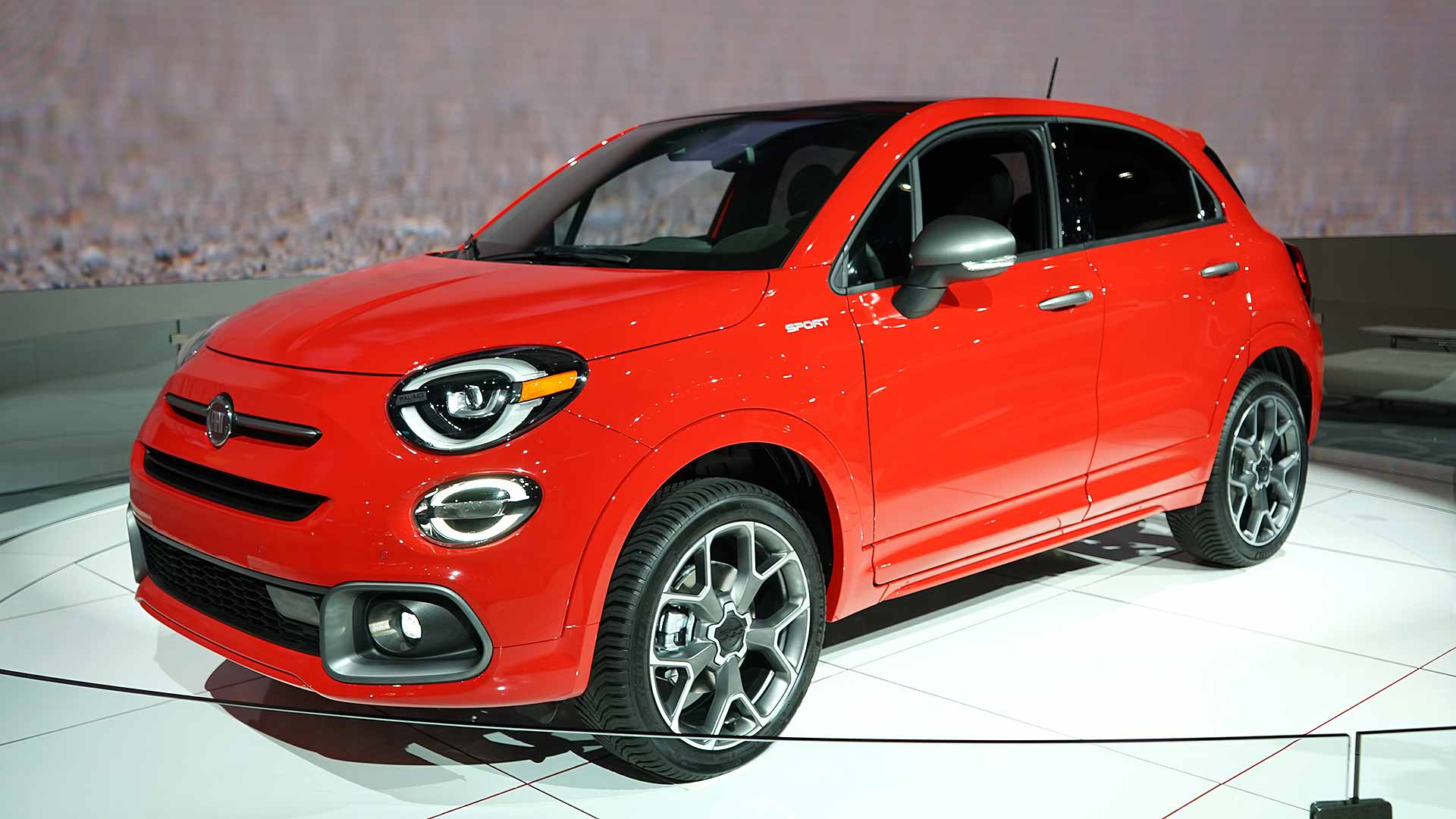
The North American Fiat 500X Sport is making its debut with a new Rovente Red paint colour, plus body-colored bumpers and side-mouldings. New 18-inch alloy wheels come as standard and, for the first time on a 500X, you can have 19-inch alloys with Michelin CrossClimate all-weather tires. Power is sourced from a 1.3-liter turbocharged engine, with U.S. prices starting from $26,895.
Toyota RAV4 Prime
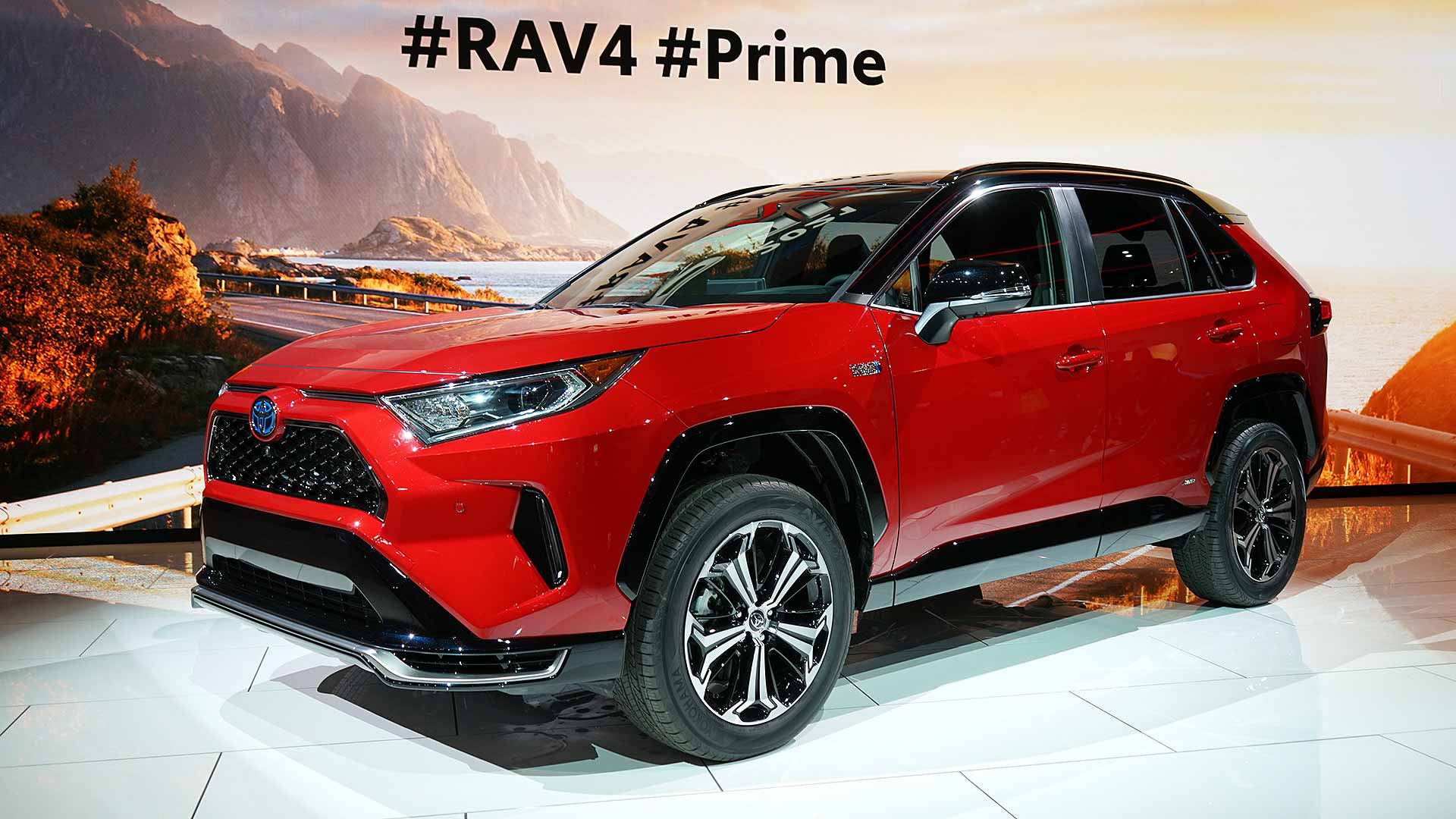
The Toyota RAV4 is one of the world’s most popular crossovers, so the arrival of a new plug-in hybrid version will be of interest to many people – particularly one that combines 302 horsepower, a 5.8-second 0-60 mph time, AND a 39-mile electric range. Estimated MPGe? A cool 90. It arrives summer 2020 as a 2021 model year vehicle. We can’t wait.
BMW M8 Gran Coupe
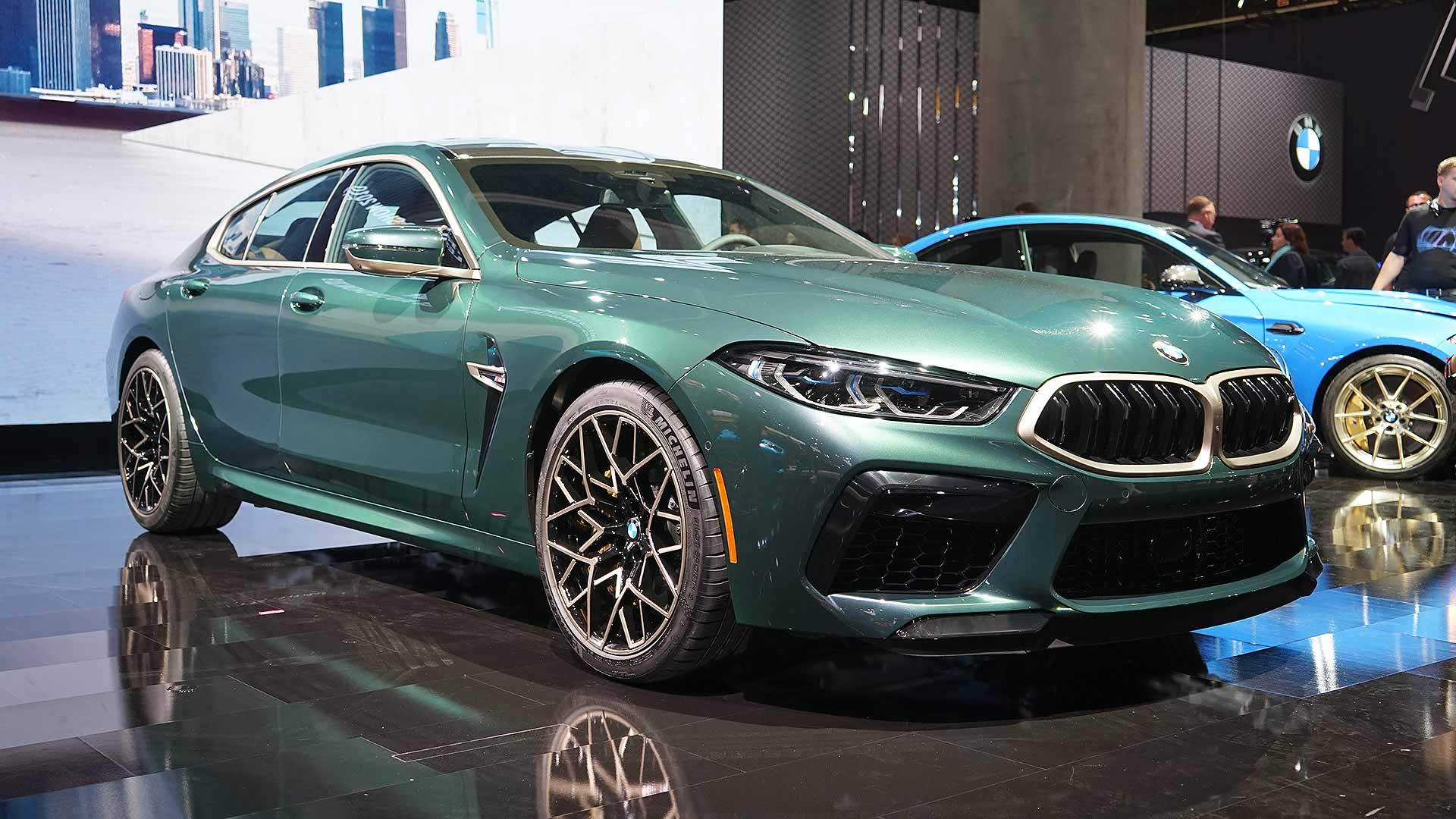
Production of the BMW M8 Gran Coupe is already underway ahead of the car’s European sales debut in January. The entry-level version is powered by a 4.4-liter TwinPower turbo V8 producing 600 hp and 553 lb ft of torque, although the Competition version boosts this output to 617 hp.
Volkswagen ID Space Vizzion
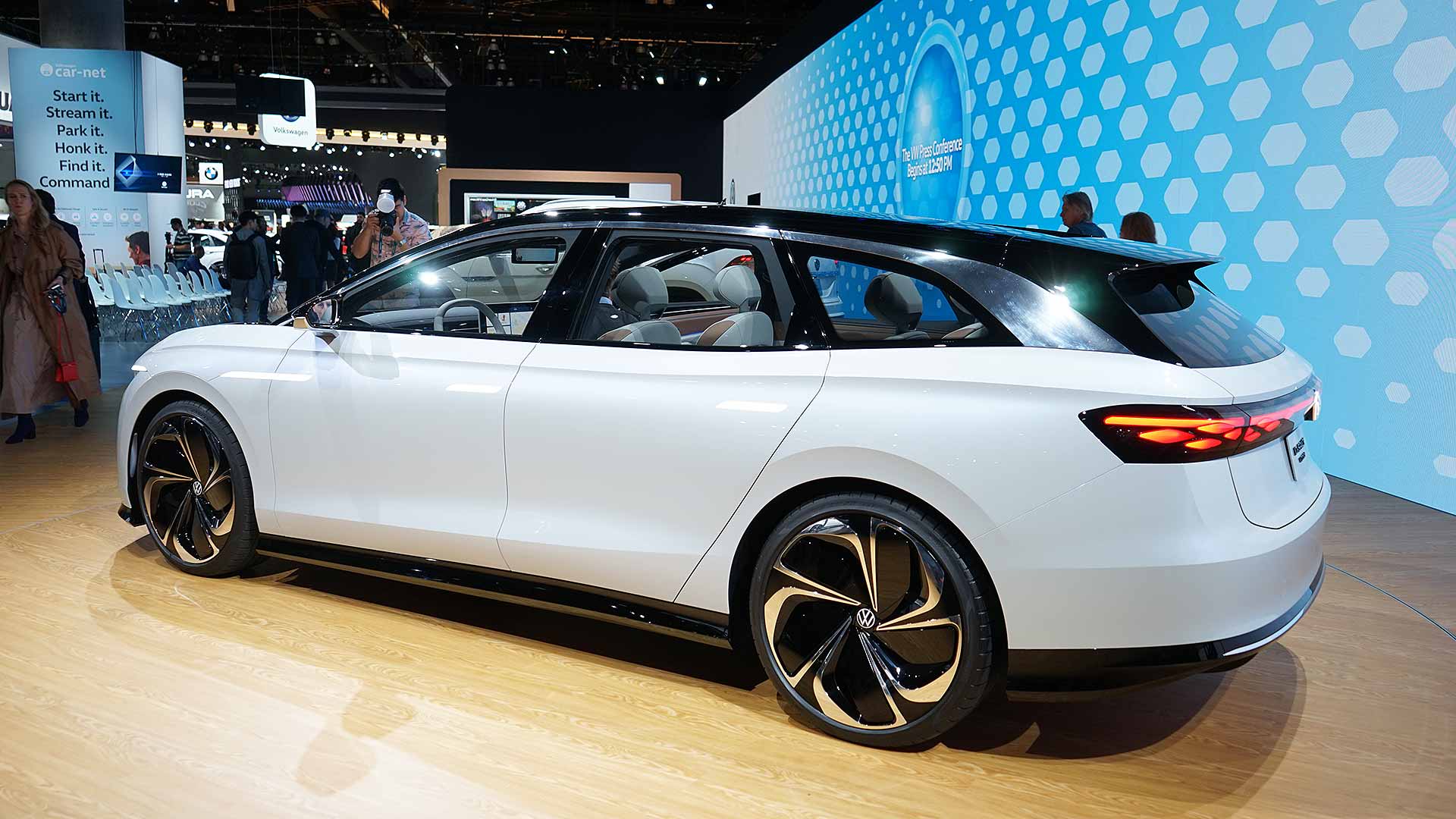
‘The ID. Space Vizzion is a wagon of tomorrow,’ says Volkswagen, claiming the electric car combines the characteristics of a GT with the practicality of an SUV. In other words, it’s an electric estate car. And doesn’t it look great? Volkswagen says it will offer a range of 590 km (367 miles) and will hit 60mph in 5.0 seconds. Although it’s a concept, the LA show car previews a potential production car Europe and North America. Time to start badgering your local VW dealer.
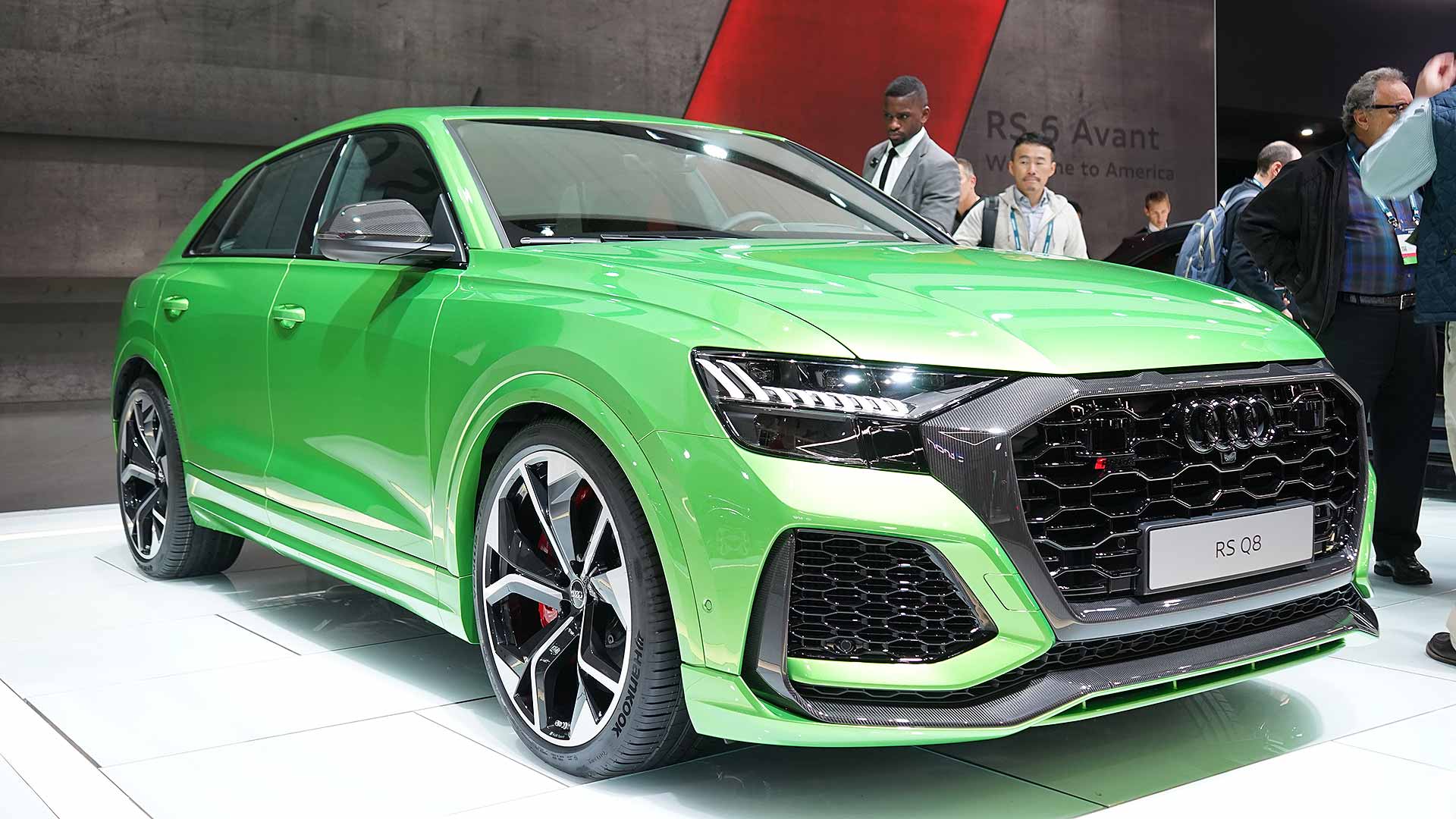
Audi RS Q8
Even before its LA debut, the Audi RS Q8 has a Nurburgring lap record to its name. It tamed the German circuit in seven minutes and 42.2 seconds, setting a record for the fastest production SUV. The RS Q8 is powered by a 4.0-liter twin-turbocharged V8, which gives it a 0-62 mph time of 3.8 seconds and a top speed of 190mph. It’ll go on sale in July 2020.
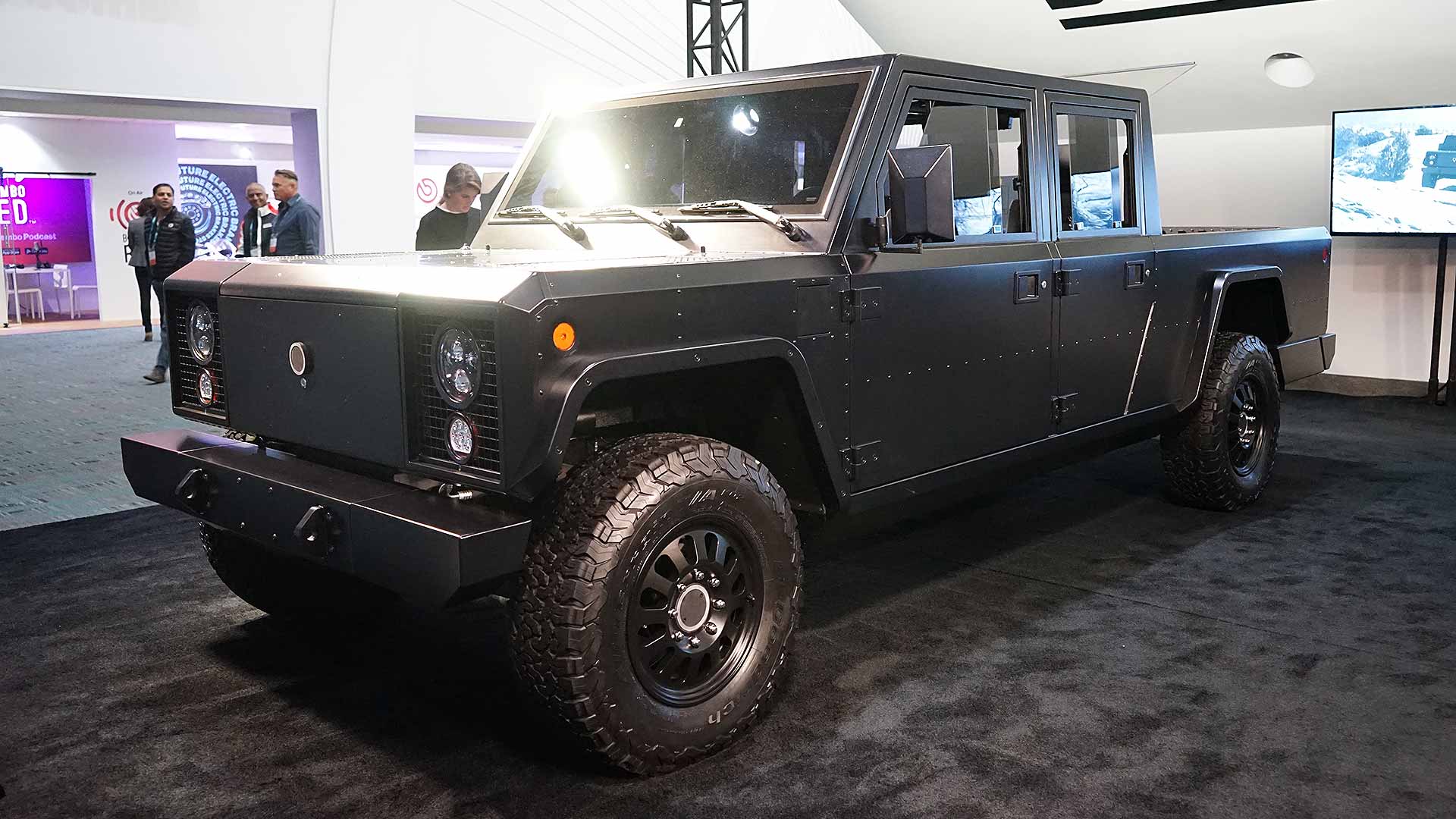
Bollinger B1 and B2
All-electric. All-wheel-drive. All-aluminium. All-American. The Bollinger B1 and B2 look a little out of place in LA, because these things would be more at home in the Angeles National Forest or tackling the San Gabriel Mountains. The B1 SUV and B2 pick-up are strictly utilitarian, with a 120 kWh battery pack offering a range of up to 200 miles. The specs are impressively hardcore, with a price tag to match. Bank on paying $125,000 to crack open a Bollinger.
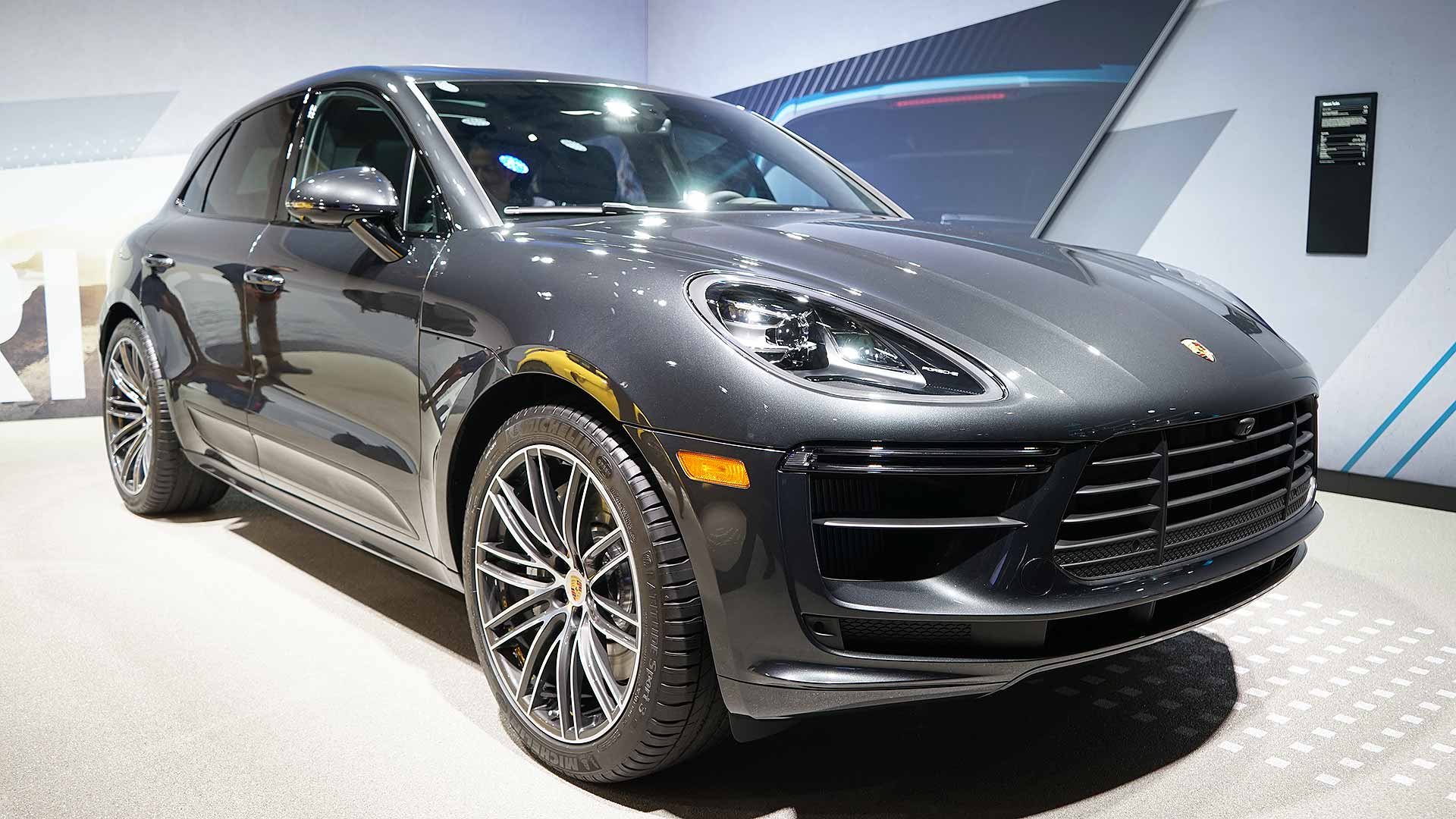
Porsche Macan Turbo
It’s already available in Europe, but the Porsche Macan Turbo is making its American debut in LA. The Turbo model boasts a unique front end and a fixed roof spoiler with a double-wing design. At its heart is a six-cylinder twin-turbocharged engine producing 434 hp, which is enough for it to hit 60 mph in 4.1 seconds with the optional Sport Chrono package.
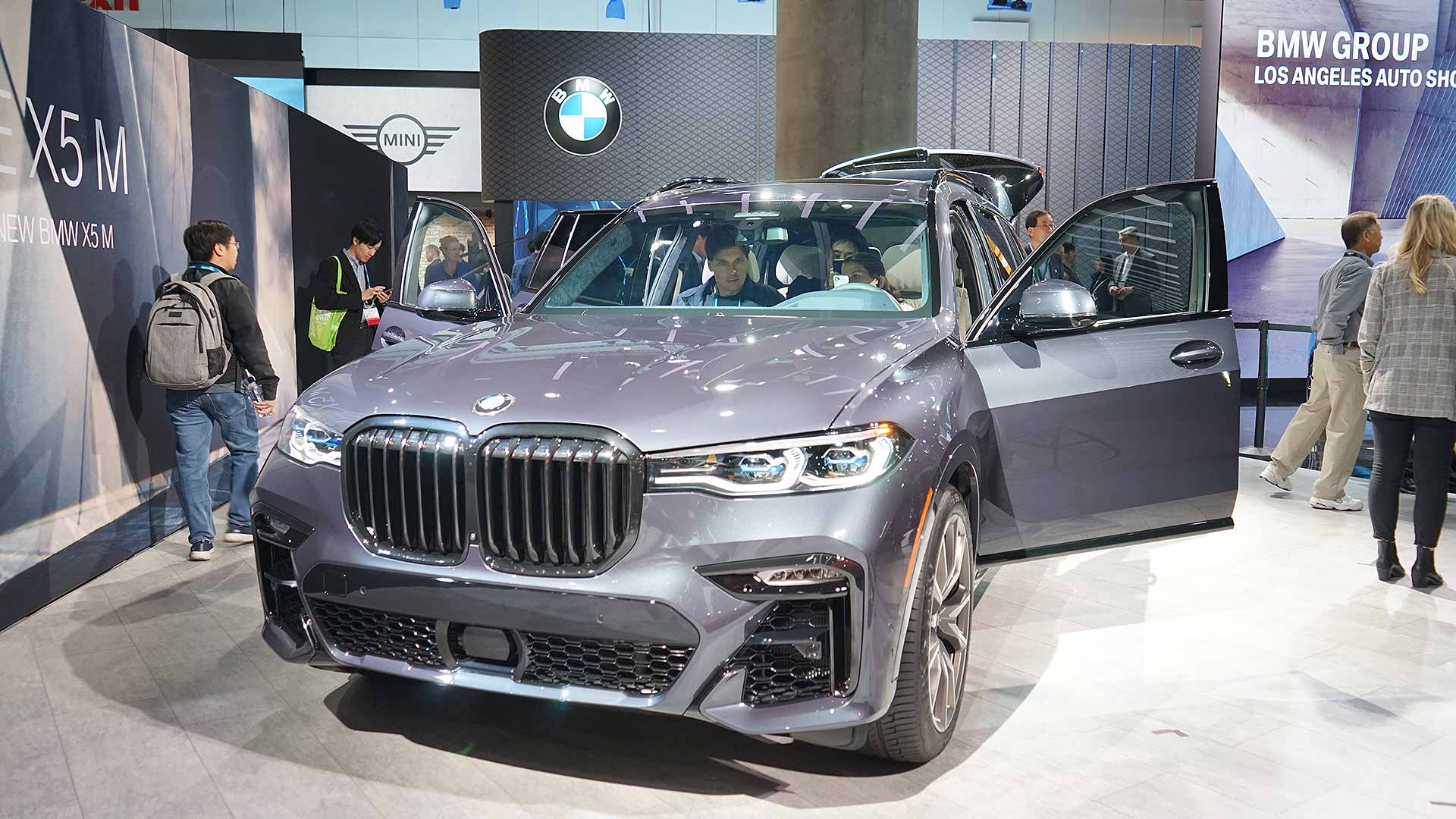
BMW X5 M Competition and X6 M Competition
In Competition guise, the BMW X5 M and X6 M models develop 625 hp to deliver 0-62 mph times of 3.9 seconds and 3.8 seconds respectively. Both versions feature 21-inch alloy wheels at the rear, 22-inch rims at the rear, an active M differential, a sports exhaust system, M brakes and an xDrive all-wheel-drive system.
Land Rover Defender
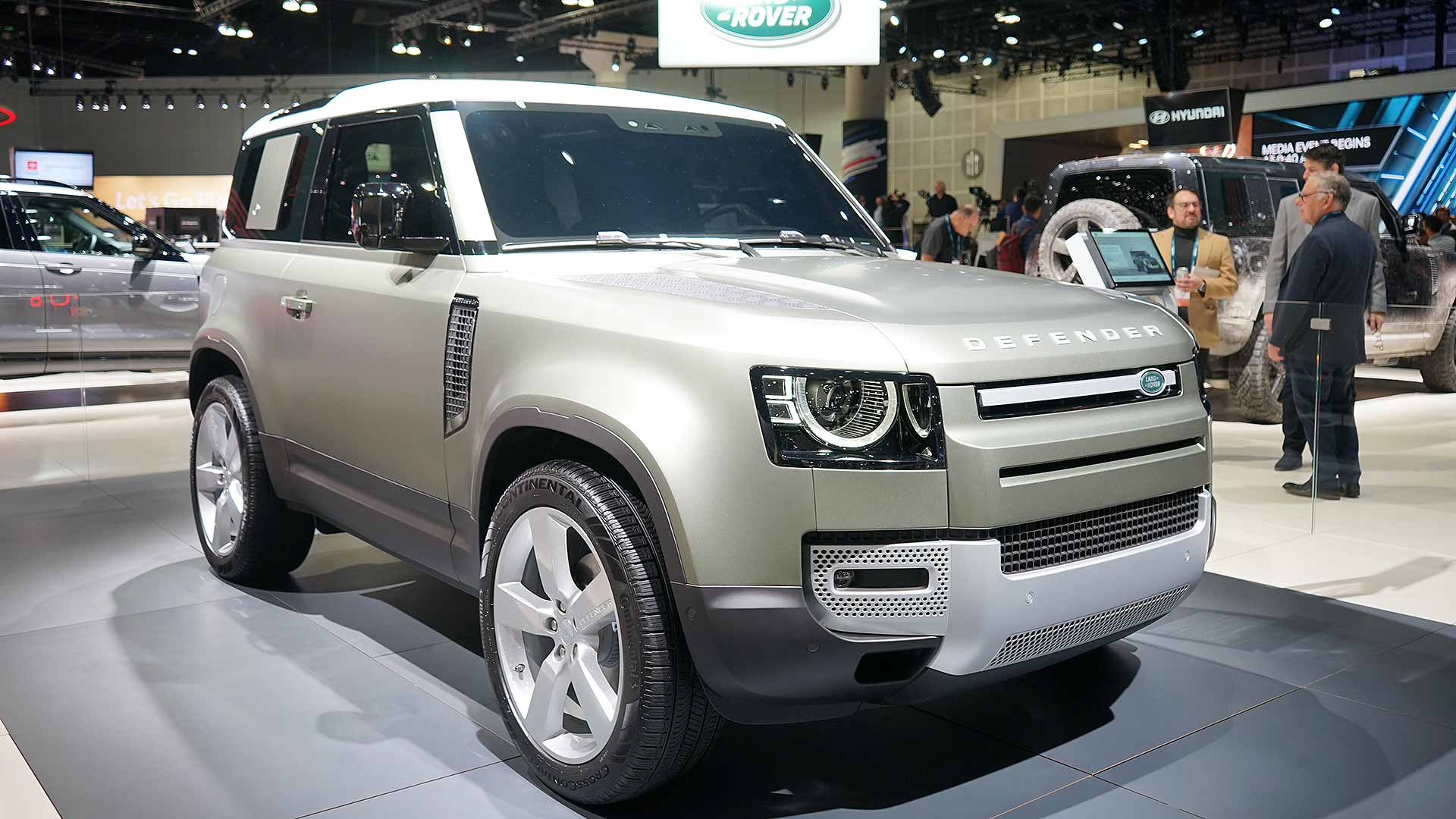
Still fresh from its debut in Frankfurt, the Land Rover Defender is making waves in LA. Three body styles are available – 90, 110 and 130 – with six trim levels: Defender, S, SE, HSE, X and First Edition. U.S. prices start from around $50,000, but that’s only half the story, because top-spec versions will cost considerably more, especially when the Americans have gone crazy with the options list. We suspect this will encourage a few soccer moms and dads to ditch their soft-focus SUVs.
No Time to Die Land Rover Defender
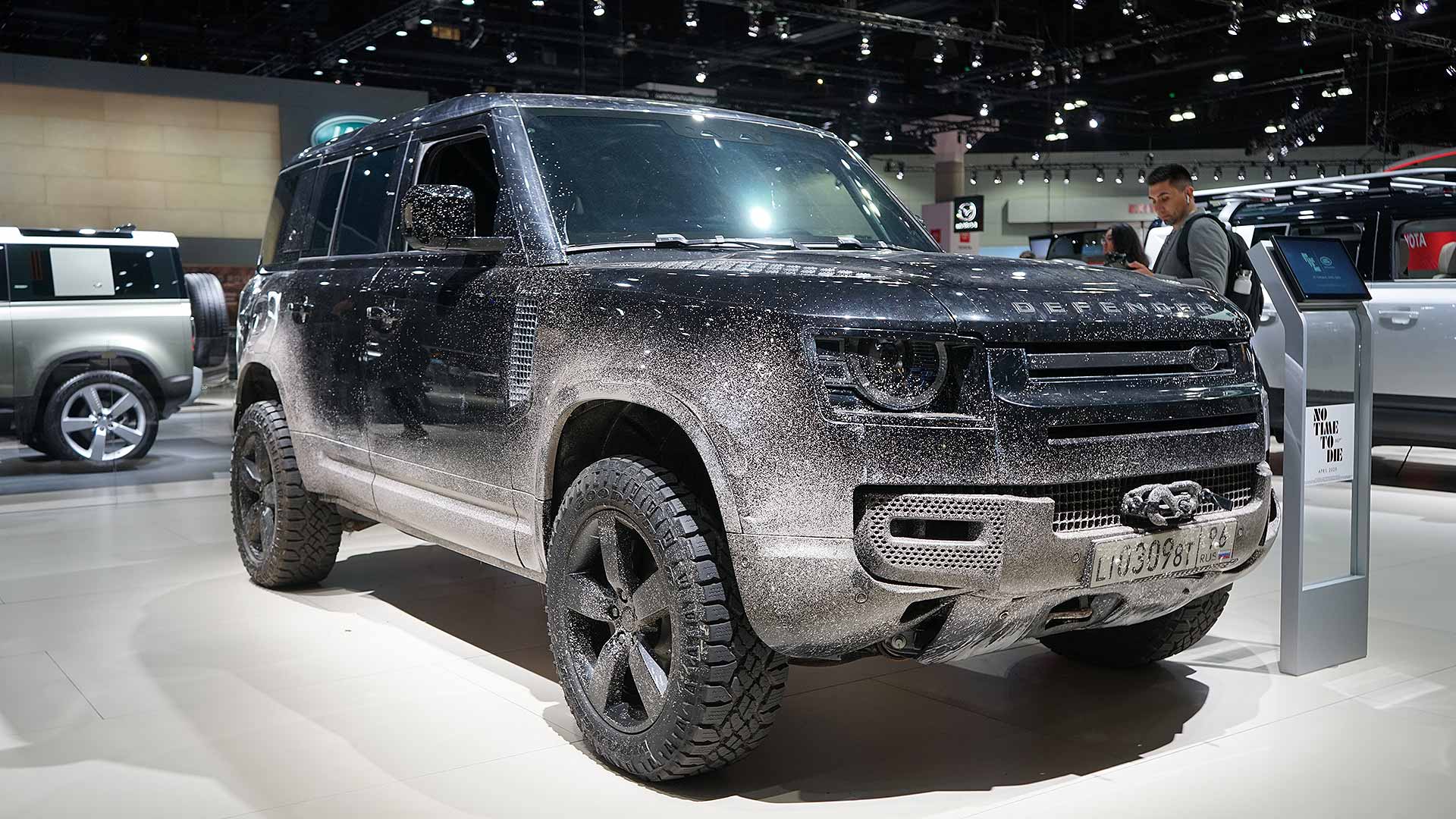
The new Land Rover Defender is starring in the new James Bond film, No Time to Die. To mark the collaboration, JLR borrowed one of the stunt cars from the movie production company – complete with layers of dirt, scrapes and scratches, and little evidence it’s had an easy life on set.
Alfa Romeo Giulia
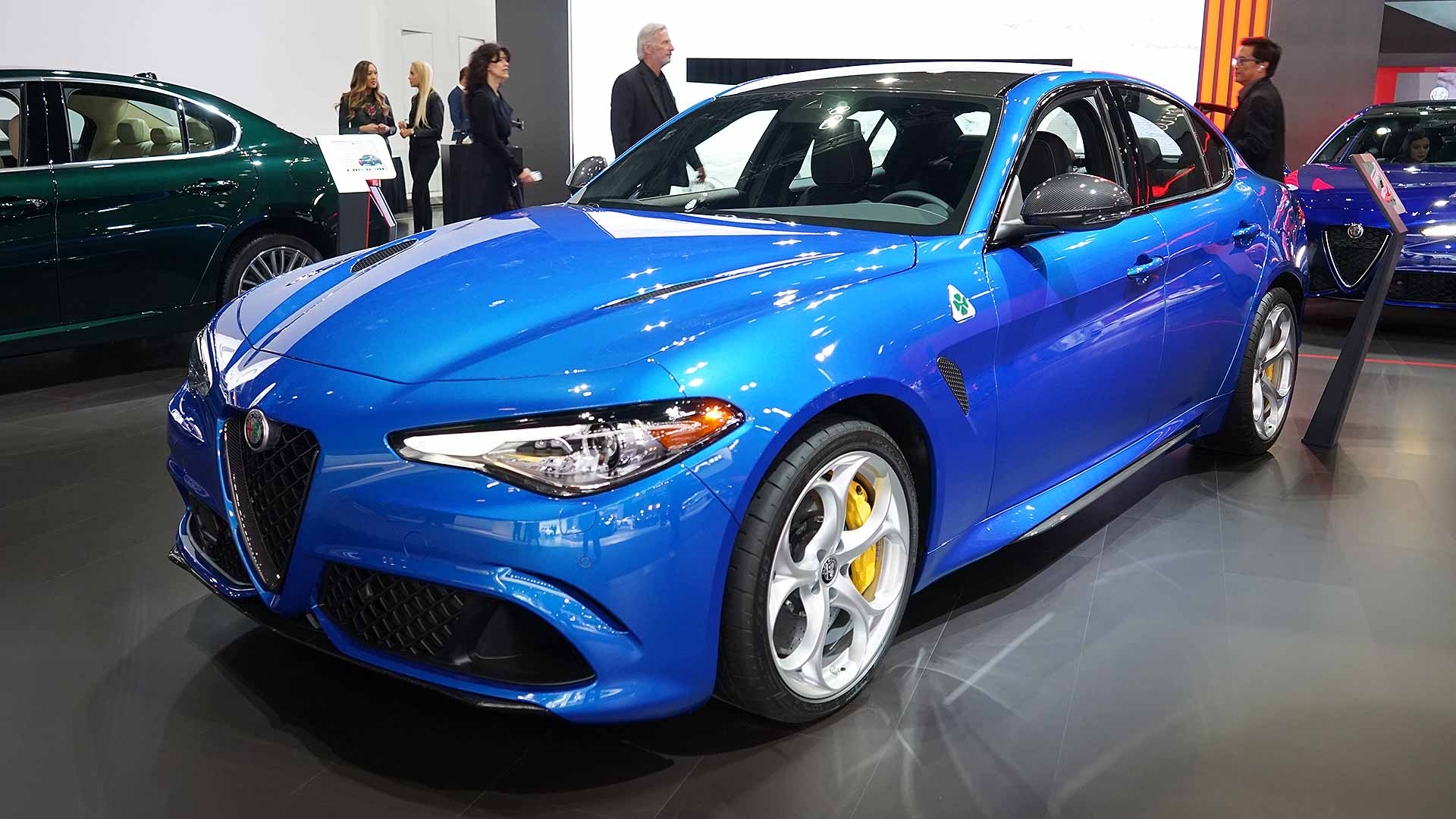
Believe it or not, this is the updated Alfa Romeo Giulia. In truth, Alfa Romeo didn’t need to mess with the styling, because its biggest flaws were on the inside. The cabin looks and feels more premium than before, while the digital instruments and infotainment system are nicer to look at. Crucially, the Giulia now gets Apple CarPlay and Android Auto as standard. There’s also a suite of driver assistance systems and a revised set of trim levels.
Alfa Romeo Stelvio
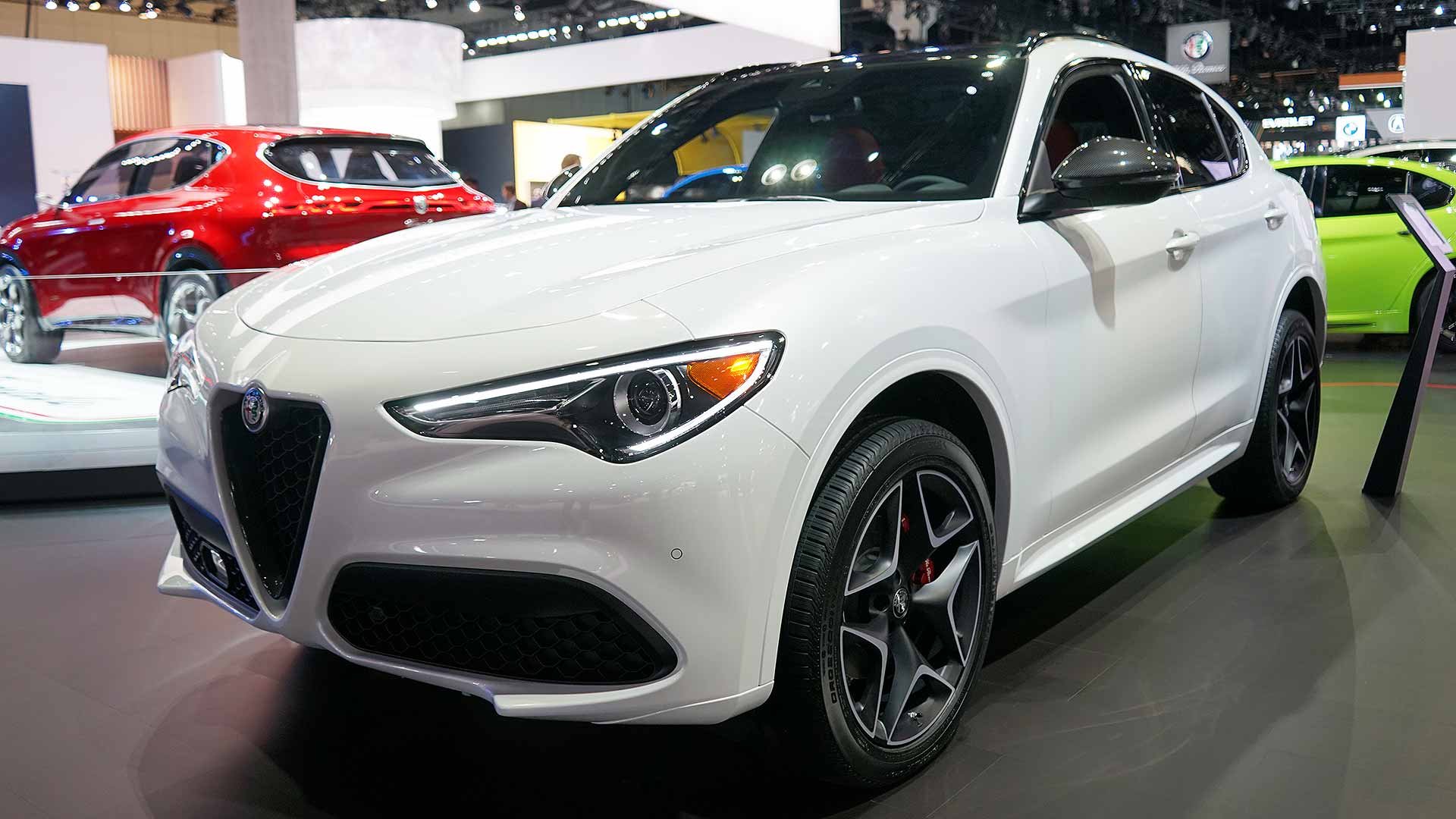
For the changes to the Alfa Romeo Stelvio, we’ll refer you to our description of the new Giulia. In truth, there’s not much we’d change about the Stelvio. Although it’s far from elegant, it’s one of the best looking SUVs on the market, and it’s also one of the best to drive. In common with the Giulia, the perceived quality in the cabin is up a notch or two, while wireless phone charging, Apple CarPlay and Android Auto are now standard.
Toyota Camry and Avalon AWD
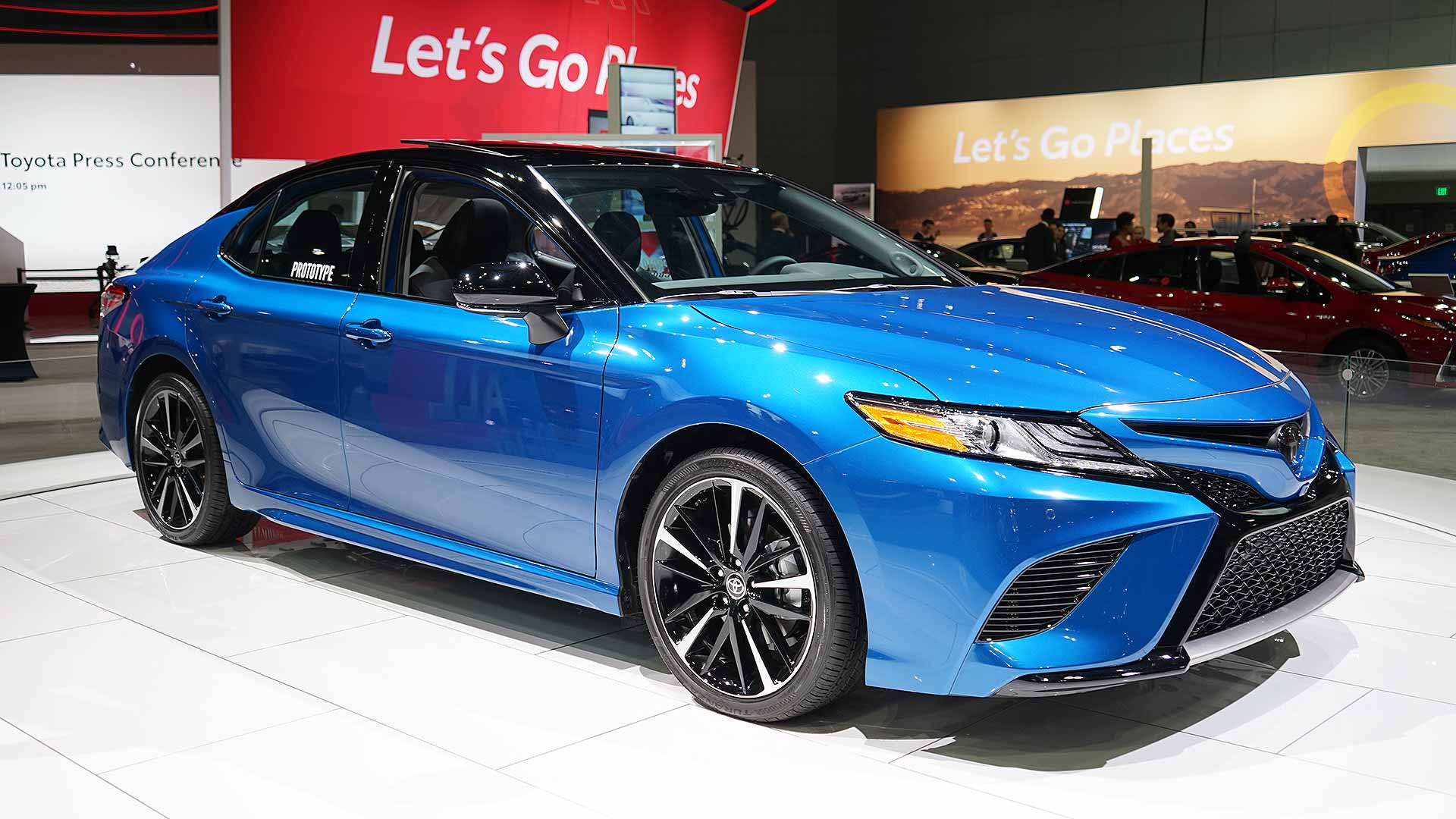
If you’re an American who yearns for all-weather traction but can’t stomach the thought of driving an SUV, Toyota has the answer. For the 2020 Camry and 2021 Avalon, it’s adding the option of the Dynamic Torque Control all-wheel-drive system from the RAV4. The system is only available with the 2.5-liter gas engine and eight-speed automatic transmission.
Lincoln Corsair Grand Touring
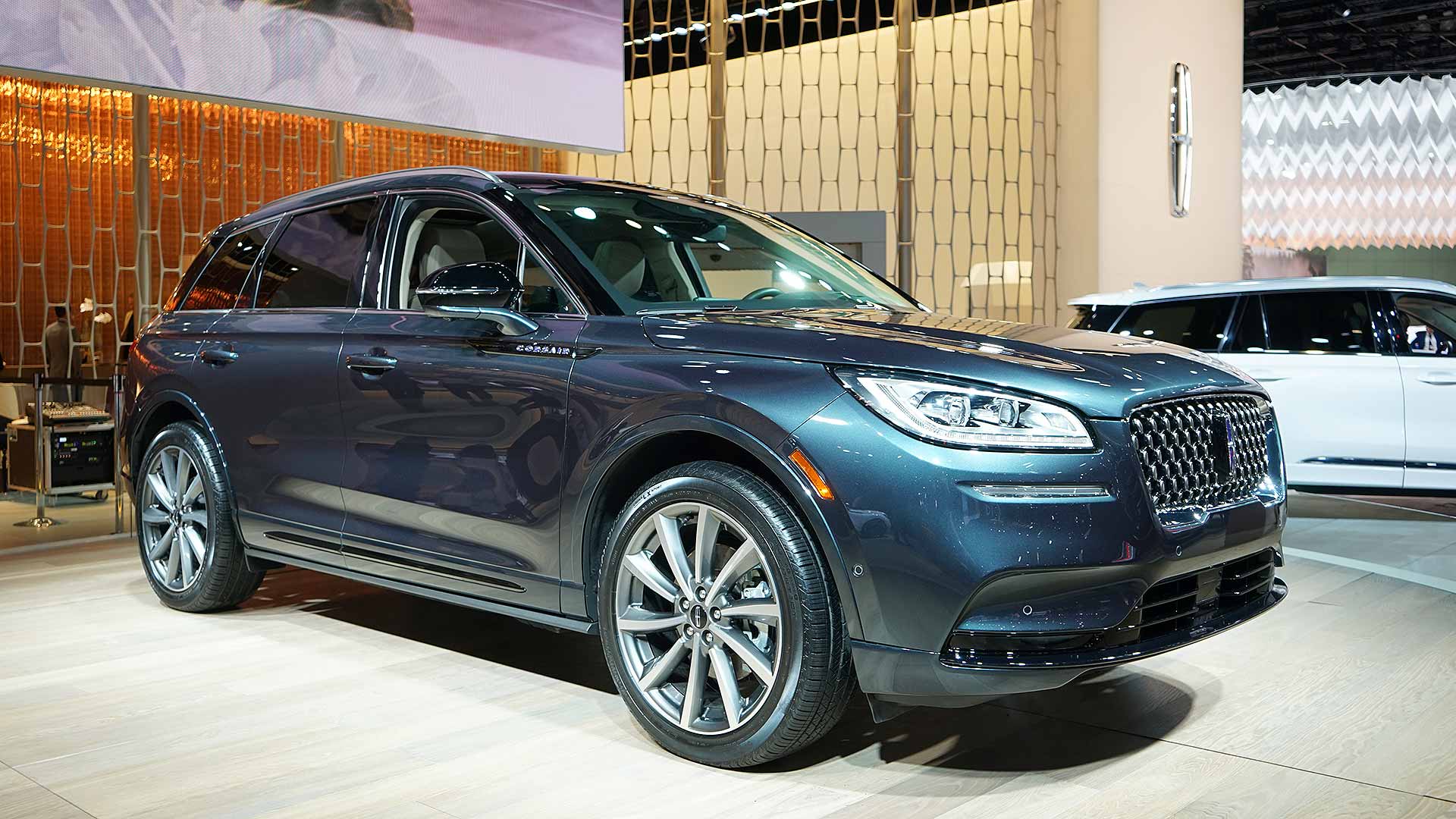
The Lincoln Corsair Grand Touring will hit North American streets next summer and is the firm’s second plug-in hybrid model. A 2.5-liter gasoline engine is paired with Lincoln’s first electric all-wheel-drive system to deliver a combined 266 hp and an estimated all-electric range of 25 miles. There are five driving modes: Normal, Conserve, Excite, Slippery and Deep. Lincoln claims the interior is like a ‘sanctuary for the senses’, with a cabin that’s ‘whisper-quiet’.
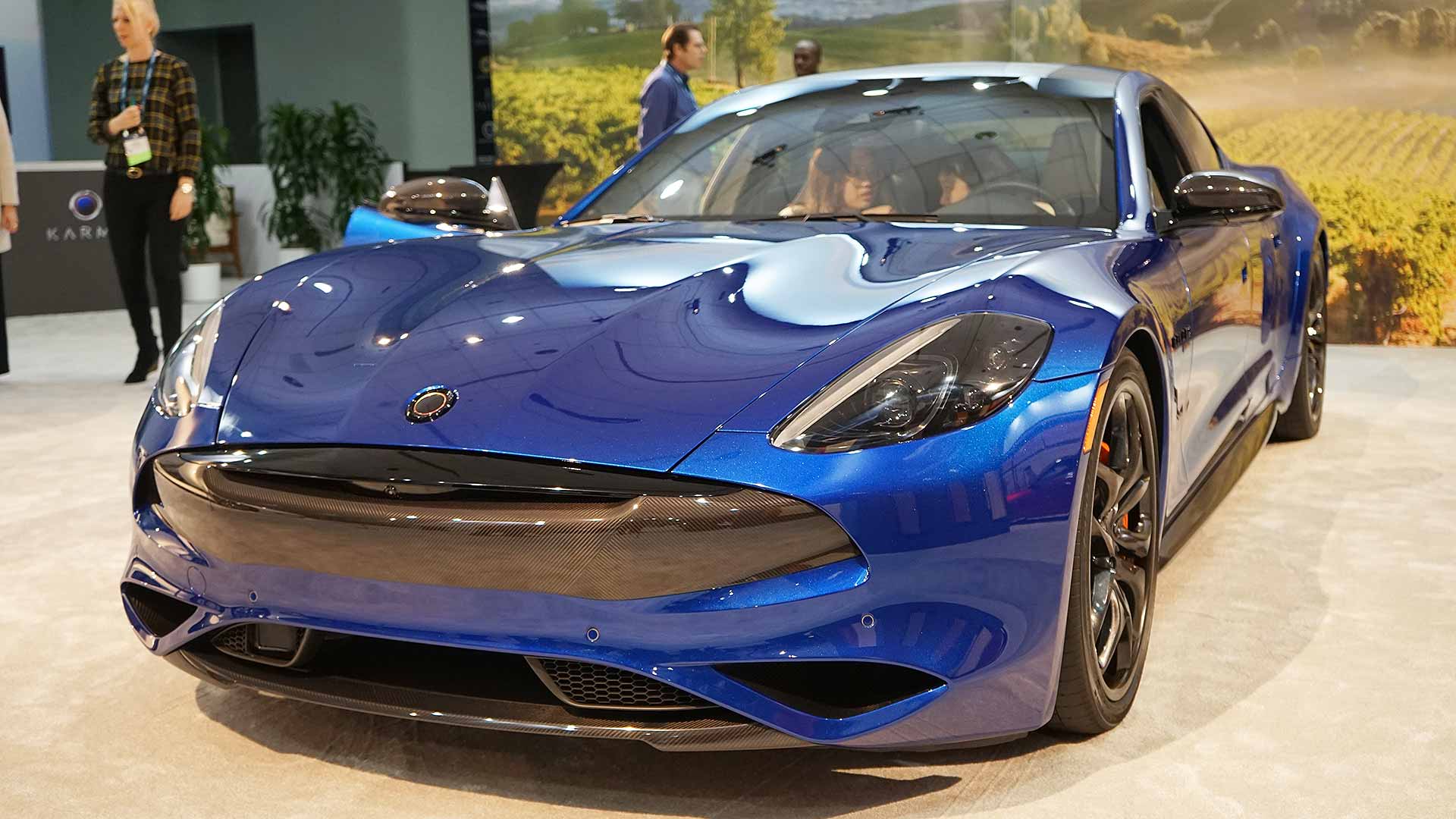
Karma Revero GTS
The new GTS is a performance version of the Karma Revero GT. In common with the GT, the GTS features two electric motors and a twin-turbo three-cylinder engine to deliver a driving range of up to 360 miles, including an all-electric range of 80 miles. It will hit 60 mph in 3.9 seconds before reaching an electronically-limited top speed of 130mph. The cost? Just shy of $150,000.
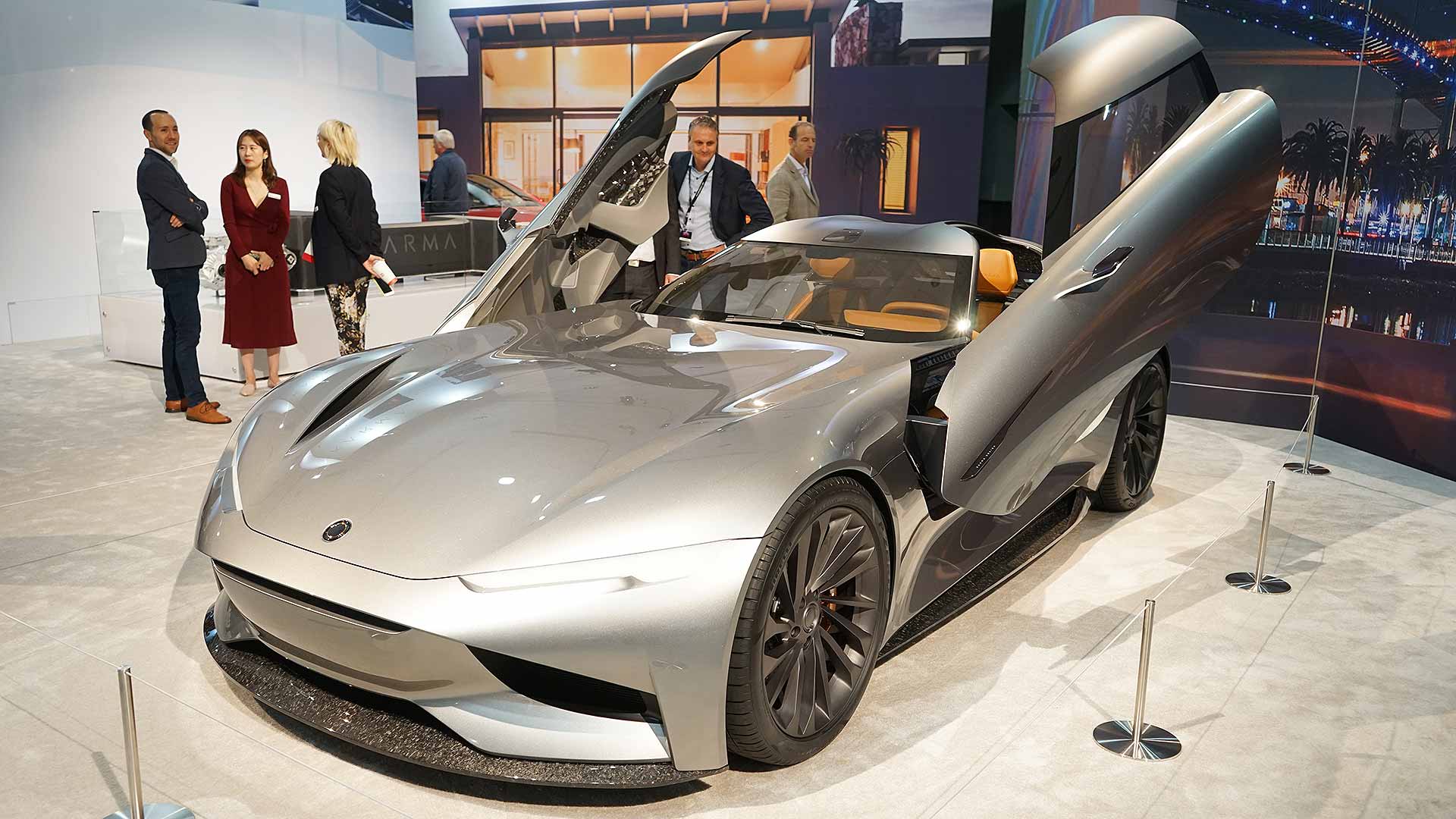
Karma SC2
From a Karma you can buy, to one that you can’t. Not yet, anyway. The SC2 previews Karma’s future design language and provides a test bed for new tech. As it stands, the SC2 features two electric motors, carbon ceramic brakes, a push-rod operated racing suspension, and a torque-vectoring gearbox. With 1,100 hp on tap, the SC2 can hit 60mph in less than 1.9 seconds. Total range: 350 miles.
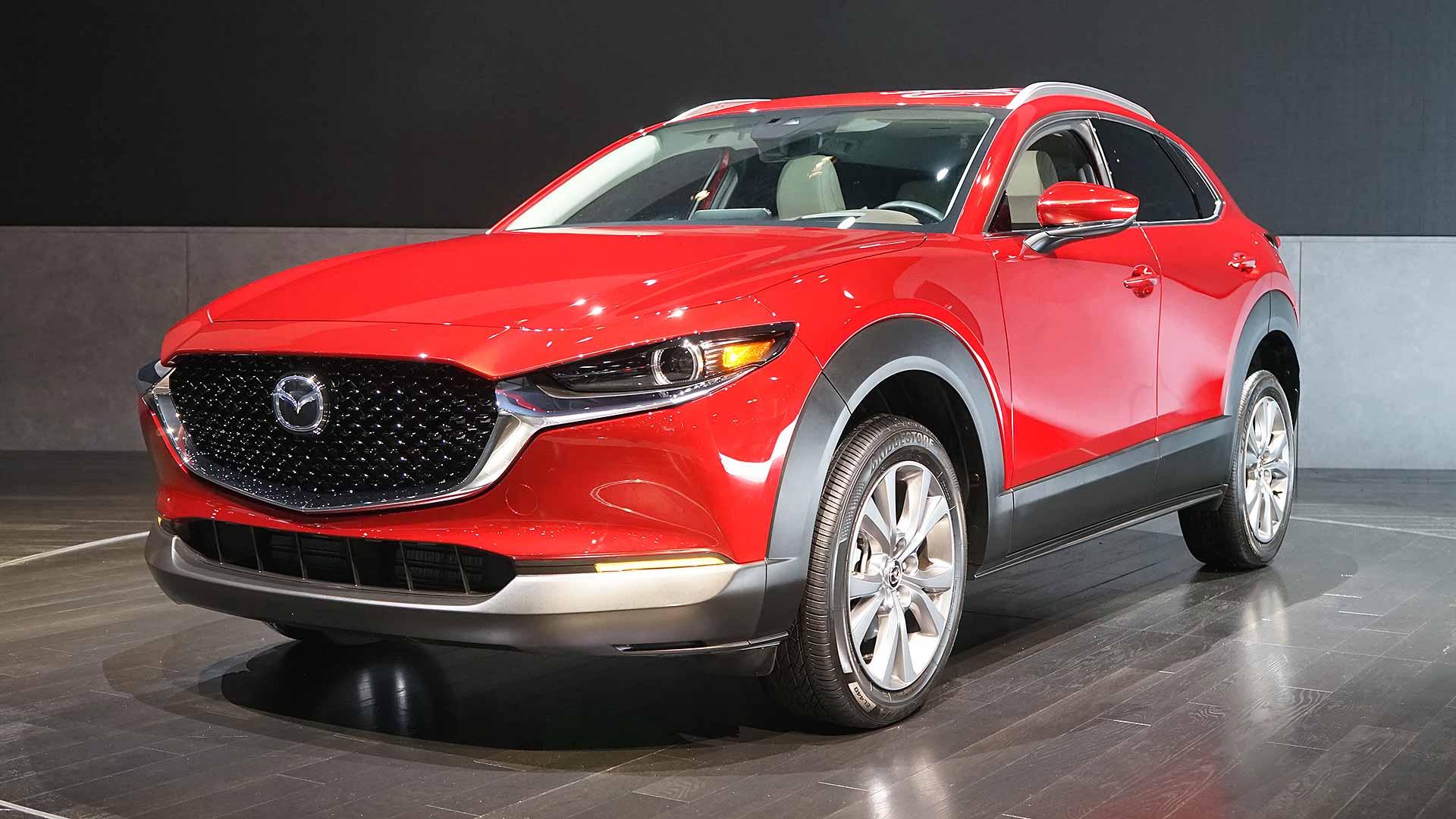
Mazda CX-30
Our man Richard Aucock has driven the Mazda CX-30 in LA. He tweeted: “Problem: the Mazda 3 has appalling rear seat practicality. Answer: the much roomier CX-30. It’s just as good to drive as the lovely 3, too (underpowered 122 hp engine and hunting auto ’box apart).”
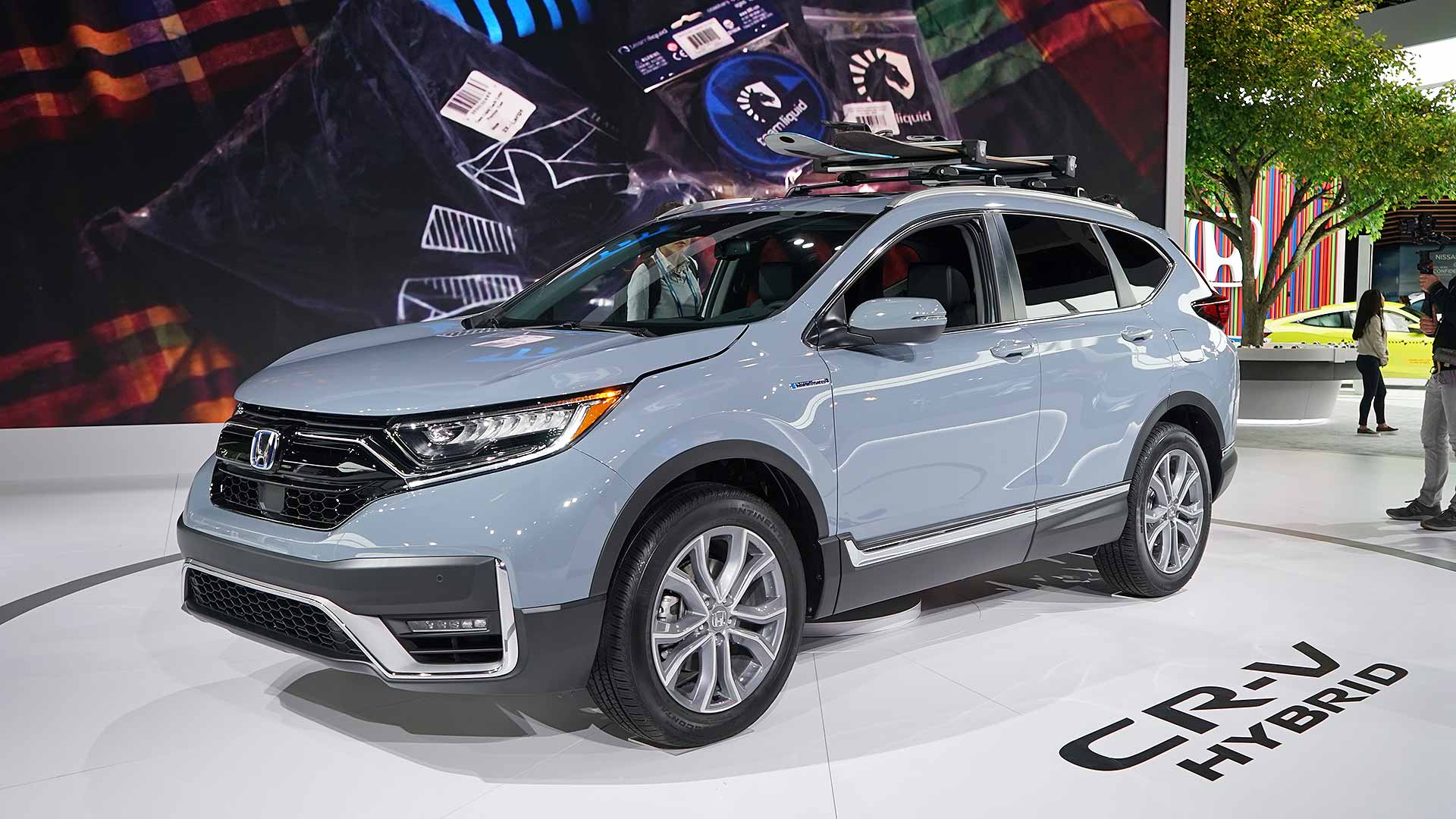
Honda CR-V Hybrid
The CR-V Hybrid is the first hybrid-electric SUV from Honda in the United States. It will be built in Indiana and joins the Accord Hybrid and Insight as the third electrified Honda manufactured in America. The company is promising a 50 percent higher city fuel economy rating than the non-hybrid CR-V, along with standard-fit safety assistance systems that were previously standard only on EX and above trims.
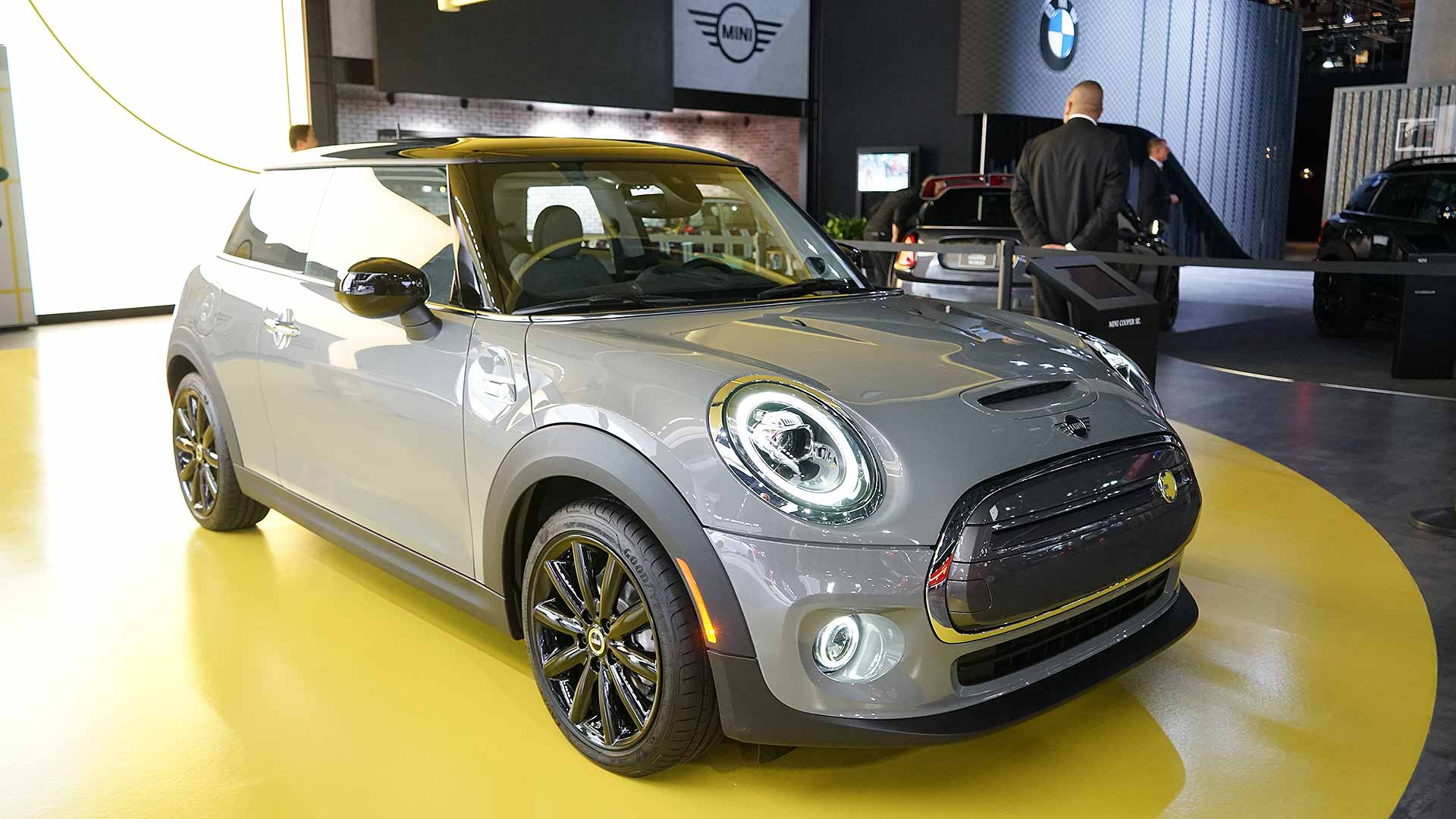
Mini Cooper SE
Known as the Mini Electric in the UK, the Mini Cooper SE is making its North American production debut in LA. It costs $29,900 plus an $850 destination and handling fee, although Mini says it could cost as little as $17,900 in some states. Mini is targeting California and Los Angeles as key markets for the electric Mini.
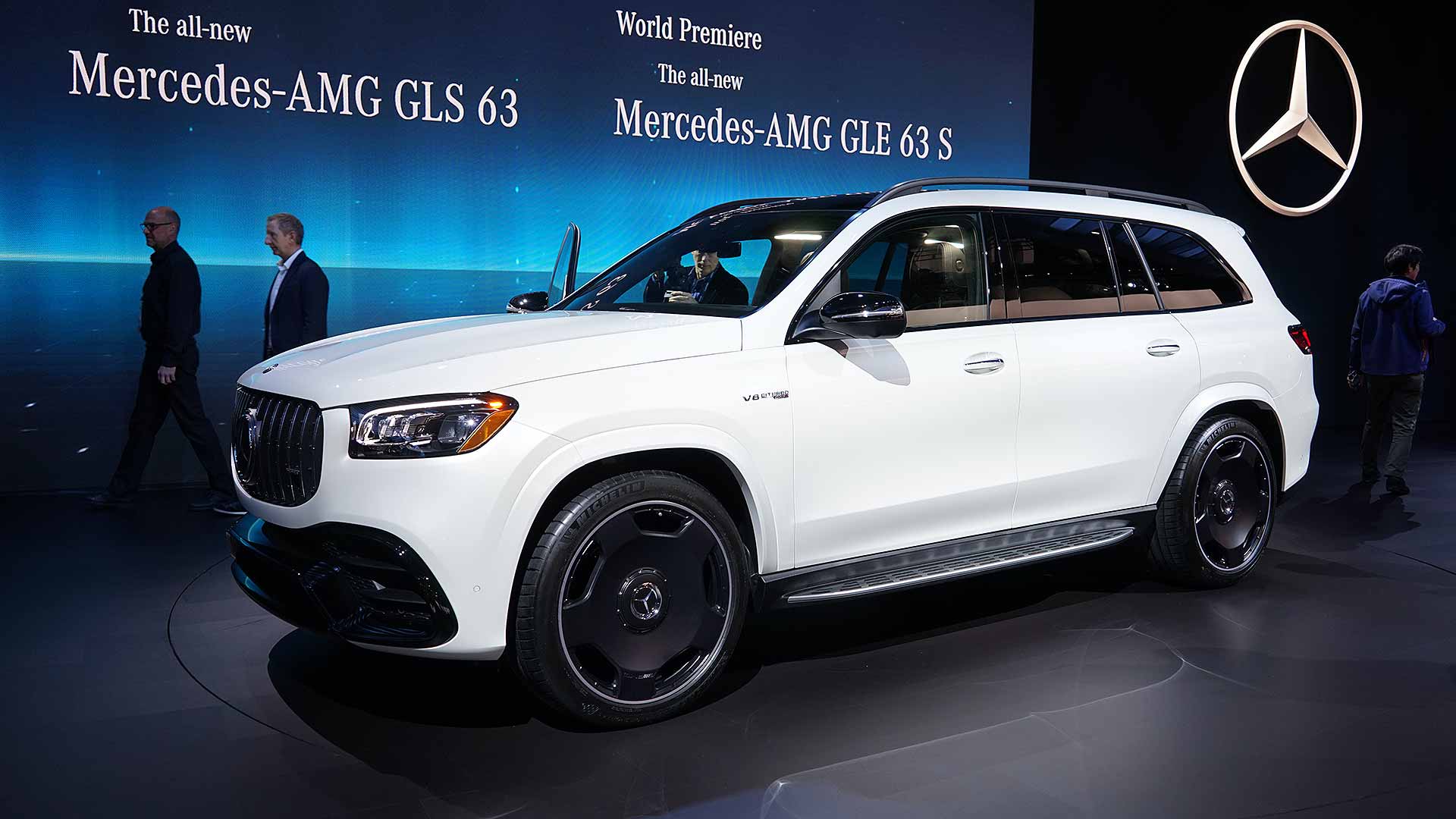
Mercedes-AMG GLS 63
The S-Class of SUVs gets an AMG boost for 2020. The turbocharged V8 delivers 603 horsepower for 0-60 mph acceleration in 4.1 seconds and a (restricted) top speed of 174 mph. This three-row SUV means up to seven can come along for the high-speed ride.
UK drivers are spending £559 a year fixing unexpected problems with their cars. That’s according to a study of 2,000 motorists.
The research found that a third of motorists avoid basic maintenance, putting them at risk of nasty surprises.
London motorists spend the most, forking out £721 a year on potentially unnecessary repairs. Drivers in Leeds spend the least on bills, at £476 a year.
Over the past year, UK motorists spent more than £21 billion on problems with their cars. More often than not, it costs more to repair something than it does if you spotted the problem before it occurred.
The most common reasons for a breakdown include engine overheating (18 percent), clutch issues (17 percent), smashed windscreen (14 percent), oil issues (14 percent) and flat tyre (13 percent).
As part of the study, Holts asked drivers what event they had missed as a result of a breakdown. The top 10 answers are:
Important baby event
Job interview
Birthday party
A date
Parents’ evening
Child’s sports game
Child’s school concert
Funeral
Foreign holiday
A wedding
Who would you call when you’re left stranded by the road? Fifteen percent of drivers would call a sibling, while 10 percent would call their dad.
‘Drivers are spending excessively’
Tavia Spencer, brand manager at Holts, said: “Our research highlights that drivers are spending excessively when it comes to repairs on the car, especially when many of these can be fixed at home or by the road side.
“You often don’t need to be a fully trained mechanic or savvy under the bonnet, there are simple solutions available which will reduce call-outs and lost time.
“If drivers were more confident doing basic repairs on their cars, the money saved could be spent on more fun activities.
“While breaking down can be a real inconvenience and cause a number of disruptions, there are processes and emergency products available to help drivers get back on the road in a simple way with minimal fuss.”
Even cold and flu treatments can cause drowsiness, reducing a driver’s ability to concentrate on driving. Not only is this dangerous, but drivers could be charged with a criminal offence.
It’s illegal in England, Scotland and Wales to drive with legal drugs in your body if it impairs your driving.
Over-the-counter medication is covered by the same drug-driving laws as illegal substances such as cocaine and cannabis, so drivers are advised to study the list of prescription medicines affected by the legislation (see below).
The police can stop drivers and demand a ‘field impairment assessment’ if they suspect drugs have been taken. If they deem a motorist to be unfit to drive, they’ll be arrested and will have to take a blood or urine test at a police station.
‘Read the label’
GEM road safety officer Neil Worth said: “You may not be aware that your driving can be compromised by medicinal drugs. Therefore you could be breaking the law without realising.
“A conviction for drug driving carries a minimum one-year driving ban, an unlimited fine and up to six months in prison. You will have a criminal record that means you may have trouble getting a job or travelling overseas. Even once you are able to get your licence back, it will be endorsed for 11 years.
“So we cannot stress enough the importance of reading labels and seeking advice from healthcare professionals before driving. If you find that a specific remedy is likely to make you drowsy and impair your driving, then you must not drive after taking it. If you need to drive, make sure you ask a healthcare professional for a medicine that will not cause drowsy side-effects.”
Prescription medicines affected by the law
Motorists should consult a doctor about whether they should drive if they’ve been prescribed any of the following drugs:
Amphetamine, for example dexamphetamine or selegiline
Clonazepam
Diazepam
Flunitrazepam
Lorazepam
Methadone
Morphine or opiate and opioid-based drugs, for example codeine, tramadol or fentanyl
Oxazepam
Temazepam
Drivers are permitted to drive after taking these drugs IF:
They’ve been prescribed them and followed advice on how to take them by a healthcare professional.
They are not making a driver unfit to drive – even if they’re above the specified limits.
GEM has produced a fact sheet on the dangerous effects some medicines can bring. This can be downloaded here.
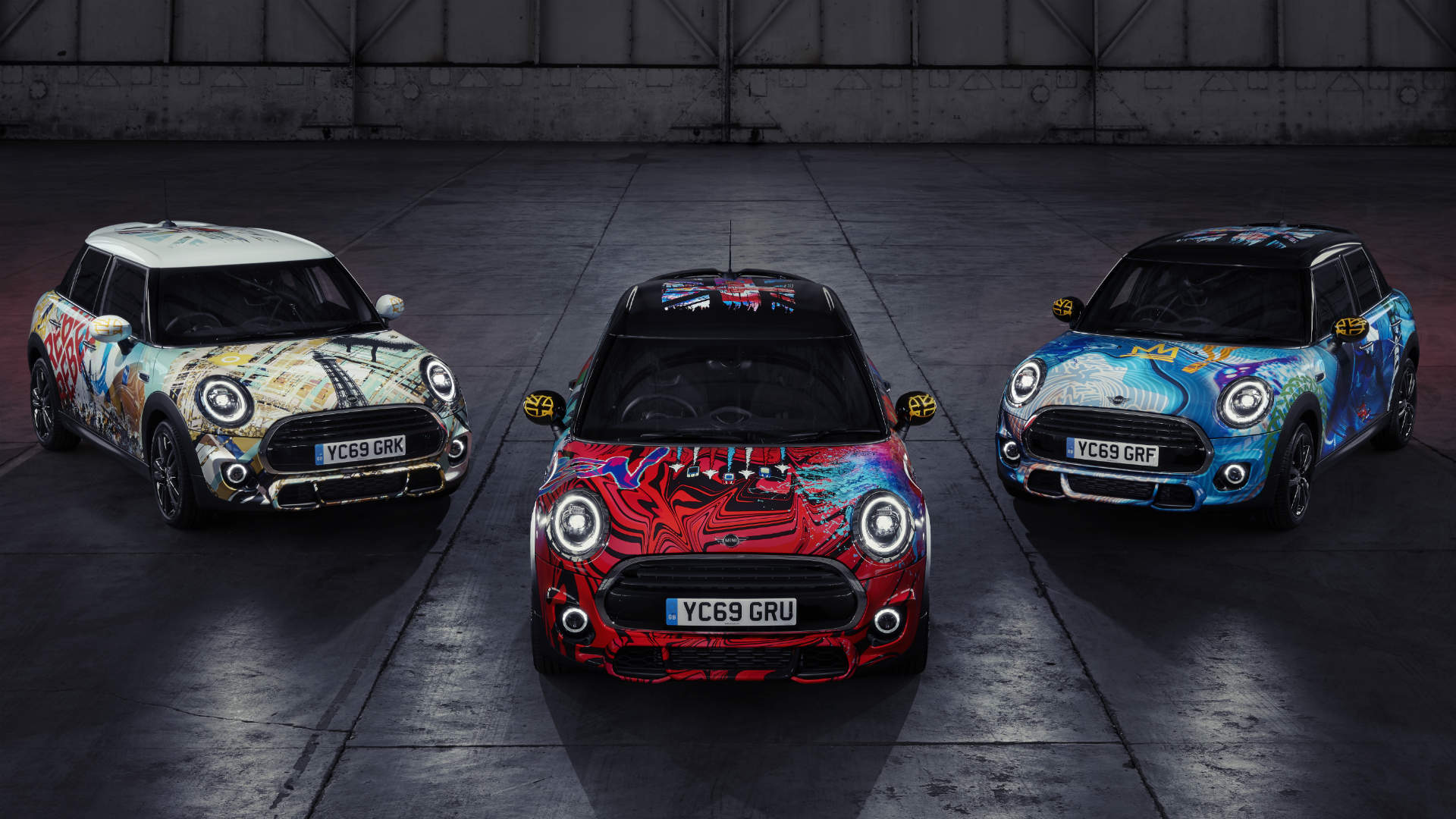
Hertz has added the Mini One, Mini Cooper and Mini Countryman to its British Collection rental fleet. To celebrate, it called upon the help of vehicle wrapping company Yiannimize. The results are certainly eye-catching.
The artwork features the traditional red, white and blue of the Union Flag, plus 16 references to British culture. Highlights include the Pizza Express in Woking, Jo Swinson’s battle bus and people arguing on social media. Probably.
Hertz launched the British Collection in March 2019. The fleet includes the Land Rover Discovery Sport, Jaguar F-Pace, Jaguar E-Pace, Jaguar XE and Jaguar XF. Now, for the first time, customers can rent one of the three Mini variants.
Richard Davies, country manager, Hertz UK, said: “Mini is an icon of British style and culture, and, as such, it had to be part of our British Collection. The exclusive wrap designs we have chosen to mark the expansion, along with the high-end service that characterises our British Collection, will offer customers a fun, yet classy, way to travel.”
A total of 60 Minis – well, it is the car’s 60th anniversary – are available at Hertz locations in Edinburgh Airport, Heathrow Airport and Marble Arch. The Jaguars and Discovery Sport can be rented from the same locations, along with Manchester Airport and Glasgow Airport. Bookings must be made online via the Hertz website.
For the authentic British experience, customers are treated to a complimentary door-to-door concierge service, access to a dedicated lounge featuring designs from Tom Dixon furnishings, botanical drinks and flowers by McQueens.
They also get a make and model guarantee, meaning the car they book is the one they drive away with. Drivers must be aged 25 or above and must be able to present two credit cards.
The Yiannimize Mini Coopers are subject to availability, so your rental car might not feature the eye-catching wrap. You can decide whether or not this is a good thing.
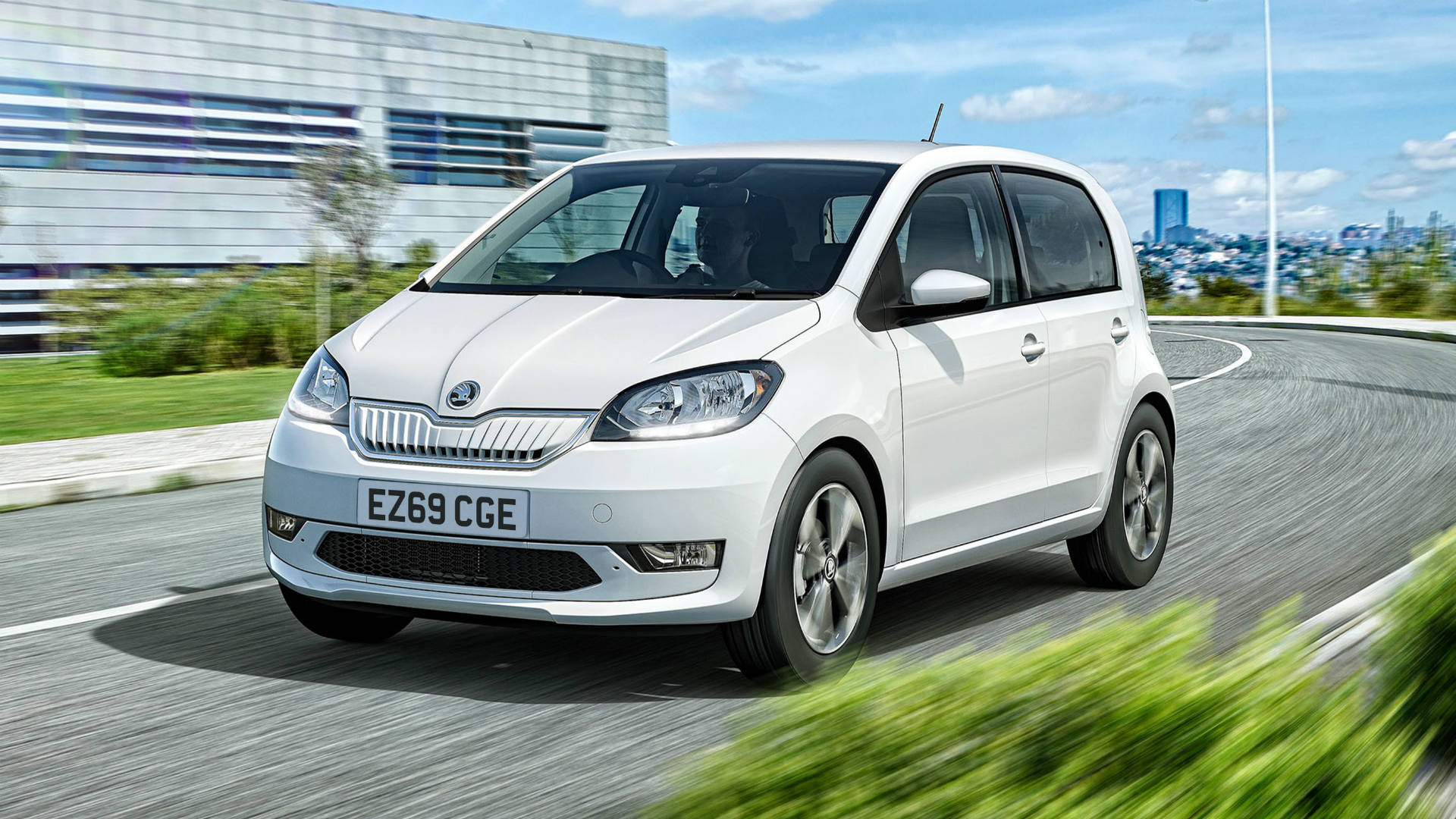
The new Skoda Citigo e iV electric car goes on sale in December and will cost from £16,955.
This is after the £3,500 plug-in grant reduction, and is based on the entry-level Citigo e iV SE. The top-spec Citigo e iV SE L will cost £19,315 after the government grant.
Both models feature a 36.8kWh battery and a 61kW electric motor to provide a WLTP driving range of between 140 and 170 miles.
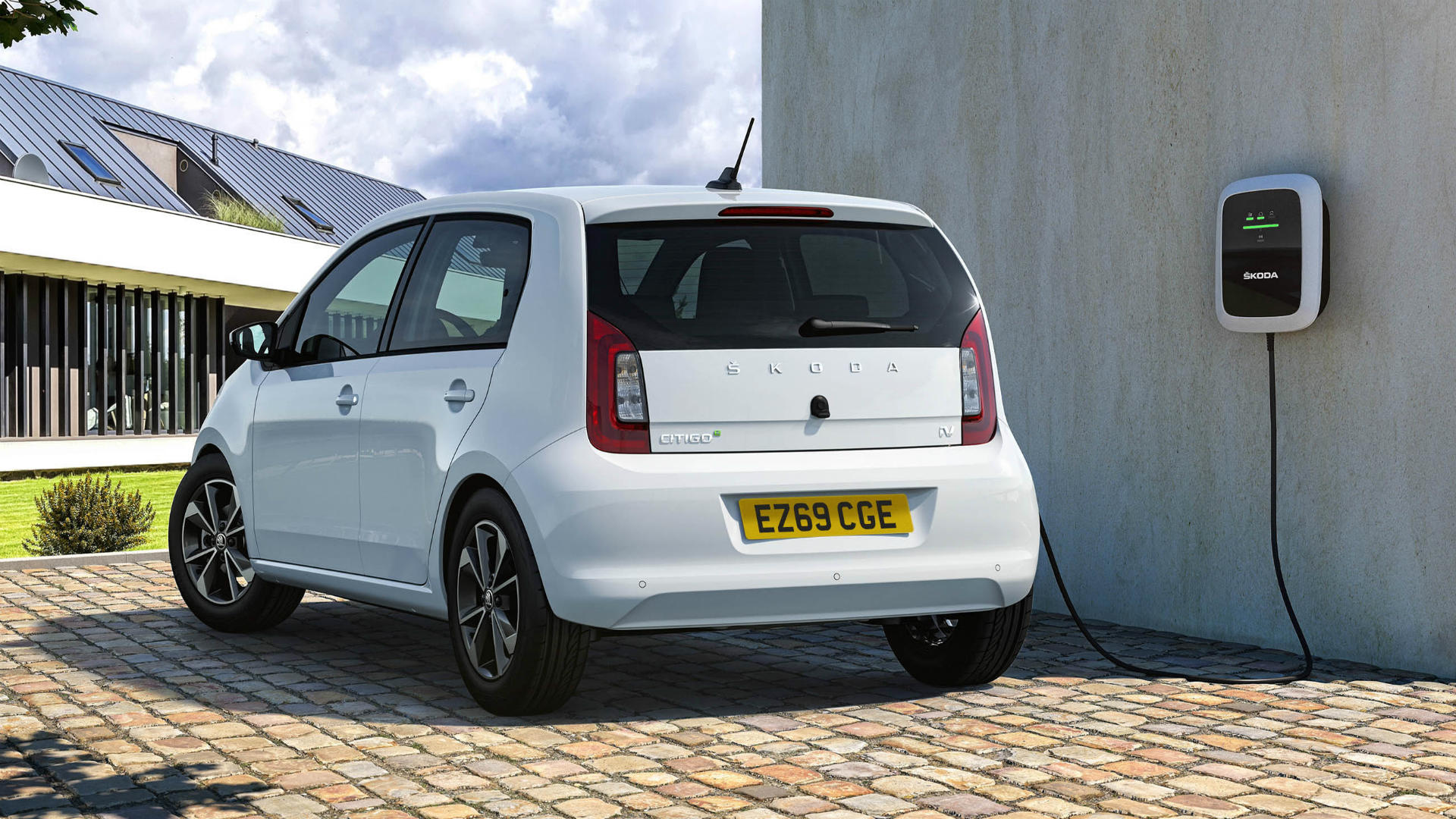
With a 7.2kW AC wall box, the Citigo’s battery can be charged to 80 percent in four hours 15 minutes, or 12 hours 37 minutes using a 3.6kW home-charger. The SE L model can be charged faster using a CCS cable connected to a 40kW DC fast charger.
The Citigo electric car – which follows the launch of the Seat Mii Electric – can hit 62mph in 12.5 seconds before reaching a top speed of 81mph. There’s no reduction in the boot size, so the EV version gets the same 250-litre luggage capacity as the petrol Citigo.
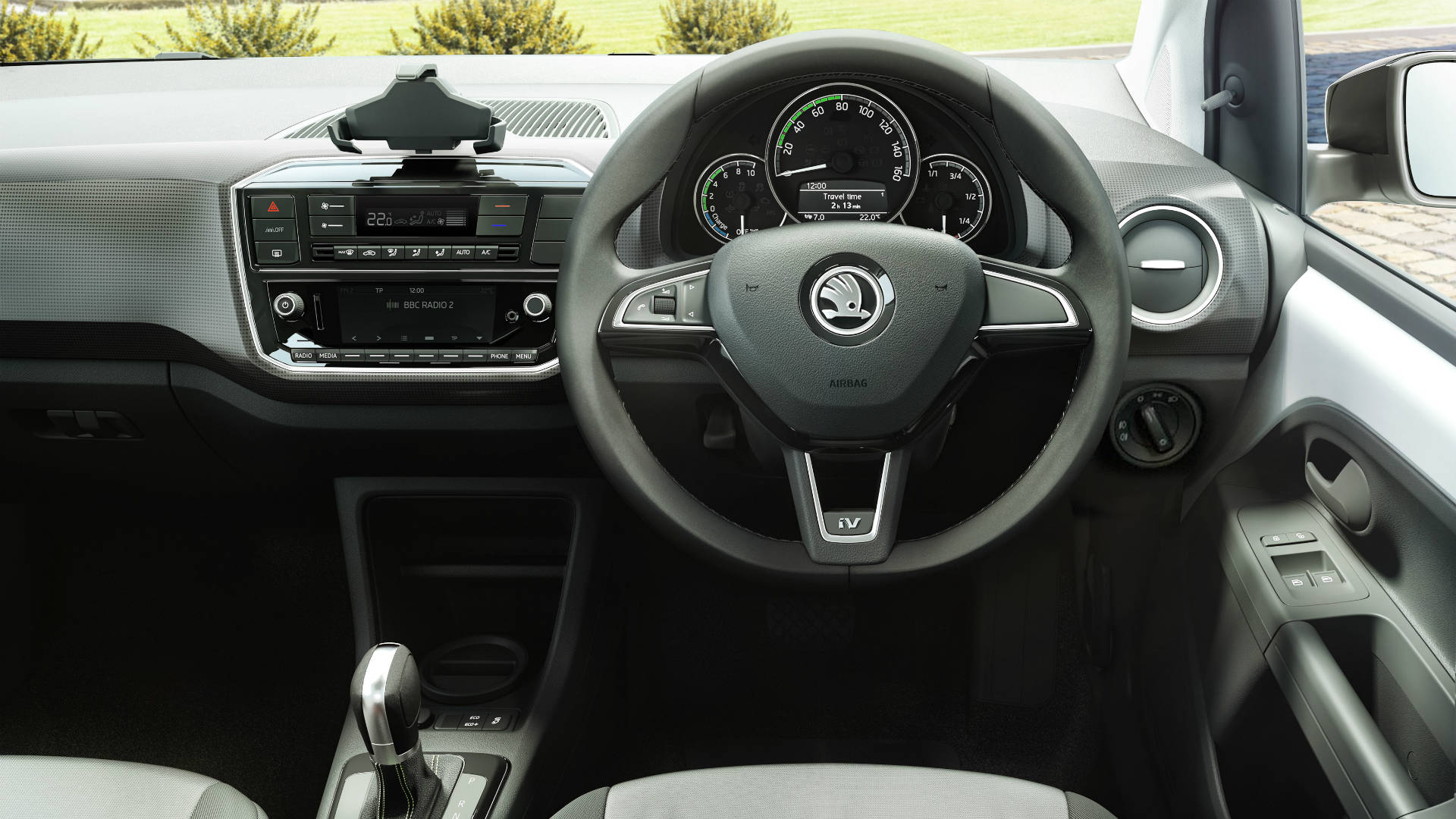
In standard SE form, the Citigo e iV features climate control, a leather steering wheel and handbrake lever, remote central locking and a Swing DAB digital radio.
The SE L adds 16-inch alloy wheels, ambient lighting, heated front sets, rear parking sensors and body-coloured door mirrors and handles. Given the extra kit and the CCS charging capability, the SE L is likely to be the most popular model.
Both models can be linked to the Skoda Connect app, which means owners can check features of their car remotely, including the charge status of the battery.
Skoda is investing £1.8bn in electrification by the end of 2022, with relevant cars wearing the iV badge. The Skoda Citigo e iV joins the Superb iV plug-in hybrid, while a production version of the Vision iV concept car is expected to offer an electric range of 300 miles.
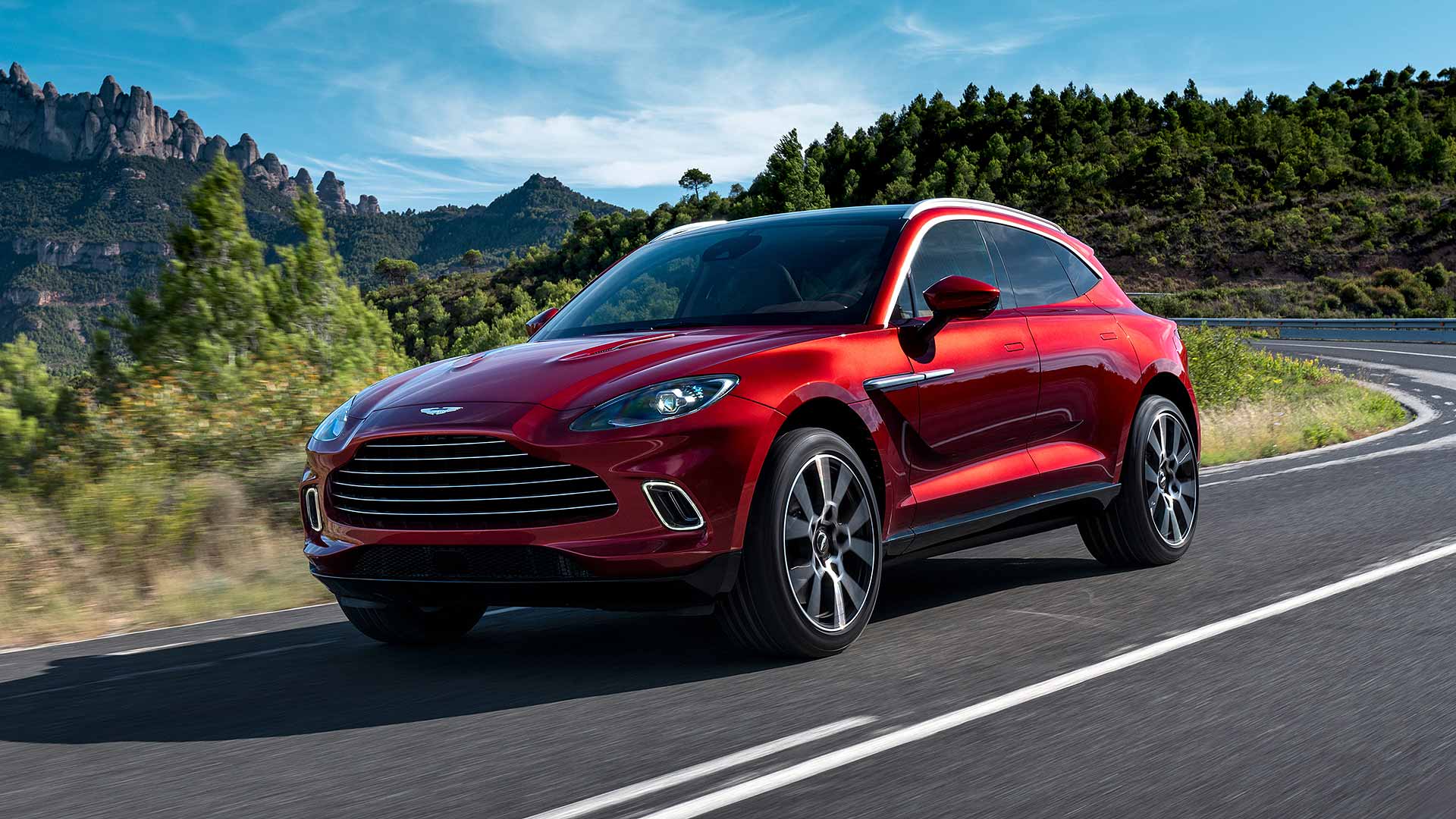
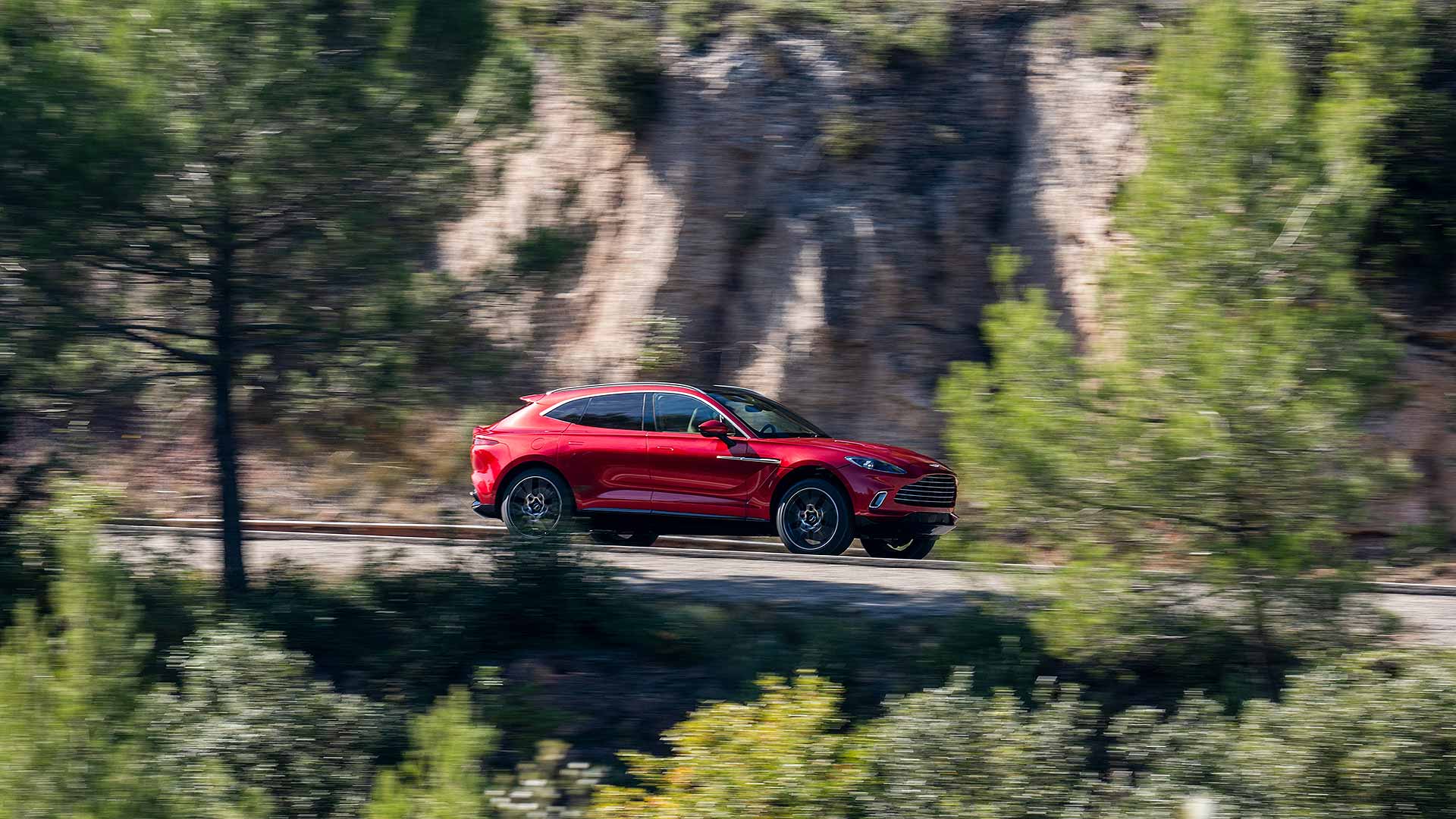
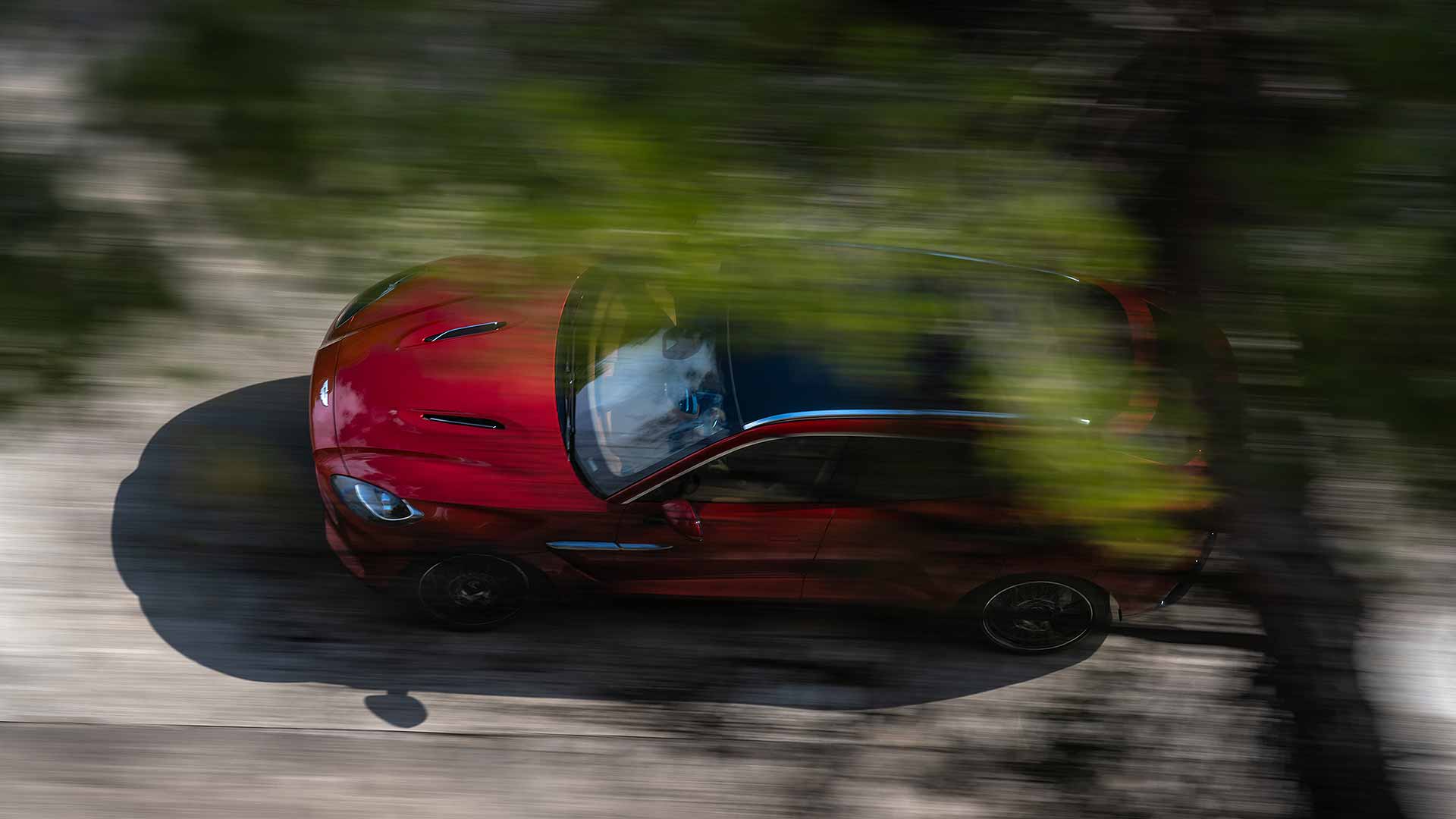
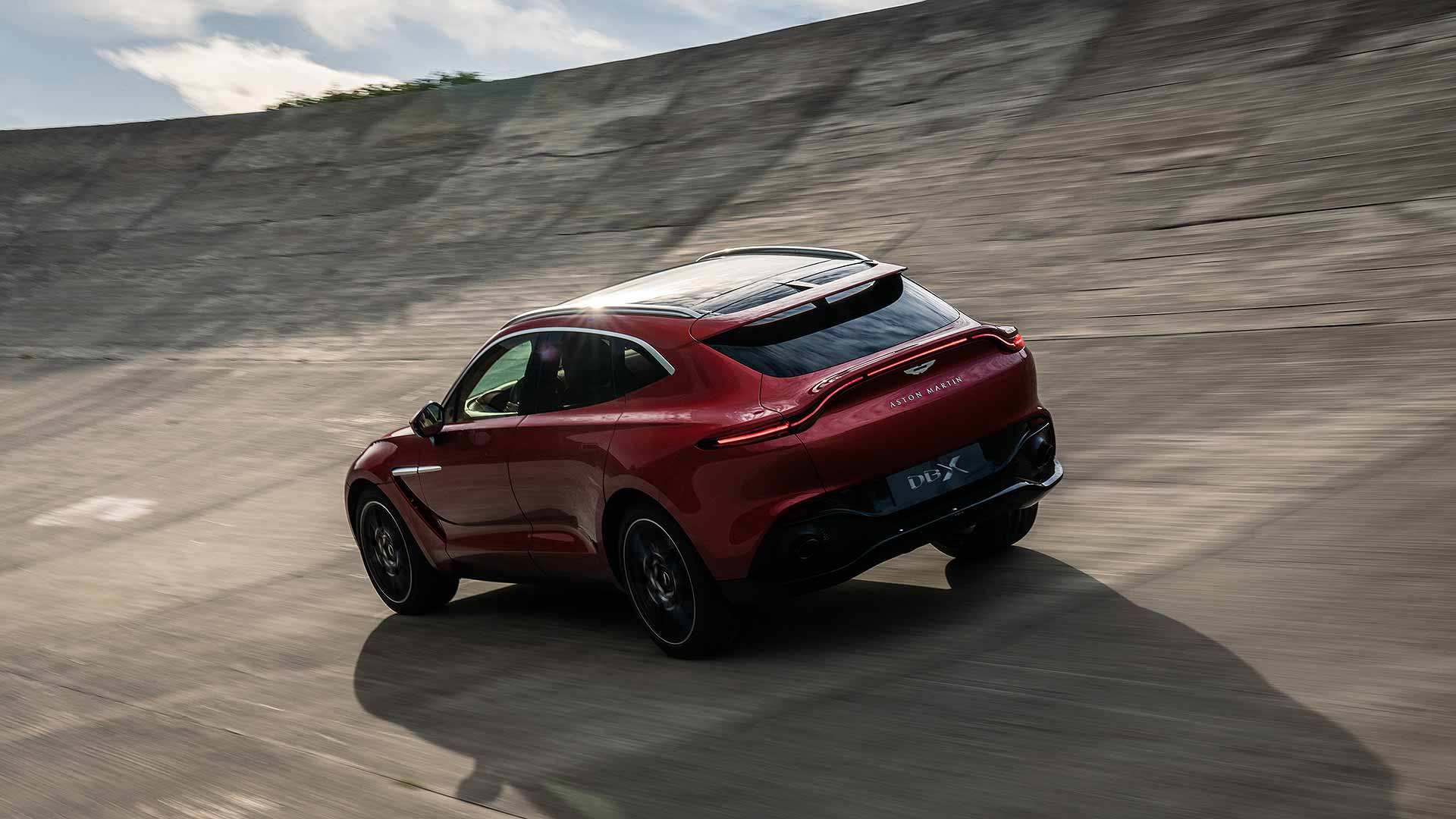
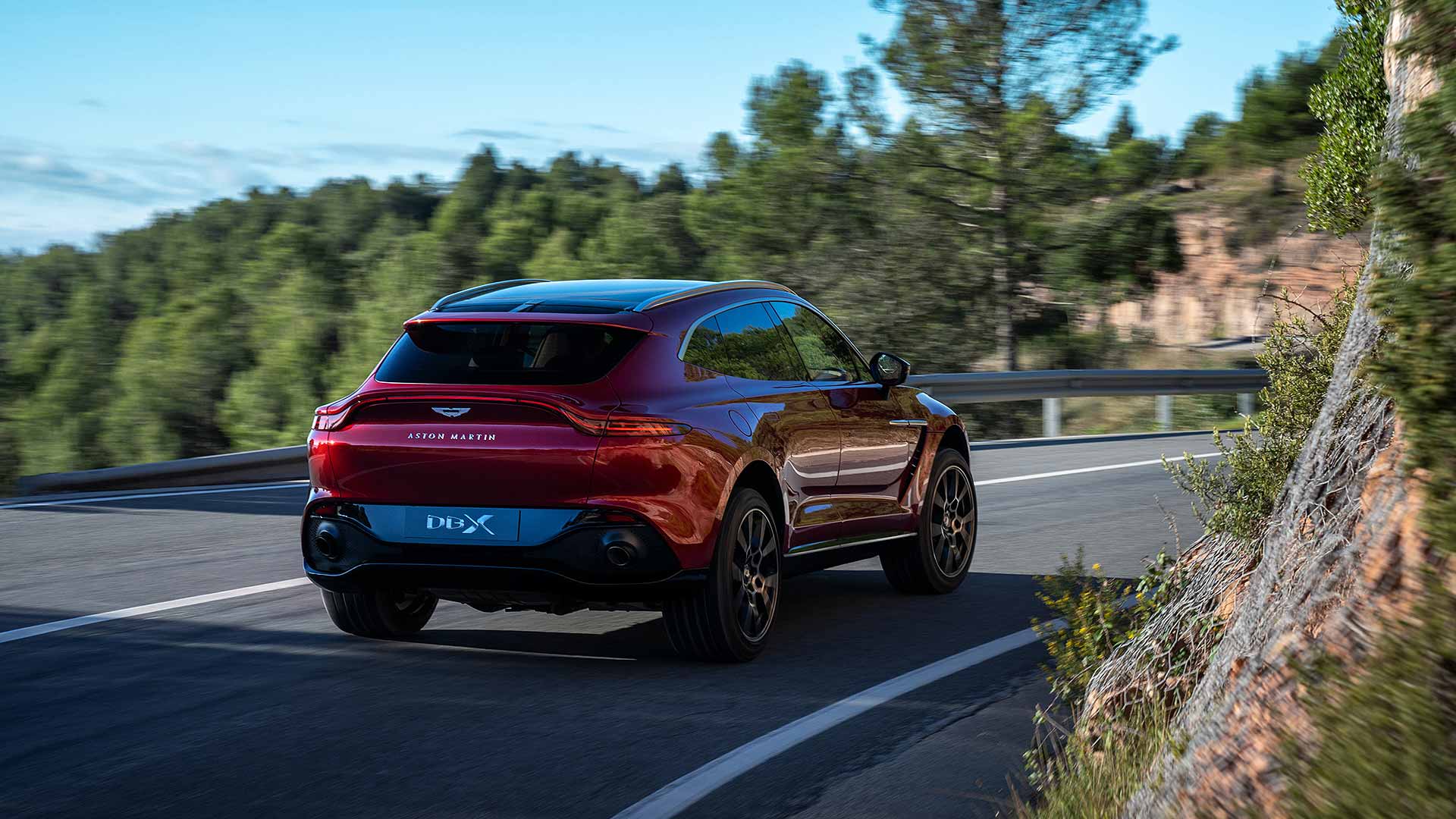
The Aston Martin DBX SUV could be the most important car the British sports car firm will ever launch. The company’s future rests on the success of this, its first ever SUV. Fortunately, first impressions from the launch event in Los Angeles are strong. Aston Martin appears to have hit the bullseye with the 2020 DBX.
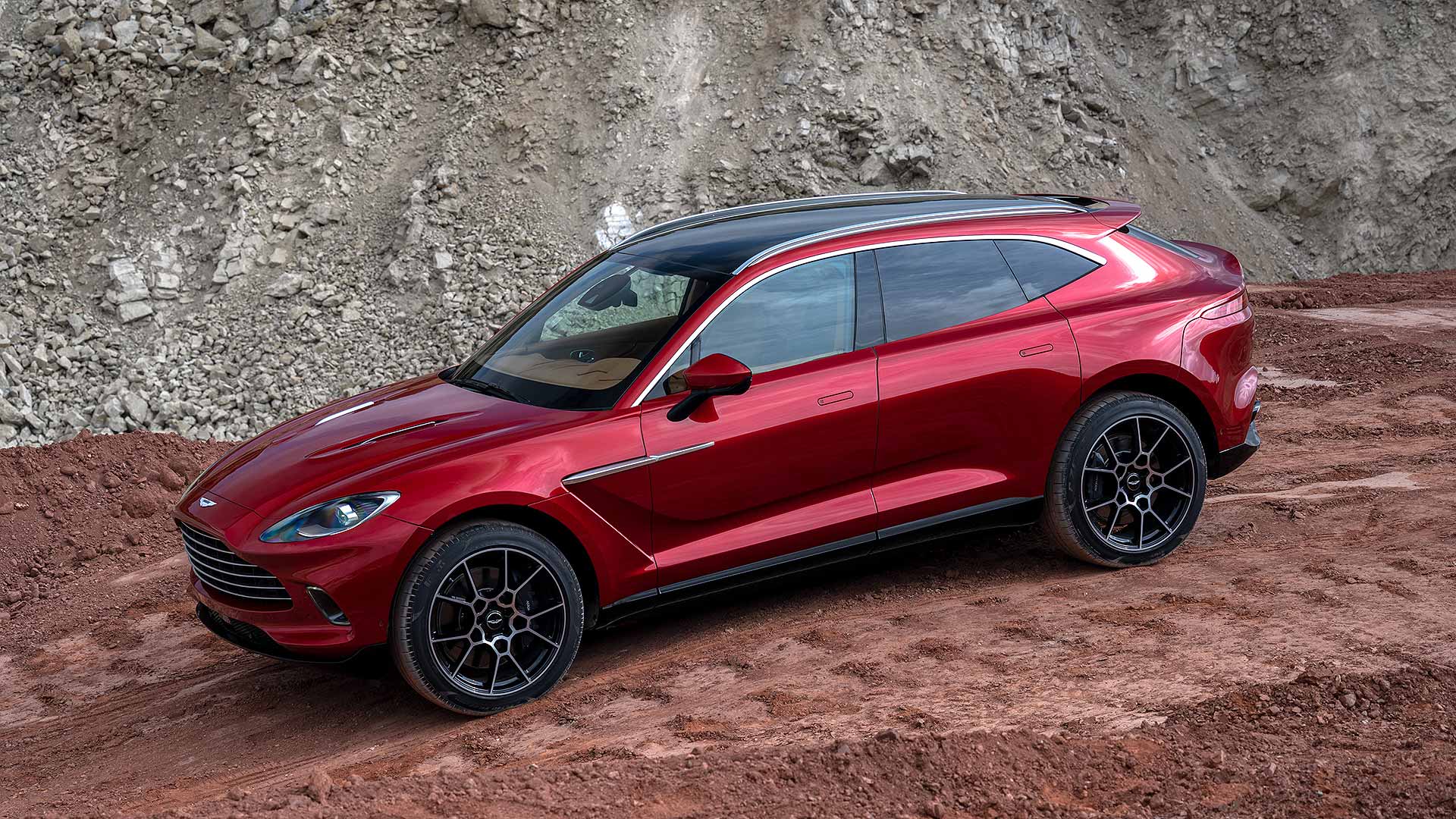
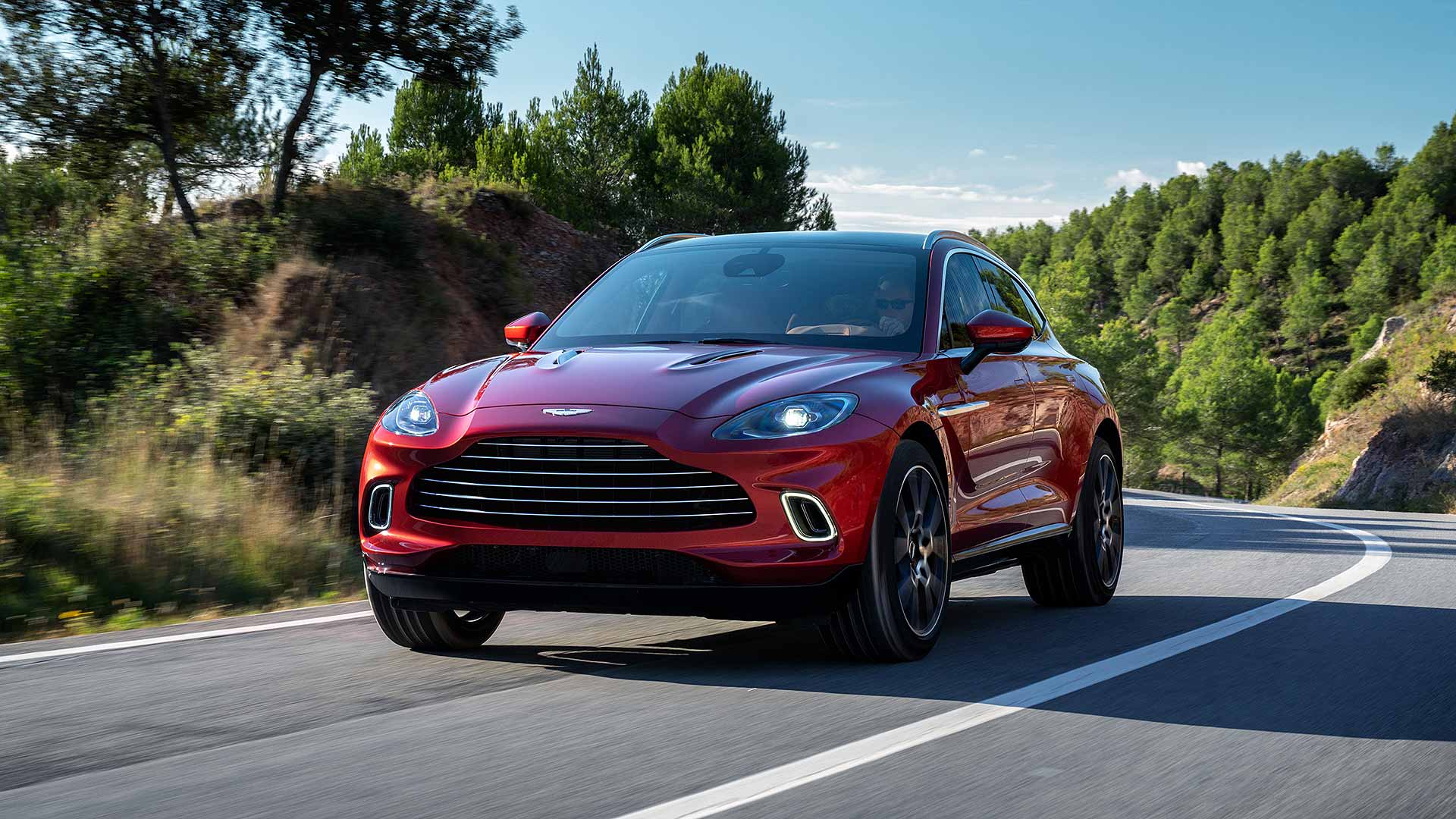
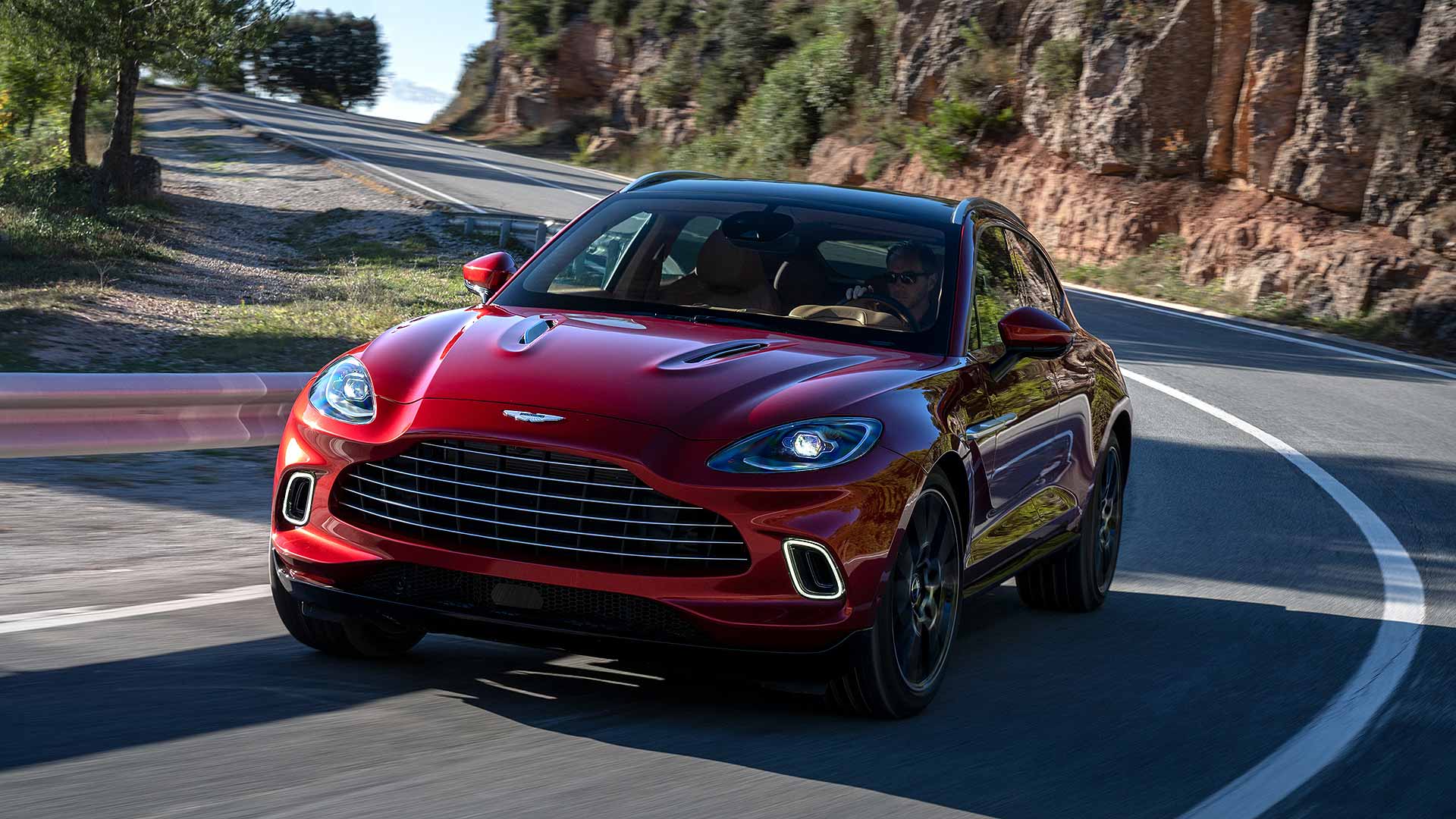
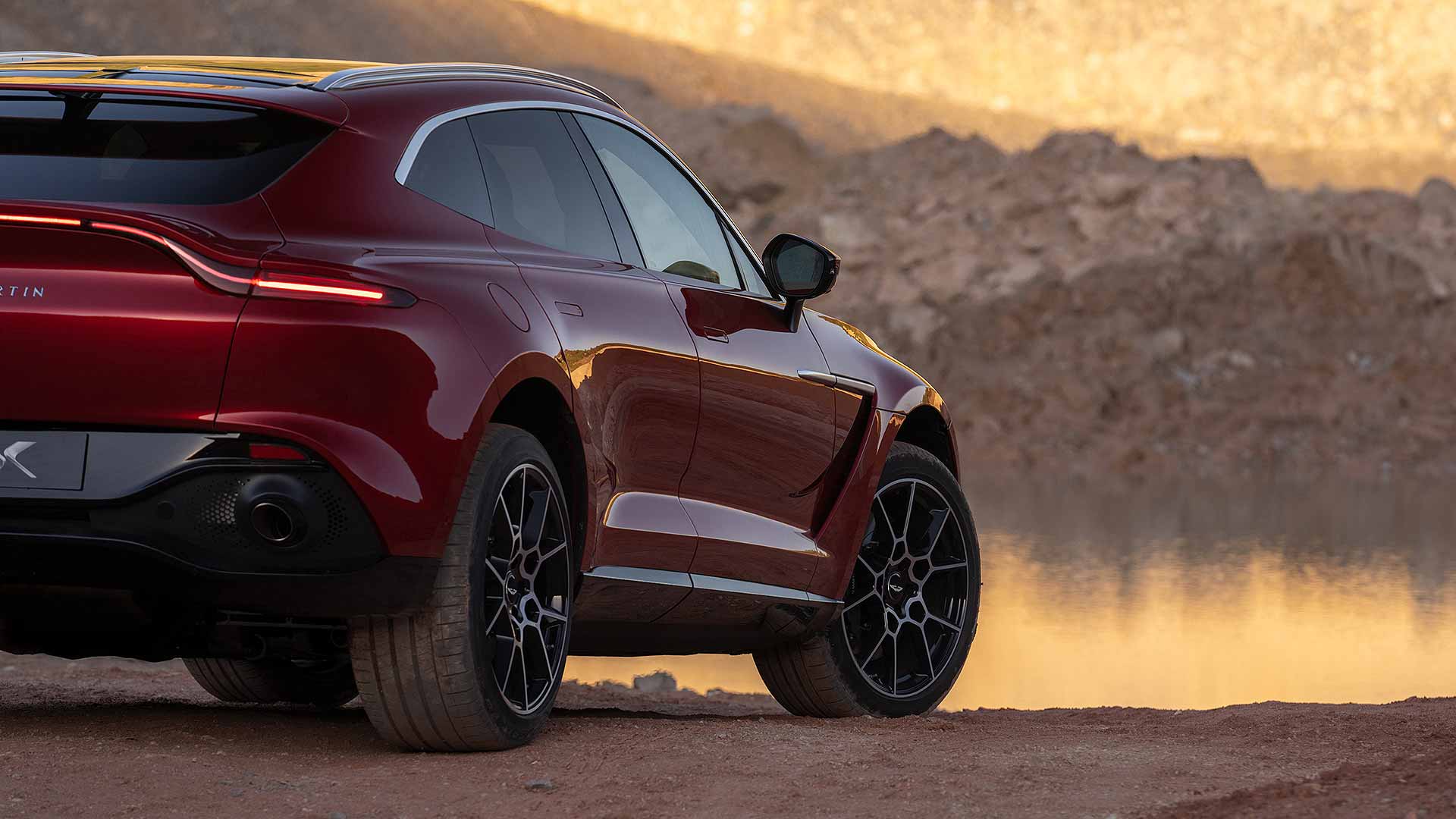
Striking, stylish and suitably sporty, the DBX is a standout SUV that eschews boxy blockiness for a more elegant and exotic profile. Can SUVs be beautiful? This lays a greater claim to it than most – and no, says the design team proudly, the obvious references to Aston sports cars like the Vantage are no coincidence…
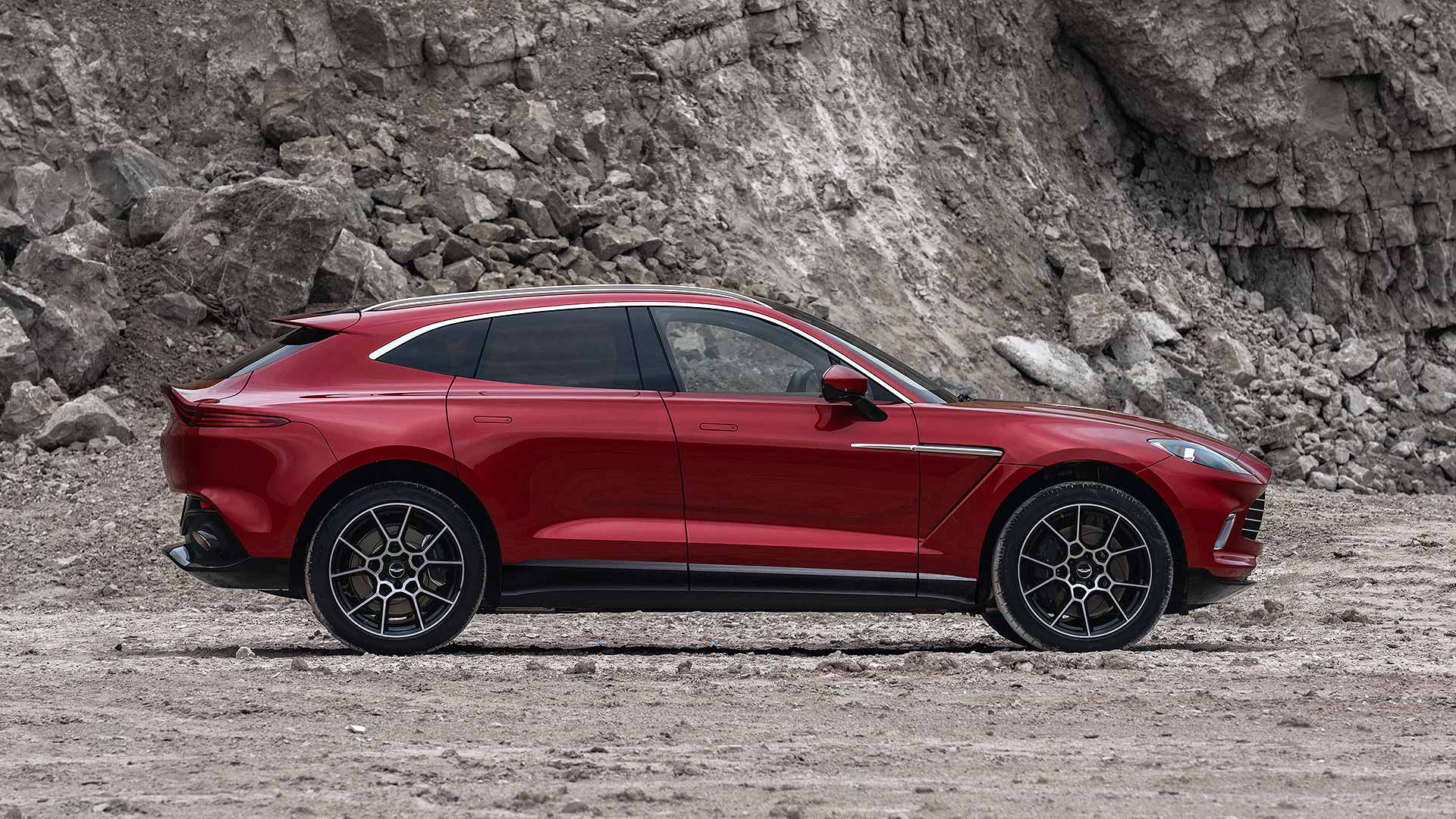
Aston Martin has intentionally aimed for elegance with the DBX, rather than in-your-face brashness. The silhouette is described as fastback-like, with the visual mass over the rear wheels, like in a sports car. Yet a very long wheelbase means it’s easy to get into, both front and rear. It can’t simply look pretty: it has to tick all the SUV practicality boxes, too.
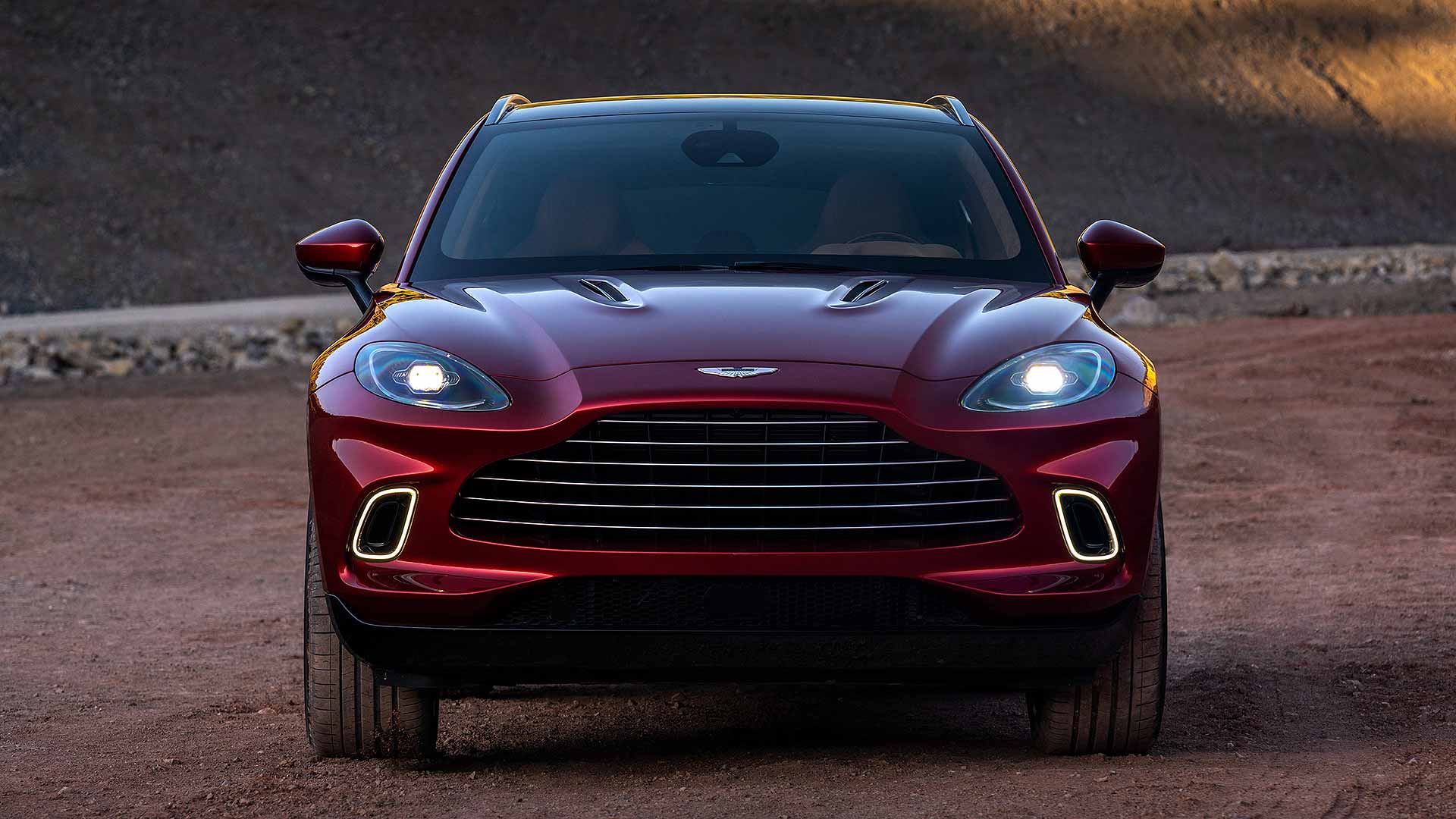
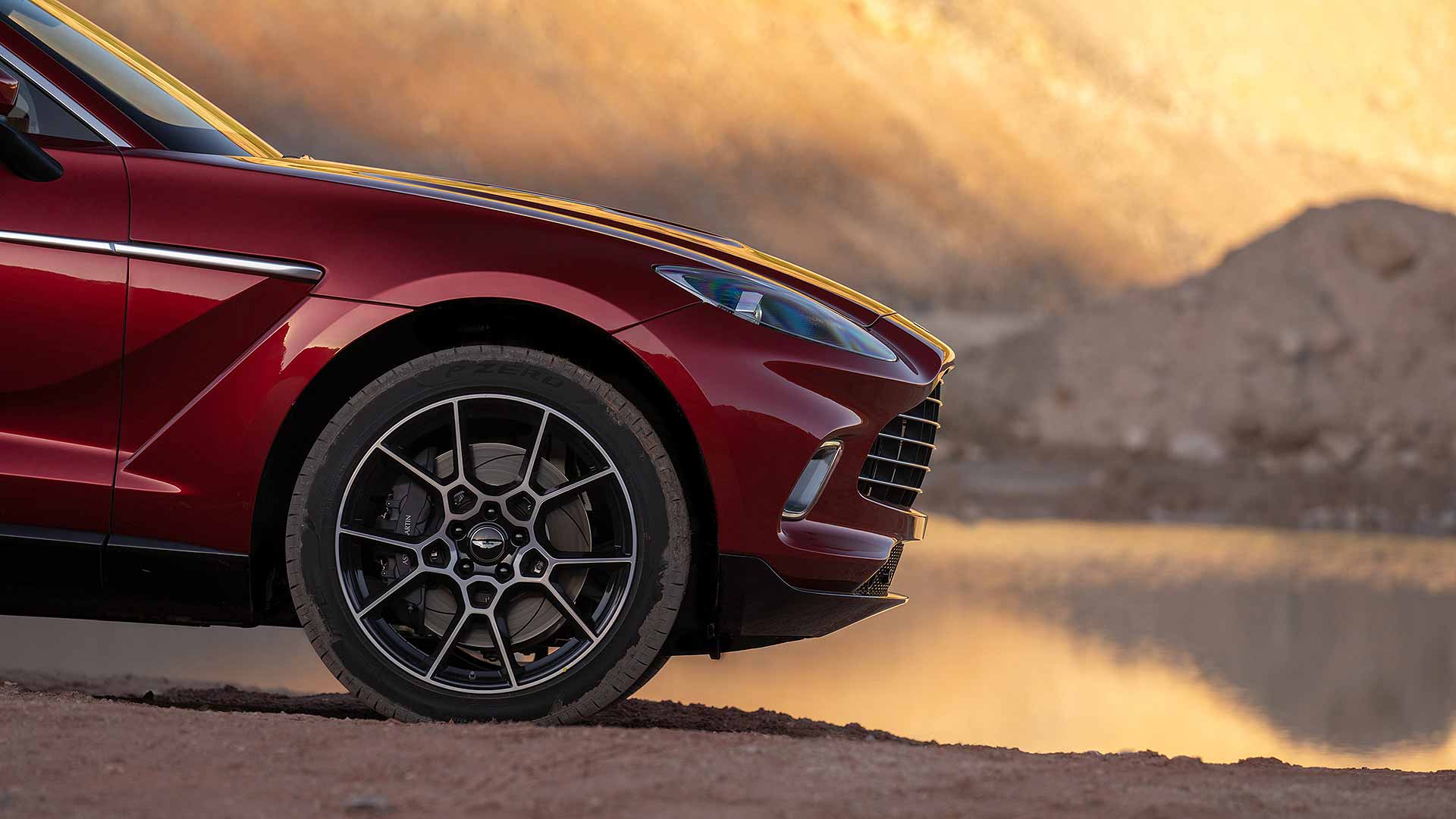
Of course, at the front, there’s the Aston Martin grille, and bonnet blades that can be finished in satin chrome, carbon fibre and other materials. The designers are proud of the new daytime running lights, which double up as indicators, and also have a built-in aerodynamic duct.
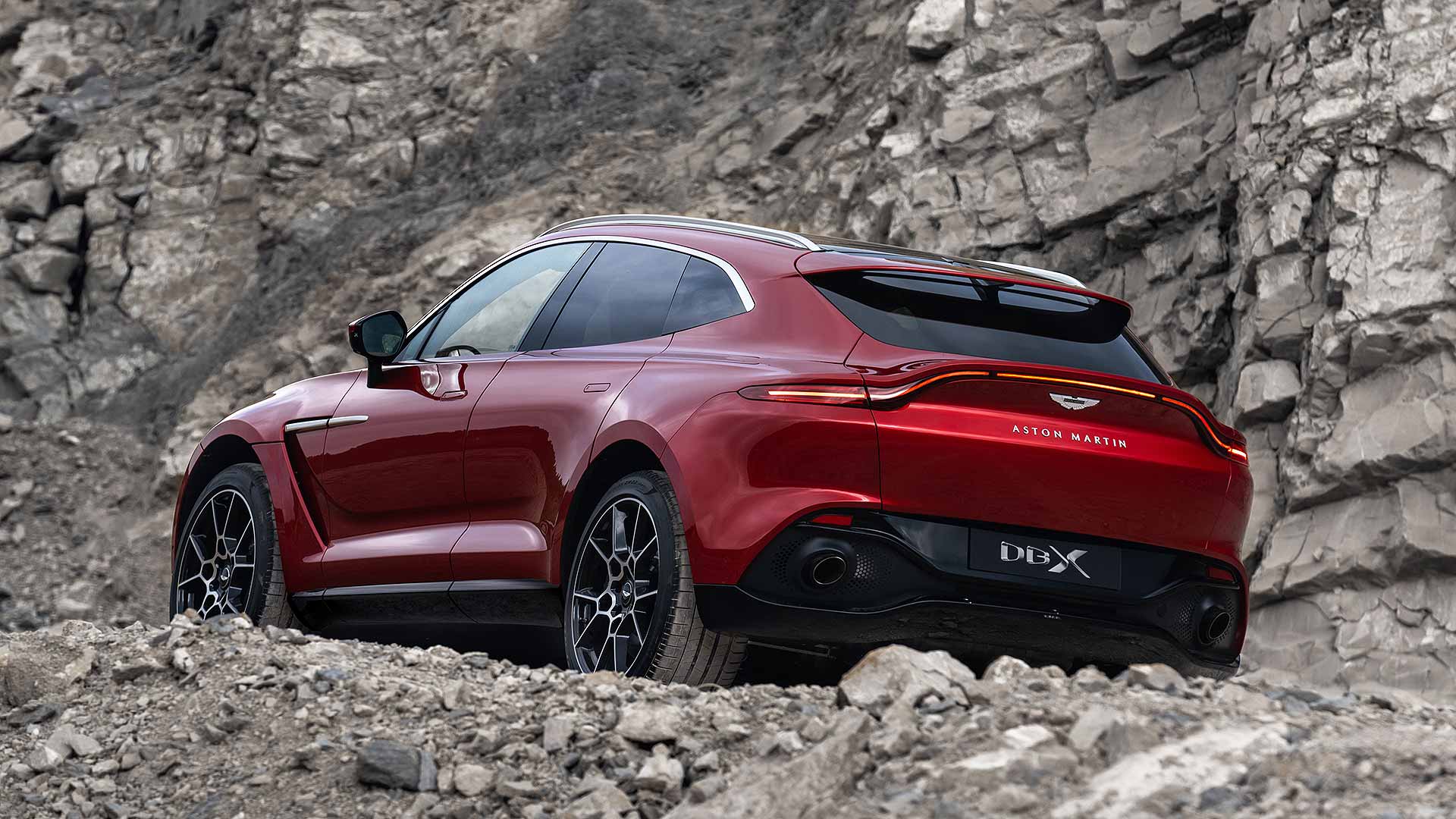
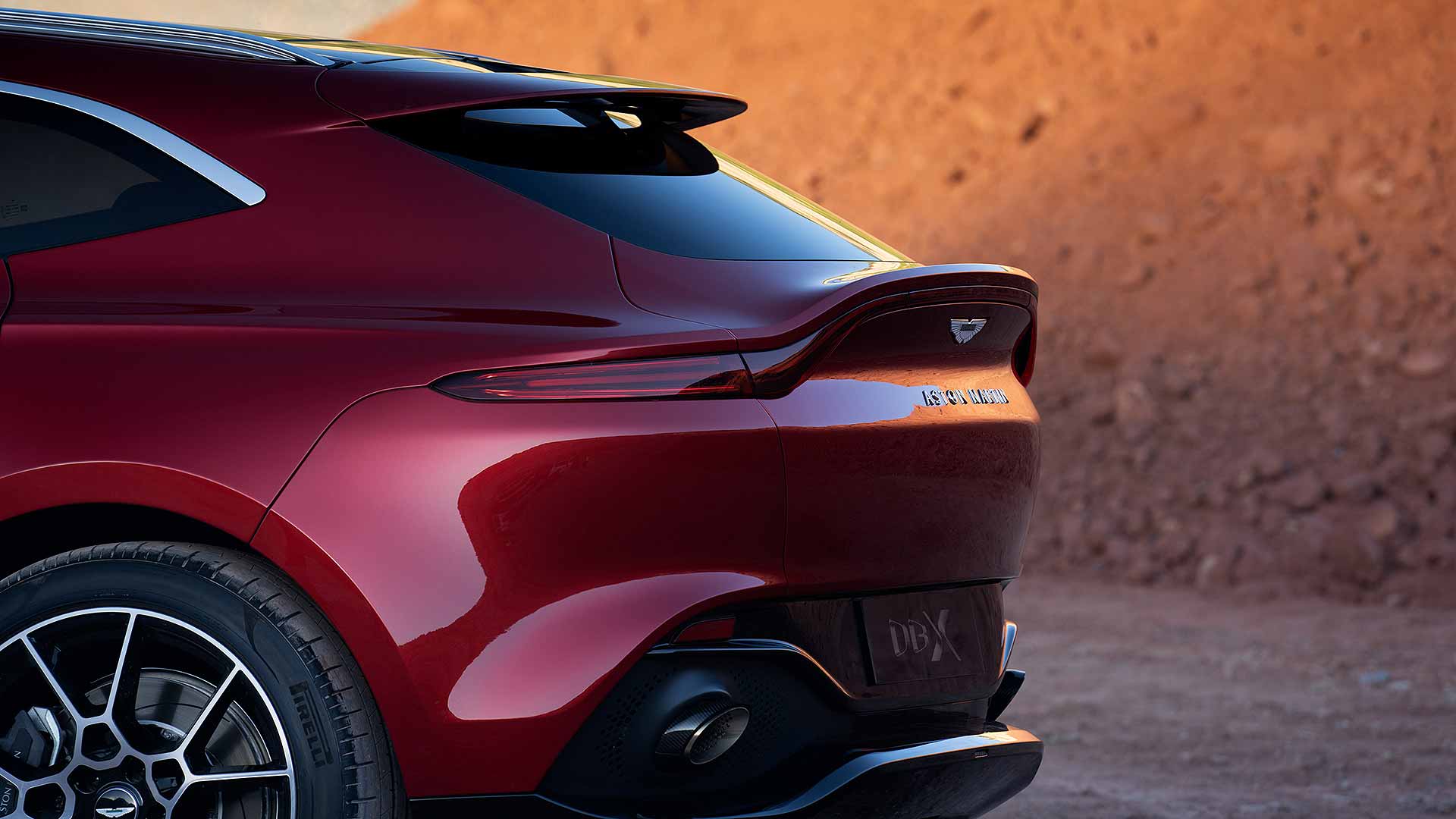
At the side, “the sculpted nature… contrasts with the flat, slab-like forms often seen on SUVs,” says Aston, in a not-so-subtle nod to some of its boxier rivals. It even has a beefy set of rear haunches, plus a set of dual exhausts.
22-inch alloys are standard, and Aston has even carefully considered the space between the tyre and wheelarch. It’s bigger than a sports car, and “this intentional injection of space imbues the whole car with a readiness and an uplifting demeanour that reflects the lightness in the way it drives whether on or off road”.
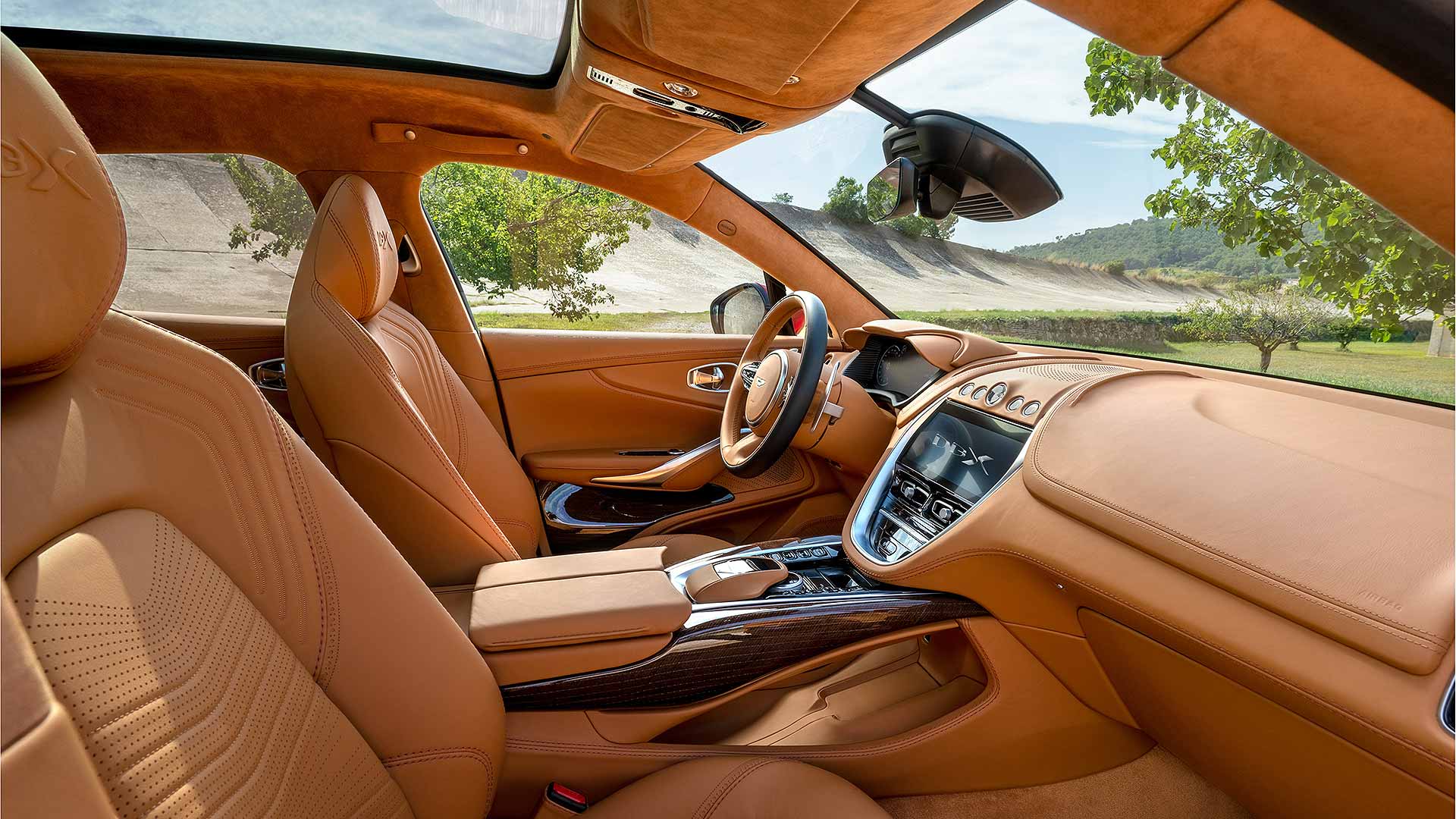
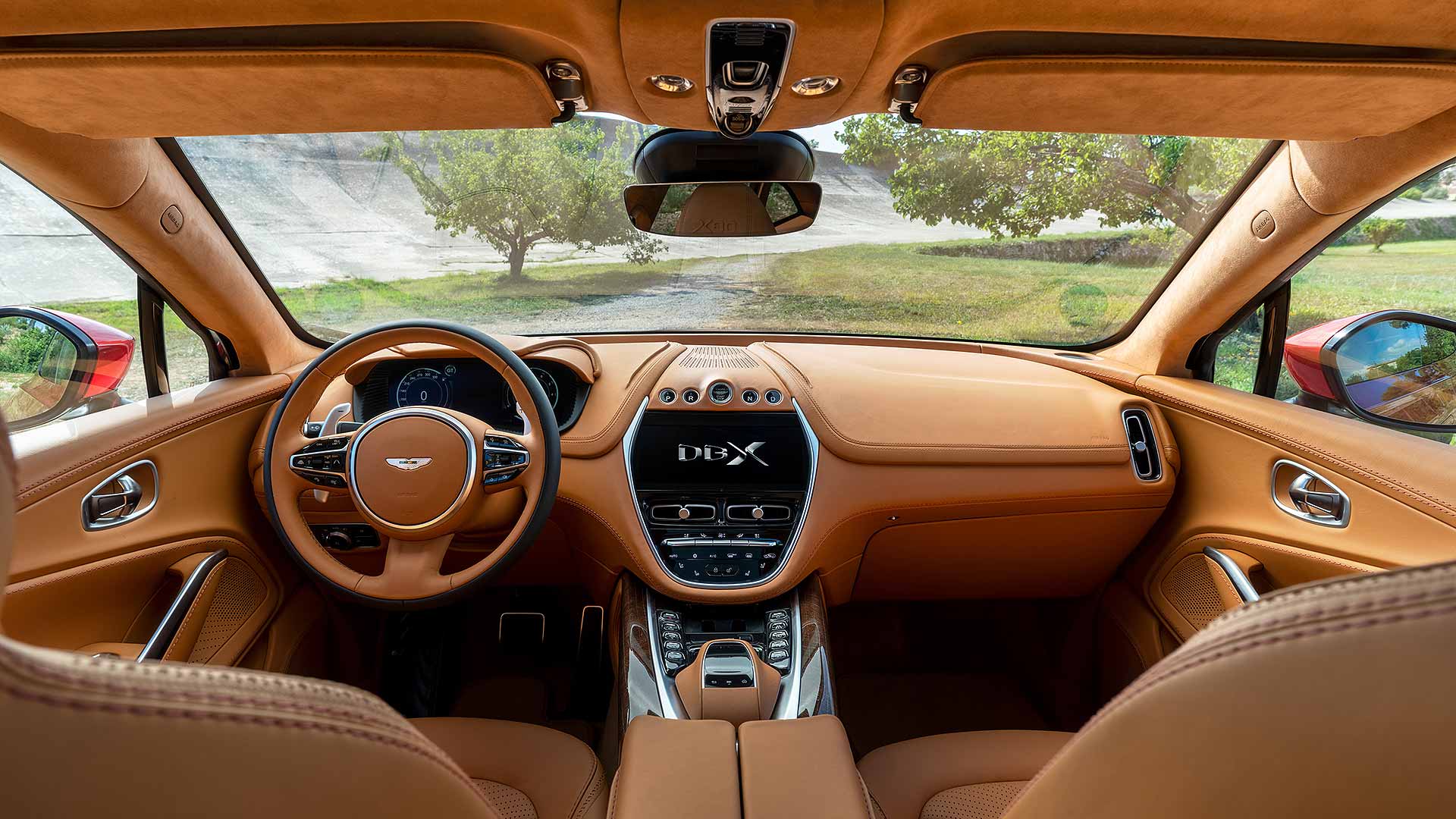
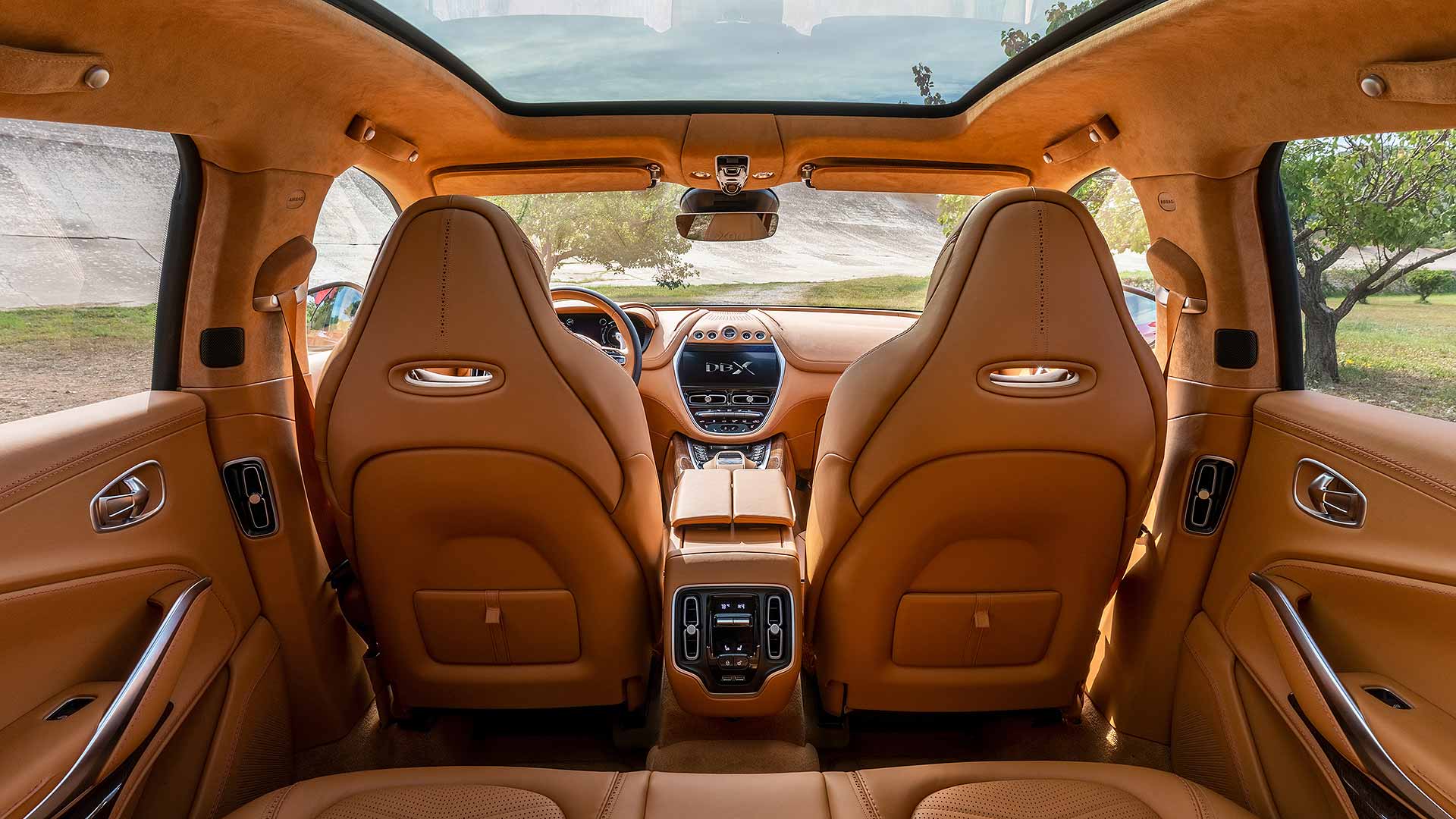
The interior is similarly appealing. Incredibly rich and luxurious, it’s also clean, contemporary and unlike any other Aston. The quality of the materials is of the very highest order, we’re told – and the amount of customisation for colours, trims and materials is vast.
The interior has been loaded up with technology. A 10.25-inch TFT screen is in the centre of the dash, with a 12.3-inch screen for the driver (Aston says the graphics and layout has been inspired by its classic sports cars). Apple CarPlay is standard, and all infotainment technology is sourced from tech partner Daimler.
The launch engine is a 4.0-litre V8 twin-turbo, also used on the DB11 and Vantage. It produces 550 horsepower, taking this 2,245 kg (4,940 lb) five-seat SUV from 0-62 mph in 4.5 seconds, then onto 181 mph. Even faster versions will undoubtedly follow. All will likely use the launch nine-speed automatic gearbox.
It’s not the same engine as the Vantage and DB11, though. Aston Martin has actually changed the firing order of the cylinders, to alter the noise of the engine. An active exhaust enhances it, and also delivers a fruity start-up blast (if the owner wants a more discreet getaway, they can hold down the starter button to keep the active exhaust valves closed).
The off-road Aston
Can the DBX off-road? You bet. All-wheel drive is standard. It can wade through water 500 mm (nearly 20 inches) deep. The ride height can be raised. It has Aston Martin’s first ever hill descent control. The engineers have even confirmed it can reverse a trailer into water while towing a boat – oh, and they spent a lot of time going sideways honing the dynamics at the Walters Arena rally stage in Wales.
On-road driving hasn’t been compromised, though. The DBX still undertook Aston’s 8,000 km (5,000 mile) Nurburgring sign-off test. Dynamics engineer Matt Becker said the sideways grip of the DBX is “genuinely incredible… Our on-track and on-road performance has seen us push the boundaries of what is possible for an SUV and in many instances, we have seen performance credentials more likely seen in one of our sports car models.”
Aston Martin validated the DBX aerodynamics with a unique test – towing a trailer carrying a DB6 sports car. Other more mundane tests on a 40 percent scale model honed the fixed rear spoiler which just so happens to mimic the Vantage sports car. There isn’t a rear wiper – instead, water is removed by airflow through the rear wing.
Aston Martin Lagonda President & Group CEO, Dr. Andy Palmer said: “I can’t emphasise enough how incredibly exciting and significant DBX is for Aston Martin. Through its development alone, this beautiful SUV has already taken the company into new territories and in inspiring directions. This is a real landmark for this great British brand and I promise that DBX will reward all who experience it in their everyday lives.”
Expected to be many people’s first Aston Martin, Palmer said the DBX had to stay true to the sports car firm’s core values, “while also providing the lifestyle versatility expected of a luxury SUV”. He reckons the firm has achieved this and is proud the DBX is “beautiful, hand built, yet technologically advanced”.
The first 500 DBX will be special ‘1913 Package’ editions. These will all be personally inspected by CEO Palmer on the production line. Owners will also get a build book signed by Palmer and designer Marek Reichman – and, uniquely, an invitation to a special cocktail party in a Waldorf Astoria in the buyers’ region.
Nearly five years in the making
Development of the DBX started back in 2015. The decision to build it on a unique SUV platform is rare in the car industry; it’s enabled Aston Martin to “innovate and push the boundaries of what British design and engineering can create,” says the firm. A full five-seater, a design target was “class-leading spaciousness” both front and rear. Every DBX gets a full-length panoramic glass roof.
A little slice of Aston Martin Vantage can be seen in the DBX’s seats. Derived from those in the DB11, they use ‘sports car seat packaging’ which delivers lots of support and comfort for the driver, but also ample knee and footwell space for those in the rear. The seats are trimmed in Bridge of Weir leather.
A range of materials are used in the interior – metal, glass and (real) wood, the auto industry’s first Alcantara headlining, and the option of a new fabric made from 80 percent wool. Those who don’t like carbon fibre can choose a new flax composite made from the same plant as fine linen.
A target was accommodating the world’s 99th percentile male and 5th percentile female (Aston’s Female Advisory Board provided input into the design of the DBX – and six months was spent just perfecting the driving position). And their luggage: the boot is 632 litres (22.3 cu ft) with the 40:20:40-split rear seats up, 1,530 litres (54.0 cu ft) with them down. And there’s more…
Aston Martin has created a special set of accessory packages from launch – including a ‘Pet Package’ that comprises a portable washer to hose down your muddy dog. There’s also a Snow Package that includes boot warmers to ease the pain of starting out on a ski trip. Handcrafted luggage is also available.
The Aston Martin DBX rides on air suspension, with a powerful 48V electric anti-roll control system (or eARC). It can raise the ride height by 45 mm (1.77 in), lower it by 50 mm (1.97 in) and limits body roll to a level “more akin to that of a sports can than an SUV”.
Arrives 2020 – on sale NOW
The DBX, built on a bespoke all-aluminium architecture, will arrive in Britain first, in Q2 2020, with prices starting from £158,000 (and it’s on sale now). North America follows in the second half of 2020, with prices starting from $189,900. All models will be built at Aston Martin’s brand-new factory in St Athan, Wales.