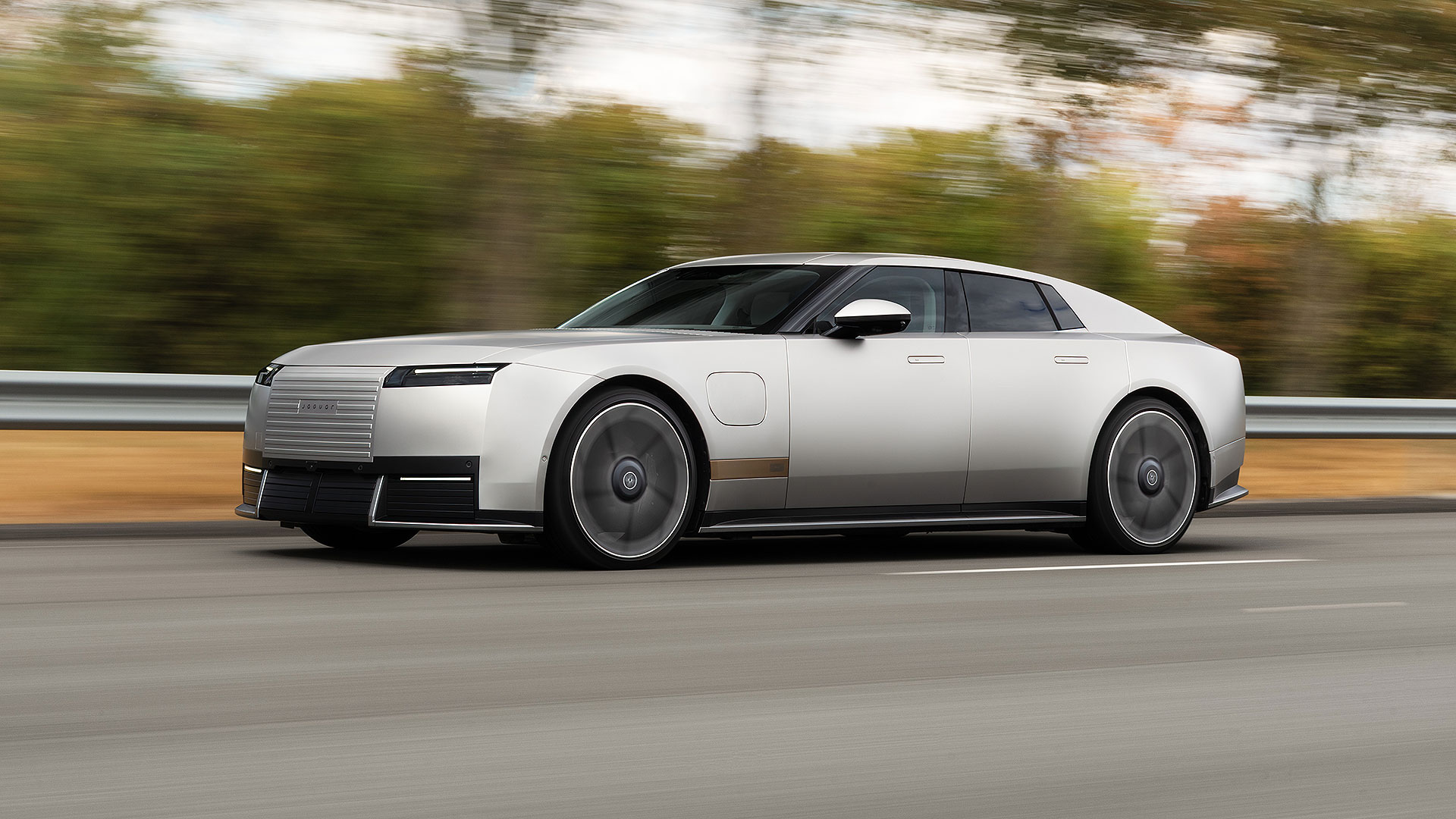
Even before the Jaguar Type 01 was revealed, minds had been made up. What I’m reporting here may not change them. But admit it, you’re intrigued, aren’t you?
After all, this is a car company that has deliberately chosen to have a hard reset. For decades, its strategy was to take on the German giants, BMW, Audi and Mercedes-Benz, with diesel saloons and practical estates… until, suddenly, it wasn’t. And that required the company to be reinvented.
A painful reinvention? Not if you speak to those involved, who are fully behind the strategic realignment. It was just one bizarre video, that I dismissed as just typical marketing fluff when I saw a preview of it, that so enraged people, including the world’s richest man (you should see some of the other stuff that fancy-pants marketing agencies make car firms show us). Jaguar has since reset. The agency behind that video is no longer involved with Jaguar.
Cards on the table. In between the videos, and the razzmatazz, and the discussions about why Jaguar now no longer had capital ‘A’s, what I heard all made sense. Jaguar’s strategy, for all its beautiful cars such as the F-Type and World Car of the Year-winning F-Pace, wasn’t working. It needed to do something else. And as you won’t make money by going mainstream, what else to do but go luxury instead?
Then there’s the electric bit. Of course, it’s the future. Going early has crippled Porsche, but its mainstream models will ultimately go EV, so maybe now is the time for Jaguar to be bold? These days, you can’t reinvent a company with a commitment to ICE. A plug-in hybrid Jaguar would always be a stop-gap. And when you look at the volumes Rolls-Royce is doing with the Spectre, perhaps it’s the perfect approach for New Jaguar?
New Jaguar Type 01: first impressions
So let’s take a look at the car, unveiled at last after my earlier prototype drive. You’re surely both amazed yet not surprised at this production version. It’s faithful to the Type 00 that angered so many – and brilliantly brings a concept car to the showroom.
You may disagree, but I think it looks tremendous. Brutally beautiful, like the reinvention of Coventry after WW2, a home to which Jaguar has long paid tribute. Many will hate it and that’s fine. A polarising design for the first new-era Jaguar seems always to have been the intention.
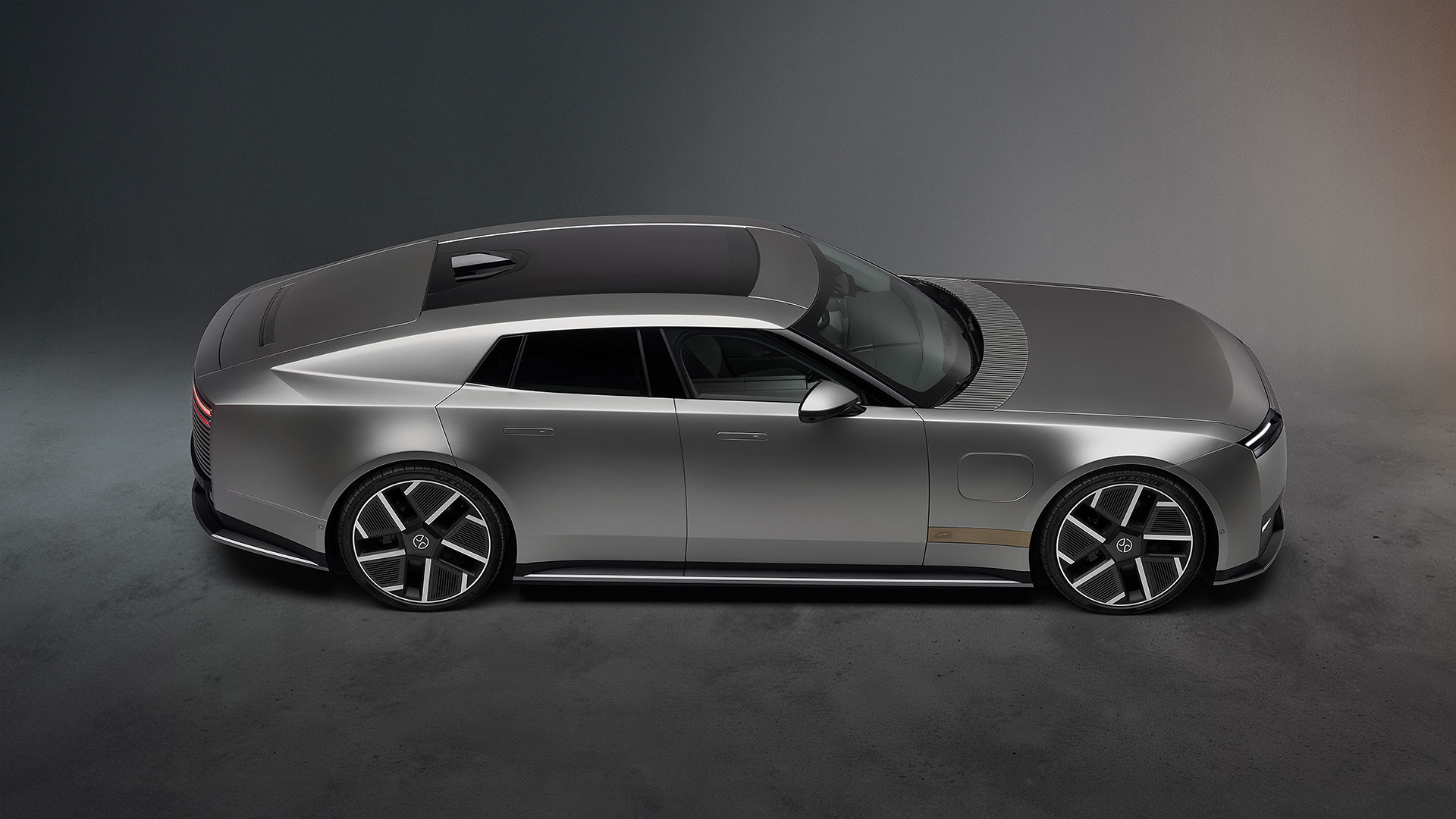
Officially, it’s a four-door GT. And it’s huge, measuring more than 5.2 metres in length. That’s almost 200mm longer than a full-fat Range Rover. The wheelbase alone is 3.2 metres, just 500mm shorter than a Dacia Spring. Bank on it being around two metres wide, and it will probably weigh around 2.7 tonnes – again, about the same as a Range Rover.
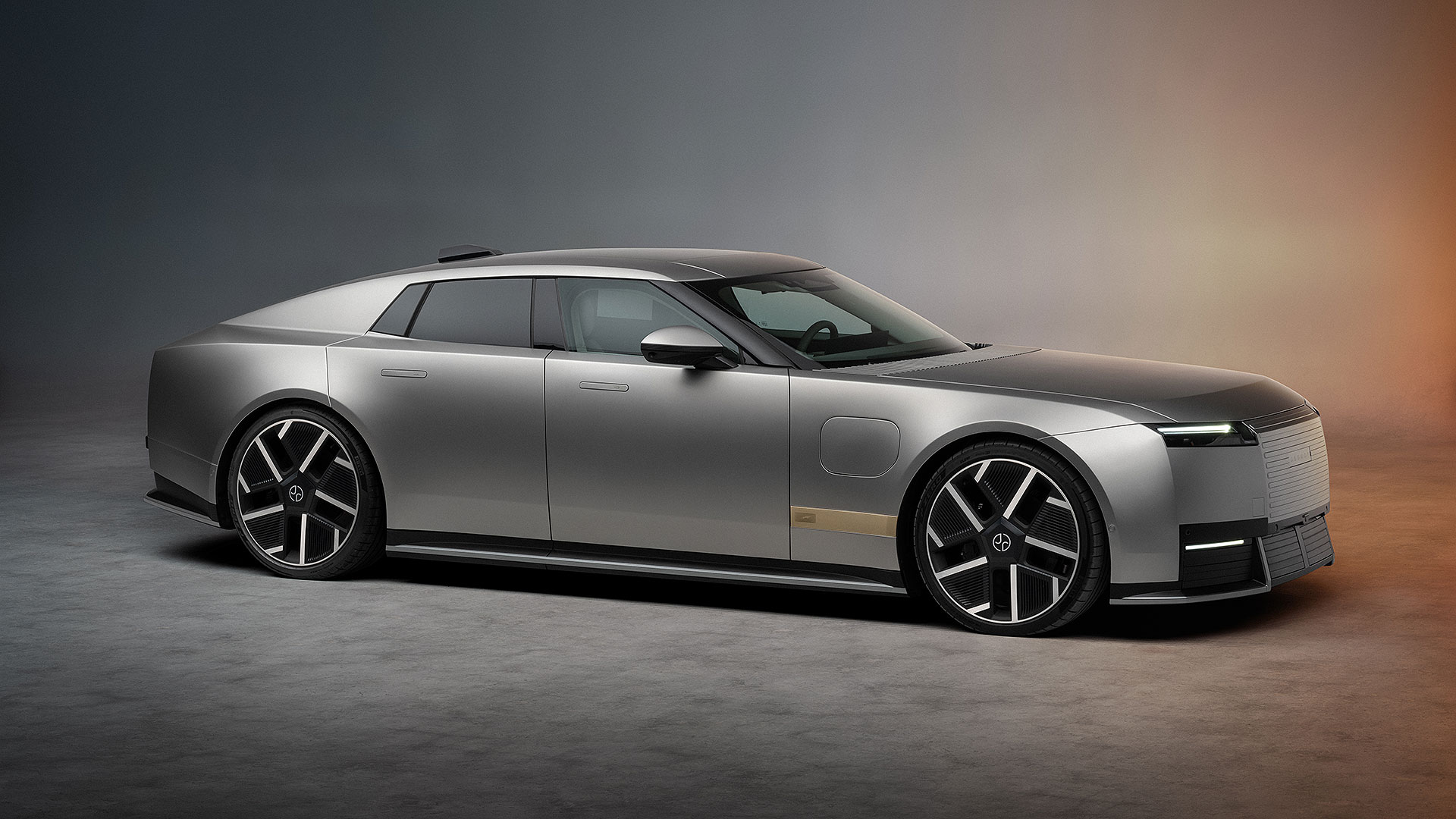
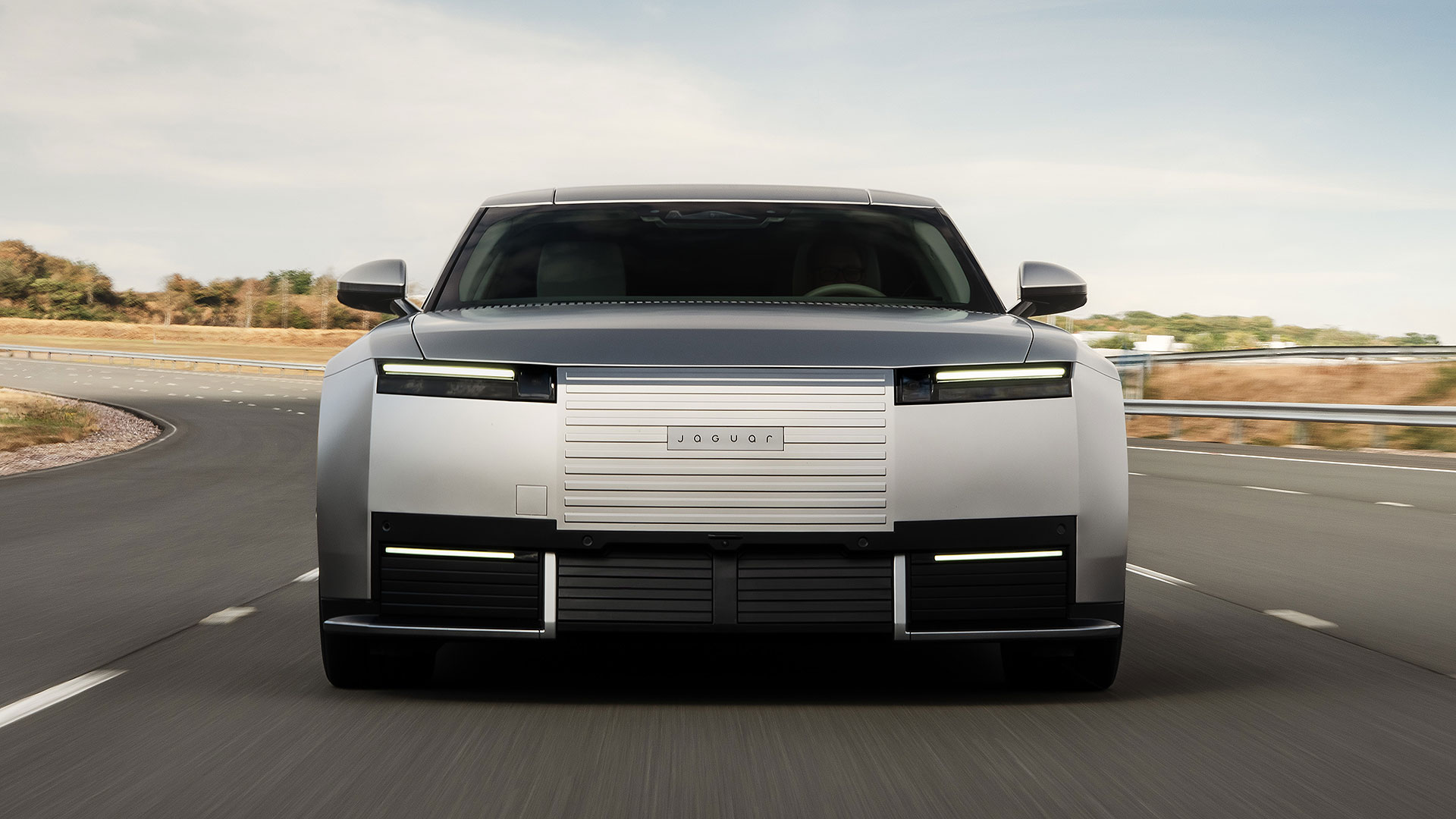
So, we’re dealing with a car boasting a big footprint here. But it’s low, too – just 1.4 metres tall. This combination of proportions alone guarantees a wow-factor. What’s more, instead of fussy and finickety design, the team has gone for clean, sleek minimalism. It’s almost outrageously bold, from the exaggerated GT profile – complete with a plunging rear, like an E-Type or F-Type – to that vertical front end featuring a closed-off grille and the controversial ‘Jaguar’ wordmark.
The proportions are pure theatre. Huge 23-inch wheels are standard and, with tyres, they account for more than half the Jaguar Type 01’s height. In the metal, it’s a remarkable spectacle, enhanced by the ultra-clean body surfaces and distilled details. Again, this is ultra-modernism in car design.
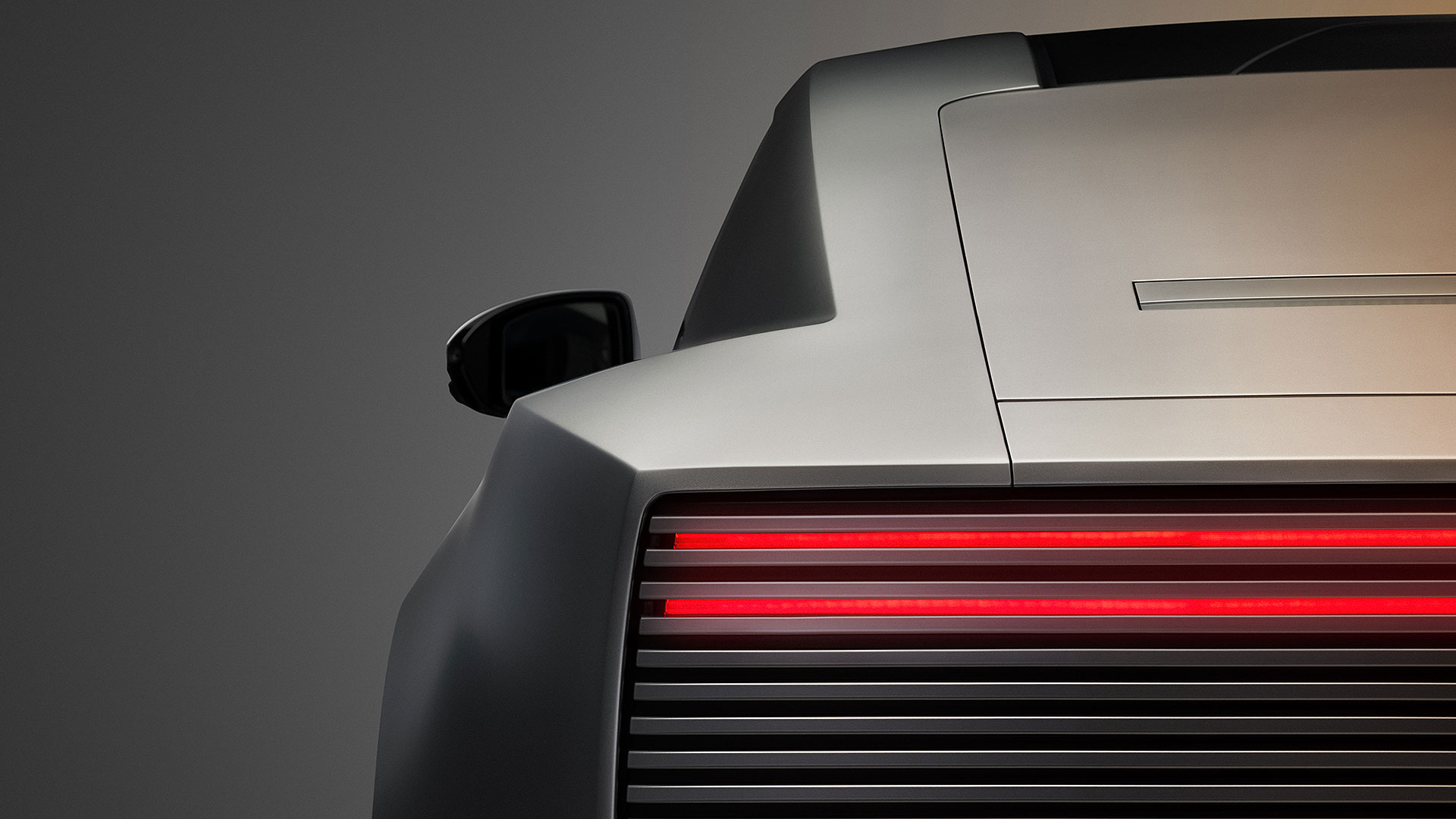
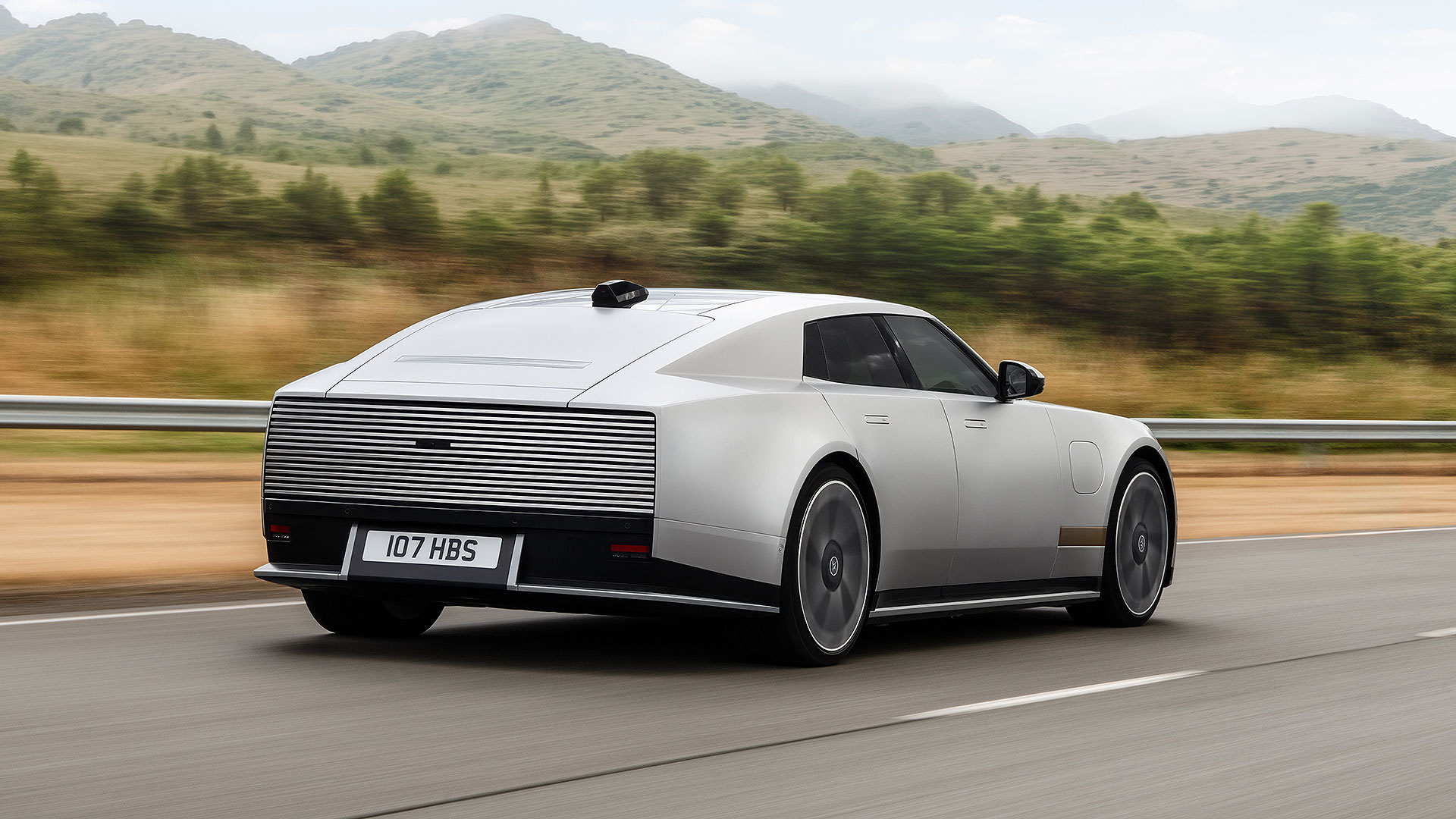
It’s made from aluminium, and the engineers – for it is they, led by Jon Darlington, who have been the powerhouses behind this project – are most proud of what they’ve called the ‘impossible panel’. This is where that gently curving roof meets the rear section, with the muscular haunches intersected by two crisp and gently-diverging lines. These anchor the design, as they flow from front to rear, but pressing them in aluminium presented a major challenge. So much so, the AI-supported computer said ‘no’.
But AI isn’t taking over yet, thankfully. JLR instead brought back one of its production engineering veterans, with decades of experience in making aluminium Jaguars. “It was born, developed and will be built in the British Midlands,” said design development director Andrew Wheel, proudly. This is a car with its heart in the heart of England.
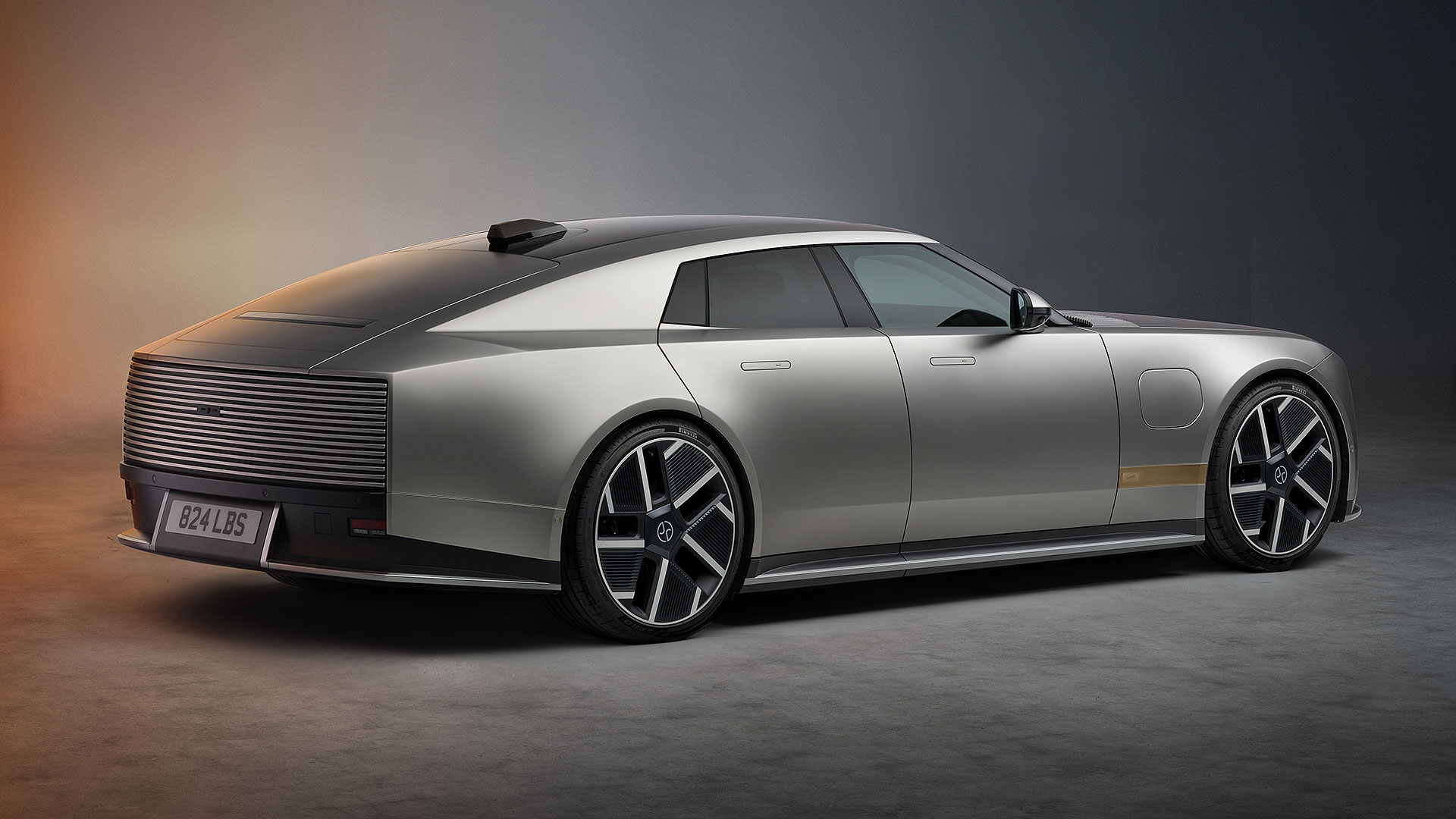
There’s a measurement car designers use that they call the ‘dash to axle’ ratio. This is the distance from the base of the windscreen, or A-pillar, to the centre of the front wheel. For practical, eco-focused hatchbacks, it is short. For lavish luxury GTs, it’s long – the longer, the better. Jaguar has gone all-in here; at 898mm, it accounts for 17 percent of the Type 01’s length. The same, Wheel points out, as the legendary E-Type.
There’s so much more to talk about with the engineering of the Jaguar Type 01. If you ask me in the comments, I’ll happily go further. But what about the headline stuff, such as aerodynamics? Vital with EVs, which are so efficient, the main losses are through drag rather than mechanical inefficiency. The Type 01, we’re told, has a drag factor (Cd) of 0.23. It’s as slippery as it looks, which should help with battery range. Jaguar speaks of 450 miles between charges – with, thanks to that high-speed efficiency, a sustained motorway range of 320 miles.
Oh, and it has 1,030hp: good for 0-62mph in 3.2 seconds, and 62-112mph in 4.0 seconds. Acknowledging that such stats are an arms race, however, Darlington also says the Type 01 will drive like a proper Jaguar: suave rather than stern. Relaxed, precise, we’re told it’s the sort of car you drive with your fingertips. And no matter how rough the road surface, it should remain imperiously unruffled.
Inside the new Jaguar Type 01
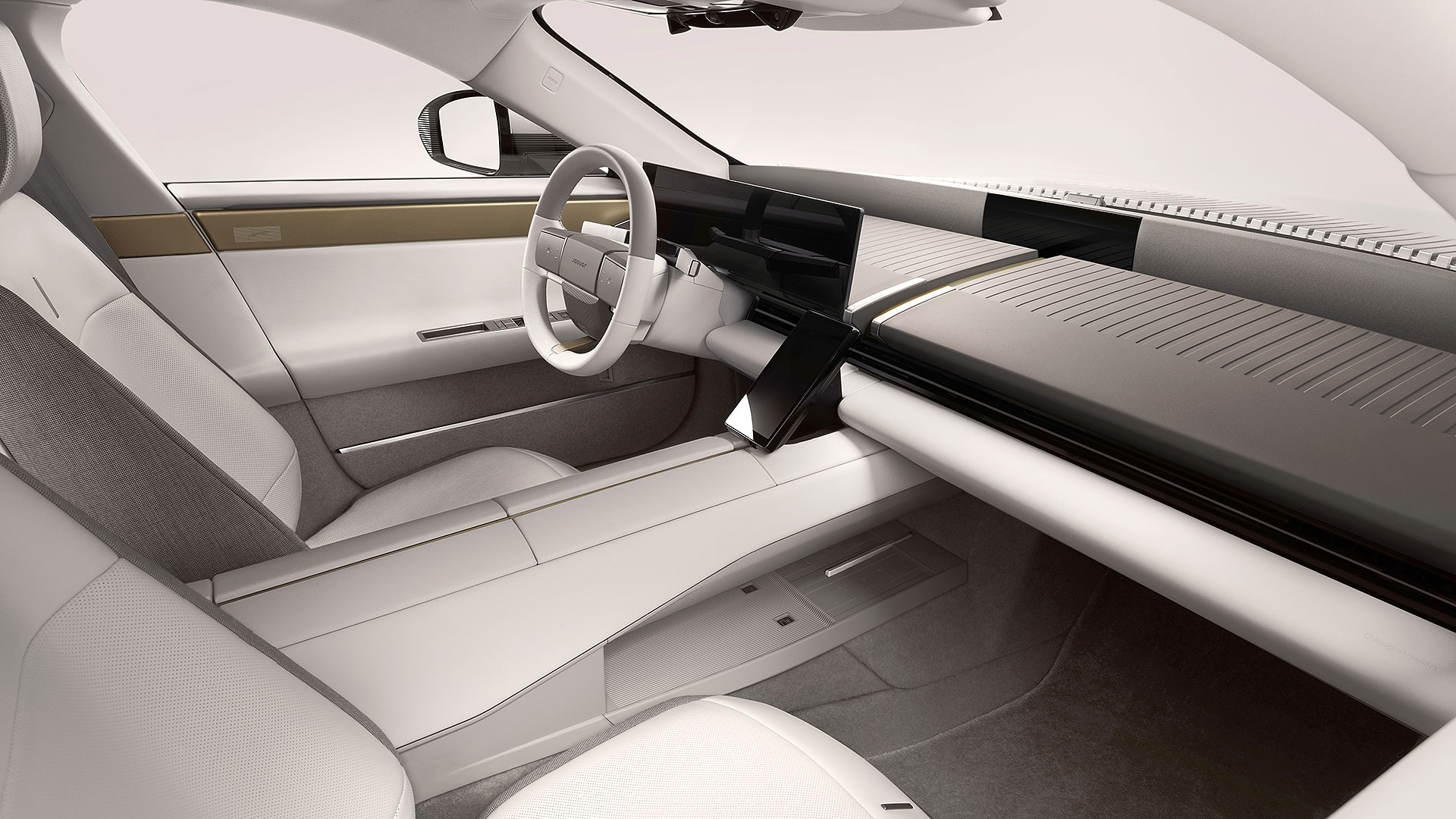
Inside, it is as modernist as the exterior. There are no full-fat touchscreens here, or lashings of wood or aluminium. It’s not even one of those open-plan cabins autonomous car designers dream of. Instead, the four passengers are assigned their own space, intersected by a central spine that stretches from front to rear. It’s an architectural design, one Jaguar has made into a practical feature with built-in cubbies and rear touchscreen control panels. Crowning it with brass-effect anodised aluminium adds further to the effect.
A beautiful carpet trim stretches far up the lower half of the doors, creating an enveloping effect that is so warmly 1970s. It wouldn’t be amiss in a Jaguar XJ-S. But the 24-inch OLED screen, combining a driver display and central touchscreen (plus technology from chip colossus Nvidia), adds modernity. There’s also a lower 7.0-inch smartphone-style touchscreen for more direct controls. Some will still prefer buttons and dials, but this seems a very well-considered solution.
At the base of the dashboard, which is low and carries feature lines that extend from outside the Type 01, there is an integrated rear-view camera. Because the Jaguar, like the Polestar 4, has no rear window. Instead of mounting the rear-view camera in the traditional place, Jaguar reckons placing it at the base of the windscreen will make it easier for drivers to refocus on.

The Jaguar Type 01 doesn’t have traditional door speakers, but a central sound bar instead. Also mounted at the base of the windscreen, it features 13 speakers, made up of six woofers, four mid-range speakers and three tweeters. This premium system also has further speakers throughout the cabin and even features active noise cancellation. Even so, Jaguar promises the Type 01 will be a very refined car at all speeds.
I’ve sat in it, and found it quite dramatic, as you’d expect of a long, low car with such extreme proportions. The seats are made from a new type of seamless material, finished in a range of tailored colour schemes, and this is very much a car you sit in rather than on. The close controls make it feel exciting and the colours are suitably contemporary.
Yet it has some obvious compromises, too. Chiefly in the rear. For starters, the door openings are vast – but so too are the inner door frames, which are clad in a cheap-looking rubberised covering. Adults will have to squeeze around them into the rear seats. You can see why, despite its enormous length, it’s being billed as a four-door GT. Space is OK once there, if hardly lavish, and the ‘sat on the floor’ seating position so enjoyable up front is a bit less welcome back here. At least Jaguar gives rear-seat passengers another 7.0-inch touchscreen to play with.
The boot is 450 litres, which is OK on paper, but it’s rather shallow and very narrow. However, it also gives modern E-Type vibes when the tailgate is popped up. Fold the rear seats and it expands to over 1,000 litres – still not huge, but fairly useful. Jaguar tells us the more practical iterations of this platform will follow in due course; this one is all about the drama.
New Jaguar Type 01 design details
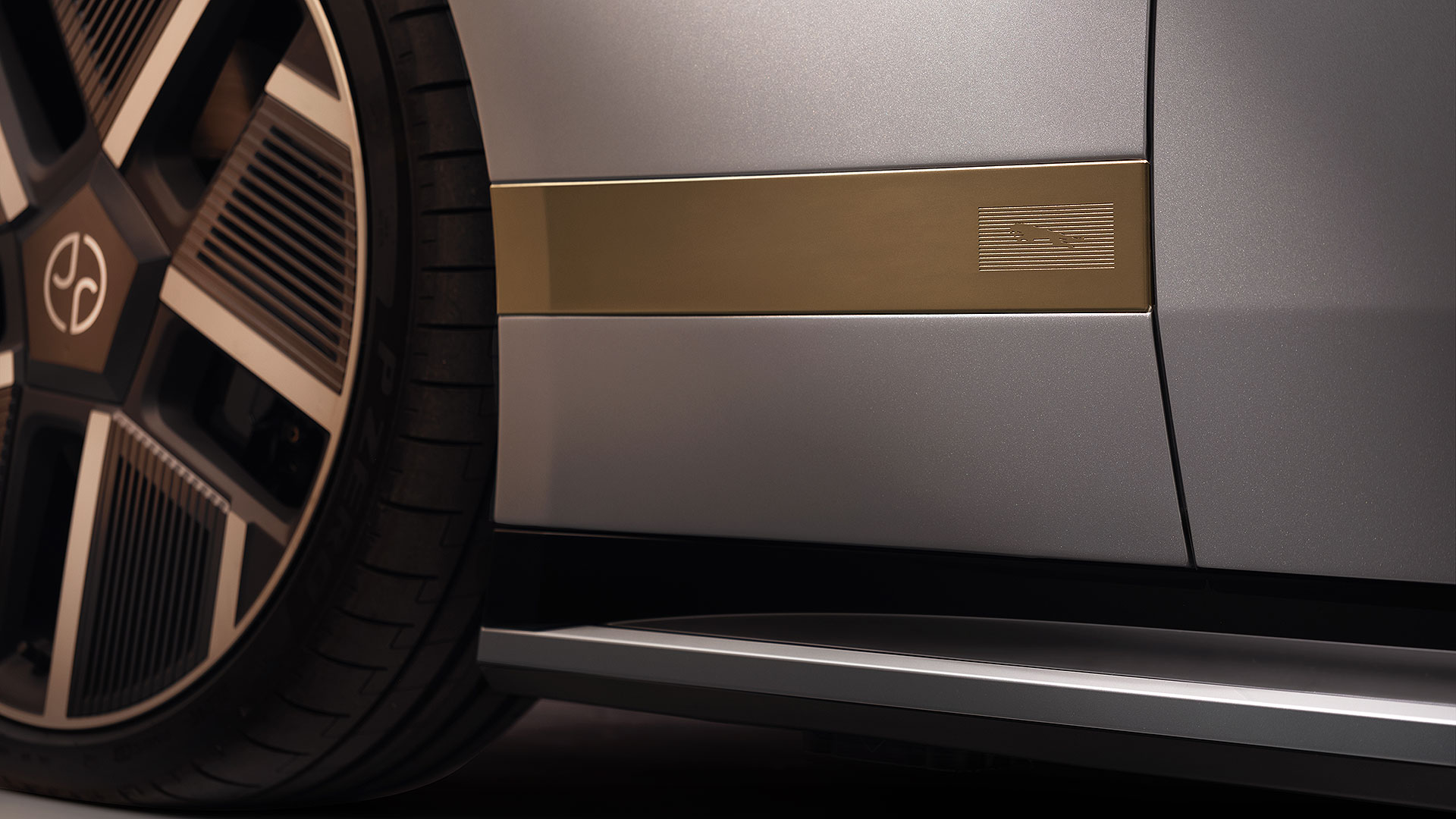
And what drama. It’s deliberately unadorned, save for a few details such as that lower brass-look panel behind the front wheels, carrying the Jaguar ‘leaper’ that so many complained the company was rejecting; it’s not. It has, however, created a new Jaguar ‘JR’ logo that you’ll see in the wheel centres. You can’t help but feel the leaper should be there, too. Perhaps in time it will return.
The rear features particular drama. That ‘strikethrough’ graphic, so heavily used during both the build-up and the launch of the Jaguar Type 01? There it is, in full effect. Hidden within the strakes are the LED brake lights, and blinking indicator lights. With the added impact of the body-colour upper section, rather than a rear window, it definitely stands out. You can safely say that no other car looks quite like this.
The engineers insist it will drive like the best Jaguars, though. The 118kWh battery is mounted super-low, so the centre of gravity actually sits 60mm below the driver’s hips. And with dynamic air suspension, plus twin-valve active dampers, there’s a lot of hardware to help dial up the traditional Jaguar feel – which, we’re told, has been modelled on the divine XJ-C coupe of the 1970s.
It has all-wheel drive, and that 1,030hp is delivered through three electric motors – one at the front and two at the rear. There’s an entire arsenal of technology built into this bespoke platform, including fast-switching silicon carbon inverters that the firm says were first proven in Jaguar Formula E racing cars. A proper job, it seems, but we’ll discover more when we first drive it.
I could go on. However, there’s a lot to take in here. This is a bold and brave new-era Jaguar that aims to defy the haters and win over a small, select audience as the brand is elevated from premium to luxury. I happen to love it, because I adore brutalism, but have also heard from the passionate team behind it, who have given their all to make it a landmark car.
Now it’s over to you to tell me, and them, what you think.
ALSO READ:
World Car Awards 2027 officially gets underway
New Aston Martin DBX GT brings added luxury to V8 SUV
Some like it yacht: new Luna Rossa Alfas are inspired by sailing