Drivers using Google Maps or Waze can now see information on fuel prices using a simple search.
With fuel costs continuing to rise, and diesel hitting a record level of more than £2 per litre, finding accurate prices is becoming ever more important to motorists.
Both the Google Maps and Waze smartphone applications can now access data supplied by the government’s Fuel Finder service.
Fuel Finder imposes a legal requirement on petrol stations to share their prices within 30 minutes of changing them on the forecourt.
As a result, drivers will be able to see the latest prices in almost real-time, allowing them to decide where the most cost-effective place to refuel will be.
Although other smartphone applications already offer fuel prices, the widespread use of Google Maps and Waze will bring this information to a much wider audience.
Using Google to reduce motoring stress
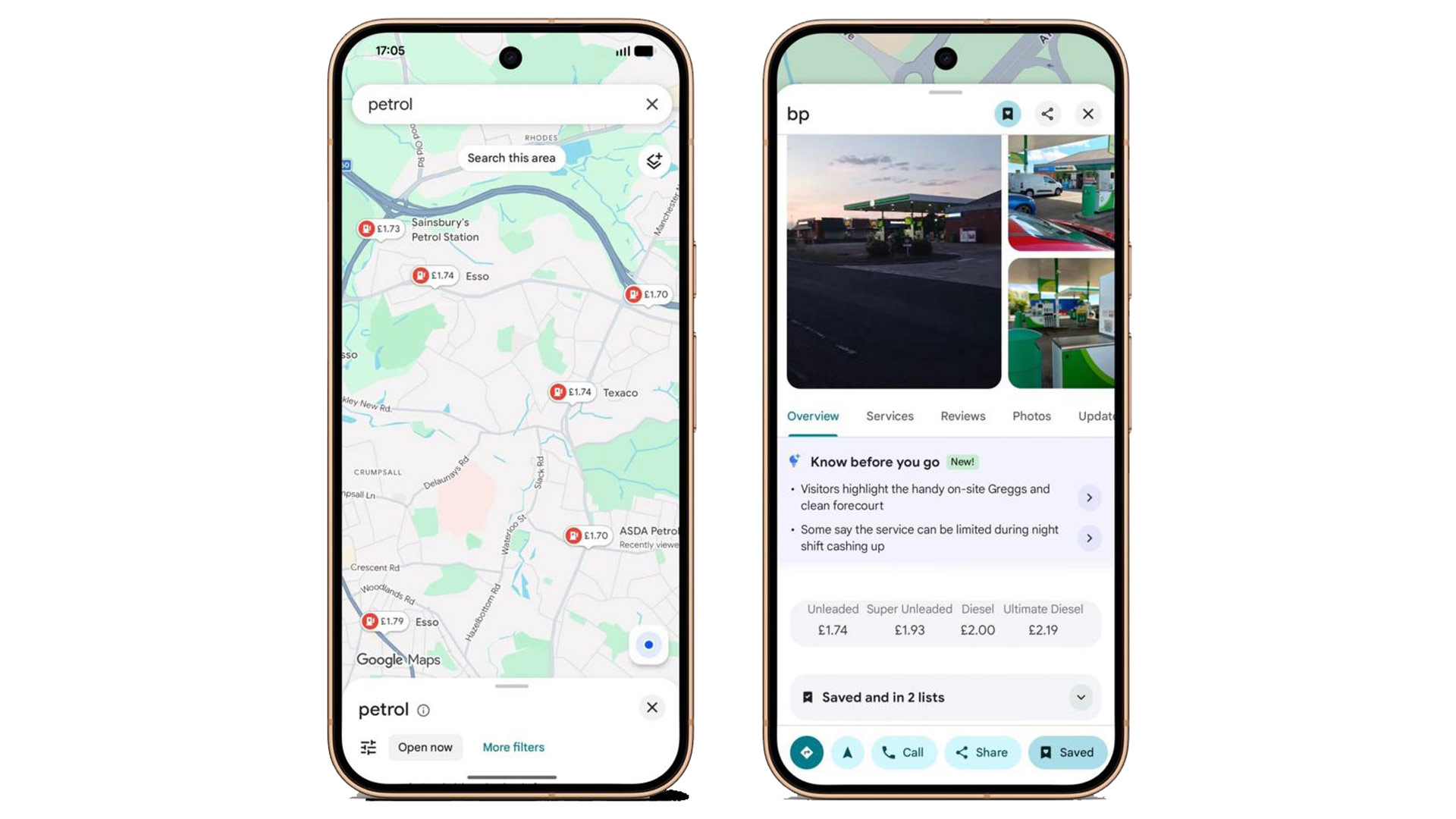
Users simply need to search for ‘petrol’ or ‘fuel’ when using Google Maps or Waze. The apps will then display a list of nearby forecourts.
Initial pricing information will be shown on the map overlay, with more details available by selecting a specific petrol station.
Drivers can see the cost per litre for petrol and diesel, along with how recently the prices were updated.
Sarah-Jayne Williams, director of global product partnerships for Geo at Google, said: “Navigating fuel rising costs shouldn’t add stress to everyday journeys.
“Integrating Fuel Finder data into Google Maps and Waze gives drivers visibility on nearby pump prices, helping drivers make intentional choices to help their budgets go further this winter.”
A game-changer for fuel price data
Following the announcement, Minister for Energy Consumers Polly Billington said: “Accessing the cheapest fuel should be simple, which is why it is a game-changer for near real-time fuel prices to be shown on Google Maps for the first time in the UK, helping drivers to find the best deal and save money at the pump.”
Fuel Finder data still places the onus on petrol stations to accurately update their own information, however.
Michael Passingham, cars expert at Which?, noted: “With fuel prices piling pressure on household budgets, making it easier to compare prices and find cheaper fuel is good news for motorists. Having prices readily available on Google Maps should make it much simpler for more drivers to shop around.
“However, tools like this are only useful if the information they provide is accurate and up-to-date. If service stations fail to update their Fuel Finder data, then the Competition and Markets Authority needs to step in to make this work.”
ALSO READ:
How to track a friend’s journey on Google Maps