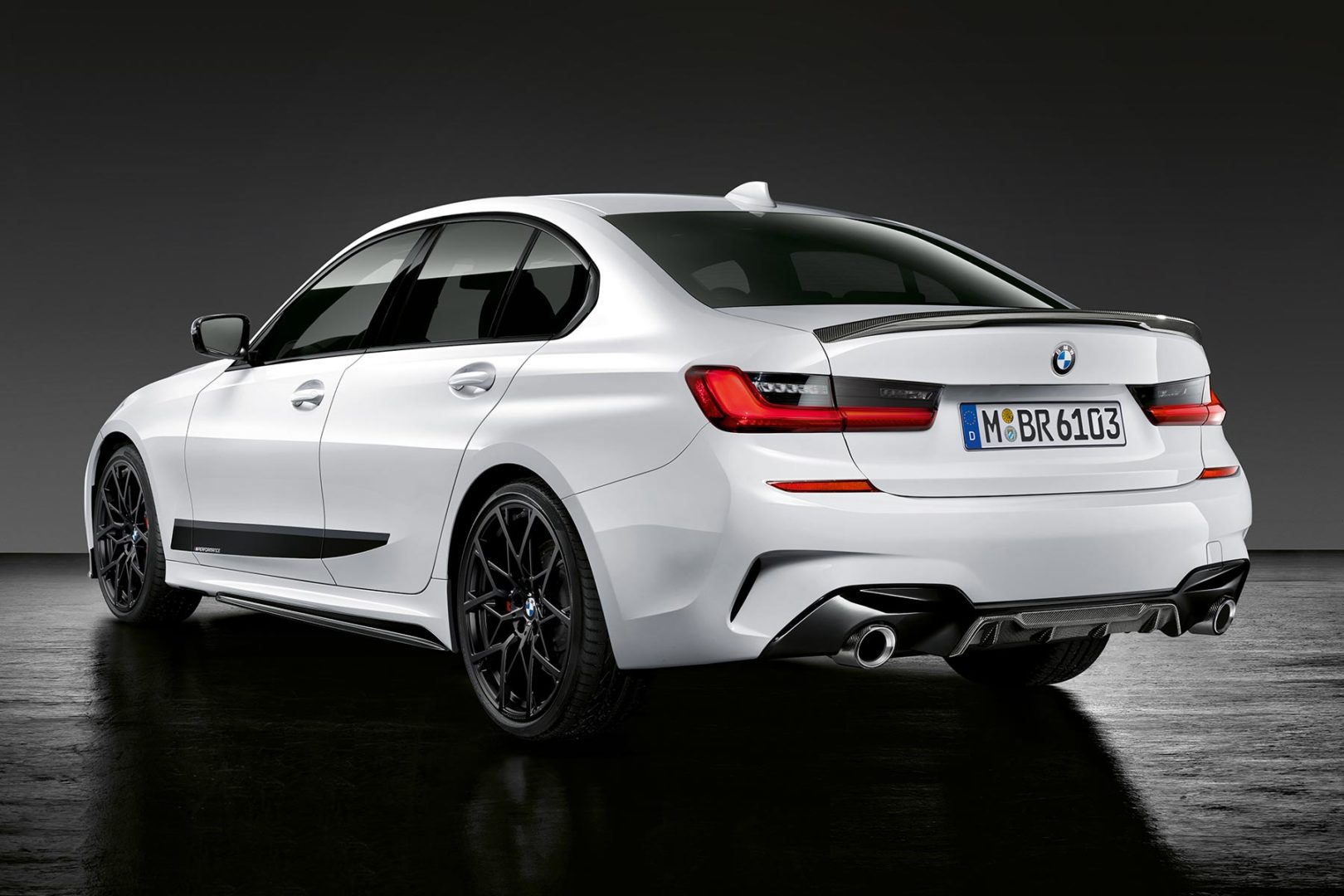
The new 2019 BMW 3 Series has only just made its debut at the Paris Motor Show, but BMW has a range of M Performance parts available from launch.
BMW has developed the M Performance range to be integral with its new cars, and the latest 3 Series is no exception. Buyers can now accessorise their 3er to their heart’s content. Or simply to cause their fleet manager endless headaches.
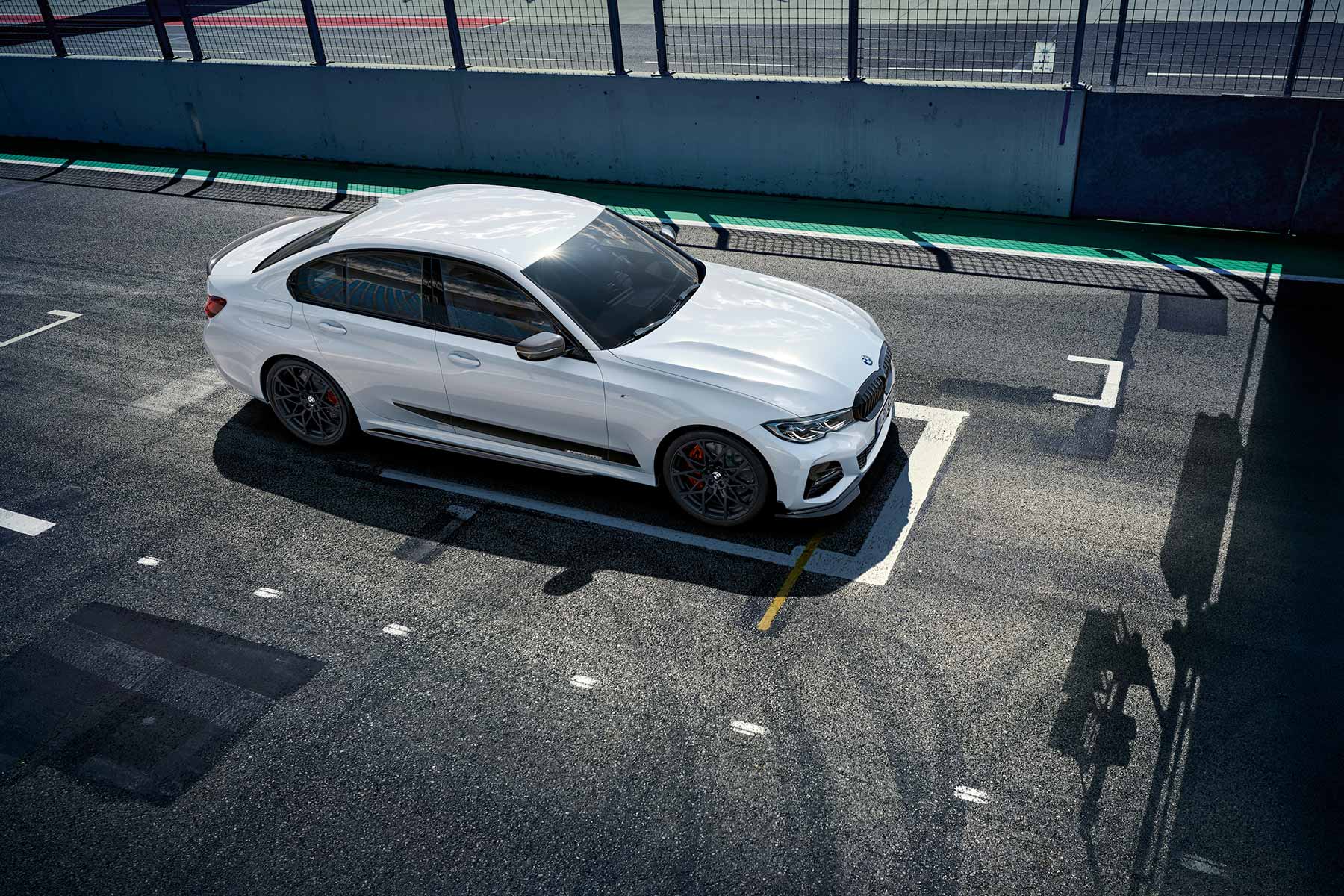
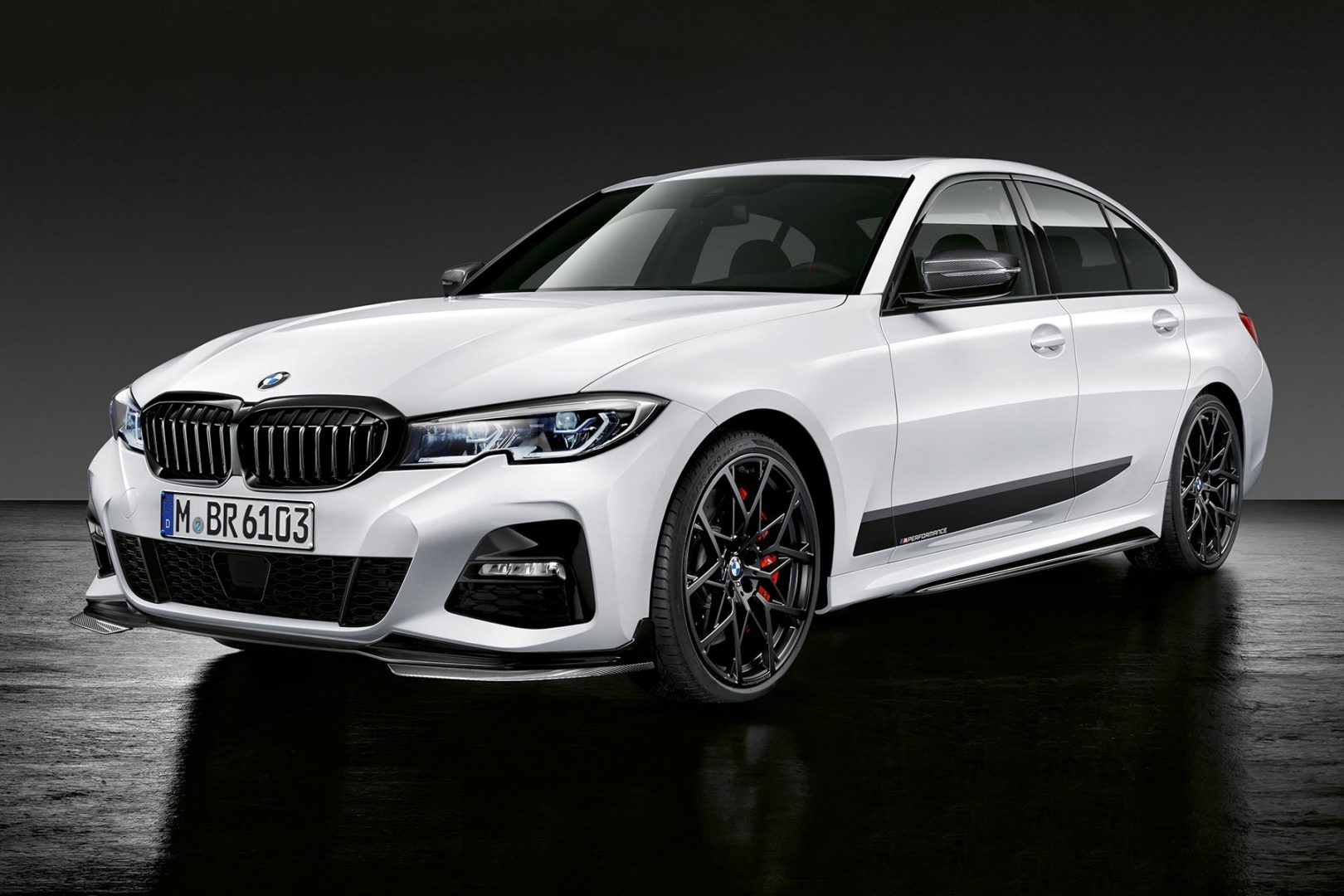
There are 10 exterior adornments alone for the new 3 Series. These range from a choice of two splitters for the front bumper to a carbon fibre diffuser, and even grey-tinted tail lights. Side sills, a rear spoiler and wing mirror caps can all be had in lightweight carbon fibre, too.
Carbon even forms part of the sports exhaust system, wrapping around the titanium tailpipes to give a true motorsport flavour to your morning commute.
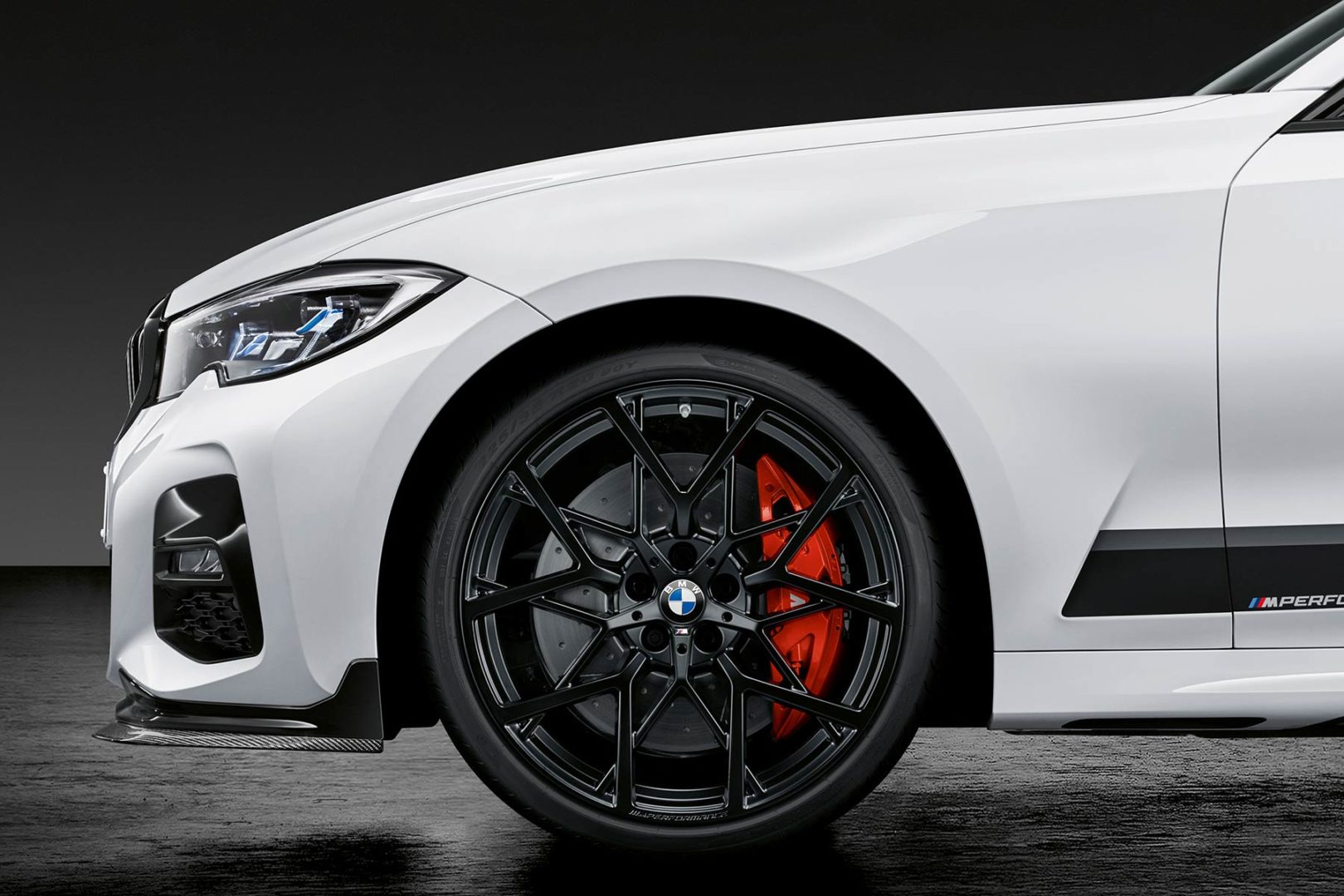
However, this is not just mere trinketry. BMW will also sell you a substantial M Performance brake upgrade for the new 3 Series. The bigger 18-inch discs have with a drilled and grooved finish, and are matched with giant red calipers. They are said to offer a noticeable improvement in stopping power over the regular set-up.
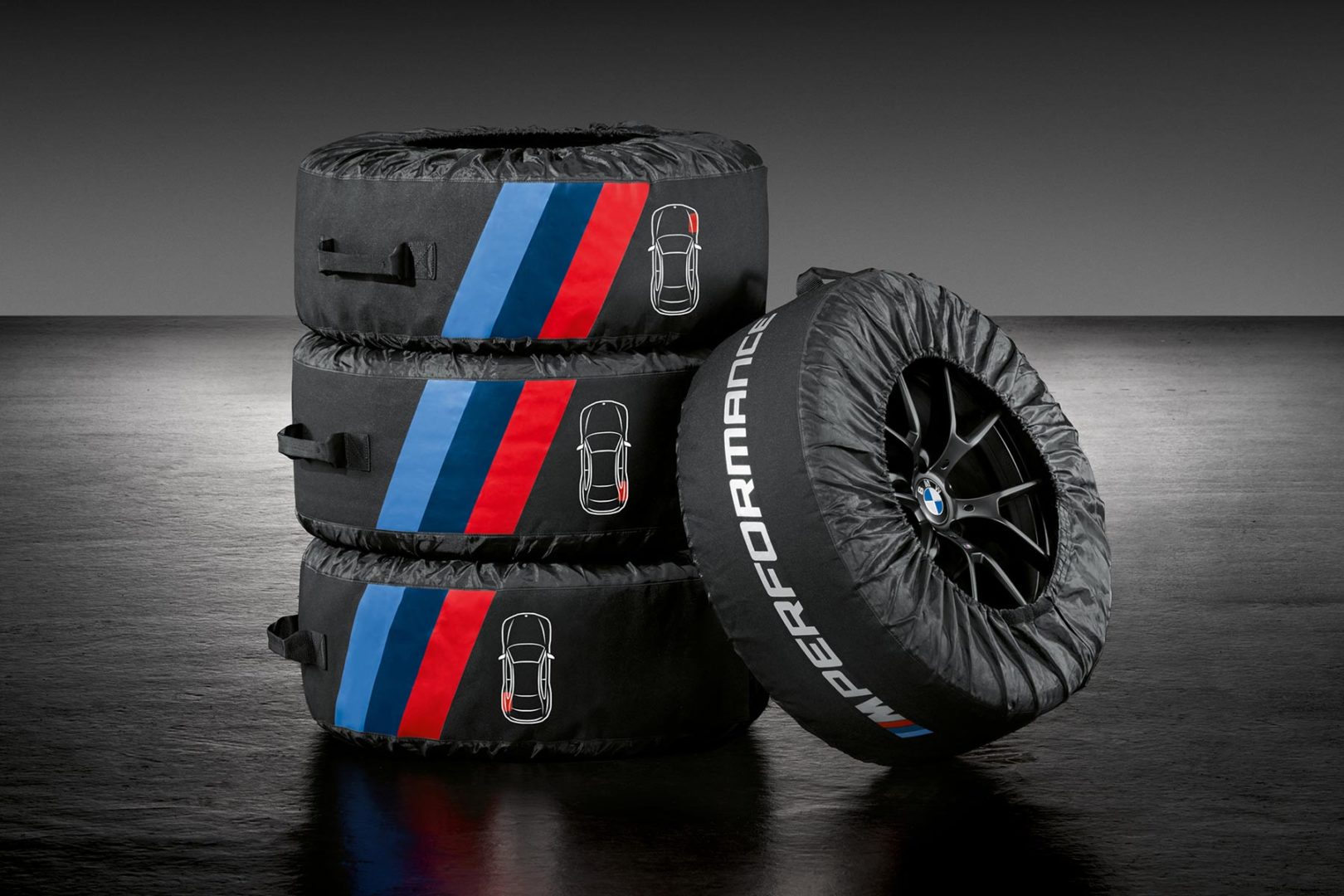
Complementing the bigger brakes are M Performance alloy wheels: larger 20-inch items offered in a choice of styles and colours. BMW even offers a set of special M-branded bags to keep your spare wheels and tyres in. That they look like heated tyre blankets used by race teams is an added bonus.
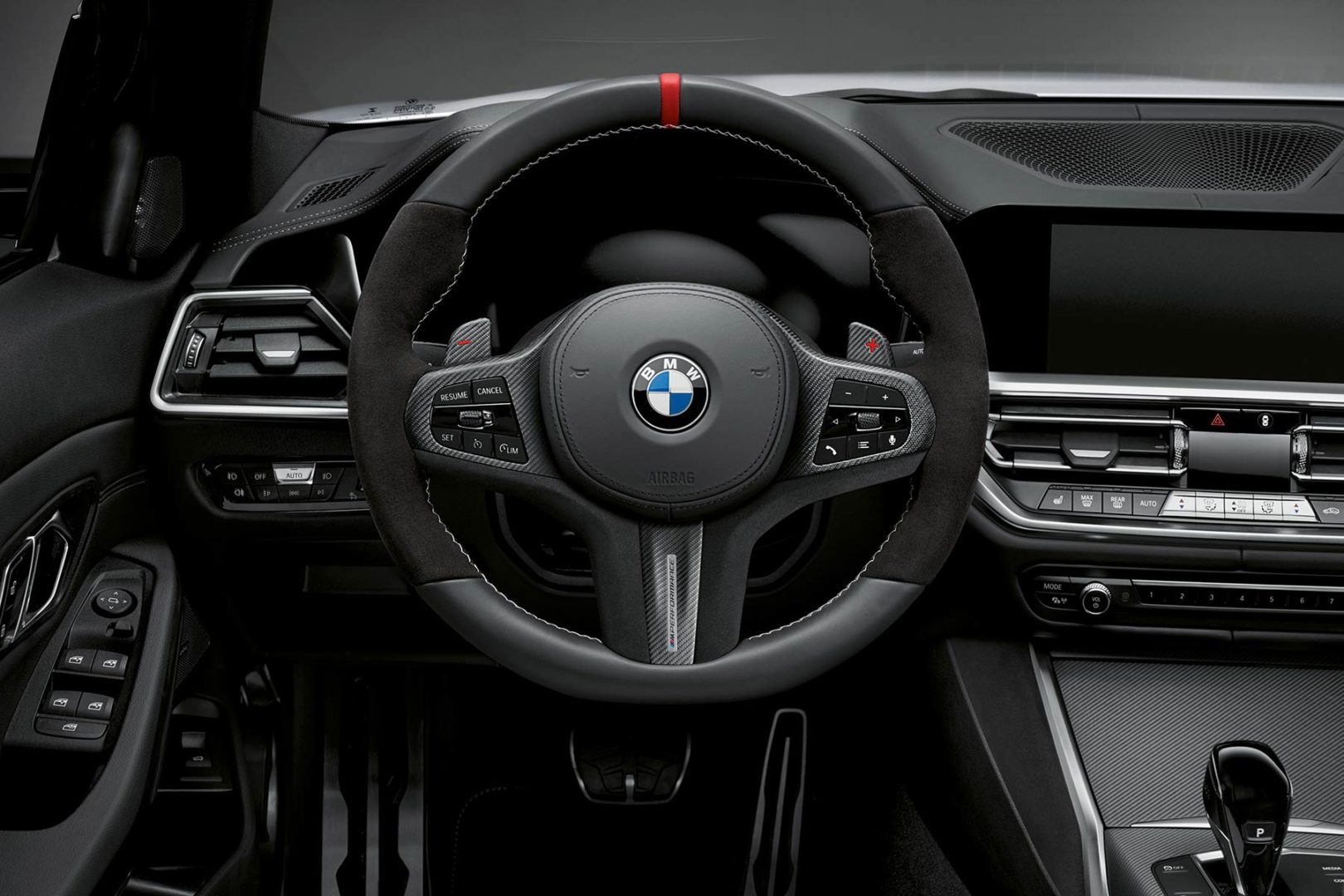
Although the standard steering wheel for the new 3 Series already looks racy, upgrades are on offer. A chunkier wheel, finished in grippy Alcantara, can be matched with carbon fibre paddles for cars with an automatic gearbox.
In fact, you can cover most of the interior in a combination of carbon fibre and Alcantara, depending on how far your budget will stretch. Leather trimmed floor mats can also be added, and even is even a special carbon fibre wallet available to hold your car key.
Prices are yet to be announced for the M Performance range. For now, the only question is how much carbon fibre can one executive saloon handle?
All the attention in Australia may be on this weekend’s Supercheap Auto Bathurst 1000 event, but fans at the Mount Panorama circuit will also get to see a unique Ford battle on track.
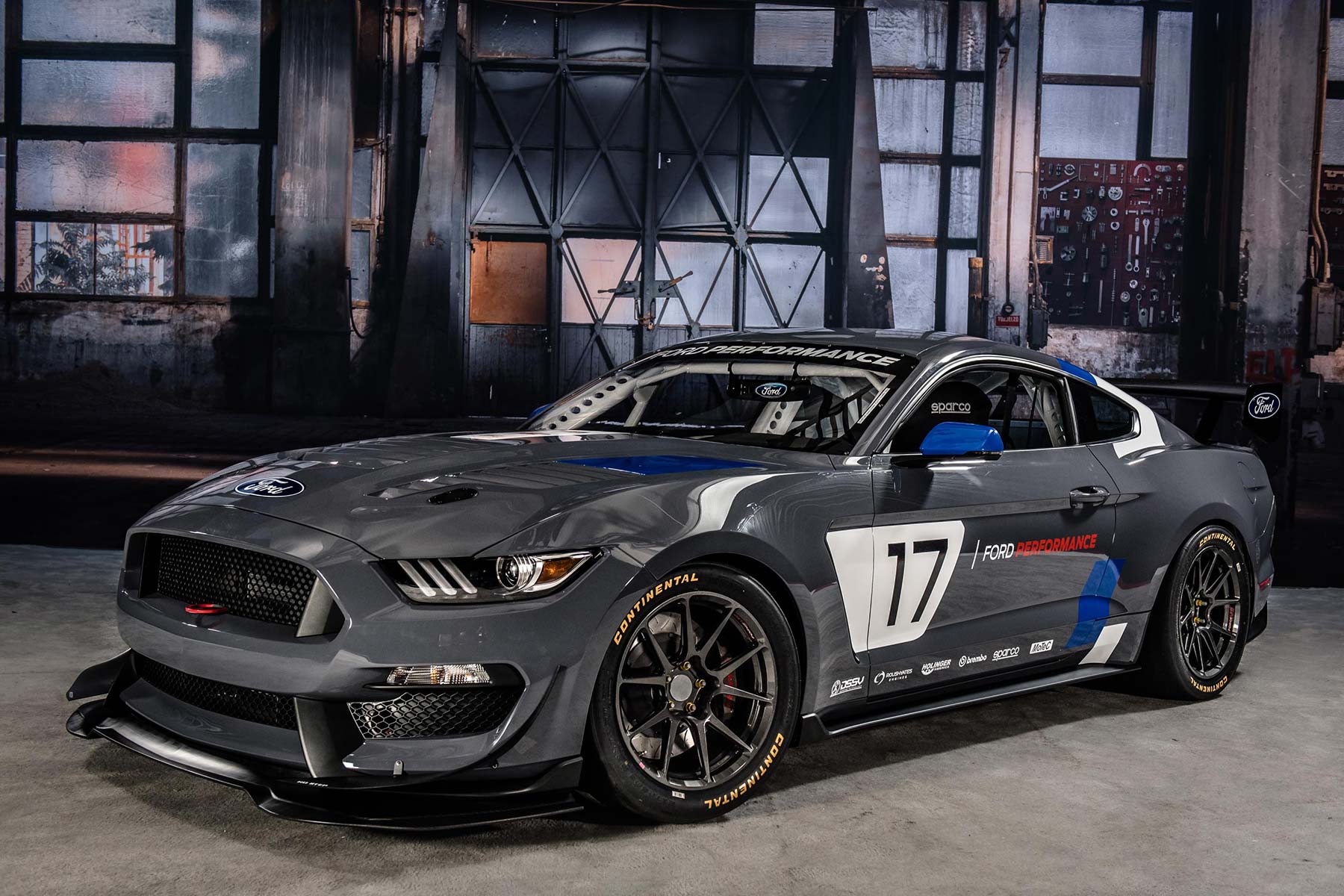
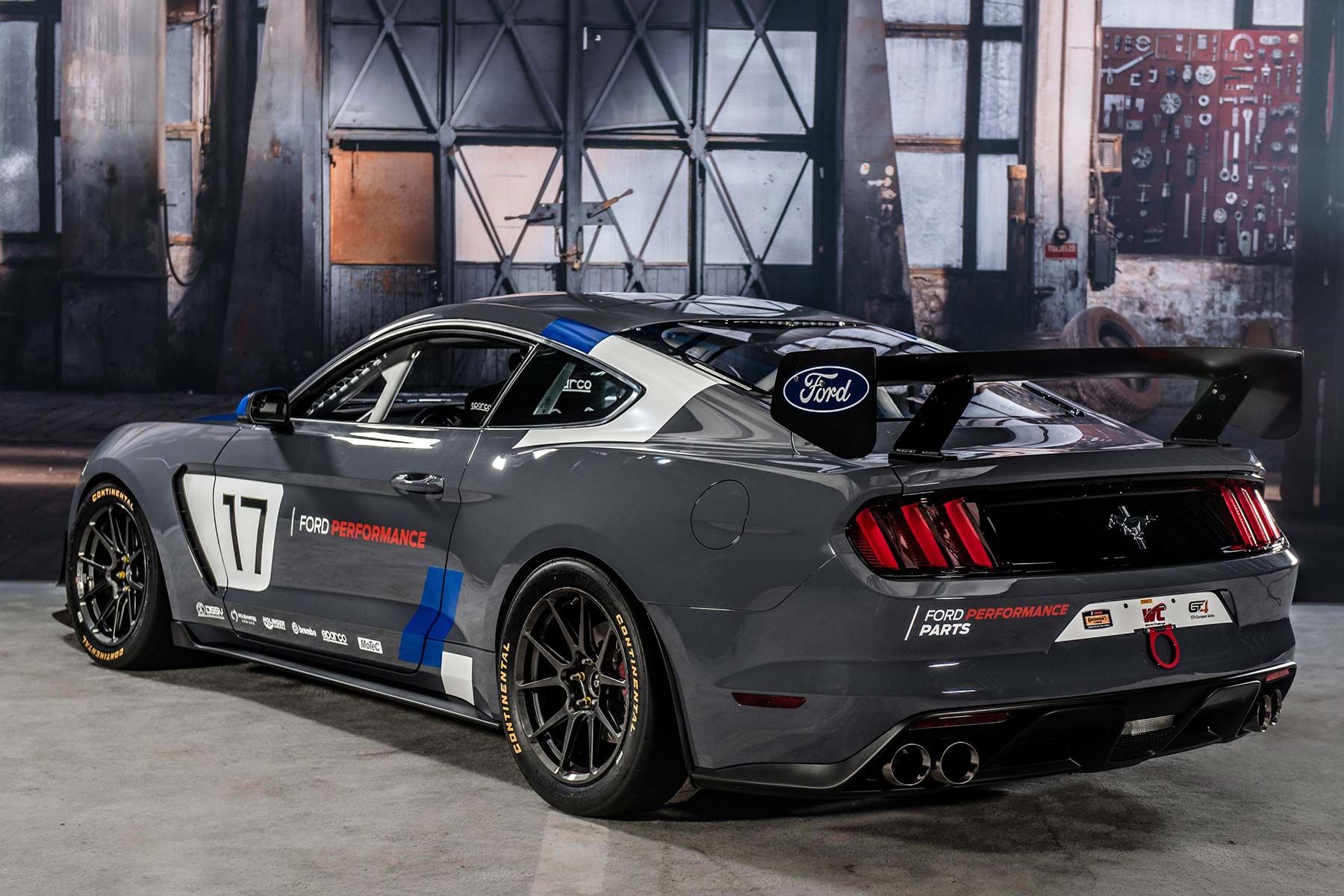
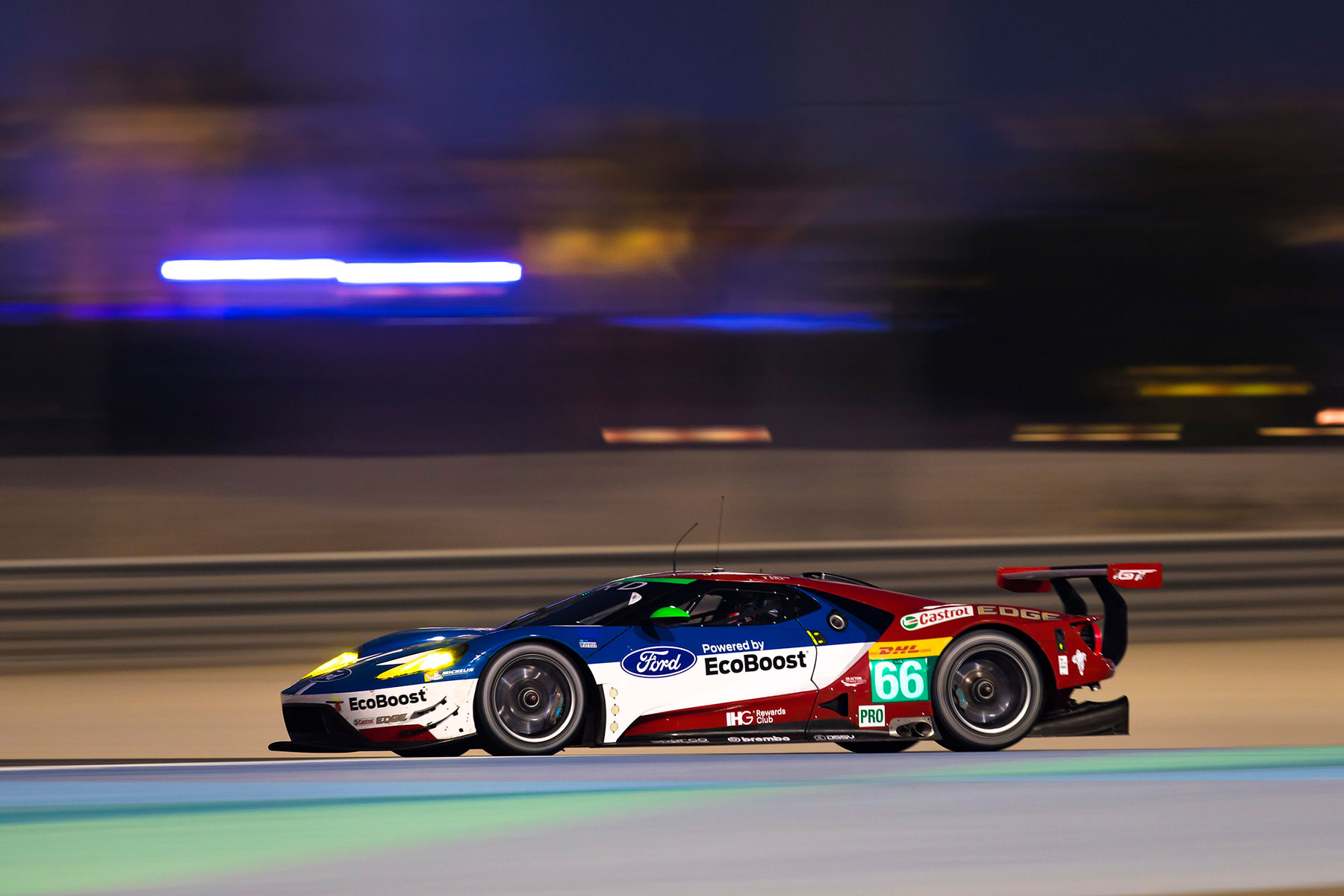
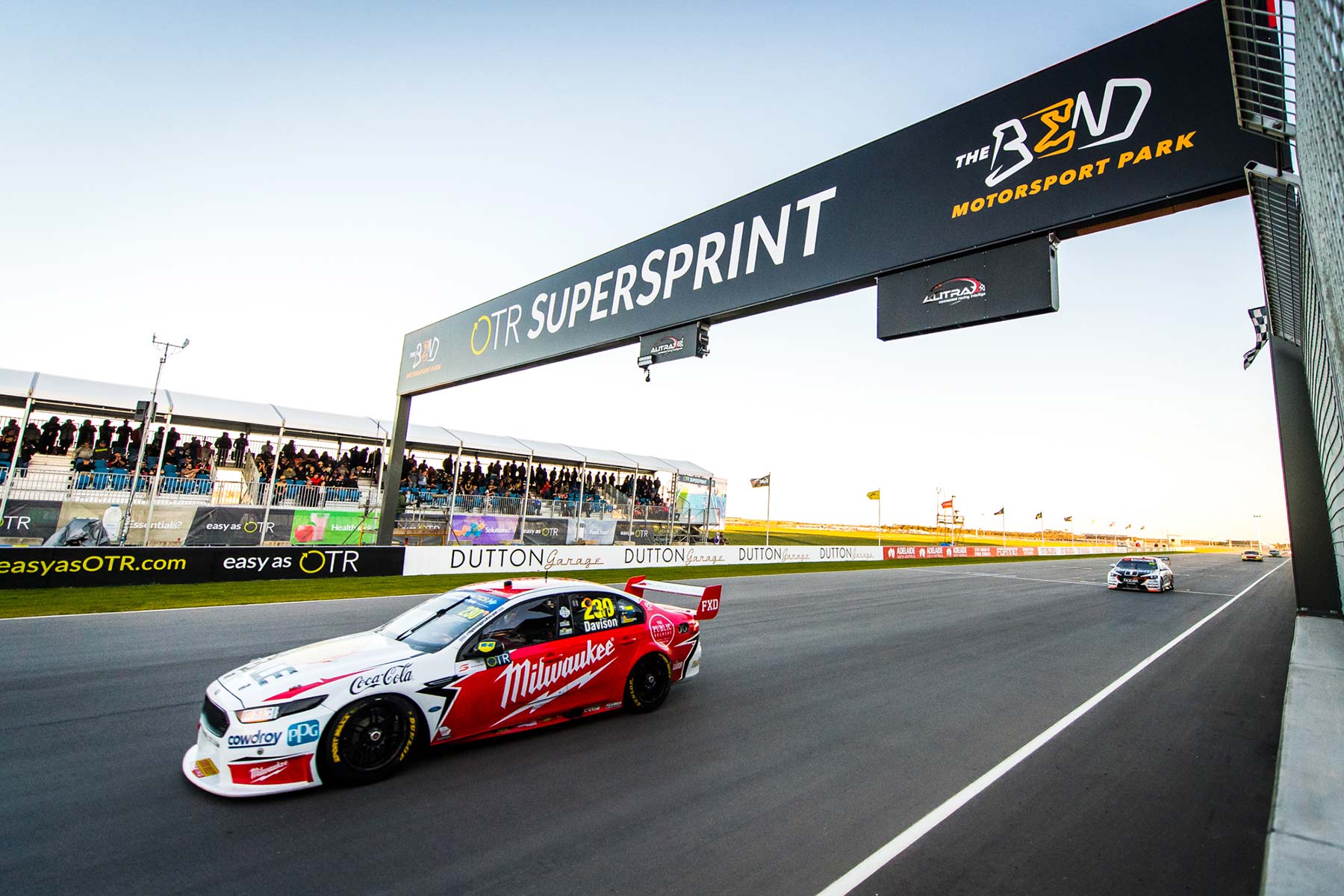
The special Triple Challenge will pit a GT4-specification Mustang against a Ford GT endurance racer and a FG X Falcon V8 Supercar.
This year’s Bathurst 1000 will be the final edition of the ‘Great Race’ to see the famous Ford Falcon taking part. The end of Falcon sales and production mean the car will no longer be used in the Supercar championship, to be replaced in 2019 by the Mustang.
So, the sight of a Mustang GT4 racer on track will be a fitting preview of what Ford Performance fans can expect to see next year.
Powered by a 5.2-litre ‘Coyote’ V8 engine, the Mustang GT4 produces 450hp and features a six-speed sequential gearbox. This weekend will mark the first time the turn-key racer, based on the Shelby GT350R-C, will have been seen in Australia.
Joining the Mustang GT4 on track will be the IMSA Ford GT endurance racer, driven by Sydney-born Ryan Briscoe. With three wins in the North American IMSA series this year, Briscoe and the Ford GT are already making a formidable pairing.
Derived from the Ford GT road car, the IMSA-spec machine is closer to a bespoke prototype race car, with a carbon fibre chassis and aerodynamic design. It could well be a contender for setting the fastest ever lap around Mount Panorama.
Finally, as a tribute to the Falcon, Alex Davison will drive the 23Red FG X Supercar as part of the triple threat competition.
Ford fans will also be able to reminisce about previous Falcon victories at Bathurst this weekend. Ford Performance has assembled a collection of iconic models from the Falcon’s history, including the road-going version of the 1967 XR GT model that won at Bathurst.
Although the end of the Falcon may bring a tear to the eye of many fast Ford fans, you can be sure it will go out with plenty of burned rubber and V8 noise this weekend.
However, the ultimate send-off would be victory in Sunday’s epic Bathurst 1000 race.
The 2018 Paris Motor Show is underway, we’re in the thick of the action, elbowing our way to the front of the stands to bring you the hottest reveals. In truth, you’ll have seen the press photos before the event, but this is our first chance to see many of the cars in the metal. Let us do the walking, so you don’t have to.
BMW 3 Series
The new BMW 3 Series is proving to be as popular as a half-price TV on Black Friday, and the media scrum here in Paris is just as frenzied. Which is kind of strange, when you think that, very soon, this car will be everywhere. Queuing at the Starbucks drive-thru for a flat white, clogging up office car parks in Reading, Bracknell and Newbury, and generally going faster than you on the M4.
But, give the 3 Series some credit. Since 1975, it has been the default choice in the segment, staying one step ahead of its rivals and cementing itself as the world’s most popular premium exec. We’ll be driving it very soon, by which time our feet may have recovered from pounding the Paris floor.
Porsche Macan
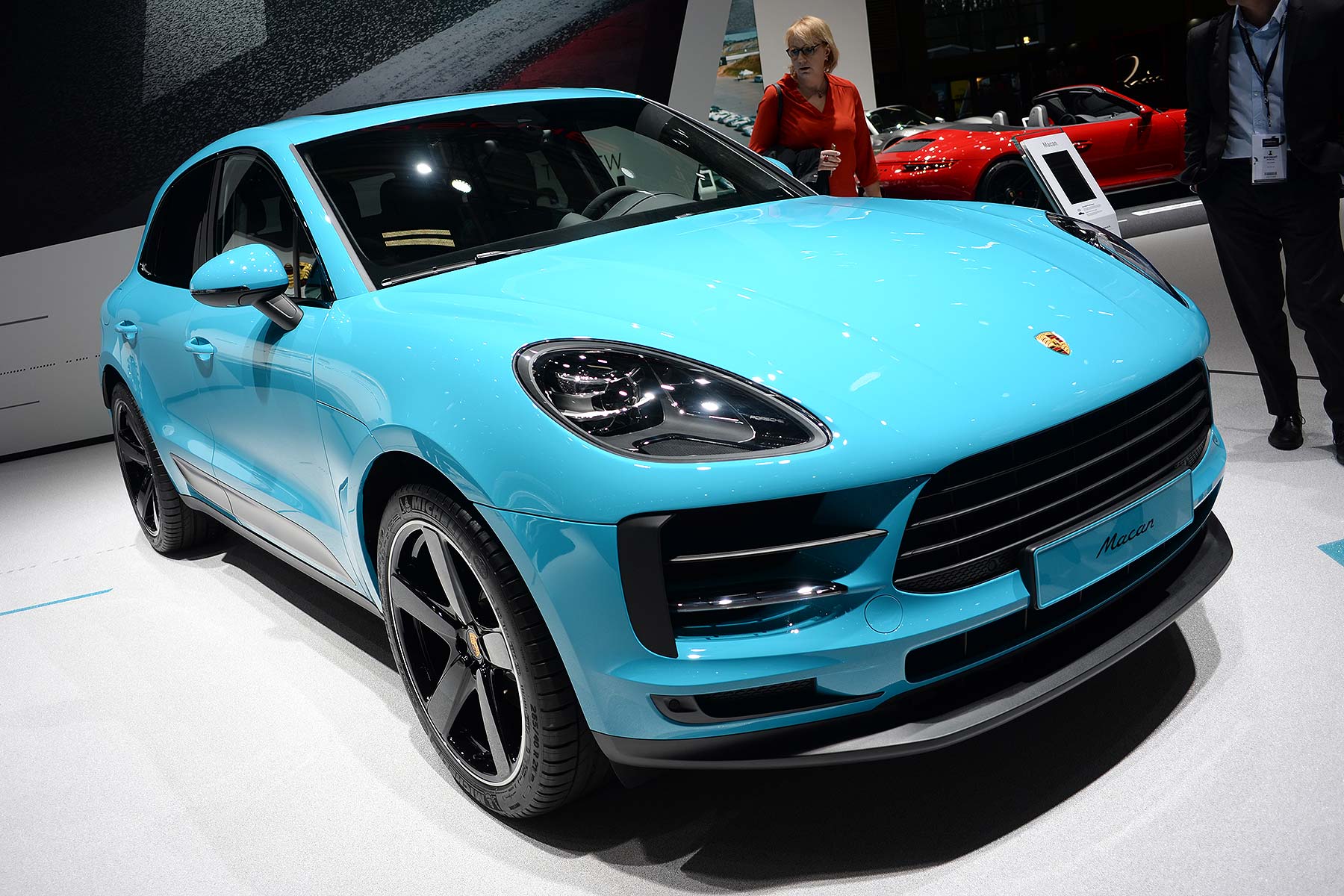
Porsche hasn’t flown the new Martini-liveried 935 over from Laguna Seca, so we were tempted to give its stand a miss. But, while a £750,000 retro homage is certainly special, the 2019 Porsche Macan is more significant for us mere mortals. The 935 is the car your kids will dream about, but the Macan is the car they’ll travel to school in.
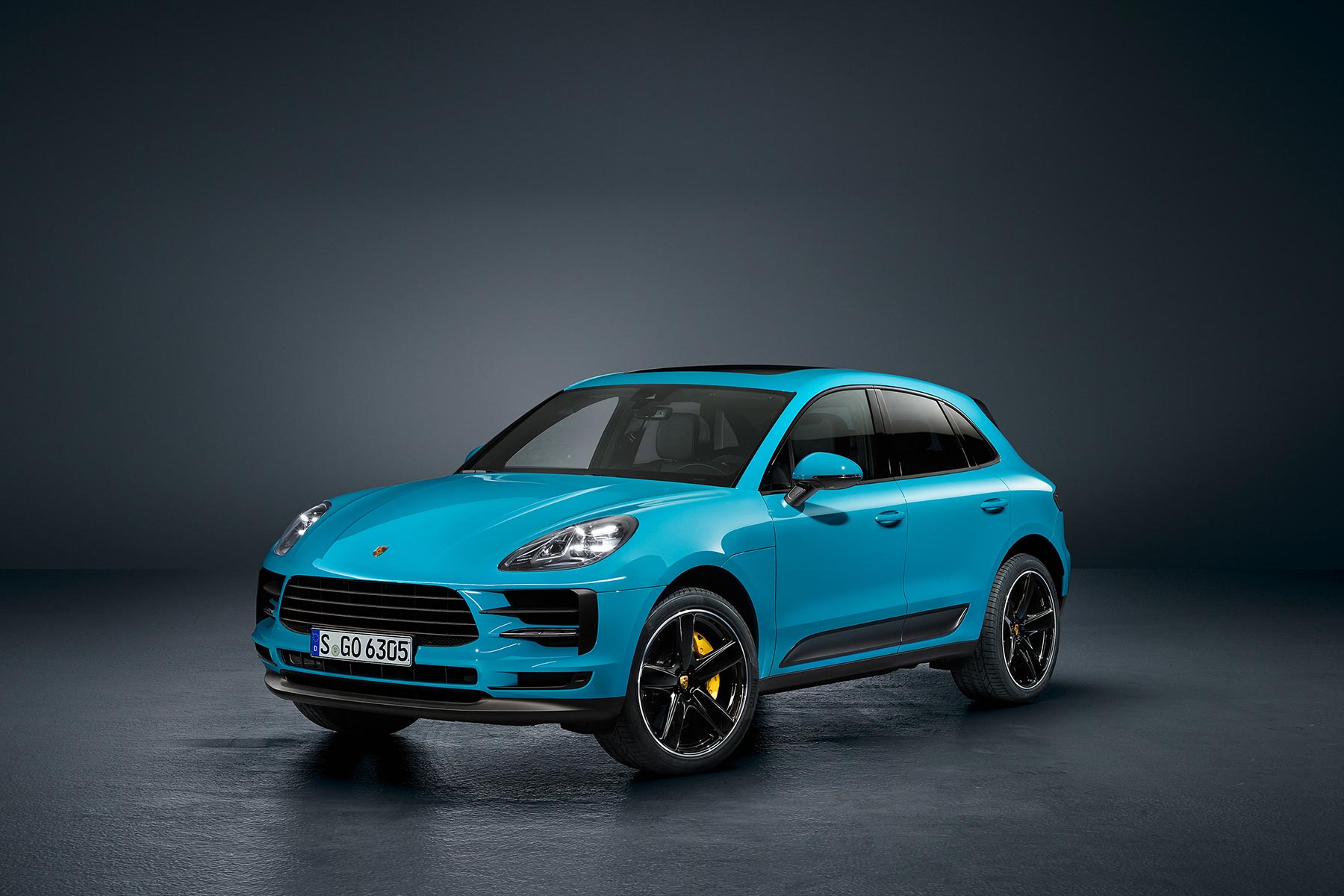
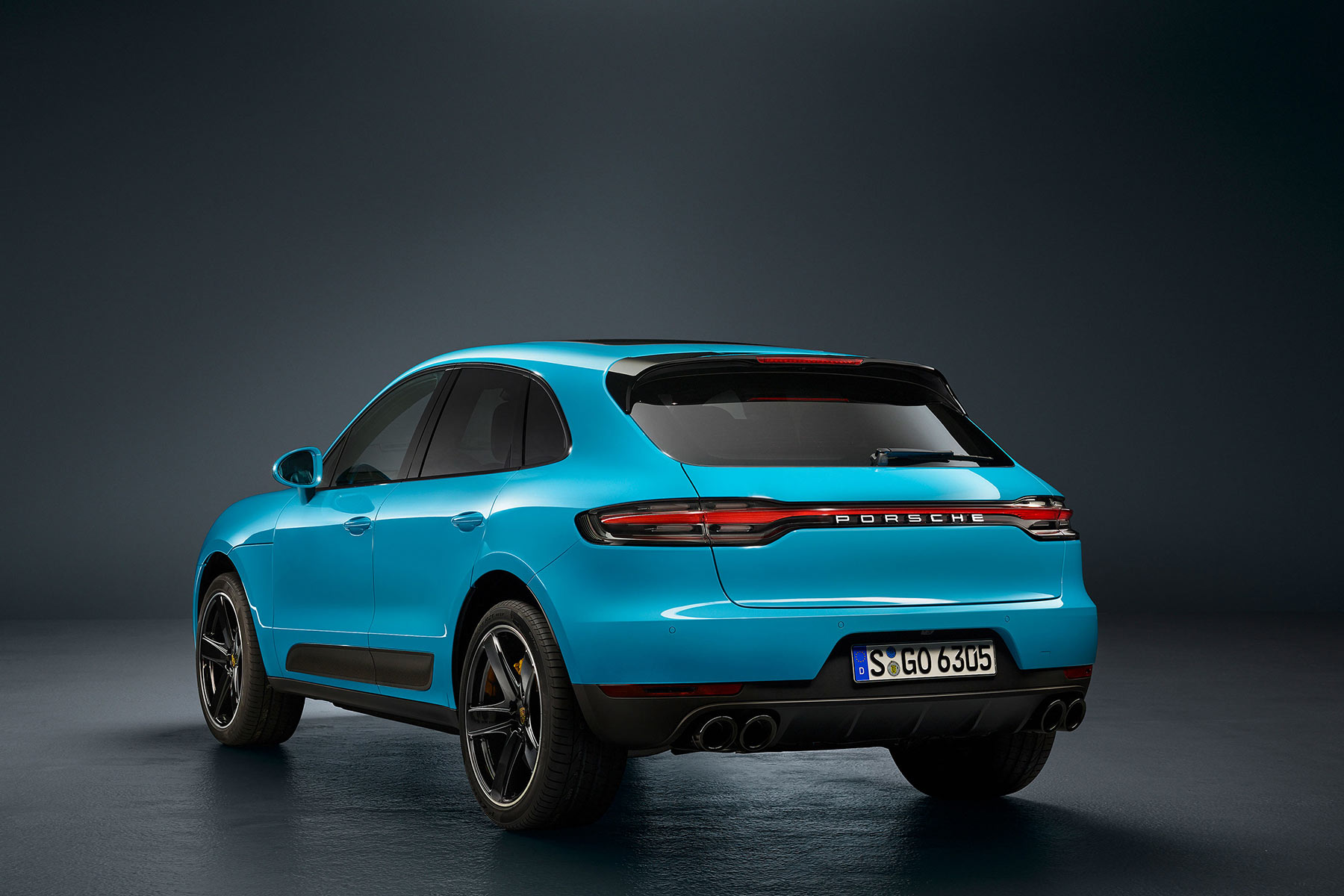
The Macan has been an incredibly successful car for Porsche, with some 350,000 sold since its launch in 2014. For the facelift, Porsche has added a 10.9-inch touchscreen, a GT sports steering wheel, LED headlights as standard, a three-dimensional LED taillight strip, new 20- and 21-inch alloys, a tuned chassis and a host of other upgrades. It’s great, but it’s no 935.
Suzuki Jimny
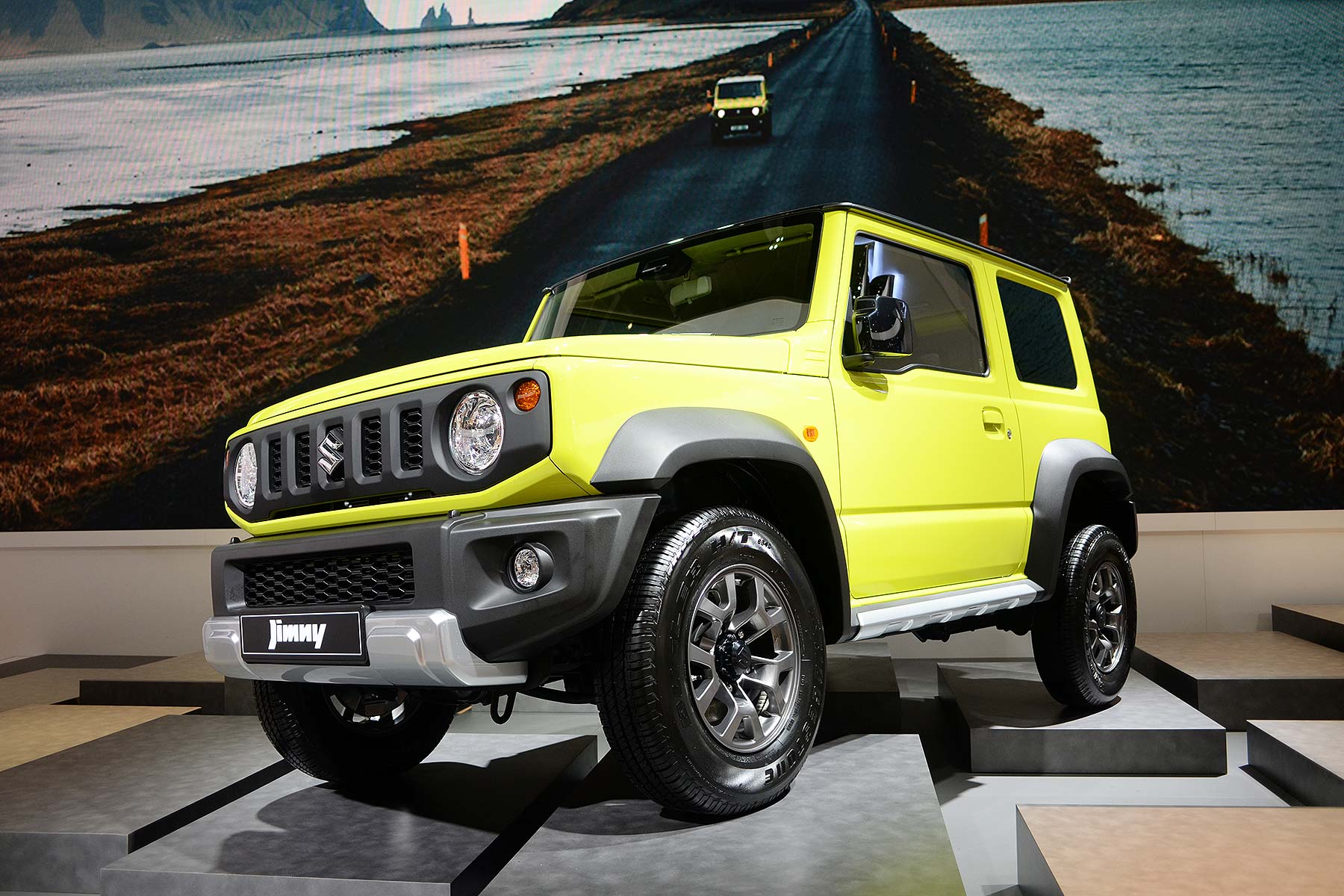
It might be one of the smallest cars on show in Paris, but since when did size matter? What the Suzuki Jimny lacks in mass, it makes up for in off-road ability, and offers a level of charm that is off the scale. Suzuki GB has received more than 3,000 registrations for the fun-size 4×4, but this number will increase before the Jimny hits the road in 2019.
You want one, obviously, but there are two or three question marks hanging over the half-pint off-roader. Firstly, how much will it cost? We reckon something in the region of £17,000, depending on spec. Secondly, how long will you have to wait before taking delivery? It could be months. Thirdly, how much of an issue is that three-star Euro NCAP safety rating? Only you can decide that.
Ferrari Monza SP1 and SP2
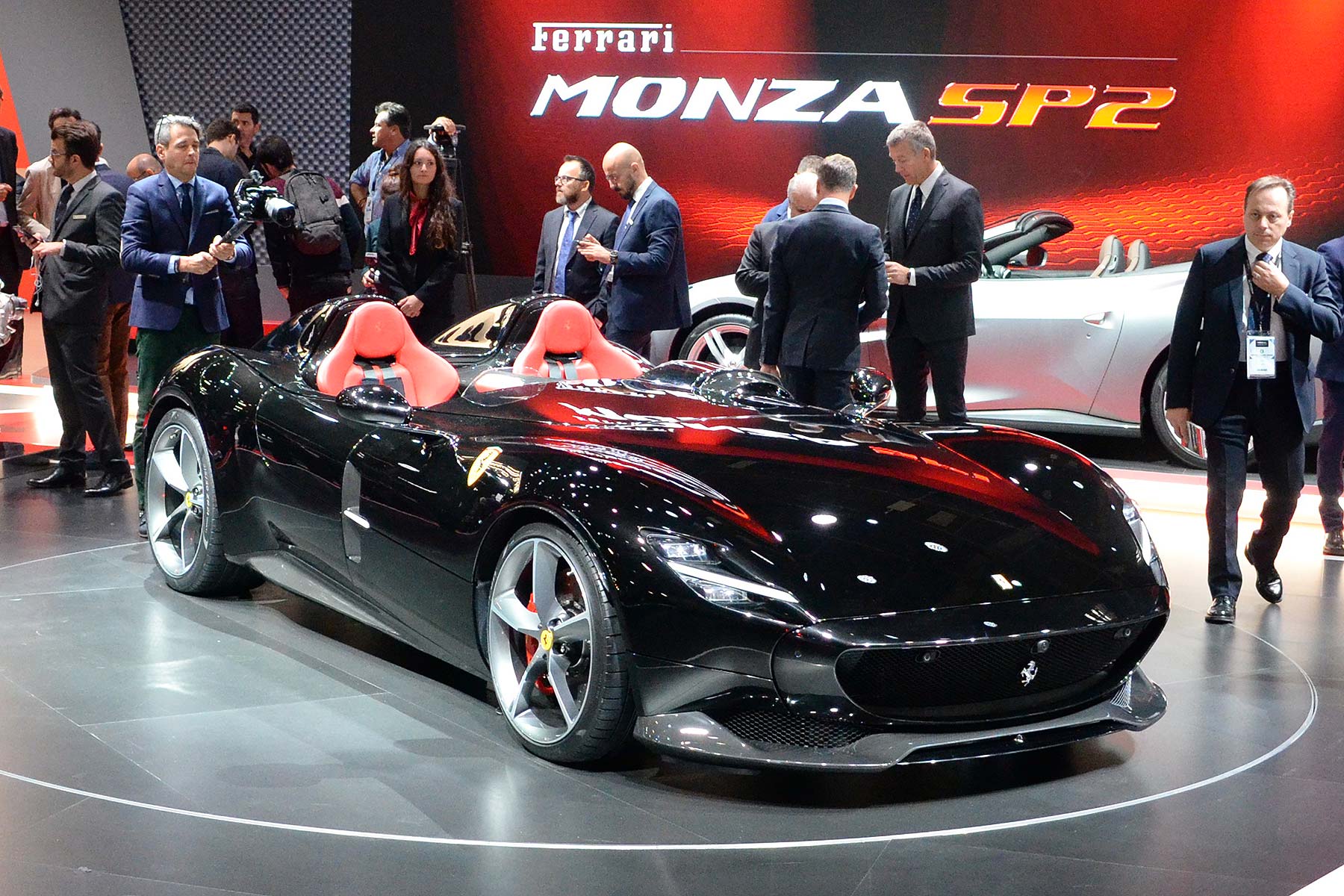
Lamborghini is giving Paris a miss, which leaves Ferrari to hug the Italian supercar limelight. The new Monza SP1 and SP2 models are the first in a new segment called ‘Icone’ and draw inspiration from Ferraris of the 1950s.
The SP1 is a single-seat road car, while the SP2 does away with a tonneau cover and adds a second protective screen to become a two-seater. Each one will hit 62mph in just 2.9 seconds. Predictably, they’re drawing a huge crowd in Paris. Does anybody have any step ladders we could borrow?
Audi E-tron
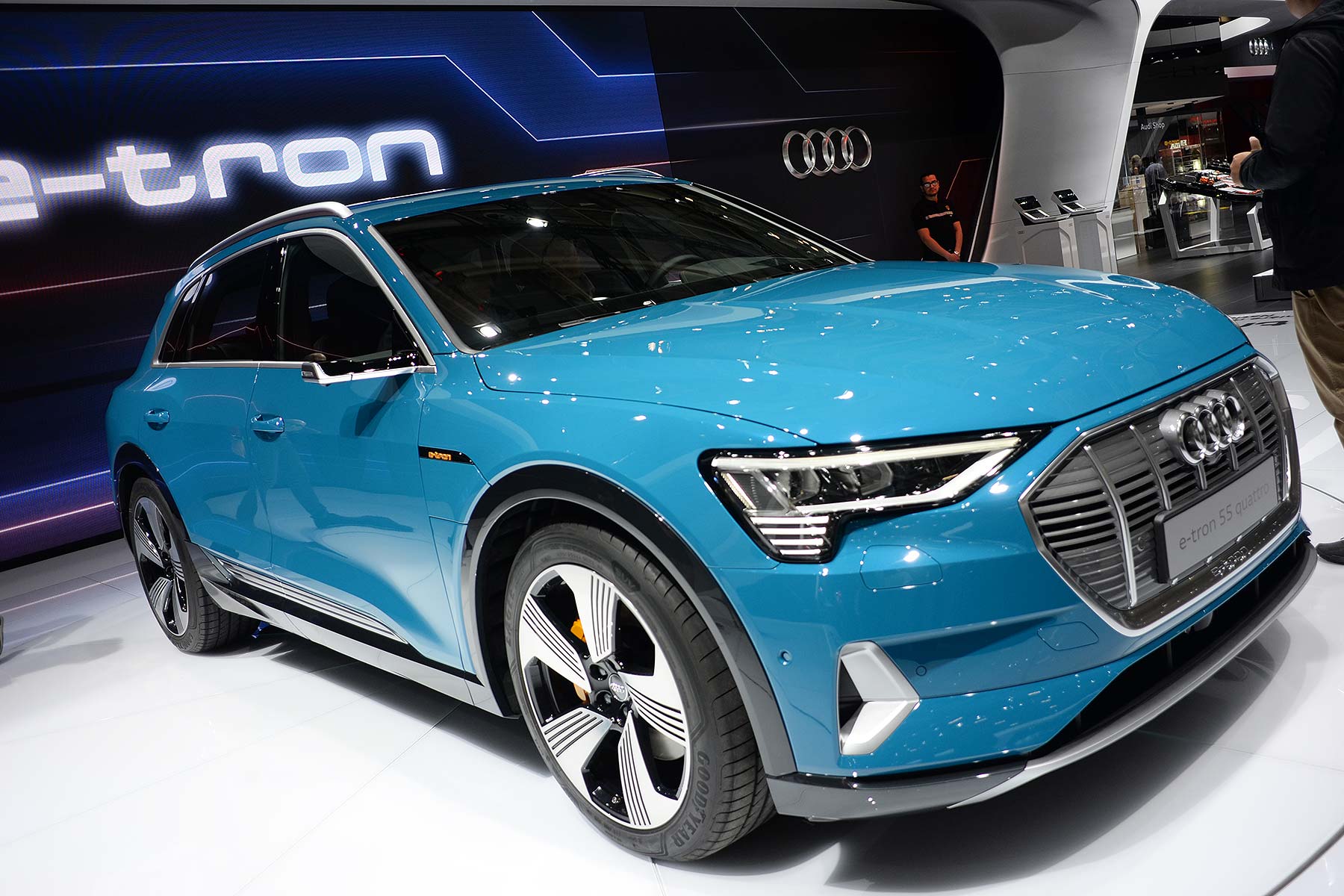
What you’re looking at is the beginning of Audi’s assault on the EV sector, the first of 12 all-electric cars to be launched between now and 2025. The ‘undirty’ dozen, if you like. A little like the EQC, it’s not what you’d call attractive, but it’s unmistakably an Audi, more cohesive than the Q2 and more interesting than the Q3 and Q5.
It features a 95kWh battery – only the Model X battery is bigger – with Audi quoting a 249-mile range and a 0-60mph time of 6.4 seconds. We’re expecting it to cost around £70,000 when it goes on sale in the UK, although this price will reduce once the Plug-in Car Grant is subtracted. A note about the cabin, which looks less cutting-edge than the EQC’s, but is typically Audi-grade.
Peugeot 508 SW
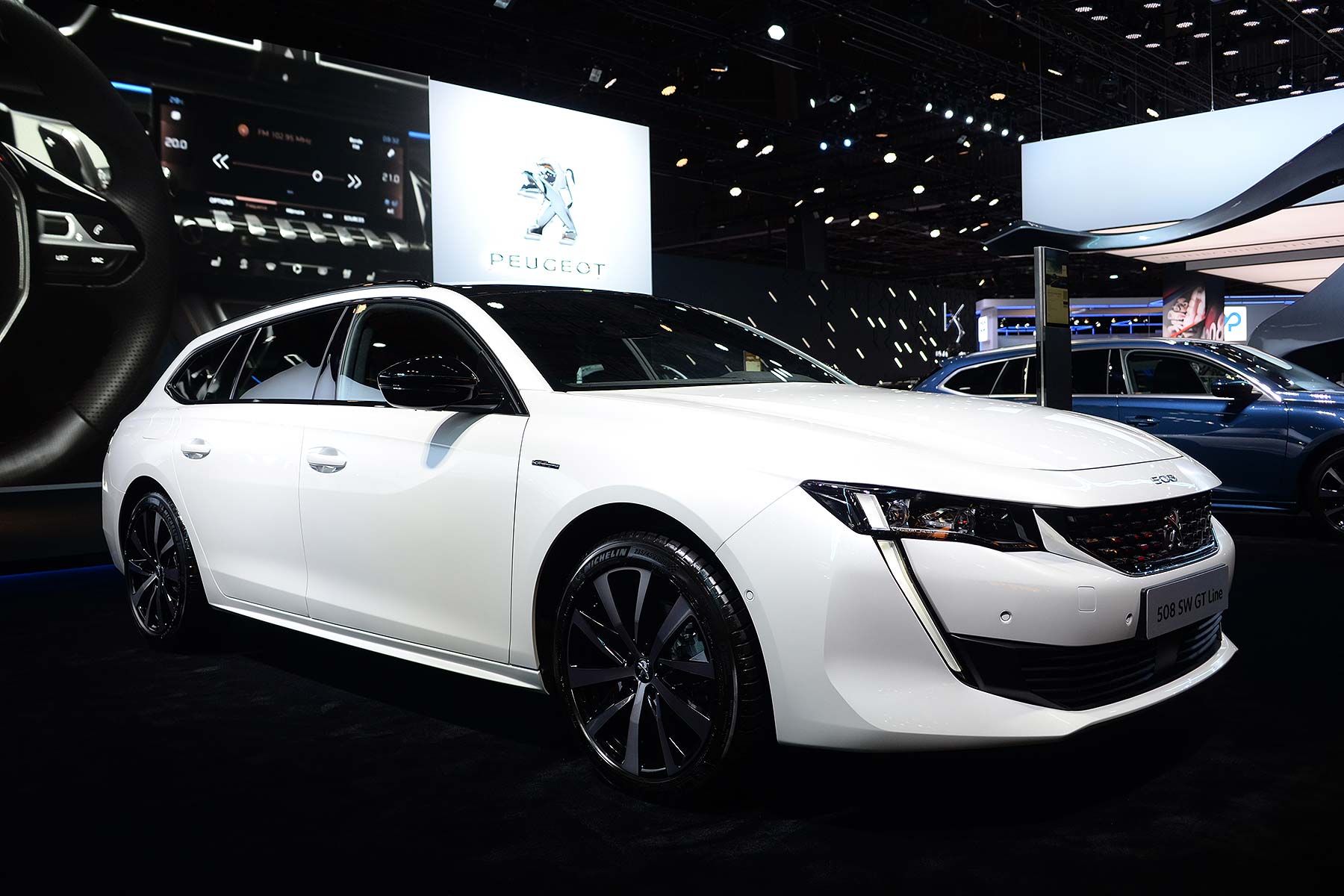
It’s rather sad that cars like the Peugeot 508 SW are a dying breed, suffocated by the might of the SUV. The fact remains, that while SUVs are undoubtedly practical and well-suited to family life, an estate car will always be better to drive and feature a large loading area. So, please welcome the 508 SW with open arms.
It’s a great looking thing – almost as eye-catching as the 508 saloon – and the boot is large, wide and flat, especially if you fold the rear seats down to reveal a load area of 1,780 litres. Up front, the cabin is visually arresting and rather engaging. Unfortunately, it’s likely to be a niche product when it goes on sale in the UK in January.
Hyundai i30 Fastback N
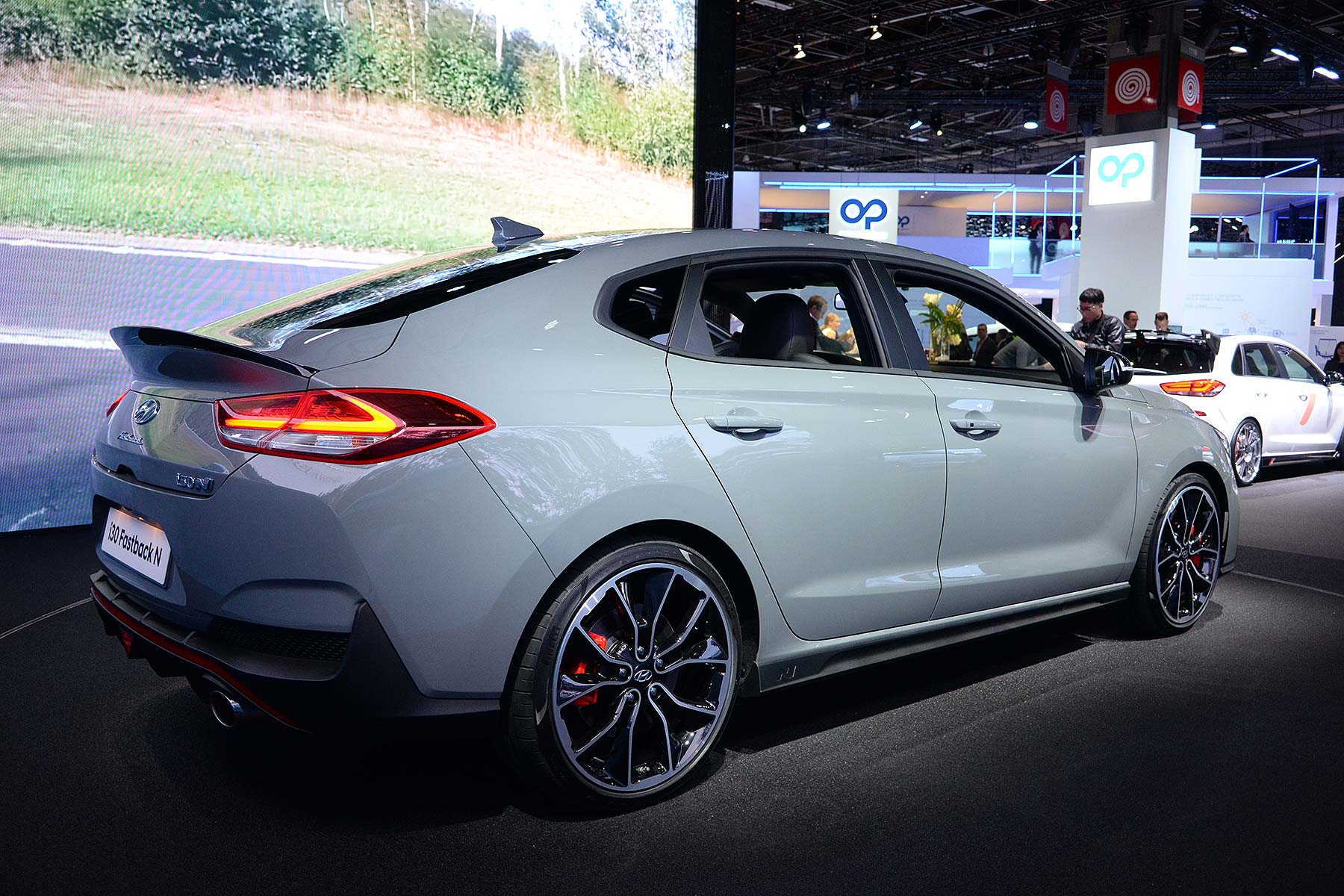
In the same way that the Hyundai i30 N managed to muscle in on the hot hatch party, the i30 Fastback N is hoping to steal sales from the Audi A5 Sportback and BMW 4 Series. A tough ask, but if the hot hatch is anything to go by, it deserves to succeed. And, let’s remember, the Hyundai will undercut its rivals and offer a comprehensive five-year warranty.
But the N badge is about so much more than price and warranties. Of all the cars we have driven this year, the i30 N has been one of the most impressive, so we’re itching to try this latest take on the N formula. In the meantime, we’re going to twist a few arms – we rather fancy an i30 N in wagon form.
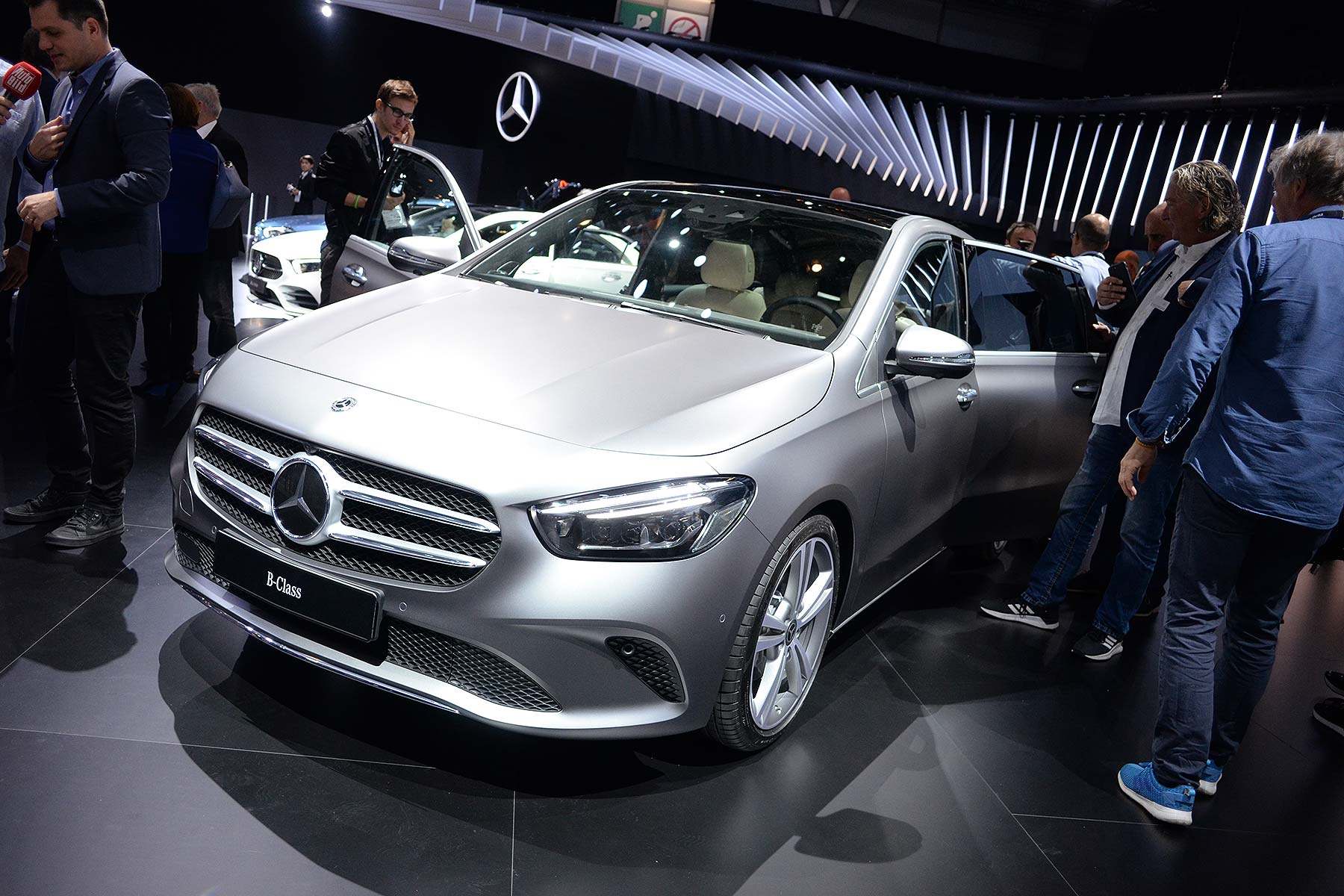
Mercedes-Benz B-Class
Mercedes says the new B-Class looks more dynamic than its predecessor, which is true. Then again, a tin of creamed rice pudding looks more dynamic than the old B-Class. Mercedes is also labelling it as a ‘Sports Tourer’, but it’s really an A-Class in an MPV suit.
It might not be exciting to look at, but the B-Class shares its interior with the A-Class, which is a positive, while the infotainment system adapts to the behaviour of the driver. It’s also semi-autonomous and can be equipped with 19-inch rims. Nope, we’re not excited either.
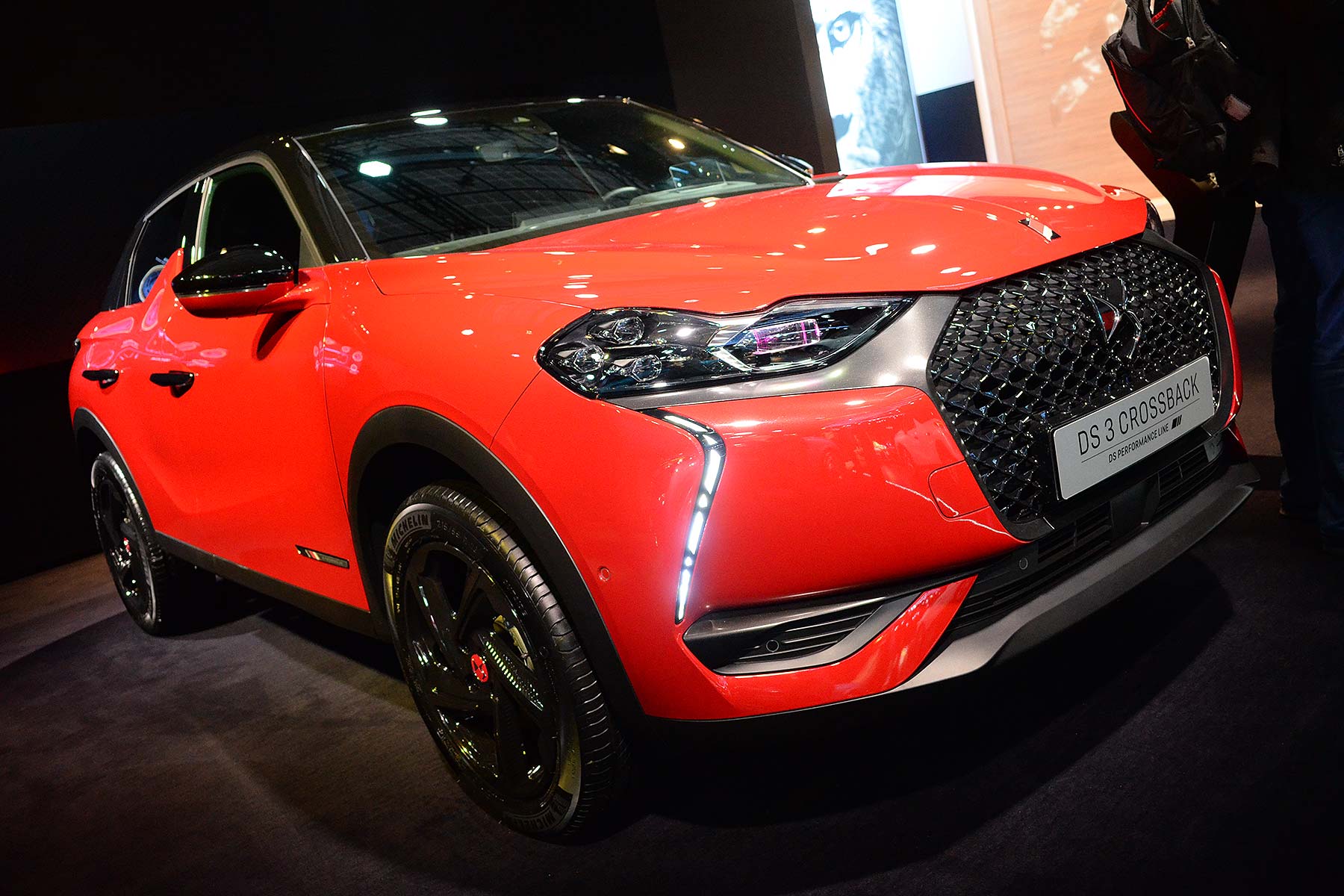
DS 3 Crossback
You might not like the design of the DS3 Crossback – we’ve read the online comments – but up close and personal, it looks every inch a premium compact SUV. There are neat touches, like the bejewelled headlights and Porsche-style rear light bar, while the cabin is inspired by the DS7 Crossback and feels very upmarket.
Of interest is the E-Tense electric version, which received very little in the way of pre-Paris fanfare. With a WLTP range of 186 miles, it could give the Hyundai Kona EV a run for its money, assuming the price is right.
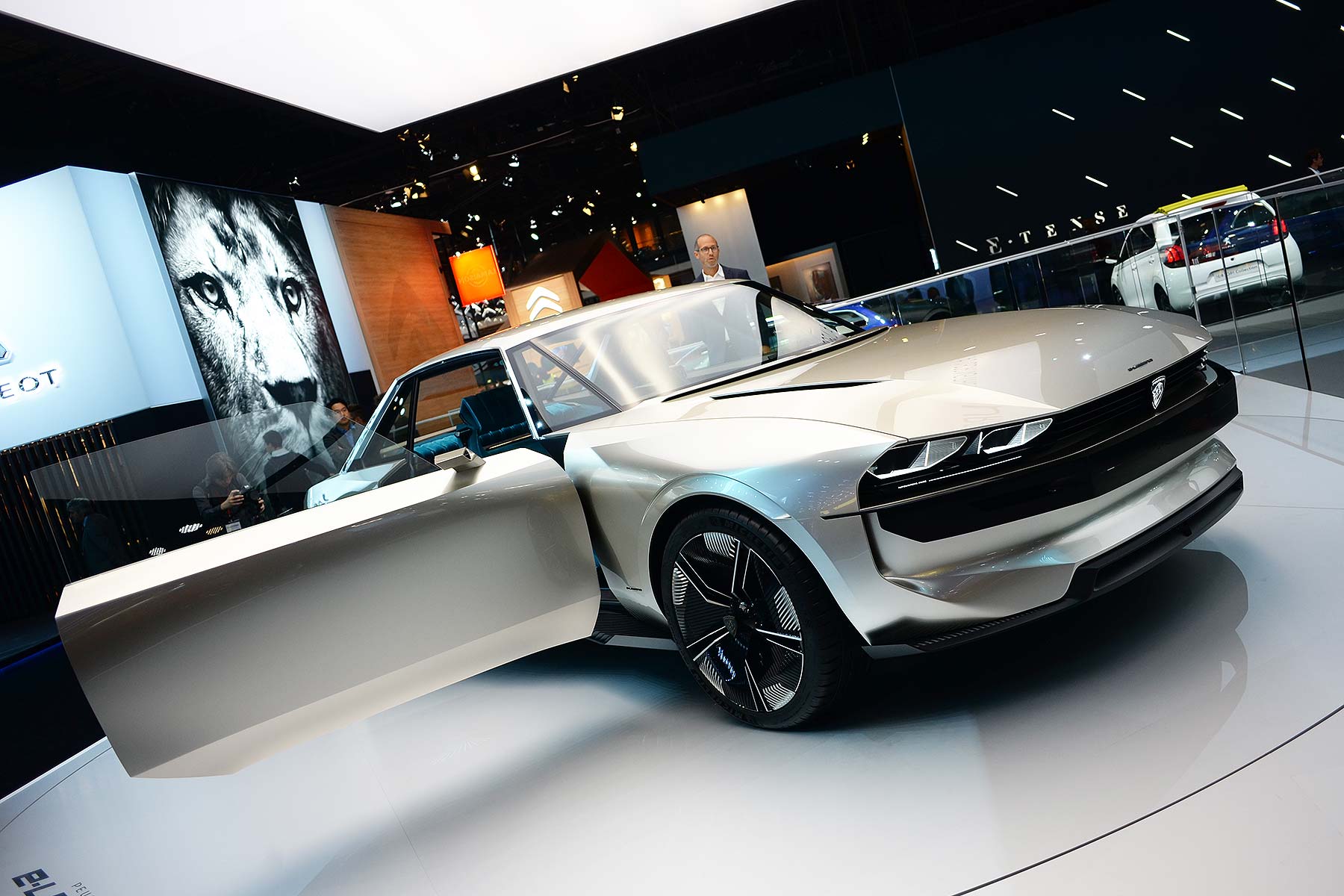
Peugeot e-Legend
Forget Will Smith in I Am Legend because this is the Peugeot e-Legend. It doesn’t preview a post-apocalyptic future – we hope – but it might give us a hint of a future Peugeot coupe. One thing’s for certain, the concept tips its hat to the 504 Coupe of the past.
The 504 Coupe link is evident, especially on the inside, but we can’t help but see a touch of the Lancia Fulvia concept of 2003 when we look at the all-electric, fully-autonomous concept. Sadly, the Lancia never made it into production, but we hope this Pug has a brighter future.
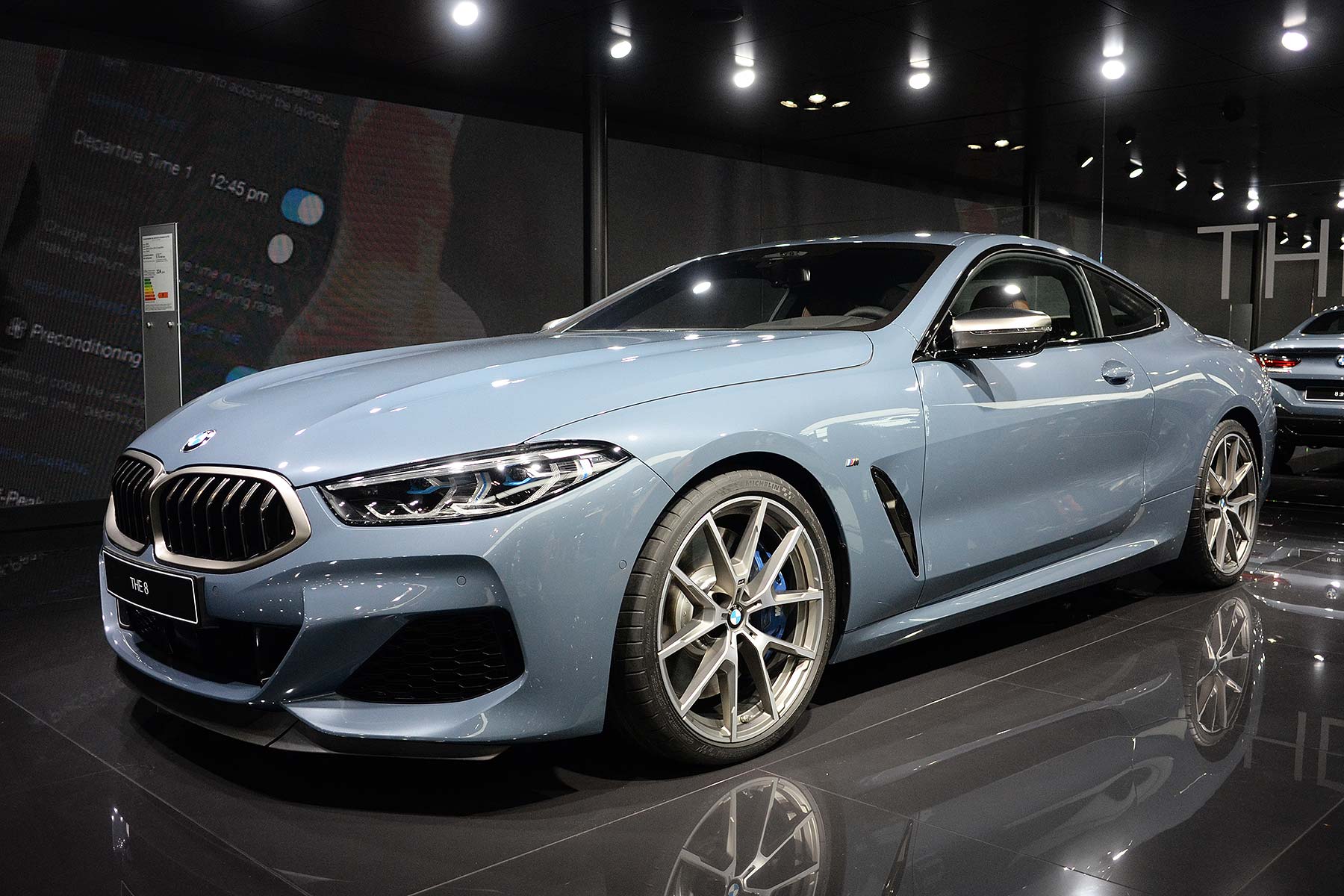
BMW 8 Series
It’s not new – the BMW 8 Series was unveiled at the Le Mans 24 Hours race in June – but this is the first time we have got up close and personal with the GT car. In around a month’s time, the first UK customers will be taking delivery of what must be the best looking BMW in a generation.
What can they expect? Well, the styling, led by Brit, John Buckingham, is a feast for the eyes, while the interior is bespoke to the 8 Series, with a dashboard focused on the driver. Head to the BMW website if you fancy a piece of the 8. Prices start from £76,270, with the M850i xDrive weighing in at £99,525.
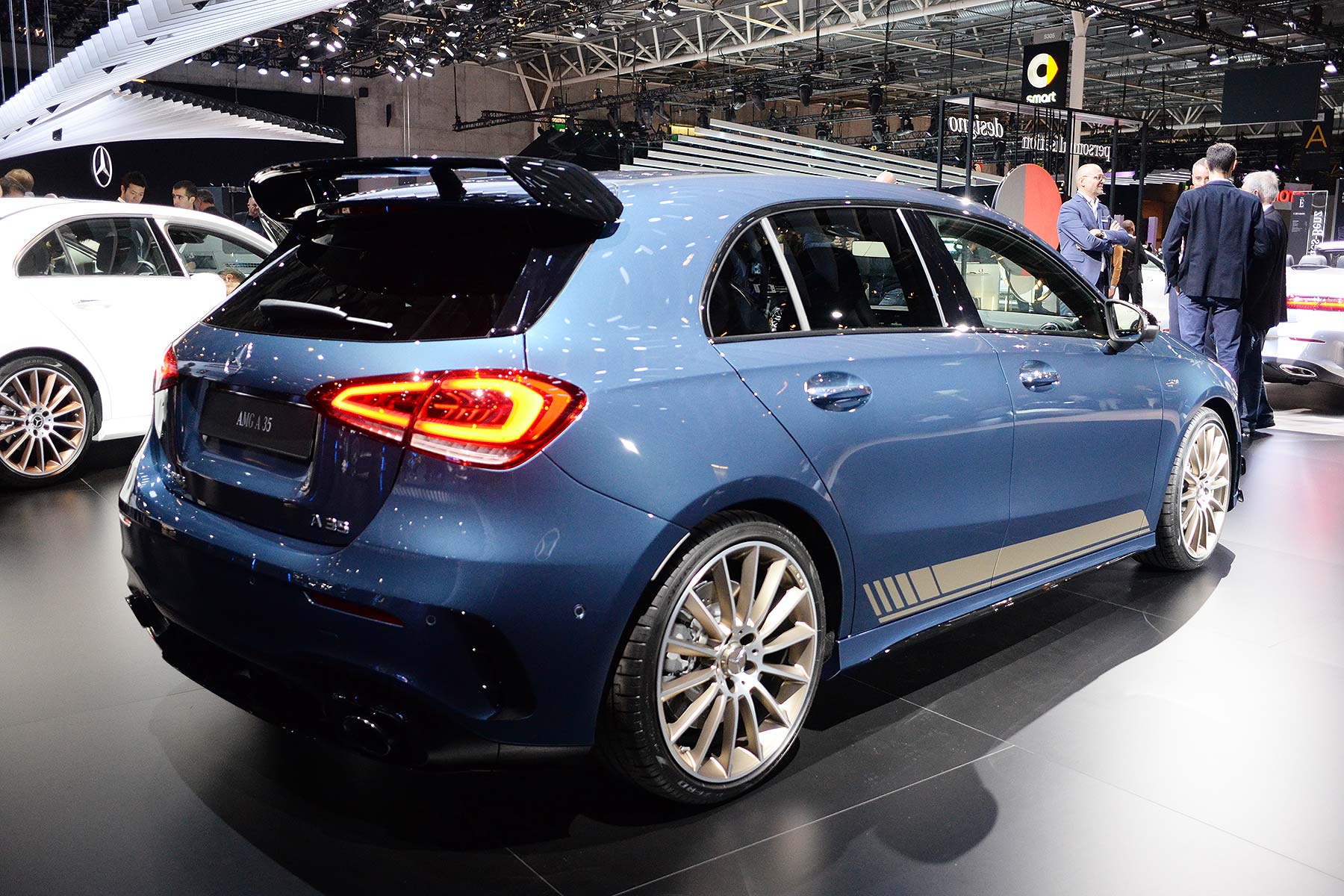
Mercedes-AMG A 35
The Mercedes-AMG A 35 packs a 306hp 2.0-litre turbocharged engine and can hit 62mph in just 4.7 seconds. Torque is a punchy 295/b ft, while the top speed is limited to 155mph. We tell you this because this is AMG’s entry-level performance car. As tasters go, this one is pretty hot.
Naturally, it’s all-wheel drive – so seeing off a few front-wheel-drive pretenders from the lights should be a doddle – but don’t expect to see the claimed 39mpg if you engage in too many drag races. An A 45 will follow, presumably with 400hp to play with.
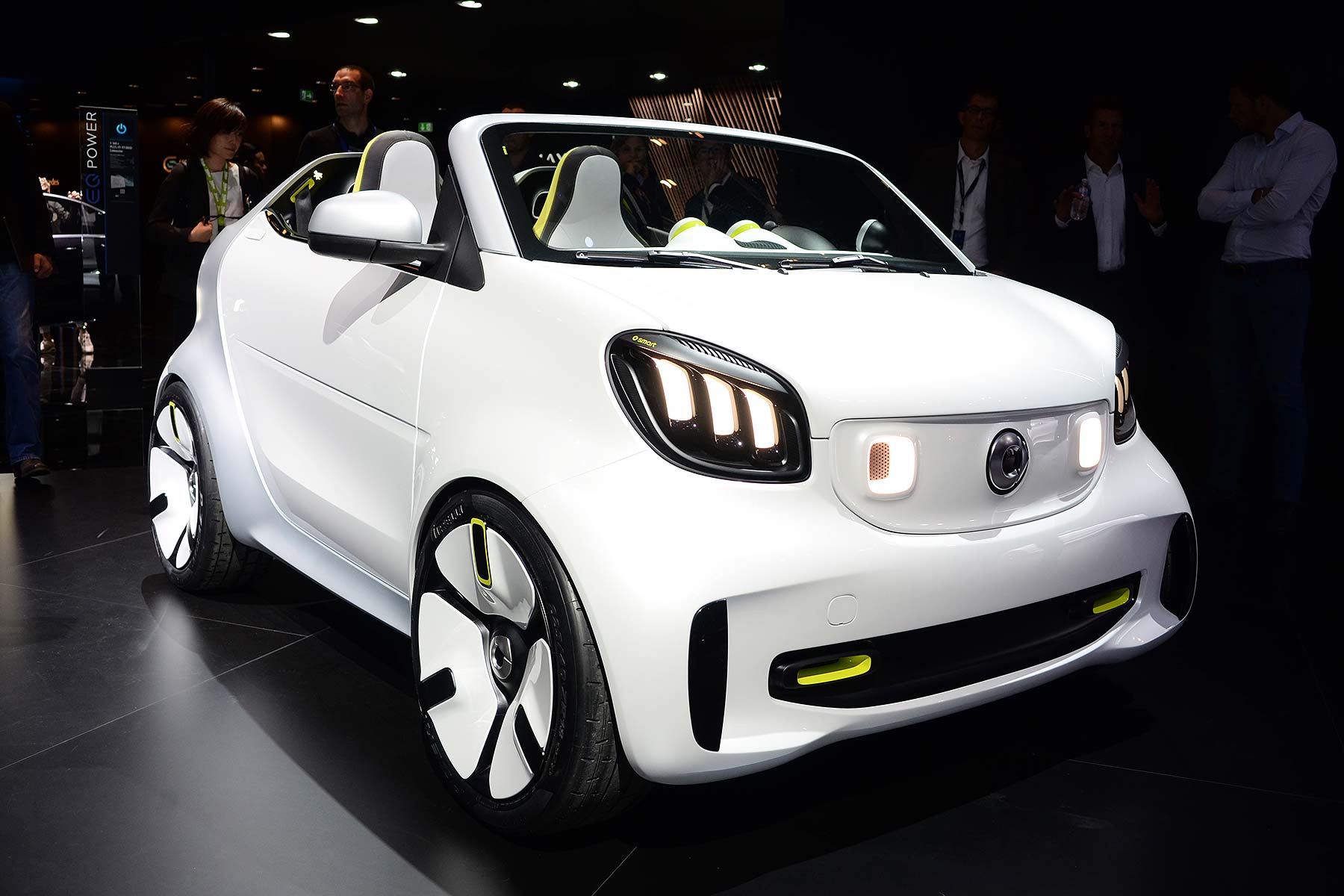
Smart Forease
The Smart Forease sounds like a reclining chair you might see advertised by June Whitfield during the ad break on daytime TV. It’s also the name of the concept unveiled to mark the 20th anniversary of Smart, which will become an electric-only brand in Europe from 2020.
Thanks to its shorter windscreen and the absence of a roof, there’s more than the whiff of the Smart Crossblade about the Forease, which suggests it might make it into production, in some form at least. Great in St Tropez, not so great in St Ives, Cambridgeshire.
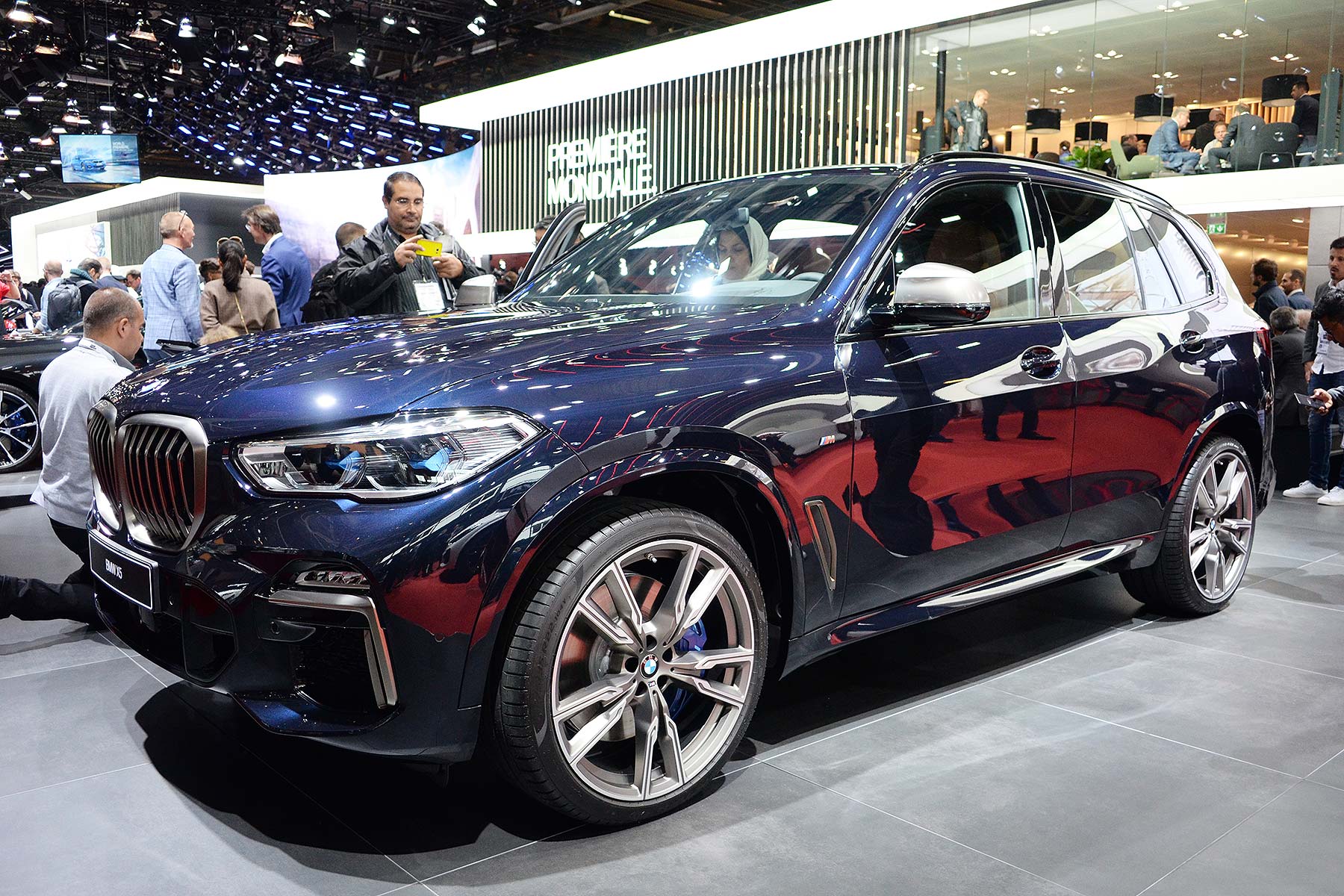
BMW X5
Here’s another new BMW that has been doing the rounds since the summer, with the X5 already on sale in the UK. It’s noticeably bigger than before, while the interior looks and feels a step up on the outgoing model.
Some 2.2 million X5s have been sold since the SUV was launched in 1999. Yep, that’s 19 years ago. Time flies when you’re having fun. Are we having fun yet?
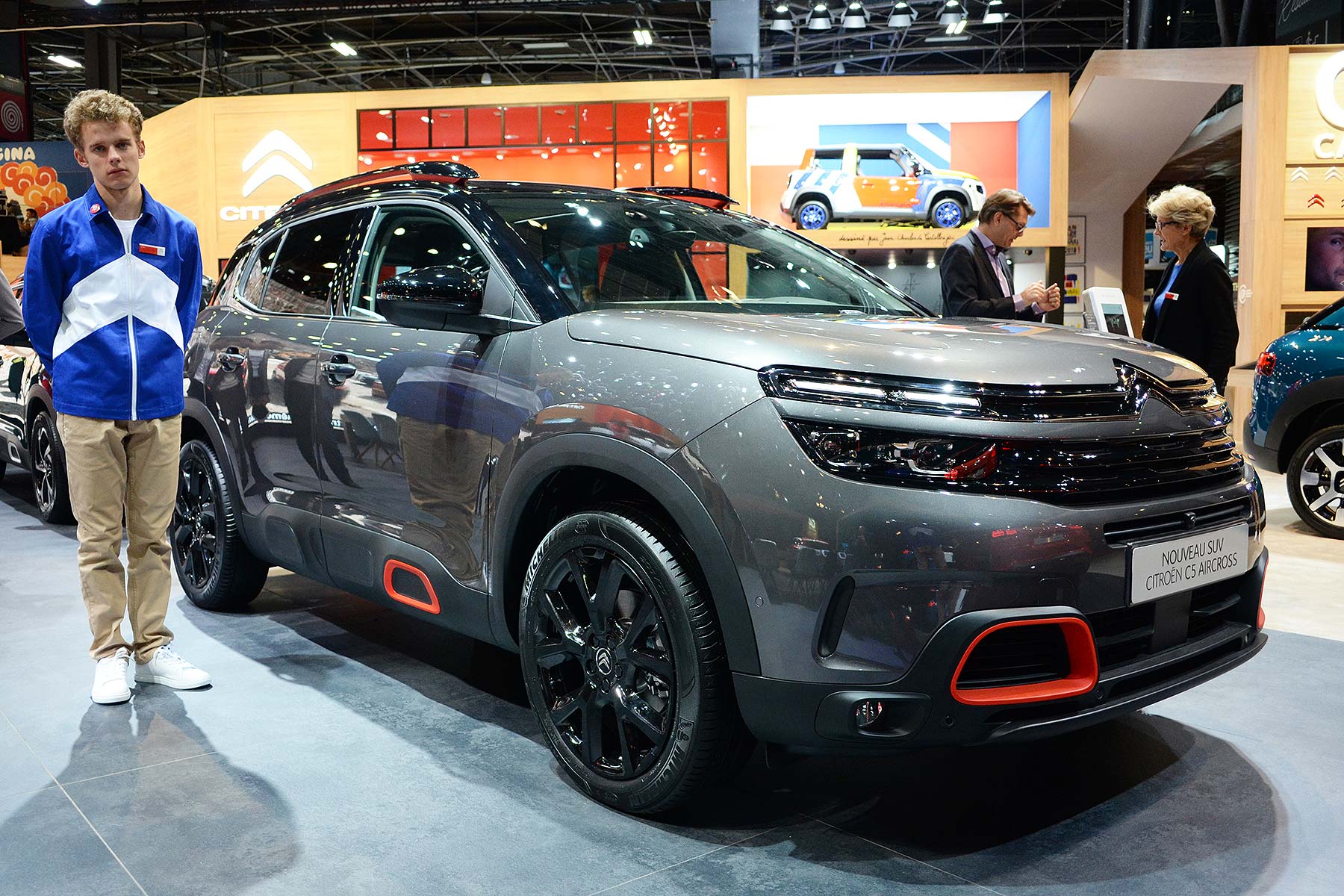
Citroen C5 Aircross
Here’s the new Citroen C5 Aircross SUV. The line-up will include the firm’s first plug-in hybrid, with Citroen promising up to 31 miles of electric range.
Citroen says that 80 percent of its cars will have an electric option by 2023 and 100 percent by 2025, so the hybrid version of the C5 Aircross is very much the shape of things to come.
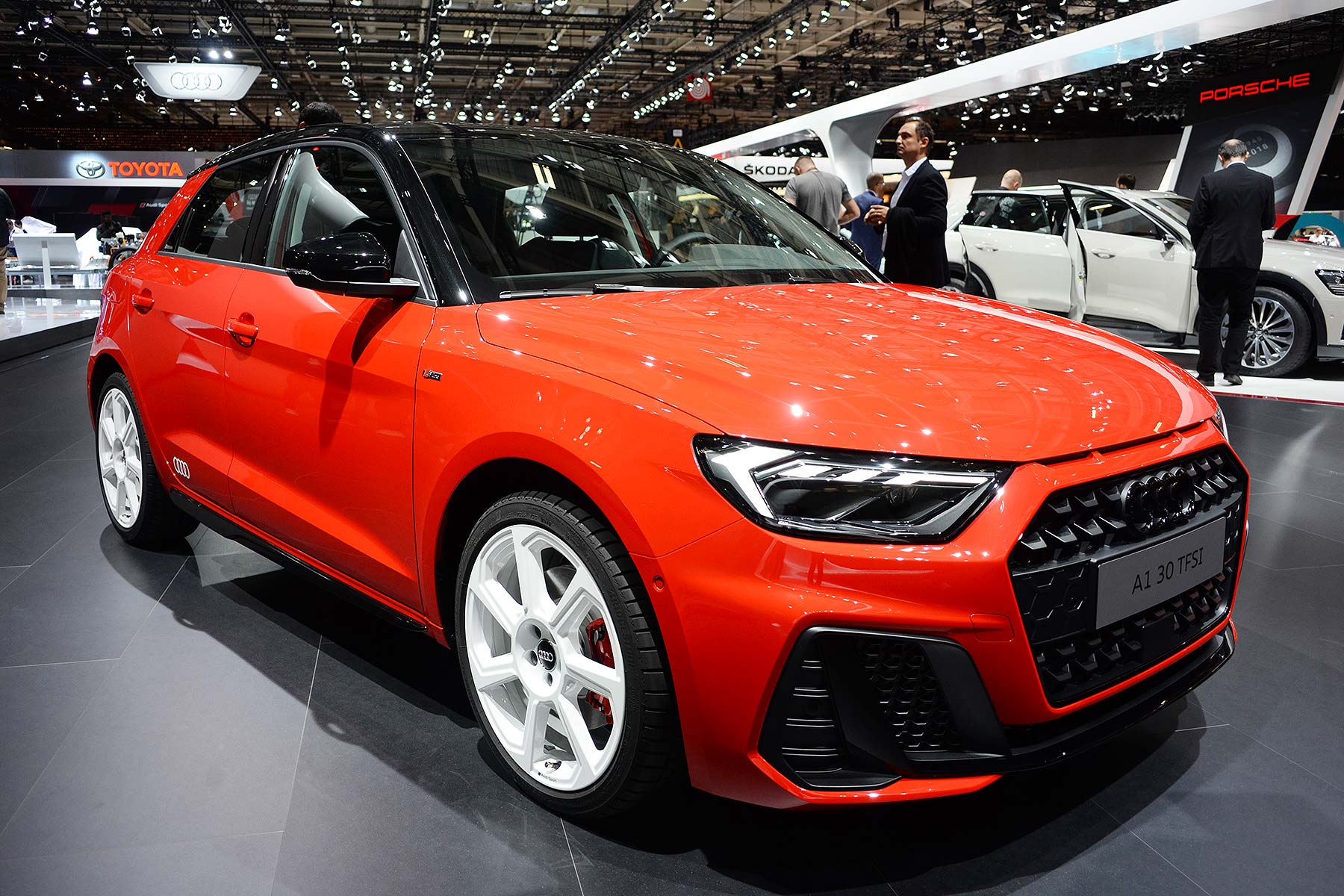
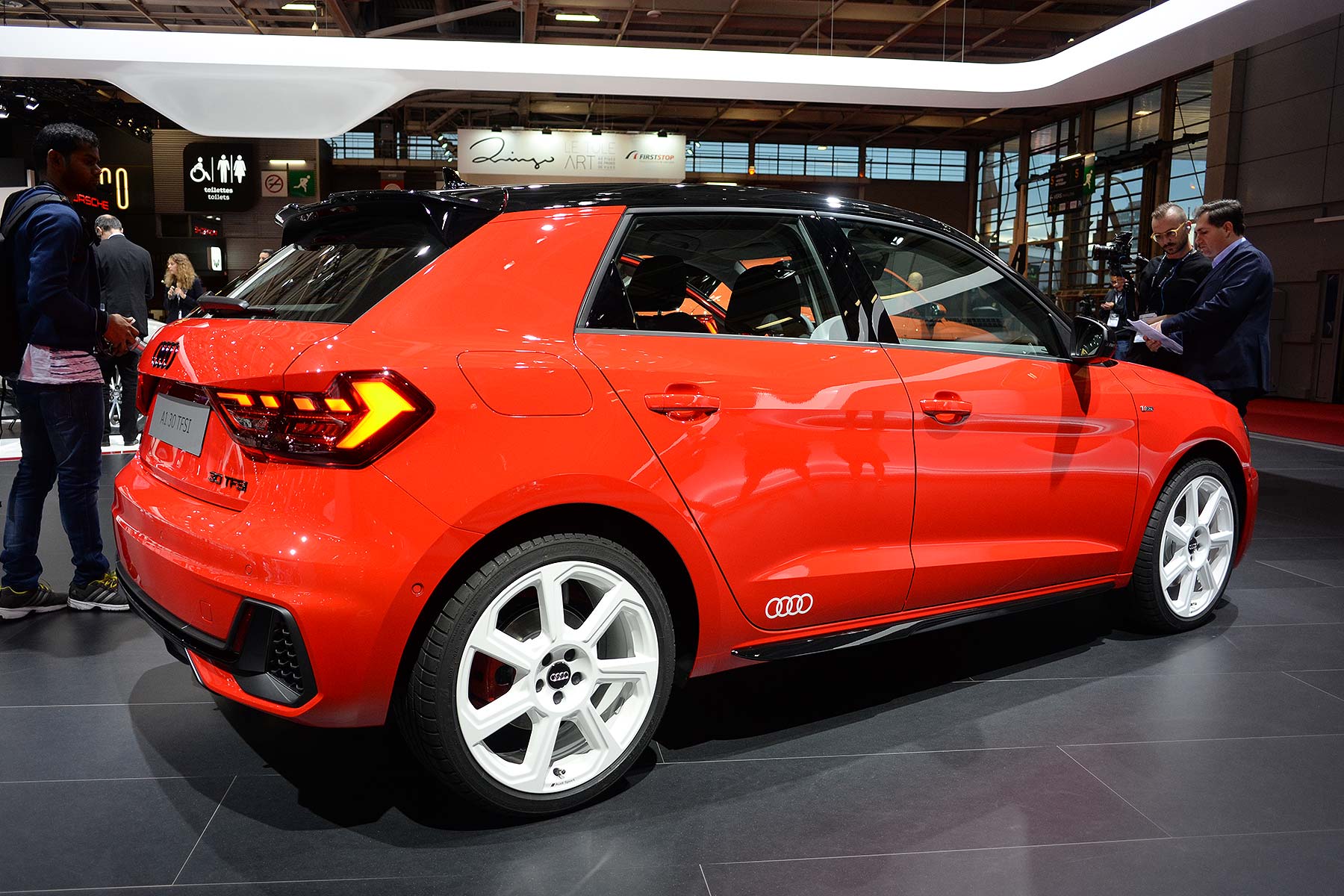
Audi A1
If you don’t like the look of the A1 we’re showing you, fear not, because this is the most configurable car Audi has ever built. For the first time, you can mix and match the exterior and interior trim lines until your heart’s content.
It means that you can have the S line exterior with the interior of an SE. This is bad news for Audi dealers, as finalising the spec of each new A1 might be a long and laborious process. Better make sure the coffee machine is working.
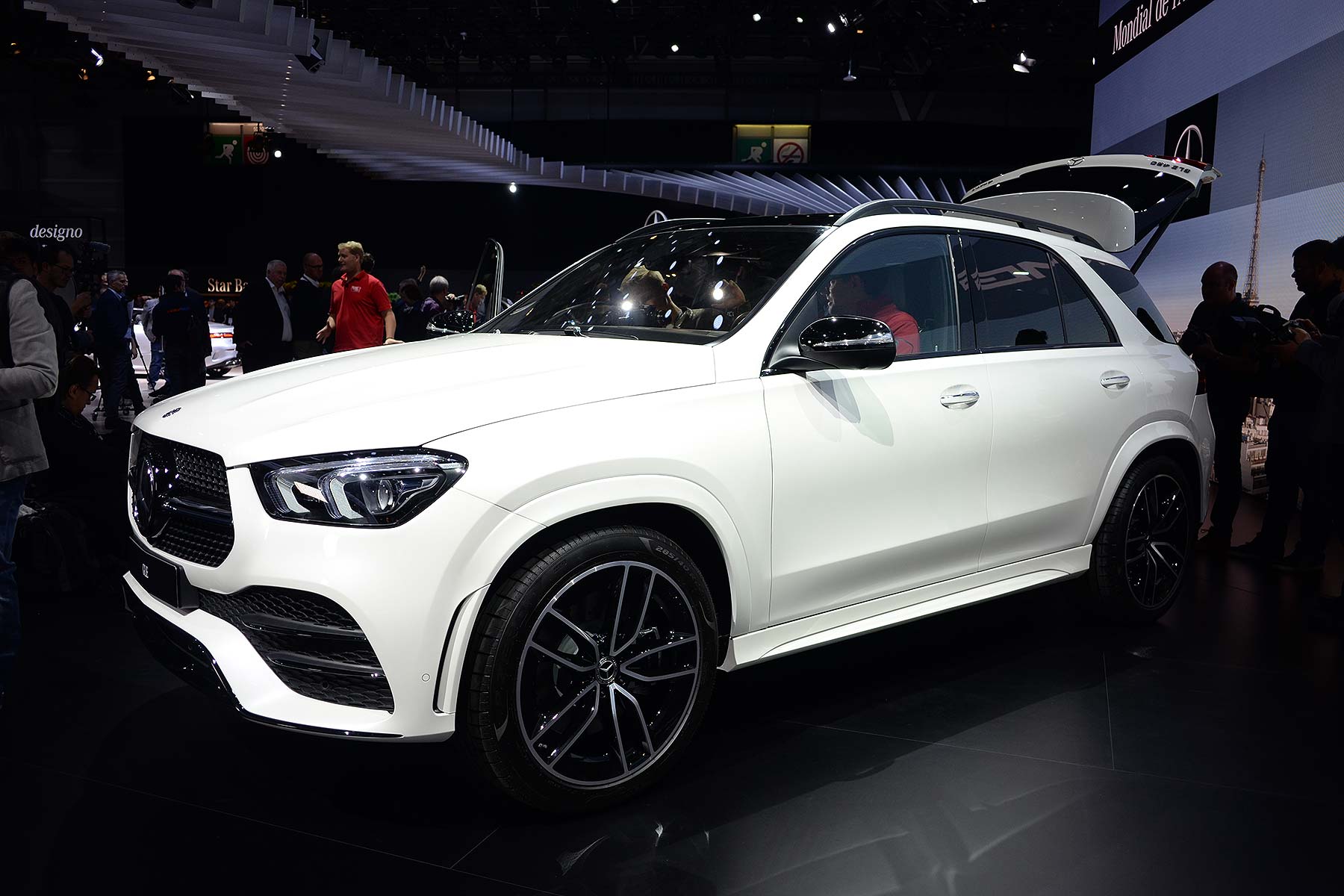
Mercedes-Benz GLE
This Mercedes-Benz GLE is so clever, it can read the road ahead and prepare itself for bumps and potholes. It means that it should provide the most comfortable ride this side of strapping yourself to a giant marshmallow and being whisked along on a sea of pillows.
After trekking around Paris, we could do with the GLE’s active air suspension on our feet. Alternatively, maybe we need a long lie-down in the boot, which stretches from 825 litres to over 2,000 litres. Hashtag cavernous.
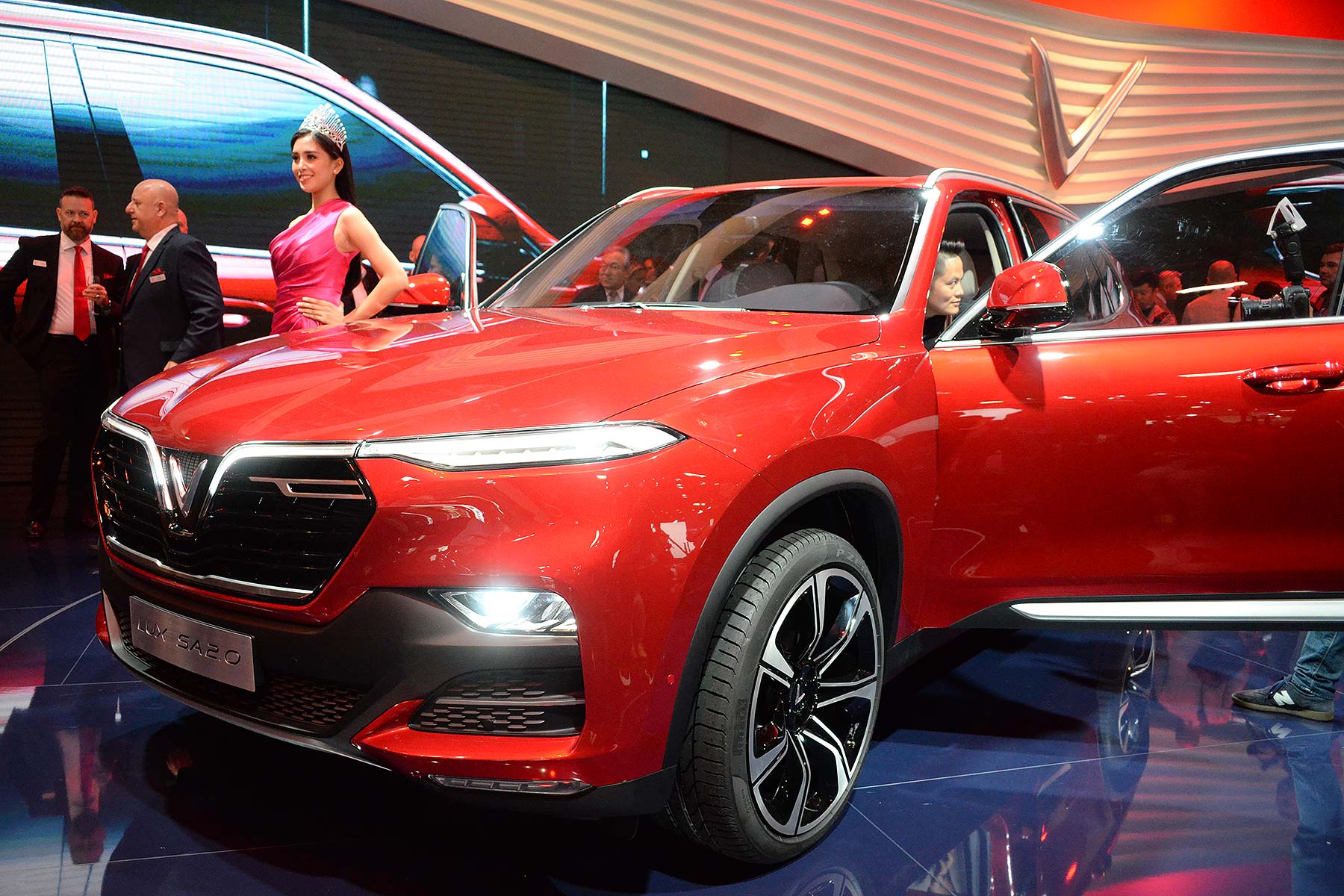
VinFast SUV
It might sound like the name of a warehouse selling cheap plonk, but VinFast is the first Vietnamese car company to participate in a major international motor show. Stick that in your memory bank for future pub quizzes. The firm is launching two cars, including this: a rather good-looking SUV, designed with a little help from Pininfarina.
In a break from the norm, VinFast gave the people of Vietnam the opportunity to determine the firm’s styling direction, with 62,000 voting when presented with 20 design sketches. Good morning, Vietnam, you did a grand job. Imagine doing something similar in the UK: it would be clad in Burberry, upholstered by DFS and called SUV McSUVface.
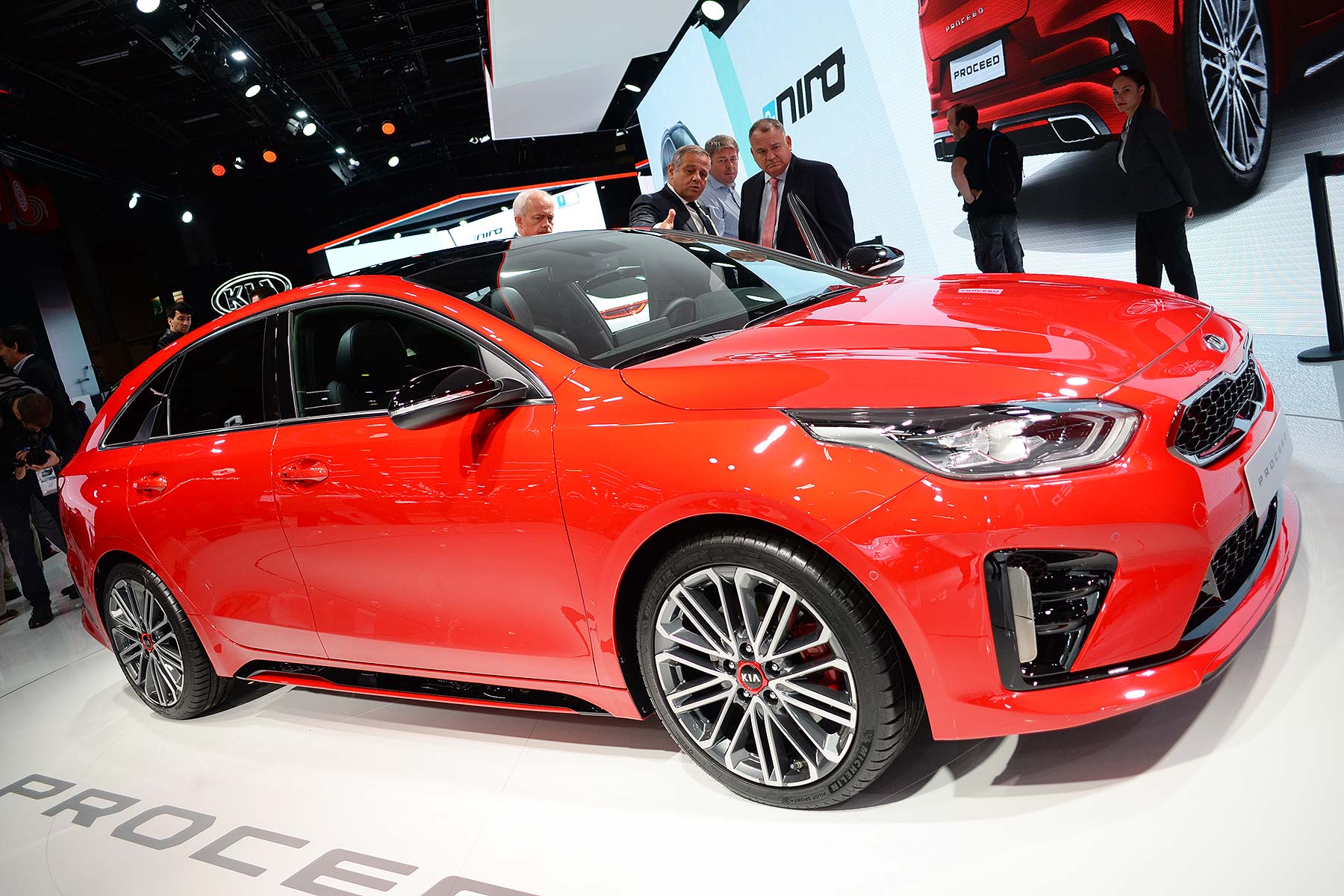
Kia Proceed
After the stunning Kia Proceed concept unveiled at last year’s Frankfurt motor show, it’s hard not to be a tad underwhelmed by the production Proceed. It’s nice enough, but having seen the concept, this is a little like being promised a box of Quality Street only to find it filled with green noisette triangles.
Kia also deserves a slap on the wrist with a toffee finger for daring to call the Proceed a ‘shooting brake’. It isn’t. In fairness, the Slovakian-built estate/wagon/tourer looks good, especially in GT trim, and it’ll come with a decent warranty. Kia’s warranty may have been mentioned a few times before.
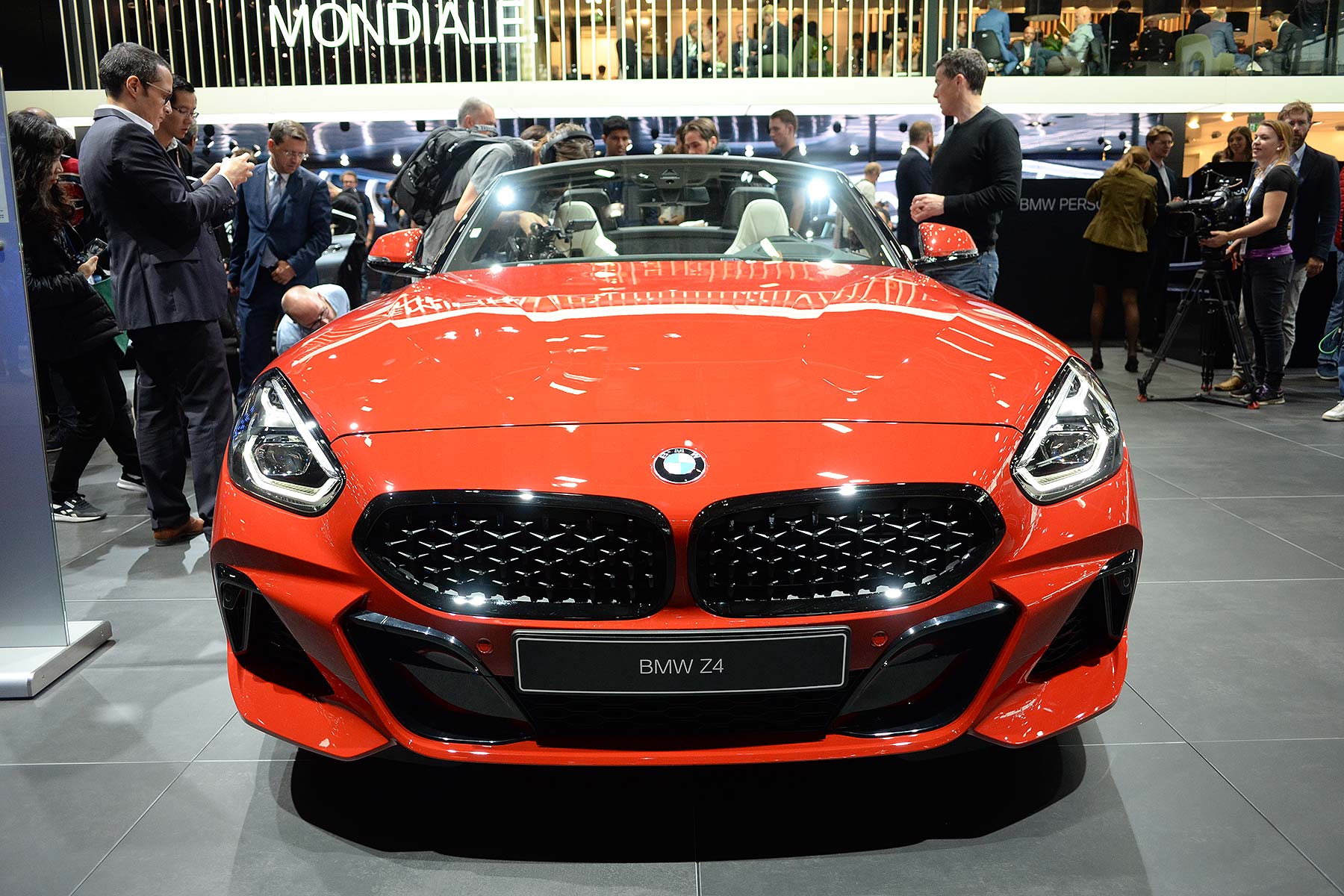
BMW Z4
Many manufacturers have chosen to stay away from Paris, focusing their efforts on their own events and smaller shows. Meanwhile, BMW decided to unveil the new Z4 at the Pebble Beach Golf Links in California, arguably a more suitable location for a sports car designed with sunshine in mind.
Developed in partnership with Toyota – a Supra coupe will follow – the Z4 has a 50:50 weight distribution, a central seating position and a low centre of gravity. Crucially, the folding hard-top roof has gone, ditched in favour of a more traditional and lighter soft-top.
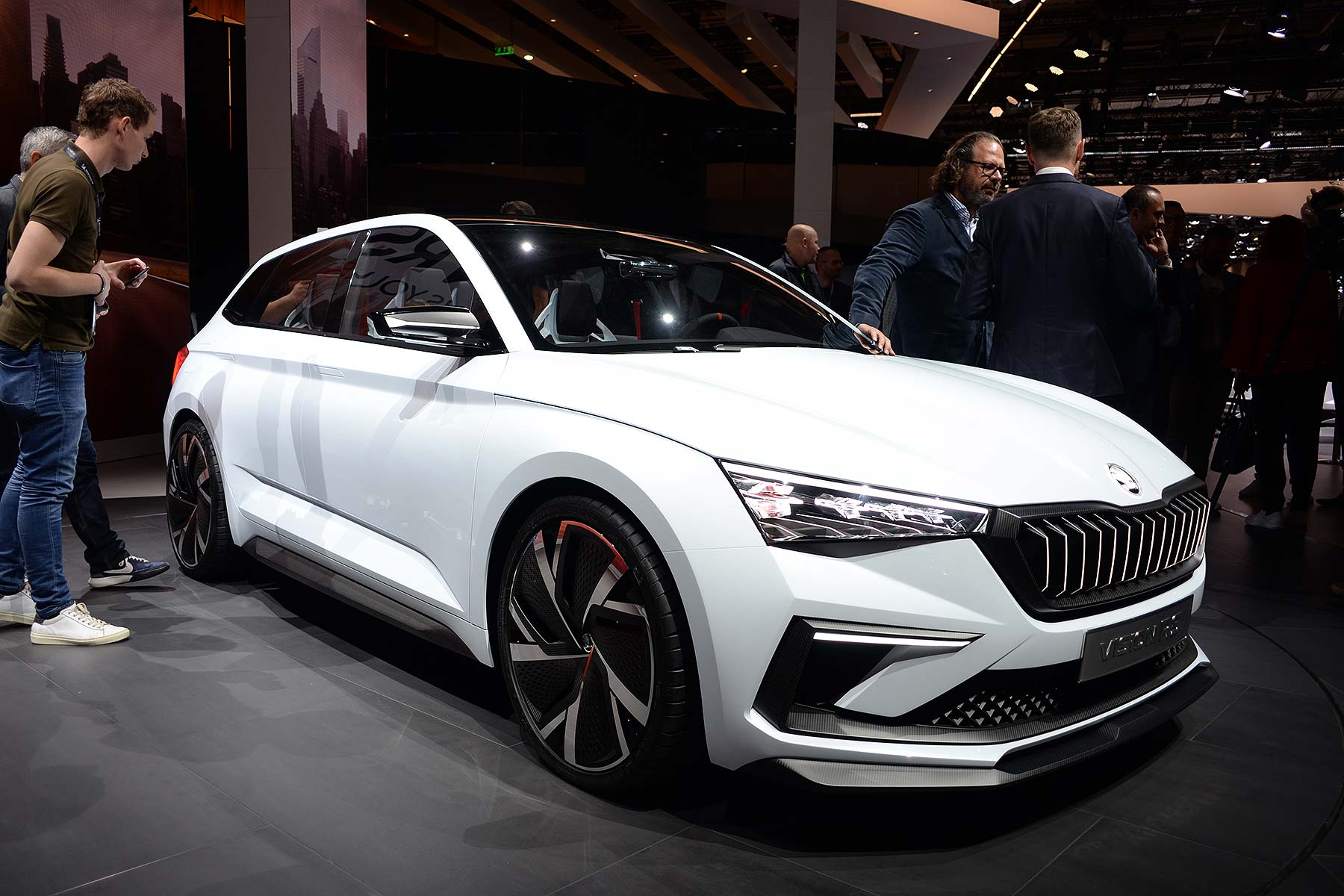
Skoda Vision RS
Meet the Skoda Vision RS. It’s a five-door hatchback that’s roughly Volkswagen Golf-sized, with a plug-in hybrid drivetrain putting out 250hp for 0-62mph in around seven seconds. It also has a 43-mile electric range, emits 33g/km CO2 and, oh yes, is as practical inside as any good Skoda ought to be. It could be the perfect eco-friendly range-topper for a new and improved line of Skoda family hatchbacks.
Why is Skoda telling us so much about the Vision RS? Because it’s not going to be a vision for long. This car will go on sale in the first quarter of 2019, giving the firm a genuine VW Golf rival for the first time. We’re sure it’s going to do great business for the Czech firm.
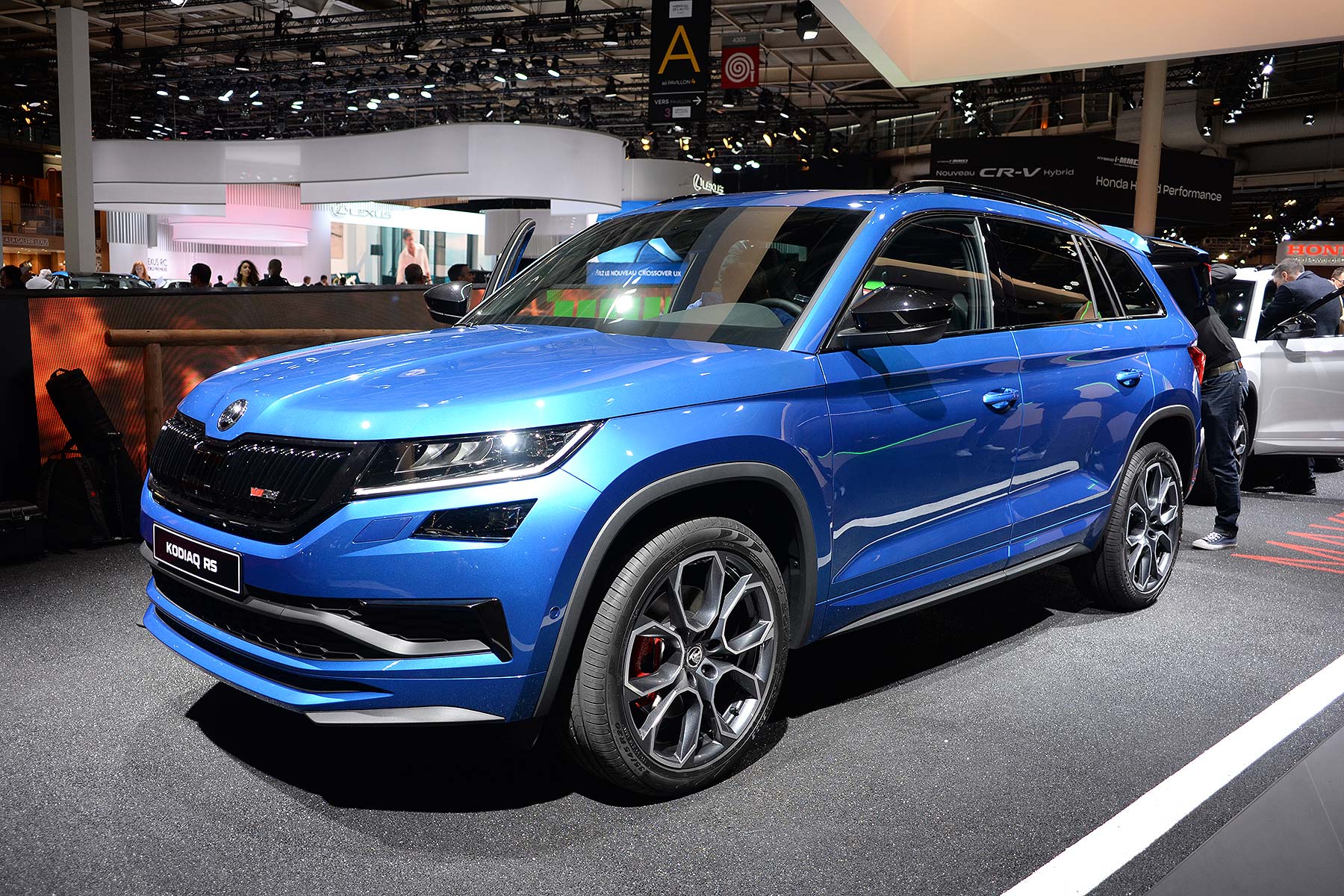
Skoda Kodiaq RS
No seven-seat SUV has driven around the Nurburgring faster than the new Skoda Kodiaq RS, which instantly gives it a certain type of bragging rights. Having Sabine Schmitz behind the wheel helped, but so too did a 240hp twin-turbo 2.0-litre diesel engine, with a huge slug of torque, DSG gearbox and all-wheel-drive traction.
So it goes well. It also looks good, particularly in this metallic blue colour, with those wheels. Sensible, good value family-focused motoring just became a whole lot more exciting.
Read more:
New limited-edition Porsche 911 Speedster debuts in Paris
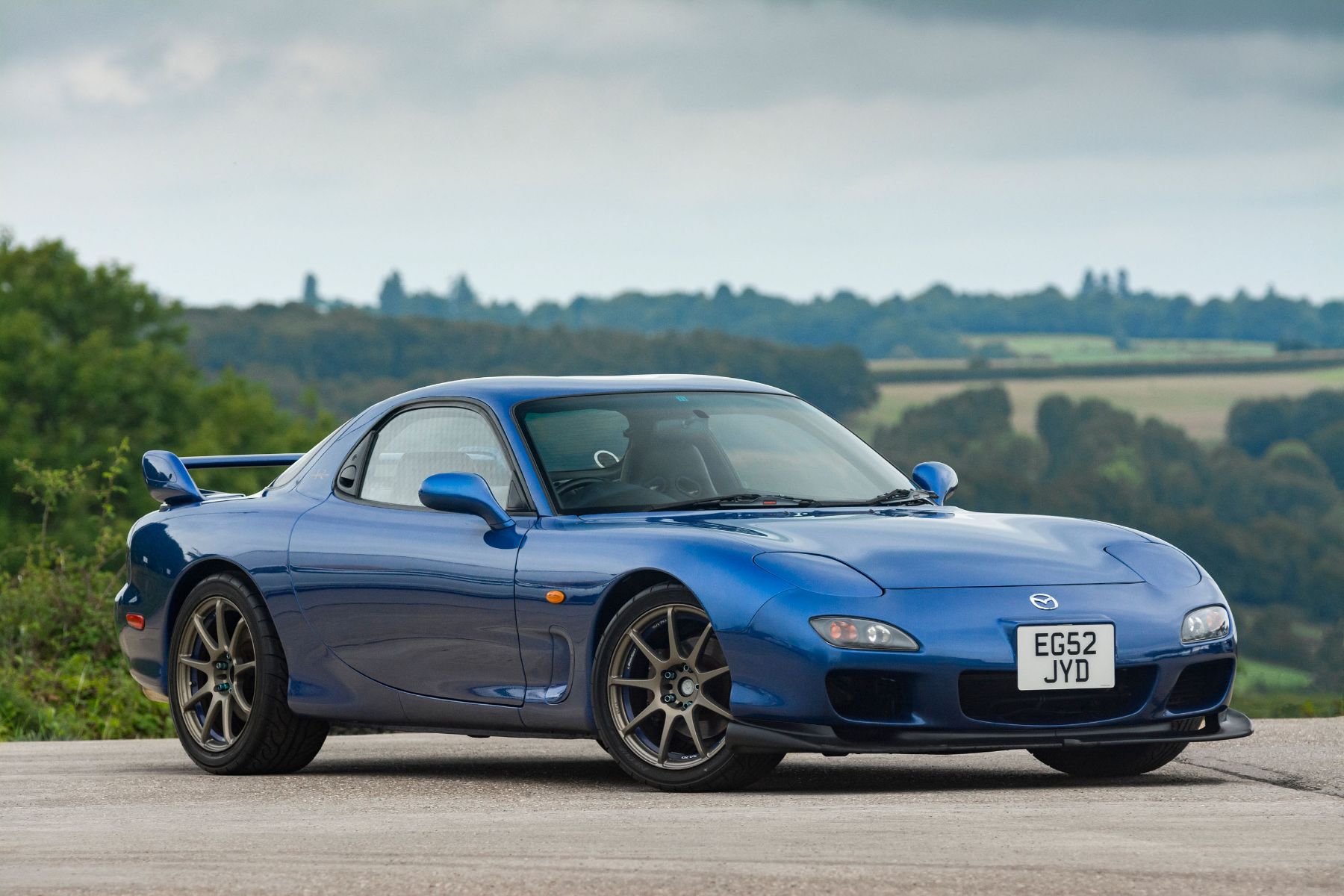
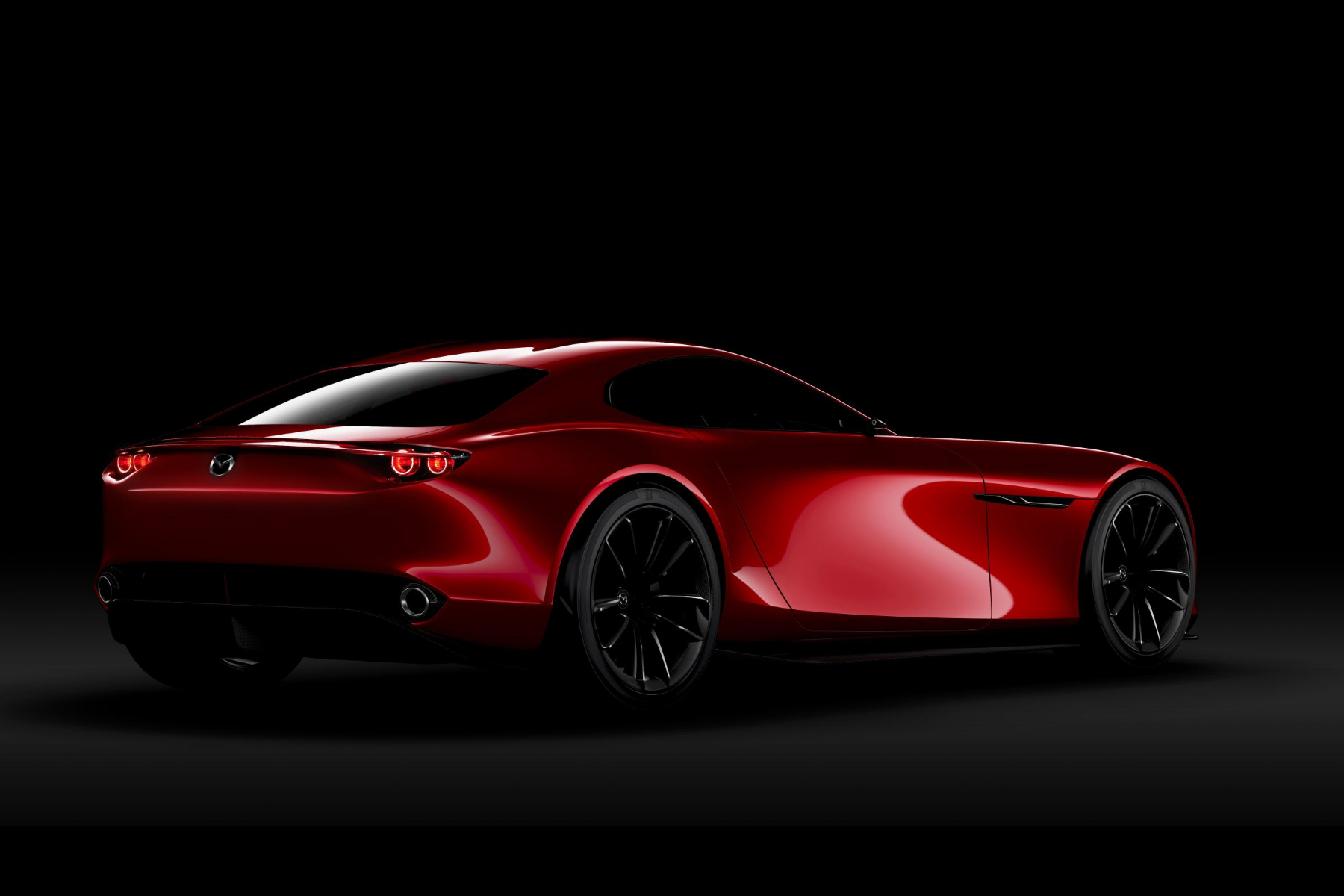
Rotary fans, rejoice! The hallowed engine format will return within two years, albeit with a twist. Rotaries will reappear as range-extenders for electric Mazdas. The first will be launched in 2020.
Return of the rotary
Sadly, it does sound like the days of rowing a lightweight, rotary-powered sports car through the gears are behind us. The new Mazdas will feature a rotary engine that’s effectively a generator, boosting driving range and topping up the batteries.
Although we don’t yet know what kind of car the rotary will be installed in, let’s hope a sports car is among the models Mazda is considering.
It’s actually a genius idea on Mazda’s part. To use a petrol engine as a range-extender is, traditionally, quite inefficient. Conventional petrol units are often relatively large and heavy, whereas the Mazda rotary has always been lightweight and compact.
We’re in no doubt the engine fitted to the 2020 model will be optimised for ‘generator’ duties, too. And that includes the capability of using renewable LPG as an alternative fuel.
‘Sustainable Zoom-Zoom 2030’
We say ‘renewable LPG’, as Mazda continues research into synthesising combustible fuels: specifically, renewable and recyclable biofuels from the growth of micro-algae.
This is all a part of Mazda’s ‘Sustainable Zoom-Zoom 2030’ strategy. Not a slick name, we admit, but the figures and the goals are there. Mazda expects that some form of electrification will feature in 95 percent of cars it sells in 2030. Well-to-wheel CO2 emissions are targeted as being half those in 2010 by 2030, and one-tenth by 2050.
The road to achieving those targets starts in 2020. New EVs and the implementation of radical new internal combustion technologies, like Mazda’s spark-less Skyactiv-X engines and alternative fuels, should get the job done.
Mazda wants to push ahead with hybrids in a way we haven’t yet seen – reviving a legendary power unit and using an unpopular fuel. It’s also dedicated to the longevity of the internal combustion engine and, encouragingly, to ‘the exhilaration of driving’. The future could be exciting after all.
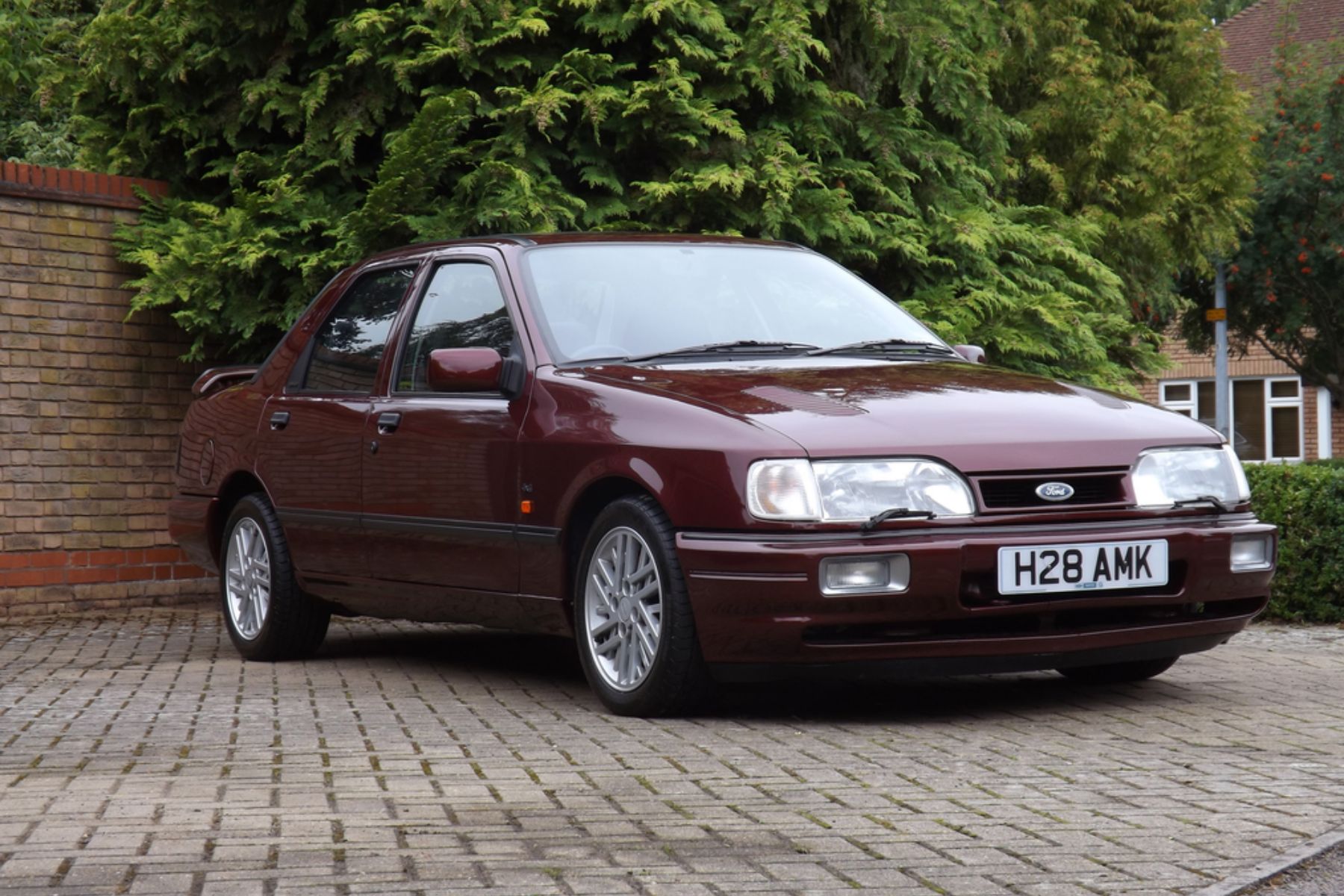
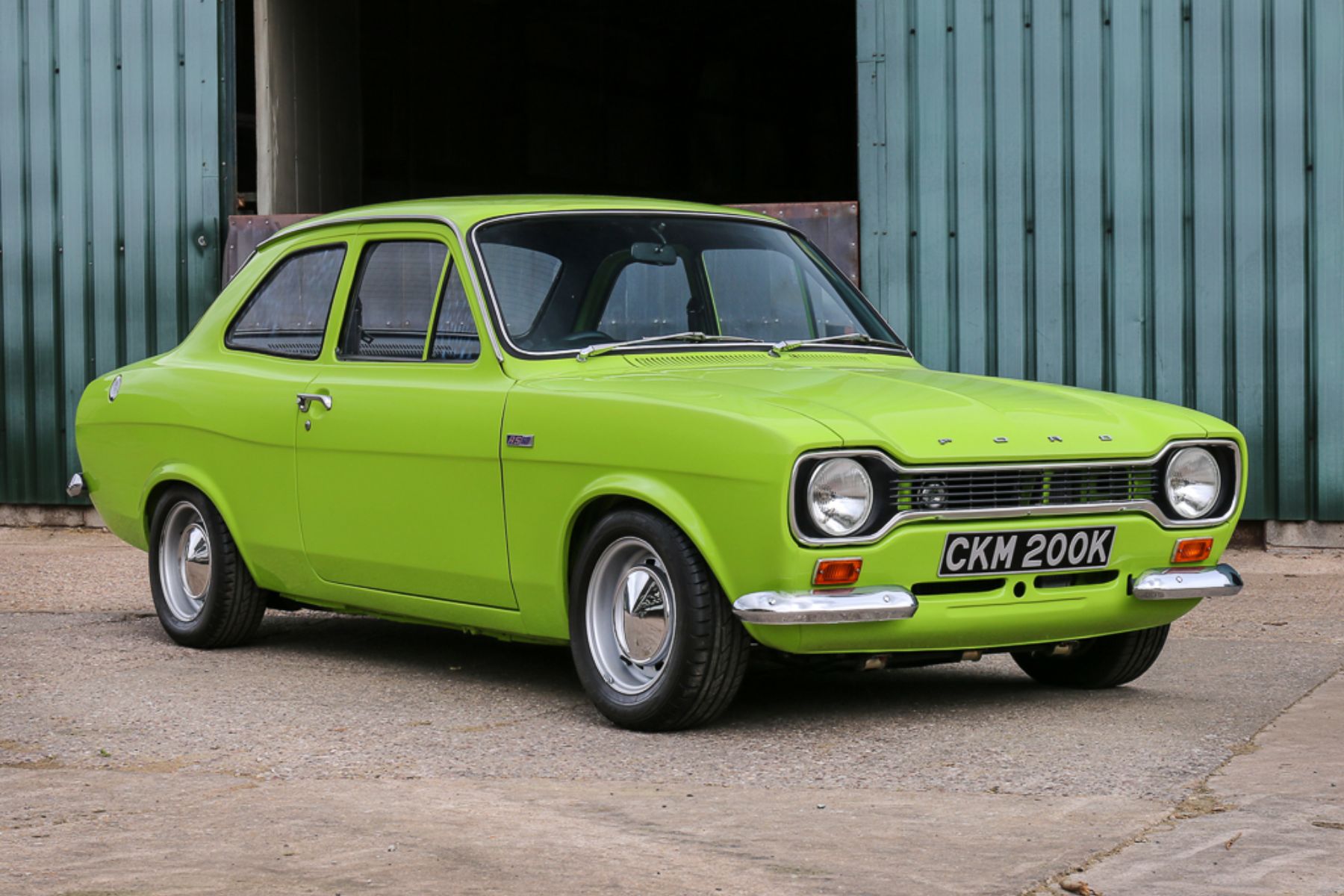
A pair of fast Fords have broken price records at Silverstone Auctions’ September sale. Together, a 1990 Sierra Sapphire Cosworth 4×4 and a restored 1972 Escort RS1600 sold for more than £120,000.
Despite an estimate of around £30,000, the Sierra Sapphire eventually made £52,750 including the buyer’s premium. The 13,310-mile example is one of the finest in the country, with just one lady owner from new.
It’s also believed to be one of the first six sold in the UK. All that, combined with a healthy history file, makes a £20,000-over-estimate hammer price believable enough.
Big prices for classic Escorts are never surprising these days. Nevertheless, a £70,875 hammer figure for a homologation-special Escort RS1600 is remarkable.
It is certainly a deserving example, having just been restored to the highest standard. Presented in Le Mans Green, the car had buyers battling for ownership.
“To achieve not one but two new world records is a fantastic result for our team,” commented Joe Watts, classic car specialist at Silverstone Auctions. “Both our Porsche Sale and September Sale saw some outstanding classics and excellent prices across the two days.”
The best of the rest
Other cars brought home the coin, too. A 1984 Renault 5 Turbo 2 made £86,625 – £16,000 over its lower estimate. And a 1971 Maserati Indy brought home £60,750 – £10,000 over estimate.
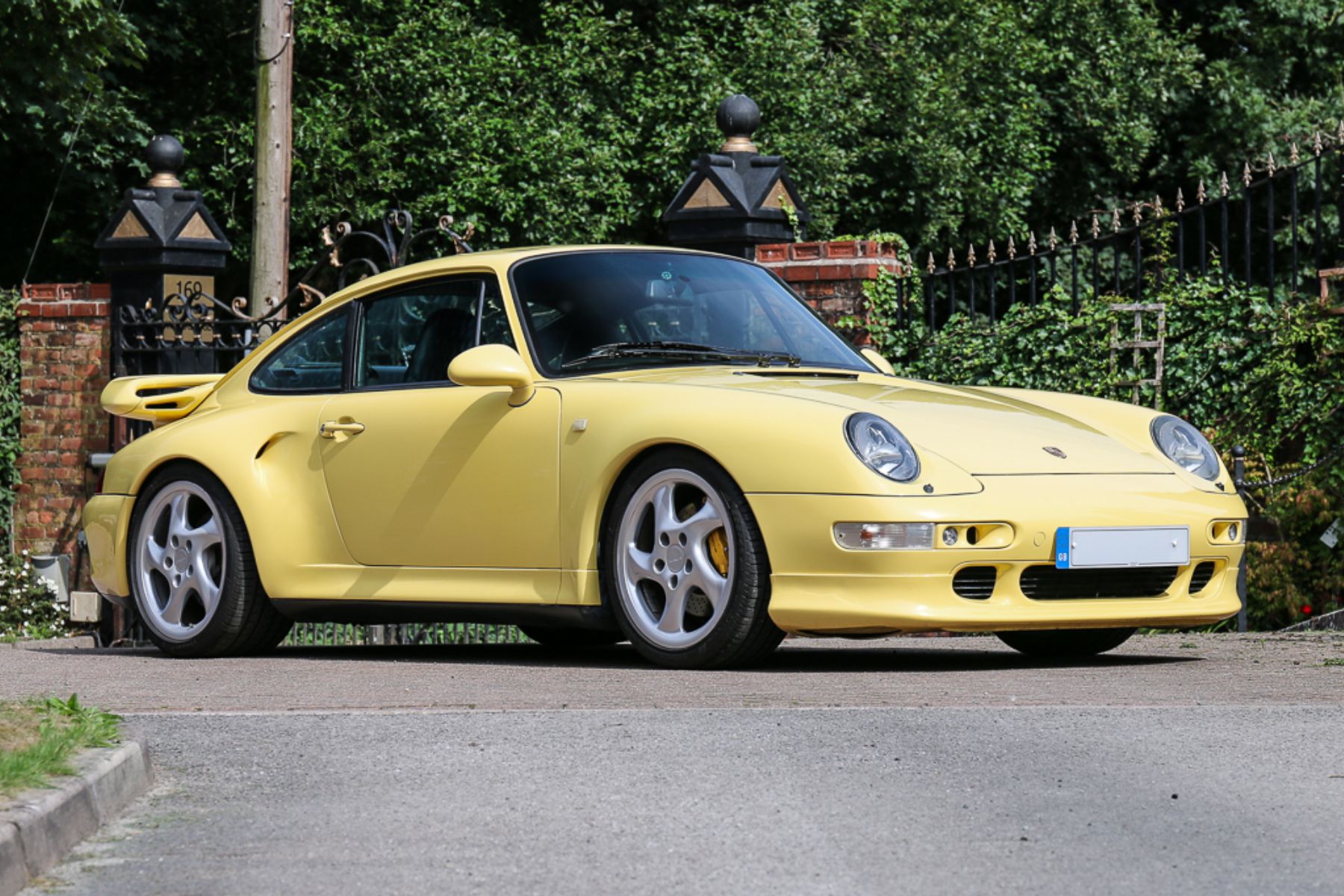
The Porsche Sale auction a day before did great numbers, too, with a 1998 993 Turbo S beating its estimate by £16,000 and a 1958 356A selling for £20,000 more than expected.
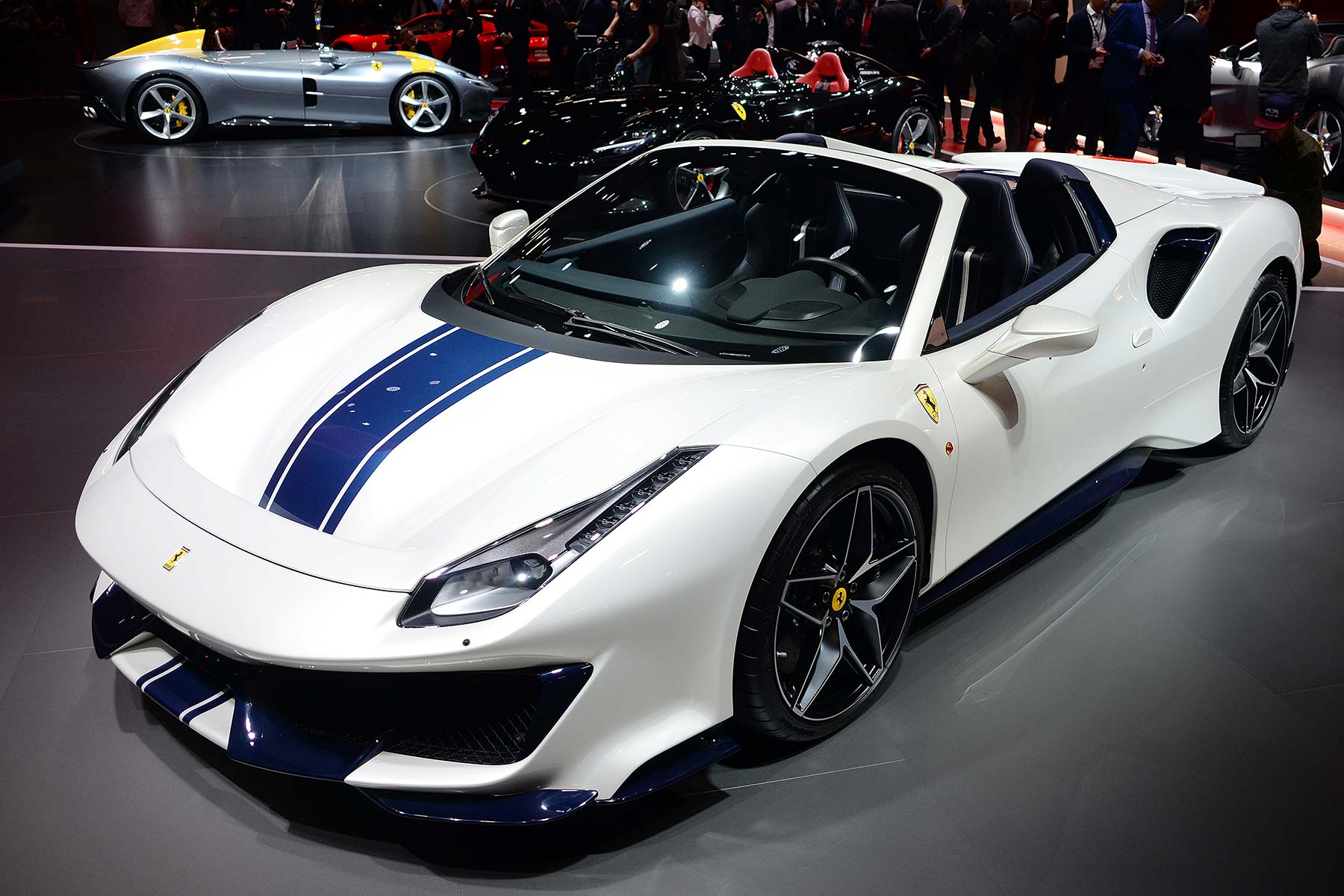
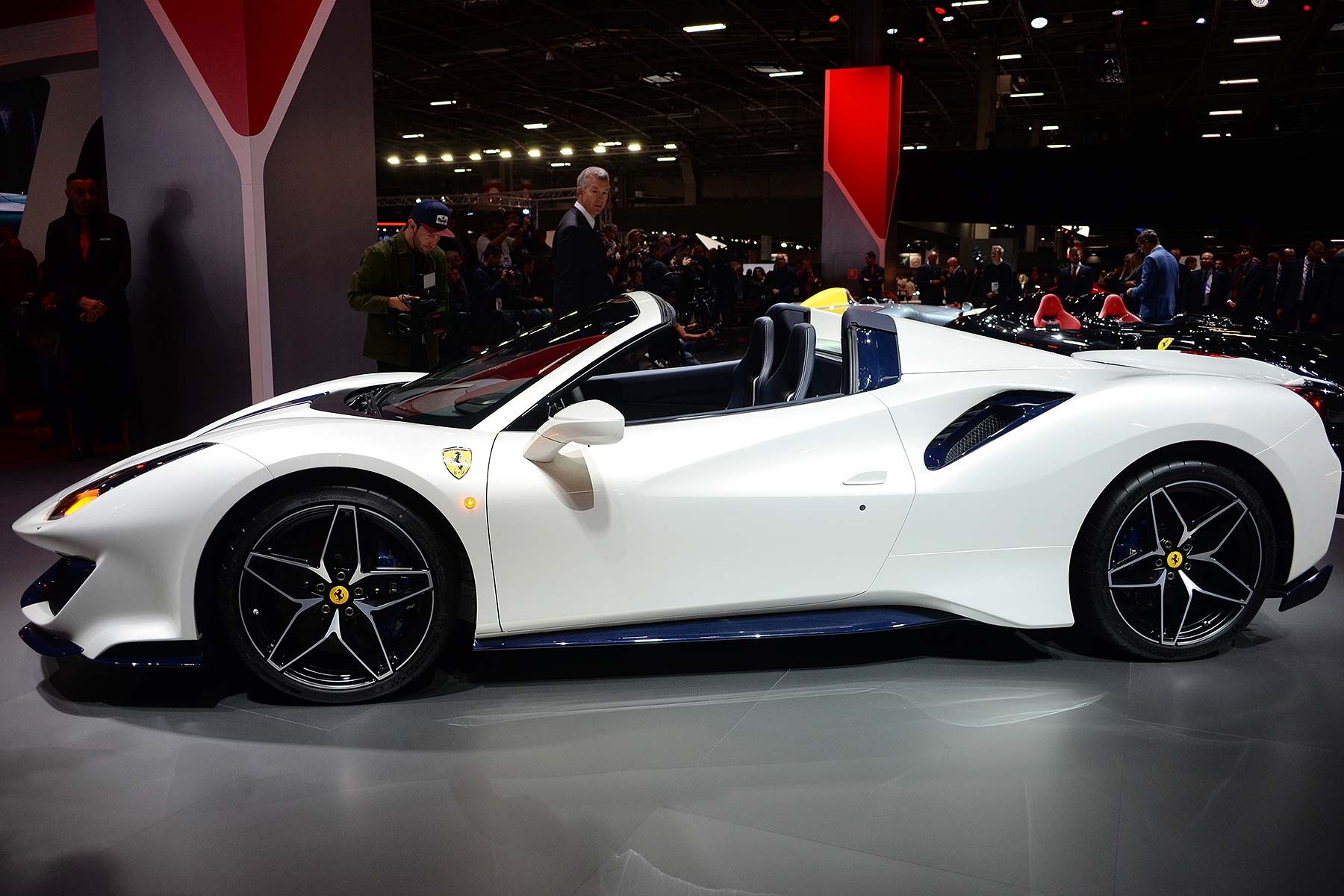
Just over a month after the Ferrari 488 Pista Spider made its debut at the 2018 Pebble Beach Concours d’Elegance, the company’s 50th factory-built drop-top has been unveiled in Paris.
Not much has changed since Pebble Beach: the days have got a little shorter, the temperature has dropped, and we’re a few weeks closer to leaving the EU. But it’s a good opportunity for Ferrari to generate a little extra publicity for its latest Spider.
Don’t miss the live streaming from the @MondialAuto in Paris, watch it on our Facebook page! #MondialParis#Ferrari
It shares the same 720hp twin-turbocharged V8 engine a the 488 Pista coupe, making it the most powerful production Spider in Ferrari’s history. The performance figures are compelling: 0-62mph in 2.85 seconds, 0-124mph in 8.0 seconds, and a top speed of 211mph.
Ferrari hasn’t supplied any fuel consumption or CO2 figures, but we suspect you don’t really care. Let’s just say that it’ll consume some petrol.
Not that the conversion from tin-top to drop-top has added a huge amount of weight. At 1,380kg, it is 100kg heavier than the Pista coupe, but it’s also 50kg lighter than the 488 GTB. Ferrari achieved this by using magic and some of its F1 knowhow, with 18kg shaved off the weight of the engine alone.
‘The greatest technological transfer from the track’
According to Ferrari, the 488 Pista Spider “benefits from the greatest technological transfer from the track of any road-legal open-top car”, thanks in part to the Ferrari Dynamic Enhancer (FDE).
In short, the system manages the brake pressure at the calipers more accurately, so it’s easier to control the car when drifting sideways. Perfect for capturing those ‘driving God’ moments on the GoPro and uploading them to YouTube.
The 488 Pista Spider will lap the Fiorano test track in 1min 21.5secs, in case you were wondering.
We still don’t know how much it’ll cost – another opportunity for a press release, no doubt – but you should expect to pay a premium for removing the top. Bank on spending the best part of £275,000 if you fancy a place in the queue.
Read more:
New limited-edition Porsche 911 Speedster debuts in Paris
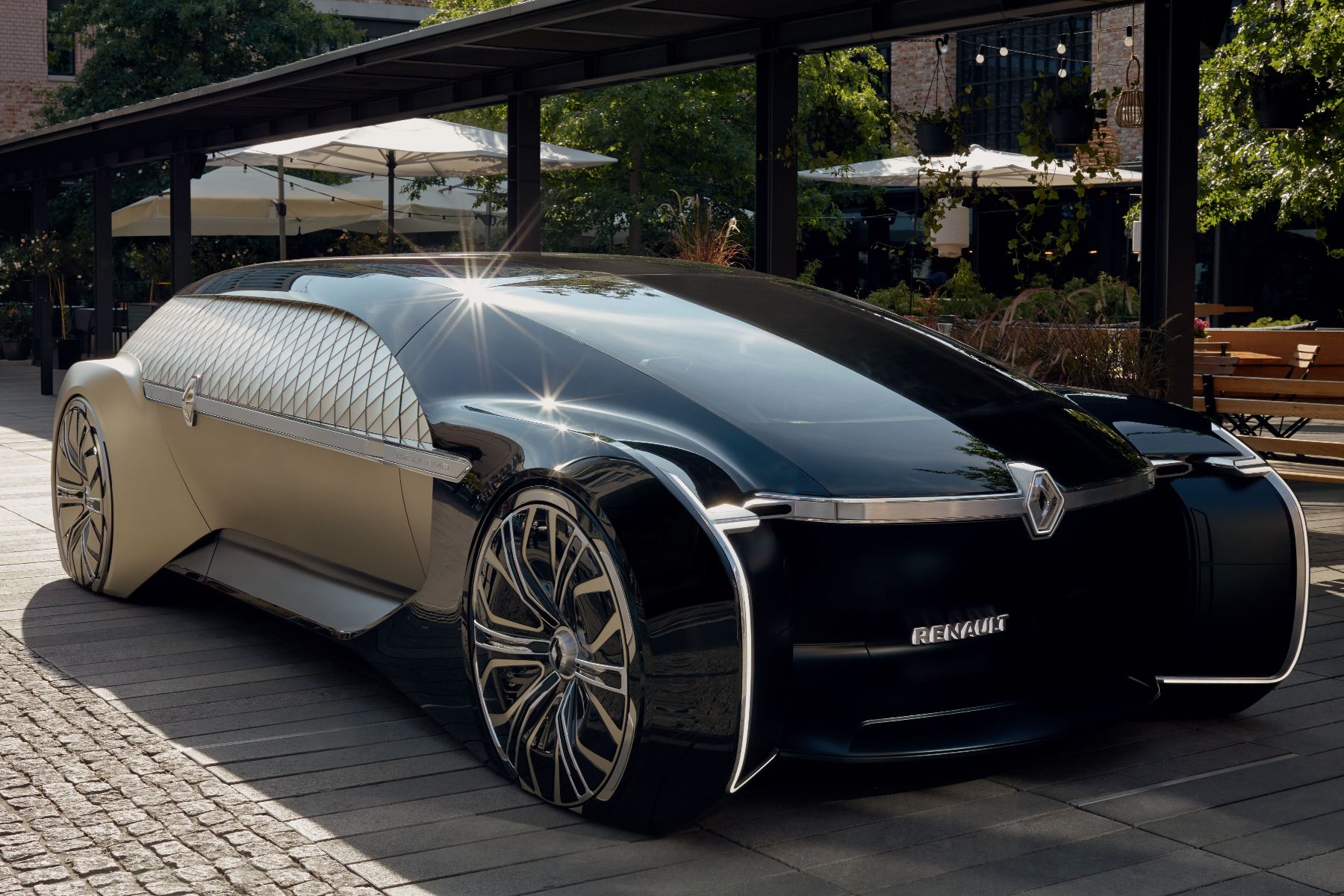
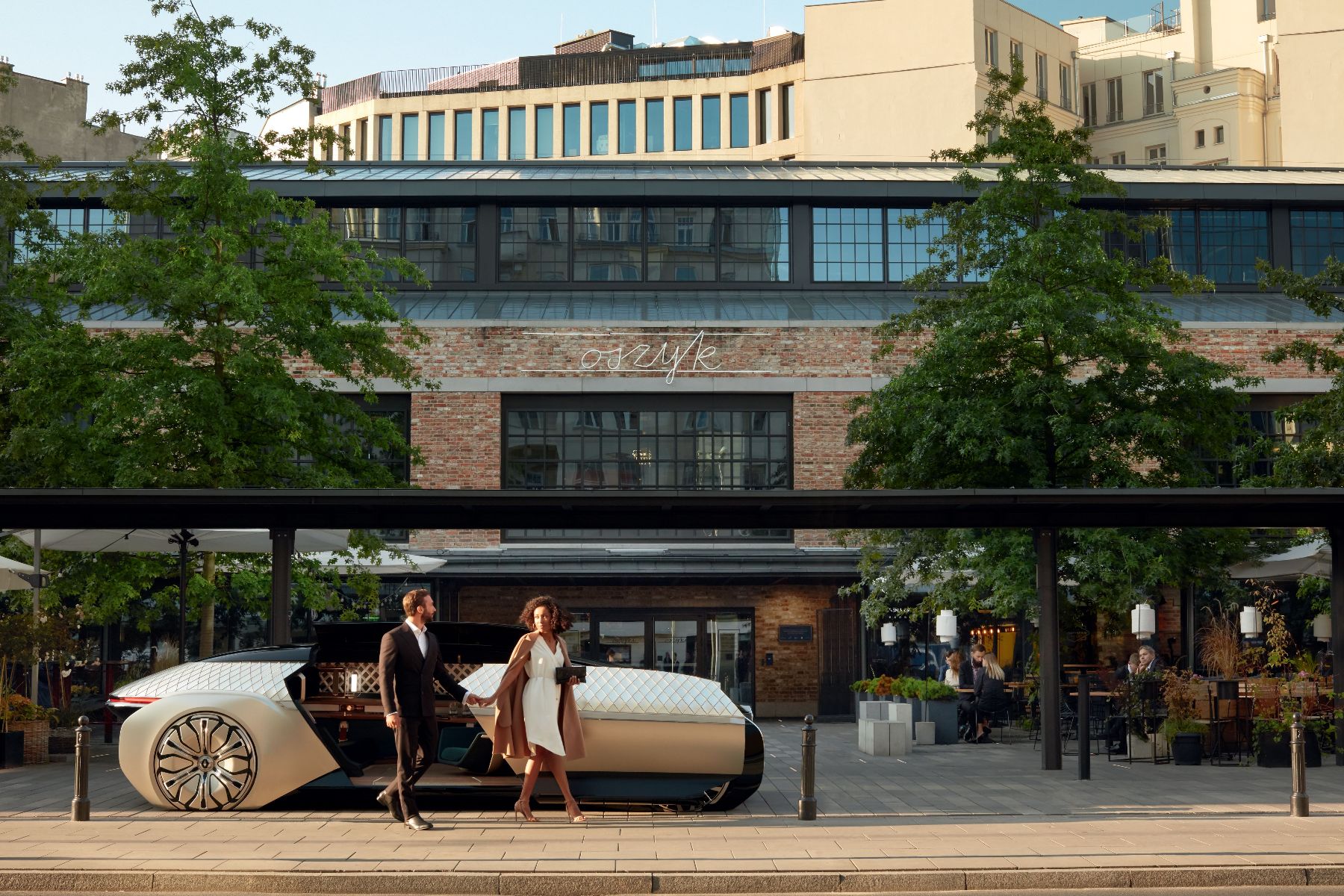
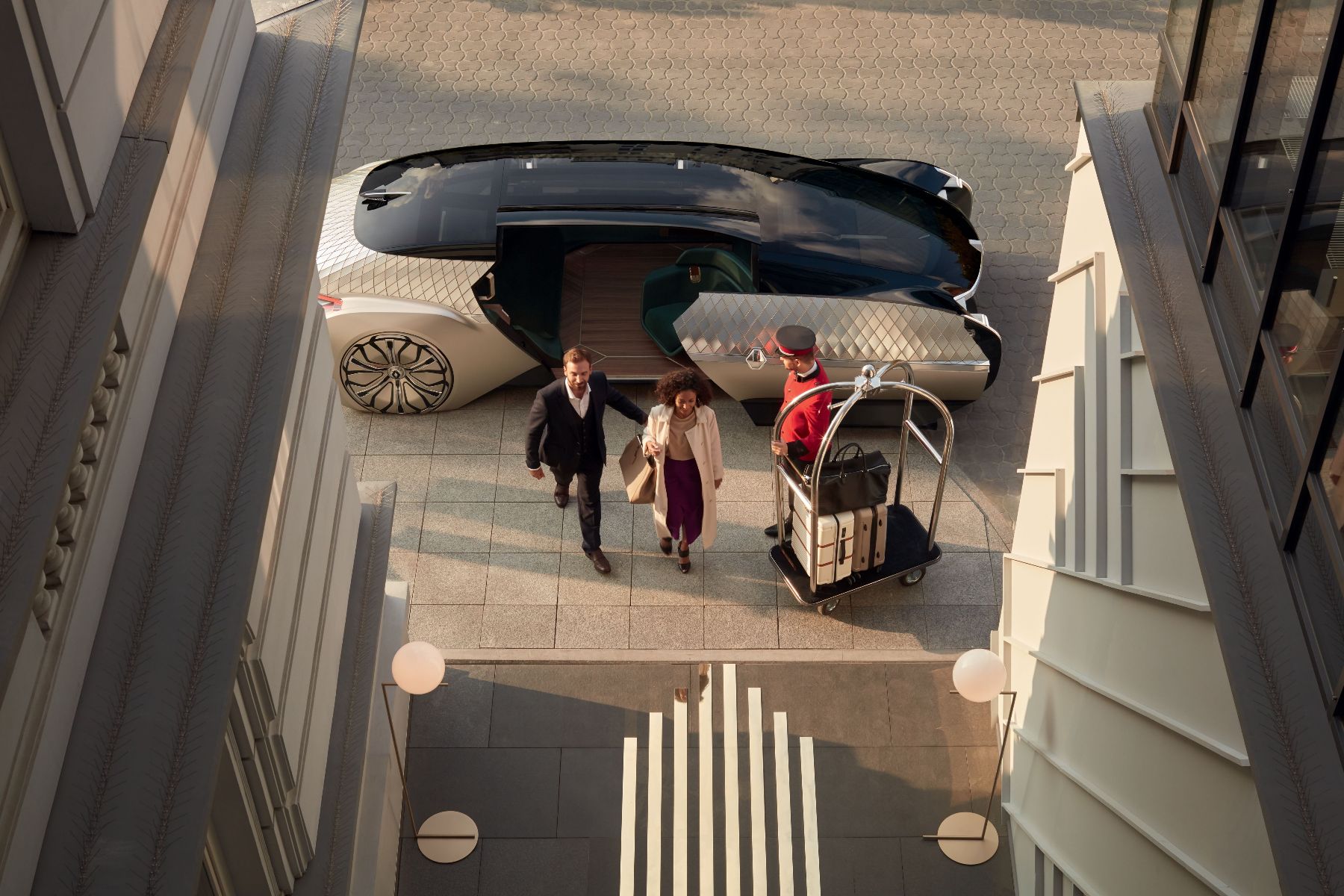
Renault has unveiled its latest vision for future mobility: the EZ-Ultimo concept. The star of Renault’s stand at the 2018 Paris Motor Show, it’s described by the company as a “premium and shared robo-vehicle”. In reality, that makes it something like an autonomous first-class train carriage for the road.
What is the Renault EZ-Ultimo?
Renault says it wants to “re-invent life on board”, turning the car into a place for work, rest, play or relaxation. Anything we might do at home or the office should be possible on the move. We’re already getting others to do the driving for us, reckons the company, with the rise of lift-hailing apps and services.
“As consumer trends change and people are enjoying ride-hailing services more and more, a new paradigm for mobility will emerge,” said Laurens van den Acker, SVP of corporate design at Renault.
The EZ Ultimo is the next logical step. It sounds very similar to Volvo’s vision of an autonomous pod, the 360c concept, which was pitched as a threat to the short-haul airline industry.
Funky French styling
Similar in ethos to the 360c, the EZ-Ultimo is also similar in silhouette. It’s very much a carriage rather than a traditional car, but futuristic wheels, angular flourishes and artistic lighting liven up the design. While the Volvo’s clean-cut Scandinavian lines are appealing, the Renault enjoys flashes of French flair.
“Inspired by contemporary architecture, and completely integrated in future smart cities, EZ-Ultimo will provide an exclusive experience for all. With autonomous, electric and connected cars, we are entering a new exciting era in automotive design,” says Renault.
A luxurious office on wheels
When the doors slide to one side, you get your first view of the cabin. It shares more with the living space of a modern apartment than a car. It’s high-class, too, utilising wood, leather and even marble for a “relaxing and enjoyable drive”.
By comparison with the Volvo, it does seem less versatile. There’s no bed for cross-continental overnight hauls, for example. Instead, you have office-style seating and workspaces. That, together with its new Augmented Editorial Experience (AEX), is how Renault aims to “re-invent travel time”.
AEX is what Renault calls a “realist immersive experience which combines personal premium content, multi-media experiences and mobility”. We take that to mean big screens for working and watching on the go.
Overall, the EZ-Ultimo is a curious take on a future we’re still uneasy about. Nevertheless, such new types of car are giving designers freedoms many before couldn’t have dreamed about, and yielding interesting results.
The new 2019 BMW 3 Series marks a giant stride forwards for one of BMW’s most important model lines. It’s easy for brands to play it safe in this sector – witness the latest Audi A4. But then look at the meek market reaction to the A4, and Audi’s subsequent struggle for sales.
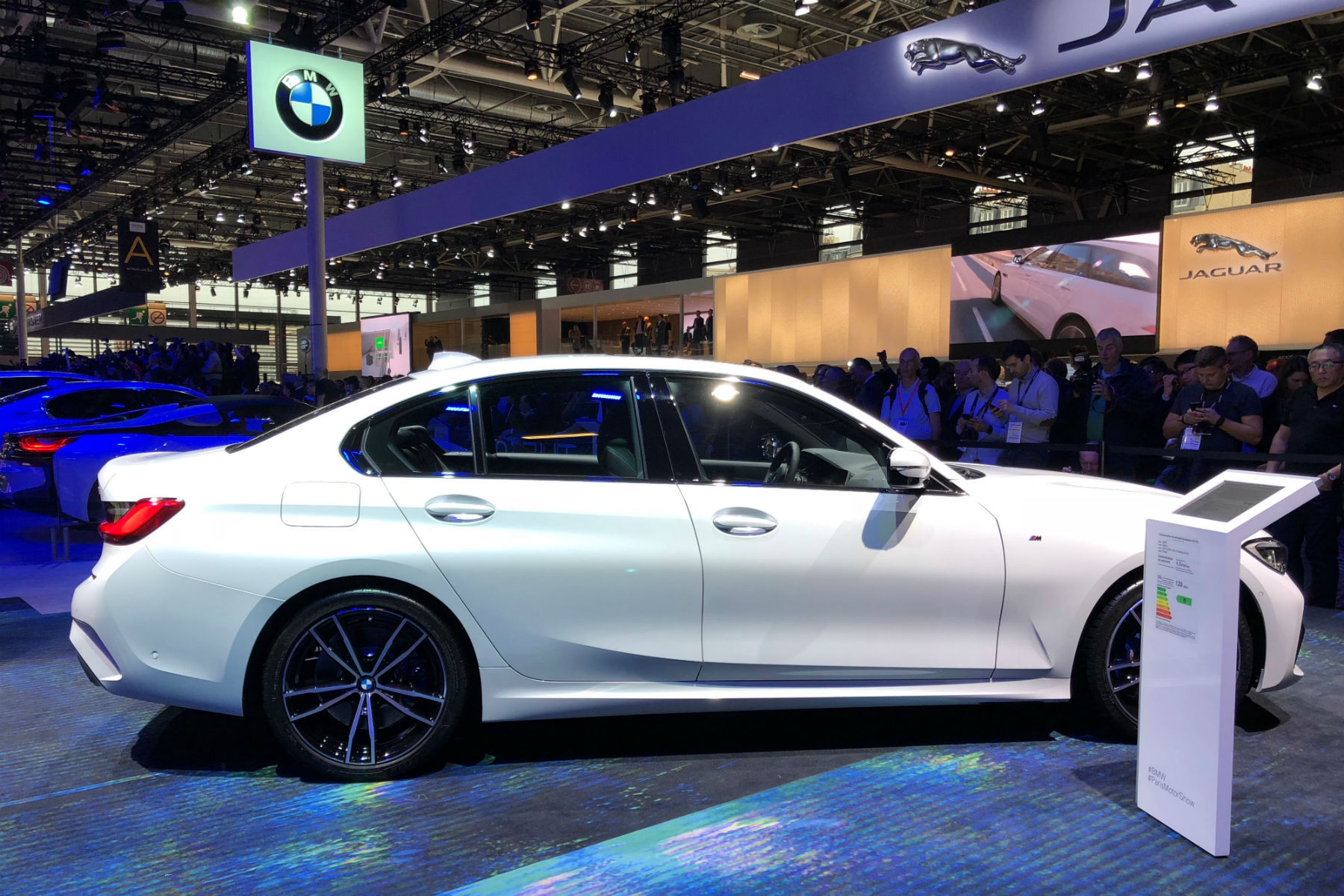
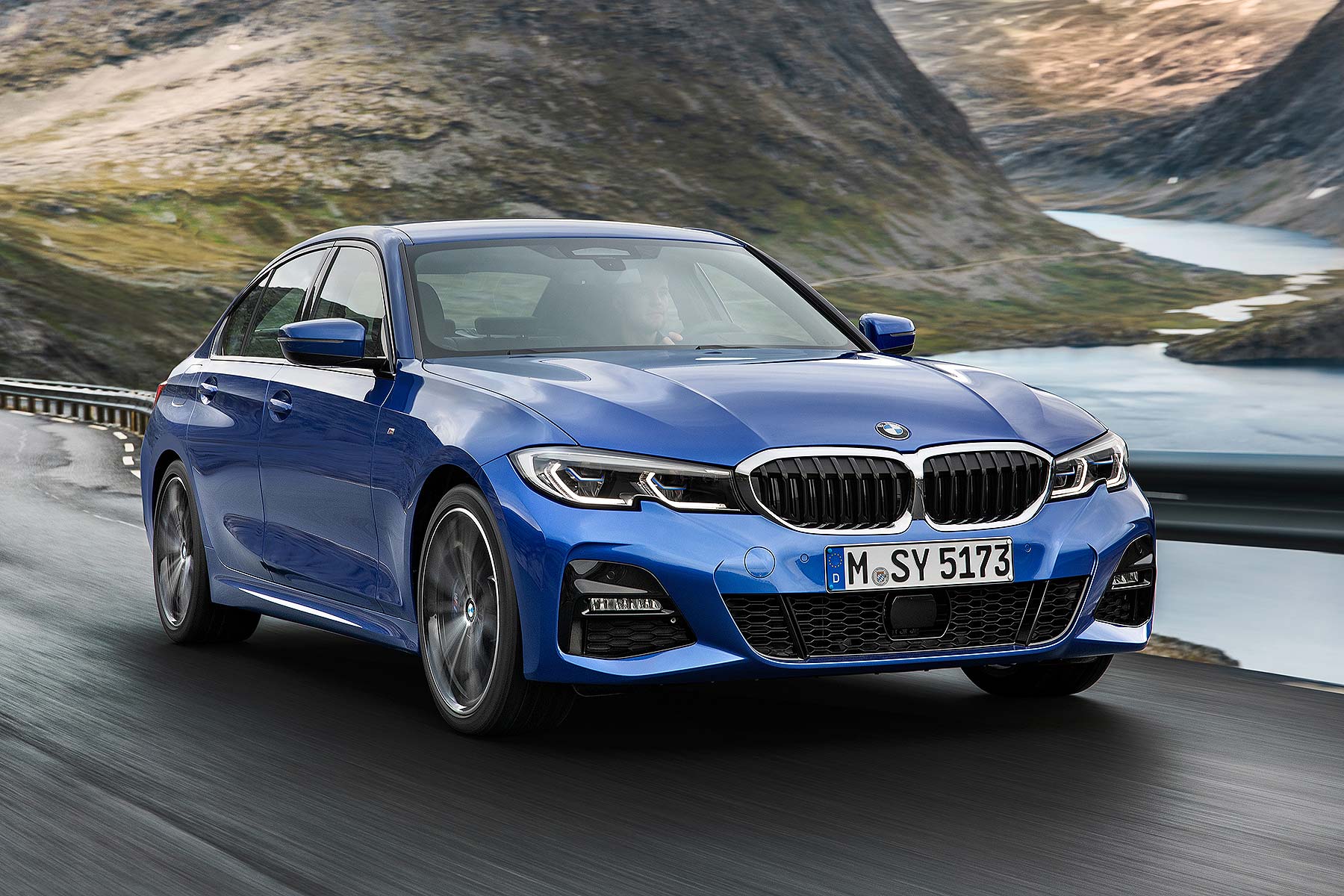
This, surely, has emboldened BMW with the new 3 Series. So here it is, the seventh-generation 3, the most stylistically different from its predecessor since the futuristic E36 version back in 1990. It’s the undeniable highlight of the 2018 Paris Motor Show.
This generation of 3 Series is known as G20 and will go on UK sale on 9 March 2019. It’s a measure of what an important car it is that BMW already has an on-sale date. And a price: it’s yours from £33,610.
We’ll see it first as a petrol 330i and diesel 320d. Both will be four-cylinder turbos, and BMW will quickly follow them up with a 330e iPerformance plug-in hybrid. Six-cylinder performance versions? They’ll come, but they’re not the big news at launch. The rest of the 3 Series is. And it’s quite the story to tell.
2019 BMW 3 Series: outside
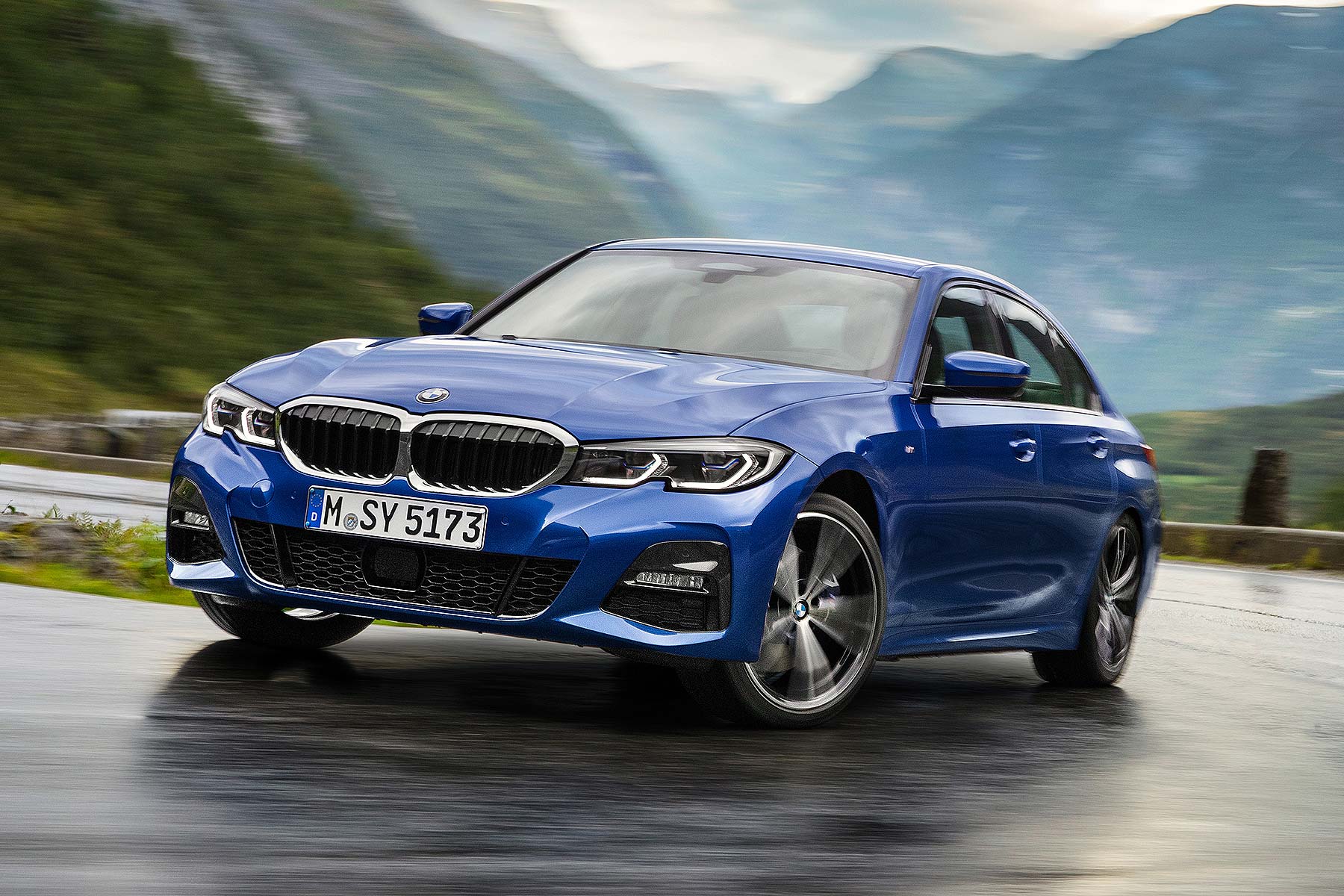
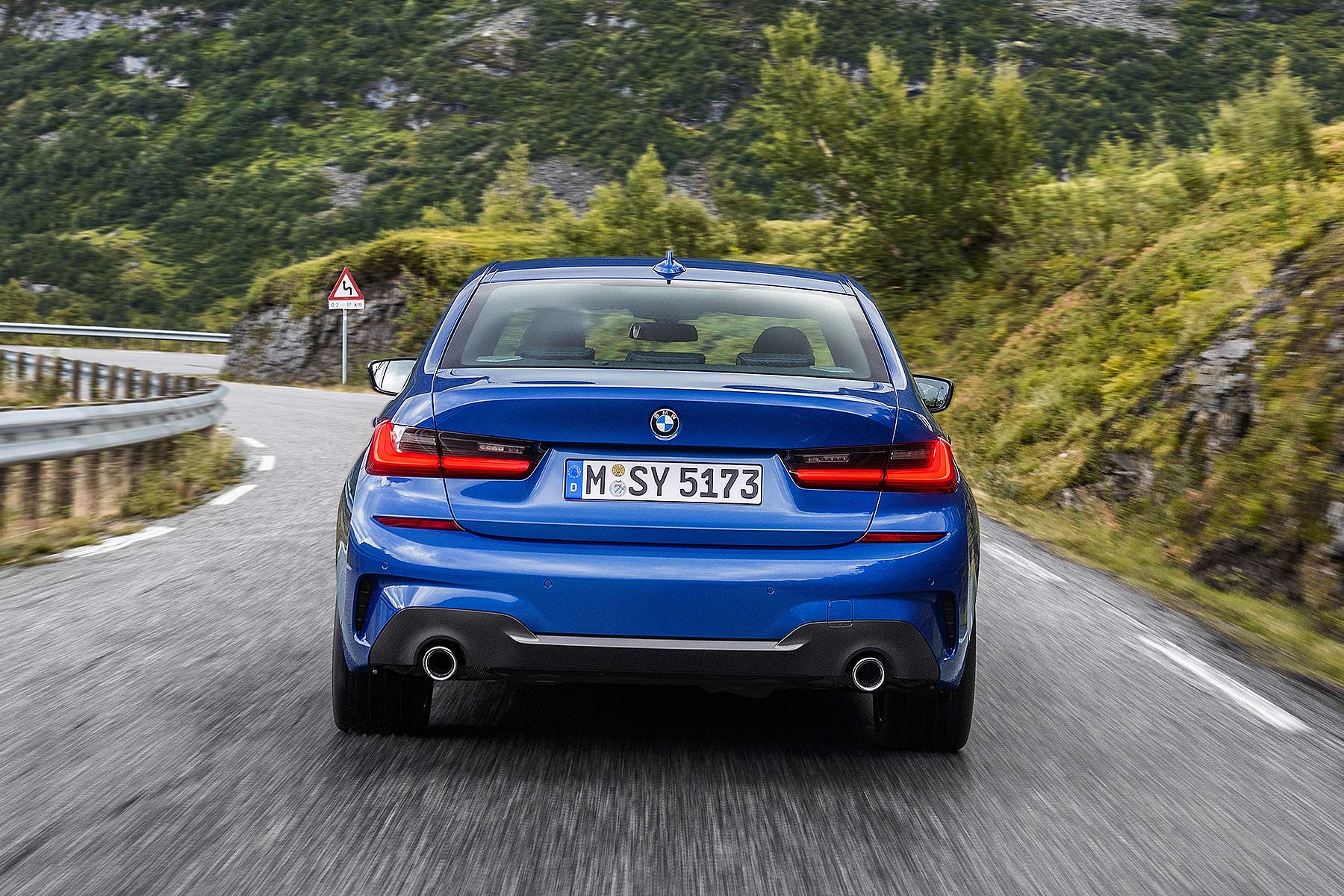
Creases and contour lines dominate the appearance. This is brave stuff, for a 3 Series. The front has an entirely new look, with a broad BMW kidney grille and intricately shaped headlights. Four contour lines on the bonnet feed into them, and the bonnet itself sits neatly flush with the lights and kidneys.
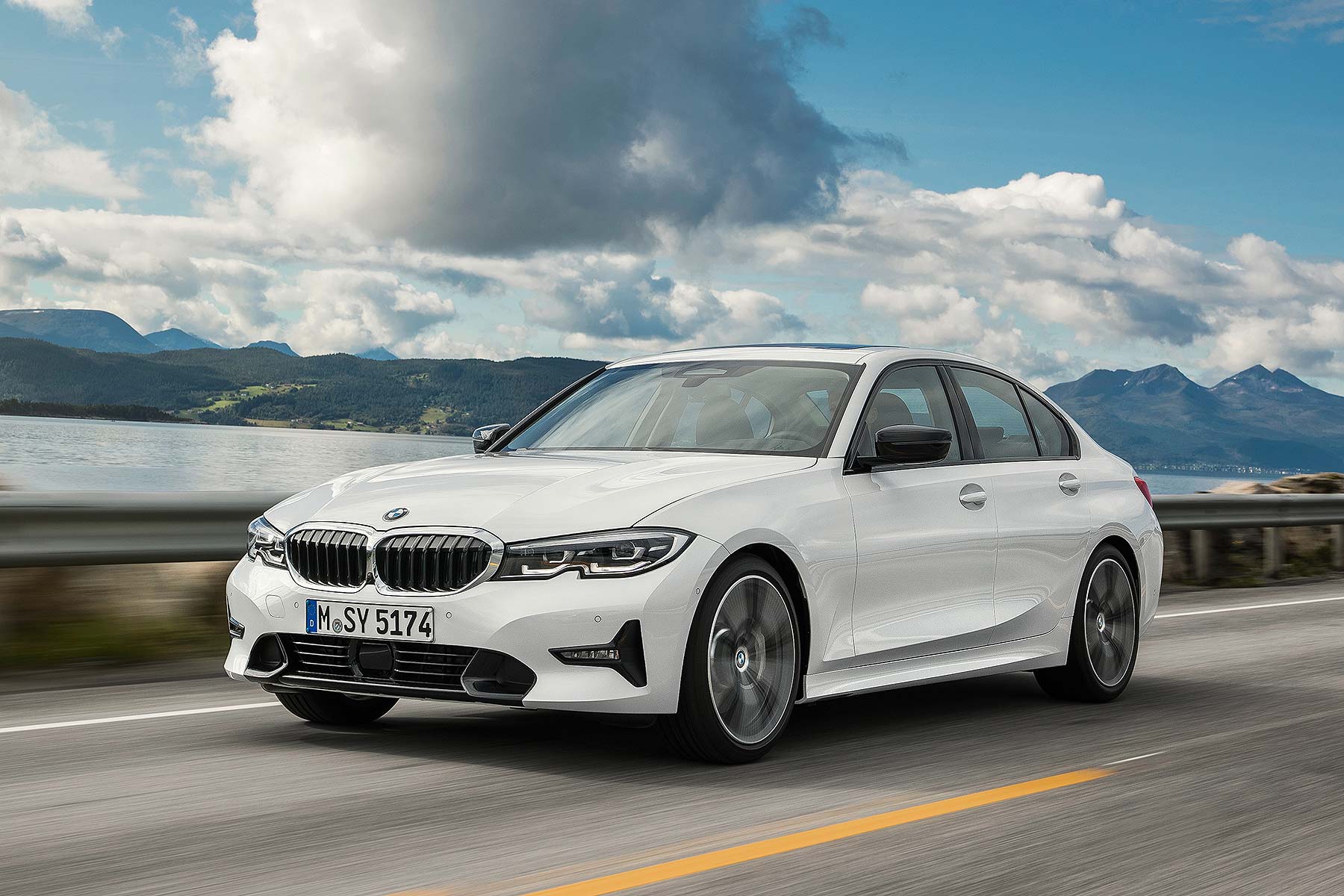
BMW is proud of the intakes for the aero-aiding Air Curtains on SE and Sport models, because they use a NACA design for the intakes, something more commonly seen on retro racing cars.
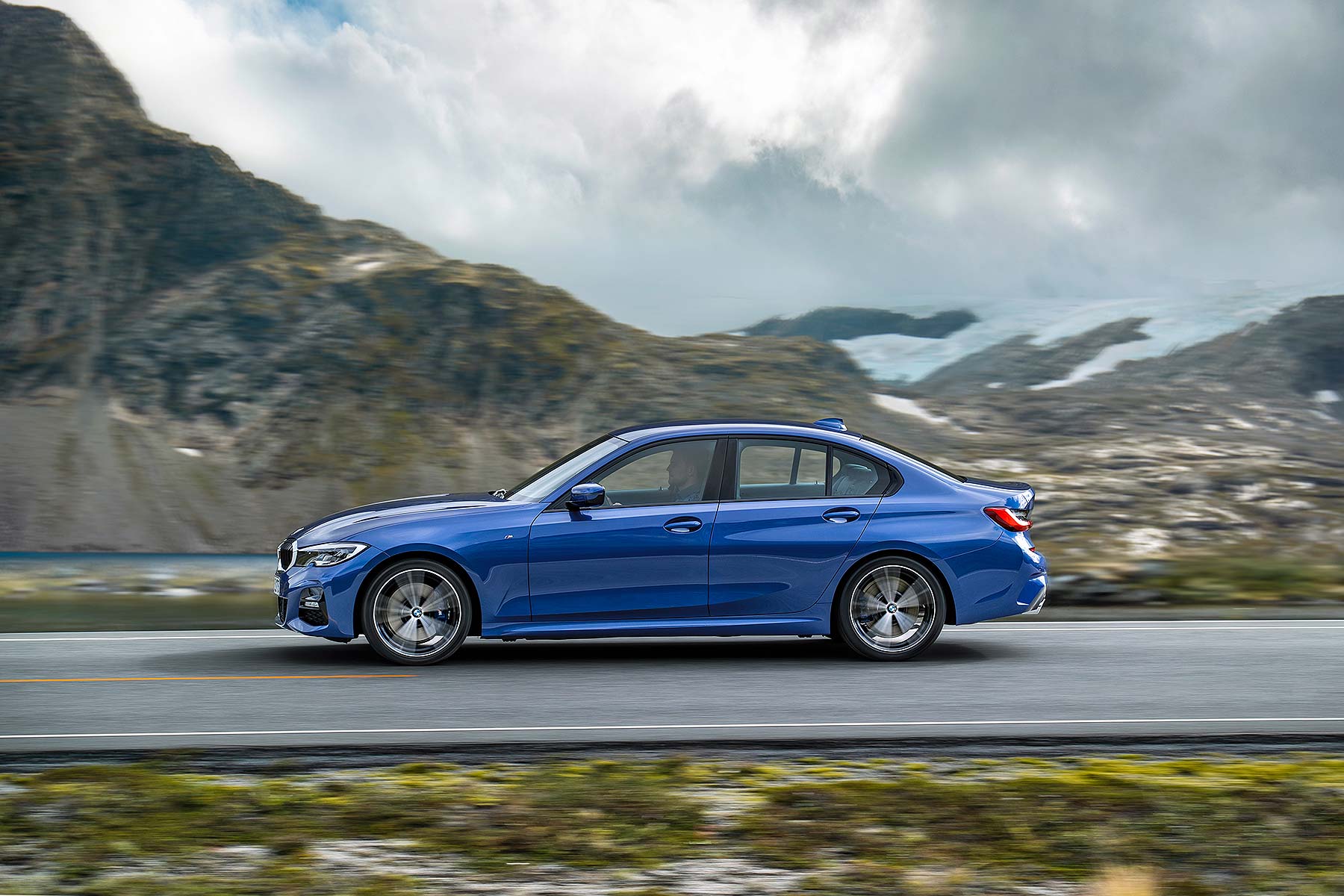
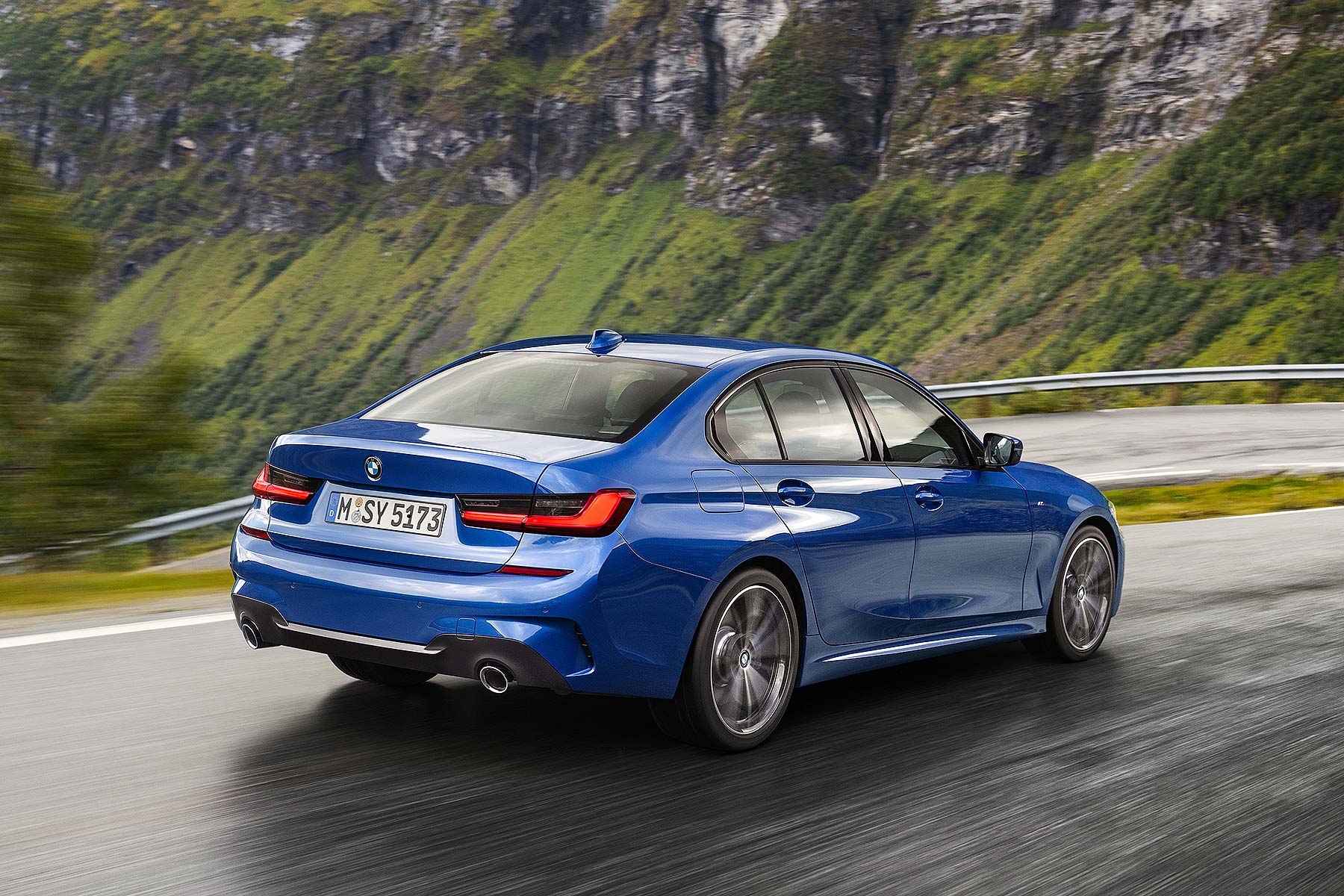
There’s a lot of design detail on the side profile, such as strong lines around the rear door handle and a bold lower contour that BMW says emphasises the rear wheelarches. The designers have also integrated the BMW ‘Hofmeister kink’ into the C-pillar, so the rear doors have a freestanding glass edge. And you thought simple frameless windows were cool…
Recent 3 Series rear ends have been forgettable, but the new model has a pronounced boot lid spoiler lip and dark-tinted L-shaped tail lamps. It’s slipperier through the air, too: the Cd drops from 0.26 to 0.23.
2019 BMW 3 Series: inside
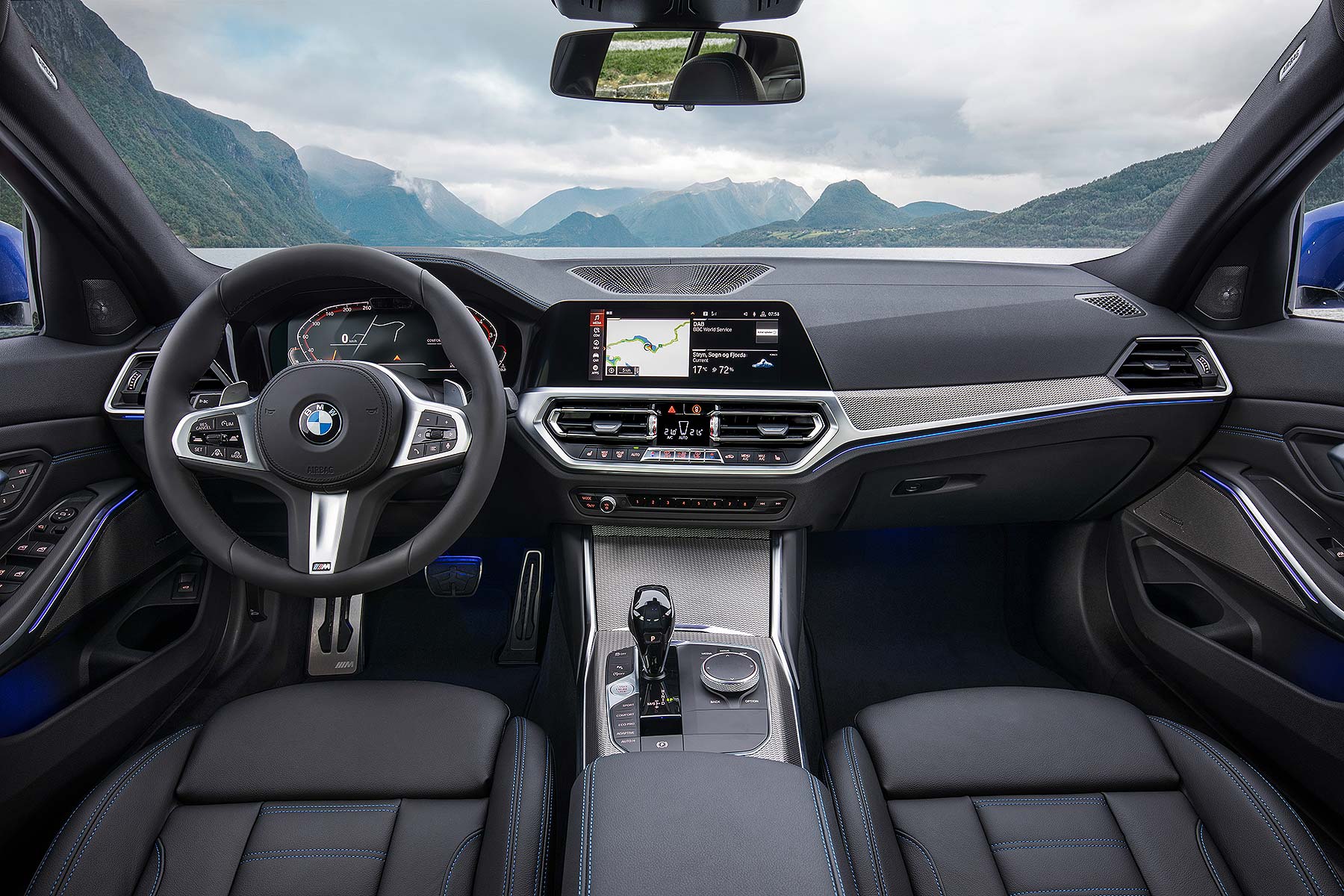
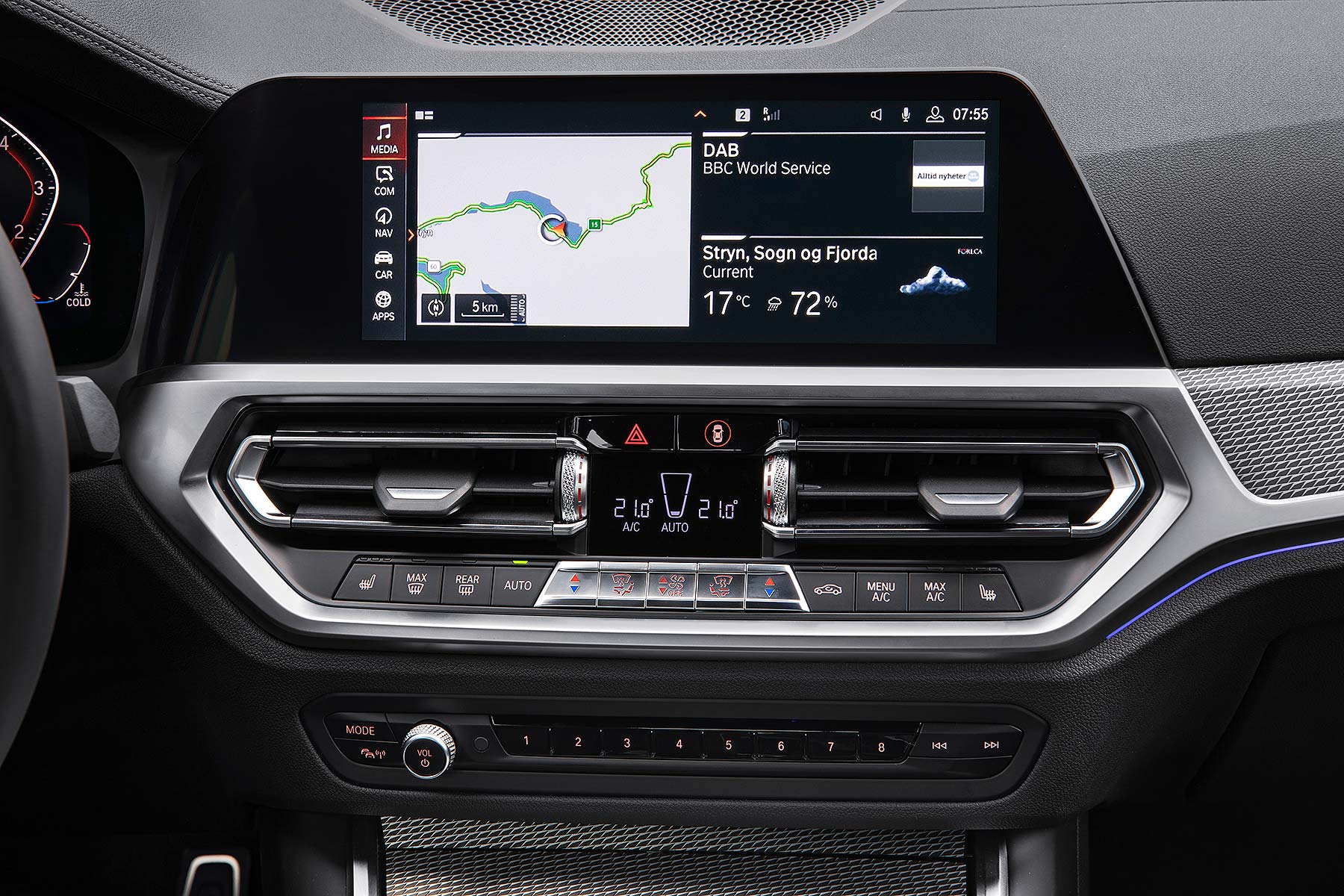
BMW has rewarded loyal 3 Series customers who’ve had to put up with the humdrum, forgettable interior of the current car with nothing short of a revolution. Everything cool that’s been admired in umpteen 8 Series concept cars is in evidence here, from the all-new BMW Cockpit infotainment display to the intricate heater controls first seen on the new BMW Z4.
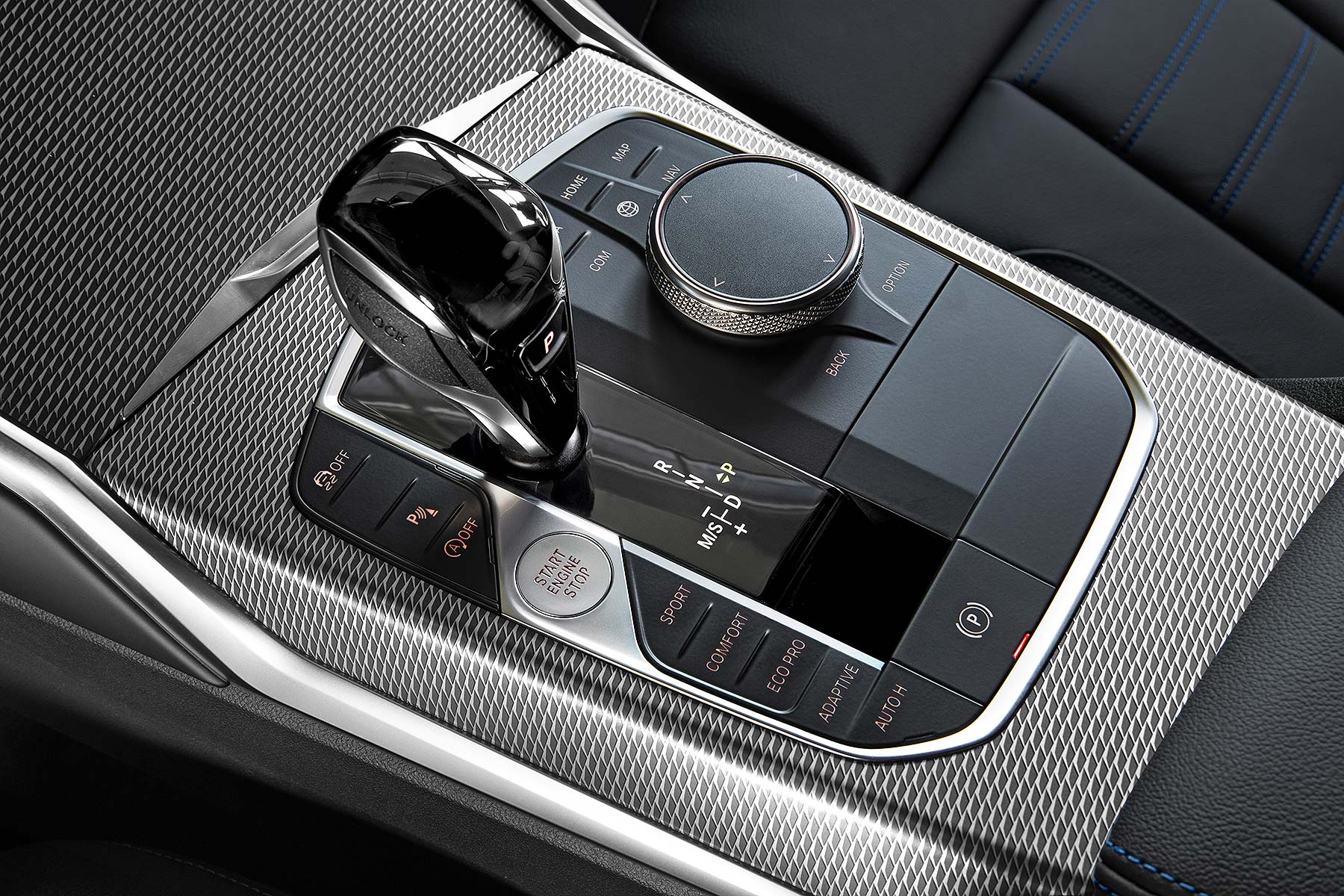
The design and layout is driver-focused and all-new trim materials are available, including open pore wood and mesh-effect aluminium. Electroplated trim strips add a quality feel, while BMW’s at last moved the starter button to a more convenient location next to the gearlever.
The BMW Intelligent Personal Assistant comes to the new 3 Series. We’ve explained what this does separately, and it means new 3 Series owners will be able to speak with their cars by saying ‘Hey BMW’, if they so wish.
It’s bigger all round, with more shoulder room in the front, more legroom in the rear and more space between the front and rear seats. It’s easier to get in and out, and all-round improvements to seat comfort will impress high-mileage users. A 480-litre boot is enhanced by 36 litres of oddment stowage.
Engines and suspension
The launch 2.0-litre engine range comprises 190hp 320d diesel or 258hp 330i petrol. The diesel does 0-62mph in 7.1 seconds, or 6.9 seconds as an auto (an xDrive 4WD option has identical acceleration). It averages 64.2mpg as a manual and 67.3mpg as an auto, and costs from £33,610.
The 330i only comes as an eight-speed auto, and does 0-62mph in a swift 5.8 seconds, yet still claims 48.7mpg and emits 132g/km CO2. It’s priced from £37,660.
Suspension is overhauled, to take advantage of a 25 percent stiffer bodyshell (it’s 50 percent stiffer in key areas). Clever lift-related dampers are standard and spring rates are 20 percent firmer for a sportier drive. M Sport models have more focused suspension as standard, with a 10mm lower ride height; Adaptive M suspension with variable modes is an option.
The 330i M Sport has unique lightweight brakes, with aluminium centres and grey cast iron discs – spot them by their blue calipers. They are optional on the diesels as part of an M Sport Plus package, as is an M Sport differential.
Trims and standard equipment
Because it’s ready to go on sale, BMW can tell us what each trim variant gets as standard. Here are some of the highlights in the kit lists over today’s cars.
The SE now has LED headlights with ‘eyebrow’ indicators, a reversing camera, 11-colour interior ambient lighting, three-zone climate control, a 40:20:40 split rear seat, acoustic glazing (including the side glass), 8.8-inch BMW Live Cockpit Plus and 17-inch alloys.
The Sport has heated leather sports seats, 18-inch alloys, high-gloss Shadow Line window surrounds, a high-gloss black kidney grille and high-gloss black interior trim strips.
The M Sport has a bespoke front bumper, side skirts and rear apron, Dark Shadow rear diffuser, another type of sports seats inside, anthracite roofliner and Aluminium Tetragon trim strips. It also has the all-digital BMW Live Cockpit Professional with a bigger 12.3-inch instrument cluster and bigger 10.3-inch central screen.
All cars have a standard 100-watt stereo with an optional 16-speaker 464-watt Harman Kardon surround-sound system available as an option.
There are 10 metallic colours, with one of them, Portimao Blue, reserved for M Sport models. Two non-metallic shades are offered.
2019 BMW 3 Series: did you know?
BMW has simplified the trim and options. There are now just six options packages and 10 individual options, to make the ordering process easier.
The optional electric glass sunroof is 100mm longer.
The optional head-up display’s projection area is 70 percent larger
The BMW Digital key has a motion sensor and, when it is put down on a table, switches into standby mode and stops transmitting, so the signal can’t be picked up by thieves with transmitter devices.
You can lock and unlock the new 3 Series with a smartphone, if you have a Samsung Galaxy with Android 8.1 and above. That’s because the BMW Digital Key has Near Field Communication tech: once you put the smartphone in its holder, the car will start. Owners can even share their key with up to five others.
Apple CarPlay is now standard on the 3 Series – but only for a year. After then, it will require a subscription, either for a year, three years, or lifetime.
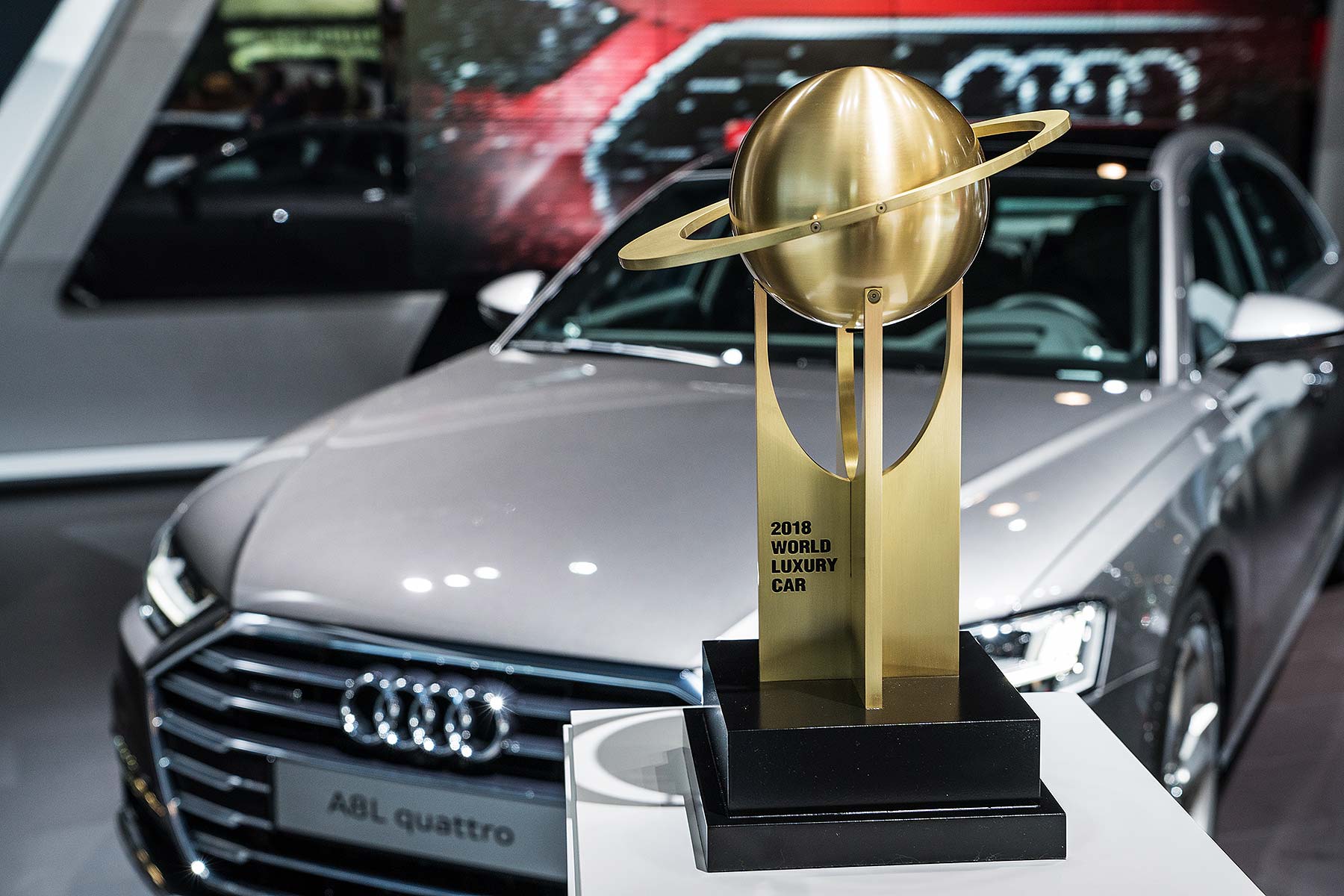
The World Car Awards is the biggest automotive awards programme on the planet. Each year, it aims to discover the very finest cars on sale around the world.
An international team of jurors will now assess each and every car, before drawing up a shortlist next year. The winners will be announced at the 2019 New York International Auto Show. It’s called the road to the World Car Awards, and it starts in Paris…
World Car of the Year
The overall World Car of the Year award is the one everyone wants to win. To be eligible, cars must be sold in at least two continents, and several countries, and judges must be able to spend quality time with them to carry out assessments.
This ensures the results are robust: last year’s winner, the Volvo XC60, was another popular victor that followed on from another SUV, the Jaguar F-Pace. So who’s in the running for the prize this year? We start from the top – and it’s ‘A’ for…
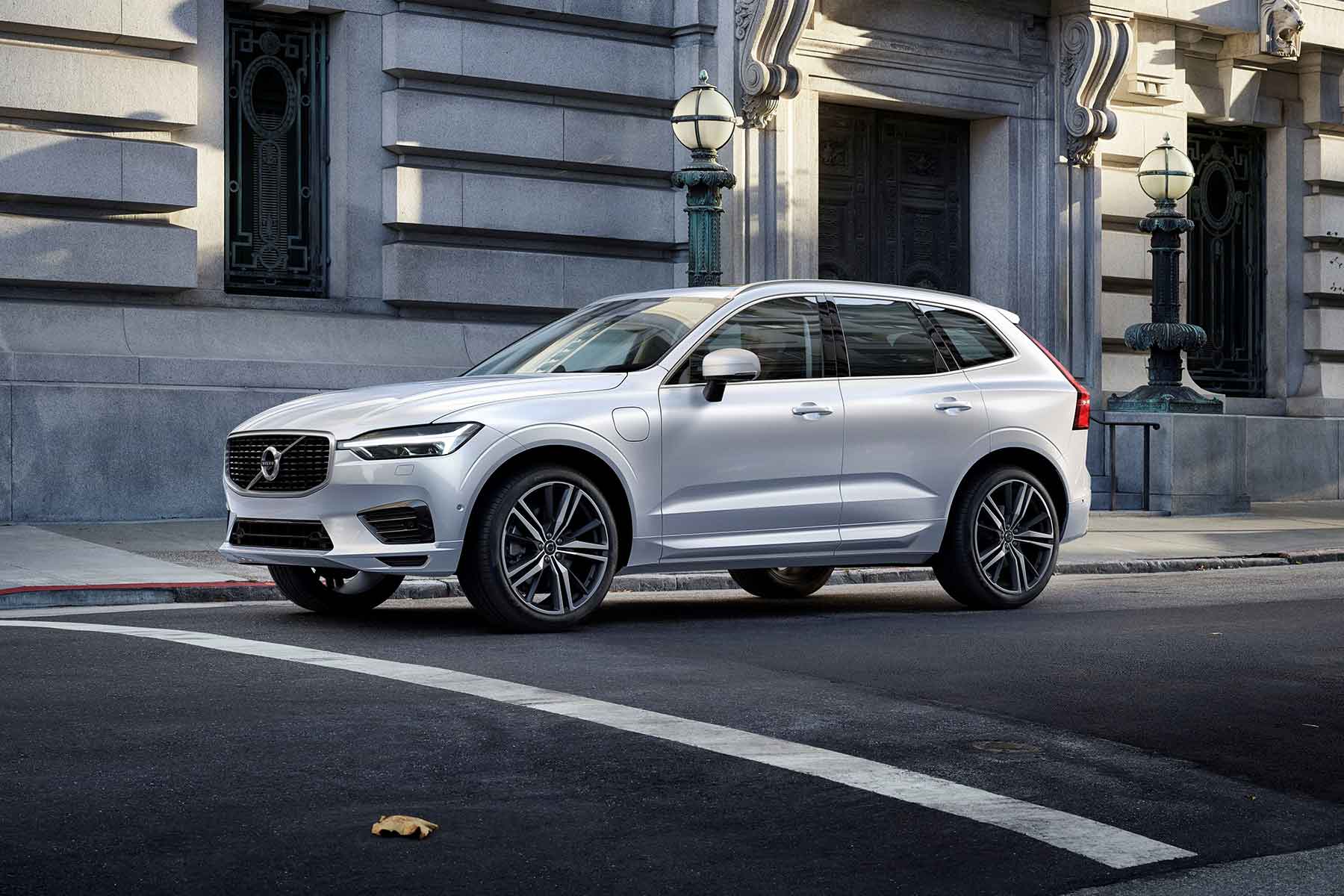
2018 winner: Volvo XC60
Acura RDX
The Acura RDX is a very well-received compact crossover. Initial tests have shown it to be refined, able and appealing – a strong competitor for rivals such as the Audi Q5. Acura needs a boost, so could this be it?
Audi E-tron
The all-electric Audi E-tron is the firm’s first full production-ready EV. It follows the zeitgeist in being an SUV, but while it’s modern, it isn’t quite as futuristic-looking as its arch-rival, the Jaguar I-Pace. Audi is the most successful car maker in the World Car Awards, and the E-tron will surely be a contender this year.
Audi A1
Audi’s getting bold with the new A1 supermini. Where its predecessor was understated, this is crisp-edged and radical, with more creases and lines than we’ve ever seen on a small Audi. The interior is a step on, too – and all for a relatively accessible price. If it drives as well as it looks, it’s bound to do well.
Audi A6
The market may be erring away from large executive saloons (and estates), but Audi hasn’t let up with development of the latest A6. Under the watch of design chief Marc Lichte, it’s another new model from the brand that looks bolder than its predecessor. Early tests indicate it drives well.
Audi Q3
The long-awaited replacement for the trend-setting Audi Q3 small SUV, this new model is, you guessed it, more distinctive and eye-catching than its predecessor. And its interior is another leap forward, even by the high standards of Audi. It’s a strong World Car Awards line-up from Ingolstadt this year, that’s for sure.
BMW 3 Series
One of the strongest contenders in the 2019 World Car Awards is one of the biggest new models to launch in 2018: the BMW 3 Series. Arguably Munich’s most important model, the 3 Series is a bit of an eyebrow-raiser already, with its edgy new look and futuristic interior. Can it keep the momentum going to the New York finals in April next year?
BMW i8 Roadster
The BMW i8 Roadster is a little less headline-grabbing, but it’s still a welcome addition to the range. Adding open-top allure to BMW’s plug-in hybrid sports car, we expect it to give the i8 a new lease of life.
BMW X2
If the BMW X1 is a bit too ordinary for you, BMW’s here with a more coupe-like X2 small SUV. It’s perhaps not the most successful example of a concept transitioning into a production car, so we’ll watch with interest to see what the judges make of it.
Cadillac XT4
Another U.S.-focused brand with a new downsized crossover, the XT4 is proving a great addition to Cadillac’s range. It looks the business and drives smartly. Is that enough to scoop some silverware?.
Citroen C5 Aircross
At long last, Citroen has a family-sized SUV that’s unique-looking and desirable enough to consider alongside a Nissan Qashqai or Renault Kadjar. This is the car Citroen dealers have been crying out for.
Dacia Duster
The new Dacia Duster is a big advance over the original. It’s more refined, nicer to drive and more sophisticated inside – you can even get Apple Carplay and Android Auto connectivity. Prices remain as value-focused as ever, too.
Ford Focus
Twenty years on, Ford aims to recreate the magic of the original Focus with this fourth generation car. A ground-up fresh design, its styling has divided opinion, but core strengths include a roomy interior, a sportier yet more refined drive, more equipment and a vastly improved dashboard layout. It’s certainly a contender.
Honda Clarity Plug-In Hybrid
The original hybridgen fuel cell Honda Clarity was an ingenious car, but one ahead of its time. The infrastructure still isn’t here to support it. So here’s one that works today – using a plug-in hybrid petrol powertrain. Is it the right sort of fix?
Hyundai Santa Fe
The original Santa Fe was one of the cars that put Hyundai on the map, and this latest one pushes it even further towards premium sector appeal. It still – just – has prices on its side, too.
Hyundai Nexo
This futuristic-looking model was born as a concept, but is now entering production. And the Hyundai Nexo has a suitably futuristic hydrogen fuel cell drivetrain to match its head-turning looks. The question is, as with the Honda Clarity, is it too far ahead of its time?
Infiniti QX50
Infiniti has been waiting for a breakthrough car for a long time. The QX50 could be it. Distinctively styled, it also has one of the world’s most advanced petrol engines under its bonnet, and the driving dynamics to match. One to watch.
Jaguar E-Pace
The Jaguar E-Pace is a downsized F-Pace, a former World Car Awards winner. It’s cute, but early drives suggest it doesn’t quite have what it takes to be a front-runner. More is on the way, though, promises Jaguar, so it could still cut through. We shall see.
Jaguar I-Pace
The Jaguar that everyone’s been talking about is the remarkable I-Pace all-electric SUV. A rival to the Tesla Model X, it’s a premium-brand EV that’s beaten all its German rivals to market. Not only that, it’s a brilliant car to drive. This has got to be a surefire front-runner for 2019.
Jeep Cherokee
Jeep has given the previously disappointing Cherokee a full overhaul to try and bring it up to scratch. But we’re not sure it’s enough.
Jeep Wrangler
The all-new Jeep Wrangler is a much more exciting car to consider for the 2019 World Car Awards. Land Rover still can’t bring us a new Defender, but Jeep’s managed to recreate the Wrangler for the modern era – and with some success, too.
Kia Ceed / Forte
This understated-looking car is an important model for Kia. Its move into the mainstream, as a genuine alternative to a Ford Focus or Volkswagen Golf, sees it perform almost entirely without fault. It’s an impressively able all-rounder.
Kia Niro EV
The headline here is a 301-mile electric driving range. That’s more than almost anything on the market, yet Kia’s managed to maintain its usual solid value for money as well. A half-price Jaguar I-Pace for the real world? A sales pitch like that could see it do rather well.
Kia Soul
The Kia Soul is another car that’s been lifted for 2019, but we can’t see it standing out – not when the Niro EV captures the mood so much more ably.
Lexus ES
Lexus is getting serious, and wants to take on the BMW 5 Series and Audi A6 across the globe with its petrol and petrol-electric hybrid ES. It takes over the mantle from the dreary GS and, hopes the firm, will prove much more engaging to car buyers. And World Car Awards judges?
Lexus UX
The other new Lexus for 2018 is more exciting: the junior crossover SUV UX. Sitting below the NX, this aggressively-styled machine is right on target in terms of looks, and the hybrid engines beneath its bonnet make all the right noises too. Watch out, Audi Q3.
Nissan Altima
A car focused on North American dominance, the latest Altima is extremely stylish, packed with technology – and already seems to be storming up sales charts in the U.S.
Nissan Kicks
The Nissan Kicks is a global crossover aimed at a value-seeking audience. It’s a more practical, better-value alternative to the ageing Nissan Juke, and a high-profile market launch has seen it already win many fans.
Seat Arona
Seat can do no wrong at the moment. European buyers love their small crossover SUVs, and the launch of the Arona was perfectly timed to capitalise on this. It’s a car that’s won praise from critics and it will be interesting to see if this momentum carries into the 2019 World Car Awards.
Subaru Forester
Subaru hasn’t forgotten why people love the Forester with its 2019 redesign – but it has added appeal for those who haven’t warmed to previous models. More stylish and standout, with some cool options packs, it’s a global car that has a warm following in many markets.
Suzuki Jimny
It already seems to have won the popular vote: motoring journalists who attended the first drive of the Jimny came back in raptures. Here’s to finding out how the rugged-look 4×4 tiddler fares in everyday use. Will it make the final running?
Toyota Avalon
The big Toyota Avalon is a large four-door saloon that dominates the North American full-size sedan market. Many buyers see it as a value-priced Lexus: that’s how comfortable and sophisticated it is.
Toyota Corolla Hatchback
Toyota has completely redesigned the Corolla for 2018 – and, in Europe, also revived the Corolla name, replacing the Auris. It’s a far more competitive compact family hatchback and, if it can carry some of the momentum generated by the C-HR crossover, it could do well.
Toyota RAV4
Another Toyota dullard that’s been given a new lease of life for 2018 is the RAV4. Again, it’s more distinctive and interesting, while the hybrid drivetrains are consumer-friendly. Yet another car we can’t wait to drive.
Volvo S60/V60
All the momentum for Volvo in recent years has been SUV-shaped. The S60 and V60 are its attempts to take on the formidable Audi A4, BMW 3 Series and Mercedes-Benz C-Class. Early signs are that it could yet muscle in on the sector dominated by the Germans.
Volvo XC40
The Volvo XC60 won the overall World Car Award last year, so it’s with interest that we’ll drive its smaller sibling, the XC40. Surely the Swedish firm can’t do the double – and make it three years of SUV victories in a row?
World Luxury Car
That’s the exhaustive list of contenders for the overall World Car Award, but the prizes don’t stop there. The luxury car market is booming across the world and manufacturers take this category seriously. Last year’s victor, the Audi A8, set new standards. How will the 2019 contenders fare?
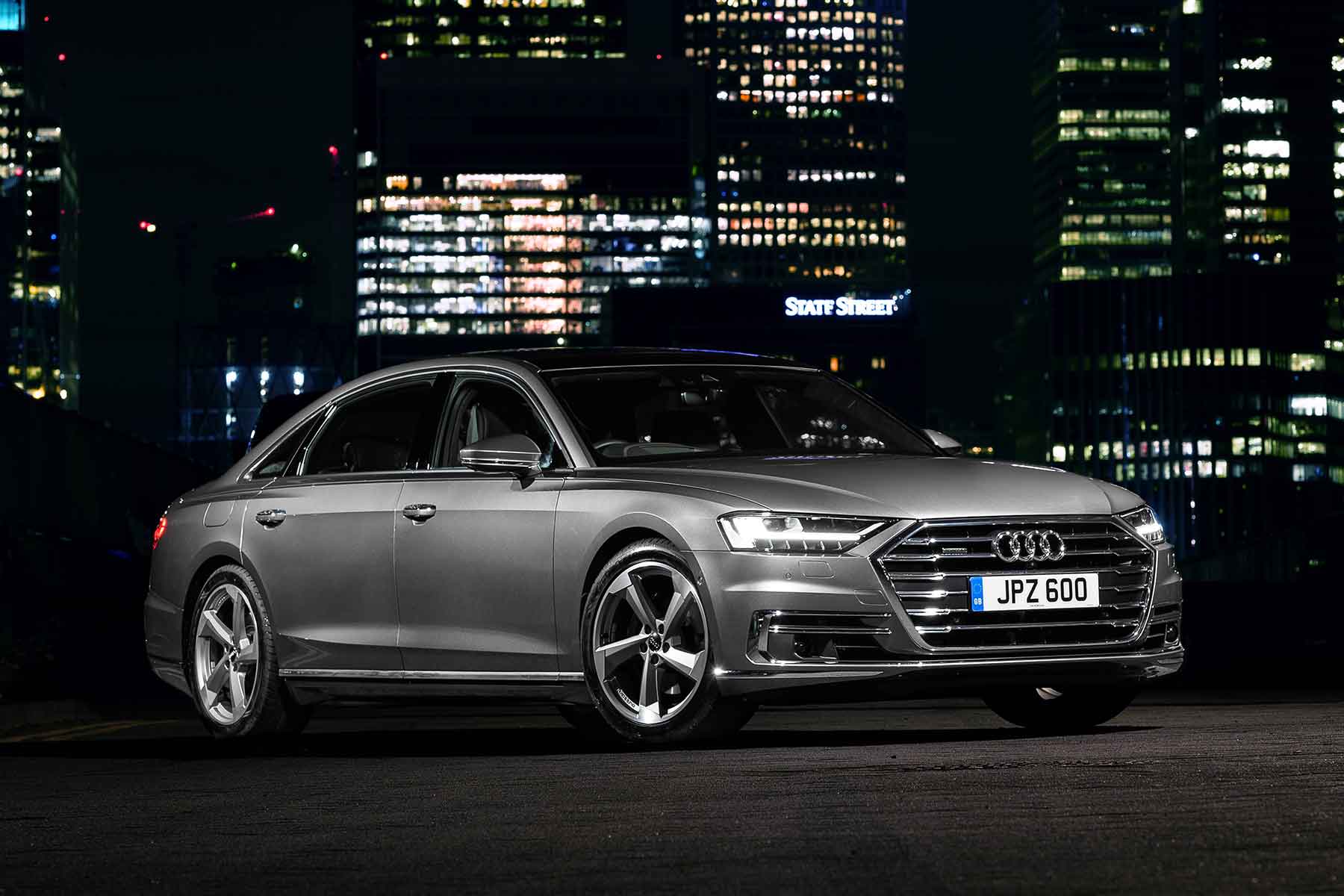
2018 winner: Audi A8
Audi A7 Sportback
The pioneering four-door luxury fastback is all-new for 2018. Audi has high hopes for the A7 Sportback – but it’s not the only contender…
Audi Q8
Indeed, the Audi Q8 luxury SUV coupe is perhaps an even more formidable competitor. It takes all the excellence of the Q7 SUV and adds in genuinely head-turning styling and an imperious, sports-infused drive. Don’t be surprised to see it shortlisted.
BMW 8 Series
We’ve been looking forward to this for years. Replacing the underwhelming 6 Series, the return of the 8 Series takes BMW’s high-end coupe upmarket – it’s a car you’d consider instead of a Porsche. Built from a platform that takes in much of what made the 7 Series – a former World Car Awards luxury car winner – we think it’s going to do battle royal with the Audi Q8.
Mercedes-Benz GLE
The old Mercedes-Benz GLE was once called the M-Class and was an SUV with a bit too much emphasis on the ‘4×4’ part. Mercedes-Benz has gradually been refining it, though, and this latest GLE, which draws from so much of the current E-Class, is the most expertly-honed iteration yet.
Volkswagen Touareg
Volkswagen has excelleed itself with the latest Touareg. It’s a car that shares an architecture with the Audi Q7 and Bentley Bentayga, and, if asked to choose, we’d take the VW and save the cash. That’s what an impressive luxury car it is. All it’s lacking is a suitably luxury badge…
World Performance Car
Judges always love assessing the World Performance Car contenders. Last year, the amazing array of models included the prize-winning BMW M5, and this year’s line-up should make for some equally thrilling test drives.
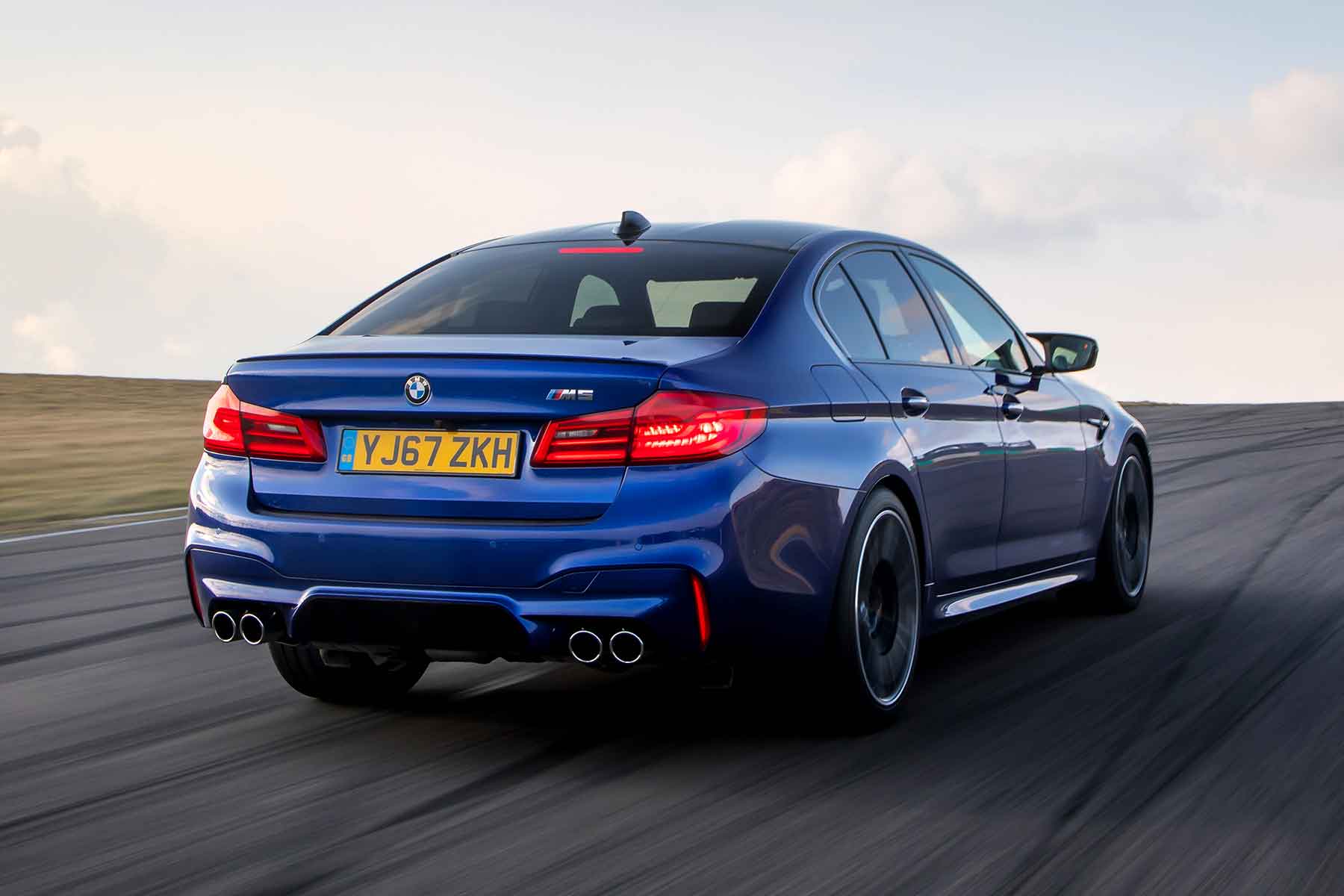
2018 winner: BMW M5
Aston Martin Vantage
The exciting Aston Martin Vantage is a car that’s been designed to offer a vibrant alternative to the Porsche 911. Front-engined, packed with power and looking like a million dollars, you can even get it in eye-piercing lime green. This car means business.
BMW M2 Competition
The final iteration of the acclaimed M2 is a very special machine indeed. You sense this is a car the M engineers have pored over, to send the M2 out on a high and get car collectors lining up to snare one. In years to come, this could be considered a landmark car.
Hyundai Veloster N
Everything that made the Hyundai i30 N so exciting, in a cool little four-door coupe body. But will the fact Europe isn’t getting it limit its success?
Kia Ceed GT
Europe is getting the Kia Ceed GT, however, which the firm says is a new type of performance car. Surprisingly, it doesn’t have the full-fat 2.0-litre turbo engine of its Hyundai i30 N sister car, but the downsized 1.6-litre turbo still puts out more than 200 horsepower, which Kia insists is enough for real-world, value-priced appeal. Is it?
McLaren 720S
And if you thought the Aston Martin was exciting, McLaren is here with the extraordinary 720S – one of the fastest and most intense supercars ever launched. A truly global performance car, we just know it’s going to do well.
World Green Car
The World Car Awards committee was one of the first to recognise advances in eco-friendly new cars on a global stage. The World Green Car prize is now well-established and last year’s winner, the Nissan Leaf, is making its mark on the new car sales charts. Contenders for the 2019 prize are stronger than ever.
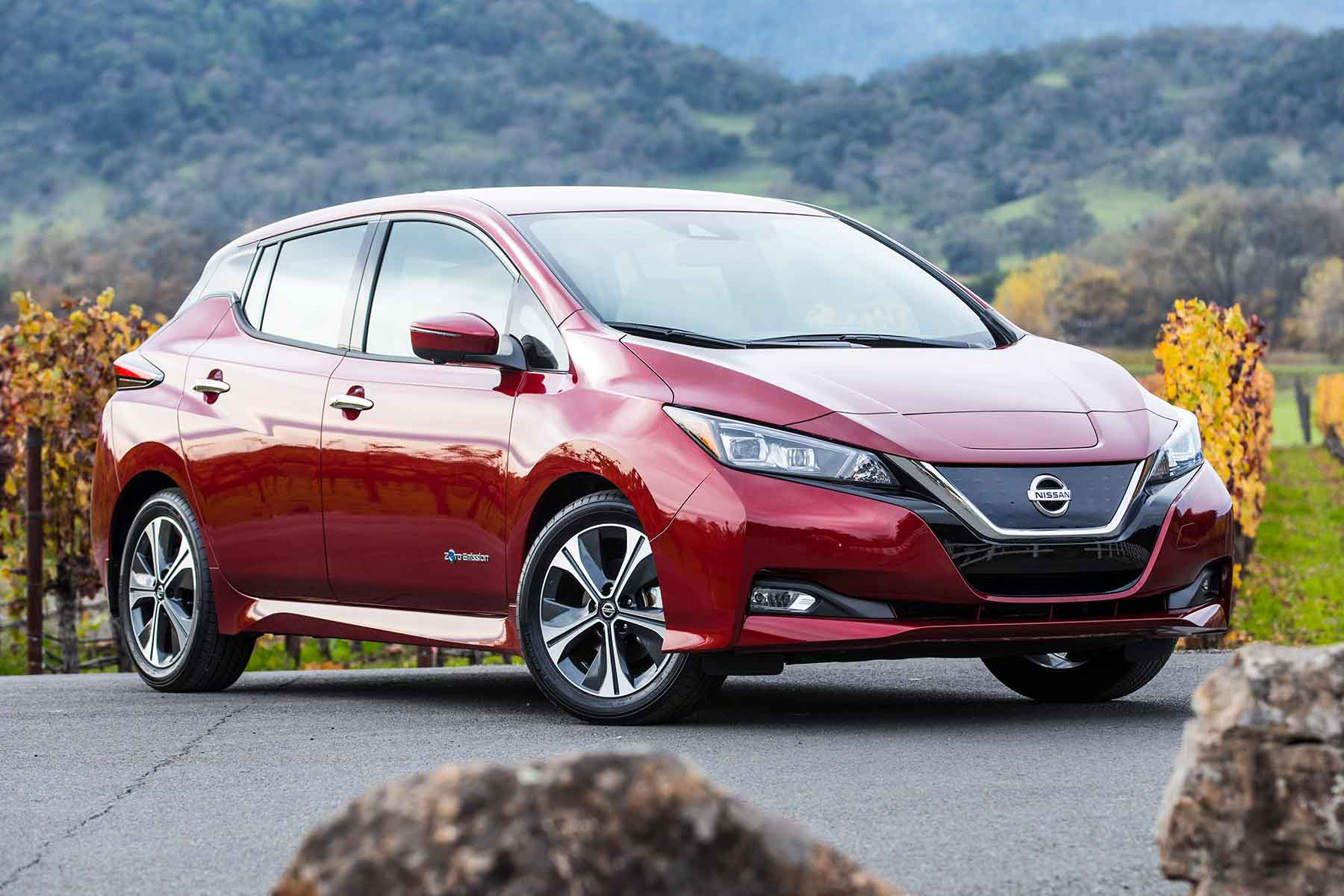
2018 winner: Nissan Leaf
Audi E-tron
The first electric Audi is not just a contender for the overall prize, it’s also up for the World Green Car award. In a real sign of the times, it’s one of many dual runners…
BMW i8 Roadster
The i8 Roadster is arguably the world’s greenest sports car. Can losing its roof see it triumph in the 2019 World Green Car prize?
Honda Clarity Plug-In Hybrid
Giving the Clarity plug-in tech means it has another chance for success in the World Green Car awards.
Honda Insight
The latest Honda Insight revives a name from the past as a modern-day Toyota Prius rival. It has similarly sharp styling to the latest Civic and will do amazing MPG. Is it an award-winning revival, though?
Hyundai Nexo
Hyundai means business with the Nexo. The South Korean company thinks the hydrogen fuel cell’s time has come, so is going big with the pretty Nexo. The judges will listen with interest.
Jaguar I-Pace
The most significant Jaguar in decades – the I-Pace is a landmark all-electric performance SUV from the British brand, and as appealing to drive – and be driven in – as it is to look at. A favourite, we think.
Kia Niro EV
As mentioned, the Niro EV is a half-price I-Pace that democratises long-range electric crossovers. We are very much looking forward to seeing how it performs.
Lexus ES Hybrid
The familiar Lexus hybrid drivetrain is offered in the latest ES. Can it make the big new saloon a winner?
Lexus UX Hybrid
Again, we prefer the look of the new-for-2018 UX to its bigger ES brother. And, as it too is offered as a hybrid, it gets to appear in the World Green Car list.
Toyota Avalon Hybrid
The Avalon Hybrid is similar to the ES Hybrid, at least on paper. Can it spring a surprise when judges get round to testing it?
Toyota RAV4 Hybrid
Still among the few compact hybrid SUVs, Toyota is taking all it learned with this car’s predecessor and making the all-new RAV4 Hybrid even better to drive and even more efficient.
World Urban Car
The World Urban Car is a relatively new prize, one aimed at responding to the growth of the world’s megacities. In just a few years’ time, most of the world’s population will live in an urban area, meaning these cars will become increasingly important. Who’s in the running for 2019?
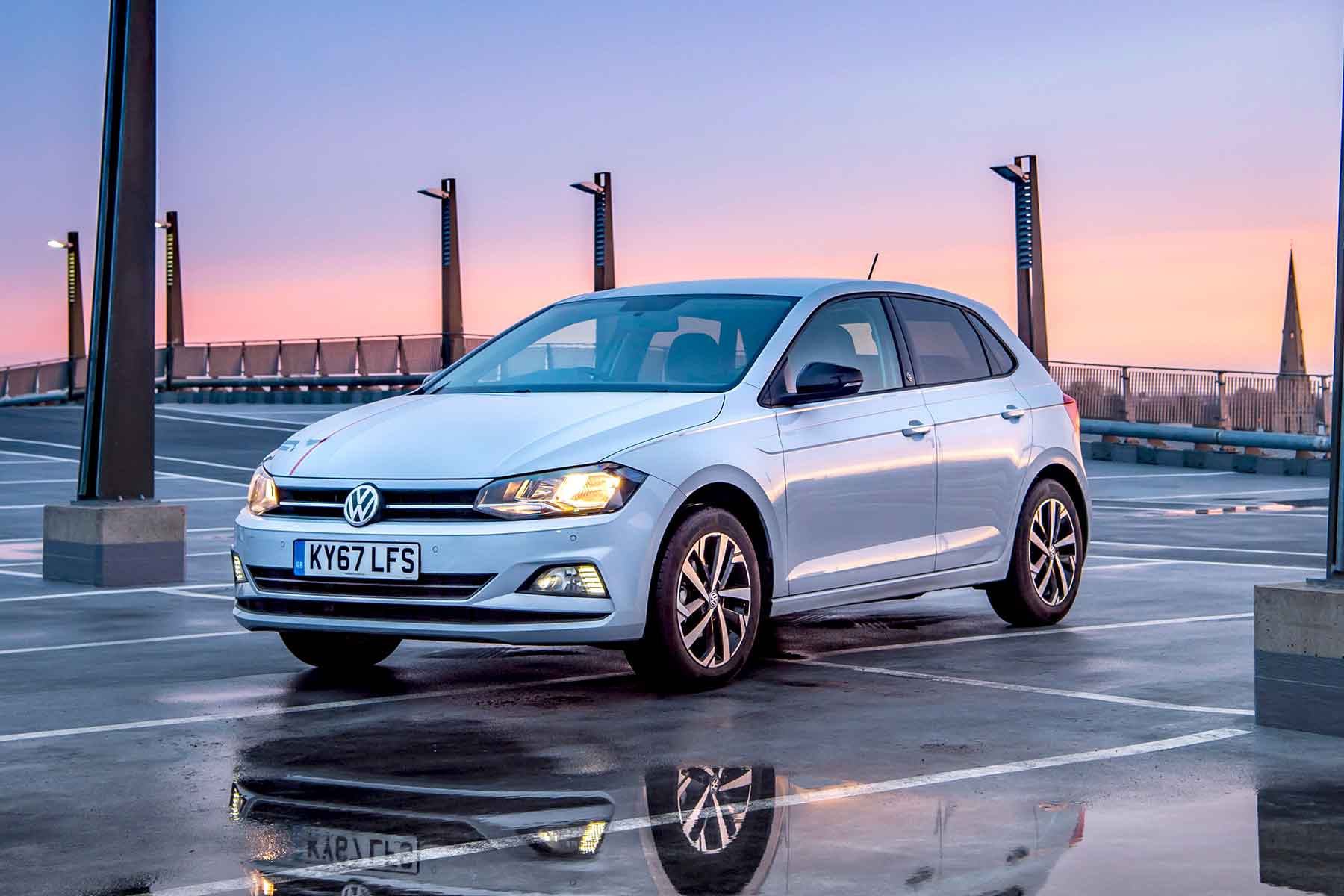
2018 winner: Volkswagen Polo
Audi A1
The exciting Audi A1 is an overall contender and also a World Urban Car contender. The old model did little wrong, so the judges will look forward to testing its replacement.
BMW X2
Urban environments favour small, compact cars, but also ones with high seating positions and tough, dent-resistant bodywork. The urban SUV is a growing sector, and BMW will be hoping the premium allure of its new X2 finds favour among the World Car Awards judges.
Kia Soul
One of the original urban SUVs, Kia has upped its game with the latest Soul – but has it done enough?
Seat Arona
The Seat Arona has been incredibly well received so its inclusion in the World Urban Car category seems obvious. Another high-riding machine, it has value pricing on its side, as well as good looks and a sophisticated interior.
Suzuki Jimny
The brilliant retro-designed Suzuki Jimny could be the ultimate urban warrior. Tough enough to take everything in its stride, it can off-road with the best of them, but it also has the onboard technology every sophisticated urban dweller needs in 2018. We look forward to seeing how it fares.
World Car Design of the Year
Finally, the annual World Car Design of the Year. This is a prize that’s assessed by an expert panel, who release the front-runners later in the competition. With so many beautiful and striking designs launched in 2018, they’ll have a tough job on their hands to draw up a shortlist.
Following an official unveiling at the Shanghai Motor Show in July, the 2018 Paris Motor Show is the first chance for European buyers to see the facelifted Porsche Macan.
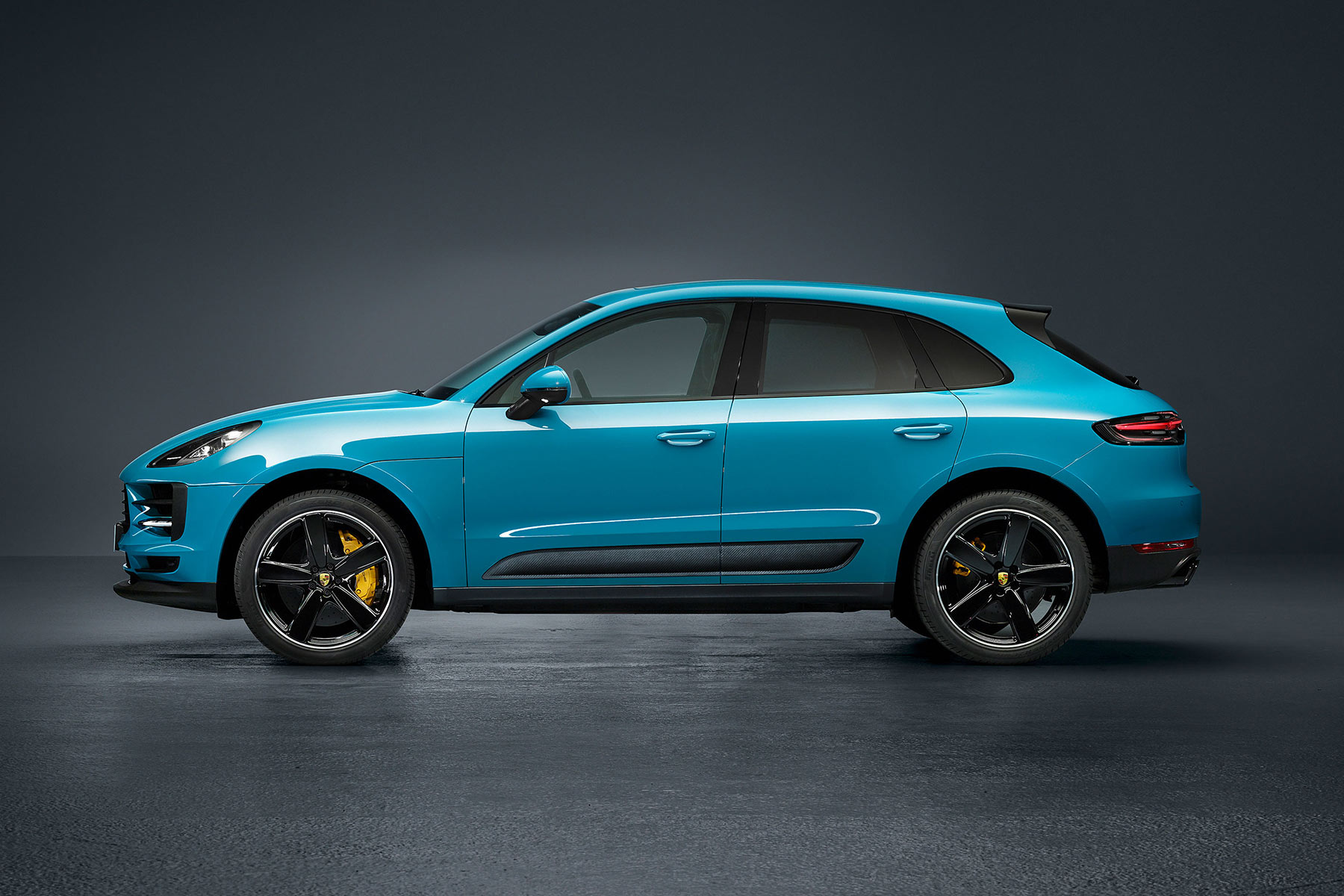
If you expected dramatic surprises outside, you might be disappointed. This is a subtle exterior nip and tuck, with the biggest change happening at the back. The new three-piece LED light strip across the rear hatch is meant to embody classic ‘Porsche design DNA’. It gives a distinct signature at night, and is matched with new LED headlights at the front.
Beyond the lighting, you’ll need to really know your Macans to spot the revised front bumper. New classic Porsche colours such as Miami Blue, Mamba Green and Crayon might be more recognisable.
But that’s not to say the latest Macan doesn’t have the ability to raise eyebrows…
Hybrid theory
Although subtle outside changes were predictable, a revolution beneath the bonnet was thought to be on the cards. Porsche has recently made a show of the decision to abandon diesel power for good. With the larger Cayenne SUV offered with a hybrid powertrain, along with the Panamera, the junior Macan seemed ripe for hybridisation.
Instead, the revised Macan simply features a 2.0-litre four-cylinder turbocharged petrol engine, similar to that in the Volkswagen Golf GTI. A gasoline particulate filter is part of the revisions, along with other tweaks to improve efficiency. Tellingly, power output has dropped from 252hp to 245hp.
Despite the small power reduction, 0-62mph takes the same 6.7 seconds as before. Four-wheel-drive is standard, as is a seven-speed PDK dual-clutch gearbox.
At least for now, that’s it on the engine front: just a 2.0-litre turbo petrol – no V6 petrol, no plug-ins and certainly no diesels. Is it a sign of the times?
Widescreen dreams
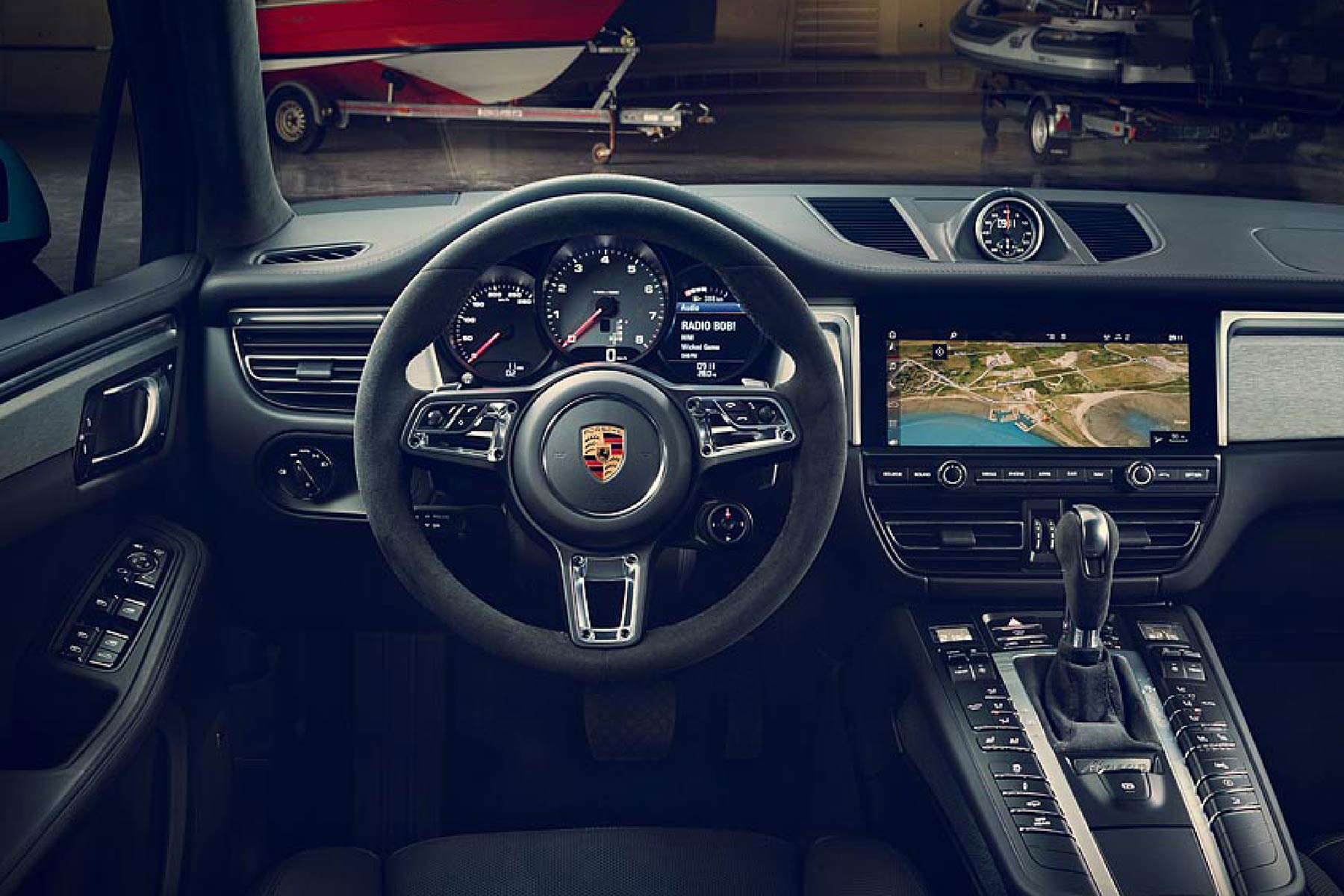
Inside, the big story is the enlargement of the HD multimedia touchscreen to a substantial 10.9-inches. The Porsche Communication Management system allows for easy connectivity with smartphones, whilst the ability to create a WLAN hotspot is standard.
A cloud-connected navigation system allows for real-time traffic updates to be taken into account, whilst those drivers who venture off-road can record their exploits with a dedicated app.
Drivers who want to feel like they are in a 911 can now specify an optional GT sports steering wheel. The design of it is influenced by the iconic Porsche sports car, and can feature a button to engage Sport mode, providing you tick all the relevant boxes. An air ioniser, with a dedicated cabin air filter, is another addition to the lengthy options list.
Strength in numbers
Whilst it might be easy to still treat the idea of a Porsche SUV with a modicum of contempt, the Macan and larger Cayenne are credited with the financial success of the German firm. Building cars like the Macan, means projects like the crazy retro 935 creation announced last week, can happen.
Zuffenhausen sold some 97,000 Macans last year, making it the best-selling Porsche model. In fact, more than one in three Porsches sold in 2017 was a Macan. That underscores how important the compact SUV is to the firm, and to allowing for wild 911 versions to exist.
New Macans are already rolling off the production line, with the first cars heading to the important Chinese market. UK buyers can place orders right now, with a starting price of £46,344 – an increase of less than £500 compared to the current car.
 The 2018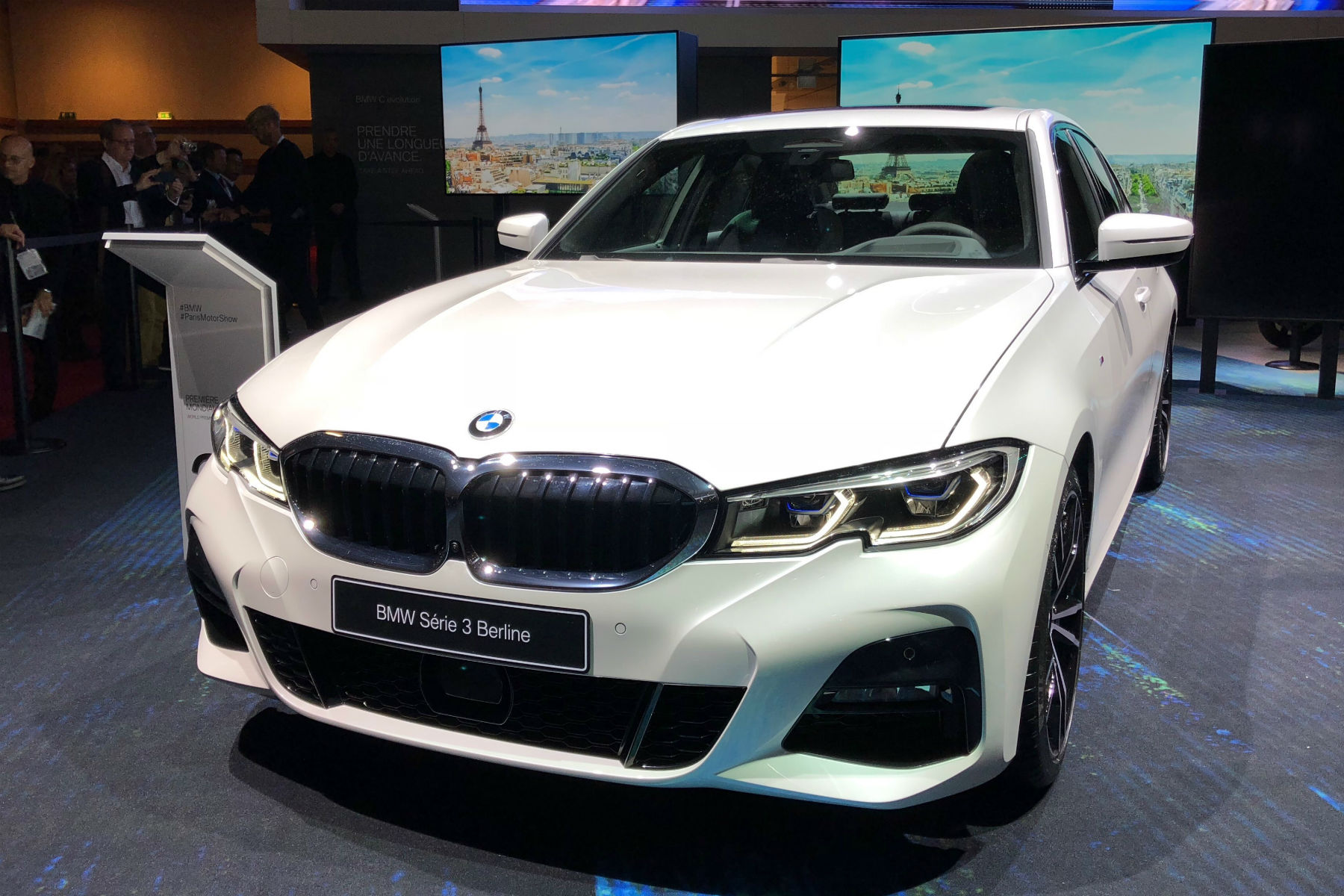




 The World Car Awards is the biggest automotive awards programme on the planet. Each year, it aims to discover the very finest cars on sale around the world.