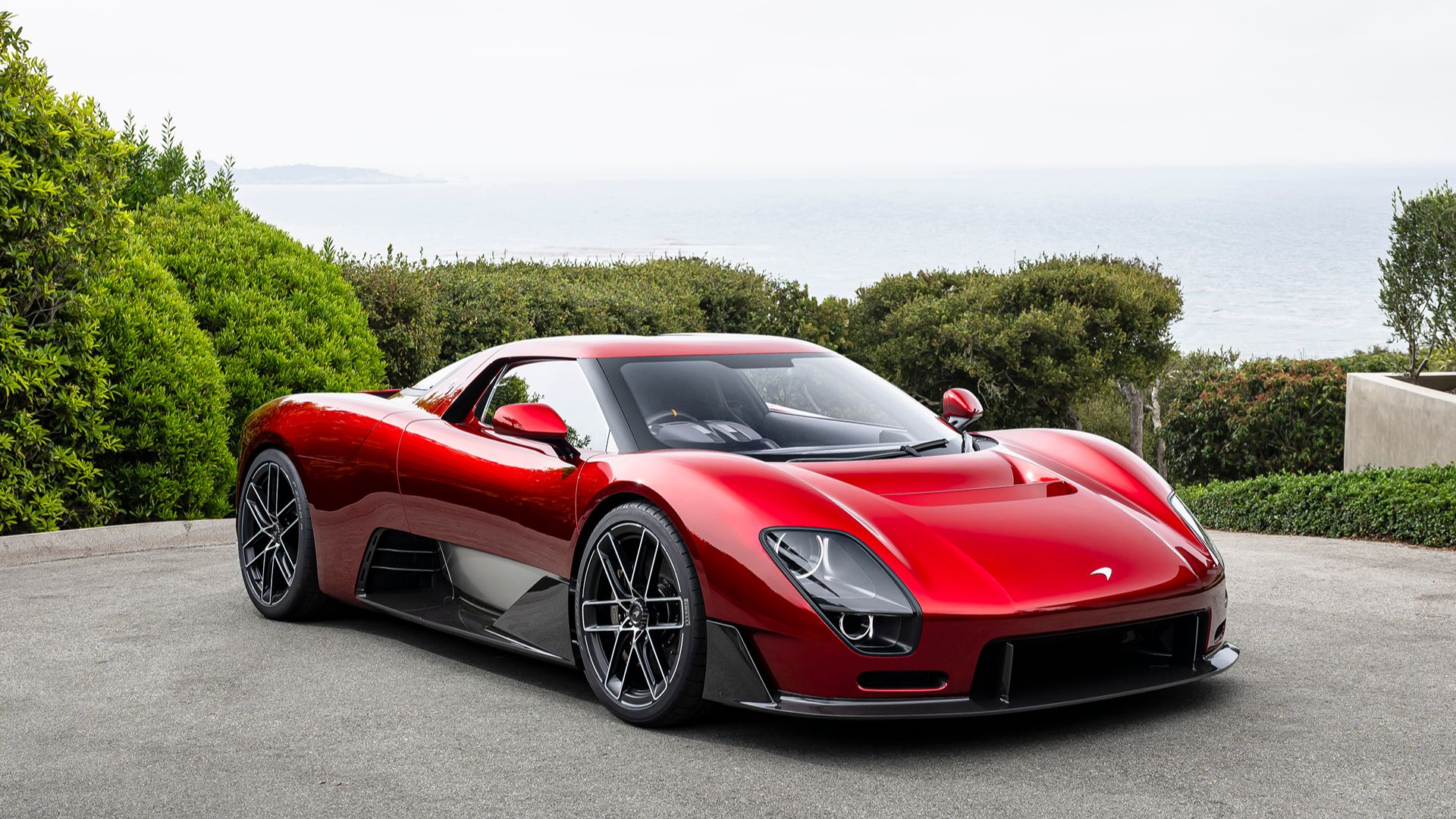
Kemal Curic is a man on a mission. His goal: to reinvent McLaren and reclaim its seat at the supercar top table.
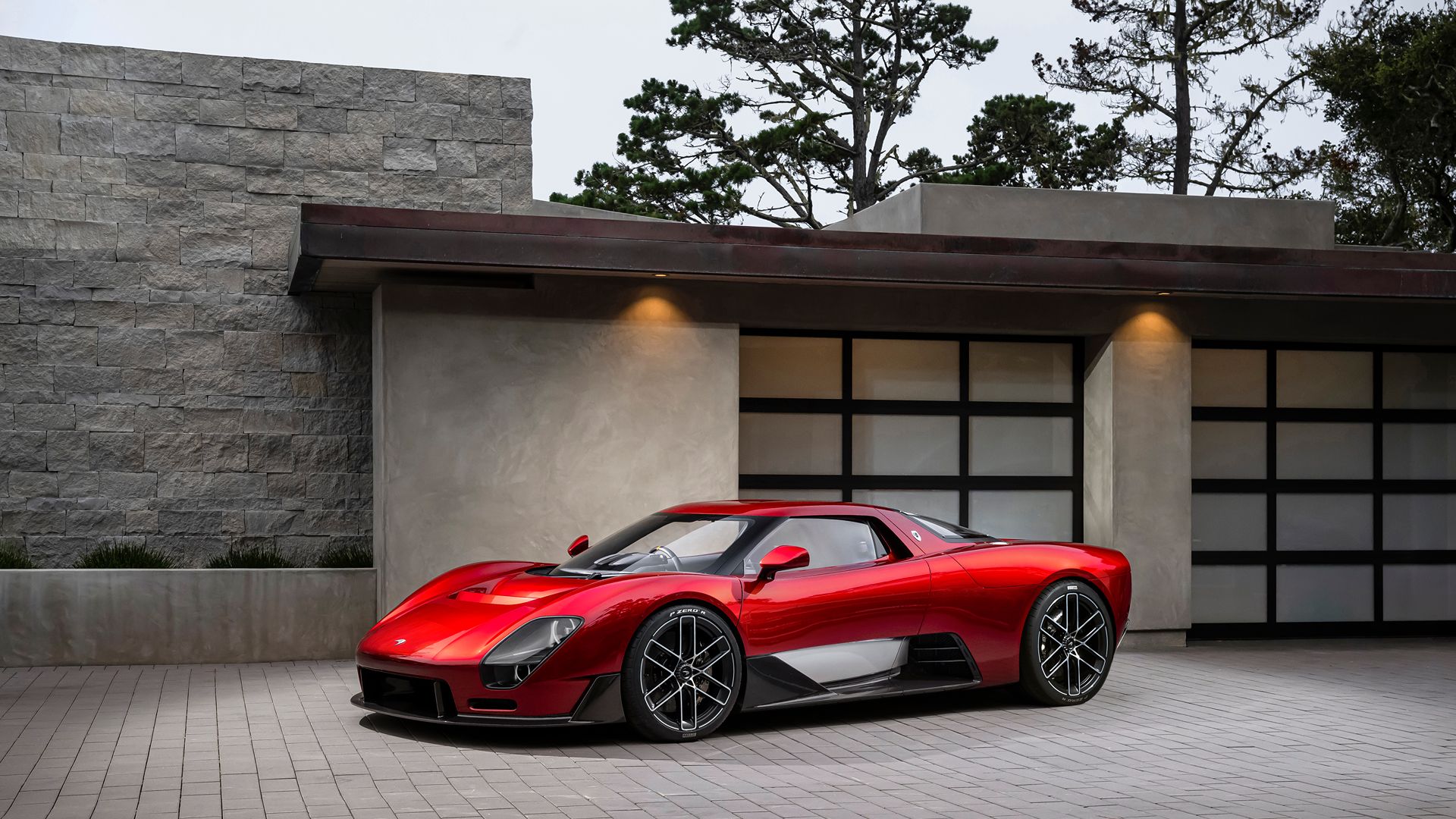
For a car designer, it’s both a dream job and a daunting one. However, the McL 6GT (pictured above) suggests Curic has hit the ground running. The retro concept was the star of Monterey Car Week this summer, prompting McLaren to announce a run of 500 customer cars – due in 2028.
To learn more about how the McL 6GT took shape, I met with Curic at McLaren’s new design studio in Bicester, Oxfordshire. Here, aided by old-fashioned clay models and new-fangled augmented reality tech, I got a glimpse into the British company’s future.
The McLaren story so far
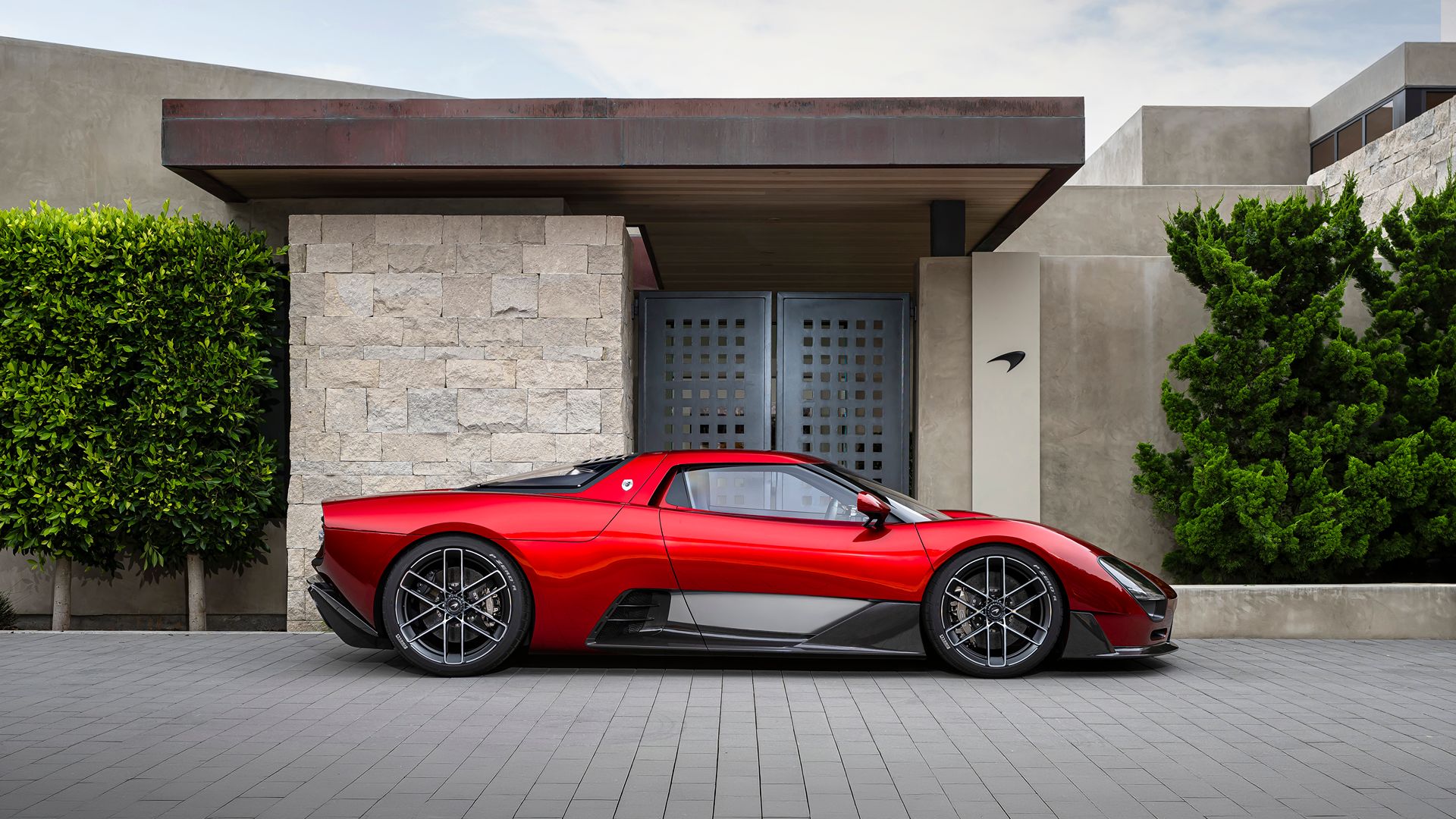
McLaren Automotive has achieved a lot in 16 short years. From a standing start in 2010, the original MP4-12C took the fight straight to Ferrari. Just two years later, it was followed by the epochal hybrid P1, then a succession of lauded ‘Longtail’ (LT) models and the 720S. The latter was arguably the most complete supercar of its era – and proved Woking could see off anything from Maranello or Sant’Agata Bolognese.
More recently, though, while its Formula 1 team has brought home successive world championships, McLaren Automotive hasn’t been so busy spraying champagne. Yes, the W1 hypercar is a sold-out success (399 units at £2 million each – nice work if you can get it), but the company’s core products are all showing their age. Indeed, production of the 750S has just ended, with both the Artura and GTS likely to be phased out next year.
McLaren’s fightback starts here, then, spearheaded by a £500 million investment from Abu Dhabi’s CYVN Holdings that will create 1,000 new jobs over the next six years. The flagship McLaren Technology Centre in Surrey will be upgraded, the carbon fibre facility in Sheffield will double in size and a new factory at an as-yet-undisclosed UK location is on the cards, too.
A replacement for the 750S – which we know will be called McL 820 – arrives in 2027 and, inevitably, an SUV looms large on the horizon. Defining what makes a McLaren has never been more difficult. Over to you, Kemal…
Inside McLaren’s new design studio

From the outside, McLaren’s design office looks like any other new-build industrial unit. However, after I sign in and seal my phone inside a protective pouch – to prevent any ‘scoop’ photos of half-finished prototypes – I can enter the inner sanctum: a calming and spacious studio flooded with natural light. This is where the next generation of McLarens are already taking shape.
I’m greeted by Chief Design Officer Curic and his Design Director, John Paul Gregory, then ushered into a small cinema to watch the launch film for the McL 6GT. In between the pumping beats and clouds of tyre smoke, it claims the car is simultaneously about ‘celebrating our origins’ and ‘the first expression of a new philosophy’. Like many European car manufacturers at present, it seems McLaren is looking backwards to go forwards.
You can’t argue with the results, though. After many years of being criticised for cars that looked too similar, the McL 6GT feels like a clean slate: a move away from aero-optimised aggression to something simpler and more classically beautiful. “It answers the question: ‘What would Bruce McLaren drive today?’” says Curic.
A guiding star for the McL 6GT
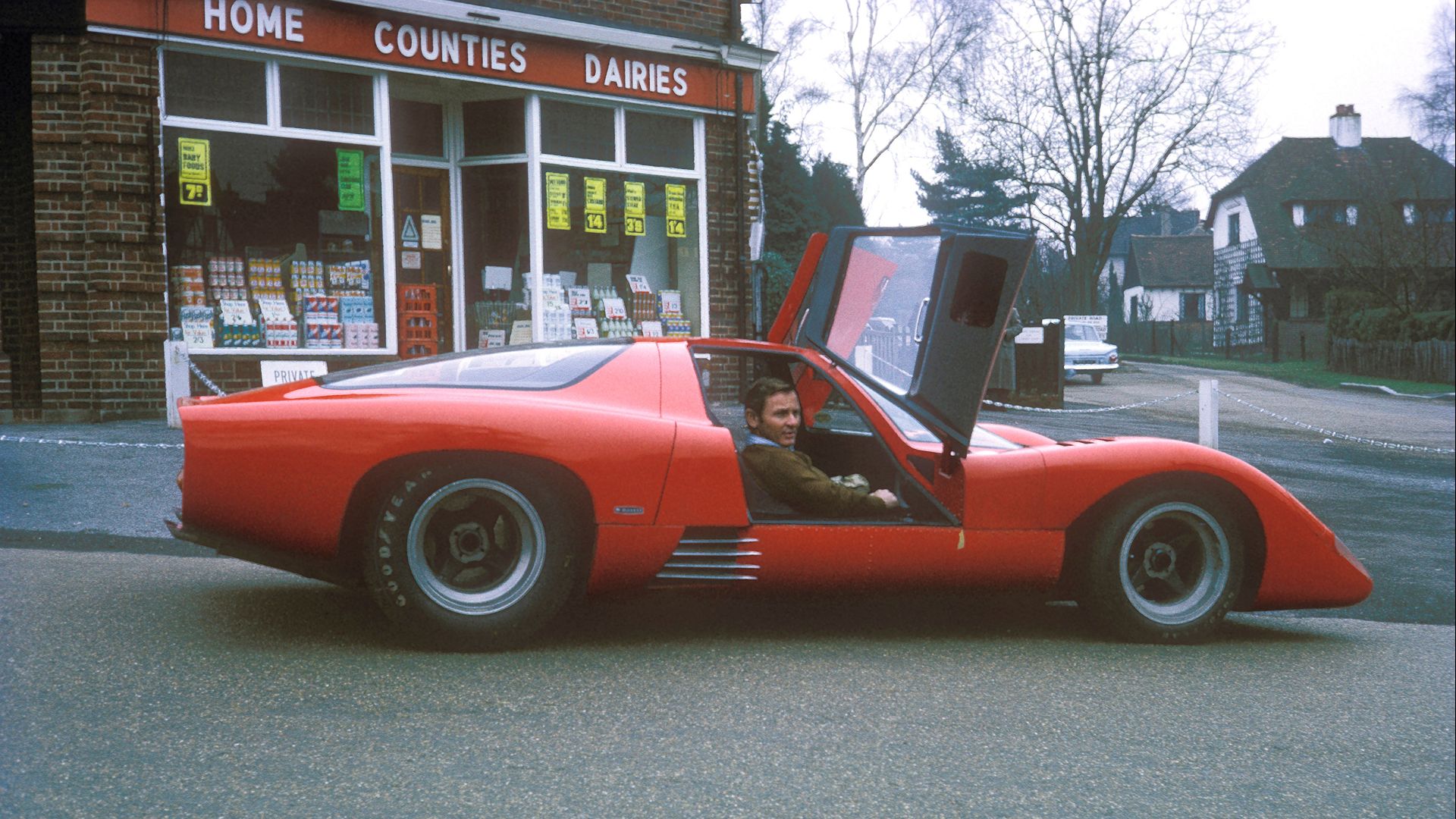
In fact, the McL 6GT reimagines a car that Bruce McLaren did drive. Decades before the McLaren F1 came along, the company founder had plans to create its first road-going supercar. The result was the M6GT (pictured above), a wedge-shaped projectile based on the M6A Can-Am racer. It featured a fibreglass body draped over an aluminium monocoque, butterfly doors and a brawny, mid-mounted Chevrolet V8.
Three M6GT prototypes were built during 1969, one of which was procured by Bruce for daily transport. “He drove it everywhere, from race tracks to the shops,” adds Curic. Tragically, Bruce was killed the following year while testing a McLaren M8D at Goodwood, and the project died with him. All that remained was one of motoring’s great ‘what if’ stories. Until now.
“The M6GT was a guiding star for us,” explains Curic. “We still have one of the design models, which was placed alongside our clay version of the McL 6GT to provide inspiration. We didn’t want to build a carbon copy or a continuation, though. Every single element had to fight its way into the design.”
Restored M6GT shown at Goodwood
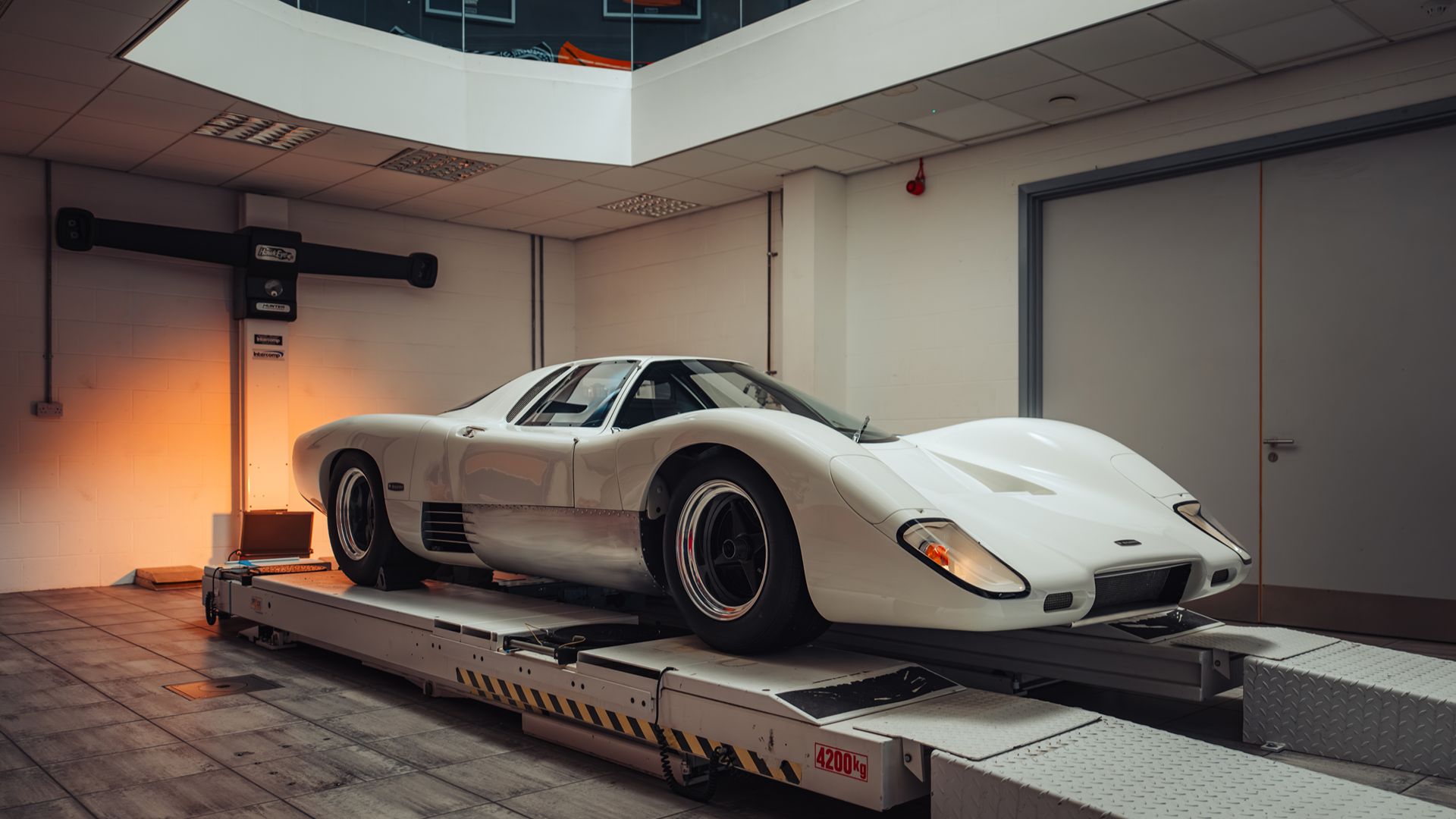
Although we didn’t realise it at the time, McLaren pre-empted the arrival of the McL 6GT with an in-house M6GT restoration. Based on one of the three original prototypes and lovingly crafted over 3,000 hours by McLaren Special Operations (MSO), it took a bow at Goodwood Festival of Speed in July, a month before the McL 6GT debuted in California.
Pictured above, the M6GT: Restored by MSO (to use its full name) is based on 1960s blueprints and features a period-correct small-block Chevy V8. Sleek and impossibly low, it’s now on permanent display at the McLaren Technology Centre, where it rubs shoulders with the original ‘XP5’ F1 prototype and the F1 GTR that won Le Mans in 1995.
“People have said the McL 6GT doesn’t look like a McLaren,” says John Paul Gregory. They’re wrong, though – you just need to look further back into the marque’s history.
Getting up close with the McL 6GT
When the McL 6GT was revealed in Monterey – wearing ‘Bruce Red’ paint, also inspired by its classic forebear – much of the buzz was around its manual gearbox. However, the car’s styling came a close second. “We had very positive feedback at the event and online”, says Curic.
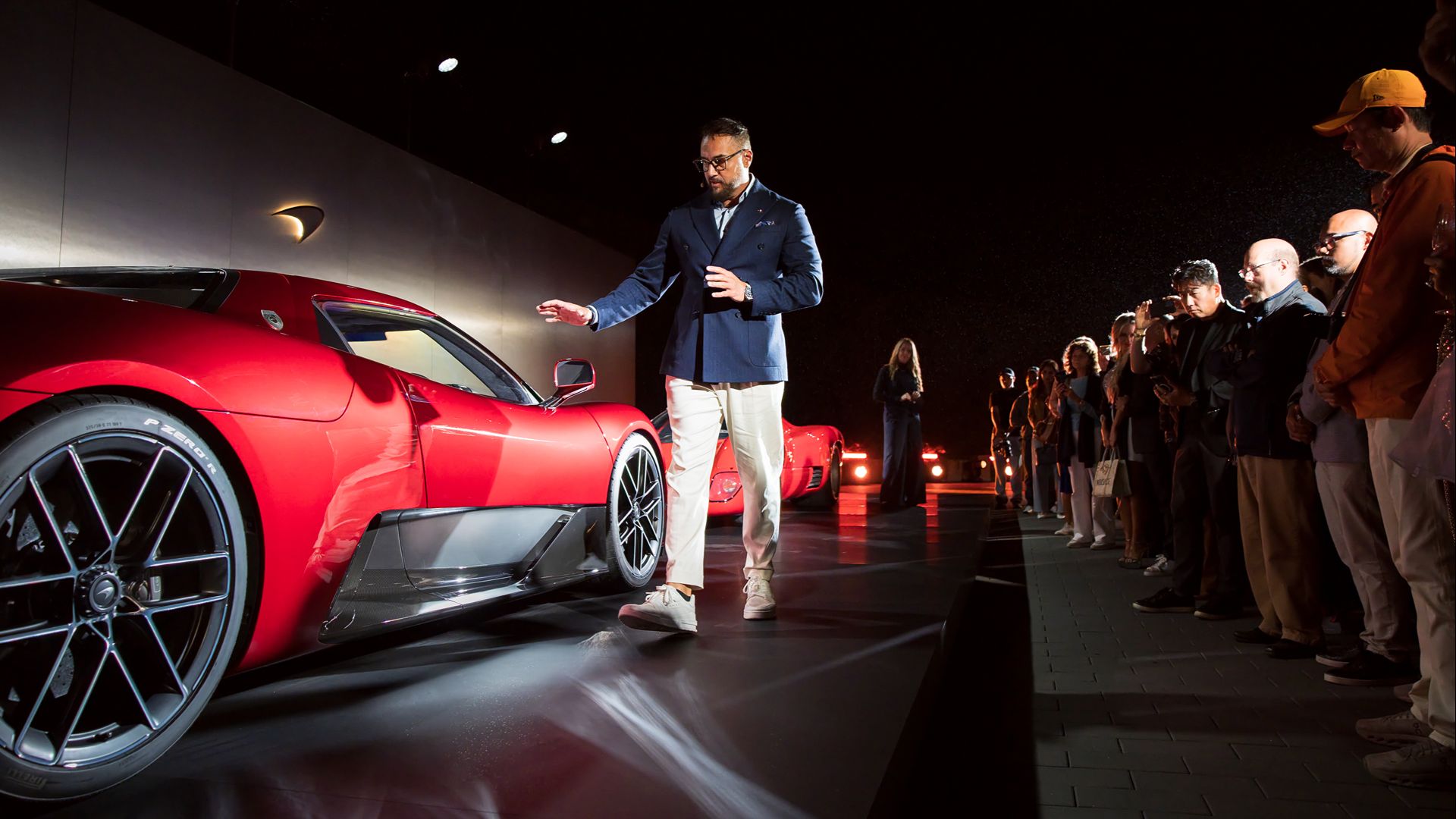
The full-size clay model of the McL 6GT in the studio is painted a more subtle shade of grey, yet it still commands your attention – and looks incredibly realistic. “British clay modellers are the best in the world,” notes Gregory, as Curic points out details such as the air intakes beneath each headlight (which look like part of the lamp) and McLaren’s ‘speedy kiwi’ logo on the exposed fuel filler (“so beautiful, it could be an object in your living room”).
It’s the overall shape of the car that does most of the talking, though. “We start with the proportions. You need to know it’s a McLaren without looking at the badge,” says Curic. Gregory adds: “We moved the high-temperature radiators to the front, rather than at the sides like most supercars, to preserve the purity of the design”.
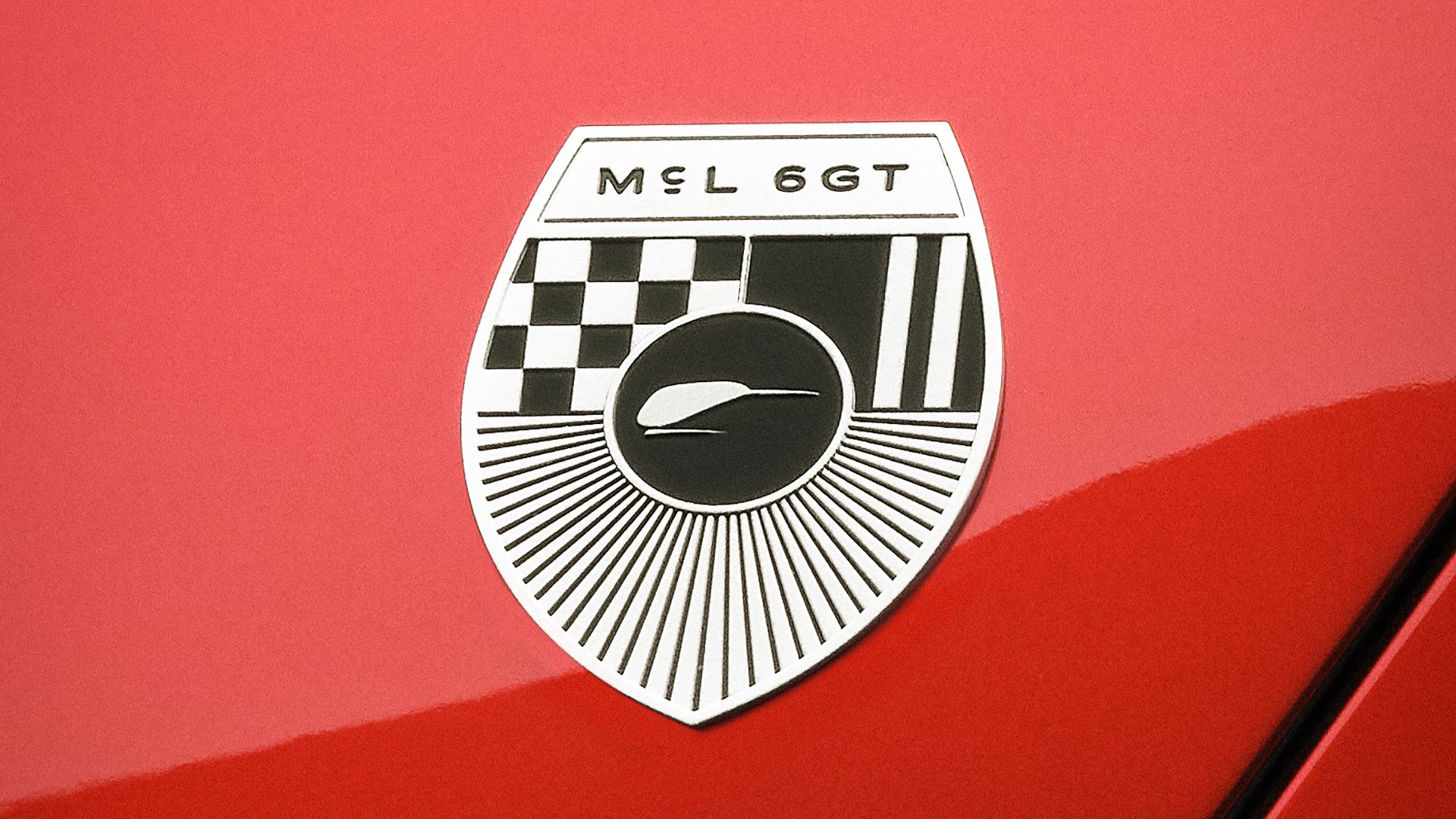
For those who do look at the badge, however, it’s been made simpler – a ‘wordmark’ based on the hand-painted sign above the McLaren family service station in Remuera, New Zealand. Other design elements that nod to the past include the tail lights and air vents in the rear window. Their straight-sided oval shape echoes the same motif on the Mclaren F1.
Step inside augmented reality
The clay model is impressive – only its opaque ‘windows’ give the game away – but what happens next is still more so: a chance to explore the McL 6GT in augmented reality.
I strap on a pair of Apple Vision Pro goggles and, like magic, a virtual McLaren appears in front of me. The car is rendered in millimetre-perfect 3D clarity, and the image shifts seamlessly as I walk around it. It’s disorientating at first, particularly when you realise you can pass a hand through the ‘physical’ object, but must be an invaluable way for designers to communicate their ideas – particularly with colleagues in other parts of the world.
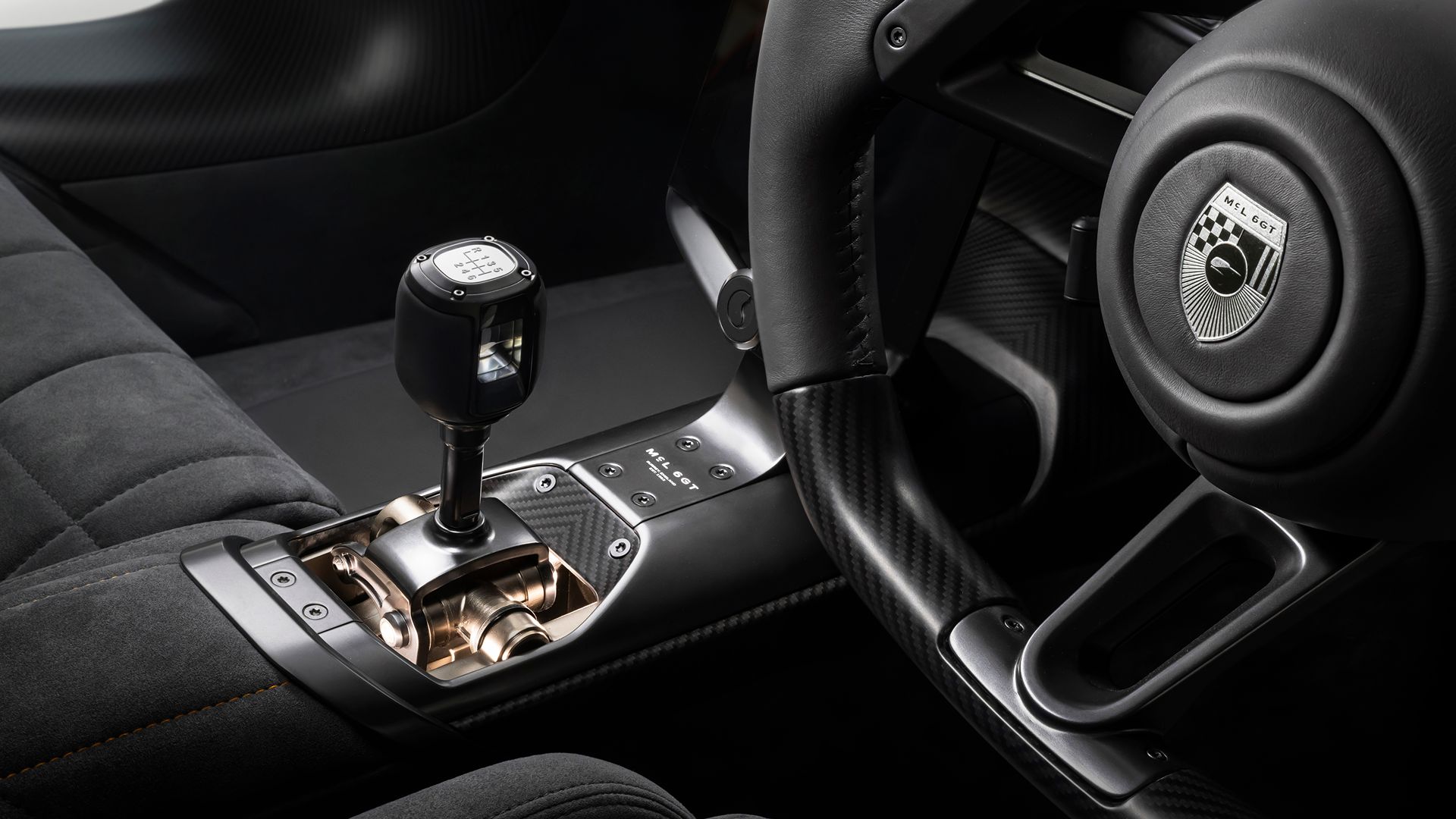
Using a bespoke interior buck fitted with two seats and a steering wheel, I’m then able to climb inside the McL 6GT and enjoy a driver’s eye view. The carbon tub is (deliberately) visible when you swing the doors upwards, while the square quilting on the seats is another element drawn from the 1969 M6GT. The wheel is devoid of any buttons, in trademark McLaren style, with rocker switches either side of the instrument binnacle to adjust the drive modes. A long throttle pedal in anodised ‘Papaya’ aluminium is a bold statement of intent, too.
Nonetheless, it’s the manual gearbox – the first fitted to any road-going McLaren since the F1 – that really draws my (virtual) gaze. The exposed linkage looks beautiful, as does the hollowed-out gear knob atop a stubby lever. It might be slower around a circuit than a car with a dual-clutch ’box and paddles, but who cares?
“We obsess over tactility, including how the gearshift feels,” says Curic, who seems to be reading my mind. “Ordinarily, you can interact with our cars without ever taking your hands off the steering wheel. The McL 6GT is a bit different.”
The road ahead for McLaren
Want one? Of course you do. Yet it’s a safe bet all 500 examples of the McL 6GT have already been sold, even before McLaren has publicly disclosed a price.
Still, it’s what this car represents, rather than its profit potential, that is most exciting for folk in Woking, Sheffield and Bicester: a fresh design direction, and proof that even its ‘Ultimate Series’ models don’t have to slavishly chase speed and lap times to be achingly desirable.
I quietly hope that next year’s McL 820 takes its cue from the 6GT, rather than simply being an evolution of the 750S. It would be a brave move for McLaren to step back from the power and technology arms race and focus once more on analogue cars that are immersive to drive. Yet increasing disillusionment with modern supercars, coupled with the rise of the restomod, suggests that is what many buyers want.
Sprinkling some of the McL 6GT’s magic onto an SUV will be a tougher task, but Kemal Curic and John Paul Gregory are both up for the challenge. The stakes are high, yet McLaren Automotive has already proven itself a world-beater once. Can it do so again?
ALSO READ: