Home Blog Page 553

State of independence: American cars that broke the mould

0

State of independence: American cars that broke the mould

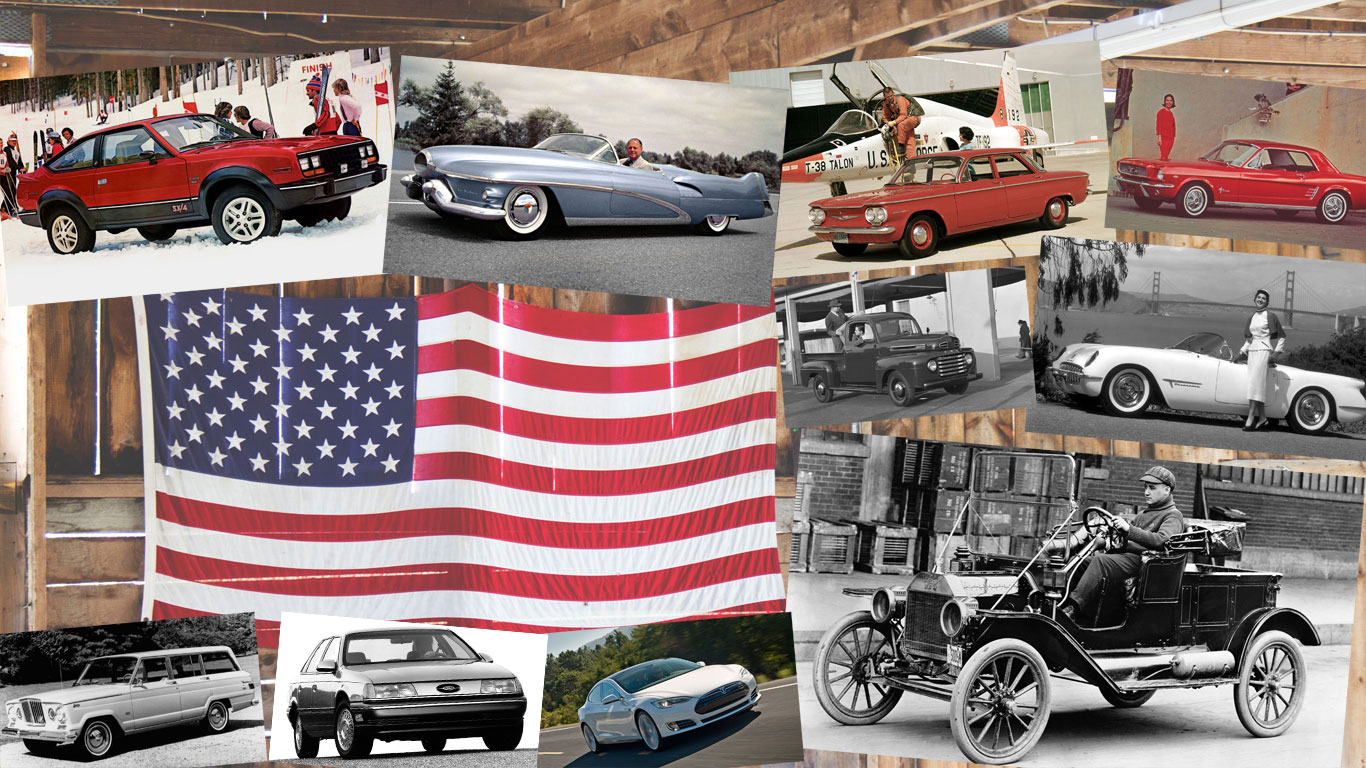
To celebrate Independence Day (no, not the Will Smith movie), we’ve put together a list of American cars that broke the mould. Automobiles that deserve a virtual high five. As Will Smith might say: we’ve got to get ourselves one of these.

AMC Eagle

Putting this list into some kind of order was proving tricky, so we gave up and opted for a simple A-Z. Which, by default, gives the AMC Eagle top billing. Not that this is an issue, because this was a true pioneer, blazing a trail for a new breed of off-road vehicles. With the notable exception of the Subaru Leone, before the Eagle had landed, 4x4s tended to be lumbering and heavy SUVs. Thanks to its Ferguson Formula (FF) all-wheel drive system, it’s also a distant relative of the Jensen FF.

Buick Riviera

On a shorter list, the Buick Riviera might not have made the cut, but its impact in the US cannot be underestimated. GM’s design chief, Bill Mitchell, is reported to have demanded the style and luxury of a Rolls-Royce with the performance of a Ferrari. The result was one of the most elegant and sought-after V8-engined cars of the 1960s. This wasn’t the first American luxury car, but it’s one of the first to call upon influences from the other side of the Atlantic.

Cadillac Eldorado
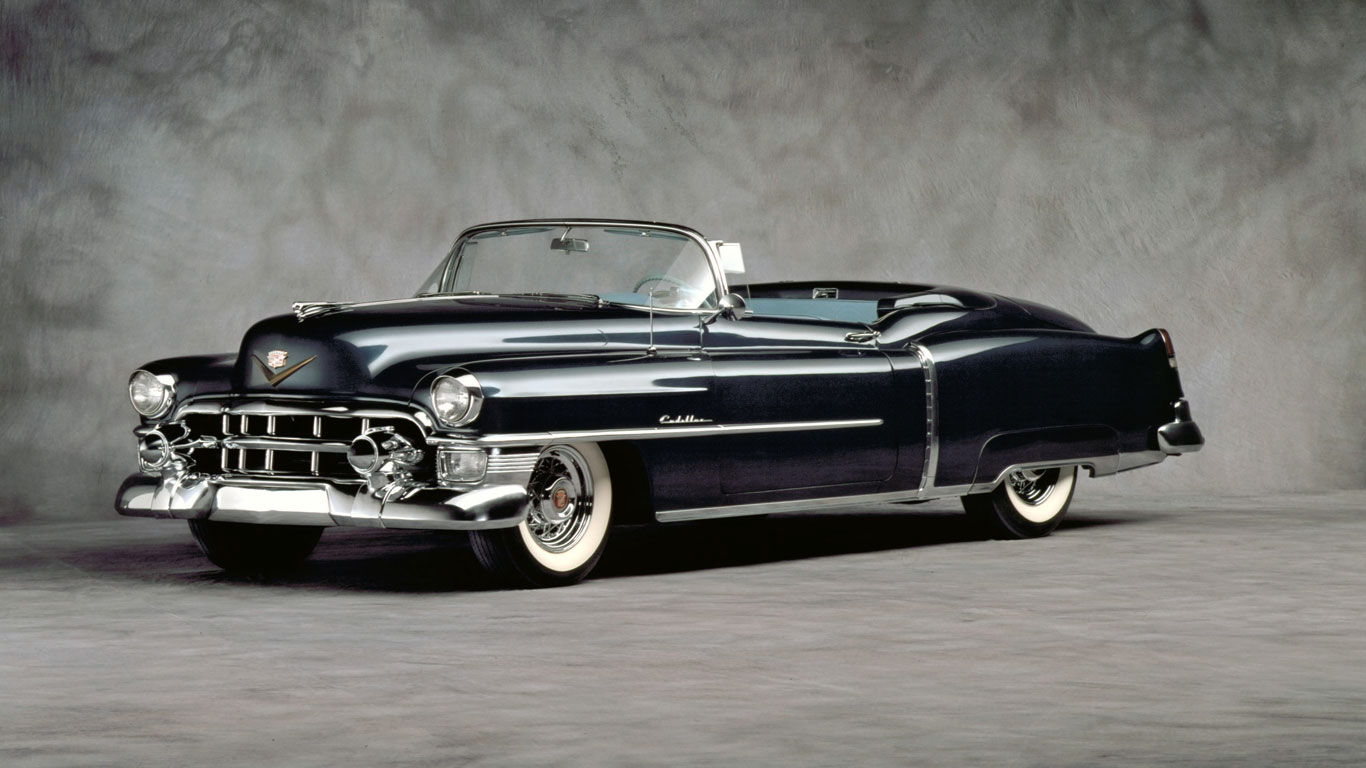
Cadillac Eldorado

Revolutionary? Not really. Game changing? We think not. But as a symbol of the American dream and a hark back to the country’s golden age, few cars can touch the 1953 Cadillac Eldorado. Its follow-up, the 1959 Eldorado, symbolised the era of massive fins, chrome and excess.

Chevrolet Bel Air

Few cars encapsulate the image of 1950s Americana better than the Chevrolet Bel Air. The first generation car of 1950 ushered in a new era of car design and while the Bel Air had many imitators, few managed to capture its magic. Note the design of the hardtop, styled to look like a convertible. The idea wasn’t new, but Chevrolet popularised the concept.

Chevrolet Corvair

The Chevrolet Corvair was the only American mass-produced car to feature a rear-mounted air-cooled engine, which pitched it against the Volkswagen Beetle. But it was this layout, combined with a swing axle rear suspension, that led to wild handling characteristics. A number of single-vehicle accidents led to 100 lawsuits and the publishing of the book: Unsafe at Any Speed. Cutting a long story short, this changed the process of interaction between consumers and manufacturers.

Chevrolet Corvette
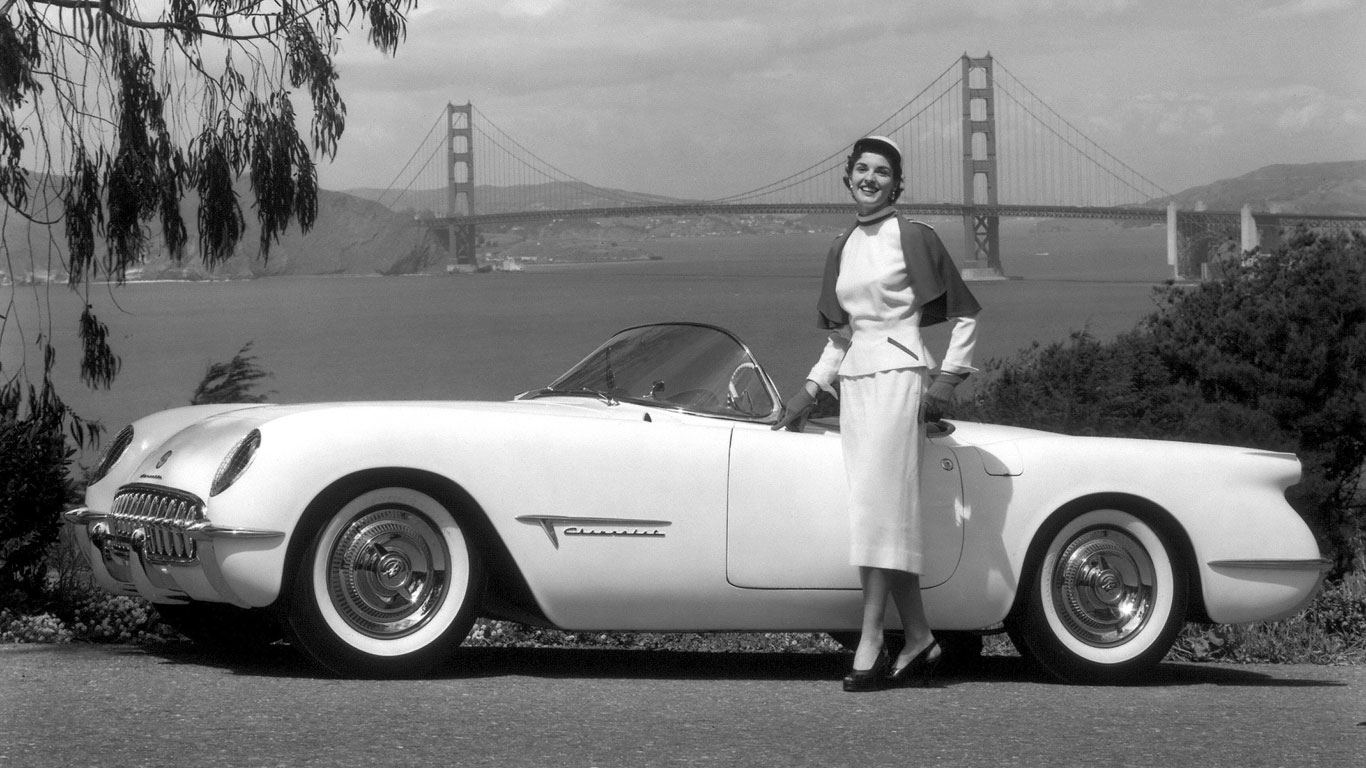
Chevrolet Corvette

A production run spanning seven different decades and global recognition would be enough to earn the Chevrolet Corvette a place in this gallery. But the Vette was also the first sports car to be built in America and the first production car to be built using a fibreglass body. The Corvette name stemmed from a small, manoeuvrable frigate of the 17th century.

Chevrolet Suburban

We offer two reasons for the inclusion of the Chevrolet Suburban. Firstly, it’s the longest running nameplate in the world. Secondly, the first generation car – known as the Suburban Carryall – featured seating for up to eight people. It was therefore an early interpretation of the people carrier recipe.

Chrysler 300 Series

The Chrysler 300 Series of cars are considered to be America’s first performance cars, evolving from the C-300 of 1955, through to the 300B, 300C and beyond. The C-300 was the first American production car to develop 355hp, while the 300B gets the credit as the first car to produce 1hp per cubic inch.

Chrysler Thunderbolt
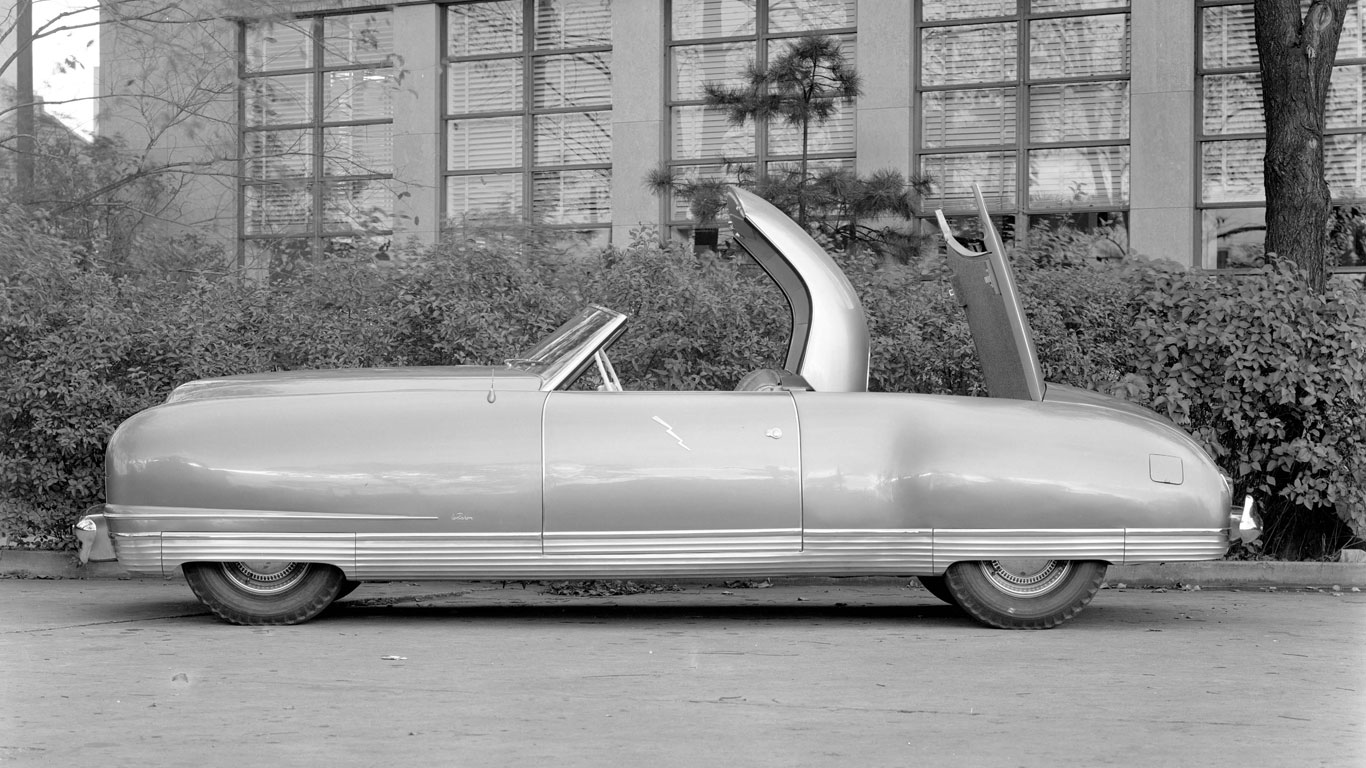
Chrysler Thunderbolt

Though Peugeot had got there first with the first production, electrically-operated retractable hardtop, the Chrysler Thunderbolt of 1941 takes the honour as being the first American version. Other innovations included retractable headlights, doors that opened via buttons and air intakes beneath the front bumper. Even today, the Thunderbolt still manages to look futuristic.

Chrysler Turbine Car

The Chrysler Turbine Car probably has no place in a gallery focused on cars that broke the mould. Had Chrysler got its way, we could have been driving about in jet-powered cars, which sounds exciting and futuristic, even today. As it happened, the project was scrapped, with Chrysler crushing all but a handful of examples. If you haven’t watched it already, check out Jay Leno’s review online. It’s terrific stuff.

Cord 810

The Cord 810 was a stunning, if ultimately expensive, vision of the future. The L-29 was America’s first front-wheel drive car, but the 810 took this forward with a package that included independent front suspension. It also featured concealed headlights, a hidden fuel filler cap and the world’s first horn ring.

Dodge Caravan
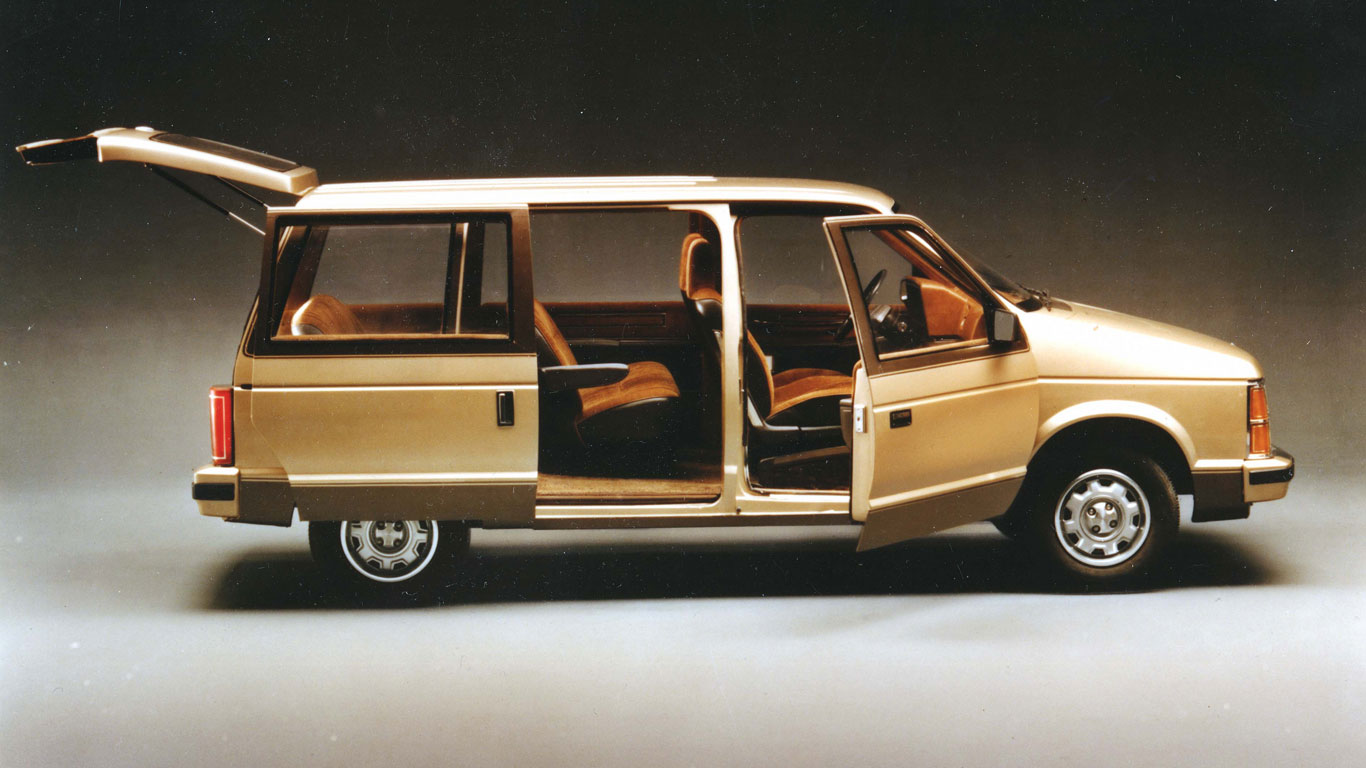
Dodge Caravan

To fans of muscle cars and rear-wheel drive legends, the inclusion of the Dodge Caravan might ruffle a few feathers. But in its day, the front-wheel drive Dodge Caravan was a revolutionary package, offering up to seven seats in a space shorter than a full-size station wagon. Chrysler’s minivans set the tone for a new breed of people carriers and – quite literally – changed the shape of American vehicles.

Dodge Viper

The recipe might seem rather primitive, but there’s no doubting the Dodge Viper’s significance. Stripped back to the barest of essentials, the Viper was loaded with an 8.0-litre V10 engine developing 400hp and 465lb ft of torque, helping to propel it to a top speed in excess of 160mph. It was crude, but it was also a relative bargain, putting supercar-taming potential within reach of the everyman.

Duesenberg Model SJ

The Duesenberg Model J was the supercar of the late 20s and 30s, offering a blend of luxury and brutal performance. The Model SJ was in a different league, adding a supercharger to its armoury to offer a top speed of around 140mph. A remarkable achievement, given 100mph was considered otherwordly.

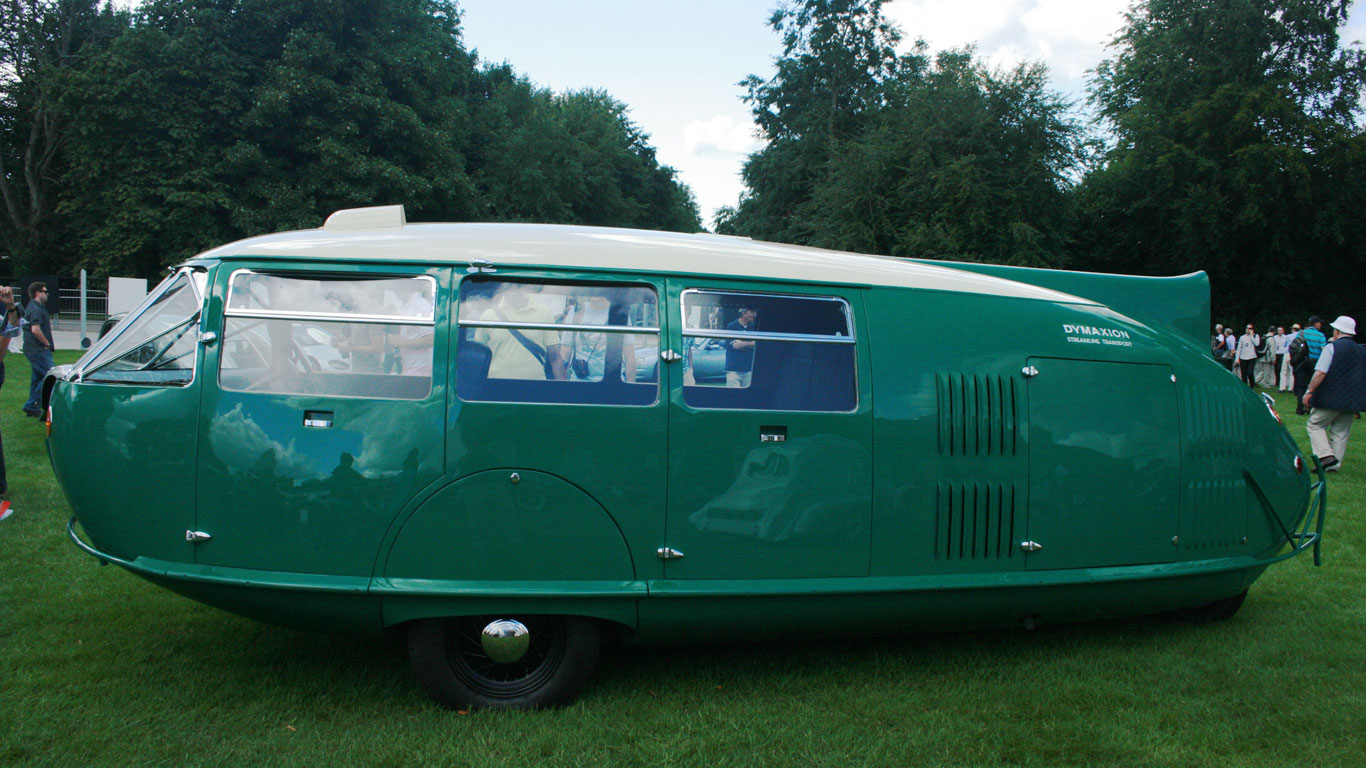
Dymaxion
Dymaxion

Buckminster Fuller – great name, not so great car designer. Fuller was an architect who had visions of a future including industrial system-built houses and flying cars. The Dymaxion car was wingless, but was intended to ‘plane’ on two wheels. It was flawed and the prototype was involved in a fatal accident at the 1933 Chicago World Exposition. As the Design Museum says: “the Dymaxion proved for ever that architects should not meddle with automotive design”.

Ford F-Series

The pickup is part of the fabric of America and the Ford F-Series is the most successful of the breed. It’s an institution. A legend. It’s part of the furniture. It can trace its roots back as far as 1948 and is consistently America’s best-selling vehicle.

Ford GT40

The GT40 is a controversial choice. To some Americans, the car’s Lola underpinnings and construction in Slough make it a British car, while the Brits will argue it’s a product of Uncle Henry. Whatever, its success at Le Mans was the equivalent of Henry Ford turning up at Maranello, pressing the doorbell and running away before Enzo Ferrari had managed to reach the door.

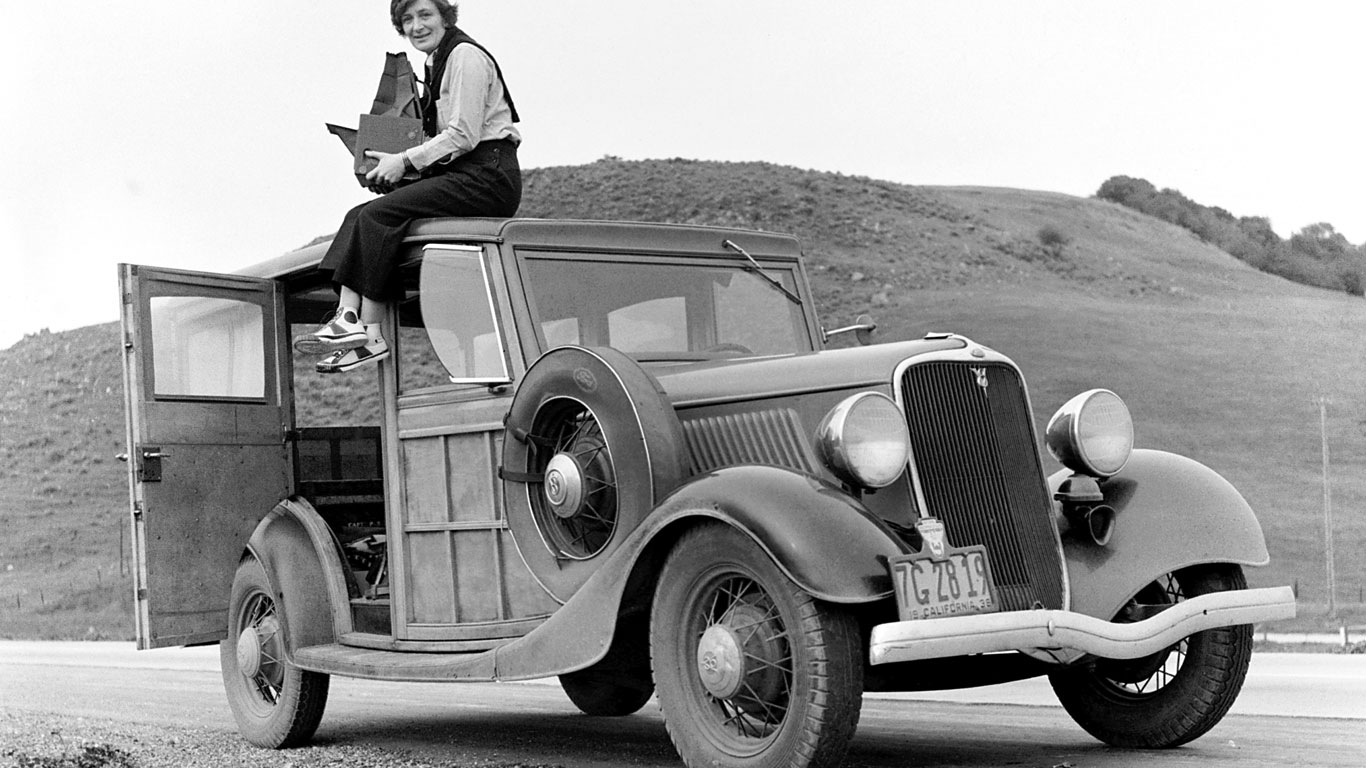
Ford Model 18
Ford Model 18

V8 fans should raise a glass to the 1933 Ford, because this was the first affordable, mass-produced car to be powered by a V8 engine. The Model 18 arrived in 1932 and was replaced by the Model in 1933.

Ford Model T

Launched in 1908, the Model T wasn’t the first car to be built, but it was the vehicle that mobilised an entire nation. For the first time, the automobile was accessible to more than just the upper reaches of society. Furthermore, the Model T was the first mass-produced car built on a moving assembly line.

Ford Mustang

There had been quicker cars, there had been cheaper cars, heck, there had been more beautiful cars. But few cars had made an impact quite like the Ford Mustang. It offered a slice of exotica to the post-war ‘baby boomer’ generation and captured an emergent trend towards optimism and a brighter future. It’s also one of just a handful of cars that are recognised simply by their model name.

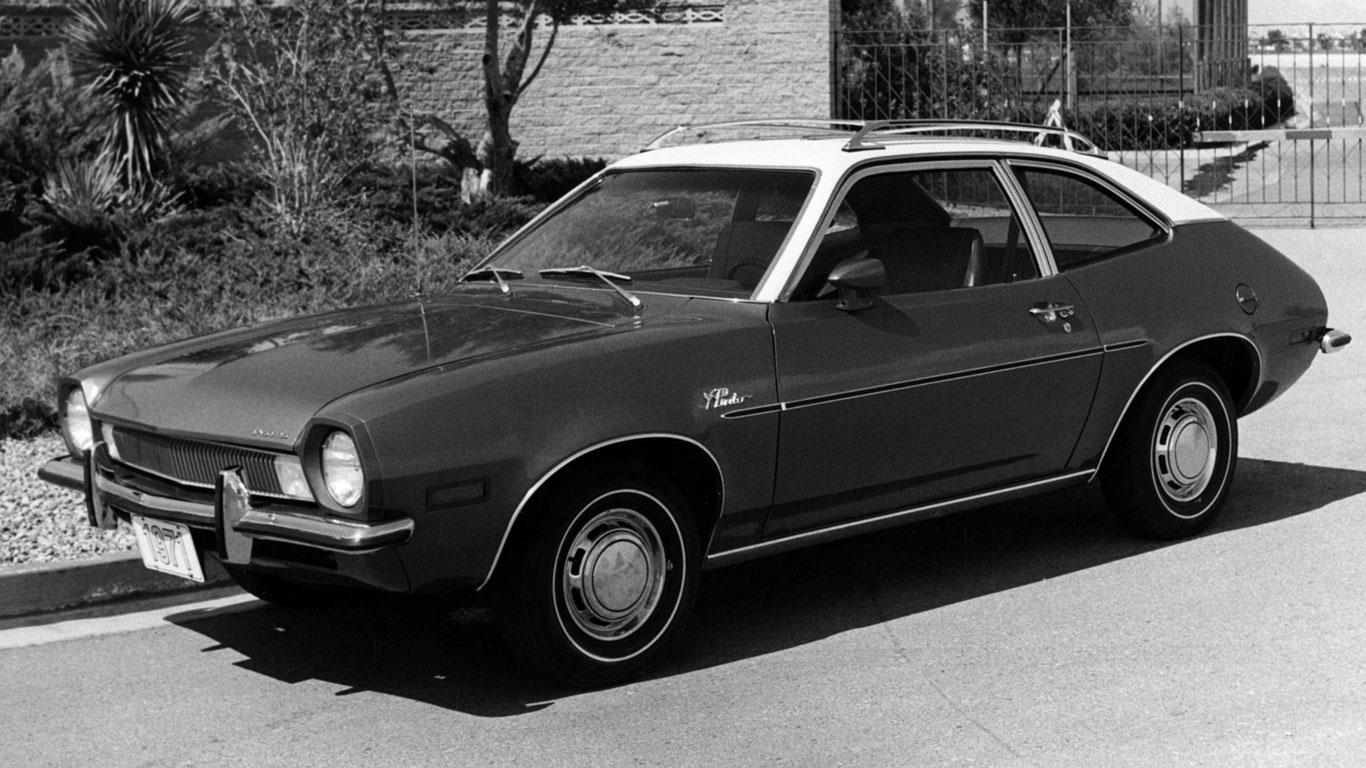
Ford Pinto
Ford Pinto

Arguably one of the most famous cars in American history, but for all the wrong reasons. The Ford Pinto’s tendency to explode in the event of a rear-end collision didn’t exactly help sales, but it thrust it to the front of American newspapers. The most infamous American car in history?

Ford Fairlane 500 Skyliner

It was billed as the ‘world’s only hide-away hardtop’ and while retractable roofs were nothing new, the Ford Fairlane 500 Skyliner was quite the innovator. Rather than using hydraulics, as was commonplace at the time, the Skyliner used a series of electric motors – three to open the rear deck, one to unlock the top and another to send it into the boot. The rear deck then lowered via a separate servo, with the entire process taking less than a minute.

Ford Taurus

The 1981 Ford Taurus saved the company from bankruptcy, but it didn’t happen by accident. When the project team set out to create the car, they evaluated 400 different characteristics of the best cars in the world, ranging from the feel of the heater control to the appearance under the bonnet. Numerous design features ensured it was one of the most aerodynamic cars in the world.

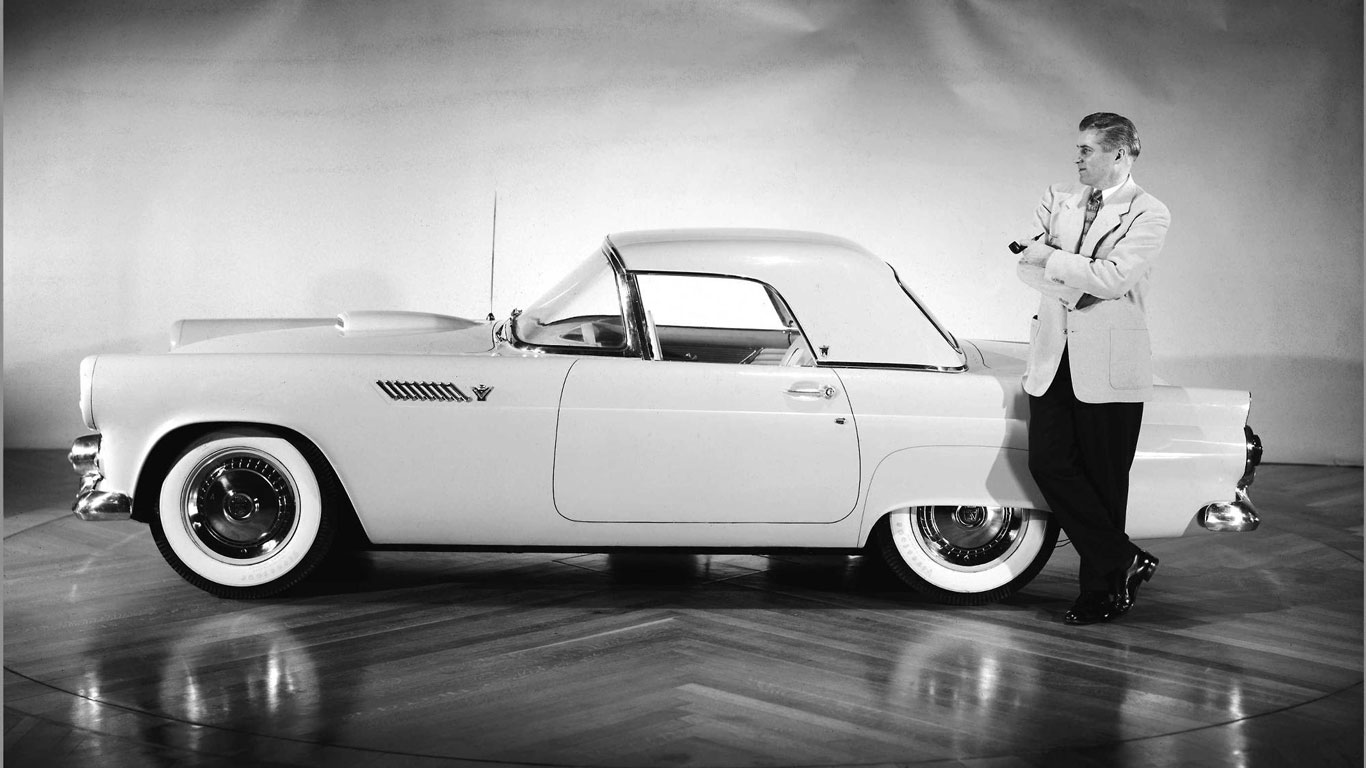
Ford Thunderbird
Ford Thunderbird

Though the Ford Thunderbird had the look of a sports car, it was the first vehicle to be marketed more as a personal luxury car. The T-bird became a social and cultural icon, with a legion of celebrity owners helping to elevate the Ford to a higher plane. Over 4.4 million units were sold before Ford, and not daddy, took the T-bird away in 2005.

GM EV1

Twenty years on, the GM EV1 looks like the right car in the wrong era. It was the first mass-produced and purpose-designed electric car and the first to be produced by a major American carmaker. A range of 100 miles simply wasn’t enough for the majority of Americans, while as a two seater it was hardly family friendly. It was also cripplingly expensive to build, meaning GM was all too quick to crush the majority of EV1s when the leases expired. A groundbreaking failure?

GM LeSabre Concept Car

The 1951 LeSabre Concept Car didn’t so much as break the mould as change it. This was one of the world’s first concept cars, which introduced a number of technical procedures that would become commonplace in automotive design. Indeed, by using precise measurements and data, the LeSabre Concept Car laid the foundations for computer-modelling techniques. The aircraft-inspired design influenced many cars of the 1950s.

Hennessey Venom GT
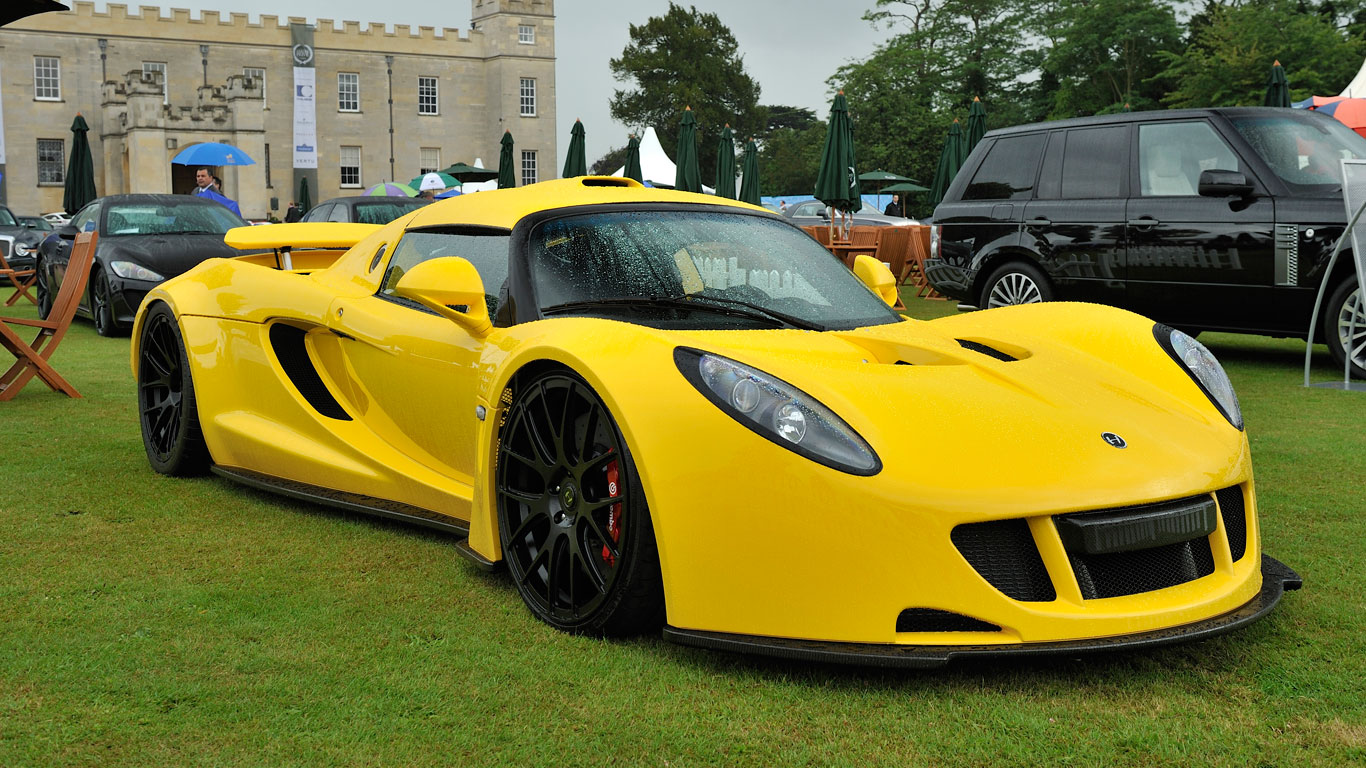
Hennessey Venom GT

The Hennessey Venom GT is essentially a Lotus Exige fed on a diet of Red Bull and rocket fuel. It has set a number of unofficial speed records, including an amazing 270mph at the Kennedy Space Record. Unfortunately for the twin-turbocharged V8 Venom, it doesn’t qualify for a Guinness World Record as the speed would have to be recorded over a measured mile in both directions.

Honda Accord

Wait, what, a Honda Accord? While we accept Honda is as Japanese as sushi, the Mk2 Accord will go down in history as the first Japanese car to be built in America, changing the automotive landscape forever. The first Accord rolled off the Marysville production line in 1982.

Hummer H1

Few cars can thank the influence of one outside individual for coming to market. None other than Arnold Schwarzenegger convinced AM General to launch a civilian version of the HumVee, made famous by its role in Operation Desert Storm. The original Hummer was born and production would continue until 2006.

Jeep Wagoneer
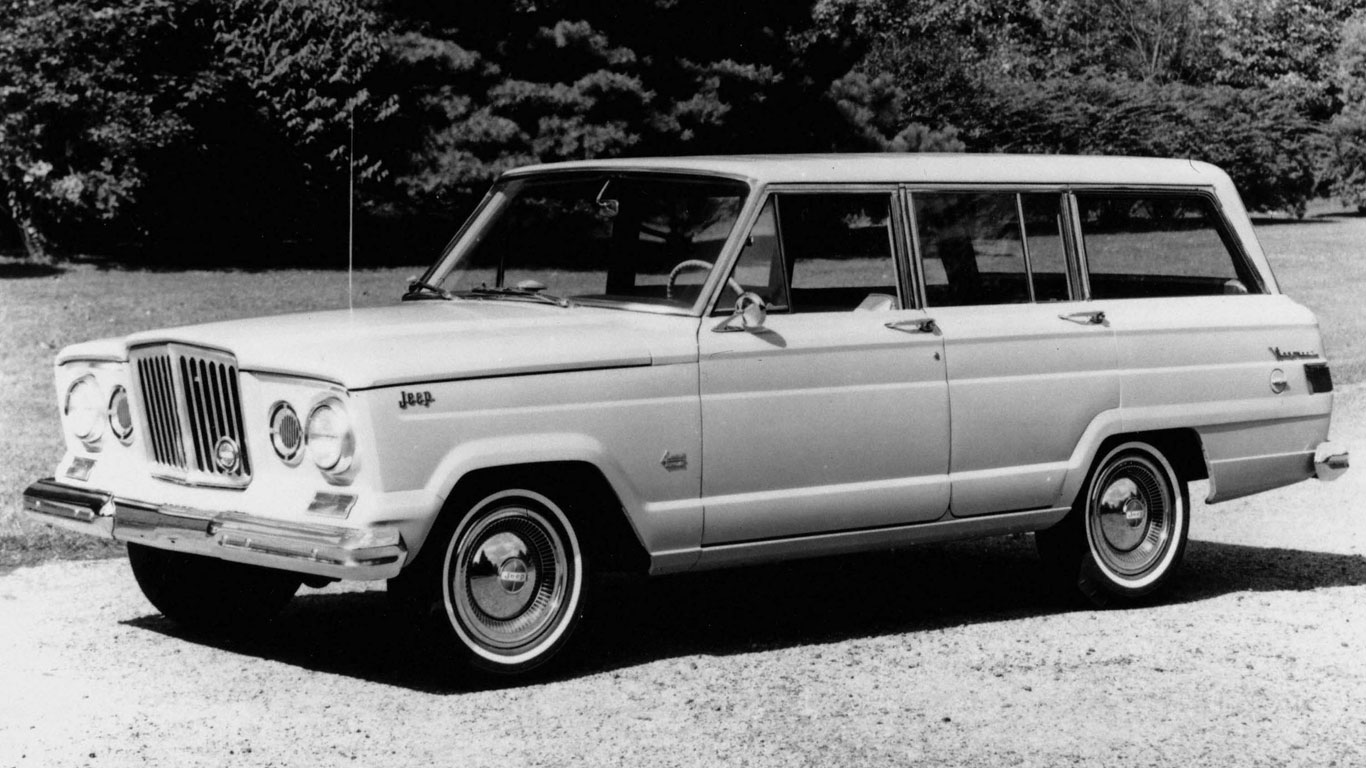
Jeep Wagoneer

Step aside Range Rover, because this was the world’s first luxury SUV. Introduced in 1963, the Jeep Wagoneer offered the biggest cargo area and largest tailgate opening in its class, while passengers reveled in a huge amount of cabin space and a few luxuries. As it evolved, the Wagoneer grew ever more luxurious, spawning a larger Grand Wagoneer, before it made way for the Grand Cherokee.

Oldsmobile Curved Dash

While the Ford Model T was the first affordable mass-produced vehicle, the Oldsmobile Curved Dash of 1901 is credited as being the first mass-produced vehicle of any kind.

Oldsmobile ‘Rocket’ 88

Work started on the Rocket V8 engine back in 1946, with the engine going into production in 1948. The Oldsmobile Rocket 88 shot to fame as the pace car for the 1949 Indianapolis 500, before winning no fewer than six NASCAR races in the same year. It’s credited as being the world’s first muscle car.

Oldsmobile Toronado
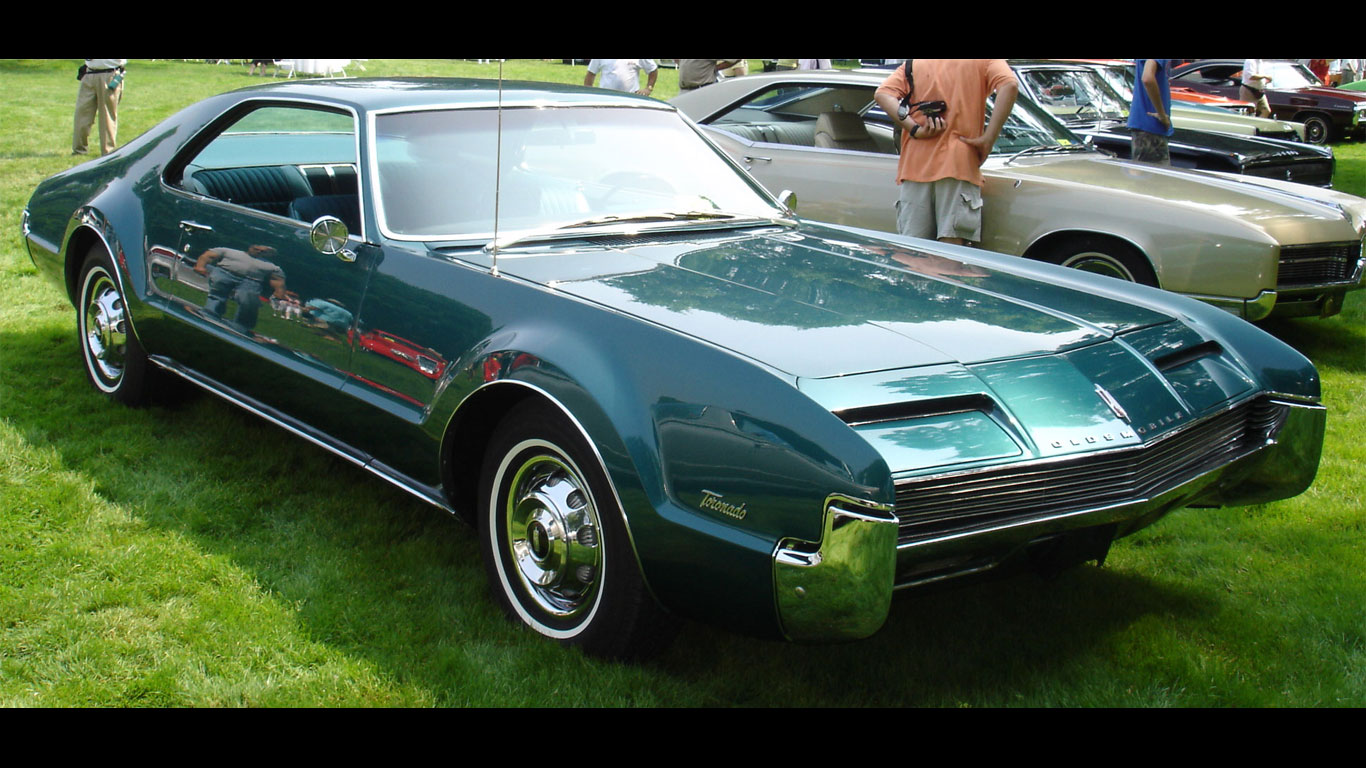
Oldsmobile Toronado

The aforementioned Cord was a bit of a false dawn for front-wheel drive, but it would make a reappearance in the Oldsmobile Toronado of 1966. This itself gives it historical significance as the first volume production front-wheel drive car since the 1930s. It went head-to-head with the Ford Thunderbird as one of the first personal luxury cars.

Shelby Cobra

The very first Shelby Cobra is set to go under the hammer at RM Sotheby’s auction in Monterey, California. The auctioneers describe it as “the most important modern American car – period.” Not convinced? RM Sotheby’s claims: “When it comes to American sports cars, CSX 2000 is without peers. Its historical significance and impact on the global sports car scene cannot be overstated.”

1923 Star

For many American children, a family holiday meant piling into a station wagon and hitting the freeway. Face it, nobody does station wagons quite like the Americans. And these big, softly-sprung and occasionally wood-panelled family trucksters can trace their roots all the way back to the 1923 Star – a vehicle large enough to carry passengers and their cargo.

Studebaker Avanti
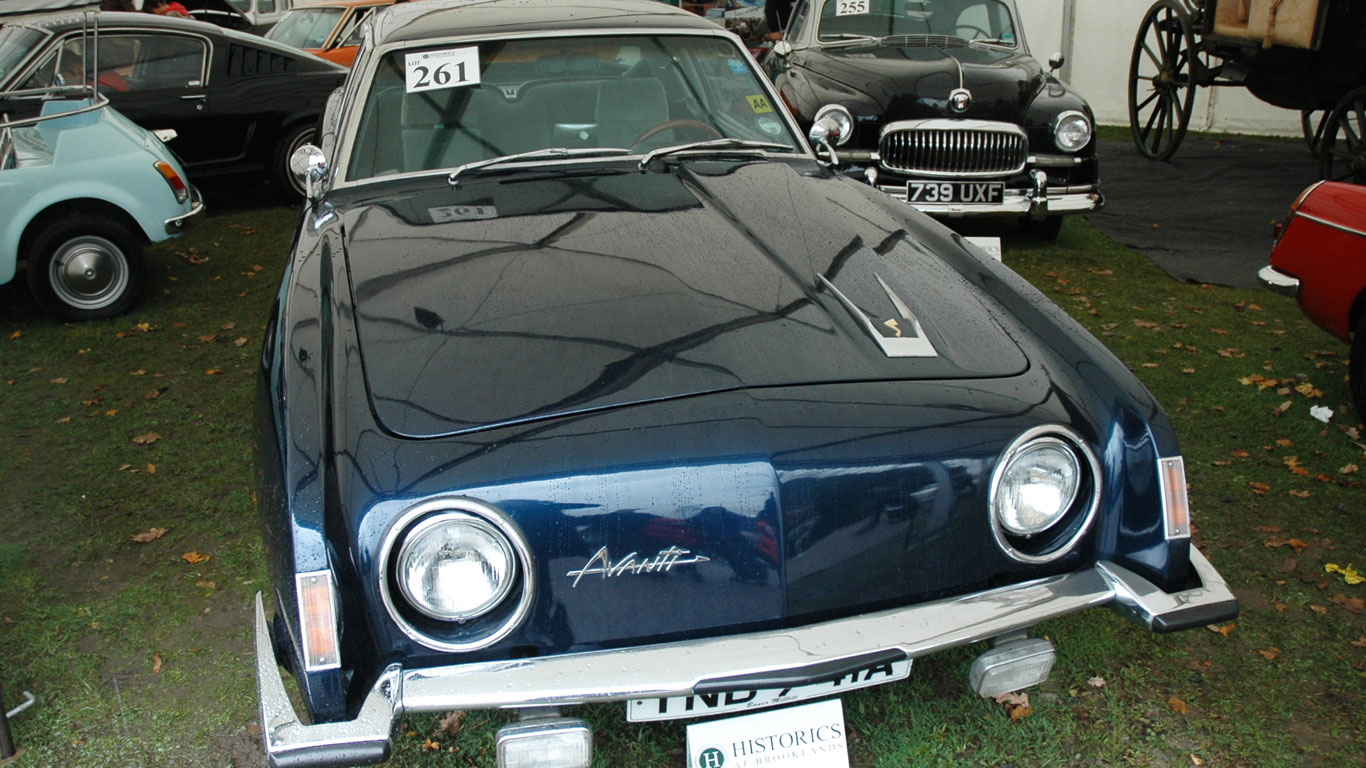
Studebaker Avanti

A genuine case of what might have been. The Studebaker Avanti’s styling was handled by the flamboyant Raymond Loewy and it was America’s first mass-produced fibreglass body, four-seat passenger car. Innovations included a built-in roll cage, padded interior and no front grille, while the shape was delightfully Italian in style. Sadly, production issues led to the demise of the Avanti, with Studebaker following soon after.

Tesla Model S

Is it too early to credit the Tesla Model S as being a car that broke the mould? Perhaps, but there’s no doubting its success, which has spread far beyond the coast of America. Here is an electric car that has the range and practicality to rival a standard car, while developing a near-cult status. It’s not cheap, but it has moved the game on.

Tucker 48

Preston Tucker assembled an all-star cast and the largest factory building in the world to bring the Tucker 48 to market. History will recall that, while the project was ill fated, the Tucker 48 had the potential to be a hugely successful automobile. Not only did it look magnificent, it also featured the likes of a central headlight that swivelled when cornering; disc brakes; a pop-out windscreen; rear engine; and a padded dashboard.

Vector W8
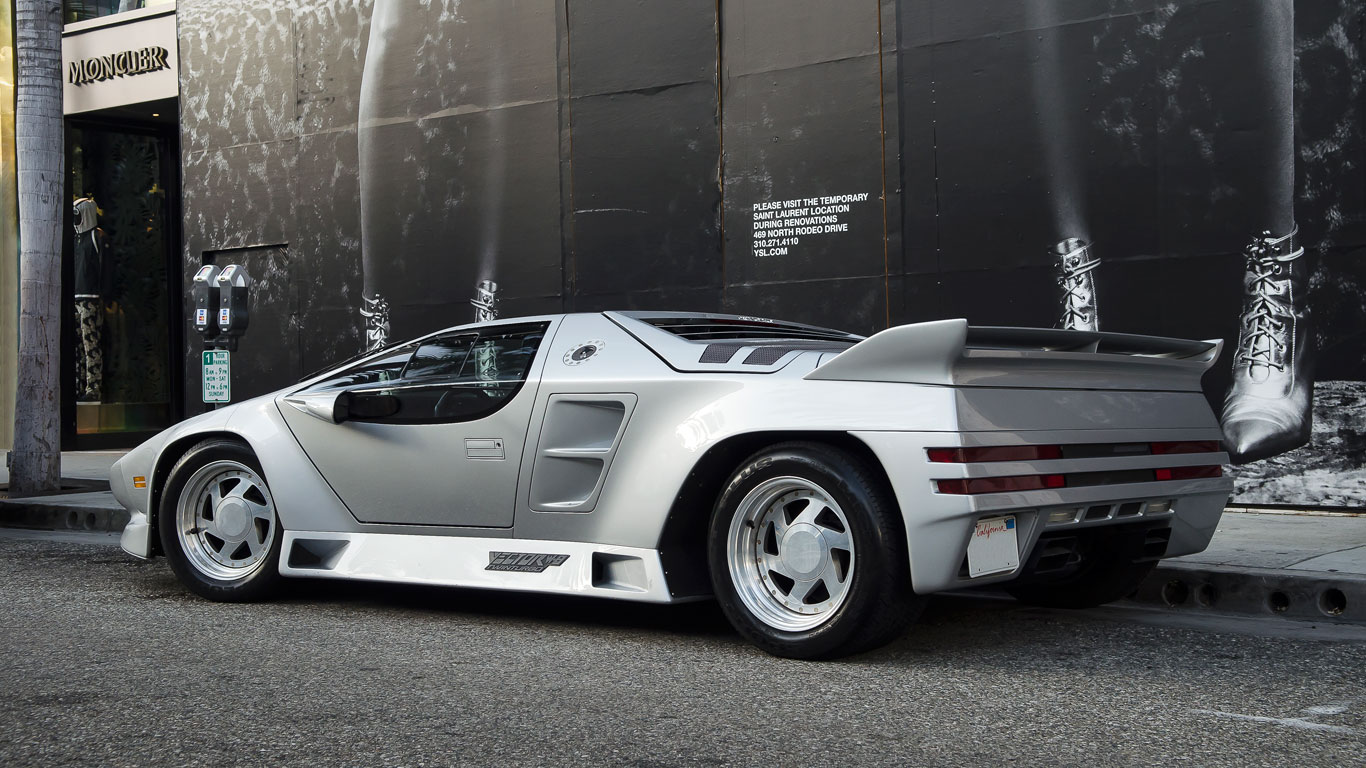
Vector W8

The first American-built supercar, arguably of all time, but certainly of the modern era. Thanks to its carbonfibre body and 650hp V8 engine, the Vector W8 could top 220mph, sprinting to 60mph in four seconds. Sadly, a $400,000 price tag resulted in slow sales, meaning Vector failed to get its W8 beyond second base.

1901 Waverley Electric

Early electric cars (such as the pair pictured here) outsold petrol cars in many parts of America, which suggests we haven’t really moved on at all. The Waverley Electric is, according to James May, a car that changed the world.

Willys MB Jeep

The Willys MB was the first mass-produced off-roader and the forefather of all modern SUVs. It played a significant role in the Second World War and yet its initial design was completed in just 49 days. It also influenced that other off-road icon – the original Land Rover.
Advertisement

Top 5 electric car myths busted by EV charging experts

0

Busted: top five electric car myths

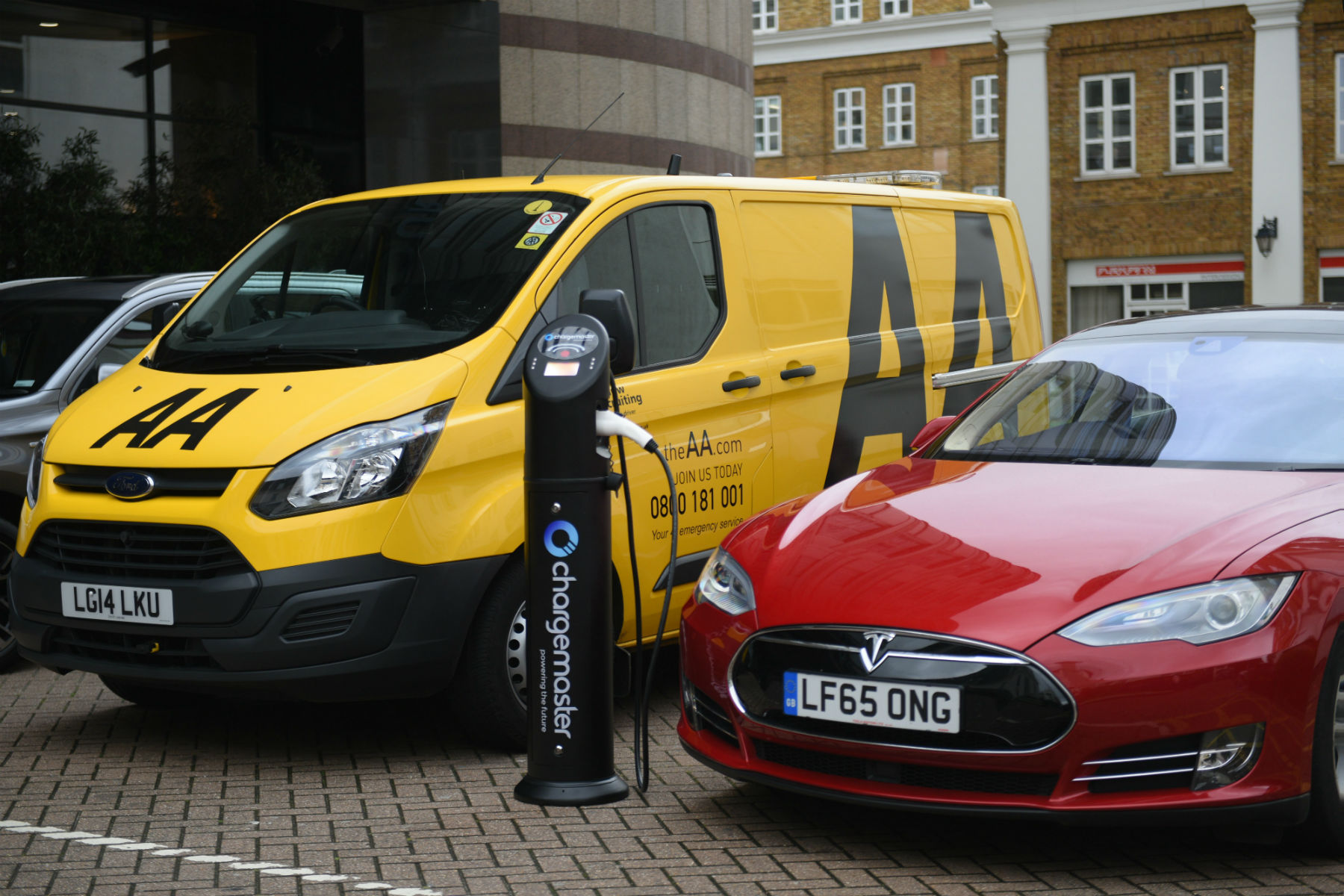
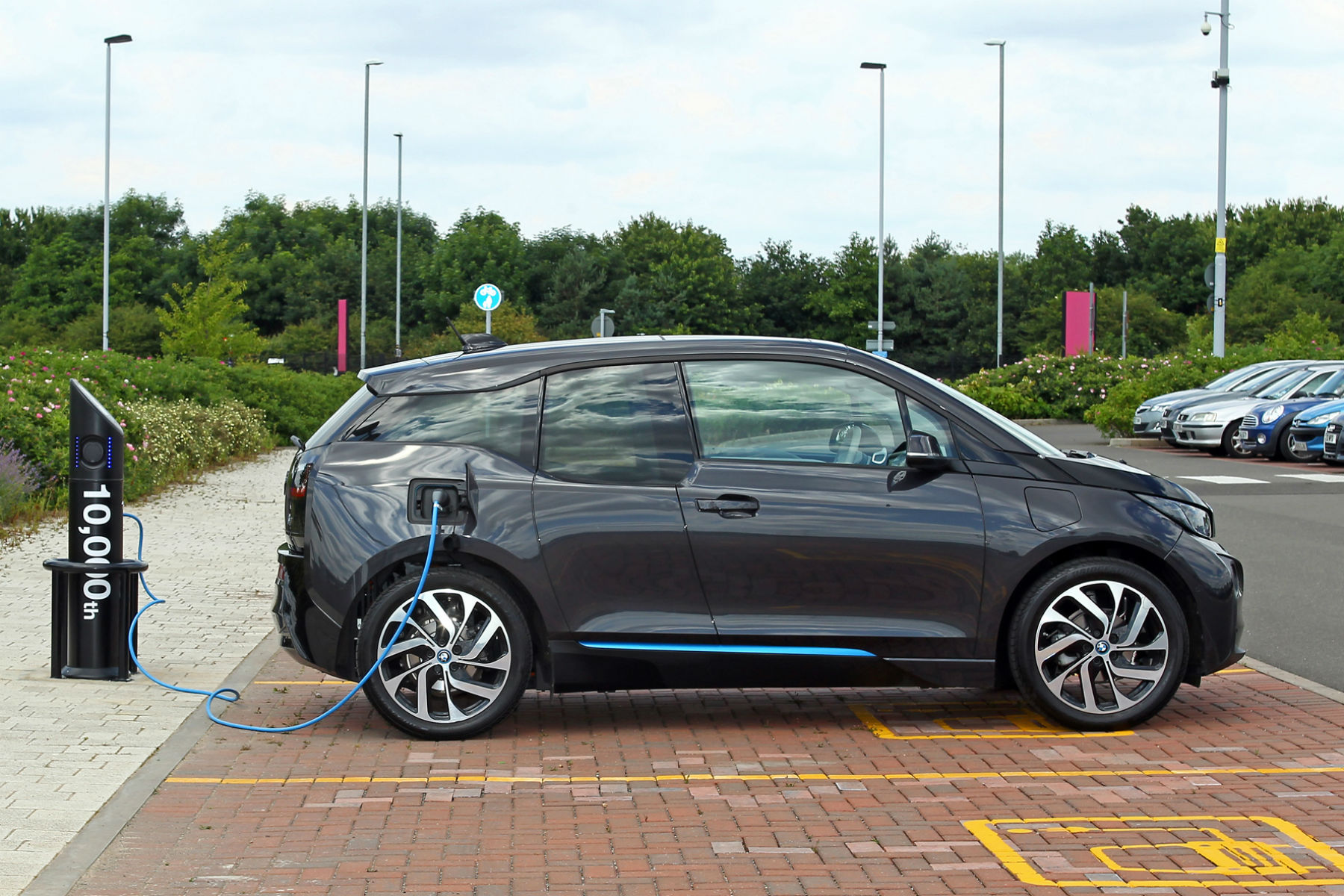
What’s stopping you buying an electric car? With ultra-low emission electric and plug-in hybrid car sales booming within the last year, the AA reckons we could be on the verge of a ‘tipping point’ – with half a million expected to be on the roads by 2020.

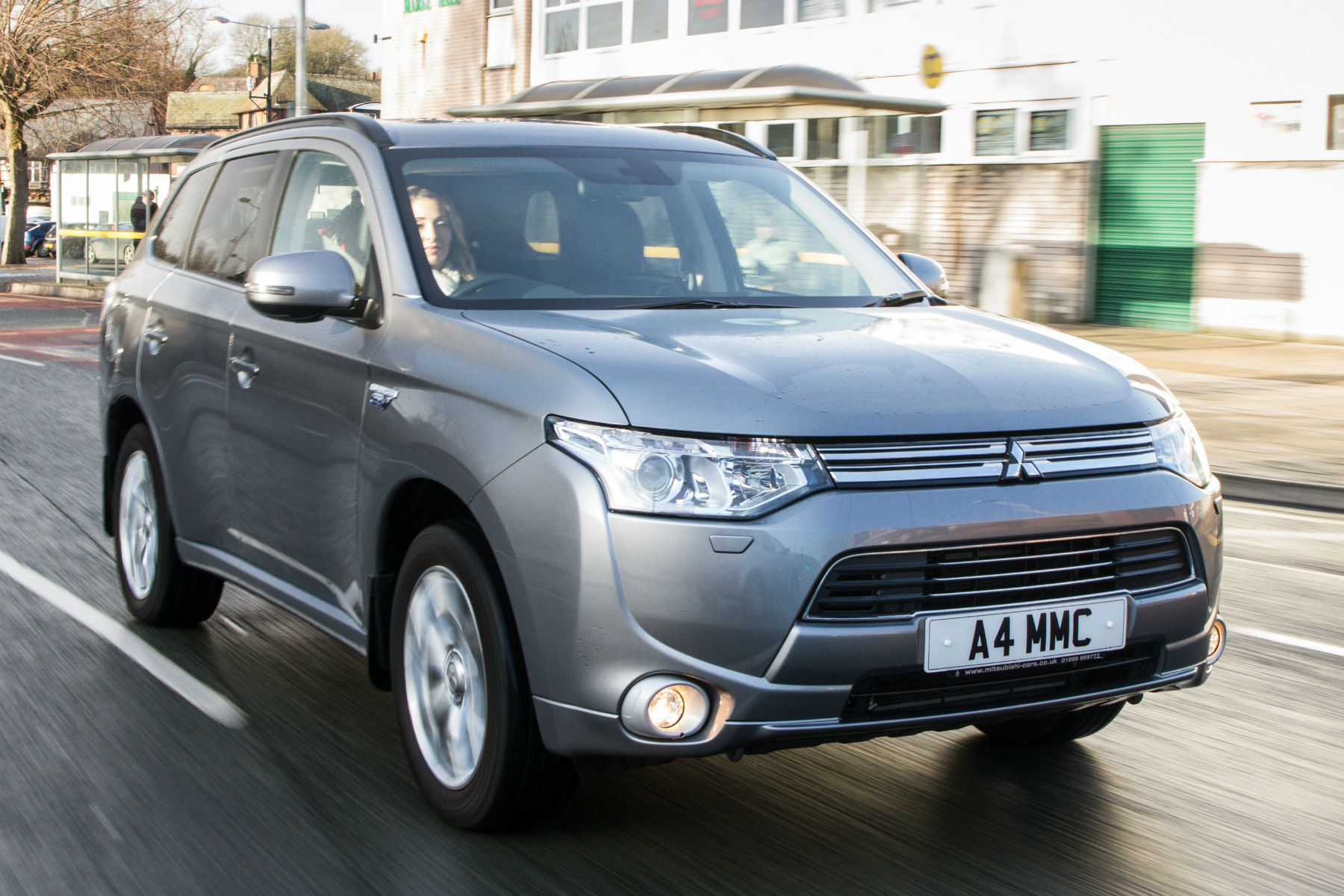
Mitsubishi Outlander PHEV (2016): long-term review

But many of us are continuing to snub electric and plug-in hybrid cars. Why is that? The AA has teamed up with charging experts Chargemaster to dispel the top five myths surrounding electric car ownership.

1: Electric cars costs too much (82% concerned)

Apparently 82% of those surveyed are put off by the high purchase price of an electric car. They are more expensive than conventional petrol and diesel cars, but savings are available. Government grants slash up to £4,500 off the list price of a new electric car, with the Renault Zoe starting at £13,945 (although battery hire is charged on top of that).

Impressive lease deals are available – and electric cars have been around long enough for them to start cropping up at tempting prices in the classifieds. You can buy a three-year-old Renault Zoe or a more practical Nissan Leaf from around £5,000.

2: Availability of public charging points (81% concerned)

2: Availability of public charging points (81% concerned)

This is a chicken and egg situation – as more of us buy electric cars, more public charging points will pop up. Currently, Chargemaster says 4,000 publicly accessible charge points are available through its scheme – with a further 500 to be added this year. Ecotricity has fast electric chargers at almost every UK motorway service station.

3: Time taken to offset higher purchase price through fuel and taxation savings (68% concerned)

Although we’ve said that electric cars are more expensive to buy than conventionally-fuelled vehicles, you will save some money through their low running costs. But 68% say they don’t think those running costs will offset the higher purchase price quick enough.

Of course, it depends on your personal circumstances, but you might be surprised how much money running an electric car can save. For a start, you won’t pay road tax and company car drivers will save money on benefit in kind (BIK) tax. If you drive into London regularly, you could save a fortune on the congestion charge – and EVs usually get free parking while charging, saving you money if you regularly pay and display.

4: Durability of battery (65% concerned)

4: Durability of battery (65% concerned)

Replacing a battery could be a huge cost in electric car ownership, so prospective buyers are right to be concerned about the cell’s lifespan. The AA says that batteries in older EVs are aging better than expected, however, and a number of manufacturers are now offering warranties of around eight years on batteries in new EVs.

5: Limited range (59% concerned)

You can refuel some diesel cars and not have to visit a petrol station for at least 600 miles, while some electric cars have a real-life range as short as 60 miles. But how far do you really need to travel on a charge? National statistics suggests that 95% of car journeys are under 25 miles – and a third of UK households have two or more cars. Using an electric car everyday is a very realistic proposition for most of us, then – just use a second car (or hire one) for that occasional journey to the in-laws.

As battery technology progresses, the realistic range of electric cars are getting longer, and the AA says that it expects 200 miles from a single charge to be the norm within two years. You can already expect a Tesla Model S to cover 250 miles from a charge, while plug-in hybrids are available with a petrol engine as back-up for when you run out of electric juice.

The partnership between AA and Chargemaster brings a number of advantages to members and electric car owners, to help make ownership easier and more appealing. These include discounts on Chargemaster membership, enabling access to its chargers for £7.85 a month, and a programme to install charge points at AA-rated hotels.

Advertisement

Lewis Hamilton reveals new Mercedes-AMG GT R

0

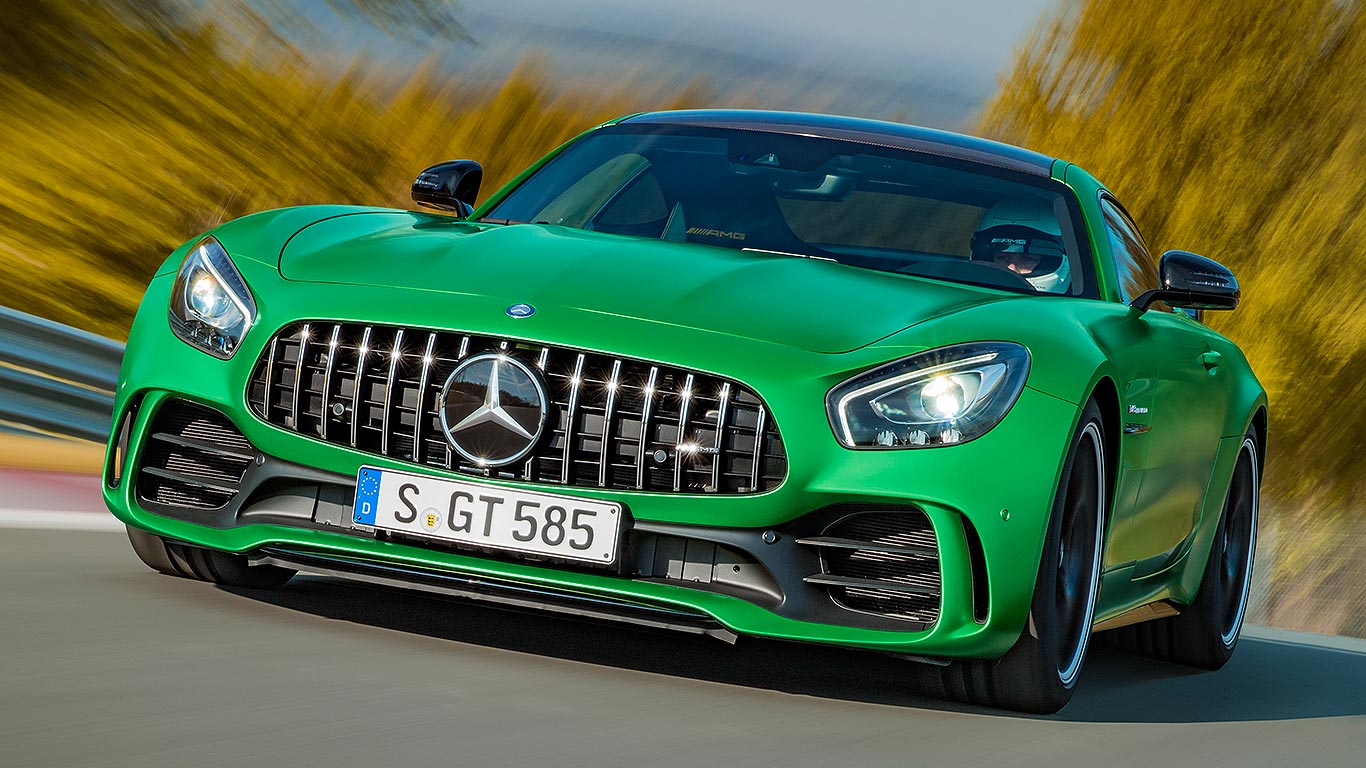
Mercedes AMG GT R (2016)Lewis Hamilton has helped Mercedes-AMG reveal a dramatic new 585hp AMG GT R in a dramatic dynamic drive at Mercedes-Benz World Brooklands, UK. The new Mercedes-AMG GT R has had most of its development carried out on the Nürburgring race track to make it one of the most focused high-performance road cars yet built by AMG.

And it even has a paint job to match – a special ‘AMG green hell magno’ green, in tribute to the racetrack Sir Jackie Stewart called ‘green hell’…

Mercedes AMG GT R (2016)

Hamilton was in great form at the reveal of the GT R, grabbing the keys from Mercedes-AMG boss Tobias Moers to take it for a quick spin at the famous Brooklands circuit. “I was surprised it was street legal,” he said: the wide body, extra power and bellowing sound all get his vote.

“The improved aerodynamics are cool too – most people don’t notice that.” So, how has Mercedes-AMG created the bright green new GT R that’s so impressed the reigning F1 World Champion? We found out…

The Mercedes-AMG GT R has been created to bring closer links between its road-going supercars and the firm’s motorsport GT3 racers. There’s a thriving AMG GT3 customer-sport racing series and many of these features have been incorporated into the new GT R. It’s a much, much more focused car than any AMG GT up to now.

Mercedes AMG GT R (2016)

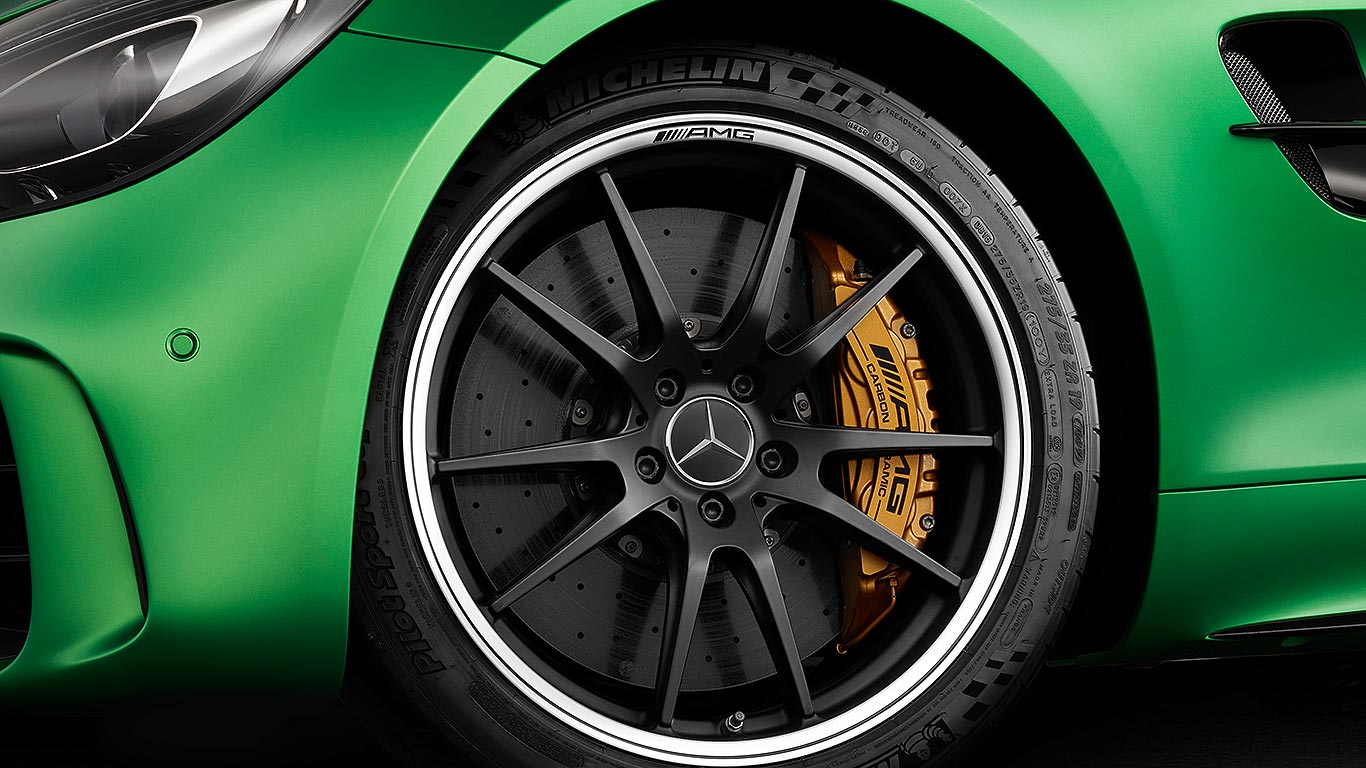
Pretty much everything involved in performance and dynamics is new. Key features of the Mercedes-AMG GT R include wider front and rear wings to cover wider tyres (325-section at the rear!), bigger rear spoiler and a double diffuser similar to that which was banned in F1 for being too effective. It has adjustable coilover suspension, active rear-wheel steering and lightweight wheels with racy cup tyres – plus a huge number of expensive detail changes throughout. Extensive upgrades indeed…

The GT R’s stance oozes attitude. Carbon fibre front wings are 46mm wider, and they’re 57mm wider at the rear. Tracks are wider and there are 19-inch forged alloys at the front, 20-inch rims at the rear. That big rear wing is also manually adjustable depending on the type of use (or type of racetrack you’re at): just like in motorsport.

All-out speed isn’t really the focus here, even though the engine does boast a serious step-up in power to 585hp (compared to the current GT S’ 510hp). This delivers 0-62mph in 3.6 seconds and a top speed of 197mph.

Oh, and you’re probably aware there’s already a GT-R in the world – the Nissan GT-R. Clearly though, Mercedes-AMG has reached an agreement that means Nissan’s happy with its GT ‘racing’ being called GT R. We’re sure the lack of a hyphen in AMG’s version is key here…

Mercedes AMG GT R (2016)

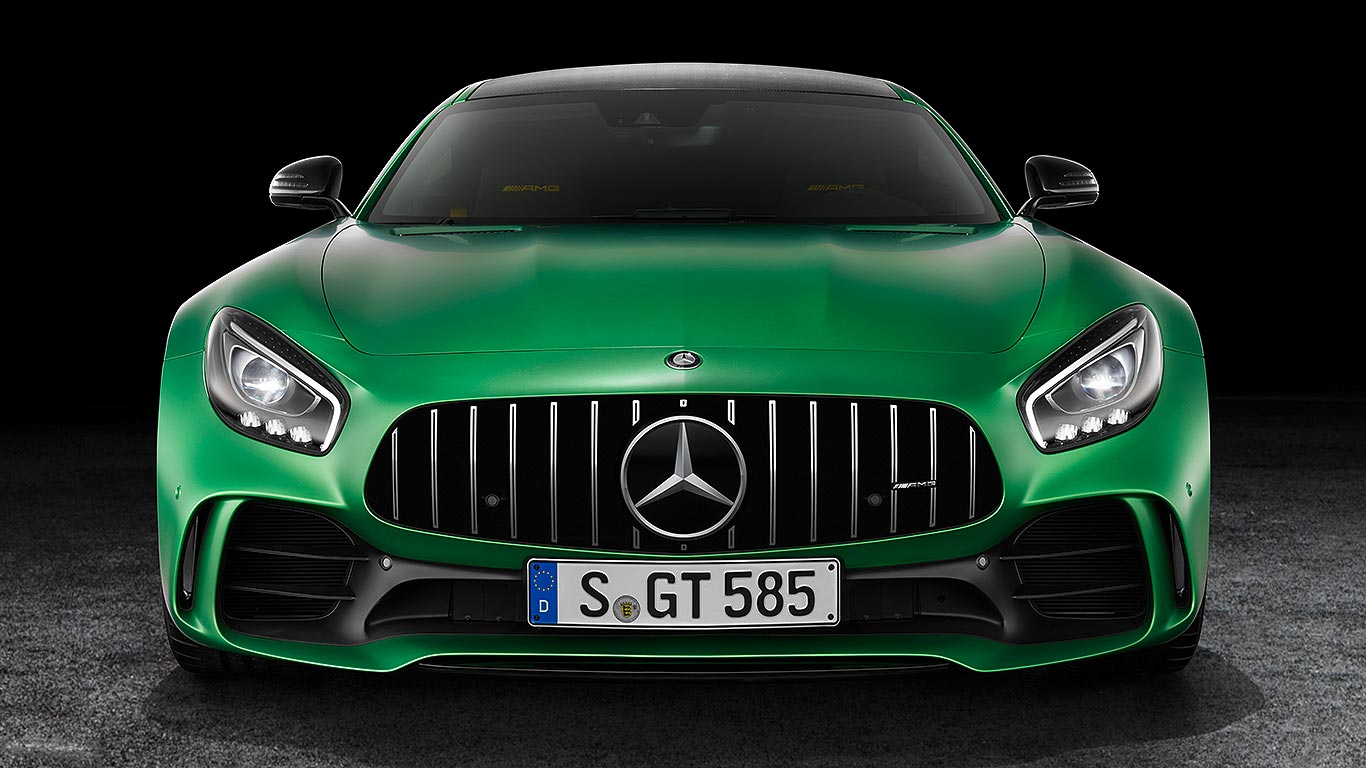
The front end oozes aggression. A 15-fin chrome grille mimics the AMG GT3 racer, while the shape of the grille mimics the famous 1952 Mercedes-Benz 300 SL that won Mexico’s Panamerica race. It’s lower and meaner at the front, feeding extra air to the engine, reducing lift and enhancing aerodynamics.

There are active aerodynamics underneath: at 50mph, a carbon fibre panel lowers 40mm, ‘sucking’ the car to the road, something that adds greater stability and extra feel to the steering. It also helps send more air to the rear double diffuser, clamping down the rear end at speed as well. Don’t worry – it’s mounted on springs, so won’t easily be broken…

A Mercedes-AMG first is active rear-wheel steering. Up to 62mph, they turn in the opposite direction to the fronts, making the GT R more agile. Over this, the turn in the same direction, improving high-speed stability and also making it more responsive at speed.

Mercedes-AMG has given the interior a race-style makeover with weight-saving manually-adjustable bucket seats, yellow-highlight dials and, brilliantly, yellow seatbelts.

The 585hp engine is faster-responding and Mercedes-AMG has fitted a lighter flywheel to further enhance the race-like feel. The ‘race start’ launch control has been sharpened too: it now dials up more starting revs and has better control of wheel slip. Dynamic engine and gearbox mounts are fitted.

Mercedes AMG GT R (2016)

Michelin Pilot Sport Cup 2 tyres are standard – rubber that Mercedes-AMG amusingly calls “street-legal racing tyres”. Not only do they have more grip than the regular tyres, they also last 50 per cent longer on a racetrack.

Car tuners love coilover suspension because it’s just like tech from motorsport. It’s fitted to the Mercedes-AMG GT R; it’s fully adjustable and is paired with AMG Ride Control adaptive damping with three settings. Mercedes-AMG suggests ‘comfort’ for the road, ‘sport’ for challenging, undulating racetracks such as the Nürburgring and ‘sport plus’ for flatter, higher-speed circuits such as Germany’s Hockenheim.

You want settings and adjustability? The Mercedes-AMG GT R gives you settings and adjustability – not least a nine-level traction control system, adjusted via a cool yellow twist-dial in the centre console. Choose level 1 for wet weather, up to level 9 for maximum slip. Be Lewis Hamilton om the move, in other words.

The Mercedes-AMG GT R will be a step up from the GT S because “it combines the driving dynamics of our AMG GT3 racing car with the everyday practicality of the AMG GT,” says Mercedes-AMG CEO Tobias Moers. “It’s a new benchmark in performance for street-legal cars.”

Mercedes AMG GT R (2016)

The Mercedes-AMG GT R is lighter than other AMG GT models, courtesy of some exotic components. The carbon fibre torque tube, which delivers drive to the rear wheels, weights 14kg, 40 per cent less than standard. There’s less soundproofing, a titanium exhaust silencer, forced alloy wheels and other tweaks. The 15kg overall weight saving over a GT S doesn’t sound huge, but when you consider extra tech such as a stiffer chassis, rear-wheel steering, that larger rear wing, it’s more impressive than it seems.

There’s an interesting nugget in the tech pack for the new Mercedes-AMG GT R: the firm says that incorporating motorsport tech into the AMG GT road car has seen networking between race teams, aerodynamics boffins and designers that has “even resulted in an innovation that now has a patent pending”. Once the patent is granted, we’ll find out what that innovation is, we’re sure…

“Our sports-car and performance brand AMG has its roots in motorsport and, ever since its formation, has repeatedly faced up to the competition on the racetrack. These genes are particularly prevalent in the new AMG GT R. Boasting a wealth of technological innovations, the new top-of-the-range model is proof of the close collaboration between our constructors of racing cars and road-going vehicles,” said Daimler AG board member Prof. Thomas Weber.

Mercedes-AMG GT R launches at Mercedes-Benz World in Brooklands on 24 June – the opening day of the 2016 Goodwood Festival of Speed. It will go on sale on 21 November 2016 and deliveries will begin in March 2017. Prices? To be confirmed, but there will be a serious hike over today’s £110,000 GT S, that’s for sure…

Advertisement

Brexit: the UK automotive industry reacts

0

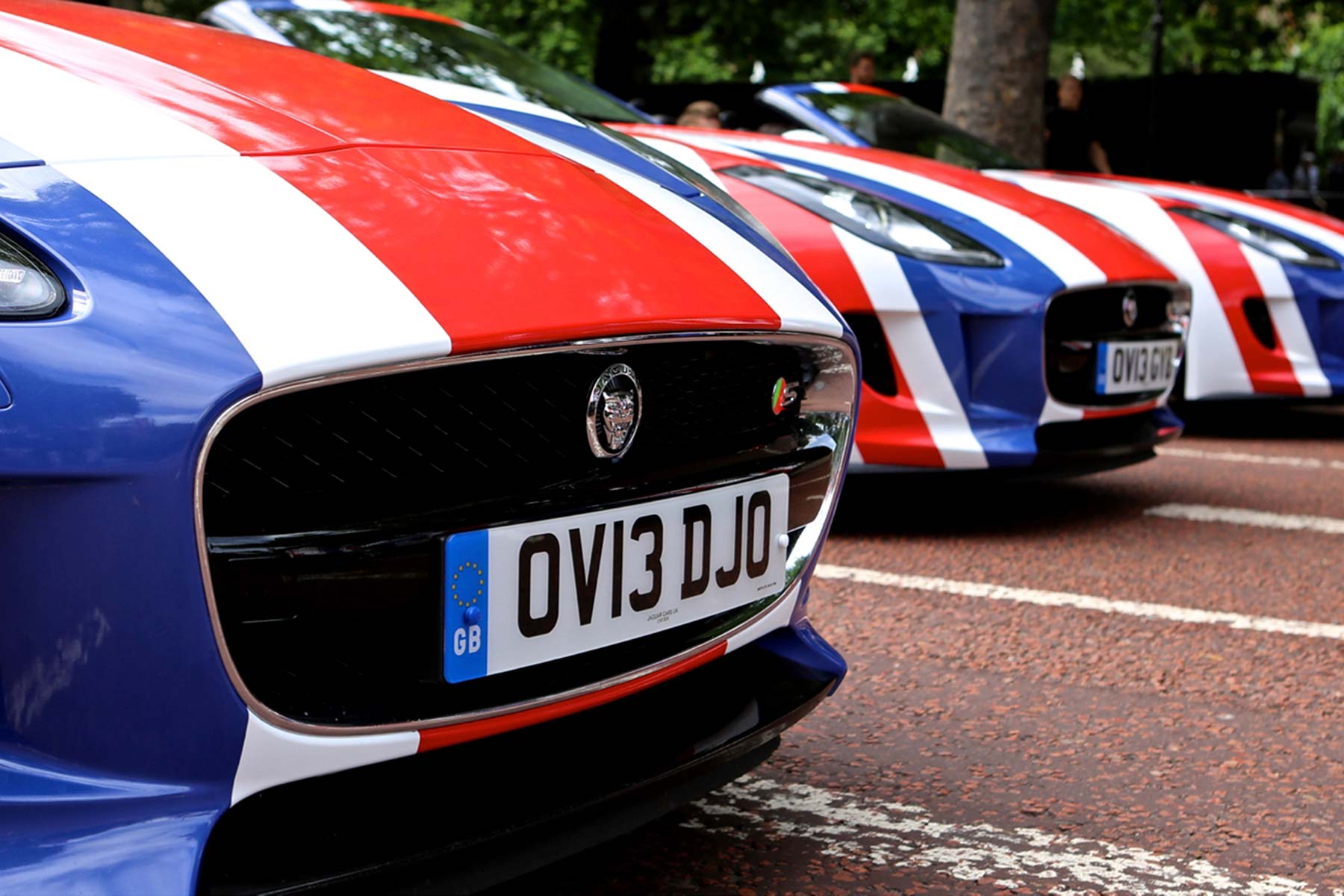
Jaguar Union FlagBritain has voted to leave the European Union, a decision that could have a particular impact on the automotive industry: of the 1,682,156 vehicles produced here in 2015, 77.3% were exported and 57.5% went to Europe.

Opinion: should carmakers have done more to prevent a Brexit?
In or Out: European cars we love – and those we’d send back

That equals almost 750,000 cars being exported to the EU: with the average value of an export being £20,900, this means £15.6 billion of trade could be in jeopardy if, once British export plans are confirmed, a swift resolution to trade deals is not found.

Britain’s next-biggest automotive trade partner is the United States, which take just 10.9% of exports: the ramifications are potentially thus serious.

Top export destinations for UK cars

  1. EU: 57.5%
  2. US: 10.9%
  3. China: 7.0%
  4. Turkey: 2.9%
  5. Australia: 2.8%
  6. Russia: 2.0%
  7. Japan: 1.8%
  8. South Korea: 1.7%
  9. Canada: 1.2%
  10. Israel: 1.2%

The short-term impact on British motorists is also potentially costly. The RAC has already predicted fuel prices will rise by 2p a litre due to the fall in the value of sterling, while Glass’s says there will be a slowdown in market activity as people put off big-ticket purchase decisions because of the Brexit uncertainty.

The UK automotive industry employs almost 800,000 people and had turnover of £69.5 billion in 2015. Seven mainstream car manufacturers build vehicles here, as do eight premium and specialist brands. It is one of the UK’s most important industries.

Here, then is how the automotive industry has reacted to the news – and keep coming back to more Motoring Research analysis of what Brexit means for the automotive industry…

SMMT

Chief executive Mike Hawes said: “The British public has chosen a new future out of Europe. Government must now maintain economic stability and secure a deal with the EU which safeguards UK automotive interests.

“This includes securing tariff-free access to European and other global markets, ensuring we can recruit talent from the EU and the rest of the world and making the UK the most competitive place in Europe for automotive investment.”

Jaguar Land Rover

A JLR spokesperson said: “For Jaguar Land Rover, today is just business as usual. We are a British business with a strong manufacturing base in this  country, we call Britain home and we remain committed to all our manufacturing sites and investment decisions.

“We respect the decision of the British people and in common with all other businesses, Jaguar Land Rover will analyse the issues arising from it: as of today, nothing has changed for us or the rest of the British automotive industry.

“Europe is a key strategic market for our business, comprising 20% of global sales, and we remain absolutely committed to our customers in the EU.

“There will be a significant negotiating period, and we need to understand more about that as details emerge. We will work hard 
with all parties to ensure that the importance of the British automotive industry is fully understood at every level of the 
negotiation process.”

In 2015, Jaguar Land Rover produced 500,000 vehicles in the UK: 80% of production was exported to more than 180 countries

BMW Group

A BMW GB spokesperson said: “BMW Group respects the British electorate’s decision to leave the EU. While it is clear there will now be a period of uncertainty, there will be no immediate change to our operations in the UK.

“Today, we know that many of the relevant conditions for supplying the European market will have to be re-negotiated, but of course we cannot say what this means for our UK operations until those future regulatory and legislative arrangements are agreed. We will not speculate about the outcome of these negotiations nor about any possible effects that might have on our production operations in the UK

In 2015, 201,206 MINIs were built in the UK. 80% of MINIs built in Oxford are exported, and 50% of those go to Europe

Honda

A Honda spokesperson said: “A decision has been taken by the British people and Honda respects that decision. At this moment, it is not clear what conditions and rules will ultimately replace the UK’s membership of the EU. We will therefore carefully monitor developments.

“We continue to prepare for the production launch of the 10th generation Civic from our Swindon plant. Honda remains committed to its business in Europe.”

In 2015, Honda built around 130,000 cars in the UK. 40% went to Europe

Nissan

Motoring Research contacted Nissan for comment: the firm said it is making no comment at this time.

In 2015, Nissan produced 476,589 and exported 55% to Europe

Toyota

A Toyota spokesperson said: “Going forward we will closely monitor and analyse the impact on our business operations in the UK, and how we can maintain competitiveness and secure sustainable growth together with the UK automotive industry and other stakeholders.”

Aston Martin

An Aston Martin spokesperson said: “Aston Martin will now orientate its business to deliver our mid-term plan in the context of the exit and the market and forex volatility that may exist during the period of transition. As the UK could now be subject to new trade tariff barriers, we also anticipate the need for additional productivity and efficiency in the medium term.  

“Nevertheless, it is important that Government must now maintain economic stability and secure a deal with the EU which safeguards UK automotive interests. This includes securing tariff free access to European and other global markets.

In 2015, Aston Martin sold 3,500 cars

Bentley

A Bentley spokesperson said: “Bentley Motors respects the outcome of the EU referendum and will now work with the UK Government and motor industry to secure a positive future for its business.

“Although it is too early to assess the full implications on our operations, our cars will continue to be built with the same passion and dedication by our skilled workforce. As a global business, operating in many different international markets, we are well-placed to adapt to changing economic and political conditions.

“We will stay focused on our exciting plans for new products. Bentley has a strong future and will continue to be the world’s most sought after luxury car brand.”

In 2015, Bentley sold 10,100 cars, of which 1,695 (17%) went to continental Europe

Glass’s

Rupert Pontin, Glass’s director of valuations, said: “A ‘Brexit’ is an interesting result that sees the UK very much embark on a new chapter that is largely unwritten.

“If the Brexit voters are correct in their thinking, it could create greater prosperity for the country in the long term but, over the next few months and years, the road is likely to be very bumpy. Markets will be affected, as will the value of the pound, and we expect to see consumer confidence tail off until the view of the way forward becomes clearer. How long this will take is difficult to predict.

“For the motor industry, all of these developments are very likely to have negative effects including a period of instability for new and used car sales, as well as an increase in pre-reg activity and downward pressure on values.

Road Haulage Association

Chief executive Richard Burnett said: “This is an ‘earthquake moment’ for the whole country, the economy and our industry. We simply cannot take anything for granted. It’s vital that Ministers and the Bank of England work quickly to steady markets and nerves.”

FairFuelUK

Howard Cox founder of FairFuelUK said: “We are hearing that major oil supplying countries may differentiate oil prices for the UK and EU States following Vote Leave’s victory in the EU Referendum. Any knee jerk reprisal by penalising UK drivers with higher prices at the pumps through higher oil prices, is nothing short of opportunistic, vindictive and unnecessary.

“We are horror-struck that there is hear-say, no matter if it is just grapevine gossip, that global oil prices may now be manipulated by economic region.”

Advertisement

Opinion: should carmakers have done more to prevent a Brexit?

0

Blog: should carmakers have done more to prevent a Brexit?

It’s a historical turn of events that has divided the country: the UK has voted in favour of a so-called ‘Brexit’ of the European Union.

The markets have reacted, with the pound plunging to its lowest level against the dollar since the mid 1980s. No one really knows what the future holds for the UK – but there’s one thing that’s guaranteed, global car manufacturers who produce cars here are going to be disappointed.


More on Brexit from Motoring Research:

The Telegraph: What would Brexit mean for motorists and the UK car industry?

RAC: What the EU referendum means for drivers?


Japanese manufacturer Toyota produces cars at its site in Burnaston, Derbyshire, and warned this week that “if the UK leaves the EU, we think it unlikely that the UK can keep the current trading arrangements.”

It added this would mean paying duties on cars – as much as 10%, leading to huge losses to Toyota, or more expensive cars for customers.

Nissan meanwhile, with its huge Sunderland plant (where around half a million cars are built a year), went as far as taking legal action against Vote Leave for using its logo in its material. And other manufacturers, including Vauxhall, BMW and Jaguar Land Rover, all voiced support for the Remain campaign.

Industry body SMMT also backed staying in the EU – no surprise, as 80% of cars built in Britain are exported, contributing £15.5 billion a year annually to the UK economy.

SMMT chief executive, Mike Hawes, said a Remain vote would continue the automotive industry’s success, “rather than jeopardise it by increasing costs, making our trading relationships uncertain and creating new barriers to our single biggest and most important market, Europe.”

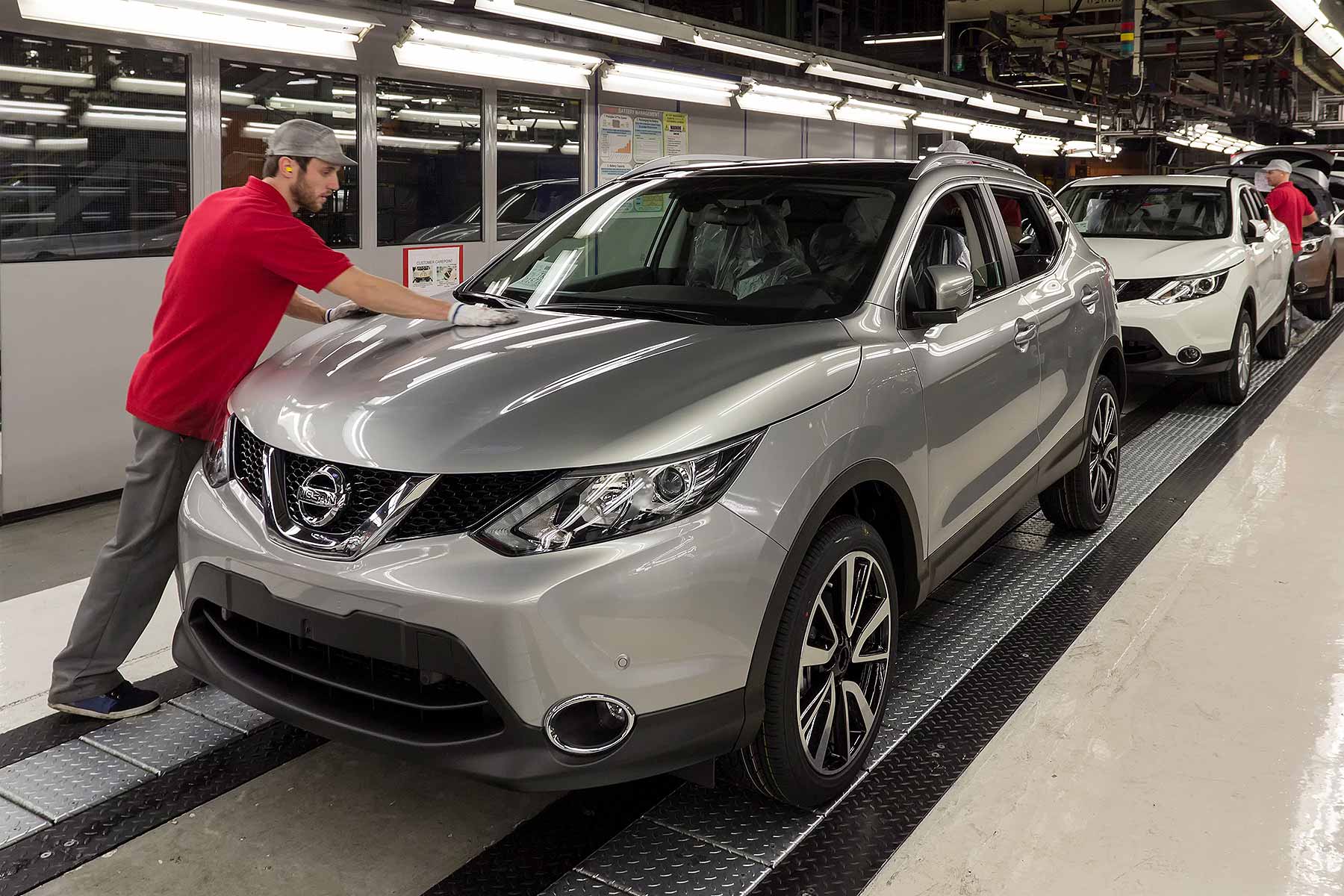
So where did it go wrong? Seemingly at around 1am this morning when Sunderland was one of the first areas to reveal the results of local polls – with Leave taking the lead with 61% of the votes. That’s in an area where around 7,000 people are employed directly in car manufacturing by Nissan, a manufacturer which has strongly backed remaining in the EU.

The people of Derby, home to Toyota’s UK factory, also backed Brexit – with 57% voting Leave, despite the firm directly employing nearly 4,000 workers in the area. And 56% of people supported the Leave campaign in Solihull, home of Land Rover.
The SMMT has been quick to react. Mike Hawes said: “The British public has chosen a new future out of Europe. Government must now maintain economic stability and secure a deal with the EU which safeguards UK automotive interests. This includes securing tariff-free access to European and other global markets, ensuring we can recruit talent from the EU and the rest of the world and making the UK the most competitive place in Europe for automotive investment.”

We don’t know what will happen now. Manufacturers aren’t going to suddenly close down their huge British plants are move production elsewhere – but there could, and will be, significant consequences for car making in the UK.

It raises the question: should car manufacturers have done more? Many wrote to workers, making it clear where they stood. But should they have spelt out the consequences of backing Boris Johnson et al? Or would that have been undemocratic?

ALSO READ

Furious Nissan taking action against Vote Leave in Brexit row

Brexit Remain vote ‘critical’ warns UK car industry

Plug-in hybrid orders CANCELLED as carmakers fail to meet demand

Advertisement

Furious Nissan taking legal action against Vote Leave in Brexit row

0

Nissan SunderlandNissan is seeking an injunction in the High Court against the EU Vote Leave campaign following persistent use of the firm’s name and logo without permission.

The official European Referendum ‘Brexit’ campaign has, says Nissan, used the firm’s name and logo in its literature and on its website – even after Nissan’s “repeated requests for them to stop.

Brexit Remain vote ‘critical’ warns UK automotive industry

“Permission to use our name and logo was not requested. If it was, it would not have been granted.” Nissan says Vote Leave’s use of its brand symbol “grossly misrepresents our widely circulated and publically stated position”.

Nissan has thus issued legal proceedings in the High Court, “asking for an injunction to stop Vote Leave’s use of Nissan’s name and logo, and to prevent them from making any further false statements and misrepresentations concerning Nissan”.

Rather than taking sides in the Brexit referendum, Nissan is not supporting any political campaign, deeming it “a matter for the people of the UK to decide”.

It did, however, say in February that it would prefer Britain remained in the EU: “For us, a position of stability is more favourable than a collection of unknowns,” said Nissan chairman and CEO Carlos Ghosn.

8 in 10 Nissans built in the UK are exported, with most of them going to other European markets.

Advertisement

Brexit Remain vote ‘critical’ warns UK car industry

0

Nissan Great BritainThe UK automotive industry says a ‘Remain’ vote in this Thursday’s European Referendum is “critical to the future” of the industry – and has warned a vote to Leave for Brexit could jeopardise jobs and investment.

Supporting 800,000 jobs in the UK, the UK automotive industry is a major player and its trade body, the SMMT, has spoken today to deliver “absolute clarity on the sector’s position given recent misrepresentations.

“There should be no ambiguity about the sector’s views ahead of such a critical vote.”

SMMT chief executive, Mike Hawes, said a Remain vote will continue the automotive industry’s success, “rather than jeopardise it by increasing costs, making our trading relationships uncertain and creating new barriers to our single biggest and most important market, Europe.”

80% of cars built in Britain are exported, helping contribute £15.5 billion annually to the UK economy: nearly 6 in 10 go to Europe.

“Remaining will allow the UK to retain the influence on which the unique and successful UK automotive sector depends,” said Hawes.

Automotive industry leaders back Remain

The SMMT carried out a survey ahead of the campaigning period to find out members’ views on the European Referendum vote. 77% backed Remain; 9% backed Leave.

“Notably no large company said that an exit would be in their business’ best interests.”

Key reasons given for a remain vote by the SMMT include:

  • Unrestricted access to the world’s largest single market
  • The negotiating strength of the EU to secure international trade deals
  • The ability to shape technical regulations
  • Free movement of labour

The trade body has also today released statements from senior chiefs from Britain’s biggest automotive industry players.

Ken Gregor, Chief Financial Officer of Jaguar Land Rover: “Remaining in the EU – our largest market – will increase Jaguar Land Rover’s chances to grow, create jobs and attract investment in future technologies. Our European supply chain has been fundamental in helping us to meet customer expectations worldwide and achieve sustainable, profitable growth.”

Tony Walker, Deputy Managing Director, Toyota Motor Manufacturing UK: “After considered review, we believe that continued membership of the European Union is best for our business and for our competitiveness in the longer term.”

Dr Ian Robertson, Member of the Board of Management, BMW AG: “We firmly believe Britain would be better off if it remained an active and influential member of the EU, shaping European regulations which will continue to impact the UK whatever the decision on Thursday.”

Rory Harvey, Managing Director and Chairman of Vauxhall: “We are part of a fully integrated European company where we benefit from the free movement of goods and people. We believe not to be part of the EU would be undesirable for our business and the sector as a whole.”

Advertisement

Plug-in hybrid orders CANCELLED as carmakers fail to meet demand

0

MR exclusive: plug-in hybrid orders CANCELLED as manufacturers fail to meet demand

Car manufacturers are having to cancel orders for plug-in hybrid vehicles as demand is greatly exceeding supply of right-hand-drive models for the UK – with waiting lists of more than a year for some models.

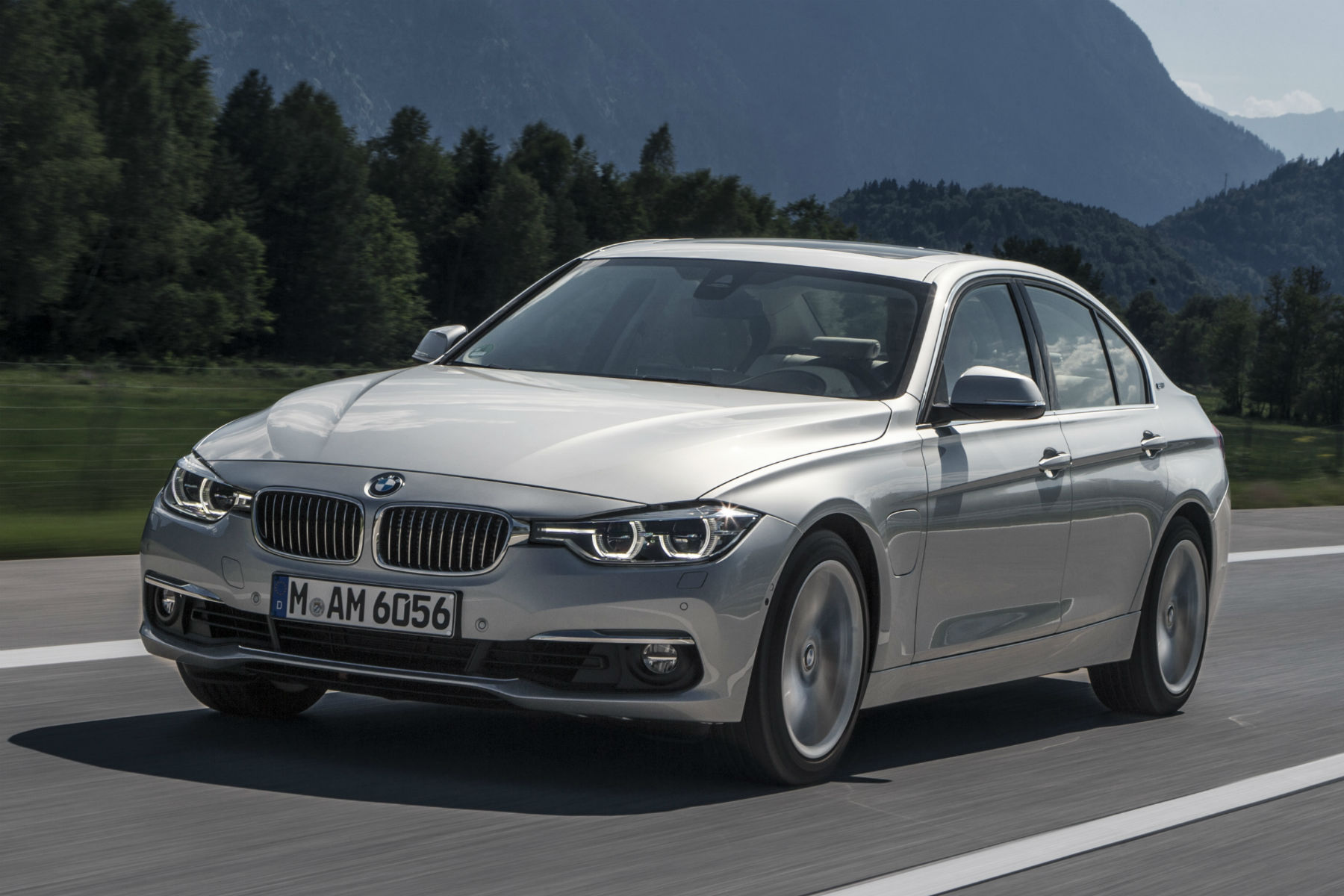
Motoring Research understands that customers who have placed orders for BMW’s newly-launched 330e have had them cancelled by their dealership because the company’s UK allocation for right-hand-drive models has already been filled.

One poster on the PistonHeads forum said: “I’ve had the dreaded phone call from the leasing company and I am one of those who has had the order cancelled.

“They mentioned they have about 65 orders that have been cancelled by BMW. I asked for alternatives and I was told most PHEV cars have really long lead times including the Mercedes-Benz C350e, expected delivery about July/August.”

We approached BMW for comment and they admitted that demand has greatly exceeded the UK’s allocation of the 330e.

A BMW spokesperson said: “We predicted UK sales of 2,500 for the 330e this year, but the demand was much higher than we originally anticipated.  We do have high demand across other PHEV models, but it’s not to the same extent as this.

“Due to very strong demand we are indeed oversubscribed on 330e. We’re working with affected parties now and will let you know more when we have it regarding future supply.”

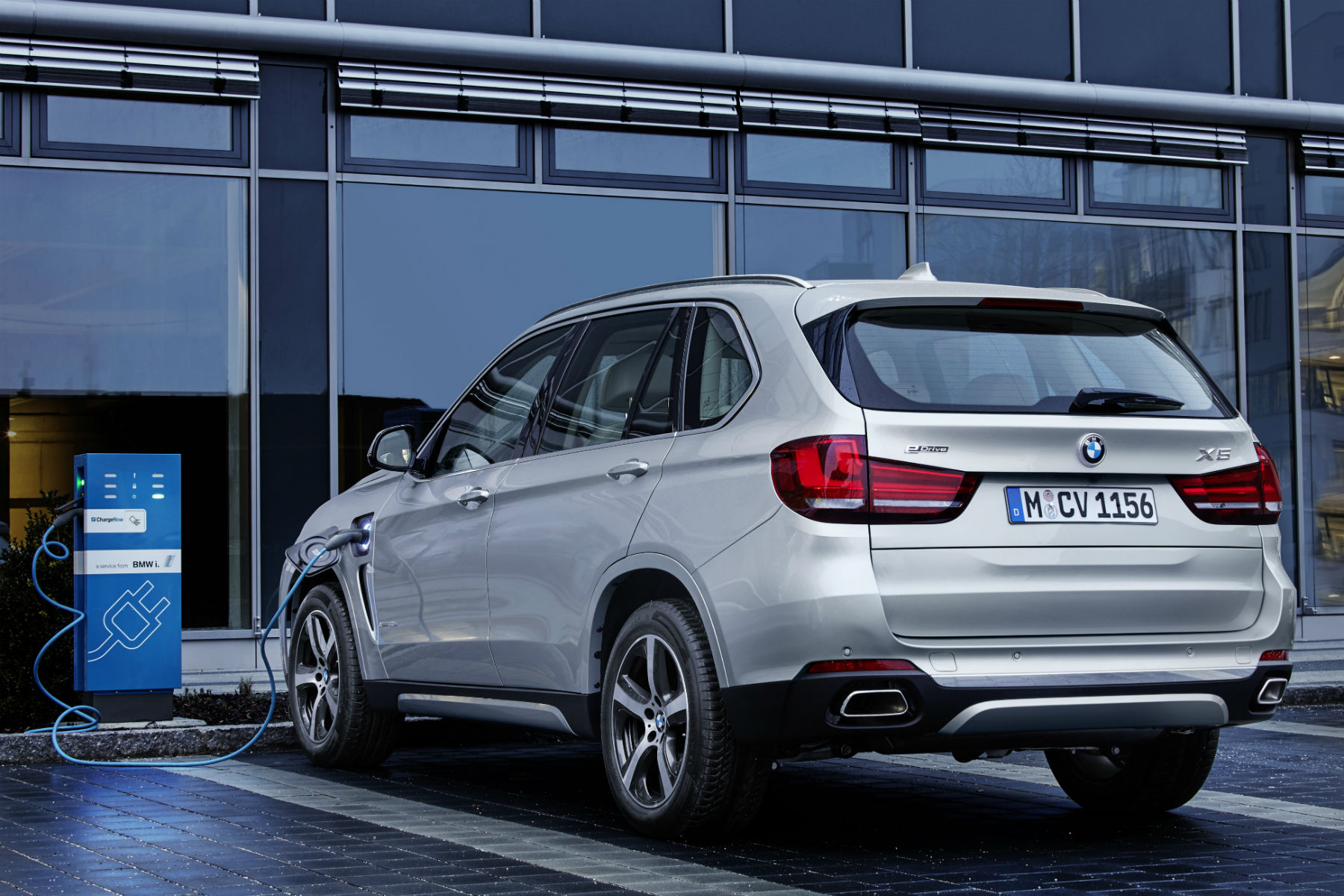
BMW also sells plug-in hybrid versions of its 2 Series Active Tourer and X5 SUV , with a 740e expected to debut at next month’s Geneva Motor Show.

MR exclusive: plug-in hybrid orders cancelled as manufacturers fail to meet demand

Why are plug-in hybrids so popular?

Demand for the BMW 330e might be attributable to the upcoming change in the Government’s plug-in car grant. From 1 March 2016, it will only be eligible for a grant of £2,500 – compared to the £5,000 grant if customers order before this date.

It could also be influenced by the Government cancelling its planned lifting of the 3% BIK tax supplement for company car drivers. George Osborne announced in his autumn spending review that drivers of diesel company cars will continue to pay an extra 3% in tax following “the slower than expected introduction of more rigorous EU emissions testing”.

Could Dieselgate be driving demand?

In the wake of the Volkswagen ‘Dieselgate’ emissions scandal, data from the Society of Motor Manufacturers and Traders (SMMT) reveals that registrations of diesel cars are remaining stable, but petrol and alternative-fuel vehicles are increasing in popularity.

Registrations of petrol hybrids grew by 44.1% in January to 3,783 cars, while plug-in hybrid demand grew to 1,592 vehicles – a rise of 32.3% compared to the same time last year.

MR exclusive: plug-in hybrid orders cancelled as manufacturers fail to meet demand

UK Volkswagen sales were down by 14% in January, but it isn’t all bad news for the firm. Rather than ordering diesel Golfs, it seems that many are looking at the hybrid alternative.

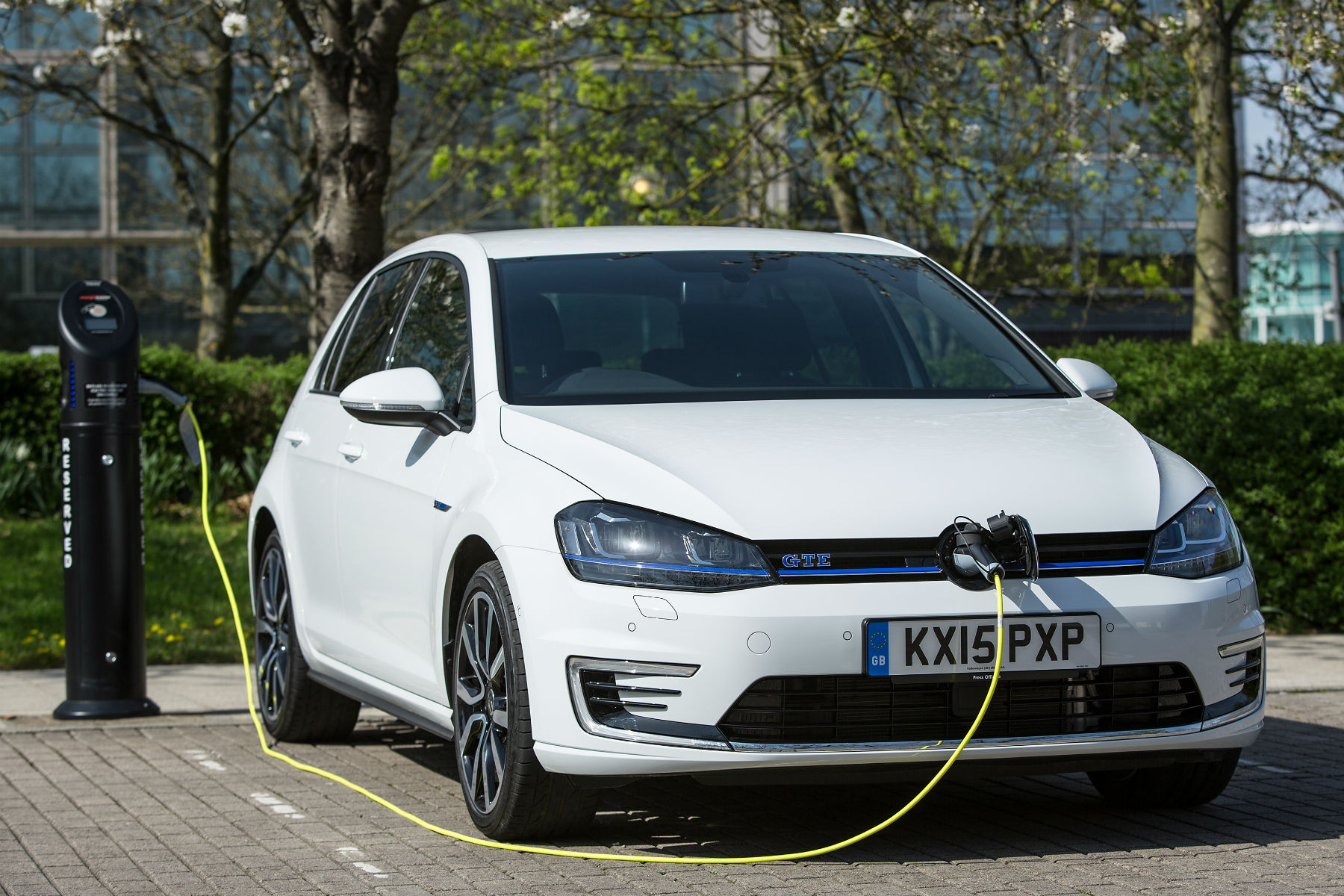
A Volkswagen spokesman told Motoring Research: “Last year we took around 2,500 orders for Golf GTE, and that number is expected to grow appreciably through 2016. Demand comfortably exceeds supply, although we have, of course, adjusted production to accommodate that increasing demand. As such, the time between order and delivery is now an estimated 15 weeks or so.”

Order books for the plug-in hybrid Passat GTE are yet to open in the UK, but demand is expected to be equally strong for the plug-in hybrid saloon.

MR exclusive: plug-in hybrid orders cancelled as manufacturers fail to meet demand

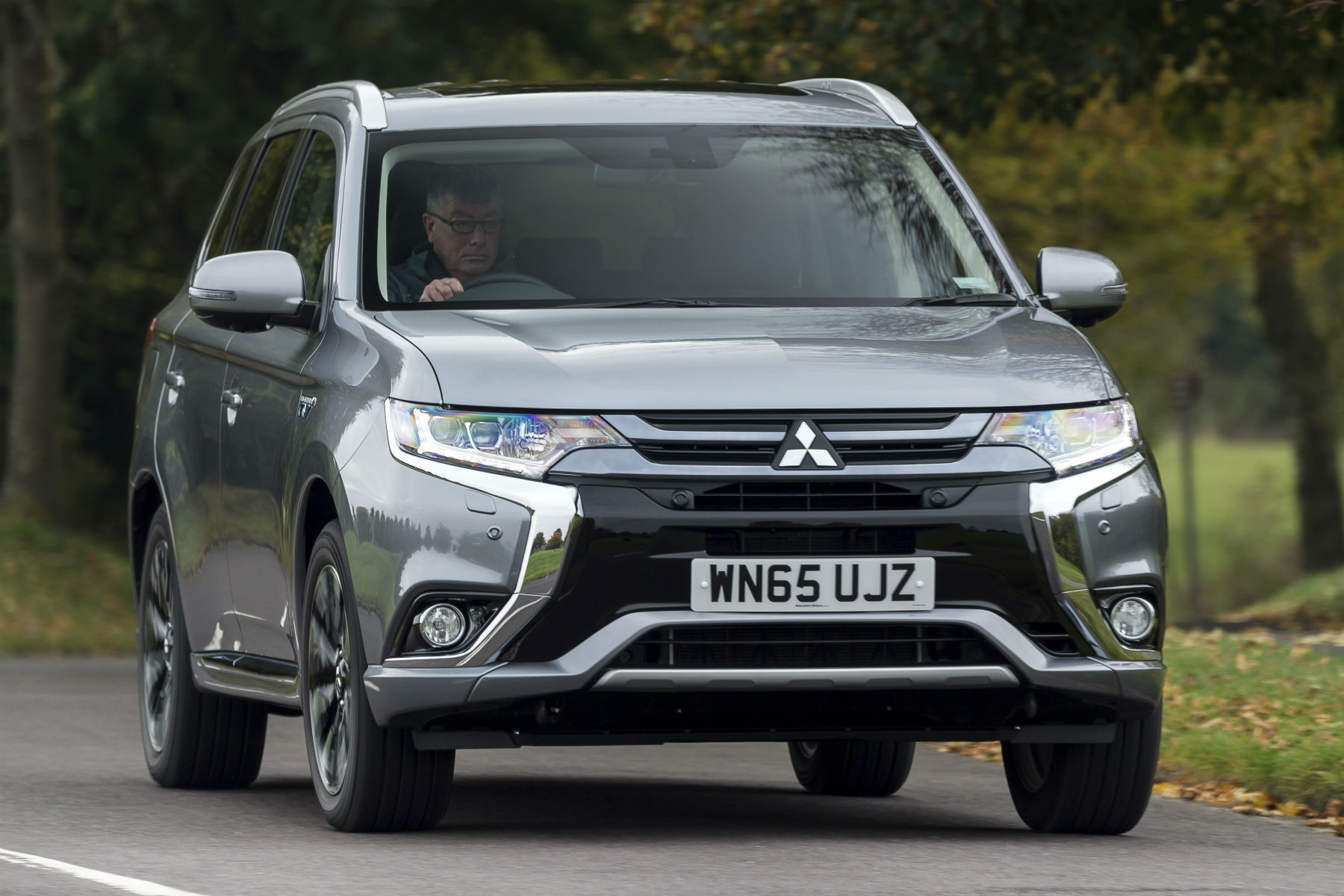
The Mitsubishi Outlander PHEV is credited for being the car that caused the boom in plug-in hybrids in the UK. The company sold 11,786 Outlander PHEVs in the UK last year – and it says it has no problem fulfilling orders in 2016.

Mitsubishi Motors in the UK Sales Planning & Analysis Manager, Joe Sutton, said: “We don’t have any volume restrictions imposed on us by Mitsubishi Motors, hence most variants/colours of the Outlander PHEV are currently available with no additional lead times outside of normal preparation and delivery times.”

Mercedes-Benz refused to comment on the lead times for its C350e – despite rumours that it was also struggling to meet demand.

ALSO READ

It’s not just VW: 30 dirty diesels accused of emissions cheating

This is how Top Gear’s Chris Harris was banned from driving Ferraris

Mazda MX-5 Sport Recaro 2016 road test review

Advertisement

It’s not just VW: 30 dirty diesels accused of emissions cheating

0

It's not just VW: 30 dirty diesels accused of emissions cheating

The Transport and Environment campaign group is calling on regulators to investigate 30 cars it claims produced ‘suspect’ emissions results when tested by authorities. The organisation says it has evidence that ‘defeat devices’, such as those used in the Volkswagen emissions scandal, have been used by ‘most’ carmakers.

The group says this evidence includes inappropriate use of a ‘thermal window’ (29 models), high ‘hot-restart’ emissions (23 models) and plain shut-offs after a certain time (at least one model). These are the 30 cars the organisation believes may use defeat devices.

BMW 216d Gran Tourer

As BMW’s first people carrier and front-wheel-drive model, the 2 Series GT is no stranger to controversy. Transport and Environment claims that, during tests, the 2 Series GT made liberal use of what’s described as a ‘thermal window’, a period during which manufacturers can decrease emissions management systems in a bid to prevent parts being damaged by condensation.

BMW 530d

The campaign group says that 23 of the ‘dirty 30’ feature unusually high emissions following a hot engine restart, rather than a cold start. Although manufacturers claim this is normal, Transport and Environment disputes this – with the BMW 530D being accused as one of the 23 hot-start dodgers.

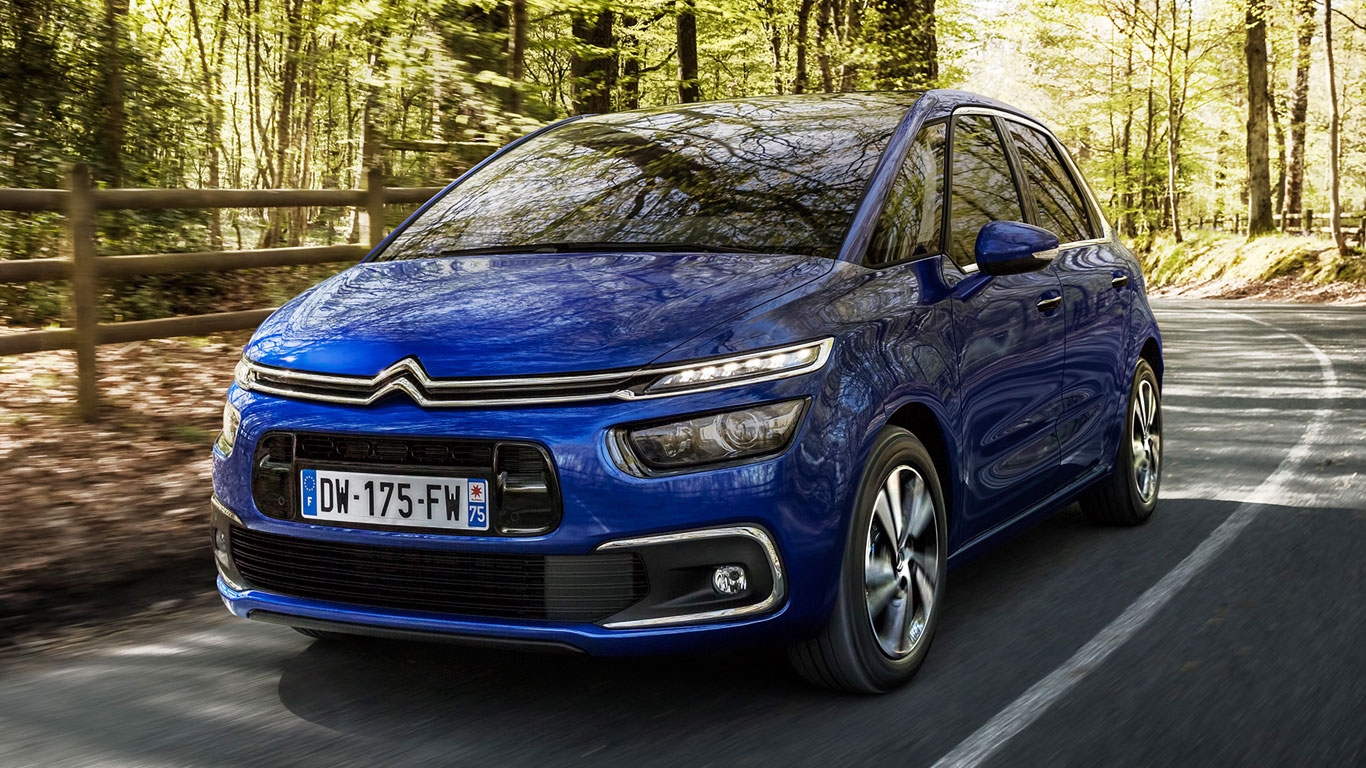
Citroen C4 Picasso 1.6 BlueHDi

Citroen C4 Picasso 1.6 BlueHDI

During cold track tests held in France, the group claims the Citroen C4 Picasso showed signs of the thermal window being abused.

Dacia Sandero 1.5 dCi

Bad news! The super-affordable Dacia Sandero is an emissions cheater, says Transport and Environment. Tested in France, the group alleges the Sandero ‘cheats’ the system using both thermal window and hot-start methods.

Fiat 500X 2.0 MJT

We quite like the Fiat 500X – although it’s better with the smaller 1.6-litre turbodiesel and fun 1.4-litre petrol than the 2.0-litre diesel featured here. Apparently, in German tests, the 500X’s exhaust treatment switched off after 22 minutes. Normally, emissions tests last for 20 minutes. Draw your own conclusions…

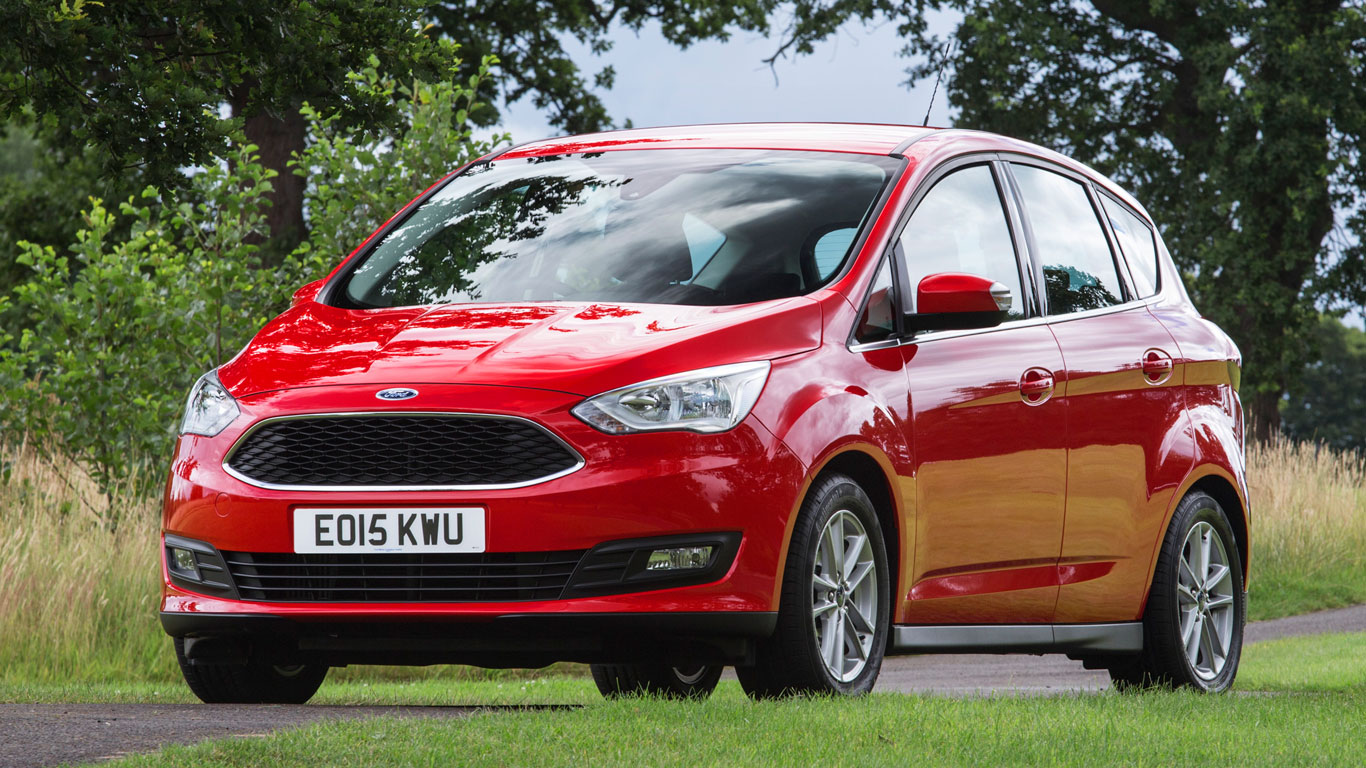
Ford C-Max TDCi

Ford C-Max TDCi

The organisation claims the popular Ford C-Max, powered by the turbodiesel in 1.5- and 2.0-litre guises, shows signs of dodging emissions tests. These include both the thermal window cheat and hot start.

Ford Focus 1.5 TDCi

It’s no surprise then, that the Focus, using the same 1.5-litre turbodiesel as the C-Max, also shows similar symptoms.

Honda CR-V 1.6 i-DTEC

It was during track testing in the UK with a warm engine that the Honda CR-V, powered by the 1.6-litre turbodiesel engine, showed signs of using both the thermal window and hot-start cheats.

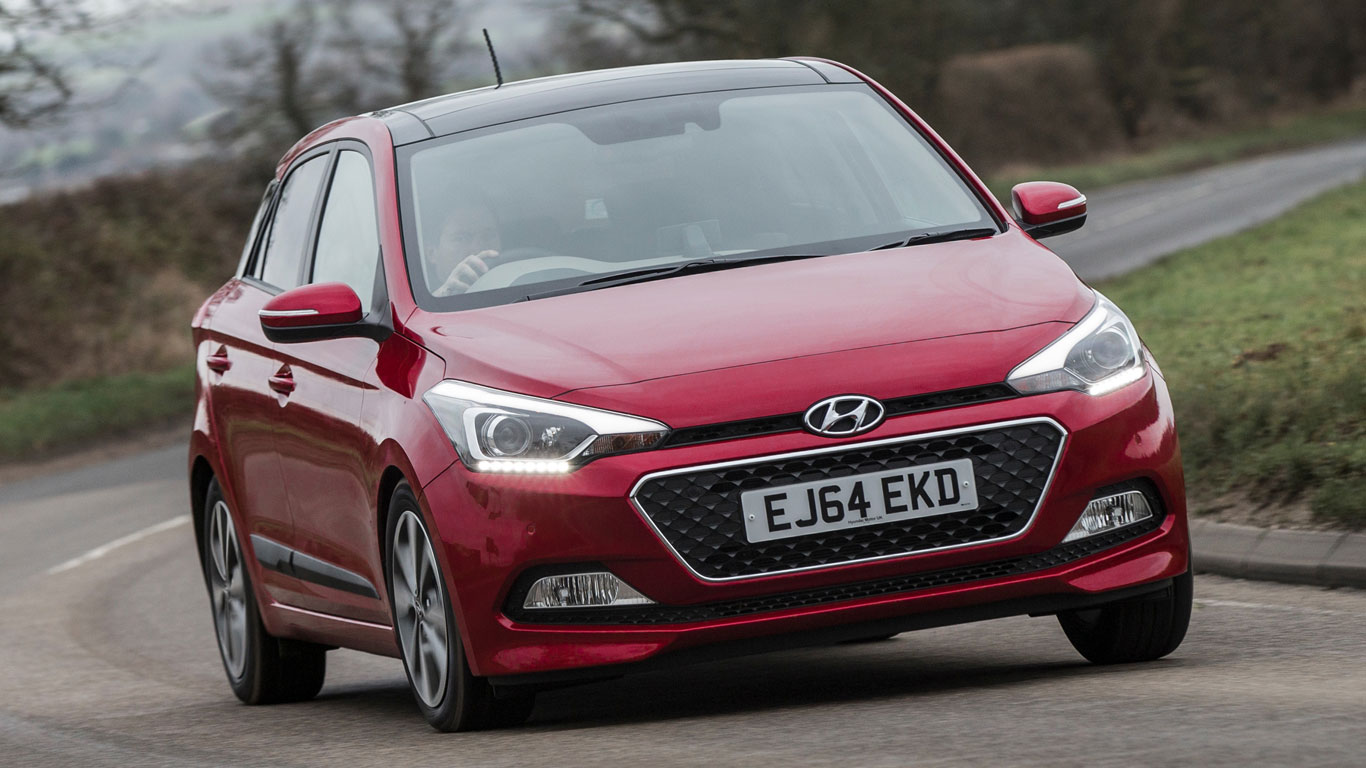
Hyundai i20 1.1 CRDi

Hyundai i20 1.1 CRDi

Tested in the UK, Transport and Environment says the Hyundai i20 with the super-efficient 1.1-litre CRDi engine shows signs of both thermal window and hot-start dodges.

Jaguar XE 2.0d

It’s the entry-level 163hp 2.0-litre turbodiesel Jaguar XE that’s been accused of cheating tests here. Again, it showed signs of playing both thermal window and hot start scams, says the organisation.

Kia Sportage 1.7 CRDi

The Kia Sportage has recently been replaced, but it’s its predecessor that the organisation claims defeated emissions tests. The 1.7-litre diesel showed signs of using the thermal window and hot-start methods, apparently.

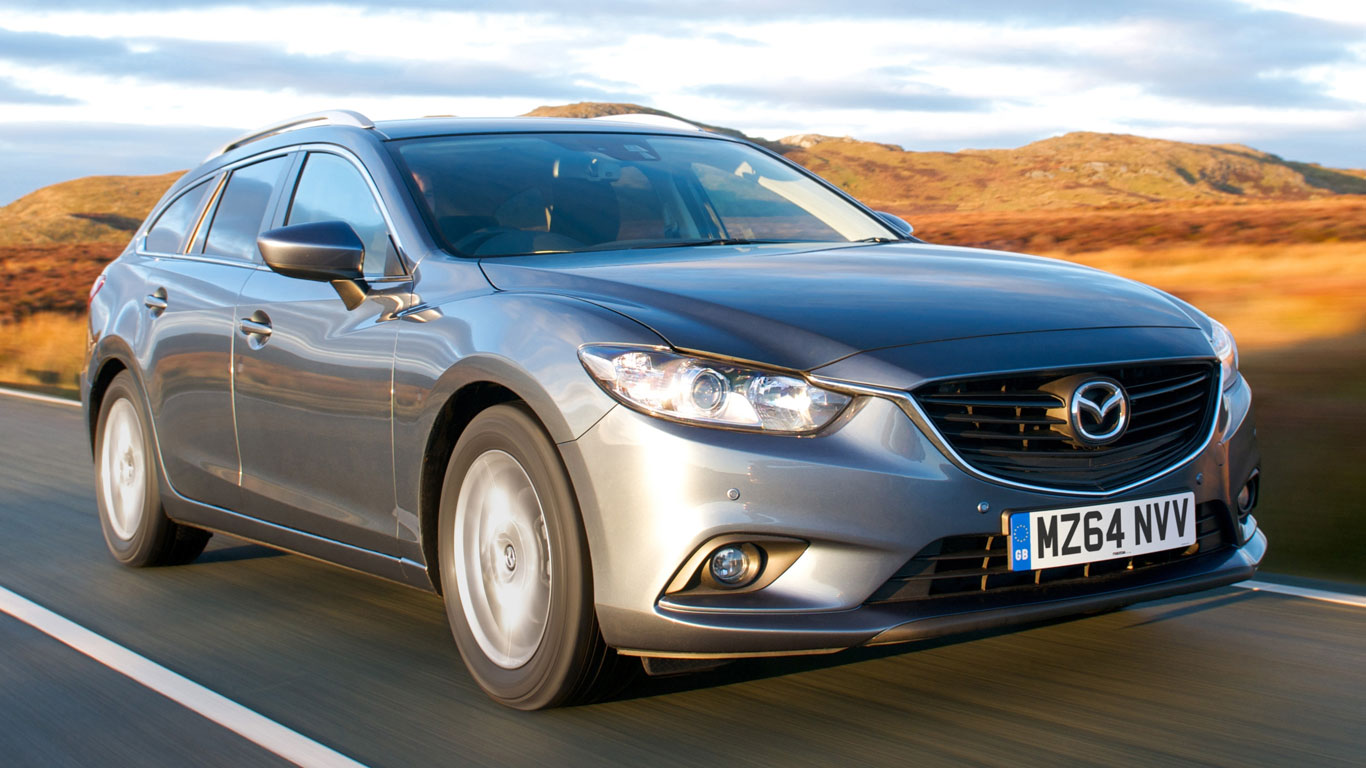
Mazda 6 2.2 diesel

Mazda 6 2.2 diesel

With Mazda’s Skyactiv technology, you’d hope the 2.2-litre diesel would be fairly efficient. The organisation claims it’s cheated tests, however.

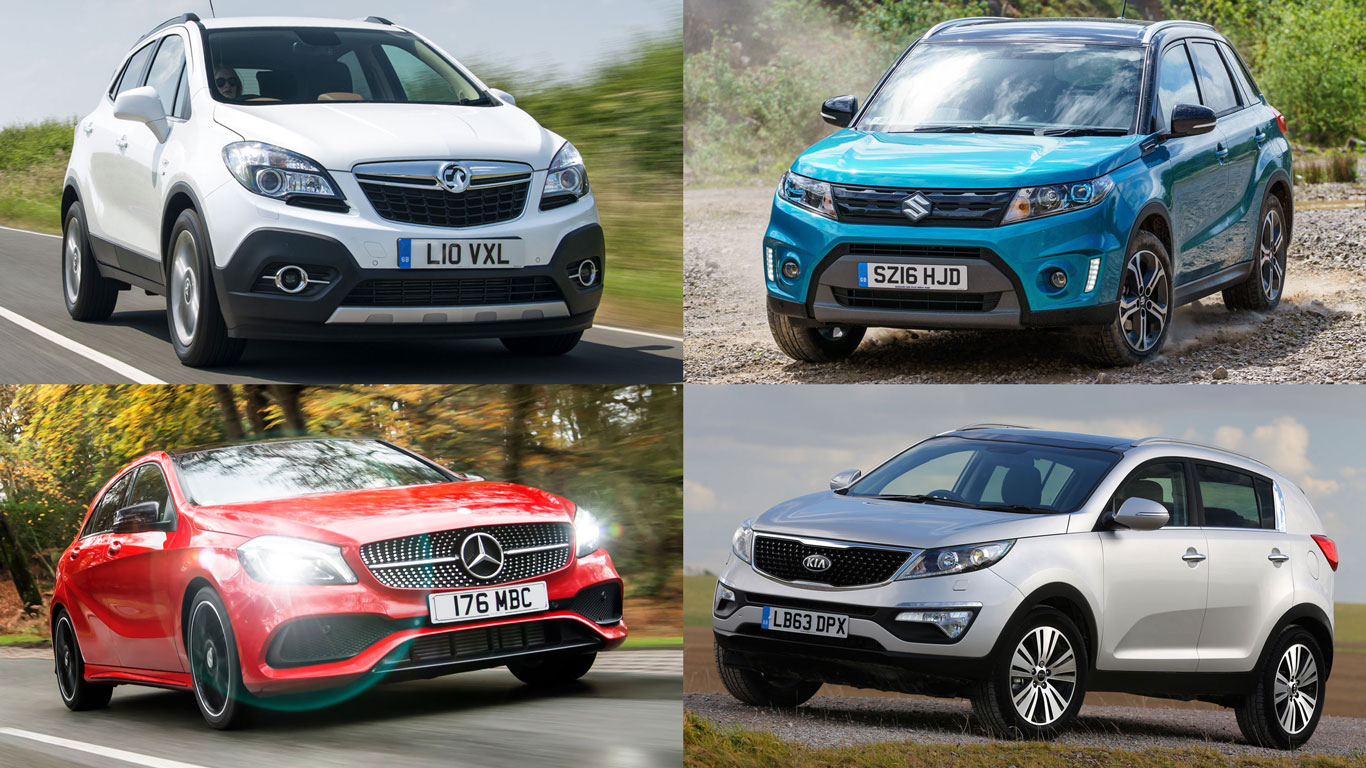
Mercedes-Benz A180d and A200d

Transport and Environment claims that three Mercedes-Benz models have produced suspicious results during German emissions testing. The first is the A-Class, which allegedly showed signs of using the thermal window technique in testing of the A180d model, and both thermal window and hot-restart methods during testing of the A200d.

Mercedes-Benz S350 Bluetec

The current generation S-Class, in S350 Bluetec guise, reportedly showed symptoms of cheating using the hot-start and thermal window methods.

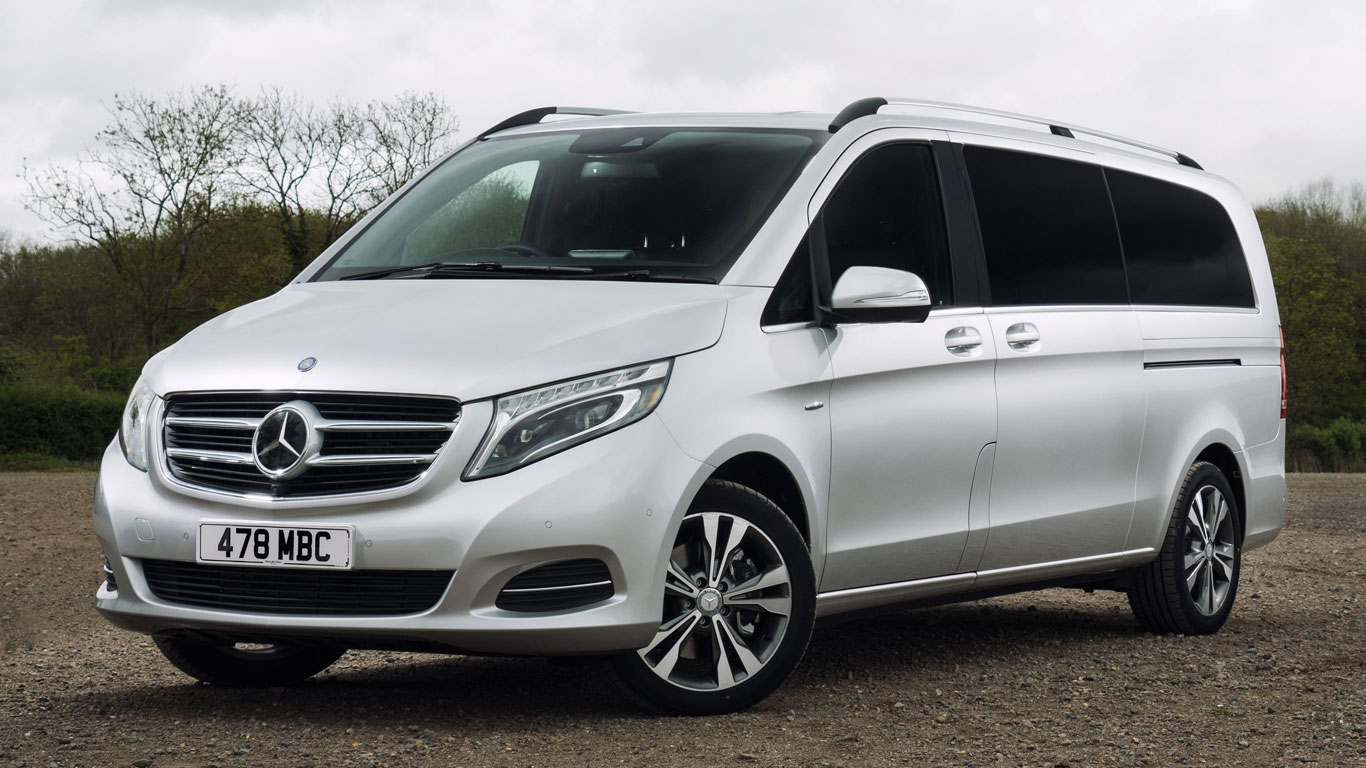
Mercedes-Benz V250d

Mercedes-Benz V250d

Vans are currently under the spotlight with regard to emissions tests – and Mercedes-Benz’s ‘van with windows’ V250d is alleged to have produced some ‘interesting’ results.

Nissan Qashqai 1.6 dCi

Ah, the wholesome, family-friendly Nissan Qashqai. Powered by the 1.6-litre diesel Renault engine, it showed peculiar results relating to the thermal window cheat during testing in the UK.

Peugeot 5008 1.6 BlueHDi

The only model by French manufacturer Peugeot alleged to have cheated tests is the 5008 people carrier, powered by the 1.6-litre BlueHDI turbodiesel engine.

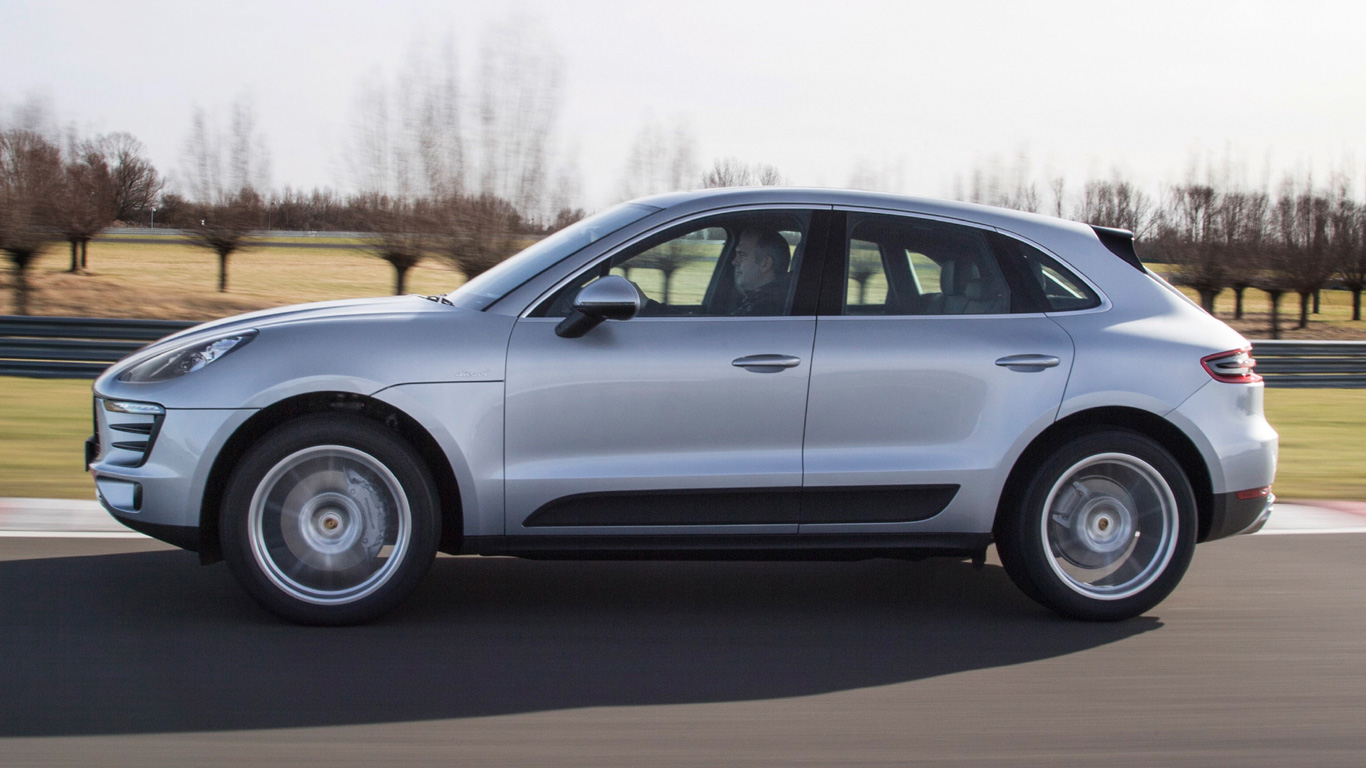
Porsche Macan S Diesel

Porsche Macan S diesel

Porsche isn’t a big user of diesel engines – nor is it a company that is traditionally overly concerned about emissions. But buyers of its Macan S Diesel might be interested to know that Transport and Environment says it showed signs of ‘test recognition’ – just like VW’s cheat device.

Range Rover Evoque 2.0 TD4

Could this knock the ever-popular Range Rover Evoque off its perch? The 180hp turbodiesel apparently showed suspicious results in UK tests.

Renault Captur 1.5 dCi

Renault is potentially the biggest emissions cheat – says Transport and Environment – with no fewer than four cars showing suspect results. The first is the Captur crossover, with the 1.5-litre diesel engine.

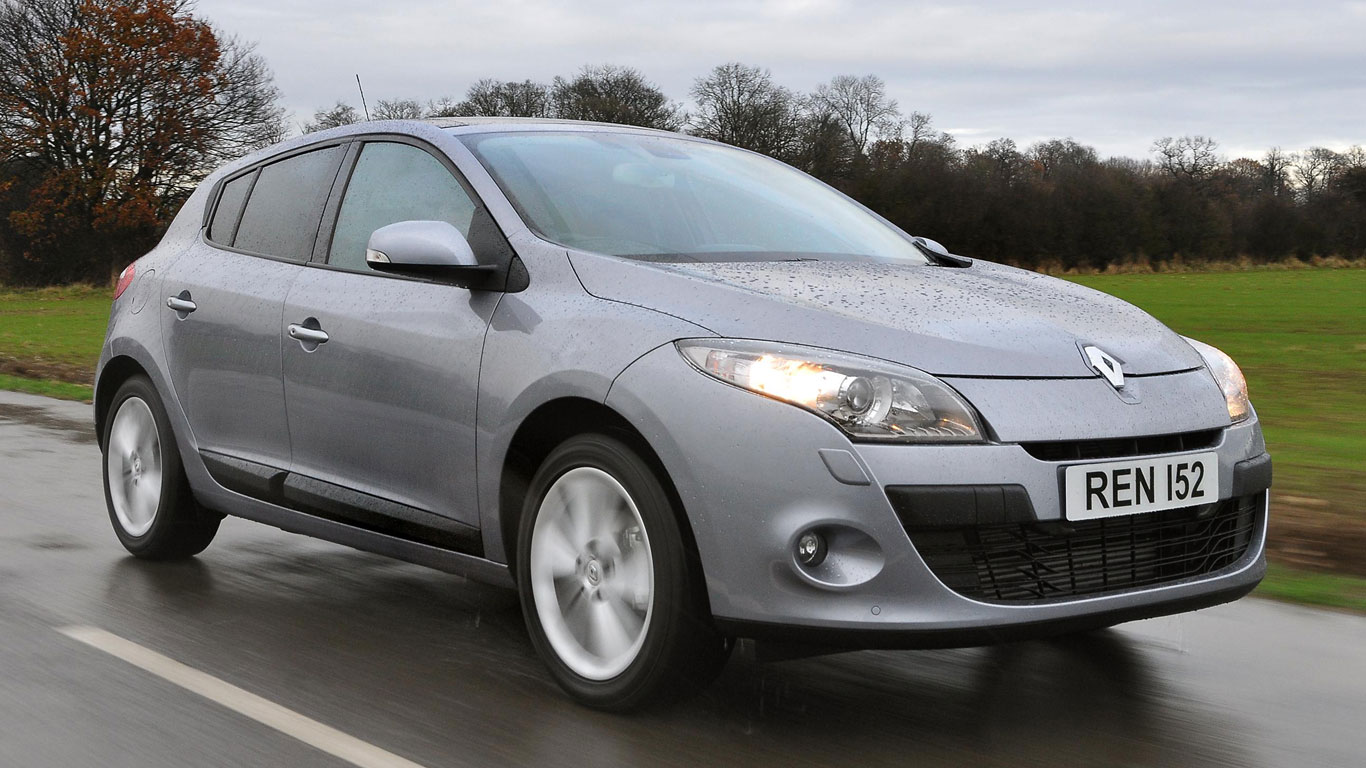
Renault Megane 1.5 dCi

Renault Megane 1.5 DCi

Unsurprisingly, the Megane powered by the same engine also showed signs of using the hot-start and thermal window dodges.

Renault Kadjar 1.5 and 1.6 dCi

As did the Renault Kadjar, in both 1.5- and 1.6-litre dCi guises.

Renault Espace 1.6 dCi

The 1.6-litre turbodiesel Renault Espace people carrier showed signs of using the thermal window cheat.

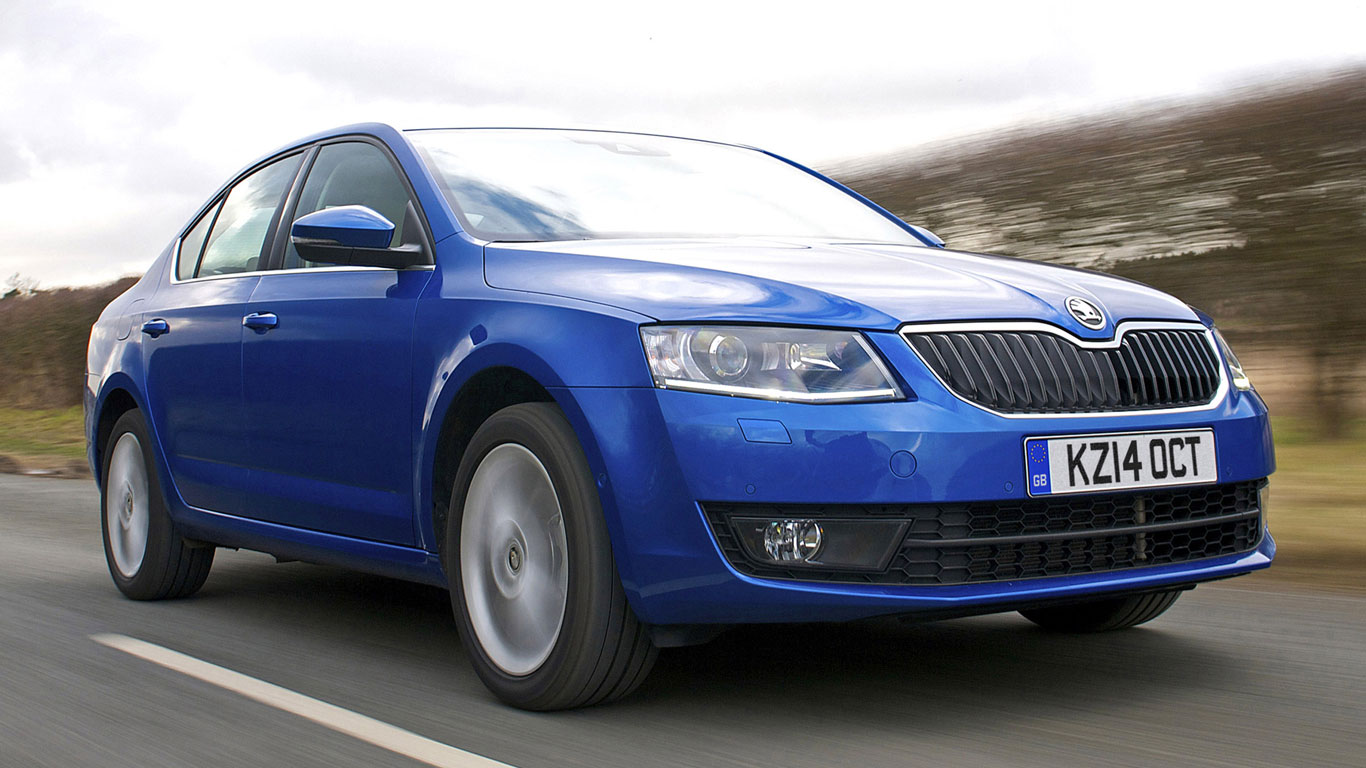
Skoda Octavia 1.6 TDI

Skoda Octavia 1.6 TDI

As a Volkswagen Group product, it’s perhaps unsurprising to see the Skoda Octavia 1.6-litre turbodiesel showed signs of thermal window, test recognition and hot-start cheats.

Suzuki Vitara 1.6 DDiS

The latest Suzuki Vitara is one of our favourite crossovers, but Transport and Environment alleges that the 1.6-litre diesel showed signs of using the thermal window and hot-start bodges during testing.

Toyota Avensis 2.0 D-4D

The taxi drivers’ favourite – but is the Avensis pumping lots of nasty emissions into our city centres? The campaign group reckons so – with the 2.0-litre diesel showing signs of exploiting hot start and thermal window cheats.

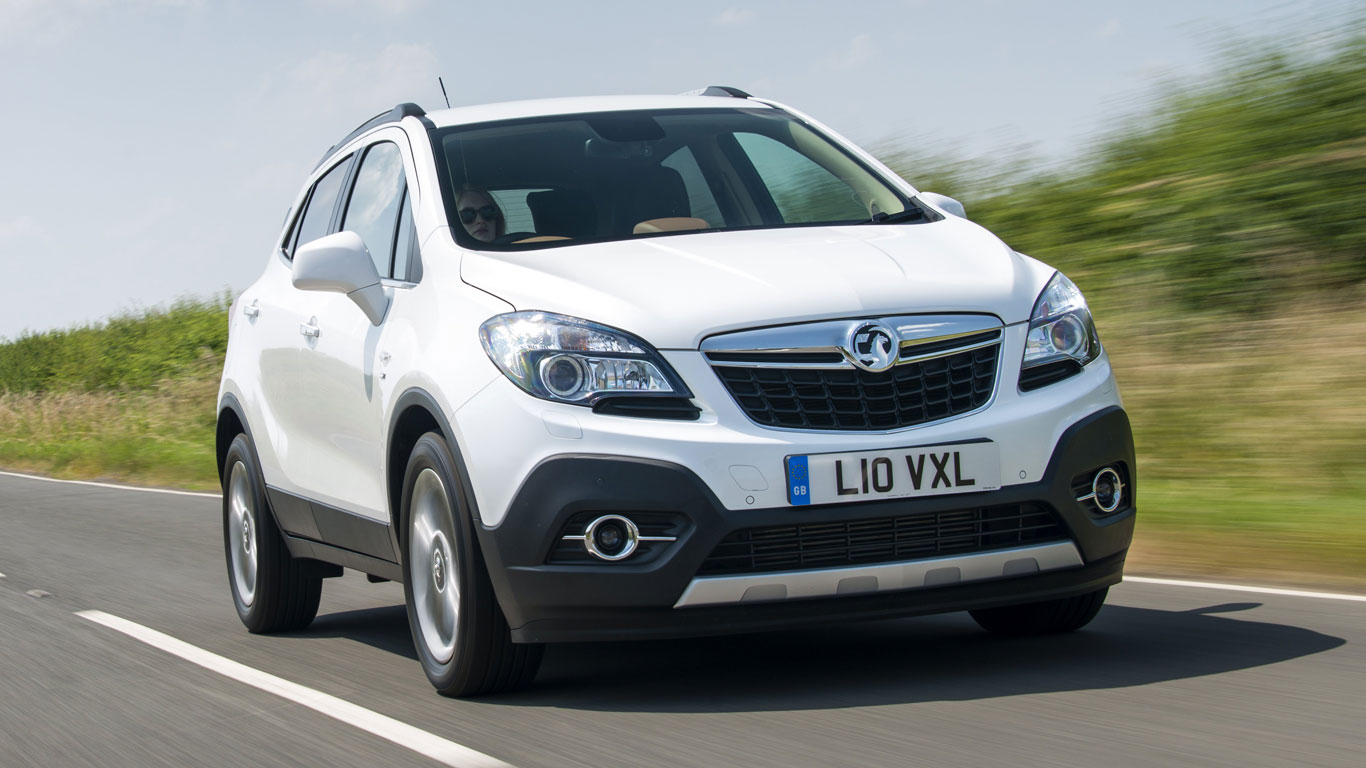
Vauxhall Mokka 1.6 CDTi

Vauxhall Mokka 1.6 CDTi

Tested in Europe as an Opel, the diesel Mokka showed signs of using both thermal window and hot-start cheats according to Transport and Environment.

Vauxhall Zafira 1.6 CDTi

Amid the fire scandal, a Zafira’s emissions might be the last thing on an owner’s mind. Using the same engine as the Mokka, the newer Zafira Tourer showed suspicious results in hot-restart and thermal window tests.

Vauxhall Insignia 2.0 CDTi

The company car driver’s favourite thanks to its low emissions (on paper), has the Insignia been cheating tests? Transport and Environment thinks so.

Volvo V60 D3

Volvo V60 D3

Completing the ‘dirty thirty’ is the Volvo V60 D3. The Swedish estate car, tested in Spain, cheats thermal window and hot-start tests, according to the organisation behind the research.

Advertisement

Top Gear’s Chris Harris will create ‘longer, geeky’ films for enthusiasts

0

Top Gear’s Chris Harris will create ‘longer, geeky’ films for enthusiasts

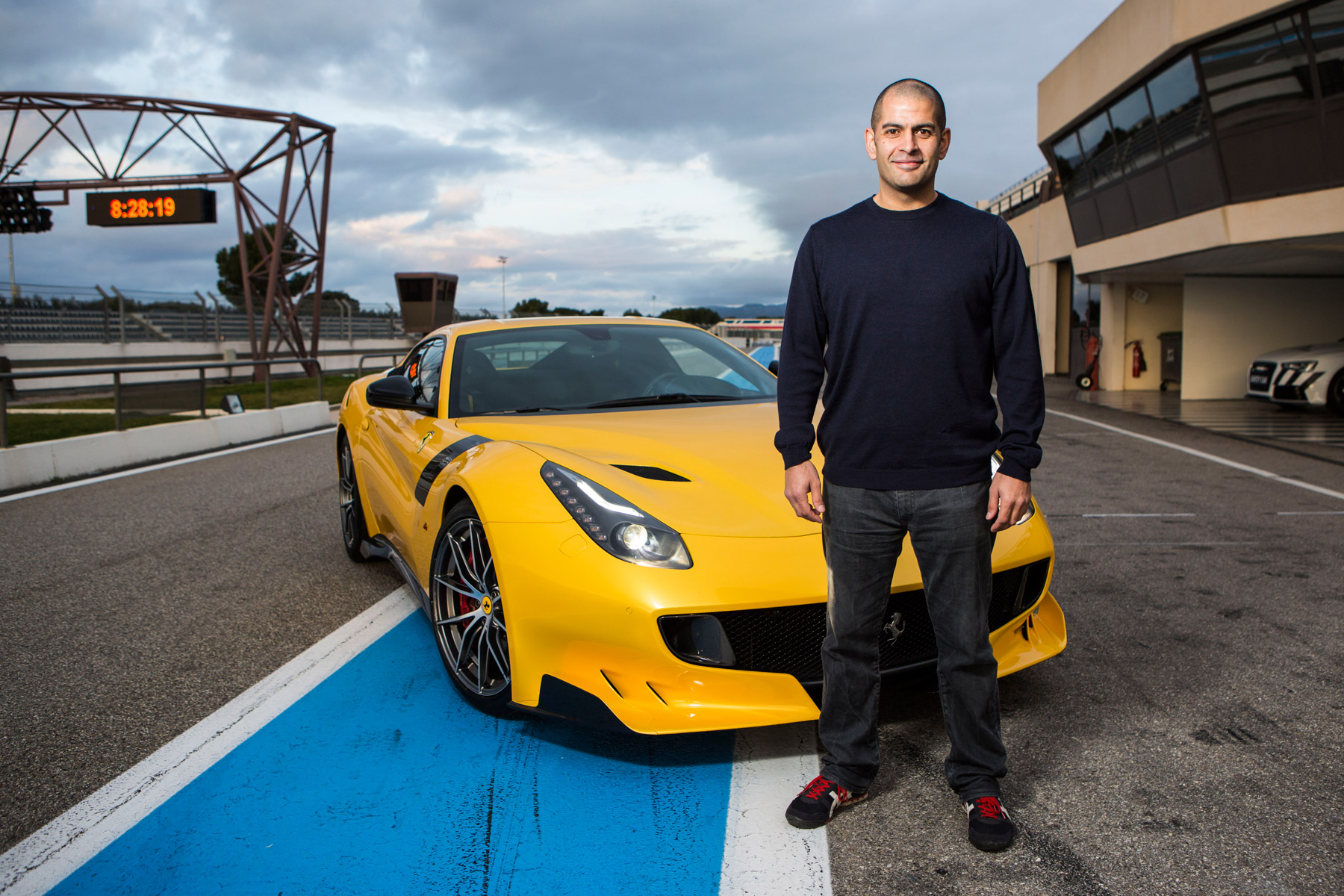
Following his successful debut on the new series of Top Gear, petrolhead Chris Harris has revealed he will be fronting a new series of films for TopGear.com.

Harris has become well known amongst car enthusiasts over the years for his lengthy Youtube videos – but members of the public were in for a surprise when he appeared in a Ferrari F12tdf on Sunday’s Top Gear.

More Top Gear on Motoring Research

Speaking to TopGear.com, Harris said: “Obviously I’m thrilled to be making beautiful films like the F12tdf piece for the Top Gear television show. But the longer-form, more detailed web films I’ve made with Neil Carey over the years remain my natural format, and broadcasting them through TG’s huge online audience is a dream come true.

“If you want to know even more technical details about cars, hear more in-depth analysis, I hope we’ll be the perfect destination. I want the films to be just as they were on Chris Harris on Cars. With added slow-motion slides.”

We’re yet to find out when the films will appear – or what cars they’ll feature – but a preview posted on the website shows Harris driving exotic hypercars including the McLaren P1, Porsche 918 and LaFerrari.

Harris added: “The Top Gear magazine and online team are the best out there. I can’t think of a more exciting recipe than applying myself and Neil’s skills in making engaging films for hardcore car enthusiasts, with their ability to actually be organised (never my strongest attribute) and push the content as far and wide as possible.

“But most of all I want to have fun. Having fun shooting cars makes much better films.”

Advertisement