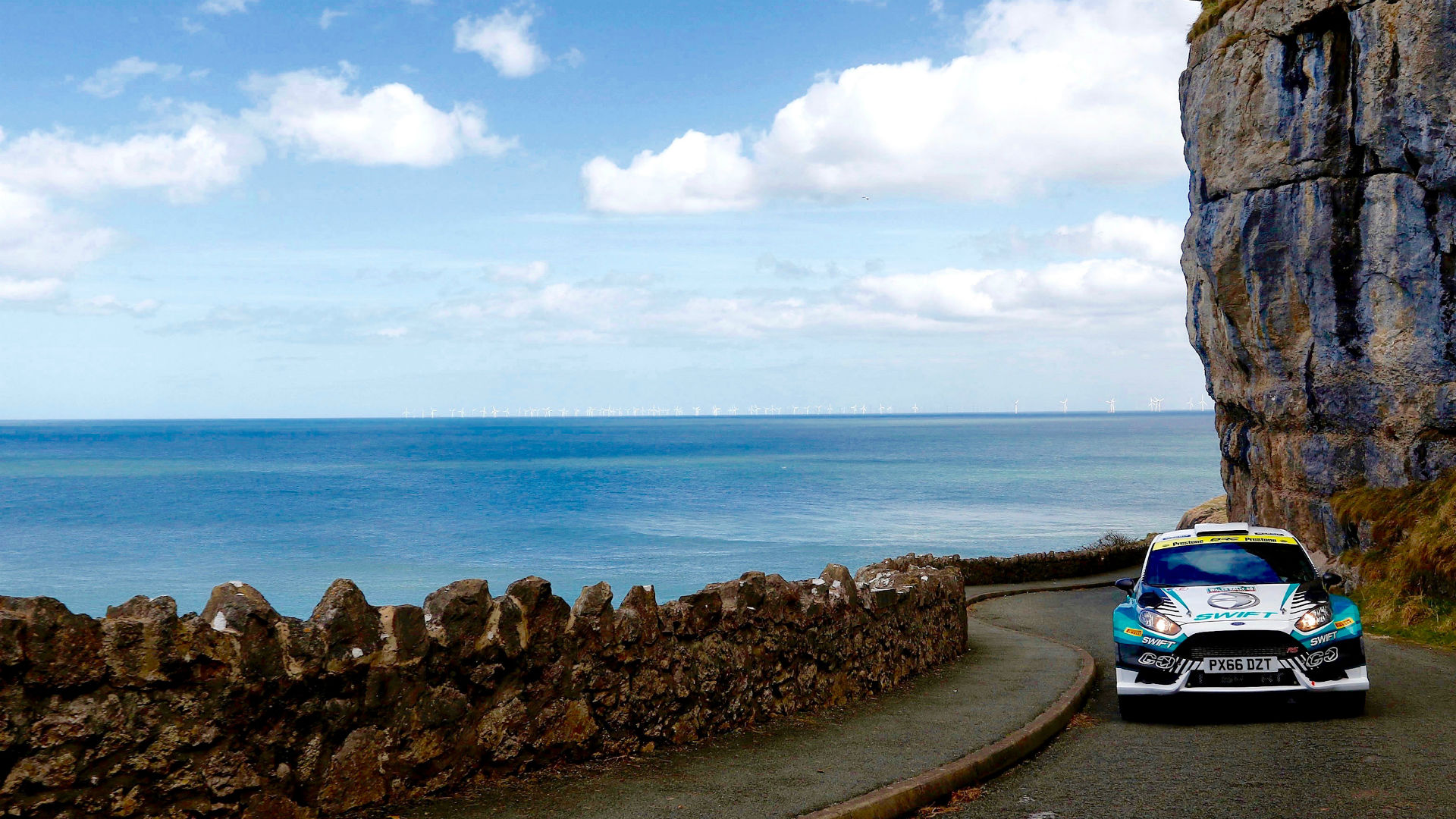
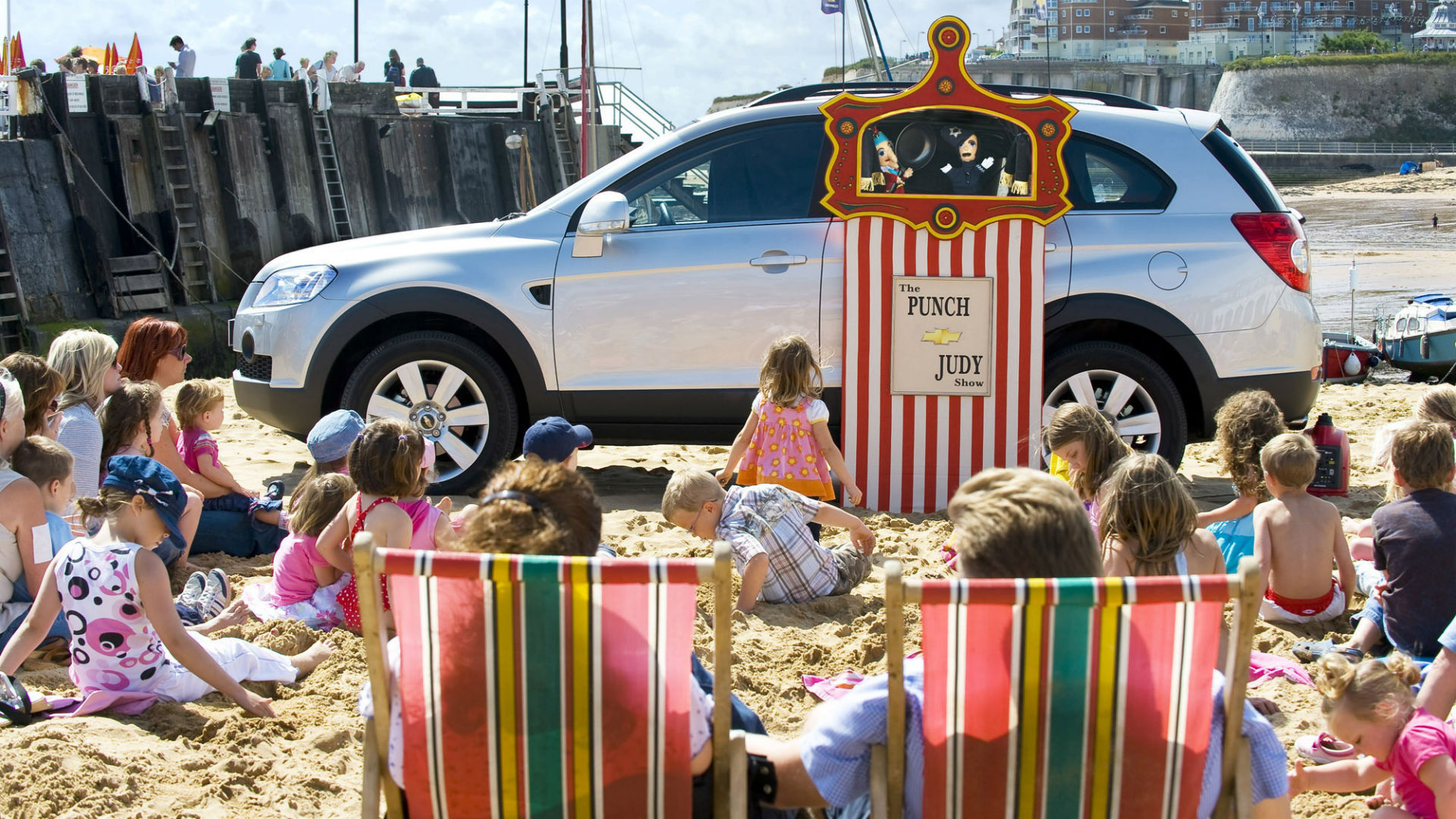
New data from the specialist insurer shows that it received the fewest amount of claims from drivers in the Scottish coastal city of Dundee, with the Welsh resort of Llandudno finishing a close second. Other locations appearing in the top ten include Blackpool and Aberdeen.
Predictably, London is the place to avoid if you fancy a stress-free driving experience – six of the capital’s districts appeared in the bottom ten, with NW and N the most accident-prone postcodes.
‘Something in the sea air’
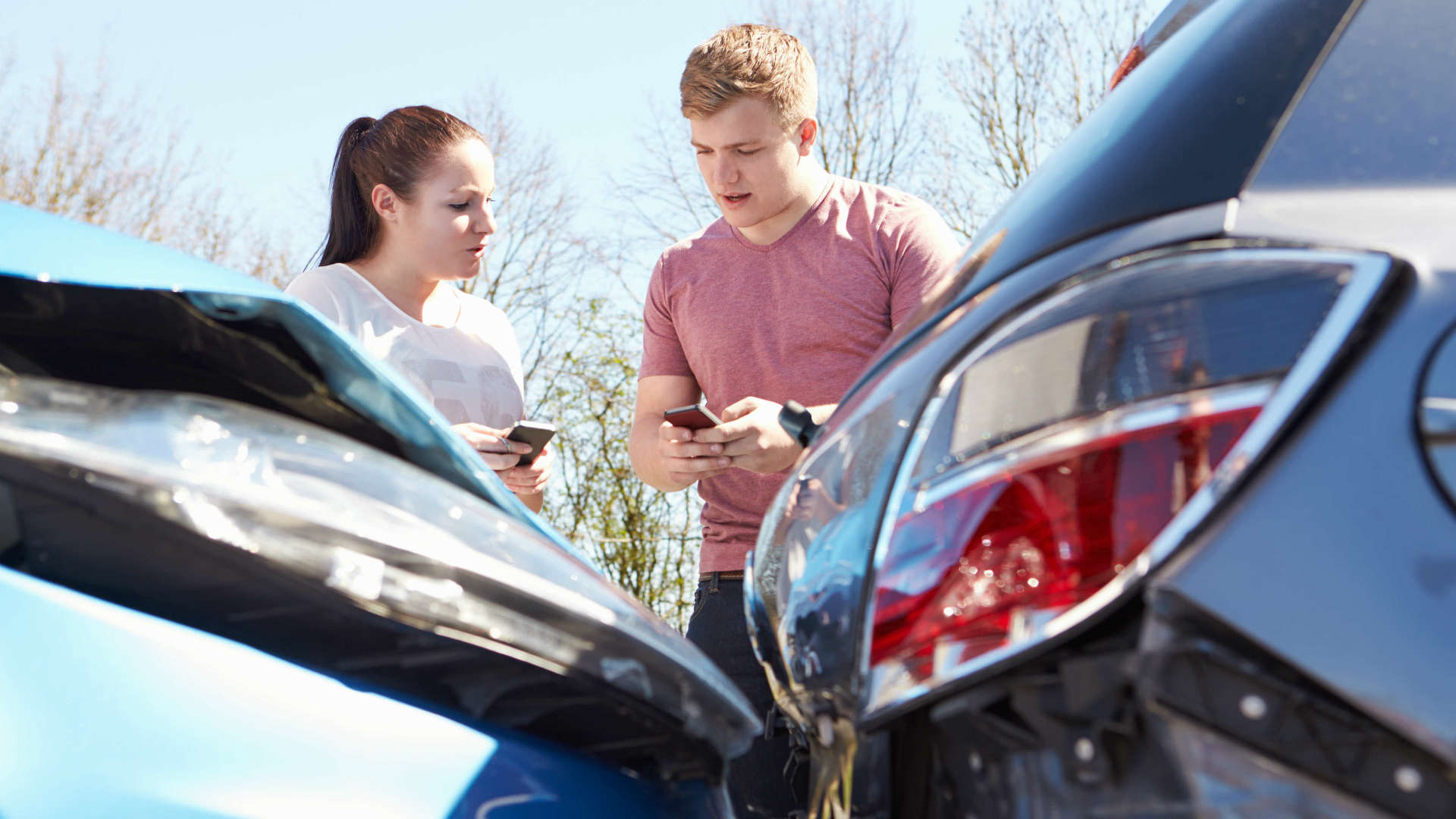
Ian Fray, managing director at ClassicLine Insurance, said: “Our snapshot of UK motoring indicates that drivers in Dundee are the safest behind the wheel, whereas Londoners are most likely to be in a motoring prang.
“It also highlights that there must be something in the sea air which makes drivers more chilled out. Perhaps living near the coast makes people more relaxed and also more laid back in their driving habits.”
Ian added: “London is one of the most congested cities in the world and presents its very own stresses and unique driving challenges, which might explain why so many areas around the capital have increased accident driving claims with us.
“Given this scenario, our advice is to head to the seaside this weekend!”
The top ten tables in full
Ten postcode areas with the lowest accident claim frequency
Ten postcode areas with the highest accident claim frequency
Around 10 percent of young driver car insurance policies are ‘fronted’, putting parents at risk of a trip to court and a criminal record.
This is according to research conducted by GoCompare, which also found that the average cost of car insurance for a 17-year-old now sits at a staggering £1,964. Little wonder so many parents are ‘fronting’ their child’s policy to save money.
Young drivers save £50 million with insurance black boxes
‘Fronting’ is a term used to describe an older driver – usually a parent – claiming they’re the main driver of a vehicle that’s actually driven by a high-risk motorist, usually a young driver. Around 34 percent of the motorists surveyed said they would consider ‘fronting’ if it could save their child money.
Unfortunately for the parents, ‘fronting’ is technically insurance fraud and, if discovered, the policy becomes null and void and the policyholder could end up with a criminal record.
In the event of an accident, although the insurance provider will settle the third party claim, they will usually seek to reclaim the costs from the policyholder. In serious cases involving a personal injury claim, the insurer may pursue the parent for hundreds of thousands of pounds.
Twice as likely to make a claim
Lee Griffin, founding member at GoCompare said: “Unfortunately, many parents are putting themselves at risk of picking up a criminal record for the sake of reducing their child’s car insurance premiums. There may not appear to be any harm in insuring a child’s car in a parent’s name, but ‘fronting’ is illegal nonetheless.
“Car insurance premiums for new drivers can be high compared to those offered to more experienced drivers but there’s a good reason why. According to the ABI, drivers aged between 17 and 20 are twice as likely to make an insurance claim as other drivers and the cost of their claims can be up to three times higher than the average.”
GoCompare points out that while ‘fronting’ is illegal, it’s perfectly acceptable to add another person to a policy as a named driver. If they have a good driving record, the premium could be reduced by around £200.
Motorists can also save up to £268 a year by shopping around, while a telematics policy can help young drivers accumulate a no claims discount to further reduce their annual premium.
Collecting Cars is a new online auction platform for collectable cars, freshly launched at the 2019 Retromobile classic car show in Paris. With names like Chris Harris on the team, it sounds like the real deal for enthusiastic buyers and collectors.
The online classic car auction startup is described as the only platform of its kind to reach across Europe, consigning and marketing cars for clients across the continent.
It’s high-tech and safe, too, with ‘industry-leading identity verification and payment security’. This all sounds good, but music to buyer’s and seller’s ears alike will be that ‘premiums and fees are also set significantly lower than at conventional auctions’.
Comprising Collecting Cars is, according to director Edward Lovett, “a team of people who are – first and foremost – dyed-in-the-wool car enthusiasts”. It doesn’t sound like cut and dry sales platform, judging by the stated core ethos of the new venture; to ‘be immersive, with multi-platform storytelling that takes its audience behind the scenes with fascinating cars, personalities and master craftspeople’.
While trading cars is the bread and butter, it sounds like a platform fuelled by passion.
And who is more passionate about buying, owning and using cars than Top Gear’s resident tyre delaminator, Chris Harris?
“Grazing classifieds has been my passion for more than 20 years,” said Harris. “I can’t wait to see the fascinating machinery that will appear on Collecting Cars.”
When can we expect to see the first sales from Collecting Cars, then? As soon as Spring 2019, and consignments can be placed now.
We’ll always welcome a new way of speculatively browsing motorised metal…
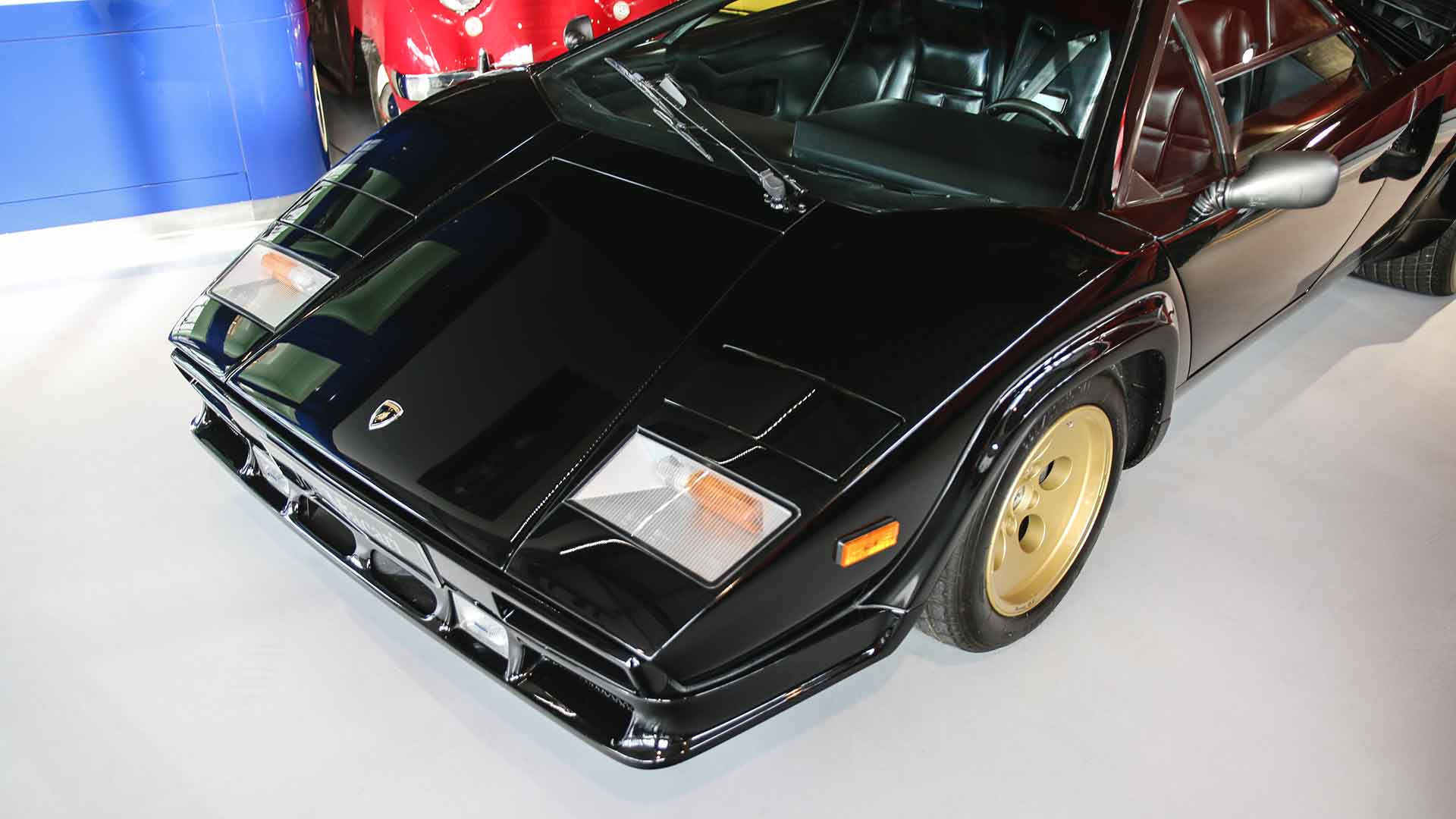
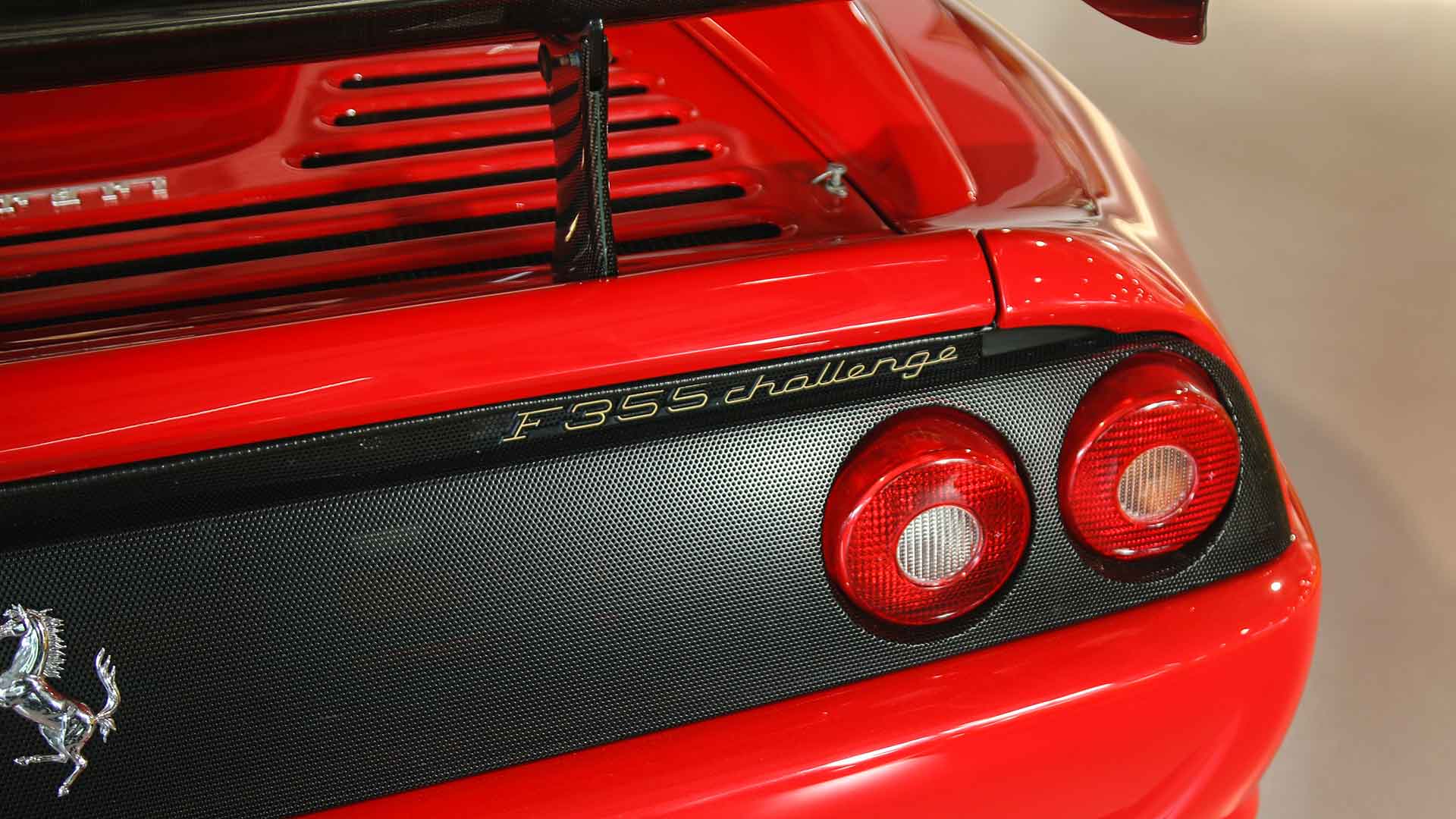
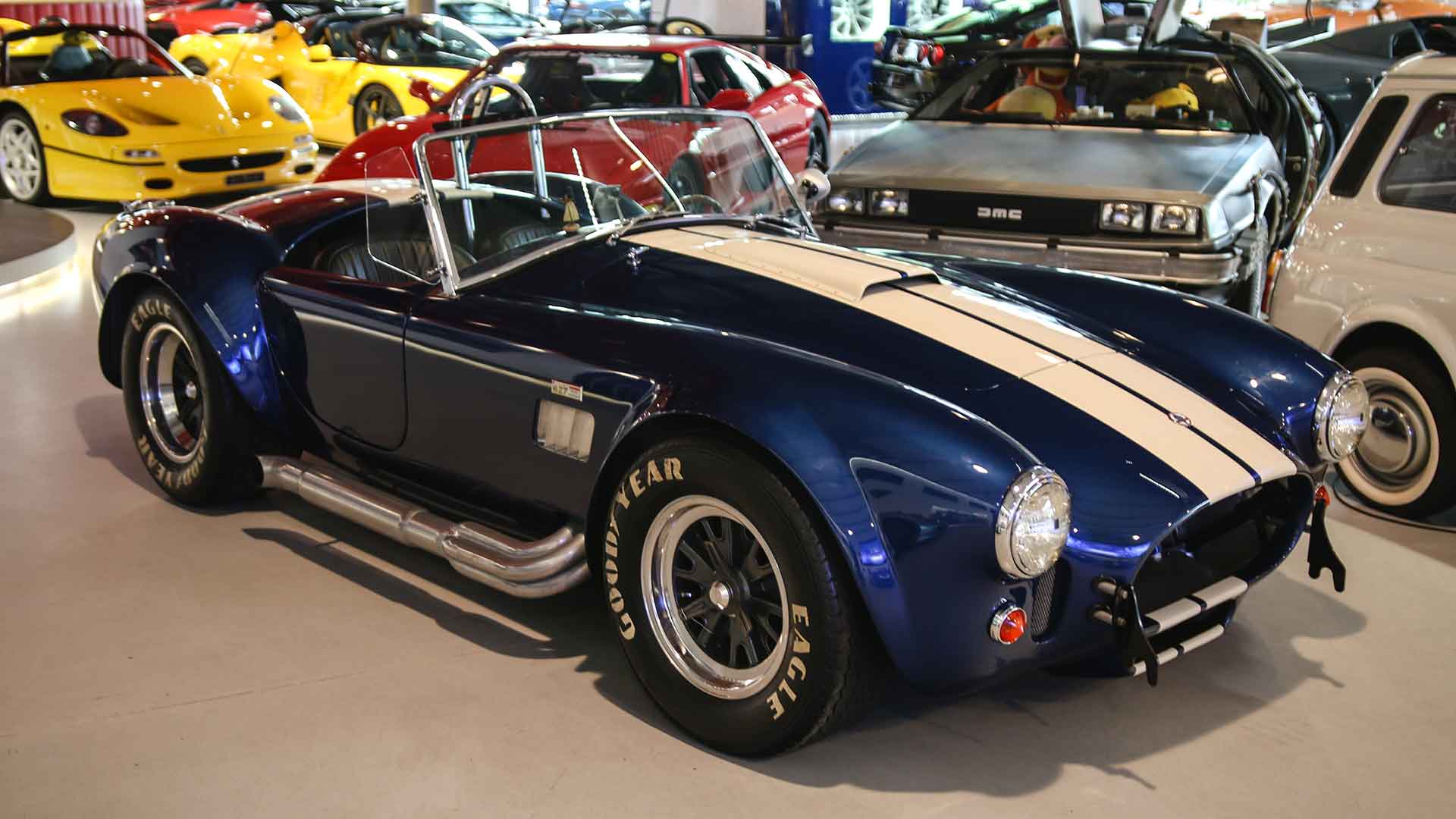
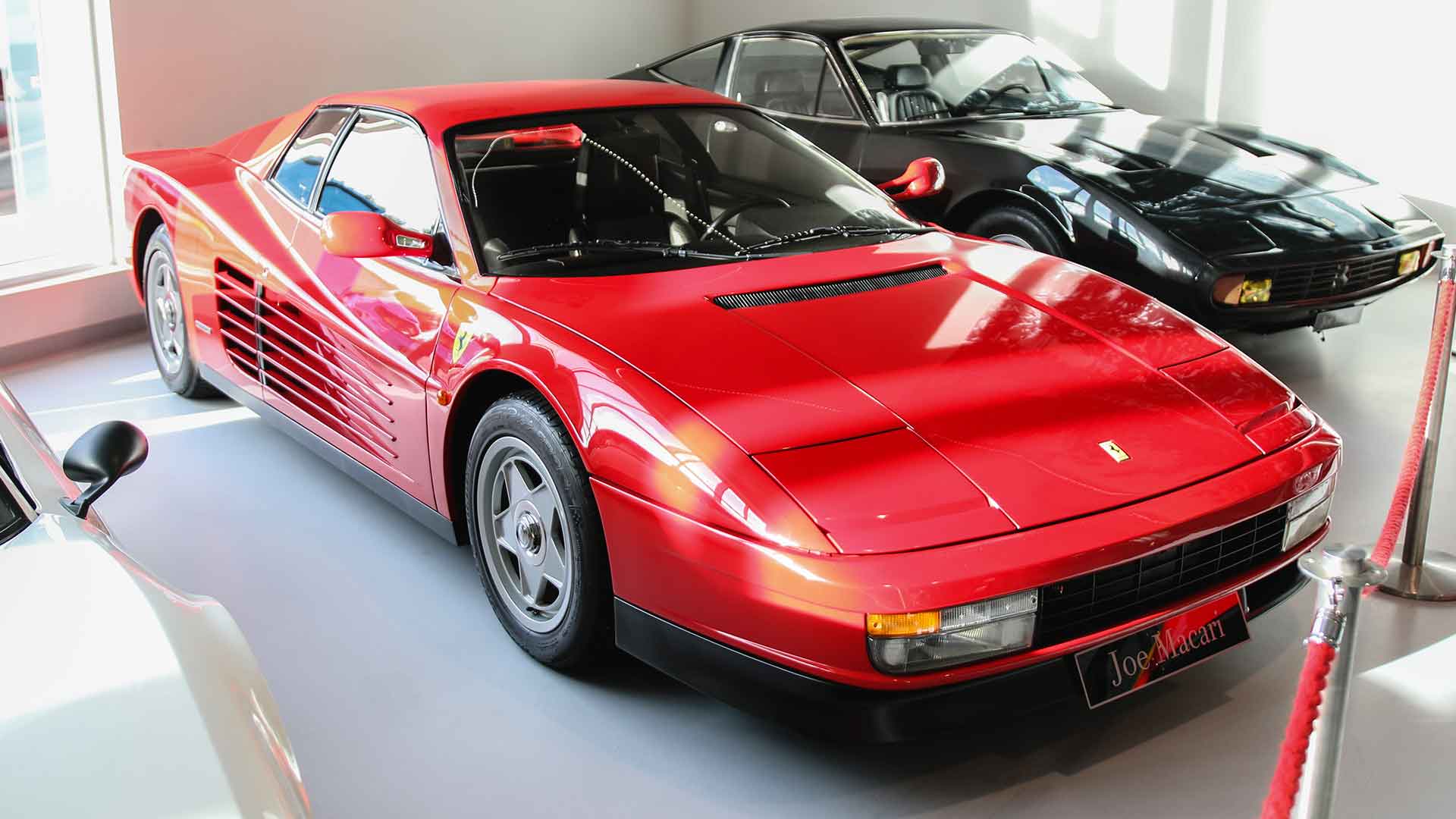
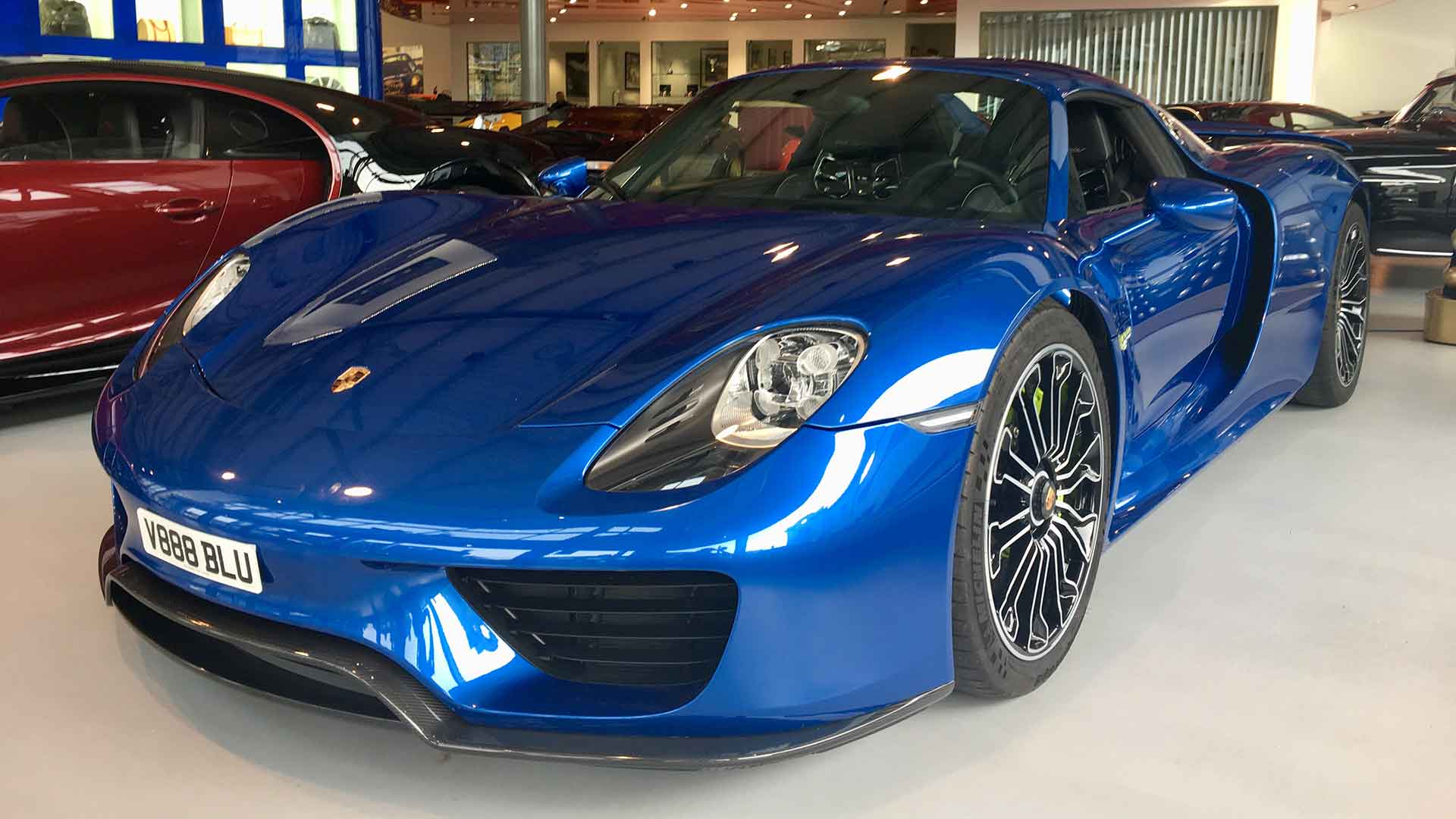
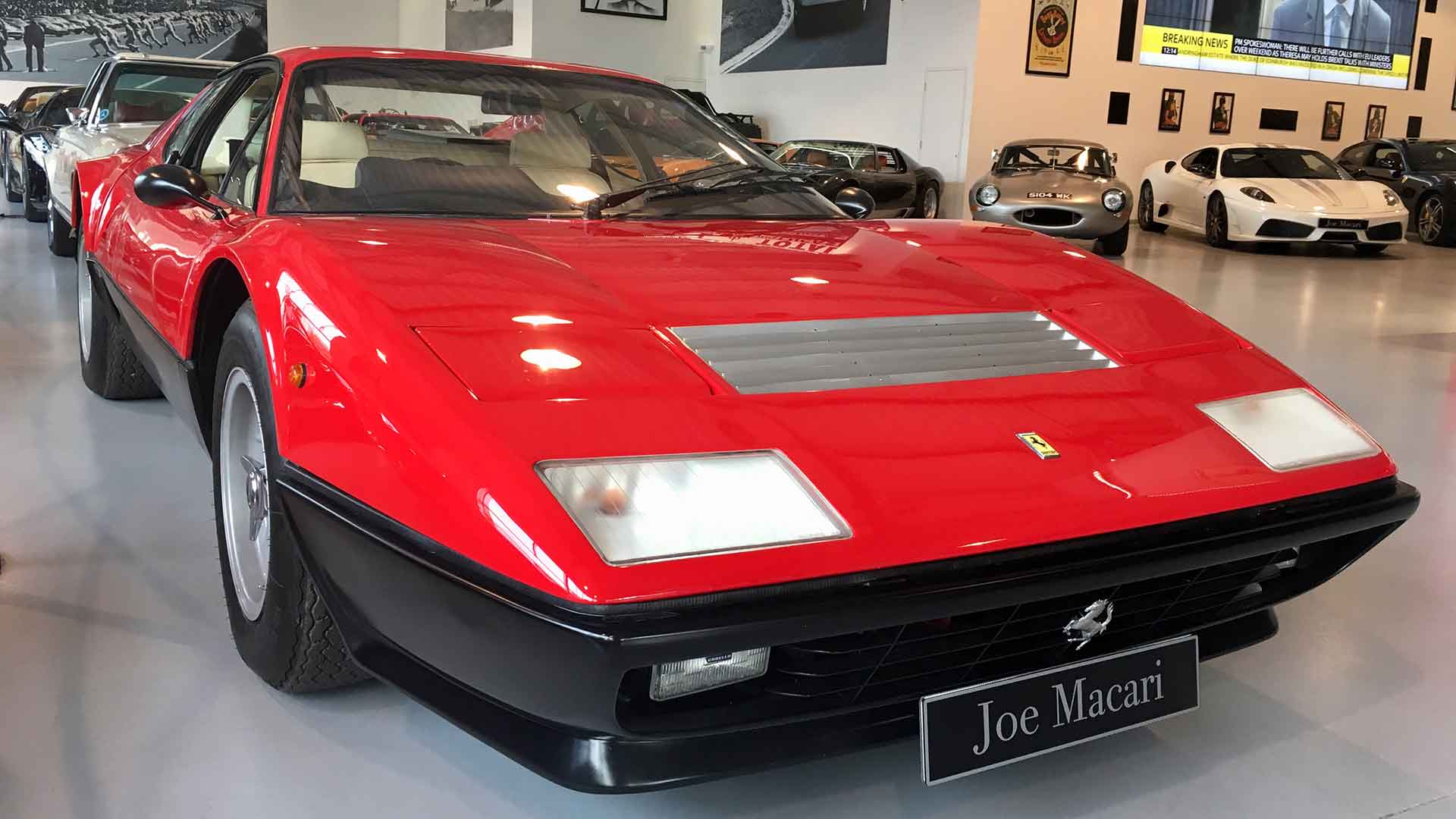
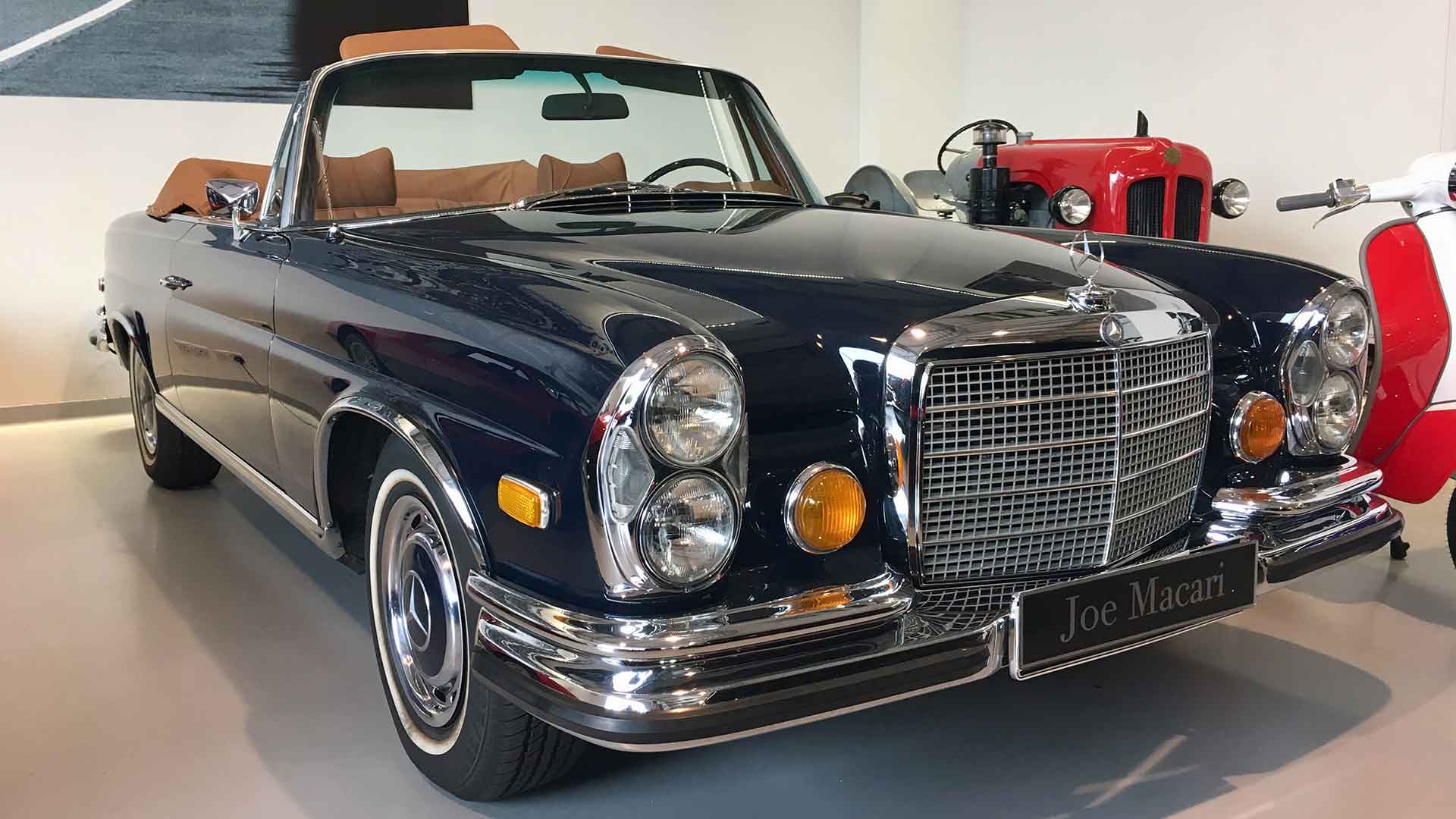
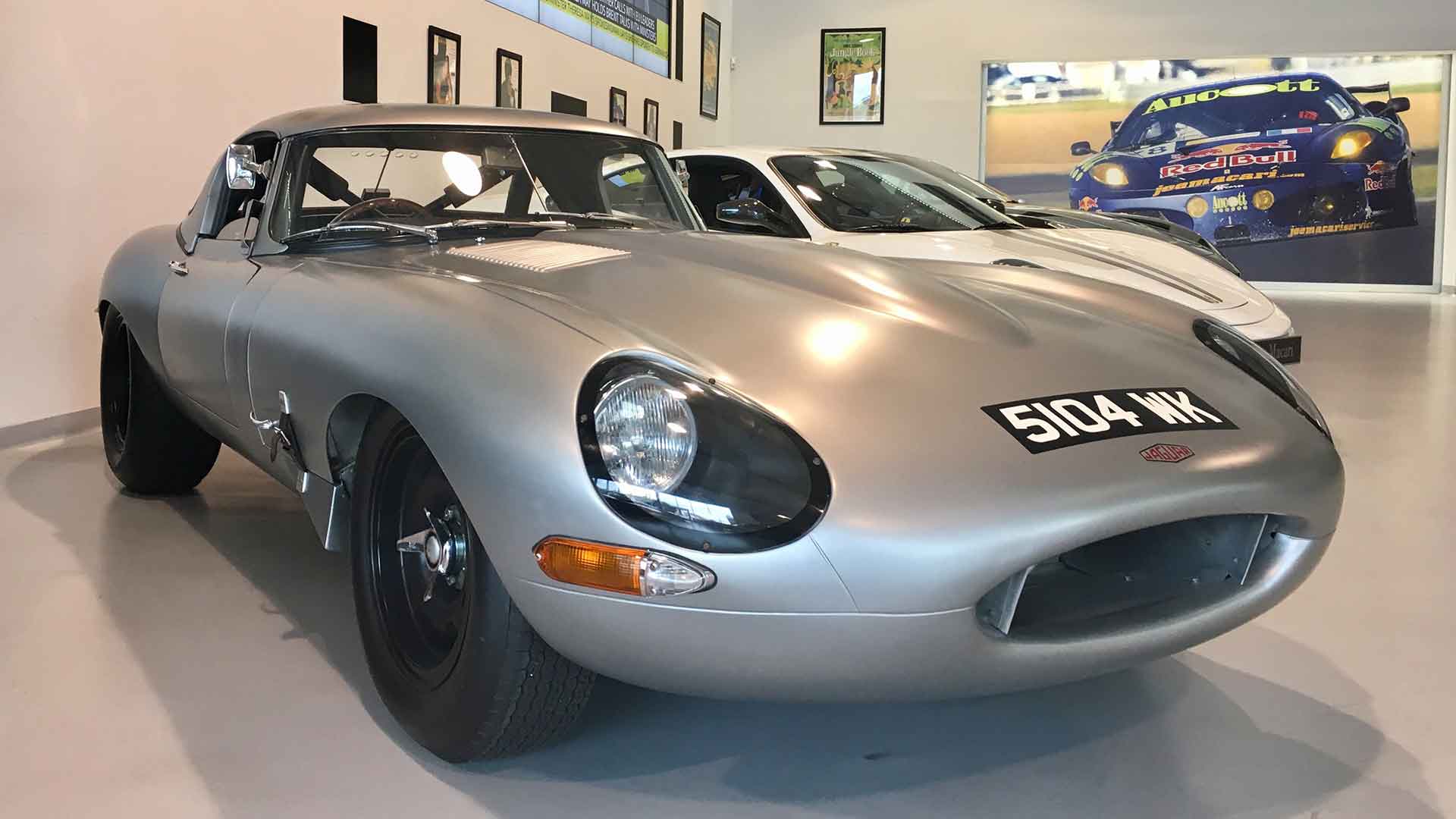
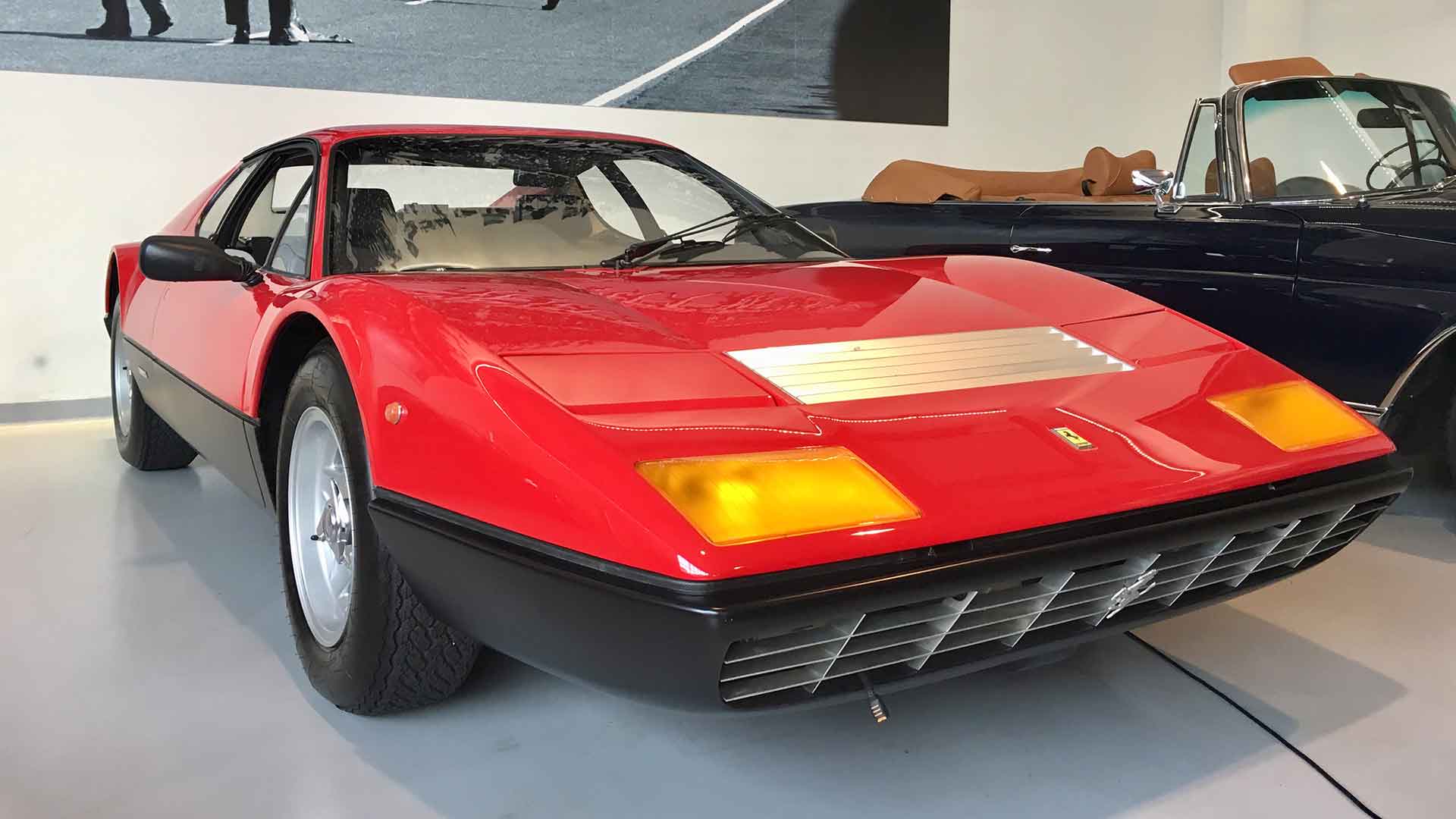
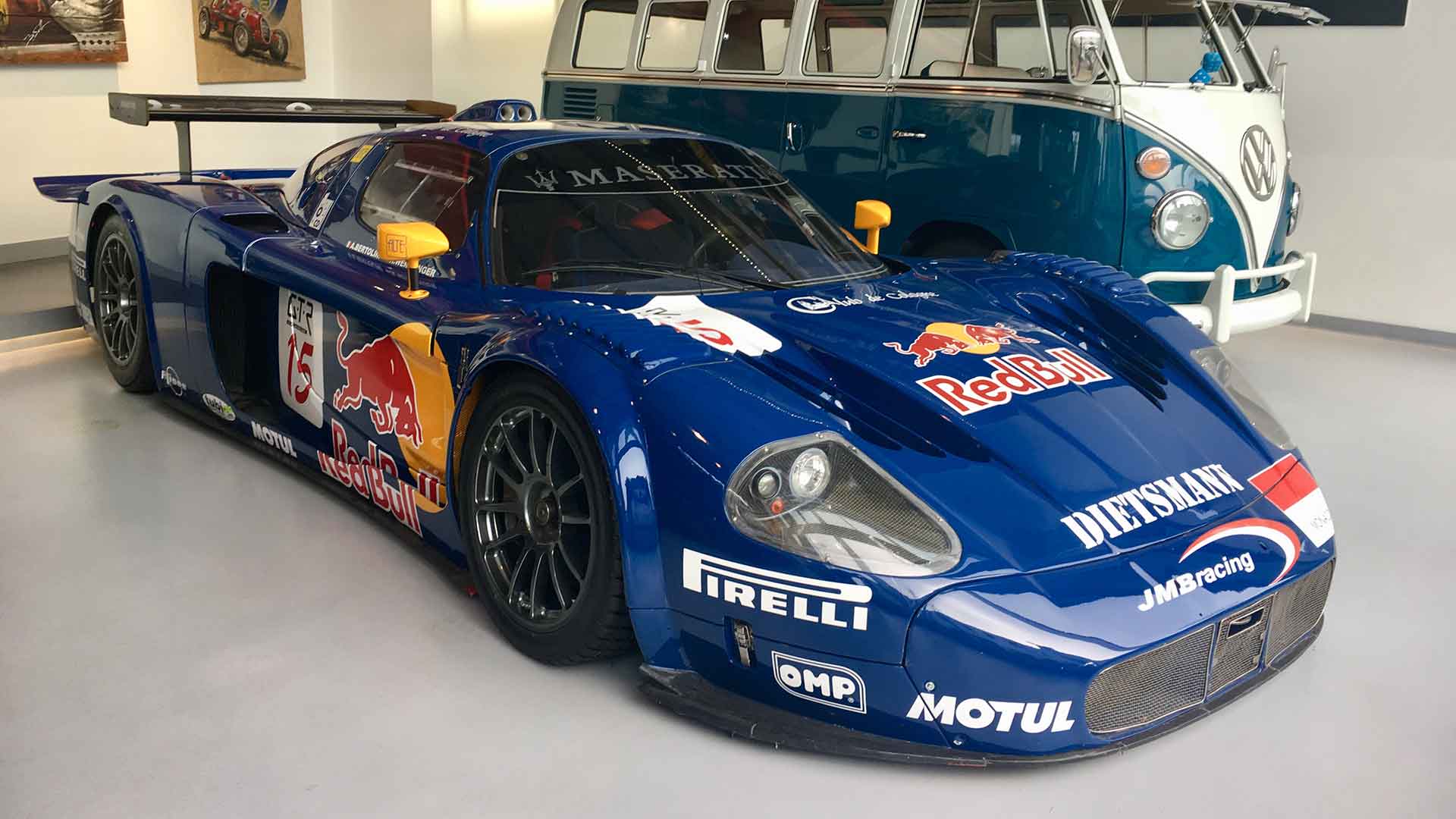
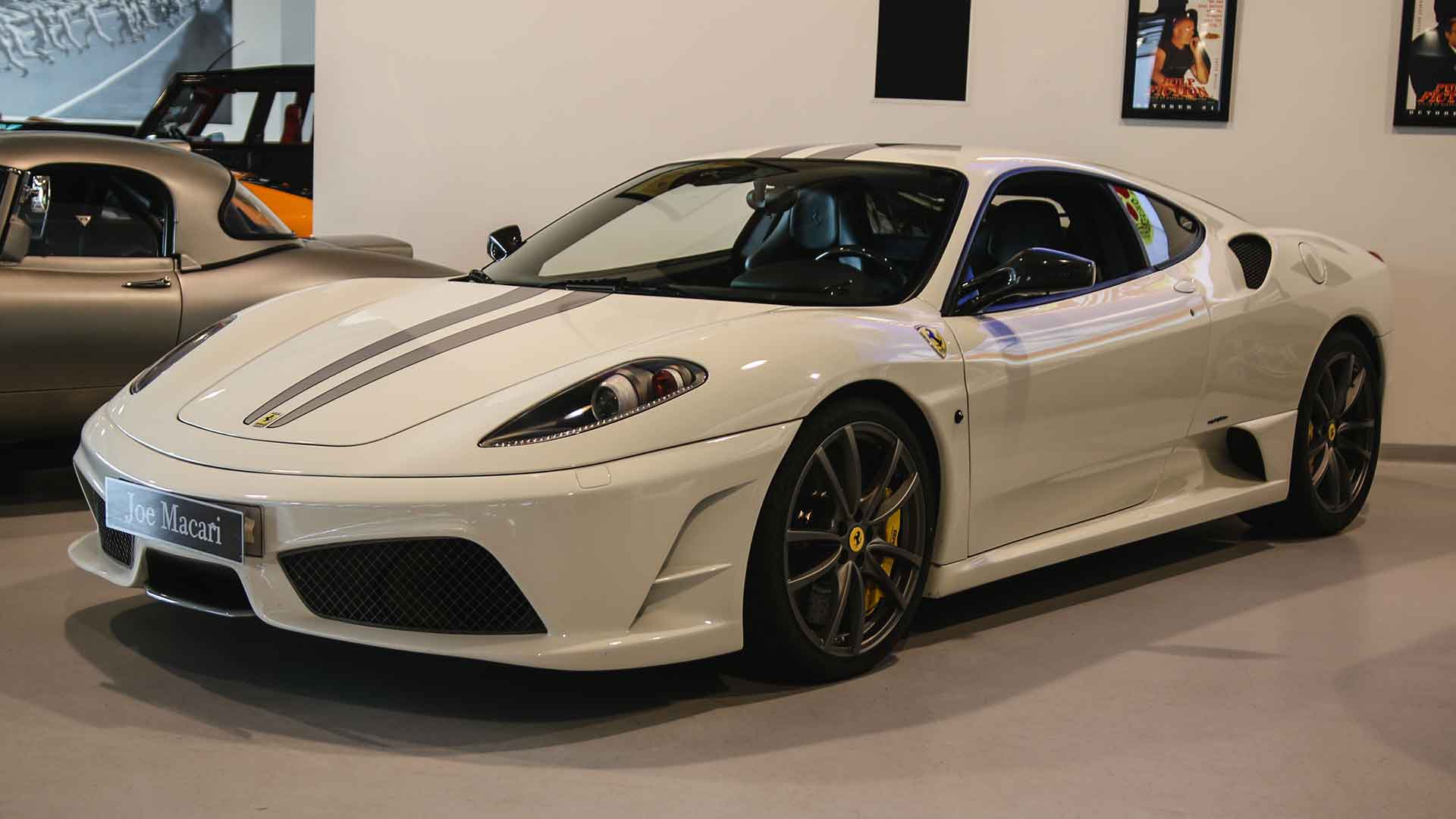
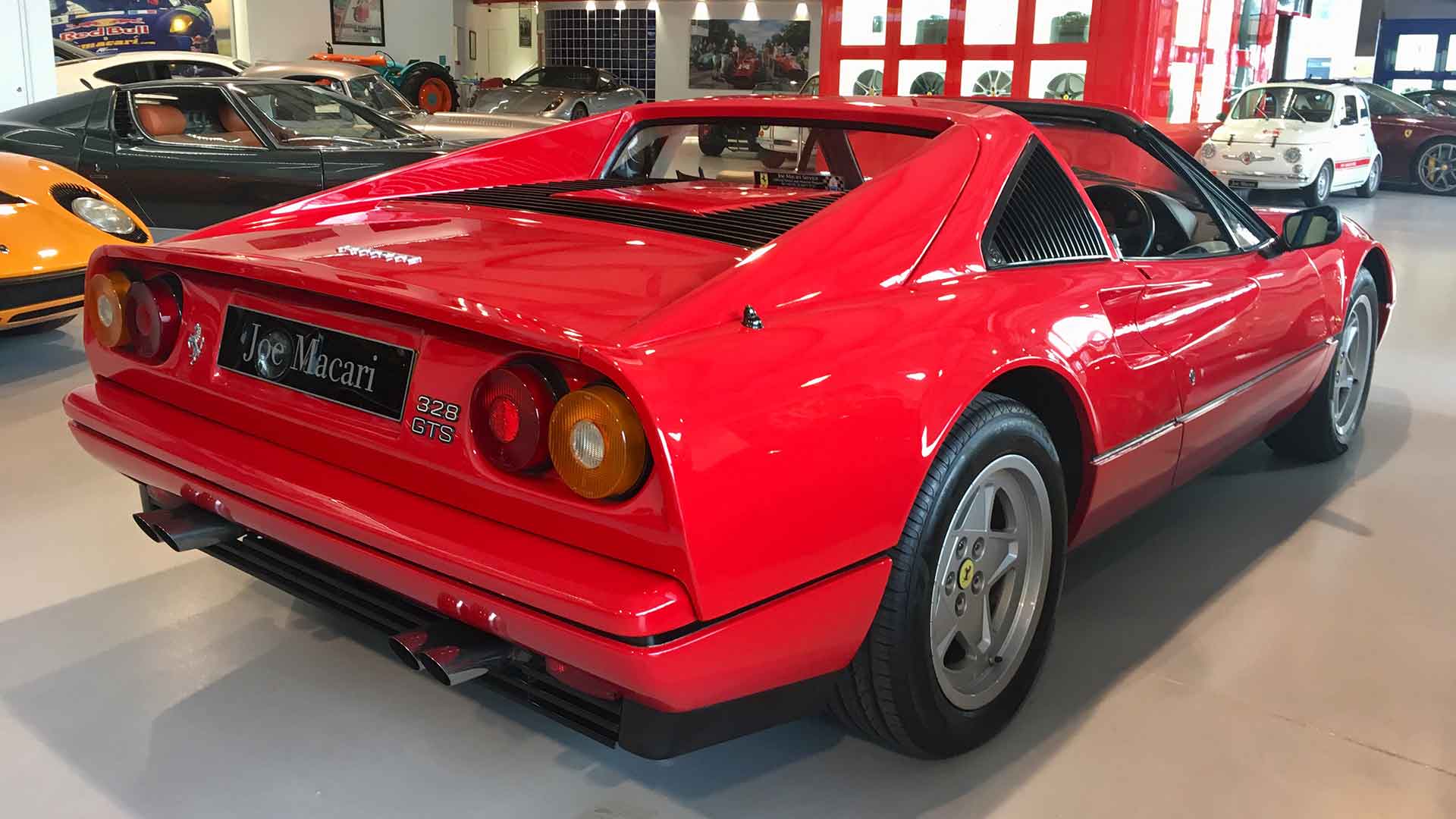
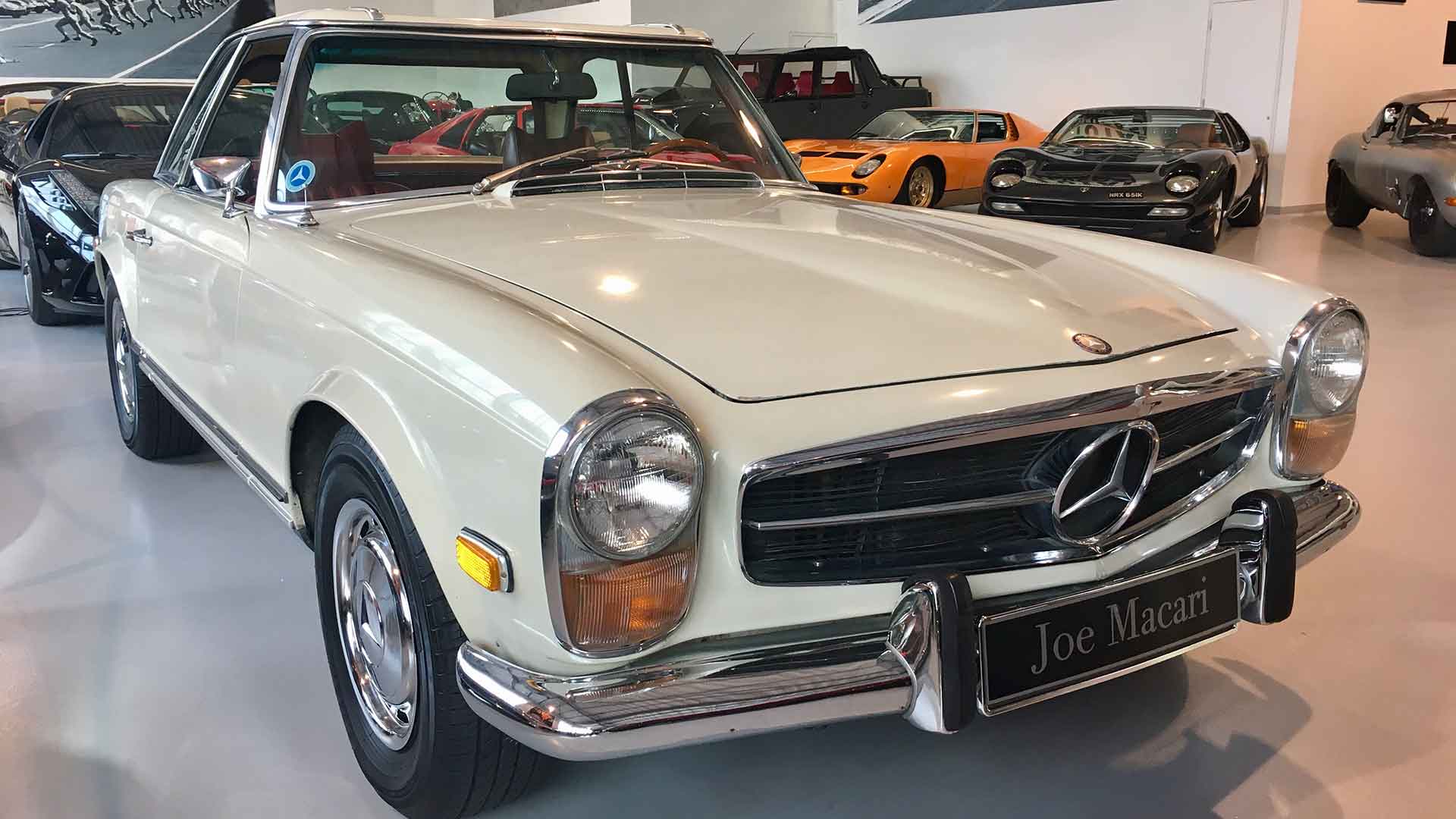
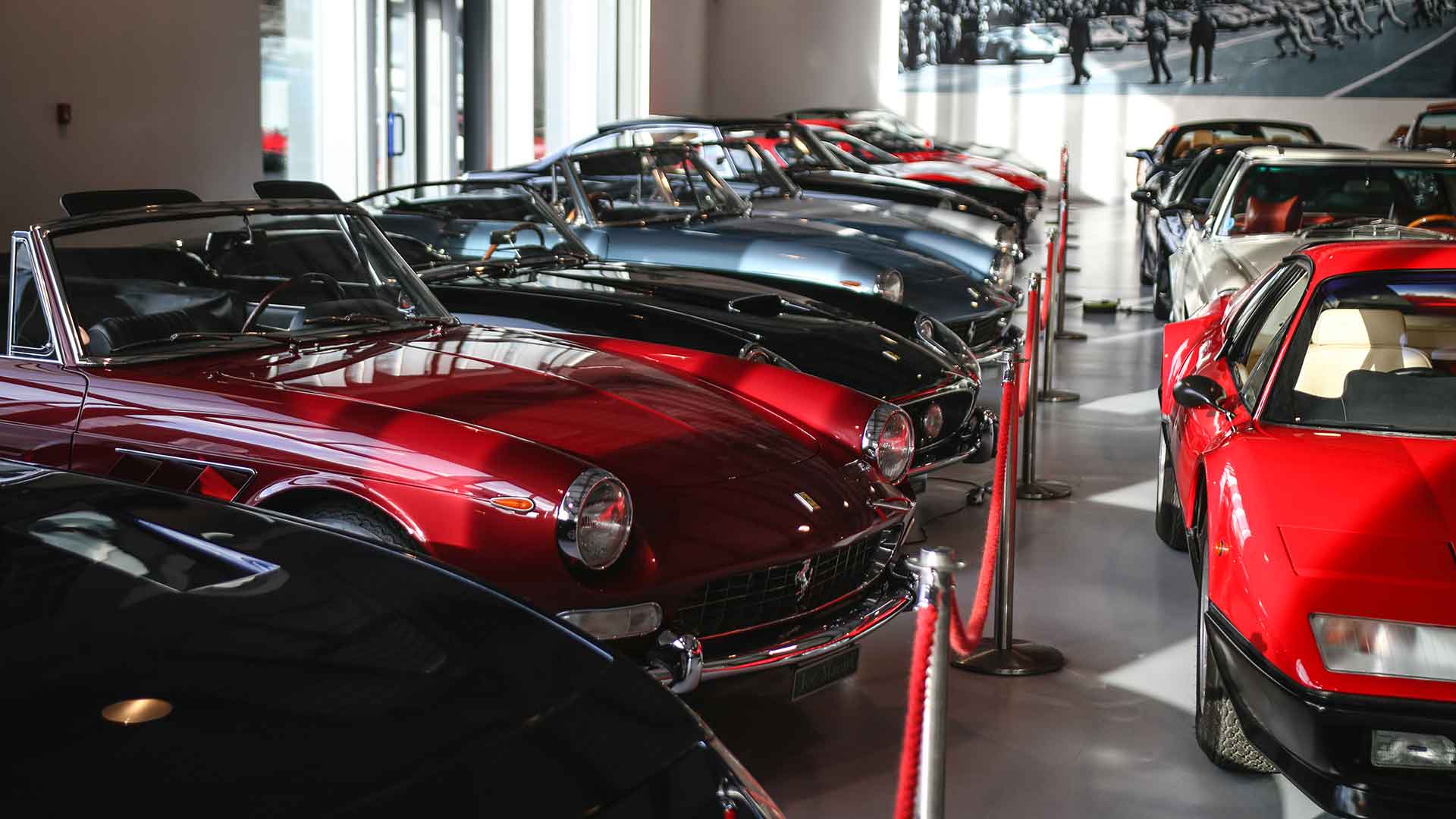
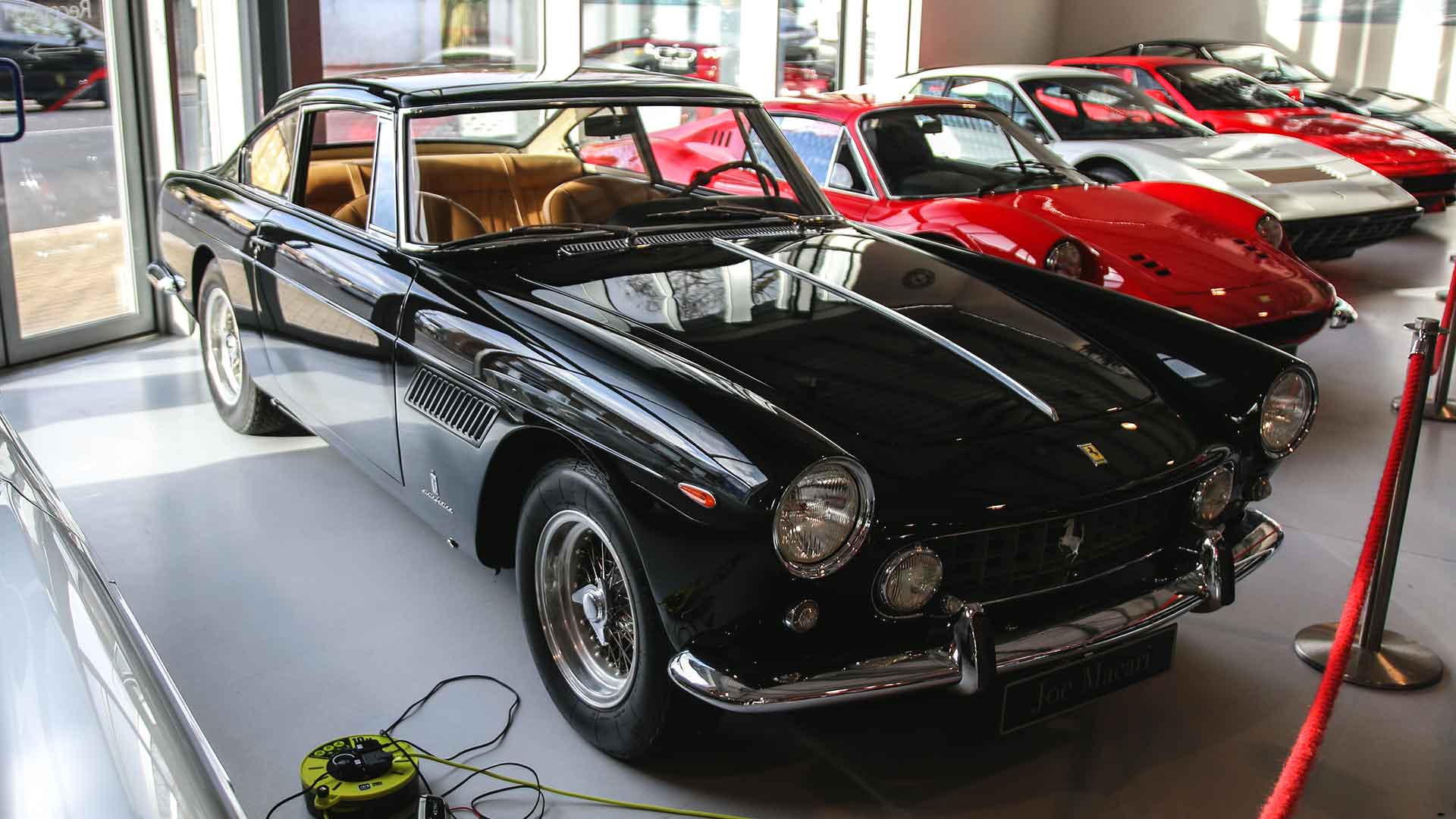
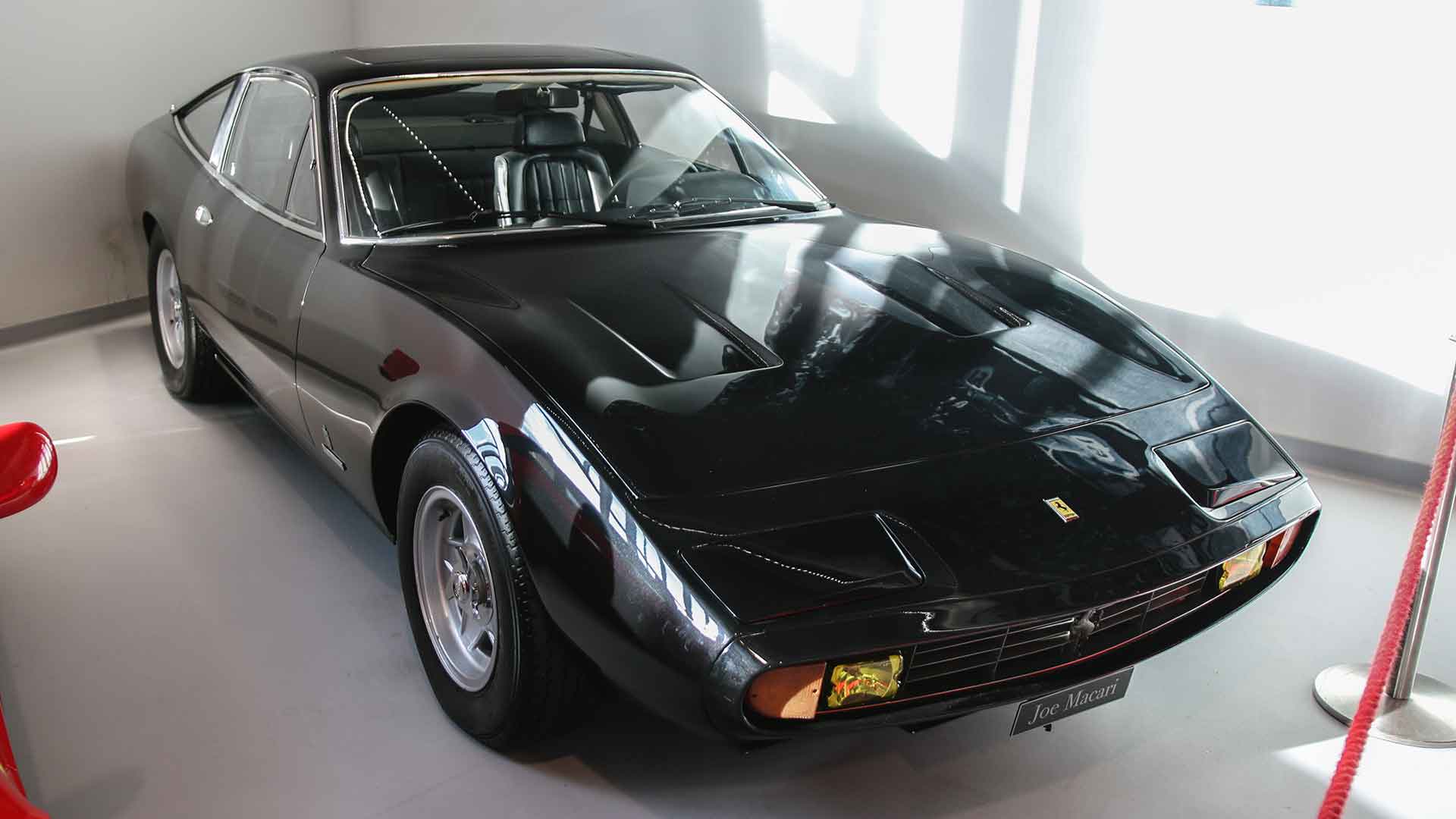
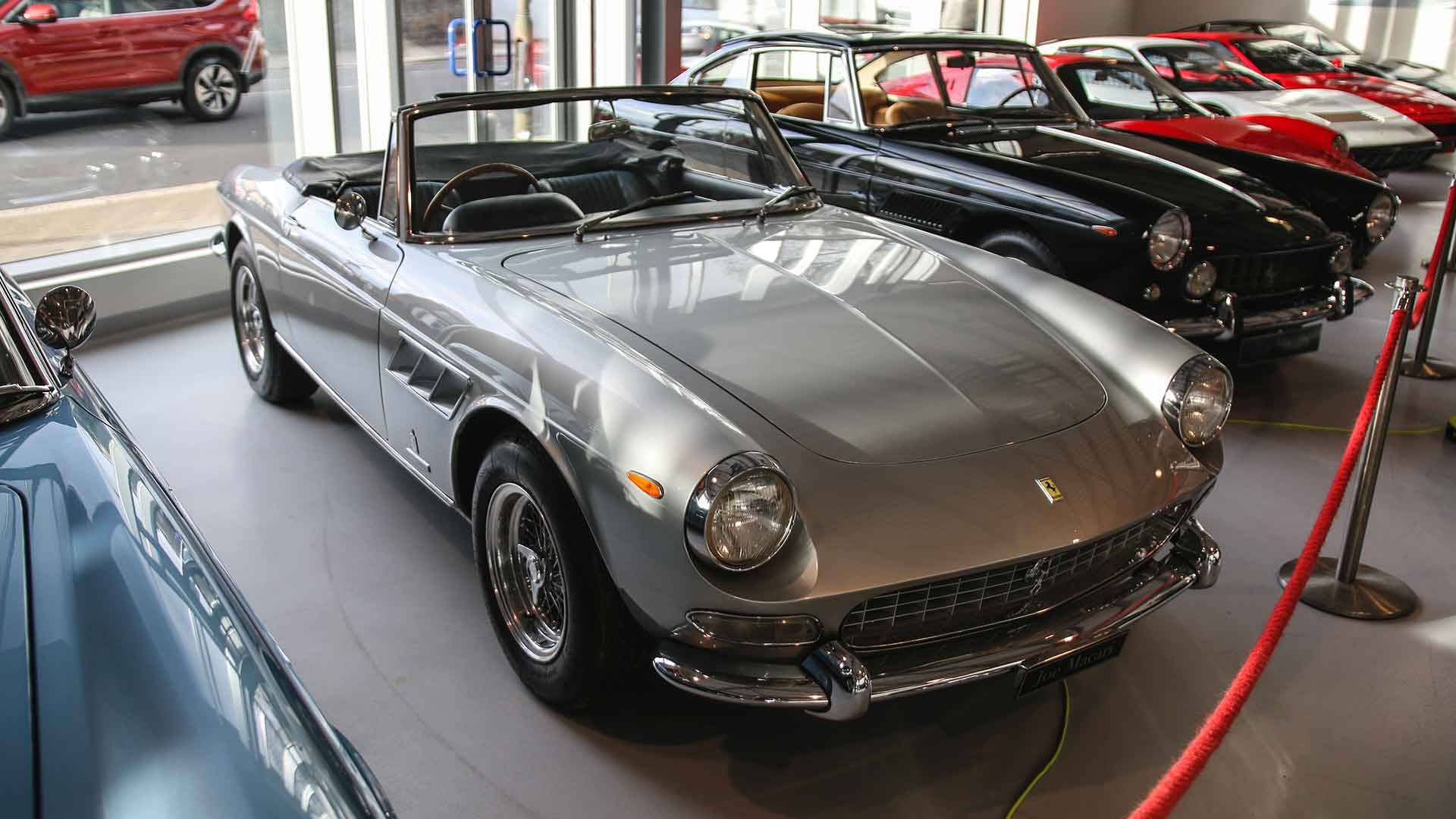
Nestled in a nondescript corner of south London, Joe Macari is a haven for supercar spotters. From blue-chip classics to seven-figure hypercars – oh, and a Lamborghini tractor – the showroom is crammed with automotive exotica.
Owner Joe set up his business servicing Ferraris and Maseratis in 1988, and it’s been an official aftersales centre for both brands since 2007. He’s also a talented racer, with Le Mans and FIA GT1 on his CV.
Video: a tour of the Joe Macari showroom
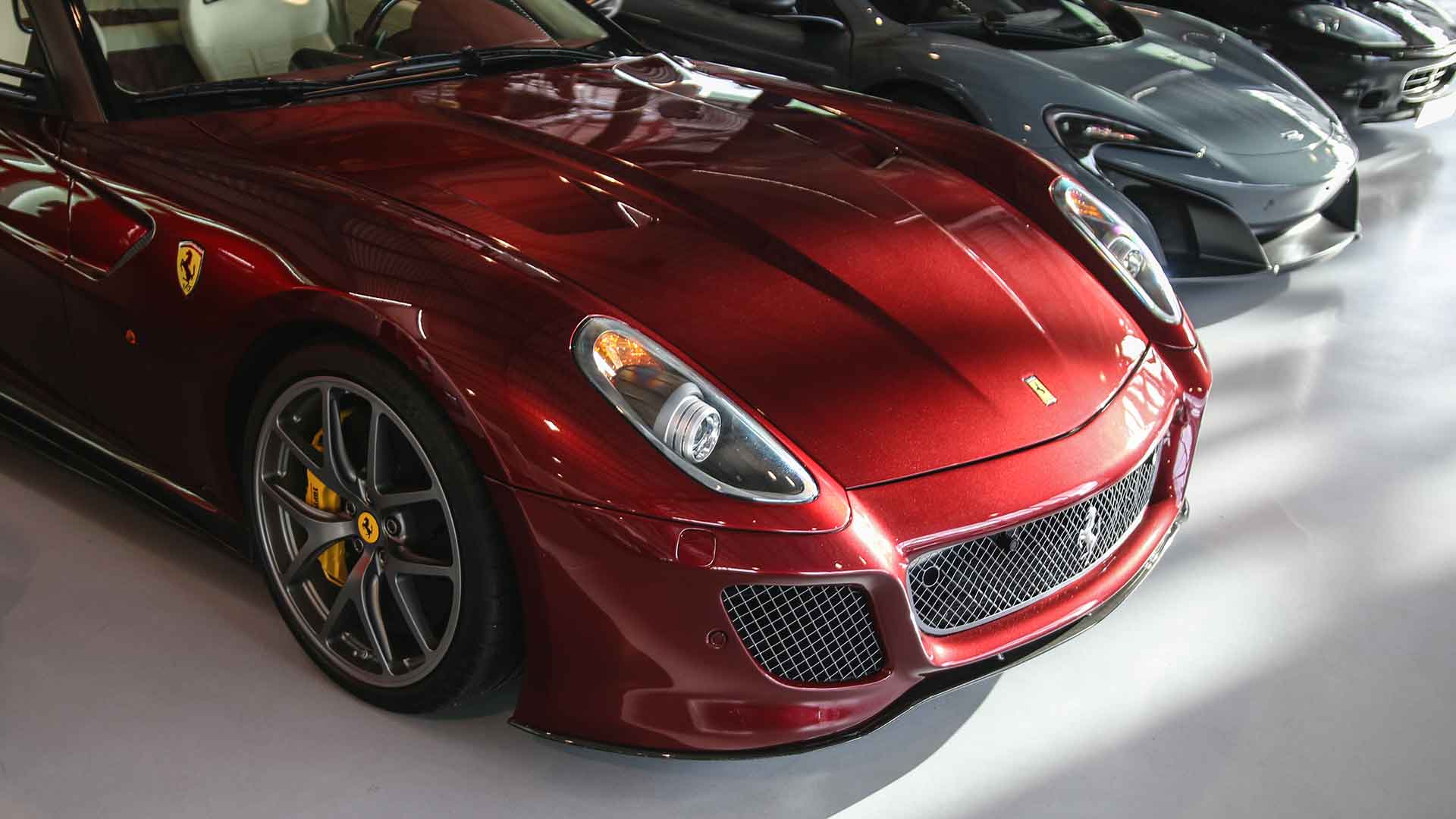
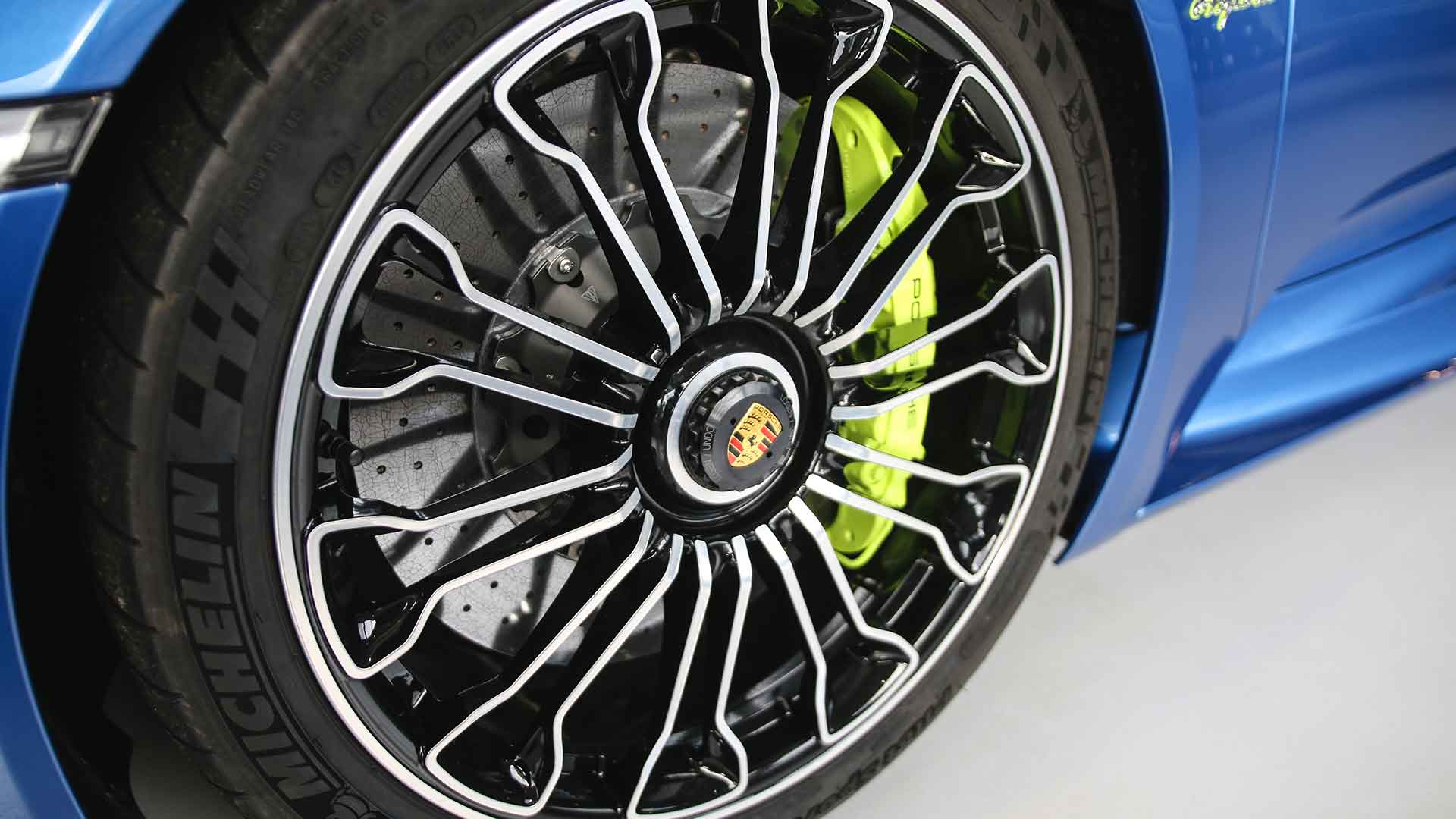
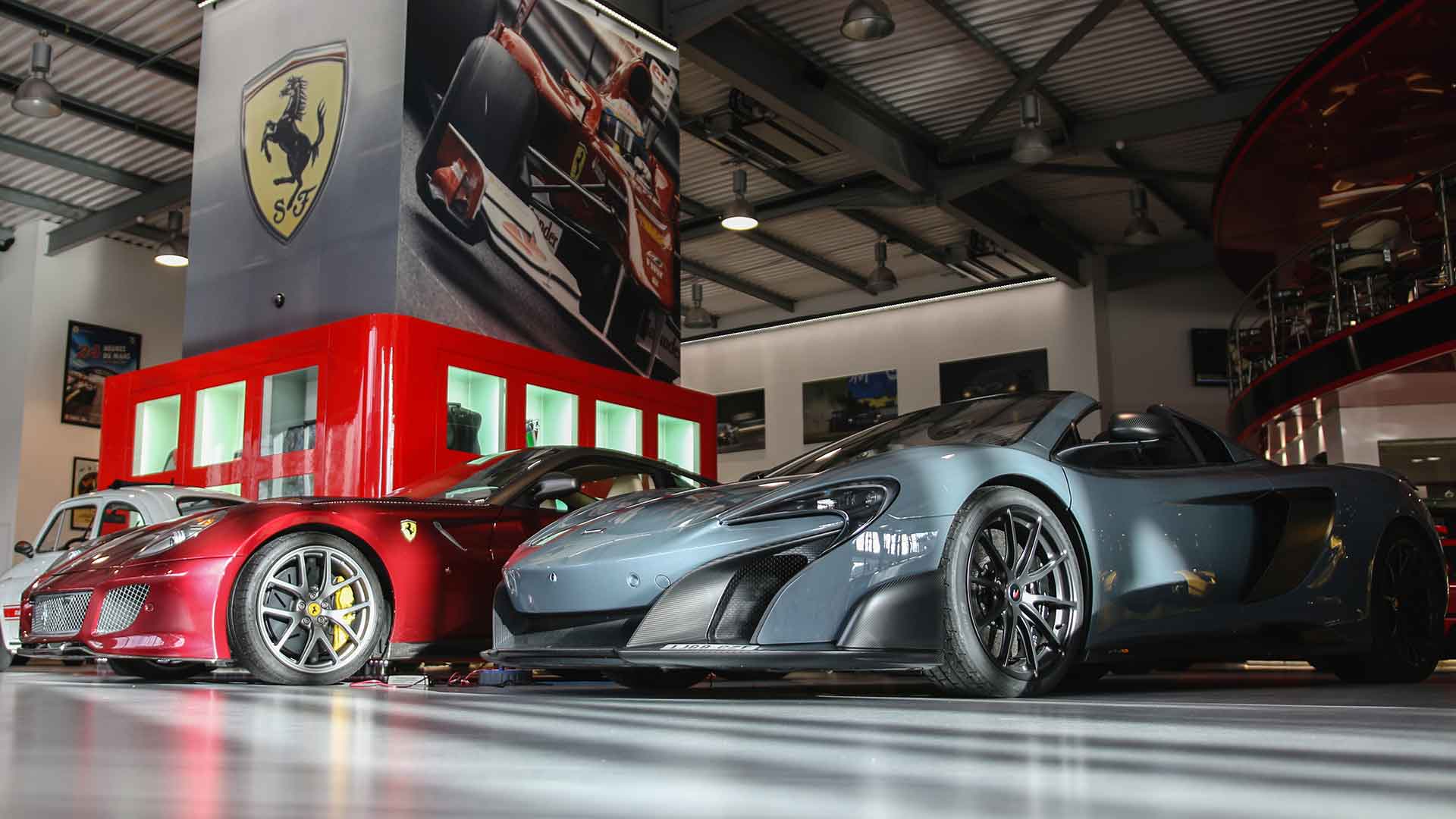
Today, Joe Macari continues to specialise in high-end Italian cars; we counted upwards of 20 Ferraris at the time of our visit. Other nationalities are represented by Bugatti, McLaren, Porsche, Shelby, Jaguar, Mercedes-Benz and more.
Watch our video for an immersive showroom tour, then read on to discover our personal favourite cars.
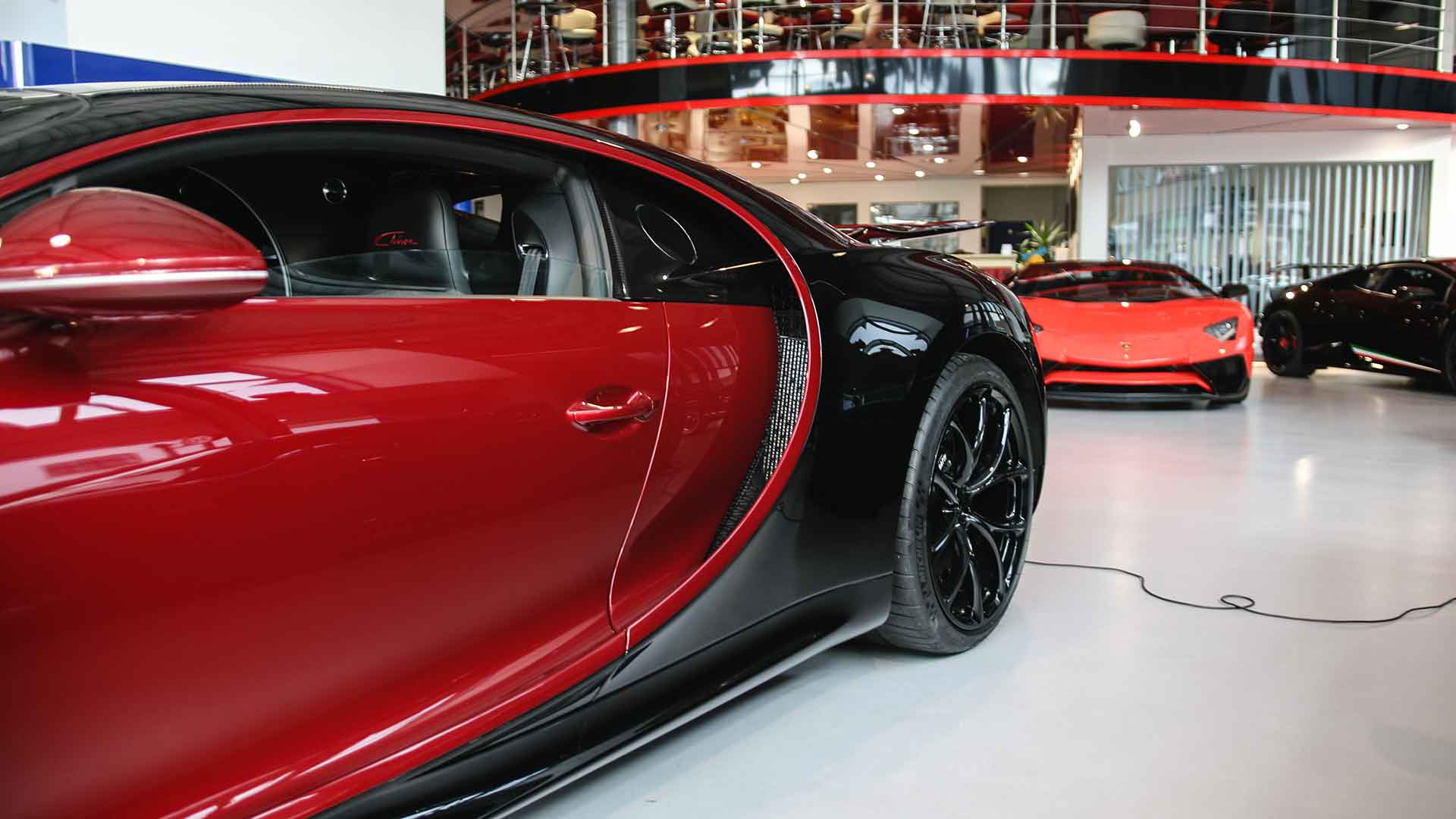
Bugatti Chiron
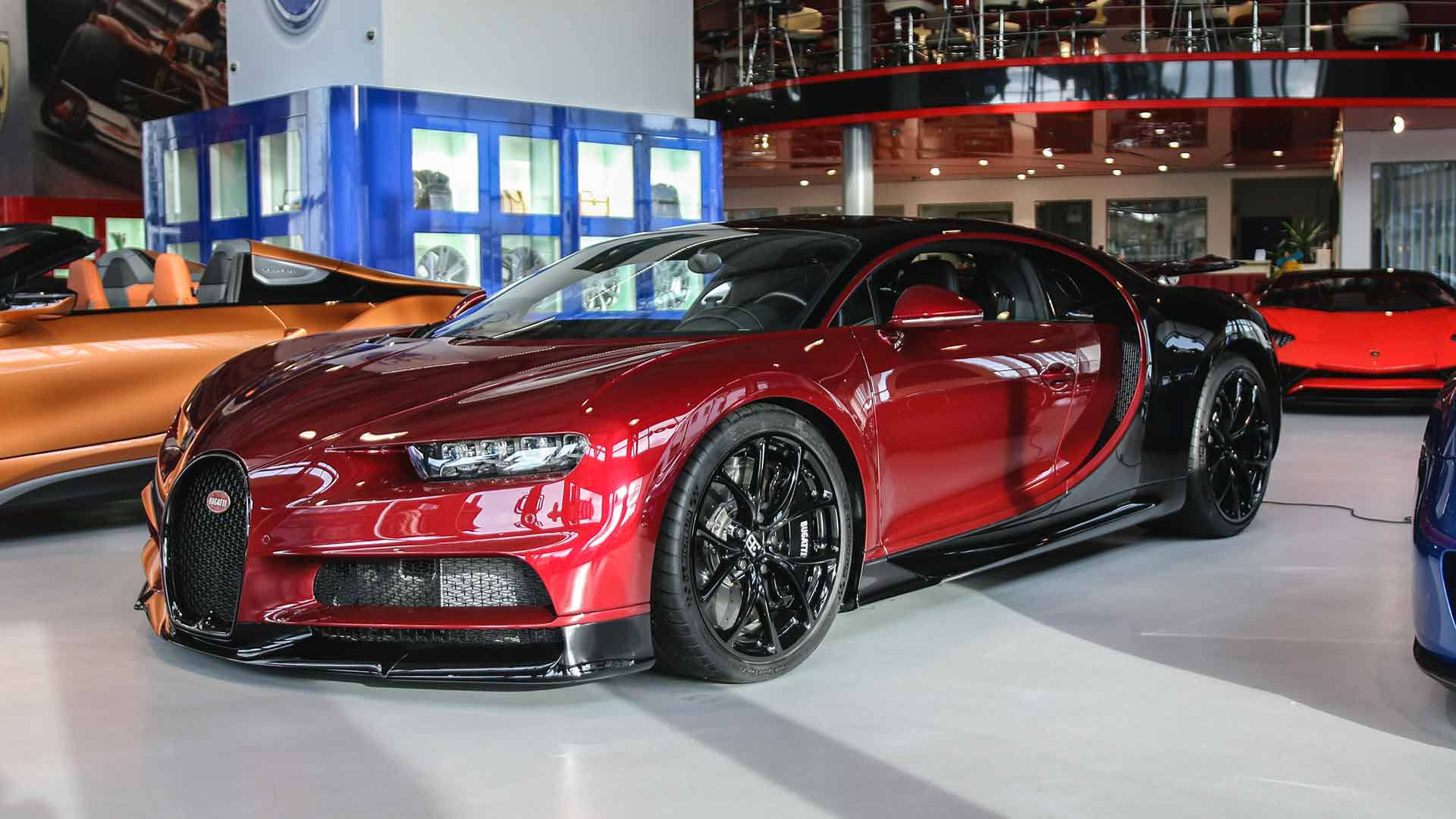
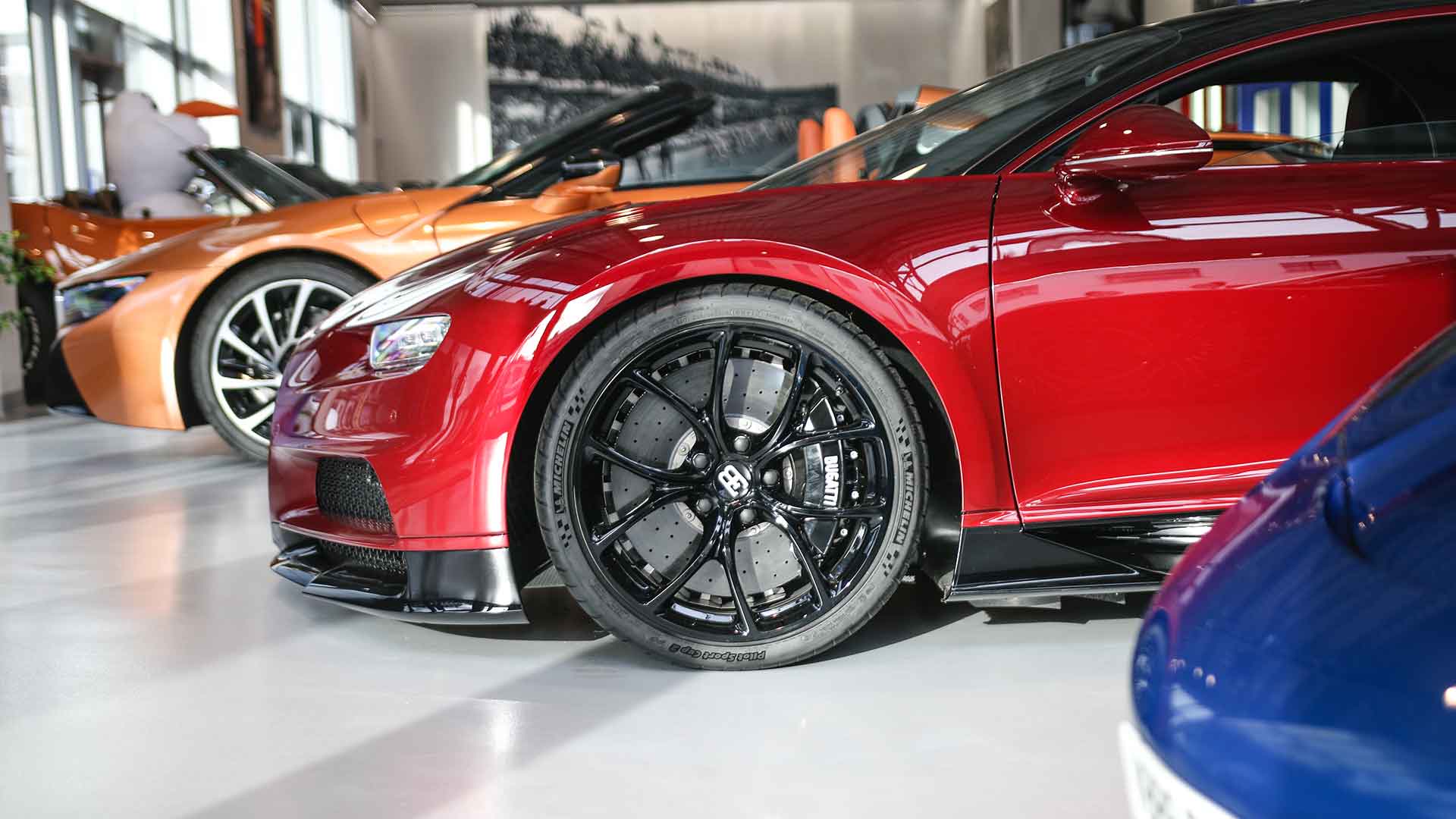
Front-and-centre in the showroom, what else but the world’s fastest hypercar? The Bugatti Chiron’s 8.0-litre quad-turbo W16 develops 1,500hp and 1,180lb ft of torque. Zero to 60mph takes 2.4 seconds and VMax is electronically limited – yes, limited – to 261mph. No road-legal tyres are safe beyond that speed, apparently.
This Ruby Red/Nocturne Black Chiron has covered just 400 miles from new. Options fitted include a carbon fibre steering wheel and Comfort seats. Yours for a mere €2,825,000 (£2,447,000).
Lamborghini Miura
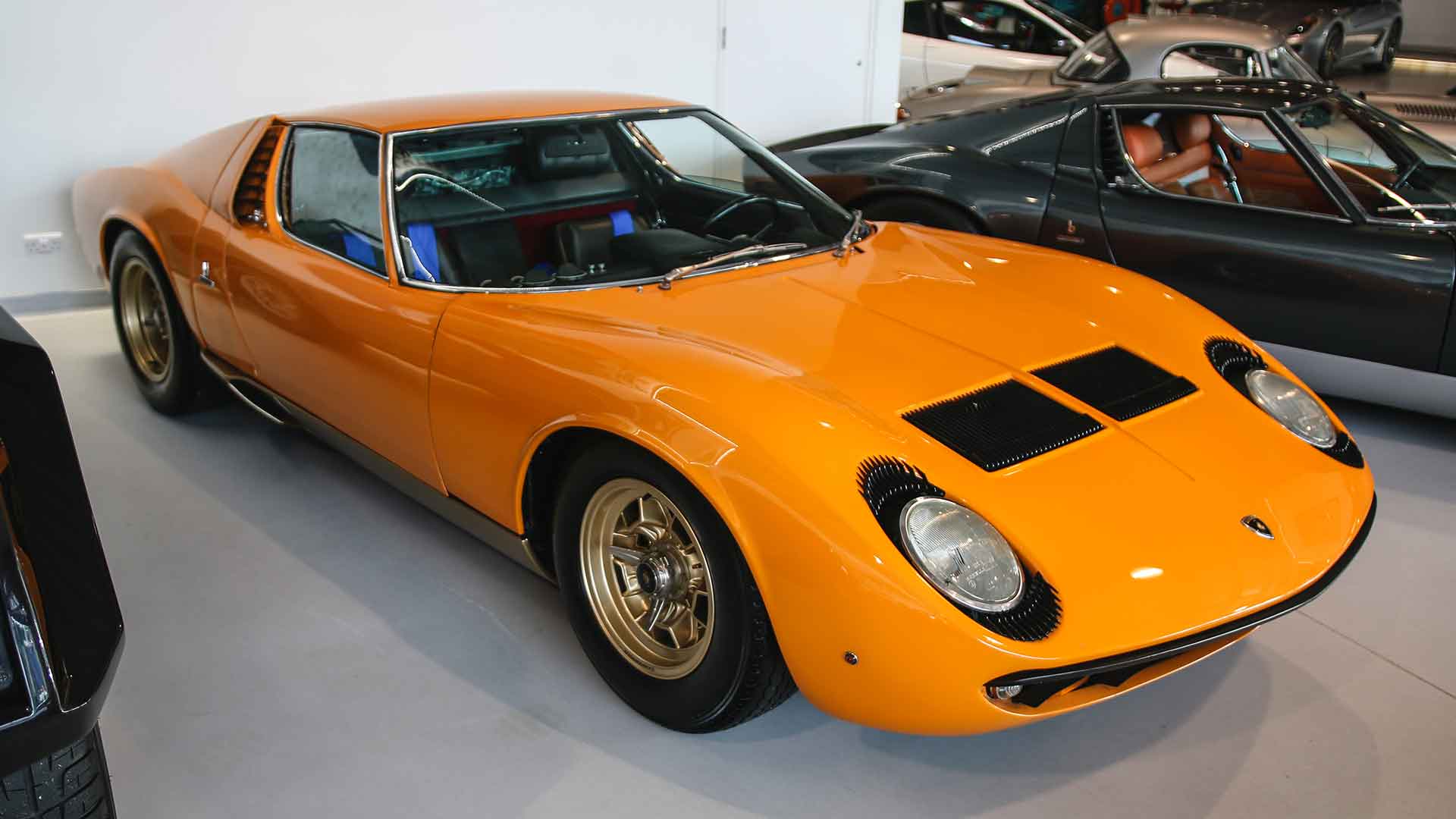
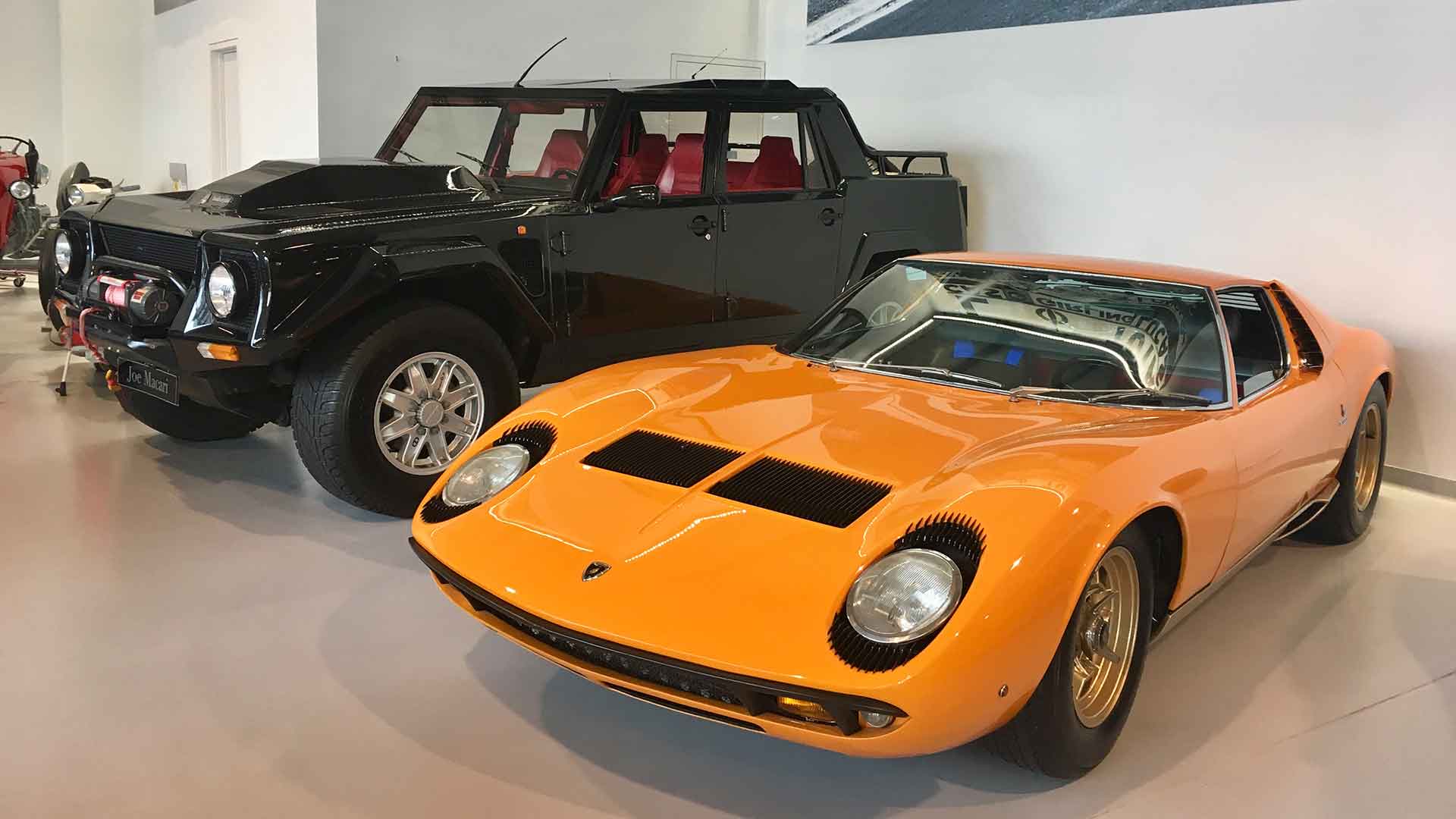
To paraphrase Prince, ‘Could you be… the most beautiful car in the world?”. The voluptuous Lamborghini Miura is certainly at the top table, battling the Jaguar E-Type, Ferrari Dino and Peugeot 406 Coupe for all-time catwalk kudos. Just us on the Pug? Right, moving on…
This 1969 Miura S featured in the film Road Hard and has rare factory-fitted air conditioning. It’s advertised at £1,349,950 – around half the price of the low-mileage, ex-Saudi royal family Miura SV in the background.
Italdesign Zerouno
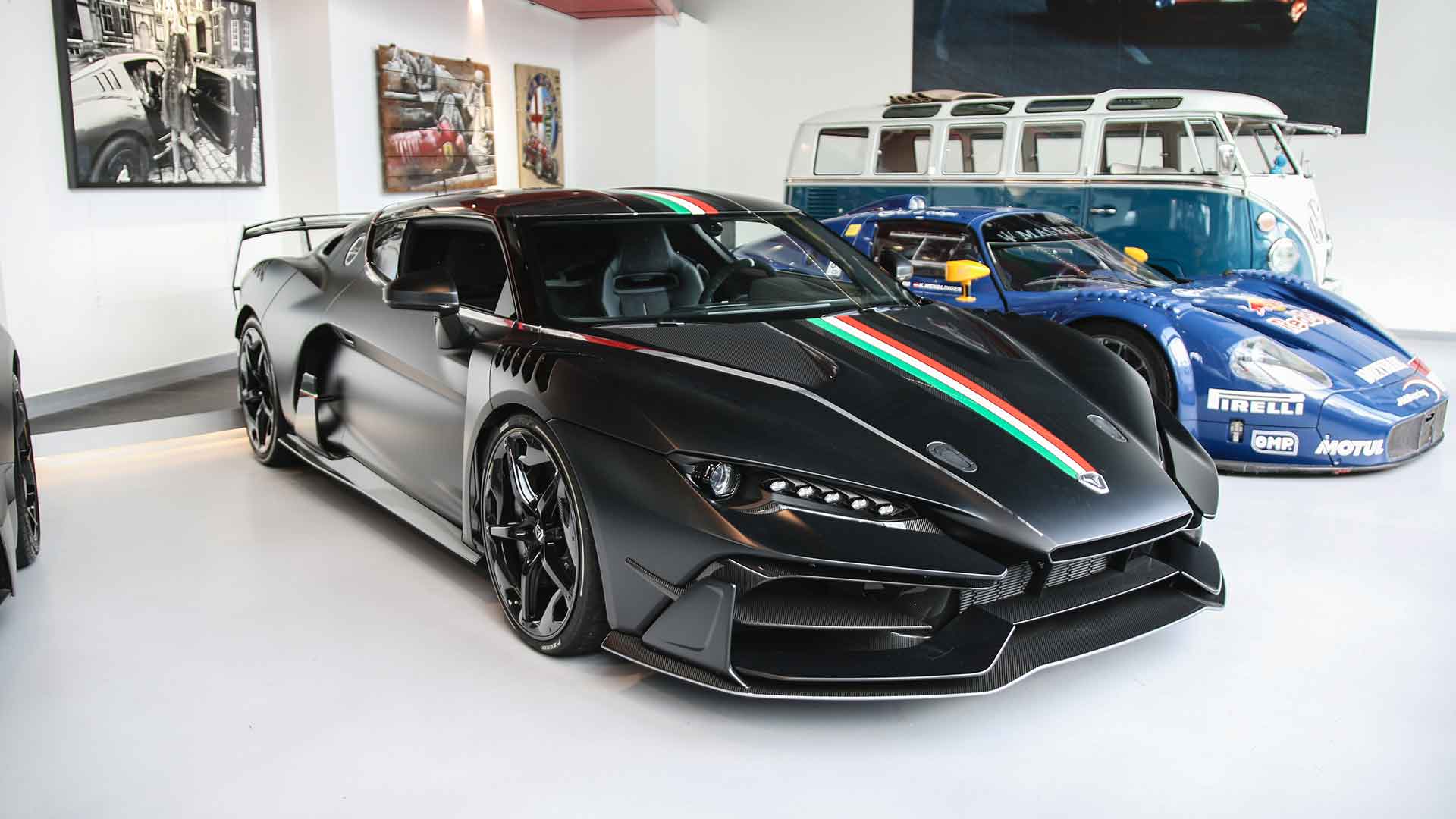
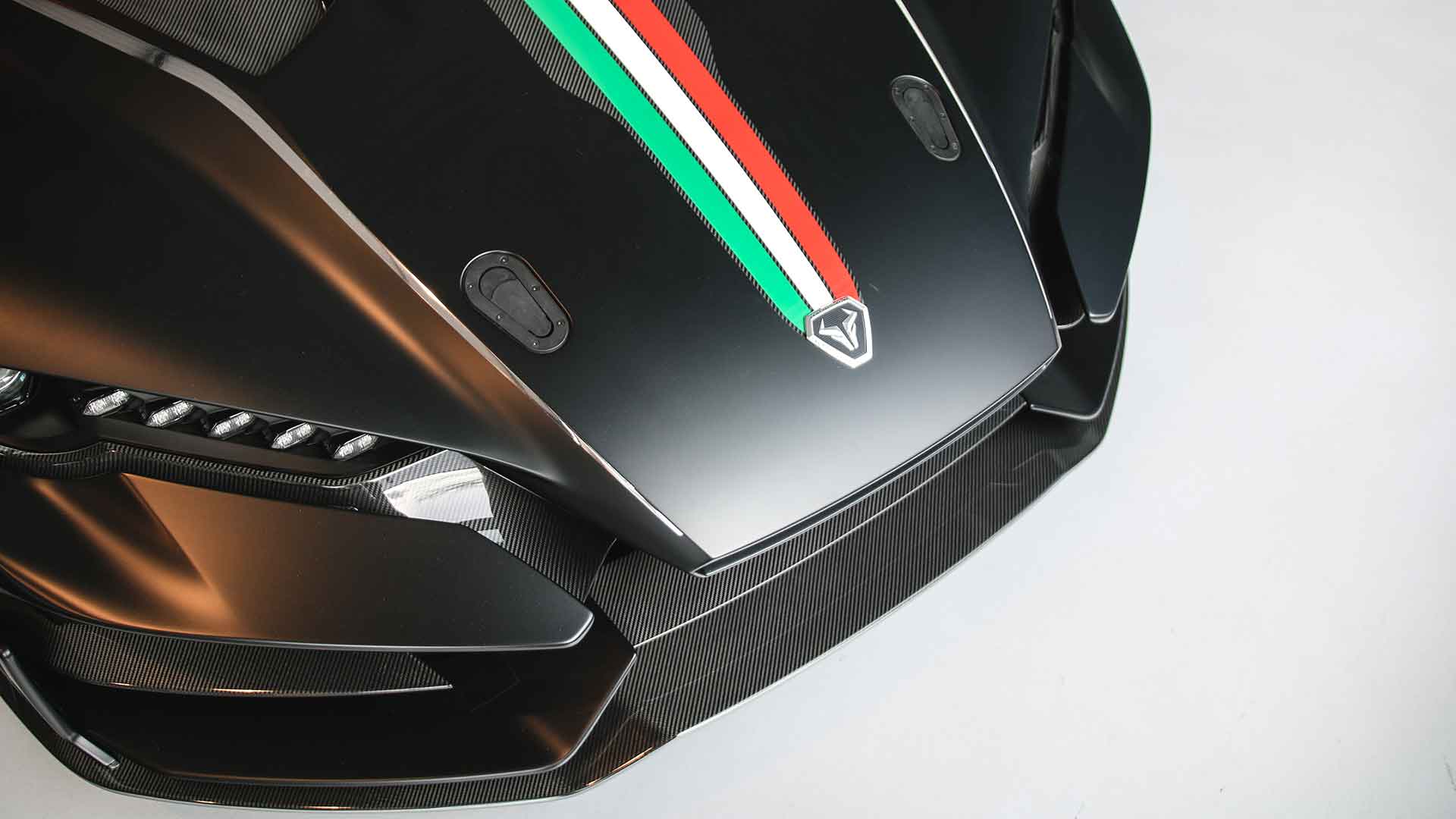
Italdesign was founded 50 years ago by Giorgetto Giugiaro, the man who penned the BMW M1, Alfasud, Lotus Esprit, Mk1 Volkswagen Golf and more. The Zerouno is his company’s first own-brand supercar: ultra-rare and ultra-expensive. Only five were built, at €1.5 million (£1.3 million) apiece.
Powering the Zerouno is the naturally aspirated 610hp V10 from the Lamborghini Huracan – truly one of great road car engines. With lightweight, all-carbon fibre bodywork, suffice to say it’s no slouch. This particular car wasn’t for sale at the time we visited.
Porsche 993 Carrera RS ‘Black Snake’
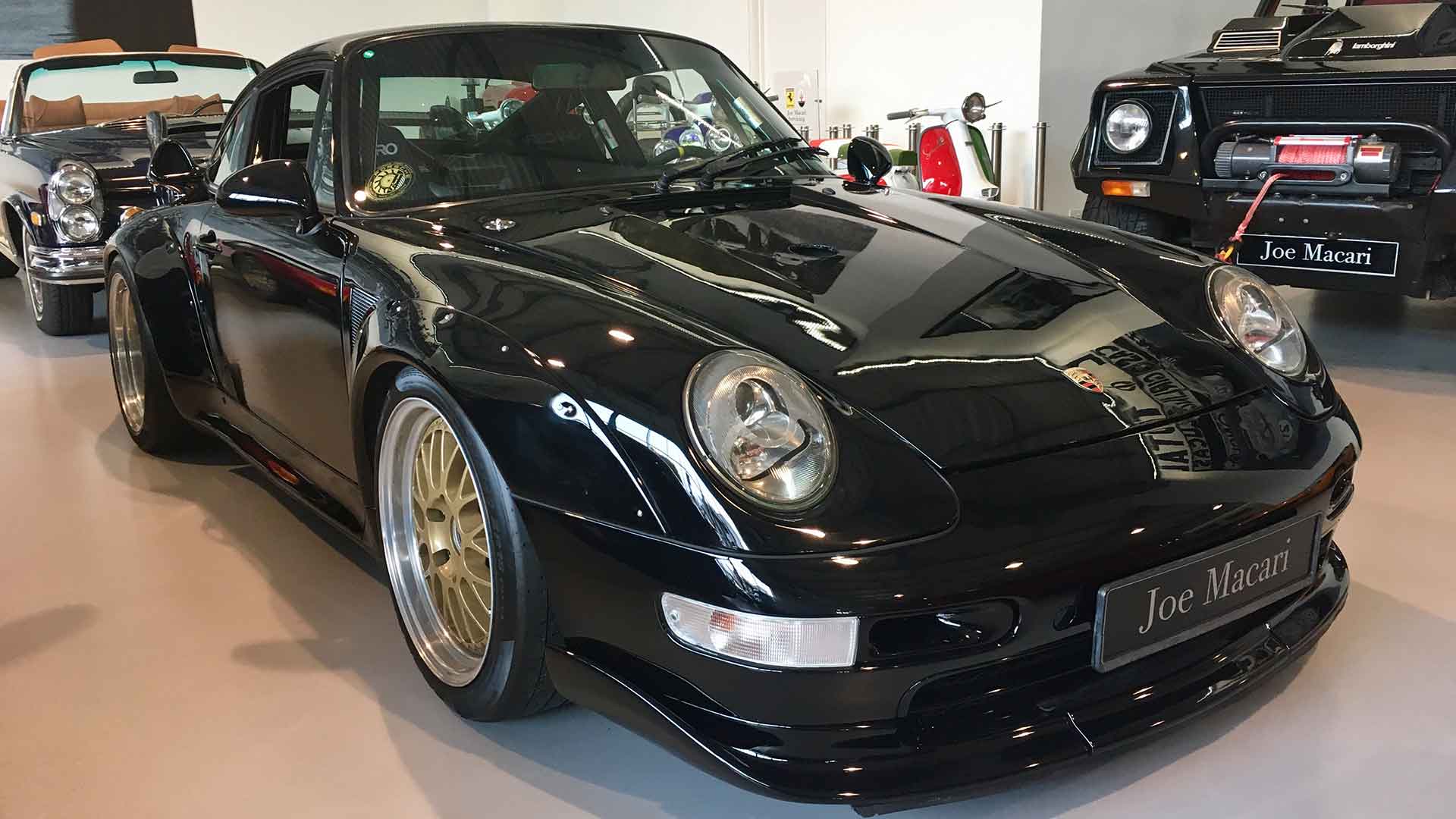
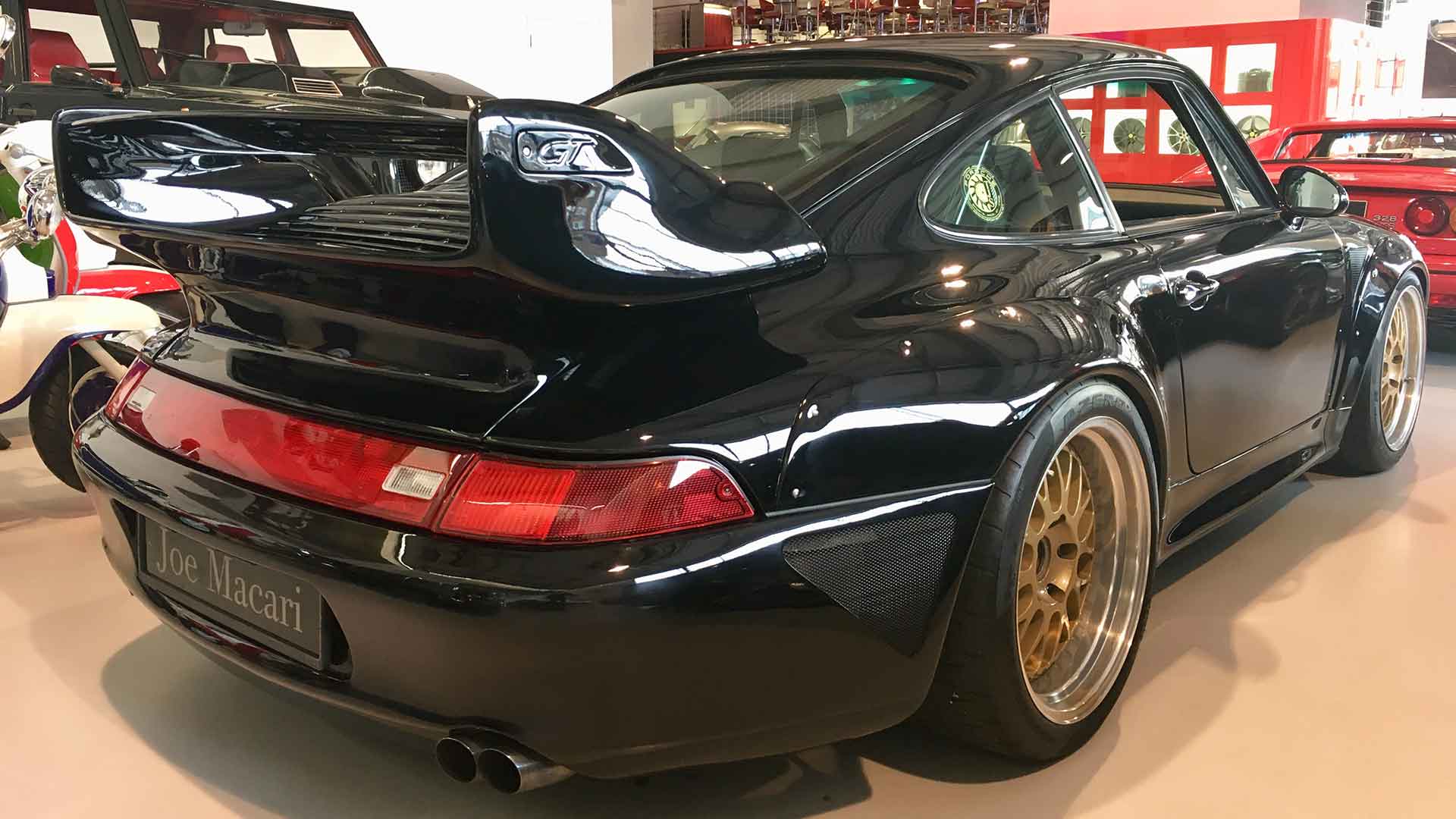
This modified Porsche 911 Carrera RS is a far cry from the Zuffenhausen original, but nobody could doubt its performance or pedigree. In 1998, driven by Horst von Saurma, it lapped the Nurburgring in 7min 46sec, setting a new road-car record.
Externally, the Porsche has the bolt-on wheelarches and monster rear wing from a 993 GT2. Its flat-six engine is boosted to 530hp by two turbochargers, while its four-wheel-drive system comes from a 993 Turbo. You’ll need £244,950 to drive home in this former Lord of the ‘Ring.
McLaren 675LT
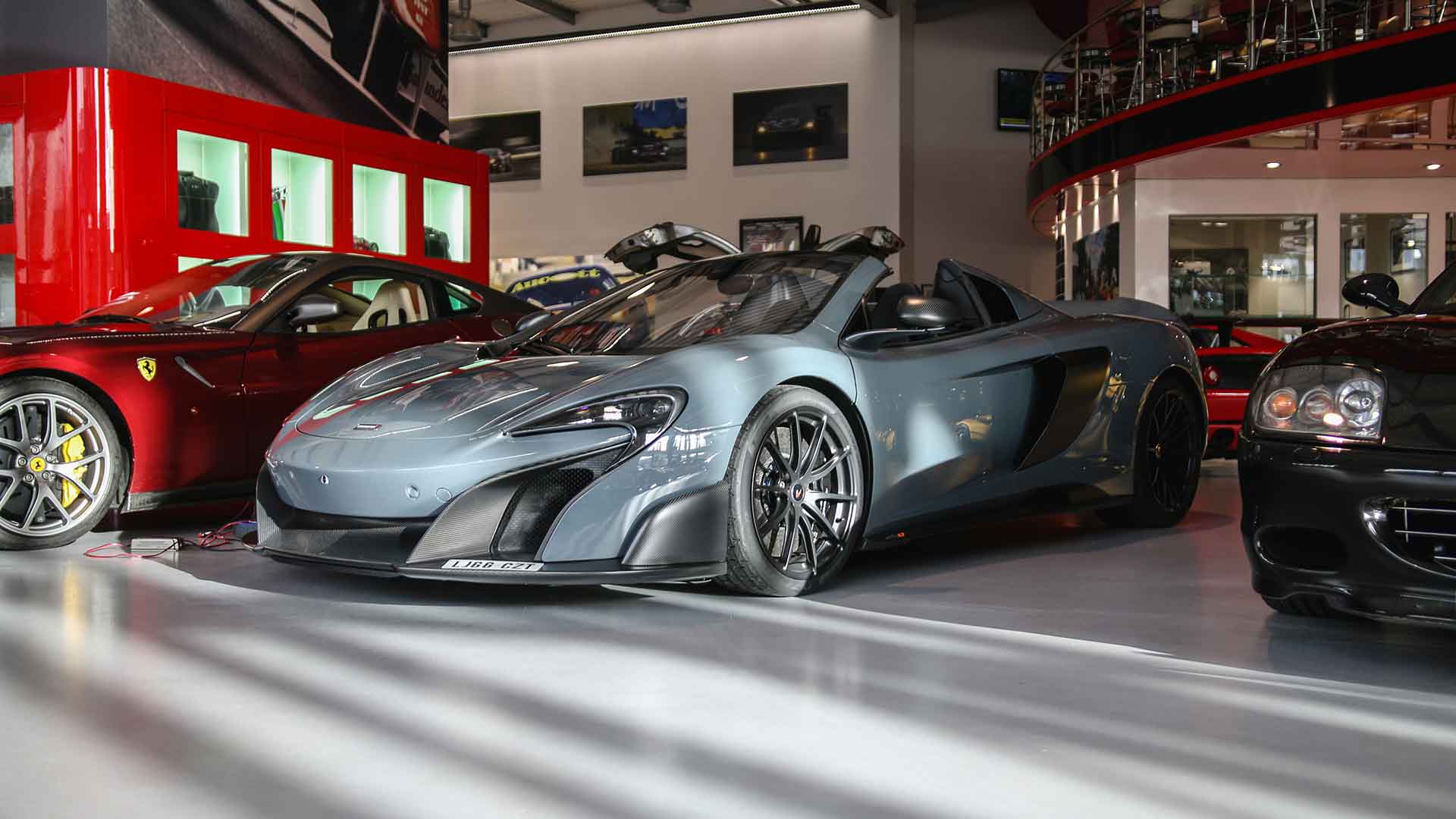
A meaner, leaner version of the 650S, the McLaren 675LT remains one of the finest supercars we’ve driven. In 2016, we said: “The 675LT hurls you towards the horizon with a ferocity that’s intoxicating, addictive and mildly terrifying… Its chassis is so intuitive, its responses so immediate, that it feels hard-wired into your brain”.
This car is the drop-top Spider version – one of 500 made. Finished in stealthy Chicane Grey with acres of exposed carbon fibre, it’s offered at £249,950.
LaFerrari and Ferrari F50
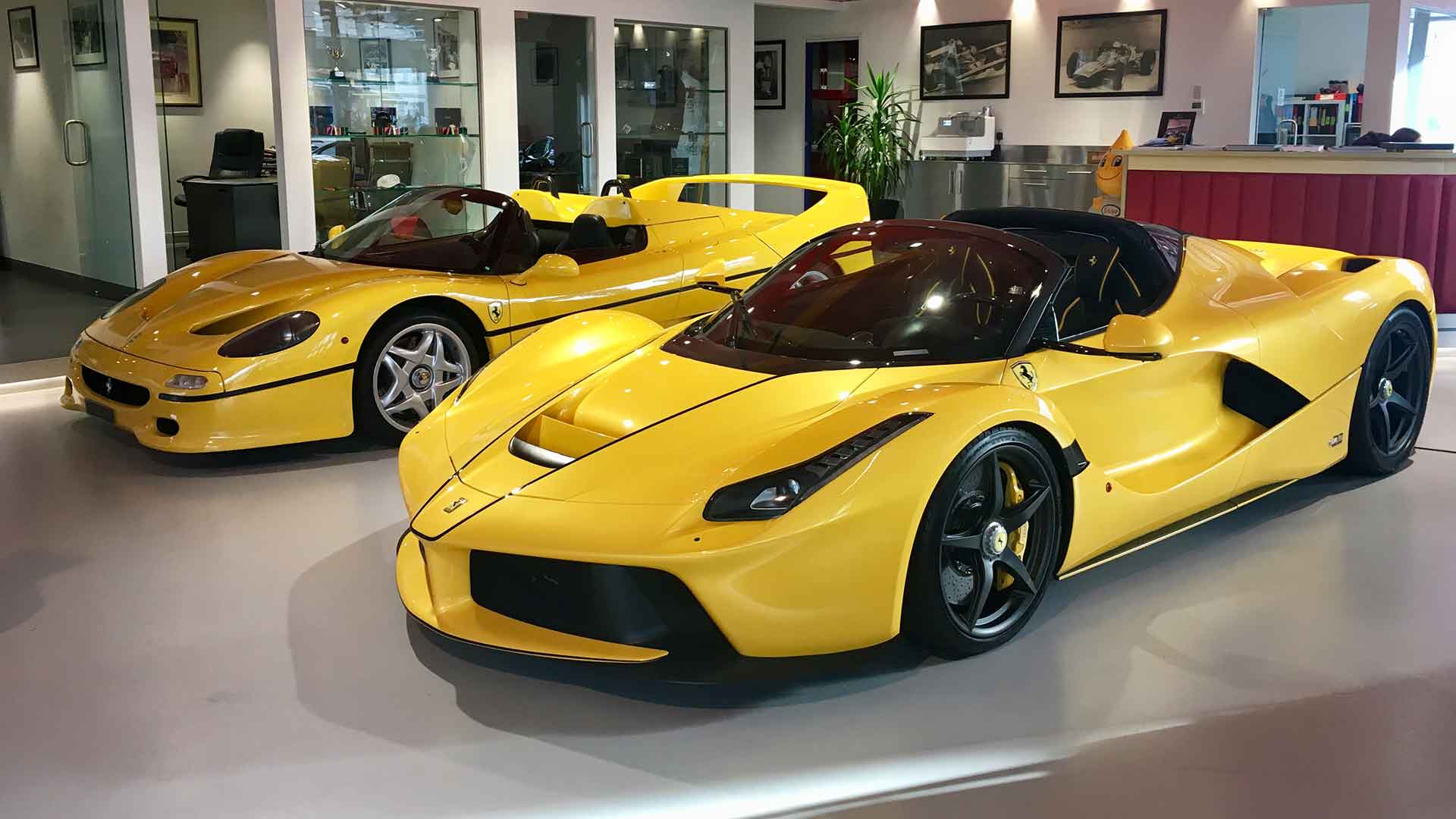
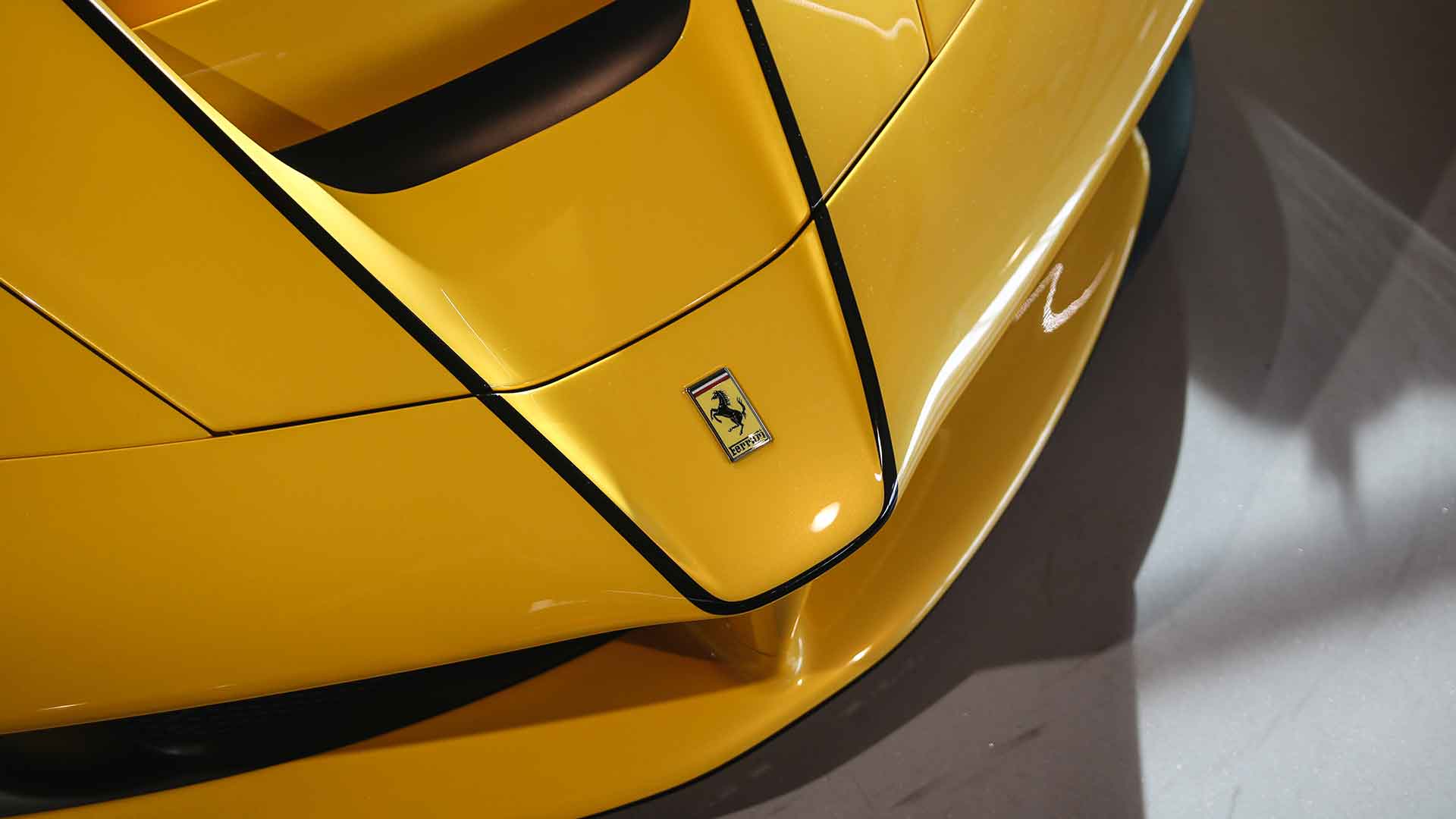
Take your pick from two of Ferrari’s finest: the LaFerrari Aperta in the foreground or F50 behind. We sense that banana in the background is struggling to make up his mind…
The F50 has a carbon chassis tub and racing-style rose-jointed suspension, plus the small matter of a 519hp F1-derived V12. The LaFerrari ups the stakes with an 800hp V12 and 163hp electric motor (963hp total). The price, if you’re interested, is ‘on application’.
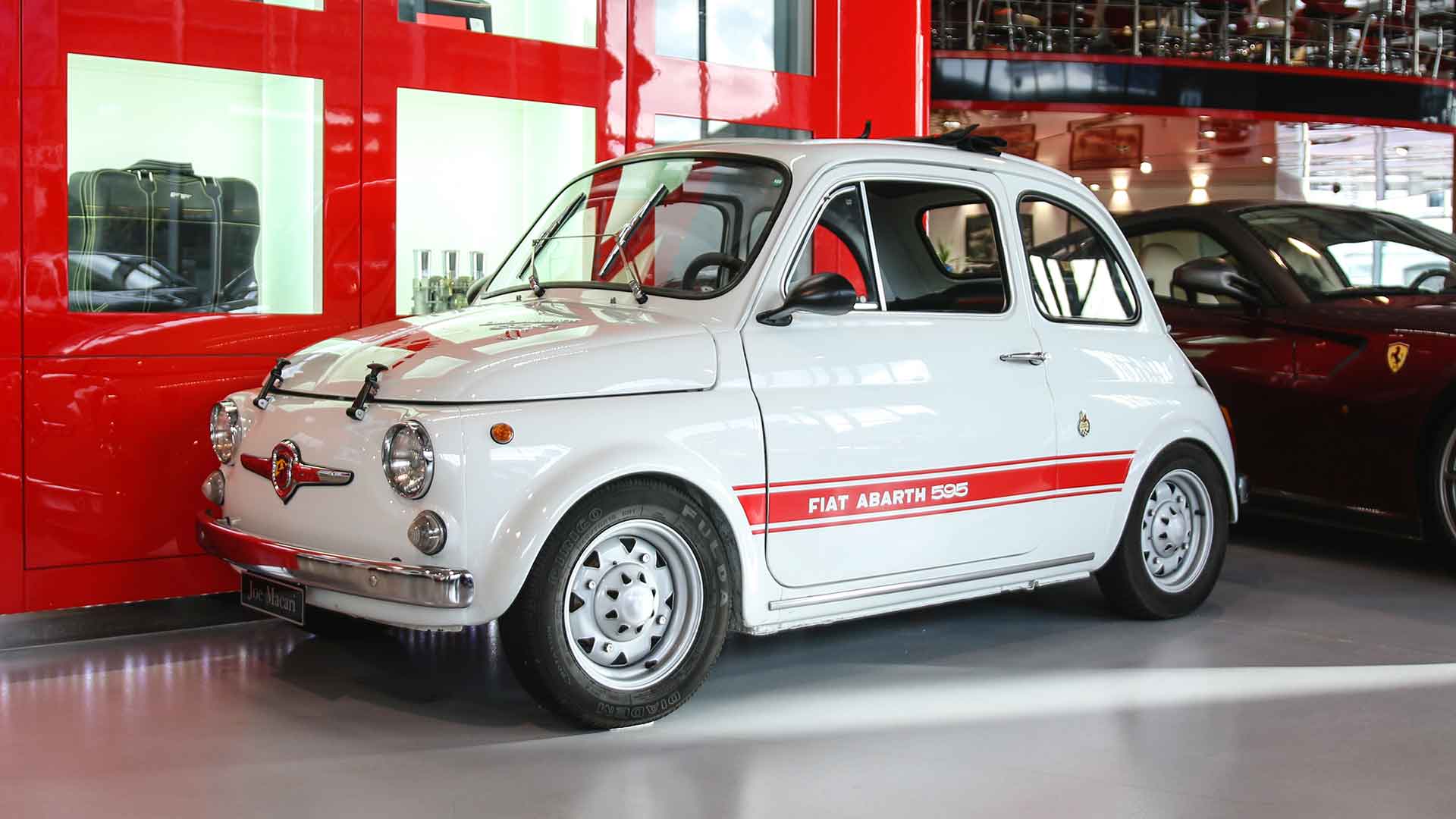
Fiat Abarth 595 SS
There have been many replicas, but you’re looking at the real thing. One of Joe Macari’s personal collection, this Fiat Abarth 595 SS is permanently on display in the showroom – and worth around £60,000.
Abarth tuned the Cinquecento’s two-cylinder engine to a mighty 34hp, fitting new pistons, an uprated oil pump and a spikier cam. The engine lid was permanently propped open to aid cooling. It’s no Ferrari, but probably offers a similar quota of smiles per mile.
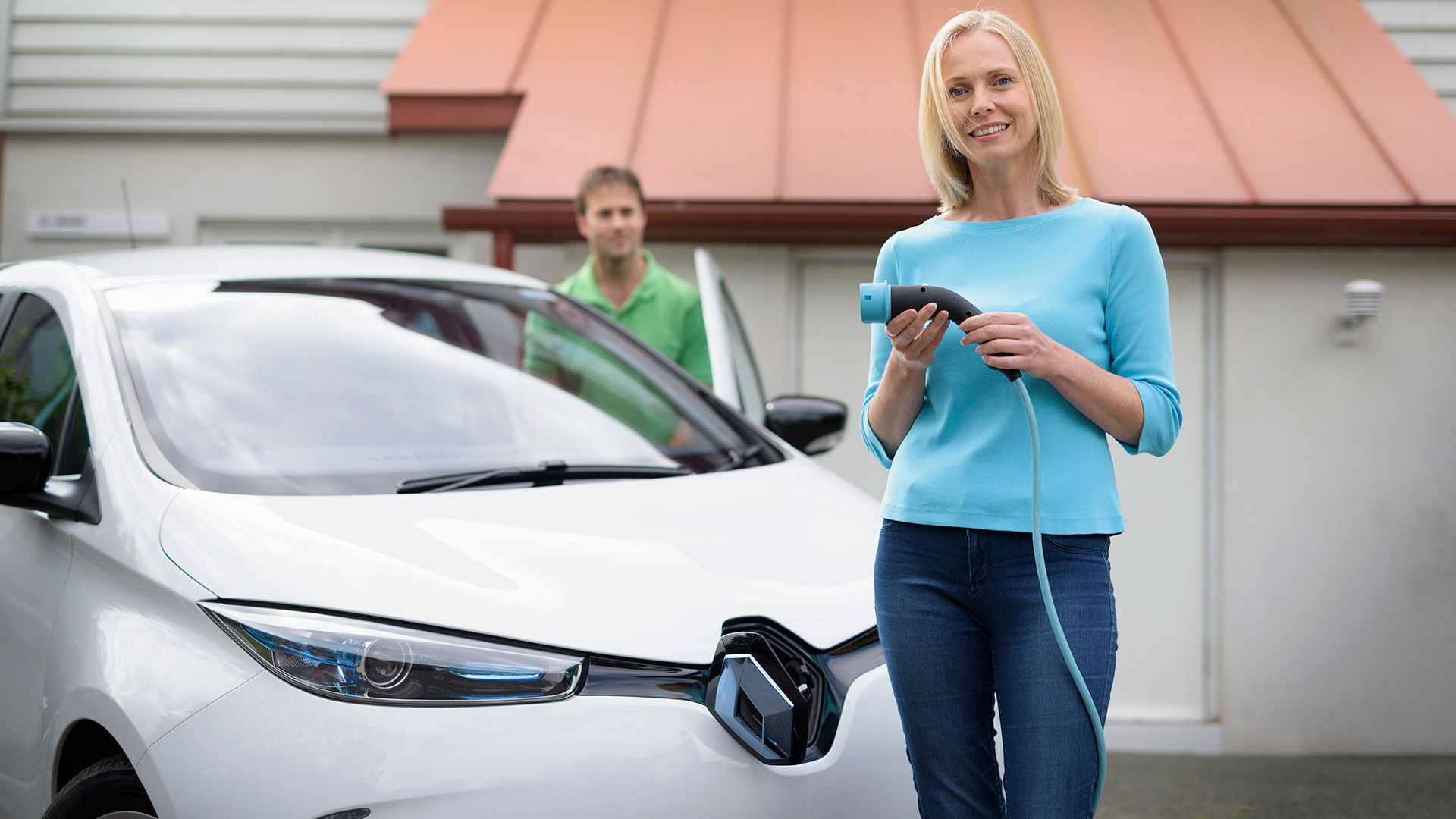
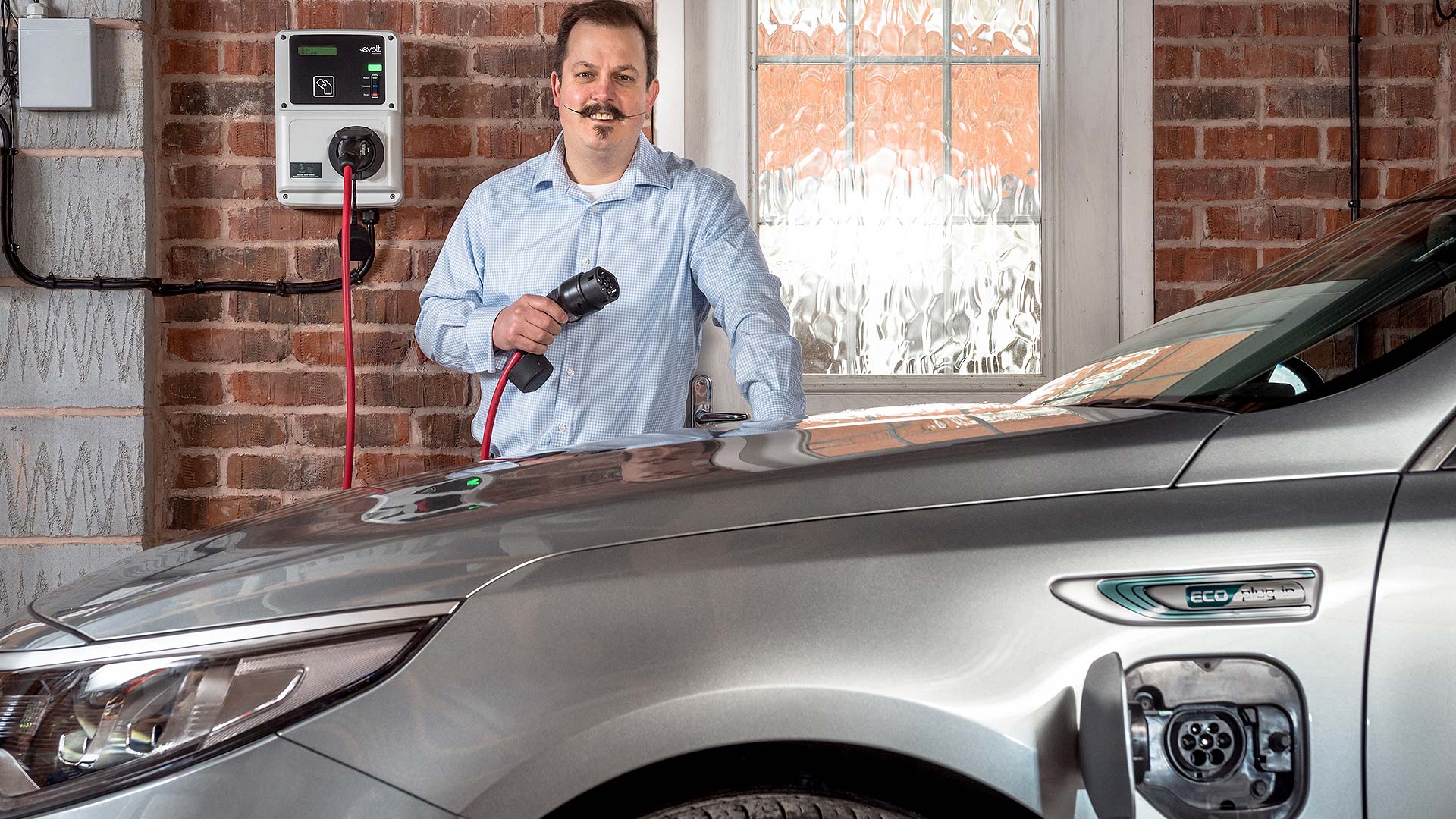
As the world gears up for a huge rise in the number of electric vehicles, the Electric Nation EV smart charging trial has been collecting data with the aim of understanding the impact of home charging on the local electricity network.
Volkswagen is going to deploy mobile electric car charging stations
Over a period of 18 months, 673 EV owners were involved in a series of tests of smart charging strategies, including the use of apps to encourage driver interaction with smart charging systems to minimise disruption to planned EV journeys.
Other EV drivers were offered incentives to encourage them to charge their electric cars when network congestion is low (e.g. overnight rather than early evening).
Using the data from more than 140,000 charging transactions, initial analysis suggests that there is likely to be sufficient flexibility to manage charging away from peak electricity demand periods.
Around 40 different makes and models were involved in the study, including full EVs, plug-in hybrids, and a selection of battery sizes.
Plugged in for 12 hours
The Electric Nation analysis reveals that most vehicles are plugged in for over 12 hours, but they are rarely charging for the full time. Around half of all EVs are plugged in with more than 50 percent battery capacity and most EV owners charge their cars three times a week.
The trial will help Western Power Distribution improve its understanding of the impact of EVs on the electricity network and how this impact could be reduced using smart chargers and incentives.
Further analysis will be revealed via a series of written reports and Electric Nation events.
Motorists are increasingly finding themselves a target for fraudsters, with the Driver and Vehicle Licensing Agency (DVLA) revealing that it received 1,275 reports of suspected tax scams in the final quarter of 2018.
With this in mind, the DVLA has published seven tips designed to help motorists stay safe online. “When looking for contact details or any of DVLA’s digital services, you should only use gov.uk so you can be sure that you’re dealing directly with DVLA,” warned Dave Pope, the chief information security officer at the DVLA.
“Posting on social media is a way of life for most drivers, however, they may not realise they risk setting themselves up as a prime target for fraudulent activity. People can stay ahead of the criminals by being vigilant with their personal information and who they share it with, and reporting anything suspicious to the police via Action Fraud,” he continued.
Action Fraud is the UK’s national reporting centre for fraud and cybercrime – a service run by the City of London Police working alongside the National Fraud Intelligence Bureau (NFIB).
A spokesperson for Action Fraud said: “We know that fraudsters are increasingly using more sophisticated ways to trick their victims, and so it is important that members of the public think about their online behaviour and ensure that they do everything they can to protect themselves.
“Taking measures such as limiting the amount of personal information shared on social media platforms and being cautious of any unsolicited messages received can help to prevent online crime.”
The DVLA’s seven tips to stay safe online
Only use gov.uk – double check that you are using a gov.uk webpage so that you can be sure you’re dealing with the DVLA.
Scam emails – the DVLA will never send emails asking motorists to confirm their personal details or payment information. Do not open any links – simply delete the email.
Beware of misleading websites – some sites will offer help when applying for a driving licence or taxing a car, but will charge additional fees for services that are free via gov.uk.
Look out for premium rate numbers – DVLA contact centre numbers will always begin with 0300 – look out for websites using premium rate numbers.
Be mindful of what you share online – never share images of your driving licence or vehicle documents as this exposes you to the risk of identity fraud.
Texts – the DVLA will never send texts about vehicle tax refunds. If you receive one, don’t click the link – simply delete the text.
Report any suspected scams – anything suspicious should be reported to the police via Action Fraud.
To contact Action Fraud, call 0300 123 2040 or use the online reporting tool.
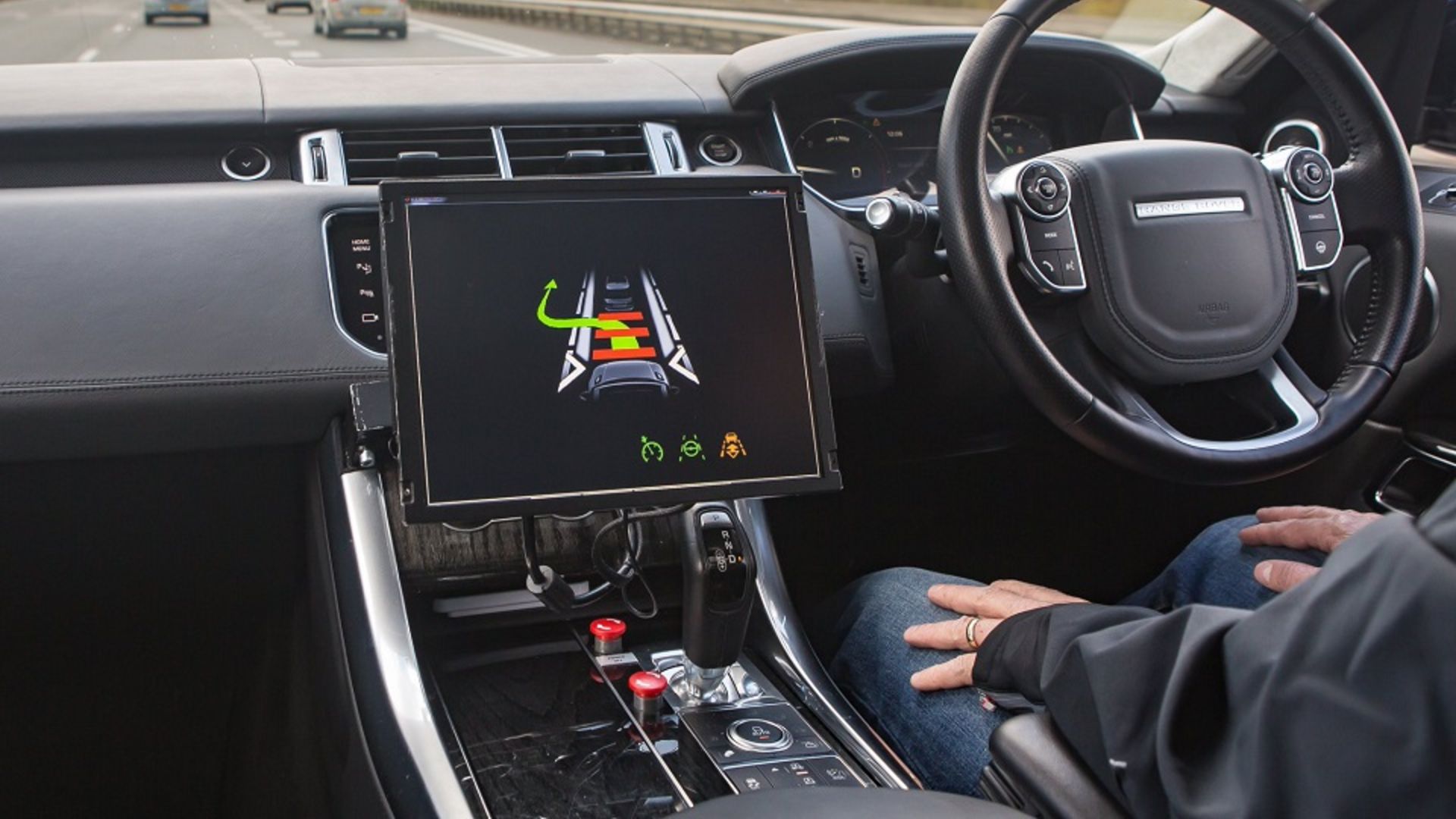
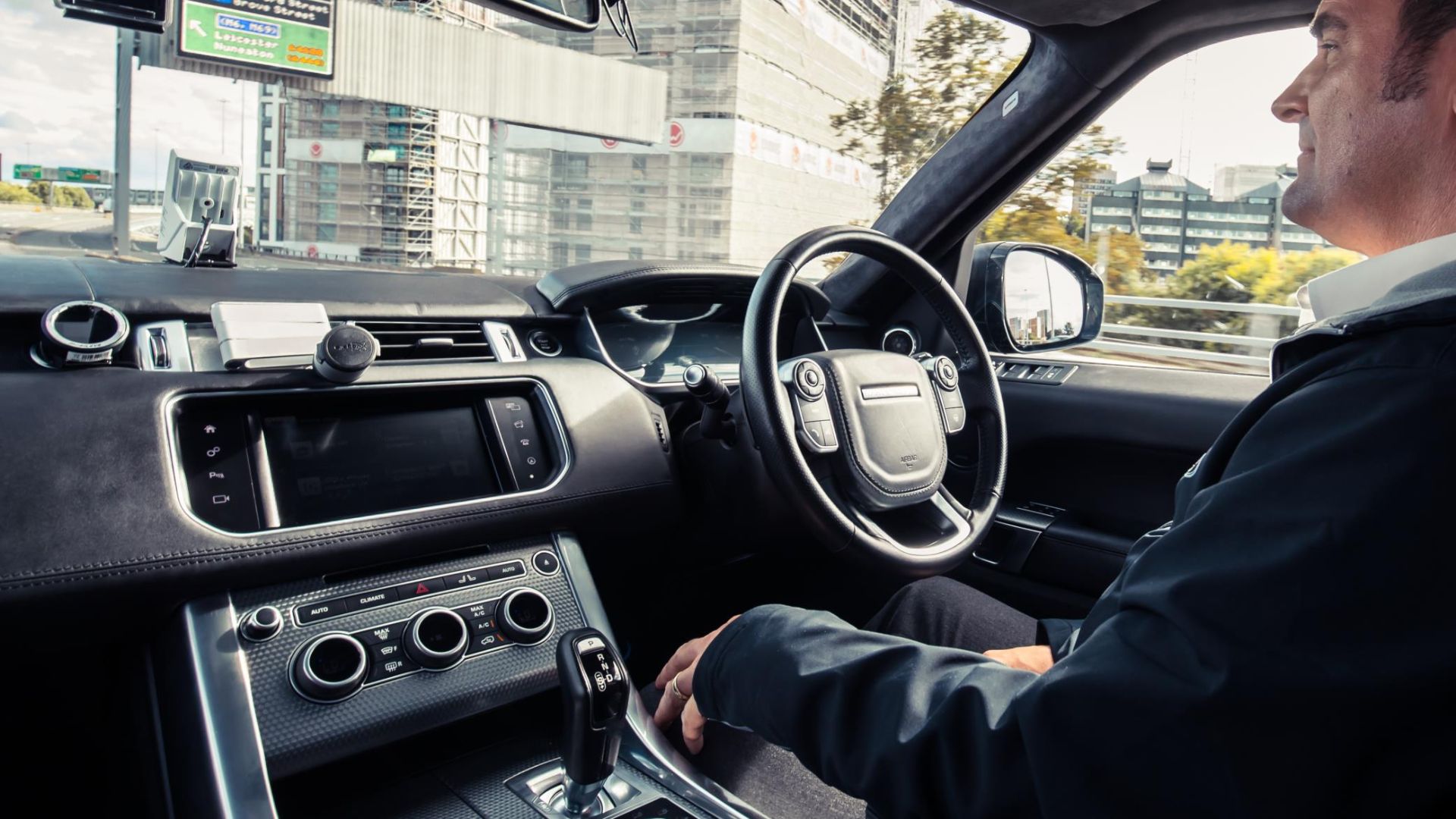
The government has announced that a process is being developed to help in the advanced trials of automated vehicles. This could mean – quite literally – driverless cars on our roads by the end of the year.
This comes very shortly off the back of the Nissan debacle and general uncertainty about the UK’s place in automotive post-Brexit. The government hopes it’s a move to shore up the UK’s status ‘as a global leader in the safe and responsible testing of automated vehicles’.
Advanced trials won’t be supported unless they have passed stringent safety assessments. The government will also strengthen its code of practice for testing automated vehicles in order to better define expectations for the safety of trials. This, with a view to putting cars on the road that do not have humans manually in control.
That would make the UK the first country to allow this extent of testing, with the USA being the only country to have hosted limited trials as yet. The UK wants to run before the rest of the world can walk.
Those carrying out trials for self-driving cars will need to publish trial performance reports and safety information, and carry out risk assessments before trials. Those trialling such vehicles will be expected to keep local authorities and emergency services in the loop when it comes to testing, too.
The UK’s market for automated and connected vehicles is estimated to be worth £52billion by 2035. As such, this is a definitive swing for the UK as a long-term base in the automotive industry. It also reiterates the UK’s determination to meet the 2021 target in terms of having fully self-driving vehicles on the road.
These developments should help step towards the government’s future of mobility grand challenge, with automated driving being a major cornerstone of that movement.
“The UK has a rich heritage in automotive development and manufacturing, with automated and electric vehicles set to transform the way we all live our lives,’ said Richard Harrington, Automotive Minister.
“We want to ensure through the Industrial Strategy Future of Mobility Grand Challenge that we build on this success and strength to ensure we are home to development and manufacture of the next generation of vehicles.”
“We need to ensure we take the public with us as we move towards having self-driving cars on our roads by 2021. The update to the code of practice will provide clearer guidance to those looking to carry out trials on public roads.”
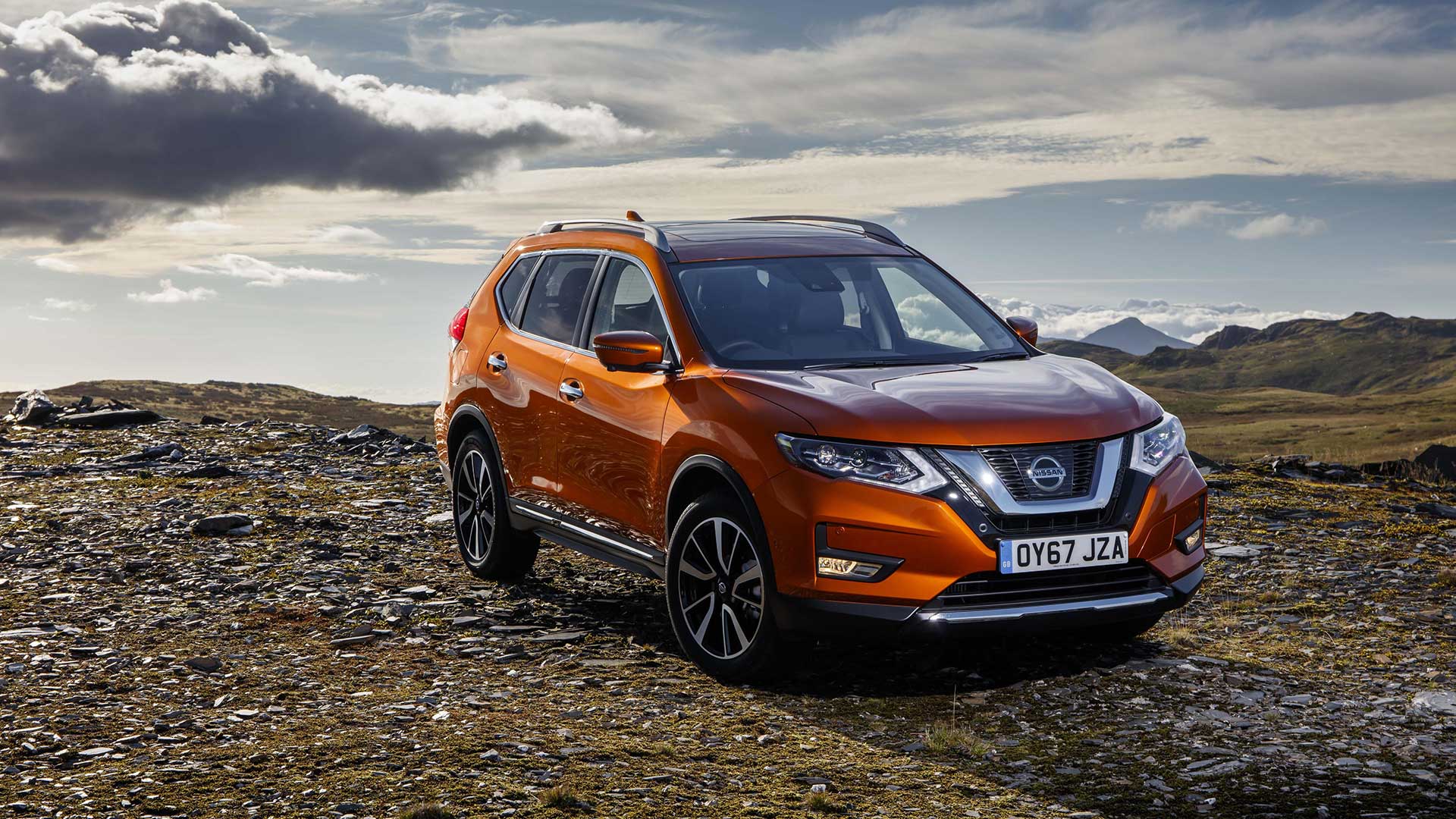
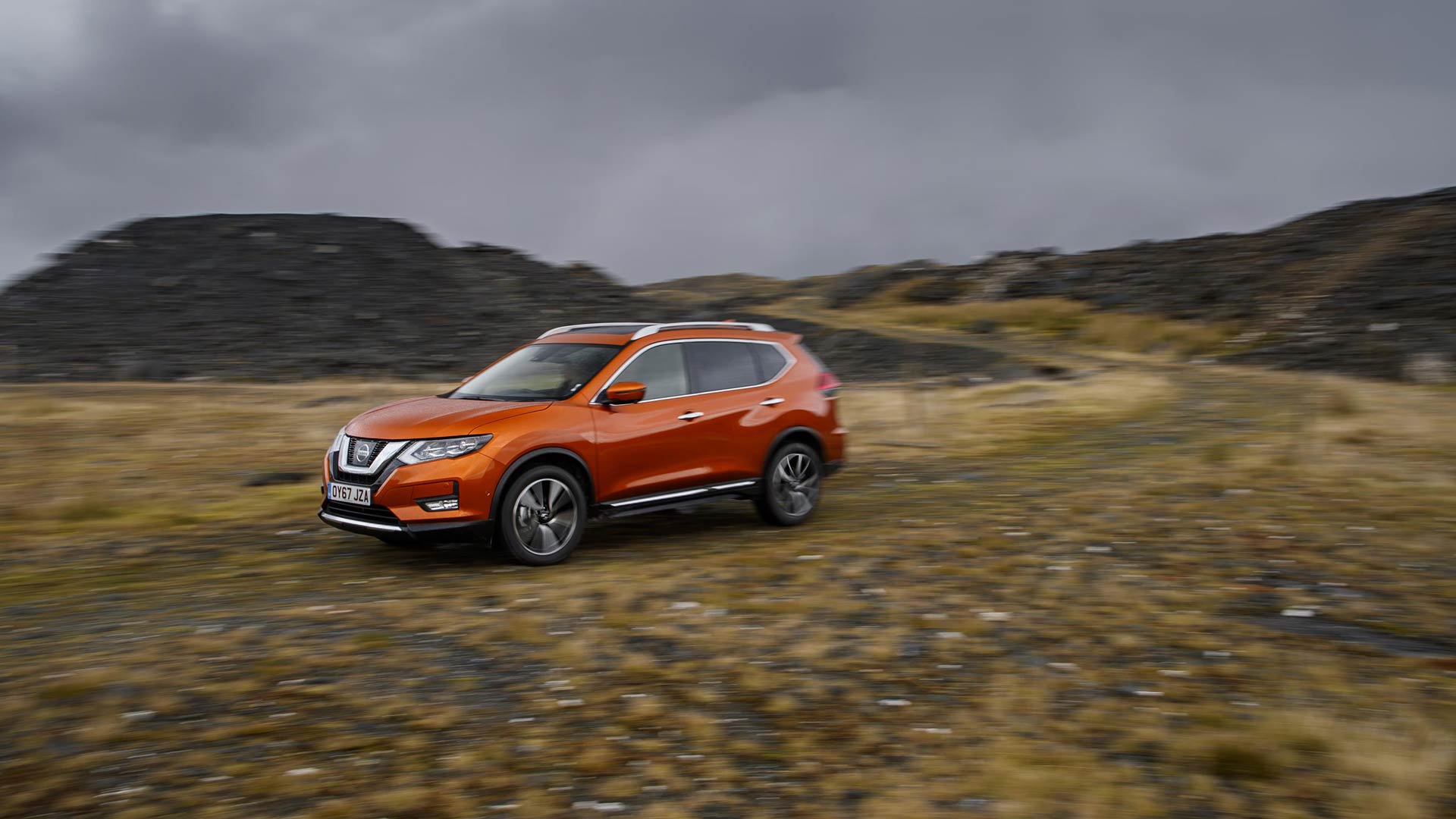
Age: Current third-generation was launched in 2013. Original X-Trail made a debut in 2000.
Style: A lot like a larger Nissan Qashqai, with which the X-Trail shares a platform.
Why are we talking about a six-year-old SUV? Brexit, of course.
I should have guessed. It is 2019, after all. Go on, tell me more: Nissan has rolled back previously announced plans to build European-spec models of the next fourth-generation X-Trail in Sunderland.
Is that because of Brexit? Uncertainty around the UK’s future relationship with the EU is one of the reasons mentioned by Nissan, yes.
But didn’t Nissan have an agreement with the UK government? They did. Prime Minister Theresa May and then Nissan chairman Carlos Ghosn had important meetings in October 2016 to soothe worries about Brexit.
Did those talks include bringing the X-Trail to Sunderland? Apparently so, now the previously undisclosed details of those talks have been revealed. Business secretary Greg Clark promised £61m of government support if X-Trail and Qashqai production happened in Sunderland.
So Nissan has broken that promise? They have, but they might also argue the UK government has failed to agree a Brexit deal which protects the automotive industry.
Will Nissan have to pay back that money? Not necessarily. The £61m package of state aid was only formally awarded to Nissan in June 2018. So far, Nissan has only received £2.6m of that, although it might have to reapply to get anything more.
Are there other reasons for Nissan’s decision? Indeed. Nissan already builds the X-Trail in various factories across the world, with European-specification cars manufactured in Japan. It believes the cost of building them there will be cheaper in the long run.
Should I mention the ‘D’ word? If you mean diesel, then yes. Falling demand for diesel will undoubtedly also be playing a part in Nissan’s decision.
How popular is the X-Trail in the Europe? Not as popular as Nissan products like the Qashqai or Juke. In 2017, Nissan sold 69,000 X-Trails across Europe, compared to 247,000 Qashqais and 91,000 Jukes.
What does this mean for Sunderland? The 7,000 people currently employed by Nissan have been told their jobs are safe. But no new X-Trail means no new employment opportunities at the Wearside site.
That’s some good news, I guess: It is, but Nissan’s decision not to invest further in the UK is a worrying one. The SMMT has already said the UK’s car industry is on “red alert” over a potential for a ‘no deal’ Brexit.
Just how big is the UK car industry? Around 850,000 people are employed in the automotive sector across the country.
So what happens next? For now, nothing. But all eyes are firmly fixed on whether a Brexit deal is agreed and implemented with the EU.
The World Car Awards panel has revealed the finalists for the 2019 Awards, across six categories including the prestigious World Car of the Year 2019 prize.
A jury of 86 international automotive journalists have spent the past few months testing all the new cars launched this year. From a list of more than 40 contenders, the shortlists have been drawn up – and the one every car manufacturer wants to win is World Car of the Year.
Last year, the winner was the Volvo XC60 (pictured above). This year, Volvo is again represented on this shortlist, with two entries. It’s the only brand to have two cars in the final running (well, technically three – the S60 saloon and V60 estate sister cars are listed, alongside the XC40).
Other cars include the Jaguar I-Pace, whose large SUV sibling the F-Pace scored a memorable 2017 victory, and new North American brand Genesis, Hyundai’s premium division. Hyundai also has a futuristic fuel cell car on the shortlist with the Nexo; both the I-Pace and Audi e-tron are all-electric machines.
World Car of the Year 2019 top 10 finalists:
Audi e-tron
BMW 3 Series
Ford Focus
Genesis G70
Hyundai Nexo
Jaguar I-PACE
Mercedes-Benz A-Class
Suzuki Jimny
Volvo S60/V60
Volvo XC40
Other prizes to be awarded include the 2019 World Urban Car, with the five finalists comprising the Audi A1, Hyundai AH2 and Santro, Kia Soul, Seat Arona and Suzuki Jimny.
Premium car makers place great emphasis on the World Luxury Car award; doing battle for 2019 are the Audi A7 and Q8, BMW 8 Series, Mercedes-Benz CLS and Volkswagen Touareg.
Sports car fans, listen up: the 2019 World Performance Car contenders are the Aston Martin Vantage, BMW M2 Competition, Hyundai Veloster N, McLaren 720S and the Mercedes-AMG 4-door Coupe.
At the other end of the scale are the World Green Car contenders. The five 2019 eco-warriors are the Audi e-tron, Honda Clarity Plug-In Hybrid, Hyundai Nexo, Jaguar I-Pace and Kia Niro EV.
Every car longlisted for the World Car Awards is also eligible for the 2019 World Car Design of the year. A crack team of seven professional car designers have decided the following are worthy of being shortlisted as designer’s pick of 2019:
Citroen C5 Aircross
Jaguar E-Pace
Jaguar I-Pace
Suzuki Jimny
Volvo XC40
And what’s next? The 86 jurors will now carry out a further round of judging, with the top three finalists in each category announced at the Geneva Motor Show in early March (where the 2019 World Car Person of the Year will also be revealed).
The overall winners will then be announced at the New York International Auto Show on April 17th. Place your bets now…
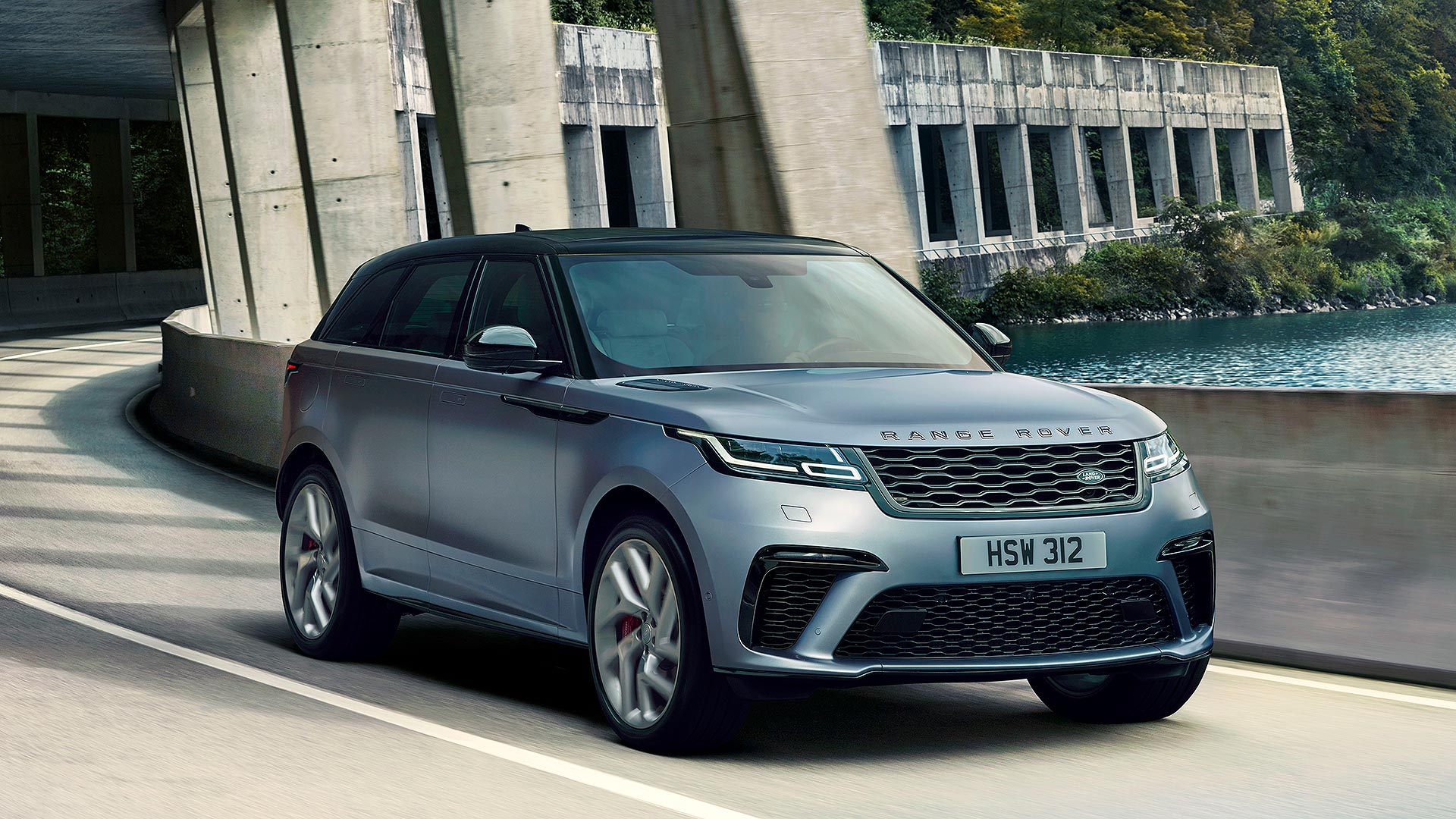
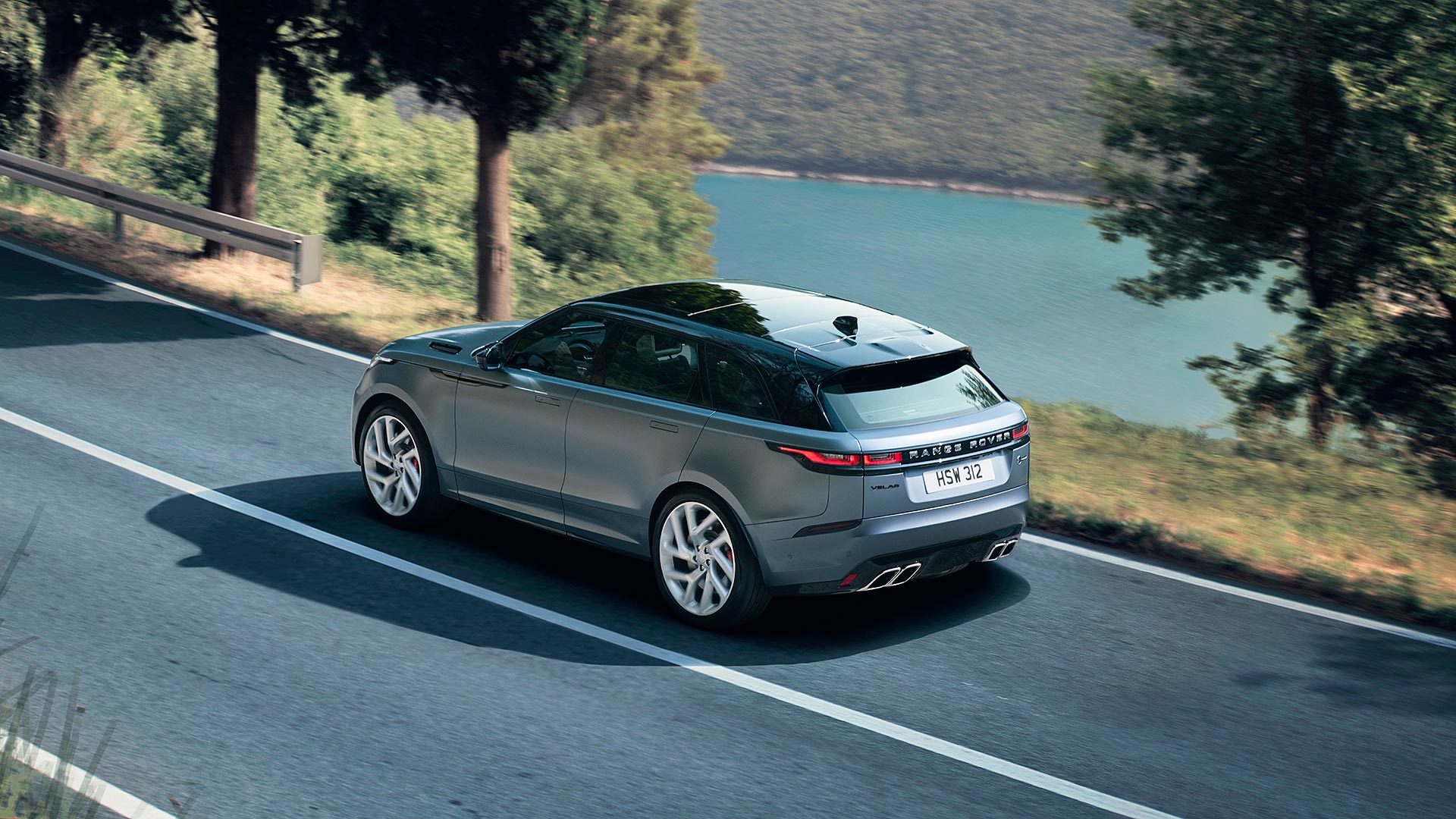
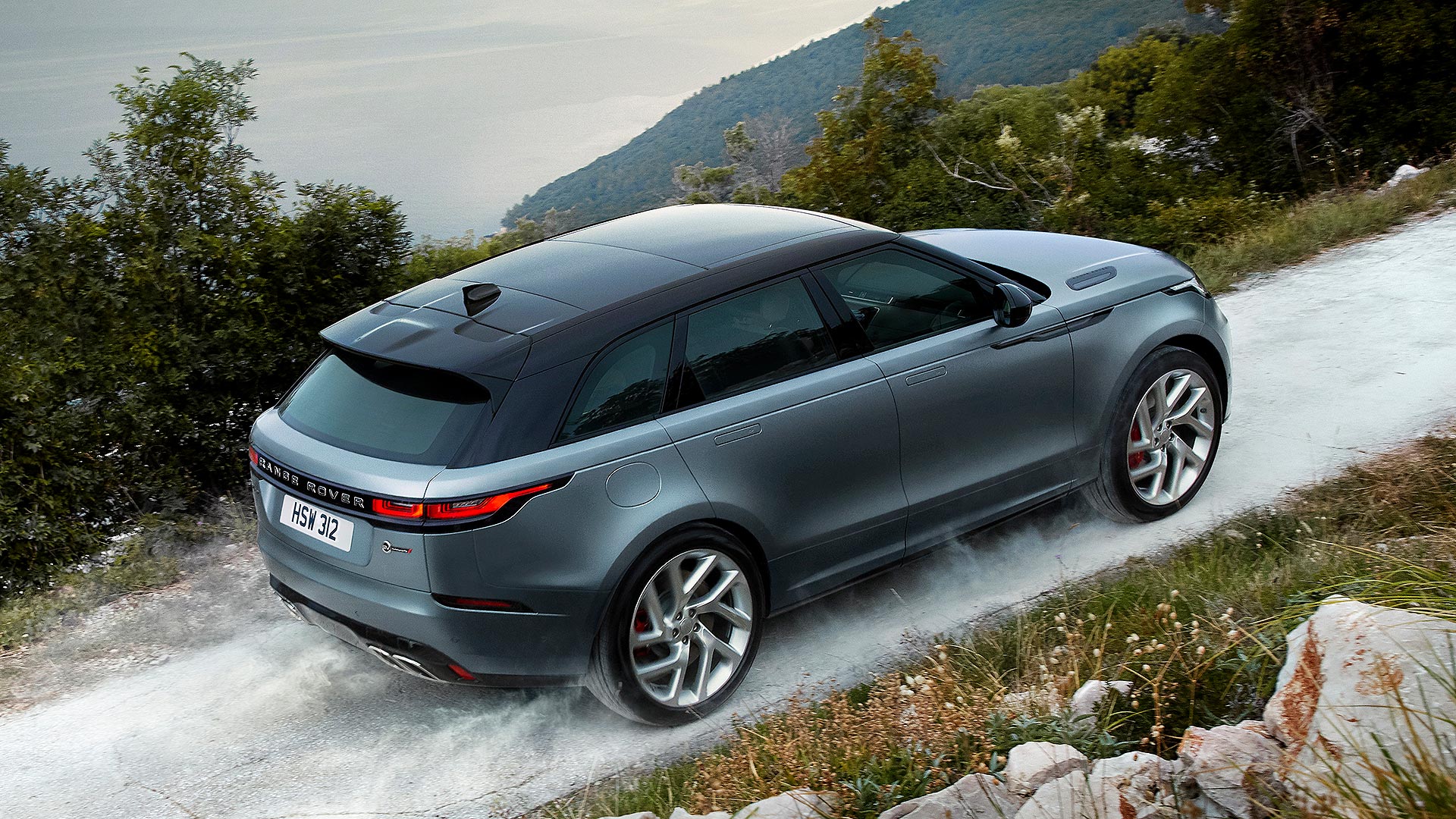
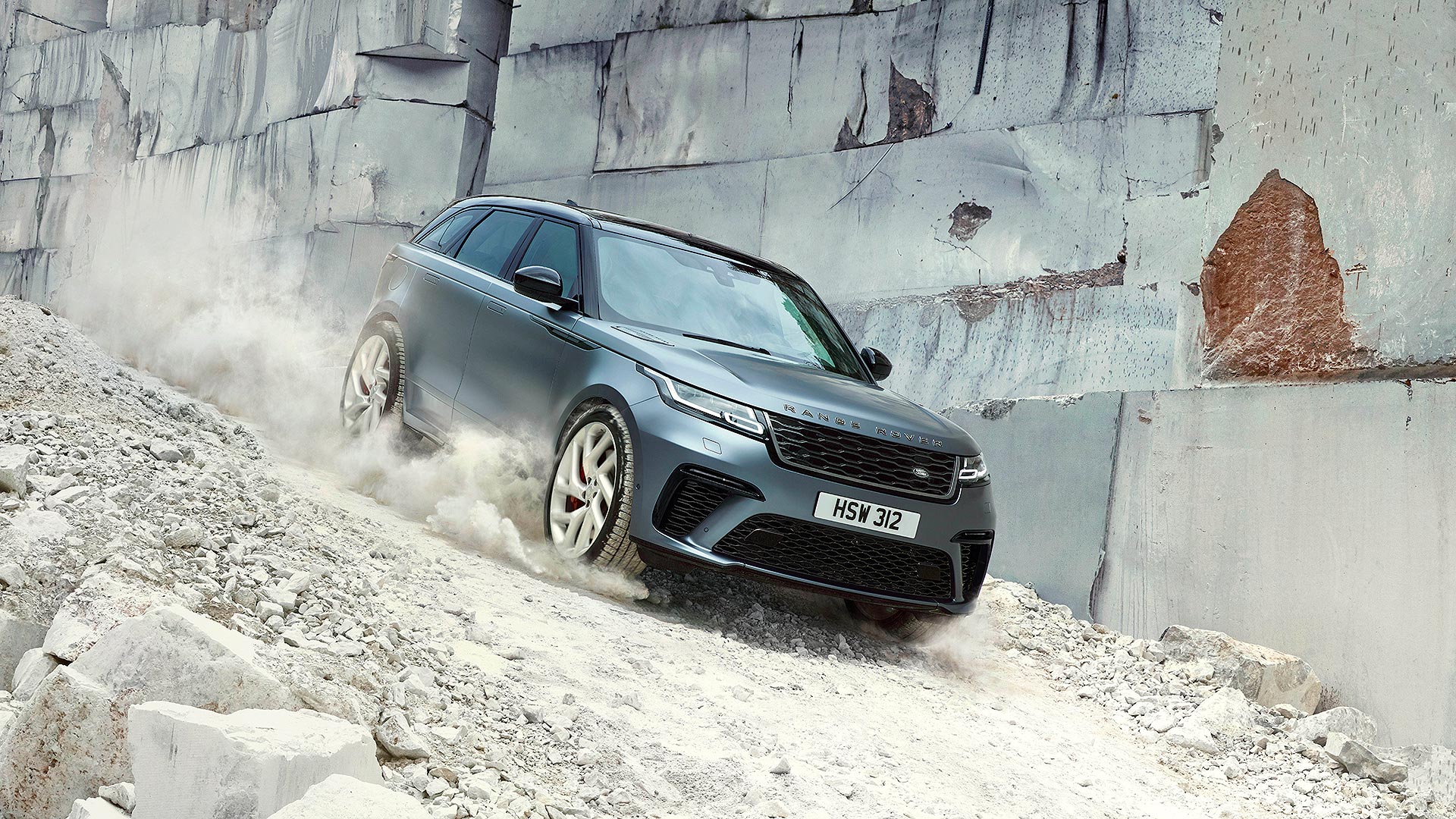
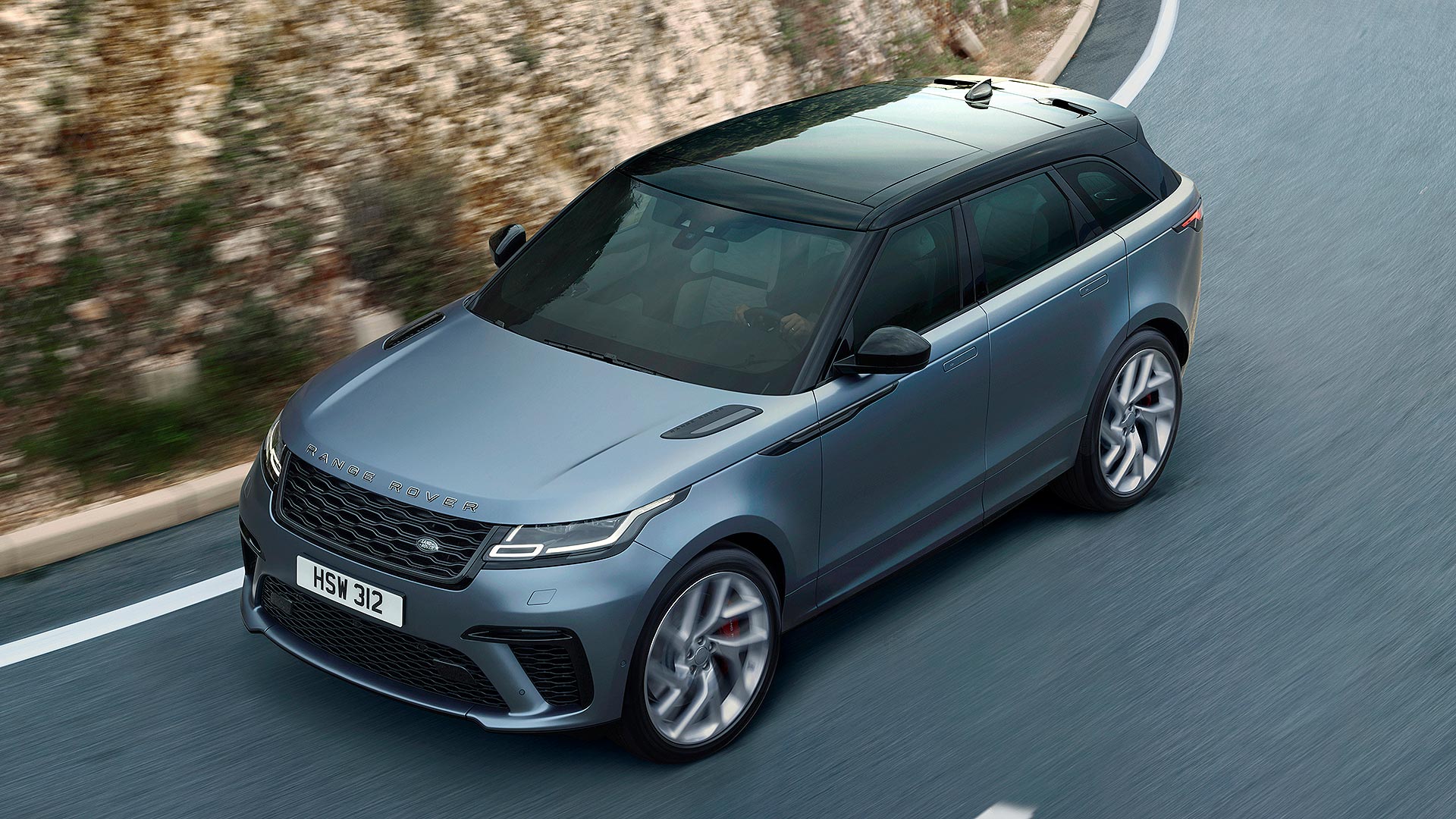
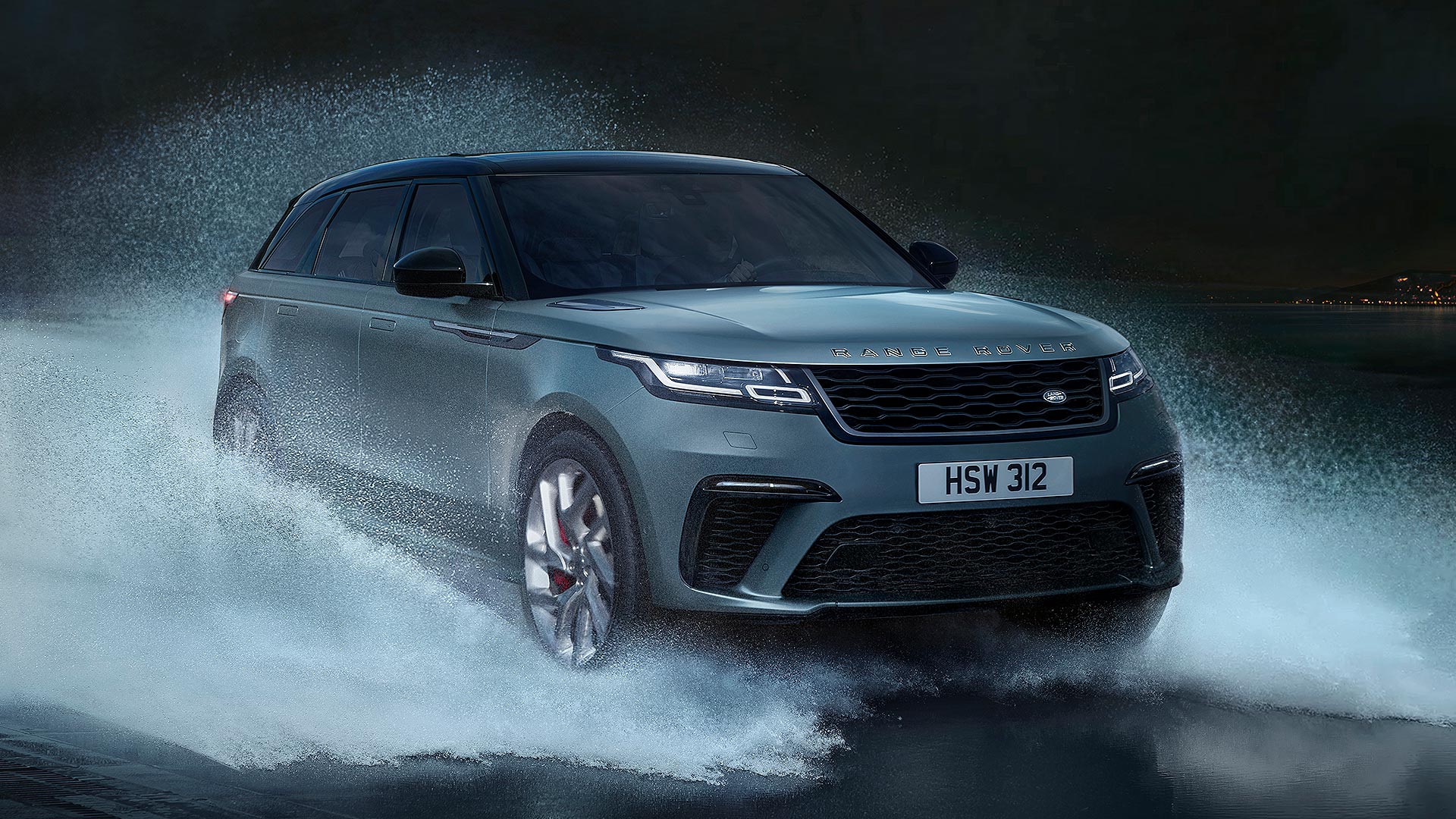
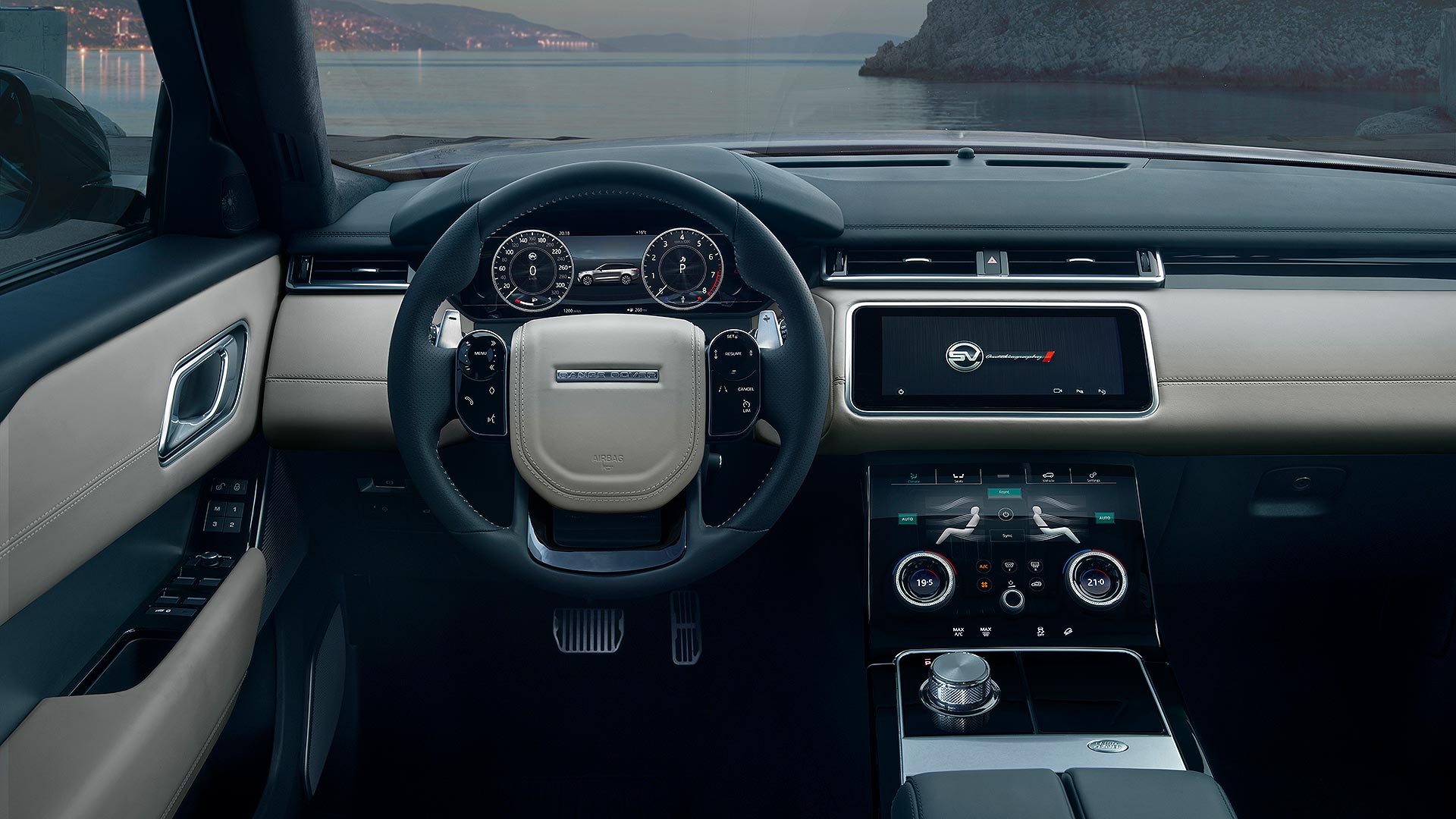
Jaguar Land Rover’s Special Vehicle Operations division has shoehorned a 5.0-litre supercharged V8 with 550hp into the sleek, stylish, World Car Design of the Year-winning Velar. Because of course they have. Welcome to the Range Rover Velar SVAutobiography – here to fill that SV Coupe-shaped hole in your life.
Looks to kill
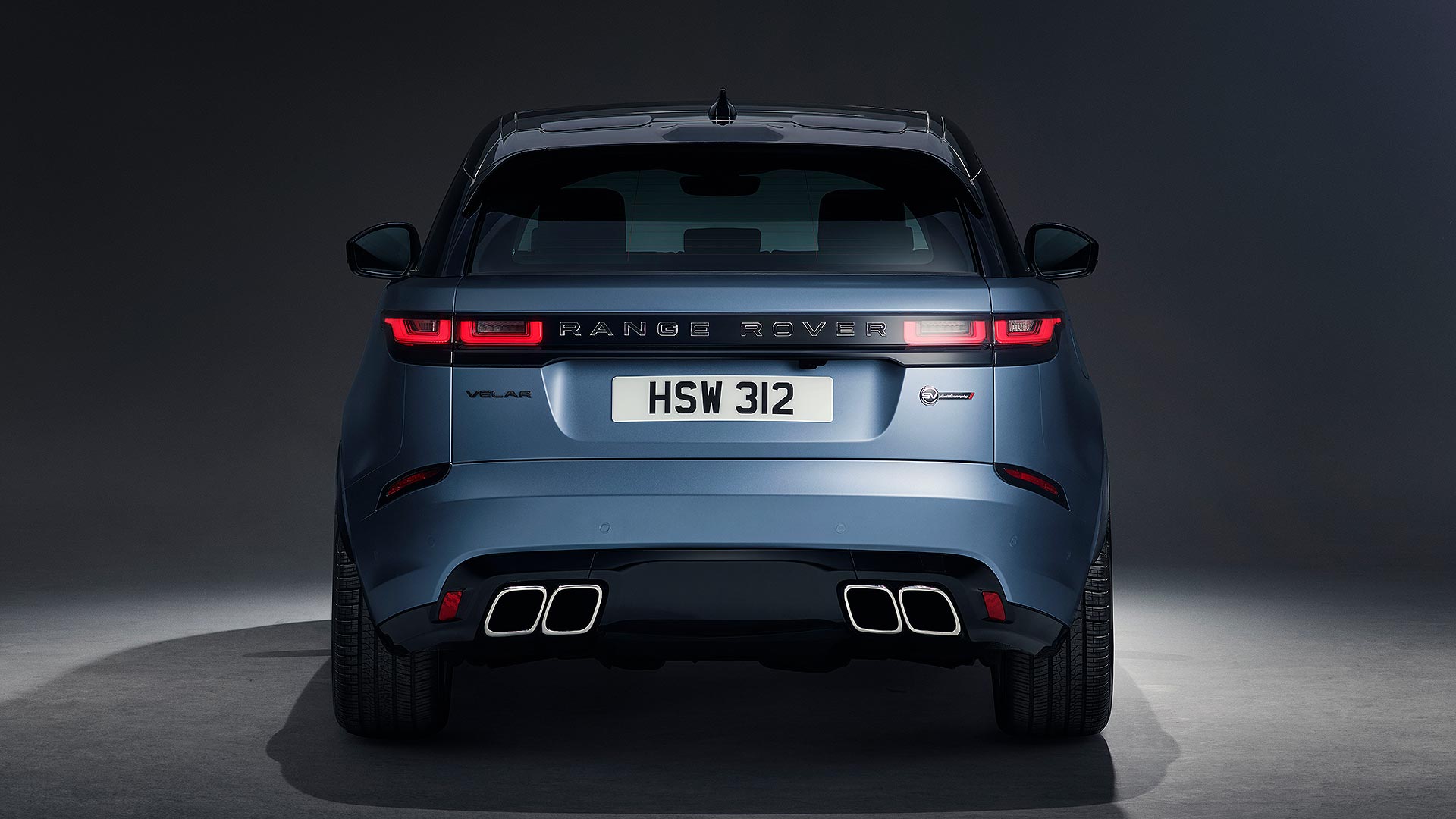
If it comes from SVO, then you can normally tell it a mile off. The V8 Velar is no exception. ‘Optimised aerodynamics’ translates into air-gorging inlets to feed the V8 and cool the upgraded brakes. They work together with quad exhaust outlets as big as their bark to mark the SVA out as something altogether more aggressive. The ‘beautiful’ Range Rover just got sinister.
There is a whiff of sophistication, mind. The Range Rover lettering on the bonnet and tailgate is now knurled like the dials in a Bentley.
This ‘Dynamic Edition’ is the only Velar available in Satin Byron Blue – a bespoke Special Vehicle Operations colour from the Premium Palette.
V8 supercharged muscle
The star of the show in the SVAutobiography is the engine. There isn’t a car that engine features in where it isn’t the star of the show. With its 550hp and 502lb ft, the Velar SVA will dispatch 62 mph in a supercar-baiting 4.5 seconds before going on to a top speed of 170mph. No doubt all of the above performance rides a bloodcurdling bow wave of V8 ruckus from the lighter variable exhaust.
Stopping power
There should never be go, without stop. The 550hp 170mph Velar has the anchors to keep those monstrous numbers in check. Up-rated high-performance brakes hide beneath 21-inch forged wheels. The discs are 395mm at the front and 396mm at the rear. The red brake callers have four pistons at the front. You can get 22-inch diamond-turned wheels as an option if you want a bit more bling for your buck.
Enhanced dynamics
Putting all that performance to ground is the advanced intelligent driveline dynamics system, which can put as much as 100 percent of the Velar SVA’s power to the rear wheels if the situation calls for it. Continually variable dampers work with firmer air springs and an upgraded anti-roll system to keep the supercharged Velar on the flat and level.
First class cabin
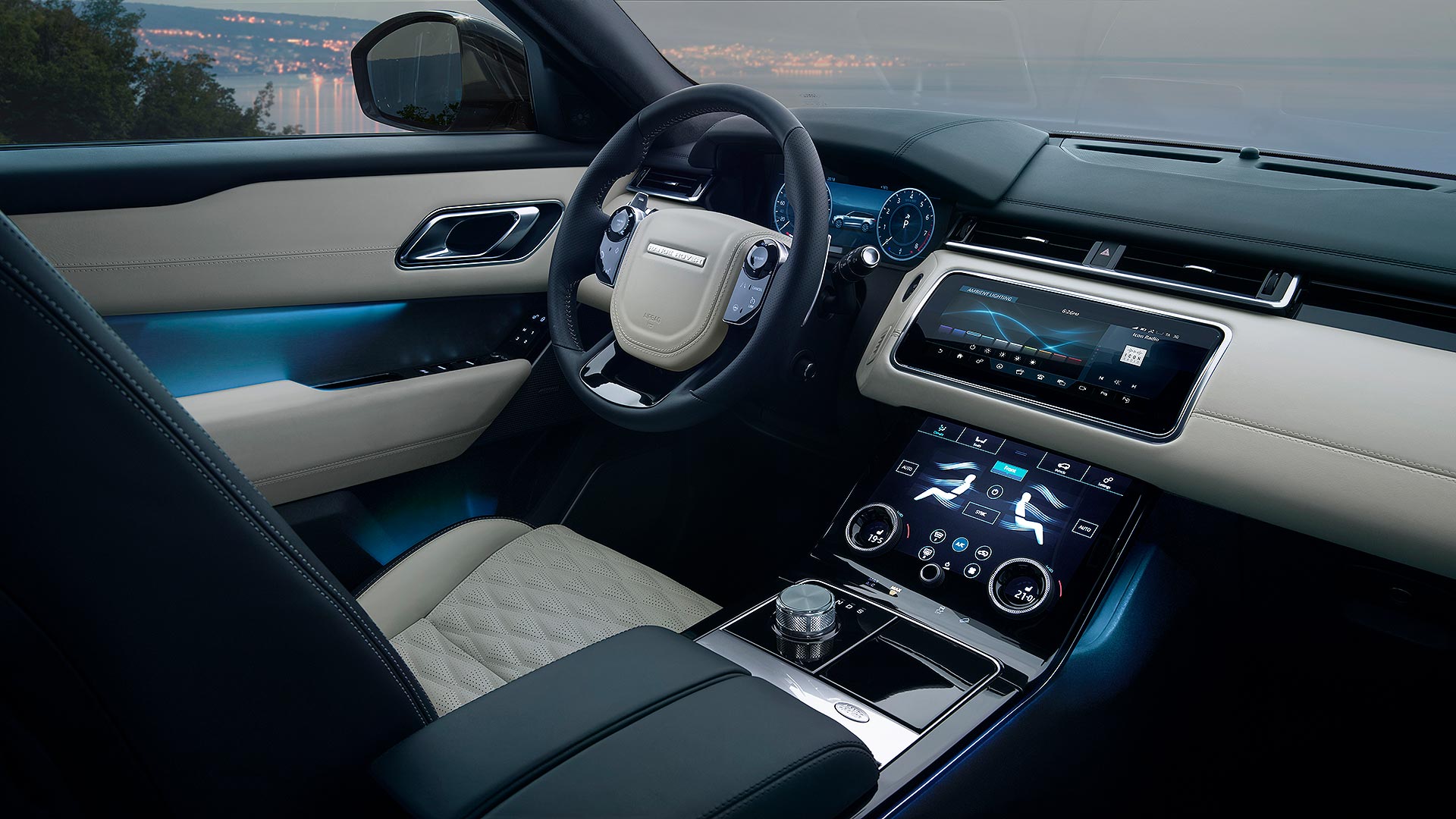
It is a Range Rover, after all, so the cabin has to be second to none. As well as a 550hp supercharged V8, your Velar SVA will come with quilted, perforated and twin-stitched leather. Unique also to the SVA is a sports steering wheel and yes, the metal knurling continues on the inside with the infotainment dials and rotary shifter. All the other luxuries you’d expect of a top-end Range Rover are present – 20-way adjustable massaging heated and cooled seats included.
Hot rod baby Rangie
All in all, the Velar SVAutobiography has the air of a skunkworks special about it. It seems almost naughty that you can now get the middle-sized Range Rover with 550hp of supercharged V8 muscle. It now has the performance to match those sleek and sporty looks, now upgraded themselves in SVA trim.
It rather begs the question… if you can get in an SVAutobiography Dynamic Edition Velar for £86,120, why would you pay out near-on £100,000 for an SVR Range Rover Sport? The performance is almost identical and in spite of the Sport’s recent facelift, the Velar retains that next-generation feel to it.
What is worth remembering is that the Jaguar F-Pace SVR also now exists. It’s got that same incredible engine, will get to 62mph 0.2 seconds quicker and top out at 174mph… all for £10,000 less. Still, the heart wants what the heart wants. We quite want this new hot rod Rangie…






 Are there other reasons for Nissan’s decision? Indeed. Nissan already builds the X-Trail in various factories across the world, with European-specification cars manufactured in Japan. It believes the cost of building them there will be cheaper in the long run.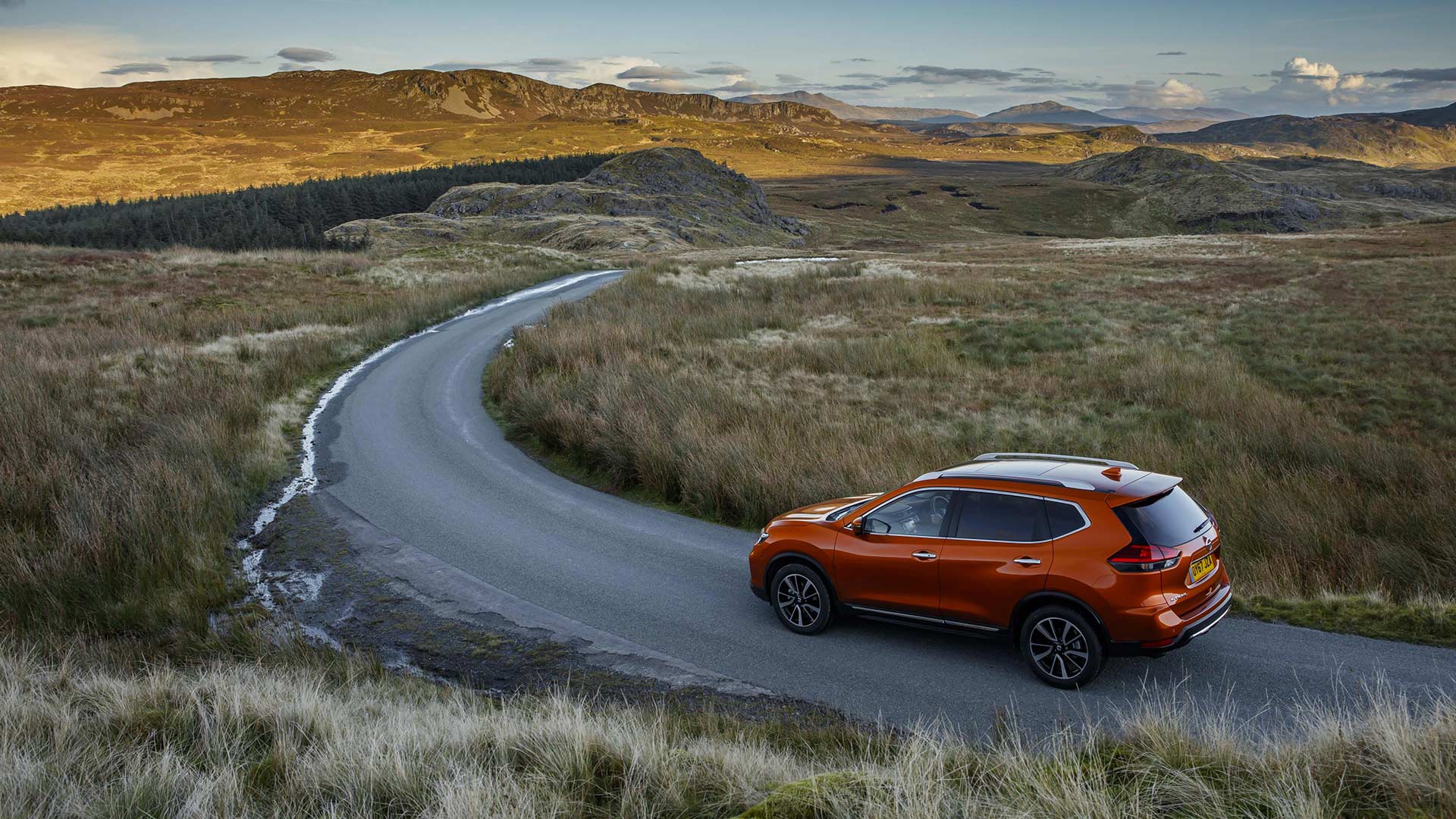
 The World Car Awards panel has revealed the finalists for the