

When the Porsche ‘901’ was unveiled in September 1963, CAR magazine’s Frankfurt Motor Show report devoted more column inches to the boat-hulled Amphicar Model 770 than the upmarket successor to the 356. Nobody imagined this quirky coupe, which looked like an elongated Volkswagen Beetle and had an air-cooled engine behind its back axle, would still be going strong more than 60 years later.
The 901 was swiftly renamed after Peugeot claimed ownership of three-digit numbers with a zero in the middle, but the silhouette, mechanical layout and unique character of the 911 have endured. Today, Stuttgart builds vastly more SUVs than sports cars, yet the 911 is Porsche. Can you imagine the company without it?
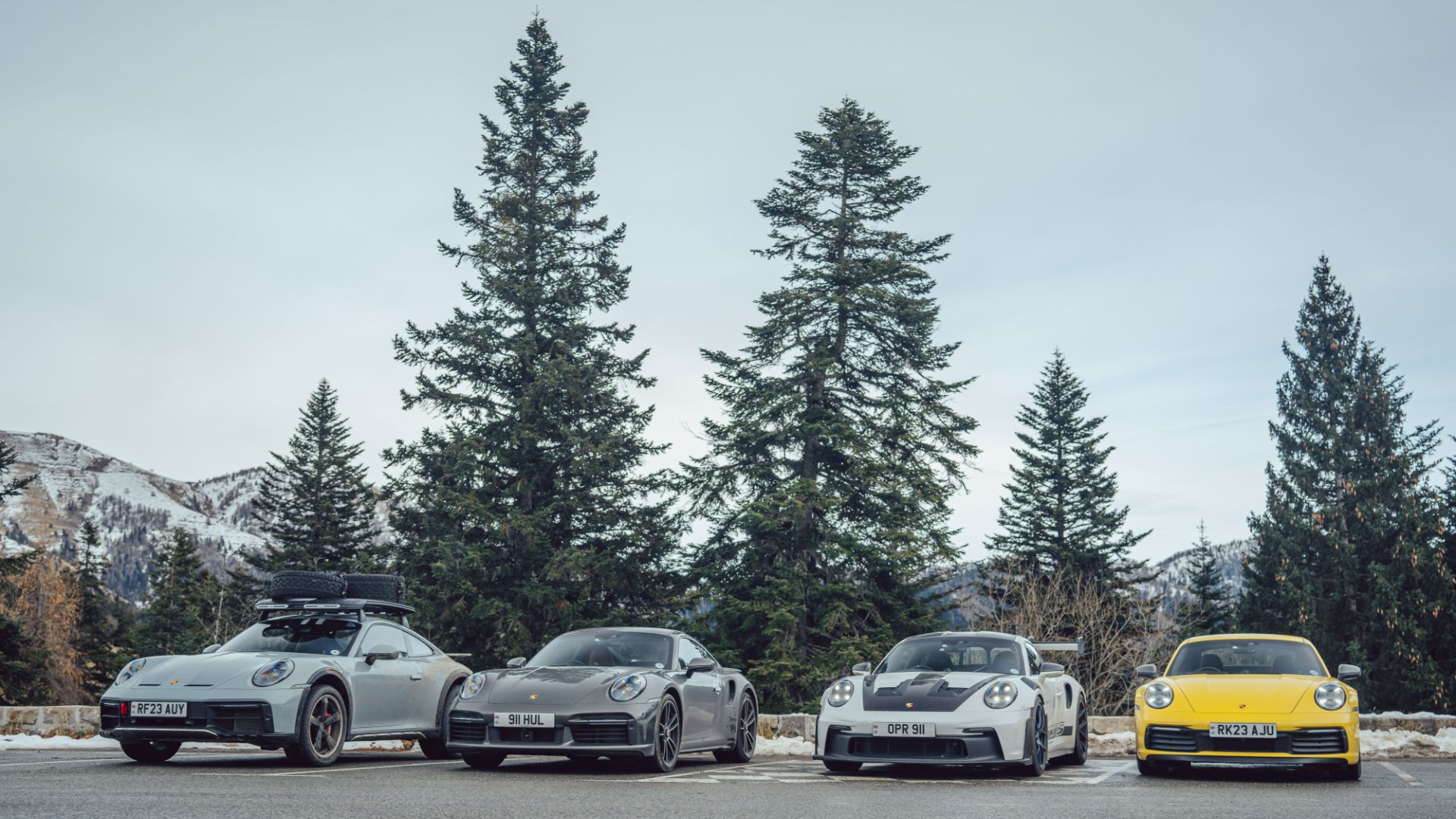
The breadth of the modern Neunelfer lineup is demonstrated by the four cars gathered here – all examples of the outgoing ‘992.1’ generation. There’s a back-to-basics Carrera T, rough-and-tumble Dakar, supercar-slaying Turbo S and track-focused GT3 RS.
Our road-trip takes us from the French city of Lyon to the glittering Cote d’Azur, including parts of the Monte Carlo Rally route, to explore just how far Porsche’s icon has evolved.
Porsche 911 Dakar
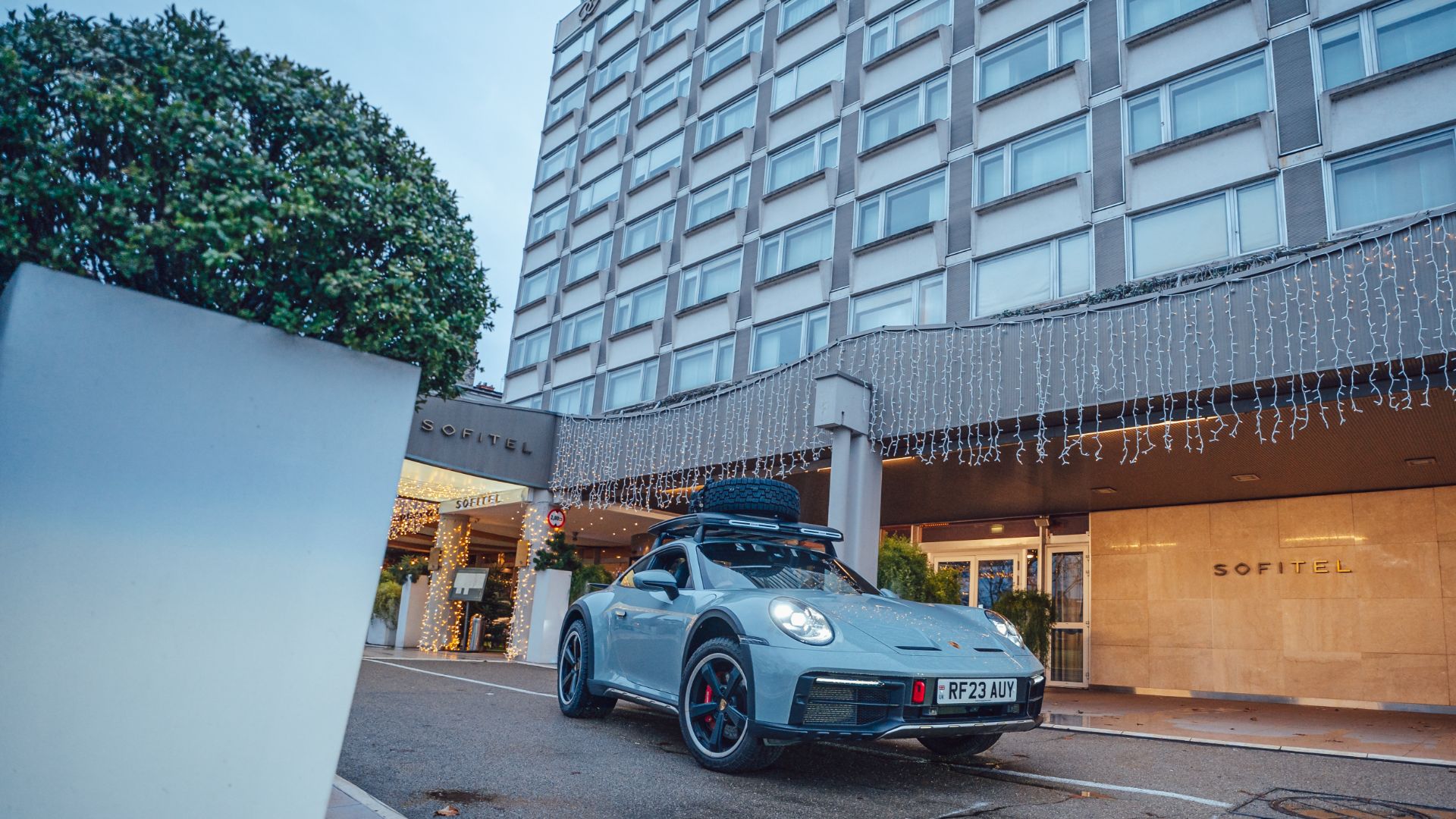
I’m handed the keys to the Dakar first. Inspired by the 953 that won the Dakar Rally in 1984, it represents something new: the only car here without a precedent in roadgoing 911 history. Its air-lifted stance (up to 80mm taller than a standard Carrera), rugged body cladding and optional roof rack make it catnip to Lyon’s car spotters.
Ironically, the attributes that make the £173,000 Dakar adept over rough terrain also prove beneficial when negotiating urban kerbs and potholes. After battling through the morning rush hour, I finally join the A43 autoroute heading south west, the raucous and muscular 480hp flat-six – shared with the mid-range 911 GTS and mated to a PDK paddle-shift gearbox – making light work of the motorway miles.
The Dakar doesn’t drop the ball when the Alps loom large either. Carving through steep switchbacks towards the snow-dusted Col de la Croix Haute, it feels oddly reminiscent of a classic 911. The increased body-roll and movement in the all-terrain tyres’ chunky tread blocks allow me to gauge the limits of grip – and occasionally exceed them. It’s simple, old-fashioned fun.
By the time I reach the first rendez-vous point in the town of Gap, I’m convinced this mutant crossover is my favourite 911 of recent times. With all 2,500 examples of the limited-edition Dakar now sold, let’s hope Porsche revives the idea in future.
Porsche 911 Turbo S
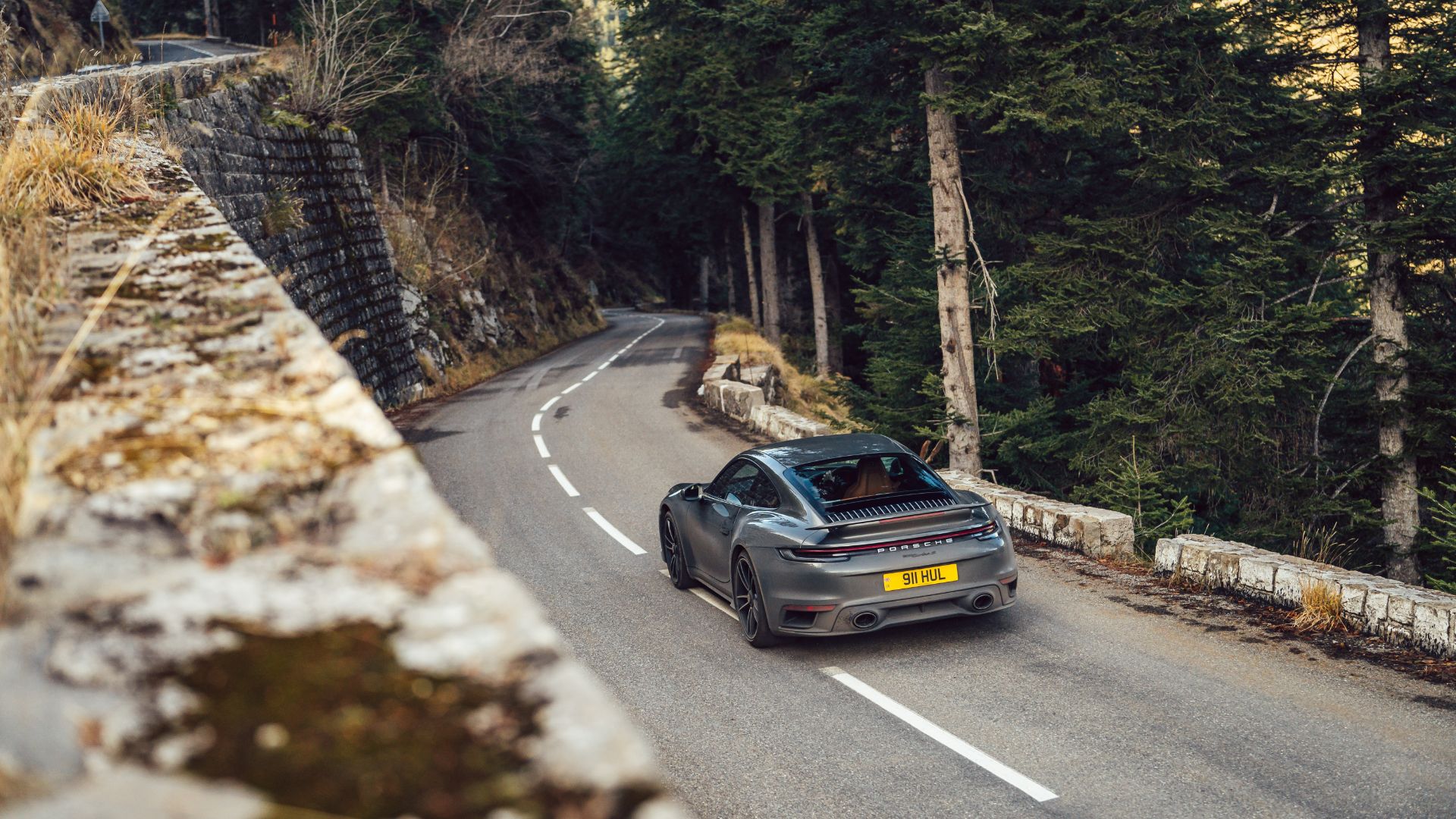
I swap into the Turbo S for the next leg of our journey, starting with a cruise-controlled 130kph (81mph) blast on dual carriageways, then climbing back into the mountains towards the famous Route Napoleon. This £180,600 flagship of the ‘regular’ 911 range – recently replaced by the £199,100 992.2 Turbo S – turns fewer heads than the oddball Dakar. But what it lacks in Instagram appeal, it makes up for in sheer speed.
The 911 Turbo first blasted onto autobahns and bedroom walls in 1975, its force-fed 3.0-litre engine serving up 260hp, 0-62mph in 5.5 seconds and a top speed of 155mph. The corresponding figures for this outgoing Turbo S are 650hp, 2.7 seconds and 205mph. Yet while the original 930 gained a reputation as a wayward ‘widowmaker’, the four-wheel-drive 992 is the consummate all-weather supercar.
Fittingly, it starts to rain, but with Wet mode selected to tame its responses and huge 10-piston carbon-ceramic brakes underfoot, the Porsche feels almost impervious to the slippery conditions. Driving it quickly induces a state of calm and singular focus that tallies with the car’s own character.
Whether I lean into its abilities as a long-striding GT or unleash its performance on increasingly steep and spectacular Alpine roads, the Turbo S has all bases covered. If I had to turn around now and drive the 750 miles back to London, this is the 911 I’d choose.
Porsche 911 Carrera T
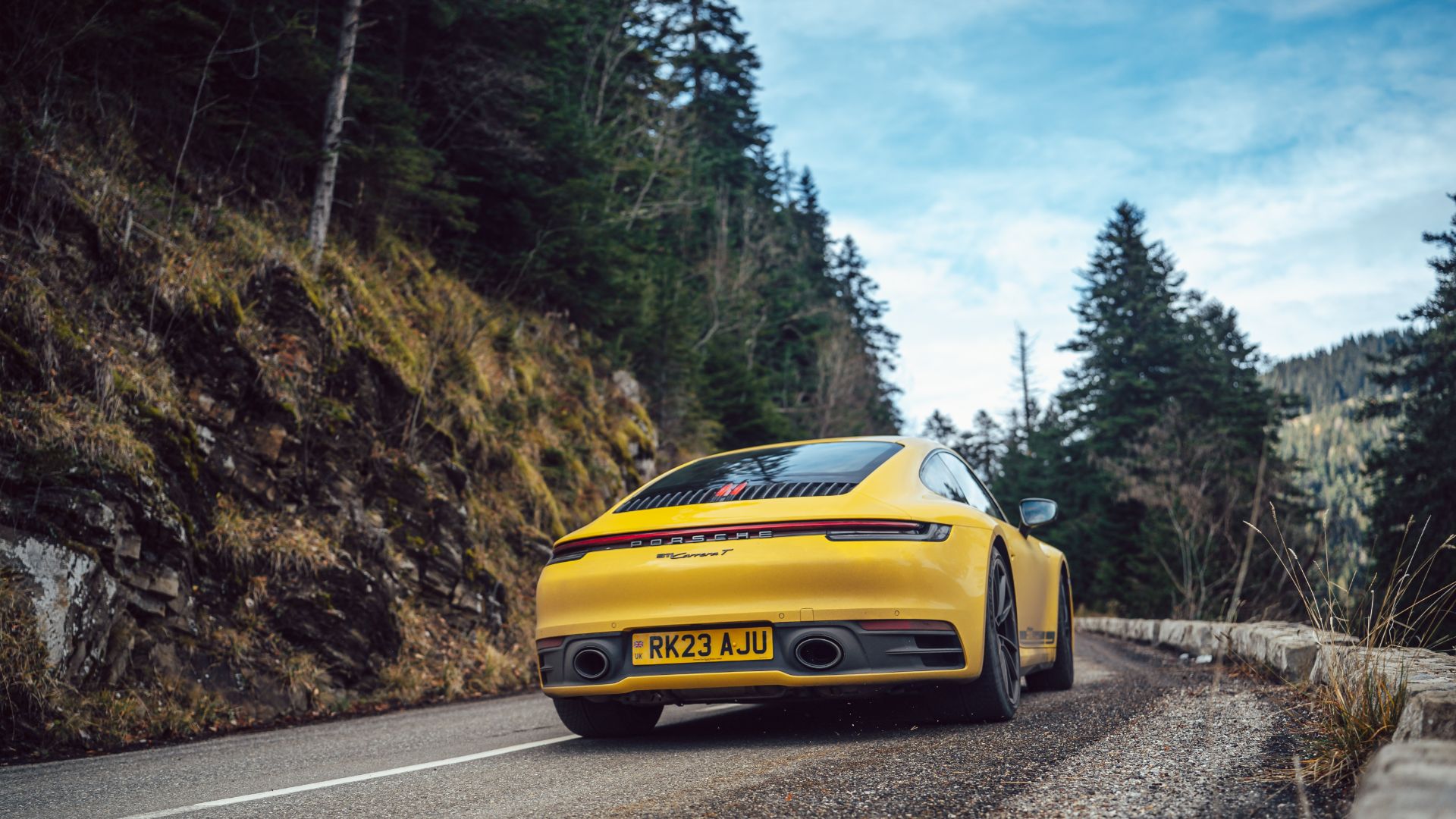
If the Turbo S elevates the 911 to hitherto unimagined heights, the rear-driven Carrera T feels like a return to its roots. Lighter, rear-wheel drive and deliberately driver-focused, it combines the base 385hp 3.0-litre Carrera engine with a manual gearbox. For £105,700, you also got 10mm lowered sports suspension, a mechanical differential and a rortier exhaust (the equivalent numbers for the latest 992.2 Carrera T are £111,300 and 394hp).
I found the ‘T’ rather stiff and unforgiving in the UK, but on the smoother tarmac of the Route Napoleon it feels poised and precise. Tracing the route of Napoleon’s 20-day march that ended at the Battle of Waterloo in 1815, this is truly one of Europe’s great driving roads. You could enjoy it in a Dacia Sandero, let alone a Porsche 911.
Key to the Carrera T’s appeal is that seven-speed manual ’box. With its notchy shift action and weighty clutch pedal, it keeps your limbs and brain engaged in the process of driving – and encourages you to wring out more revs.
As the road coils tighter and the washed-out winter sun sinks behind the jagged peaks, I enjoy a moment of serendipity. It’s the right car at the right time – and very much in the right place.
Porsche 911 GT3 RS
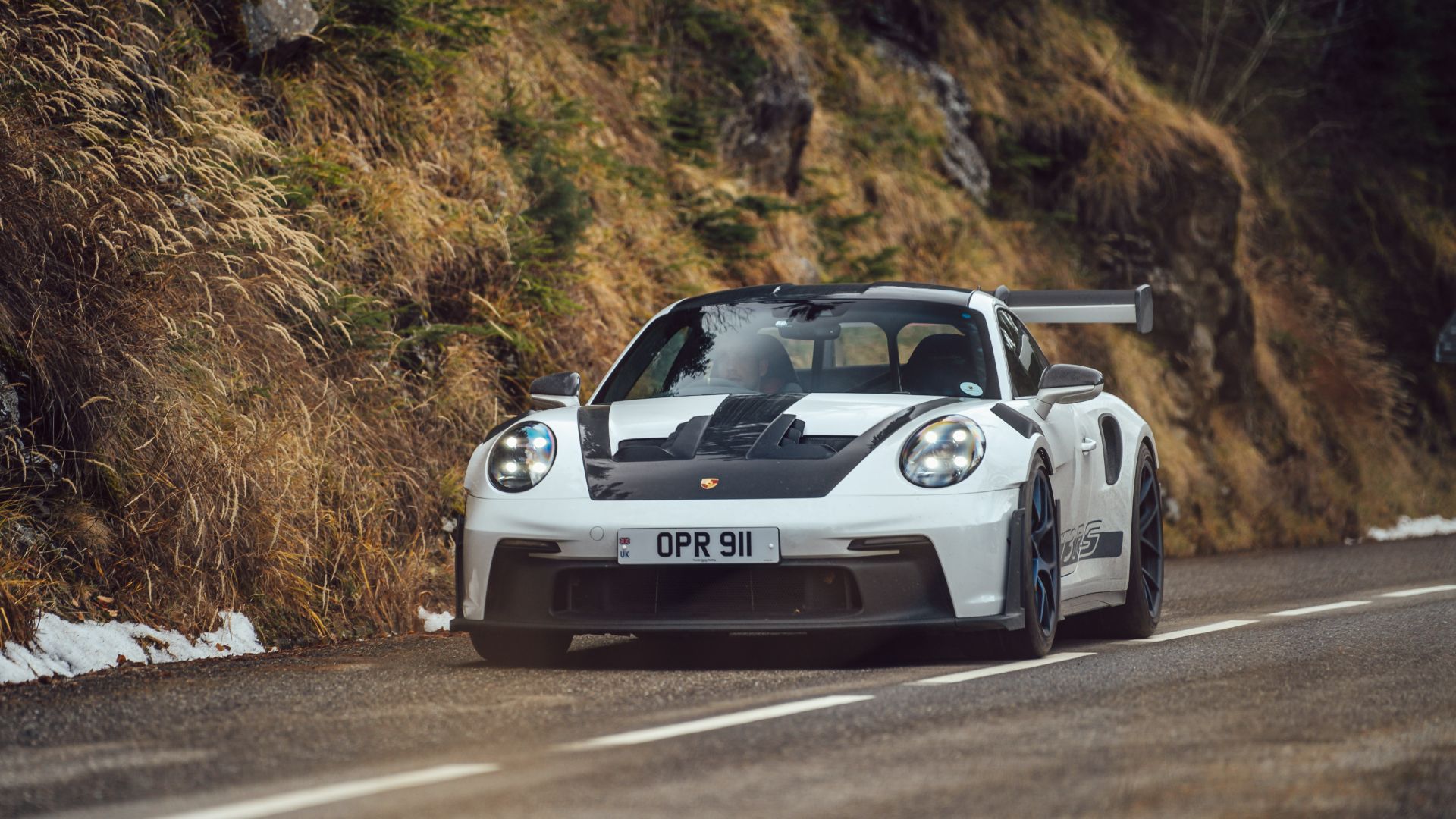
The right place for the bewinged 911 GT3 RS is arguably a racetrack, not the Col de Turini with snow swirling through the darkness. Best known as a stage in the Monte Carlo Rally, the road consists of 34 hairpin bends that climb to a height of 1,607 metres. After many hours behind the wheel, it seems like a fitting finale.
The bloodline of the GT3 RS dates back to the epochal Carrera 2.7 RS of 1973, adding a healthy infusion of Porsche’s RSR race cars. With outrageous aero, ball-jointed double wishbone front suspension and a 525hp naturally aspirated engine that revs to 9,000rpm, it’s the most extreme 911 ever to wear number plates.
You’d expect the RS to feel intimidating in these conditions. Yet its incredible configurability – including multiple settings for damper compression and rebound – means you can tailor the car to the road.
And when that road is the Col de Turini, this ultimate Rennsport draws out its claws, delivering a brilliant blend of barely contained savagery and nuanced, confidence-inspiring control. It’s utterly mesmeric.
To see you, Nice
I arrive at Nice airport late in the evening, exhilarated and exhausted, toss the GT3 RS keys to Porsche’s PR man and dash for my plane. Despite a last leg from the mountains that felt like a frantic sprint finish, I make the flight home with minutes to spare.
The four cars I’ve driven today all provided very different experiences, yet they share a DNA that runs through every 911. Porsche’s range has since become even more diverse, as the 992 GTS and new Turbo S introduce hybrid technology for the first time. It might be into its seventh decade, but this iconic sports car shows no sign of slowing down.
ALSO READ: