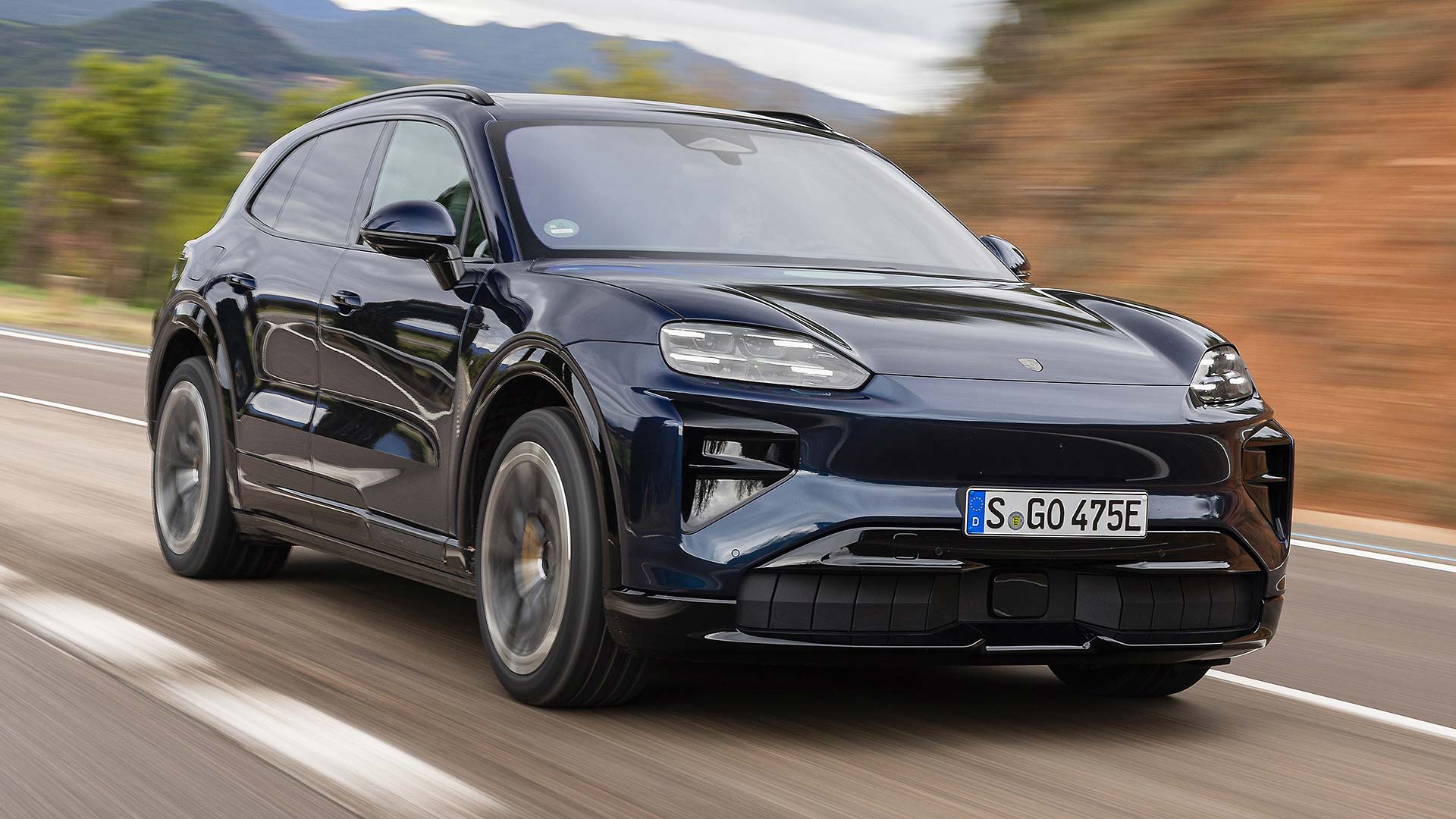
The new Porsche Cayenne Electric Turbo is the model that will grab all the headlines. With up to 1,156hp, it’s the most powerful Porsche road car ever. At 2.5 seconds to 62mph, it accelerates as quickly as the new Porsche 911 Turbo S we drove recently.
Yet this is not a sports car, but a five-metre-long luxury SUV. It also measures almost two metres wide and weighs more than 2.6 tonnes. It seats up to five in lavish comfort, along with 781 litres of their luggage. Crucially, it’s a zero-emissions EV with a driving range of up to 387 miles. Has there ever been a Porsche with such a disparate set of showcase stats as this one?
The Cayenne Electric doesn’t replace the existing Cayenne, which is offered in petrol and plug-in hybrid guises, but complements it. Despite the shared name, it is an all-new car, with a different, more low-slung design providing a sleeker appearance. It’s a bit plain at the front but looks great from the rear, with a wonderfully squat, muscular stance.
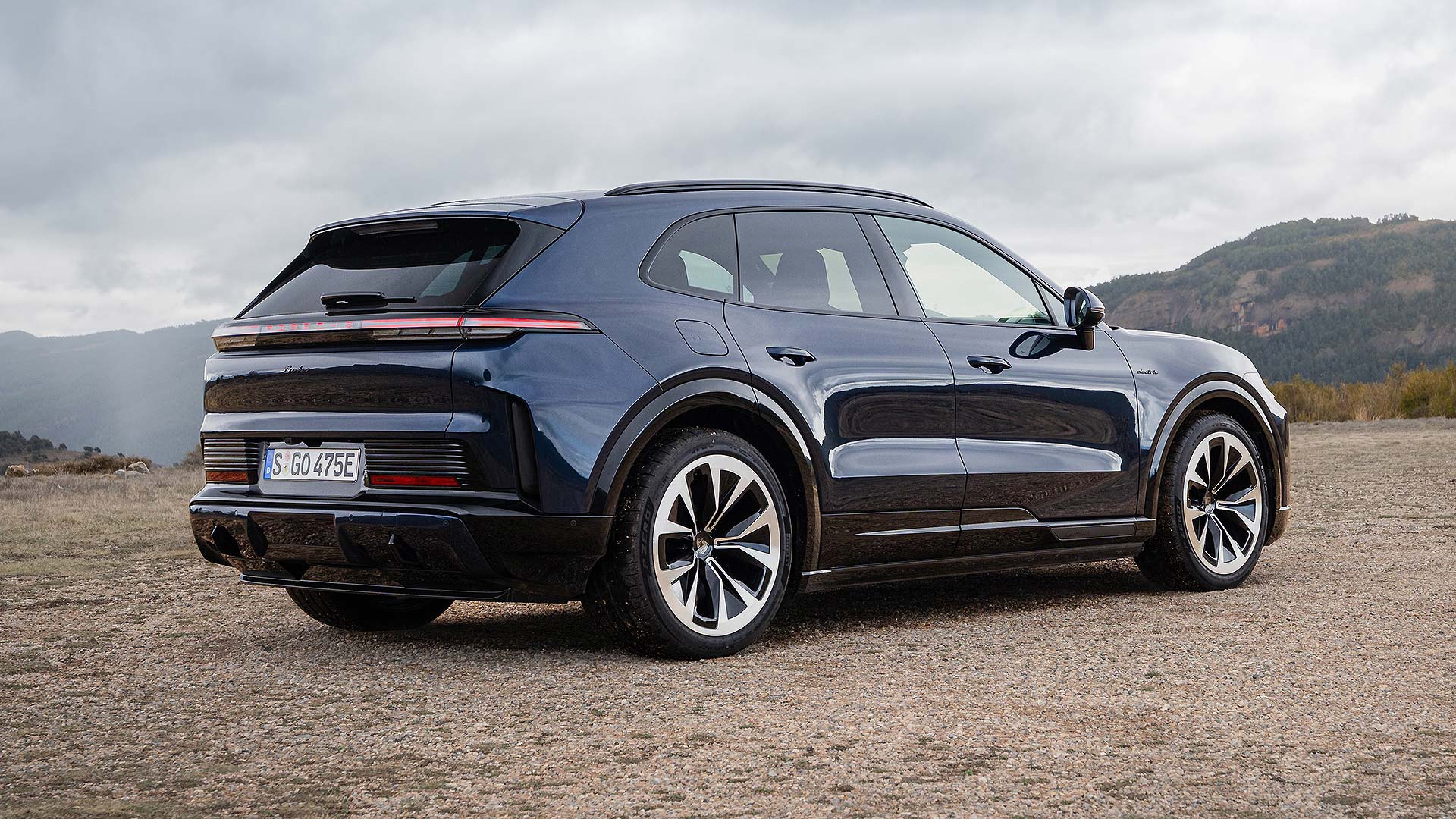
There are only two versions for now: the regular Cayenne Electric (442hp, from £83,200) and that full-fat Cayenne Turbo, priced from £130,900. Later this year, the Cayenne Electric S arrives, with 666hp and costing from £99,900. Like many others, I reckon it will be the sweet spot.
For now, I got to experience the two extremes – and rather than building me up, Porsche placed me straight into a Turbo. Don’t worry, they said, 1,156hp is only an ‘overboost’ maximum when you have Launch Control engaged. The everyday power output is ‘only’ 857hp. Still over 150hp more than the most potent 911, mind…
Since its controversial launch in 2002, Porsche has made more than 1.5 million Cayennes. However, this is the first time it has gone fully electric. With the new Range Rover Electric and Ferrari Luce EV on the horizon, it aims to steal a march on its elite rivals. I spent two days in Spain to discover what the new Cayenne Electric is all about.
Inside the Porsche Cayenne Electric
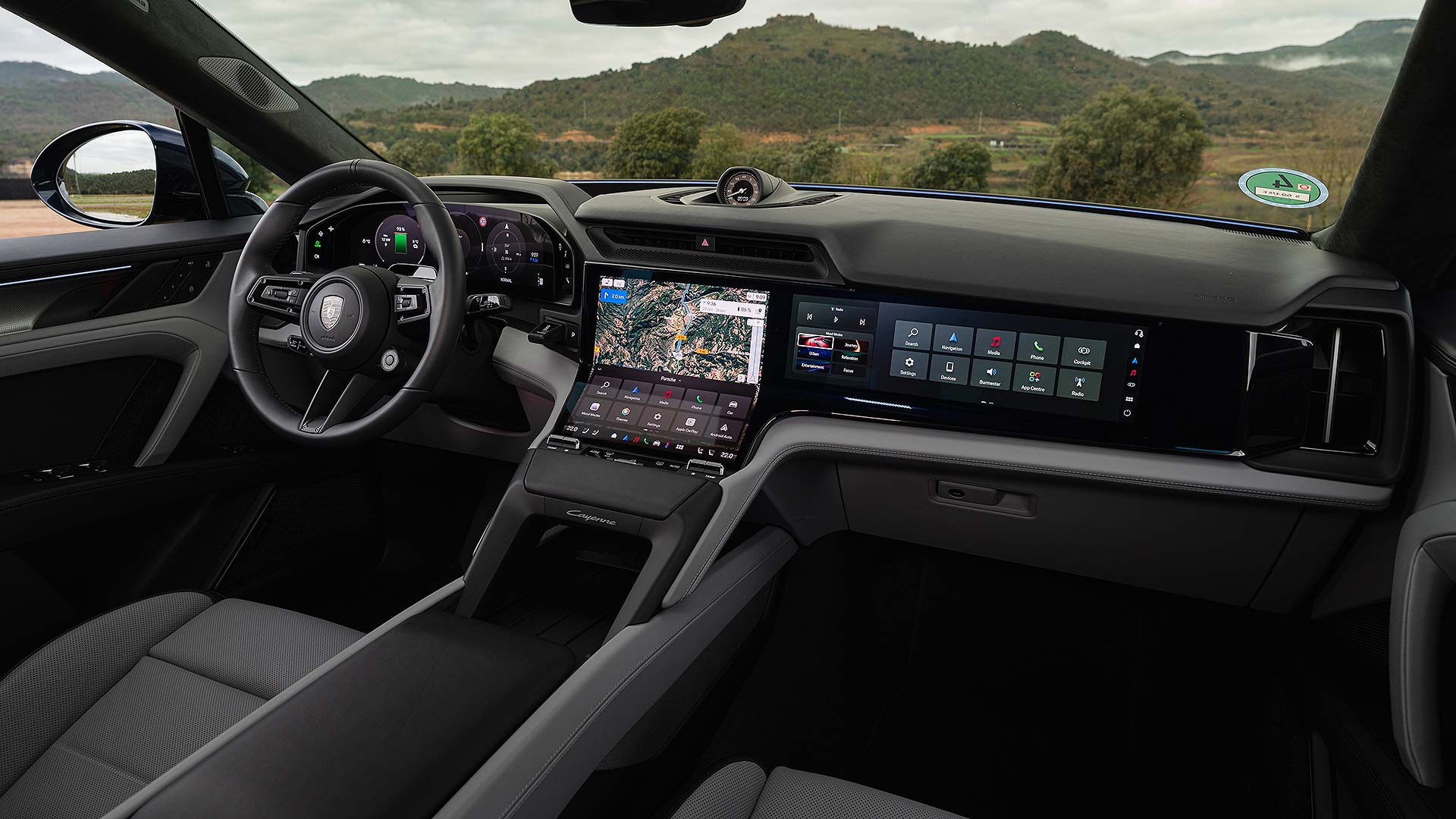
The striking new ‘bent’ infotainment system really is the star attraction inside. Porsche has given the portrait-format screen a twist in the lower section, which sounds entirely gimmicky… until you use it.
The rest of the interior is suitably luxurious. Porsche goes big on tech, with a widescreen driver display modelled on the classic 911 (you can even choose a retro-look dial layout). Other goodies include loads of apps for the infotainment, plus an optional passenger screen to stream content through apps, watch movies or surf the web.
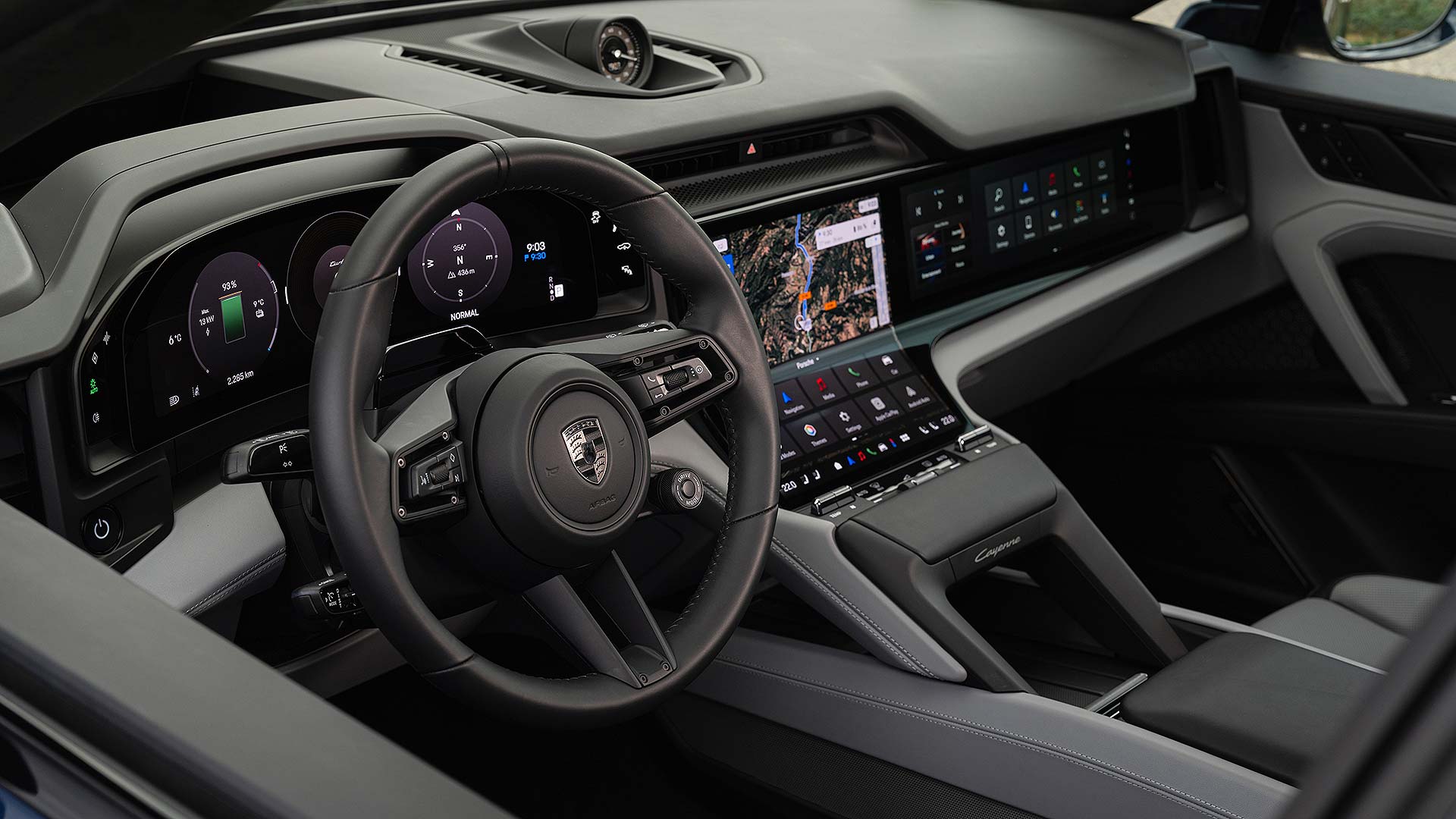
There are extra marks for the optional head-up display, which is comprehensive, super-clear and even turns with your head as you steer into corners. And we’ll award yet more marks for the optional ‘surface heating’, which warms up the arm rests and door handles, along with the heated seats.
Frameless doors add a sporty touch and there is loads of space in the rear. The bucket-style seats are great for two people – less so for three – and you can pay extra for electric seat adjustment (Porsche does love an option). The boot is a massive 781 litres, bigger than some estate cars. If you choose the towing kit, you can also haul up to 3.5 tonnes.
Driving the Porsche Cayenne Electric
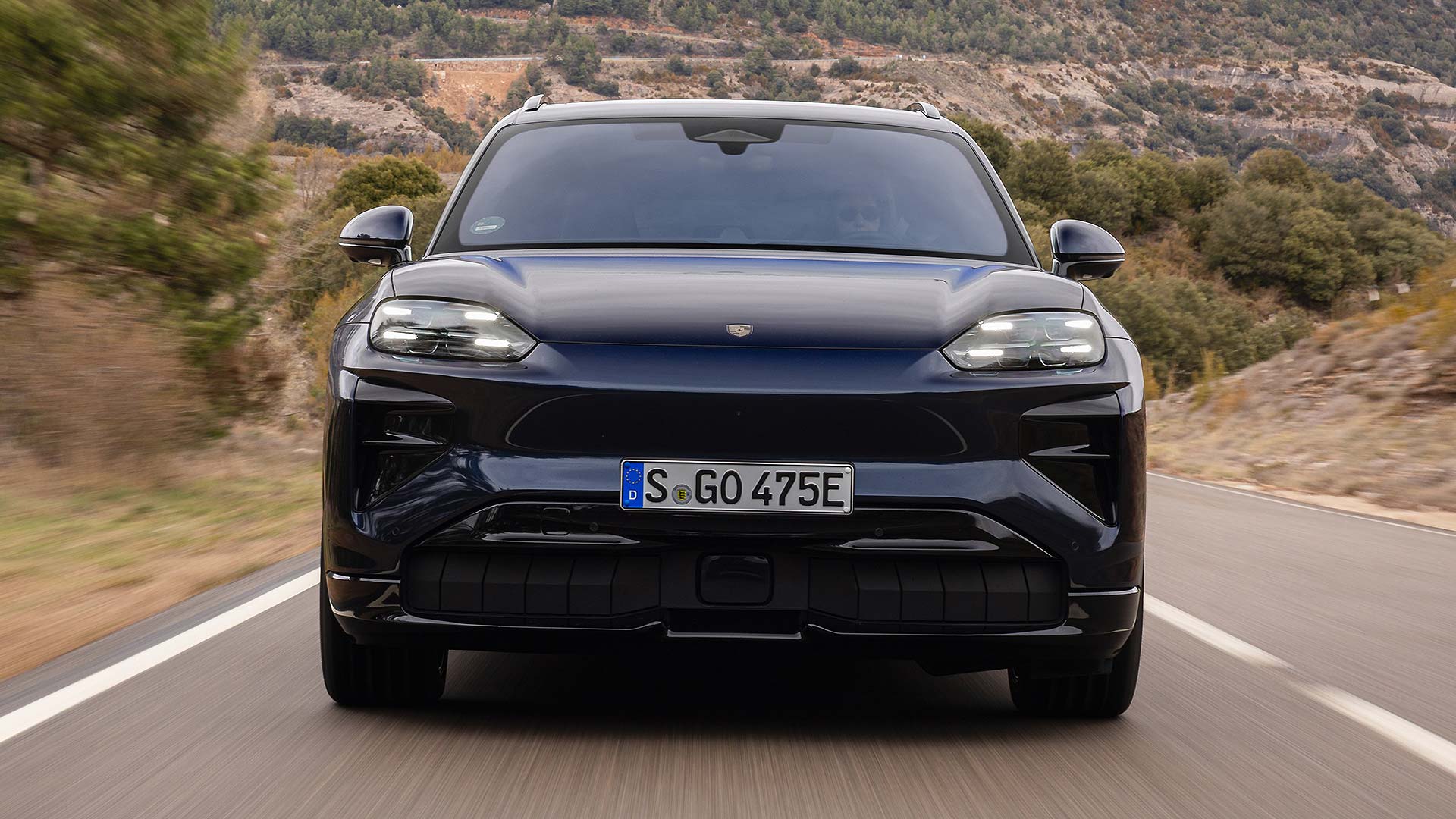
Every Porsche Cayenne Electric gets air suspension with adaptive dampers as standard. This ensures an inherent level of luxury car ability and comfort, but you can take things further on the Turbo with optional Porsche Active Ride suspension. For £6,799, it brings four-corner active control, with tricks such as tilting towards the inside of a bend when cornering.
It’s uncannily superb. Forget the power, you’ll buy a Cayenne Electric Turbo simply for the chance to get Active Ride (you can’t choose it on the standard model, but it will be available on the forthcoming S). It’s like a particularly engaging magic carpet, keeping the car flat and stable no matter how challenging the road, or how dynamic your driving.
Crisp steering means small inputs yield immediate reactions, giving this big, heavy SUV superb precision – albeit without 911-like feel. It can almost be too sharp until you acclimatise, but then you’ll relish the effortless intelligence of it all. It’s combined with a fabulous ride quality that devours gritty road surfaces and mid-corner bumps to give a feel of absolute impenetrability. A car with wheels this big really shouldn’t ride this well.
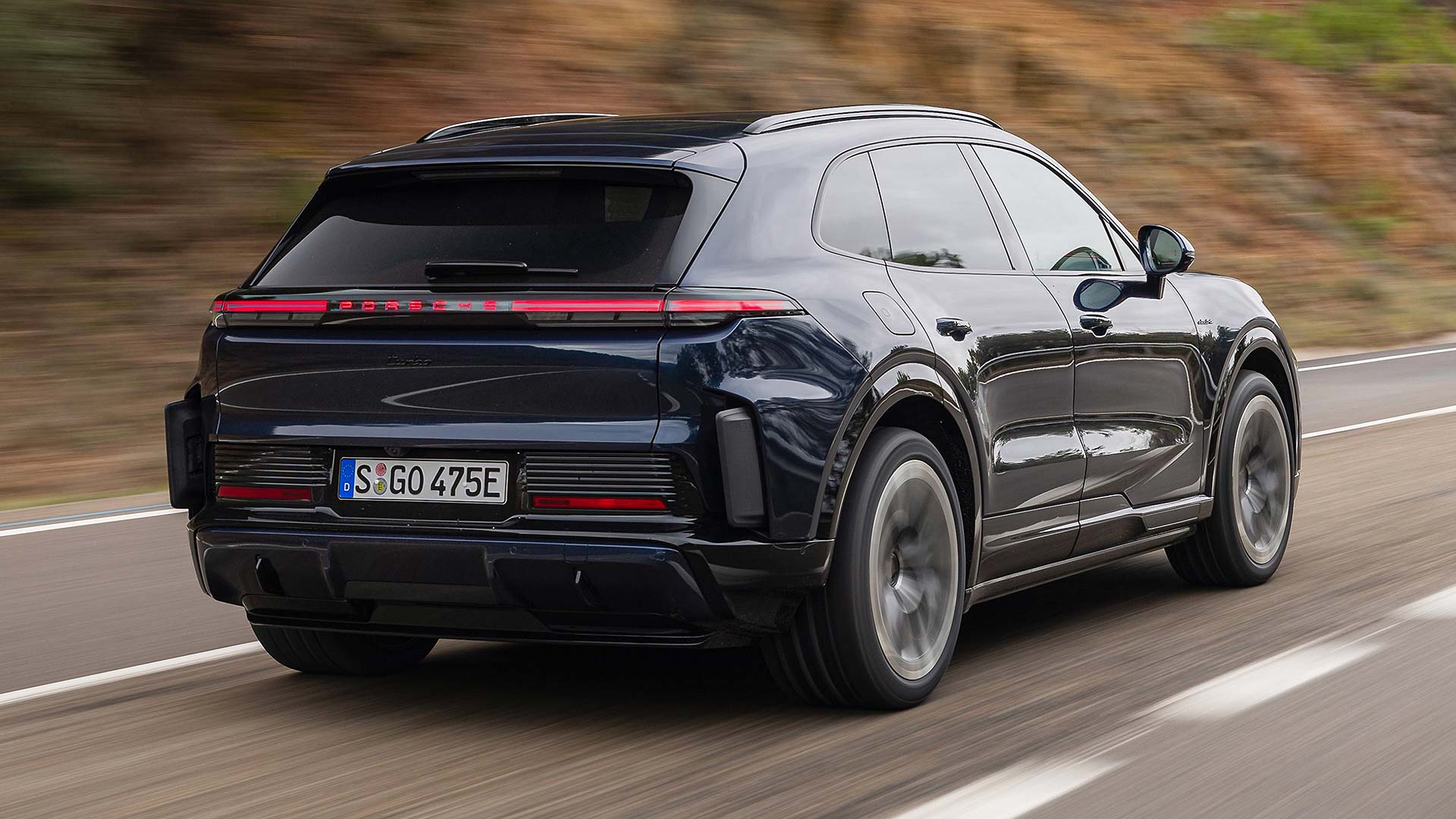
Naturally, acceleration is ridiculous. I sampled launch control shortly after lunch, and it felt like it bruised the inside of my stomach. It’s also surprisingly measured if you don’t go full-throttle, though, or use the steering wheel ‘push to pass’ button. Unlike the switch-like explosiveness of a Tesla, the Cayenne Electric Turbo’s surge can be metered out in a fluid, precise manner, so it needn’t feel overwhelming.
This sense of always having something in reserve adds a surprising feeling of safety and security. I also liked how easy it was, in Sport Plus mode, to get a tweak of power oversteer out of tight corners, while the simulated V8 noise has a turbo whistle overlay, which is fun.
The regular Porsche Cayenne Electric is good too, but if you jump in after sampling a Turbo with Active Ride – as I did – you’ll notice the busier, more jiggly feel, more pronounced pothole impact, heavier handling and sense of rolling into corners. By most standards, it’s very good, but the Turbo can be even better simply through ticking an option box on the configurator.
Of course, it’s slower, too. I was maybe spoiled by the Turbo, but this model did feel notably less urgent. It didn’t deliver the same kick in the back and I had to work the accelerator harder to release the power.
Frankly, though, this is more of a reflection of how well Porsche has managed the Turbo’s huge thrust, rather than any obvious deficiency in the standard car. And the latter is still quicker than most regular Cayennes…
Porsche Cayenne Electric battery and range
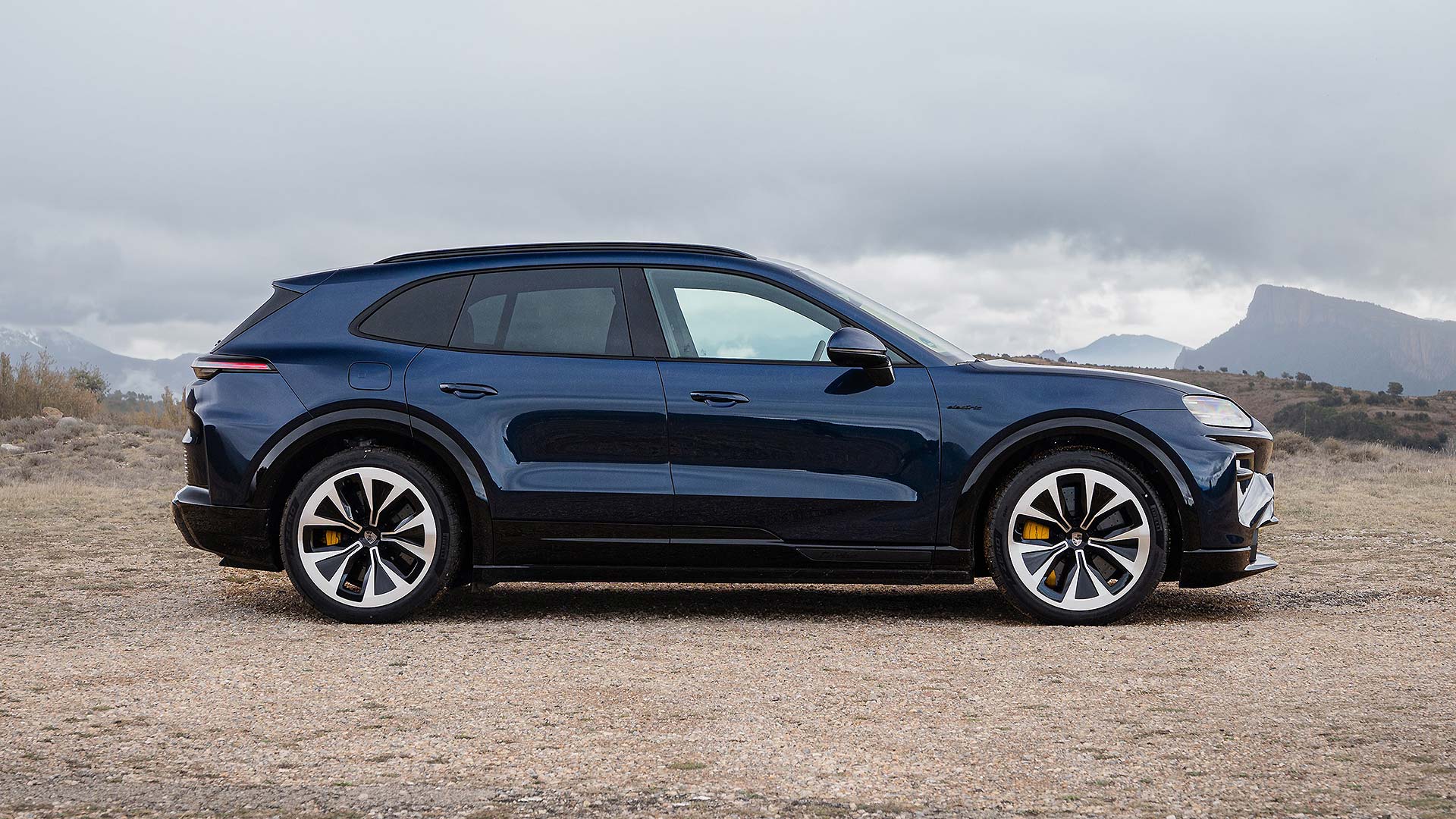
All versions of the Porsche Cayenne Electric use the same huge 113KWh battery. It’s able to accept up to 400kW of DC charging power, well in excess of those 350kW Ionity chargers you sometimes see at motorway services.
More importantly, Porsche says it’s not just about peak DC charging power, but a reliably high rate of flow throughout the charge range. For example, it’ll take up to 300kW up to 70 percent capacity, and 175kW up to 80 percent. This is why it can go from 10-80 percent charge in under 16 minutes.
The Turbo has a 387-mile range, while the regular model offers 399 miles. Swift launch driving in the Turbo suggested more like 250 miles, but this will improve in more real-world conditions; expect over 300 miles in everyday motoring.
The Porsche Cayenne also has remarkable levels of energy recuperation. Under braking, it’s able to recover up to 600kW, which is on a par with a Formula E racing car. And inductive charging is coming later this year – you’ll be able to simply drive over a pad installed on your driveway and wireless charging will begin automatically.
Verdict: Porsche Cayenne Electric
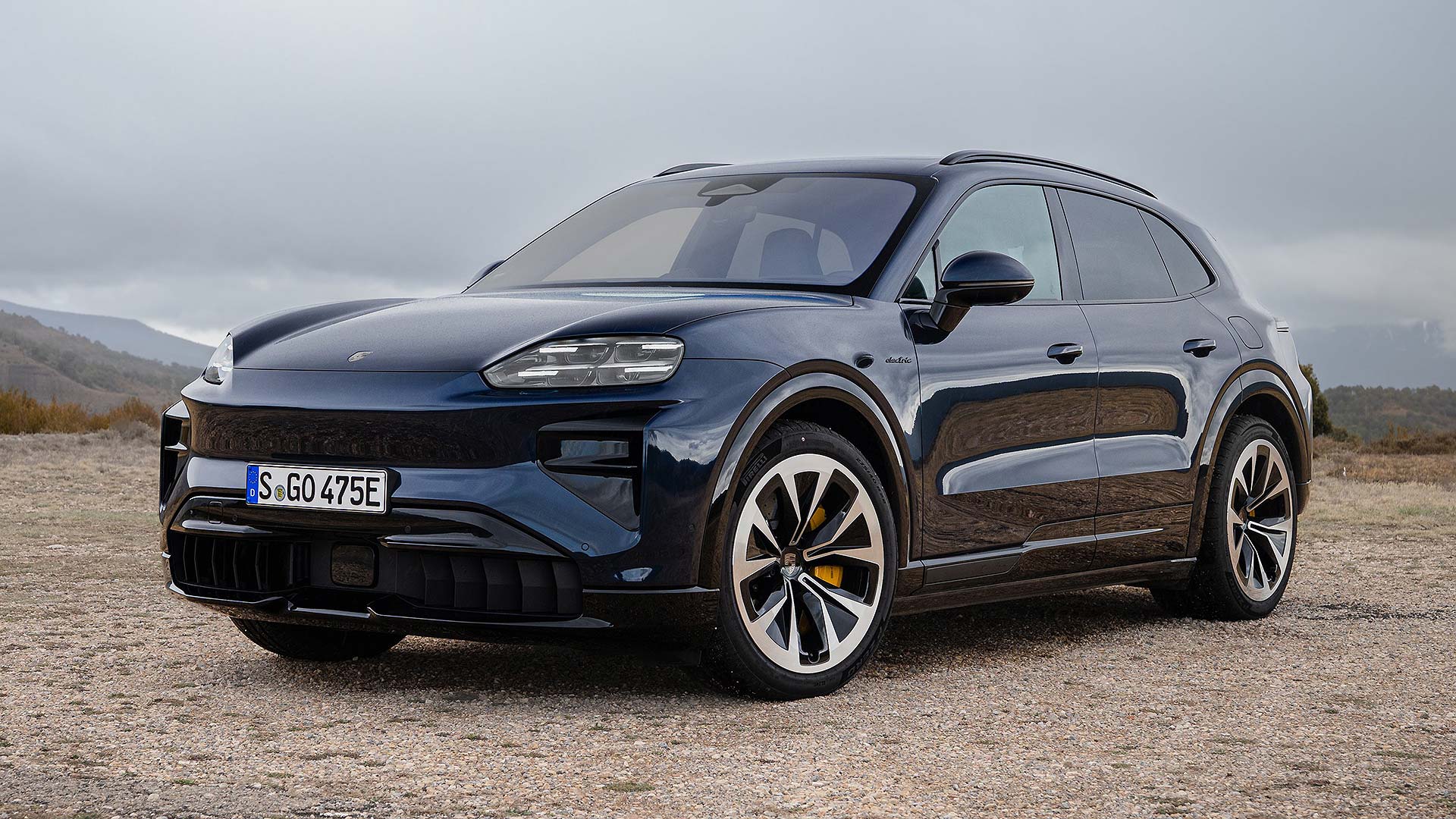
The Porsche Cayenne Electric is a formidable performer, particularly in Turbo guise, which isn’t anything like as frightening as you’d think. EV haters will still hate, of course, but they still have the regular Cayenne to get their range-topping SUV fix.
For those who want a thoroughly contemporary driving experience, with a lavish interior and superb new infotainment system, the Porsche Cayenne Electric is well worth a look. Just make sure, if you’re choosing the Turbo, that you select the Active Ride option. You won’t regret it.
ALSO READ:
Porsche car reviews on Motoring Research
