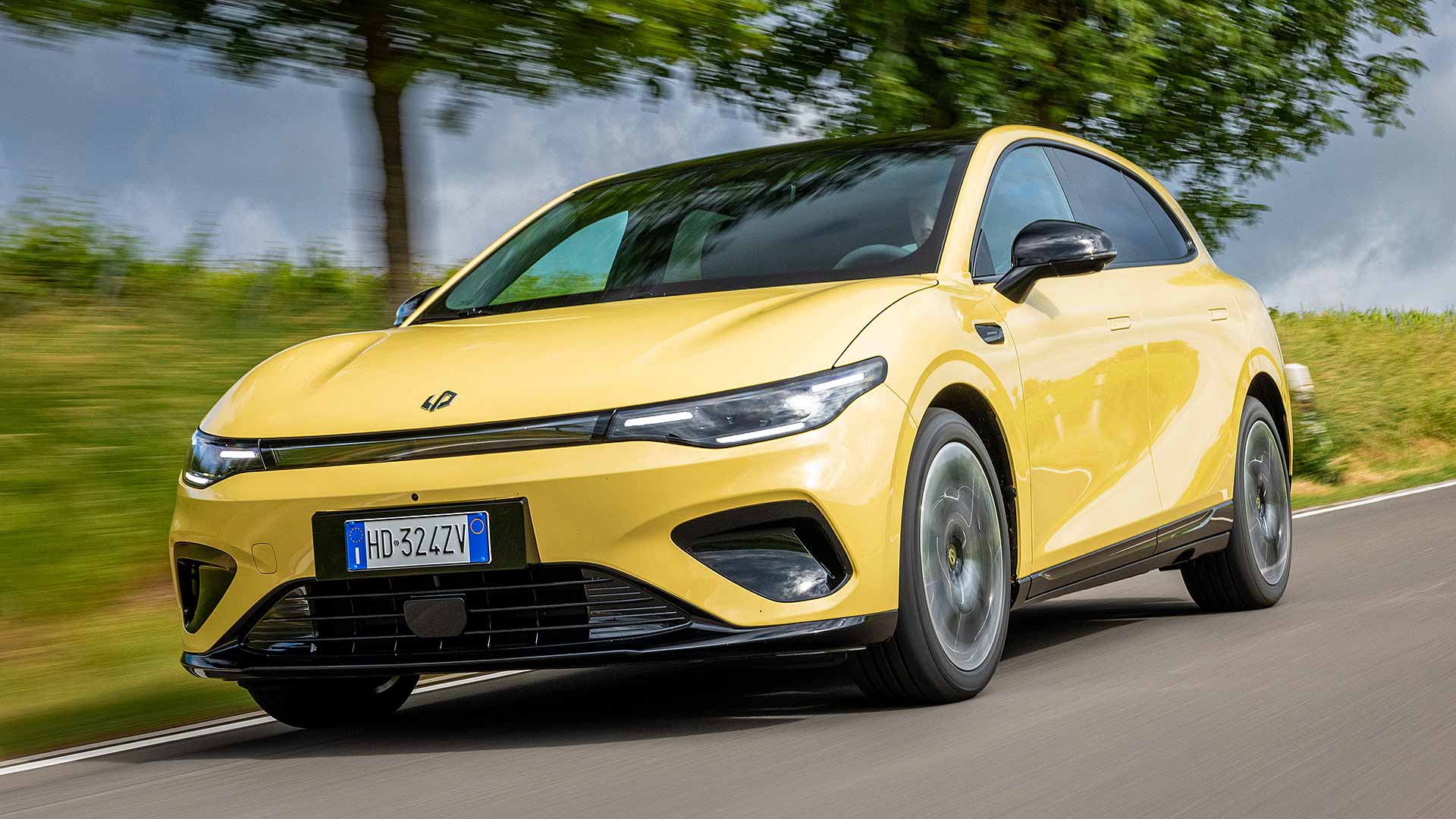
The Leapmotor B05 is an electric Volkswagen Golf alternative that demonstrates how this Chinese brand isn’t afraid to do things a bit differently. Even the featured launch colour, rather than tepid silver or grey, is a bold yellow that you will either love or hate.
In a sea of electric SUVs, this is an electric family hatchback with a 300-mile range and, for retail customers, a price tag from just £28,995. That level-pegs it with the very cheapest petrol-powered Golf. It also undercuts the cheapest Volkswagen ID.3 – an EV with almost 60 miles less range.
Leapmotor is sold through Stellantis dealers, whose other brands include Vauxhall, Peugeot, Citroen, Fiat and more. It’s growing quickly in the UK, shifting around 1,000 cars a month and already outselling Fiat, Alfa Romeo, Smart, Subaru and others.
The B05 joins the Leapmotor B10 SUV in a two-pronged attack on Britain’s value-priced family car heartland. Taking on vehicles such as the MG4, Renault Megane, along with Stellantis’ own Vauxhall Astra Electric and Peugeot e-308, it arrives in July 2026. I went out to Frankfurt for a first drive of what’s in store.
What is the Leapmotor B05?
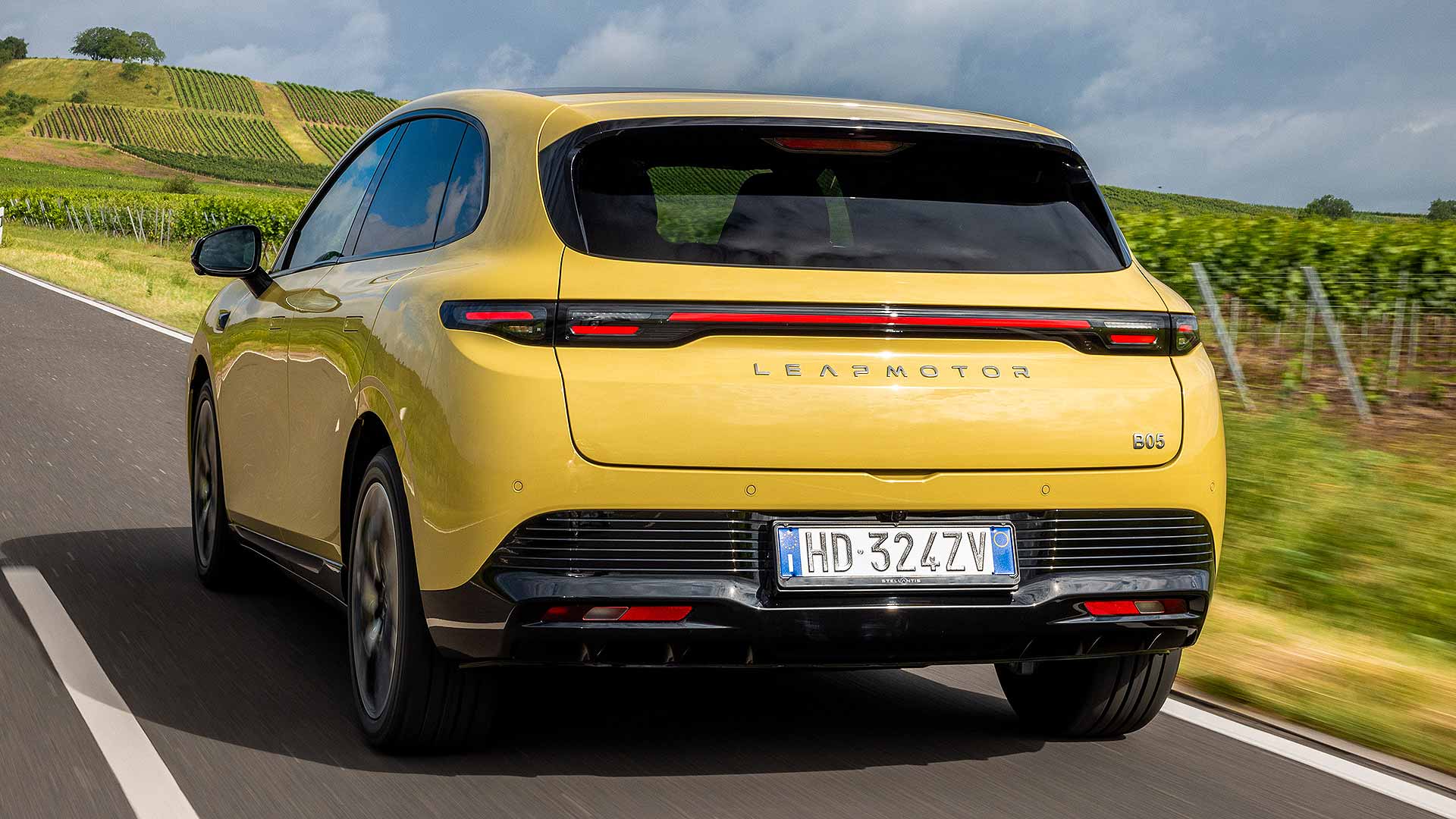
Lightning Yellow is the launch colour for the Leapmotor B05. It divides opinion; if you don’t like it, four other metallic shades are available for £575. Apart from that, and either a light or dark interior, there are no other options. One model, one spec – that’s it. Leapmotor likes to keep things simple.
All models get 19-inch alloy wheels, and European cars come with more premium tyres than Chinese-market models. These, along with the widest body in its class, give the B05 a sporty stance. It appears low-slung and planted, particularly from the rear.
The design is very clean and aero-influenced. It lacks immediate visual flair, but is nicely proportioned and has a long wheelbase. I also like the short nose, with curvaceous wheelarches that are gently rounded into the bonnet. There are subtle rear haunches too, plus cool front and rear LED lights – both set into full-width black bars.
The comprehensive standard spec also includes a panoramic roof, rear privacy glass, flush doorhandles with keyless entry, electric heated front seats and ‘eco leather’ upholstery. This 4,430mm-long hatchback also has coupe-like frameless doors, adding to its sleek appearance.
And not only does the 67.1kWh battery offer that generous 300-mile range, it also has an impressive peak DC rapid-charge speed of 174kW. That’s enough to take it from 30-80 percent in just 17 minutes.
Inside the Leapmotor B05
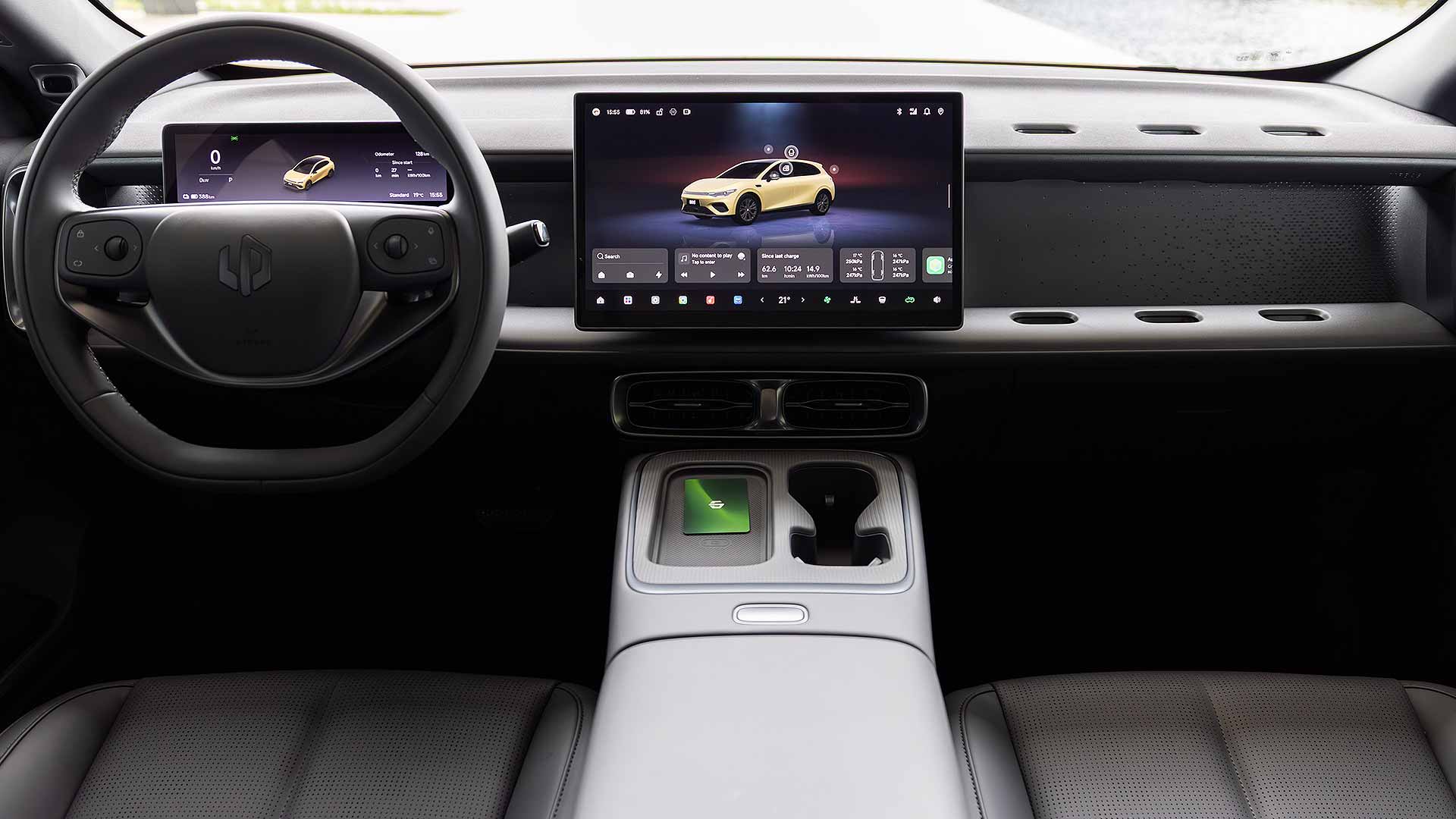
The Leapmotor B05 offers a choice of light or dark interior colour schemes – or, if you buy one of the first cars, a mix of the two. The design is similar to the Leapmotor B10, with a 14.6-inch touchscreen and an 8.8-inch driver display (which is actually quite feature-packed, even down to a mini sat-nav readout).
The screen looks punchy and high-resolution. Its operation feels snappy, and online apps include Spotify, YouTube and TikTok. The shortcuts along the bottom are partly configurable, but could do with being bigger. It’s particularly fiddly to alter the cabin temperature.
Swiping down provides further shortcuts, and you can even set a trio of driver profiles, with varying degrees of driver assistance systems disabled. It’s a good idea in theory but, as we shall see, currently imperfect.
The B05 has a fairly generic design inside, with workmanlike plastics, but it feels robust and well-built. There are also a fair amount of soft-touch surfaces to give a warmer feel. I liked the tall centre console with stowage space (and well-hidden charging sockets) beneath it, plus an air-cooled wireless phone charging pad above. Leapmotor also provides multi-colour ambient lighting as standard.
There was bemusement on the B05 launch about the six ‘holes’ on the passenger side of the dashboard. In China, Leapmotor sells accessories to make use of them, such as laptop holders. Safety regulations mean it can’t do the same here, but bosses suggest there could be some aftermarket goodies that make use of them in time.
The seat upholstery is extra soft to the touch, a bit like artificial Nappa leather, but the chairs are rather flat and lack thigh support. They’re also quite high, even when (electrically) fully lowered. This means you notice the windscreen header rail in your line of sight. Chinese B05s are available with a type of self-driving tech, complete with a bulky lidar unit, so perhaps that is why.
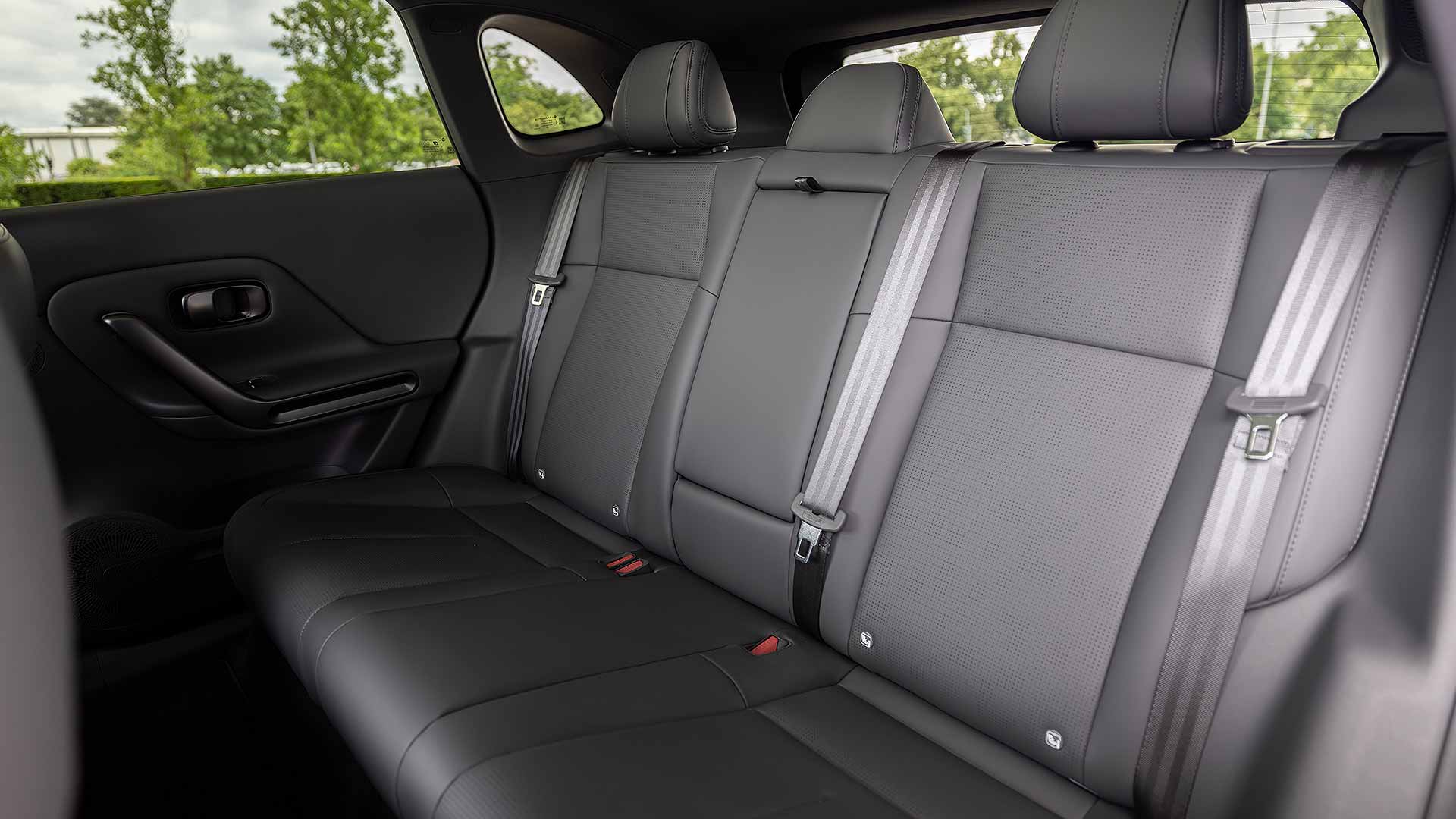
There is loads of rear-seat space. Legroom is vast, far more generous than a Volkswagen Golf, and the flat floor adds to the sense of airiness. So too does the panoramic roof – and headroom is fine despite this. The bench is comfortable too, and there are dual Isofix mounts with top tether.
The boot is pretty small, though. A total of 345 litres is more supermini-sized than family hatchback; a Skoda Fabia has a bigger boot, for instance. It looks small too, with a narrow opening, short load area and slightly awkward shape due to the recline of the rear seats. Even the load cover looks more like that from a city car. It expands to 1,400 litres with the rear seats folded, but there is no front ‘frunk’.
Oddly, there also isn’t a rear wiper.
Driving the Leapmotor B05
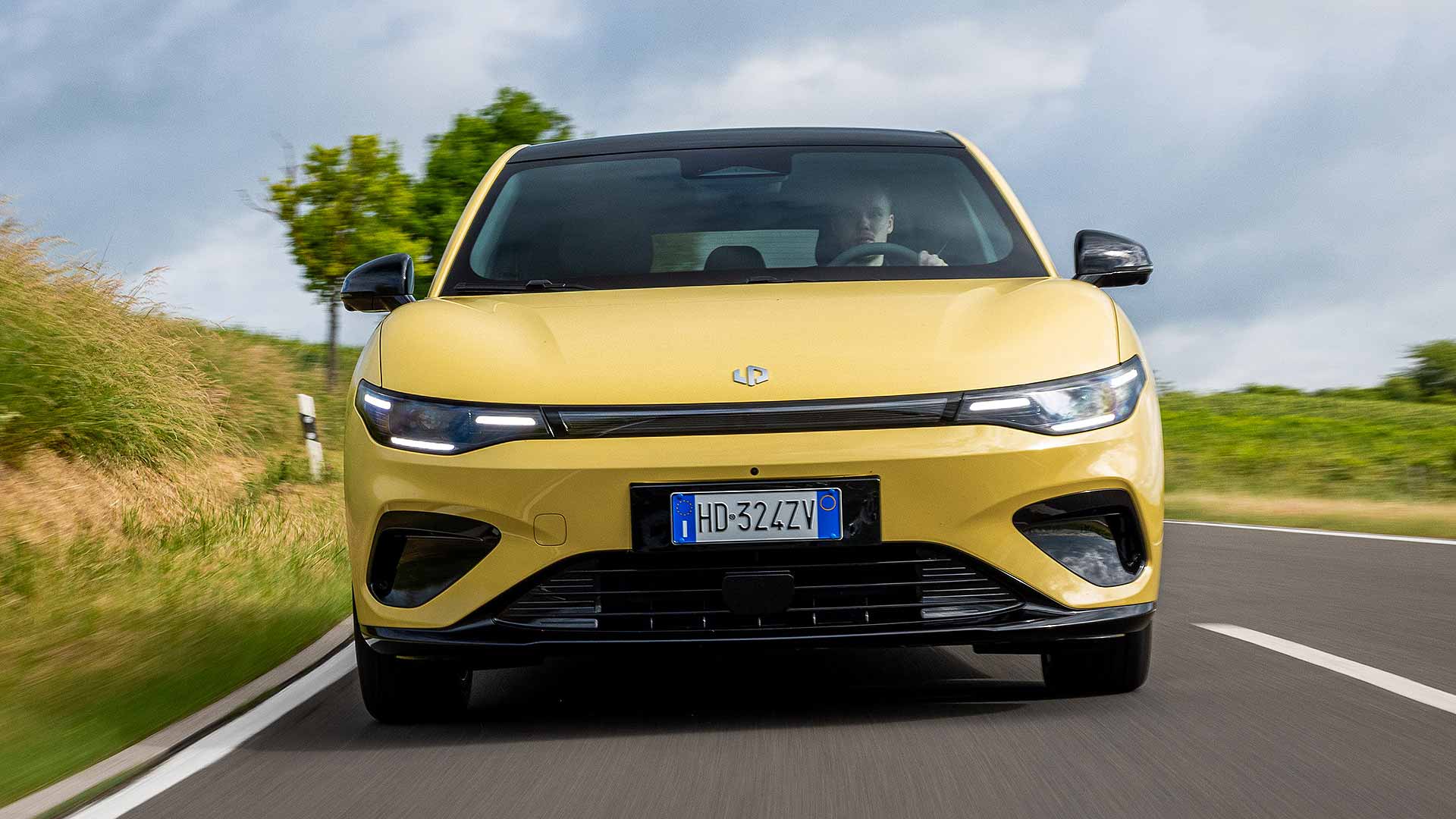
With 215hp, the Leapmotor B05 has a decent amount of power. Zero to 62mph takes 6.7 seconds, almost hot hatchback-fast, and amusingly, launch control is standard. Engage sport mode, press the brake, press the accelerator too, and then release the brake… It’s not as exciting as it sounds, but is a fun feature to have.
As the B05 is rear-wheel drive, and fitted with decent tyres, traction is reliable. I did notice the odd chirrup when zipping out of junctions, but it still felt reassuring, with minimal intervention from the traction control.
And so to the ADAS driver assistance tech. Leapmotor boasts about how it can issue over-the-air software updates in weeks rather than months or years. Not for the first time, it needs to here. For starters, when fully engaged, the systems are way too intrusive and annoying, with endless bleeps upon bleeps, and a steering wheel that aggressively fights you even when you consciously drive smoothly and well within the white lines.
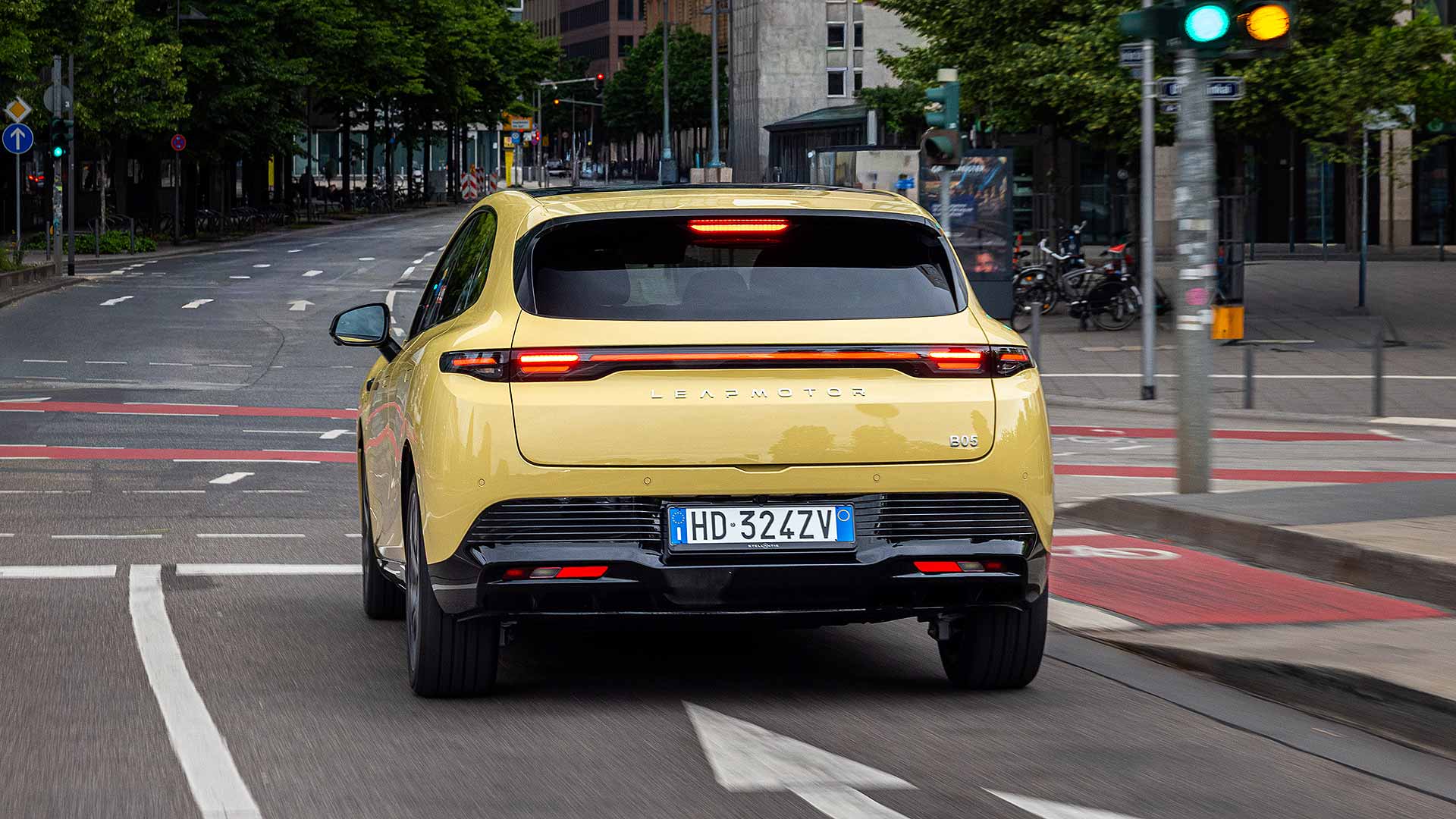
I found the button to disable lane-keep assist, mercifully easily thanks to a shortcut in the touchscreen. But when I pressed it, the thing immediately re-engaged. It then refused to turn off. We were told later this is because the driver attention warning wasn’t disabled first, but I’ve never had to follow such a sequence before. Here’s hoping it’s fixed before cars arrive in the UK.
All this rather spoiled the lone hour I had behind the wheel. When it wasn’t fighting me, the steering felt light and rather lifeless, but easy enough – if a little sticky. The same went for the accelerator; it was hard to be smooth when going on and off the throttle.
I was impressed by the ride, which was very smooth and absorbent. It cushioned bumps nicely, so should work well in the UK, and settled down nicely at speed – aided by the Leapmotor B05’s excellent refinement. Handling felt less fluid, but again, the intrusive ADAS made it hard to get into a flow and really judge this.
The climate control also seemed odd. At the cooler end, you had a choice of either 19 degrees or full ‘low’, the latter blasting the system to chill you, fridge-like. As 19 degrees still felt too warm, I had to adjust the temperature manually, rather negating the benefit of having climate control.
Verdict: Leapmotor B05
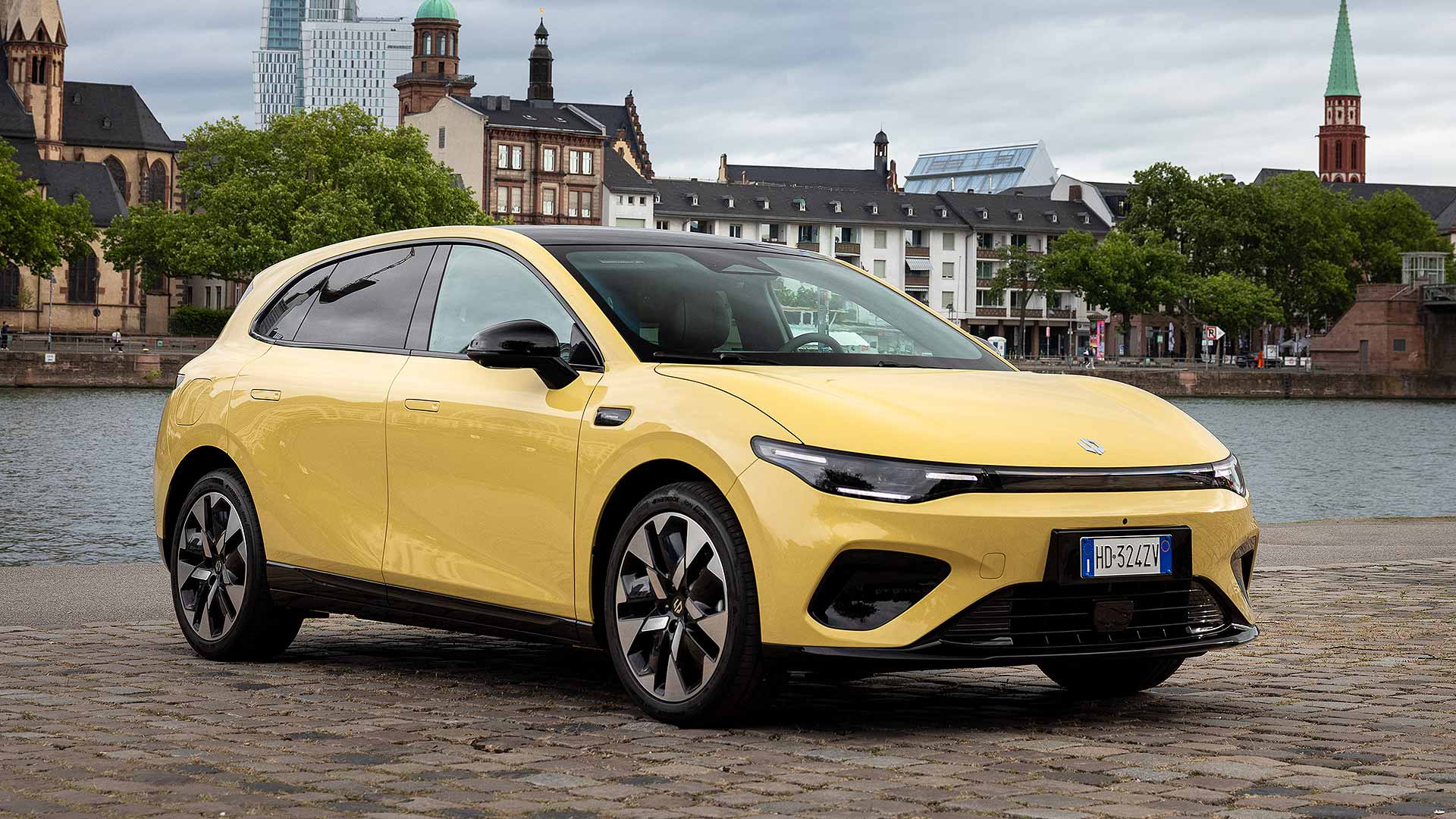
The Leapmotor B05 is a neat-looking electric hatchback with a reassuring 300-mile range, plenty of performance and loads of equipment for a headline-grabbing price. It’s nice to sit in and the tech is comprehensive. The drive could potentially be decent too, in a comfort-focused way, but for the problematic driver assistance tech.
UK cars should be better, and Leapmotor’s responsiveness to software niggles like this will hopefully see them fixed by the time they arrive. The market-friendly value for money of the Leapmotor B05 means it would be frustrating if such fixes aren’t forthcoming.
ALSO READ:
