Le Mans: The real story of Ford versus Ferrari
-

Ford v Ferrari in France... continued
© FerrariFerrari has claimed its third 24 Hours of Le Mans victory in a row, taking the top step of the podium for the 2025 edition of the famous race.
Another win by the Italian marque will only add fuel to the legendary feud between Ferrari and Ford. Dating back more than six decades, this on-track rivalry began with incredible endurance racing battles during the 1960s.
Here, we tell the story of how the Ford GT40 took on the racing aristocracy and won.
-

The start of the ordeal
© FordIt’s one of the most notorious stories in motorsport, and it all began with a dispute between Henry Ford II and Enzo Ferrari.
Ford had looked to buy the Italian manufacturer during 1963, yet found Ferrari unwilling to step away from the Indianapolis 500. This would have placed the two brands in direct competition on the track.
As a result, the deal failed. Henry Ford II then directed his company to enact revenge on Ferrari at Le Mans.
-
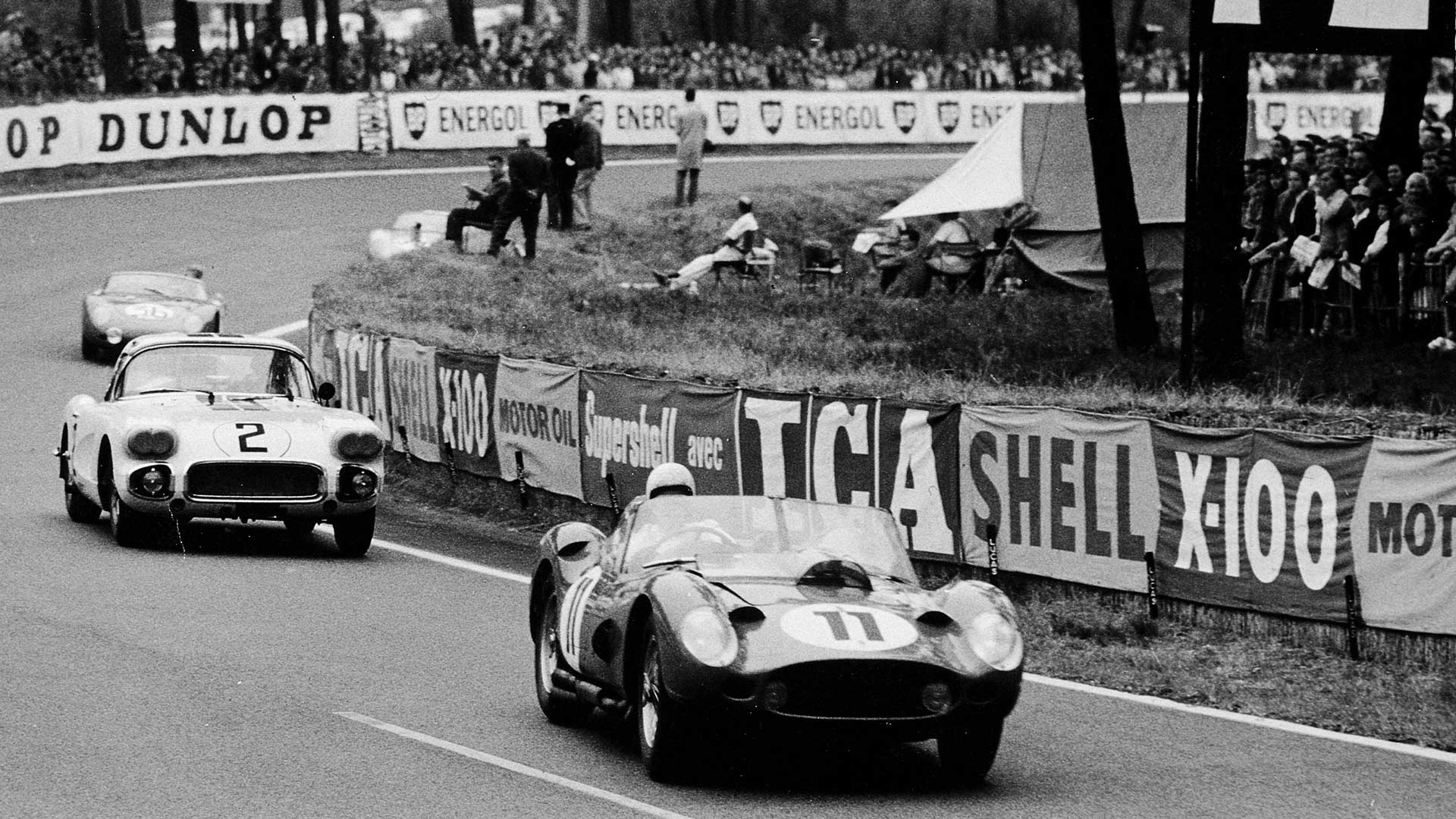
Ferrari was the marque to beat at Le Mans
© FerrariFerrari had established total dominance at Le Mans during the 1960s. Cars wearing the Prancing Horse badge had won every running of the 24-hour race from 1960 onwards.
This included two victories taken by Belgian driver Oliver Gendebien, pictured here behind the wheel of a Ferrari 250 TR 59/60 on his way to glory in 1960. Beating the Scuderia was going to take serious commitment and engineering effort from Ford.
-

1964 Ford GT40 prototype
© FordFord initially courted Lola Cars, Lotus and Cooper for a partner to build its new Le Mans racer. Lola was eventually chosen, partly because the Lola Mk6 race car already made use of a Ford V8 engine.
Lola donated two Mk6 chassis from its factory in Slough, while Ford set about creating a team to develop and build its new racer.
-

1964 Ford GT40 prototype
© FordThe newly created Ford Advanced Vehicles team set about the development of a new car, based at its own British factory.
Early prototypes of the GT40 made use of a mid-mounted 255 cubic-inch (4.2-liter) Ford V8, while later finished cars would feature a 289 cubic-inch (4.7-liter) unit. Famously, the GT40 name came from the overall height of the new race car: just 40 inches.
-

Ford GT40 team transporters ready to go
© FordFord had taken only seven months to create the new GT40, with the completed car being shown to journalists on April 1 1964. John Wyer was put in charge of running the Ford Advanced Vehicles team for the year.
The rush to get the new cars finished meant the GT40 would miss the season-opening Sebring 12 Hours race. Instead, the first use of the car in anger was at the Le Mans test, less than three weeks after it was presented to the media.
-
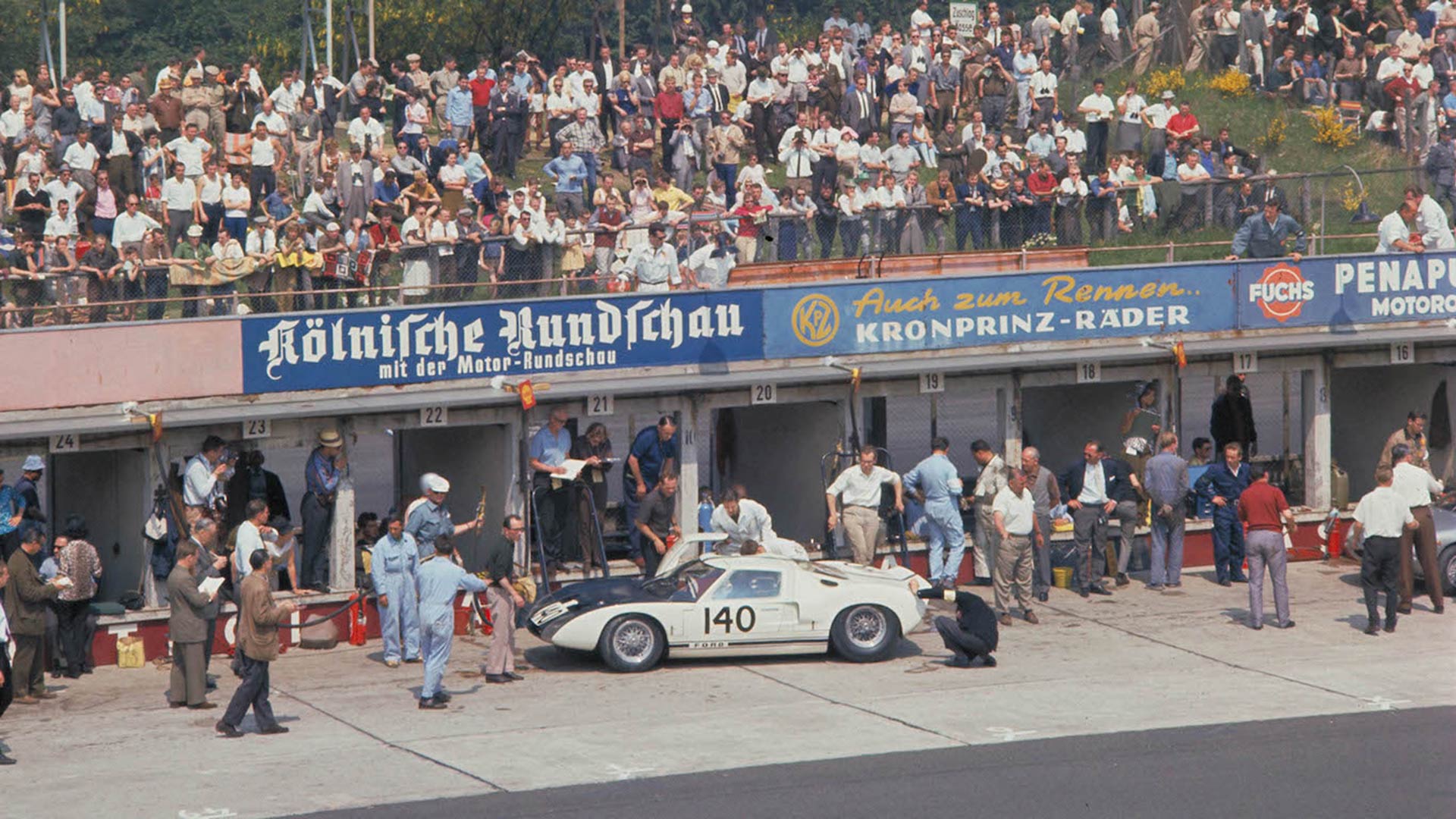
1964 becomes a year to forget
© FordMaking a race debut at the gruelling Nurburging 1,000km in 1964, the driver pairing of Phil Hill and Bruce McLaren qualified second on the grid. However, a suspension failure meant the GT40 failed to finish the race.
This would set the tone for the year, with 1964 at Le Mans a dismal failure. All three of the Fords would retire with mechanical issues, while Ferrari clocked up another win.
-

1965 shows promising signs for the future
© FordAfter the disappointment of 1964, Ford switched management of the GT40 to Carroll Shelby for 1965. This came after his notable success with the Ford-powered Daytona Coupe.
Victory came immediately, with a win for Ken Miles and Lloyd Ruby at the Daytona 2,000km race, with Bob Bondurant and Richie Ginther taking third in a sister GT40.
Yet the remainder of 1965 would prove fruitless, with no more wins for Ford. At Le Mans, all the GT40s failed to make the finish.
-
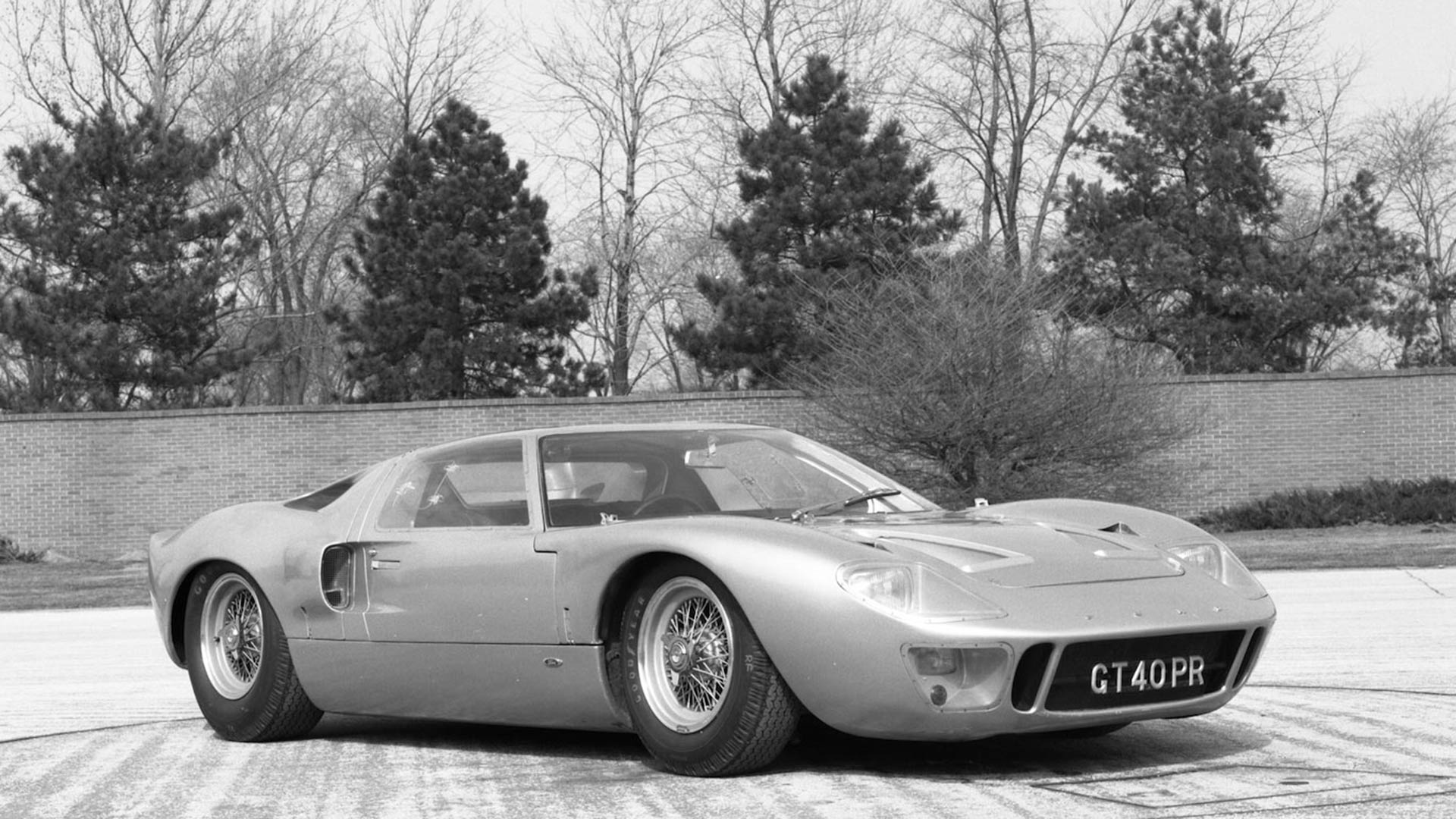
1966 Ford GT40 Mk I road car
© FordWhile the early GT40s had not proved successful on-track, road car versions still rolled out of the factory, with the first example delivered to the United States in early 1966.
The Mk l road cars featured softer suspension and quieter exhausts, plus options such as air conditioning and leather seats. However, they still had a 335hp V8 engine.
-

A new hope: the 1966 Ford GT40 Mk II
© FordThe Mk II may have looked similar to its predecessor, but beneath the bodywork was a host of changes. In came a 427 cubic-inch (7.0-liter) Ford FE engine, with an exhaust system nicknamed ‘a bundle of snakes’ for its elaborate design.
Kar-Kraft also modified the chassis from the original British-designed MkI, using higher strength steel. Extra robustness was added with upgraded suspension components, along with a strengthened gearbox. This featured just four speeds, instead of the five cogs found in the Mk l.
-

1966 Ford GT40 Mk II
© FordFord also dismissed Carrol Shelby as overall manager for the GT40 programme. Instead, priority was given to the Holman-Moody outfit, which was responsible for running Ford’s NASCAR efforts. Henry Ford II was adamant that the GT40 must win in 1966.
However, the Shelby American team did continue as an official factory outfit, retaining Ken Miles as one of its drivers. The new GT40s would finish 1-2-3-5 in the ’66 Daytona 24 Hours, proving the changes were beneficial and setting Ford on the path to glory.
-
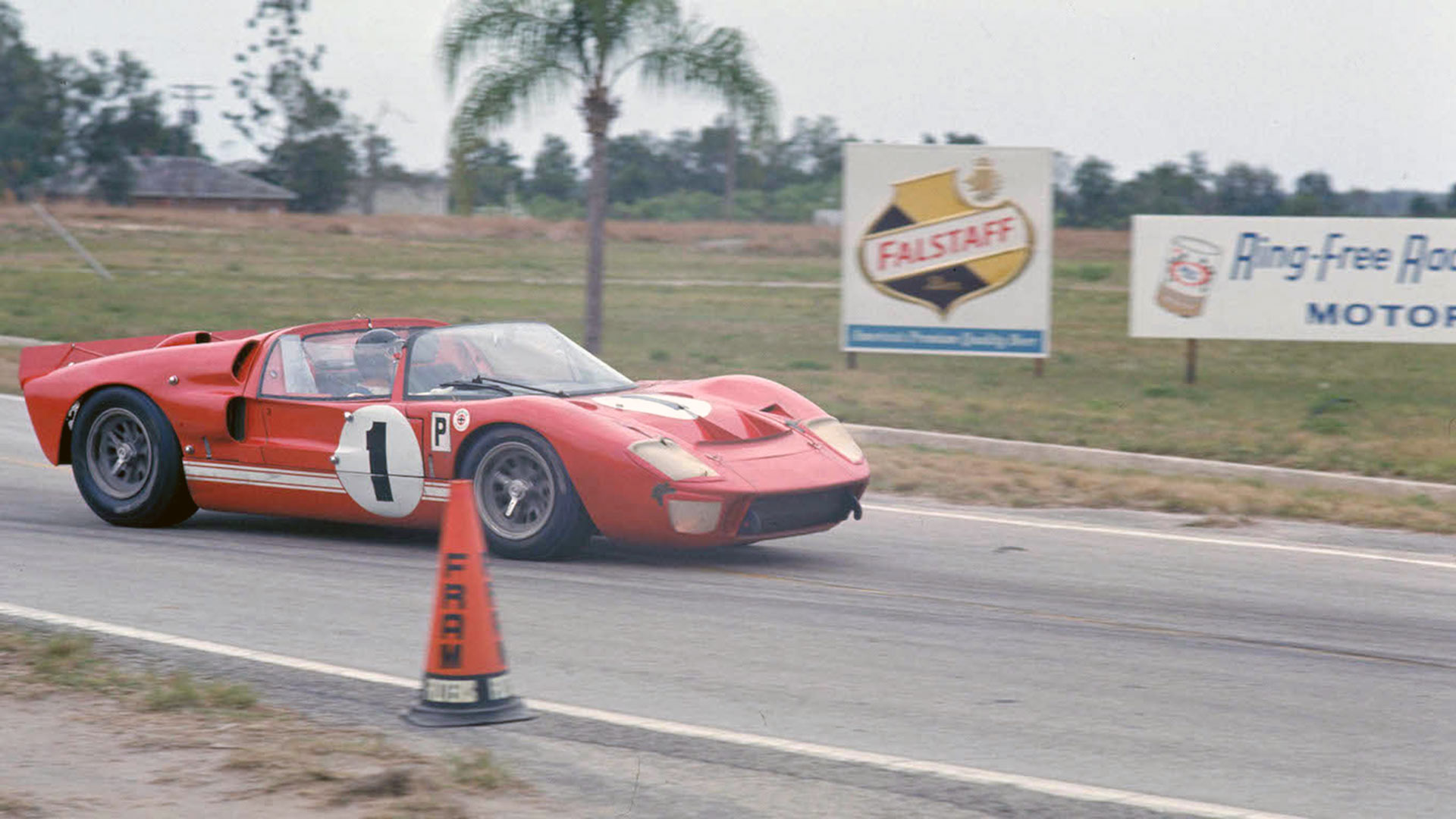
1966 Ford GT40 Mk II ‘X-1’ Roadster
© FordFord also experimented with a potential for an open-top version of the GT40 during the 1966 season. Initially created for Bruce McLaren Racing in 1965, it used a low-drag windscreen. After its return to Ford, the one-off roadster was updated to Mk II specification for Shelby American.
Its only race came at the 1966 12 Hours of Sebring where, after experimenting with automatic gearboxes during practice, a manual transmission was fitted for the race. When the engine of the lead GT40 Mk II seized, the ‘X-1’ Roadster of Miles and Ruby slipped through to victory.
-
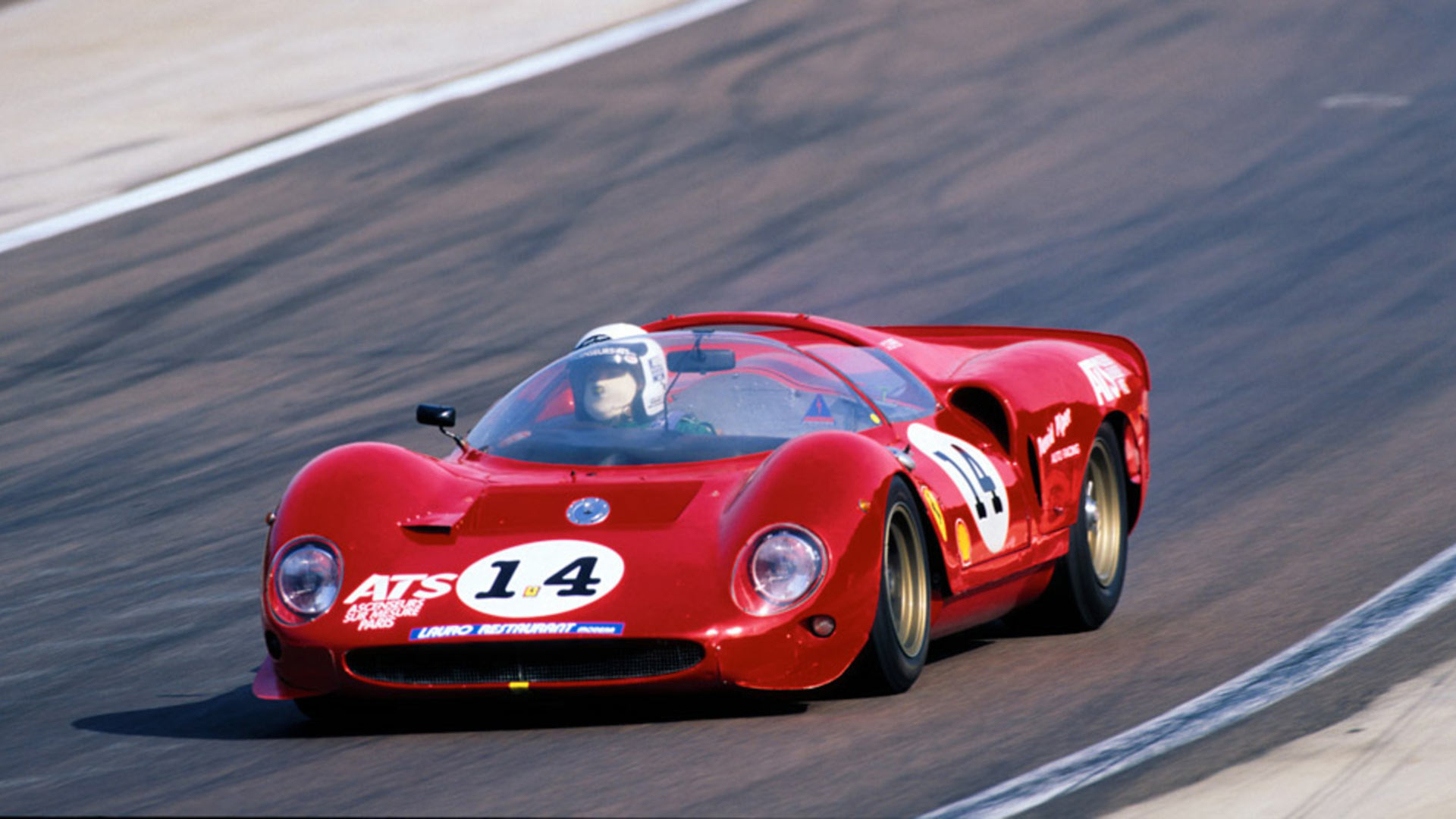
1966 Ferrari 330 P3
© FerrariWith all the attention now on winning the Le Mans 24 Hours, Ford would face tough competition at the 1966 race.
Ferrari had updated its line of prototype racers, creating the new 330 P3. Thanks to fuel injection, it now had more horsepower, and was built in both closed- and open-cockpit versions for the epic endurance event.
-
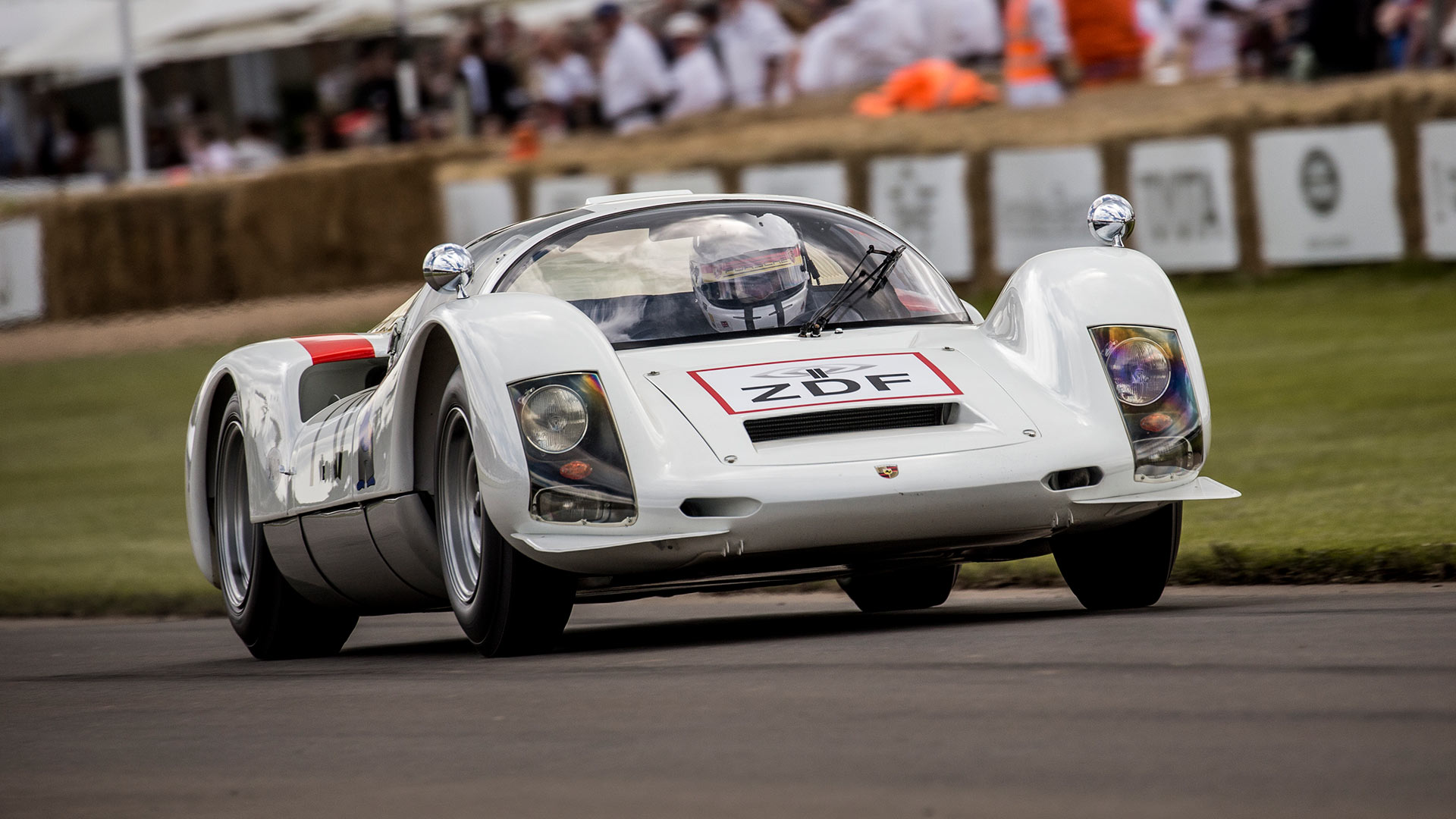
1966 Porsche 906-6 LH
© PorscheAlthough Ford and Ferrari were the main contenders in 1966, Porsche also entered a small army of 906 racers at Le Mans.
A total of six 906 cars contested the race, including three of the brand-new LH ‘lang heck’ prototype versions. Recent victory on the Targa Florio showed the potential of the Porsche.
-
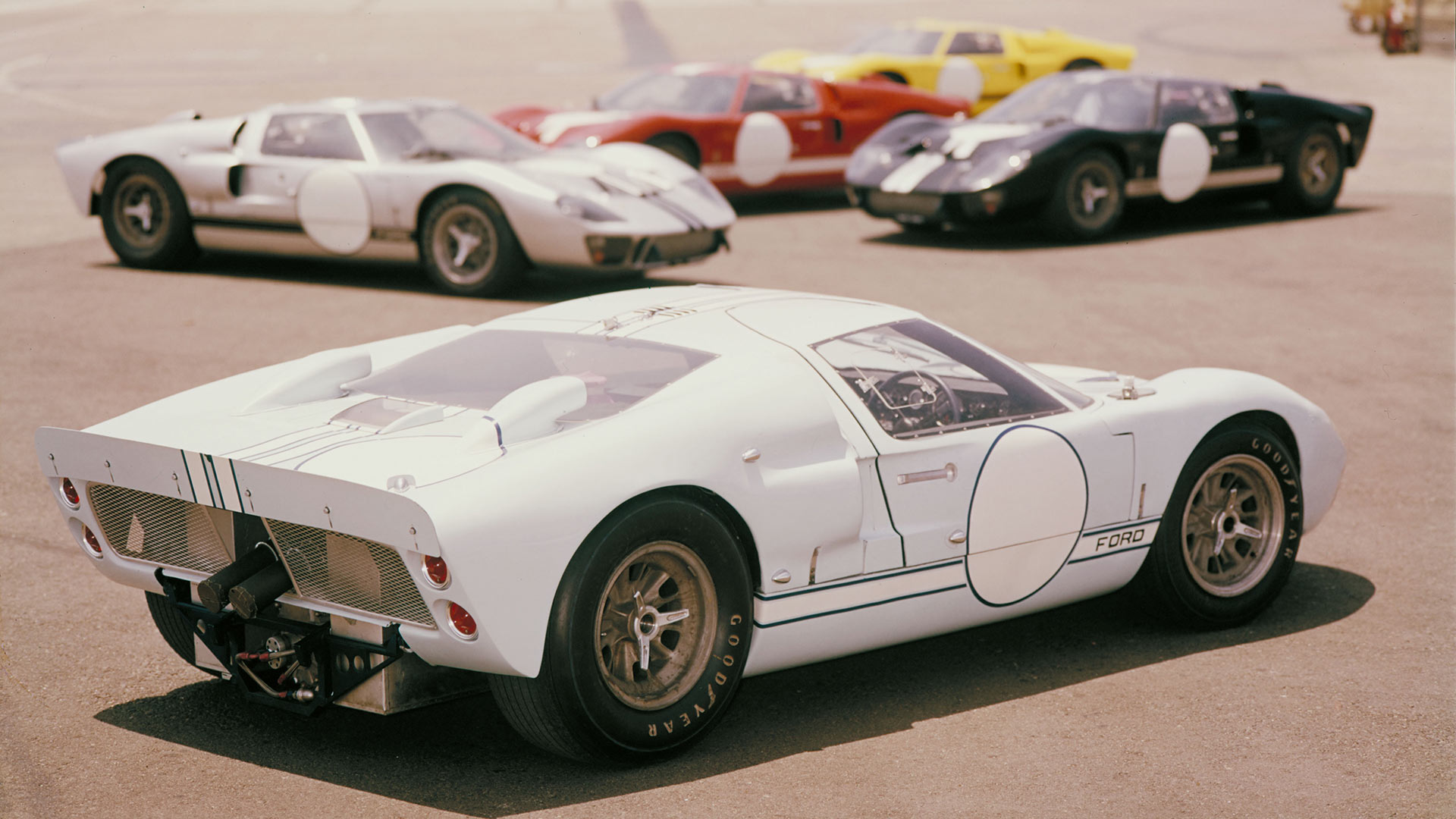
Strength in numbers
© FordKeen to beat Ferrari at its own game, Ford entered a total of 15 Mk II GT40s for Le Mans in 1966. Eight were accepted for the race, with Shelby American running three cars. Holman-Moody also fielded another trio, while Alan Mann Racing would be responsible for the final two Mk II machines.
Qualifying demonstrated the performance of the GT40 Mk II, with the top four places all taken by Fords. With all eight GT40s inside the top 12, the strategy of total domination looked to be working.
-

Drama on the road to tomorrow
© FordRatcheting up the pressure on the Ford teams was Henry Ford II, acting as official starter for Le Mans in 1966. After the first lap, his cars were in the lead, but the coming hours would see a tense battle between Ford and Ferrari.
Overnight rain dampened the performance advantage of the big V8 engine in the Fords. However, the Ferrari prototypes began to suffer from overheating, dropping them out of contention.
-

Controversial photo finish for the win
© FordBy half-way through the race, Ford MK IIs occupied the top four positions, with Mk I GT40s occupying fifth and sixth. Yet even then, victory was far from secure. The No.3 Mk II, driven by Dan Gurney, blew a head gasket from racing too hard with the No.1 car of Ken Miles and Denny Hulme.
By late morning, Mk II GT40s occupied the top three positions, and Ford Racing director Leo Bebbe attempted to engineer a dead-heat at the end of the race. Ken Miles was told to slow down to allow the No.2 car of Bruce McLaren and Chris Amon to catch up.
Miles was reported to be unhappy with the contrived photo finish, and lifted off just as the cars reached the finish line. This handed the McLaren/Amon car victory, with Fords filling the other podium places.
-
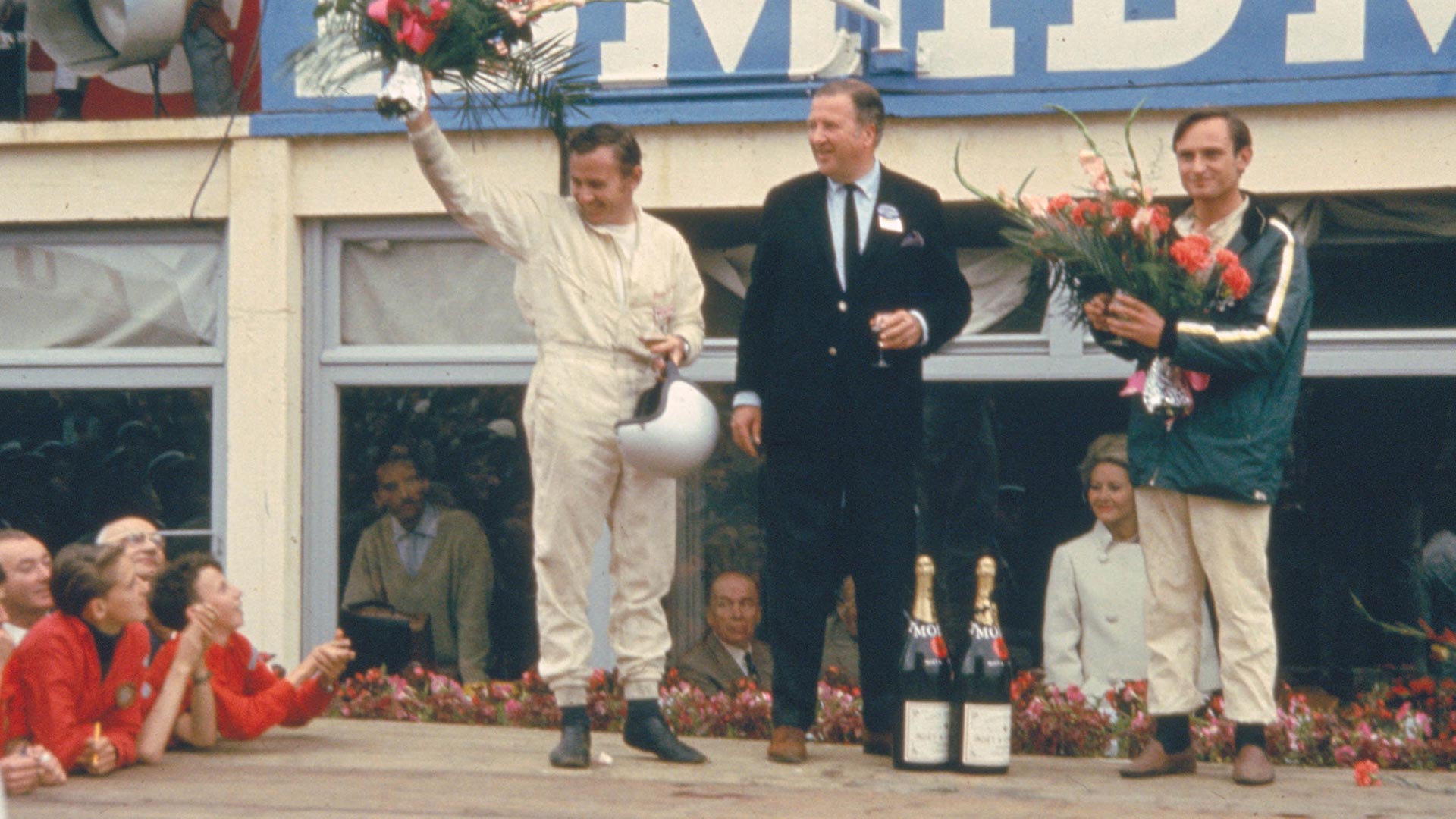
Mission accomplished for Ford at Le Mans
© FordIn just three years Henry Ford II had achieved his goal of beating Ferrari at Le Mans. The Italian company would never take an outright win at the French event again, with the Blue Oval ready to keep coming back.
Ford would go on to claim the P2 category of the 1966 World Sportscar Championship, further cementing its dominance.
-
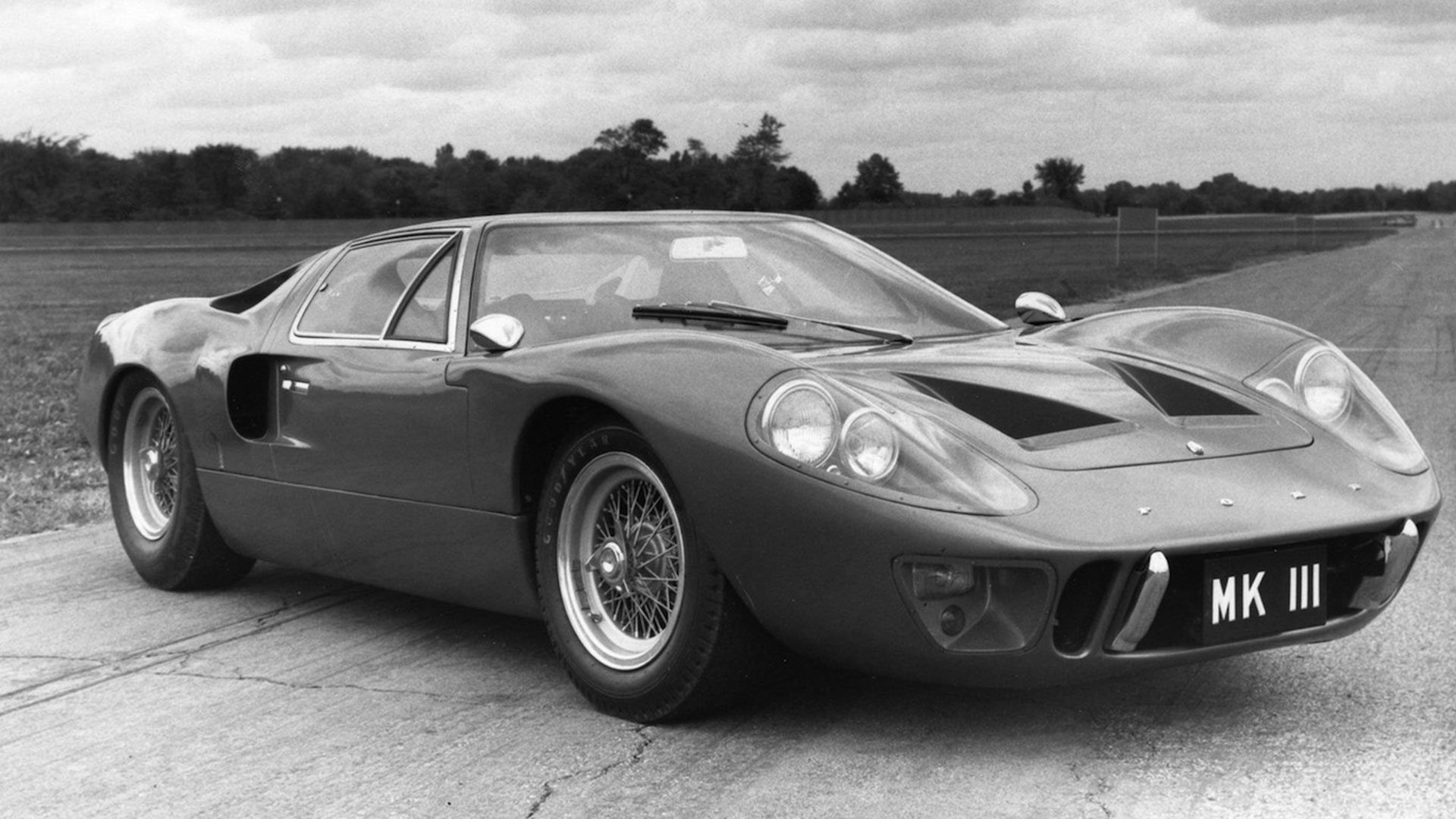
1967 Ford GT40 Mk III road car
© FordWith the GT40 race car cleaning up on track, a bespoke road-going version was now being readied for the street. Unlike previous road-legal GT40s, the Mk III had specific features to make it suited to the highway.
An elongated rear gave access to a luggage compartment, while the bumpers gained small chrome overriders. Unlike the race cars, there was no bigger engine, with power still coming from the 289 cubic inch (4.2-liter) V8. Only seven examples of the Mk III were built, with just three in right-hand drive.
-

Tragedy of the 1967 Ford GT40 J-car
© FordDespite the success of the Mk II GT40, Ford didn’t rest on its laurels and set about developing the car even further. With power now sufficient, experimental aerodynamic changes to maximise the muscle were made throughout 1966 and 1967, along with a lightened chassis.
Tragedy struck during a test session, when Ken Miles was killed in a high-speed accident at Riverside International Raceway, with blame laid at the lack of downforce from the aero modifications.
-

1967 Ford GT40 Mk IV
© FordThe experimental flat-topped roof of the J-car was dropped, but the resulting Mk IV still looked distinctive. Lengthened and streamlined to achieve a higher top speed, the Mk IV also featured the lightened chassis.
The death of Ken Miles was not in vain, with a high-strength roll cage also being fitted. Although the Mk IV only entered two races, it claimed a 100 percent success rate, with victories in the 1967 12 Hours of Sebring and 24 Hours of Le Mans.
-

1968 Ford GT40 Mk I Le Mans
© FordAfter the high speeds seen during the 1967 24 Hours of Le Mans, engine sizes were capped at 5.0 liters in 1968 by the FIA for cars in the Sports class. This ruled out the Mk II and Mk IV versions of the GT40, but meant the earlier, smaller-engined Mk I was still eligible.
Now with reliability on its side, the Mk I took overall victory in 1968, driven by Pedro Rodriguez and Lucien Bianchi. It would repeat the same feat in 1969 with Jackie Ickx and Jackie Oliver driving, taking the total number of outright Le Mans wins for the GT40 to four in a row.
-
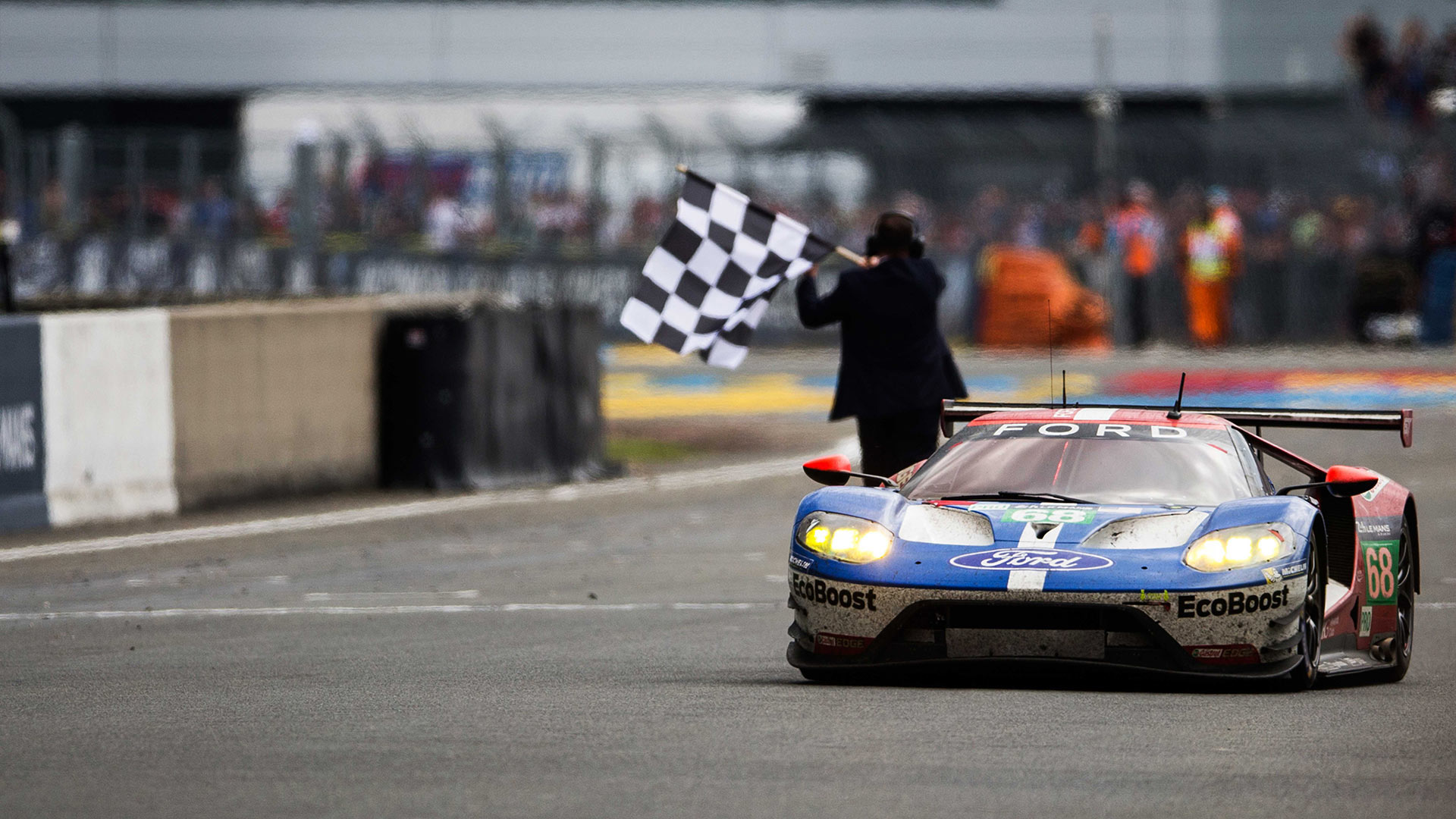
Ford GT wins 2016 Le Mans 24 Hours
© FordFast-forward several decades and Ford found once again on the top step of the podium at Le Mans.
Living up to the reputation of its GT40 predecessors, the new GT race car, run by Chip Ganassi Racing, took an impressive victory at Le Mans in 2016 in the LMGTE Pro class. Coming exactly 50 years after the first Le Mans win for the GT40, Ford was unsurprisingly ecstatic about the result.
-

2017 Ford GT ’66 Heritage Edition
© FordTo mark the Le Mans wins 50th anniversary, Ford also announced a special edition of a car that hadn’t even actually started production yet. Remembering that historic 1-2-3 victory at the Circuit du Sarthe in 1966, the Heritage Edition featured a colour scheme inspired by the No.2 GT40 driven by Chris Amon and Bruce McLaren.
A Shadow Black exterior – available in either gloss or matte finish – was combined with silver stripes and alloy wheels in gold satin. Inside is a leather-wrapped steering wheel, along with extra carbon fiber and a limited edition plaque.
-
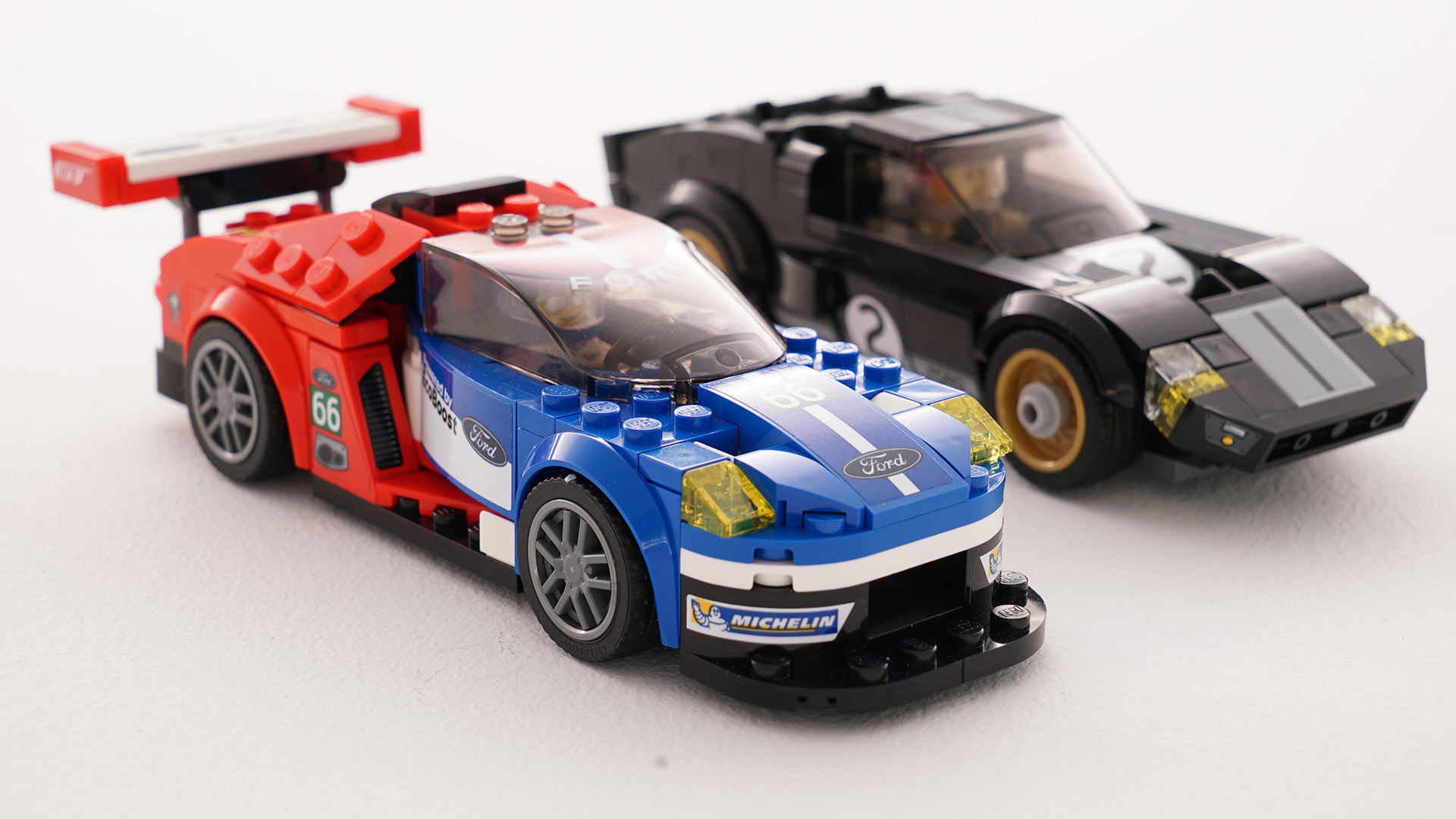
Ford captures the Le Mans-winning GT40 in Lego
© FordAlong with the modern interpretation of the successful 1966 GT40, Ford also created a miniature Lego version. This had the benefit of being considerably cheaper than the full-size GT supercar, and produced in much larger numbers.
Paired with a Lego version of the 2016 Le Mans-winning Ford GT, the classic 1966 GT40 also comes with a retro driver mini-figure. Fans can decide for themselves whether they want it to be Chris Amon or Bruce McLaren.
-

2019 Ford at Le Mans with historic liveries
© FordFord contested the Le Mans 24 Hour race again each year until 2019, which marked the final year of competition for the GT racer. However, the Chip Ganassi Team would be unable to replicate the success seen in 2016.
Not even racing with retro-inspired liveries for the 2019 edition of the 24 Hours race was enough to clinch LMGTE Pro victory. Ford would manage fourth in class, with Ferrari taking first place on the podium.
-

Sun sets on the Ford GT Le Mans project
© FordFord’s withdrawal from Le Mans at the end of 2019 left the door open for Ferrari to compete for victory in the LMGTE class without a challenge from its American foe.
Ferrari would claim class victory at the 2021 edition of the Le Mans endurance event, but more was yet to come from the Scuderia.
-

Ferrari claims outright victory at Le Mans
© FerrariFerrari had not won overall at Le Mans since 1965, when Jochen Rindt and Masten Gregory triumphed co-driving the 250 LM. But, for 2023, Ferrari returned to La Sarthe with an eye on taking top honours in the premier Hypercar category.
Claiming first and second places in qualifying with the 499P Hypercar was a strong start to the 2023 race for the Italian marque.
However, the real success came in the race itself, with the #51 499P Hypercar of James Calado, Antonio Giovinazzi and Alessandro Pier Guidi claiming overall victory for Ferrari.
-
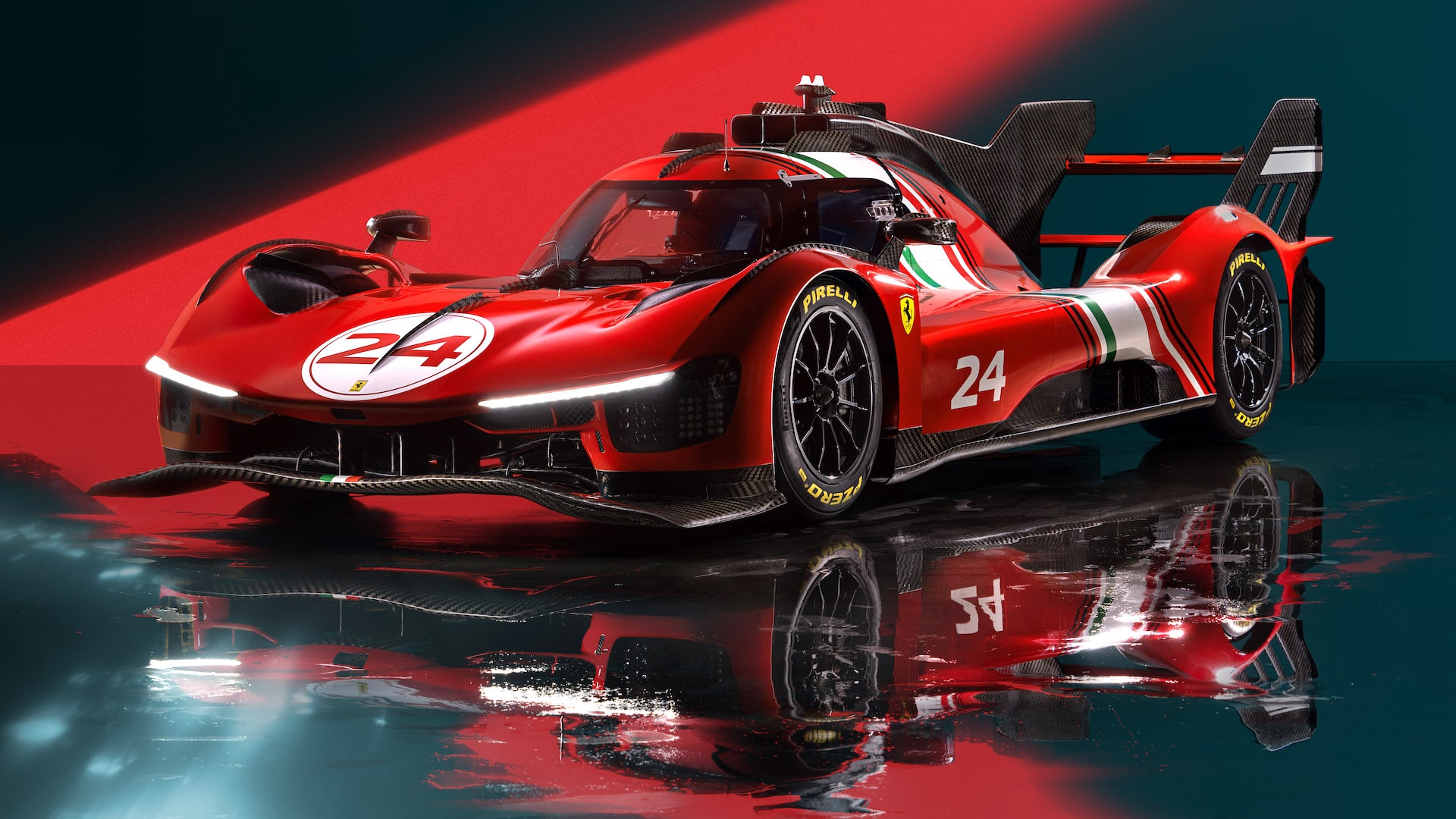
Celebrating Le Mans success with a special track car
© FerrariJust as Ford created numerous celebratory special editions of the GT hypercar, Ferrari wasted no time commemorating its victory at Le Mans.
At the end of 2023, Ferrari revealed the 499P Modificata, a thinly disguised version of the Hypercar that had triumphed at Le Mans earlier in the year.
Costing around £4.5million, and offered only to selected Ferrari customers, the 499P Modificata actually produces more power than the Le Mans-winning machine – a total of 870hp.
Unlike many of the Ford GT specials, however, this Ferrari is not road-legal and thus reserved only for track day use.
-
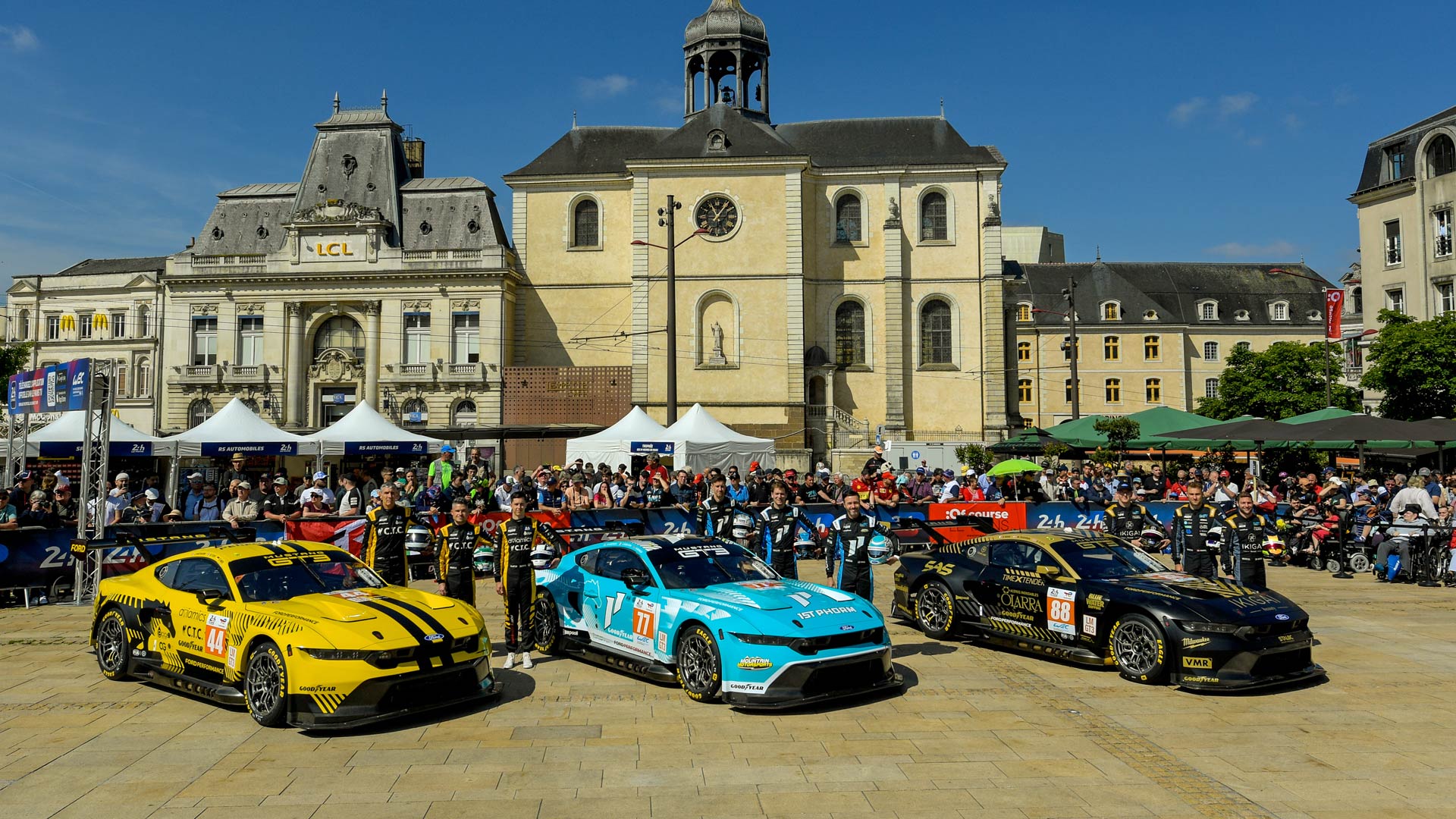
Ford returns to Le Mans in 2024 with the Mustang
© Ford PerformanceThe battle between Ford and Ferrari continued into 2024, as the Blue Oval returned to endurance racing. With its GT supercar out of production, the company’s entry into the GT3 category was the iconic Mustang.
Three Ford Mustang GT3 racers, fielded by the Proton Competition team, were on the grid for the 2024 Le Mans 24 Hours. Ford had also created an entirely new GTD version of the Mustang to allow it to race at Le Mans, with big expectations for its performance.
It meant Ford was not fighting Ferrari in the top Hypercar category, but the war in the GT3 class is just as intense.
-
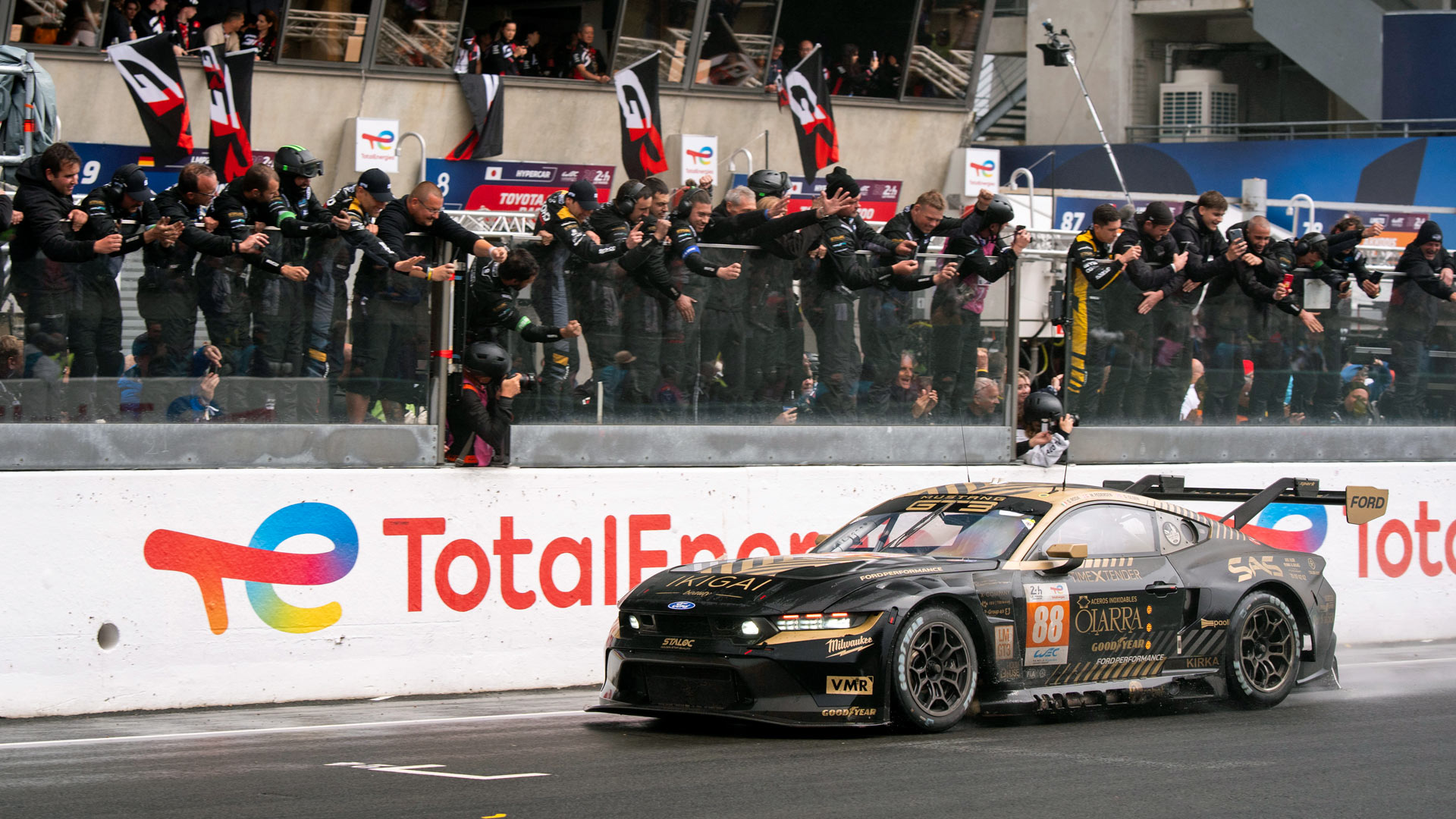
Mustang GT3 takes podium position at first Le Mans outing
© Ford PerformanceSixty years after Ford’s very first win at Le Mans, the new Mustang GT3 claimed third position in its class at the 2024 Le Mans 24 Hours.
Making it to the finish was a major achievement for a brand new car, so seeing the #88 team on the podium was an added bonus.
In fact, all three of the Ford Mustang GT3 cars entered were officially classified as finishing, giving the Blue Oval an even greater reason to celebrate.
-

Ferrari takes another outright victory at Le Mans in 2024
© FerrariAs pleased as Ford might have been with the performance of the Mustang GT3, it would not have gone unnoticed that its famed Italian rival brought home another outright Le Mans win.
The number 50 car of Antonio Fuoco, Miguel Molina, and Nicklas Nielsen came home in first position, finishing 14 seconds ahead of the Toyota Gazoo Racing team.
It means Ferrari has taken two wins out of two at Le Mans with the 499P.
-

Ford ready to compete for Le Mans victory in 2027
© FordFerrari’s recent success at Le Mans has seemingly stirred up emotions in Detroit, with Ford announcing its return to top-tier endurance racing from 2027.
Entering the World Endurance Championship with a new Le Mans hypercar will potentially pitch the Blue Oval into direct competition with Ferrari again.
Bill Ford, executive chair of the Ford Motor Company, said: “When we race, we race to win. And there is no track or race that means more to our history than Le Mans. It is where we took on Ferrari and won in the 1960s.
“It is where we returned 50 years later and shocked the world and beat Ferrari again. I am thrilled that we’re going back to Le Mans and competing at the highest level of endurance racing. We are ready to once again challenge the world, and ‘go like hell!’”
-

40 Ford Mustangs take to the Le Mans track
© FordAhead of the main event at the 2025 24 Hours of Le Mans, the Mustang Challenge competition staged the Le Mans invitational. This saw some 40 Mustang Dark Horse R race cars compete for the first time outside of the United States, giving fans a real V-8 show.
In the 24-hour endurance race, Ford could not match its 2024 performance. A Proton Competition Mustang GT3 crashed earlier in the race, with the surviving car finishing three laps behind the LMGT3-winning Porsche.
-
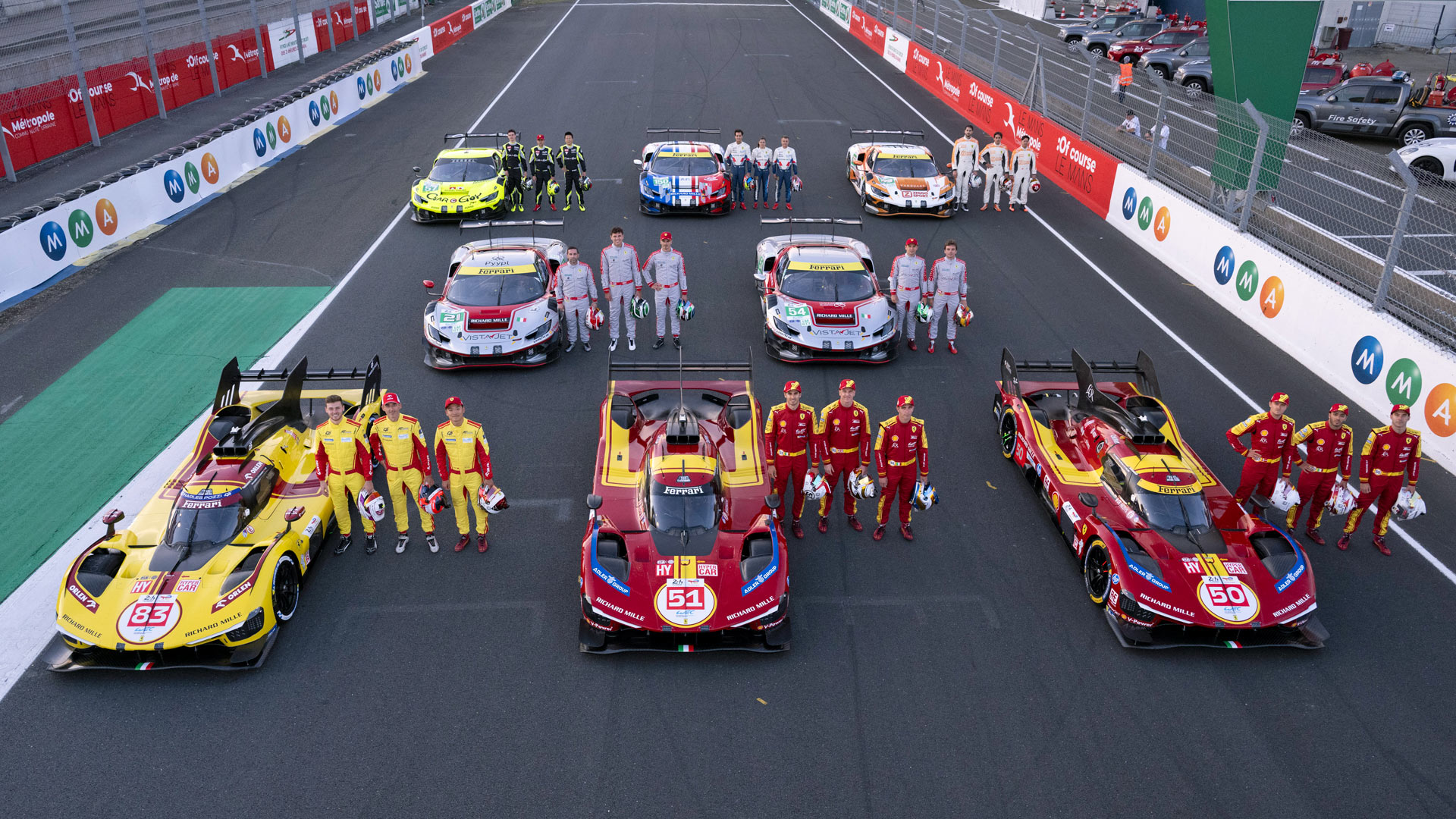
Ferrari brings a triple-threat for 2025 Hypercar class
© FerrariWith Ferrari entering three cars in the 2025 World Endurance Championship, the Italian marque was rewarded with a triple entry for the Hypercar class at the 2025 24 Hours of Le Mans.
The official red-painted Ferrari AF Corse number 50 and 51 cars were joined by the satellite team AF Corse number 83 car, finished in yellow.
During qualifying, Ferrari looked to be off the pace in the Hypercar category with the 499P, starting the race behind the strongest Cadillac and Porsche entrants.
-

Ferrari claims a milestone win with the 499P
© FerrariDespite not being the quickest in qualifying, Ferrari managed another outright Le Mans win, as the AF Corse car claimed a hard-fought victory. Yifei Ye, Robert Kubica and Phil Hanson brought the satellite Ferrari across the line in first place.
In third place was the number 51 Ferrari AF Corse entry, with the other Ferrari initially classified in fourth, but later disqualified due to a technical infraction.
Winning the historic race three times in a row means that Ferrari will now be entitled to keep the extravagant Le Mans winners’ trophy forever. Such an honor is only granted to teams who secure victory in three consecutive races.
The last time Ferrari won three Le Mans in a row was during the 1960s, when it took six victories in succession. Of course, the team that stopped it from winning even more back then was Ford…
