Earth Day 2025: cleaner cars for a greener future
-

Earth Day 2025 and cars
© VolkswagenEarth Day is a worldwide series of events, held on the 22nd of April every year since 1970, which are designed to focus attention on environmental issues. For 2025, the theme of Earth Day is ‘our power, our planet’ – with a goal to raise awareness of renewable energy and ‘triple the global generation of clean electricity by 2030’. One thing is certain: with ever more electric cars on our roads – and a complete ban on the sale of new petrol and diesel vehicles, including hybrids, in the UK from 2035 – all that renewable energy won’t go to waste.
Join us for a look at some of the most planet-friendly cars, both past and present.
-

Dacia Spring
© DaciaOne of the most efficient EVs currently on sale is the Dacia Spring. The compact crossover uses a 26.8kWh battery to provide a range of up to 140 miles and a top speed of 78mph. At the time of writing, UK prices start from £14,995 – or £169 a month. Saving the planet and saving money – what’s not to like?
-

Leapmotor T03
© LeapmotorHowever, the Dacia has an arch-rival from Leapmotor: a Chinese brand that is new to the UK. The T03 – which looks to our eyes like an elongated Smart ForTwo – costs £1,000 more than the Spring, but comes with lots of additional equipment. Its 37.3kWh battery pack means an official range of 165 miles between charging stops. Fill up using renewable electricity and there can be few cleaner ways to get around.
-

Jaguar I-Pace
© JaguarElectric cars don’t have to be small and basic, of course, as the Jaguar I-Pace ably proved. It was voted World Car of the Year in 2019, adding to an awards haul that included UK Car of the Year, European Car of the Year and more. And while we didn’t know it then, the I-Pace was also Jaguar’s first step to becoming an entirely EV brand. The new Type 00 – previewed by a controversial concept car – will arrive later this year.
-

Polestar
© PolestarPremium car company Polestar, which is growing extra-fast in the UK, is committed to cutting its emissions while doing so. It has reduced its greenhouse gas emissions per car sold by a healthy 25% in the past five years. Polestar produces an annual sustinability report detailing these improvements. CEO Michael Lohscheller said that, “in simple terms, we aim to continue to cut emissions as we accelerate sales. Even though much of the world seems to be going in the wrong direction, we are doubling down on our commitments.
“When the world zigs, Polestar zags.”
-

Audi E-tron SUV
© AudiThe electric Audi E-tron has leather seats as standard, which is sure to upset PETA. Yet the knowledge of where this electric SUV was built should please environmentalists. Audi’s carbon-neutral factory in Belgium boasted the largest photovoltaic system in Brussels and generated more than 3,000 megawatt-hours of clean electricity each year.
-

Kia EV3
© KiaThe Kia EV3 epitomises the modern, no-compromise electric family car. Buyers get a choice of 58kWh or 81kWh battery sizes, offering up to 270 or 375 miles of range respectively. The EV3 is practical, comfortable and easy to drive, with all the on-board technology you’d expect. Oh, and don’t forget Kia’s standard seven-year/100,000-mile warranty. Prices start from £32,995.
-

BMW i3
© BMWPETA has created a list of cars with leather-free interiors, either as standard or as an option, and it’s worth a read if you’re a budding vegan. Be warned, though, because while some cars might not feature leather seats, the gear knob and steering wheel could be finished in cowhide. Thanks to the availability of ‘Deka’ cloth seats, the electric BMW i3 made PETA’s ‘good’ list, but the leather-free M Performance steering wheel contains wool. BMW scored points for its use of recycled materials in the interior, though.
-

Fisker eMotion
© FiskerThe Fisker car company has been through turbulent times, but the ambition of founder Henrik Fisker has always shone through. Take the eMotion concept, revealed at CES in 2018, which promised a range of more than 400 miles, a 160mph top speed and a vegan-friendly interior. “When I started Fisker in 2007, my goal was to create the first truly environmentally friendly exciting car company,” said Henrik Fisker. “We did many first innovations, such as the first full length curved solar roof, the first vegan interior option, the first reclaimed interior wood and many more.”
-

Honda Insight
© HondaThe original Honda Insight was the first petrol-electric hybrid to be sold in the UK, beating the Toyota Prius to market by a few weeks. Power was sourced from a three-cylinder 1.0-litre VTEC engine combined with an Integrated Motor Assist (IMA), returning as much as 83.1mpg on a combined test cycle. Its Tomorrow’s World looks were too much for many buyers, though, while the absence of rear seats didn’t help sales.
-

Toyota Prius
© ToyotaToyota is credited with popularising the idea of a hybrid vehicle, with ‘Prius’ becoming a brand generic for the green car. It soon became the darling of greenwashed Hollywood celebrities, while real-world owners appreciated the 57.6mpg and 114g/km CO2 emissions. By the time the Prius arrived in the UK in October 2000, more than 40,000 had already been sold globally.
-

Tesla
© TeslaTesla is the poster car for zero-emissions driving, although the views of its CEO, Elon Musk, have undoubtedly damaged the brand’s reputation among eco-conscious and liberal-minded consumers. Nonetheless, the Tesla Model Y – a regular feature on the UK’s top 10 best-sellers list – has done much to bring electric motoring to the masses.
-

Polestar Precept
© PolestarOK, it’s only a concept for now, but the Polestar Precept demonstrates just how far electric cars have come. Inside, this Swedish saloon features flax-based composites that cut plastic waste by 80 percent. Its seats use a 3D-knitted fabric made from recycled PET bottles, while its carpets are made from reclaimed fishing nets. It also looks drop-dead stunning.
-

NanoFlowcell
© NanoFlowcellNanoFlowcell completed 350,000km (217,000 miles) of testing in the Quantino 48Volt flowcell car, saying the powertrain ran with ‘absolutely no problems’ throughout the test. Although not designed to be a production vehicle, the Quantino 48Volt demonstrates what could be achieved using flowcell technology, which comprises two tanks of external electrolytes pumped over stationary electrodes. The actual range is dependent on the size of the tanks, rather than the device under the bonnet.
-

Solar Team Eindhoven
© Solar Team Eindhoven“We believe in a future in which life is powered by the sun,” says the team at Solar Team Eindhoven. Since 2012, students at the Eindhoven University of Technology have been working on a series of solar cars, including Stella: the world’s first solar-powered four-seater. Crucially, they have shown that it is possible to charge the battery while driving, creating ‘little power plants on wheels’.
-

Bio-Bug
© Bio-BugIn 2010, Geneco decided to explore the potential of powering a vehicle using excrement. The company teamed up with Wessex Water to create the Bio-Bug: ‘the UK’s first VW Beetle powered by human waste’. After a successful – and no doubt smelly – trial, the team moved on to create the Bio-Bus: the first bus in the UK to be powered by gas derived from food, sewage and commercial liquid waste. The bus travelled 300km (186 miles) on a full tank of gas – an amount of fuel produced by the annual food and sewage waste of just five passengers.
-

BMW Hydrogen 7
© BMWThe likes of Toyota, Honda and Hyundai are experimenting with hydrogen technology, but BMW got there first. The Hydrogen 7 was based on the 760Li and just 100 cars were built, each one leased to the great and the good in exchange for publicity. Interestingly, rather than getting its energy from fuel cells, the BMW burned hydrogen to power its 6.0-litre V12 engine.
-

Honda FCX Clarity
© HondaThe Honda FCX Clarity was the world’s first production hydrogen fuel cell vehicle, but just 200 were built – and only made available for lease in the US. The later version pictured here offered 385 miles of range and took just three minutes to fill up. We just need the hydrogen network to catch up.
-

Duke Electric Vehicles Maxwell
© Duke Electric VehiclesThe hydrogen-powered Maxwell was created by a team at Duke University for use in the Shell Eco-marathon. In 2018, it set a Guinness World Record for the most fuel-efficient prototype vehicle when it achieved 14,573mpg in Benson, North Carolina.
-

Volvo Amazon
© VolvoProtecting our environment also means taking care of human lives. In 1959, Volvo became the first car manufacturer to equip its vehicles with three-point seat belts as standard. Today, its goal is that nobody will be killed or seriously injured in a new Volvo car. The company also makes its safety knowledge and expertise available to all.
-

BYD F3DM
© BYDIn 2009, BYD (Build Your Dreams) launched the world’s first plug-in hybrid. The F3DM was available in the Chinese company’s home market and had an all-electric range of 37 miles, plus a total petrol-electric range of 300 miles. It wasn’t a big seller, but the Chinese government incentivised sales with subsidies.
-

Volkswagen XL1
© VWThe Volkswagen XL1 was launched as a so-called Super Efficient Vehicle (SEV) in 2011. It featured an 800cc two-cylinder diesel engine mated to an electric motor to produce a modest 75hp. However, because the car weighed just 795kg, it was reasonably quick and very economical. Up to 313mpg was available on a combined cycle, along with an all-electric range of 50km (31 miles).
-

General Motors EV1
© GMIf you’ve watched the documentary Who Killed the Electric Car? you’ll know that the GM EV1 was a pioneering electric vehicle and one giant missed opportunity. This was the world’s first mass-produced and purpose-built EV, with GM leasing it to customers in California and Arizona. Sadly, for reasons that will become clear if you watch the documentary, GM pulled the plug on the project and destroyed most of the cars.
-
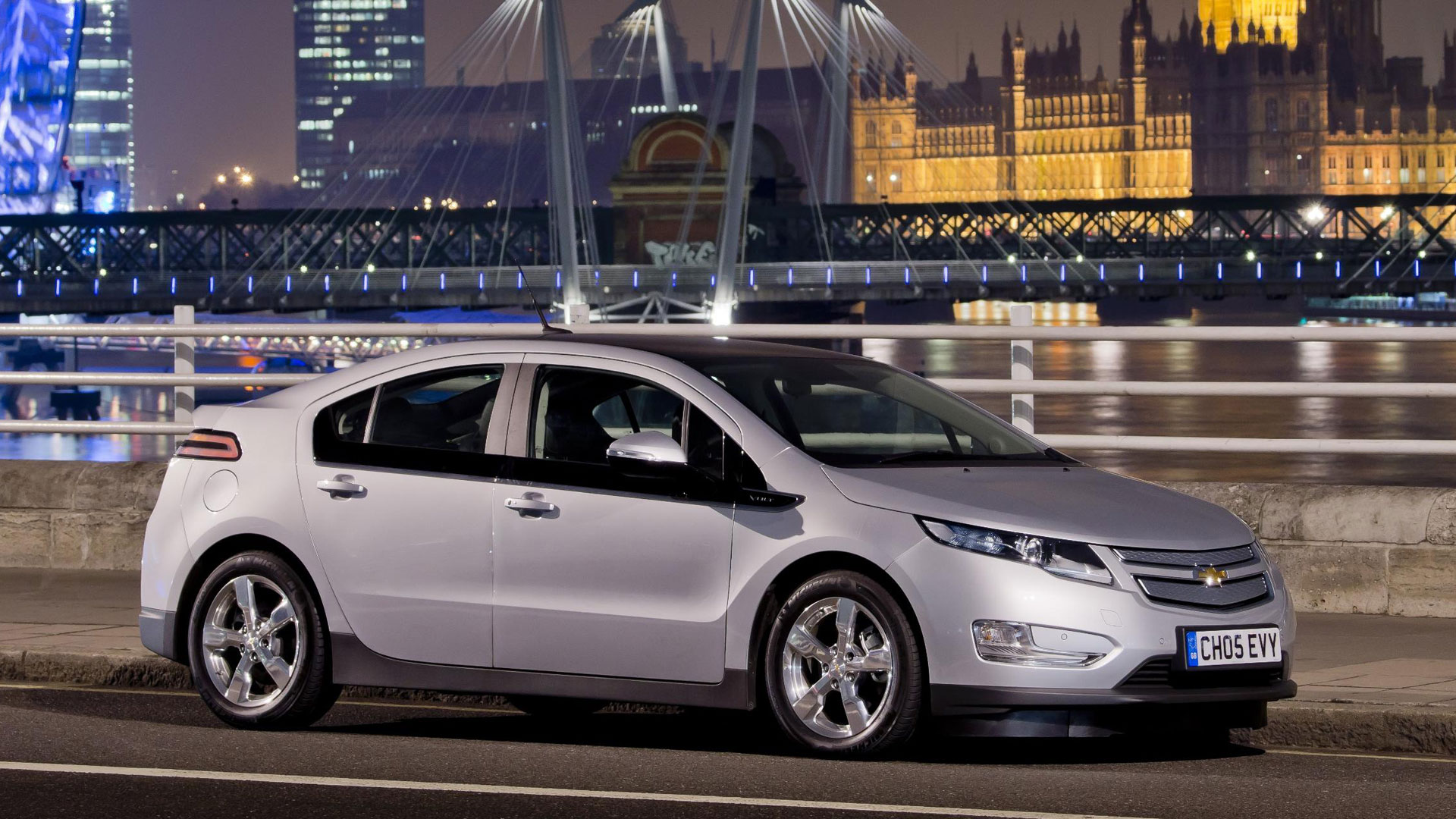
Chevrolet Volt and Vauxhall Ampera
© ChevroletThis was another product of General Motors that was both ahead of its time and pulled from sale too soon. The Chevrolet Volt – also sold as the Vauxhall/Opel Ampera – was neither a traditional hybrid nor a fully electric vehicle. Instead, it used a 1.4-litre petrol engine to keep the batteries topped up, with drive handled by the electric motor.
-

Ford Puma Gen-E
© FordWe finish with the new Ford Puma Gen-E. As the electric version of Britain’s best-selling car, it could soon be topping the EV sales charts as well. With a 0-62mph time of 8.0 seconds and quicker steering, Ford says the Gen-E ‘delivers the essence of Puma ST in electric form’. It can charge at up to 100kW and offers an official range of 233 miles. Coming soon to a suburban street near you.
