The complete 40-year history of the BMW M3
-

Celebrating the four decades of BMW’s M icons
© BMWThe BMW M3 has become a genuine automotive icon, spanning six generations across four decades. This year is even more significant, however, as it represents the 40th anniversary of the road-going M3 entering production.
Over the years, the M3 has evolved from a single-minded homologation special into a refined and luxurious sports sedan. Coupes, convertibles and even the Touring station wagon have been part of the story, too.
In addition to hitting a major milestone, this year has also seen BMW release more information on its first fully electric M car: a battery-powered version of the legendary M3.
Join us for a step-by-step journey through the history of BMW’s giant-killer, as the German marque honors one of its greatest vehicles – and looks to the future, too.
For the sake of completeness, we have also included the related BMW M4, even if the name-change still upsets some purists.
-

BMW E30 DTM Race Car
© BMWWithout racing, there would be no BMW M3. FIA Group A regulations required that 5,000 road-going examples be sold to homologate a car for competition use. BMW Motorsport picked the E30 3 Series as a basis, and set to work transforming it into a world-beating Touring Car racer.
-
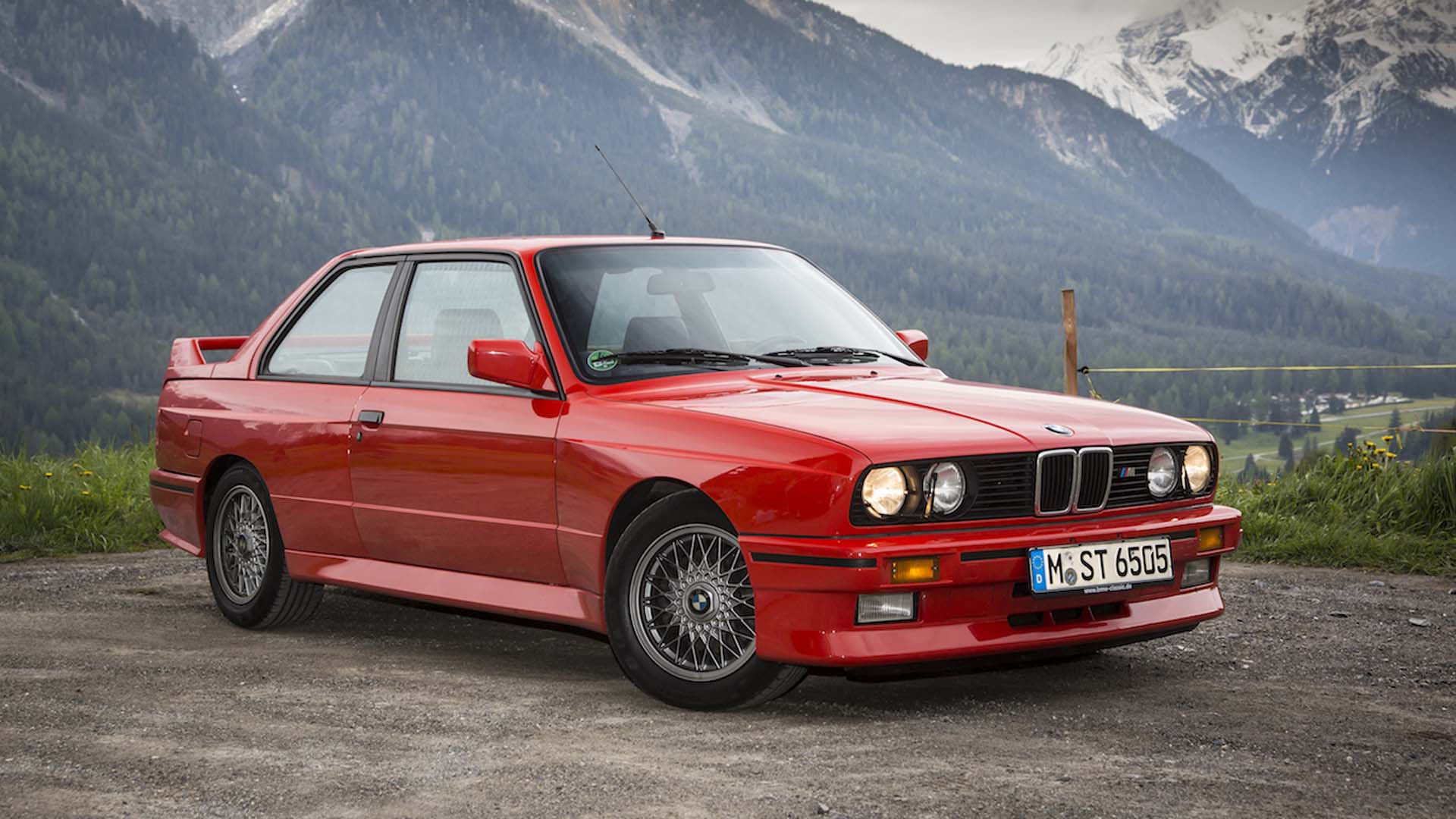
1986 BMW E30 M3
© BMWFirst shown at the 1985 Geneva Motor Show, changes to the M3 over the regular 3 Series were extensive. External additions included the substantial rear spoiler, flared fenders and a deep front splitter. The aerodynamic add-ons were made from plastic to reduce weight, and were combined with comprehensively updated suspension and brakes to prepare the M3 for the track.
-

1986 BMW E30 M3
© BMWBMW even went so far as to adjust the angle of the C-pillar and rear window. This allowed better airflow towards the rear spoiler, and also resulted in a raised trunk lid. All body panels on the E30 M3 except the hood were unique versus the standard 3 Series. Alloy wheels were just 15-inches in diameter for the first M3.
-
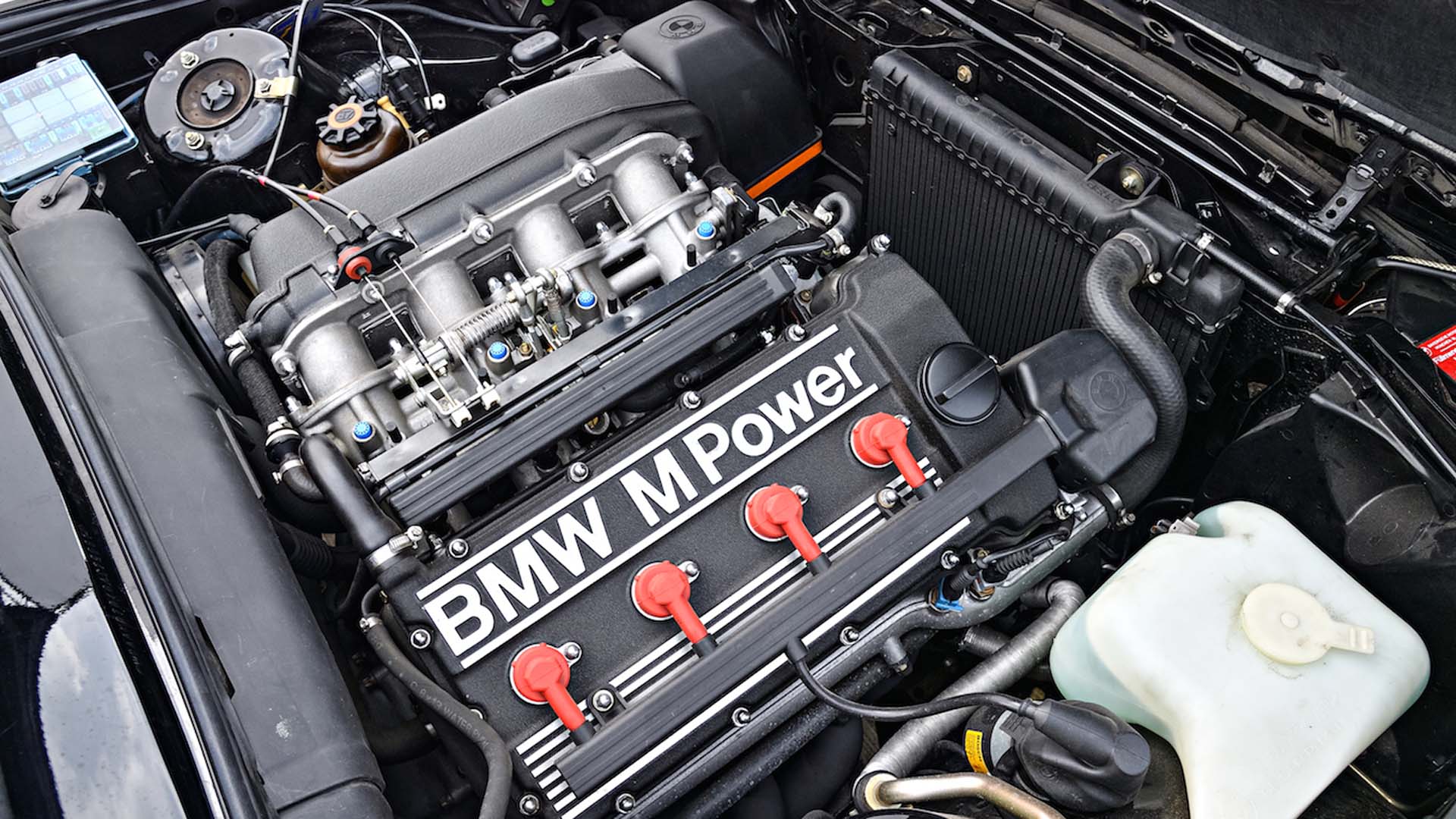
1986 BMW E30 M3
© BMWThe real magic took place under the hood, with a special four-cylinder engine. Increased in displacement to 2.3-liters and using a cylinder head design from the M1 supercar, the M3 could rev to 6,750 rpm.
The first European road cars left the factory with 200 hp, and were capable of 0-62 mph in less than seven seconds, plus a top speed of 146 mph. A manual five-speed ‘dog-leg’ gearbox was standard, as was a limited-slip differential for the rear-wheel-drive machine.
-

1988 BMW E30 M3 Convertible
© BMWWith the 3 Series Convertible proving popular during the late 1980s, an open-top version of the M3 seemed a natural step for BMW. Mechanically identical to the coupe version, the main alterations were additional stiffening to compensate for the chopped top. Suspension settings were also slightly softer, allowing for the increased weight, while the convertible did without the rear spoiler and raised trunk lid.
-

1988 BMW E30 M3 Convertible
© BMWOnly 786 E30 M3 Convertibles were built between 1988 and 1991 and, like the coupes, they were left-hand-drive only.
Due to the lower production numbers, the convertible was built by hand at BMW M’s Garching factory, and could be fitted with bespoke options such as a removable hard-top or even a built-in fax machine and telephone.
-

1989 BMW E30 M3 Sport Evolution
© BMWTo keep the M3 competitive, BMW took advantage of the Evolution rules in Group A racing. The Evolution I appeared in 1987, sporting a revised cylinder head. In 1988, the Evolution II followed with 200 hp, bigger wheels and revised spoilers.
But the Sport Evolution of 1990 was the most modified, with thinner glass, lighter bodywork and unique adjustable front and rear spoilers. The engine was increased to 2.5-liters, with power upped to 238 hp. Recaro seats and a suede-covered steering wheel were standard.
-

1989 BMW E30 M3 Sport Evolution
© BMWSport Evolution race cars featured a mind-bending 385 hp – and the process of constant development worked, with success in 17 Touring Car championships between 1987 and 1991. This included the British Touring Car Championship, the German DTM series and the Nürburgring 24 hours.
A victory in the 1990 Irish Tarmac Rally Championship proved the E30 was capable away from the race circuit, too.
-

1989 BMW E30 M3 Sport Evolution
© BMWAs one of the most iconic cars of the 1980s, the E30 M3 attracts plenty of attention from collectors and investors.
Over 16,000 were built between 1986 and 1992, with numerous special editions and celebratory models along the way. However, the 600 Sport Evolution cars are the most desired.
-

1986 BMW E30 M3 Pickup
© BMWBuilt by BMW’s M division as a one-off, this special pickup was produced using the bodyshell of a regular 3 Series convertible.
First using a 2.0-liter engine with 192 hp, then later replaced with a real 2.3-liter M3 unit, the pick-up helped transport goods around the Garching factory for over 26 years.
-

1992 BMW E36 M3 Coupe
© BMWIntroduced in 1990, the E36 3 Series was bigger, heavier and more luxurious than the E30 it replaced. And the M3 version, launched in 1992, faced a difficult task to replace a car that already had a cult following.
More power came in the form of a six-cylinder 3.0-liter engine, producing 286 hp for European customers but only 240 hp for North American buyers. The 0-62 mph times dropped below six seconds, with a top speed of 155 mph.
-

1992 BMW E36 M3 Coupe
© BMWVisually more conservative than the car it replaced, and not built purely for motorsport homologation, the E36 M3’s rear spoiler was relegated to the options list and it lacked flared fenders. There was, at least, a jutting chin spoiler and deep rear diffuser to differentiate it from the normal 3 Series.
Swooping side skirts and aerodynamic wing mirrors would become M3 mainstays, and would be replicated on modified cars throughout the 1990s. The M3 would also now be made available in right-hand drive, too.
-
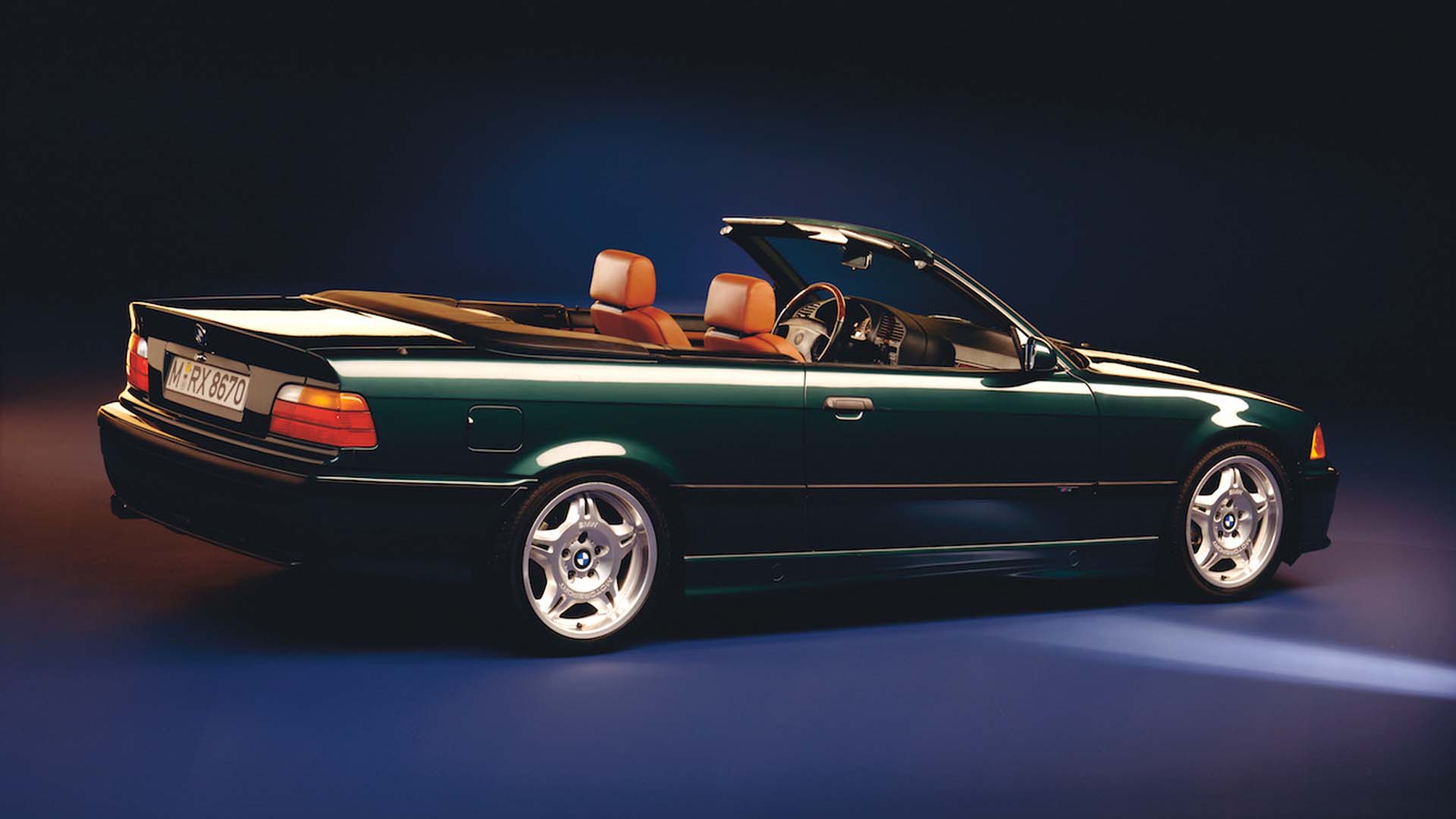
1994 BMW E36 M3 Convertible
© BMWFollowing on two years later was a convertible version of the E36 M3, which added 220 lb to the already-substantial 3,220 lb curb weight of the coupe.
Pitched as more of a boulevard cruiser than a sports car, the convertible didn’t have a rear spoiler but did gain polished versions of the 17-inch ‘M Double Spoke’ alloy wheels. Almost 6,000 E36 M3 convertibles were sold, making them far more common than the E30 version.
-

1994 BMW E36 M3 Sedan
© BMWIn 1994, with the M5 sedan shortly going out of production, BMW turned to the M3 to offer a four-door performance car. Intended to be slightly more refined and conservative than the coupe, the sedan featured softer suspension for greater comfort.
-

1994 BMW E36 M3 Sedan
© BMWThe interior of the E36 M3 Sedan also featured more luxurious features, with burr walnut wood trim covering the center console and door handles. The leather sports seats were less shapely than those fitted to the two-door coupe version.
Also unique to the four-door were ‘M Contour II’ 17-inch alloy wheels, supplied in a staggered fitment with wider rear tyres.
-

1995 BMW E36 M3 GT
© BMWAlthough the E36 M3 didn’t start life as a homologation special, this didn’t stop BMW building a special version to comply with FIA rules. All 350 limited-edition models were produced in British Racing Green, and gained bespoke adjustable front and rear spoilers.
The engine was tuned to produce 295 hp, while the interior featured green leather and carbon fiber trim.
-

1996 BMW E36 M3 3.2-liter Engine
© BMWKeen to keep the M3 competitive, and with knowledge gained from its V12 engine in the McLaren F1, BMW released an enhanced 3.2-liter six for 1996. Branded as the M3 Evolution in the UK, the extra displacement resulted in power of 321 hp at 7,400rpm, along with 236 lb-ft of torque.
A six-speed manual gearbox became standard for European cars, with the first-generation SMG (sequential manual gearbox) introduced in 1997 as an option. Performance improved, with 0-62 mph taking just 5.2 seconds.
-

1996 BMW E36 M3 Compact Concept
© BMWPre-empting the M135i hot hatch by some 16 years, in 1996 BMW M experimented with the M3’s 3.2-liter engine in the shortened bodyshell of the Compact hatch. Weighing some 330 lb less than the M3 coupe, but with the same 321 hp, performance was said to be uncompromising and exhilarating.
The car was considered for production, with a view to targeting younger buyers, but in the end only one was built – to celebrate the 50th anniversary of the German Auto Motor und Sport magazine.
-

2000 BMW E46 M3 Coupe
© BMWIf the E36 had struggled to live up to the E30, the E46 had the opportunity to establish itself as a truly legendary M car. BMW didn’t hold back on development, with a new S54 3.2-liter straight-six engine producing 343 hp at 7,900rpm plus 266 lb-ft of torque.
Bodywork was more bespoke, with widened fenders making a return, plus special side grilles, aggressive front and rear bumpers, and a hood with a distinctive ‘power dome’.
-

2000 BMW E46 M3 Convertible
© BMWWith no sedan offered, E46 M3 buyers were limited to coupe or convertible. Both came with a six-speed manual gearbox, with the second-generation SMG auto on the options list.
A special M Differential Lock helped channel power to the rear wheels, while heavily modified suspension and brakes completed the mechanical overhaul. Alloy wheels were 18 inches as standard, with polished 19-inchers a popular option.
-

2000 BMW E46 M3 Convertible
© BMWFour exhaust tips marked the M3 out as something potent, with performance suitably improved over the E36. The 0-62 mph sprint took just 5.1 seconds for the coupe, the heavier convertible needing 5.5 seconds.
North American buyers made do with 5 hp less, a result of different catalytic converters, with a negligible effect on acceleration. Top speed was limited to 155 mph.
-

2000 BMW E46 M3 Convertible
© BMWReflecting the march of 3 Series further upmarket, the E46 M3 gained a plusher interior. Nappa leather trim was standard, and available in a range of colors including Kiwi yellow and Cinnamon brown.
Also fitted from the factory were an M-badged three-spoke steering wheel with special stitching, illuminated gear knob, and instrument dials with LEDs on the tachometer to help prevent drivers thrashing the engine when cold.
-
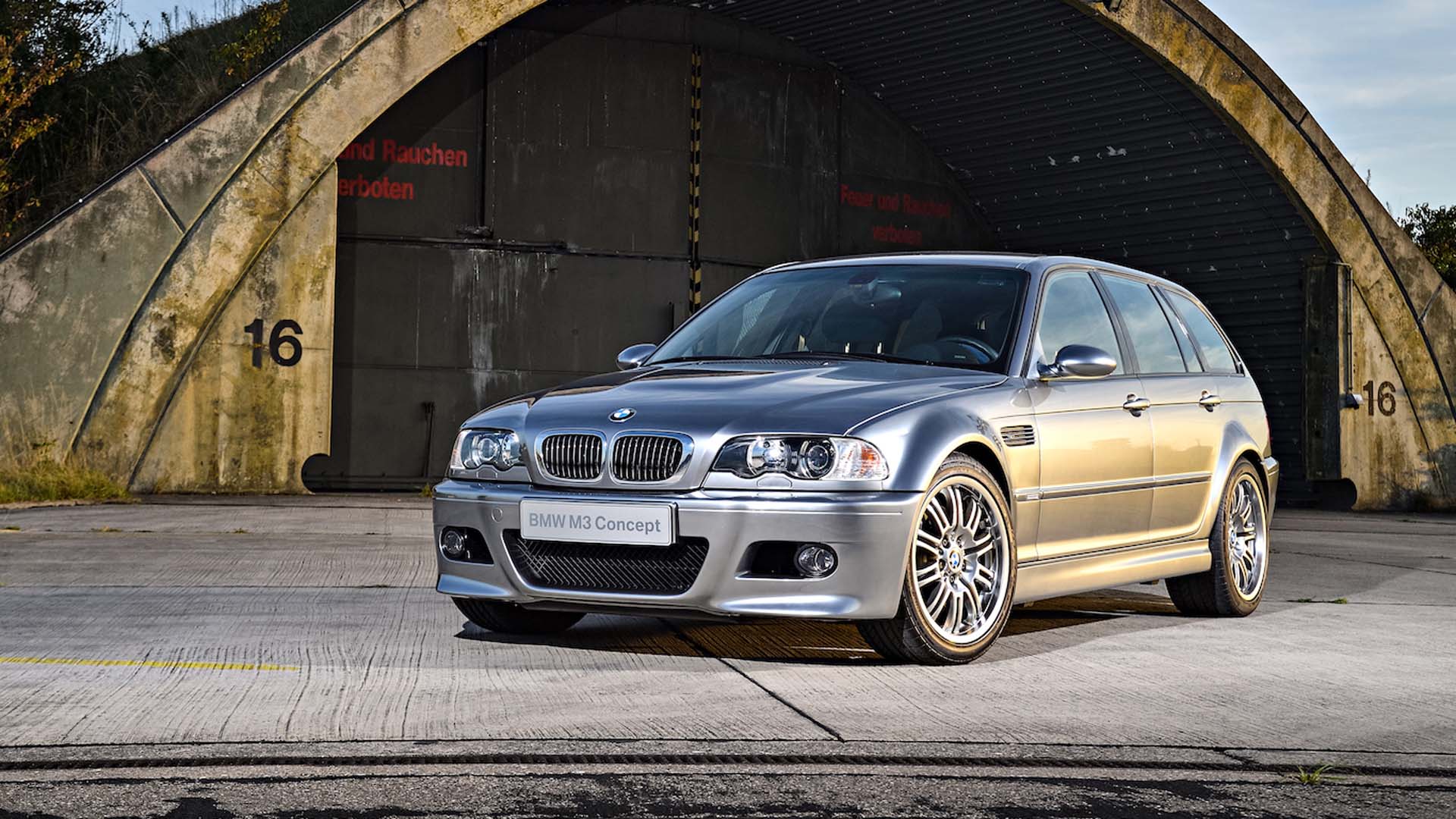
2000 BMW E46 M3 Touring Concept
© BMWFaced with performance estate competitors such as the Audi RS4, BMW M commissioned a concept M3 Touring in 2000. Hidden from public knowledge until very recently, the M3 Touring proved that the special widened rear fenders could be combined with the estate bodyshell.
Despite the engineering feasibility shown by the prototype, BMW decided against production, denying the world the chance to transport bulky things with a screaming straight-six.
-

2001 BMW E46 M3 GTR
© BMWIn 2001, BMW entered a rule-bending E46 M3 in the American Le Mans Series. Aware that the 3.2-liter engine lacked firepower, a bespoke racing 4.0-liter V8 engine was developed with 500 hp, taking advantage of the loosely-worded ALMS regulations.
After dominating the 2001 season, BMW had to offer 10 road-going versions with a V8 engine. Priced at €250,000, detuned to 380 hp, and without the flame-spitting side exhausts, the road car is the rarest and most expensive production M3.
-

2003 BMW E46 M3 CSL
© BMWSharing a name with the 3.0 CSL homologation special from the 1970s, the M3 Coupe Sport Leichtbau (Coupe Sport Lightweight) of 2003 is regarded as the ultimate E46.
Limited to less than 1,400 units, the CSL majored in weight saving. However, the enhancements went beyond shedding bulk, and created an especially focused machine, offered only with Silver Grey or Black Sapphire paintwork.
-

2003 BMW E46 M3 CSL
© BMWSome 10 percent lighter, the CSL featured a number of bespoke carbon fiber parts. The roof panel, front and rear bumpers, interior panels and center console all featured the lightweight material.
The specially reshaped trunk lid was made from molded plastic, with thinner glass for the rear window. Lightweight 19-inch alloy wheels fitted with special Michelin Pilot Sport Cup tyres saved more grams and were mounted over bigger brakes.
-

2003 BMW E46 M3 CSL
© BMWMore carbon featured beneath the hood, with a sizable new intake plenum forcing air into the revised engine. Producing 360 hp, and fitted to an uprated SMG paddle-shift gearbox, the CSL was capable of 0-62 mph in 4.9 seconds when using its launch control feature.
A steering wheel-mounted button could activate an M Track Mode for the stability control, allowing for sideways circuit action. Top speed was limited to 155 mph, but the limiter could be removed as a special option.
-

2003 BMW E46 M3 CSL
© BMWInside the CSL, the removal of air conditioning and the stereo system saved some 46 lb. Carbon fiber was used for the backs of the Recaro bucket seats, while the rear bench could seat just two instead of three passengers.
Alcantara trim was used extensively, and reduced sound deadening helped occupants hear the carbon airbox and lightened exhaust system.
-
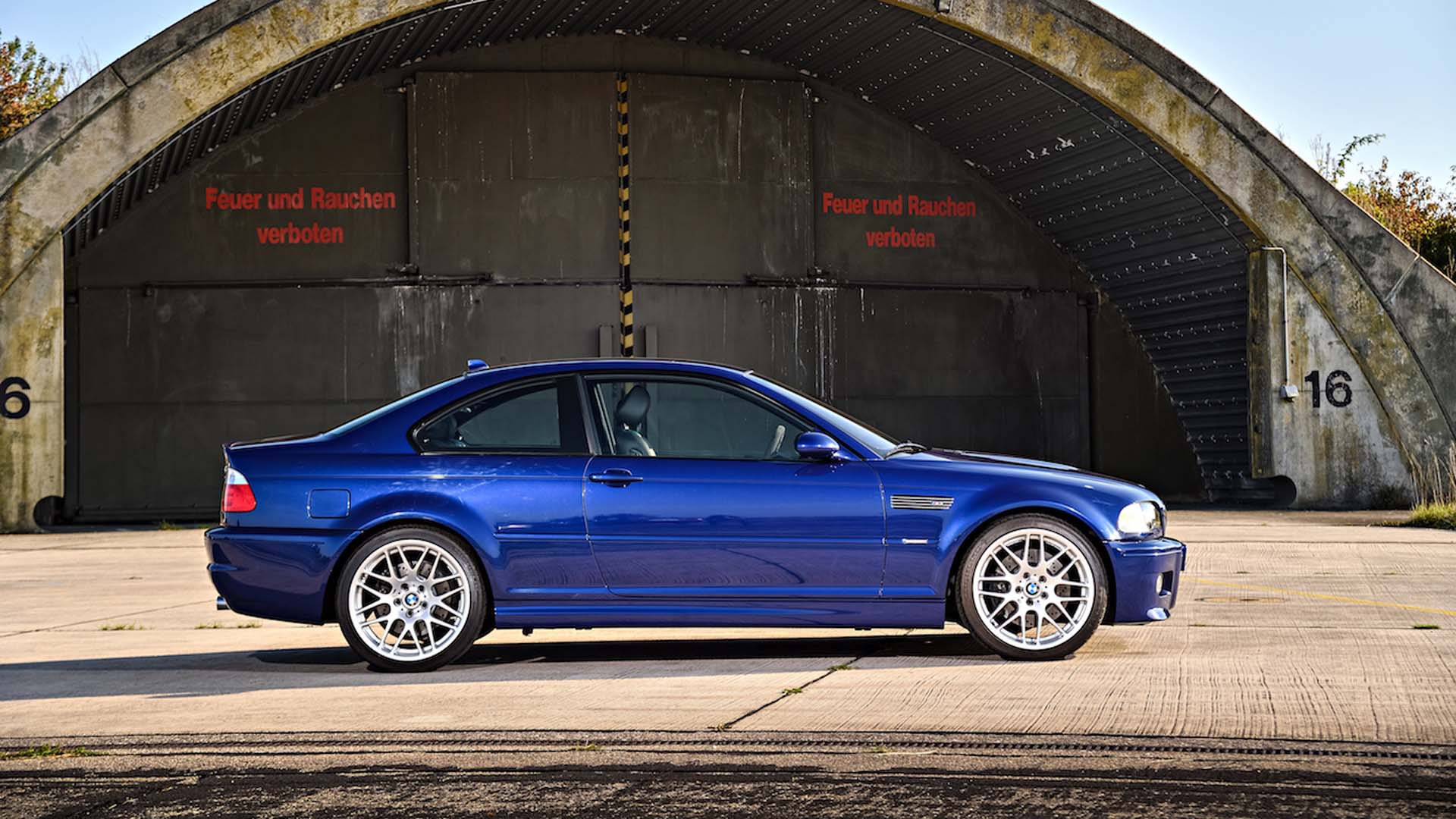
2005 BMW E46 M3 CS
© BMWFollowing the success of the CSL, BMW offered a Competition Sport package that used bolt-on parts to enhance the regular E46 M3. Larger cross-drilled brakes, quicker steering settings, an Alcantara steering wheel with M Track Mode and distinctive 19-inch alloy wheels were all part of the deal. Interlagos Blue paint, as used on the E60 M5, was also an exclusive option.
-

2007 BMW E92 M3 Coupe
© BMWSeven years after the E46 had restored the legacy of the M3, BMW launched a brand new model based on the fifth-generation 3 Series. Continuing the theme of the previous E46, the M3 had a comprehensive cosmetic makeover, sharing minimal body panels with the normal 3 Series coupe.
Most noticeable was a front bumper with three large openings, along with a hood that retained the ‘power dome’ to accommodate the new engine.
-
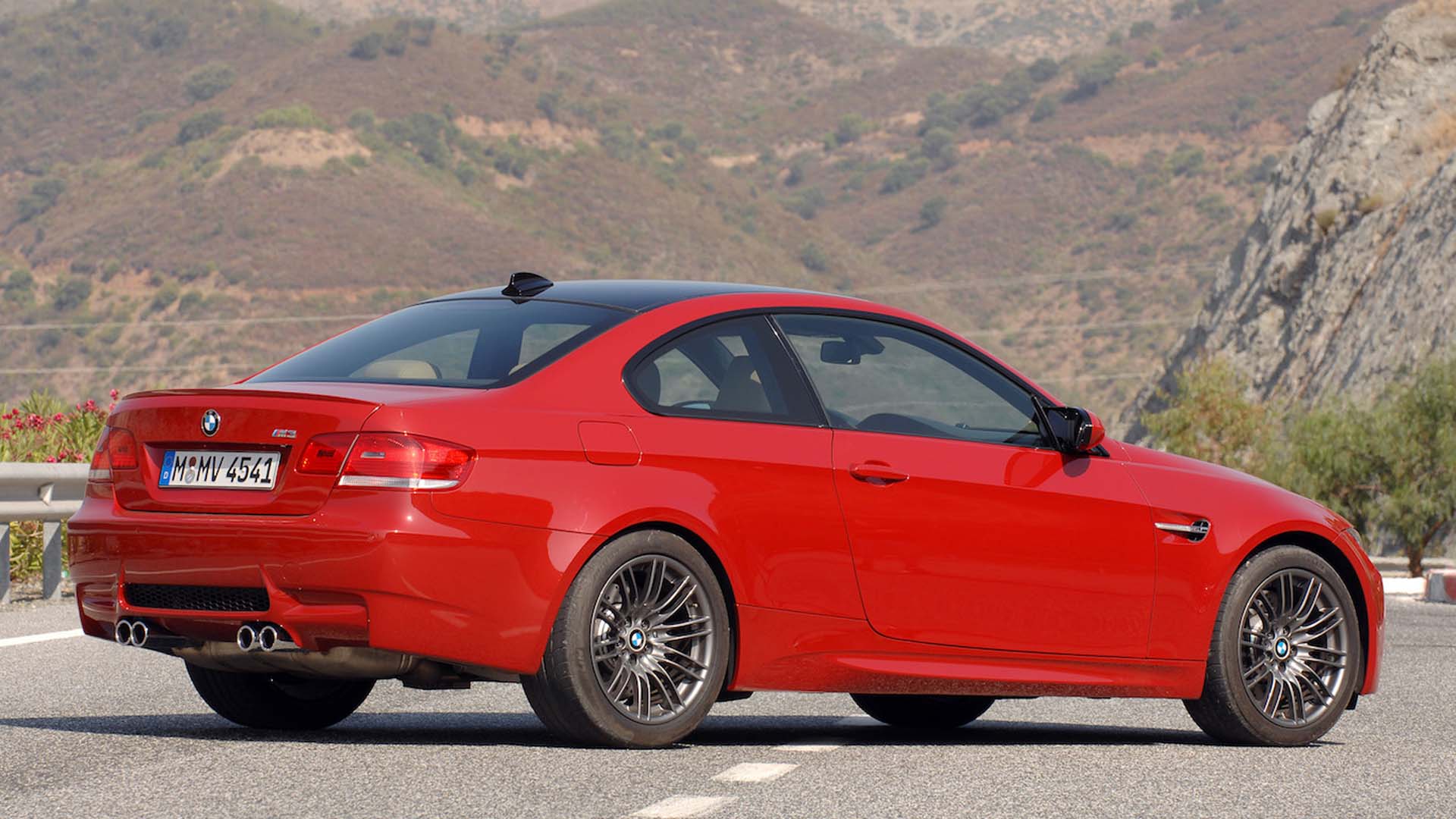
2007 BMW E92 M3 Coupe
© BMWChrome side gills featuring LED indicators were also an M3 trademark, as was the exhaust system with quad tailpipes. A carbon fiber roof panel, first seen on the E46 CSL, saved weight and lowered the car’s center of gravity.
Again, 18-inch alloy wheels came fitted from the factory, with 19-inch versions on the options list. Uprated suspension and bigger brakes completed the chassis upgrades.
-
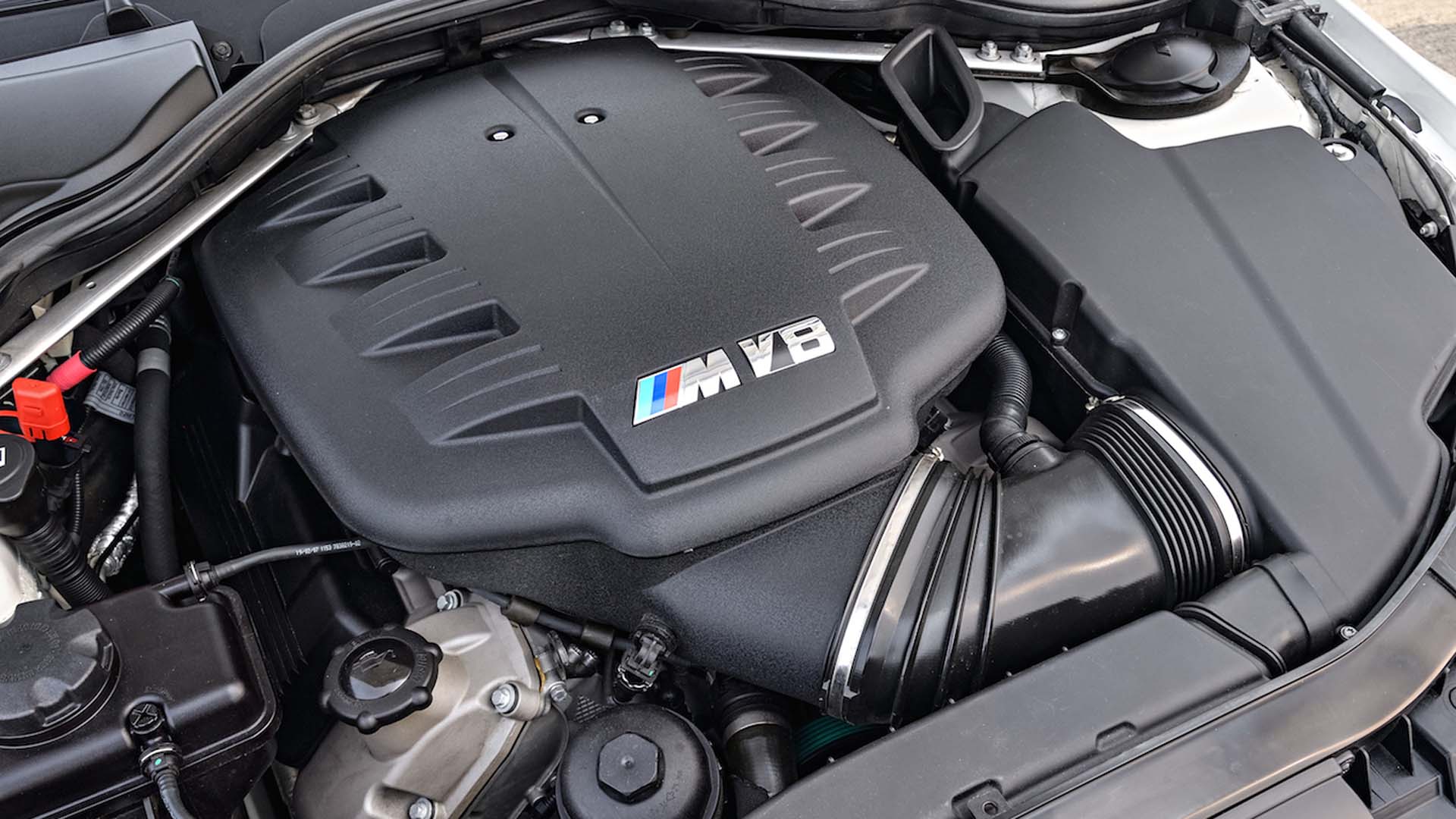
2007 BMW E90 M3
© BMWThe biggest change for the new M3 was the engine. Out went the six-cylinder motor, and in came a purpose-built 4.0-liter V8 that was unrelated to any existing BMW eight-cylinder engine. Capable of revving to 8,400 rpm, peak power was 420 hp with torque of just 295 lb-ft. A six-speed manual gearbox was standard, with a new seven-speed dual-clutch system also available.
The latter helped the M3 hit 62 mph in 4.6 seconds, with the manual car needing 0.2 seconds longer. Top speed remained a limited 155 mph.
-
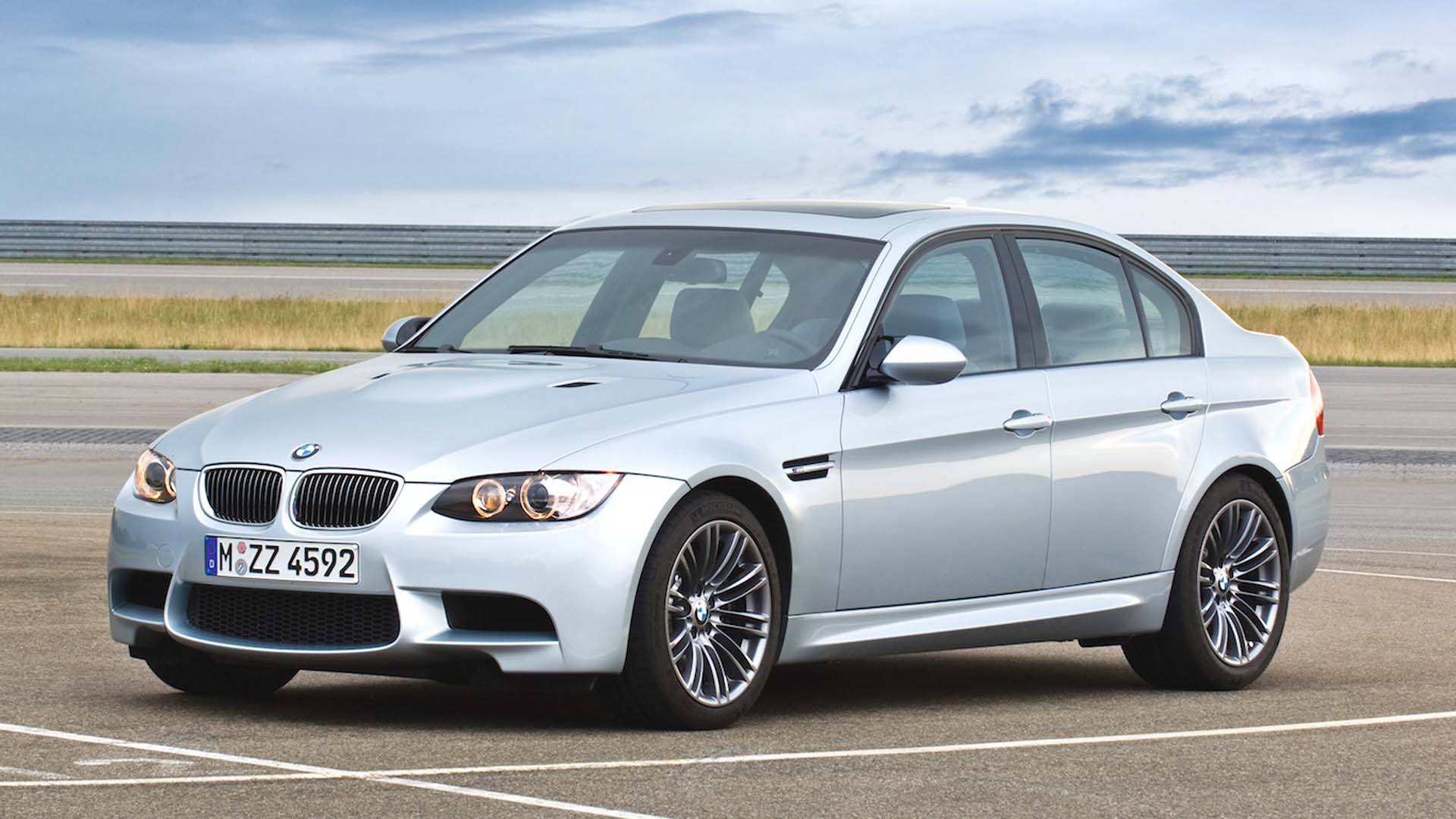
2007 BMW E90 M3 Sedan
© BMWAfter being dropped for the E46 M3, the four-door sedan reappeared thanks to strong demand from American and Canadian markets. That Audi produced an RS4 sedan may have also spurred BMW into creating a direct competitor. Marginally shorter, wider and taller than the coupe, the M3 sedan had subtly altered bodywork and was denied the carbon fiber roof panel.
-

2008 BMW E93 M3 Convertible
© BMWThe final member of the M3 family was added in 2008, with the convertible making its debut at the Geneva Motor Show.
Like the regular 3 Series version, the M3 convertible was fitted with an electrically-operated folding hard-top. This may have boosted security, but it also resulted in an extra 440 lb of weight, reducing the 0-62 mph time by 0.5 seconds.
-

2010 BMW E92 M3 GTS
© BMWWith the GTS, BMW M set out to create the ultimate M3. Being capable of driving to the racetrack, competing in clubsport events and then driving home meant the GTS was hardcore to the extreme. A jutting front splitter and adjustable high-level rear spoiler marked out the circuit-based intentions of the car. A 154 lb weight saving also helped its track ability.
-

2010 BMW E92 M3 GTS
© BMWModifications to the GTS were so in-depth that the 138 cars were partially built on a regular 3 Series production line, before being transported to the Garching factory for completion by hand.
All but two were painted in Fibre Orange with 19-inch matte-black alloy wheels and an orange roll cage, along with Recaro bucket seats and six-point racing harnesses. As with the CSL, the radio and air conditioning were moved to the options list to save weight, and carbon fiber trim was used on the dashboard.
-

2010 BMW E92 M3 GTS Engine
© BMWDisplacement from the V8 engine was increased to 4.4 liters, while a new titanium exhaust system and other detail changes resulted in a power output of 450 hp and torque of 325 lb-ft. The seven-speed M-DCT paddle-shift gearbox was the only transmission available, and was recalibrated for quicker shifts.
The 0-62 mph time dropped to 4.4 seconds, and top speed was almost 190 mph.
-

2011 BMW E90 M3 CRT
© BMWEven rarer than the GTS, the CRT was an ultra-limited-edition M3 sedan, developed to show off the progress BMW had made with carbon fiber and preview how it would be used for the forthcoming i3 and i8.
Although not as track focused as the GTS, the 67 cars still required hand-finishing at the BMW M factory, and used the same 4.4-liter engine and seven-speed M-DCT gearbox.
-
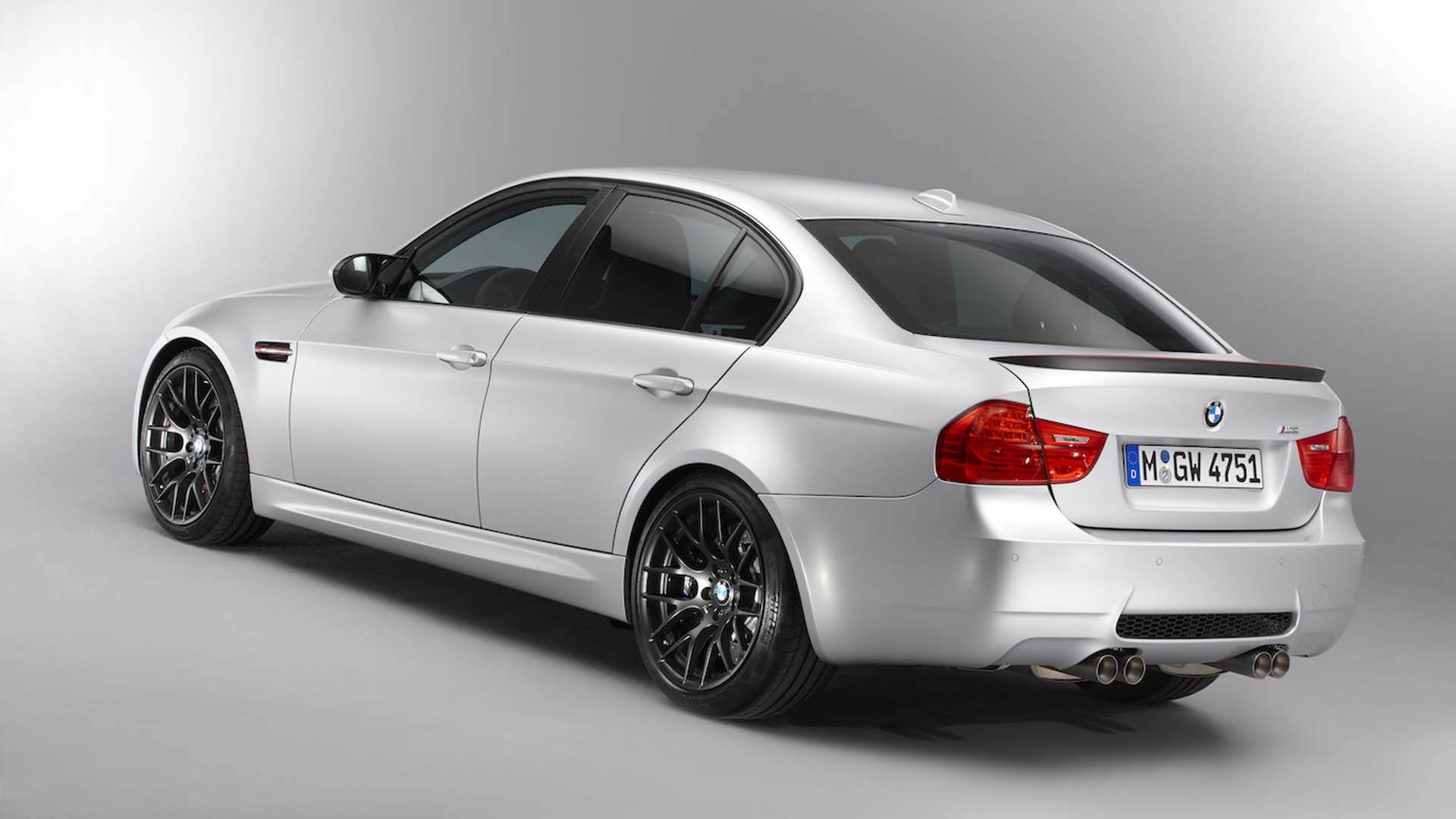
2011 BMW E90 M3 CRT
© BMWAll cars came in matte Frozen Polar Silver paint, with exterior details picked out in striking Melbourne Red. Carbon fiber reinforced plastic (CFRP) was used for the hood, front lip spoiler, rear trunk spoiler and the front seats. Overall weight was reduced by 154 lb compared with the normal four-door M3, despite the extra equipment fitted to the CRT.
-
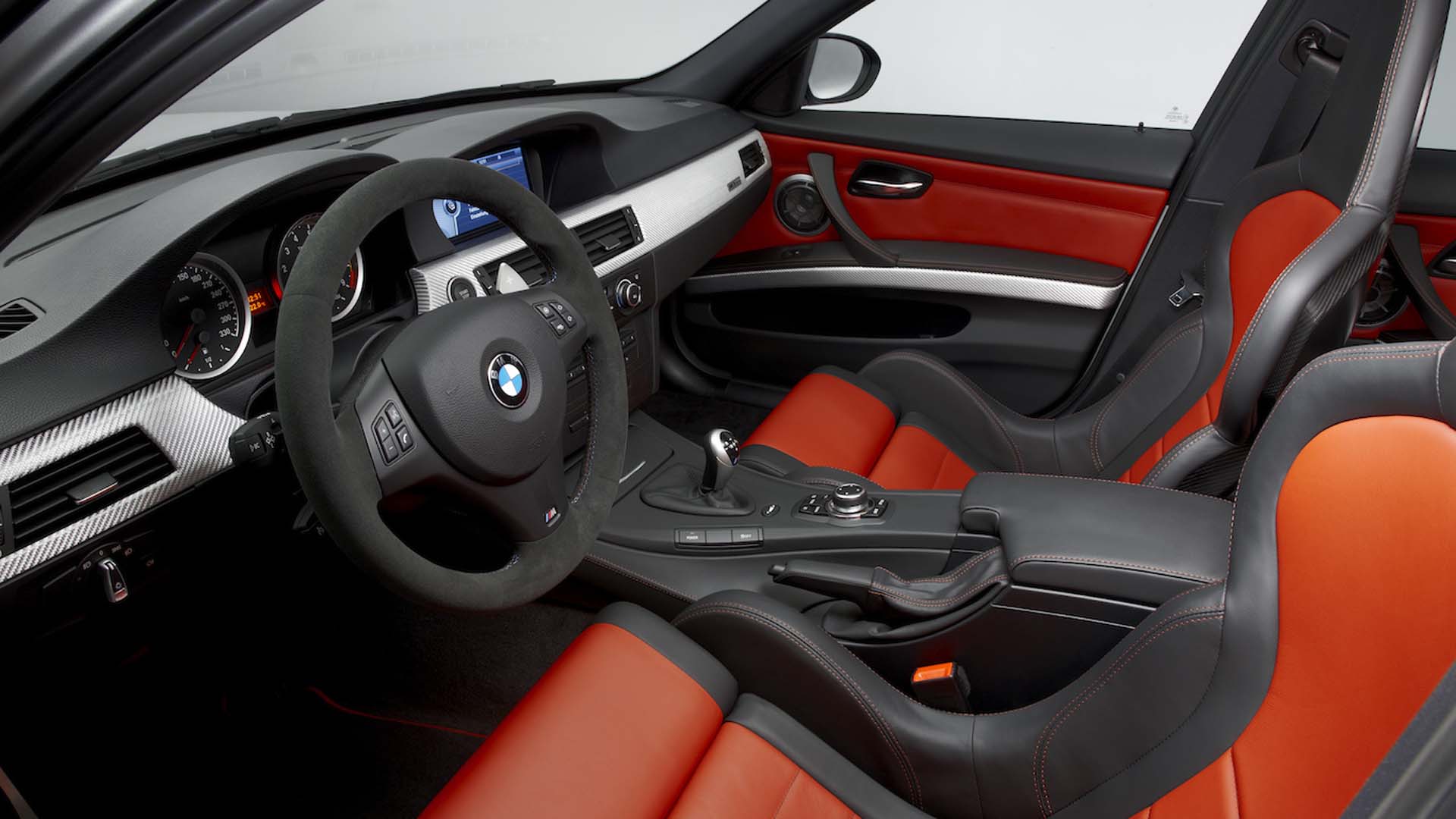
2011 BMW E90 M3 CRT
© BMWUnlike the GTS, there was no roll cage or six-point harnesses in the CRT. Instead, the four seats were part-covered with bright Sakhir Orange leather with matching stitching, and the steering wheel was finished in Alcantara.
A high-end audio system, front and rear parking sensors, satellite navigation and climate control were all fitted from the factory. Performance remained the same as the GTS, but the CRT undercut it on price.
-

2011 BMW E92 M3 Pickup
© BMWYes, history really did repeat itself in 2011 when BMW decided the trusty E30 M3 pickup should head off into retirement. A convertible M3, with the bonus of additional chassis stiffening as standard, was used for this conversion. With the same 420 hp V8 as other M3 variants, it made for rapid parts transportation.
BMW also teased the public with photos of the M3 pickup testing at the Nurburgring, but the promise of a production version was merely an elaborate April Fools’ hoax. Who says the Germans have no sense of humor?
-

2012 BMW E92 M3 DTM Championship Edition
© BMWAfter nearly 20 years away from the DTM series, BMW returned with the M3 in 2012. It proved to be rather successful, taking Bruno Spengler to the drivers’ title and also collecting the team championship. To celebrate, BMW built 54 coupes, featuring the Frozen Black paintwork used on the race machine.
Large ‘M’ logos on the front wings, roof stripes and a Canadian flag in honor of Spengler also made an appearance. Inside was carbon fiber trim, with each car bearing the signature of the victorious driver.
-
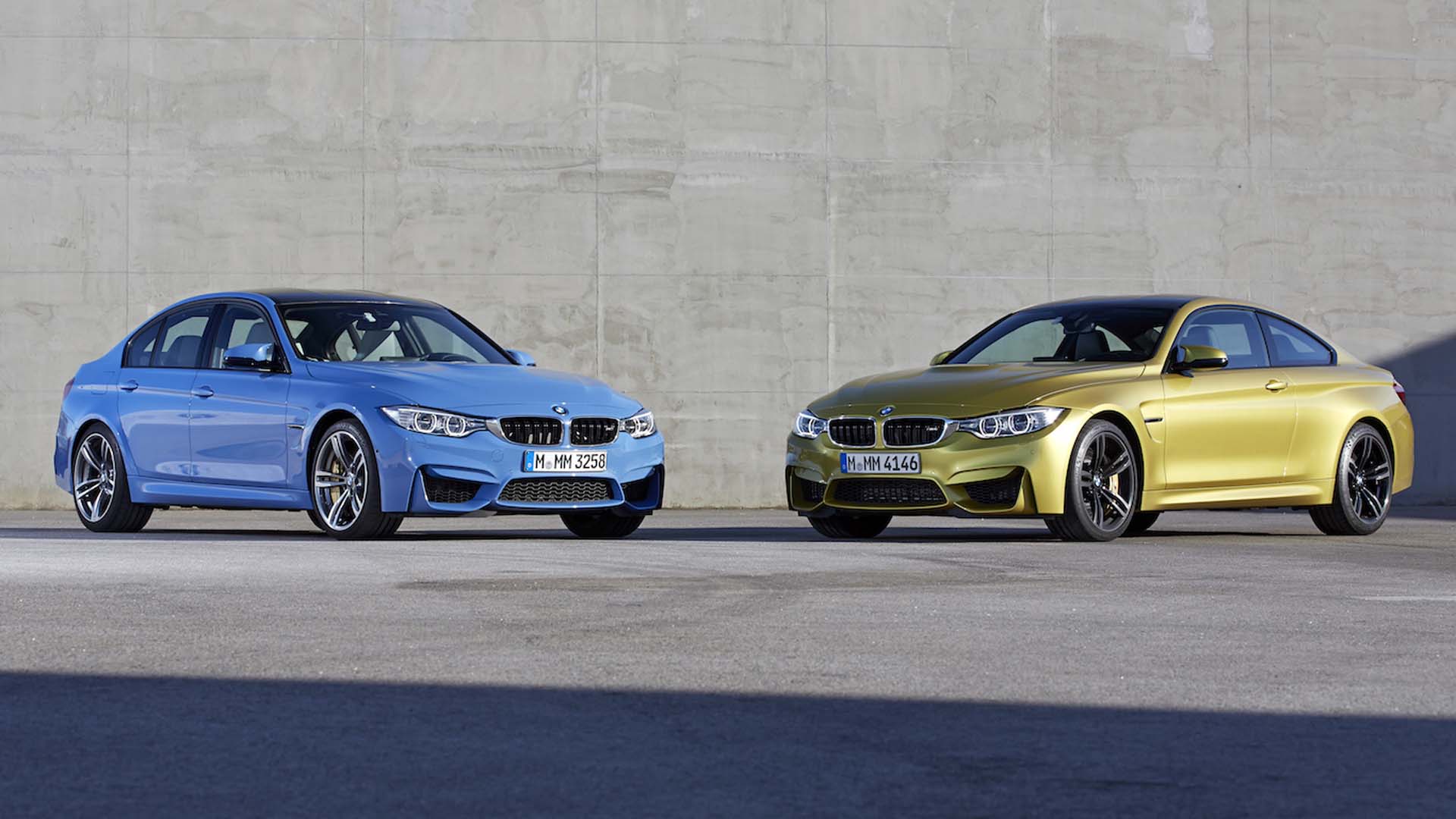
2014 BMW F80 M3 Sedan and F82 M4 Coupe
© BMWShockwaves ran through the M community when the decision was made to rebrand the 3 Series coupe and convertible models as the 4 Series. This followed the new trend of BMW using even numbers for coupe versions, but meant the two-door M3 would no longer exist. Instead, the M3 would now be a four-door sedan, while the M4 badge would cover coupe and convertible versions.
-
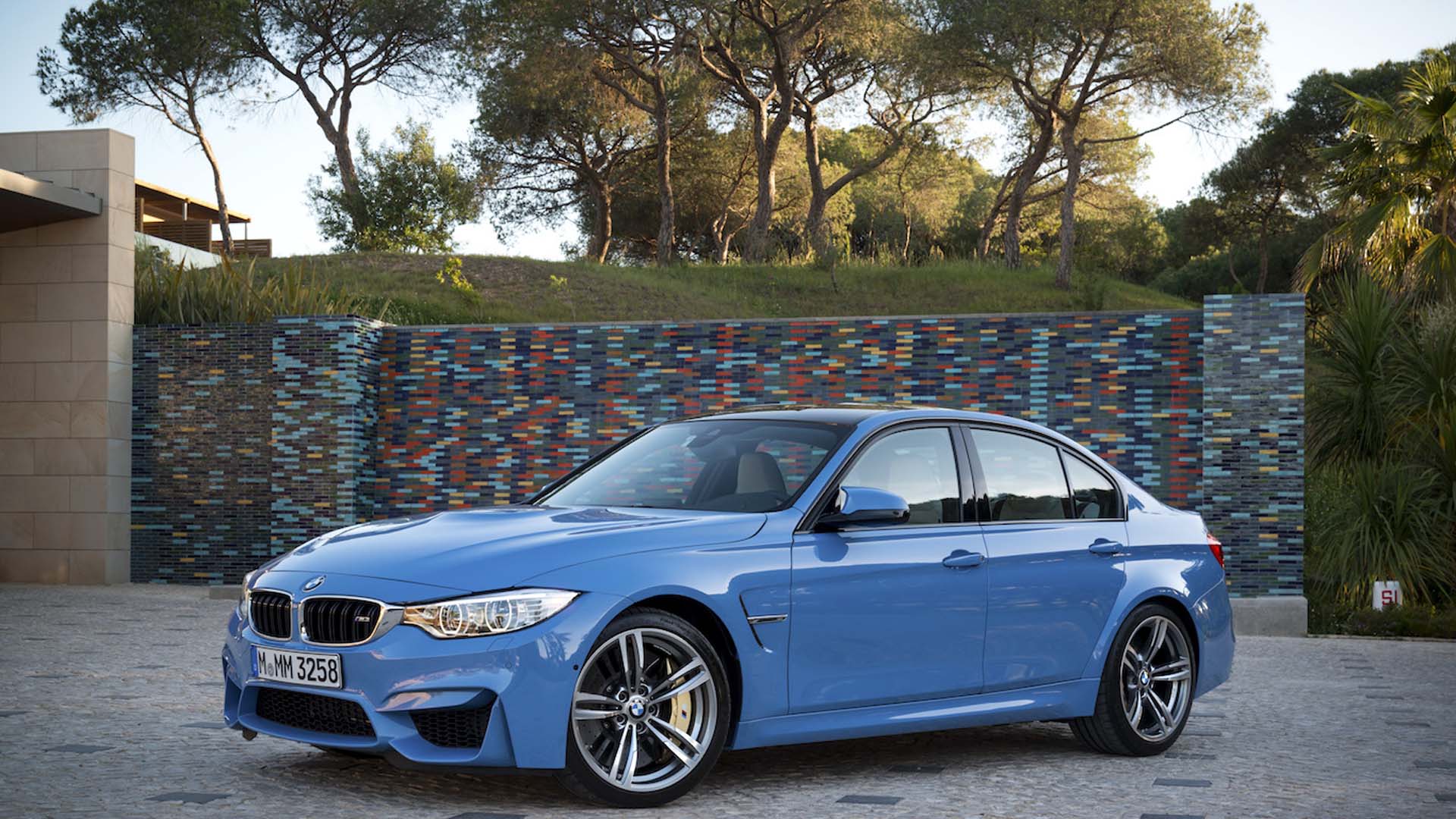
2014 BMW F80 M3 Sedan
© BMWDespite the family split, BMW made sure the M3 retained styling enhancements that marked it out from the regular 3 Series. The front bumper was aggressively shaped, and the gills behind the front wheels served a purpose in directing airflow.
Quad exhaust tailpipes and a slim Gurney spoiler on the trunk rounded out the exterior changes. The hood still featured a power dome, and even the classic aerodynamically-shaped wing mirrors were present and correct.
-

2014 BMW F80 M3 Sedan
© BMWName changes were only part of the controversy with the F80 M3. A straight-six engine returned, but it featured forced induction with M TwinPower Turbo technology. BMW claimed it could still rev like the old engines, despite the turbocharging, and 431 hp and 406 lb-ft of torque helped silence the critics.
Performance was noticeably improved, with 0-62 mph taking just 4.1 seconds if the seven-speed M-DCT gearbox option was ticked. As ever, top speed was limited to 155 mph, but can be raised to 174 mph if requested.
-

2014 BMW F80 M3 Sedan
© BMWMaking its debut on the M3 sedan was a carbon fiber roof panel – something previously restricted to coupe versions. BMW made sure to use large amounts of the lightweight material, including for the distinctive strut brace under the hood, along with the propshaft sending power to the rear axle.
The results of the dieting were an M3 and M4 that actually tipped the scales at less than their predecessors, benefitting both performance and fuel economy.
-

2016 BMW F80 M3 Competition Package
© BMWContinuous improvement doesn’t stop at BMW M GmbH, with a Competition Package offered for both M3 and M4 models in early 2016. Power was boosted to 450 hp, reducing the 0-62 mph time to 4.0 seconds for cars with M-DCT.
Adaptive suspension comes as standard, with uprated springs and dampers, and the wheels grow in size to 20-inch multi-spokers. A sports exhaust with black chrome tailpipes adds aural bite, while gloss black trim replaces the usual chrome badges and grilles.
-

2014 BMW F82 M4 Coupe
© BMWWe couldn’t rightfully leave the M4 out of this gallery. The nomenclature might have changed, but this is still an M3 at heart, being mechanically identical to the four-door car. In fact, the only major difference, number of doors aside, is that the M4 features a trunk lid with an integrated spoiler – just like the M3 CSL from 2003.
-

2016 BMW F82 M4 GTS
© BMWIt would also be remiss of us to overlook one the potent M4 GTS. Taking direction from the M3 GTS of 2010, and using lessons learned over 30 years, BMW launched a track-focused M4 in 2016, limited to just 700 units. With innovative water injection for the engine, power swells to 500 hp and 442 lb-ft of torque.
Carbon fiber makes an appearance throughout, helping reduce weight, while the option of a roll cage in Acid Orange is a nod to the M3 GTS. The 0-62 mph dash takes just 3.8 seconds, with a 190 mph top speed.
-

2016 BMW F80 M3 ‘30 Years’ Edition
© BMWBMW commemorated three decades of the M3 with the ‘30 Years’ edition. Limited to 500 units, and finished in Macao Blue (an option on the original E30 M3), it’s based on the Competition Pack car. Special ’30 Years M3’ logos appear on the side gills, the seat headrests and dashboard, with individual numbering for each car.
-

2018 BMW F80 M3 CS
© BMWThe Clubsport concept was taken a stage further with this CS limited edition. For a hefty chunk more than a standard M3, you got a small boost in power and plenty of CFRP – including for the hood and roof – which helped save around 22 lb in weight. Sticky Michelin Pilot Sport Cup 2 tyres make the CS quicker around a track, too.
-
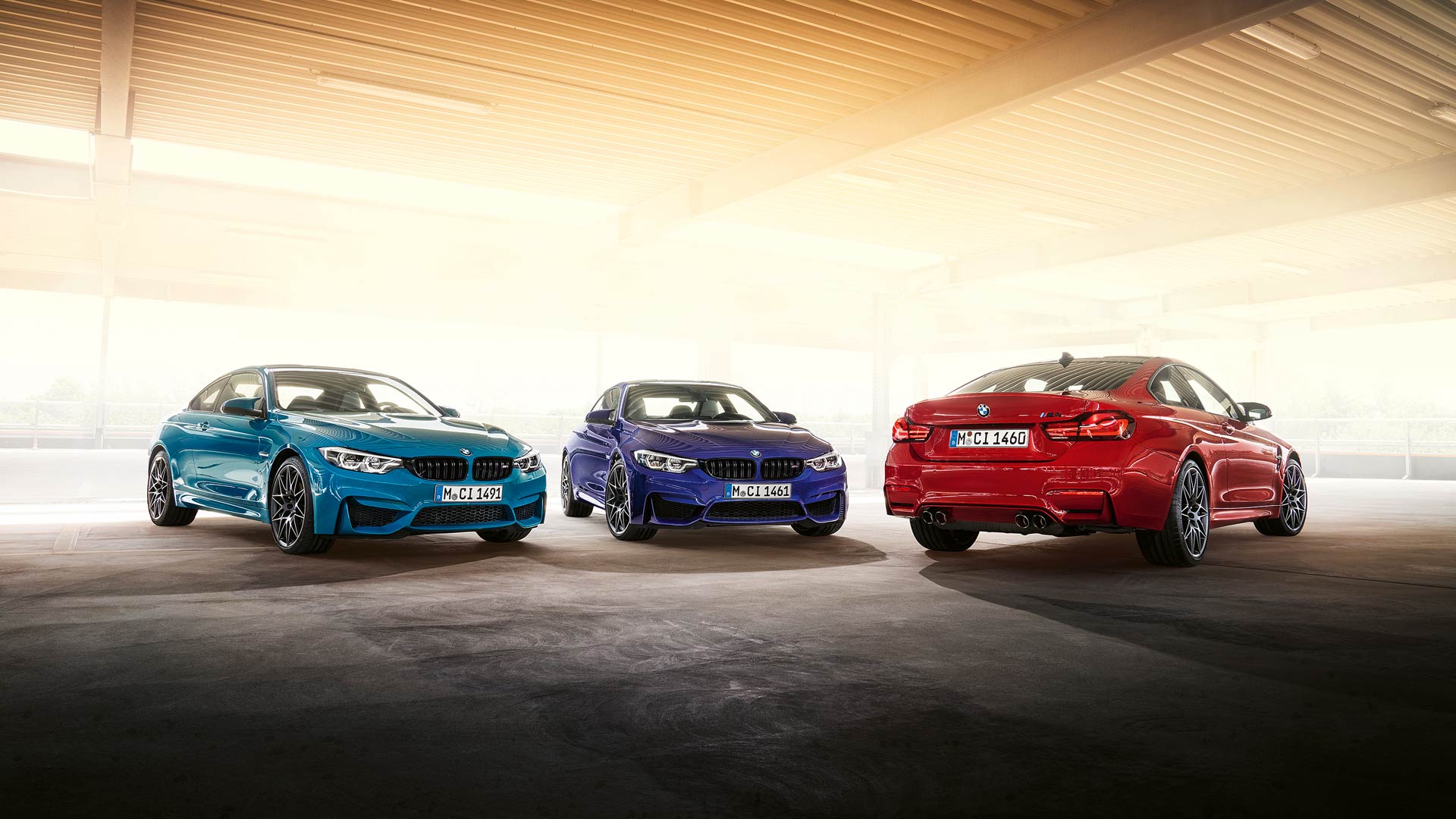
2019 BMW F82 M4 M Heritage Edition
© BMWThe final offering for the F82 generation of M4 was the limited-edition M Heritage model. The paint options of Laguna Seca Blue, Velvet Blue metallic and Imola Red were designed to replicate the colors of the BMW M badge.
A decorative stripe in BMW M colors was added to the carbon fiber roof, with the interior trim intended to contrast with the exterior paintwork. More carbon fiber could be found inside, plus the Heritage Edition wore a unique set of 20-inch wheels.
-

2021 BMW G80 M3 Competition and G81 M4 Competition
© BMWForget the name-change uproar; it was the styling of the new BMW M3 and M4 that upset enthusiasts the most. Said to deliver better cooling to the engine, the front grille is as divisive as it is large.
LED headlights flanked the giant kidney, with BMW’s Laserlight lamps on the options list. A carbon fiber roof is standard for all models, with new and exclusive exterior paint shades offered for both the M3 and M4. Sao Paulo Yellow, Toronto Red metallic and Isle of Man Green metallic all make for a bold statement.
-

2021 BMW G80 M3 Competition
© BMWUnder the hood of the latest M3 and M4 is a new version of BMW’s 3.0-liter straight-six engine, featuring TwinPower turbocharging. The result is an output of 510 hp, with torque of 470 lb-ft.
Both the M3 Competition and M4 Competition can accelerate from 0-62 mph in 3.9 seconds, and reach an electronically limited top speed of 155 mph. Opting for the M Pro Package ups this limit to 180 mph – and adds carbon-ceramic brakes with gold-painted calipers.
-

2021 BMW G80 M3 Competition
© BMWBMW ensured the latest M3 and M4 models were packed full of technology, starting with a 12.3-inch digital dashboard and 10.2-inch multimedia display. This can include the M Drive Professional system, capable of recording lap times on a circuit and even analyzing your drifting performance.
-

2021 BMW G82 M4 Competition x Kith
© BMWIt didn’t take BMW long to start with special editions of the latest M3 and M4, kicking off with a limited-production model developed with New York fashion house, Kith. A total of 150 versions of the M4 Coupe were created, wearing bespoke badges designed by Kith founder, Ronnie Fieg.
Buyers could pick from a choice of three matt paint finishes – Frozen Black, Frozen Dark Silver and Frozen Brilliant White – in homage to the three most popular colors for the original BMW E30 M3. On the inside, the center console features a badge with the Kith logo.
-

2022 BMW G80 M3 Competition xDrive
© BMWAfter decades of being rear-driven, BMW finally made the leap to offering the M3 and M4 with all-wheel drive. Using an xDrive AWD setup designed especially for its M models, BMW promised increased traction while retaining on-track ability.
With power outputs unchanged, a key benefit was a reduction in 0-62 mph time. Opting for the xDrive version saw this cut by 0.4 seconds, dropping the time to just 3.5 seconds.
-

2022 BMW G81 M3 Touring Prototype
© BMWMore than 20 years after the E46 M3 Touring Concept, BMW finally committed to building an estate version of the M3. Design sketches and photographs of disguised prototypes were used to build anticipation ahead of the 2022 launch.
-

2023 BMW M 50th Anniversary
© BMWWith BMW’s M division reaching its 50th anniversary in 2022, the company announced plans for a year-long celebration of all things M. This includes a range of models wearing retro paint colors, such as Dakar Yellow and Daytona Violet, along with heritage BMW badges.
Designed to resemble the original BMW Motorsport logos, these will be applied to the front, rear and wheel hubs of celebratory M models.
-

2023 BMW G81 M3 Edition 50 Jahre BMW M
© BMWOffered exclusively to North American buyers, the M3 Edition 50 Jahre will be limited to 500 examples. Paint colors reflect the history of the M3, with Cinnabar Red from the E30, Techno Violet from the E36 and Interlagos Blue from the E46.
In addition, Fire Orange III comes from the E92 Lime Rock Park Edition, with Limerock Grey taken from the F80 CS. Carbon fiber detailing can be found outside, with a special numbered plaque for the interior. A bespoke BMW M3 suitcase is included with each car.
-
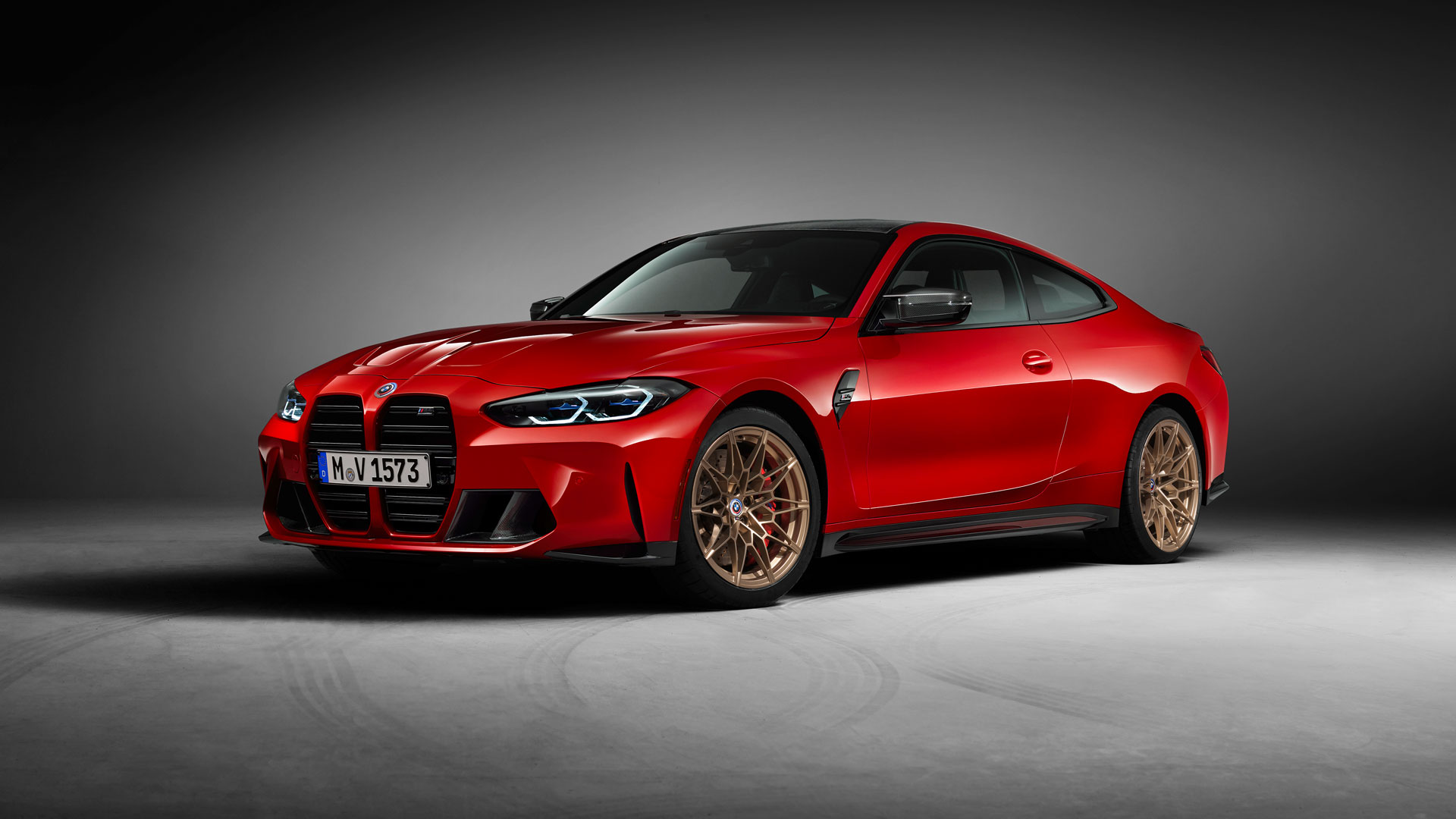
2023 BMW G82 M4 Edition 50 Jahre BMW M
© BMWEuropean BMW fans can choose the M4 Edition 50 Jahre BMW M, featuring the color options of Carbon Black, Macao Blue, Brands Hatch Grey, Imola Red and San Marino Blue. They can also pick between Orbit Grey or Gold Bronze finishes for the bespoke alloy wheels.
For China, BMW will offer the choice of Fire Orange or Stratus Grey paint, chosen to reflect the Year of the Tiger. Like the M3 version, the M4 Edition 50 Jahre BMW M gains no mechanical upgrades, but does come with a numbered dashboard plaque.
-

2023 BMW G82 M4 CSL
© BMWAs part of the M 50th anniversary celebrations, BMW has brought back the CSL badge for a new model. The new M4 CSL is the fastest road-going BMW ever to lap the Nurburgring Nordschleife circuit.
To achieve this, BMW has upped output from the 3.0-liter engine to 550 hp, and shaved 220 lb from the car’s curb weight. It still means the M4 CSL tips the scales at more than 3,527 lb, however. Being rear-wheel drive means the 0-62 mph sprint takes 3.7 seconds, with top speed limited to 191 mph.
-

2023 BMW G82 M4 CSL
© BMWCarbon fiber is used extensively inside and out, including for the hood, trunk lid and roof. Bucket seats, also in carbon fiber, can be found inside, with fixed backrests and height settings that can only be adjusted in a workshop.
BMW’s Laserlight headlights feature a yellow hue, designed to replicate the color seen on GT racing cars. The unique Frozen Brooklyn Grey paint finish is standard, with buyers also able to pick from Alpine White or Sapphire Black metallic. Red detailing abounds on the exterior and interior, including for the CSL badges.
-

2023 BMW G81 M3 Competition Touring
© BMWAfter decades of leaving enthusiasts waiting, BMW has finally created a Touring version of the M3. Offered in Competition format, with xDrive all-wheel drive, the first-ever M3 Touring comes with 510 hp.
BMW’s performance wagon is longer than a regular 3 Series Touring, along with being wider, and lower. Its bespoke flared rear fenders are partly responsible for these increased dimensions, along with the large rear diffuser and wider side skirts.
An eight-speed automatic gearbox is standard, and allows the M3 Touring to accelerate from 0-62 mph in 3.6 seconds. Top speed is limited to 155 mph.
-

2023 BMW G81 M3 Competition Touring
© BMWThe biggest selling point of the M3 Touring is the extra practicality offered over the sedan version. A three-seat rear bench can be split 40:20:40, giving the option to haul longer loads.
Leaving the rear seats up sees trunk space of 17.6 cubic feet, while dropping them boosts this to a considerable 53 cubic feet.
-

2023 BMW G81 M3 Competition Touring
© BMWBMW fits an electric tailgate as standard, along with a rear hatch window that opens independently. Buyers can opt for rubberised rails in the trunk, which help prevent luggage from sliding around during ‘enthusiastic’ cornering.
The new M3 Competition Touring made its official public debut at the 2022 Goodwood Festival of Speed. An instant hit, it left many wondering why BMW waited so long to deliver a wagon version of the M3.
-

2024 BMW G80 M3 CS
© BMWFor 2023, BMW announced the return of the CS badge to the M3 sedan. Technology from the extreme M4 CSL makes this a faster and more focused version of the four-door M3.
The 3.0-liter engine has been upgraded to deliver 550 hp, thanks to extra boost pressure from the twin turbochargers. BMW’s xDrive all-wheel-drive system is standard, as is an eight-speed automatic gearbox.
The combination allows for a 0-62 mph time of just 3.4 seconds, with top speed limited (yes, limited) to 188 mph.
-

2024 BMW G80 M3 CS
© BMWThe M3 CS is not simply about going fast in a straight line, however. A set of lightweight forged alloy wheels are wrapped in track-biased tyres, plus it gains retuned suspension settings.
Along with a carbon fiber hood, the M3 CS comes with its mirror caps, front splitter, rear diffuser and rear spoiler made from the lightweight material.
A titanium exhaust system and carbon fiber bucket seats also help remove 44 lb versus the regular M3.
-

2025 BMW G82 M4 Coupe
© BMWBMW recently gave the M4 the mildest of mid-life updates, with a subtle redesign of its headlights and rear lights – now with laser technology. Optional M Design graphics can also be added, covering the bonnet and boot lid in High Gloss Black or High Gloss Red.
On the inside, the 2025 M4 comes with a redesigned steering wheel, which can optionally be wrapped in Alcantara.
A new 14.9-inch curved iDrive display is angled towards the driver, and incorporates the controls for the air conditioning.
-

2025 BMW G83 M4 Convertible
© BMWChanges under the hood include a power boost for M4 Competition xDrive models, with a new output of 530 hp. This allows for 0-62 mph in 3.4 seconds for the Coupe, with the Convertible requiring an extra 0.2 seconds.
Both BMWs remain limited to a top speed of 155 mph as standard. However, the optional M Driver’s Package can elevate this to 174 mph for the M4 Convertible – and all the way to 180 mph for the Coupe.
-
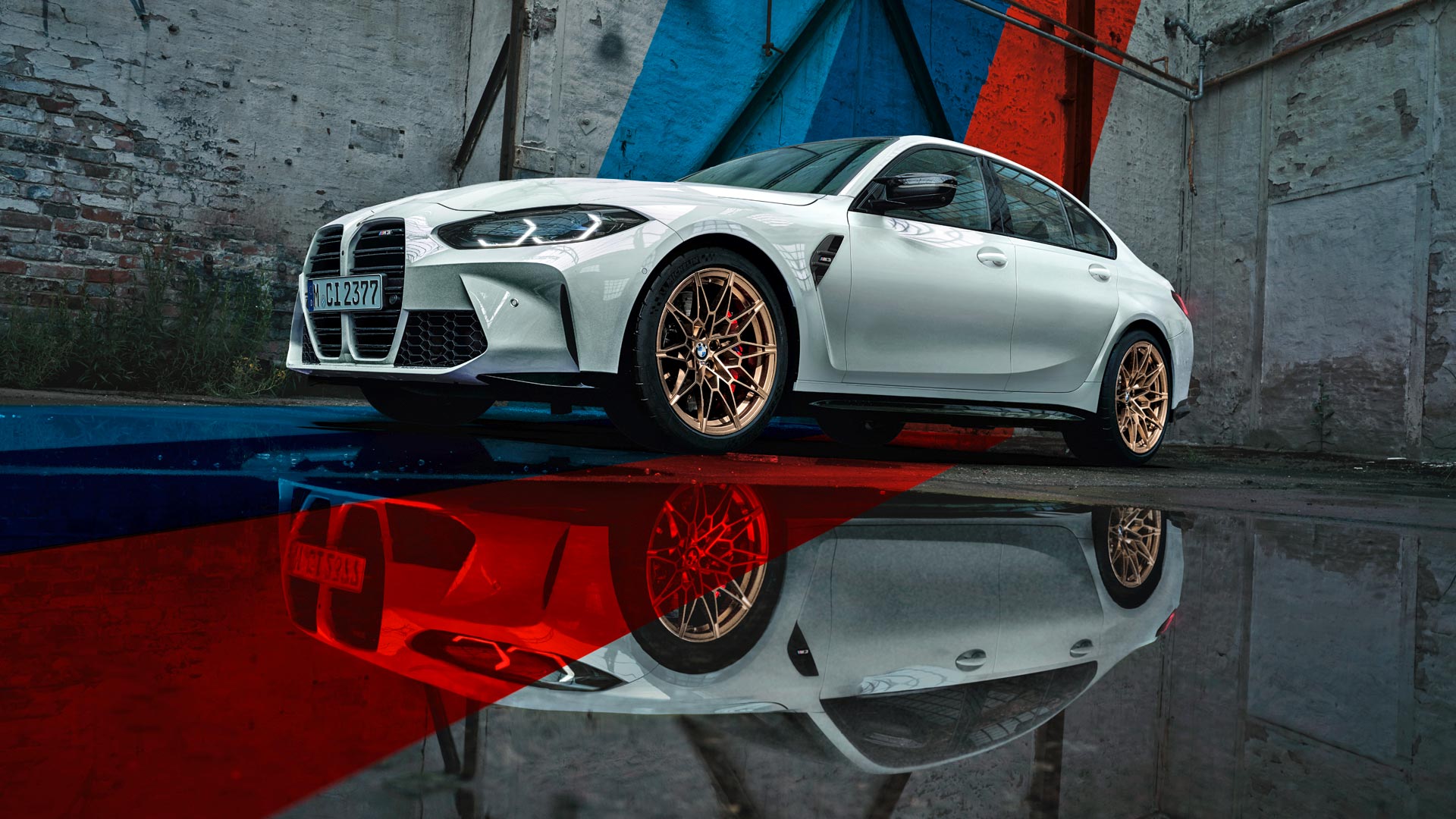
BMW G80 M3 MT Final Edition
© BMWThe Japanese market has been denied an M3 with a manual transmission for a number of years. However, to celebrate the 35th anniversary of the BMW M3’s first victory in the German Touring Car Championship, Japanese fans were offered the MT Final Edition.
Buyers could choose from three paint options, with production limited to 50 cars of each color. Matte gold wheels are fitted, along with a special red interior.
Should demand exceed supply, potential customers needed to enter a lottery to determine who received a manual-equipped M3. BMW says the Japanese market will not be offered a three-pedal version again.
-

2025 BMW G82 M4 CS Coupe
© BMWFollowing the launch of the updated M4, BMW did not wait long before announcing a new CS version of its two-door model.
Like the four-door M3 CS, the headline-grabbing figure was an increase in output for the 3.0-liter M TwinPower turbo engine. This pushed it to a substantial 550 hp, with torque remaining at 479 lb ft.
Combined with the M4’s xDrive all-wheel-drive system, this allowed the CS to accelerate from 0-60 mph in just 3.2 seconds. Sprinting from 0-124 mph required 11.1 seconds, with top speed limited to 188 mph.
-

2025 BMW G82 M4 CS Coupe
© BMWBMW gave the M4 CS new, model-specific suspension tuning, with a host of bespoke settings to maximize its ability on-track. The adaptive M suspension was recalibrated, as was the Servotronic steering.
Exclusive lightweight multispoke alloy wheels are fitted, measuring 19 inches at the front and 20 inches at the rear. Michelin Pilot Sport Cup 2 tires are standard, with the even stickier Michelin Pilot Sport Cup 2 R available as an option.
The exhaust system includes a titanium rear silencer, with the quad tailpipes finished in black.
-

2025 BMW G82 M4 CS Coupe
© BMWCarbon fiber-reinforced plastic (CFRP) was used extensively to save weight, appearing on the roof, front splitter, diffuser and rear wing. Two new BMW Individual paint finishes, Riviera Blue solid and Frozen Isle of Man Green metallic, were added to the color options.
On the inside, a set of deep BMW M carbon fiber bucket seats are fitted, trimmed in a combination of black and red Merino leather. An M Sport flat-bottomed steering wheel is clad in Alcantara, with carbon fiber used for the paddles controlling the eight-speed automatic transmission.
In the United States, prices for the M4 CS started from $123,500, with deliveries made by the fall of 2024.
-

2025 BMW G81 M3 CS Touring
© BMWIf creating a CS version of the M4 Coupe seemed obvious, extending the CS treatment to the M3 Touring was much more of a surprise.
With the M3 CS Touring, BMW has arguablu created the ultimate one-car garage solution, with the ability to make runs to the garbage dump, then deliver some track-day fun.
As with the previous CS models, the 3.0-liter M TwinPower turbo engine offered up 550 hp and 479 lb ft of torque.
-

2025 BMW G81 M3 CS Touring
© BMWHelped by standard xDrive all-wheel drive, the M3 CS Touring is capable of accelerating from 0-62 mph in just 3.5 seconds, and 0-124 mph in 11.7 seconds. A top speed of 186 mph should be more than sufficient for even the most urgent of load-hauling needs.
As with other CS models, the M3 Touring received special suspension tuning with adaptive dampers, plus revised M Servotronic steering settings. Powerful M Compound brakes come fitted as standard, with carbon ceramic disks available on the options list.
A titanium sports silencer is included, as are forged M alloy wheels in a choice of matt Gold Bronze or matt black finishes, plus a host of carbon fiber parts inside and out. These help save 33 lb in weight compared to a regular M3 Touring.
-

2025 BMW G81 M3 CS Touring
© BMWDespite its further transformation into a circuit-ready machine, the CS Touring retains the same level of practicality as the regular M3 wagon. This means 17.6 cubic feet of luggage capacity with the rear seats in use, or 53 cubic feet with them folded down.
M Carbon bucket front seats with red detailing can be found inside, with special CS badging on the center console.
Buyers have the choice from three BMW Individual colors: British Racing Green, Laguna Seca Blue or Frozen Solid White, along with Black Sapphire metallic.
BMW will build the M3 CS Touring in limited numbers, with European orders being accepted now. Sadly, as with the regular M3 wagon, North Americans will be denied the chance to buy one.
-
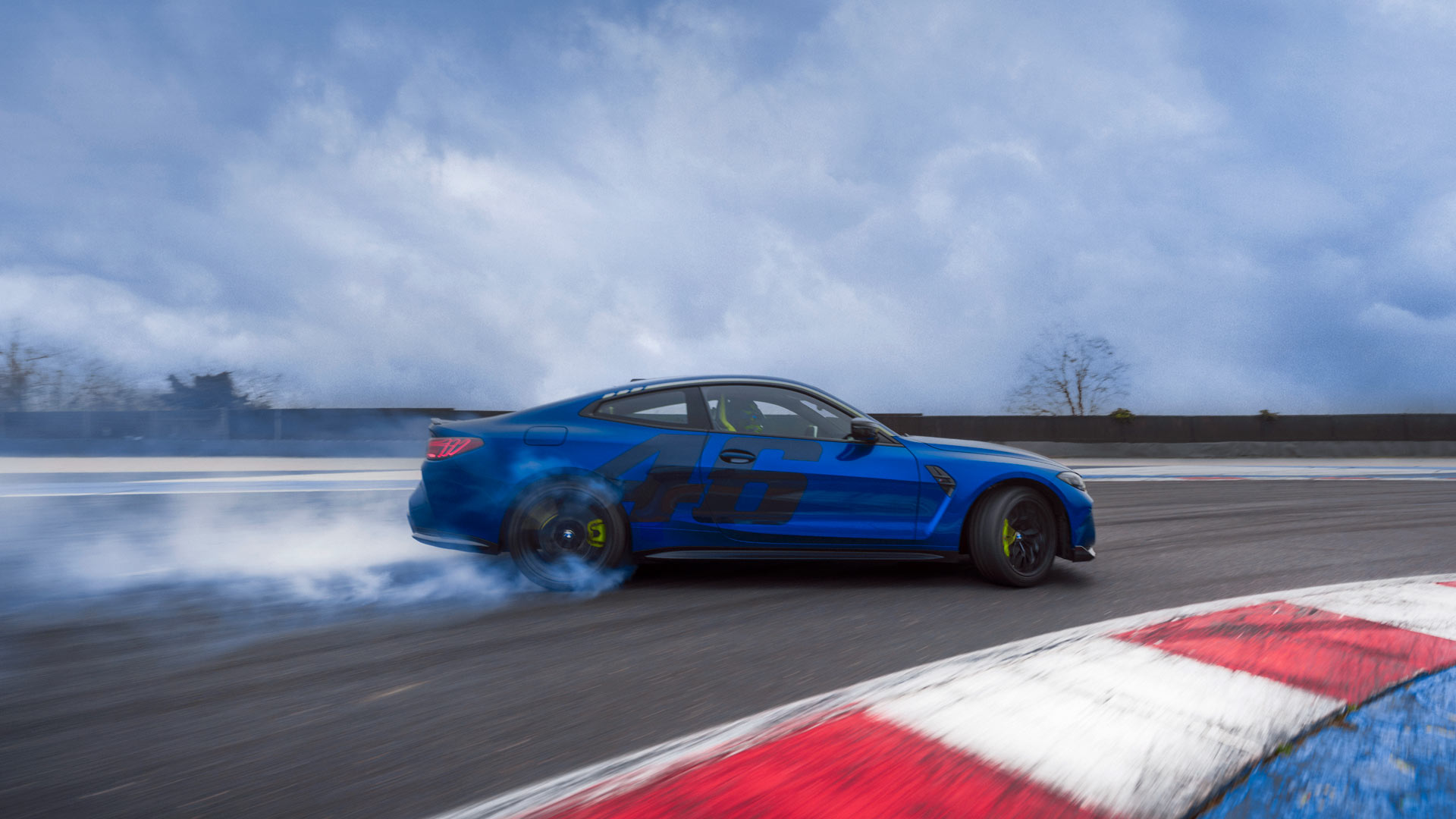
2026 BMW G82 M4 CS Edition VR46 Coupe
© BMWValentino Rossi may be best known for his dominance of MotoGP motorcycle racing, but ‘The Doctor’ has transformed himself into a BMW M works sports car driver, behind the wheel of an M4 GT3.
The seven-time MotoGP champion has used the racing number 46 throughout his career, which meant turning 46 years old was a significant milestone for the Italian. To celebrate, BMW created a limited-edition VR46 version of the M4 CS Coupe, with design input from Rossi himself.
With production capped at 46 examples, of course, the VR46 model comes in two distinct ‘Sport’ and ‘Style’ looks, but both feature Rossi’s now-trademark bright yellow detailing on the front grille and alloy wheels.
The yellow highlights extend inside, being used for contrast stitching on the bucket seats and sports steering wheel. A numbered plaque on the center console highlights the build number of each specific car.
-
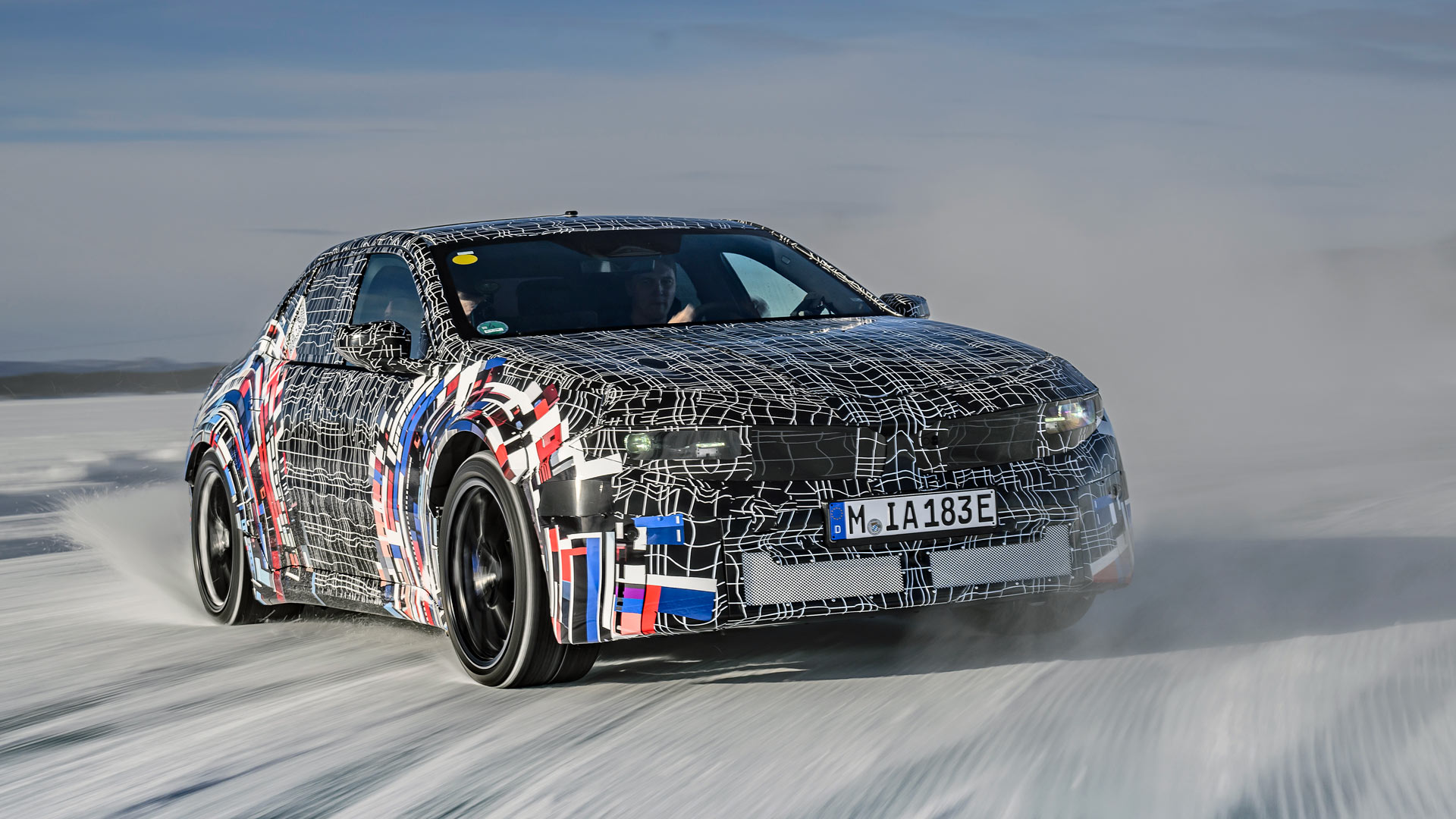
BMW Neue Klasse M eDrive Concept
© BMWNot even one of BMW’s most famous sports cars can escape electrification. Indeed, the M5 super sedan has already become a plug-in hybrid.
Ahead of the launch of the i3 electric sedan, intended as a battery-powered alternative to the conventional 3 Series, BMW revealed more information about its M eDrive Concept car – seen here in disguise.
For the Neue Klasse M model, BMW will use four electric motors, designed to ensure maximum power and adjustability. Precise control of torque and braking to each individual wheel is said to create ‘a driving experience in BMW M production vehicles that has never been achieved before’.
-

2026 BMW G81 M3 Touring 24H
© BMWWhile the M3 Touring 24H was competing at the Nurburgring, BMW was simultaneously honouring the history of the M3 as part of the prestigious Concorso d’Eleganza Villa d’Este event in northern Italy.
Alongside displays of iconic classic cars, BMW showed examples of the original E30 M3 touring cars, alongside other contemporary competition vehicles, plus the full back catalogue of road-going M3 and M4 models.
Racing drivers who made the E30 M3 famous, such as Johnny Cecotto, Emanuele Pirro and Roberto Ravaglia were also in attendance to help with the celebrations.
-

BMW celebrates 40 years of M3 at Villa d'Este
© BMWWhilst the M3 Touring 24H was competing at the Nürburgring, BMW was simultaneously honouring the history of the M3 as part of the prestigious Concorso d’Eleganza Villa d’Este event in northern Italy.
Alongside displays of iconic classic cars, BMW shared examples of the original E30 M3 touring car racers, alongside other contemporary competition vehicles, and the full back catalogue of road-going M3 and M4 models.
Drivers who made the E30 M3 famous, such as Johnny Cecotto, Emanuele Pirro and Roberto Ravaglia were also in attendance to help with the celebrations.
-

BMW M3 Touring 24H wows at Nürburgring
© BMWIt may have started as a joke, but nobody was laughing about the BMW M3 Touring 24H at the end of the 2026 Nürburgring 24 Hours.
Not only did the one-off bespoke racing wagon manage to complete the gruelling endurance event, it did so by comfortably winning its experimental SPX class. Even more impressively, the M3 Touring 24H claimed fourth position overall, only narrowly missing out on a podium finish.
A summer of appearances at special events is on the cards for the M3 Touring, before it heads off for a life with the lucky individual who commissioned the bespoke build.
-

BMW M Concept Neue Klasse
© BMWThe BMW M3 Touring 24H was on show at the 2026 Le Mans 24 Hours, but there was an even bigger BMW debut in the paddock. This was our first glimpse of the undisguised BMW M Concept Neue Klasse.
Giving the clearest indication yet of how the forthcoming electric M3 will look, the M Concept Neue Klasse certainly attracted plenty of attention, with dramatic styling both outside and in.
Although some of the concept detailing is deliberately extravagant, this should be close to how a production M Neue Klasse looks when it finally goes on sale.
Even if the purists are still likely to object to a battery-powered M3, they certainly cannot say it doesn’t stand out.
-

BMW M Concept Neue Klasse
© BMWAlthough BMW did not give performance details for the M Concept Neue Klasse, the previously mentioned quad-motor setup is expected to deliver up to 1,000 horsepower.
A 100 kWh battery has been confirmed, though, which should give the M Concept Neue Klasse enough power to complete multiple laps of a race circuit.
However, despite the attention being paid to the high-performance EV M3, BMW has said it will be sold alongside a combustion-powered version.
It means that four decades of petrol-powered M3 fun will be extended for at least a few more years…
