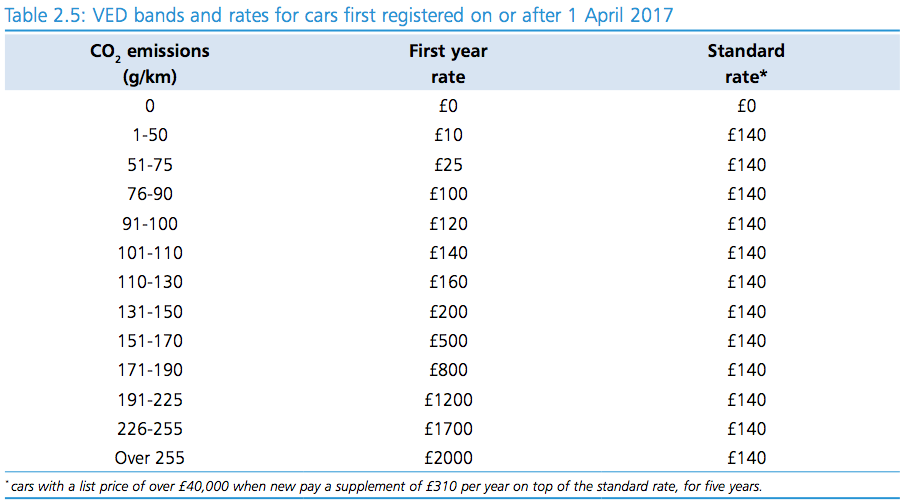
George Osborne has announced in his summer budget that new cars will be subject to different vehicle excise duty (VED) bands from 2017.
The new system is still based on CO2 emissions, but only cars emitting 0g/km CO2 will benefit from free road tax.
Apparently, 95% of new cars will fit into a ‘standard’ category, costing £140 per year, while cars that cost over £40,000 new will face an extra £310 per year for the first five years.
Osborne said: “Because so many new cars now fall into the low-carbon emission plans, by 2017 over three quarters of new cars will pay no VED at all in the first year.
“This isn’t sustainable and it isn’t fair. If you can afford a brand new car, including some of the most expensive models available, you can pay no VED. If you can only afford an older second-hand car you have to pay more tax.”
The new VED bands will only apply to new cars from 2017 onwards – Osborne insists no one will pay more in tax for vehicles they already own.
Anyone spending more than £40,000 on a new car will have a pay an additional £310 a year in road tax for the first five years.
That means even electric cars worth over £40,000 new, such as the Tesla Model S, will cost £310 to tax.
Anything with a conventional engine, including hybrids, will cost £450 a year in VED for the first five years if it has a list price over £40,000.
Another big change is that the money raised through VED will go directly back into improving the roads.
Osborne added: “I will return this tax to the use for which it was originally intended. I am creating a new roads fund from the end of this decade – every single penny raised from VED in England will go into that fund to pay for that sustained investment our roads so badly need.”
The Chancellor also announced he would consult on the current MOT system, looking at increasing the age at which cars and motorbikes require their first test from three to four years.
Fuel duty will also remain frozen at the current rate.
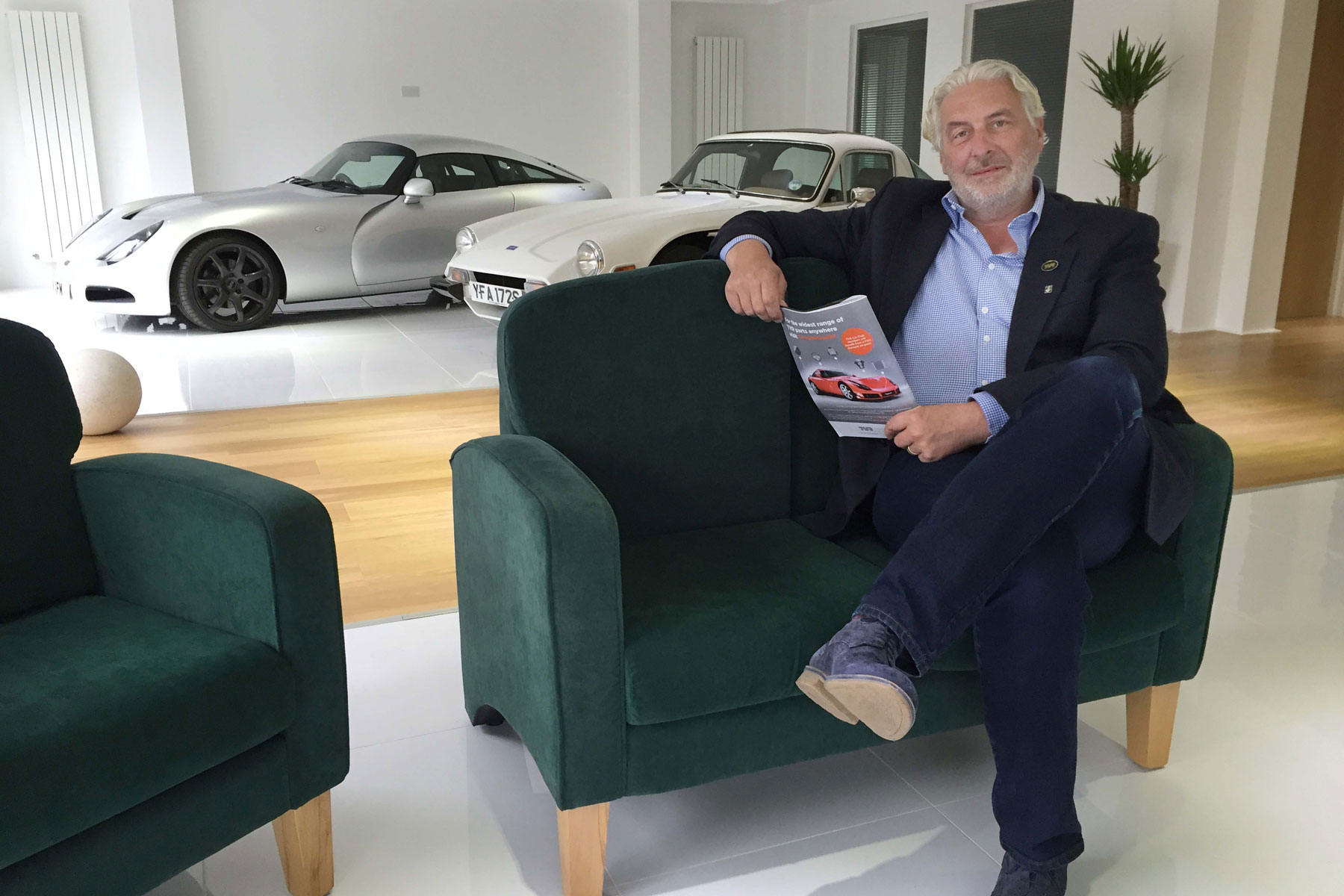
Interest in a new TVR sports car set to launch in 2017 has been so high that the waiting list will open from midday today.
In an email sent to potential customers, the reborn British manufacturer said the deposit scheme would help plan initial production quantities, and “allow people who are genuinely interested in what is definitely the most hotly anticipated new sports car in a decade to book a slot in the queue.”
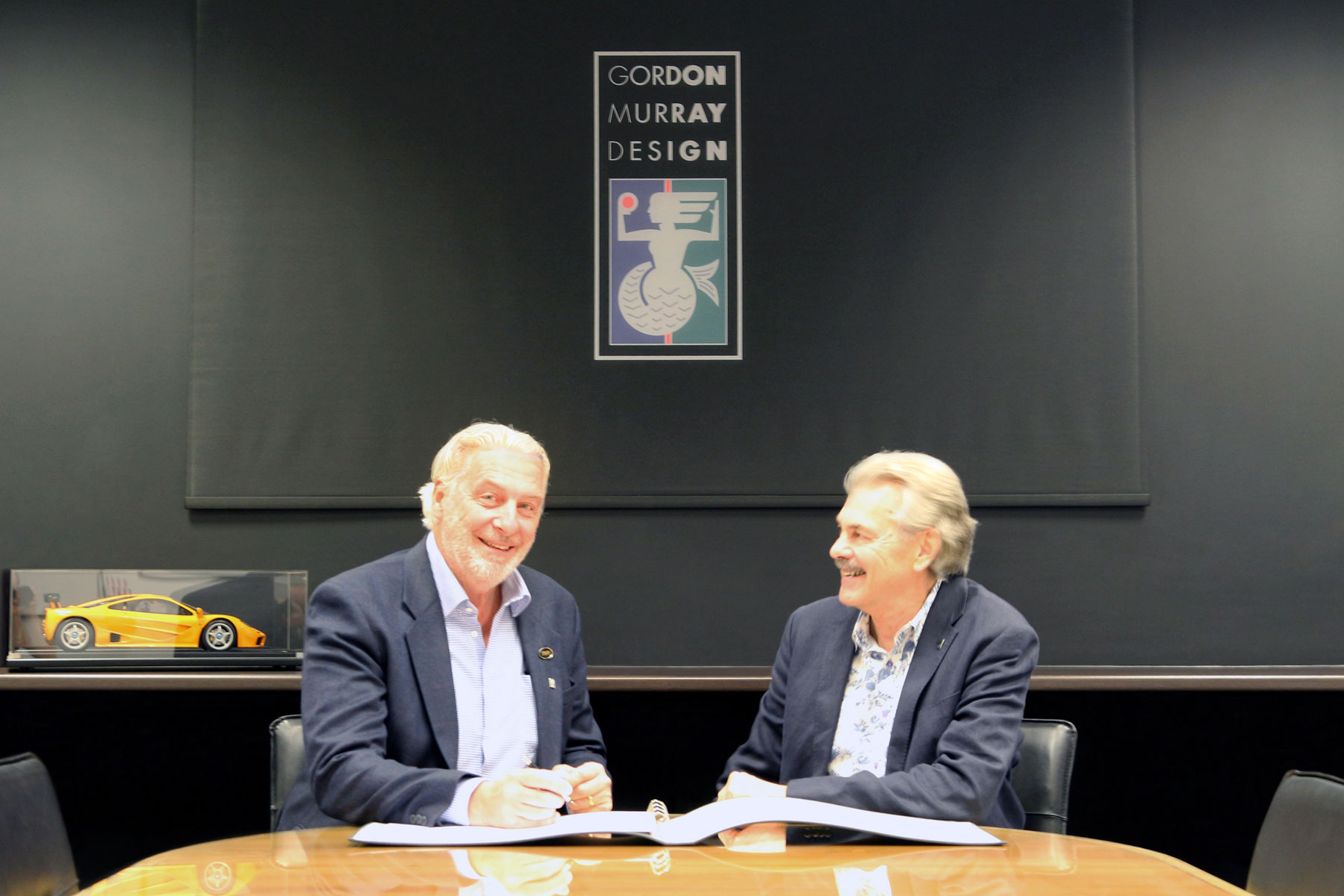
The manufacturer is keeping quiet on details about the new 2017 TVR, which is being produced in partnership with Gordon Murray and Cosworth.
In the email, TVR’s chairman Les Edgar said: “This is not because that detail is as yet undetermined, rather because we will only announce specifications when we are 100% confident in their accuracy – this has always been our policy. However, we will be releasing details as they are confirmed via our website, through the motoring press and, of course, by email to everybody who has registered for information on the new car.”
The email did reveal that the car, which will be built in the UK, has been codenamed the T37.
The refundable £5,000 deposit can be placed online via TVR’s website or over the phone on 0330 120 0032 – but the manufacturer has asked that no one phones the deposit line seeking more details, as they won’t get them.
Members of the TVR car club who joined more than six months ago will benefit from a reduced deposit of £2,500 if they place it before the end of July 2015.
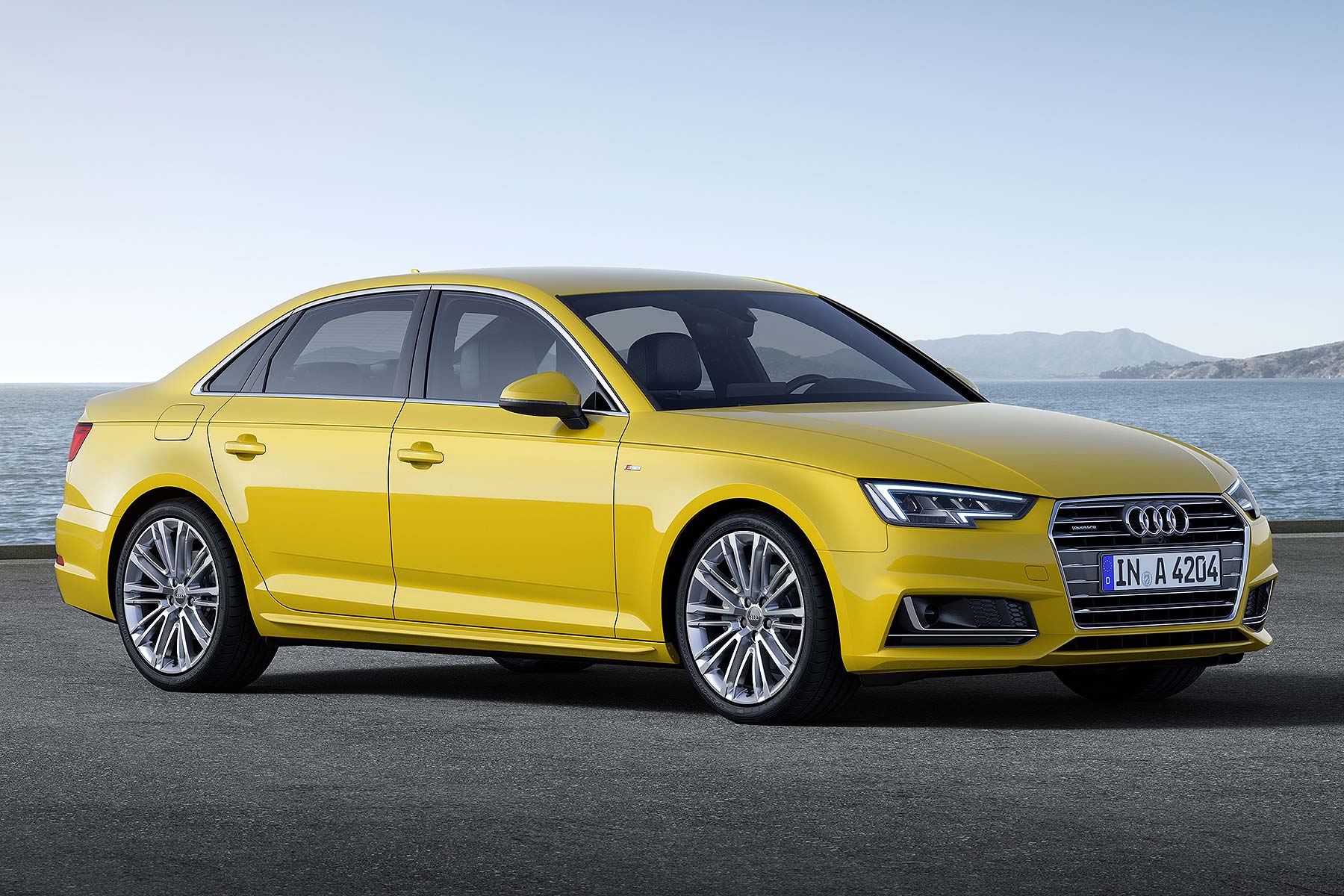
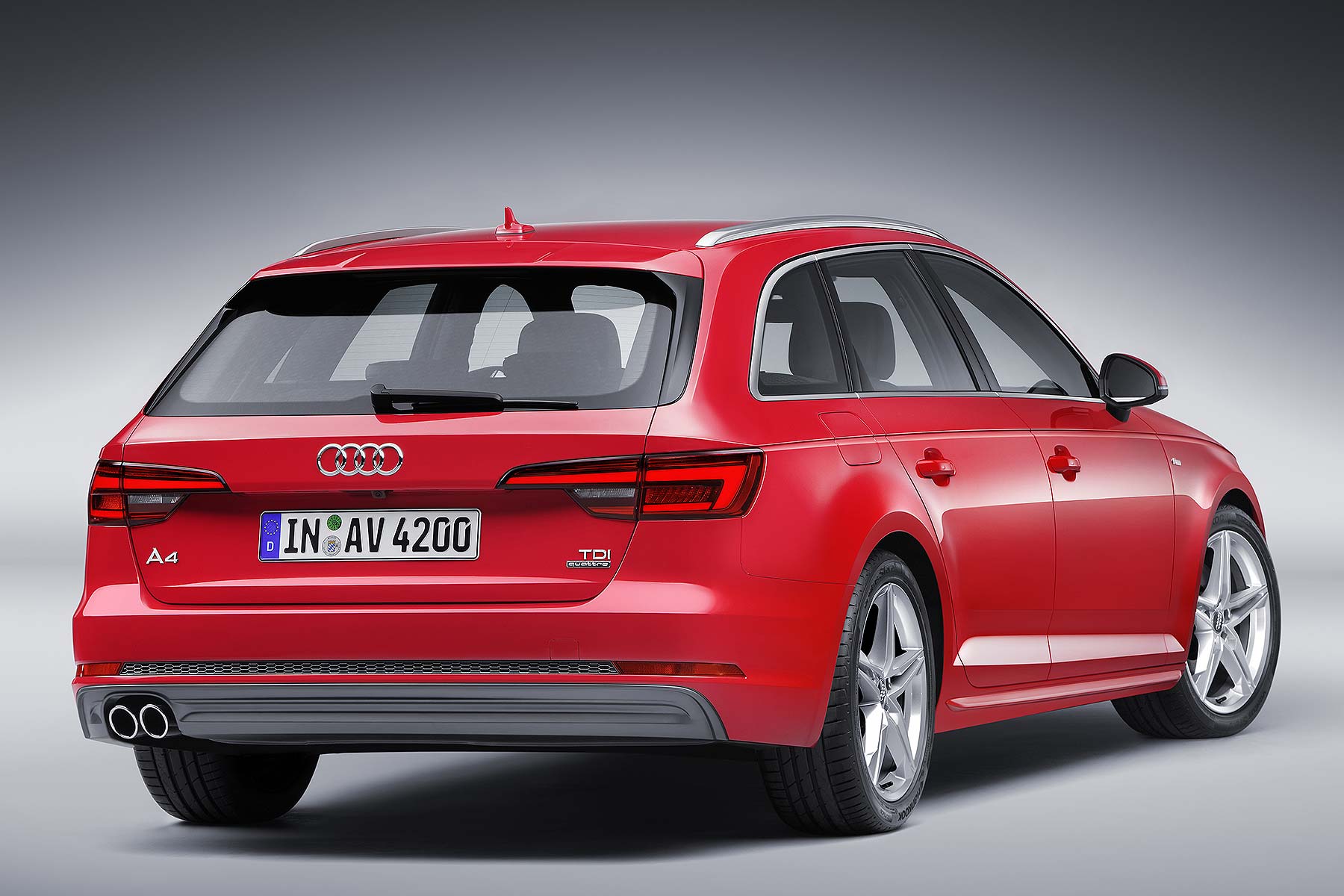
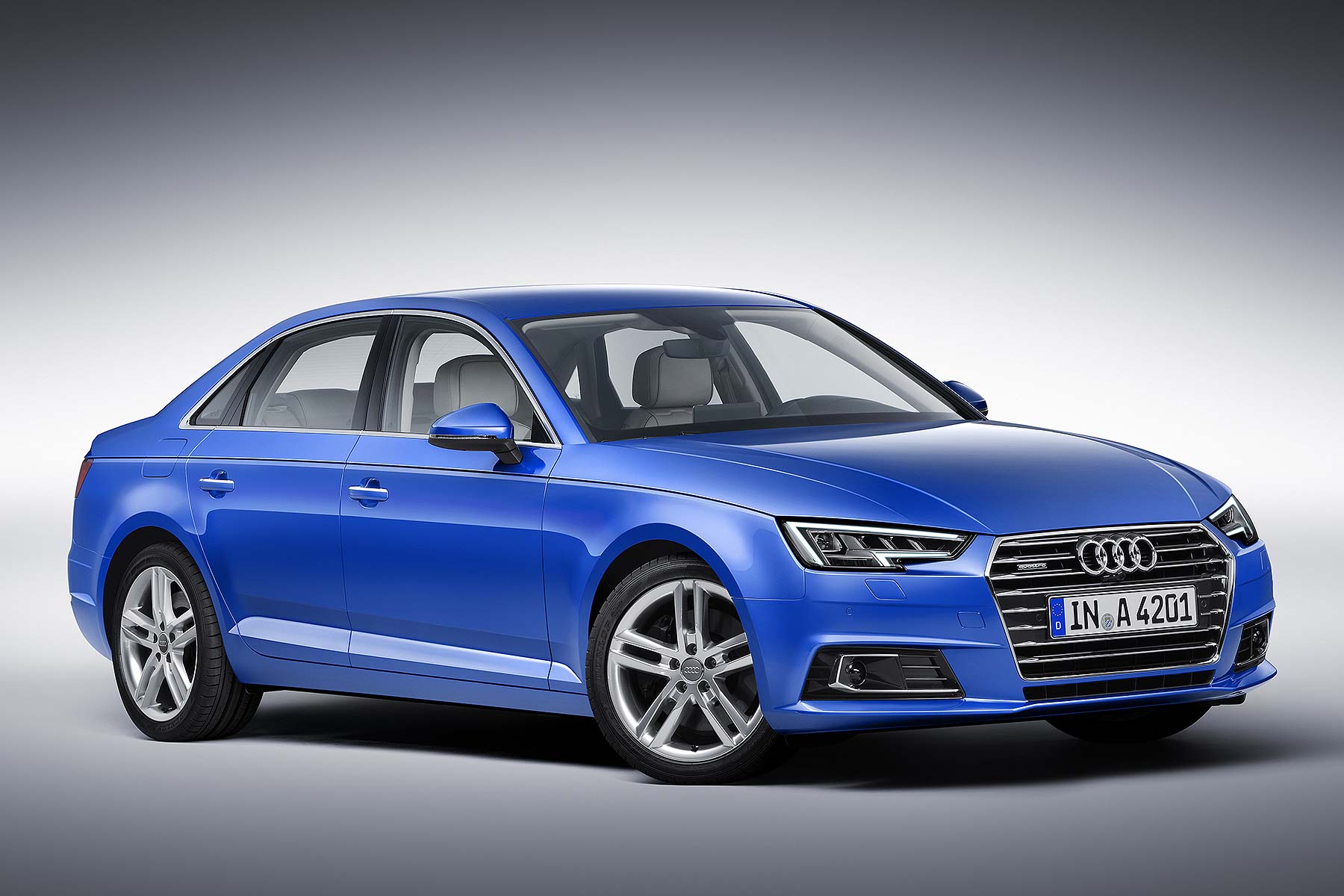
The new 2016 Audi A4 has been officially revealed ahead of its global debut at the 2015 Frankfurt Motor Show – and once again for Audi’s it’s an evolutionary approach rather than a stylistic revolution.
But the firm is keen to stress there’s far more future-looking technology beneath the lighter-weight skin of the new A4, which goes on sale towards the end of 2015.
The design, for example, may be familiarly Audi A4, but it’s also notably aerodynamic; in its optimum trim, the Cd drag factor is just 0.23, something no other model in the class gets near.
It’s a bigger design too – addressing criticisms of the current car’s lack of space, particularly in the rear, the new Audi A4 has grown to 4,726mm long, 1,842mm wide and 1,427mm tall.
The new Audi A4 is thus 25mm longer and 16mm wider than the old one, but remains the same height – actually the lowest in the premium sector. The A4 Avant is actually 1mm shorter than the saloon.
This give it the longest interior in its class, plus the best front shoulder room and, in the new A4 Avant, the biggest boot: it’s 505 litres with the seats up, 1,505 litres with them down.
The Avant is, however, not as aerodynamic as the sleek saloon: its drag factor Cd is 0.26.
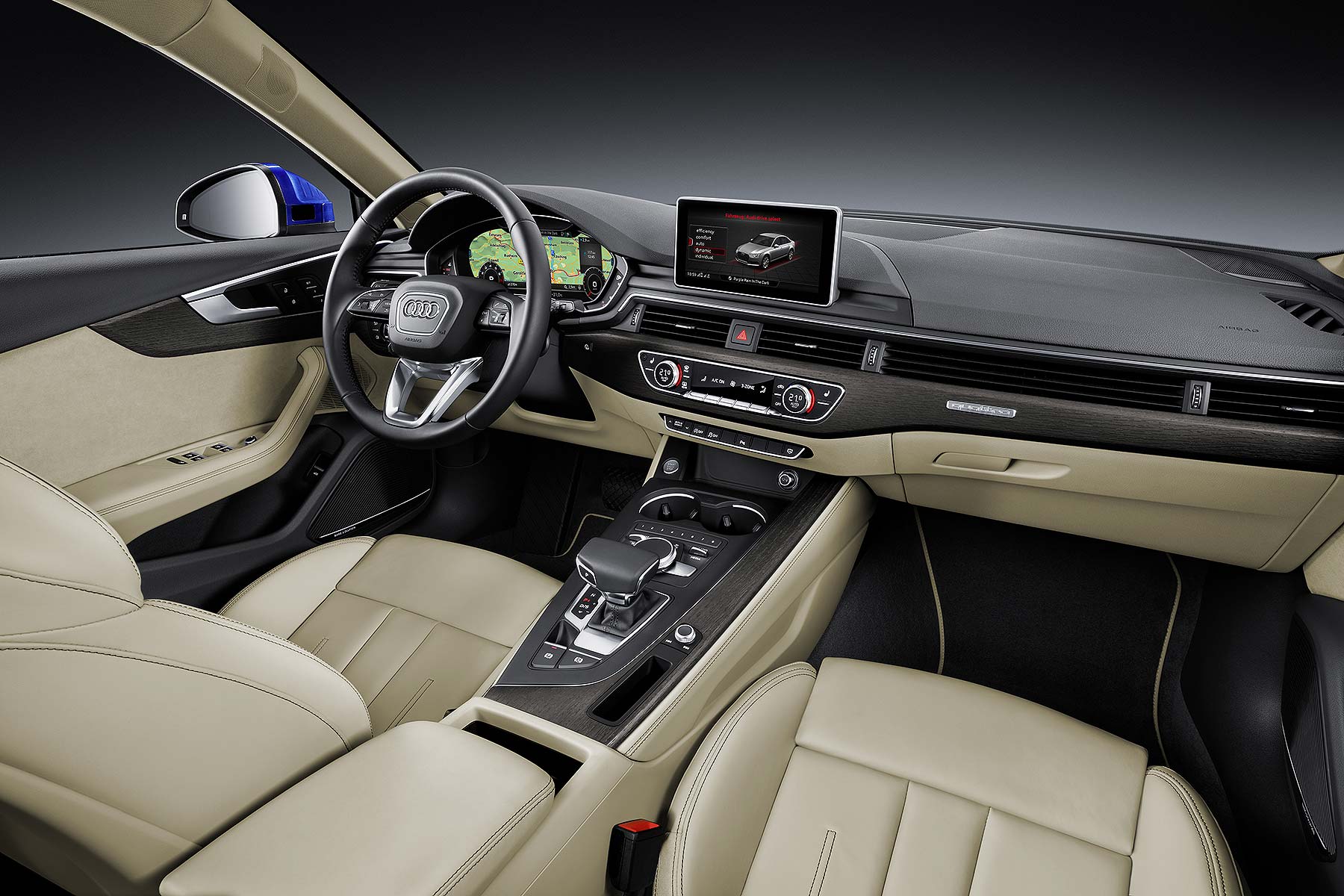
One of the most striking features of the new Audi A4 is its new virtual cockpit, first seen in the new Audi TT. Now, this isn’t standard on all A4s, but does create a striking look for cars optionally fitted with it: the full-width display in front of the driver is a striking feature.
Unlike the TT, all A4 come as standard with an MMI display in the centre of the dashboard, of at least 7 inches’ diameter. Audi’s claiming the interior is now the quietest in the class.
New Audi A4: tech highlights
Under the bonnet, there’s a fully updated range of engines that benefit from the light weight and aero efficiency: Audi claims just 95g/km for the greenest version of the 2.0 TDI 150 ultra – without hybrid assistance.
A new 2.0 TFSI 190, with a trick new combustion system, can emit as little as 109g/km CO2. There’s also a punchy 272hp 3.0-litre TDI six-cylinder. UK CO2 figures are, however, still to be confirmed: due to our love of larger alloy wheels, they might be a bit higher.
Exhaust tailpipes are an indicator of which engine’s on board: single for base motors, double for TDI with 190hp or more, or dual for TFSI engines with 190hp or more.
Audi’s standardised Xenon headlights on all new A4, previously only fitted to S line models and above. Why? Because it now offers both full LED and the trick matrix LED headlights first seen on the A8 as an option.
The body is up to 120kg lighter, with the base model (a to-be-announced 1.4 TFSI) weighing just 1,320kg (albeit empty and without a driver). Audi’s achieved this without extensive use of aluminium, either: just the tailgate is made from the material it’s strongly associated with.
Official kerbweight of the Jaguar XE, which is made from 75% aluminium, start from 1,475kg.
Audi’s promising handling has made “a great leap forward”, with redeveloped five-link axles and new EPAS power steering. it rides better too, and there’s a plethora of suspension tech on the options list including adjustable dampers that “the driver can for the first time select between two settings: sports or comfort”.
This Audi drive select suspension system is standard on new A4 with engines producing 190hp or more.
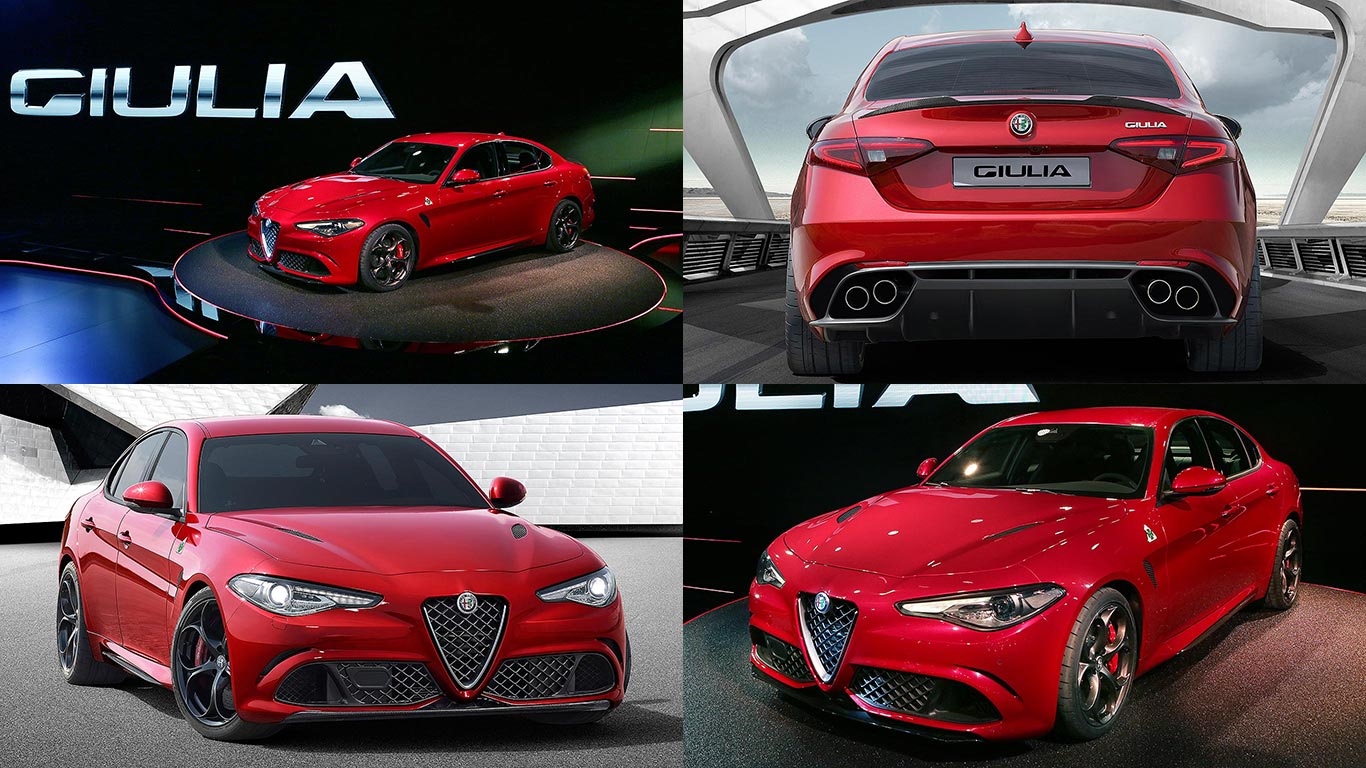
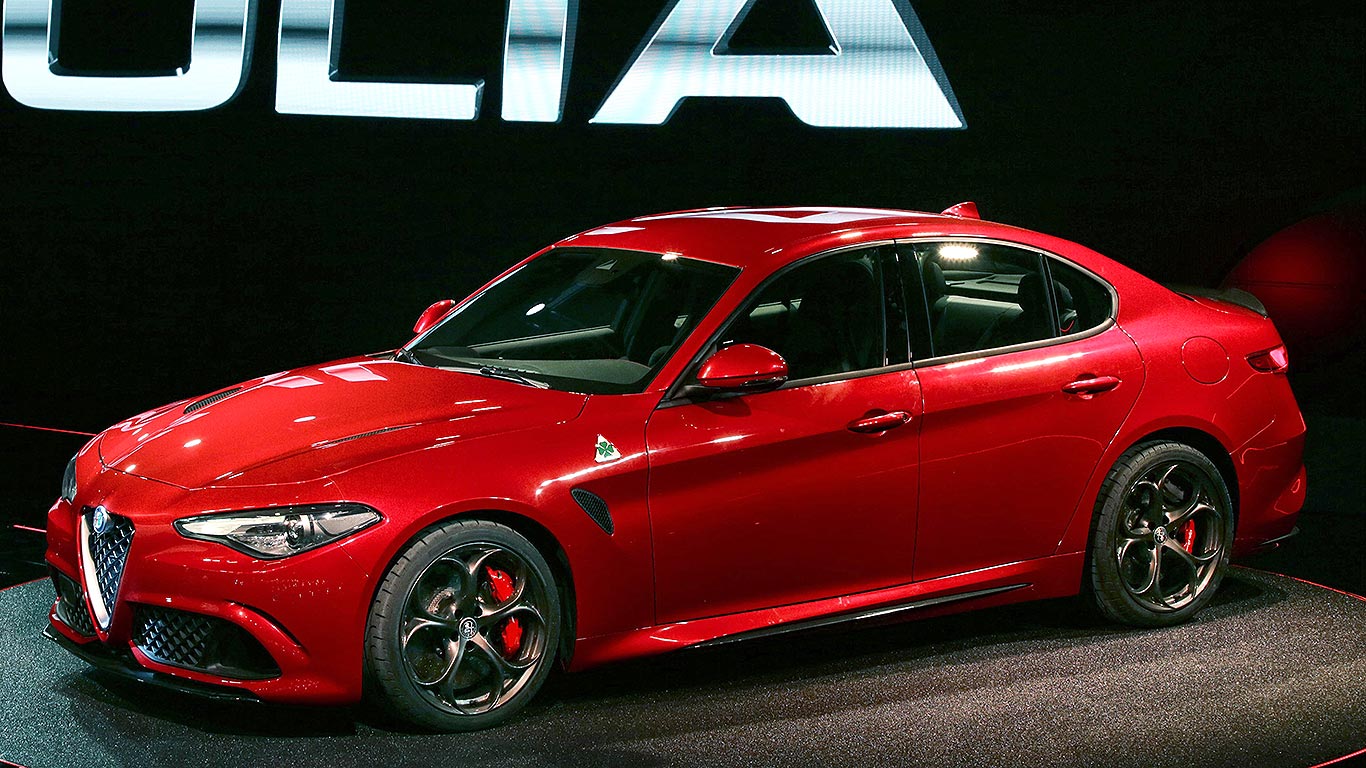
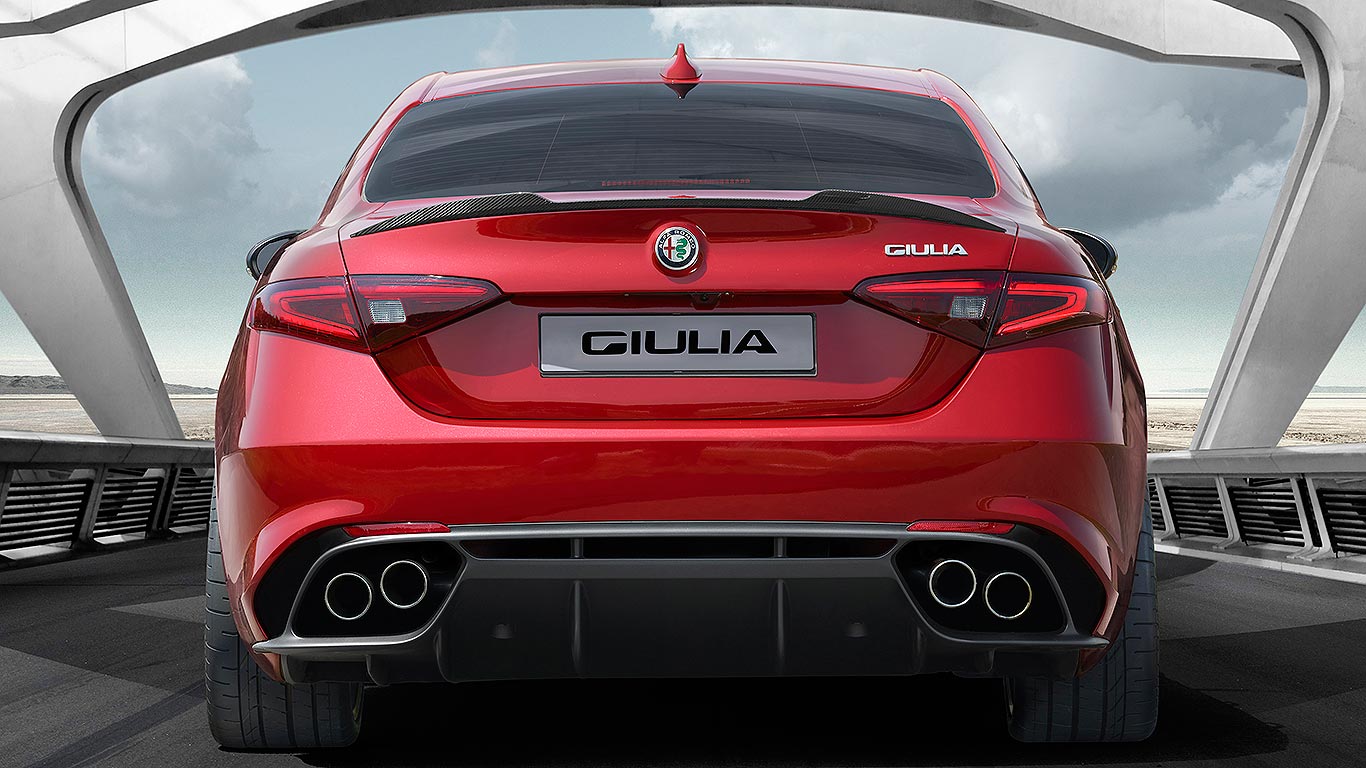
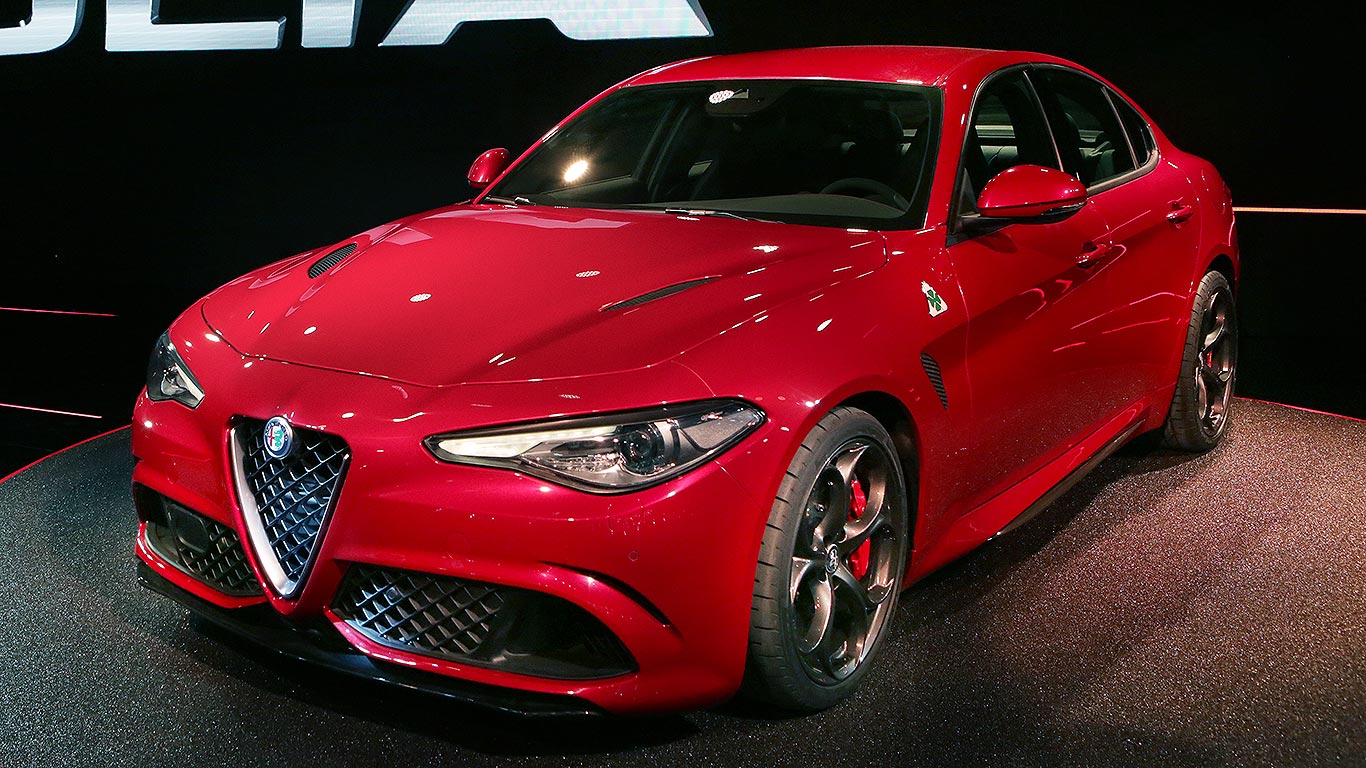
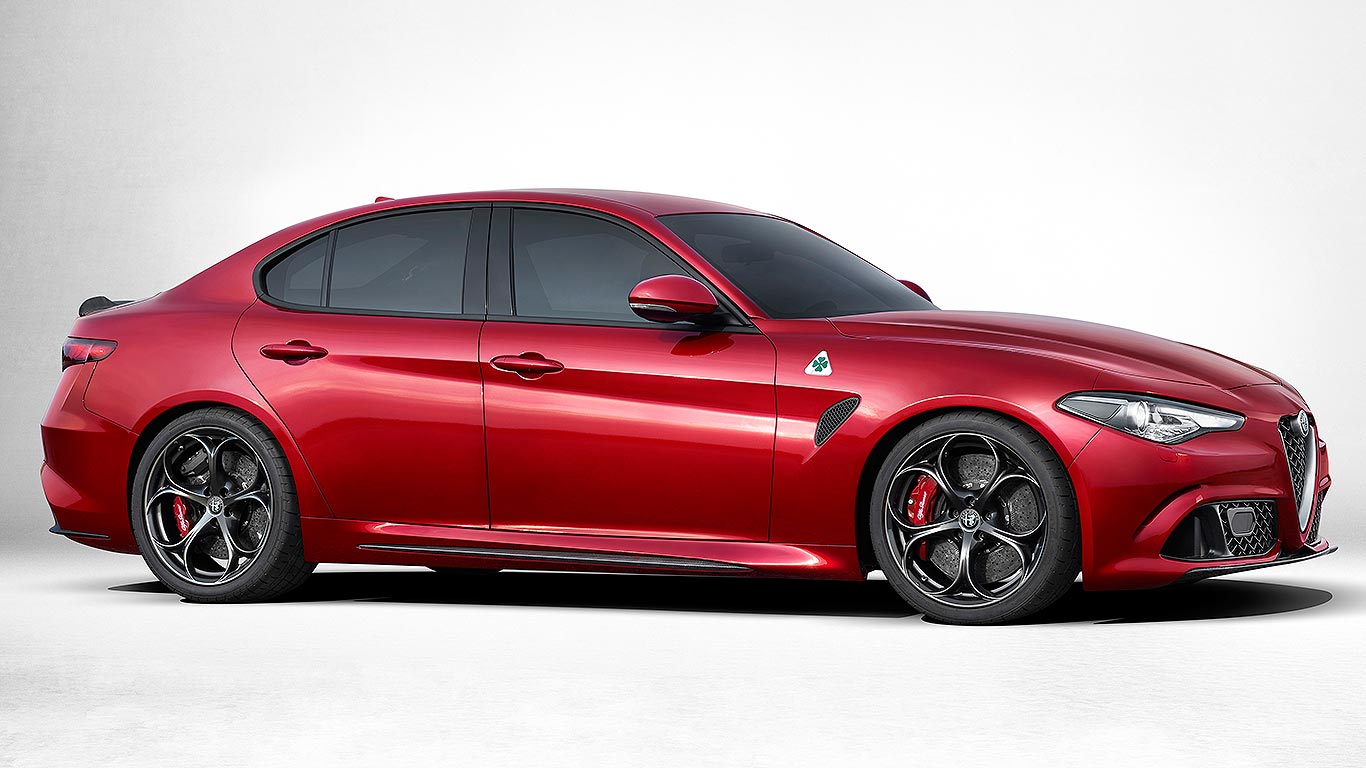
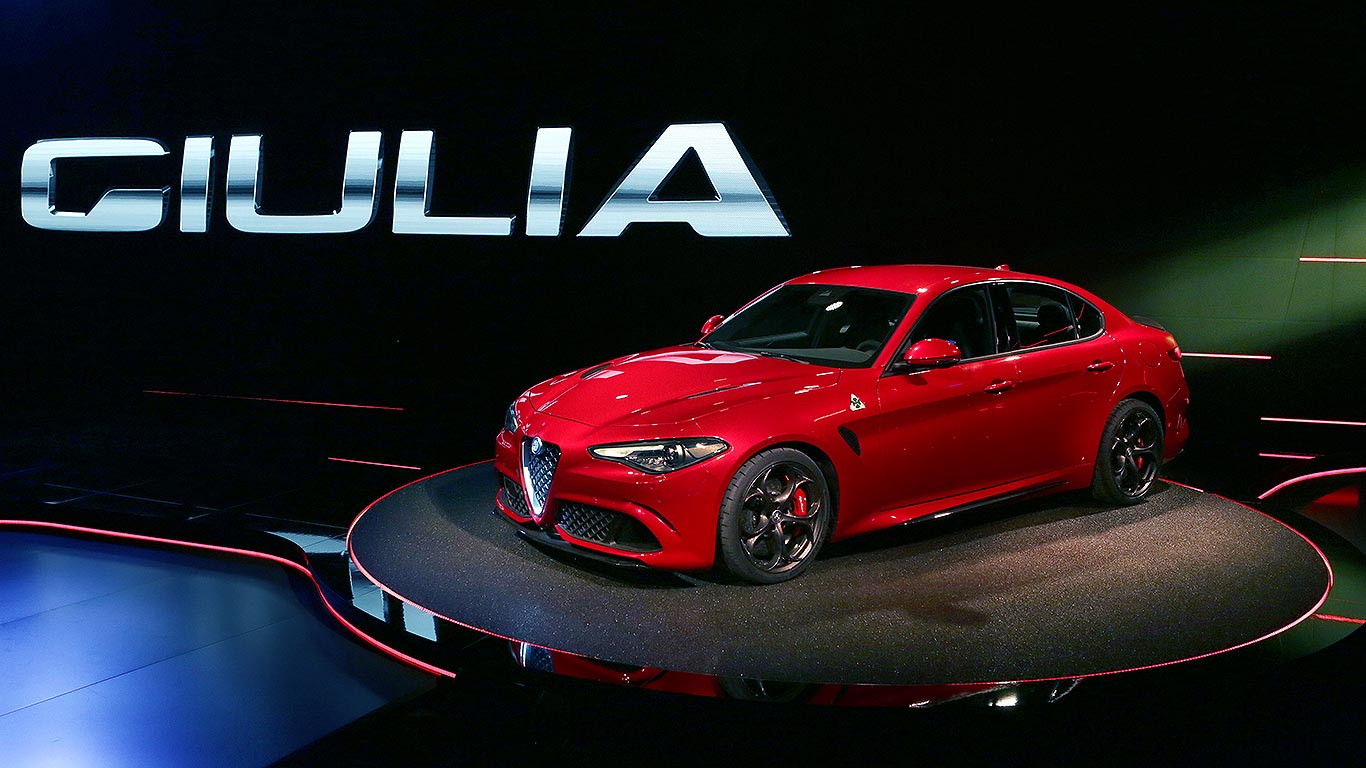
Alfa Romeo’s vital new Giulia four-door saloon has been revealed in a massive event in Italy. The car with the entire future of the brand resting on its shoulders, it’s been more than half a decade in the making, but finally revealed here – in full!
Revealed in full: the new 2016 Alfa Romeo Giulia
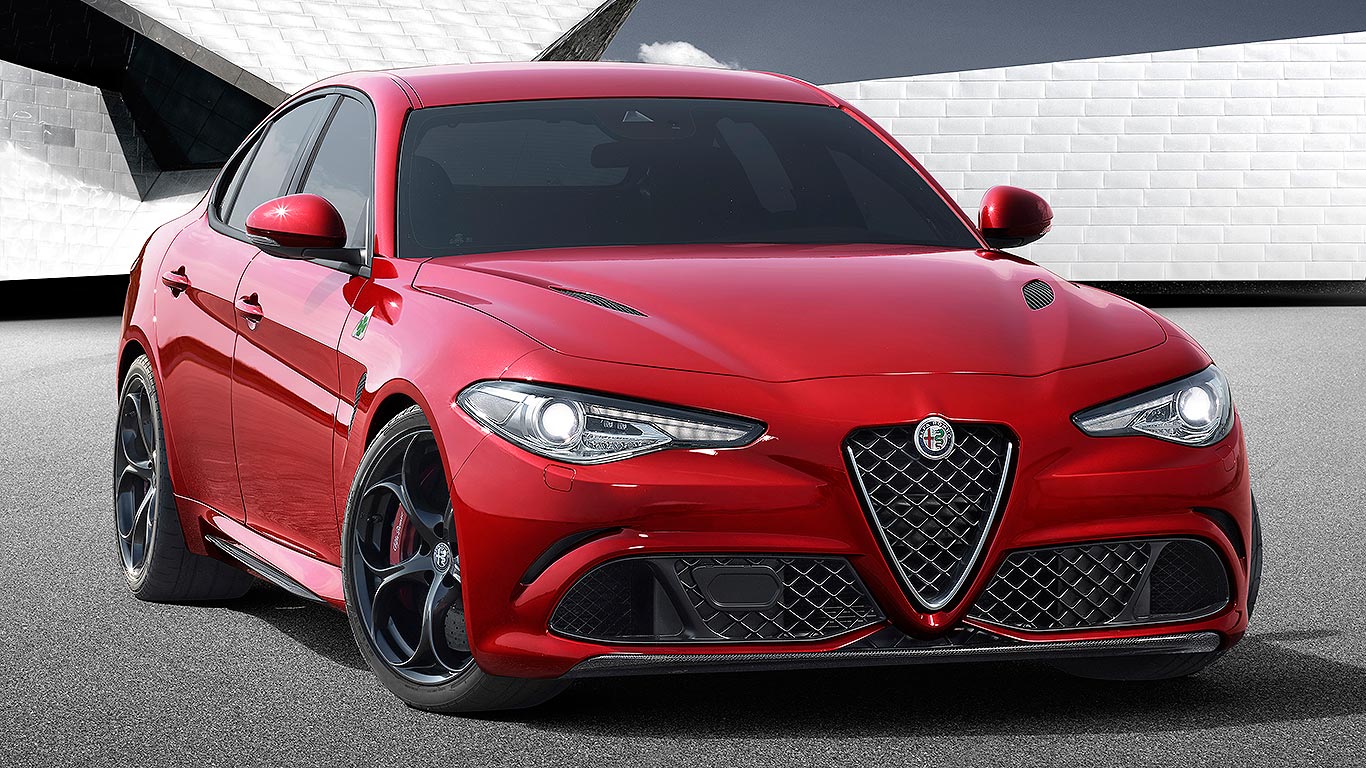
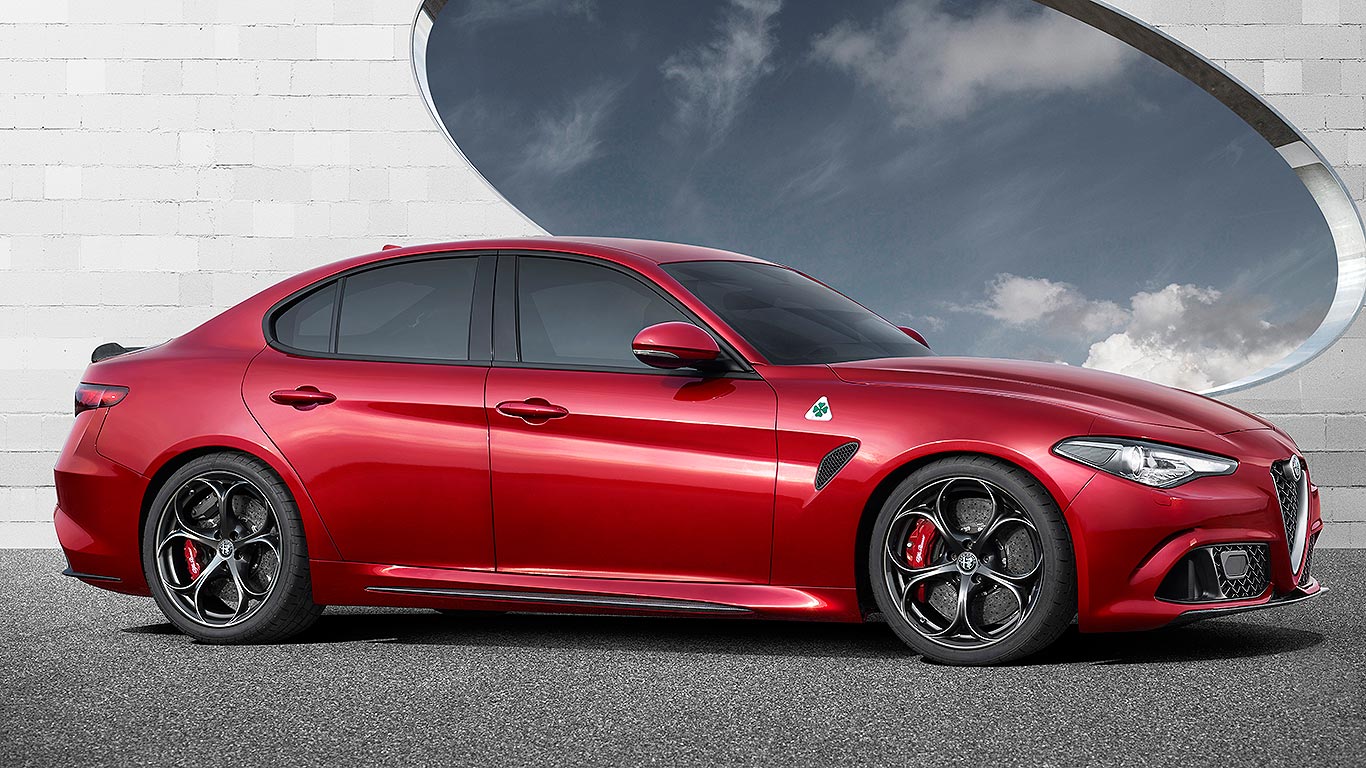
And this is how Alfa Romeo will take on the 3 Series: with the striking new Giulia saloon. Unashamedly sporting, it’s a very striking machine that is certain to give the competition something to think about. First impressions? Very positive indeed…
What does the 2016 Alfa Romeo Giulia look like?
Just one look tells you the Giulia is a proper sports saloon. None of the subtlety of the German (and British) competition – Alfa’s gone all out with a long bonnet, short overhangs, huge air intakes and outlets, muscular wheelarches, a big grille and, for the range-topper, a genuine competition-style cloverleaf on the front wing.
What sort of car is the 2016 Alfa Romeo Giulia?
The Alfa Giulia is, joy of joys, a rear-wheel drive four-door saloon, in the classic manner followed by BMW, Jaguar and Mercedes-Benz. There’s an all-wheel drive version too, but even here, the focus will be on sportiness.
So this is Alfa Romeo’s BMW 3 Series?
We should indeed call the Giulia Alfa’s 3 Series. And Alfa’s being bold in claiming it can take on the 3 Series in the area it masters – driving dynamics.
What will the Alfa Romeo Giulia drive like?
With the fastest steering in its sector, bespoke double wishbone front suspension, perfect 50/50 weight distribution and the best power-to-weight ratio in this class, the ingredients are certainly there. Alfa’s disappointed in the past with how it’s tuned its cars, though: this has to be right.
Is Alfa targeting the BMW M3?
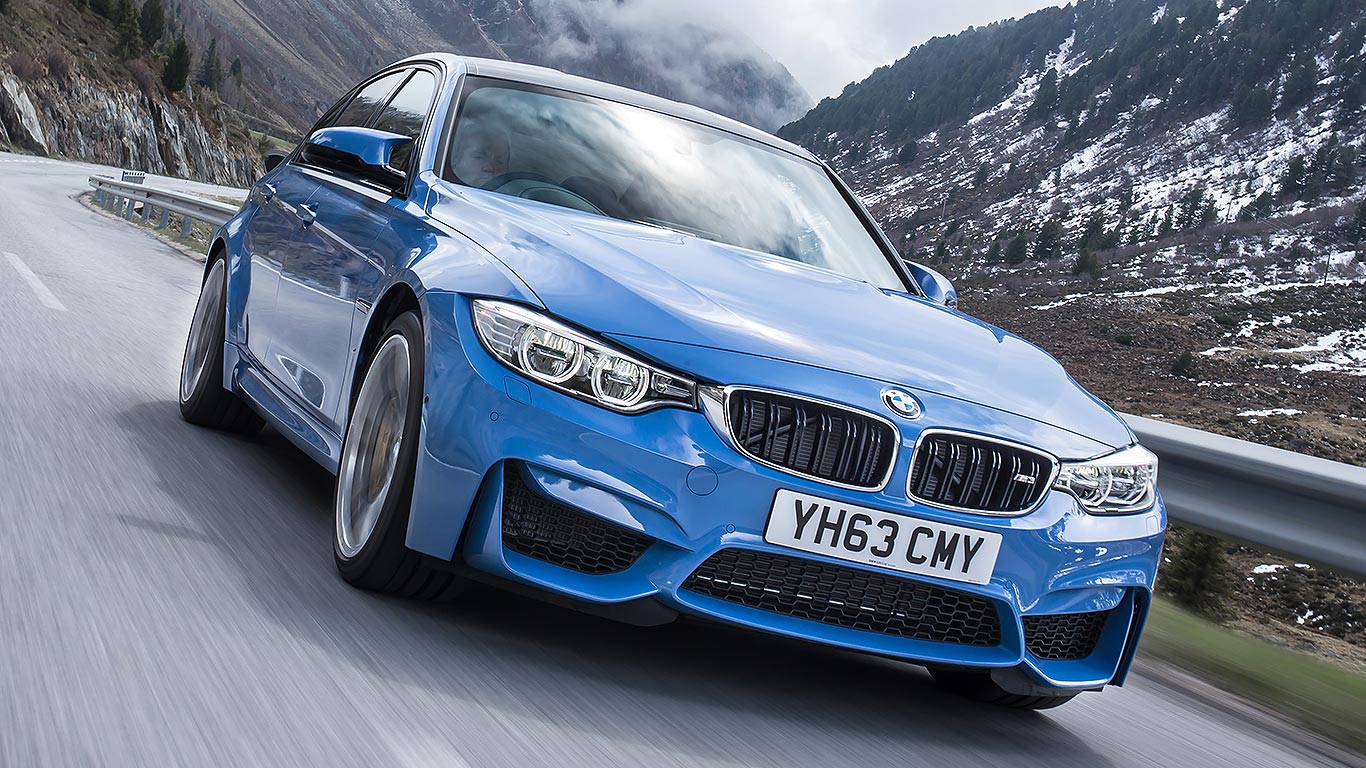
Surprise of the launch is the fact Alfa Romeo already has the BMW M3 in its sights! How? With a Ferrari-built 3.0-litre biturbo V6 Quadrifoglio Verde model, producing 510hp for 0-62mph in 3.9 seconds, that’s how. Wow!
Does the Giulia use any advanced materials?
Alfa’s not spared any expense with the Giulia. To keep weight both down and well distributed, it has a carbon fibre propeller shaft, bonnet and roof, plus aluminium suspension, doors and wings. And expensive, thus promising, commitment.
What car does the 2016 Alfa Romeo Giulia replace?
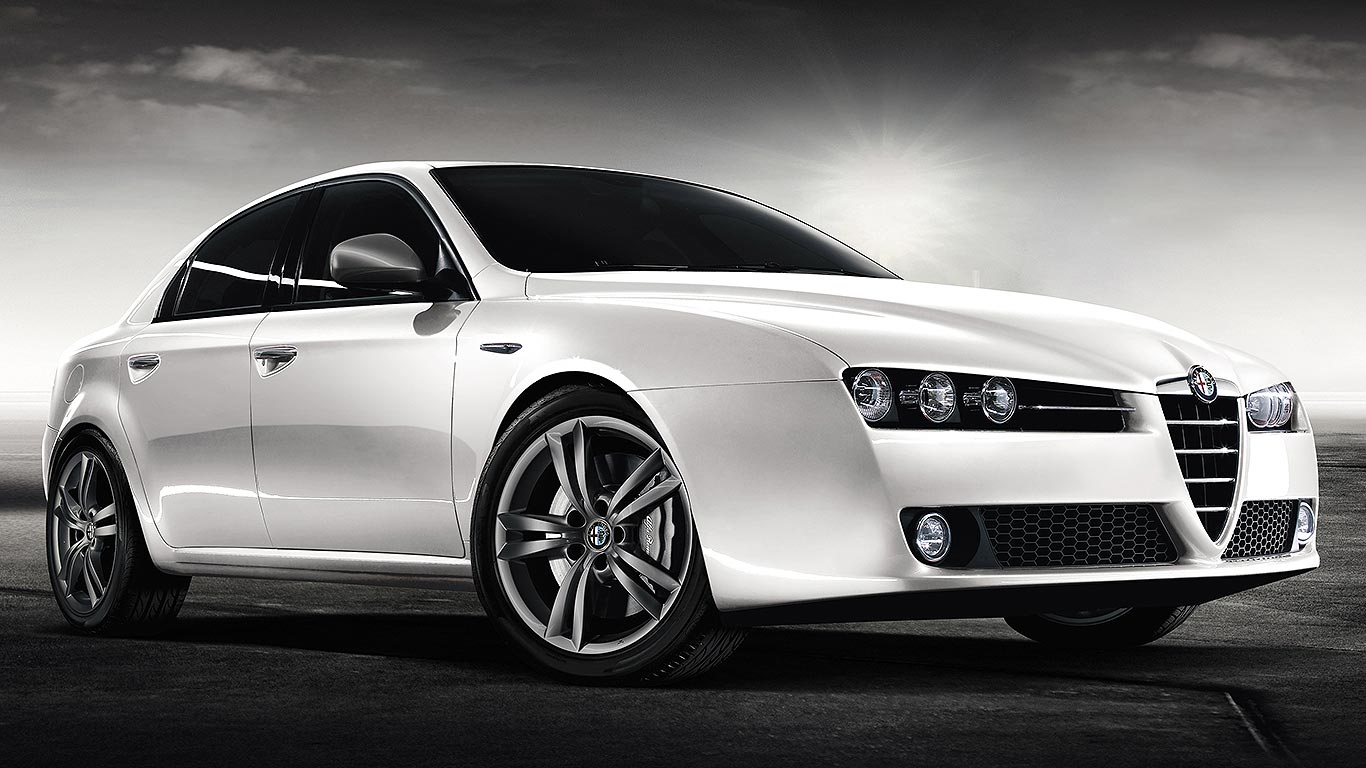
The new Alfa Romeo Giulia replaces the long-deceased 159. Although not a bad car, it still disappeared ahead of time in Britain in 2011, through simple lack of buyer interest.
Hey – what’s Alfa done to its badge?
Alfa’s redesigned its badge, but don’t worry – the little man is still there being eaten by the serpent. Around the outside, though, the Alfa Romeo script has been modernised.
What about the Giulia name?
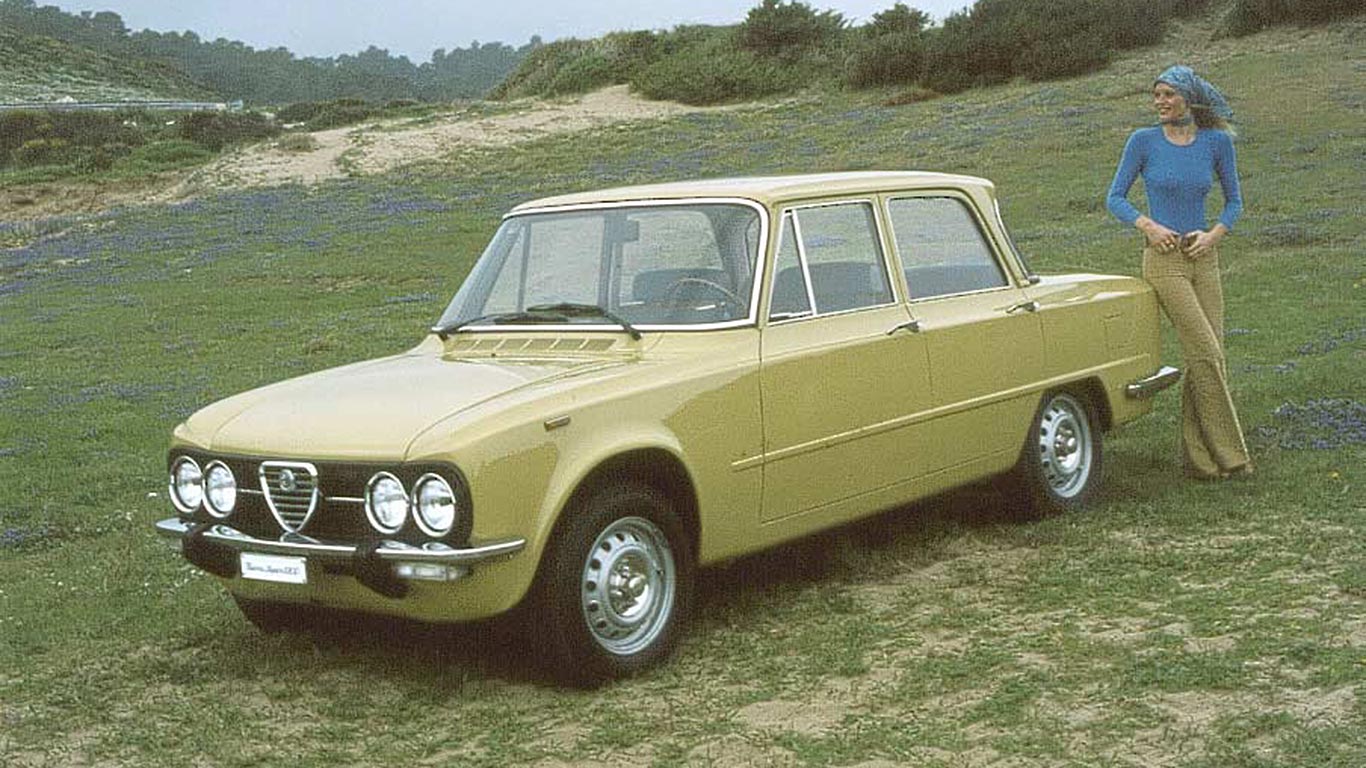
Alfa’s been through its back catalogue for the Giulia name – pronounce it as you’d say ‘Julia’. THe firm’s hoping this modern version will have the same success as the lovely original.
How important is the Giulia to Alfa Romeo?
This car is absolutely crucial to Alfa. If it fails, so too does the brand. Alfa wants it to lead a sales charge to 400,000 by 2018 – from today’s meagre 70k level. It has to be right…
When does the 2016 Alfa Romeo Giulia go on sale?
The new Giulia goes on sale in early 2016. Perfectly timed to take advantage of familiarity with the current crop of 3 Series, A4, C-Class and XE?
Anything else we need to know about the 2016 Alfa Romeo Giulia?
Simply put, this is the single most important car Alfa has ever made in its 105-year history. We’re going to be hearing a lot about the new Alfa Romeo Giulia in the build up to its 2016 launch, and rightly so. Over to you: does it cut the mustard?
Wörthersee is an alpine lake in southern Austria that each year becomes home to more than 200,000 custom Volkswagen Group car enthusiasts.
Backed by Volkswagen Group, the Wörthersee GTI-Treffen motoring festival showcases the most radical Volkswagen, Audi, SEAT and Skoda custom-built cars and is a key date in the European VW enthusiast calendar.
Held in the seaside town of Reifnitz, it’s been running since 1981 (usually in May) and the 2015 Wörthersee event will be the 34th event.
Europe’s largest event dedicated to Volkswagen and Audi is used as a showcase by the Volkswagen Group for its apprentices and interns: they usually create Wörthersee specials as official projects backed by the firm.
This year, Skoda will be showing five apprentice specials at the 34th Wörthersee GTI-Treffen, while Volkswagen will be showing a Golf GTI Clubsport concept and Audi has confirmed a TT Clubsport turbo concept.
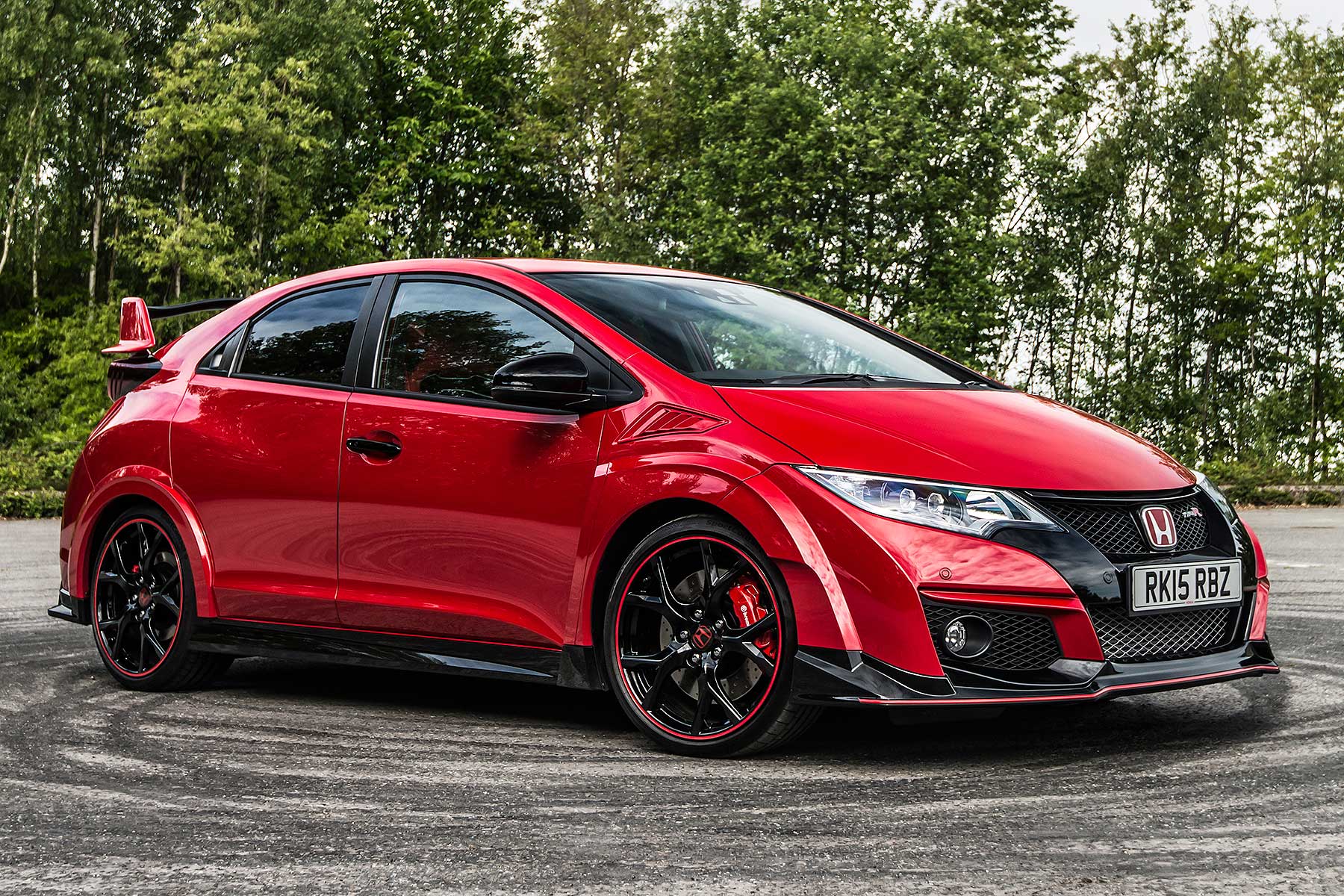
Honda has taken ages launching the new Civic Type R. Years, in fact. Some never expected it to ever arrive but now it’s finally here, going on sale in Europe this summer with a set of stats that knock every rival into shape.
It’s the fastest, quickest-accelerating, most powerful hot hatch in the sector. It’s certainly the most outlandish-looking. And, with prices starting from £29,995, it’s certainly one of the most expensive too.
Honda Type R: a history in pictures
But chasing headlines is one thing. Delivering on the road and on the track is another. Honda, though, has delivered, and then some. Here are seven ways in which it’s rewritten the hot hatch rulebook.
1: It looks quite amazing
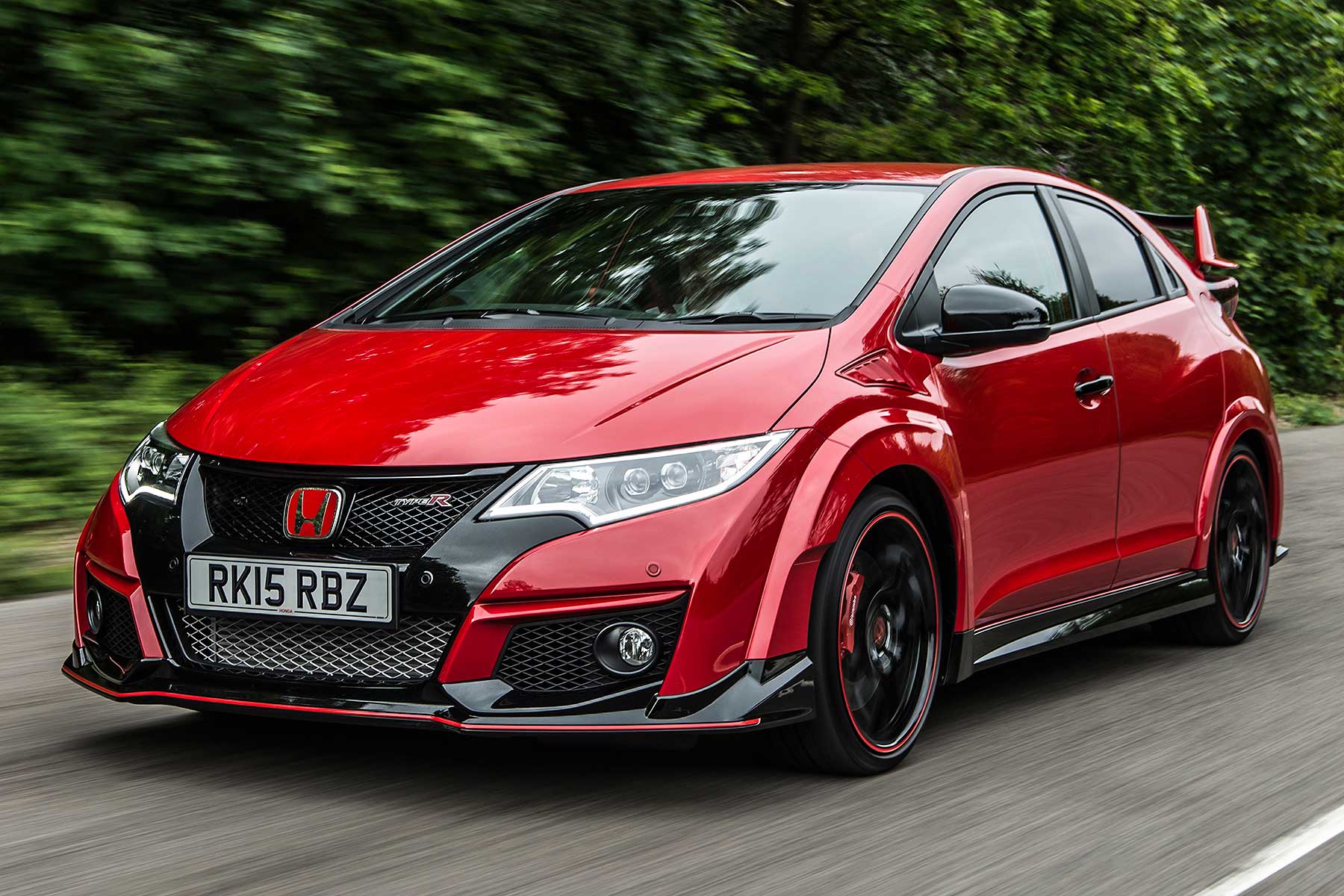
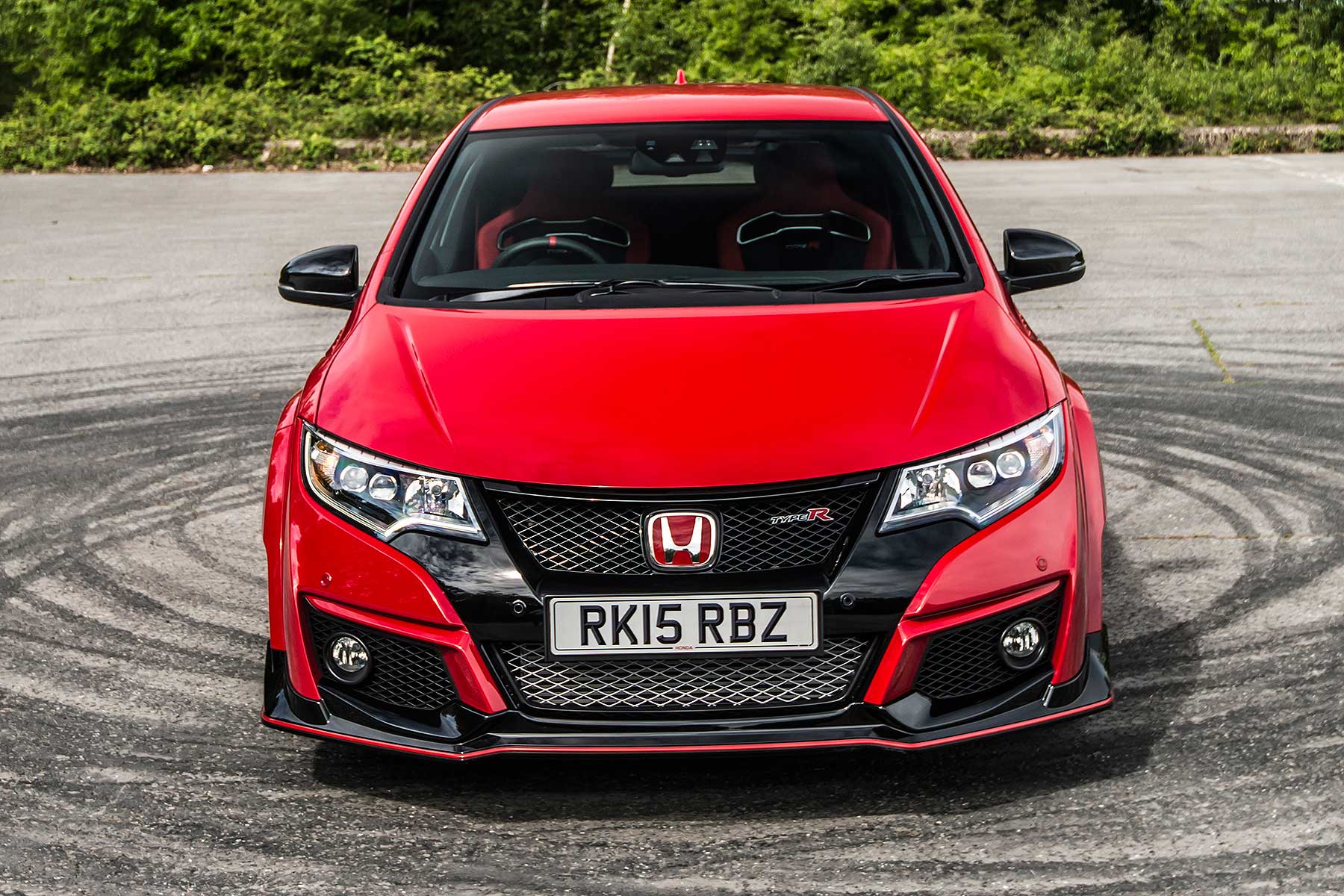
There’s not a hot hatch on the market that looks as exciting as the Civic Type R. With its flared arches, multi-vented front wings, wrap-around front splitter, huge 19-inch alloys and, of course, god’s own rear spoiler, nobody could possibly confuse it for anything else. It’s wow factor overload.
The rear wing is so big, it casts shadows on the ground and pokes out both sides of car into the view of the door mirrors. It’s not just ‘big’, either, but complex in shape and sculpture: Honda’s WTCC racing team has designed it to produce downforce at speed.
You can get it in classic Type R Championship White, but we preferred the launch red alternative, which looked even more bespoke, purposeful and race-ready. Here is your hot hatch equivalent of the Porsche 911 GT3 RS.
2: It combines space and practicality with a monster set of seats
First thing we noticed inside the Civic Type R was the colossal 498-litre boot. It’s as unexpectedly deep as, well, a 911’s front trunk is (mounting the fuel tank in the centre’s how they’ve done it).
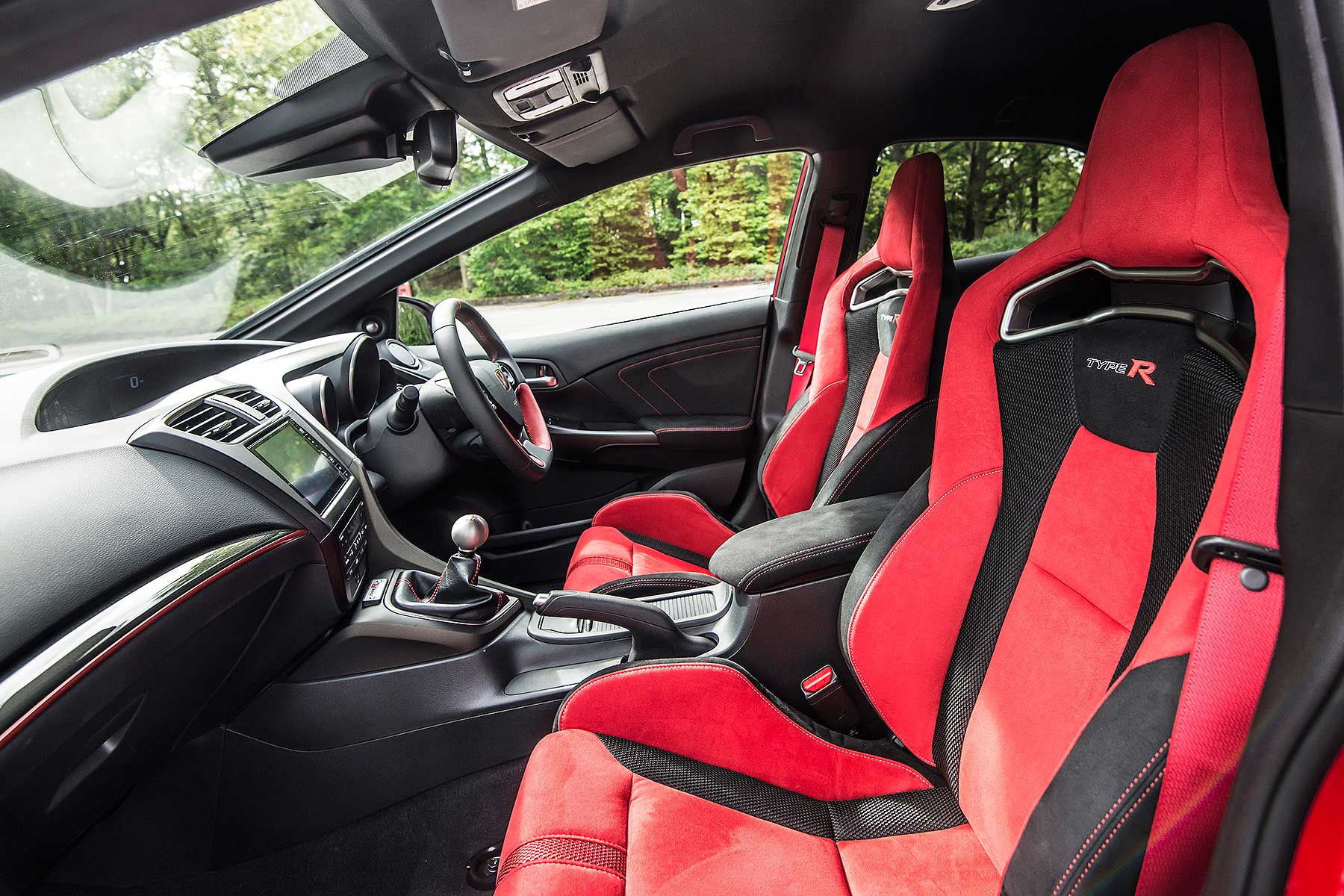
Then we opened the rear doors (it’s five-door only) and clocked the unexpectedly spacious rear, with loads of legroom despite the chunky high-backed front seats. It’s probably the most practical, family-friendly hot hatch out there.
And then into the front, to be presented with a simply brilliant set of front bucket seats. They sit you 20mm lower than a standard Civic (a bit lower would be nicer still) and are so deeply and firmly bolstered, it hurts you to get in and out of them if you drop in like a normal car.
Instead, you need to get in and out like a racing driver. Which is rather fitting, really.
3: It’s got serious attitude
Pressing the starter button fires Honda’s first-ever turbo VTEC engine into a rumbly, focused tickover. It’s ‘there’, alright. The first time into first will have you double-shifting to check it’s actually selected – that’s how short-shift the ultra-snappy gearbox is.
Right away, it shows its attitude. In town, the ride can be painfully firm as the bespoke Continental tyres clatter into potholes and over expansion joints. Both engine and exhausts are prominent, and the gradual explode as turbo boost builds with higher revs is grin-inducingly lively.
With its black cabin, central rev counter, small flat-bottom steering wheel, taut seats, surface aggression, quick-witted steering and fast-reacting front end, the Civic Type R had attitude, alright. As speeds build, you discover it’s of the serious and skilled sort.
4: It’s an explosive performer
VTEC AND a turbo? 310hp, 295lb ft of torque, 0-62mph in 5.7 seconds and a 167mph top speed? Guess what – it’s fast. It’s not the manic sort of speed that you got in the old Type R, where all the go was delivered at howling revs just shy of the redline.
No, this is the explosive sort of performance: way more speed than you expect is served up way more quickly than you think. It’s more subtle than non-turbo Type Rs but, at the same time, more purposeful, giving more bang for buck.
It isn’t like some other turbos, where you get loads of easy-going shove at low revs. There can be a bit of lag in the mid-range and you’ll still have to use the ultra-fast gearshift more than you do in a SEAT Leon Cupra. Sure, it’s not as flat as the older Type Rs at walking revs – but boy, does it share their love of revs.
You still naturally howl it past the 4,000rpm boom patch and keep it in the loud, aggressive-sounding 5,000-7,000rpm zone, because this is where it relishes being. Here, it’s positive, double-take fast, thrilling and spoiled only by the sudden onset of the rev limiter at the 7k redline.
Throw it into another gear at rifle-bolt speed and let the perfectly-spaced gear ratios take you straight back into the engine’s sweet spot. And chase after that Porsche Cayman you’re keeping honest.
5: Would you believe, it can handle all its power?
ALL that power through just TWO front wheels? Is Honda serious? At the first bootful, you expect either the front tyres to light up, the traction control to go into overload or the front end to torque steer plain off the road – or a fantastic combination of all three – so it’s little short of amazing to discover it does none of this.
Instead, the front wheels bite and cleanly let the fiery engine’s full whack take effect. Just the odd tweak of the steering wheel and tiniest bit of front end sniff let you in on just how jolly hard the helical limited-slip differential and its associated components are working.
It’s not through accident, this rewriting of the front-wheel drive rulebook. Honda’s developed double-axis front suspension to minimise the lever effects of torque steer. Tirelessly developed the Continental tyres’ characteristics. Even engineered two grades of material elasticity for left and right driveshafts so that they bend at the same rate despite being different lengths.
6: It’s hardcore without being hard-edged
As you’ve perhaps guessed, the Civic Type R hasn’t gone soft. The engine is loud, exhausts snort, the ride can bite, the seats can bite and you’ll easily make mincemeat of almost every other hot hatch you’ll encounter.
But it’s not too much. At speed, it cruises with surprisingly little wind or tyre noise (only the engine remains prominent, and we quite like that). The high-speed ride quality is unbelievably fluid, supple and controlled – adaptive dampers are standard and they give controlled cushioning some big wheel’d rivals can only dream of.
The extra torque over a non-turbo VTEC makes everyday driving a whole lot easier too, particularly when the pedals and gearshift operate with this much racecar precision.
That’s the difference between this car and the old Civic Type R. That was hard-edged and, at times, too much. This one has all the attitude but only rarely crosses the line into truly uncomfortable aggression.
Even when you purposefully ask for more attitude and press the ‘R+’ button on the dash – dials go red, dampers go 30% stiffer, steering goes heavier, engine response goes faster – does it stay sane. It’s a sport mode that actually works rather than just making things a bit more frenetic.
The Renaultsport Megane Trophy-R probably still edges it for on-centre steering feel and sharpness. Its more uncompromising chassis setup means the right-roads interaction might shade the Civic Type R. But it’s the more intense, more full-on experience of the two as a result. That the Civic gives all the hardcore thrills it does without doubling the Megane’s more hard-edged nature is quite something.
7: It’s temptingly affordable
£30,000 is a lot for a hot hatch, at first glance. But it’s not so much for a 310hp hot hatch, and it’s a full £8,000 cheaper than the Renaultsport Megane Trophy-R whose Nurburgring lap record Honda earlier this year announced it had stolen.
There’s a Type R GT too, adding more luxuries, sat nav and a better stereo for a £2,300 lift: spot these cars on the road from their red stripe detail in the front and rear bumpers.
It does 38.7mpg and emits 170g/km CO2, so will go further on a gallon and cost less to tax than the old Type R, and Honda will even sell you five years’ servicing for a mere £500. Remarkable.
Best of all, you can buy it for £300 a month. OK, you need a 30% deposit, but it’s still one of the best hot hatches you can buy for a mere £10 a day. £10 a month more will get you into the GT too, adds Honda.
VERDICT: 2015 Honda Civic Type R
The 2015 Honda Civic is a searing hot hatch that brings proper attitude and double-take performance to the sector. As rivals become more urbane, it’s a welcome blast of Type R past, one that’s been made more contemporary thanks to turbo tech, smart differentials and suspension setup, clever dampers and other surprisingly exotic technologies for a £30k car.
It shouldn’t work: Type R enthusiasts should hate it as it’s a turbo Type R, but they’ll love it as it’s still a revvy VTEC at heart. And purists should hate it because it goes against everything we’re told about how much power you can put through two front wheels, and makes it work with hungry, sharp-tooth’d bite.
It’s a welcome addition to the blossoming hot hatch sector, and a welcome return to form for Honda and Type R. Right now, as the Renaultsport Megane ages, the Golf GTI awaits more power and we await the Ford Focus RS, it might just be the best big-bang hot hatch out there.
‘The car…will feature the traditional TVR DNA of a front engine with rear wheel drive and a manual transmission, powered by a normally aspirated, dry-sumped, V8 engine, developed and engineered by Cosworth’.
If that’s not a reason to be cheerful, we don’t know what is.
It means TVR is back and in 2017 you will be able to buy a brand new car designed and built by the former Blackpool-based company. But hang on, haven’t we been here before? Didn’t we all get over-excited about the prospect of a reborn TVR under Russian ownership, only to see our hopes disappearing in a cloud of blue smoke?
Things are different this time. The current management team acquired the TVR brand in 2013, with chairman, Les Edgar, at the helm. Yes, that Les Edgar – the one famous for heading up computer games developer, Bullfrog Productions.
Secondly, TVR has chosen to join forces with Gordon Murray Design Limited, who will deliver a composite ground effect aero chassis and body package using the company’s iStream technology. In basic terms, iStream is a simplified assembly process, meaning a manufacturing plant can be 20 percent the size of a traditional factory. This in turn reduces capital investment costs by approximately 80 percent – a sizeable chunk for a fledging and low-volume sports car company.
And if that’s not enough, the project is said to be over a year into its development, making the aim of delivering a production-ready TVR by 2017 a realistic prospect.
Prices and production volumes are to be announced, but we wouldn’t expect TVR to stray too far away from its market positioning of the past. Indeed, TVR is promising a ‘competitive price point’ and we forecast volumes of between 1,000 and 1,500 a year. The new cars will be designed and built in the UK, with TVR claiming to reestablish the much-loved firm as ‘an all-British institution.’
Les Edgar said: ‘We know that a new TVR has to be better than just good – it has to be outstanding. From the outset we only wanted to work with the best partners in the business, and both Gordon Murray’s and Cosworth’s track records within motor sport and high performance car design and engineering speaks for themselves.’
For his part, design and engineering guru, Gordon Murray, said: “TVR is an iconic brand which has been an important part of British sports car manufacturing for many decades. Its return to manufacturing is an exciting development and the car deserves the best chassis and powertrain that can possibly be delivered.’ Given what Murray achieved with the McLaren F1, you’d forgive us for getting a little excited about his involvement with TVR.
Sceptics will argue that this is little more than a pipe dream and that TVR failed for a reason. Founded by Trevor Wilkinson in 1947, TVR established itself as one of Britain’s favourite low-volume sports car manufacturers. Blackpool’s Peter Wheeler took over in 1981 and went on to deliver a number of lightweight cars, rear-wheel drive cars with a meaty engine sat at the front.
Names like Cerbera, Tuscan, Chimaera, Griffith and Sagaris will stir the soul of petrolheads across the land. But TVR was ill-equipped to deal with the increasing demands for safety and emissions regulations and the company was sold to the son of a Russian billionaire in 2004. Sadly, this came to nothing.
Things should be different this time. TVR is said to be ‘well-funded and well-supported’ and with Cosworth and Gordon Murray on board, it has to of the most respected names in the business. Crucially, even a decade on from when Peter Wheeler shut up shop, the TVR brand remains strong. There will be no shortage of people keen to part with their cash for a well-engineered sports car wearing a TVR badge.
We’d be quite happy to see a re-born and re-engineered Sagaris, but the company is promising something all-new. Who knows, perhaps the company will produce some heritage models, in the same way Jaguar delivered the lightweight E-Type. Well, we can dream.
The European Commission has approved a new Real Driving Emission (RDE) test in response to criticisms the current NEDC fuel economy test is outdated and misleading.
From 2017, the RDE test will become part of the type approval process for all cars sold in Europe. It will include an element of ‘real world’ driving using a portable emissions measurement system.
This means that emissions testing will move outside the laboratory for the first time, enabling real-world driving emissions to be compared with laboratory-tested results.
The news comes after The Sunday Times and testing company Emissions Analytics discovered that many Euro 6 diesel cars far exceeded lab-tested results in real-world driving.
The average variance was a hefty 4.4 times the legislated limit but some cars were far worse, particularly in terms of NOx emissions.
The firm did, however, report improvements over outgoing Euro 5 emissions of nearly 50%; “We believe the manufacturers, anticipating this legislative change, have really stepped up their game and the results are encouraging, although still mixed,” said Emissions Analytics CEO Nick Molden.
Car makers agree – but are concerned
European car manufacturers have agreed that “a new and fully updated Real Driving Emissions test is needed to better measure NOx emissions”.
The European car makers association, ACEA, did however add that “the decision is by no means the end of the discussion on RDE, as what was greed is just a partial set of evaluation conditions for real driving emissions”.
Mr Jonnaert, Secretary General of ACEA said: “ACEA calls on the Commission to urgently deliver a complete proposal for Real Driving Emissions by June or July at the latest for a positive decision in the regulatory committee. We need to make more progress on clarifying all testing conditions to ensure a robust RDE regulation could commence from September 2017.”
He did add that car makers are worried. “Automobile manufacturers remain concerned about the piecemeal approach the Commission is taking in preparing this proposal.
“This is not smart regulation. We need clarity in advance so that we can plan the development and design of vehicles in line with the new requirements.”
Automatic emergency call – or eCall – will be fitted as standard to every new car sold in the EU from 2018 following a vote today by the European Parliament.
This will potentially save over 2,500 lives in the EU in one year alone, estimate politicians.
eCall is technology built into cars that can detect the severity of a crash and automatically dial the emergency services. Using speakers and microphones, it can connect occupants with an operator even if they’re trapped within the car.
The system will automatically send information on the type of vehicle, the fuel used and the time of the accident. Crucially, it will also send the location of the crash, potentially cutting minutes or even hours from the time it takes emergency services to reach an accident.
“The European Parliament has repeatedly stressed that reducing deaths and the severity of injuries on the roads is its priority,” said rapporteur Olga Sehnalova from the Czech Republic, speaking on behalf of politicians.
“eCall as a public service, free of charge for all citizens, irrespective of the type of vehicle or its purchase price, will contribute to that common goal.”
Road accidents in the EU cost 25,700 lives in 2014. eCall could cut that by an estimated 10% a year.
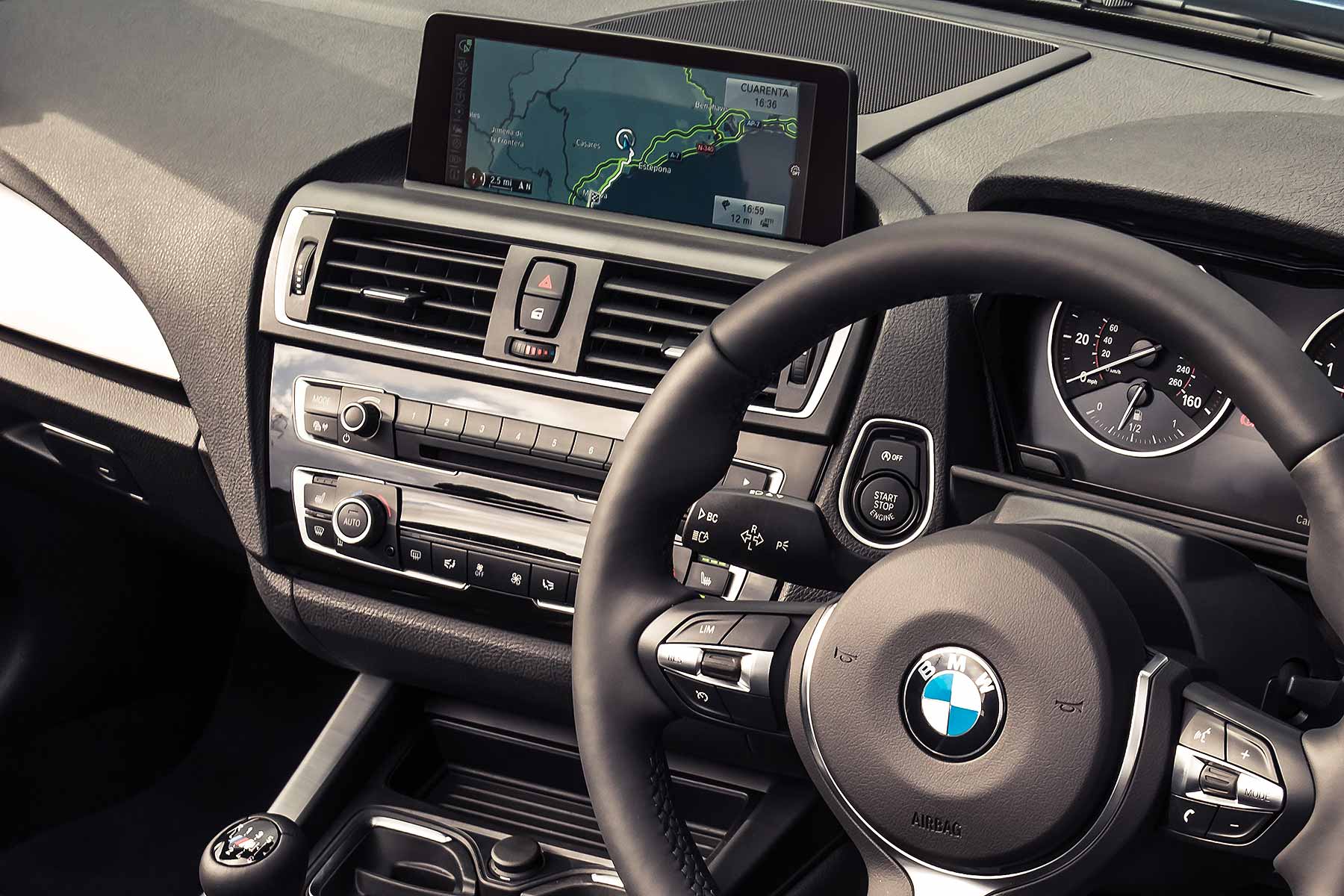
BMW is to become the first volume premium car brand in the UK to fit satellite navigation as standard on all new models from September 2015.
Starting with the new generation 1 Series, now arriving in UK dealers, the firm will move to include sat nav on all new cars where it isn’t already standard – beating premium rivals Audi and Mercedes-Benz which currently charge for the feature on key affordable-price variants.
The newly standardised BMW Navigation system won’t be a stripped-back system either; it will have the latest generation graphics and processors, 3D city modes and a fuel-saving Eco Pro routing algorithm to choose the greenest route.
It will also offer the full range of BMW ConnectedDrive services, including three years’ free concierge access, real-time traffic information and even wireless sat nav updates – with three years’ subscription to ongoing updates included in the car’s list price.
BMW claims the move is a market-first: no other car brand offers sat nav included in the list price of such a broad range of cars – from £20,000 to £120,000, says the firm.
It’s set to benefit secondhand values too, used value experts CAP has confirmed. Cars forecasting editor Jeff Knight said: “BMW introducing navigation across its entire model range is a first for any mainstream manufacturer in the UK and will inevitably pave the way for others to follow.
“On-board navigation systems now offer so much more technology than previously seen with the likes of 2D & 3D navigation map displays, traffic information and particularly with BMW standard e-call functionality which is a key safety feature.
“As well as having standard navigation across the range all BMW models will see an improvement on their residual value from between £300 to £600 (model dependant) so this is good news all round for the customer.”





 Wörthersee is an alpine lake in southern Austria that each year becomes home to more than 200,000 custom Volkswagen Group car enthusiasts.




 Automatic emergency call – or eCall – will be fitted as standard to every new car sold in the EU from 2018 following a vote today by the European Parliament.
 BMW is to become the first volume premium car brand in the UK to fit satellite navigation as standard on all new models from September 2015.