Home Blog Page 558

Budget 2016 motoring predictions: what can car owners expect?

0

Chancellor George OsborneChancellor George Osborne will deliver the 2016 Budget on Wednesday 16 March at 12.30pm – with many predicting there may be some costly surprises in store for motorists.

UPDATE: Read our complete guide to the key points for motorists confirmed in Budget 2016 – and how the industry has responded

The government faces a bigger black hole than was originally forecast and the Chancellor needs to find ways of raising revenue to make up the shortfall. As motoring costs are reportedly the lowest they’ve been in a decade, motorists may well be hit to bring in extra cash.

Ironically, motoring has already caused a headache for the Chancellor during writing the 2016 Budget – when he was disturbed this weekend by the latest scenes being filmed by Top Gear in Whitehall. Here’s hoping this doesn’t affect any last-minute decisions…

Here we run through some motoring-related predictions for the 2016 Budget and how they could affect drivers and car owners.

Fuel duty

The Chancellor is expected to raise fuel duty for the first time in five years in the 2016 Budget. It is likely to be at the rate of inflation, which would add 0.75p to the current fuel duty rate of 57.95p per litre of unleaded.

Government documents already show that fuel duty is expected to raise at the rate of inflation until 2020 so an increase may not be a surprise, but it would incur the wrath of motorists, particularly hauliers: an inflation increase could add £450 a year to the cost of running a truck, says one business owner.

The Chancellor may be encouraged to raise fuel duty because crude oil prices remain low, which has cut fuel prices at filling stations. But will he go further, and impose an above-inflation fuel duty increase?

Experts say a 2p per litre increase in fuel duty could raise £1 billion for the treasury…

UPDATE: fuel duty was not increased but FROZEN in Budget 2016. Read more: 2016 Budget – key points for motorists

Insurance premium tax

An increase in Insurance Premium Tax (IPT) is rumoured for the 2016 Budget. The Chancellor last increased it in July 2015 (coming into effect in November 2015), from 6% to 9.5%; AA sources say a further 3% increase in the 2016 Budget is likely.

This would affect car insurance premiums, meaning all motorists would pay more: car insurance premiums have already risen 13% in the past year. Research company Consumer Intelligence says the average car insurance premium is now £683 and a further increase in IPT would push it up yet further.

As such, any changes to IPT in the 2016 Budget are likely to have a significant impact on motorists.

UPDATE: IPT did go up – but by 0.5%, not the predicted 3.5%. Read more: 2016 Budget – key points for motorists

VED road tax

This is unlikely to change. In 2015, one of the biggest changes to Vehicle Excise Duty in years was announced, which is set to go live in 2017.

Under the new scheme, from 1 April 2017, motorists will be charged a first-year VED rate based on CO2 emissions similar to today’s scheme: the table for this is below.

After the first year, a flat-rate £140 on all cars is charged – there are no variations for CO2 emissions (zero emissions cars are still free). There is, however, an additional charge for cars costing £40,000 or more: an additional £310 a year is charged, for the first five years of the car’s life.

The Chancellor said at the time that this new scheme was being imposed because, under today’s rules, the vast majority of new cars pay zero road tax: under this scheme, all cars apart from zero-emissions vehicles will contribute.

VED car tax bands: April 2017 onwards
Emissions (CO2, g/km) First year rate Standard rate
0 £0 £0
Up to 50 £10  

£140

51-75 £25
76-90 £100
91-100 £120
101-110 £140
111-130 £160
131-150 £200
151-170 £500
171-190 £800
191-225 £1,200
226-255 £1,700
Over 255 £2,000
Cars costing more than £40,000 pay £310 yearly supplement for 5 years

Driverless cars

The Chancellor is expected to announce trials of autonomous cars will begin on UK roads next year: in the 2016 Budget, he will outline how this scheme will be financed (it’s expected to be part of the £100 million Intelligent Mobility fund).

In a pre-budget announcement, George Osborne said: “At a time of great uncertainty in the global economy, Britain must take bold decisions now to ensure it leads the world when it comes to new technologies and infrastructure. That’s what my budget next week will seek to do.

“Driverless cars could represent the most fundamental change to transport since the invention of the internal combustion engine. Naturally, we need to ensure safety, and that’s what the trials we are introducing will test.”

Roads in Bristol, Coventry, Milton Keynes and Greenwich are already being prepared for autonomous cars; Jaguar Land Rover has previously said it’s eager to start testing driverless cars on roads around its engineering centres in the Midlands.

UPDATE: a commitment to driverless cars was announced. Read more: 2016 Budget – key points for motorists

Trans-Pennine Tunnel

The Chancellor is expected to announce an initial £75 million investment to explore the feasibility of a tunnel beneath the Peak District connecting Manchester and Sheffield. The 18-mile tunnel, which would divert traffic away from the crowded Peak District National Park, is expected to cost around £6 billion.

A favourable feasibility report released in November 2015 spoke of the virtues of the tunnel, although it did warn issues around monotony and fumes within the ultra-long underpass would need to be addressed. The tunnel would run beneath the A628 Woodhead Pass and would be one of the world’s longest road tunnels.

UPDATE: investment for new roads in the north and the Trans-Pennine Tunnel was announced. Read more: 2016 Budget – key points for motorists

Rail

Rail investment will also be of interest to motorists, given the promise of reducing congestion on the roads. The Chancellor is expected to confirm the Crossrail 2 project, connecting Surrey and Hertfordshire, and the HS3 line, connecting Manchester and Leeds (and reducing journey times between the two cities to 30 minutes), in the 2016 Budget.

UPDATE: HS3 and Crossrail 2 were given the green light. Read more: 2016 Budget – key points for motorists

What the experts say…

RAC

“84% of motorists believe the tax burden on fuel is already too high: at least 80% want to see George Osborne cut duty, or at least continue the freeze he has maintained since cutting the rate by a penny in the 2011 Budget. Nearly 7 in 10 of motorists polled said their driving and lifestyles would be negatively impacted by a duty rise.

“The feeling we are getting from motorists could not be clearer: they do not want to see the Chancellor announce a fuel duty rise in his Budget speech.”

FTA

The Fleet Transport Association polled motorists at a Kent filling station: most said that fuel duty was too high and it should be cut to 25% rather than the 75% rate currently levied. The FTA has already written to the Chancellor saying that fuel duty should be frozen or cut – pointing to independent research saying there would be significant economic benefits.

“Any increase in fuel duty will have far-reaching effects, not only for the logistics sector but also for the motoring public and anyone who buys goods that are delivered to our shops and homes. We already have the highest fuel duty in the EU for diesel and the third highest for petrol. A rise will make us less able to compete with our European neighbours and threatens to stall the economy’s recovery.”

BVRLA

The British Vehicle Rental and Leasing Association is calling upon George Osborne to “treat company car drivers more fairly”. It wants the government to fully review today’s company car taxation regime and recognise how fleet cars are helping reduce emissions and bolster tax revenues.

Evidence indicates that since George Osborne became Chancellor in 2013, 30,000 fewer company car drivers are taking a fleet car, choosing instead to use their own private vehicles – “which tend to be older, less safe and more polluting”. In 2015, BVRLA members’ cars emitted an average of 117.8g/km CO2, below the overall UK new car average.

“The Chancellor must use the Budget to reverse some of the damaging decisions he has made recently, including the delayed abolition of the 3% diesel supplement. These measures are at odds with the government’s stated aims to increase the take-up of ultra-low emission vehicles and improve air quality in the UK.”

FairFuel UK

Fuel duty accounts for 75% of the forecourt price of petrol and diesel, says FairFuel UK – rather than increasing it, the Chancellor should be cutting it, by at least 3p per litre. He should also make it mandatory for the proportion of each fuel spend paid in fuel duty to be printed on receipts.

“UK fuel duty is the highest in Europe for diesel, and the third-highest for petrol. A fuel duty hike is opportunistic, disingenuous, economically unwarranted and will hit hard working Brits most.”
Advertisement

BMW 320d ED Plus (2015) long-term review

1

BMW 320d ED Plus long-term test intro

BMW 320d ED Plus long-term review: part four

Economy again, but this one was a surprise. Because I really wasn’t trying, honest. It was mainly through boredom driving through a 50mph zone on the M5 motorway that saw me flicking through the BMW’s trip computer. I stopped at the average mpg display, surprised: it was showing 77mpg.

77mpg! Honestly, I wasn’t trying. But if I can accidentally do that, I thought, what happens if I continue this relaxed driving? So, when the roadworks cleared, I cruised for the next 10 miles. Not going overly slowly, but sticking to around 55-60mph, ducking in and out of the trucks, smoothing progress as much as I could.

At Strensham services, I took stock. Total journey was just under 50 miles. I’d been in economy mode for, ooh, about 20% of that. Overall mpg? Check this out.

Yes, 82.8mpg. Way above this 320d ED Plus auto’s official figure of 68.9mpg – and far in excess of the usual 10% correction figure we generally advise people take off their fuel computer figure to allow for tolerances and speedo error.

With no special tricks and no hard-to-use techniques, I smashed the government figure on a sunny M5 early one Friday morning. Which has now got me thinking – if I can do that partly without trying, what can it hit if I really do go into economy mode?

I’d say it’s one to put to the test over the next few weeks, but that’s perhaps enough for economy for now, don’t you think? Think I’ve deserved a press of the Sport button and a few back-road blasts – cue an early morning charge down to the Goodwood for the 74th Members’ Meeting this coming weekend…


BMW 320d ED Plus long-term review: part three

‘So how’s the fuel economy of your BMW 320d ED Plus going,’ people sometimes ask me (OK, perhaps they don’t say the ‘ED Plus’ mouthful bit…), perhaps knowing I’m a bit of an mpg geek and love the challenge of hypermiling. Oh, pretty good, I cooly say…

BMW 320d ED Plus long-term review

It’s better than pretty good. It’s exceptional. Take one day last week: I cruised down to the office with the trip computer zeroed and, 100 miles of motorway later, I clicked on the magic number: 72mpg. Better than official combined, that, even if the likely optimism of the computer wouldn’t quite have achieved this.

BMW 320d ED Plus long-term review

A few weeks later, I checked again. Another reset, another cruise down the M6 and M1. Result? A glittering 77.1mpg – and, even allowing for the likely few percent optimism of the computer, this was more than likely better than average. See – it can be done!

I wasn’t suffering for it either. The climate control was on. I wasn’t driving ultra-slowly. I wasn’t fit to burst by the end of the trip. Simply driving gently and enjoying all that’s nice about this rear-drive saloon that can also do 0-62mph in 7.9 seconds and quickly raise a smile on a back road. Why wouldn’t you?

Is the 320d ED all about economy then?

BMW 320d ED Plus long-term review

I had a few days in a Ford Focus recently. Great car, although I’m not sure how ‘eco’ the Ecoboost engine is – 70mpg means I’m disappointed by 40mpg, particularly when it should be doing 60+mpg.

Anyhoo, the Focus is a great car, with a chassis oozing ability and composure. I enjoyed it a lot.

Then got back in the BMW and re-appreciated its feel-good driving position, tight steering, well-balanced chassis and, most of all, the sophisticated absorbency of the optional adaptive dampers.

Like the Focus, it’s firm – but there’s also compliance and cushioning there, with highly sophisticated body control that’s beyond what passive dampers could achieve, particularly on roads with complex surfaces.

It’s something you appreciate day-to-day too, not just when you’re going quickly: in many ways, rubbish city centre roads are as challenging as empty Welsh B-roads when it comes to body control and ride quality.

Wondering whether to tick the box on the configurator? Wonder no more: do it. You’ll feel the benefits each and every time you turn a wheel.


BMW 320d ED Plus long-term review: part two

7,000 miles in and the ‘eco special’ BMW 320d ED Plus is going just fine. Not that I’ve covered all of those miles since taking delivery: I actually drove this car back from the launch in Spain before it was even assigned to me.

Then another MR team member drove it to Frankfurt (another thousand-odd miles). Yes, it’s been a busy machine alright.

Now it’s settling down into a life on the M6, M1, M40, M25 and many other fine British motorways and A-roads. Doing what so many 3 Series do: 125-mile trips to the office and to meetings before turning round and doing exactly the same back home again.

Such use means you get to know cars intimately. This is the first time I’ve had a 3 Series as a long-termer, but I’ve been driving them for years, most commonly in fleet car dream spec.

As it’s partly the improvements that BMW’s made for the 2016 model year that we’re testing, I thought I’d ring the ways it’s been improved over before.

How is the 2015 BMW 320d ED Plus better than old ones?

BMW 320d LT part 2

The most obvious improvement is engine refinement. This new modular 2.0-litre four-cylinder turbodiesel (codename B47) is a significant improvement over the old N47 unit here.

Before, you knew you were in a diesel with a BMW 2.0-litre. They were a bit more gruff, vocal and gravelly than you’d perhaps expect in a premium car. Not anymore with this smooth, quiet-free-spinning unit.

Noise levels are down significantly and it’s now an engine you’ll happily rev or hold a gear in using the eight-speed auto’s paddleshifters. Before, you usually preferred the torquey shove and lower noise levels of an upshift.

In fact, the only time it’s oddly vocal is with cold starts – near-freezing temperatures and below. There, for a few minutes, there’s a sometimes eye-opening amount of clatter from the top end: a metallic rattle like an old British sportscar with worn tappets. I don’t worry too much – with a bit of heat, it soon quietens down.

BMW 320d ED Plus long-term review

Other improvements include the now full LED HID lights, which replace the old Xenon option. They’re a virtual must-have: supremely bright and crisp, it really is like driving along with your own daylight in front of you.

They’re lower power too, so don’t need headlight washers, thus saving the washer bottle level in winter…

Handling is that bit crisper thanks to tweaked settings and hardware, which I don’t get to enjoy all that much on my usual commute, but which makes traffic diversions that bit more fun.

Oh, and on that, iDrive’s RTTI traffic avoidance system is brilliant. Quick to act, it’s sent me on some genius diversions to ensure my ETA is barely affected no matter how ‘red’ the traffic on my normal route. It’s virtually invaluable.

How’s fuel economy fairing?

BMW 320d LT part 2

I say 60mpg: in honesty, rushing about on all these diversion routes means it’s dropped. Call it a regular tank-to-tank 56-57mpg. Hardly a disaster, albeit some way off the claimed 70.6mpg still.

The weather hasn’t helped: lots of rain doesn’t help eco driving. I’m also aware of the occasional chatter of the brake drying function (it touches brake pads to discs every 15 seconds or so, to clear off the water and make the brakes act faster in the wet). Wonder if this has a slight effect on economy?

With the new year and hopefully more normal commutes to the office, I’ll see if order can be restored. If I can’t nudge into the 70mpgs over a representative week’s commuting, I’ll be disappointed.


BMW 320d ED Plus long-term review: introduction

BMW 320d ED Plus long-term test intro

The BMW 3 Series celebrated its 40th anniversary in 2015 with a mid-life facelift to face off talented new rivals from Audi and Jaguar. Real world highlight of the range is the even more economical BMW 320d ED Plus model, but does reality differ from on-paper perceptions? We’ve six months to find out…

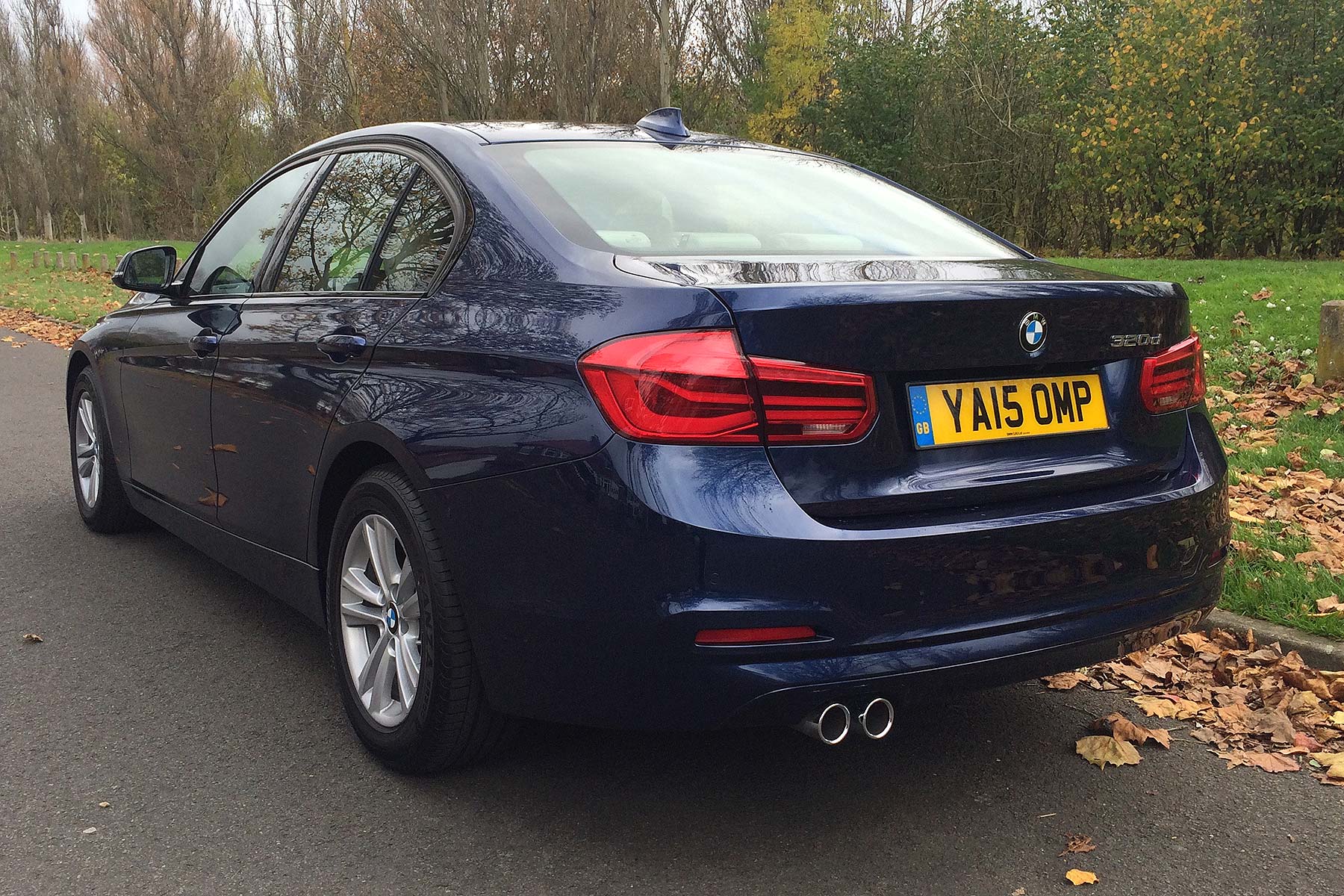
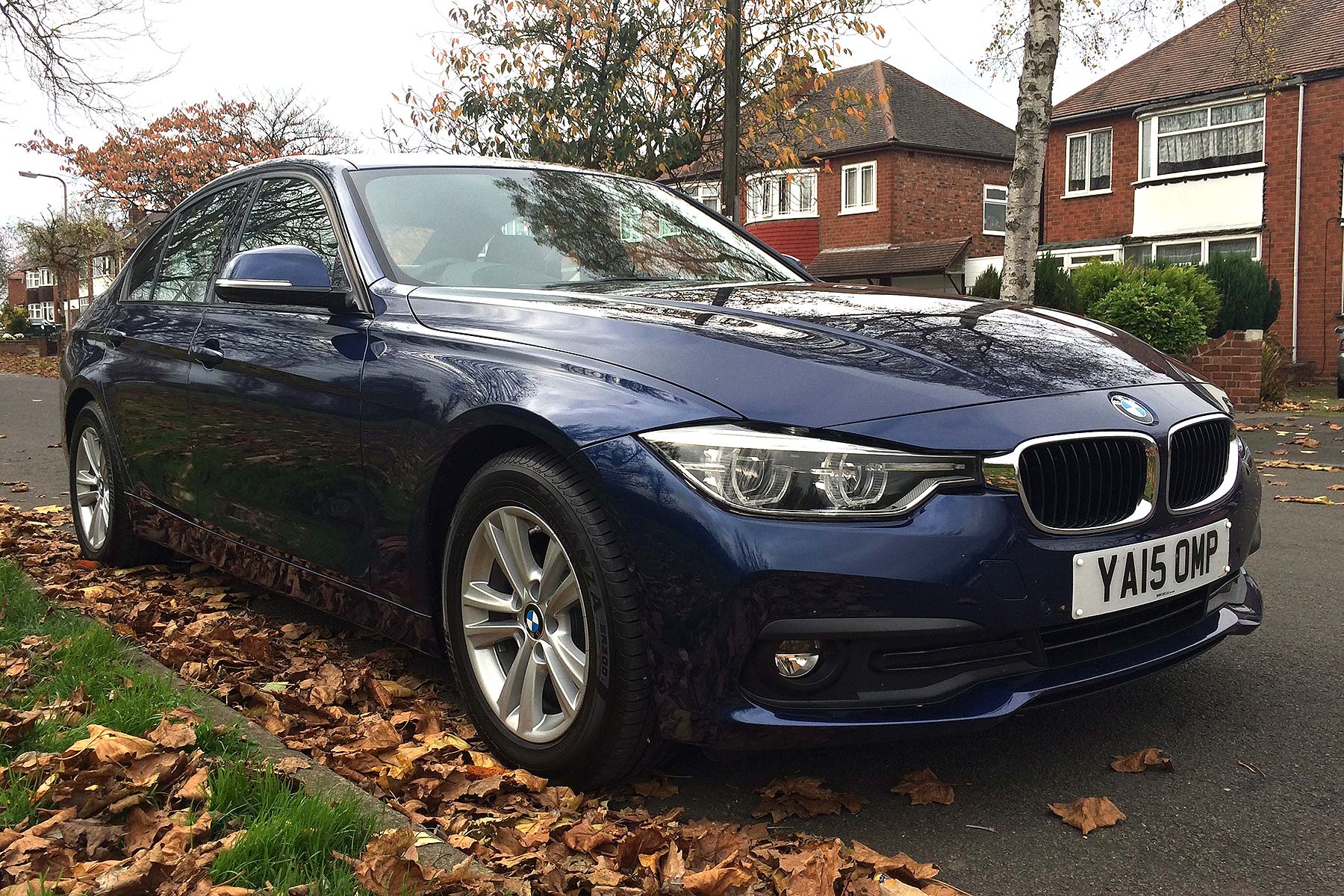
The BMW 3 Series’ 2015 facelift is all but impossible to distinguish on paper. Trust us though, YA 15 OMP really is the latest generation 3 Series, complete with fancy new headlights, more sculpted front bumper and, er, chrome bits for the electric window switches.


Read more:

  • BMW 320d ED Plus: part two
  • BMW 330e: Two-Minute Road Test
  • Jaguar XE 2.0d 180 review: 2015 first drive

BMW didn’t need to do much though. It was already the class leader. The Jaguar XE couldn’t beat it, the new Audi A4 hasn’t beat it; the 3 Series has it sewn up. With the mid-life revision, BMW has honed it, taken the edge off the ride, sharpened the handling and perfected something already superb.

It’s also made it greener, although it’s also made the range more complex. The 318i is a 1.5-litre three-cylinder; the 330i is now a 245hp 2.0-litre four-cylinder – and the diesels, well, if you’re a company car driver, we suggest speccing carefully, so myriad are the price options and CO2 configurations…

What model are we running?

Our long-termer is the greenest model you can buy, if not its ultimate fuel-saving guise: the 320d ED Plus. You can get this in sub-100g/km CO2 guise, but only if you choose an auto and only if you take the airstream-like 16-inch wheels (with eco rubber). We had the auto, but not the slippery wheels: a no-cost option are the prettier rims on our long-termer, with sportier tyres. Given the meagre 5g/km penalty, it’s the right choice.

Then it gets slightly confusing. As well as the 320d ED Plus, you can also now get a 320d ED Sport, which emits 108g/km CO2 and averages 68.9mpg (the same as our ‘Plus’). But you can also get a 320d Sport, which emits… 111g/km and averages 67.3mpg.

A 320d ED Sport is £32,285; a 320d Sport is 31,385. And with the regular car you get 190hp instead of 163hp, and a half-second faster 0-62mph time… if you’re going green, surely you’d stick with the £30,485 320d ED Plus? Or, get 190hp and still-decent economy AND a sub-£30k price tag with the £29,785 320d SE upon which the 320d ED Plus is based?

Or, by now, have you lost the will to live and wish we’d just get on with it? OK…

Why are we running it?

BMW 320d ED Plus long-term test intro

We want to find out how economical a BMW 320d is in the real world. BMW sells tens of thousands, on the promise of low tax and high economy, seemingly not at the expense of performance or rear-wheel drive engagement. Sounds like black magic but is it actually a blatant lie?

My journeys are usually high mileage, invariably varied and very representative of the use many other 320d encounter. So if I can get good economy, then hopefully you can too. Upwards of 10,000 miles’ driving should be enough to put it to the test…

We also want to see if living with a BMW is still premium and classy enough. BMW sells umpteen more 3 Series than Ford does Mondeo, yet it’s the Ford that’s perceived as the volume car and the BMW as the exclusive premium machine. Does reality still compare?

Long-term test spec

BMW 320d ED Plus long-term test intro

Press cars contain lots of equipment to help writers tell readers what the various options are like. Which is how our £30,485 long-term test car turns into one costing £40,780.

Must-haves are the eight-speed Sport automatic transmission (£1,690), BMW Professional sat nav (£900 – yes, nav is standard on all new BMWs now, but only the Pro system gives the online features we’re going to test so fully), Adaptive M Sport suspension (£750) and interior comfort package (£695 – it adds split-fold rear seats, more stowage cubbies and the lovely Extended Interior Light Package).

Nice-to-haves is the Visibility package (£850) that includes BMW’s brilliant LED headlights, Enhanced Bluetooth telephone (£350) and Internet (£95 – bargain). Indulgences we love? Anthracite headlining (£215), Head-up Display (£825) and speed limit display (£220); the rest is fancy but not essential (and surely some o fit should be standard – £330 reverse assist camera, anyone?).

What else is out there?

Audi has recently released the all-new A4, and what an impressive car it is. Extremely refined, the interior’s a step-on in terms of quality, appearance and roominess, while the tech it packs in is top-notch: some people will choose the A4 simply for the fact it gets Apple CarPlay and Android Auto as standard.

Jaguar’s XE vies with the 3 Series for driver’s choice in this class. An excellent first effort at a rear-wheel drive ‘baby Jag’, the XE is ultimately let down by its slightly disappointing interior and not-yet-there engine refinement and infotainment tech. Updates are coming, though…

The Mercedes-Benz C-Class is a very popular choice. It’s a little spec sensitive; choose the wrong one and it can seems surprisingly average and uncouth for a supposed premium compact exec. But ticking boxes like the bargain-price air suspension restore the class you’d expect from a car that looks not unlike an S-Class.

Other choices? Lexus’ hybrid IS 300h is a bit leftfield but pretty effective, certainly much more so than the so-disappointing Infiniti Q50. Coming in 2016 is the Alfa Giulia, which Italy promises will be a 3 Series beater (although we’ve heard that before) and, who knows, we may eventually get a new Volvo S60 to bring some of the XC90’s excellence to this sector.

Specs

Car: BMW 320d ED Plus

CO2: 104g/km

Fuel economy: 68.9mpg

Power: 163hp

Torque: 280lb-ft

0-62mph: 7.9secs

Top speed: 140mph

List price: £32,220 (320d ED Plus auto)

Price as tested: £40,780

Now configure your BMW 320d ED Plus on bmw.co.uk

Advertisement

How to take your pet abroad

0

Sea dog

Brittany Ferries has issued advice for anyone taking a pet abroad this summer, which comes off the back of another record-breaking year for the ferry operator.

According to the company, 67,462 pets travelled on its ferries in 2015, an increase of 17% compared to the same period in 2014. In fact, the pet-friendly cabins on the Portsmouth to Le Havre, Bilbao and Santander crossings are always the first to sell out. So if you’re looking to take your sea dog across the water this summer, you might want to think about booking sooner rather than later.

Rules are more relaxed than before

Before 2012, Britain’s pet passport rules were much stricter than the rest of Europe. Animals had to be vaccinated against rabies six months before travelling and have a blood test to prove the vaccine had been effective.

Under the current rules, when you enter or return to the UK from another EU or listed country, your pet must meet the entry requirements. These are as follows:

  1. Your pet must be microchipped. This must be done before your pet gets a rabies vaccination.
  2. Your pet must have been vaccinated against rabies. You must wait 21 days from the date of the vaccination before travelling. The day of vaccination counts as day 0 and not day 1.
  3. Your pet must have a pet passport or third-country official veterinary certificate.
  4. If travelling from a listed country, fill in a declaration, confirming that you aren’t going to sell or transfer the ownership of your pet.
  5. Dogs must have had a tapeworm treatment no less than 24 hours and no more than 120 hours (5 days) before entry.
  6. You must use an approved transport company and an approved route unless you’re travelling between the UK and Ireland.

Brittany Ferries offers pet-friendly cabins on its Portsmouth to Le Havre, Bilbao and Santander crossings, with the option of on-board kennels. For routes to and from France, travellers can carry their pet in the car, with regular visits to the car deck for owners to check on their loved one.

Christine Barker, general manager Brittany Ferries holidays, said: “Boarding kennels can cost as much as £150 a week in London, and more than £100 a week outside the capital.

“But aside from the money, there’s the emotional cost of leaving a key member of the family behind. More people want to take the family pet on holiday, particularly as many properties make no charge.”

More information

According to the UK government, you can enter or return to the UK with your pet cat, dog or ferret without quarantine if you follow certain rules. Your pet has to travel within five days of you, or someone else you’ve authorised in writing. There are different rules for pets travelling outside the five-day limit.

You cannot travel with more than five pets unless you’re attending a training for a competition, show or sporting event. You’ll need written evidence of registration for the event when you travel, while all pets must be attending the event, be over six-months old and meet the pet travel rules.

There are no restrictions on bringing pet rodents, rabbits, birds, ornamental fish, invertebrates, amphibians and reptiles to the UK from other EU countries. Pet rabbits and rodents from countries outside the EU most spend four months in quarantine and will also need a rabies import licence.

When you return to the UK, staff from the ferry company will scan your pet’s microchip and check your documents. Your pet will be held and could be put into quarantine or sent back to the country it travelled from if you don’t have the correct documents or your pet hasn’t been properly prepared for travel. You are responsible for the the cost of quarantine or the re-export of your pet.

For more detailed information on pet travel, visit the government website.

Advertisement

Chris Evans apologises for ‘disrespectful’ Top Gear scenes

0

Top Gear London filming March 2016BBC Top Gear host Chris Evans has apologised “unreservedly” for scenes over the weekend that appeared to show filming near the Cenotaph memorial in Whitehall.
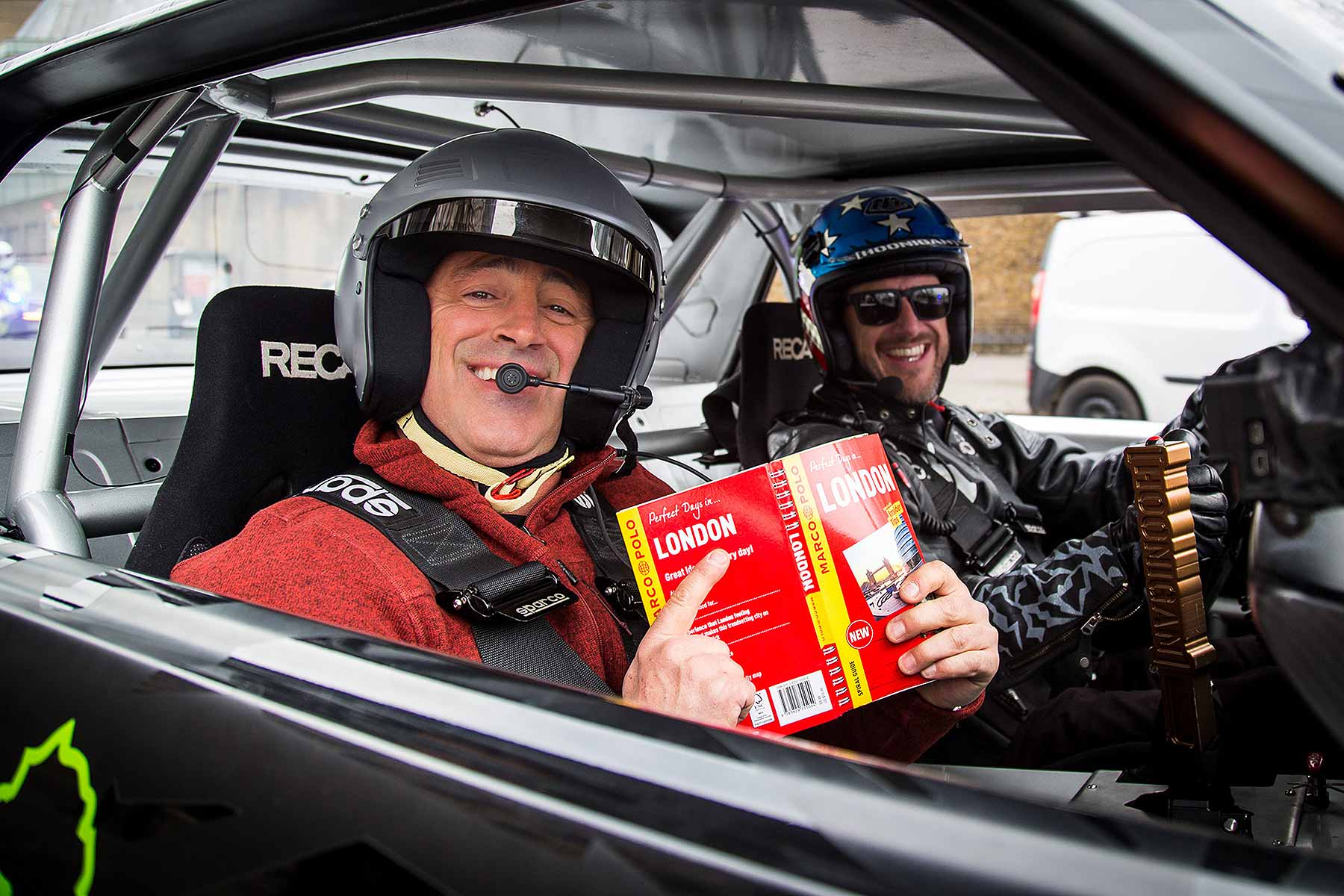
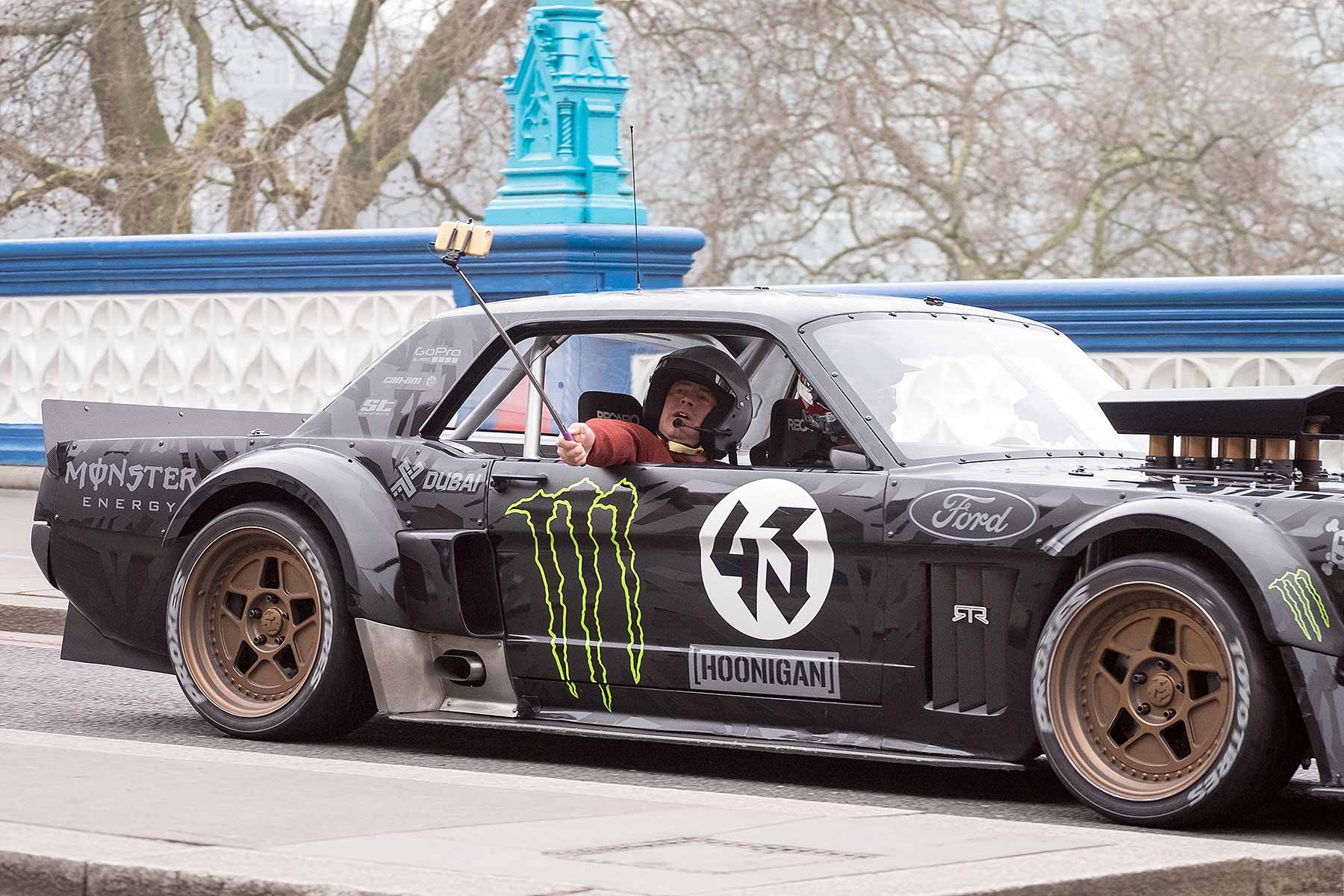
Paparazzi shots showed presenter Matt LeBlanc and stunt driver Ken Block driving Block’s ‘Hoonicorn’ near to the war memorial – scenes that drew immediate criticism with one retired Colonel, Richard Kemp, telling the Telegraph it was wrong to film next to “a sacred tribute to millions of people. Jeremy Clarkson was certainly no saint but I don’t believe he would have ever performed a stunt in such bad taste.”

Today, Chris Evans responded to the criticism on his BBC Radio 2 breakfast show, stating that he “completely understood the furore” around images of the shoot.

“It doesn’t matter what actually happened, it doesn’t matter what the circumstances were that could explain this away, what is important about this is what these images look like and they look entirely disrespectful – which is not and would never be the intention of the Top Gear team or Matt.

“Retrospectively, it was unwise to be anywhere near the Cenotaph with this motor car.”

Evans acknowledged that there had been some “very incendiary comments written alongside these pictures, and I completely understand this furore, but the Top Gear team would never, ever do that.”

Advertisement

Chancellor complains to Top Gear for disturbing Budget

0

Top Gear London filming March 2016Chancellor George Osborne has scolded BBC Top Gear producers for disturbing him while trying to write the 2016 Budget.

The crew were filming on Horseguards Parade during the weekend – with one stunt apparently acted out right outside the Chancellor’s residence.

The irritated Chancellor thus took to Twitter to censure the produces and ask Top Gear host Chris Evans to “keep it down please”.

The scene is the latest in a number of stunts filmed around the City of London over the weekend. On Saturday, Top Gear host Matt LeBlanc and ‘hoonigan’ stunt driver Ken Block apparently surprised a bride and groom on their wedding day by blasting past St Paul’s Cathedral.

Top Gear filming in London – in pictures

More controversially, there have been reports of action being filmed near to the Cenotaph in Whitehall, although producers insist the filming was being carried out at a respectful distance from the war memorial.

All scenes in the weekend’s filming were also agreed with Westminster council in advance, said a spokesman.

Advertisement

Are Brits proud enough of Jaguar Land Rover?

0

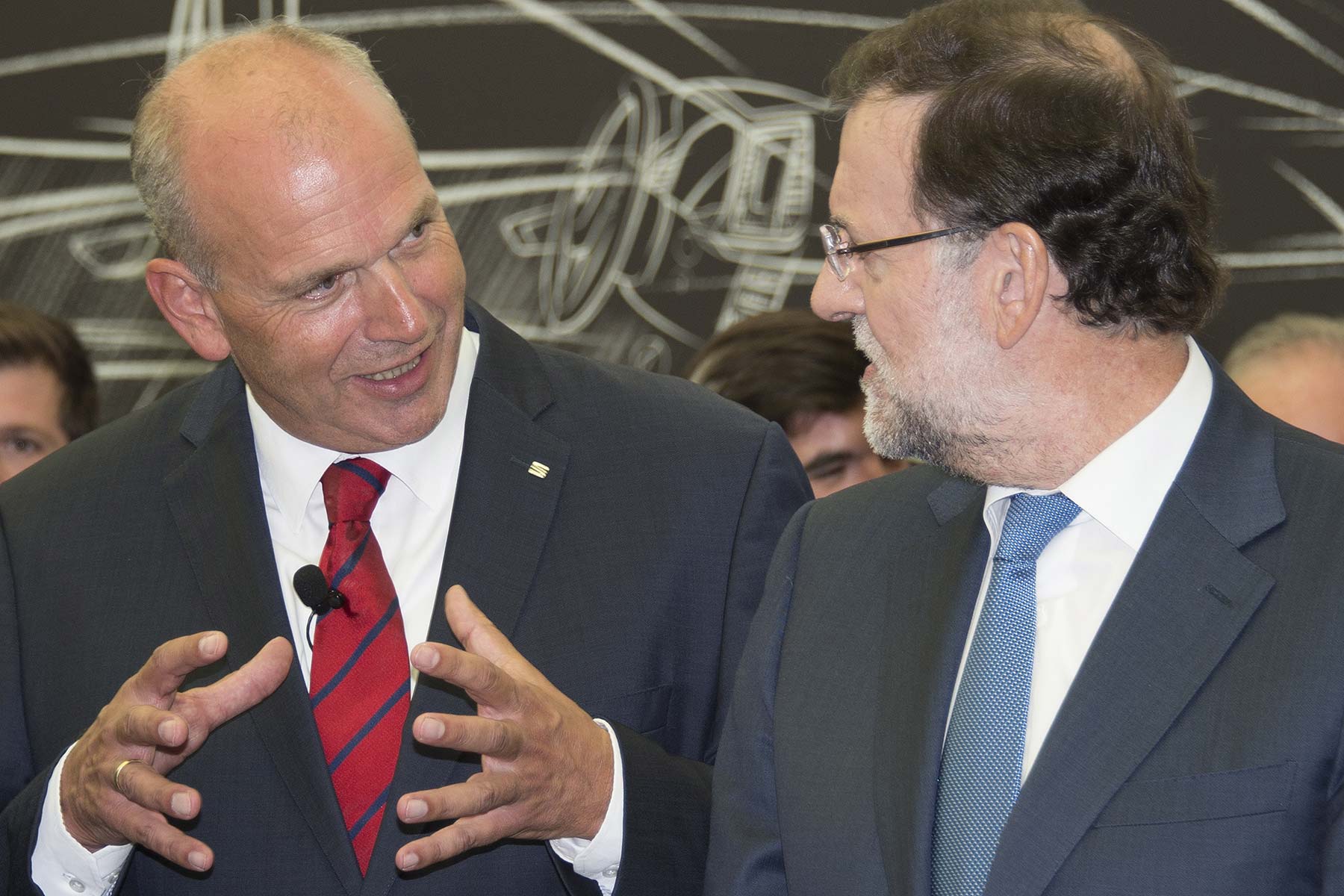
Juergen StackmannDuring an enlightening round table with Volkswagen brand CEO Juergen Stackmann at the Geneva Motor Show, he made an interesting observation: the turnaround of Jaguar Land Rover over recent years has been remarkable, with the firm becoming a genuine premium market player with world-class products in just a single model cycle – an outstanding performance.
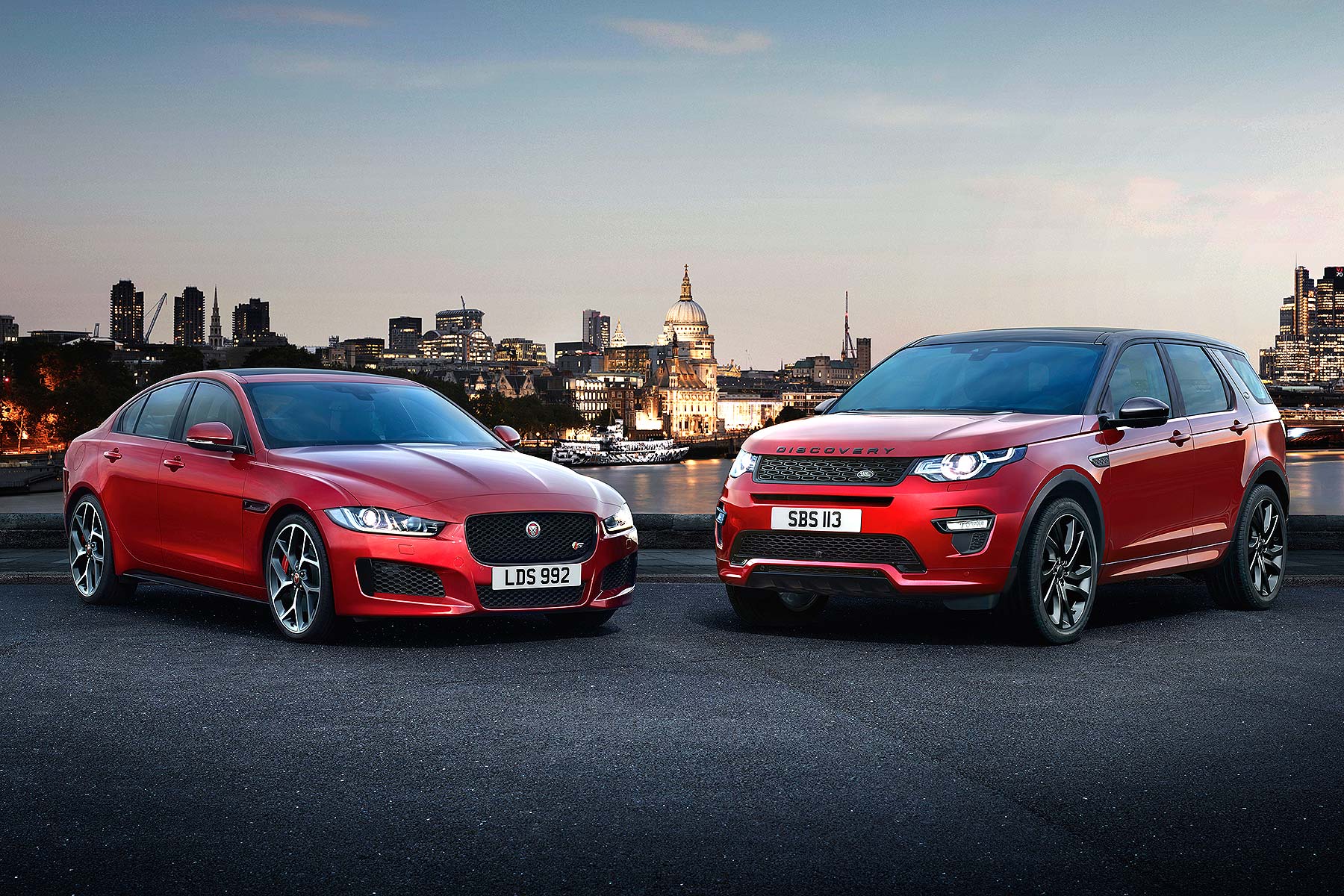
“You must be very proud, no?”

It struck me: are we? Do we really appreciate just what the home brand has achieved following the unshackling from Ford into a standalone group, which happened just as the 2008 recession struck?

Maybe with Land Rover, the profitable side of the group, we do – although few could have expected the smash-hit Range Rover Evoque, the margin-rich continuation of the Range Rover Sport and the sheer brilliance of the latest Range Rover. But then, Land Rover’s always done well: in a world now besotted by SUVs, it would almost be a surprise if it wasn’t thriving.

Jaguar, though – there’s the real story. Back in 2008, it was making the elderly XJ, the low volume XK and had just launched the breakout XF – a car that, for all its wonderful style and beautiful interior (arguably more beautiful than today’s cabins), was still derived from Ford-sourced S-Type underpinnings.

The XF was Jaguar’s only volume car and even this was hardly high volume. Lacking a serious sales alternative to the BMW 3 Series, Audi A4 and Mercedes-Benz C-Class, it really was a minnow in the premium sector. The Germans simply didn’t consider it a serious rival.

Jaguar Land Rover

Now look at it: there’s a brand-new XE made from an all-Jaguar, aluminium-intensive platform, winning plaudits and leaping straight into the position of driver’s car alternative to the 3 Series. There’s an all-new XF, again heavily using aluminium, that on paper makes as much rational, tax-friendly sense to business users as the smaller XE does.

The svelte XJ has been tweaked and the F-Type continues to get ever-faster and more lairy, neither car not really registering on saes charts but providing useful image-boost assets for the firm.

And soon, there’ll be the F-Pace. Jaguar’s first SUV. A great-looking machine that’s chasing the Porsche Macan and, by all accounts, is just as good to drive. Unlike the so-so XE and XF interiors, its cabin is also bang on the money, while both pricing and CO2 are double-take competitive.

The F-Pace, along with the XE, are going to transform Jaguar. Its sales are, relative to previous years, going to skyrocket and it may finally be able to stand on its own two feet rather than being propped up by the financial might of Land Rover.

And if Jaguar’s able to do this in a generation, what else could it do once the momentum really starts to flow?

Stackmann is right to ask us if we’re proud of Jaguar Land Rover. Perhaps we should ask ourselves that. Put the usual British cynicism to one side for a moment: even in the boardrooms of giant German car brands, JLR’s achievements are being recognised. Maybe it’s time we started shouting about them too.

Advertisement

BMW Vision Next 100 concept revealed on 100th anniversary

0

BMW Vision Next 100 concept car revealed on 100th anniversary – with video and exclusive picture

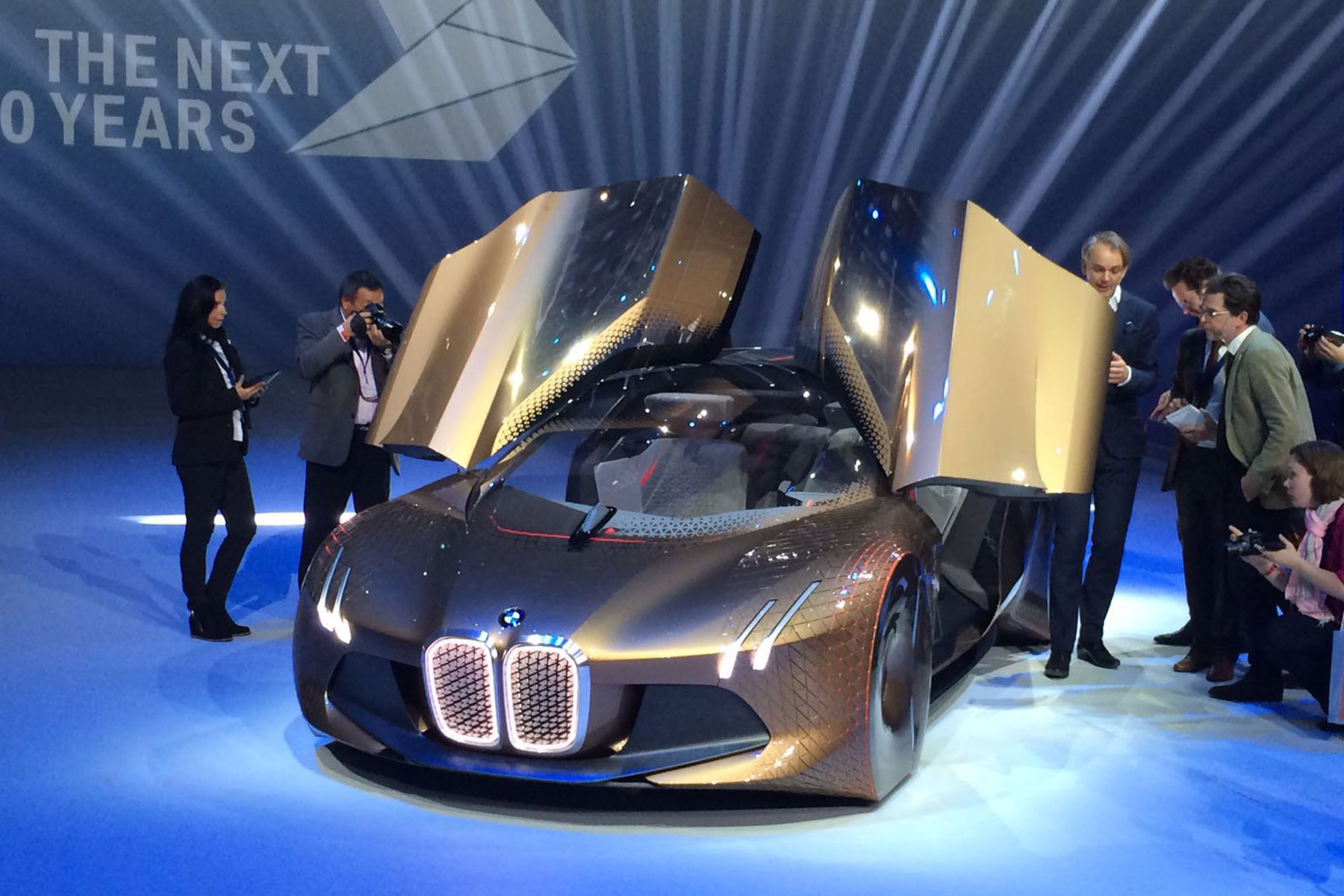
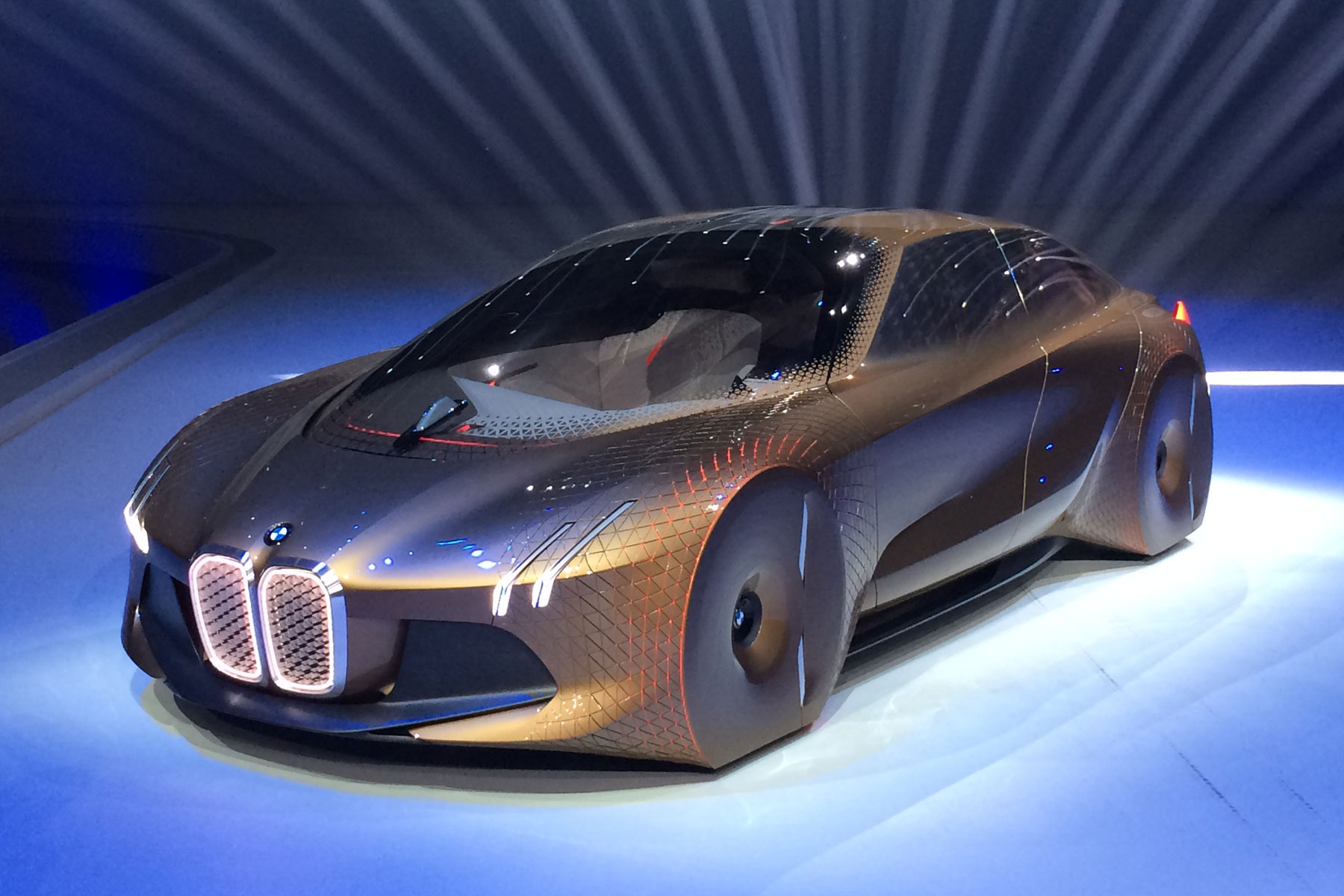
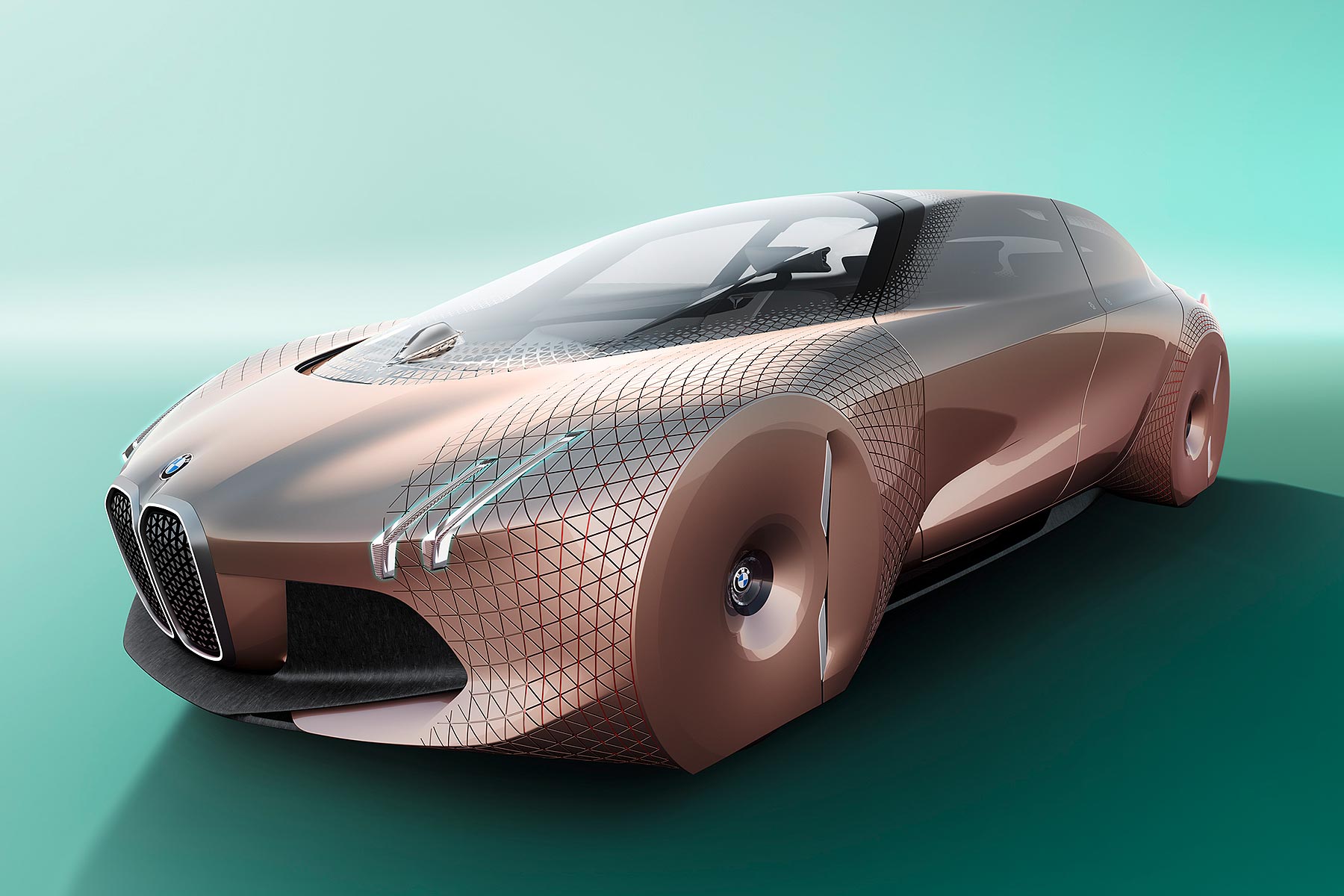
BMW has revealed a dramatic concept car called Vision Next 100 that takes a far-sighted look into the autonomous, zero-emissions cars of the next 20 and 30 years – exactly 100 years to the day since the company was formed.

The BMW Vision Next 100 is a 5 Series-sized car with a 7 Series-sized interior and a futuristic shape created by BMW Group design chief Adrian van Hooydonk.

The future car will take BMW’s reputation of being ‘the ultimate driving machine’ to the next level, says van Hooydonk. With the Vision concept car, “we want to turn the driver into the ultimate driver.”

It’s thus packed with technology – but the interior has purposefully been kept clean. There is a steering wheel – this is important, says Van Hooydonk – but other controls and buttons are absent.

Instead, the entire windscreen takes the form of a head-up display, upon which head-up display messages are shown in piloted drive ‘boost’ mode’.

The Vision car is also an autonomous car and in the so-called ‘ease’ mode, the entire screen becomes a display, with information such as video feeds of conference calls and even images such as attachments to emails.

It’s not all about simply overloading the driver with connected car information though. BMW wants to regulate the flow of data to the driver, by giving the vehicle intelligent and self-learning capabilities. Crucial information will only be shown where necessary, and not at inopportune, danger-inducing moments.

Trick features here include a dashboard whose surface is made up of ‘waves’ of warning lights: the car will, for example, detect a cyclist hidden behind a van and the dashboard in that corner will light up red: as the cyclist nears the car, the lights will flow across (and the car will autonomously stop where necessary).

Purposefully, seats and door panels blend into one within the open plan interior. This is to make it more flexible and comfortable in autonomous mode: occupants will be able to relax, turn around to speak with passengers or simply lean back for the conference call they’re conducting…

BMW Vision Next 100

Outside, It retains the BMW kidney grille, says van Hooydonk – but instead of air intakes, it contains all the sensors for the autonomous tech! Also, four round lights become four light ‘bars’.

It’s a simple, purposefully minimalist design, with few lines but complex use of light and shadow interplay. It’s as big as a 5 Series outside yet as big as a 7 Series inside…

Uniquely, the wheels are fully enclosed, but ‘flexible’ bodywork allows the front wheels to still turn – the panel ‘expands’ so the wheels can steer.

The windows are also heavily tinted in body-colour. BMW says privacy will be even more important in autonomous cars – where, presumably, you won’t simply be concentrating on driving, and may not want others looking in and watching you…

The BMW Vision Next 100 has a ‘companion light’ structure in the centre of the dashboard. In autonomous mode, this glows white, to let occupants know the car is in control. It is also functional to pedestrians: when, at a crossing, the car detects someone, it glows green, to let them know it’s safe to cross.

BMW Vision Next 100 concept car revealed on 100th anniversary – with video and exclusive picture

Why is the BMW Vision a sporty saloon?

Unlike many other futuristic concepts, the BMW Vision Next 100 is a low-slung saloon car rather than a tall SUV. van Hooydonk said this us because “The Neue Klasse cars started the growth of BMW and the company became known for sporty limousines: we took this as a theme as we feel it’s the core of the brand.

“The Vision vehicle should thus be a sporty limousine.” The Cx drag factor of 0.18 sets a new record, says van Hooydonk, which is another reason why the design is so sleek.

BMW won’t yet be drawn on how far off production the remarkable Vision Next 100 concept is though. van Hooydonk simply (and interestingly) said: “If you can imagine it, you have made first step…”

Kruger did add that it’s very much for the next 20-30 years, rather than any sooner: “There will be some components and elements coming earlier, but this is a car looking far into the future with BMW Group.”

Advertisement

Former Volkswagen CEO ‘told about emissions irregularities in 2014’

0

Martin Winterkorn resignsFormer Volkswagen Group chairman Martin Winterkorn’s ‘shock and surprise’ about the emissions scandal when it publically broke in September 2015 has suffered a setback after evidence emerged of memos sent to him in May and November 2014.
A memo about the ICCT study – the U.S organisation that exposed the Volkswagen diesel emissions irregularities – was prepared for Winterkorn on May 23 2014. However, says Volkswagen in a statement, “whether and to which extent Mr. Winterkorn took notice of this memo at that time is not documented”.

Volkswagen boss shrugs off Geneva protestor stunt

A further memo about the North America diesel issue was sent to him on 14 November 2014: in it, Volkswagen estimated the cost of rectification at €20 million.

Since the scandal publically broke on 18 September 2015, the company has estimated cost of rectification at €6-7 billion.

The news that Winterkorn was informed about the diesel issue is revealed as part of a shareholder lawsuit against Volkswagen, one the company says is “without merit”.

Volkswagen has always insisted knowledge of the so-called defeat device was restricted to a handful of engineers within the company: the lawsuit alleges that the company violated disclosure obligations about major issues that would affect the company’s stock price.

Martin Winterkorn resigned on 23 September 2015, stating that “I am not aware of any wrong doing on my part.

“I am shocked by the events of the past few days… I am stunned that misconduct on such a scale was possible in the Volkswagen Group.”

ALSO READ

Honda Civic sportier ‘because we are allowed to’

Vauxhall boss slams Brexit bid: ‘we need to stay in the EU’

Scrapping of paper tax discs leads to more unlicensed cars on UK roads

Advertisement

Honda Civic sportier ‘because we are allowed to’

0

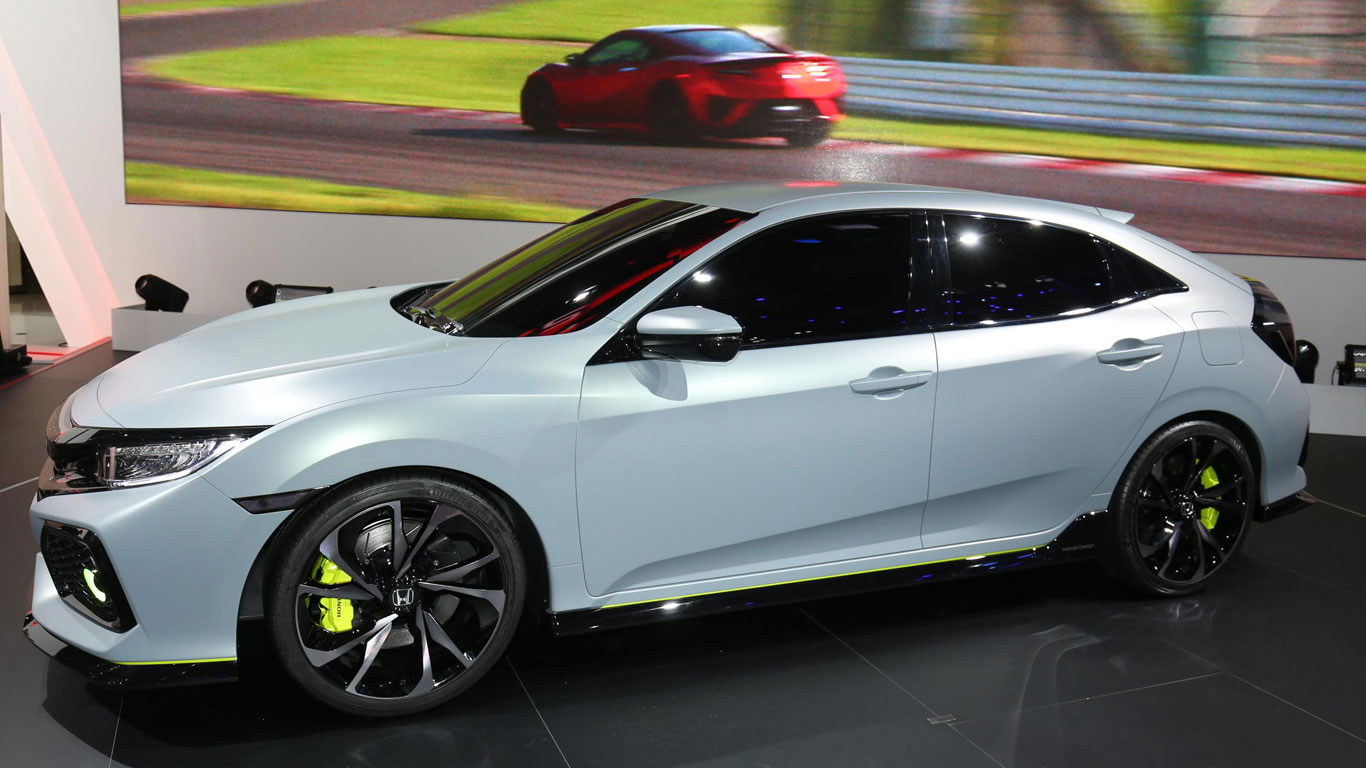
Honda Civic prototype

The 10th generation Honda Civic is able to be significantly more stylish and sporting than today’s car because the model is traditionally the one where Honda experiments and tries new things – so does not suffer the generation-shift restrictions rivals such as the Volkswagen Golf do.

“The Civic has always been the Honda where engineers are allowed to try new things,” said the car’s chief designer, 39-year-old Daisuke Tsutamori.

“If you look at its history, it usually always looks different generation-to-generation. There’s always something new.”

The exception to this was the Golf-style evolution from the eight generation model to today’s ninth generation car – something Honda admits was driven by older customers’ preference for more of the same. This may have been a mistake, the firm now concendes. “The 10th generation model is designed to be more desirable to younger people.”

Built on an all-new global platform, the European Civic hatchback is previewed in concept for at the Geneva Motor Show by the Civic Prototype. Some of the more dynamic features won’t make it to mainstream versions of the launch car, admitted Tsutamori-san, but the basic sporting profile is faithful.

“It’s a dramatic change – the proportions are lower and wider, and the rear is much more inclined, almost a coupe silhouette. The overhangs are short and the focus is the centre of the car, which we think exposes its dynamics.”

Tsutamori-san admitted the style change wasn’t easy to get past Honda management though. “Management is not the youngest, and they were very concerned with ease of use, such as getting in and out.” Thanks to careful (and canny) design leadership on Tsutamori’s part, management’s concerns were eased when they got hands on with a full-size prototype.

“It may be sportier-looking, but we haven’t forgotten practicality,” said Tsutamori-san. “Our development principal is MM – machine minimum, man maximum,” an edict faithfully applied to the new Civic.

“Even boot space has increased over the current car” – and that’s despite the new 10th generation Civic returning to a high-tech multi-link suspension setup at the rear.

Advertisement

Volkswagen SUVs: product onslaught begins at Geneva

0

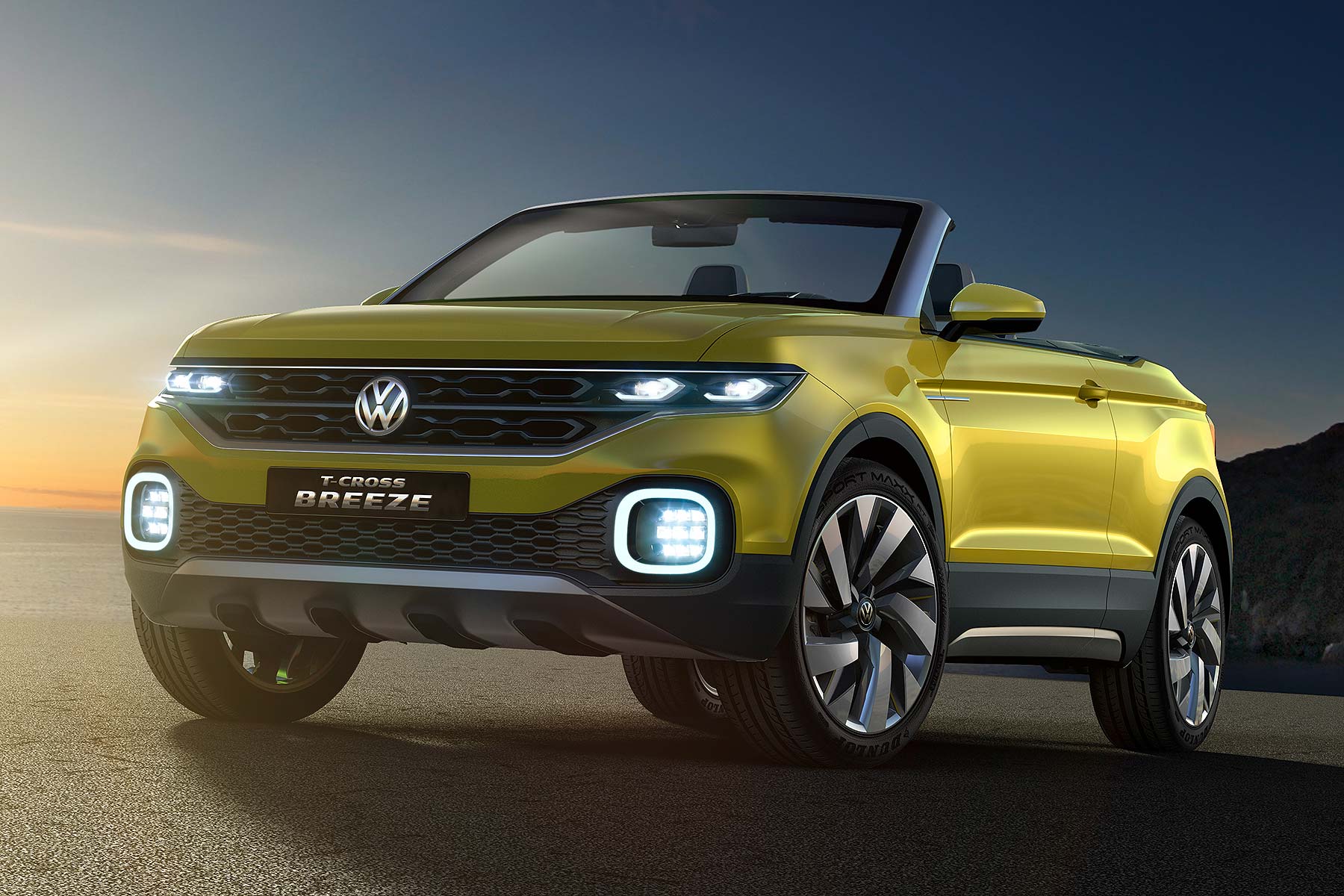
Volkswagen SUV offensiveVolkswagen has vowed to build an SUV in every class of car that can justify one – and the T-Cross Breeze concept at the 2016 Geneva Motor Show is the first salvo in an off-roader onslaught from the German brand.

“SUV is THE segment globally at the moment,” Volkswagen board member for sales and marketing Juergen Stackmann told us. “We compete in it with the Tiguan, but this leaves two or three cars on the upper side: the Tiguan LWB, US-built large SUV and the range-topping Touareg.

“Below the Tiguan, we believe there is space for two more SUVs: the T-Cross will sit at the smaller end – and will arrive in the not too distant future.”

The product offensive will begin in the spring, when the all-new Tiguan launches in Europe (later followed by a long-wheelbase version for North America). Work is progressing fast on preparing the US Chattanooga factory to build the production version of the CrossBlue.

The new CrossBlue will be a genuine SUV range-topper, built on the same platform underpinning the Audi Q7 and Bentley Bentayga.

Volkswagen has revealed the entry-level SUV will be built on the Volkswagen Polo platform, while the family-sized one will use the MQB architecture underpinning the latest Volkswagen Golf.

From MPV to SUV

The growth of SUVs is coming at the expense of the MPV, said Stackmann. There’ll always be a market for practical vehicles, but it’s not one that will grow – because SUVs have taken on many of the characteristics that appeal to MPV buyers, such as space, a high seating position and functionality.

“MPVs were too rational. SUVs give drivers character.”

Volkswagen thus plans not to invest too much time and effort into MPVs in the future – and Stackmann even questioned attempts by rivals to make MPVs more stylish and sporty. “Is the compromise too much?”

Renault is, notably, the brand that invented the compact MPV, and with the latest Scenic has given us arguably the most stylish small people carrier yet. However, designer Laurens van der Acker has previously admitted that if this generation of Scenic doesn’t work with customers, the firm won’t continue with it…

Time for T: the future Volkswagen SUV range

T-Cross: supermini SUV, rival to the Nissan Juke

T-Roc: family hatch SUV, rival to the Nissan Qashqai

Tiguan: second-generation family now being launched

Tiguan LWB: bigger second-gen version for U.S and other major markets

CrossBlue Concept: mid-size SUV for U.S and China

Touareg: third-gen range-topping SUV due 2018


Advertisement