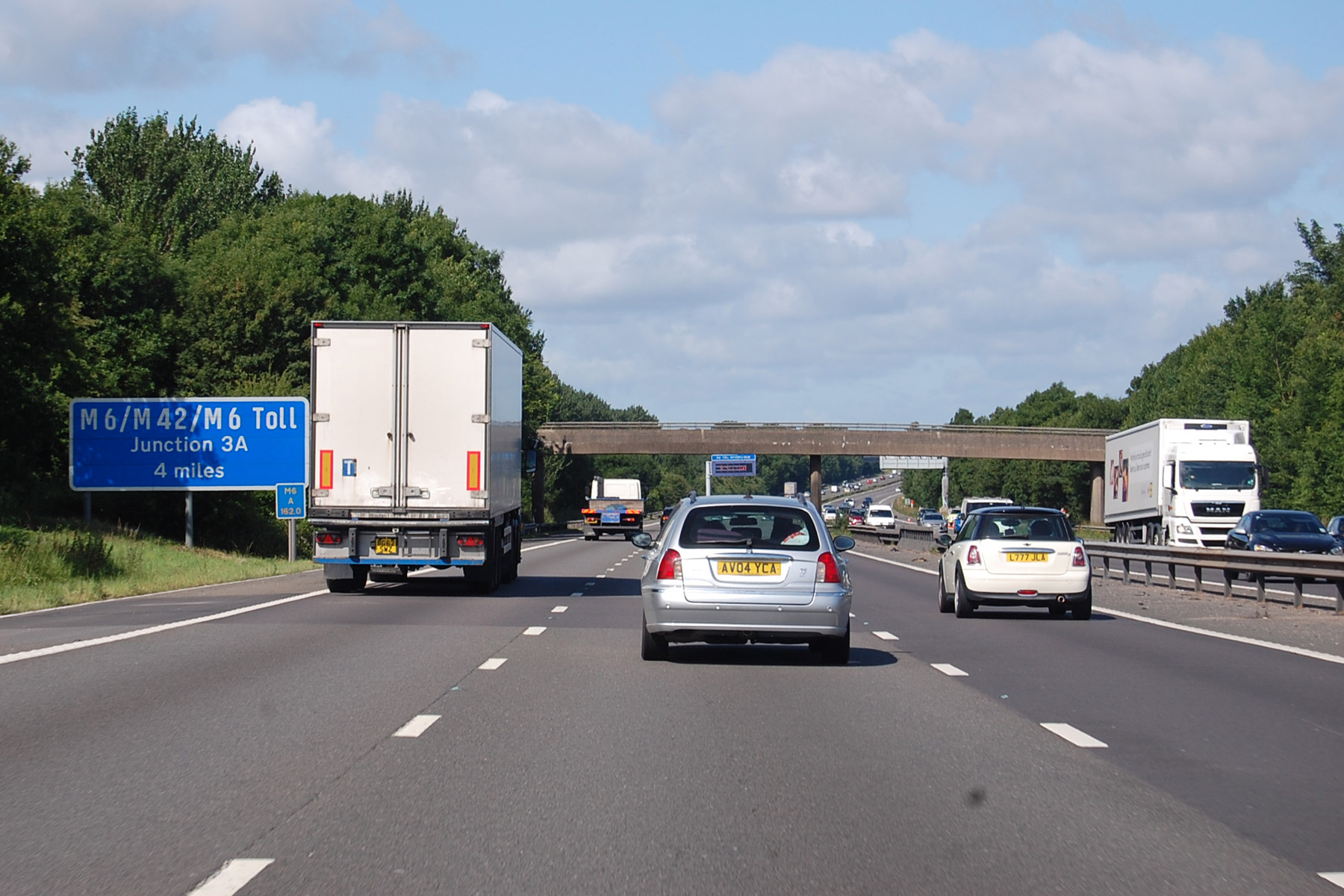
An MP has branded the M6 Toll a ‘rich person’s motorway’ in the House of Commons and called for charges to be dropped when required in a bid to reduce congestion on nearby motorways.
It comes after a serious crash in February left the M6 closed for 24 hours, resulting in chaos on nearby roads.
The issue was debated in the House of Commons after Solihull MP Julian Knight made the suggestion that toll charges should be dropped in situations like this.
M6 Toll for sale: should the government buy a motorway?
Motorway electric car recharging logos bring relief to range anxiety
Motorways are smart. Pity drivers aren’t
He said: “If the M6 toll is to serve the best interests of the West Midlands and our economy as it was built to, we must see fundamental reform of how it operates, especially during gridlock and crisis situations.”
It’s already possible for the M6 Toll to be opened to the public for free when required, but owner Midlands Expressway demands a payment of £300,000 per day plus VAT – meaning it’s never actually happened. The cost of the incident in February to the local economy caused by traffic issues was estimated to exceed £40 million.
The 27-mile stretch of motorway costs £5.50 for car drivers on weekdays, dropping to £4.80 at weekends and £3.80 at night.
Knight added: “We should also consider lowering the day-to-day costs of the M6 Toll.”
MPs recently called for the Government to buy the M6 Toll and reduce the fees faced by the 50,000 drivers who use it every year.
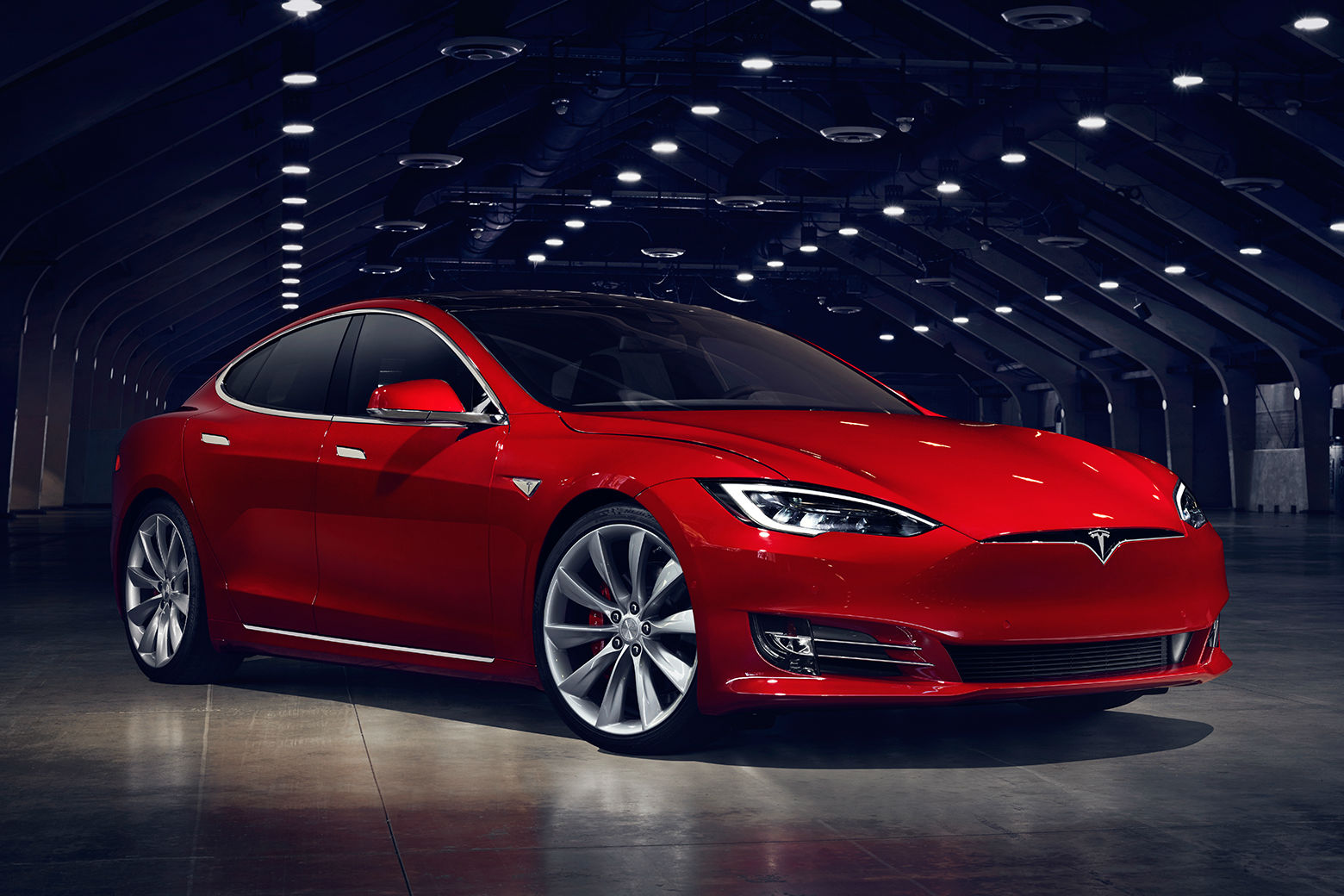
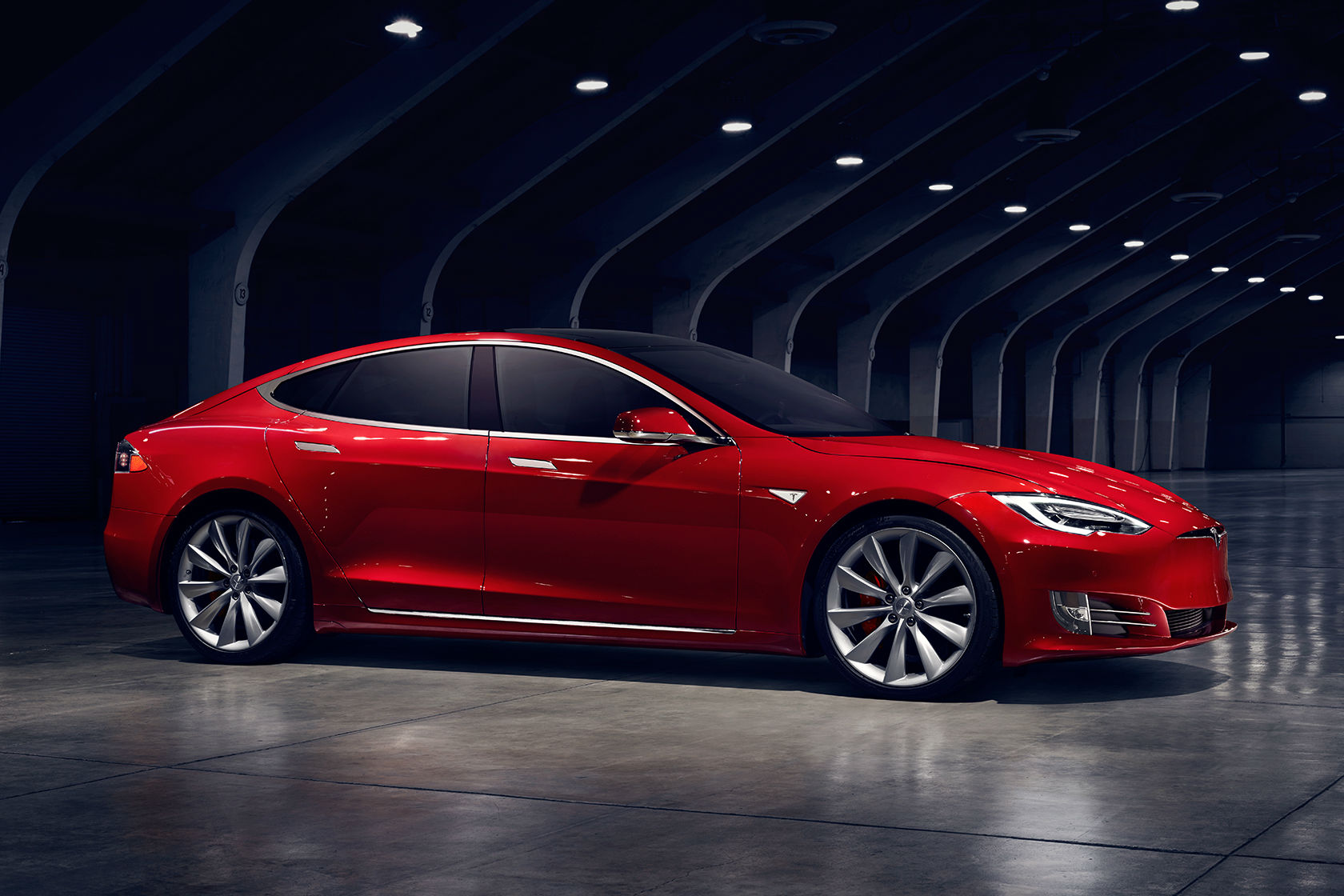
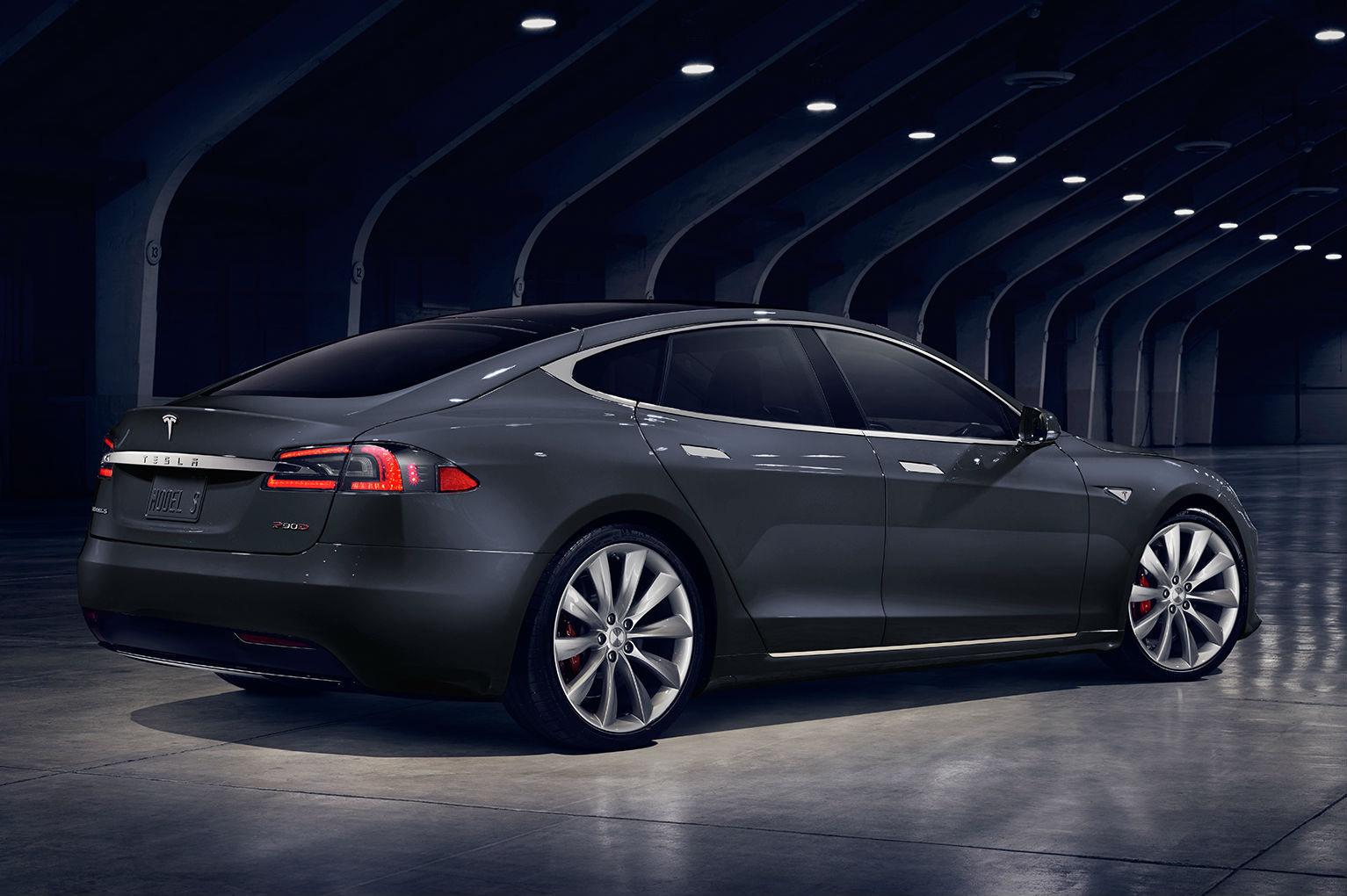
In a move that is most un-Tesla, the American car brand has released these pictures of its mid-life facelift for the Model S – and revealed that new interior trims will be available, featuring wood.
Yes, the interior will come with two new interior finishes – called Figured Ash Wood and Dark Ash Wood. Outside, the new Model S gets a grille-less front-end (just how will it look with a number plate?), as per the Model X and Model 3.
These pictures were leaked yesterday – Tesla responded by sneaking them onto its own press website and claimed that was its intention all along. As such, information is on the scarce side, but we do know the Model S will be getting yet more clever tech. Because Tesla.
This includes the ‘bioweapons defence mode’ which, unfortunately, isn’t quite as exciting as it sounds. It’s essentially a fancy air filtration system which, Tesla says, is 100 times more effective than a regular cabin filter at removing particulate exhaust pollution as well as allergens, bacteria and contaminants.
What could be exciting to existing owners is the faster charge time. Although the electric motor remains unchanged, the standard charger has been upgraded from 40A to 48A, meaning charging from Tesla’s Supercharger network will be even quicker.
Prices will start at £53,800 (post Government grant) for the entry-level 70D model, and American websites are speculating on a range-topping P100D model on its way. That’s yet to be confirmed – but the rest of the facelifted range is on sale now.
The hype around Tesla’s affordable electric car has been massive in recent weeks – and figures revealed today show that traffic on the firm’s website attracted an incredible seven million visits over the three days around the Model 3’s unveiling.
Reservations for the Model 3 opened on March 31, with traffic increasing by 798% the following day. US visits jumped from 220,000 on March 31 to a peak of 1.9 million on 1 April.
To put that into context, the data (revealed by digital market intelligence firm SimilarWeb) shows that Ford’s website received 358,000 US visits on 1 April, followed by Toyota (320,000) and 130,000 for Nissan.
Over 325k cars or ~$14B in preorders in first week. Only 5% ordered max of two, suggesting low levels of speculation.
Potential customers could register their interest in the $35,000 (£25,000) Model 3 by leaving a deposit of $1,000 (or £1,000 in the UK) online. Within 24 hours, 115,000 orders had been received – rising to 325,000 within the first week.
Nearly half (48%) of visitors to Tesla’s website during this period were from the US, followed by Canada (6.64%) and the UK (5.58%).
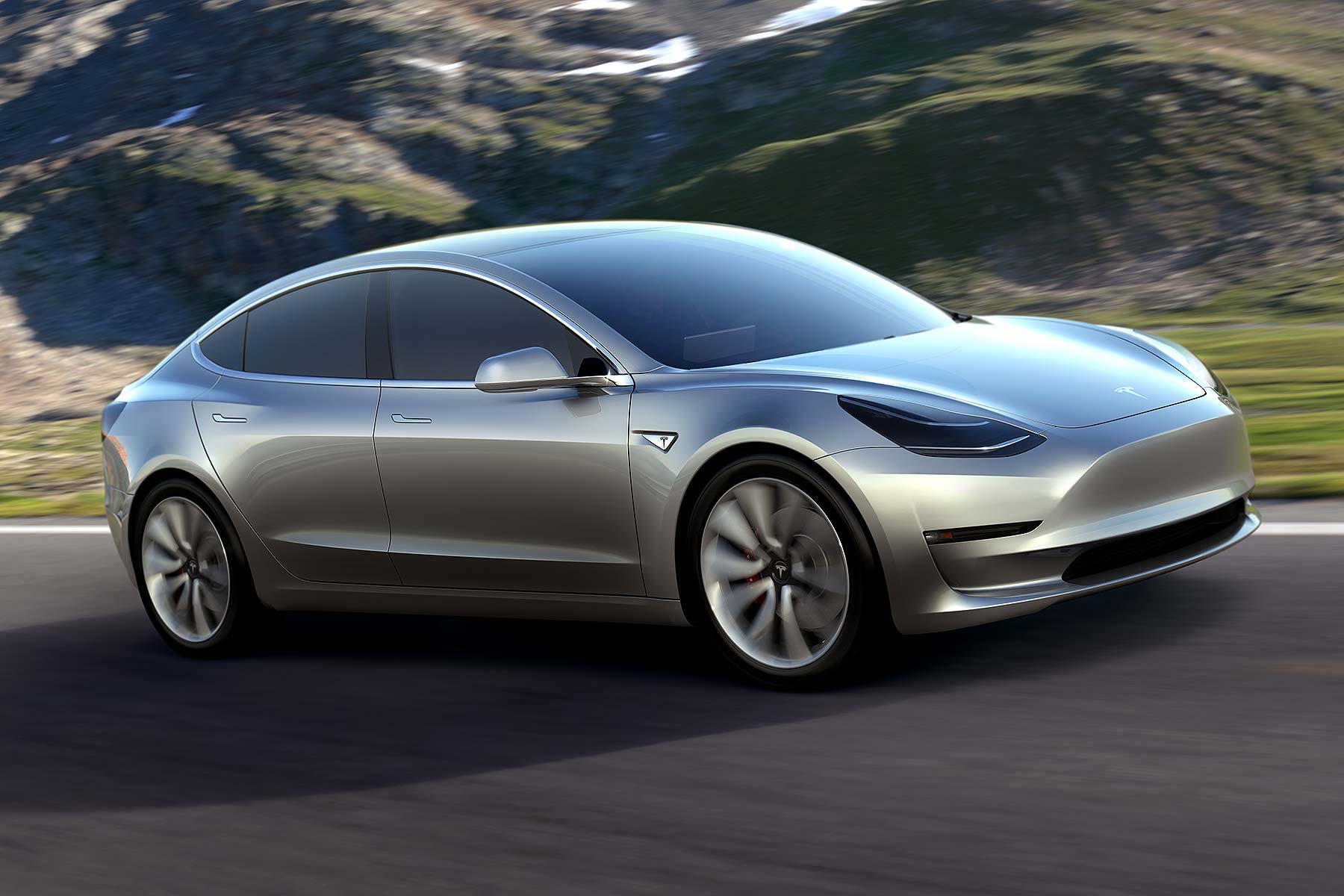
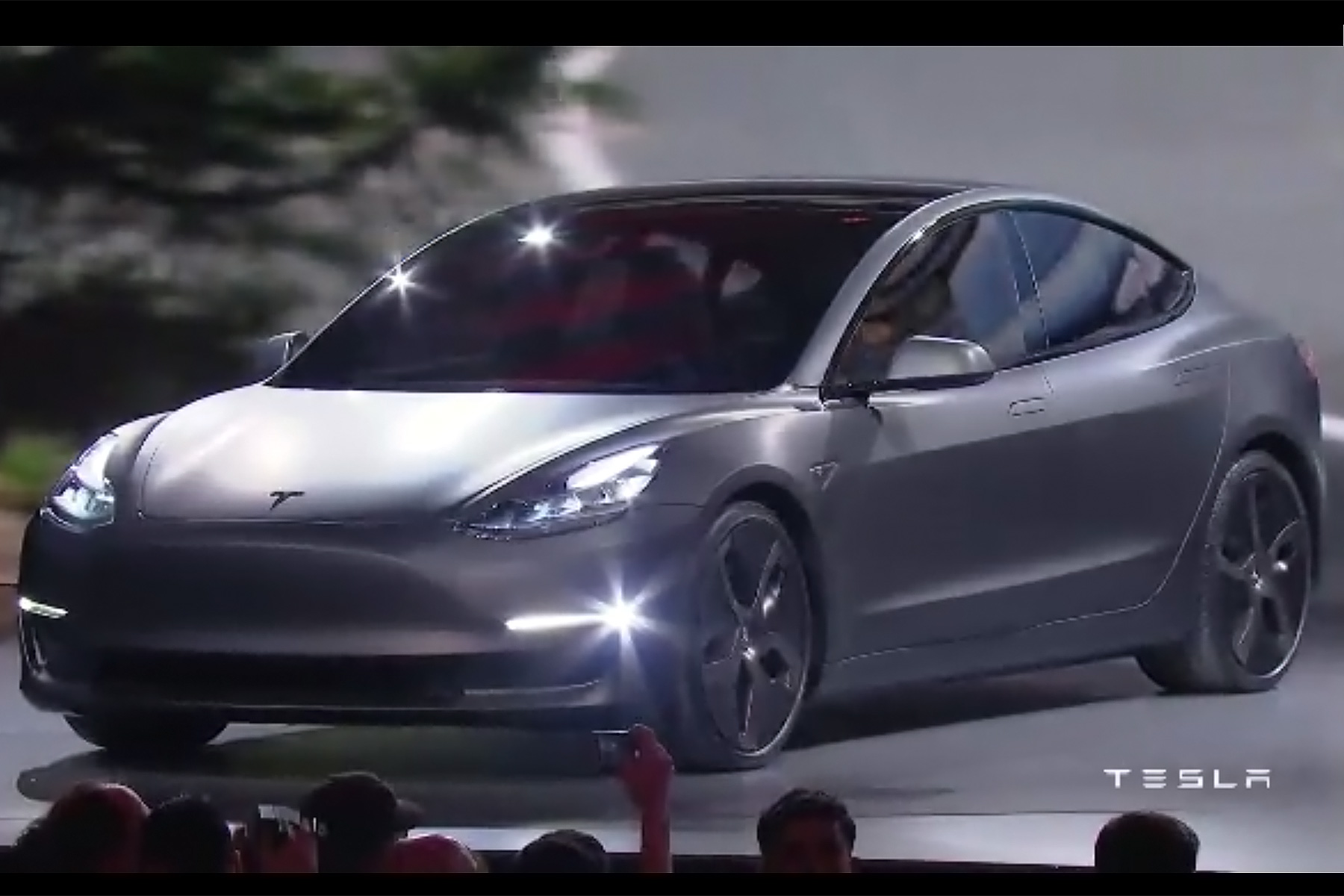
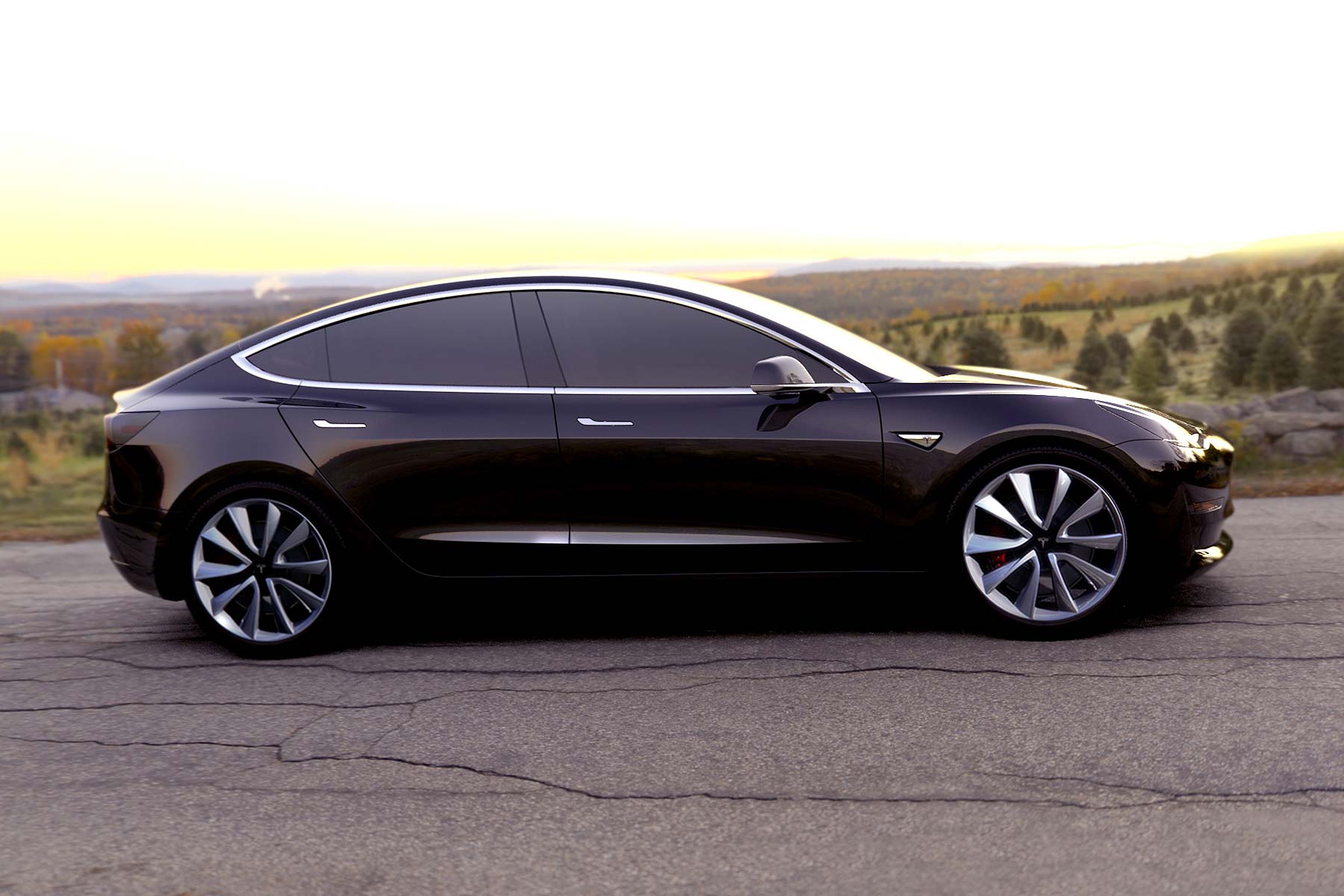
The waiting is over – Tesla has launched its $35,000 (£25,000) high-volume Model 3 electric car and the world is buzzing with excitement.
The firm is already accepting $1,000 (refundable) deposits – £1,000 in the UK – for the new Model 3 and during the launch event, Tesla chief Elon Musk revealed 115,000 orders had already been placed in the first 24 hours alone.
This figure currently appears to be rising by many hundreds every single minute…
Tesla Model 3: need to know
Price: From $35,000
Range: From 215 miles
0-62mph: Less than 6.0 seconds
Seats: 5
Delivery: 2017
Driverless functionality: Auto Pilot standard
Ordering: $1,000 (£1,000) refundable deposits taken from now
Target annual production: 500,000
Video: Tesla Model 3
Musk started the launch event by setting the scene for Tesla: record high global CO2, making it “very important to accelerate the transition to sustainable transport”. Enter the four-part ‘Tesla Secret Masterplan” that started with the Tesla Roadster, evolved to the Model S and Model X, and now takes in the Model 3.
GM’s Bob Lutz credited the Telsa Roadster with inspiring the Chevrolet Volt programme, which also led to the Nissan Leaf. Already, Tesla’s had a big effect on the auto industry. And now the Model 3 is set to take the next step.
What is the Tesla Model 3?
Tesla Model 3
The Tesla Model 3 is a mid-size model that will compete with models such as the BMW 3 Series and Audi A4. It is all-electric and Musk says the range will be a minimum of 215 miles on the U.S. EPA test cycle; all models will have Telsa Supercharger recharge functionality as standard (and the Supercharger network is set to double, to 441 global locations, by the end of next year).
It will be a fast car – even the ‘slowest’ model will do 0-62mph in less than 6.0 seconds. “At Tesla, we don’t make slow cars” says Musk. And there will, of course, be models that go much faster, he confirmed.
Both all-wheel drive and air suspension will be optional.
The Model 3 will be “an incredibly safe car” said Musk, with 5-star ratings in every category. “Safety has to come first” said the company founder. We can thus expect glittering Euro NCAP test results when the Model 3 is assessed in Europe.
Active safety will be boosted by the standard fitment of Tesla Auto Pilot, the autonomous ‘self-driving’ technology already seen on the Tesla Model S.
Tesla Model 3
Inside, the Model 3 is a full five-seater with the “best roominess of any car of this size”, promised Musk: five adults will fit comfortably and the cabin will fully swallow a 7-foot surfboard. As with the Model S, there are luggage compartments both front and rear, offering class-leading capacity “and more cargo space than any same-size gas car”.
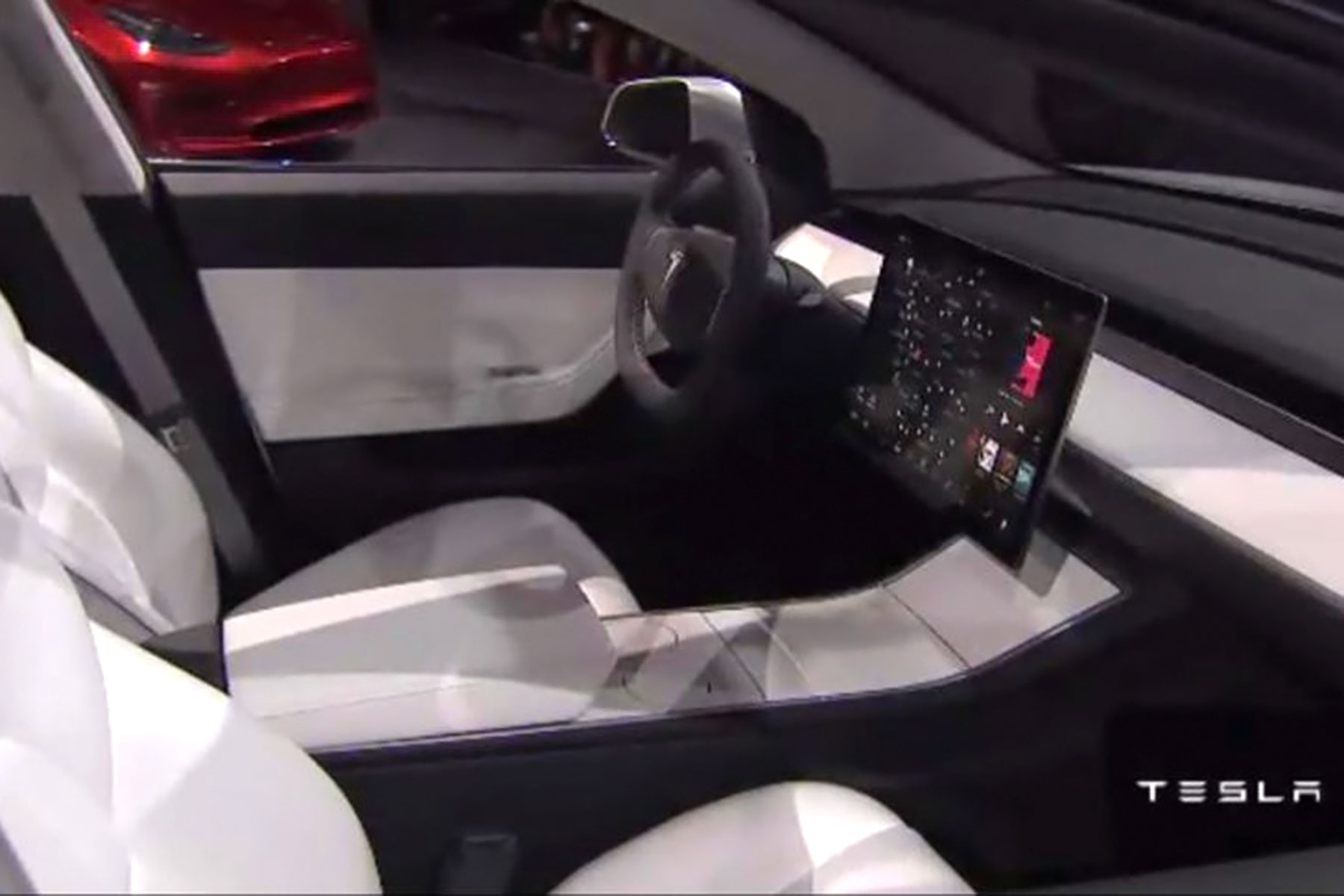
The cabin incorporates the familiar oversize touchscreen in the centre of the dash – although this time it’s mounted horizontally rather than portrait-style. There’s also no traditional instrument panel dashboard – the designers have instead shifted the cabin layout, seating those in the front much further forward than normal to maximise interior space.
As for the price, Musk was clear: it will “of course” cost from £35,000 – that’s around £24,500 in the UK, although it will likely rise to around £30,000 once it arrives in the UK.
The base model won’t be a stripped-out, featureless machine though, promised Musk. All the key features of the Model 3 will be standard across the range.
And when will deliveries begin? Next year, he said: a 2017 delivery date is something he’s “fairly confident” of (although Tesla perhaps doesn’t have the best track record of meeting delivery date targets…).
Tesla Model 3: a high-volume EV
Tesla wants to significantly ramp up its global volumes with the Model 3. This is its mainstream model, the car that should take it from 50,000 units to 500,000 units per year.
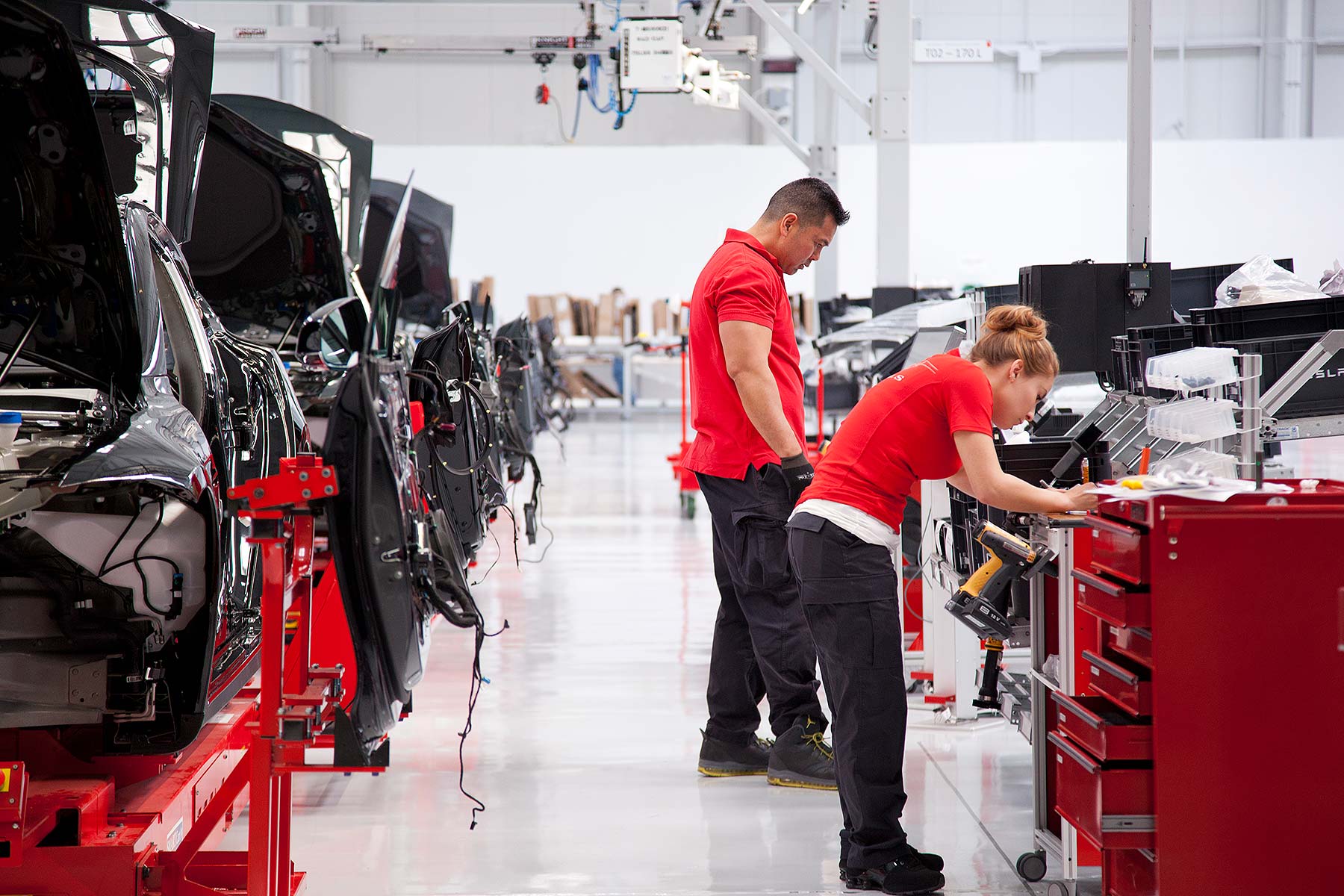
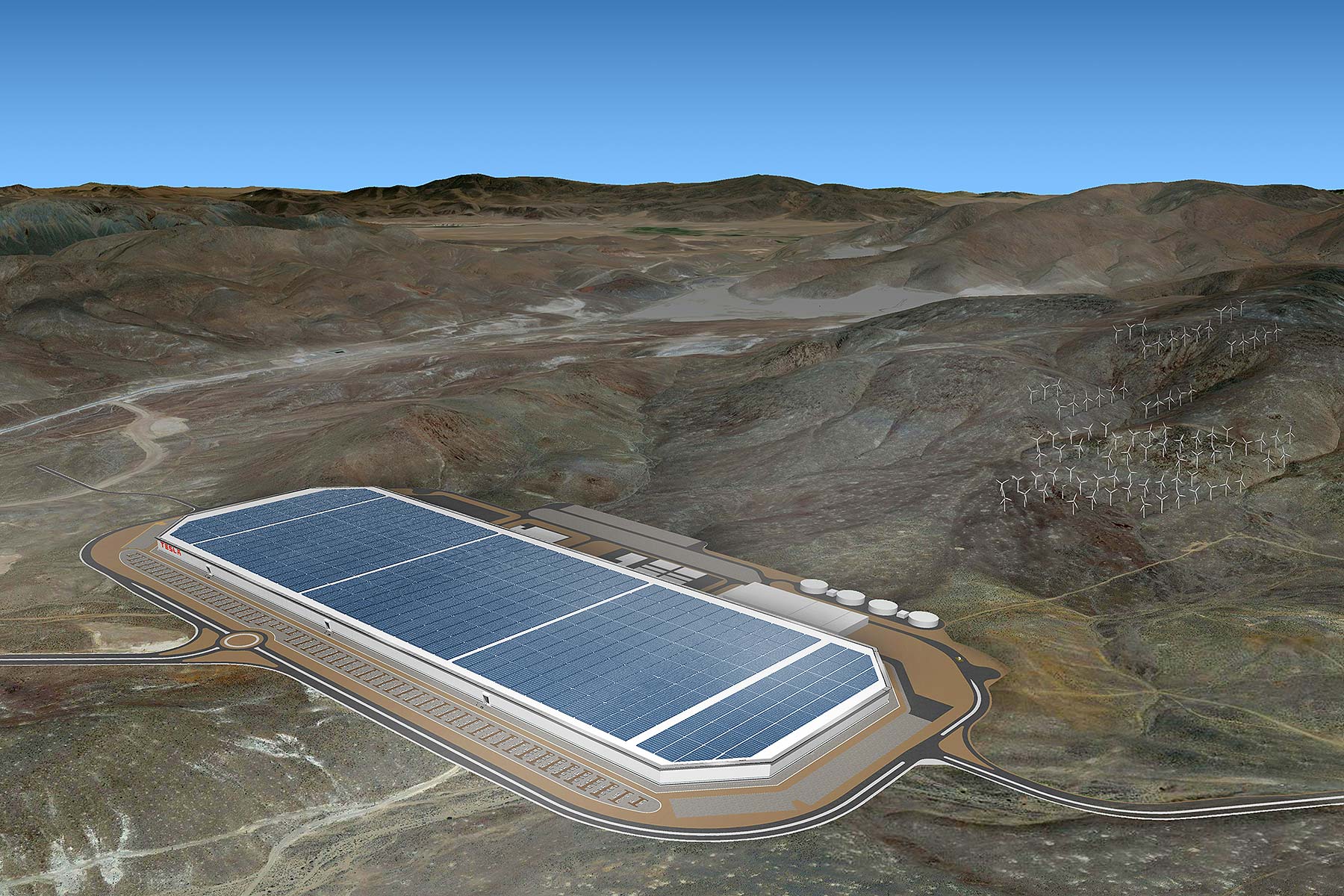
The Freemont factory – a former GM/Toyota joint venture called NUMMI – already has the capacity to make half a million cars a year, said Musk: the challenge is the batteries. 500,000 batteries a year represents the world’s current total lithium ion production!
Hence Tesla building a new battery factory, the Gigafactory (pictured above). This will boast the largest footprint of any building in the world and be second in overall size only to the Boeing factory in Washington. It’s enormous – and its success is essential to the Model 3’s viability.
Video: watch the Tesla Model 3 launch
What are the rivals to the Tesla Model 3?
The Model 3 is a revolution for Tesla but it’s not a car without rival. Here are the established contenders and ambitious newcomers set to go up against the new Model 3
Chevrolet Bolt
Similar price, all-electric ability, similarly ambitious goals: GM’s first modern EV is being pitched as the real world alternative to the fancy Tesla Model 3 and will be a fierce competitor to Elon’s baby. But is it a bit too real world?
Nissan LEAF
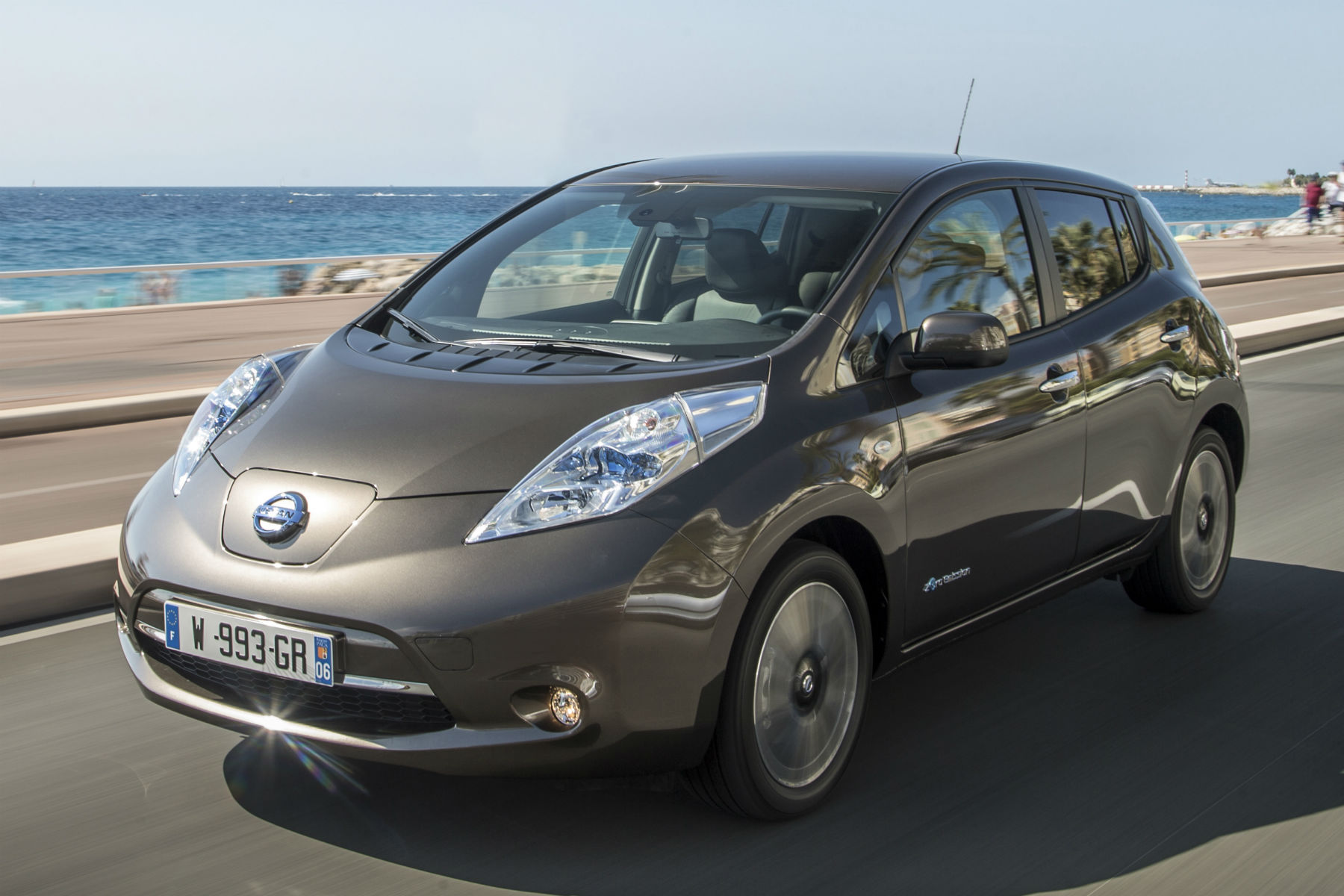
Musk namechecked the Nissan LEAF during the reveal of the Model 3: the original Tesla Roadster led directly to its development, he said (which may be news to Nissan chief Carlos Ghosn). Today the world’s most successful fully electric car, it’s a groundbreaker that will become even more formidable in next-gen form that’s likely due around the time of the Model 3’s launch…
BMW 3 Series
Tesla aims to make a full EV that can challenge the compact executive hierarchy with the Model 3, and there’s no finer example of this than the BMW 3 Series (a car we’ve been living with for the past few months). Most are sold with conventional petrol or diesel engines but there’s also now a plug-in hybrid. BMW also offers…
BMW i3
… The brilliantly ingenious i3, which has ingenious construction, brilliant driving manners and all the reliability, solidity and cut-above feel you’d expect of a BMW. If a full EV is a step too far, there’s even a range extender version with a tiny motorbike engine in the back
Toyota Prius Prime
Revealed at the 2016 New York Auto Show, Toyota has added extended-range plug-in hybrid capability to the established, multi-million-selling Prius hybrid. But what if buyers truly want zero emissions? Toyota has an answer there too…
Toyota Mirai
… With the brilliant Mirai, an all-electric car powered by a hydrogen fuel cell rather than the Tesla’s plug-in batteries. It’s the first volume fuel cell car on sale and as much of a ground-breaker as anything Tesla’s done. Could this be the one the Model 3 must really watch?
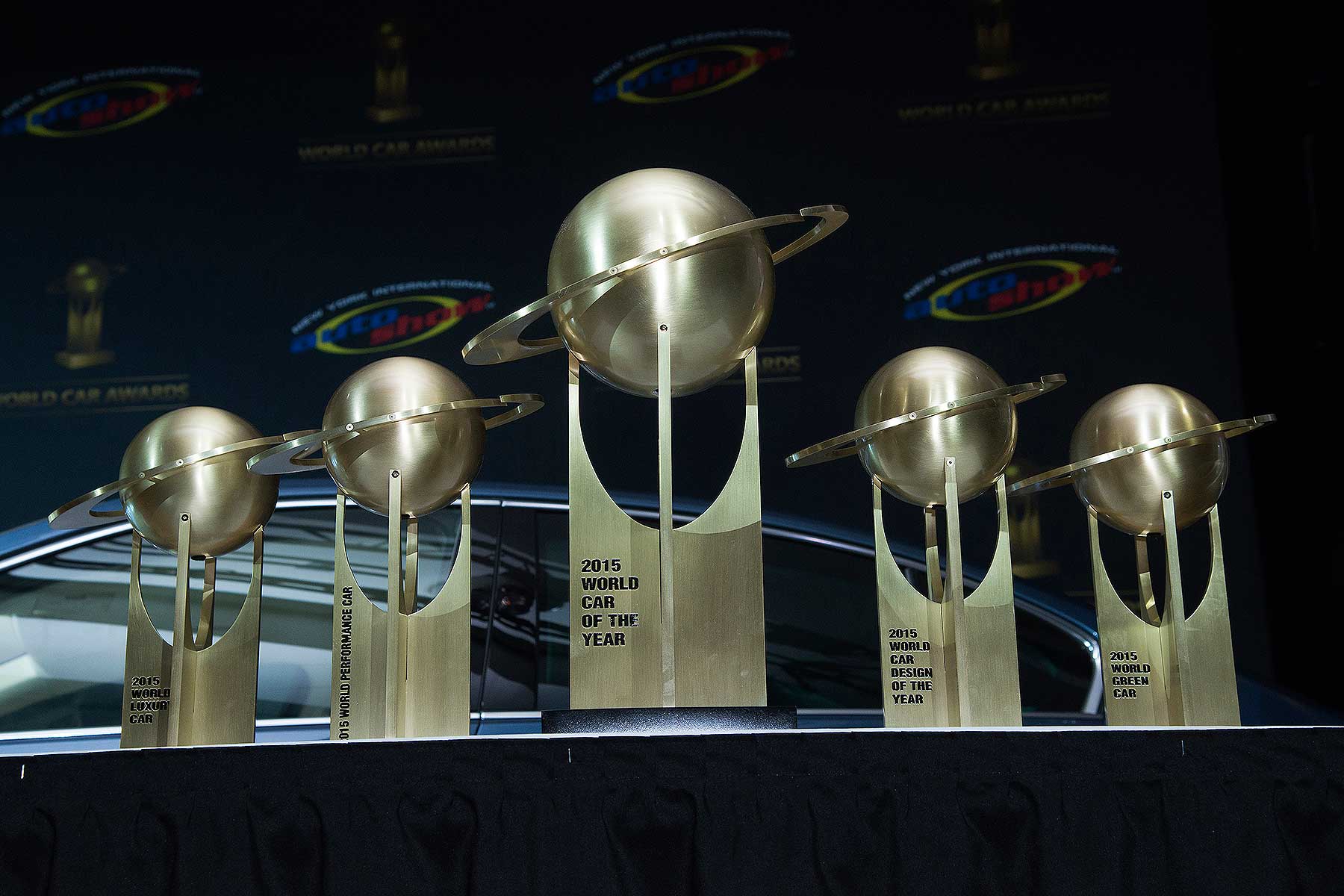
After months of judging, the 2016 World Car Awards have been announced in a glittering ceremony at the New York Auto Show.
The elite of the world’s top auto manufacturers were in attendance, fingers crossed, to see if their model scooped one of the five prizes on offer – including the prestigious overall World Car of the Year Award. We were there too – here’s the winners, revealed.
73 judges pick from 23 cars
All cars in the 2016 World Car Awards were launched on at least two continents between 1 January 2015 and 31 May 2016. A 73-strong team of jurors choose an initial entry list of 23 vehicles, which was narrowed down to a shortlist of 10. More recently the ‘Top Three in the World’ list was released, giving the finalists that brings us to the New York Auto Show awards ceremony. So, without further ado…
World Performance Car 2016: the finalists
The headline-grabbing World Performance Car 2016 was fought between three high-power halo cars: the Audi R8 Coupe supercar, Honda Civic Type-R hot hatch and the Mercedes-AMG C 63 Coupe.
World Performance Car 2016: Audi R8 Coupe
Performance cars should be thrillers: desirable cars that are a joy to drive. The most powerful Audi ever built, the judges decided that the R8 Coupe is the car that provides the biggest performance buzz in 2016.
“We are delighted that the Audi R8 has been voted as the 2016 World Performance Car,” said Dietmar Voggenreiter, Board Member for Sales and Marketing at Audi AG. “The R8 is one of the strongest calling cards for the four rings and is the flagship car from Audi Sport. The first generation of the R8 paved our way toward becoming a premium brand and raised the aura of Audi to a new level. The new R8 will continue this success story and further accelerate the growth strategy of Audi Sport.”
World Luxury Car 2016: the finalists
In the running for World Luxury Car 2016 were the Audi Q7 SUV, BMW 7 Series sedan and Volvo XC90 SUV.
World Luxury Car 2016: BMW 7 Series
Luxury cars should push boundaries and set standards for high-technology features that can filter down to the rest of the range, believe the World Car Awards jurors. The BMW 7 Series, with no fewer than 25 all-new innovations, thus scoops the prize for 2016.
“We are delighted and honoured that the BMW 7 Series has been recognised as the World Luxury Car of the Year,” said BMW in a statement. “Since it launched last autumn, the response from both the media and our customers has been extremely positive. There can be no doubt that the new BMW 7 Series is an outstanding flagship for the brand, setting new standards in its class.”
World Car Design 2016: the finalists
The World Car Design 2016 is a two-brand race: the Mazda CX-3 crossover SUV and MX-5 roadster went up against the Jaguar XE mid-size sedan. Six famed design experts from around the world decided the overall winner – which was..?
World Car Design 2016: Mazda MX-5
The judges decided that Mazda’s reinterpretation of the classic MX-5 roadster deserves the overall World Car Design award for 2016. A car that looks way better in the metal than in images, the judge’s experienced eyes rated it top in 2016.
“While I accept this award on behalf of the company, I do so representing every Mazda employee, retail partner and customer around the world who has ever felt the joy of driving a pure roadster,” said Masahiro Moro, president and CEO, Mazda North American Operations, and Managing Executive Officer, Mazda Motor Corporation. “We say ‘Driving Matters’ in our advertising, and we prove it in our cars.”
World Green Car 2016: the finalists
World Green Car 2016 was also a two-brand affair. The second-generation Chevrolet Volt range-extender hybrid was pitched against the Toyota Prius hybrid and Toyota Mirai hydrogen fuel cell. Three very different technologies – which did the judges go for?
World Green Car 2016: Toyota Mirai
The judges went for easily the most innovative of the trio, the Toyota Mirai hydrogen fuel cell. The world’s first mass-production hydrogen fuel cell car, it’s a trailblazer that simply too significant and too much of a groundbreaker to ignore.
“Just as Prius changed the world nearly 20 years ago, the hydrogen-powered Mirai is ready to make history,” said Bill Fay, group vice president and general manager, Toyota Division. “With a range of over 300 miles per tank, a refueling time of under five minutes, and emissions that consist only of water vapor, Mirai is leading the world forward toward a more sustainable future.”
World Car of the Year 2016: the finalists
The overall World Car Award 2016 this year saw the Audi A4 Sedan, Mazda MX-5 roadster and Mercedes-Benz GLC mid-size SUV all go up against each other. This is the big prize all makers want to win: last year, it was Mercedes-Benz, with the C-Class. This year, it is…
World Car of the Year 2016: Mazda MX-5
To cheers throughout the room, Mazda’s MX-5 was crowned World Car of the Year 2016 at the New York ceremony. The glittering prize was received with immense delight by the project team, who’d flown in specially from Japan when they heard they’d been shortlisted… even becoming a Top Three in the World was big news – winning World Car of the Year is simply enormous for this proud, enthusiastic Japanese company.
“What a wonderful honor, to have the Mazda MX-5 named World Car of the Year,” said Masahiro Moro, president and CEO, Mazda North American Operations, and Managing Executive Officer, Mazda Motor Corporation. “As our iconic MX-5 roadster approaches one-million units of production, this award is proof that it is as young, vibrant, fun and relevant as ever.” And now to the rest of the prizes in the World Car Awards 2016.
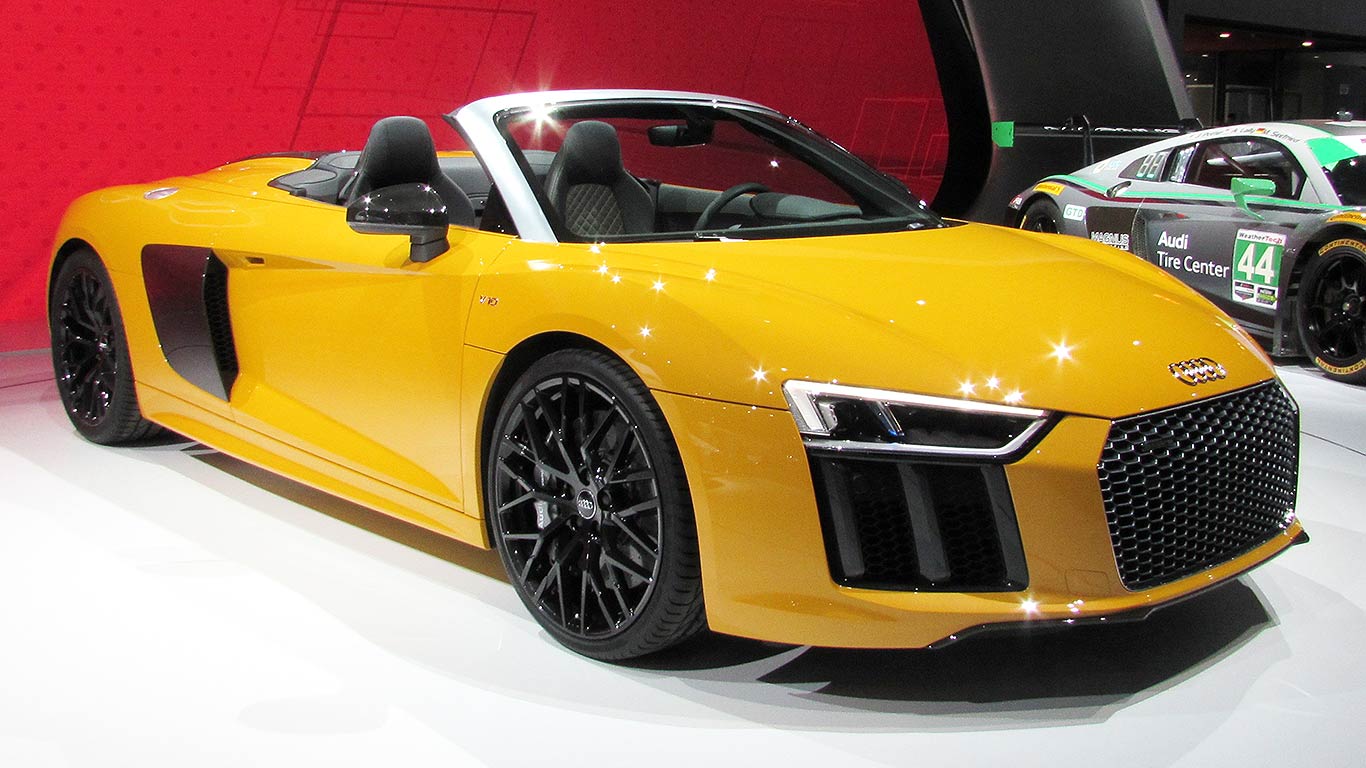
The new Audi R8 Spyder V10 has been revealed at the 2016 New York Auto Show, ahead of the brand’s official press conference later this afternoon.
The new R8 Spyder is on full display on Audi’s New York stand, sitting alongside an R8 coupe and a racing R8 sportscar.
Gallery: Audi R8 V10 Spyder
Resplendent in bright yellow, the new R8 Spyder V10 has cleaner lines and a much more neatly integrated rear deck than the original. The strong rear haunches are more muscular and the entire car looks like one designed to be an open-top model from the start, rather than a later conversion.
The rear deck is particularly striking, with twin polished metal power bulges sitting within a carbon fibre panel. It’s flatter and bulges less than the original, giving the new R8 Spyder V10 a more open appearance.
The open appearance of the new car itself also took many by surprise: usually, car manufacturers leave world show debuts tightly under wraps until their press conference. Maybe the amount of leaks around the R8 Spyder over the past few weeks has encouraged Audi to take a different approach.
Come back later to Motoring Research for more on the new Audi R8 Spyder V10
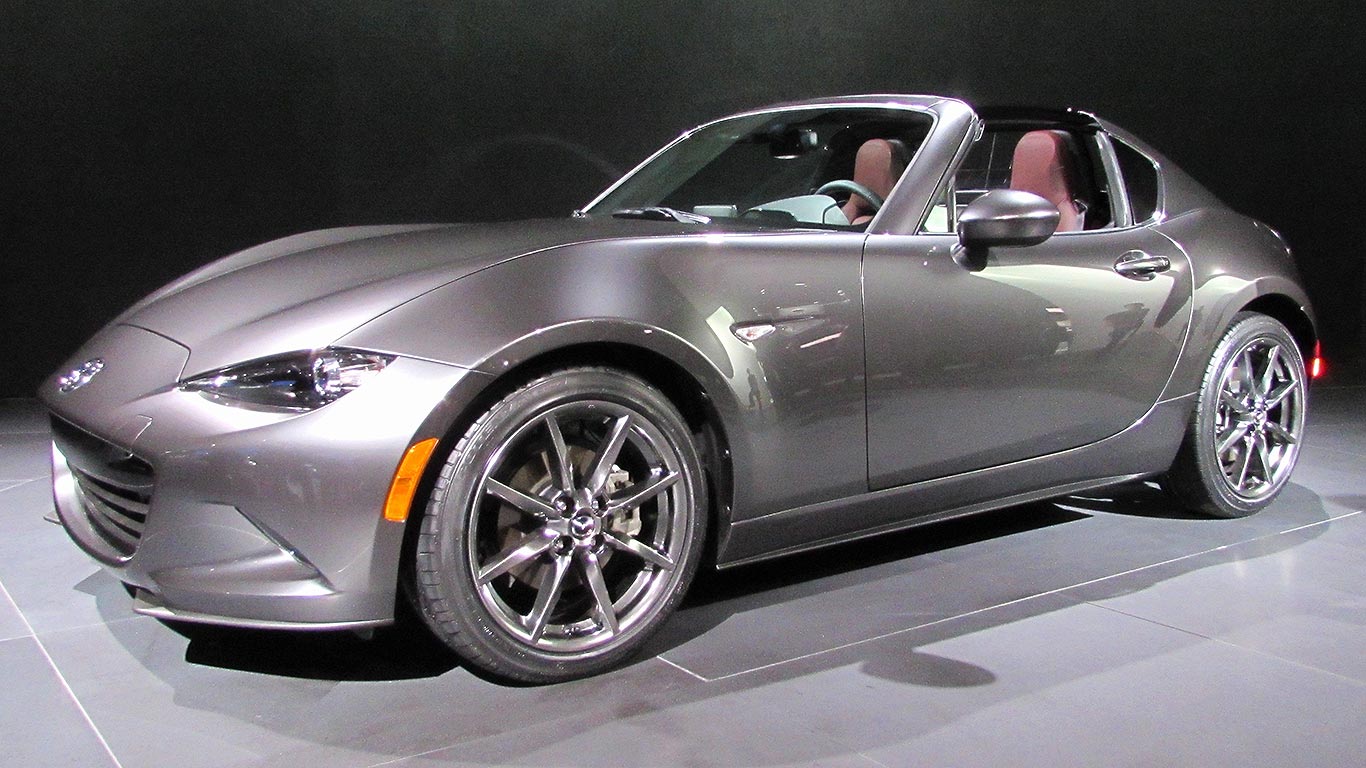
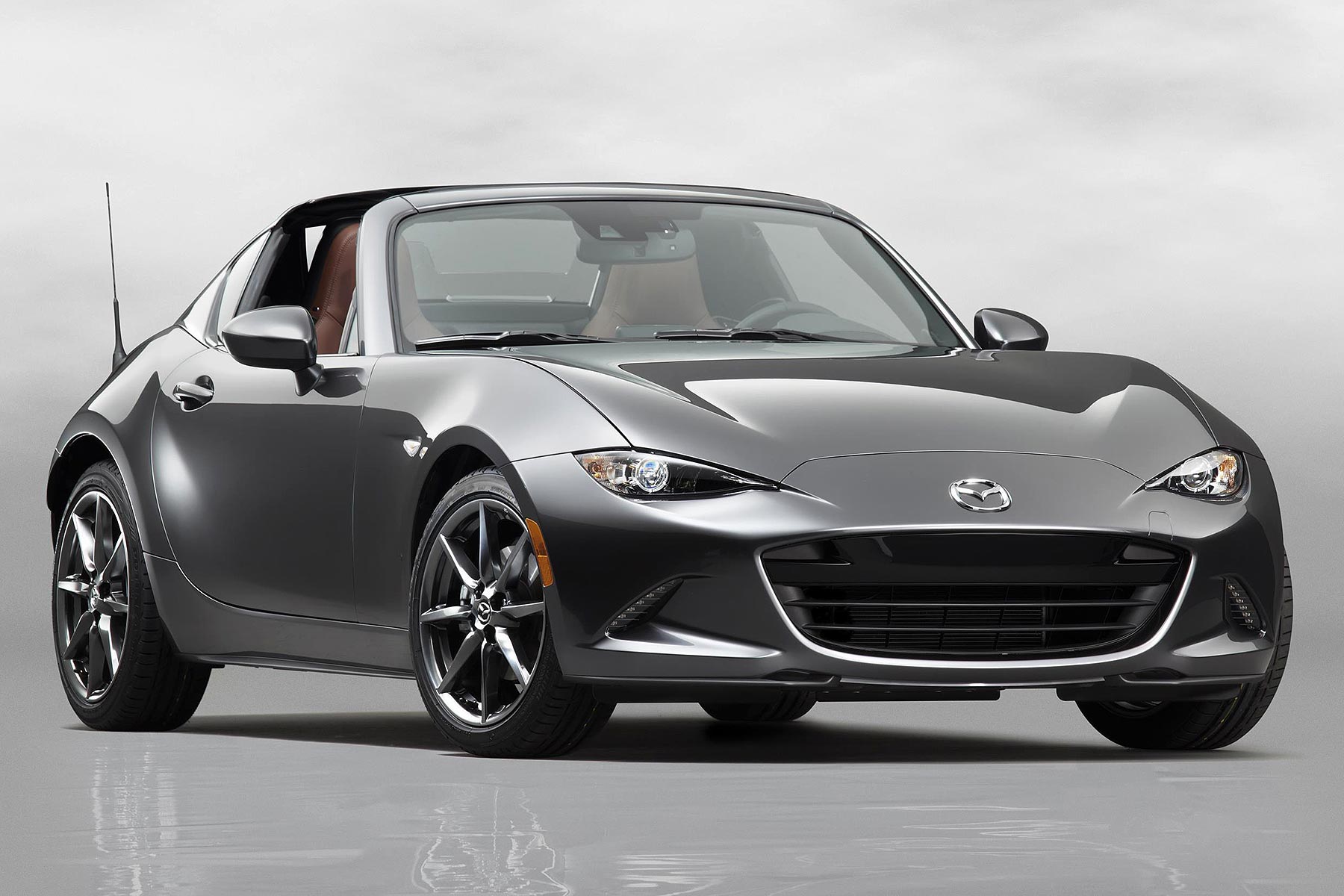
Mazda has revealed an alluring targa-top new MX-5 RF ‘Retractible Fastback’ hard-top variant on the eve of the 2016 New York Auto Show, wowing onlookers with its unexpected take on a second-generation folding hard-top MX-5.
Replacing the previous MX-5 RC, a model that in the UK accounted for the vast majority of sales, the new MX-5 RF is a much more unique proposition than its similar-to-the-roadster predecessor.
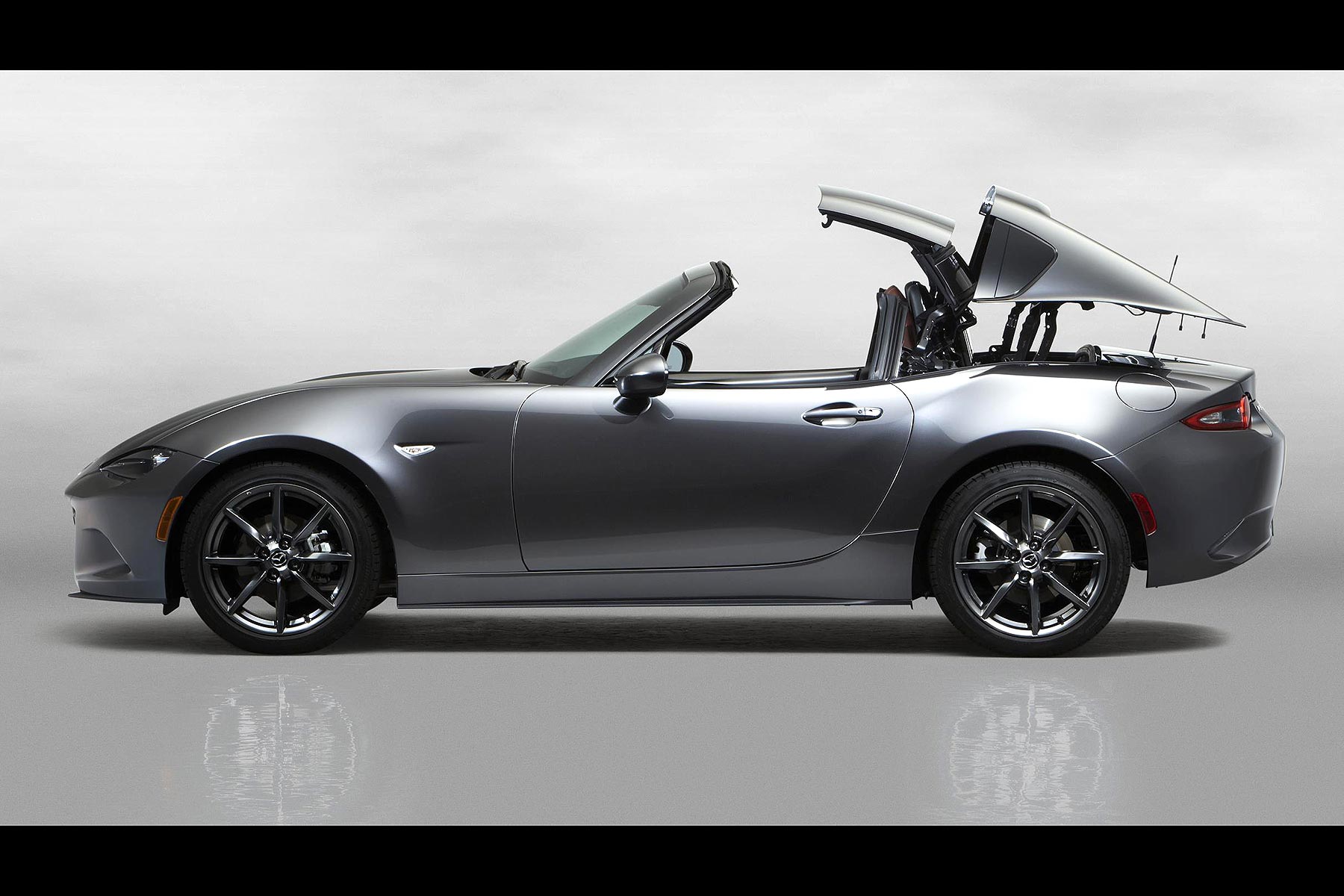
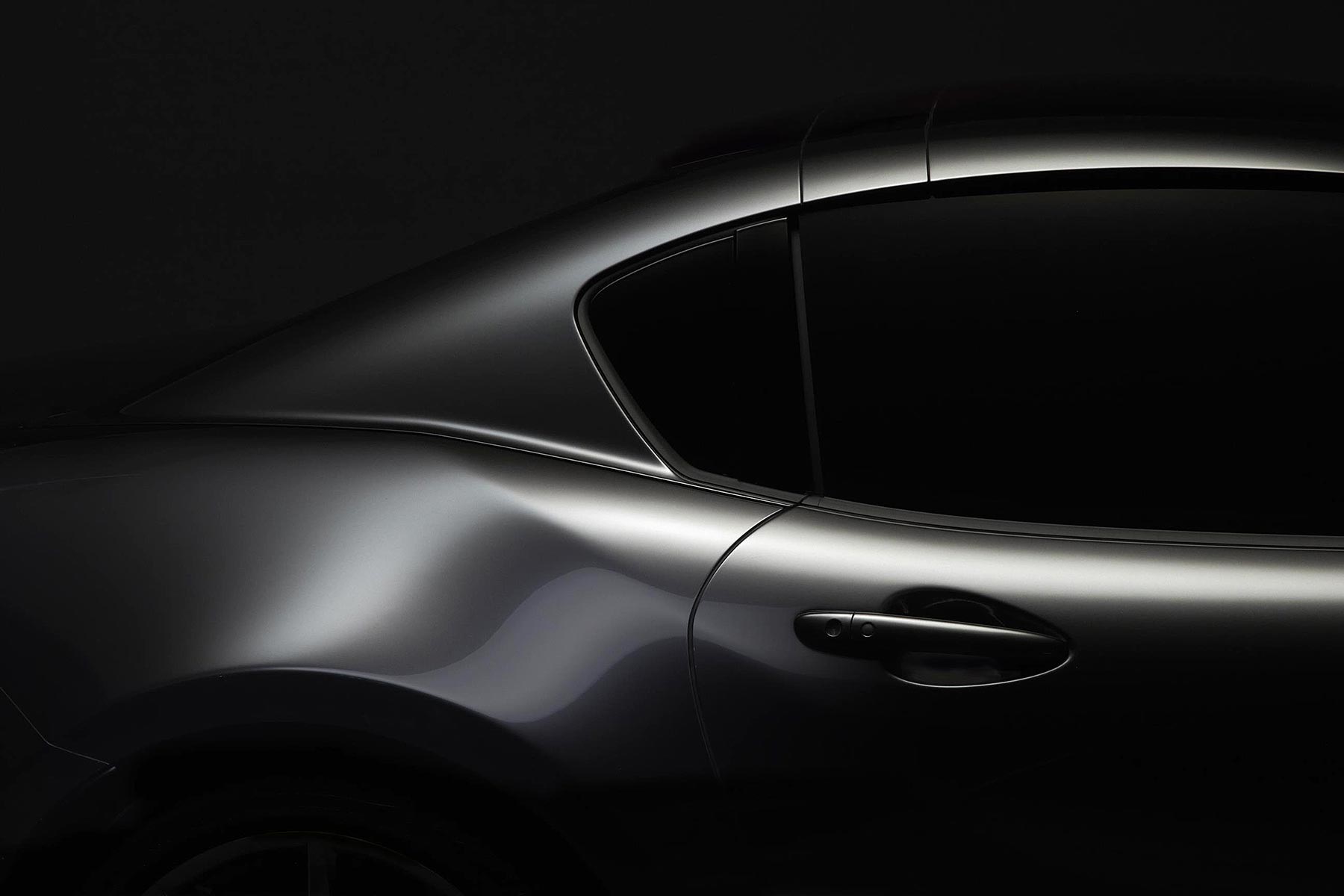
Its key feature is a new fastback-style rear end, with voluminous flying buttresses and a fixed glass rear window. The hard-top roof sits above the occupants and, because the rear deck is retractible, can be electronically stowed above the load bay – with no loss of luggage space.
The whole operation is swift and can be conducted at speeds of up to jogging pace: ideal for when the traffic lights turn green.
Mazda’s pitching the MX-5 as a more mature alternative to the racy roadster: as such, the likely-more-refined interior will be boosted by premium trims and upmarket spec levels. Mazda will, unlike the soft-top, also offer the RF with a six-speed automatic gearbox.
Both 1.5-litre and 2.0-litre petrol engines will be available.
Mazda’s even developed some expensive-looking new colours for the MX-5 RF, including a three-coat Machine Grey finish that uses the same advanced paint techniques as the Soul Red colour.
The firm revealed the MX-5 RF at an event ahead of first press day for NYIAS 2016: Mazda’s press event is actually on the second day (24 March): Motoring Research will be there and bring you more news on the wonderful-looking new fastback MX-5.
In the meantime, share your thoughts with us – and let us know what you’d like us to find out when the car’s revealed in New York.
The Lamborghini Centenario will be the cover supercar of the next Forza racing game – and, when it’s revealed in June 2016, gamers will actually beat Lamborghini owners in getting behind the (virtual) wheel.
Available to millions of racing fans ‘first in Forza’, the Centenario news is the latest move in a successful relationship between Microsoft and Lamborghini.
It’s all the more significant as the limited-to-40, £1.7 million, already-sold-out Centenario is Lamborghini’s prized special edition to celebrate 100 years of founder Ferruccio Lamborghini’s birth.
“We’re excited to continue our long history of working with Lamborghini and to be part of their 100-year anniversary by celebrating the Centenario as the featured cover car of the next Forza game,” said Phil Spencer, Head of Xbox.
But the figures speak for themselves in explaining why it’s honouring Ferruccio on its latest headline video game, added the tech giant: Lamborghini is the most popular brand in the Forza stable and more than five million gamers have now spent nearly 60 million hours racing them.
That’s why the 770hp Centenario is debuting in Forza rather than on the road: in doing so, it joins 14 other Lamborghinis featured to date in the Xbox One Forza franchise.
As for the game itself, developed by Microsoft partner Turn 10 Studios, the figures are again clear: it’s the best-selling racing franchise of today’s video games console generation, boasting a staggering 10 million unique fans.
And if but a handful of them go on to buy a Lamborghini when they can afford one, well…
The reborn TVR brand has confirmed it is building a brand new car plant in the Ebbw Vale Enterprise Zone in South Wales as part of a five-year, £30 million investment plan.
Both TVR’s backers and the Welsh Government will invest in the new manufacturing facility, the location of which will be confirmed in the next few weeks.
In deciding to choose Wales, TVR chairman Lee Edgar said it was a “fantastic opportunity both for TVR and the Welsh Government.
“South Wales is becoming a major hub for automotive and motorsport technology and development and the area is a serious opportunity for business development and job creation.”
The decision will be officially announced this morning by the First Minister of Wales, the Rt. Hon Carwyn Jones, after the contract was signed on 18 March. He said it was “yet another fantastic high profile investment for Wales and a great boost for our automotive sector.
“TVR is another iconic and much loved, world-class brand that still commands a strong and loyal international following. I am delighted the next generation of TVRs will proudly bear the label Made in Wales.”
The TVR news follows Aston Martin’s decision to locate its new crossover SUV factory at St. Athan in South Wales, 15 miles west of Cardiff.
The first Minister said it “sends out a strong, clear message that Wales is the location of choice for advanced manufacturing.
“It also illustrates that our pro-business approach is delivering results, attracting significant investment and creating high quality jobs and it is another huge boost for Wales, for our automotive sector and for our skilled workforce.”
The new TVR project was announced in early 2015 and more than 350 orders have since been taken: demand is so high (the order book is full to the end of 2018), the firm had to open its waiting list for the new car ahead of time, despite buyers having to place £5,000 deposits to secure a place.
The chassis and body is being designed by Gordon Murray and it will be the first production car to use his new iStream assembly process. Power will be ample: Cosworth is tuning a V8 engine specifically for TVR.
What will it be called? That’s still to be confirmed; currently, it has the codename T37.
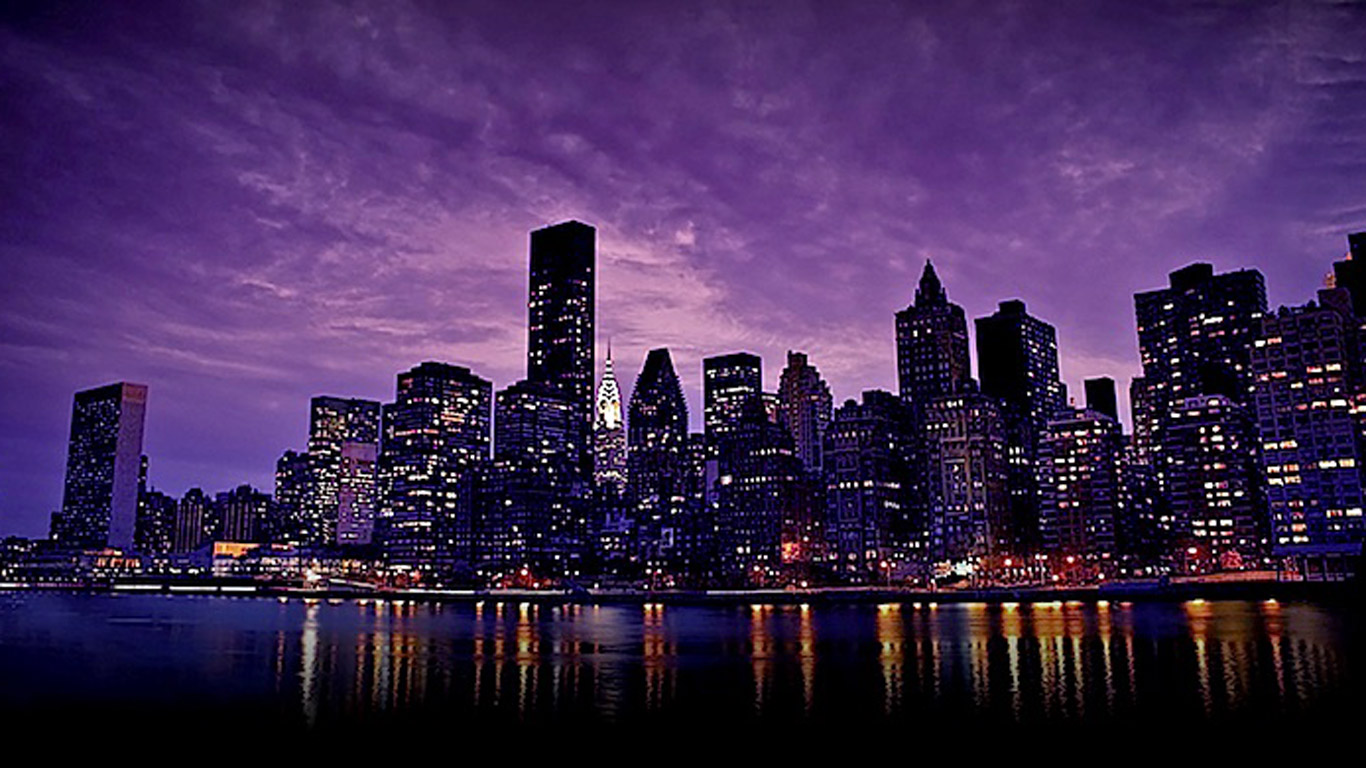
The New York International Auto Show (NYIAS) is the oldest auto show in North America, with the first event taking place at Madison Square Garden in 1900. A total of 69 exhibitors were in attendance, with approximately 160 complete vehicles on display.
This year, Nissan is celebrating 50 years of performance at NYIAS with what it is calling a “Nissan Dream Garage”. While we wait for the dream to become reality, join us as we take a brief look at the history of North America’s first automotive exhibition.
Along with Madison Square Garden, early events were held at the Grand Central Palace. In 1956, the NYIAS moved to the New York Coliseum, described by mayor Robert Wagner as “one of the wonders of the modern world.” It remained at the 323,000-square-foot Coliseum until 1987, when it arrived at its present home: the Jacob K. Javits Convention Center.
NYIAS: the early years
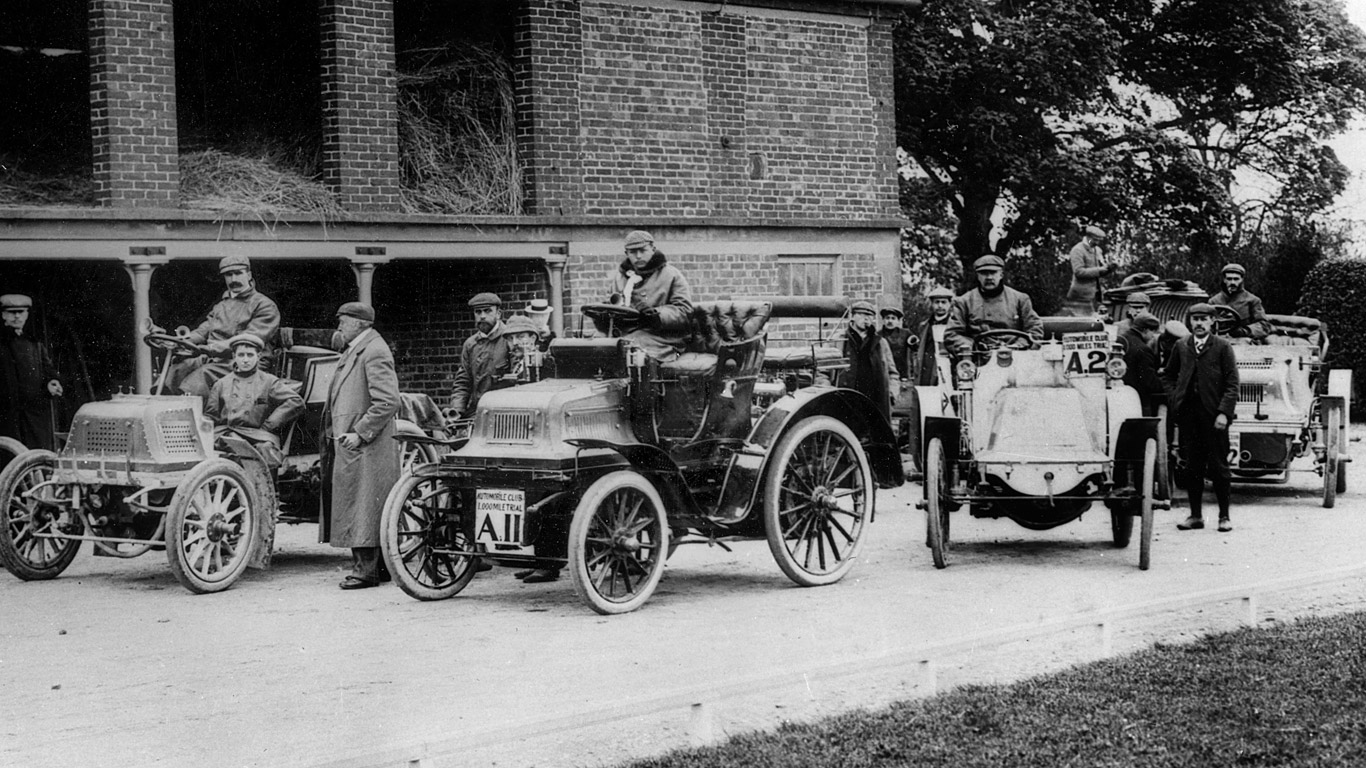
At the first New York Auto Show in 1900 (the International part of the name didn’t arrive until 1956) the vehicles on display ranged from $280 – nearly six months’ salary at the average annual wage of $589 – up to $4,000. New York’s show followed in the footsteps of the world’s oldest automotive exhibition: the 1898 Paris Auto Show. At the turn of the century, there were fewer than 8,000 cars in the U.S., but a nation’s love affair with the automobile was beginning to blossom.
Evolved from bicycle shows
Auto shows evolved from bicycle shows, which were popular in the late 19th century. Indeed, the New York City cycle show of 1899 was the first in North America to use automobile in its title. It’s full name was the Fourth Annual Cycle and Automobile Exhibition. Development of the car was still in its infancy, as can be seen from this 1901 Renault.
First show held at Madison Square Garden
On show at the first New York Auto Show – held at Madison Square Garden were seven electric vehicles, two petrol-powered vehicles and a gasoline tricycle. This image shows an Australian bicycle from the period.
Curved Dash Oldsmobile
Making its debut at the 1901 New York Auto Show was the Curved Dash Oldsmobile, the first mass-produced car. Around 425 units were built during the first year, extending to 19,000 by the time it went out of production in 1907. It was the best-selling vehicle in America.
Longest drive in the US
The first Curved Dash Oldsmobile was driven to the New York Auto Show by Roy D. Chaplin, who started his journey in Detroit. At the time, this was the longest journey ever completed by a car in the USA.
Toledo Model A
Another car to launch at the 1901 New York Auto Show was the Toledo Model A, which is widely considered to be one of the best American-built steam cars. The 6.5hp twin-cylinder vehicle could trace its roots back to a bicycle, but the writing was already on the wall for steam-powered cars. Gasoline was taking over.
Cadillac Model A
In 1903, the New York Auto Show played host to the birth of one of America’s most famous automotive brands: Cadillac. The Model A was Cadillac’s first car and this image shows a car from 1904.
The first REO
The first car produced by the REO Motor Car Company made its debut at the 1905 New York Auto Show. The REO was a 16hp two-cylinder car with a detachable tonneau. Much later, REO would build the Speed Wagon, which of course inspired the name of the rock group, REO Speedwagon.
1906 Ford Model N
We often read about the Model T, but there was life at Ford before the Tin Lizzy. The Ford Model N was unveiled at the 1906 New York Auto Show and was the realisation of Henry Ford’s dream of making an affordable car. Nobody could quite believe that Ford could sell the Model N for $500 and still make a profit.
First Chevrolet to wear the ‘bowtie’
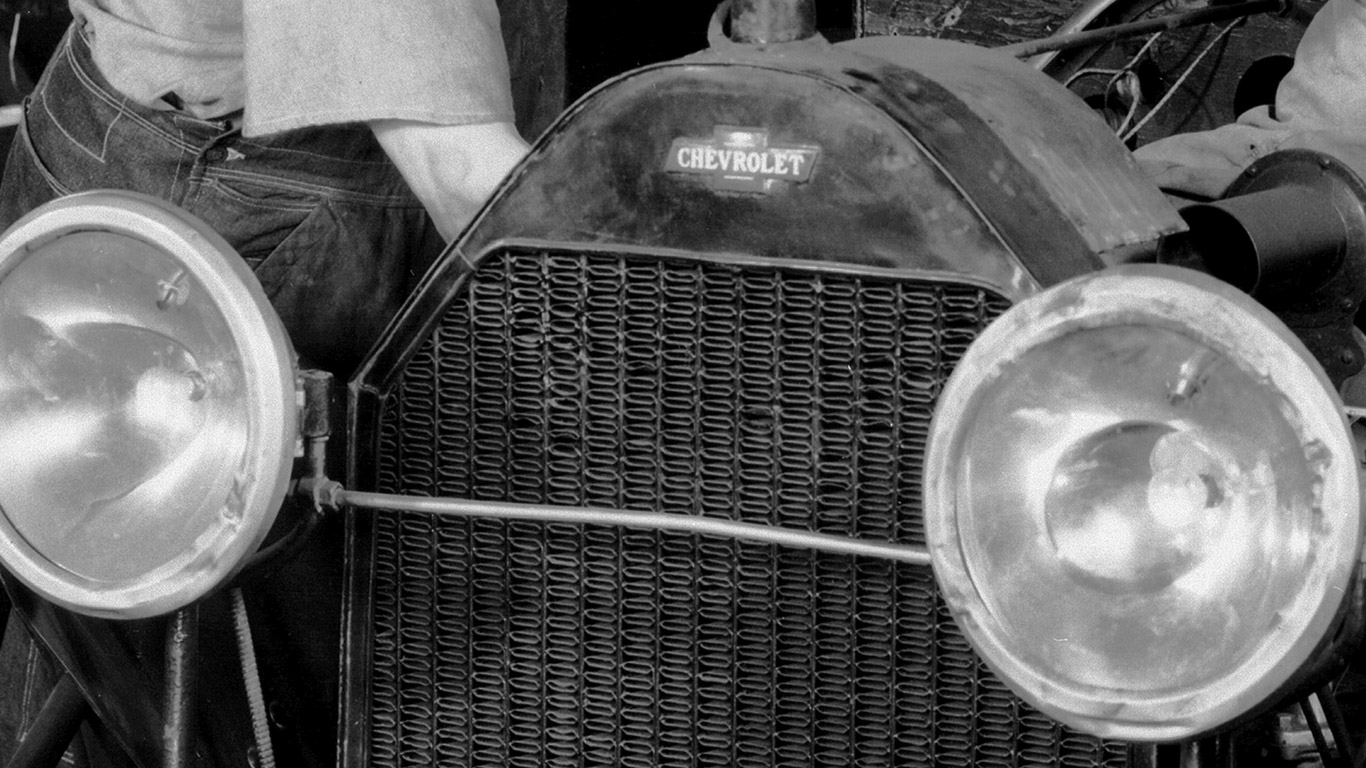
In 1913, Chevrolet co-founder William C. Durant introduced the signature Chevy bowtie on the 1914 H-2 Royal Mail and the H-4 Baby Grand, centered at the front of both models. For most people, the 1914 New York Auto Show was the first chance to see this famous badge.
Chevrolet Series M Copper-Cooled
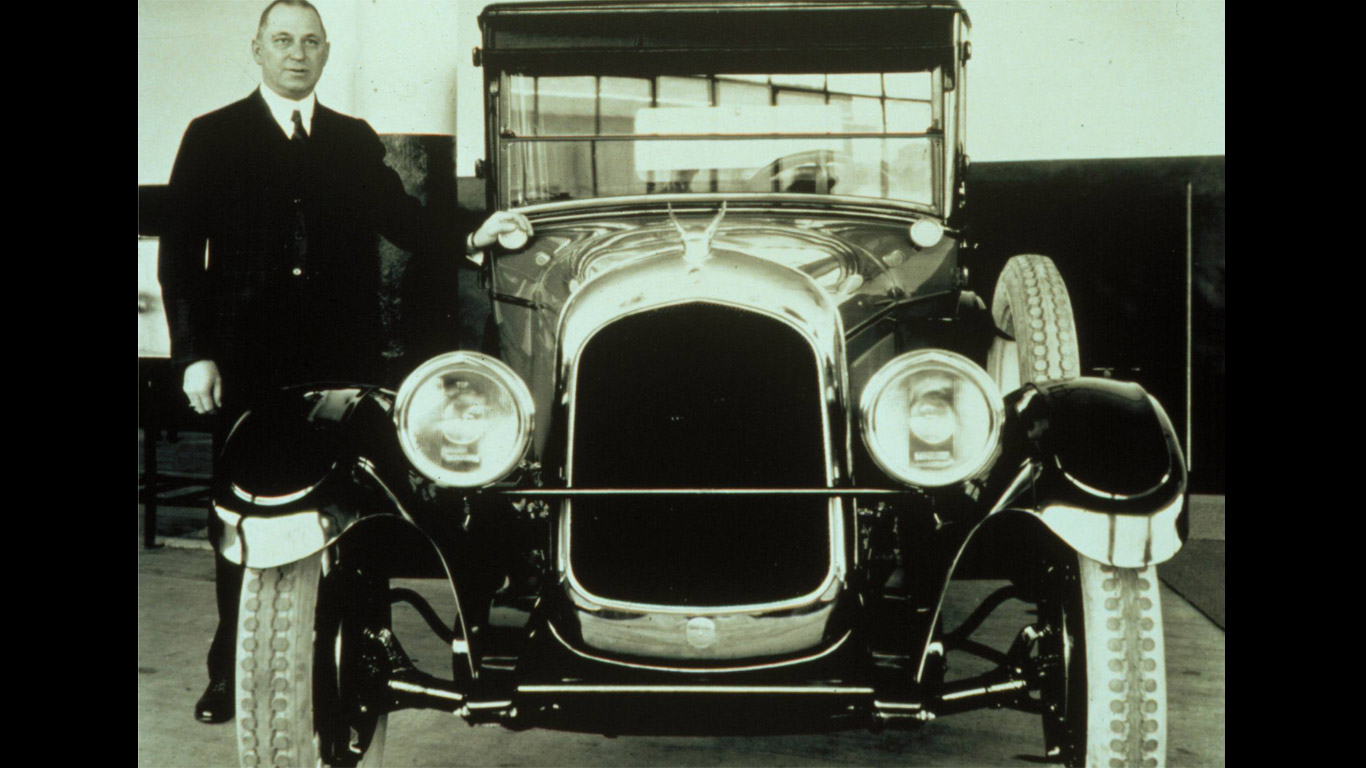
Not all automobiles go on to become greats. The Chevrolet Series M Copper-Cooled car was unveiled at the 1923 New York Auto Show and featured a unique non-radiator grille. According to Automobile Quarterly, “the car was introduced to an intrigued but dubious public,” but a lack of testing meant they were destined for disaster. All but two of the 759 air-cooled engines built were recalled and scrapped.
Chrysler born at the 1924 New York Auto Show
Another famous American brand to make its debut at the New York Auto Show was Chrysler. There are many stories surrounding the marque’s NY debut, including Chrysler being banned from the show because its automobiles were not available for purchase. But while the company rented space at the Commodore Hotel, Chrysler also displayed three models of the Chrysler Six – or B-70 – in the main exhibition hall.
Duesenberg – back for the 1928 New York Auto Show
The Duesenberg name was revived for the 1928 New York Auto Show and the first car to be shown was the Model J. It was designed to go head-to-head with the most luxurious cars of the era, such as those made by Rolls-Royce and Mercedes-Benz. Sadly, this was just before the Great Depression and the Model J sold nowhere near as many as had been forecast.
Cadillac V-16
The Cadillac V-16 – or Cadillac Sixteen – was one of the most luxurious cars in the firm’s history. It made its debut at the 1930 New York Auto Show and production would last right through the 1930s. Each one was custom-built to order.
Pierce-Arrow Silver Arrow
By 1933, America was in the grip of the Great Depression and the luxury car brands were struggling for survival. Pierce-Arrow needed a showstopper for the 1933 New York Auto Show, so it turned to Phil Wright who created this masterpiece – the Silver Arrow. As the slogan said, “it gives you in 1933 the car of 1940.”
Chrysler Thunderbolt
The famous Chrysler Thunderbolt made its debut at the 1940 New York Auto Show. This was the era of flamboyant concept cars and the Art Deco-inspired Thunderbolt – with its retractable hardtop – was no different.
Jaguar XK120
Shortly after being unveiled at the 1948 London Motor Show, the Jaguar XK120 made its North American debut at the New York Auto Show. It overshadowed many of the exhibits on display and – much like it was in London – the XK120 was a sensation in New York.
Ferrari 250 Europa Coupe
It’s arguably one of the most beautiful cars ever to wear a Ferrari badge and it’s almost certainly one of the loveliest cars ever to appear at the New York Auto Show. This unique 1954 New York Auto Show Ferrari 250 Europa Coupe featured exclusive Michelotti-designed Vignale coachwork.
Mercedes-Benz 300SL Gullwing
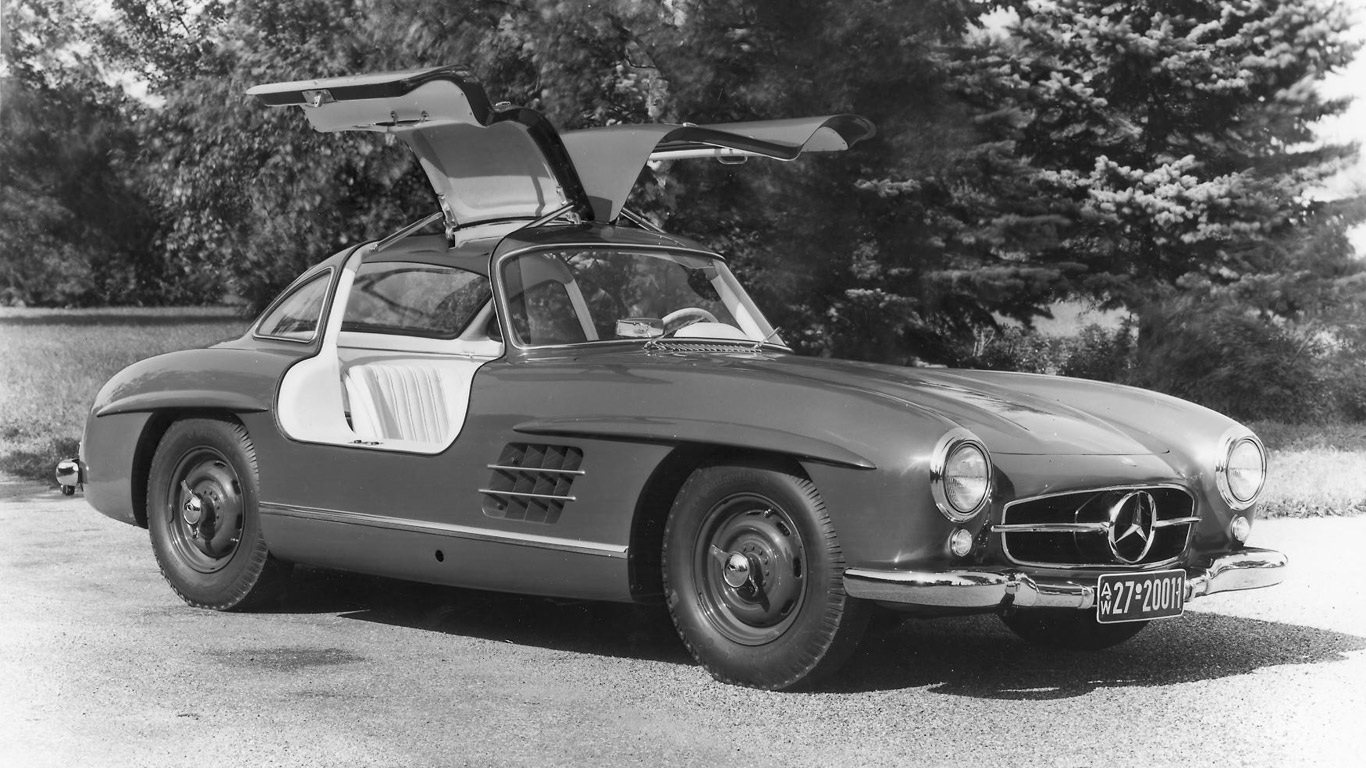
In a break from tradition, Mercedes-Benz chose to launch its sublime 300SL Gullwing, not in Europe, but at the 1954 New York Auto Show. It was US distributor, Max Hoffman, who proposed an American unveiling. The rest, as they say, is history.
1956: a year of change
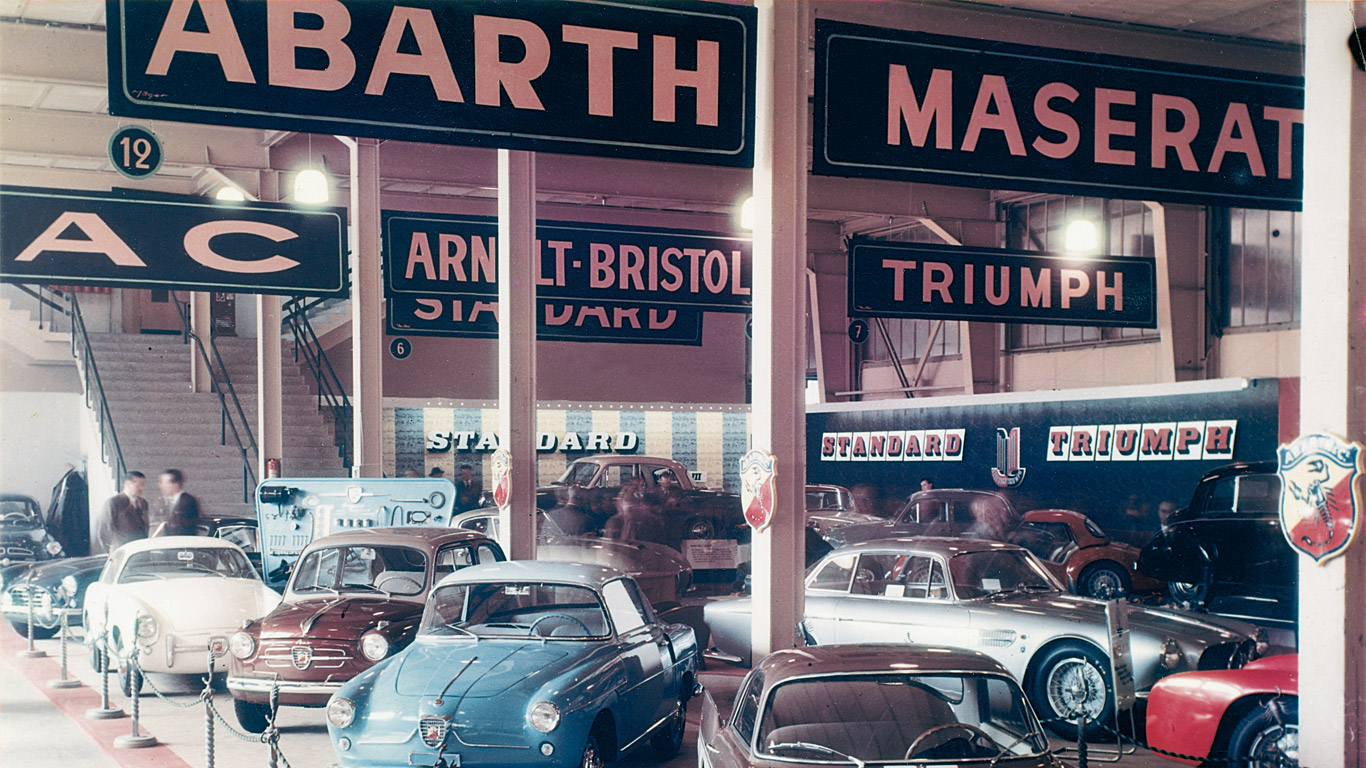
1956 saw a series of changes for the New York Auto Show. International was added to the name, reflecting the increasing popularity of European cars (photo shows the 1956 Geneva Motor Show). The New York show moved to the Coliseum.
Toyota and Datsun arrive
Toyota was the first Japanese carmaker to arrive in the US. In 1959, Toyota and Datsun made their New York International Auto Show debut. As history tells us, Japanese cars would go on to become incredibly popular in the U.S., causing many issues for the homegrown brands.
Jaguar E-Type rocks the New York Auto Show
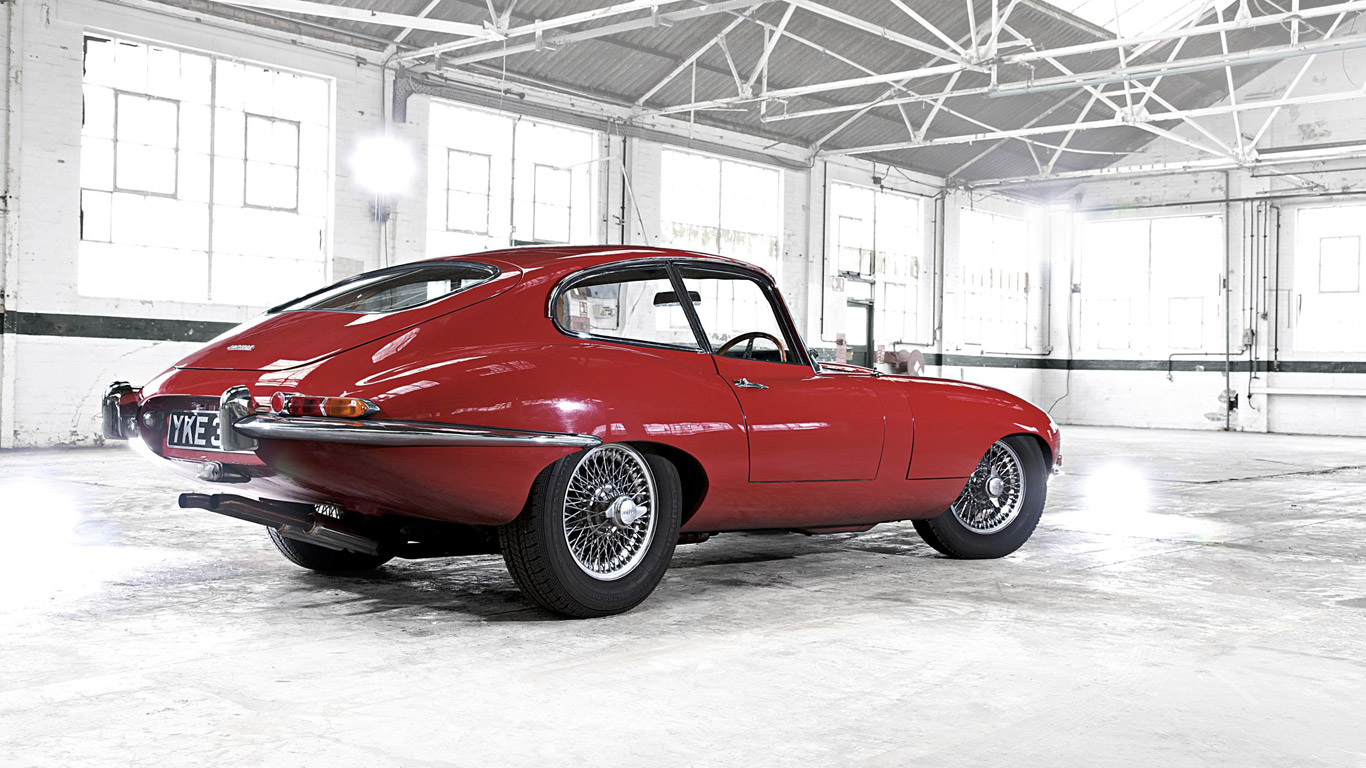
In 1961, the Jaguar E-Type made its North American debut at the New York International Auto Show. It attracted record-breaking crowds, with 47,000 people squeezing on to the Jaguar stand on day one alone. Like it did at the Geneva Motor Show, the E-Type – or XK-E, as it was known in the U.S. – completely stole the show.
E-Type is joined by a Playboy model
A gold Jaguar E-Type coupe was joined on a raised turntable by Playboy model, Marilyn Hanold, who was dressed in a shimmering gown, long white gloves and a floor-length silk scarf. As can be seen from the image above, women and the E-Type would go hand-in-hand for Jaguar.
Gold-painted MGA
MG celebrated the 100,000th MGA by displayed a gold-painted version of an MGA 1600 MkII Roadster at the 1962 New York International Auto Show. It was transported to the show on the RMS Queen Mary.
Studebaker Avanti
The Studebaker Avanti was one of the most daring and radical cars ever to come out of America. Boasting cutting edge safety features, a supercharged V8 engine and a beautifully elegant body, it was the belle of the 1962 New York Auto Show. Ian Fleming, of James Bond fame, ordered a black Avanti and shipped it to countries he was visiting.
Goldfinger’s Aston Martin DB5
And speaking of James Bond, the famous Aston Martin DB5 that featured in Goldfinger was on display at the 1965 New York International Auto Show.
New York gives birth to the MPV
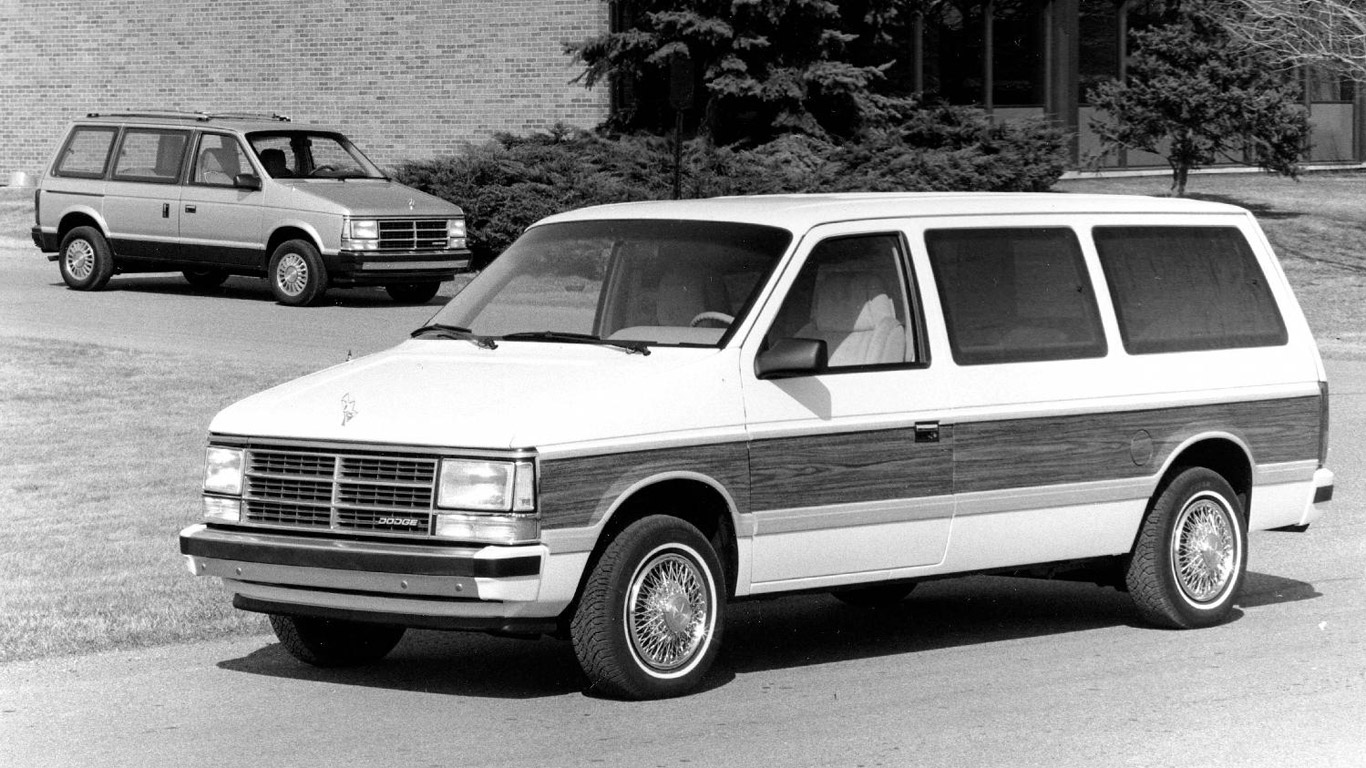
At the 1984 New York International Auto Show, Chrysler showcased its new range of minivans – marketed under the Dodge brand – thus giving birth to what we now refer to as the MPV.
700 cars at the 1984 show
In fact, 1984 was a bumper year for the New York International Auto Show, with no fewer than 700 cars on display. The likes of the Honda CRX, Nissan 300 ZX, Ford Mustang SVO and Pontiac Fiero all made their debut at the show.
The move to the Javits Center
In 1987, the New York International Auto Show moved to its current address at the Javits Center. Over the years, the New York show has had its fair share of world debuts, not least because it’s the final event of the show season and showcases cars that weren’t quite ready before.
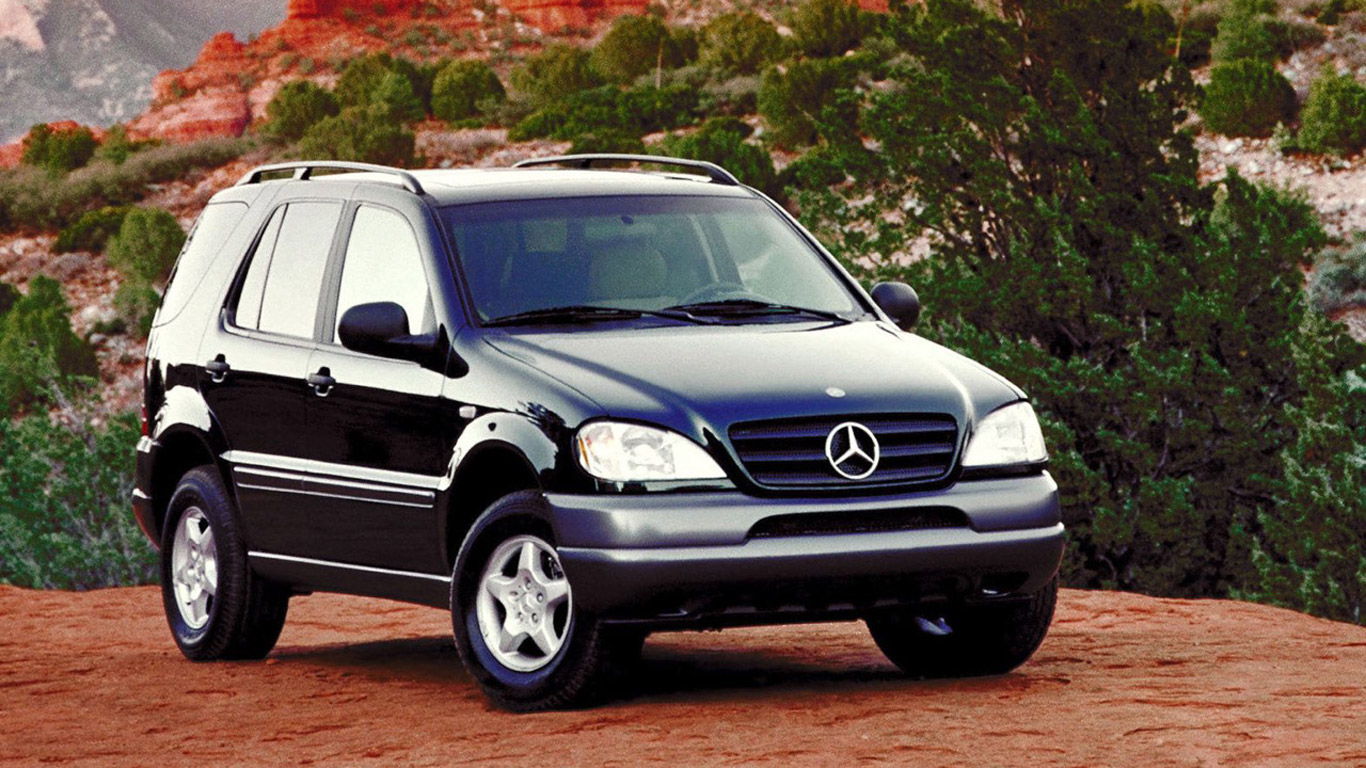
Mercedes-Benz M-Class
Mercedes-Benz had one eye on the American market when it launched the ML – or M-Class – in 1997. One half of production was destined for the American market and by the time the last of the first generation cars was built in 2004, 650,000 units had rolled off the production line.
Disabilities and lifestyle products
The 1997 New York International Auto Show featured a display of disability vehicles for the first time, whilst in 1998 we witnessed the changing face of the automotive industry when Mercedes-Benz and BMW showcased lifestyle products for the first time.
1999 Car of the Century exhibition
in 1999, the New York International Auto Show said goodbye to the last millennium with a Car of the Century exhibition. The display featured 28 cars, ranging from an 1886 Three-Wheel Benz Replica through to a 1999 Volkswagen Beetle.
Scion launches in the US
At the 2002 New York International Auto Show, Toyota launched its new Scion brand by unveiling two cars: the bbX and ccX. The aim was to appeal to a new group of motorists who weren’t interested in buying a Toyota.
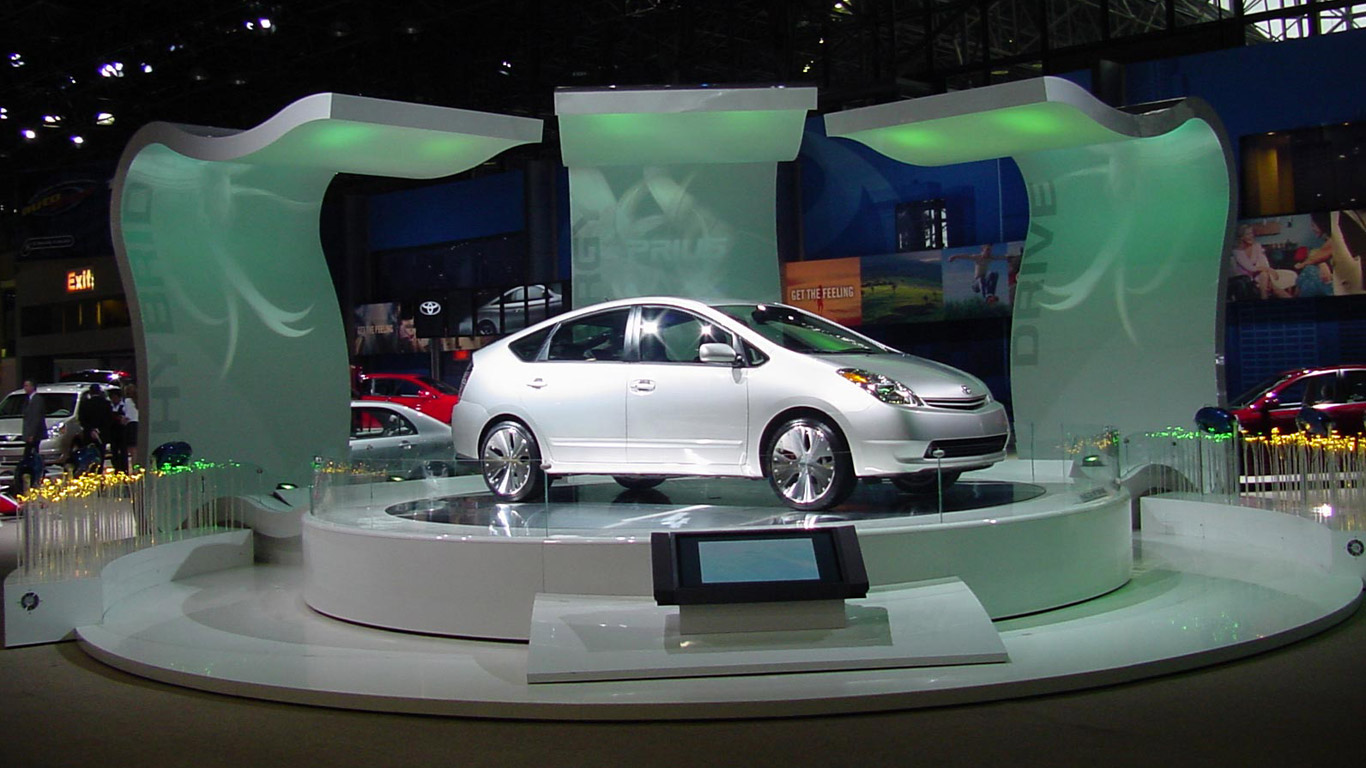
Second generation Toyota Prius
The 2003 New York international Auto Show heralded the arrival of the “greenest production car on earth”, otherwise known as the second generation Toyota Prius. The green car sector has come a long way since then, but the Prius remains as relevant as ever.
Chrysler 300C Concept
Another car that’s still going strong today is the Chrysler 300C. Back in 2003, Chrysler launched the 300C concept in New York, a car inspired by the C-300 of 1955.
The most lacklustre year in recent memory
According to the New York Times, 2005 wasn’t a good year for the car industry. It called it “one of the most lacklustre years in recent memory”, but did admit the Shelby Cobra GT500 managed to brighten up an otherwise lukewarm New York show.
Suzuki Kizashi: 2009
We’ll now take you on a whistle stop tour of some other cars to make their debut at the New York International Auto Show, starting with this, the Suzuki Kizashi, which first appeared at the 2009 show.
BMW X6M: 2009
The 2009 show also heralded the arrival of the BMW X6M…
Land Rover Discovery 4: 2009
Along with the Land Rover Discovery 4 (LR4)…
Mitsubishi i-MiEV: 2009
And the Mitsubishi i-MiEV, the first in a wave of new electric cars that would start to appear over the coming years.
Terrafugia Transition: 2012
One of the more unusual cars to make its debut at the New York International Auto Show was the Terrafugia Transition: a street-legal airliner that converts between flying and driving models in under a minute.
Nissan NV200 Taxi: 2012
The 2012 show also saw the unveiling of the Nissan NV200 Taxi, resplendent in its NYC yellow paintwork. Heralded as “New York City’s Taxi of Tomorrow”, the NV200 was said to be designed using insight from NY cabbies.
Dodge SRT Viper: 2012
Billed as “America’s most important performance car of the decade”, the Dodge SRT Viper was unveiled at the 2012 New York International Auto Show, surrounded in a cloud of tire smoke and the sound of an 8.4-liter V10 engine. The GTS (shown here) followed a year later.
Subaru WRX Concept: 2012
Subaru hinted at the arrival of the all-new WRX STI when it launched the WRX Concept at the 2013 New York International Auto Show. Looking back, it remains a wondrous thing.
Jeep Cherokee: 2013
Jeep shocked the whole of America when it revealed the new face of the Cherokee in 2013. Six years on, we’re still coming to terms with the styling, but the facelifted version – unveiled at the 2018 Detroit Auto Show – is easier on the eye.
Jaguar XJR and XKR-S GT: 2013
Many years had passed since Jaguar stole the show with the XK120 and E-Type. Times change, so Jaguar went down the POWER route at the 2013 show, showcasing the 550hp XJR and 550hp XKR-S GT.
Nissan Murano: 2014
The American-built Nissan Murano was launched at the 2014 New York International Auto Show. It sits between the Rogue and Pathfinder in the Nissan SUV range, with prices from $30,800.
Land Rover Discovery Vision Concept: 2014
Also unveiled at the 2014 show was the Land Rover Discovery Vision Concept, a car that previewed the all-new Land Rover Discovery Sport.
Jaguar XF: 2015
Officially, the Jaguar XF made its public debut a week before the 2015 New York Auto Show when it was unveiled as part of a high-wire publicity stunt over the River Thames in London. It hit the floor – not literally – at the Javits Centre.
McLaren 570S: 2015
No trapeze artists or high-wires were required for the unveiling of the McLaren 570S. Six months after it was unveiled in New York we bagged a first drive. Our verdict: it drives wonderfully well and is heroically fast, but it’s the additional usability that will make the 570S.
Lincoln Continental Concept: 2015
Did the Lincoln Continental Concept upstage the 570S at the 2015 New York Auto Show? Sorry, McLaren, but we think so. Well, this is an American auto show. The best news of all: the production version is every bit as gorgeous and imposing as the concept.
Mazda Miata RF: 2016
Moving on to 2016 and it was the turn of Mazda to wow the crowds. The RF debuted a new retractable roof for the popular Miata and is now on sale with prices starting from $32,345.
Audi R8 Spyder V10: 2016
Lesson number one in how to make your new car stand out at an international auto show: paint it yellow. The Audi R8 Spyder V10 made a big impression in New York, and not just because it was the color of the sun.
Genesis New York Concept: 2016
The Genesis New York Concept previewed the future Genesis design direction and was powered by a 245-horsepower hybrid powertrain. As concepts go, it was OK. If it was really good, they’d have named it twice. That said, the Genesis New York, New York doesn’t exactly roll off the tongue.
Dodge Challenger SRT Demon: 2017
If cars had egos, the Dodge Challenger SRT Demon would have one the size of the Javits Center. The 840-horsepower, 770lb ft New York Auto Show star was banned by the National Hot Rod Association (NHRA) for being too fast for the drag strip, giving it instant notoriety. It was the undoubted star of the 2017 show.
Jeep Grand Cherokee Trackhawk: 2017
They went power mad at FCA, with the Jeep Grand Cherokee Trackhawk taking a bow with what is essentially a Dodge Hellcat in an SUV suit. Soccer moms in a hurry rejoiced because this superfast SUV packed a 6.2-liter supercharged engine developing 707-horsepower and 645lb ft of torque: enough to take it from home to the school gate in 3.5 seconds.
Lincoln Navigator: 2017
Lincoln promised to elevate “family travel to first class” with new Navigator, which was rather apt given that this thing is the size of something you might climb aboard to take a transatlantic flight. It has everything you’d expect from a Navigator, including six USB ports, wireless charging, standard wifi, ‘Perfect Position’ seats and a massage function. So it’s a bit like a first-class departure lounge, too.
Range Rover Velar: 2017
The Range Rover Velar made its debut ahead of the New York Auto Show, appearing alongside new brand ambassador, Ellie Goulding, at Hearst Plaza. “I have always been a Range Rover fan,” said the pop star. “I have always been an Ellie Goulding fan,” said Gerry McGovern, Land Rover’s chief design officer. Probably.
Toyota RAV4: 2018
Arguably the most important new car at the 2018 show, certainly in terms of sales, was the 2019 Toyota RAV4. Gone was the conservative styling of the previous model, with Toyota creating a bold and radical new look for its popular SUV.
New York International Auto Show 2019
The 2019 New York International Auto Show will throw open its doors on 17 April, with debuts including a new Hyundai Sonata, Lincoln Corsair compact SUV, Toyota Yaris and Mercedes-AMG A 35 sedan. We’ll be there to bring you all the latest reveals and the hottest concepts.
 The waiting is over – Tesla has launched its $35,000 (£25,000) high-volume Model 3 electric car and the world is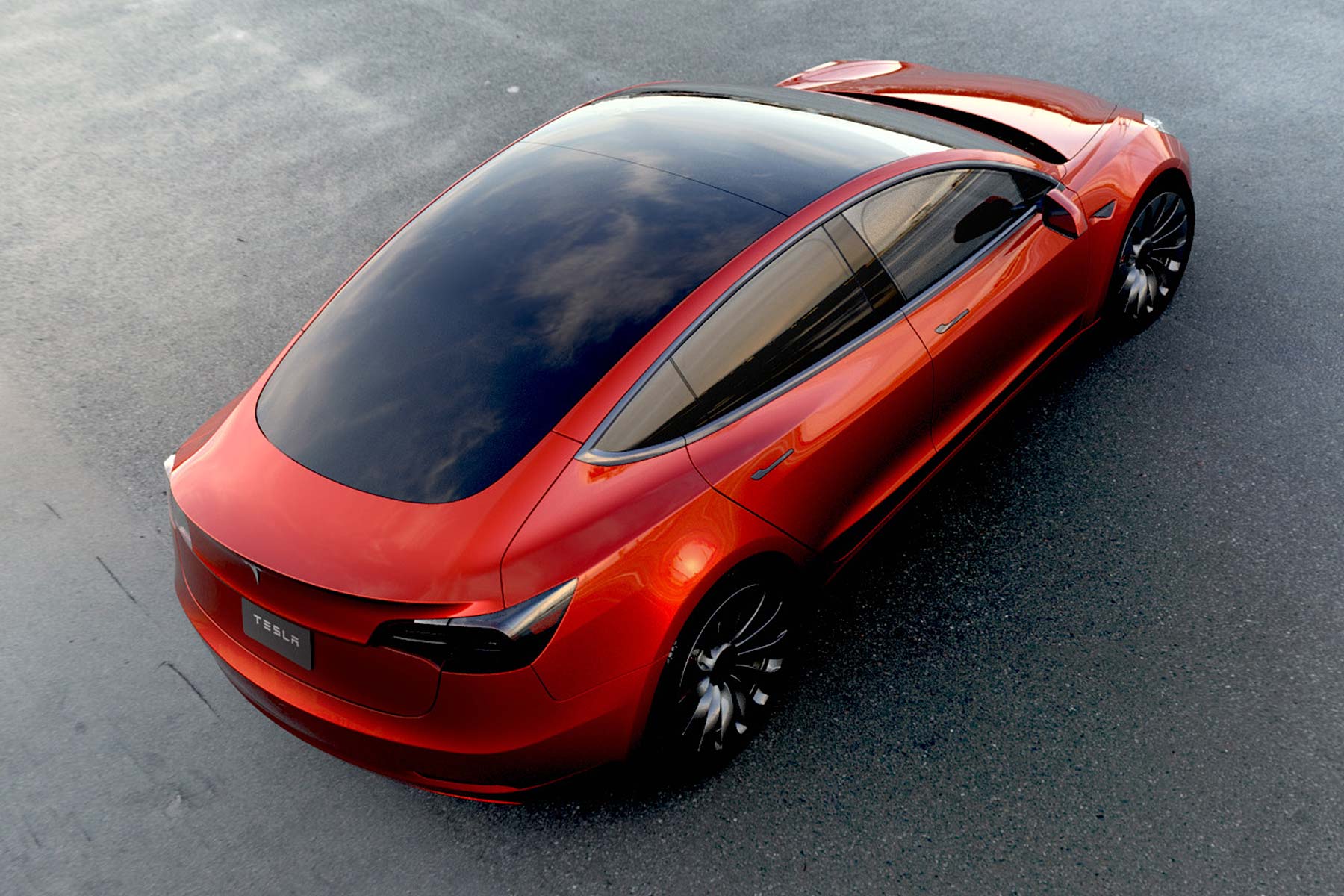


 The new Audi R8 Spyder V10 has been revealed at the 2016 New York Auto Show, ahead of the brand’s official press conference later this afternoon.


 Mazda has revealed an alluring targa-top new MX-5 RF ‘Retractible Fastback’ hard-top variant on the eve of the 2016 New York Auto Show, wowing onlookers with its unexpected take on a second-generation folding hard-top MX-5.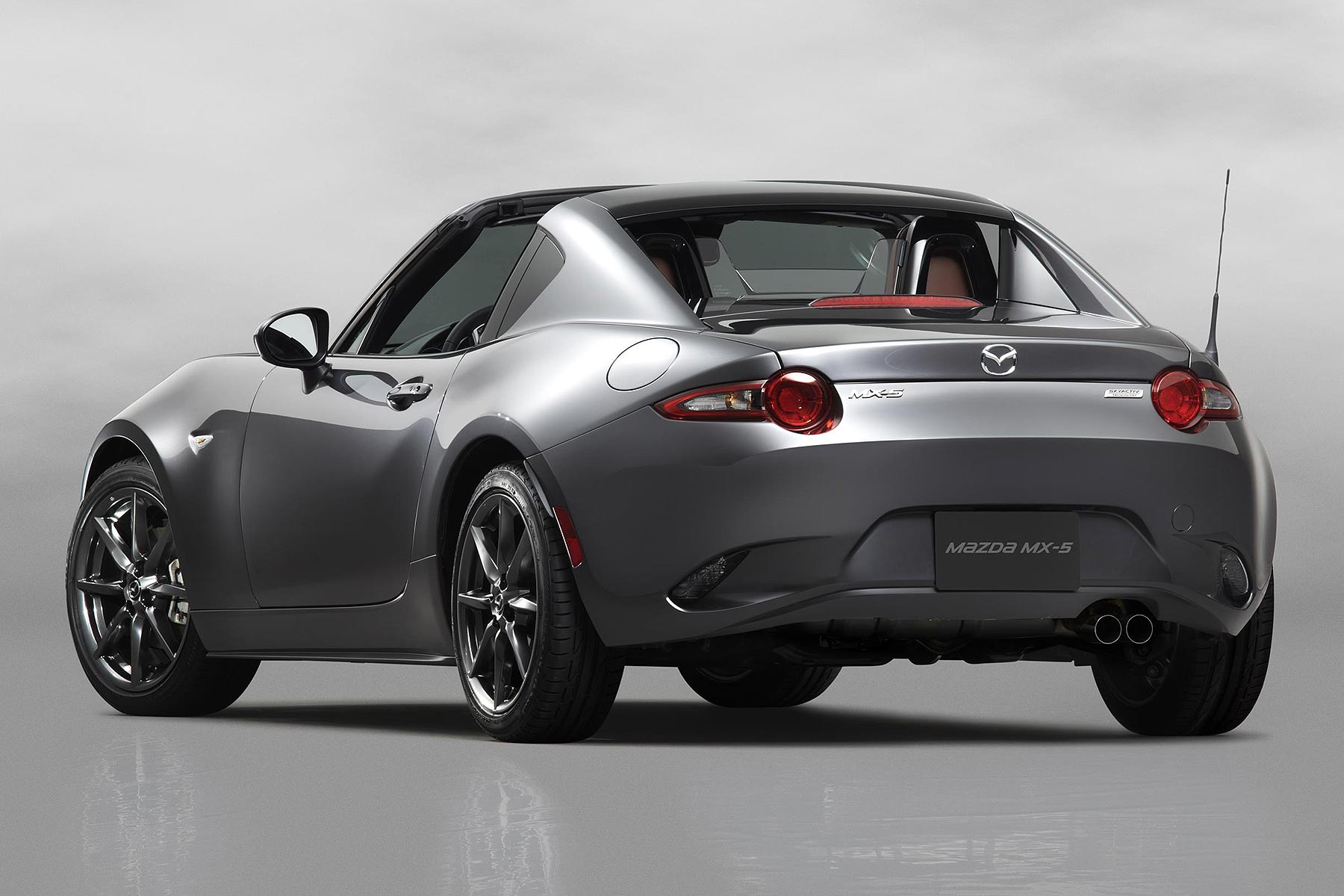
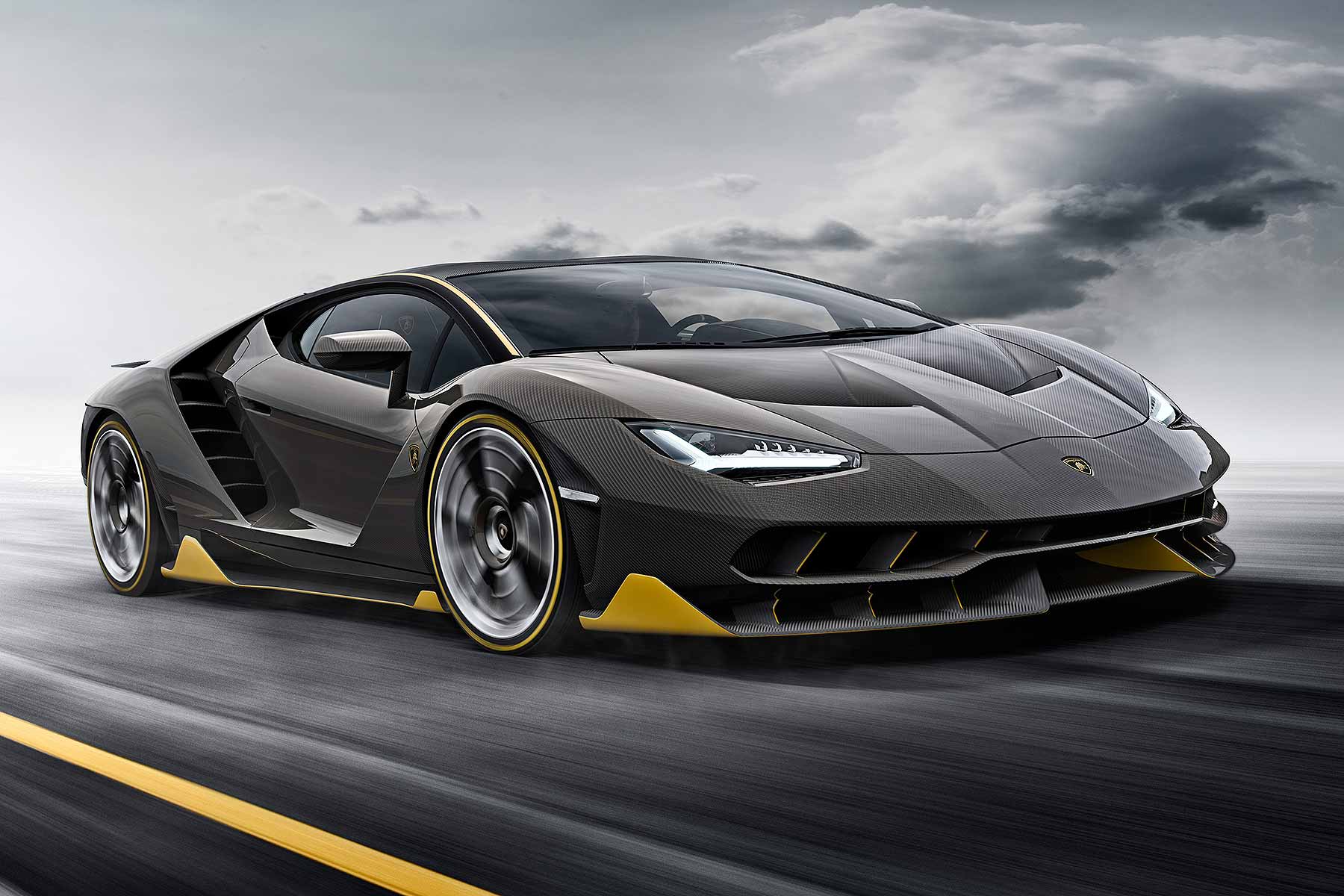 The Lamborghini Centenario will be the cover supercar of the next Forza racing game – and, when it’s revealed in June 2016, gamers will actually beat Lamborghini owners in getting behind the (virtual) wheel.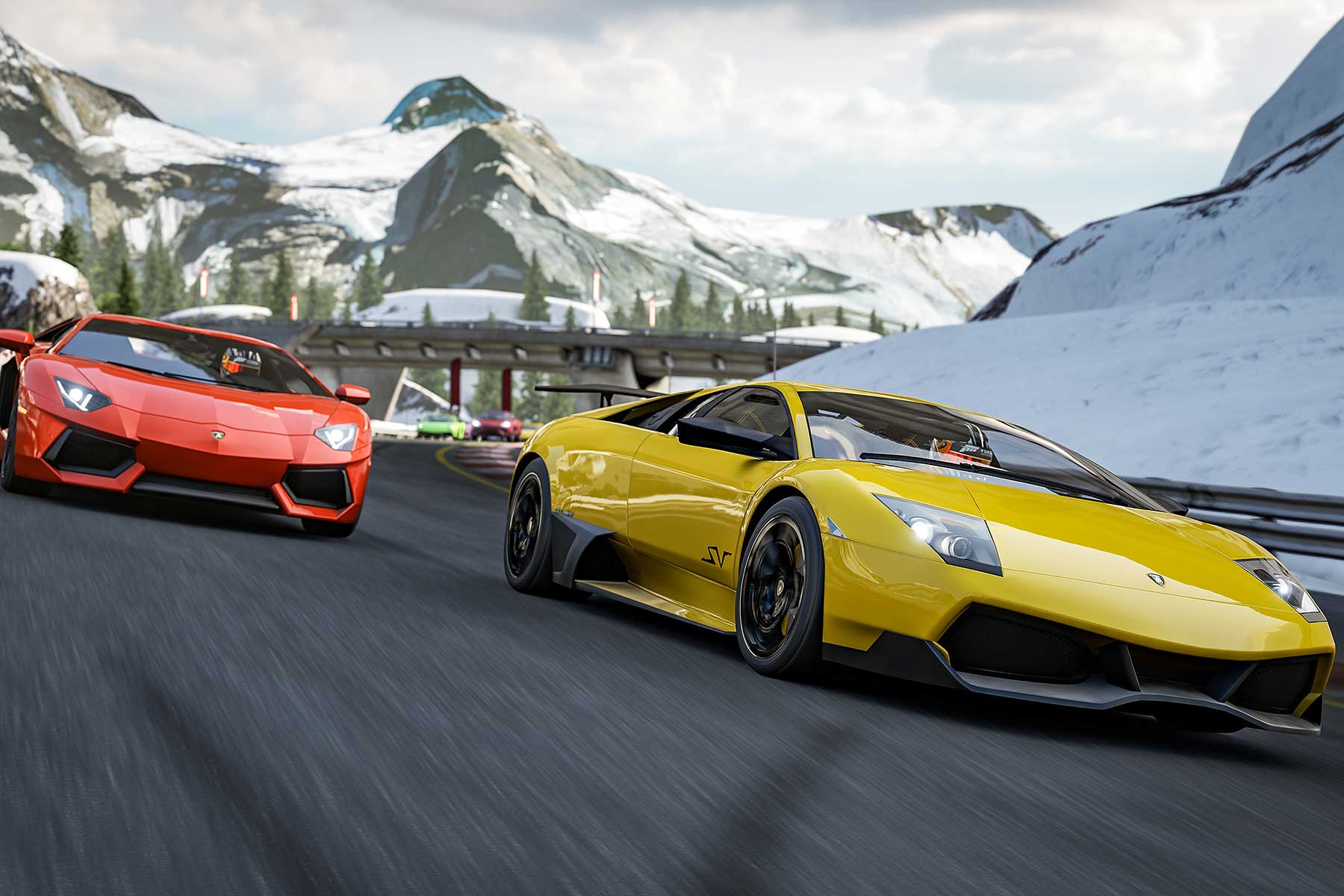
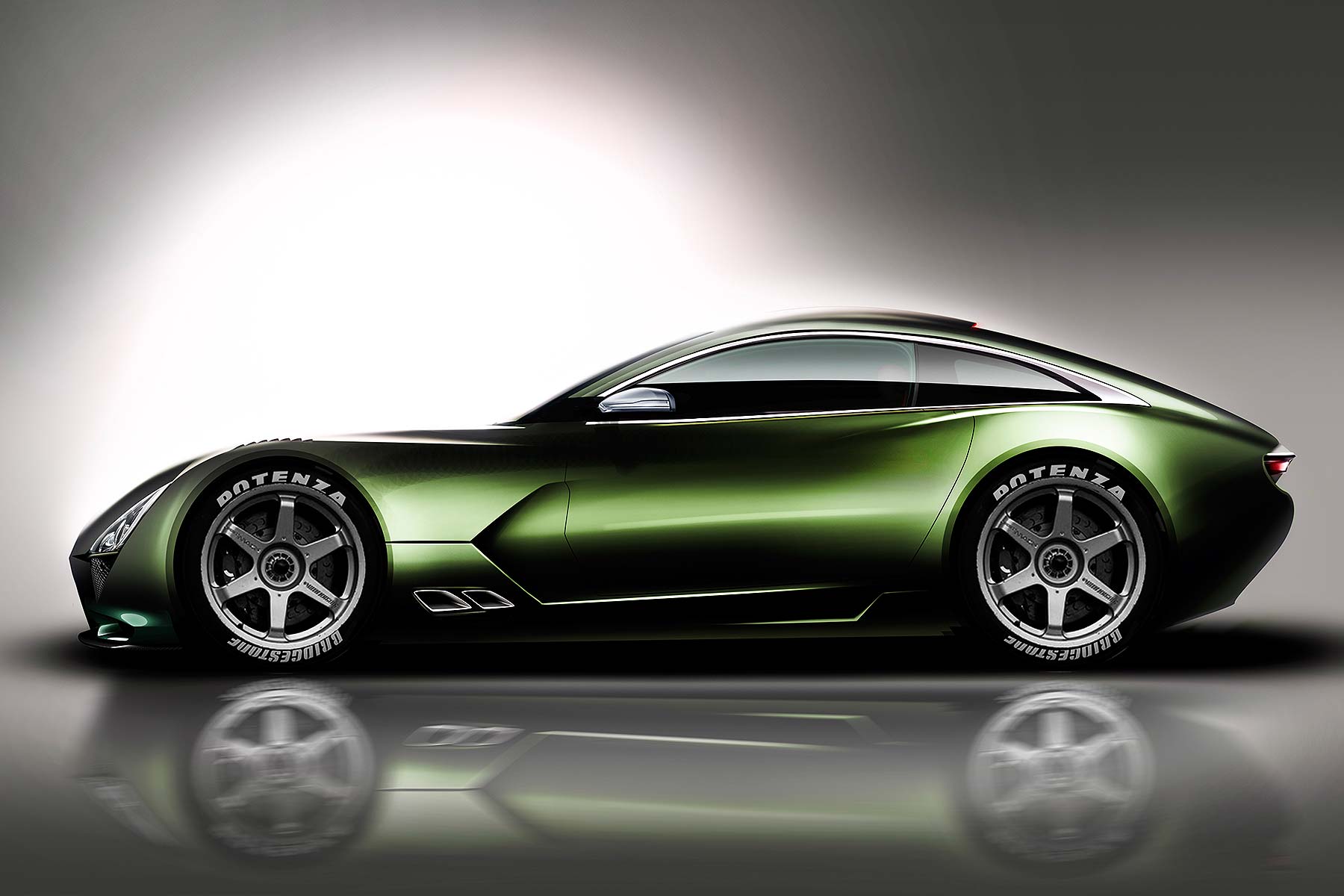 The reborn TVR brand has confirmed it is building a brand new car plant in the Ebbw Vale Enterprise Zone in South Wales as part of a five-year, £30 million investment plan.
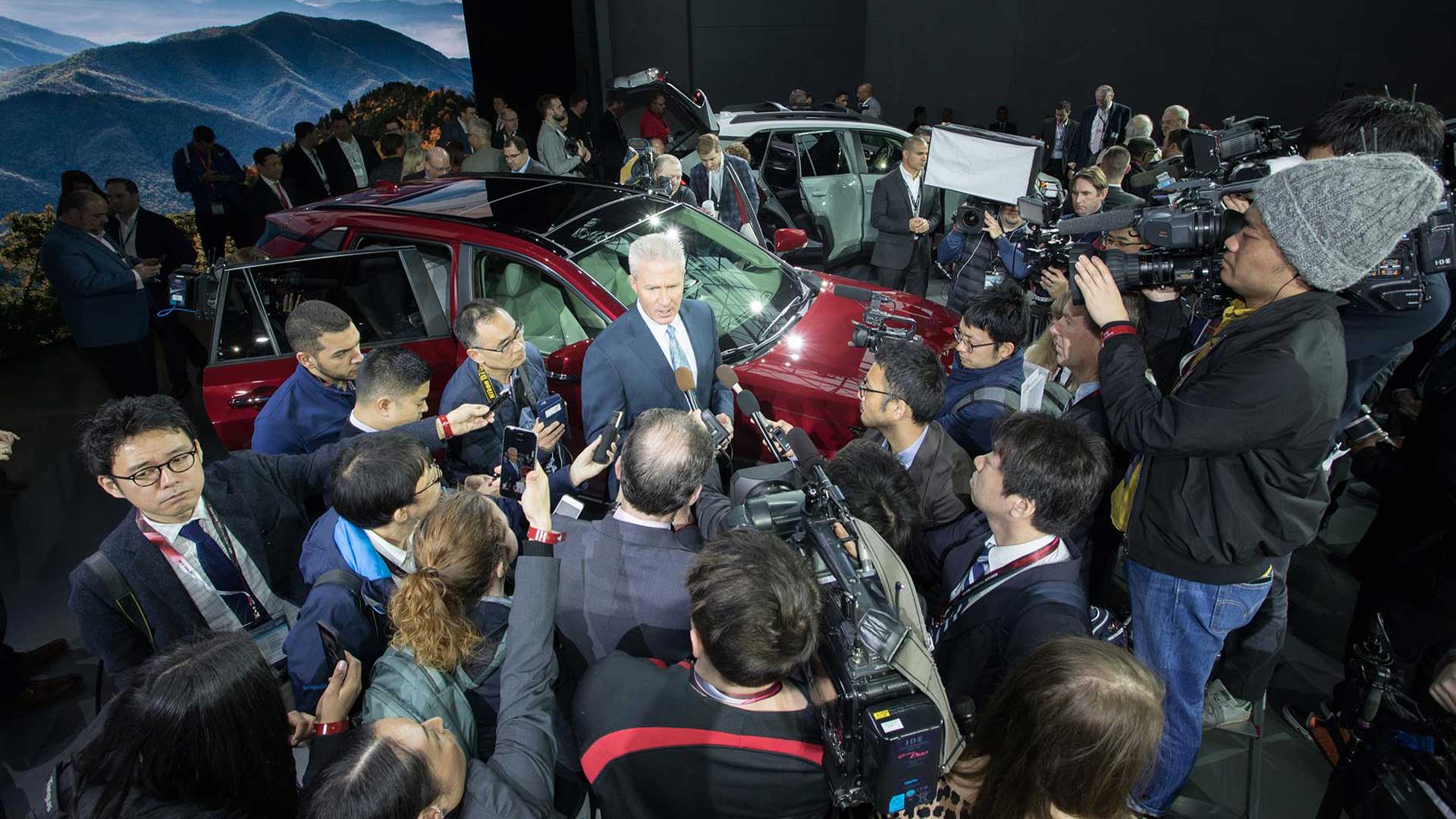 The New York International Auto Show (NYIAS) is the oldest auto show in North America, with the first event taking place at Madison Square Garden in 1900. A total of 69 exhibitors were in attendance, with approximately 160 complete vehicles on display.