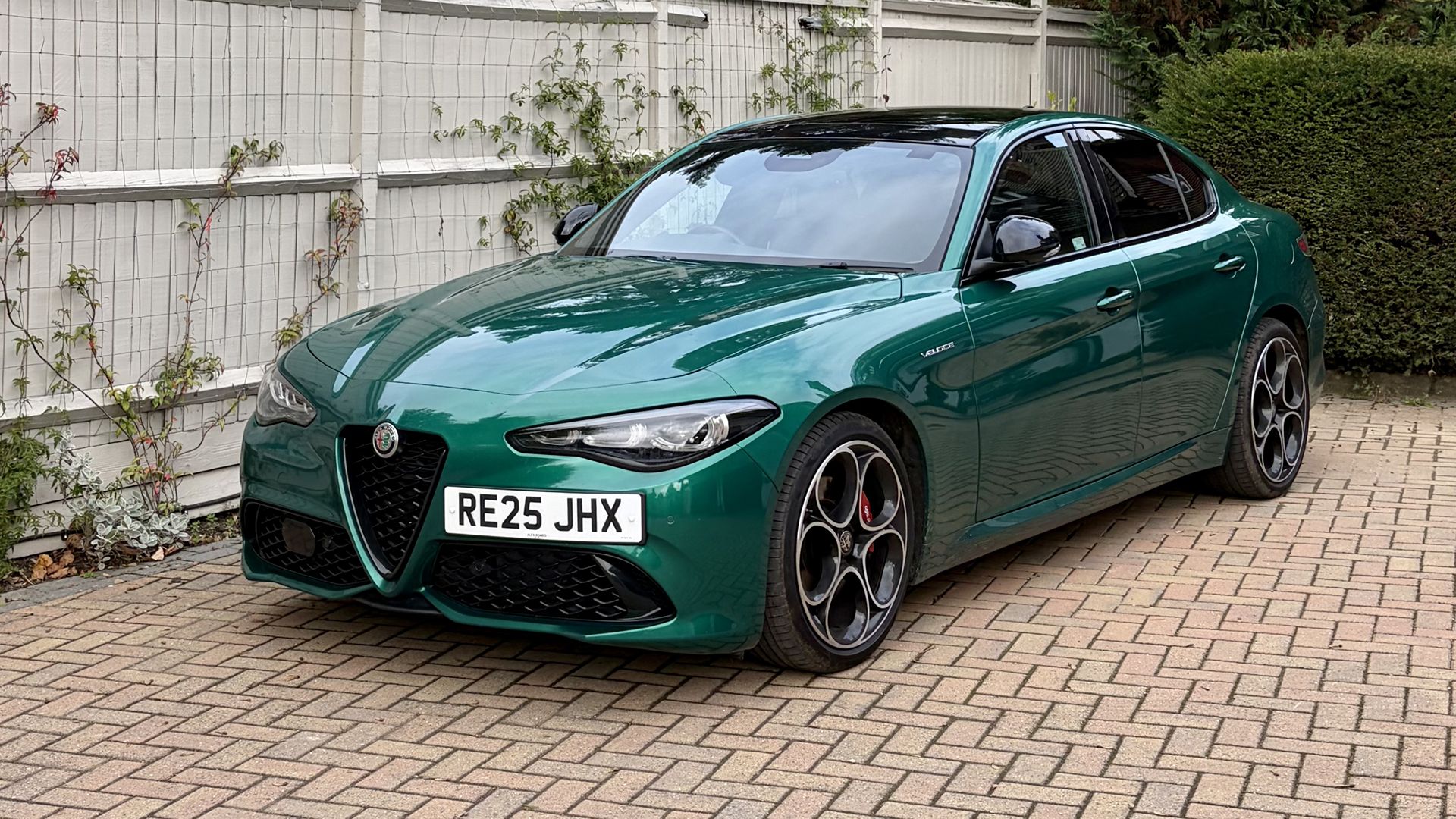
Launched in 2015, the Giulia was growing old gracefully and due to die soon. However, the delay of its electric successor has granted it a new lease of life, and sales will continue until at least 2027. Has this sporting saloon outstayed its welcome?
That’s the question I hope to answer by spending three months with a Giulia Veloce, using it as my daily driver and all-purpose family car. My previous long-termer was an electric Renault 5 E-Tech that I charged at home, so going back to petrol will be strange at first – and a shock to the wallet. I’m hopeful the Alfa’s 280hp turbocharged four will make the higher running costs seem worth it.
This is an introduction, as I’ve scarcely driven the car yet, but please come back to this page for regular updates on the Giulia over the coming months. You can also follow me on social media for further thoughts, photos and other car-related ramblings: search for ‘timpitt100’ on Instagram, X, Threads and Bluesky.
Introducing the Giulia Veloce
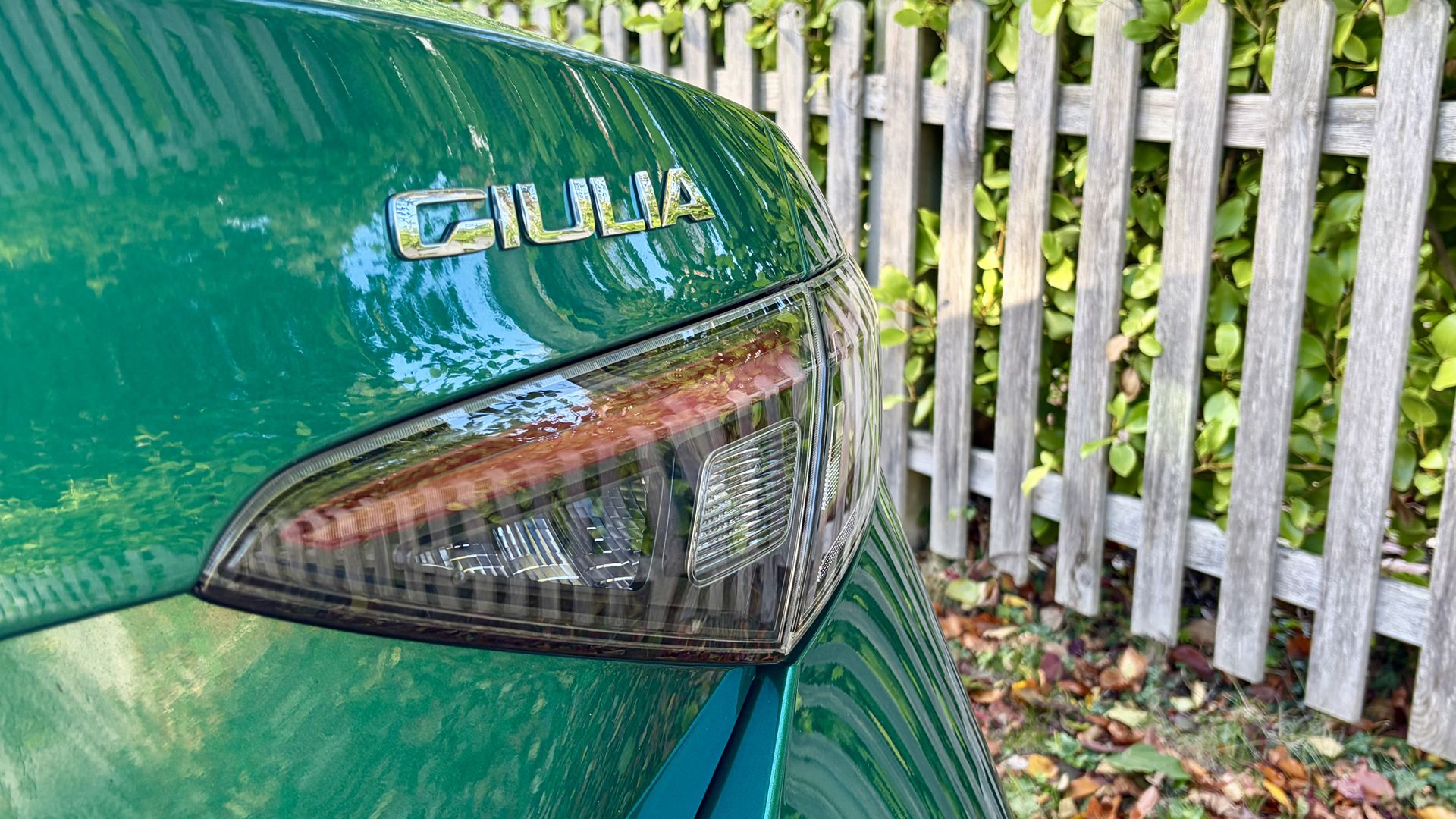
Let’s start by putting the car in some context. There are three tiers to the Giulia range: Sprint, Veloce and Quadrifoglio. The Sprint (from £43,900) and Veloce (£48,900) both use the same 280hp engine, which is mated to an eight-speed automatic transmission and rear-wheel drive.
The flagship Giulia Quadrifolio is currently off-sale, but will be back soon – at a likely cost of around £85,000. It packs a 520hp Ferrari-derived V6 and is an altogether more serious proposition. You can read my review here.
The differences between the entry-level Sprint and my long-term Veloce essentially come down to equipment. Standard kit on the Sprint includes 18-inch alloy wheels, automatic high-beam headlights, front/rear parking sensors and an 8.8-inch touchscreen with wired smartphone connectivity via Apple CarPlay or Android Auto.
Spending the extra £5,000 on the Giulia Veloce gets you 19-inch rims, leather upholstery, a limited-slip differential, red brake calipers, tinted rear windows, heated electric seats and a heated steering wheel.
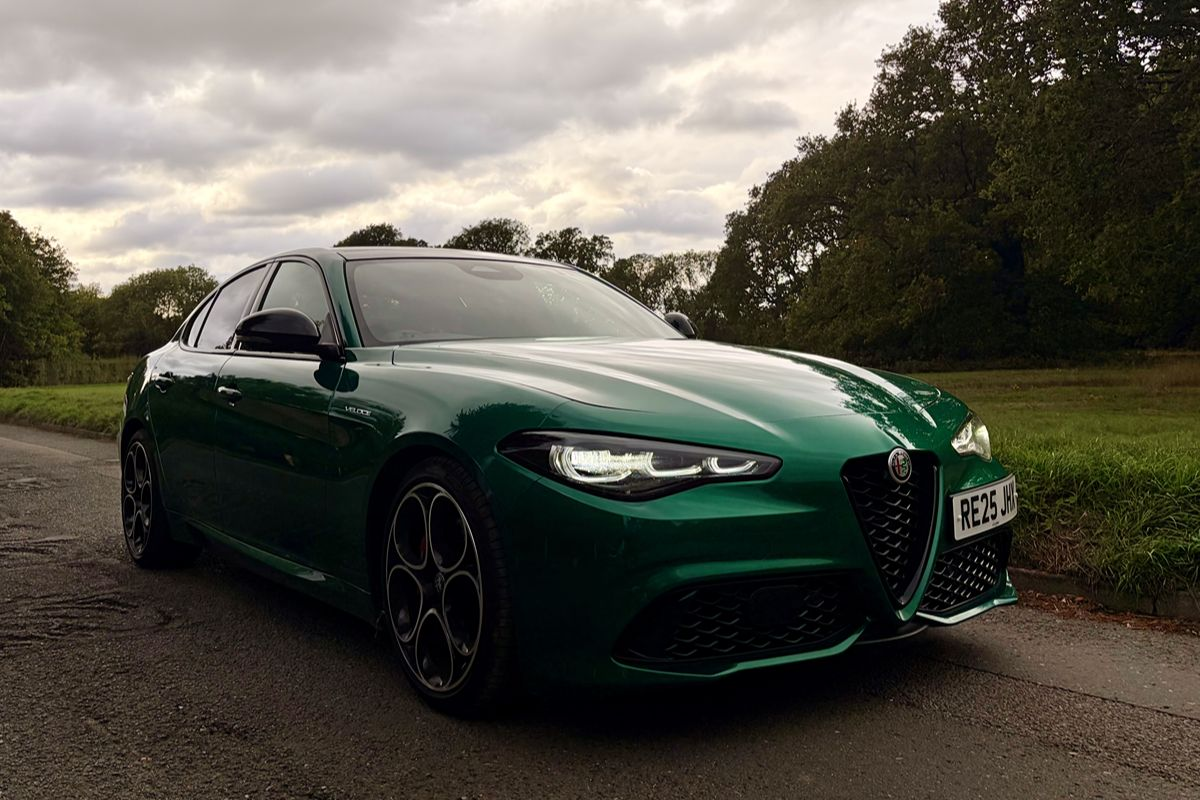
Still a great-looking saloon
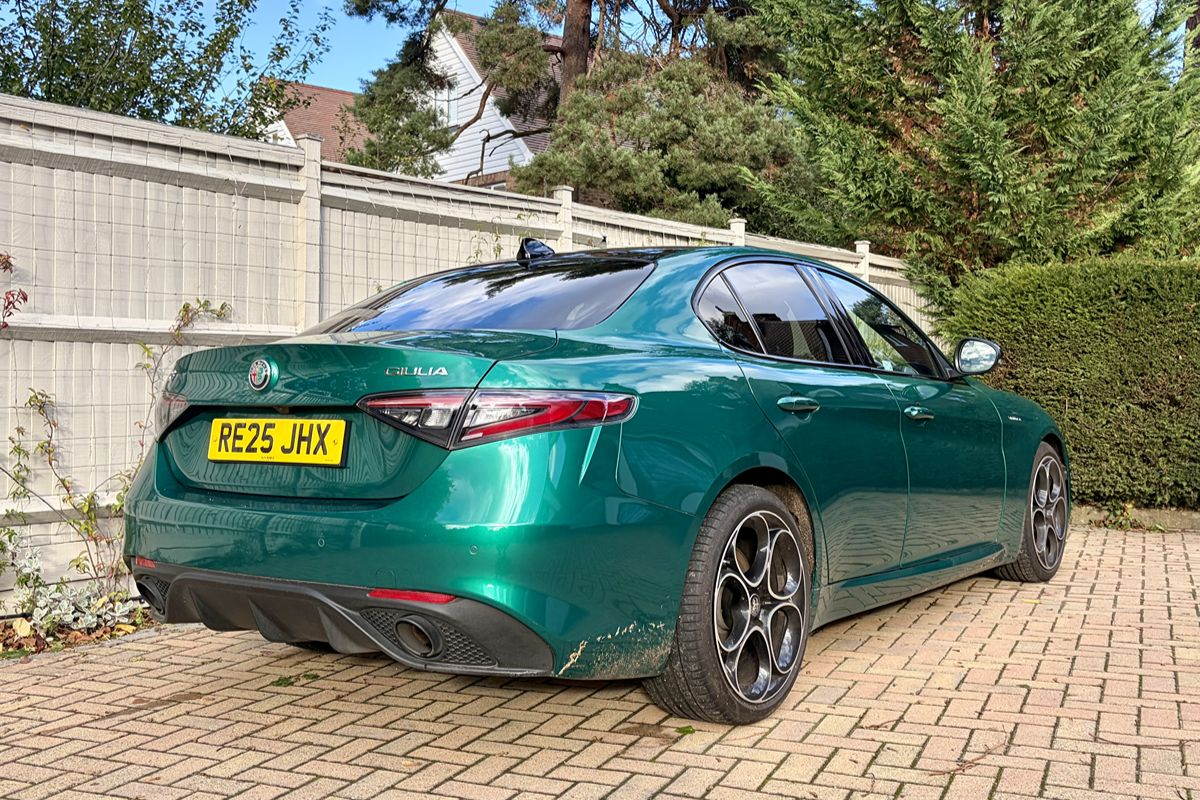
My Veloce only has a couple of options fitted: an electric panoramic sunroof (£1,250) and Montreal Green metallic paint (£2,000), bringing its total cost to £50,575.
Montreal Green is easily the most expensive paint choice (only Alfa Red is free, the others are £500-£850), but I reckon it’s worth the hefty outlay. In the soft autumn sunshine it looks deep and lustrous, really setting off the Veloce’s shapely ‘Dark Petal’ wheels.
Indeed, even at more than a decade old – pensionable in automotive terms – the Giulia is still a looker. Its classic proportions and elegant curves contrast with the more angular, aggressive aesthetic of German rivals. Alfa Romeo’s trad shield grille and offset number plate are instantly identifiable, too. A couple of strangers have already commented “nice car”, which wouldn’t happen with a BMW 3 Series.
Reason enough to buy one? No, but it certainly provides a warm feeling when you see it on the driveway. The artist and writer William Morris said: “Have nothing in your house that you do not know to be useful, or believe to be beautiful”. The Alfa Romeo seems to tick both boxes.
Inside the Giulia Veloce
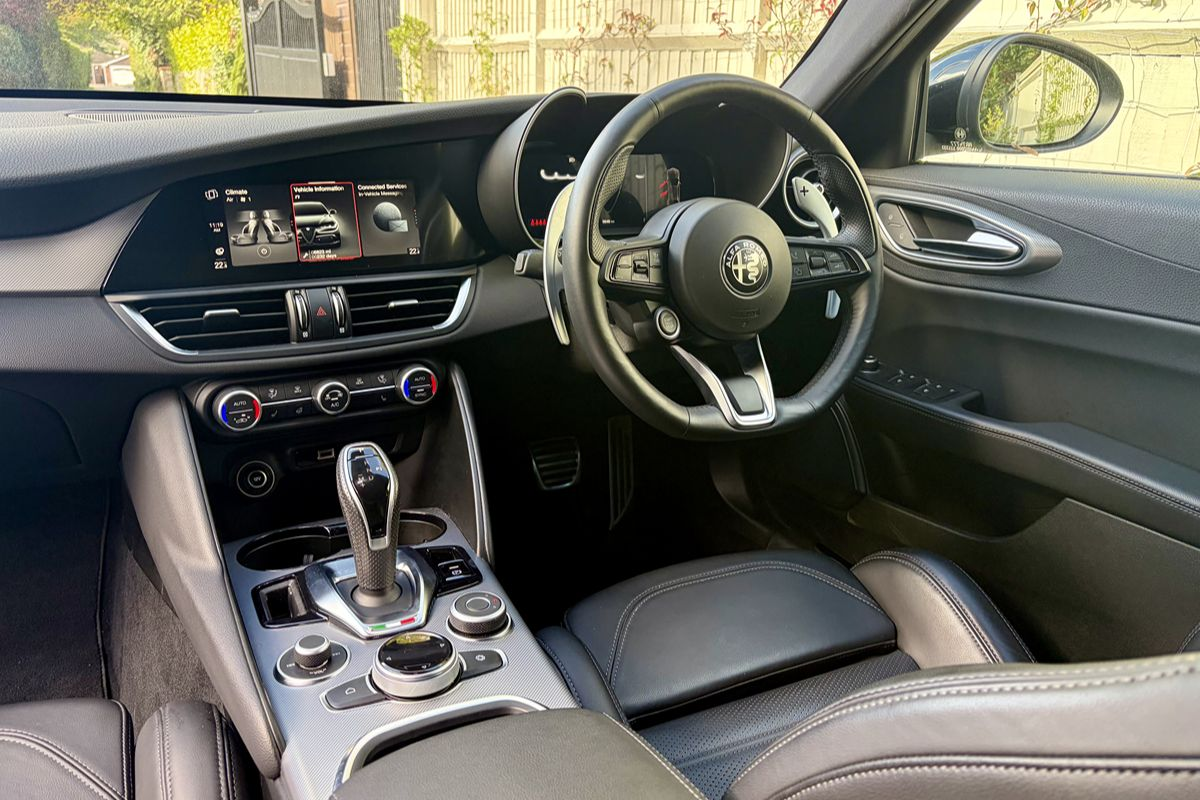
The Giulia’s interior is also attractively designed, with nods to classic Alfas such as the hooded instrument binnacle (still with analogue dials, rather than the now-usual digital screen) and ribbed leather trim. The three-spoke steering wheel and long, supercar-style metal shift paddles are very tactile, too.
You sit low, which immediately makes the car feel snug and driver-focused, while the six-way adjustable seats are very supportive. After the rather lofty driving position of the Renault 5 – necessitated by the battery pack beneath its floor – this is a refreshing reset.
Negative points? The Alfa’s rear legroom isn’t as generous as some mid-sized saloons and some of the plastics aren’t exactly ‘premium’. The infotainment system also looks a bit dated, and makes deactivating the driver assistance (ADAS) bleeps more complicated than necessary. You can operate it via the 8.8-inch touchscreen or a clickwheel on the centre console.
Time to hit the road
In terms of numbers, the Veloce will sprint to 62mph in 5.7 seconds and reach a top speed of 149mph. Drive with a bit less brio and you might see 37.7mpg, while official CO2 emissions are 169g/km. That equates to road tax of £1,410 in the first year, then £640 for five years thereafter (including the ‘expensive car supplement’ that applies to anything with a list price above £40,000).
I will be keeping track of the Alfa’s efficiency and reporting back on how it drives. Arriving in October might seem sub-optimal for a rear-driven sports saloon, but I’m looking forward to a real-world test. Bring on the British winter. Frosty mornings, wet roundabouts and slippery second-gear corners: I’m ready for you.
ALSO READ:
Some like it yacht: new Luna Rossa Alfas are inspired by sailing
