The Story Behind the Dodge Charger Daytona’s Electrifying Return
-

The full story of the Dodge Charger Daytona
© StellantisDodge has officially added the Charger Daytona Sedan to its lineup. Revealed at the Midwest Automotive Media Association (MAMA) Spring Rally in Elkhart Lake, Wisconsin, the four-door model arrives alongside the 2026 model year Charger Daytona.
The use of the Daytona name for such an era-defining electric muscle car is significant, given its importance in Charger history.
Dodge has reinvented and commemorated the Daytona name several times before, so this is the perfect opportunity to dive into the Mopar archives. Expect big engines and even bigger wings as we explore the exciting story of the Charger Daytona.
-
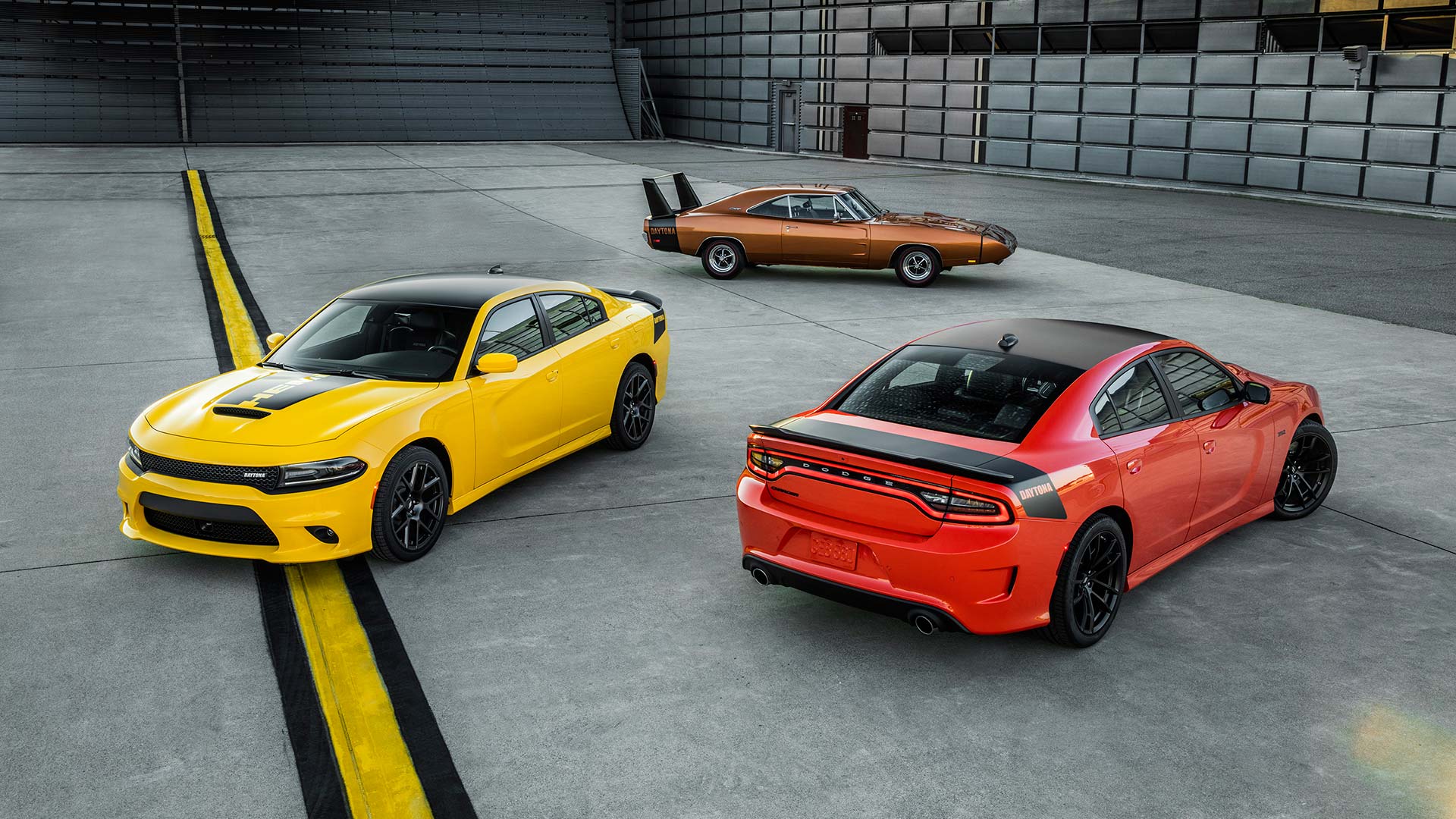
What’s in a name
© StellantisAs one of North America’s premier motorsport facilities, and the spiritual home of NASCAR, the Daytona nameplate has become synonymous with Mopar performance.
Although the Charger Daytona is arguably the most famous car to wear the Daytona name, the Studebaker Lark did it first several years earlier. The second-generation version of the Lark, launched in 1962, used the Daytona badge to signify special hardtop and convertible models.
-
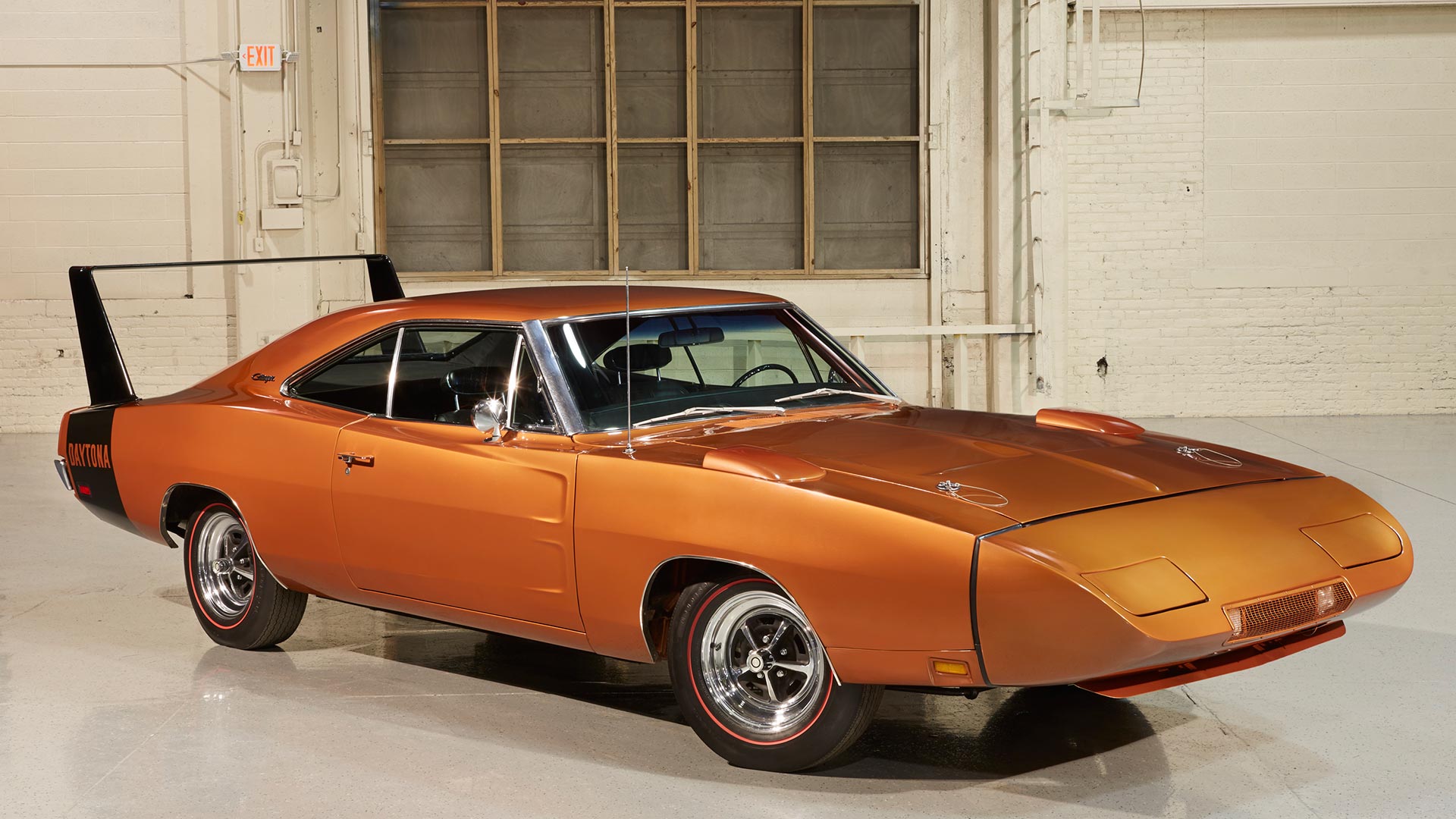
1969 Dodge Charger Daytona
© StellantisThe original Charger Daytona was built to dominate on high-speed NASCAR circuits, making use of aerodynamics for performance and stability. With Richard Petty having moved to Ford for the 1969 season, Mopar victory was more important than ever.
Inspired by the Ford Torino Talladega and Mercury Cyclone Spoiler II, Dodge fitted an extended nose cone to the regular Charger, along with extra fender vents and a flush rear window. Oh, and added a gigantic rear wing for optimum downforce.
-
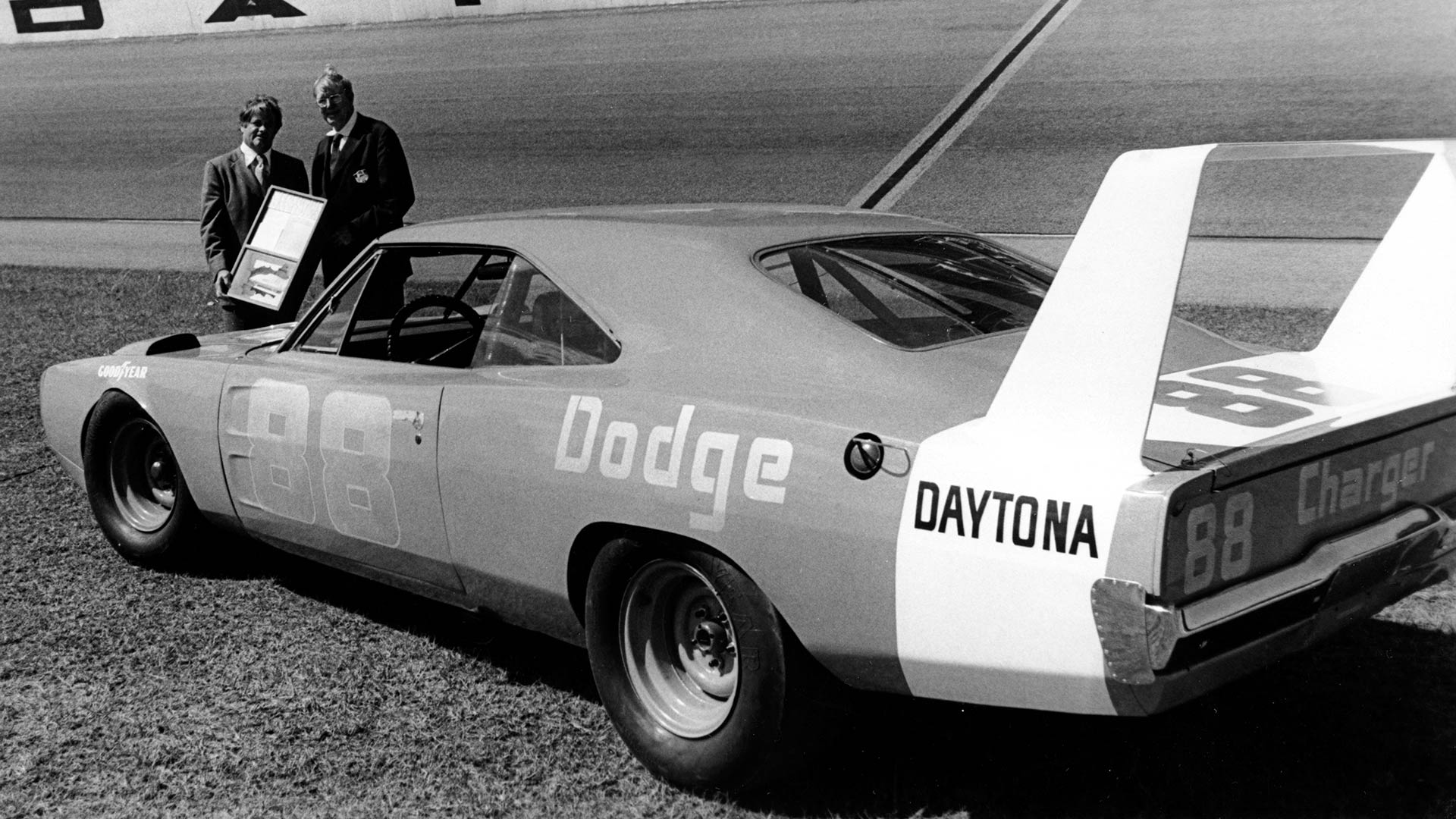
1969 Dodge Charger Daytona
© StellantisAll the changes to the Charger certainly had an impact on the race track. The Daytona took victory on its first competition outing, winning the 1969 Talladega 500 NASCAR event. Despite the Charger’s performance, Ford would retain the manufacturers’ title for ‘69.
However, 1970 proved to be more successful. Not only would Dodge take the manufacturers’ championship, but Buddy Baker would become the first NASCAR driver to record over 200 mph whilst testing at Talladega.
-
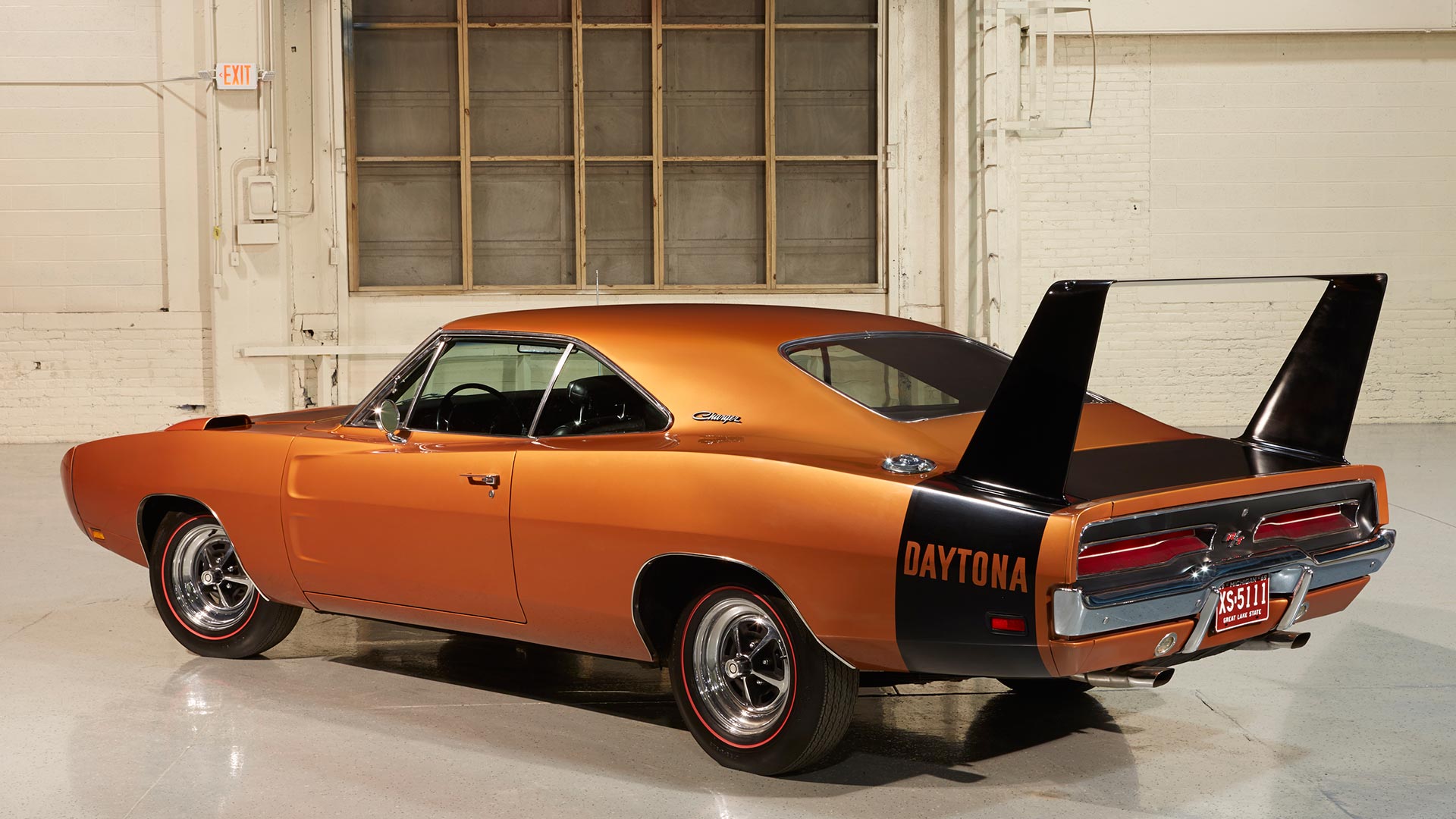
1969 Dodge Charger Daytona
© StellantisTo satisfy NASCAR homologation requirements, Dodge built 501 examples of the Charger Daytona. The vast majority were fitted with Mopar’s 440-cubic inch Magnum V-8 engine, which produced 390 horsepower.
Just 70 examples received the expensive 426-cubic inch Hemi V-8, making 425 horsepower and 490 lb-ft ft of torque. These Hemi-powered versions are now hugely collectible, with values closing on $1 million, whilst even 440 Magnum Charger Daytonas can attract bids of more than $200,000 at auction.
With the Charger Daytona limited to just one model year, the name disappeared again.
-
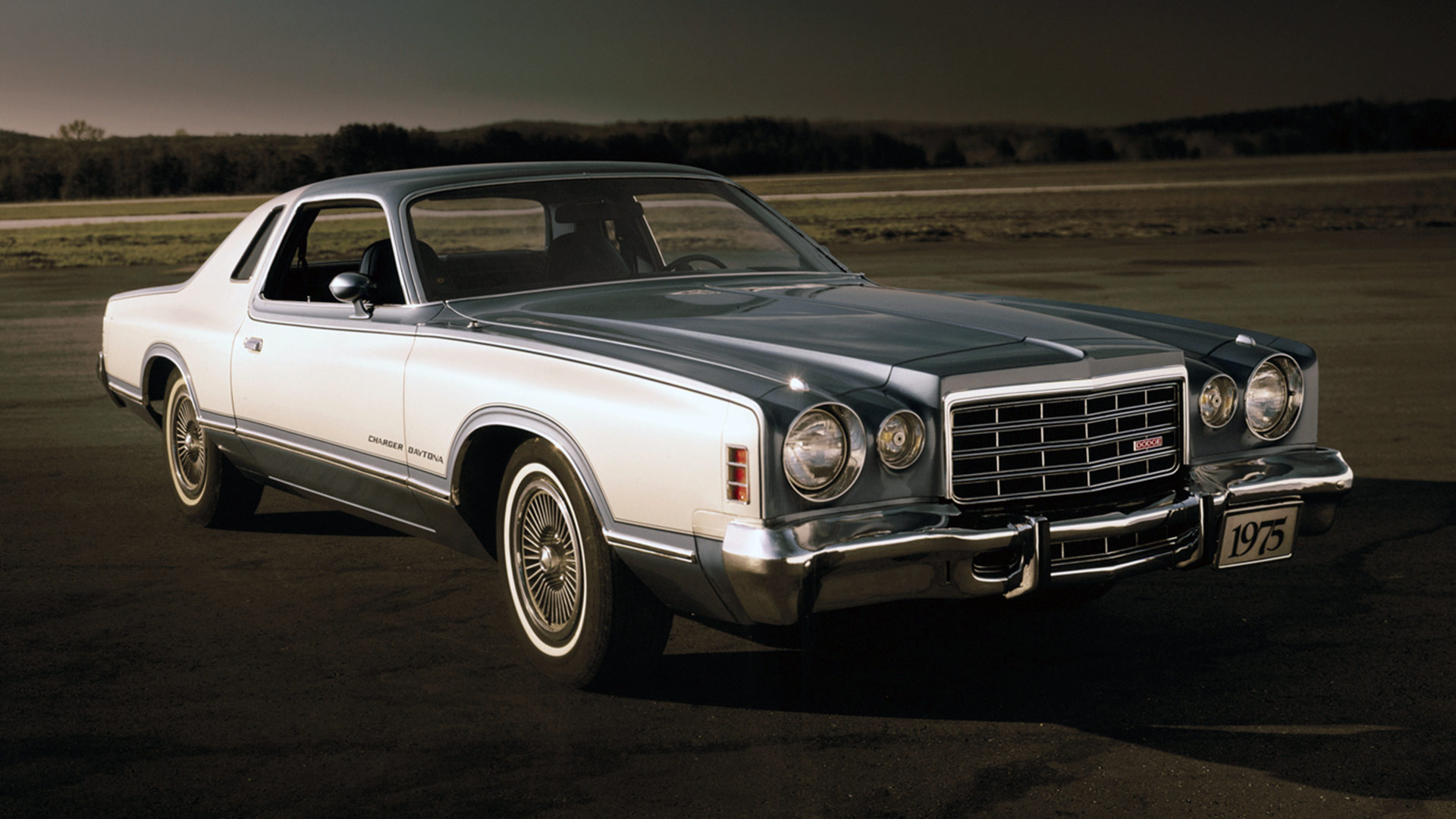
1975 Dodge Charger SE Daytona
© StellantisAs the fourth-generation Dodge Charger morphed into a personal luxury car, the Daytona name reappeared as a $345 appearance package option for SE models. This meant two-tone paintwork, special badging, and power steering as standard.
Although a 400-cubic inch V-8 engine could be specified, output was just 175 horsepower. More damning was the fact that NASCAR teams received permission to use bodywork from the previous shape Charger, due to how un-aerodynamic the fourth-generation car was.
-
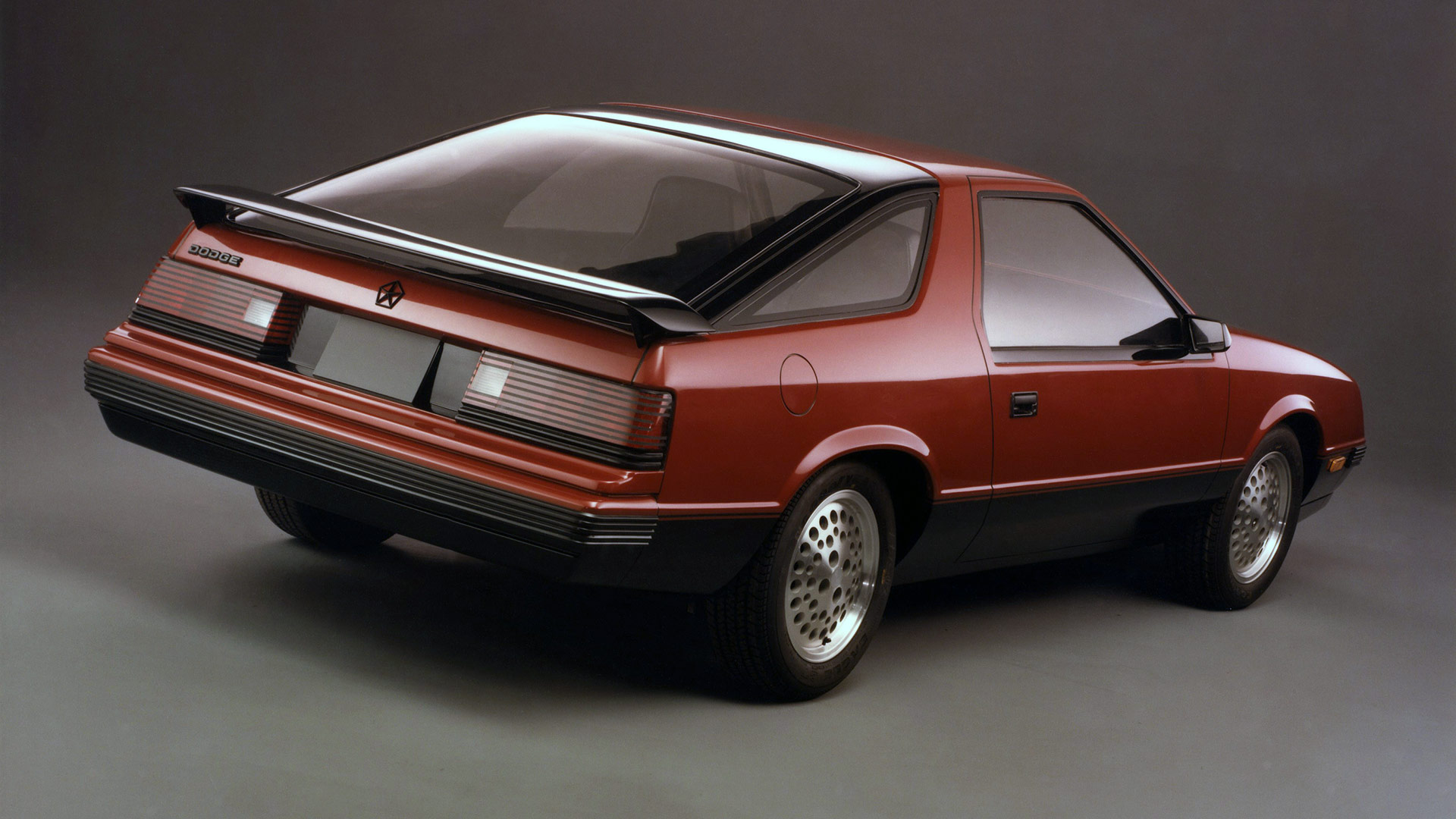
1984 Dodge Daytona Turbo
© StellantisAfter the fourth-generation Charger vanished in 1978, the Daytona name lay dormant again until Dodge needed to brand its new compact front-wheel drive hatchback model. With smooth aerodynamic styling, and hidden headlights, the Daytona badge was an appropriate fit.
Aimed at cars like the Porsche 944, the ‘84 Daytona could be had with a 2.2-liter turbocharged four-cylinder engine, producing 142 horsepower. Cars fitted with a manual gearbox could hit 0-60 mph in 8.5 seconds, making them competitive with imported rivals.
-
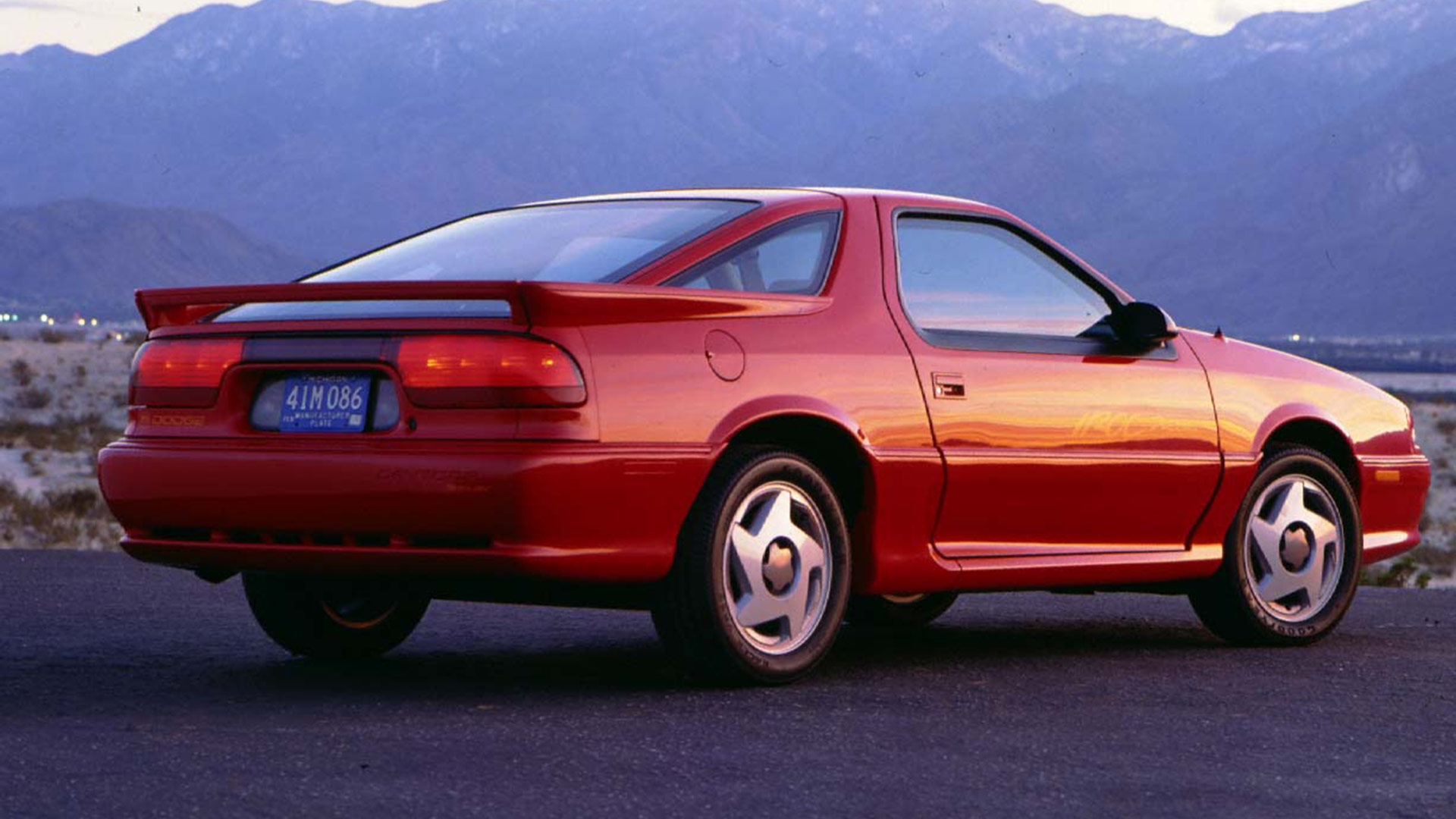
1992 Dodge Daytona IROC RT
© StellantisDodge continued with the Daytona name until 1993, adding more power and performance as the range progressed. Links with Carrol Shelby also produced a number of special C/S option packages, featuring uprated suspension and exterior detailing.
One of the rarest versions was the IROC R/T, which used a 2.5-liter turbocharged four-cylinder engine with 224 horsepower. Sports car manufacturer Lotus was responsible for designing the cylinder head and ignition system for the R/T-badged cars.
-
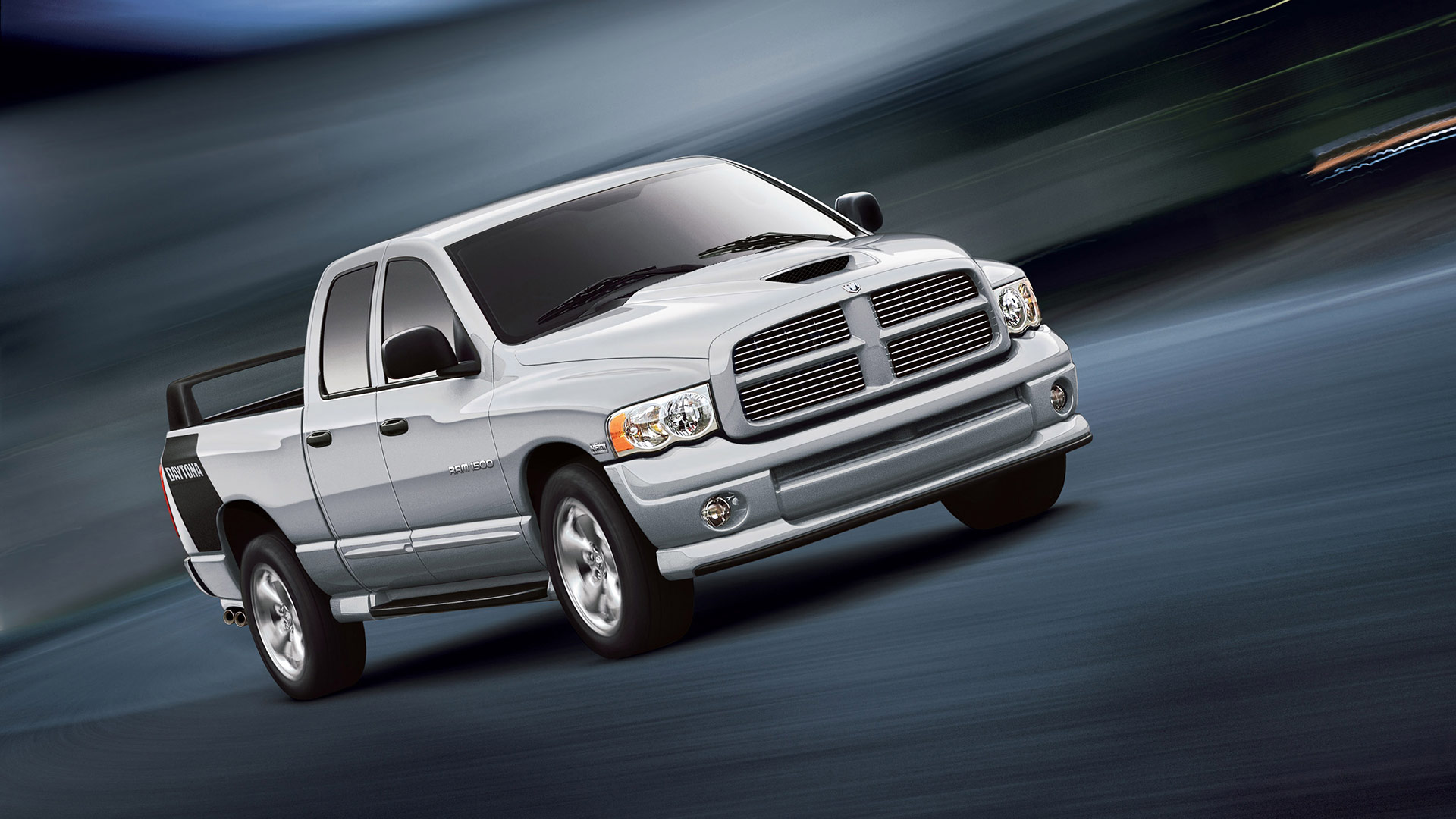
2005 Dodge Ram Daytona
© StellantisAfter another decade in the wilderness, Dodge saw fit to reincarnate the Daytona name again for a special edition of the third-generation Ram pickup truck.
At least being applied to the side of a pickup meant the Daytona name was now associated with a vehicle powered by a Hemi V-8, even if it was in a pickup. All Ram Daytonas used the 5.7-liter Hemi unit, with 345 horsepower and 375 lb-ft of torque, breathing through a Borla exhaust system with side-exit tailpipes.
-
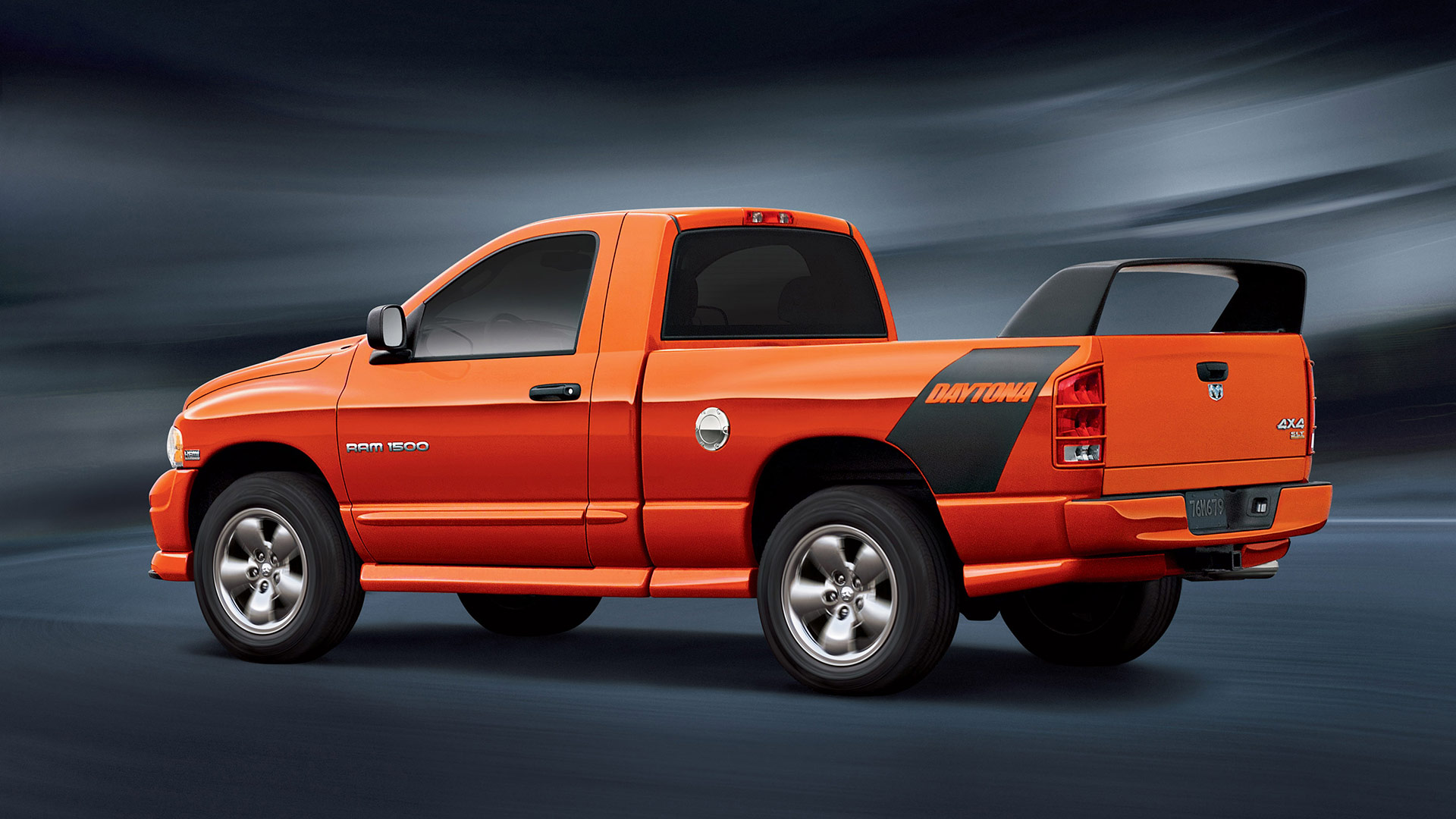
2005 Dodge Ram Daytona
© StellantisAlong with the V-8 power, the Ram Daytona also gained a big rear wing reminiscent of that fitted to the 1969 Chargers. A special bodykit, 20-inch chrome wheels, and a hood taken from the SRT-10 gave it an aggressive look.
The Ram Daytona could be bought in either Regular or Quad-Cab configurations, with paint options limited to silver or retro-inspired Go Mango orange. Daytona decals completed the picture.
-
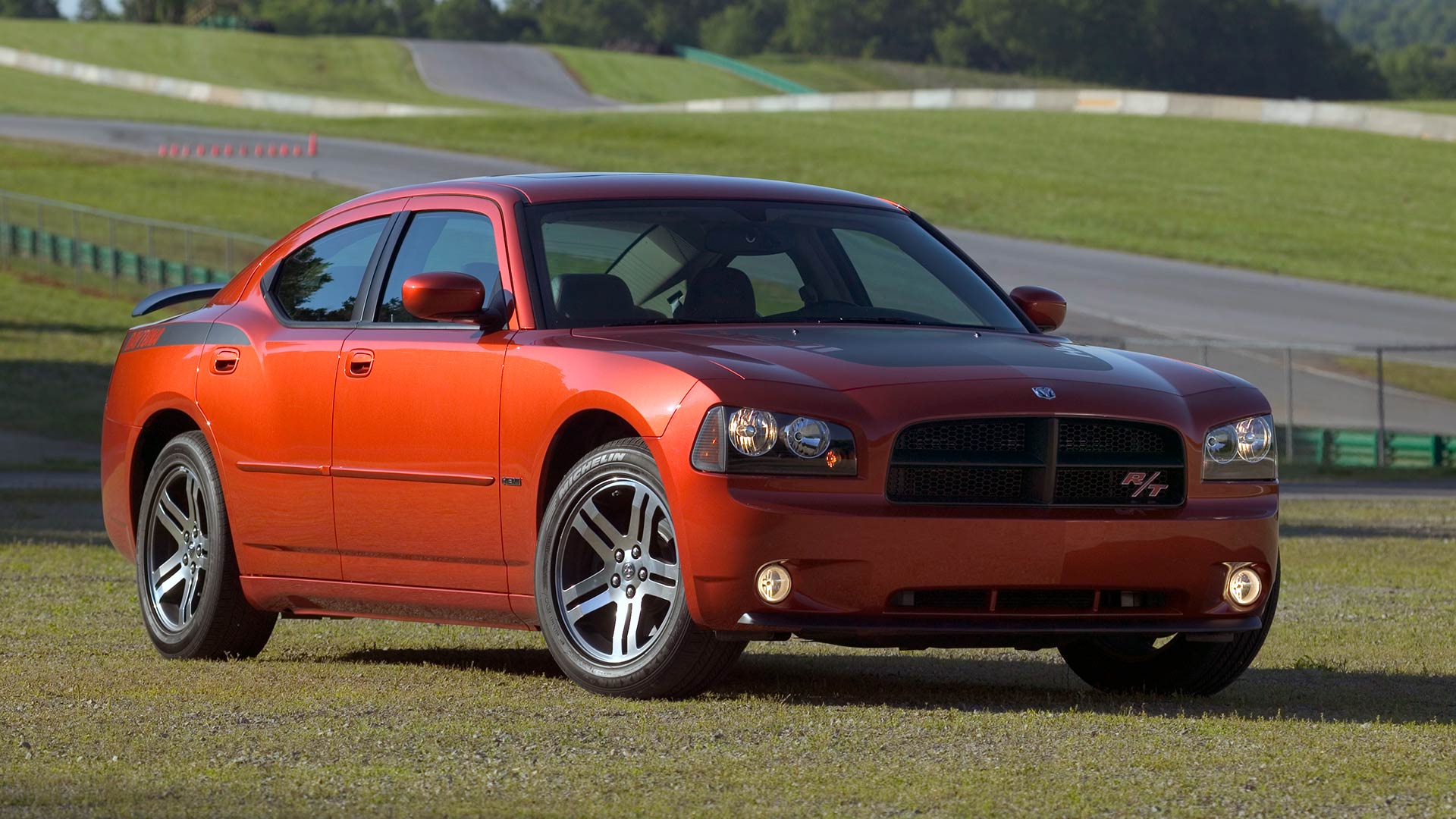
2006 Dodge Charger Daytona RT
© StellantisClearly pleased with the success of the Ram, Mopar decided the time was right to bring back the Charger Daytona for real as a 2006 model year car. Offered as a limited-production model, the 2006 Daytona was based upon the performance R/T version.
The 5.7-liter Hemi V-8 engine received a power boost to 350 horsepower, whilst the exterior included a subtle chin spoiler, black front grille, special Daytona decals, and a trunk-mounted wing.
-
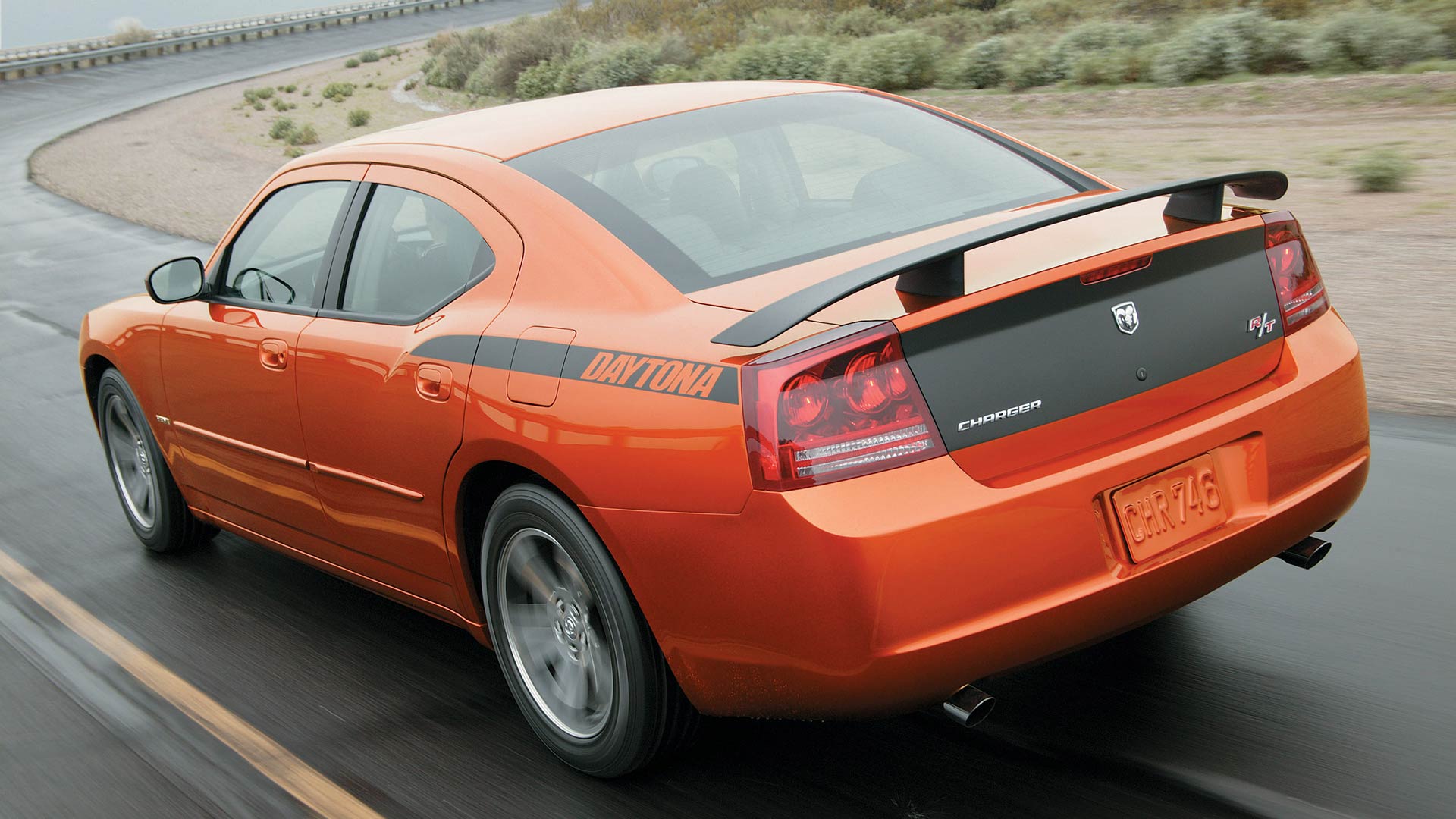
2006 Dodge Charger Daytona RT
© StellantisA total of 10,000 examples were built for the 2006 model year, with colors split between classic Mopar hues of Go Mango, Top Banana, and Tor Red.
Production would continue into 2006 and 2007 with different paint options, and reduced numbers of vehicles built. By 2009, production was limited to just 400 examples, all finished in Stone White. These later cars did benefit from an enhanced Hemi engine with 368 horsepower.
-
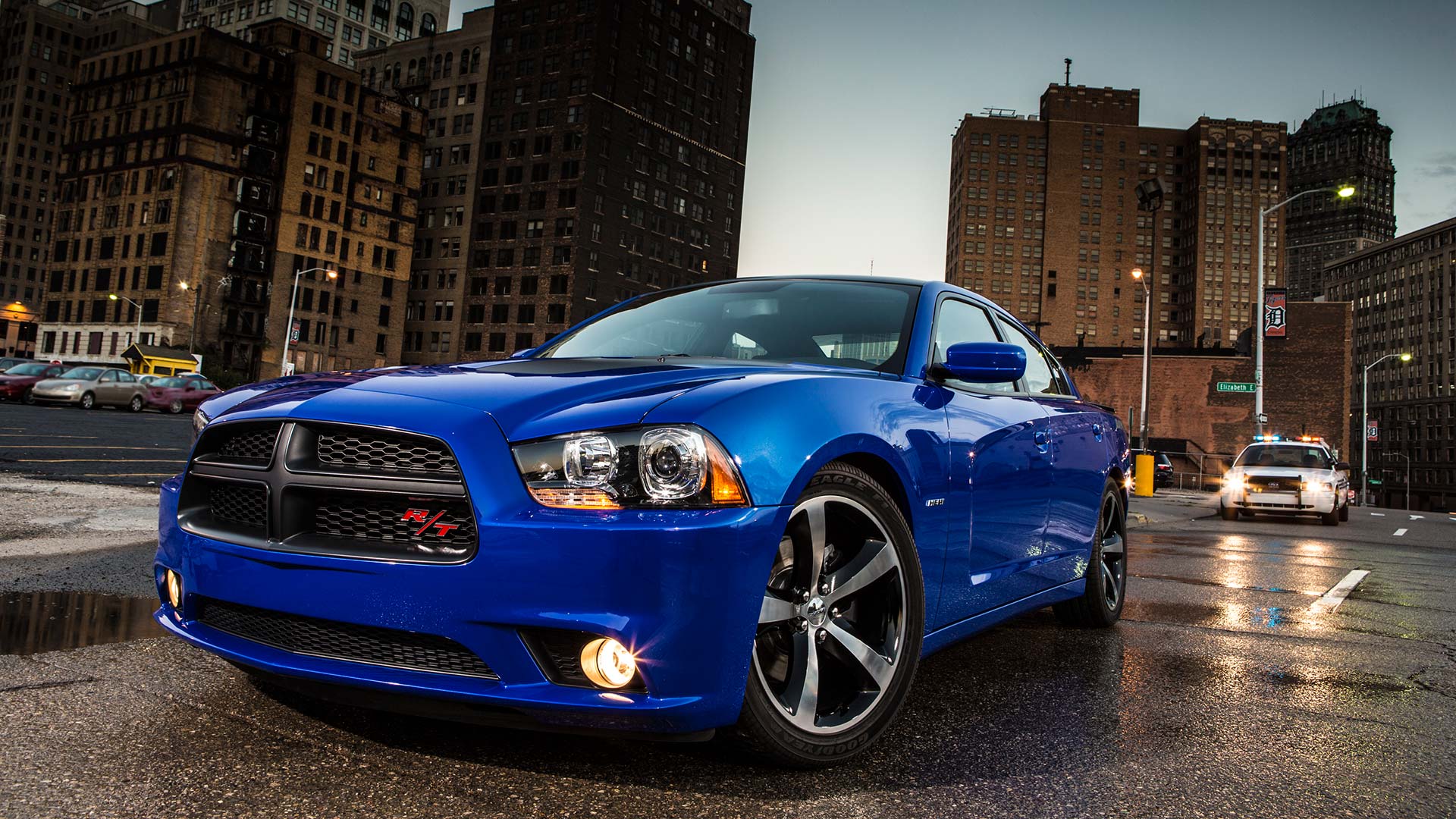
2013 Dodge Charger Daytona RT
© StellantisFast-forward again to 2013, and the Daytona package was again offered for the Charger R/T. Somewhat ironically, the announcement of the new Daytona happened just as Chrysler decided to stop competing in NASCAR for the 2013 season.
Based upon the updated version of the Charger R/T, the new Daytona came fitted with the 5.7-liter Hemi engine making 370 horsepower and 395 lb-ft of torque. All used a five-speed automatic transmission with steering wheel-mounted paddles.
-
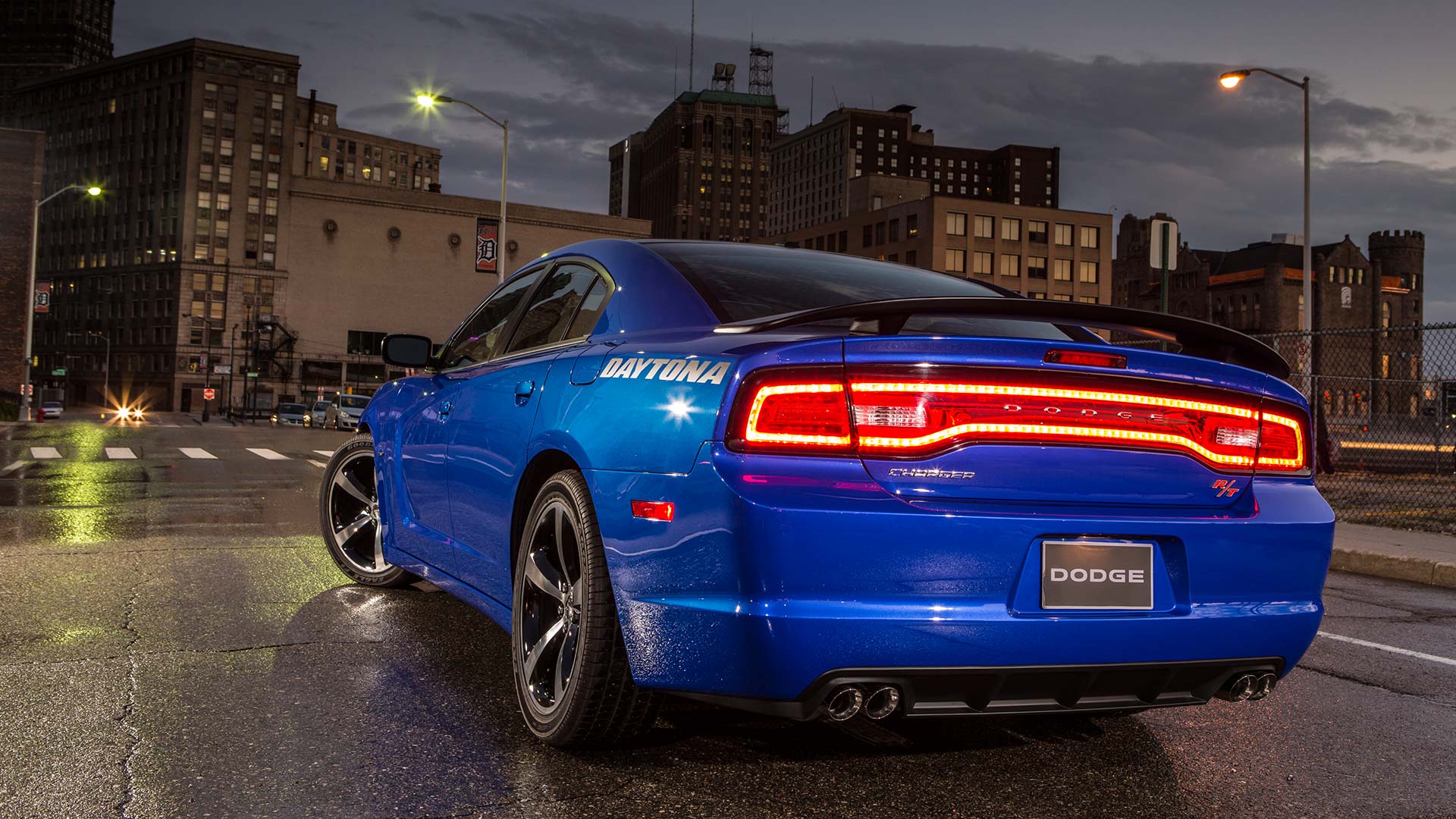
2013 Dodge Charger Daytona RT
© StellantisLimited to 2,500 units, the 2013 Charger Daytona R/T stood out with a black front grille, custom vinyl decals for the hood and rear fenders, plus 20-inch wheels. A rear spoiler was also added although, as usual, subtler than the 1969 original.
A special plaque on the dashboard illustrated the build number of each Daytona R/T, whilst the interior also gained Daytona lettering embroidered into the seat backs. Standard equipment included a 10-speaker Beats audio system and an 8.4-inch touchscreen.
-
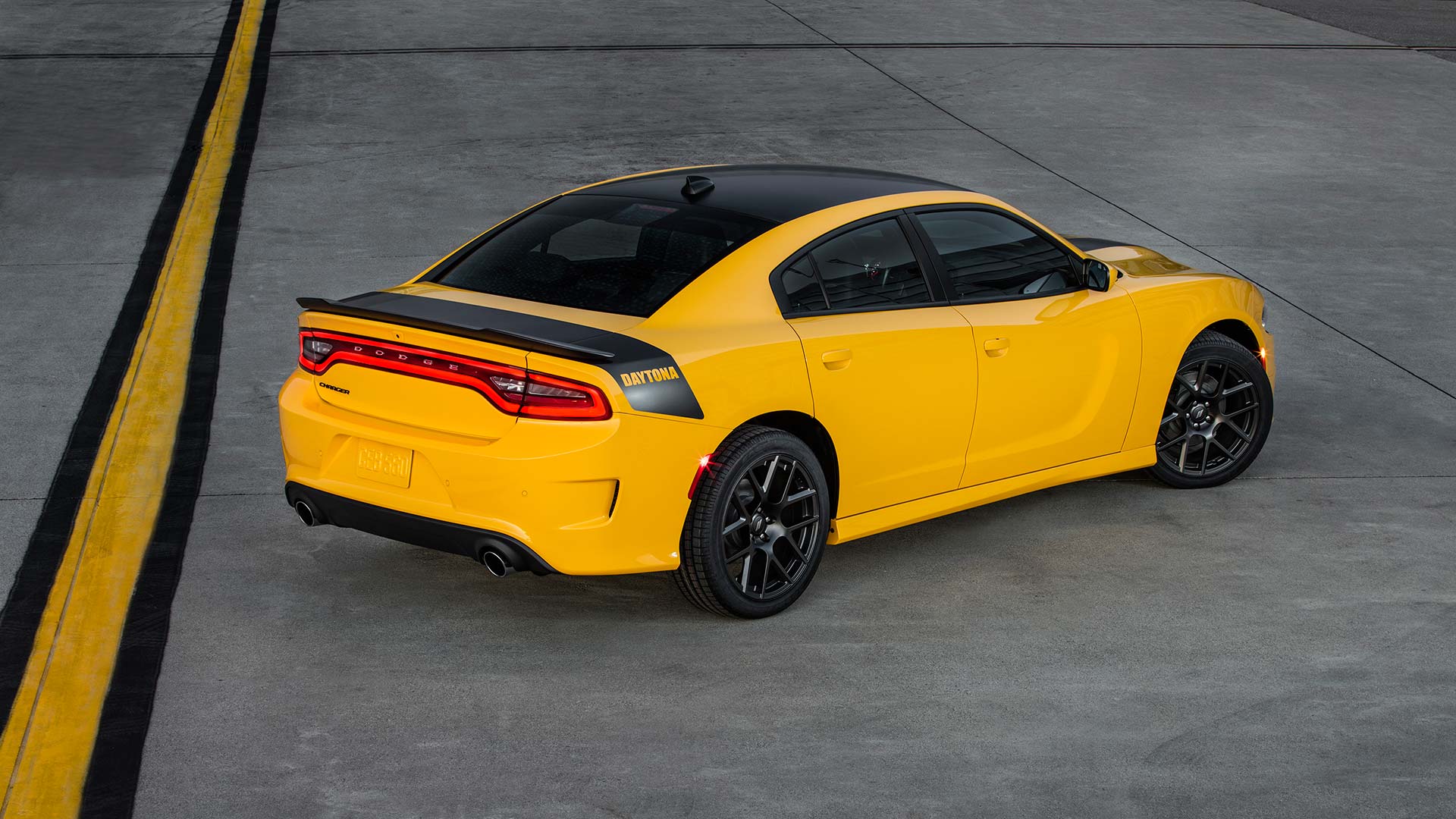
2017 Dodge Charger Daytona
© StellantisIn a break with tradition, Dodge unveiled not one but two versions of the Charger Daytona for the 2017 model year. With the success of the SRT Hellcat models, Mopar was clearly feeling confident about its range of muscle cars.
The standard Daytona was based upon the Charger R/T, using the 5.7-liter Hemi V-8 with an upgraded exhaust and air intake system. Performance suspension, 20-inch wheels with Goodyear Eagle F1 tires, and special Daytona decals and badging were part of the deal.
-
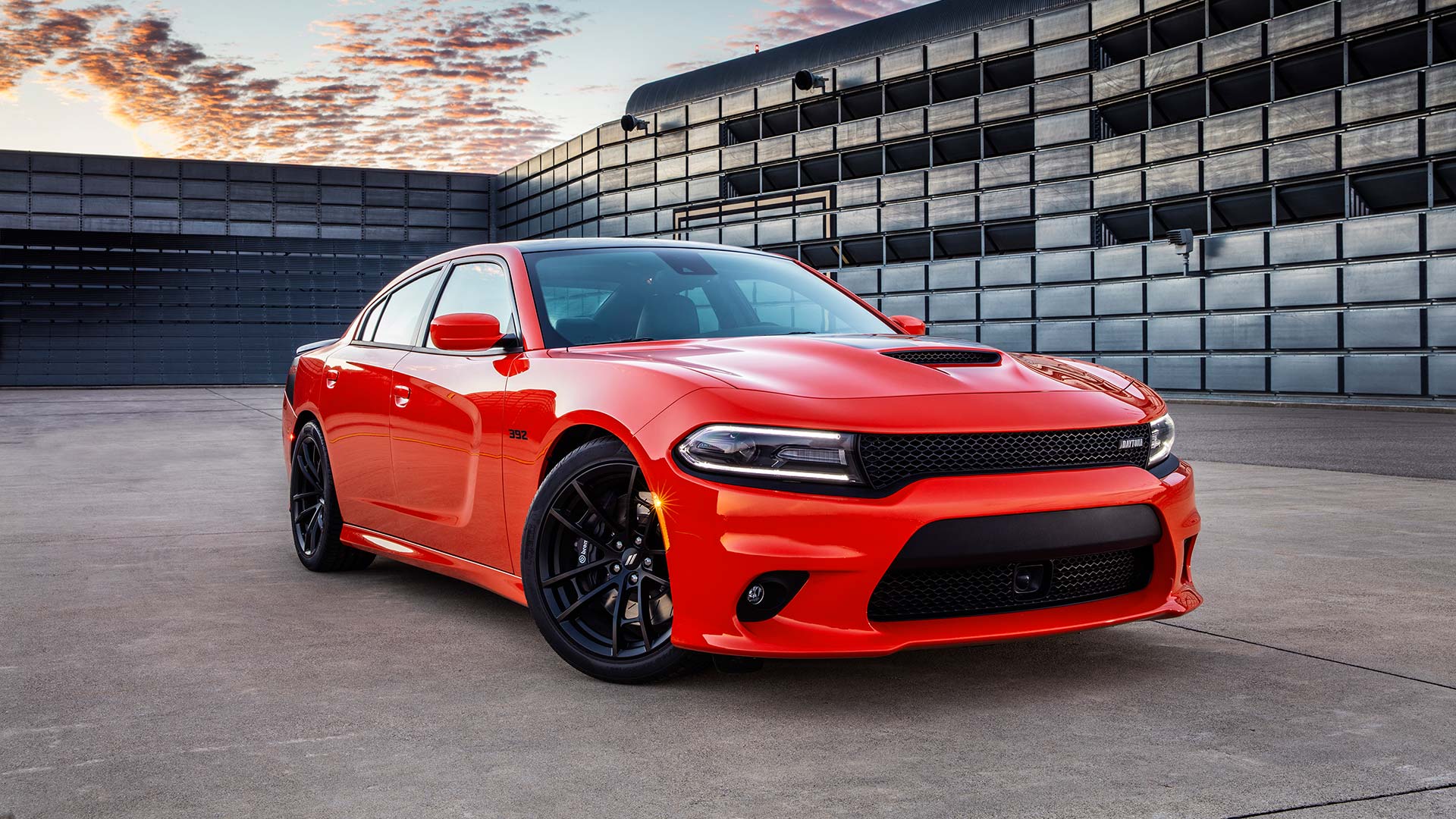
2017 Dodge Charger Daytona 392
© StellantisHowever, those wanting the ultimate Daytona could opt for the 392 version. Powered by the 6.4-liter (392-cubic inch) Hemi V-8, peak power was up to 485 horsepower with 475 lb-ft of torque. Sufficient to push the Daytona 392 from 0-60 mph in 4.5 seconds.
To allow for the extra power, Dodge fitted Brembo brakes with six pistons at the front, and four at the rear. The 20-inch wheels grew to 9.5 inches in width, and were fitted with Pirelli performance rubber. Finally, the speedometer was upgraded to read all the way to 180 mph.
-
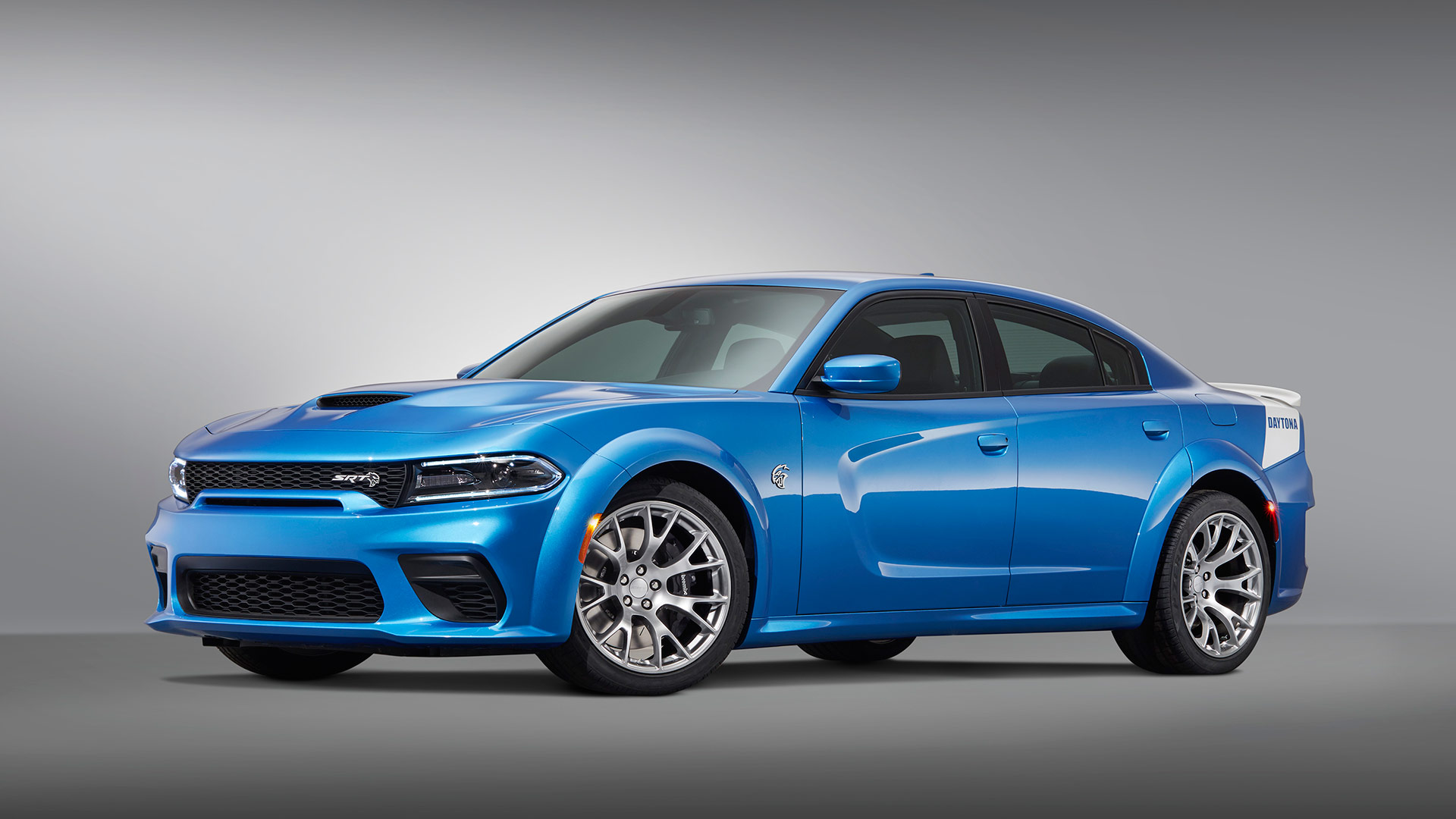
2020 Dodge Charger SRT Hellcat Widebody Daytona 50th Anniversary
© StellantisWith the original 1969 Daytona celebrating its 50th anniversary in 2019, what better way to celebrate than with another special edition of the Charger?
Dodge pulled out all the stops though, basing it on the range-topping SRT Hellcat Widebody, and even finding a way to add extra power to the formidable muscle car. The 6.2-liter supercharged Hemi V-8 offered-up 717 horsepower and 650 lb-ft of torque.
-
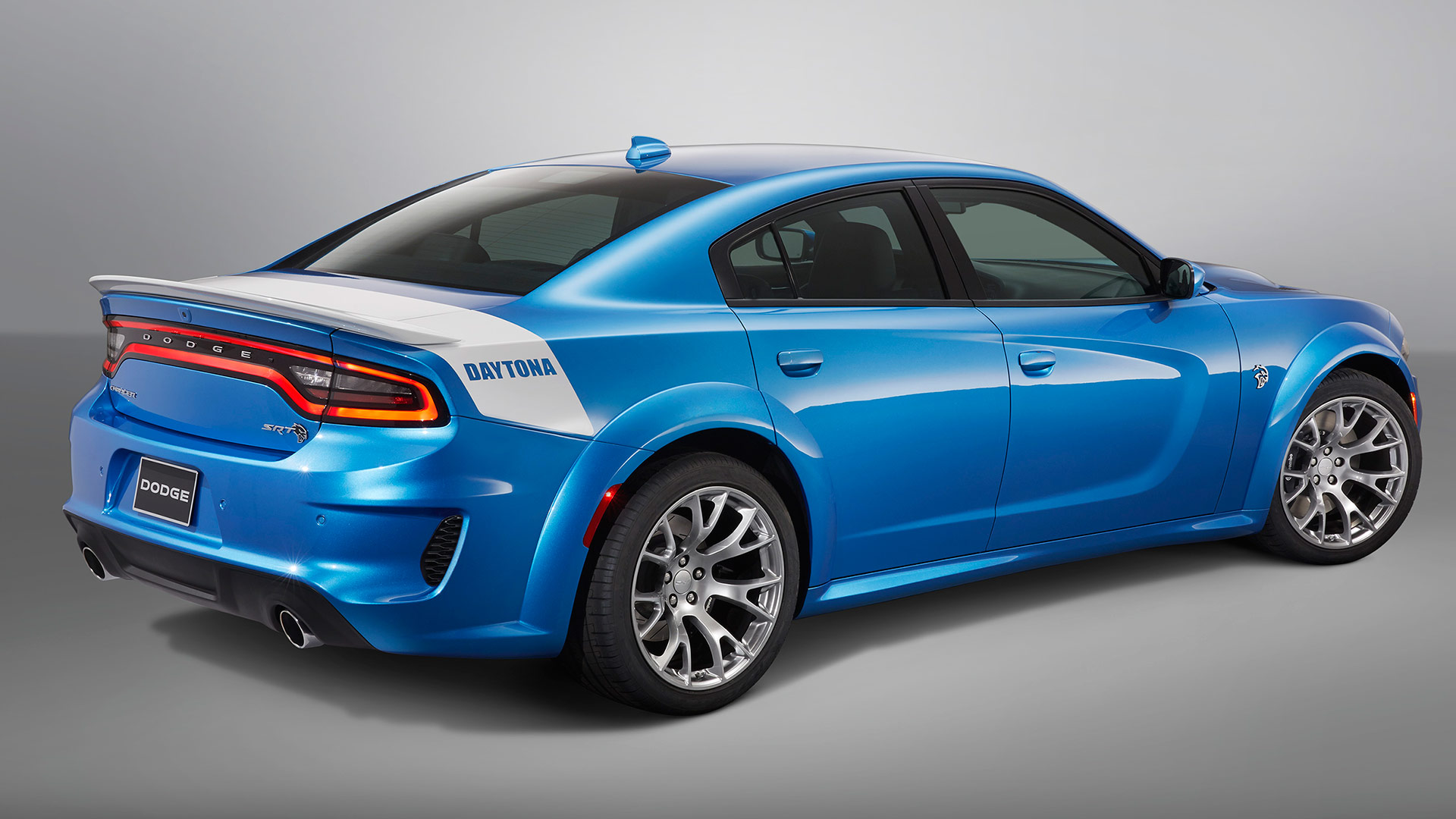
2020 Dodge Charger SRT Hellcat Widebody Daytona 50th Anniversary
© StellantisIn tribute to the 1969 version, Dodge planned to build just 501 units of the new 2020 Charger Daytona. Four exterior paint options were on offer, including B5 Blue which will be exclusive to the Daytona 50th Anniversary Edition for the 2020 model year.
Dodge seemingly resisted the urge to fit a gigantic rear wing. Instead, a unique rear decklid marks out the 2020 Daytona, incorporating a subtle spoiler into its design. Decals across the rear quarters pick out the traditional Daytona lettering.
-
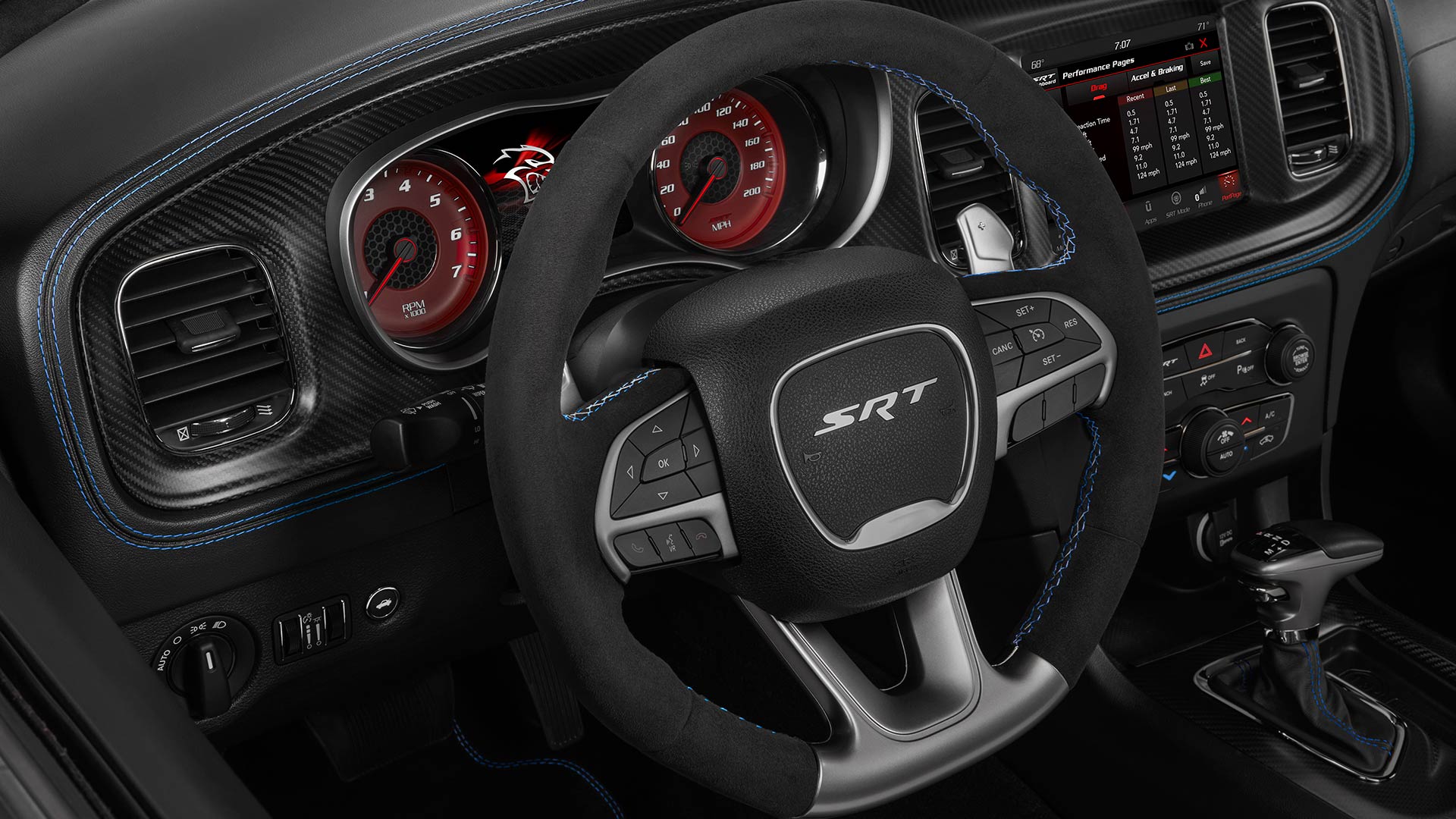
2020 Dodge Charger SRT Hellcat Widebody Daytona 50th Anniversary
© StellantisA set of 20-inch alloy wheels in ‘Warp Speed’ design were also new, finished in a special Satin Carbon color. Inside saw blue stitching for the Alcantara sports seats, with Daytona lettering embroidery like the 2013 version. Genuine carbon fiber was used for the dashboard and center console trim.
Each Daytona 50th Anniversary received a special build plaque, showing which of the 501 models it is.
-
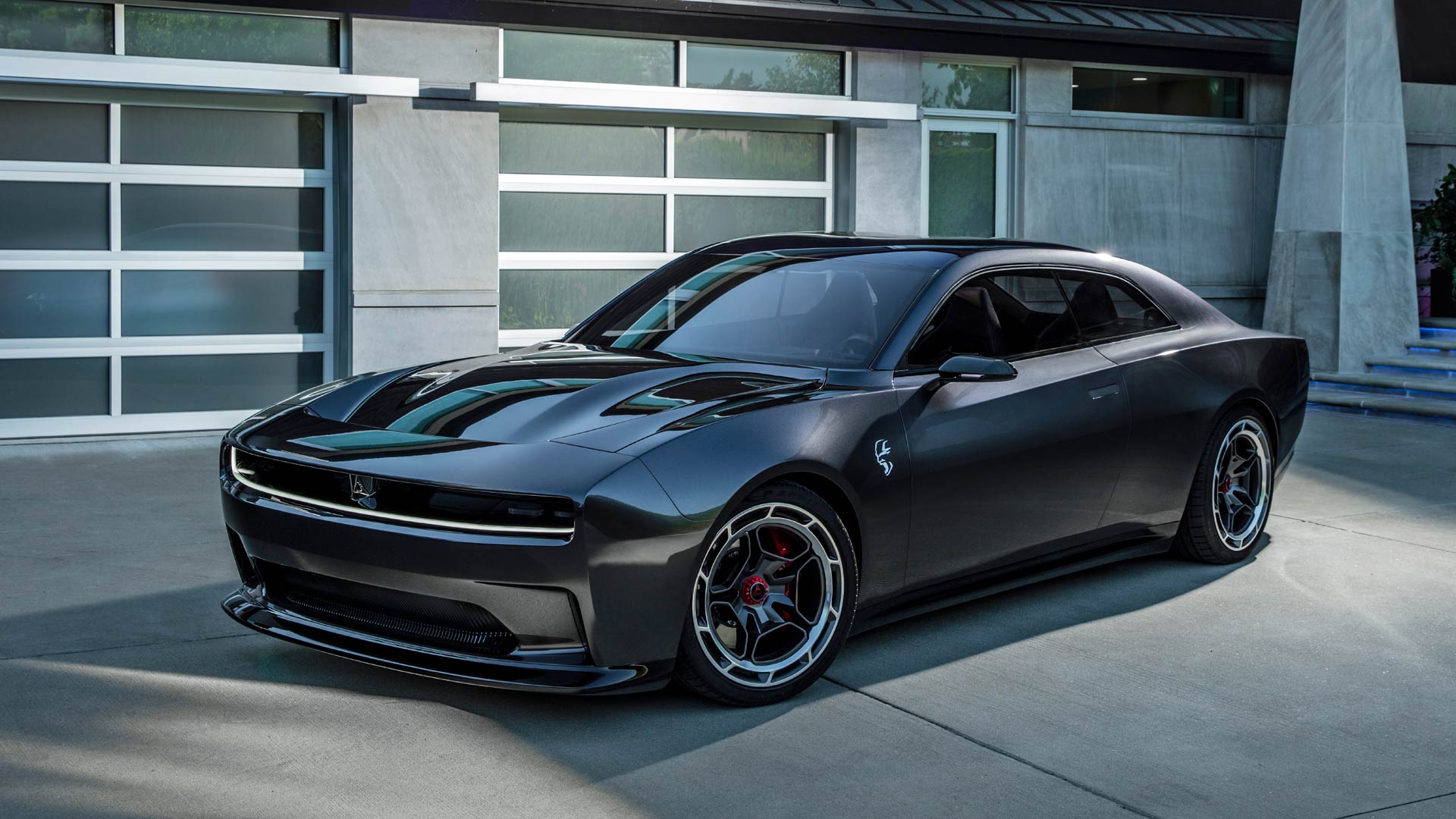
2022 Dodge Charger SRT Daytona Concept
© StellantisDodge had been open about its desire to keep producing muscle cars as the world moves towards electrification. Describing the Daytona SRT Concept, the company said it ‘drives like a Dodge, looks like a Dodge and feels like Dodge – and just happens to be a battery-electric vehicle’.
The styling was influenced by the iconic 1968 Dodge Charger, with a unique R-Wing aerodynamic design at the front. This is said to link the new electric concept with the huge spoiler found on the original Charger Daytona.
Dodge chose the name ‘Greys of Thunder’ for the paint color on the new concept car, with red detailing added to the wheels and brake calipers.
-
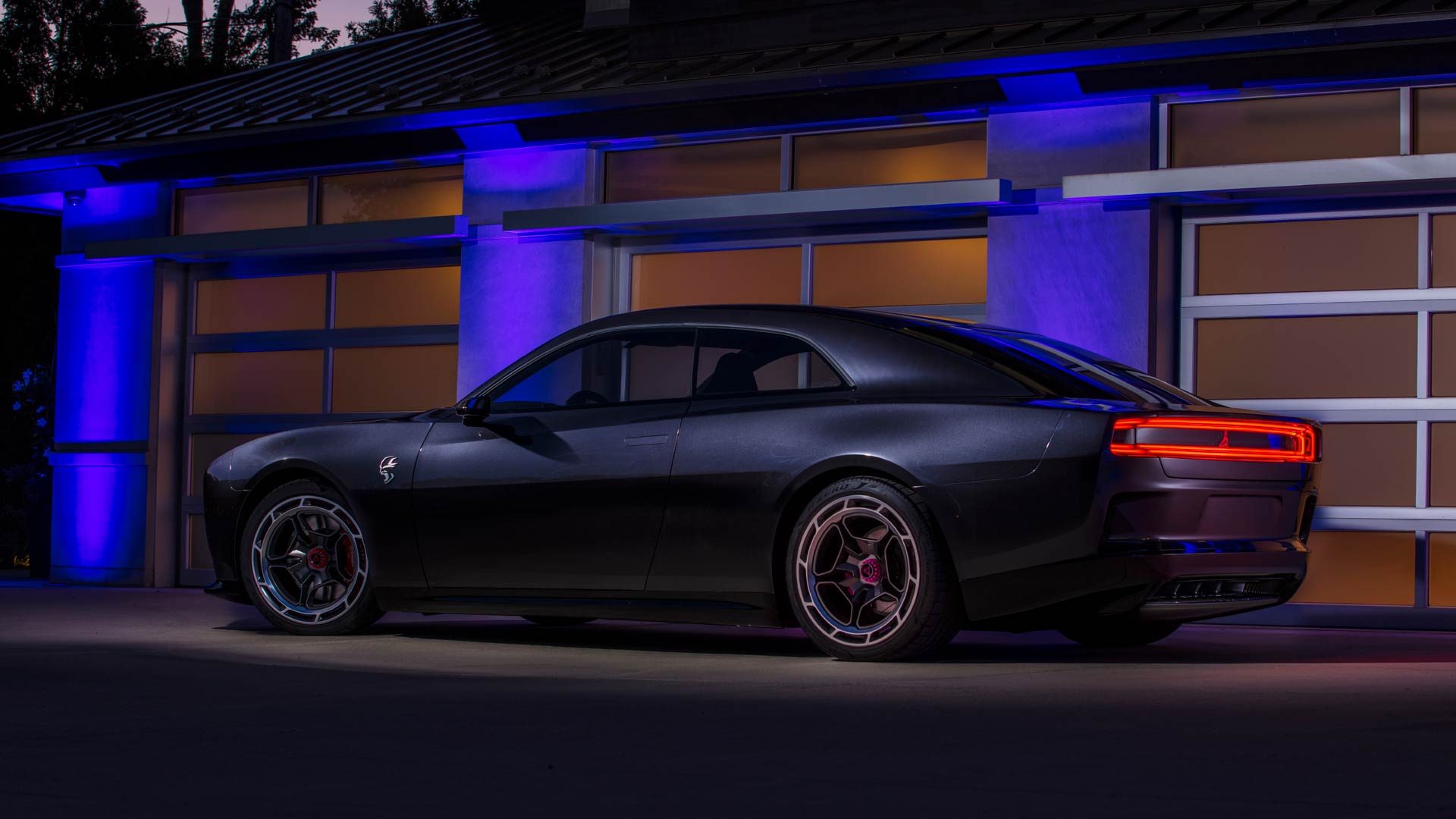
2022 Dodge Charger Daytona SRT Concept
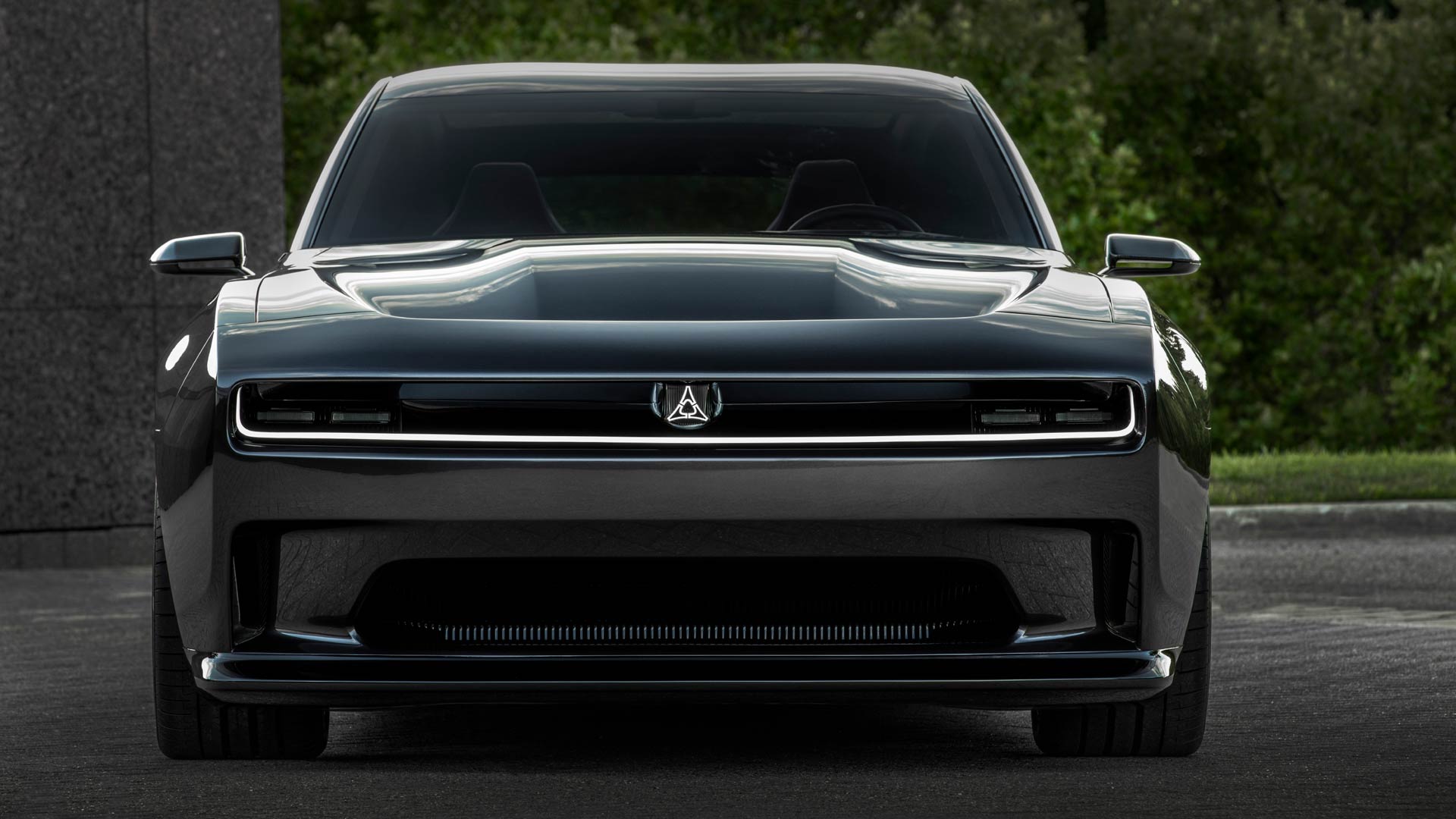
© StellantisOne of the most controversial features of the Daytona SRT Concept was its patent-pending Fratzonic Chambered Exhaust system. Using a sound amplifier and tuning chamber at the rear of the vehicle, a noise of up to 126 decibels can be made. This is said to be equal to a Hellcat-powered Charger.
Dodge described the noise as being a ‘Dark Matter’ sound profile, and one that is key to its plan to make an electric vehicle feel engaging.
-
2022 Dodge Charger Daytona SRT Concept
© StellantisThe 800-volt electric architecture underpinning the Daytona SRT Concept also had a suitably outlandish name. Branded the ‘Banshee’, it used all-wheel drive to offer performance beyond that of a Charger SRT Hellcat.
A new ‘eRupt’ multi-speed transmission brings the sensation of shifting gears to an electric vehicle. With notable upshift points built into the acceleration, it is intended to mimic the momentary pause felt when changing gear.
It also features a ‘PowerShot’ push-to-pass system, delivering extra performance via a press of a button on the steering wheel.
-
2022 Dodge Charger Daytona SRT Concept
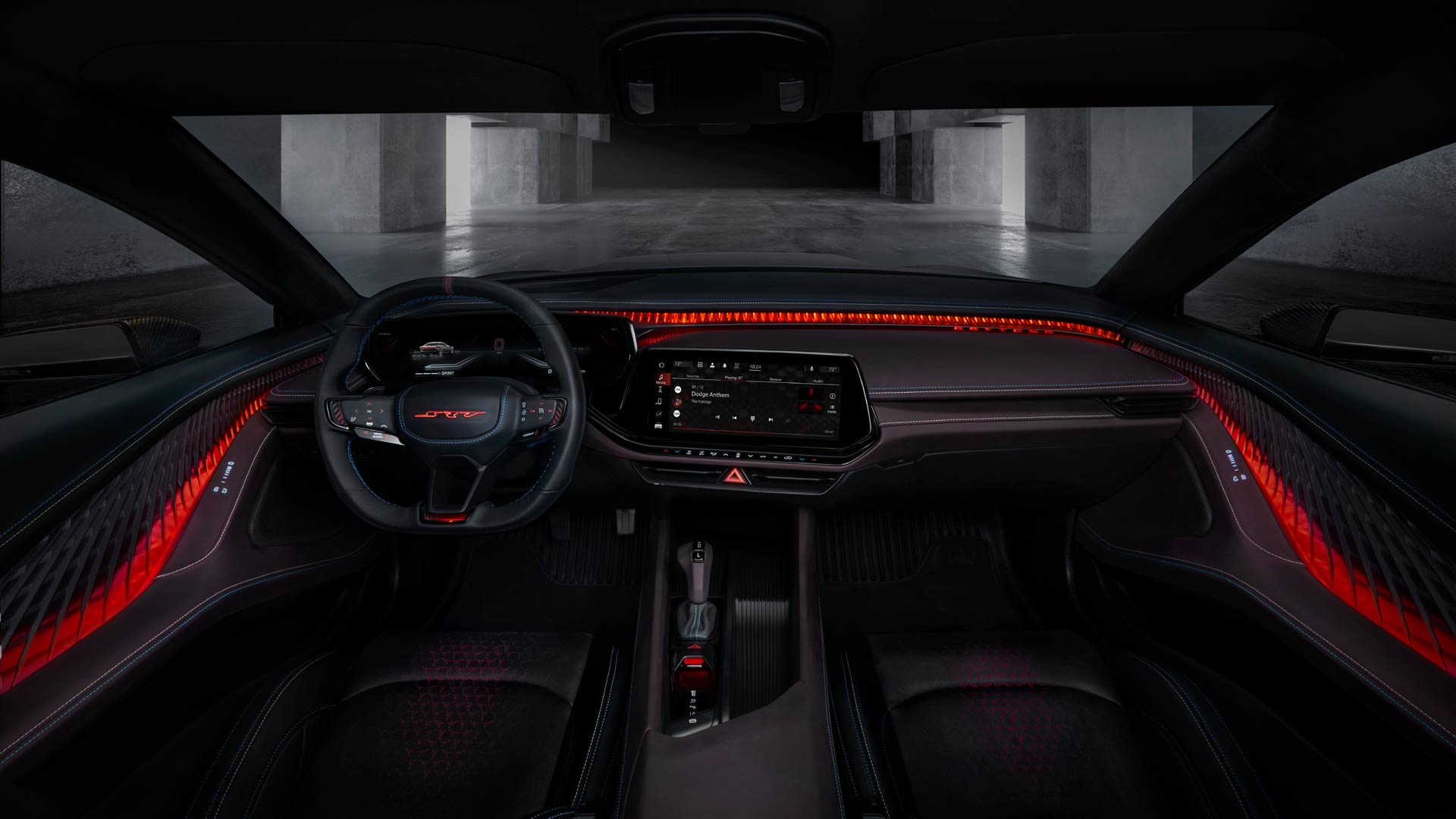
© StellantisAs with any good concept car, the electric Charger Daytona SRT Concept boasts an impressive interior. Centered around the driver are three screens, including an eight-inch head-up display and a 16-inch digital instrument cluster. The 12.3-inch multimedia panel is angled towards the driver by 10 degrees.
Trim inspired by the front grille of a 1968 Charger encircles the front of the cabin, with ambient LED lighting used to give a menacing red tone. Illuminated Daytona lettering is found on the dashboard, with the Dodge emblem lighting up red on the steering wheel.
Despite the focus on performance, the Charger Daytona SRT Concept features rear seats that can fold completely flat. This a nod to the 1966 Charger, which used a similar design to maximize luggage space.
-
2022 Dodge Charger Daytona SRT Concept
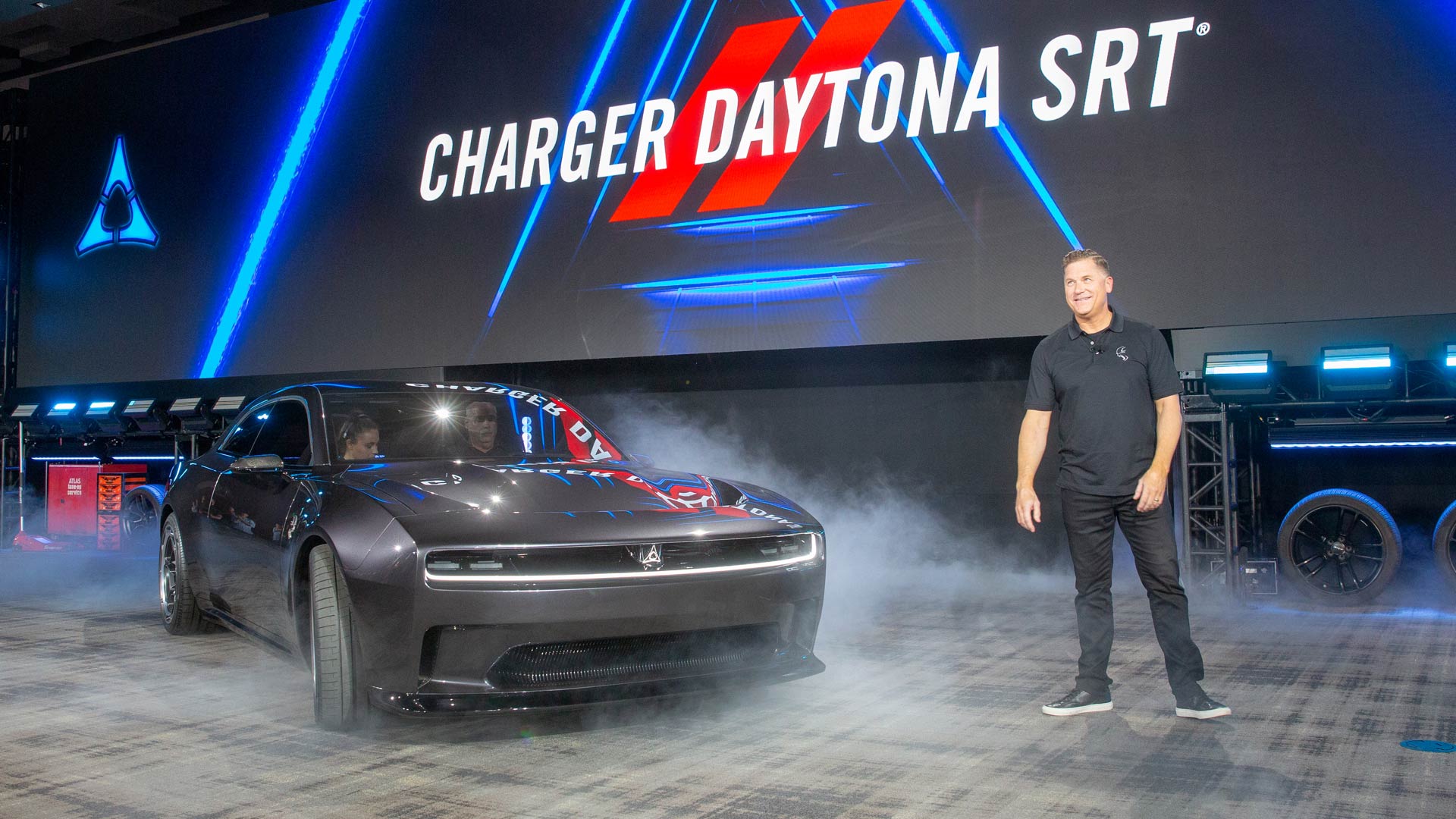
© StellantisTim Kuniskis, chief executive officer at Dodge, was clear about the direction the brand will take when it comes to future muscle cars.
Speaking at the launch of the Daytona SRT Concept, he said: “Dodge is about muscle, attitude and performance, and the brand carries that chip on its shoulder and into the BEV segment through a concept loaded with patents, innovations, and performance features that embody the electrified muscle of tomorrow”.
Kuniskis added: “The Charger Daytona SRT Concept can do more than run the car show circuit; it can run a blazing quarter-mile. And when it comes to product cycles, it outruns Darwin. Charger Daytona does more than define where Dodge is headed, it will redefine American muscle in the process”.
-
2024 Dodge Charger Daytona
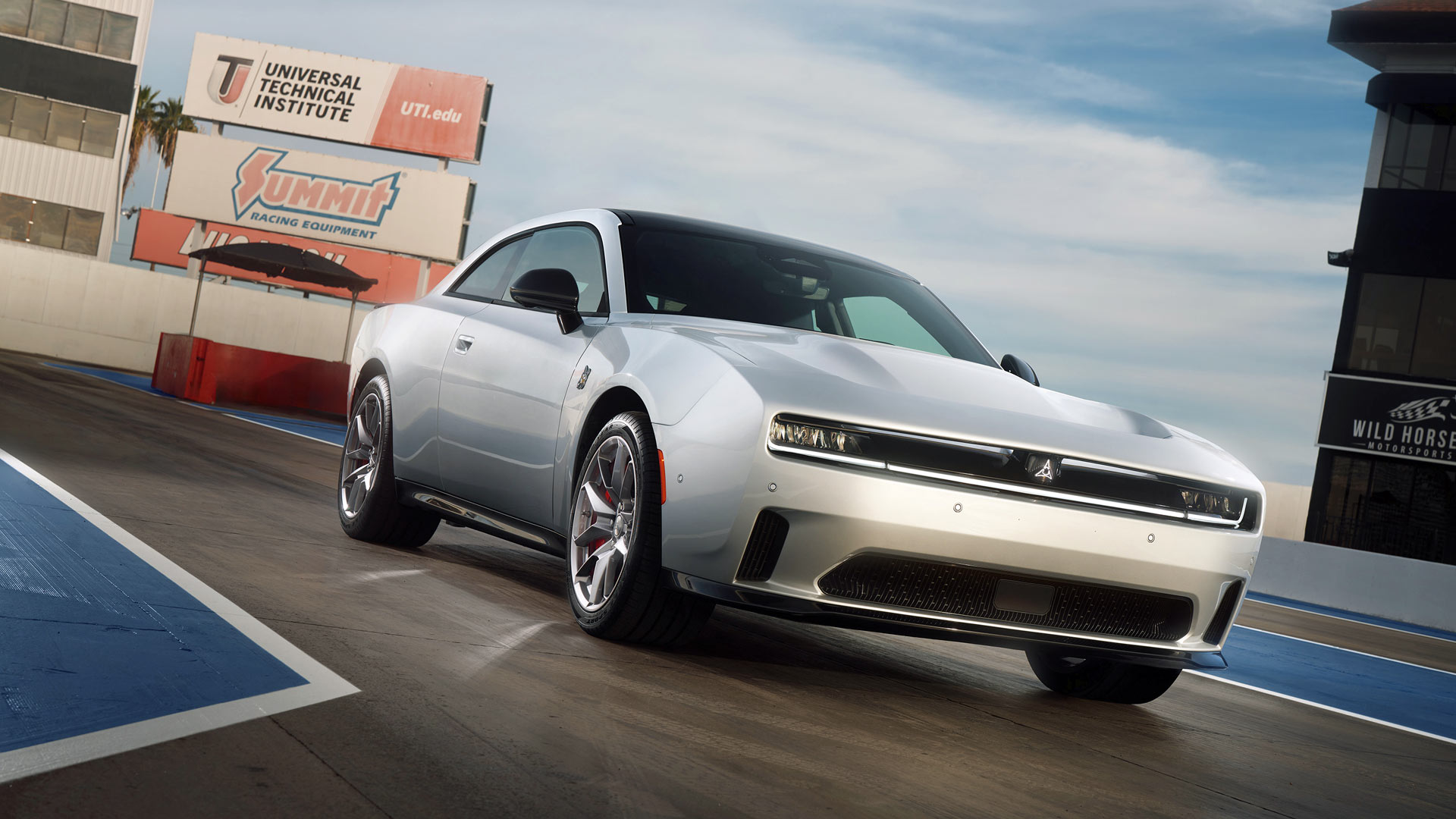
© StellantisFollowing the reveal of the concept car, Dodge wasted little time in creating a full production version ready to go on sale.
A special brand event in March 2024 saw the grand unveiling of the all-electric muscle car, with the Charger Daytona name retained for the new EV.
-
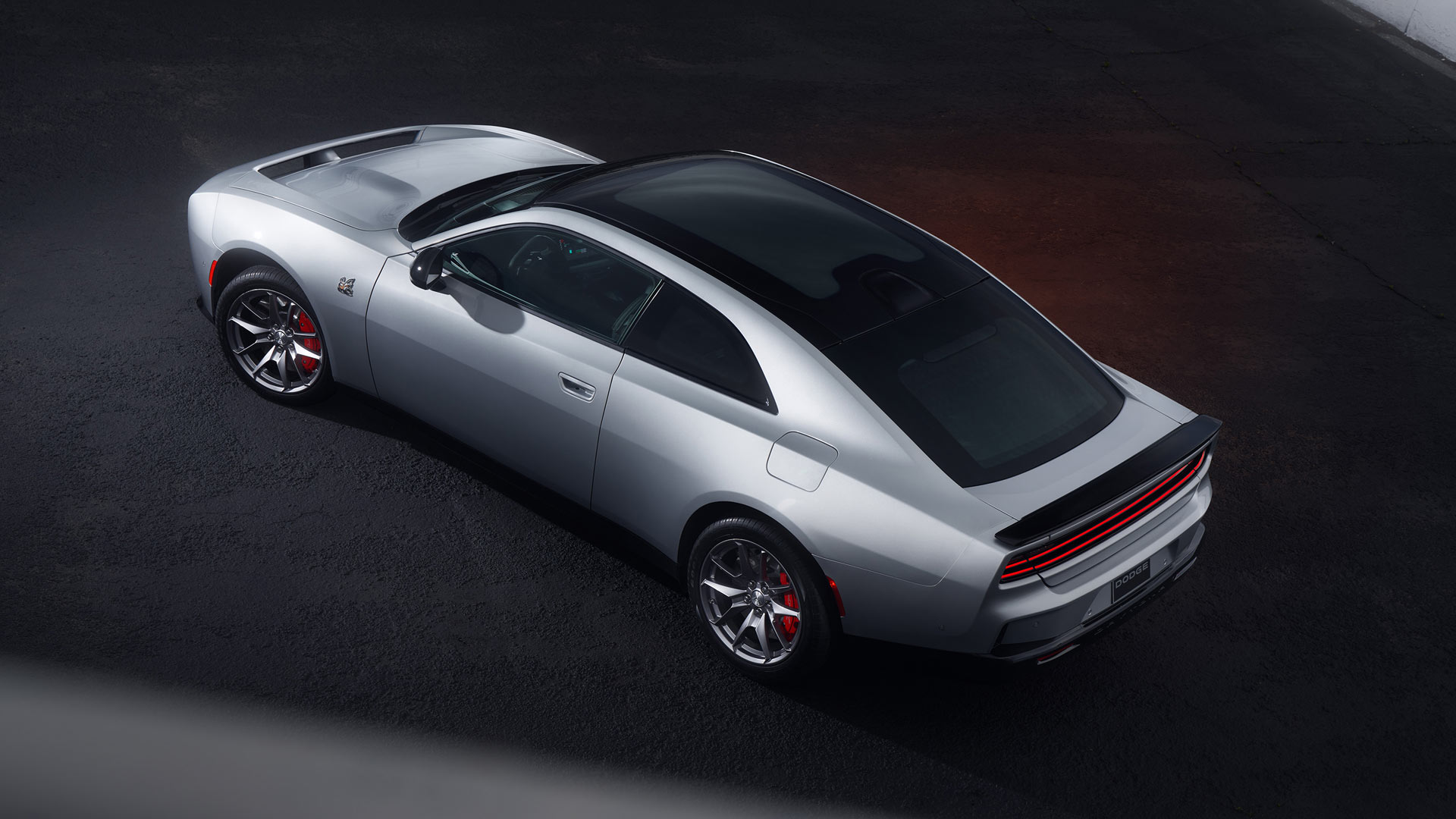
2024 Dodge Charger Daytona
© StellantisThe 2024 Dodge Charger Daytona will be offered with two choices of electric power output, both combined with all-wheel drive as standard.
In top Charger Daytona Scat Pack guise, the pair of Electric Drive Modules produce a total of 670 horsepower. This equates to 0-60 mph in just 3.3 seconds, making the Scat Pack the world’s quickest and most powerful muscle car.
For those choosing the Dodge Daytona R/T, output is capped at a still considerable 496 horsepower. With its 100.5 kWh battery pack fully charged, the R/T has a range of up to 317 miles.
-
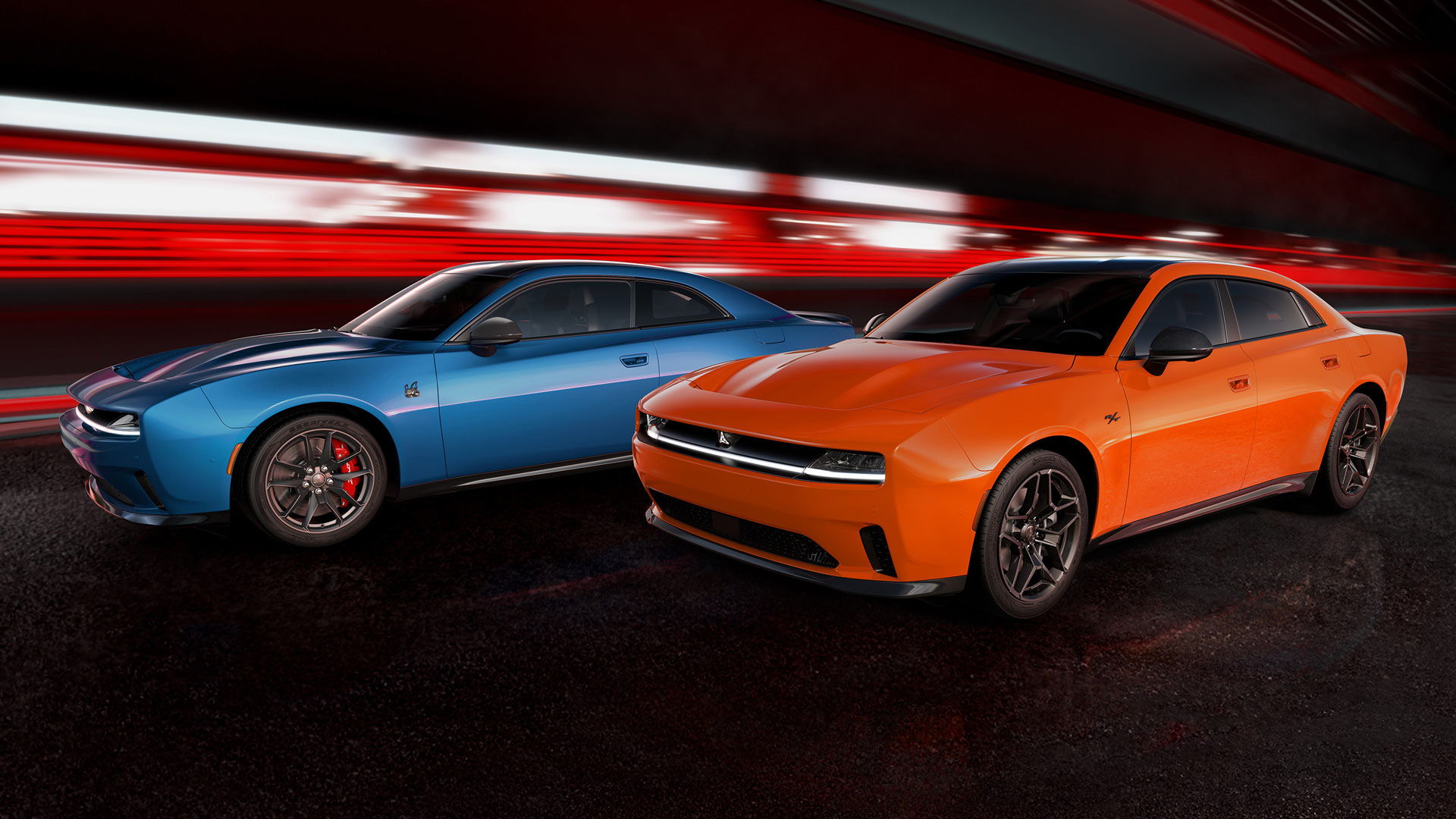
2024 Dodge Charger Daytona
© StellantisAlong with offering different power outputs, the new Charger Daytona also gives buyers the choice of two- or four-door layouts. Perhaps this is Dodge acknowledging the fact the Charger has offered multiple body styles throughout its long history.
Both versions use a large rear glass hatchback opening to maximize practicality. An optional full-length glass roof can be specified to increase the feeling of space and airiness inside.
The downforce-generating R-Wing, first seen on the SRT Concept, has been retained for the production car.
-
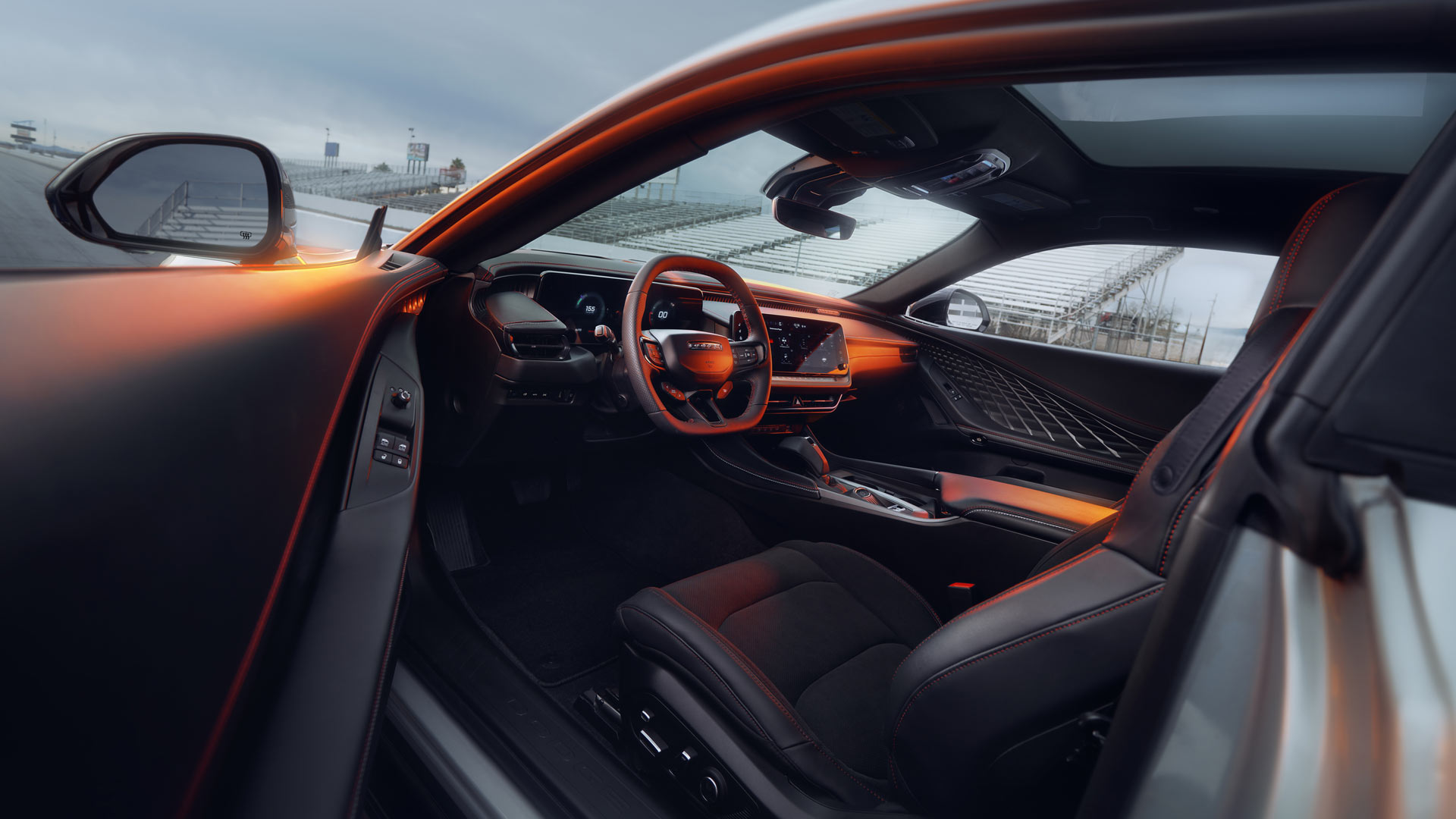
2024 Dodge Charger Daytona
© StellantisUnlike the exterior of the Charger, which has multiple design cues that pay homage to Daytona history, the interior of the electric version is all modern.
A 12.3-inch central touchscreen is standard, with two sizes of digital instrument panel on offer. The steering wheel comes with paddle shifters that allow for changes in regenerative braking levels.
Just like the original Charger, the all-new Daytona comes with rear seats that fold flat for extra luggage space. Compared to the outgoing model, the new electric version offers a 133 percent increase in cargo volume.
-
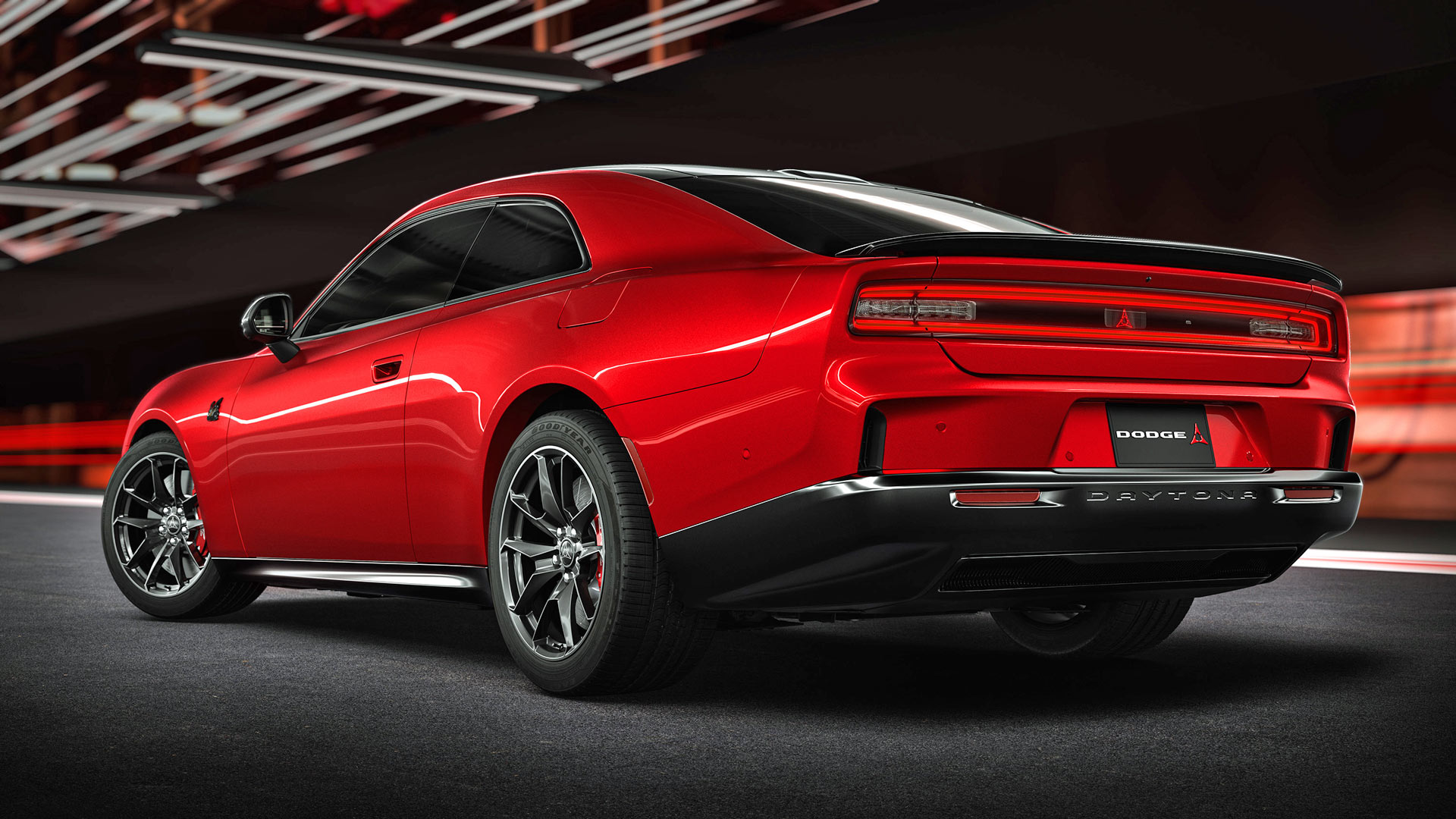
2024 Dodge Charger Daytona
© StellantisThe Daytona name is prominent on the new electric muscle car, embossed into the rear fascia above the Fratzonic Chambered Exhaust.
Carried over from the SRT Concept, the production version of the Fratzonic sound generator still promises Hellcat-style levels of noise for the Daytona EV.
Dodge does intend to produce an internal combustion version of the new Charger, due in 2025. Tellingly, this will do without the Daytona name or the trademark R-Wing design.
-
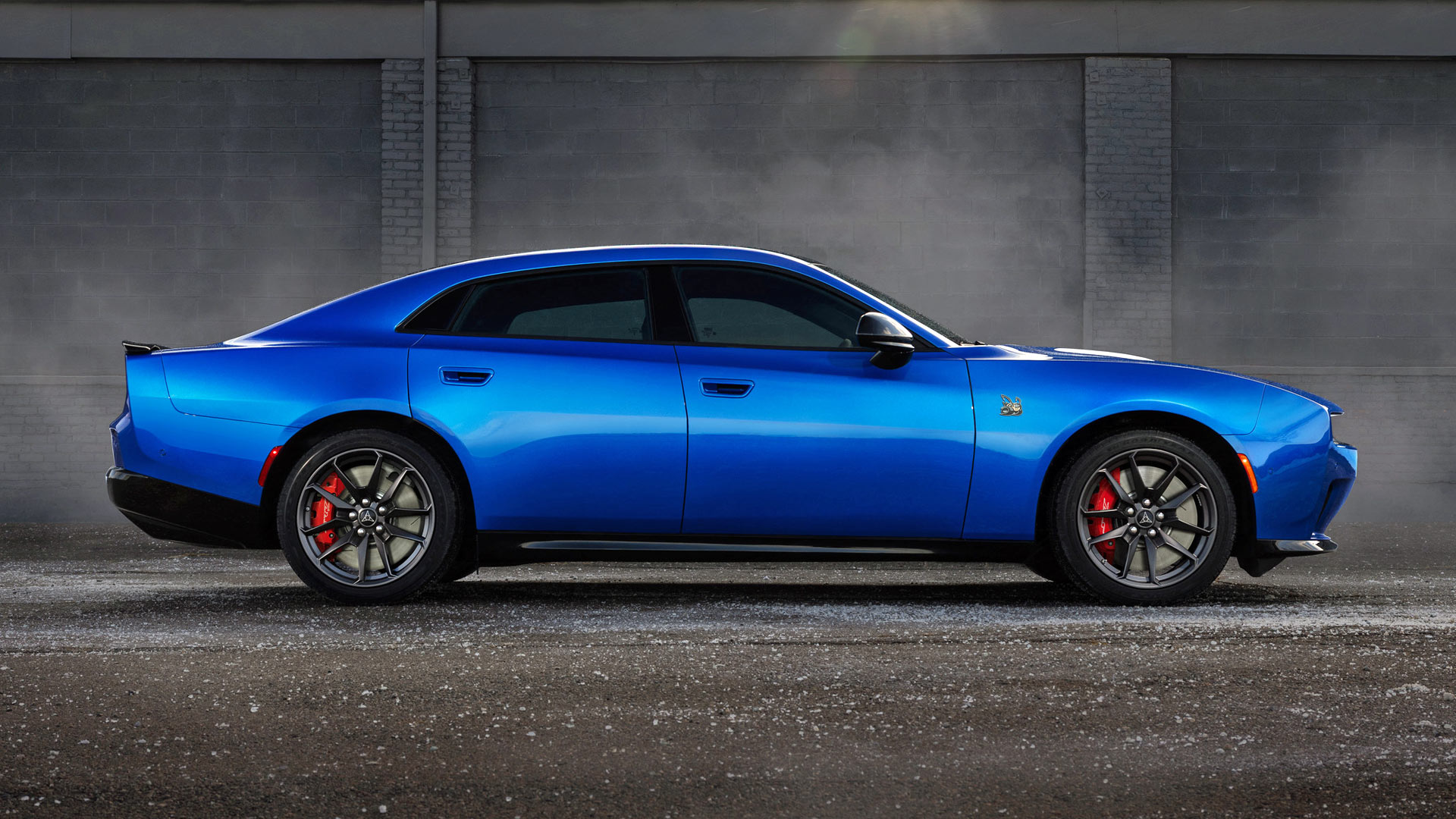
2026 Dodge Charger Daytona Sedan
© StellantisLaunching the Charger Daytona Sedan, Dodge was keen to highlight its status as the only four-door muscle car sold anywhere in the world.
As with the two-door model, the Sedan is offered with the Scat Pack, delivering 670 horsepower and a 0-60 mph time of 3.3 seconds. Drift and Donut Modes are present and correct, so choosing the four-door doesn’t mean having to be sensible.
Alongside its huge performance, the Charger Daytona Sedan Scat Pack offers a battery range of 241 miles.
-
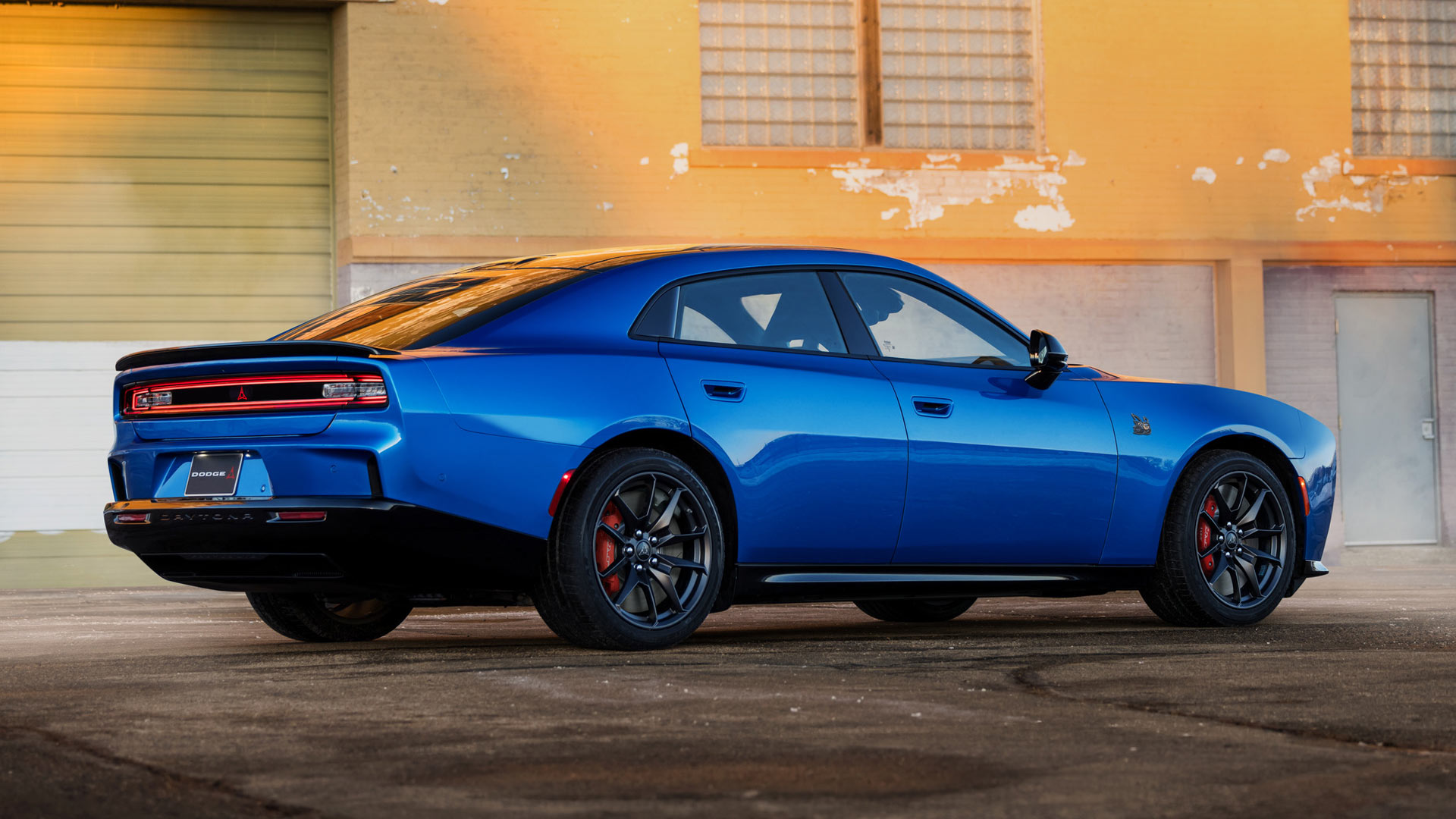
2026 Dodge Charger Daytona Sedan
© StellantisCreating one model range to replace both the previous Dodge Charger and Challenger meant the new Daytona was created with a sedan variant in mind from the beginning.
Speaking at the launch event for the Charger Daytona Sedan, Dodge CEO Matt McAlear said: “It’s a real testament to the Dodge design and engineering teams that apart from two additional doors, the Dodge Charger Daytona sedan embodies the same look and feel as the coupe”.
-
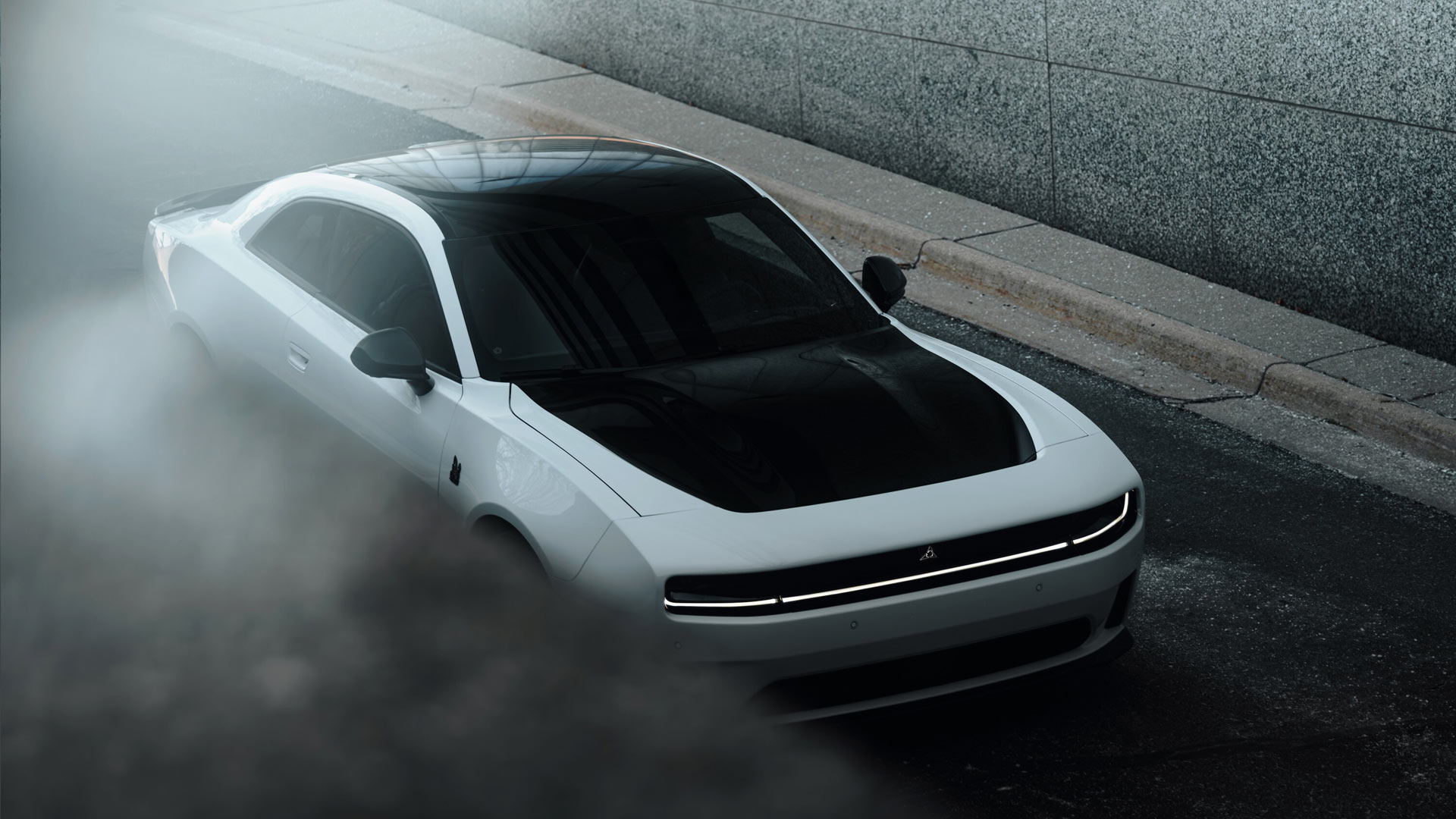
2026 Dodge Charger Daytona gets ready for the track
© StellantisAlong with launching the four-door model, Dodge used the 2026 model year to announce a brand-new optional Track Package for the Charger Daytona.
Available for the Scat Pack, it includes Brembo brakes with red-painted calipers, new 20-inch alloy wheels, a gloss black rear spoiler, and dual-valve adaptive suspension dampers. Leather and suede sports seats can be found inside the car, too.
Both two- and four-door 2026 Dodge Charger Daytonas are already available to order, with the first deliveries expected in the latter half of 2025.
-
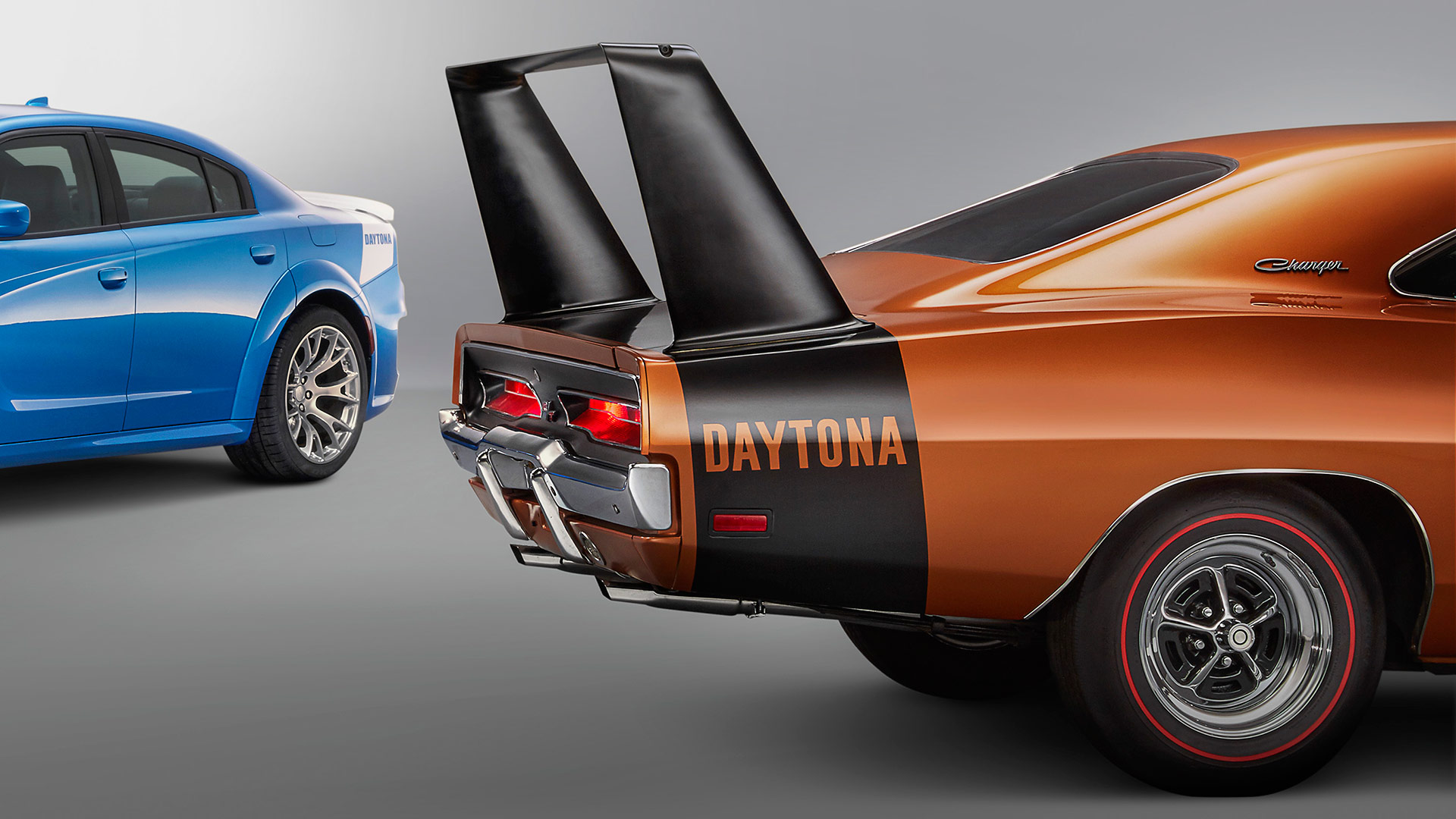
Things keep coming back around
© StellantisDodge has made a big commitment to transforming its muscle car into an electric vehicle, and the new Charger Daytona is the first step on this controversial path.
Converting muscle car purists to becoming fans of EVs will be a big challenge for the brand. But it should also attract new fans along the way.
It also guarantees that the famous Daytona name will remain on performance Dodge vehicles for years to come.
