Google has patented a system that will let your sat nav warn you of bumpy roads using sensors fitted to other vehicles.
The GPS system will monitor vibrations inside cars to work out how bumpy a road is and pinpoint where potholes are.
This will then let you choose an alternative, smoother route avoiding the most potholed roads.
The data is also likely to be passed onto Google’s own self-driving cars to provide a more comfortable ride for their passengers.
The company already uses GPS data from phones running Google Maps to monitor traffic conditions and provide routes which avoid jams.
A similar system is already in the pipeline from Jaguar Land Rover. This uses sensors to profile the road’s surface and adjust the car’s dampers in preparation for hitting a pothole.
This information can also be shared between cars fitted with this system – and JLR is also working on using it to report deteriorating road surfaces with local councils.
“Leave in time for a nightcap in the onboard bar and dine from a menu created from the finest Scottish produce. Enjoy a peaceful night’s sleep in your cosy cabin and wake refreshed to breakfast in bed.” Sounds idyllic, doesn’t it? The Caledonian Sleeper train must be the ultimate way to travel between London and Edinburgh.
Or is it?
A little over two years ago, I ‘raced’ the Cornish Riviera sleeper train between London and Penzance and – by visiting every station and sticking to all the speed limits – I beat the train by a few seconds. No really, I did. It was a proper Top Gear-style photo finish. Only without the brilliantly-executed script and huge production budget. You can read about the exploits over on PetrolBlog.
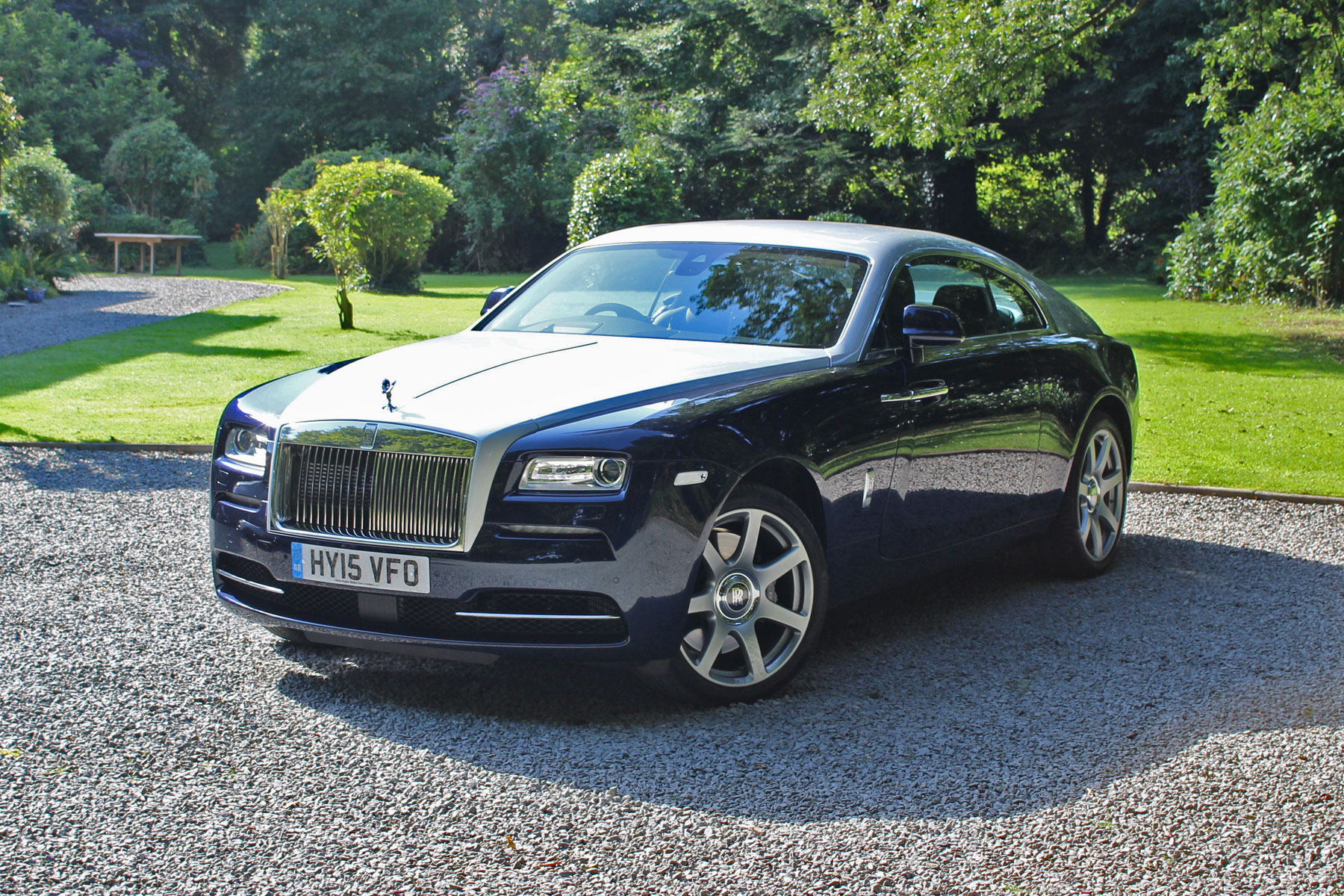
I always promised myself I’d do it again. The sleeper train to Scotland was an opportunity too good to miss. So when Rolls-Royce got in touch to say that if I was ever planning to do something similar, they’d provide car, I jumped at the chance. And tonight, the race, or should I say, Wraith, is on. Hashtag #WraithTheTrain, etc, etc.
At around ten to midnight, the passengers onboard the Caledonian Sleeper will be settling down to enjoy a nightcap, before enjoying a relaxing sleep. Meanwhile, somewhere outside Euston Station, a pair of intrepid (read: foolish) explorers will be firing up the V12-engined Rolls-Royce Wraith and attempting to escape from London.
All things being equal, the train should pull into Edinburgh’s Waverley Station at 07:22, precisely 7 hours and 32 minutes after leaving London. By following a similar route to the train, essentially via the M6 to Carlisle and then across to Edinburgh, the Wraith should arrive within seven hours. Take the more direct route via the A1 and it takes 7 hours and 13 minutes. Either way, we should beat the train.
But throw into the equation Britain’s love affair with overnight roadworks, average speed cameras and delays getting out of London and into Edinburgh, and we have ourselves a leveller. A combined fuel consumption of 20.2mpg will result in a number of stops for fuel, so this one is going to be tight. Incidentally, the Wraith is currently averaging 14.1mpg…
Of course, you can get to Edinburgh quicker by taking a train at a more sensible time. But to do so would be to go without the luxury and class of the Caledonian Sleeper. And what better car to pit against the grace and pace of the luxotrain than a 6.6-litre Wraith, the most-powerful Rolls-Royce in history. With 623hp and 590lb ft of torque on tap, it’s hardly lacking in power. Mind you, at £255,365 (plus taxes), our test car represents a far more expensive route north than the price of a train ticket.
Right now, there are four questions to be answered. Firstly, will the amount of coffee consumed be greater than the amount of super unleaded? Secondly, which route will we actually take? Thirdly, will we actually beat the train to Edinburgh? Finally, wouldn’t it have been more sensible to stay at home to watch the Great British Bake Off?
Find out the answers to all this and more by following @MajorGav on Twitter or using the hashtag #WraithTheTrain. If you see us heading north, give us a Railway Children-style wave. But no petticoats. Thank you.
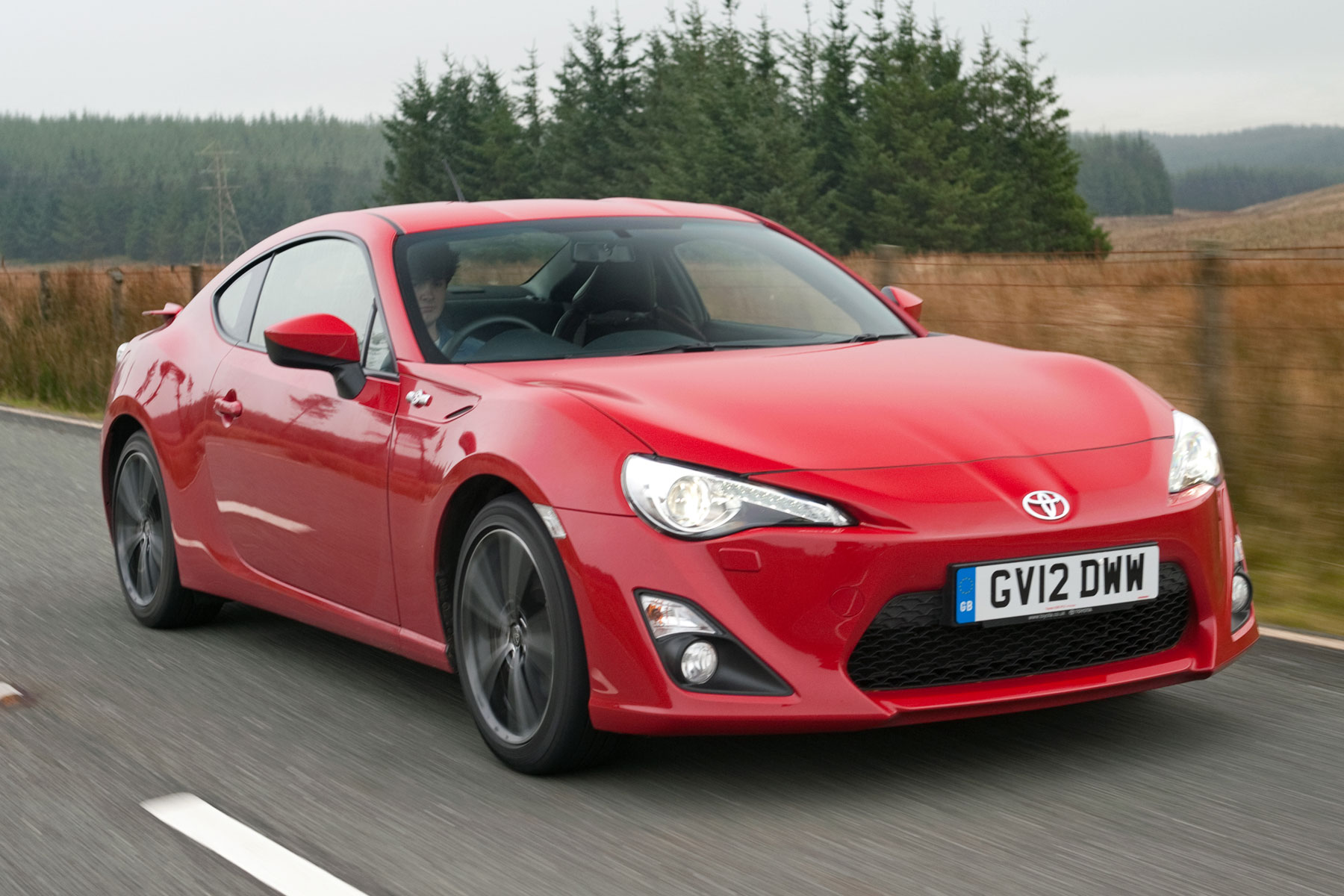
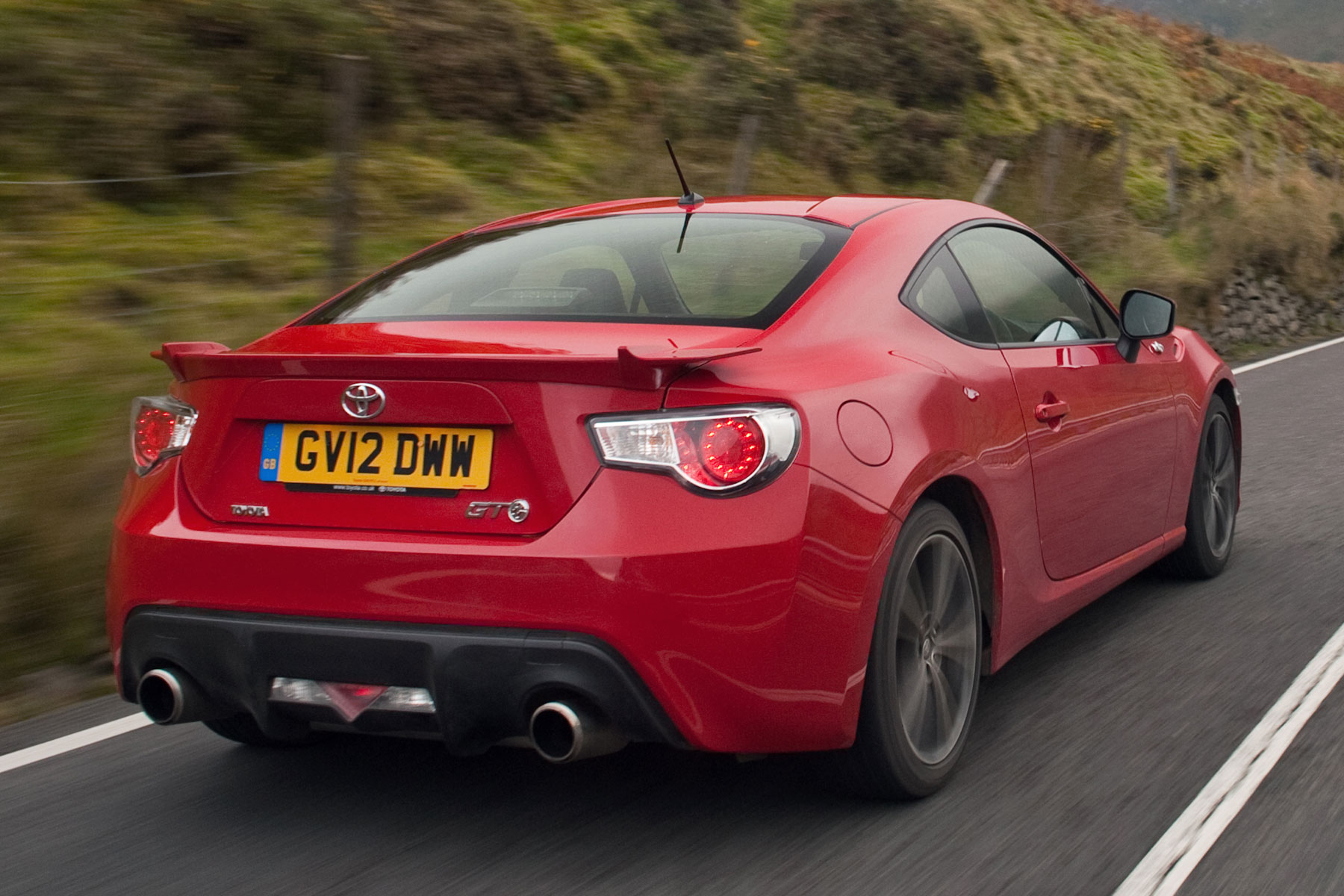
The Toyota GT86 has been around for a few years now, and has proved to be a controversial car. Many love its simple, modest-grip, rear-wheel-drive setup, while others fail to see past its lack of power and dated interior.
Buyers have certainly struggled to justify it against cheaper, faster hot hatches such as the Ford Fiesta ST, which goes some way towards explaining why sales have been so disappointing.
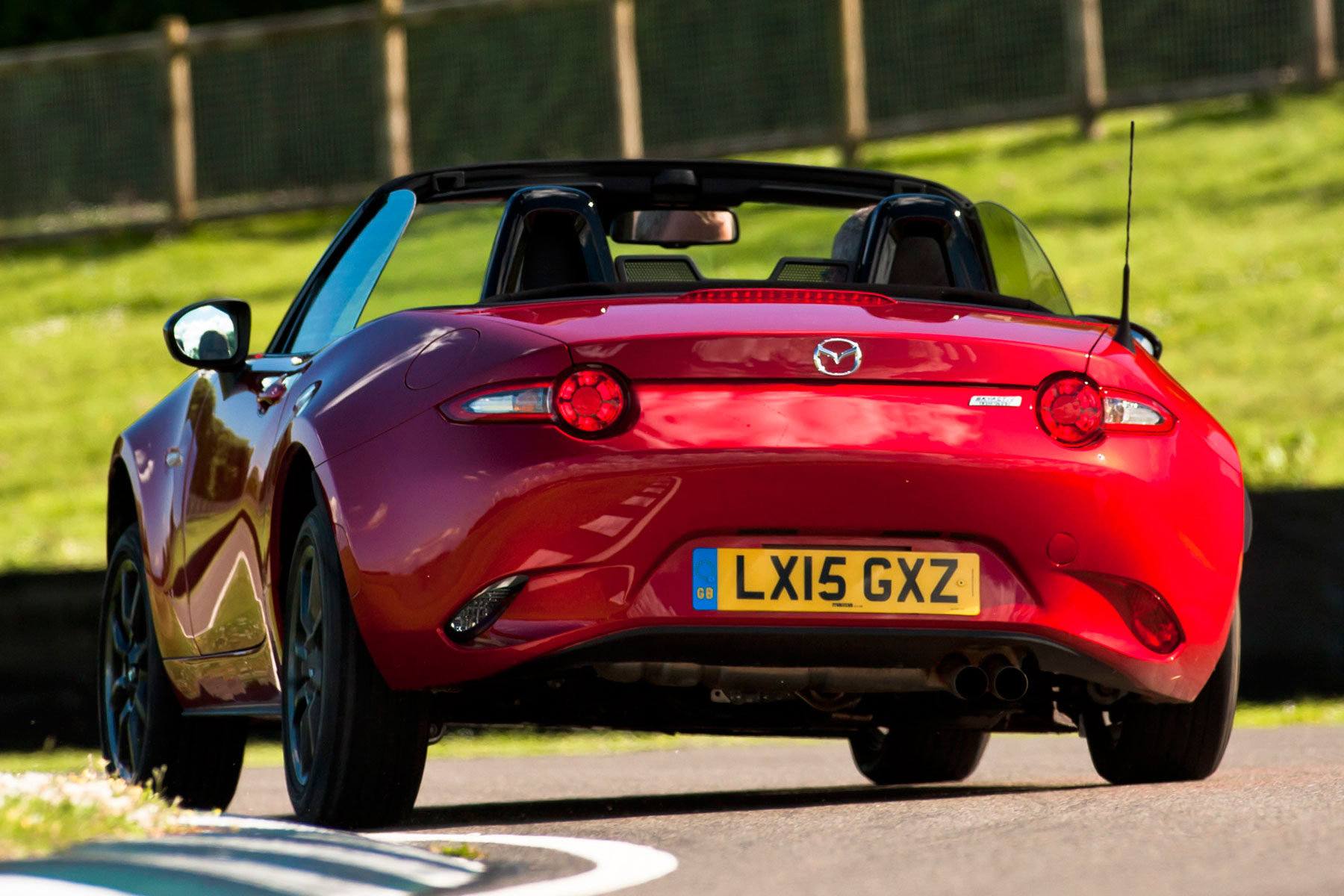
One car that has been overlooked as a rival to the GT86 is the Mazda MX-5. Despite being the world’s best-selling sports car, in recent times it has put on weight and (perhaps unfairly) developed an image as a fashion accessory rather than a true sports car.
That’s set to change with the launch of the fourth-generation Mazda MX-5, due on sale in the UK at the end of this month. The new model is 100kg lighter than its predecessor and shorter than any MX-5 ever – even the 1990 original.
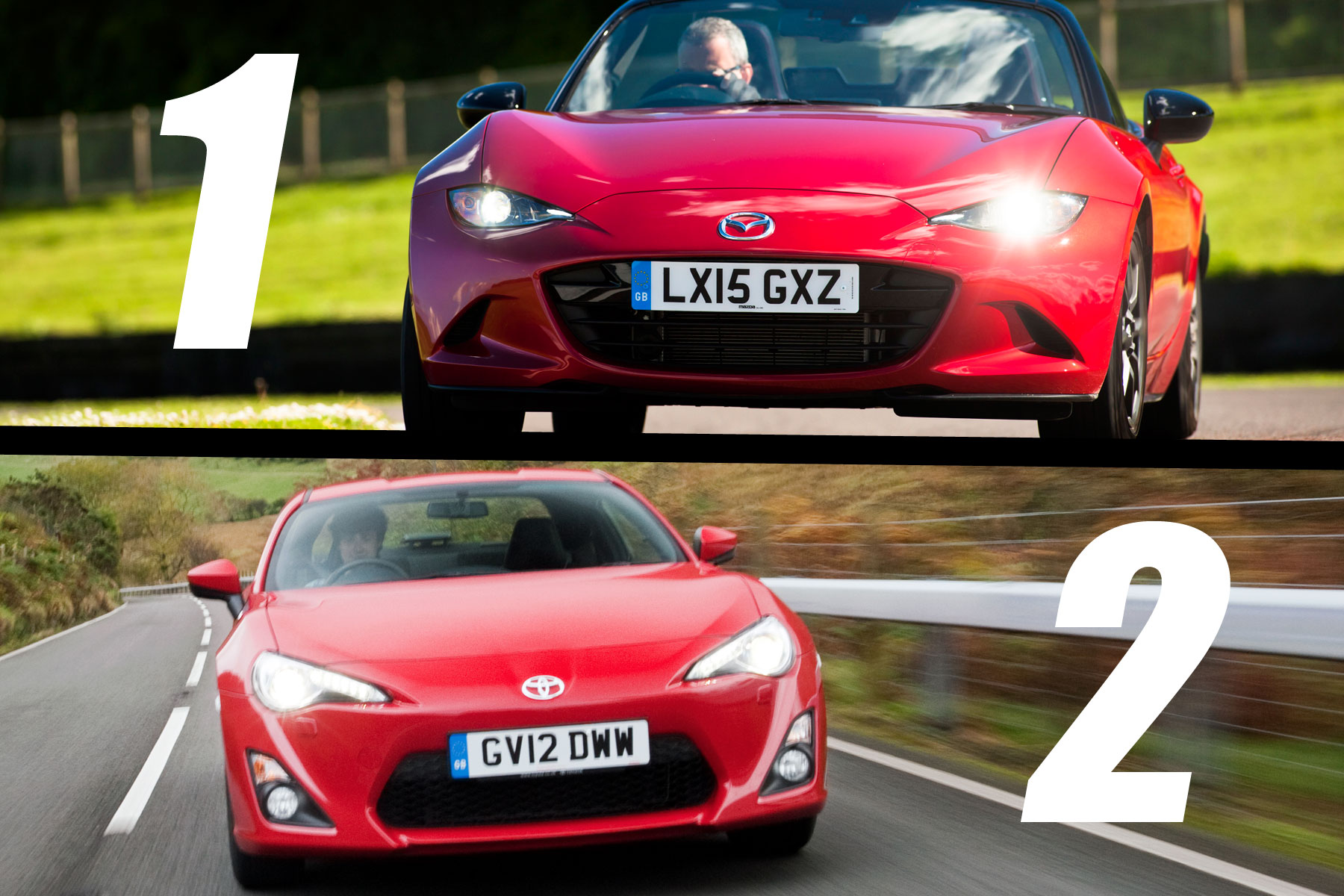
We recently went to the Scottish Highlands to find out if it is now a serious driver’s car – but we also decided to put it head-to-head against the slightly more expensive Toyota GT86. Which will come out on top?
Toyota GT86: On the road
If we could award a star rating on driver experience alone, both of these would be five-star cars.
The Toyota GT86 feels like a much more exotic car than a twenty-something-grand coupe. You sit low, and the Milltek Sport stainless steel exhaust system fitted to our test car makes a pleasing burble on start-up.
The steering is heavy – bordering on too heavy when manoeuvring in tight situations. But that adds to the feeling that you’re driving something more akin to a supercar than a competitor for a hot Fiesta.
Once out on the road and past national speed limit signs, the GT86’s foibles (of which there are many, we’ll come to those shortly) are soon forgotten. Even with the wider 235mm Pirelli P Zero tyres fitted to the 18-inch alloys of our test car, there’s not an endless amount of grip.
That’s part of the GT86’s charm, though. It’s a refreshingly analogue car in a time of turbochargers and copious grip. The chassis is so communicative that you always know what’s going on. Not that you need to be a pro to drive one – after a bit of time with it, your confidence will increase. It’ll teach you a lot more about driving than an over-assisted hot hatch will.
At first, the GT86 feels slower than you might expect, particularly if you’re used to driving turbocharged cars. It lacks torque and putting your foot down at low to middle revs results in a lot of noise, but won’t pin you back in your seat. With peak torque at around 6,500rpm – just short of the redline – you really have to rev this engine to extract its best performance.
You soon get into this mindset, however. The six-speed gearbox is a fairly sweet unit, if a tad notchy, and a light flickers telling you when to change up. You soon get into a rhythm, exploiting its peaky power delivery and changing up just as you touch the redline.
If you drive the GT86 in this manner it’s unlikely to feel slow. It’s more than capable of overtaking slower traffic and you can soon be travelling very quickly. The low-down driving position and communicative steering add to the sensation of speed. Sure, a hot hatch might beat it in a drag race, but the GT86 is such a thrilling car to drive on normal British roads that you soon forget about the hard facts and figures.
Mazda MX-5: On the road
We’ll concentrate on the 2.0-litre Mazda MX-5 here as, although some argue the 1.5-litre is the sweeter unit, the bigger engine is the one closest to the GT86 in terms of both price and power.
Ah, power. If the GT86 feels lacking, you’d have thought the MX-5 would be in desperate need of a hot version – the 2.0-litre packs just 160hp.
But 160hp combined with a low 1,075kg kerb weight means it’s actually brisker than the GT86 – hitting 62mph in 7.3 seconds compared to the Toyota’s 7.7 seconds.
It accelerates in a similar way to the Toyota, with torque peaking high-up in the rev range at 4,600rpm. It’s an engine that loves to rev, but it does seem sprightlier than the Toyota – that 0.4 second gap to 62mph makes a surprising difference.
But straight-line acceleration isn’t what either of these cars is about. The MX-5’s compact dimensions make it feel nimbler than the GT86, while both are wonderfully communicative and feel like could be fairly tail-happy should you turn off the traction control systems.
The GT86 we had on test was fitted with 40mm lowering springs, so provided a firmer ride than a standard version. The MX-5, however, provided a surprisingly compliant ride, only getting unsettled by the harshest of bumps.
That’s always been the delight of the MX-5. Not only is it extremely entertaining if you push it hard, it’s also very happy being driven at low speeds. In that way, it’s probably an easier car to live with every day than the more focussed GT86.
Toyota GT86: On the inside
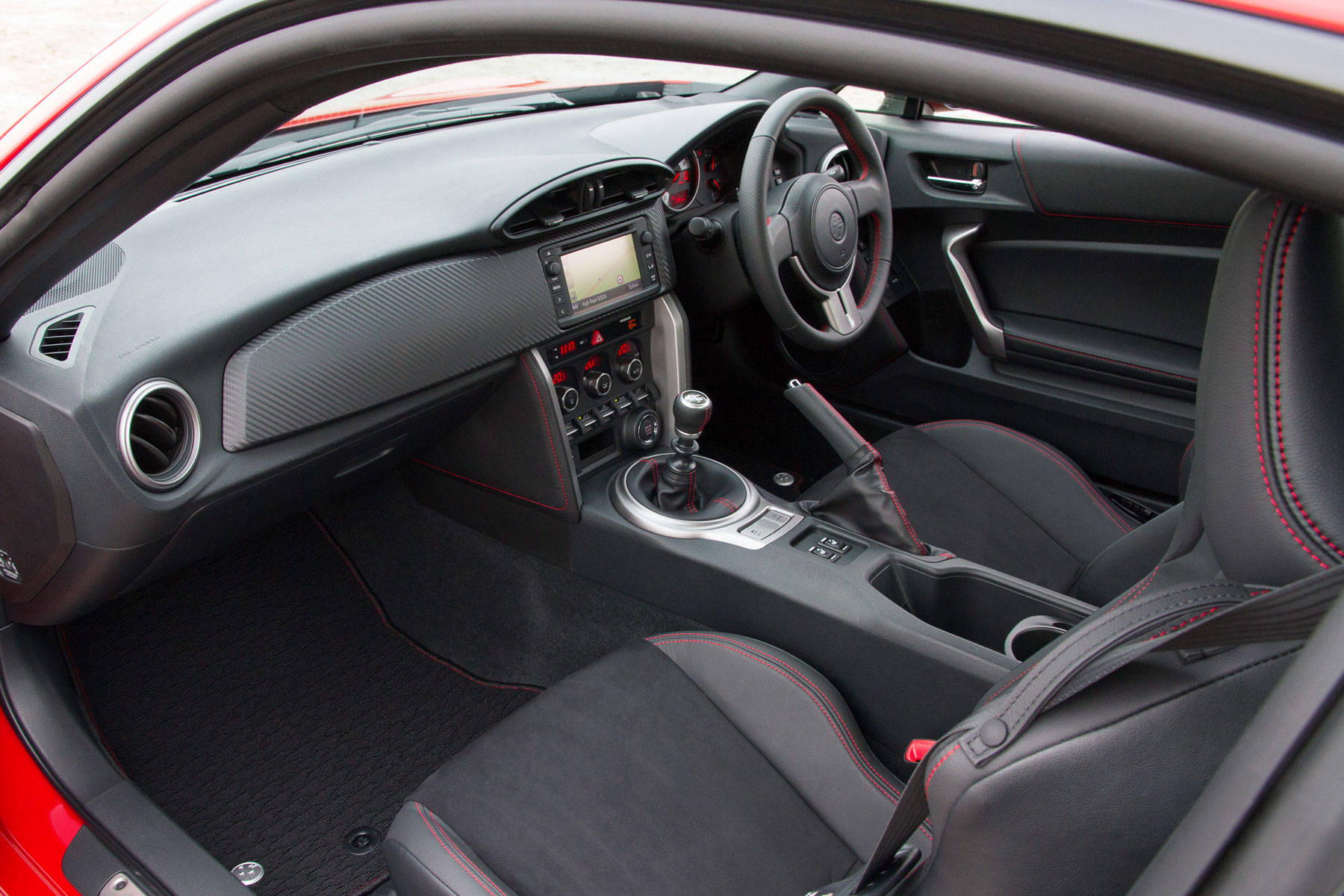
As good as the GT86 is to drive, it’s as let down by its interior. It feels like a Toyota from at least 10 years ago – with lots of dark, hard plastics making the cabin feel quite claustrophobic.
It’s more practical than the MX-5 – it’s got rear seats, for a start, although they really are only a token gesture for young children. There’s plenty of stowage space, too – something the MX-5 is seriously lacking in.
Toyota says its interior has been designed with a lightweight ethos in mind – pointing out its frameless rear-view mirror as an example of where weight has been saved. But you find yourself asking if this is just an excuse for penny-pinching.
Standard equipment is lacking. There’s no DAB radio (although it is ‘DAB-ready’, says Toyota). It’s amazing how much you take things like hill-hold assist and stop-start for granted – and having to take your hands off the steering wheel to change the volume of the radio feels very old-fashioned.
Our test car was fitted with the optional Touch and Go satellite navigation system. It’s a clumsy, old-fashioned unit that even looks a bit aftermarket. For the £750 Toyota asks, we’d recommend swerving it in favour of a TomTom on the windscreen. Old-fashioned, for sure, but so is the car.
The GT86’s interior does have a few saving graces, however. The bucket seats not only look great and provide plenty of support, they’re also surprisingly comfortable. We also particularly like the steering wheel… a minor thing, perhaps, but one that does make a big difference to the overall driving experience. At 365mm, it’s particularly small, making it easy to extract the best out of the sporty Toyota. The chrome sports pedals are also nicely placed for enthusiastic drivers.
Mazda MX-5: On the inside
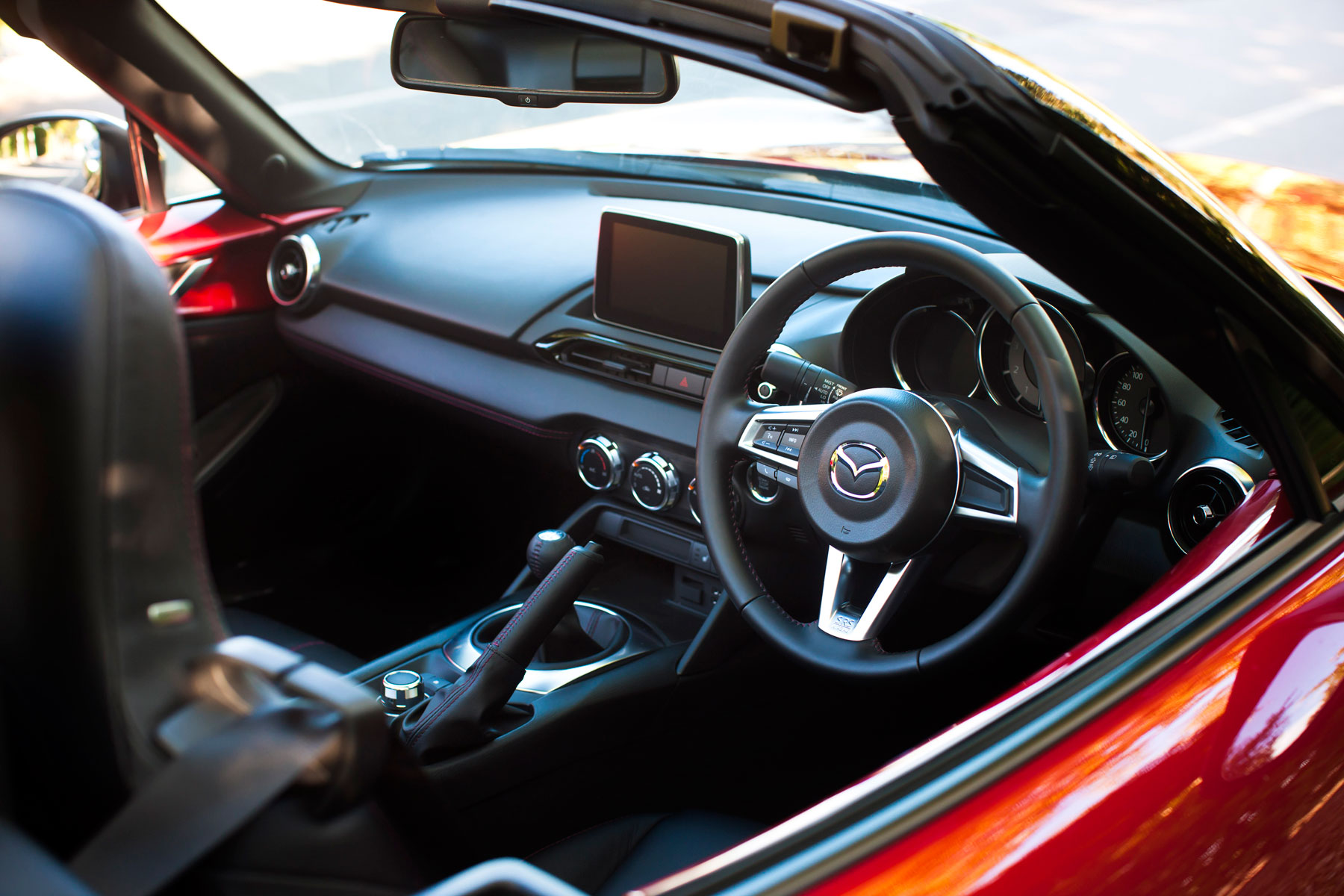
Considering Mazda has also gone hard on the lightweight ethos, the MX-5’s interior is much more pleasant than the GT86’s. It will also look familiar to anyone who’s spent time in the latest Mazda 2 or CX-3.
It feels very modern, with bits of chrome giving it an upmarket feel and red stitching adding to its sportiness. The sat nav is easy to use, while the prominent rev counter emphasises the MX-5’s rev-hungry nature.
It’s only when you look really closely that you notice minor weight-saving measures, such as the lack of padding on the sun visors. Overall, though, it’s not detrimental to the driver or passenger’s comfort – which is impressive considering how much weight they’ve managed to cut on the new model.
One thing it does lack is storage space. There are no door bins, the cup holders are flimsy removable items, and there is no glovebox. A minor gripe on the face of it, but it does irritate when you struggle to find somewhere even to put your mobile phone.
If you can cope with the compact nature of the MX-5’s interior and don’t mind the lack of storage, it runs rings around the GT86 here.
Toyota GT86: Running costs
The old-fashioned nature of the GT86’s engine, combined with the fact you will thrash it anywhere, means it’s not particularly efficient. Officially, it returns 36.2mpg on the combined cycle, but do expect this to drop significantly.
CO2 emissions of 180g/km mean you’ll pay £225 a year in road tax (£350 in the first year), while if you’re looking at one as a company car you’ll be paying a BIK tax rate of 31%.
Traditionally, though, Toyotas are extremely reliable. This means you shouldn’t suffer many of the unexpected costs you might associate with sports cars.
Mazda MX-5: Running costs
The 2.0-litre high-compression Skyactiv engine in the MX-5 returns 40.9mpg on the combined cycle, while emitting 161g/km CO2. That puts it into the ‘G’ tax band, resulting in £180 tax for the first year, and the same for following years.
Like Toyota, Mazda has a reputation for reliability, so we wouldn’t be worried about owning one when it’s out of warranty (after three years compared to the Toyota’s five).
Neither should be costly to run, providing you’re not expecting diesel-like economy. Without resorting to the ‘smiles per gallon’ cliche, both cars offer an awful lot of fun for relatively affordable running costs.
Mazda MX-5 versus Toyota GT86: Verdict
If you’re serious about driving, neither the Toyota GT86 or new Mazda MX-5 will disappoint, despite their relatively modest power.
The MX-5 is a much more sorted package. It seems easier to live with, and its interior, although not as practical as the Toyota’s, feels of much better quality.
It’s also nimbler and offers more fun at low speed. The little roadster is just as happy on city streets as being pushed to its limits on track.
The Toyota GT86 feels, and looks, more special. It’s a more focussed car to drive, and its poor sales mean it still turns heads three years after its launch.
Like past models of the MX-5, we expect the fourth generation will soon become a victim of its own popularity, appearing across the UK quicker than you can fold its manual soft-top roof down.
For most buyers, the Mazda MX-5 makes a lot more sense than the Toyota GT86. It’s cheaper, faster and has a much nicer interior. Handling is on par with the Toyota, and the Mazda also has that added boon of being able to go topless.
Are we saying don’t buy the GT86? Not at all. If you can make the GT86 work for you, it’s a purchase we’d fully respect. It feels more special than the MX-5 and is likely to stay rare for longer. Don’t let it’s relative lack of power bother you, but that interior is a sacrifice you’ll have to justify. Many will find that difficult.
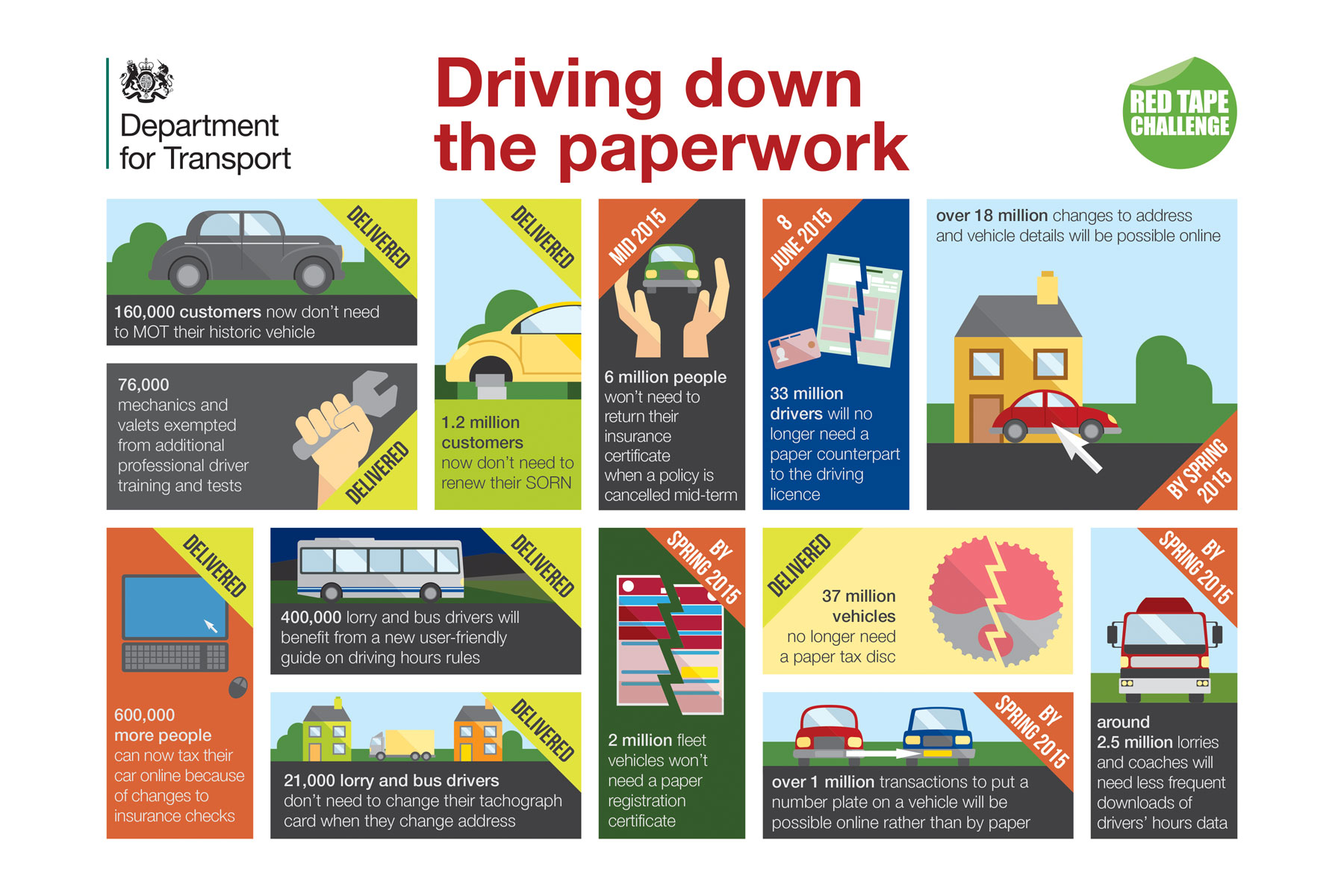
You can now inform the DVLA that you’ve sold a car to a trader or private buyer online, rather than filling in the relevant sections of the V5 logbook and notifying the organisation by post.
It come as part of the DVLA’s purge on unnecessary paper – following axing the tax disc and paper counterpart driving licence.
When selling your car privately, you’ll still have to fill in the V5C/2 section (new keeper supplement) and give that to the buyer.
But instead of filling in other sections of the V5, the DVLA advises you to destroy it and notify them online.
How does it work?
As the seller, you’ll get an instant email confirmation and a letter confirming you’re no longer the registered keeper. You’ll also get an automatic refund on any tax left on the vehicle – as tax is no longer transferable.
The buyer will also get an email confirmation (if you provide their email address) and a new paper V5 within five working days.
If you sell your car to a dealer or within the motor trade, you can also use the service to notify the DVLA.
Are paper V5s being axed?
Unlike paper counterpart driving licences and tax discs, the DVLA isn’t axing paper V5s entirely. You’ll still get one when you buy a car, and it is still possible to send it off in the post to notify the DVLA of any changes.
You can also transfer personalised registration numbers through the DVLA’s website.
ALSO READ
Stop wasting money on fuel says government – buy an EV
Do you know the number to ring in an emergency in the EU?
More than four in 10 car insurance policies exclude cover for damage by valet parking staff – despite ‘meet and greet’ services becoming increasingly popular in the UK.
GoCompare Car Insurance, which analysed 230 comprehensive car insurance policies to reveal the findings, is thus warning Brits to check their policies carefully before using such services.
Examples where valet parking cover may be excluded by car insurance policies include:
Airport ‘meet and greet’ car parking
Hotel chains
Entertainment venues
Hand car wash valet services
Matt Oliver, car insurance spokesman at Gocompare.com said: “Valet parking is becoming more common in the UK.
“While valet parking can be a convenient way to park your car, especially at airports, any damage to your car while in the care of the valet service might not be covered by your car insurance.”
A sure-fire way to spoil a holiday upon your return…
What else should I check before using valet parking?
Oliver also advised you check terms and conditions on the valet operator’s side, too. “These will outline what insurance cover, if any, they offer, and detail any exclusions, limits and excesses.
“Typically, operators offer very limited cover for damage to your car, which you will need to spot and report to them when you collect your vehicle.”
Make sure you do this before driving away – scour the car carefully because once you leave, you’ll find it very difficult to argue your case if you subsequently spot any damage.
“Any possessions left in your car are also typically excluded.” So don’t forget to take everything valuable out before you leave the car…
MORE on MR
Car insurance still getting cheaper – but it won’t last
The best travel apps for your summer holidays
Do you know the number to ring in an emergency in the EU?
Six million Brits will be, once past Calais, driving abroad to Europe this summer – but the RAC has discovered almost two in three of them don’t know the three-digit number to dial in an emergency.
Knowledge of the correct number – 112 – is ‘worryingly’ low, which could lead to difficulties in an accident.
RAC European breakdown operations manager David Huggon said: “We all recognise 999 as the main emergency phone number in the UK, but it appears that once we’ve left the country we leave our knowledge of who to ring in an emergency behind too.”
10% of motorists say they would dial 111 in an emergency when in Europe: that’s the UK NHS non-emergency line.
6% say they would dial 911, the emergency number in the United States and Canada, while 5% would call 101, the UK non-emergency police line.
Indeed, it’s the introduction of 101 and 111 phone numbers in the UK that might be why motorists are getting confused, reckons Huggon.
112 for the EU
Simply try to remember 112 is Huggon’s advice. “The 112 number works right across the EU, including the UK.
“But it doesn’t get a lot of promotion – certainly not in Britain, where we have 999 anyway, but not a great deal in continental Europe either, although electronic motorway signage in some countries including France is used to remind drivers.”
But won’t they speak a foreign language? Not at all. “Drivers need not be concerned about language barriers either, as in many cases dialling 112 will put you through to an English-speaking call handler while abroad.”
Emergency numbers – the RAC guide
Phone number
What it’s for
Where it works
112
Emergency assistance line
All of the European Union
999
Emergency assistance line
United Kingdom
911
Emergency assistance line
All of North America
101
Police non-emergency assistance line
United Kingdom
111
NHS non-emergency assistance line
England and Scotland, and Wales from October 2015
MORE on MR
Calais chaos: what to do if you’re travelling to France
Operation Stack truckers given free water by council
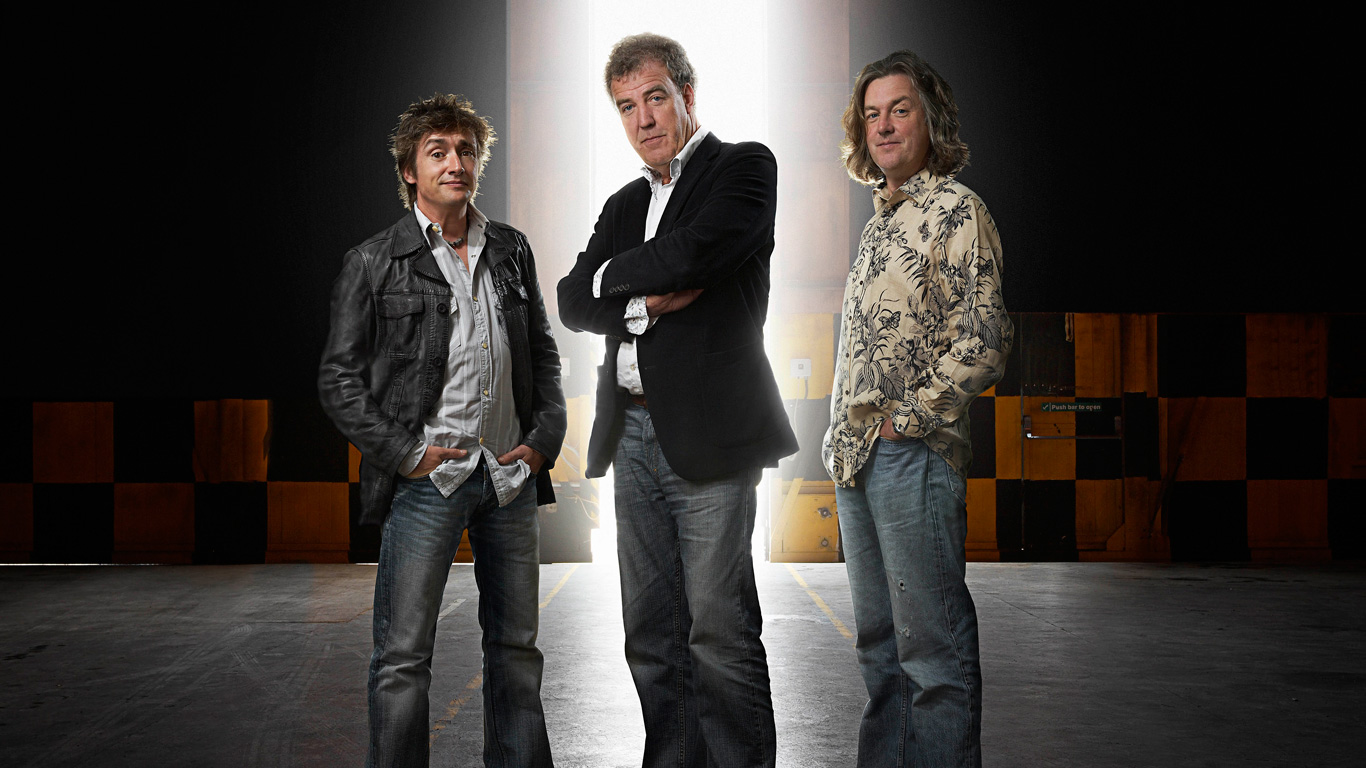
The programme will air in 2016 and will be produced by former Top Gear executive Andy Wilman.
The deal ends months of speculation about where the Top Gear trio would appear next – with Netflix, ITV and Sky all rumoured.
It’s not known how much the deal has cost Amazon – which is expected to show the new programme through its Amazon Prime service – but it’s thought the Top Gear threesome will be given free reign.
Amazon tweeted that it had signed the trio up for three series of the new car show, which won’t be called Top Gear or feature the Stig.
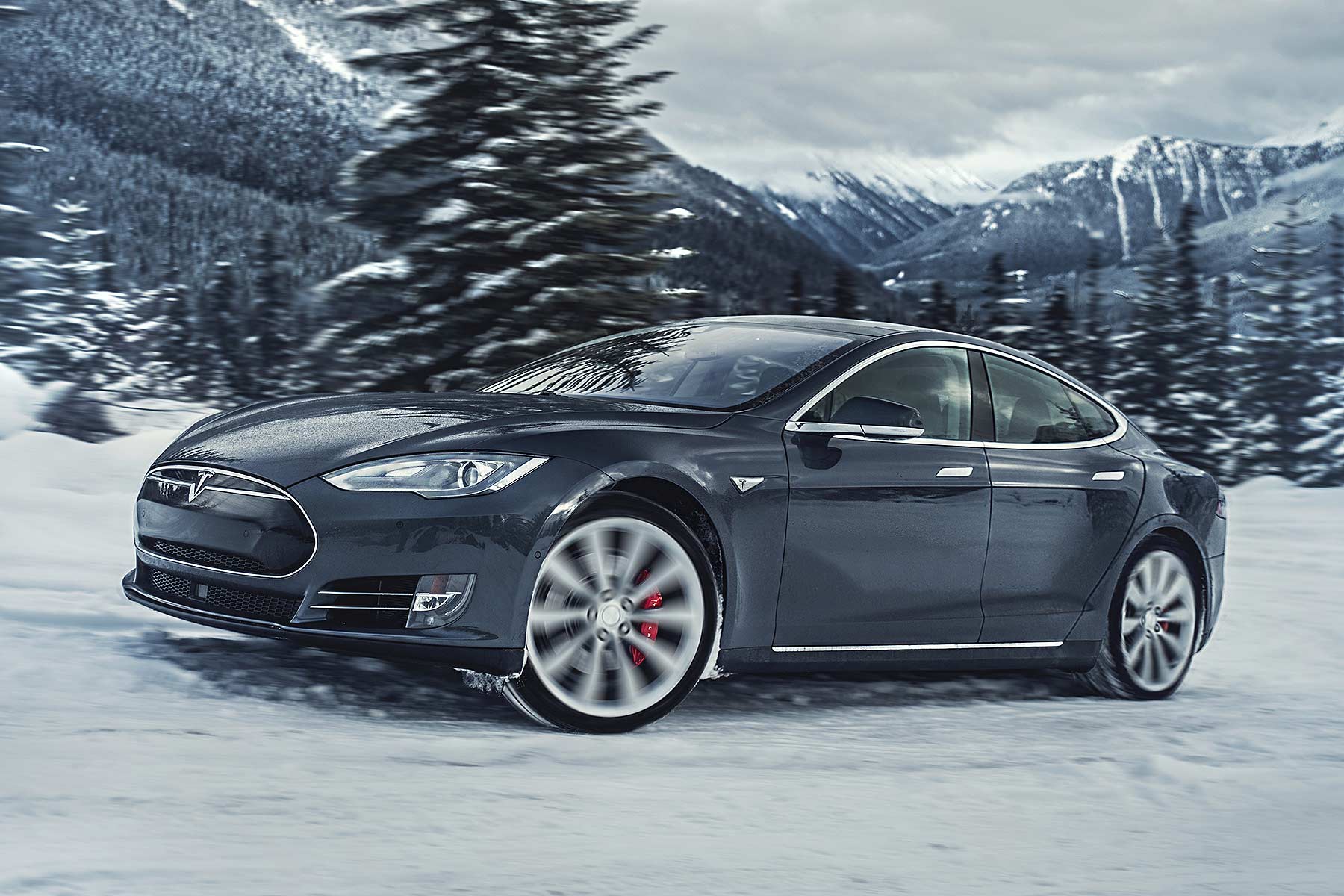
Tesla is to launch an upgraded version of its Model S electric car – capable of 0-60mph in just 2.8 seconds.
This will make it the fastest-accelerating car in the world, claimed the U.S. EV firm (later revised to ‘world’s fastest Model S’)… and the function that delivers this intense acceleration is, brilliantly, called ‘Ludicrous mode’.
Tesla CEO Elon Musk revealed the news in a conference call, as part of a series of updates for the Model S executive car, including a price drop for the regular Model S, plus a more powerful 90KWh battery option.
The 90KWh Model S will boast a range further extended by 5%, says Tesla.
But it’s the ludicrous acceleration of the enhanced Model S P85D that’s grabbing the headlines. And we thought the itself-recently-enhanced all-wheel-drive P85D version was already fast: that does 0-60mph in 3.1 seconds (provided you had the ‘Insane mode’ selected…).
Not fast enough for Musk, who described the acceleration of the Ludicrous mode Model S as “faster than falling”.
Generating 1.1G of acceleration force, he said “it’s like having your own private roller coaster”.
Apparently, engineering changes over the regular P85D are not huge – although Tesla has had to design a new fuse to cope with the ‘ludicrous’ rate of electricity flowing through it.
Keen to buy a Tesla Model S with Ludicrous mode? It’ll cost you $10,000 over the P85D – or, if you own one of those cars, Tesla will upgrade it for $5,000.
Sounds to us like not a lot for what now becomes, according to Tesla, even more easily the world’s fastest-accelerating EV…
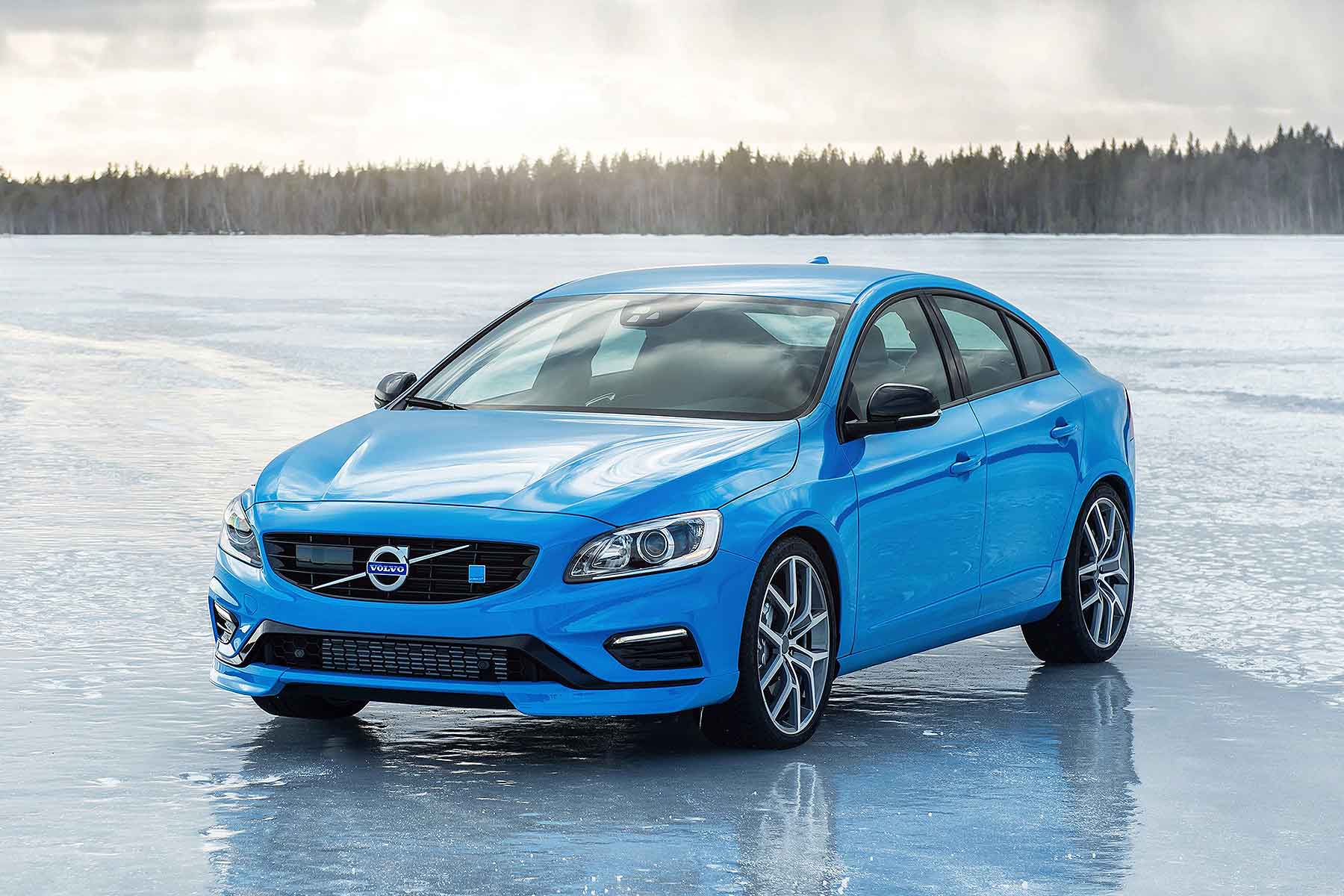
Volvo has bought the Swedish high performance car company Polestar and will now officially use it on high performance factory-built Volvo Polestar models.
Polestar and Volvo already collaborate on bespoke aftermarket performance versions of cars such as the V60 and S60: now, the brand will become a fully integrated part of future model planning.
It means Volvo now has a ready-made performance brand rival to BMW M and Mercedes-AMG.
The Geely-owned Swedish car company has bold aims for Volvo Polestar vehicles, too: it wants to double sales in the medium term from today’s 750 cars, as well as enhancing the aftermarket Polestar performance kits already sold through Volvo dealers (it’s a ready-made alternative to BMW M Performance).
Volvo Polestar: plug-in hybrid performance
Volvo Polestar aims to focus on plug-in hybrid technology to deliver interesting future performance cars, reveals the firm. Already the largest manufacturer of PHEVs in Europe, Volvo reckons its ‘twin engine’ electrification tech will create powerful performance cars that are also environmentally friendly.
The firm has also earlier revealed a 450hp 2.0-litre tri-boost engine concept that would give it a ready-made rival to the BMW M3 Saloon and M4 Coupe…
“Driving a Volvo Polestar is a special experience,” said Håkan Samuelsson, president and chief executive of Volvo Cars.
“We have decided to bring this experience to more Volvo drivers, placing the full resources of Volvo behind the development of Polestar as the model name for our high performance cars.”
All Polestar employees will now become Volvo employees under the deal, completed for an undisclosed sum.
Polestar racing to continue – but be renamed
The Polestar racing team will remain under founder Christian Dahl’s creation – and it will be renamed.
“We are extremely satisfied with the way the performance business with Volvo has developed,” said Dahl.
“But we are a racing team first and foremost. This is an opportunity to return our full attention to our core business – to develop and race Volvo cars.”
Jeremy Clarkson has driven his last ever lap of the Top Gear test track after raising over £100,000 for charity to do it.
But the question is, which car did he do it in?
The former Top Gear presenter posted a picture to his 5.3 million followers on Twitter, of him standing next to three supercars and asking which he should do it in.
The three choices were:
Mercedes-AMG GT
LaFerrari
Ferrari 488 GTB
More than 11,000 retweets and 26,000 favourites later, the debate still rages on.
Clarkson has yet to reveal which car he actually chose, but did report after the drive that he was a “bit sad leaving the place for the final time”.
There were two good things about the last lap though, he added: “It raised a load of cash for a good cause.
“And I did the mother****** of all tail slides through Chicago.”
Racing driver Marino Franchitti and Pink Floyd drummer Nick Mason were also there, it was later revealed: Clarkson also drove them around the Top Gear test track before undertaking his final lap.