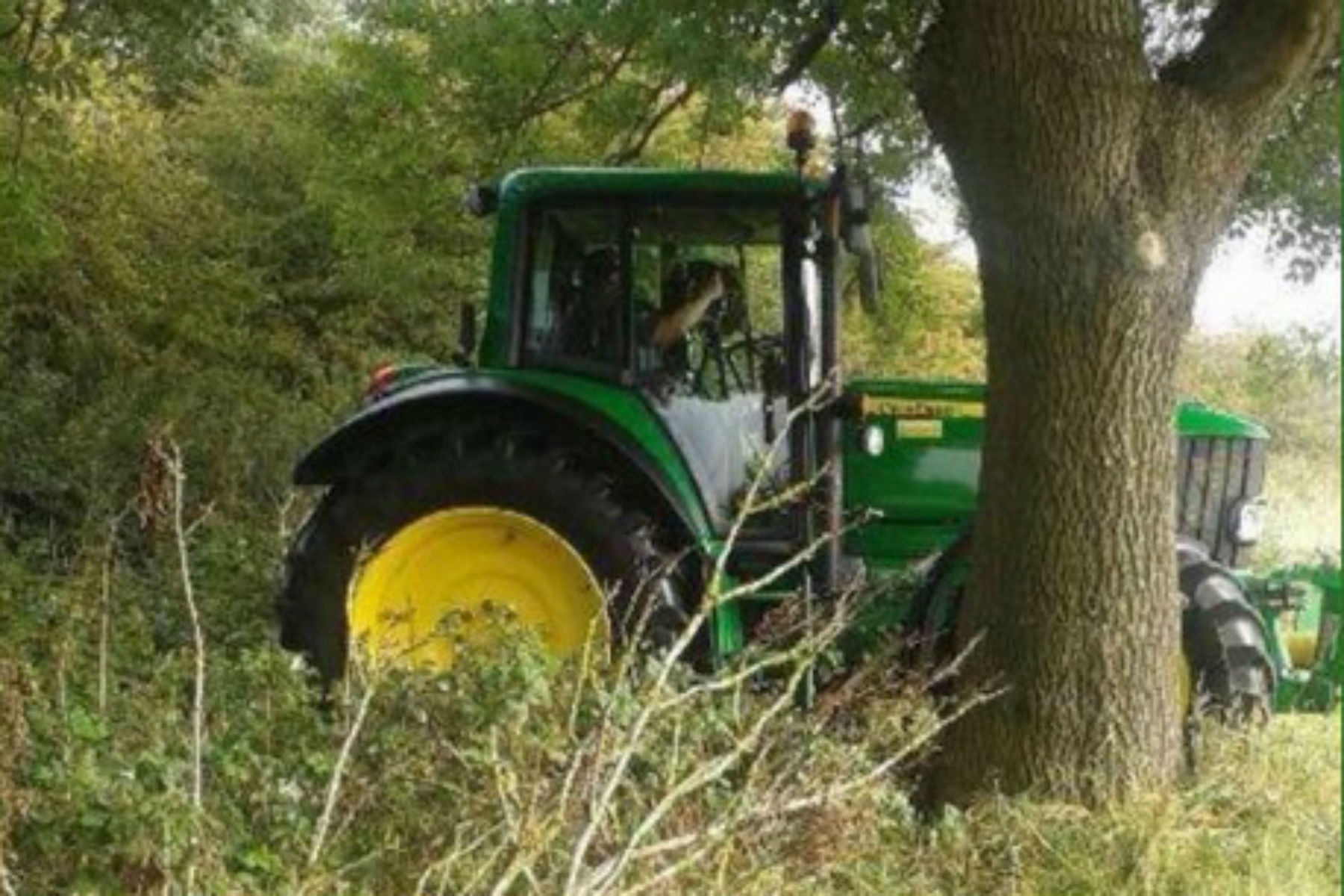
Humberside Police has admitted to hiding cameras in farm vehicles in a bid to catch speeding bikers on rural roads in East Yorkshire.
This is despite advice from the Government that ‘vehicles from which mobile speed cameras can be deployed should be liveried and clearly identifiable as an enforcement vehicle’.
A police spokesman confirmed to the Daily Mail that they were using tractors and other agricultural vehicles in a bid to cut down on fatal accidents involving motorbikes.
As part of Operation Achilles, the force has previously used marked bikes to catch speeders and reduce accident rates in the area.
But it decided that it’d prove cheaper to buy a tractor and a horsebox to hide police officers with handheld speed guns.
Inspector Mark Hughes from Humberside Police Road Policing told the Mail: “At the moment Humberside Police are conducting Operation Kansas in the East Riding of Yorkshire.
“This operation runs alongside the well-established and much publicised Operation Achilles. It is concerned with “high-end” speeding offenders in East Riding, deploying speed cameras, which are located in a variety of stationary vehicles.
“Vehicles which are detected travelling at very high speeds are stopped further along the road and drivers/riders are spoken to and dealt with at the roadside.
“Although the majority of offenders are motorcycles, a number of cars are also dealt with on this operation. We regularly record speeds in the high 90s and over 100 mph, these being on country roads where the national speed limit of 60 mph is in force.”
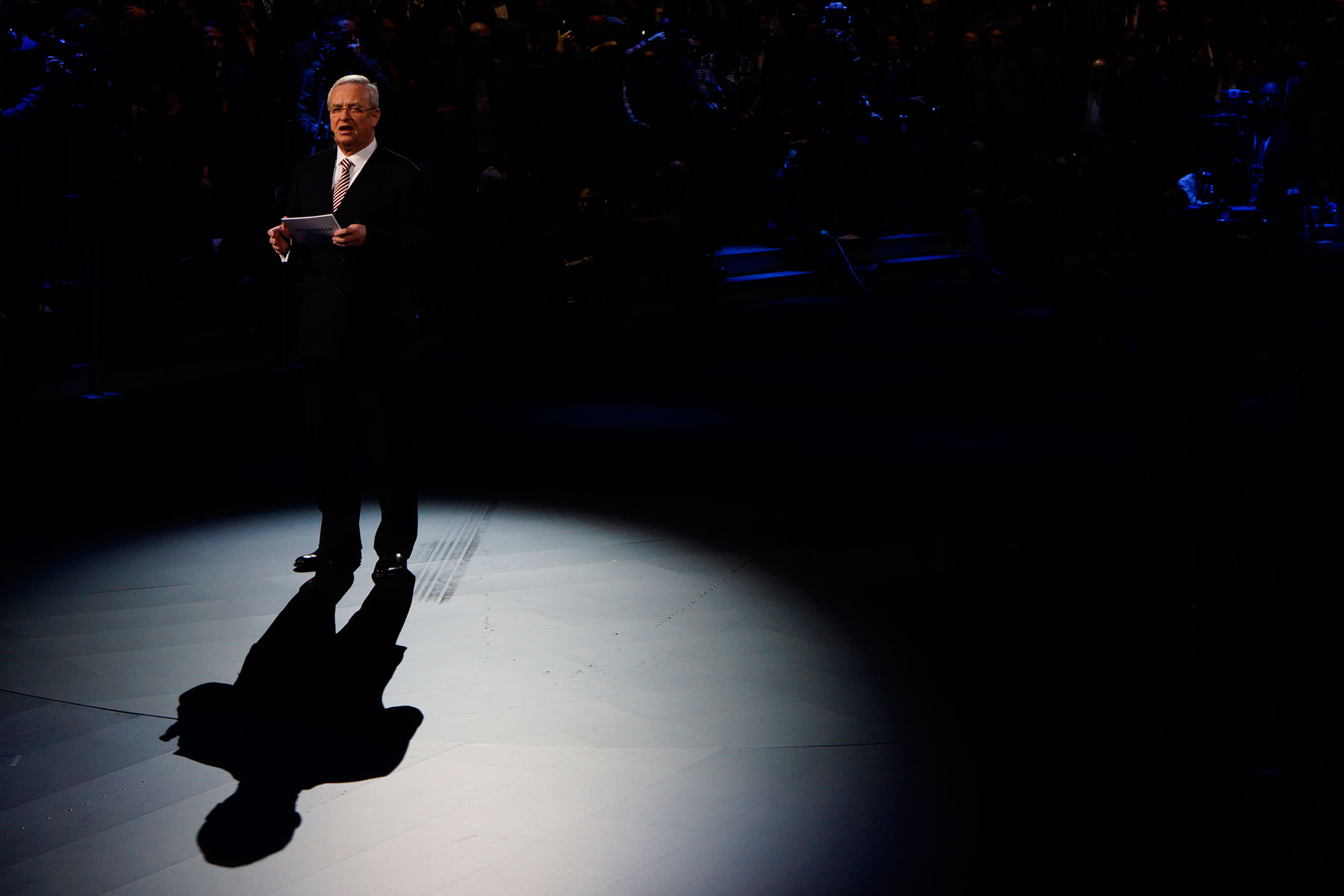
As expected, Martin Winterkorn has resigned from his position as Volkswagen CEO. The news comes following a meeting of the executive committee of Volkswagen’s supervisory board, in which Winterkorn was invited to present his case.
It is believed the group met on Tuesday evening, but it was widely predicted that Winterkorn would be forced to resign. According to Bloomberg, “what Winterkorn knew about a scheme intended to dupe regulators and consumers” would have been critical to the discussions. Winterkorn issued an official apology to consumers and Volkswagen workers, but initially refused to step down.
But with pressure mounting, Winterkorn and the board of Volkswagen were left with little option.
Fresh start for Volkswagen
“I am clearing the way for this fresh start with my resignation”, said Winterkorn.
But Winterkorn was quick to claim no wrong doing on his part, saying: “I am shocked by the events of the past few days. Stunned by the misconduct on such a scale possible in the Volkswagen Group.”
Winterkorn: Volkswagen will always be my life
Martin Winterkorn’s resignation statement, in full:
“I am shocked by the events of the past few days. Above all, I am stunned that misconduct on such a scale was possible in the Volkswagen Group.
As CEO I accept responsibility for the irregularities that have been found in diesel engines and have therefore requested the Supervisory Board to agree on terminating my function as CEO of the Volkswagen Group. I am doing this in the interests of the company even though I am not aware of any wrong doing on my part.
Volkswagen needs a fresh start – also in terms of personnel. I am clearing the way for this fresh start with my resignation.
I have always been driven by my desire to serve this company, especially our customers and employees. Volkswagen has been, is and will always be my life.
The process of clarification and transparency must continue. This is the only way to win back trust. I am convinced that the Volkswagen Group and its team will overcome this grave crisis.”
Fall-out set to continue
The fall-out from the emissions cheating scandal is expected to continue. Shares in the beleaguered Group fell by 17% on Monday, dropping a further 19.7% on Tuesday. The net result is one-third being wiped off the company’s value.
It is said that Volkswagen has hired US law firm Kirkland & Ellis to help deal with event. This is the same firm that handled the Deepwater Horizon investigation in 2010.
The Volkswagen board will discuss Winterkorn’s replacement on Friday and further changes in personnel are expected.
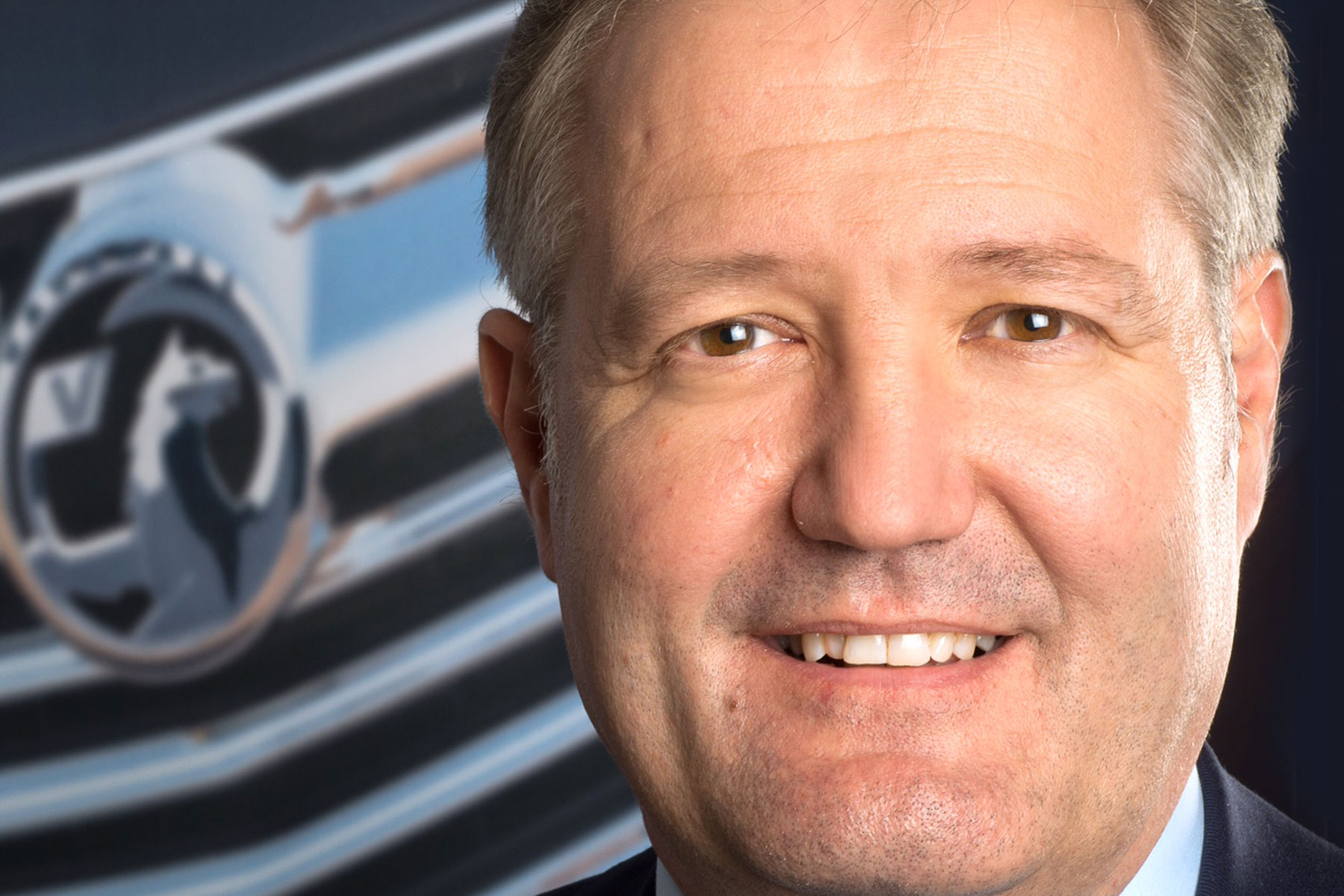
Tim Tozer has quit his position of chairman and managing director of Vauxhall Motors, with Rory Harvey his replacement. Tozer joined Vauxhall in February 2014, replacing Duncan Aldred, who moved to Detroit to become US vice president of Buick-GMC sales, service and marketing.
The surprise news comes during the week in which the all-new Astra is launched in the UK and off the back of an upbeat Frankfurt Motor Show, during which Tozer spoke of his high hopes for the new hatchback. Indeed, he even featured in the promotional video to support the Astra’s press launch in Liverpool.
Tozer has huge experience in the automotive industry, including a spell as CEO of Autobinck Holding in the Netherlands, president and CEO of Mitsubishi Motors Europe and managing director of Mazda UK. In a statement, Vauxhall said he would “pursue his career outside of General Motors”, although there’s no word on where he is moving to.
His replacement, Rory Harvey, moves across from Opel Europe, where he was executive director for sales. He will report to Peter Kuespert, vice president of sales and aftersales, who had this to say on the appointment: “Rory has a profound knowledge of the British car market, a wealth of experience within Vauxhall and Opel and excellent management qualities.
“We look forward to working with Rory on the implementation of our model offensive and building an even stronger Vauxhall brand. At the same time, I would like to thank Tim for the great commitment he showed towards our brand.”
Under Tim Tozer’s watch, Vauxhall has launched the fifth generation Corsa as well as bringing the OnStar service to the UK. He leaves as the Astra is receiving its most positive reviews for years.
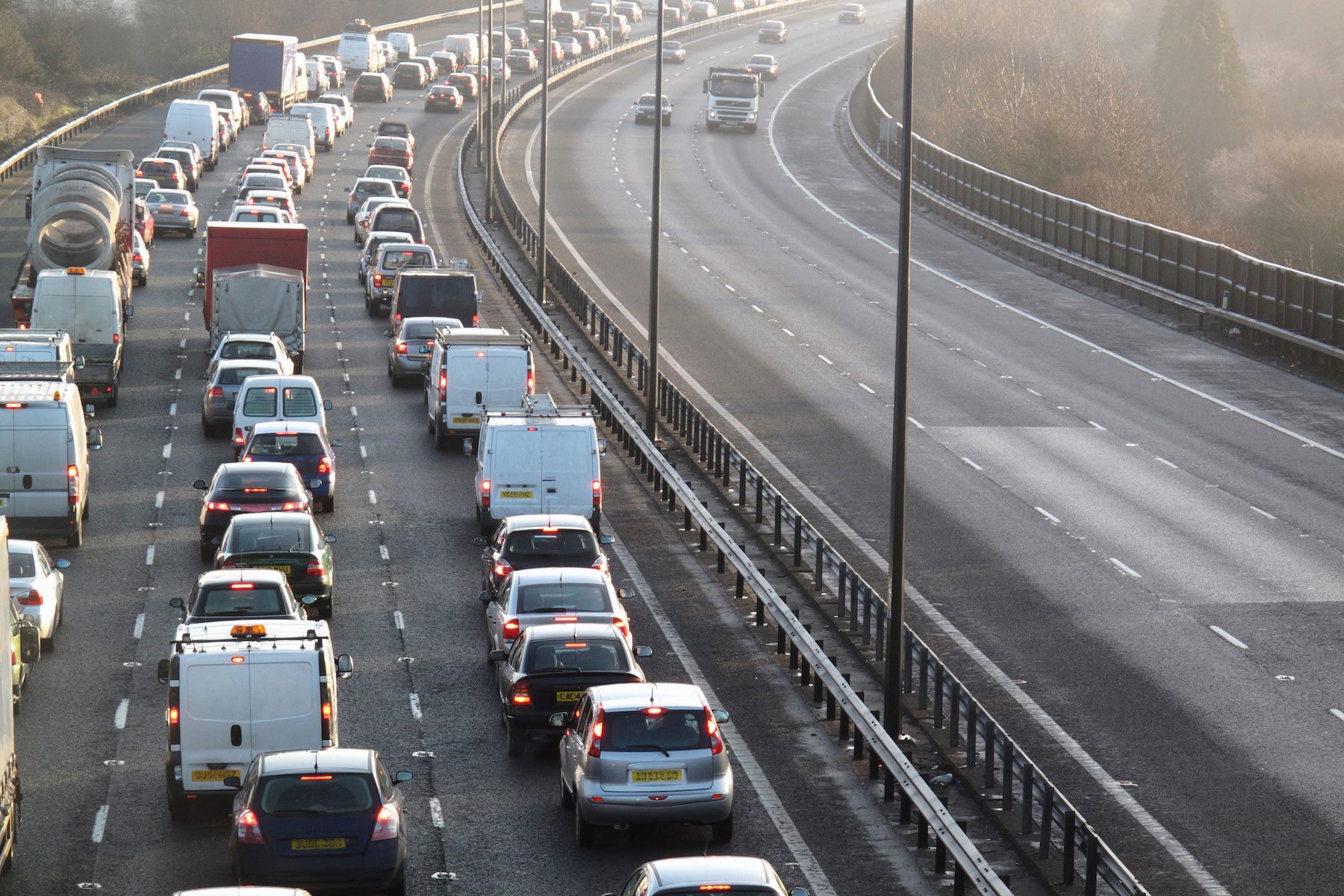
It’s the news the beleaguered motorist has been waiting for: an end to what feels like roadworks that go on for miles and miles. Highways England is considering proposals to limit the length of roadworks on motorways and A-roads to a maximum of between two and five miles, bringing some relief to commuters.
Government ministers are putting pressure on contractors to shorten the length of roadworks, with the Department for Transport (DfT) calling for “common sense decisions.” A spokesperson for the DfT said: “Our road investment strategy will deliver the biggest upgrade to Britain’s roads in a generation and secure our transport network for the long term.
“But as it is delivered we’ve got to respect the drivers who use our roads every day.
“That means taking common sense decisions to minimise frustrations wherever possible.”
Favourable, if sceptical response to news
Music to the ears of UK motorists? The response on Twitter has been largely favourable, although some are sceptical that the proposed changes will actually take place:
Motorway roadworks ‘should be limited to two miles’ https://t.co/4CaHXqMwq1 At last some common sense. Bet it’ll never happen tho.
Drivers who have to face the misery of the M3 on a daily basis will undoubtedly welcome the news. Work is currently underway to transform the section between junctions 2 and 4a into a smart motorway, complete with a 50mph limit along a 13.4-mile stretch of road. Construction started last autumn and isn’t expected to be complete until the winter of 2016.
A common sense step?
There are similar works taking place on the M1 and M6 motorways, with drivers resigned to the fact they will face delays to their journey.
Under the proposals, many of the current roadworks would need to be scaled back. The AA’s Edmund King called for more overnight works, with motorway roadworks “limited to 10 miles”, arguing that “more incentives” would encourage contractors to get the work finished on time.
Meanwhile, RAC chief engineer David Bizley, told Motoring Research: “The Government’s road investment strategy has promised motorists the biggest improvement to England’s major roads in a generation. However it is vital that this upgrade is delivered in a way that does not cause unnecessary inconvenience.
“The sight of mile after mile of traffic cones and reduced speed limits, only for work to be taking place on a single small stretch of road, is a source of frustration for motorists. A move to complete major roadworks in phases, which would see motorists encounter shorter ‘bursts’ of temporary speed limits rather than a single one that runs for a long distance, will be seen as a common sense step by drivers.”
£15 billion ‘road revolution’
The government has committed to spend £15 billion before the end of the decade, as part of a ‘roads revolution’ across the country. Planned projects include a smart motorway between junctions 3 and 12 on the M4, along with a similar scheme between junctions 4a and 6 on the M5 in the Midlands. Needless to say, the new proposals will have an impact on the proposed works.
There are currently no timescales attached to the proposals and no guarantee that the limits will be enforced. We’ll bring you more news when we have it.
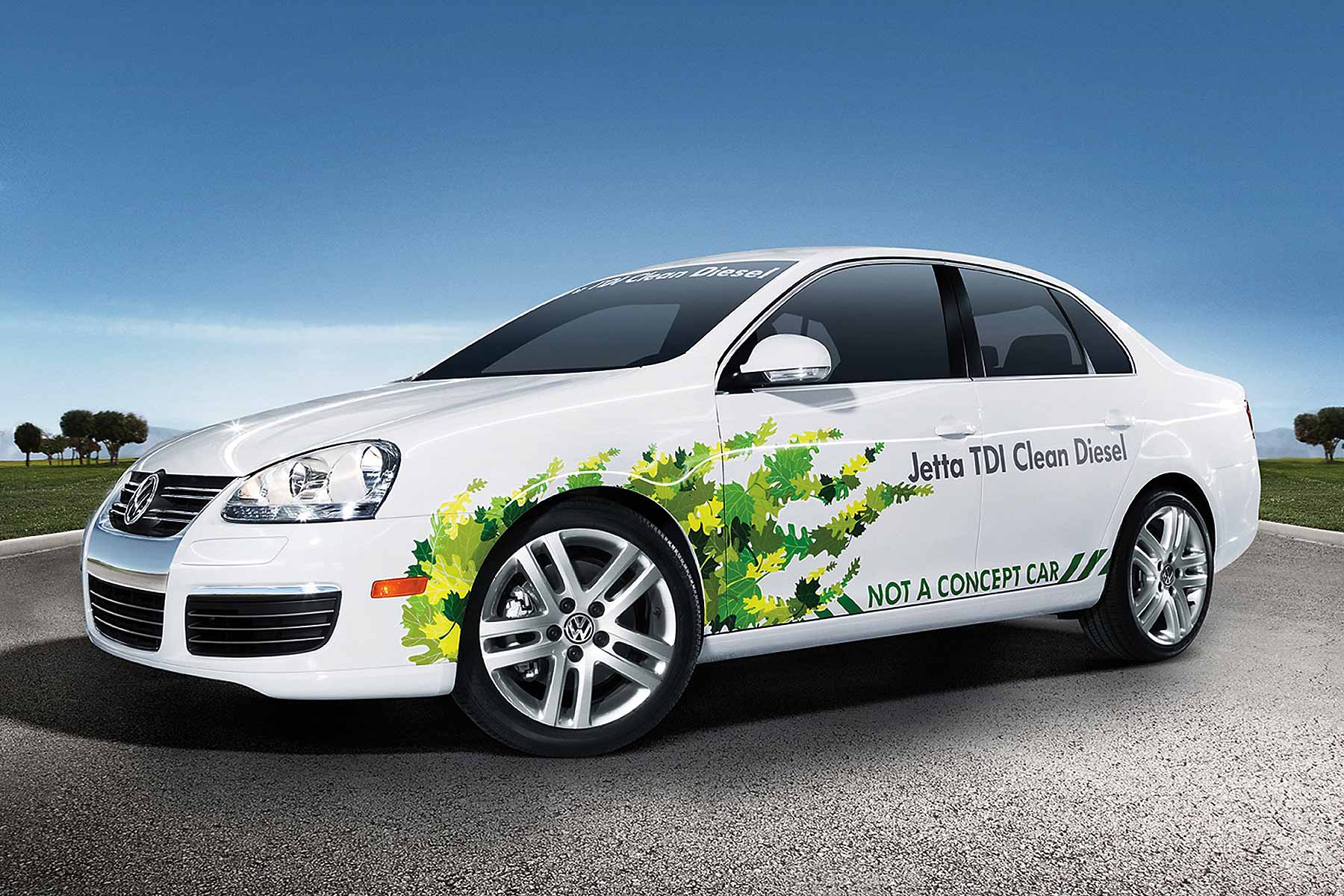
Volkswagen and Audi diesel cars built between 2009-2015 have violated US air pollution regulations, alleges the Environmental Protection Agency – through the use of a ‘defeat device’ that turns on full emissions controls only during official testing.
It means cars in normal use are emitting nitrogen oxides – NOx – at up to 40 times the mandatory standard.
Volkswagen may now face civil penalties and other fines for the use of the defeat device, which is said to have been used on almost 500,000 Volkswagens and Audis since 2008.
Cars affected include:
Volkswagen Beetle (2009-2015)
Volkswagen Golf (2009-2005)
Volkswagen Jetta (2009-2015)
Volkswagen Passat (2014-2015)
Audi A3 (2009-2015)
CEO Winterkorn ‘deeply sorry’
In an unusual move, Volkswagen AG CEO Dr. Martin Winterkorn has already responded, saying over the weekend that “I personally am deeply sorry that we have broken the trust of our customers and the public.
“We will cooperate fully with the responsible agencies, with transparency and urgency, to clearly, openly and completely establish all of the facts of this case.
“We do not and will not tolerate violations of any kind of our internal rules or of the law.”
The firm has now ordered an external investigation and Winterkorn says it is now his and his Board of Management’s top priority.
If found guilty, Volkswagen could face breathtaking fines of up to $18 billion (£11.5 billion): that’s because of possible fines of $37,500 for every one of the 482,000 diesels sold with the emissions defeat device fitted.
Volkswagen share price drops 13%
As the world woke up to the news this week, shares in Volkswagen went into free-fall, suffering their most dramatic plunge in almost six years. Reuters is reporting that Volkswagen shares fell 13% to 140.95 euros by 0207 EDT, ‘the biggest one-day drop since November 2009.’ This follows a 4.5% fall in New York, immediately after the announcement by the US Environmental Protection Agency.
Following the unexpected departure of Ferdinand Piëch, 2015 is shaping up to be a year to forget for Volkswagen. This latest allegation catapults the company from the business and automotive press, to the consumer news headlines. A story to watch.
Jaguar F-Pace programme director Andy Whyman believes the new SUV will be as transformational for the firm as the Range Rover Evoque has been for Land Rover.
“The ingredients are there,” he said at the 2015 Frankfurt Motor Show. “The vision has been clear from the start and it’s a logical new car for us in a fast-growing segment.”
The Evoque heralded the start of the current boom in Land Rover sales and even today, five years after launch, the factory is still operating around the clock to build more than 100,000 units a year.
Jaguar, which last year sold 81,570 cars, feels the F-Pace will deliver a proportionally similar lift – and will mean the entire brand should no longer outsold by the smash-hit Range Rover Evoque.
No crossover with Land Rover
Whyman says there was never any concern that the first-ever Jaguar SUV would step on the toes of Land Rover.
“Both brands are very different and are positioned separately: our research shows there’s likely to be little cross-shopping between the F-Pace and Land Rover models.
“It’s first and foremost a Jaguar: it handles like a Jaguar, has sports car proportions and, while it can tackle mixed-road conditions, is a road-biased vehicle.
“It’s obvious to customers that the Jaguar and Land Rover brands are different: we don’t expect Range Rover Sport customers to start looking at F-Pace.”
Whyman also said the firm is comfortable with its first SUV. “It is natural to us – we don’t think of it as an SUV: it ‘feels’ like a Jaguar.”
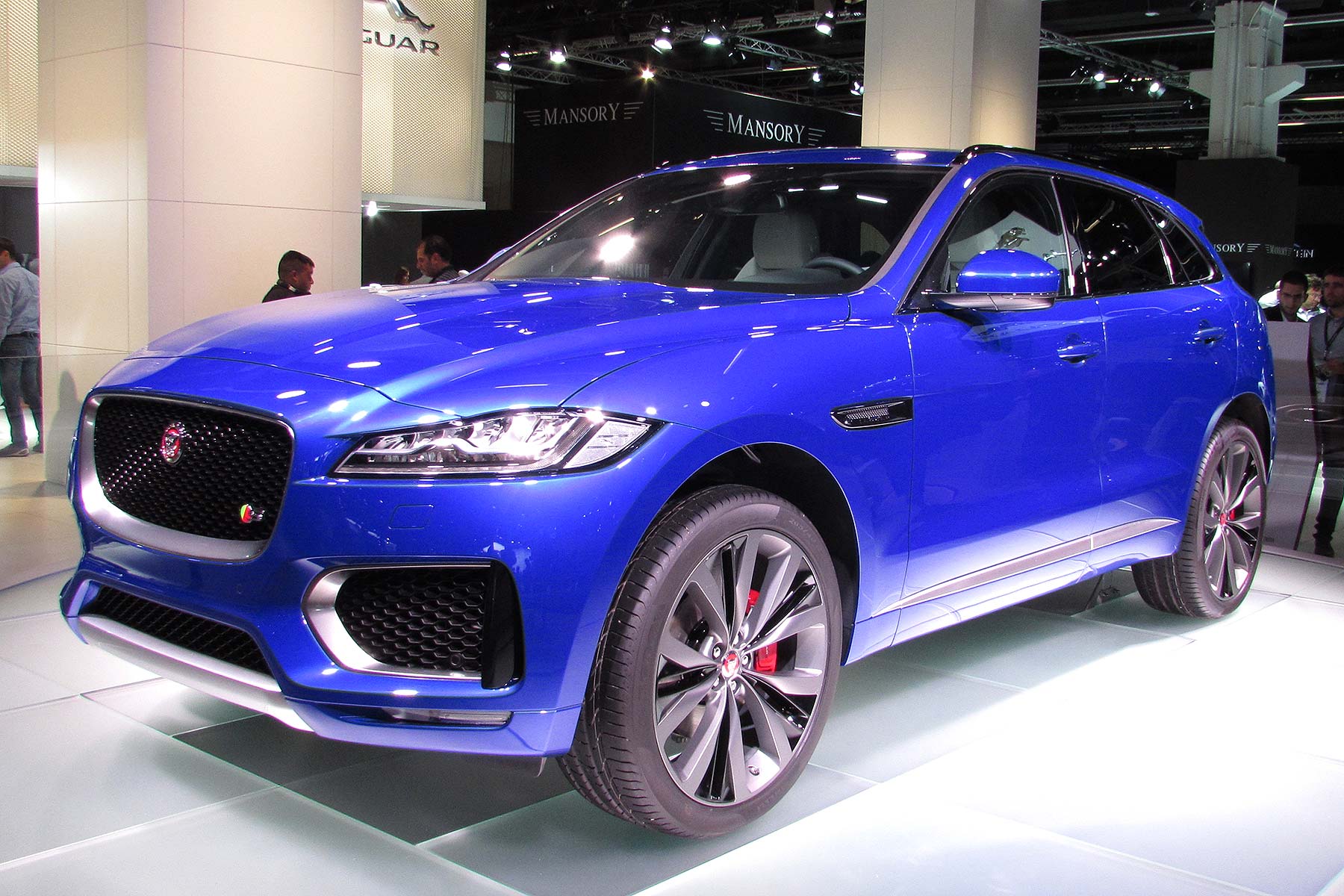
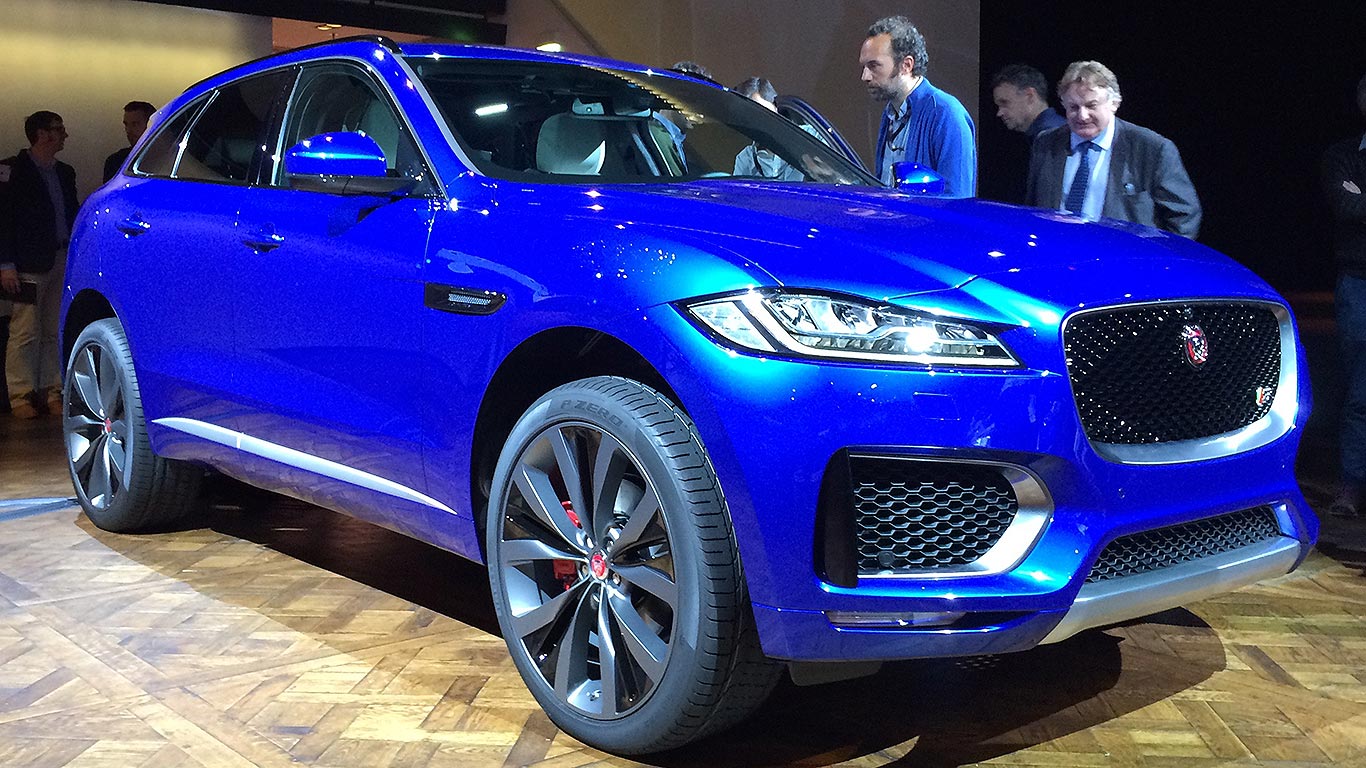
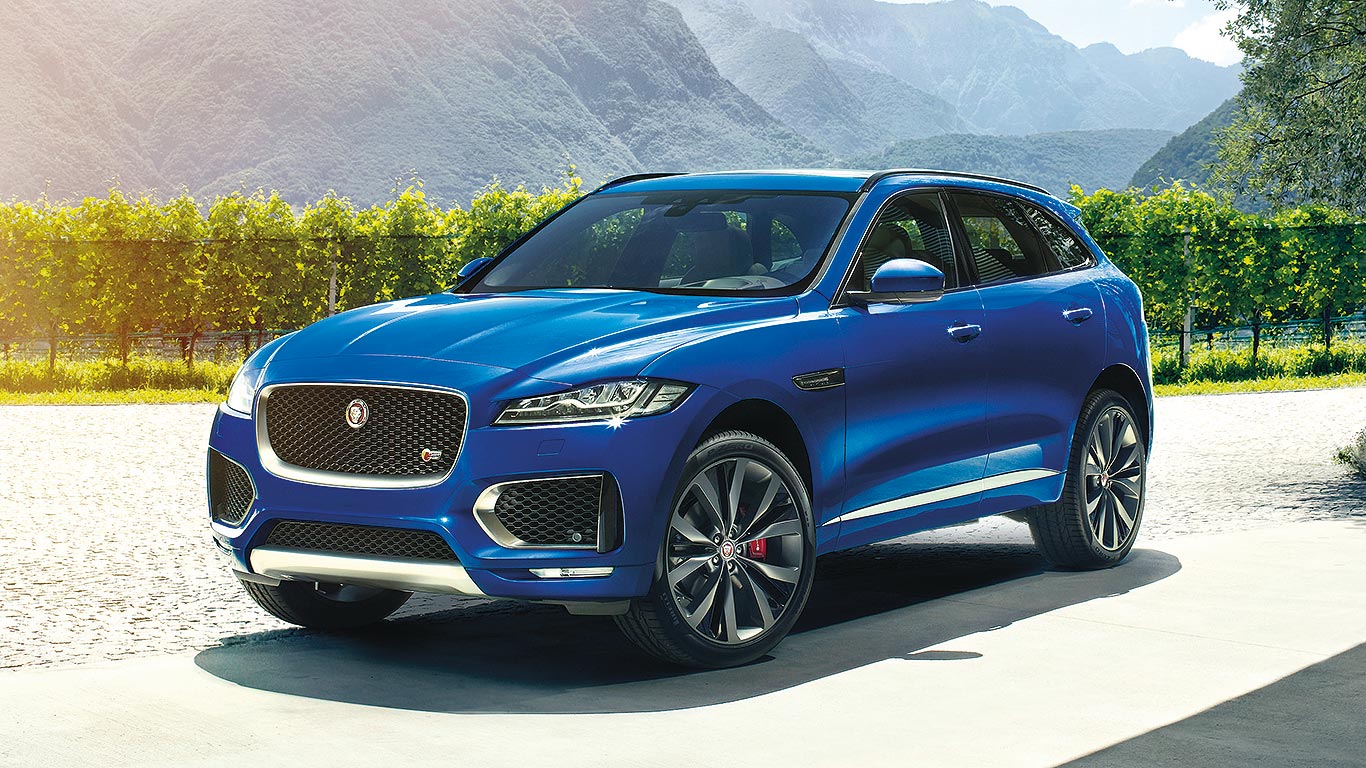
Jaguar has revealed the new F-Pace SUV on the eve of the 2015 Frankfurt Motor Show. Its first 4×4, the sporty-looking new ‘performance crossover’ goes on sale in 2016 priced from £34,170.
Jaguar F-Pace SUV revealed in World Record stunt
The new Jaguar F-Pace is a sporty five-seat crossover that has one car in its sights – the Porsche Macan. Jaguar says the standard-setting Porsche is the best car in this sector for driving dynamics – and is the one it’s focused on beating…
Built in Britain at Jaguar’s Solihull plant, the F-Pace is targeted with bringing a whole new sector of customer to the Jaguar brand. 4 in 5 buyers will be new to the brand and, of all the firm’s new cars, it’s the F-Pace that will “forever change perceptions of the brand”.
The idea of designing an SUV, admits Jaguar design director Ian Callum, was something “I never dreamt of doing”. Jaguar, after all, owns Land Rover, which only makes… SUVs. However, the market now demands SUVs in all shapes and guises – so Jaguar had to respond.
The Jaguar F-Pace is thus designed as a performance crossover SUV, one that takes direct influences from the Jaguar F-Pace (hence the name).
Unlike Land Rovers, you’ll rarely see F-Pace off-road; but you will, hopes the brand, see them in high streets across the world – the medium-sized SUV sector the F-Pace competes in is set to grow 50% between now and 2020…
F-Pace: concept car to production
The Jaguar F-Pace is the production version of Jaguar’s stunning C-X17 concept car, revealed two years ago at the 2013 Frankfurt Motor Show. This was the first clear signal that the brand wanted to make an SUV…
Since C-X17, Jaguar’s been working hard to productionise it, says Callum. “Every millimetre has changed since the concept – but not so you’d notice.” Can you tell the difference?
“The F-Pace is true to the spirit of Jaguar,” says designer Callum. “It has elegance, a sense of speed and motion that most SUVs don’t have.” Size-wise, it’s similar to the Porsche Macan, and will also compete with the Audi Q5 and BMW X3.
Callum uses descriptions such as strong proportions, sweeping rooflines and strong haunches to describe the F-Pace. “I could be talking about the F-Type, and this is no coincidence – there’s a lot of that car in the F-Pace.”
The tail lights are similar to the Jaguar F-Pace – which, said Callum, are influenced by the E-Type. Most won’t realise this but “I know where it came from,” he said…
It’s a five-seat SUV – you wouldn’t be able to get that sweeping roofline if it was a seven-seater. Jaguar has no plans to make a seven-seat version: it’ll leave that market to Land Rover.
Callum’s given the F-Pace a simple look inside, in contrast to the ‘fussy’ interiors of some rivals. Once cool feature is the illuminated smartphone holders on the centre console – after all, says Callum, who wants to store smartphones in cupholders…
Jaguar says the F-Pace has the world’s most advanced infotainment system, with more computer processing power than a Boeing 777. It’s called InControl Touch Pro and uses a 100GB SSD, Ethernet networking and a quad core processor.
The F-Pace even debuts a new piece of wearable Jaguar technology – the Activity Key. This is a waterproof band you can wear when swimming, that unlocks the car instead of a key. It’s a Jaguar first.
It’s built on Jaguar’s aluminium-intensive architecture also used by the new XE and XF. It has double wishbone front suspension and Integral Link rear suspension that are sold in three grades – two of them the same as on the sporty F-Type.
Most F-Pace will likely be sold with the 2.0-litre turbodiesel engine, offered in rear-wheel drive or four-wheel drive guise. It also offers a V6 turbo diesel and the two V6 engines taken straight from the F-Pace – it currently thus produces up to 380hp, for 0-60mph in 5.1 seconds. Watch out, Macan…
The Jaguar F-Pace will cost from £34,170: that will buy you a 180hp 2.0-litre Ingenium turbodiesel with a manual gearbox and rear-wheel drive.
Deliveries of the Jaguar F-Pace will begin in 2016, although the firm says customers can head over to its website right now to start configurating the car.
The F-Pace will be sold in familiar Jaguar trim lines: Prestige (from £34,170), R-Sport (from £36,670), Portfolio (from £39,170) and the sporty S (from £51,450).
Jaguar has an extra range-topping model for the launch of the F-Pace, called First Edition. This has extras such as mighty 22-inch alloys, Windsor leather seats, LED headlights and a panoramic roof. It costs from £65,275.
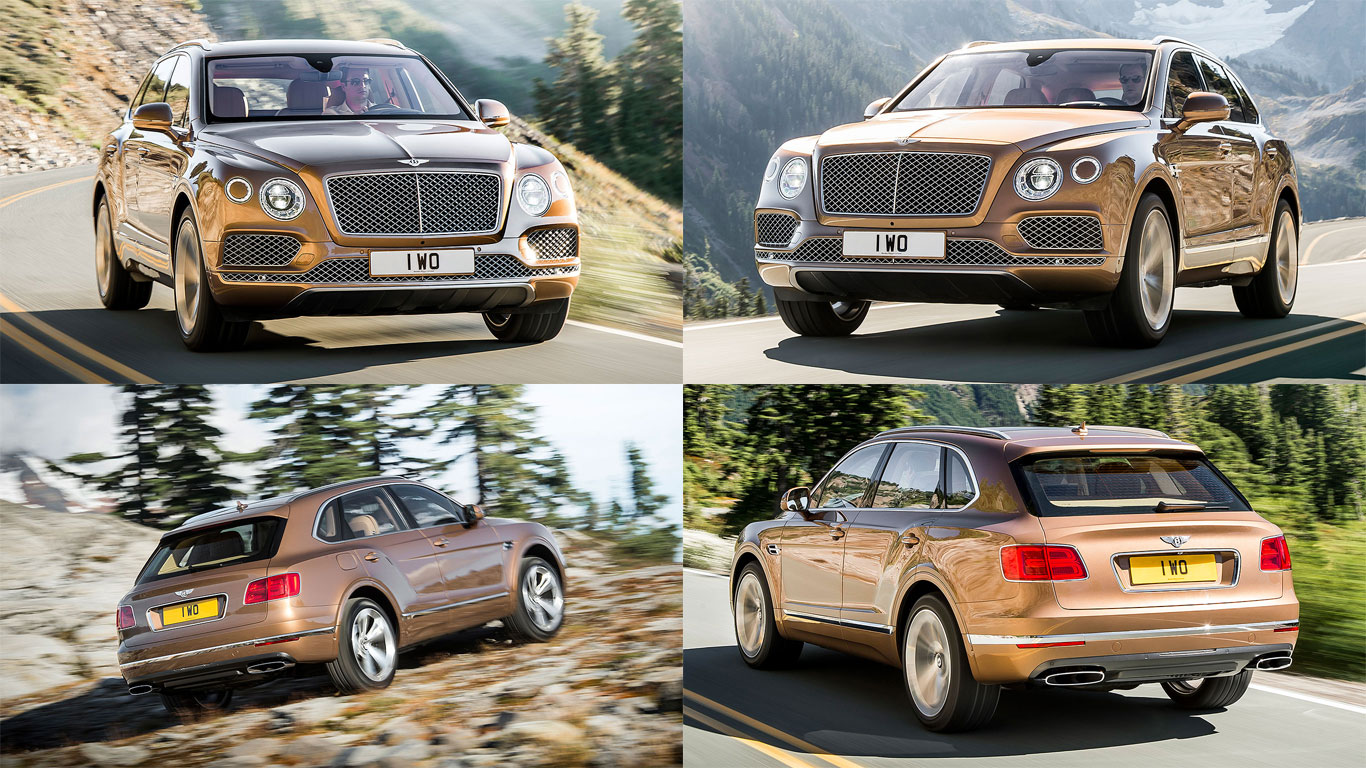
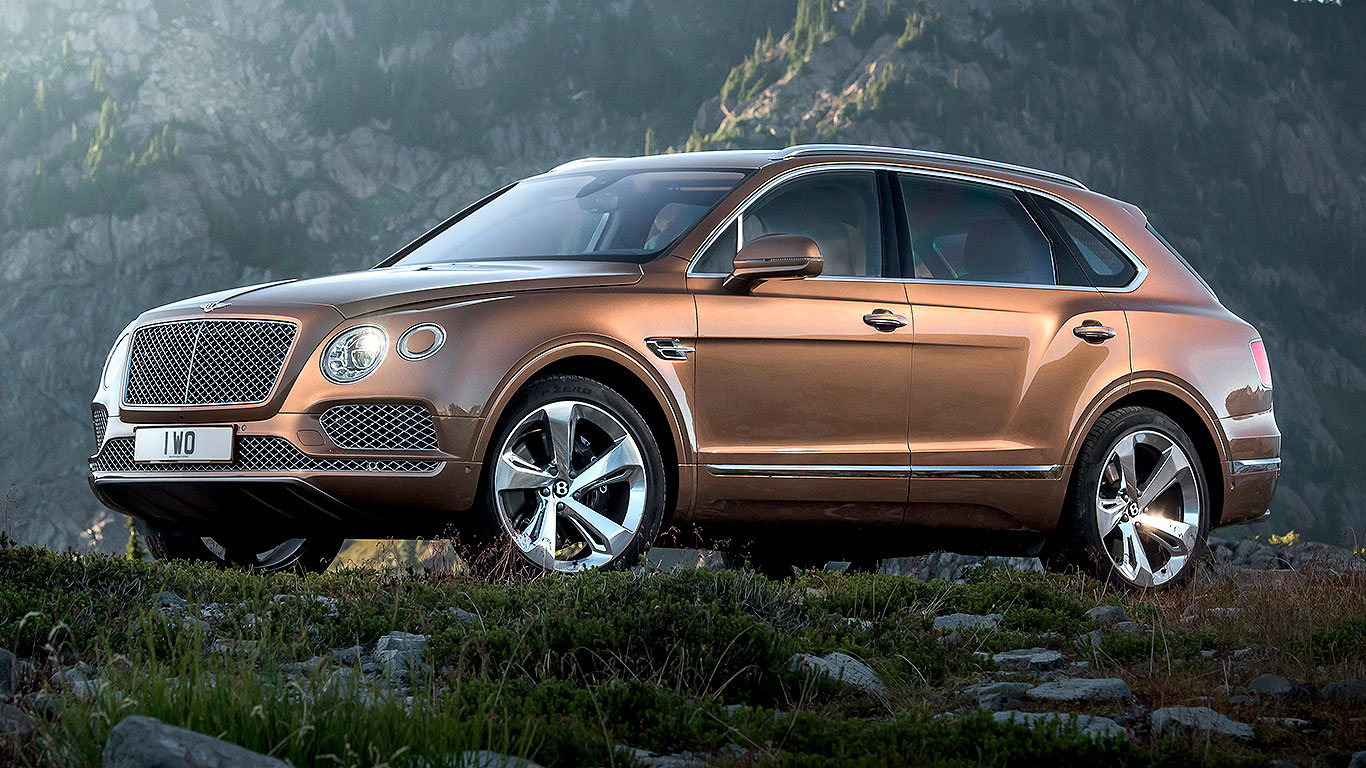
The new Bentley Bentayga SUV has been revealed ahead of its public debut at the 2015 Frankfurt Motor Show next week.
And you can come out from behind the sofa now, because the Bentley Bentayga isn’t as scary as the EXP 9 F concept led us to believe. Still has a silly name, mind.
Bentley isn’t afraid to roll out a number of superlatives and Top Trump style claims to support the launch of the new Bentayga. Are you sitting down?
OK, well according to Bentley, the Bentayga is ‘the fastest, most powerful, most luxurious and most exclusive SUV in the world’, making it the SUV to beat all SUVs, right?
Bentley ventured across five continents during the development of the Bentayga, claiming to have undertaken the most exhaustive programme in the brand’s history. Dirt and gravel in South Africa, the dunes in Dubai, mud in Crewe and the freezing temperatures of the North Cape, the Bentayga has been there, done that. Not to mention 400 laps of the Nürburgring.
From EXP 9 F to Bentayga
Bentley’s first SUV has come a long way since its debut as the EXP 9 F concept of 2012. It’s fair to say the concept didn’t receive unanimous support at the Geneva Motor Show.
Back then, Bentley spoke of positioning the SUV above the likes of the Range Rover, Porsche Cayenne Turbo S and Audi Q7, charting new territory for a car of this ilk.
At the time, the idea of a Bentley SUV hadn’t been granted full board approval, but given the popularity of SUVs, it’s no surprise to see the EXP 9 F becoming a reality.
The Bentley Bentayga is powered by an all-new 6.0-litre twin-turbocharged W12 engine developing an almost ridiculous 599hp at 5,250-6,000rpm.
And we haven’t even mentioned the 664lb ft of torque between 1,250 and 4,500rpm. The Bentayga has just upped the ante in the powerful SUV stakes.
All of which means the Bentley Bentayga has a top speed of 187mph and a 0-62mph time of 4.1 seconds. You may not like the idea of a super SUV, but these figures are astonishing.
Amazingly, the Bentayga emits ‘just’ 292g/km CO2, in part thanks to Bentley’s Variable Displacement system, allowing the engine to run as a six-cylinder.
Release the throttle in gears 5th to 8th and the Bentayga will open the torque convertor, dropping the engine to idle and allowing the SUV to coast, thus saving fuel.
At launch, the W12 is the only engine available, but Bentley will offer diesel and hybrid variants in the future. It’s unlikely that these will offer the same jaw dropping performance figures.
Bentley claims the Bentayga offers the widest range of on- and off-road drive settings of any vehicle. It’s all thanks to the Drive Dynamic Mode and optional Responsive Off-Road Setting.
Eight driving modes are available, with the Driver Information Panel displaying information on pitch, roll, wheel articulation, steering angle, compass bearing and altitude.
As you’d expect, the Bentley Bentayga is loaded with the latest array of safety and support mechanisms, including adaptive cruise control, park assist, traffic sign recognition and night vision.
None of this will shield you from the attention you’ll almost certainly receive when driving the Bentayga. It’s certainly better looking than the concept, but it’s hardly subtle.
At the front you’ll find swathes of in-your-face mesh and what Bentley calls ‘floating’ all-LED headlamps. Beauty, they say, is in the eye of the beholder. You can make up your own mind.
The rear end is far less offensive with lights that feature B-shaped illumination graphics. The large Bentley badge is a helpful reminder of what has just overtaken you.
But if the exterior styling is up for debate, there can be no doubts about the interior. According to Bentley, it’s ‘the world’s finest cabin’, so read on to find out why.
The dashboard has been inspired by Bentley’s ‘wing’ design and can be finished in one of seven different veneers. Oh, and did we mention the 15 different interior hides?
Highlights include the Bentley knurling on the drive mode selector, gear knob, bullseye vents and organ pulls. One can also select from 15 different carpets.
The front seats offer 22-way adjustment, enhanced with six-programme massage function, seat heating and ventilation. Cliche alert: this looks a fine place to be.
Almost as good as the rear seats, which can be ordered in either two- or three-seat configuration. Opt for the former and you’ll be treated to 18 different adjustments, massage, ventilation and footrests.
Open the hands-free tailgate to reveal 430 litres of boot space (590 with the load cover retracted) and a fixed back, dividing the cabin from the boot.
Should sir or madam wish, the boot can be ordered with a folding event seat, presenting a viewing platform for use at the polo or cross country eventing.
At launch, the Bentley Bentayga is available with an integrated Mulliner hamper set, complete with fridge, fine china cutlery, crockery and crystal glass. You can also order a Mulliner Tourbillon by Breitling clock.
Deliveries will commence in early 2016, by which time Bentley will have released prices for the Bentayga. Don’t expect much change from £150,000.
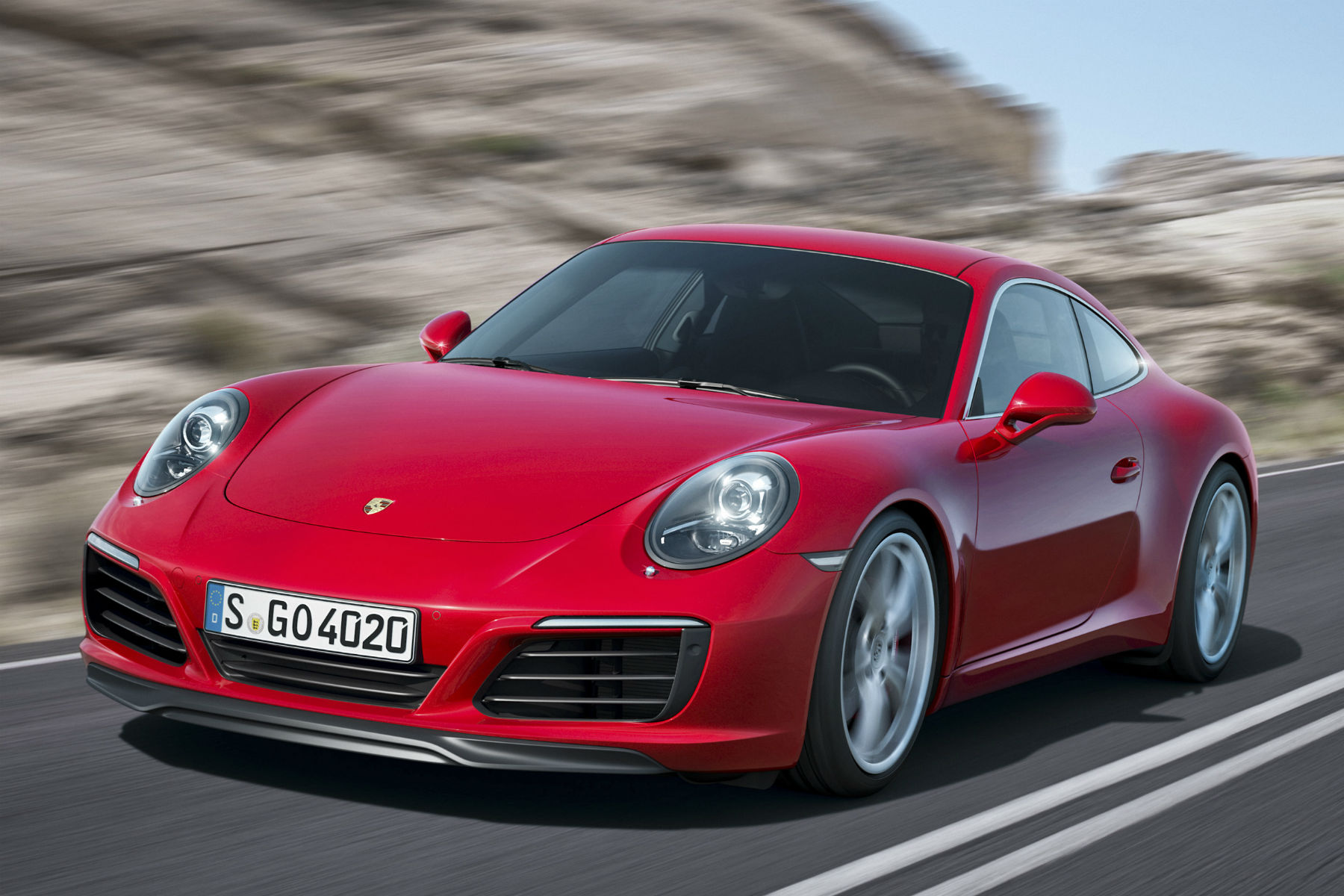
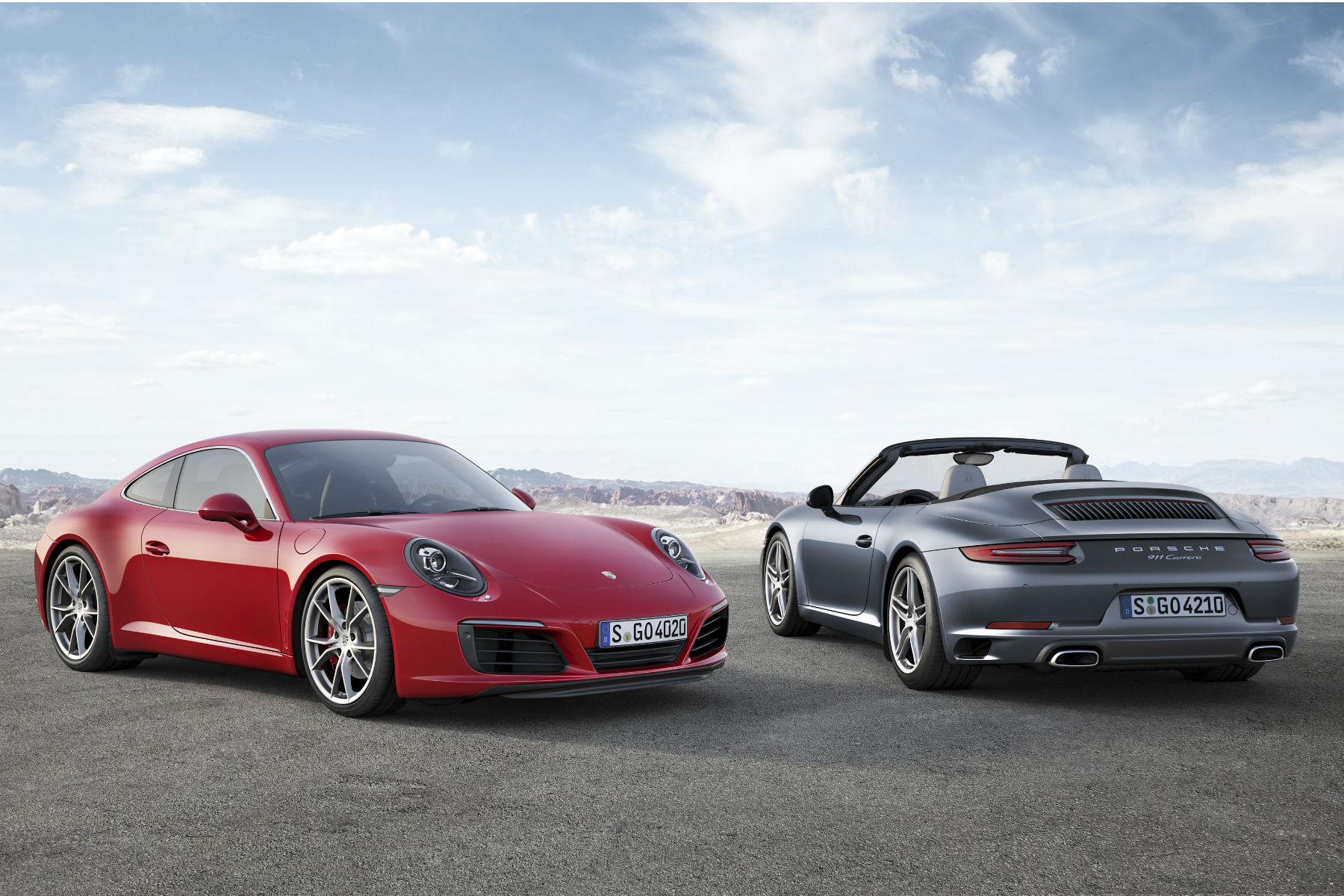
Porsche has revealed a mid-life facelift for its 911 Carrera and Carrera S models – with the biggest change being a new, twin-turbocharged 3.0-litre flat-six engine.
It’s the first time entry-level 911s have used forced-induction in the car’s 52-year lifespan, meaning it’s a controversial (if predictable) move for the carmaker.
Put your prejudices to one side, however, and you’ll be treated to the fastest 911 Carrera and Carrera S models ever.
How fast is the 2016 Porsche 911 Carrera and Carrera S?
With a boost of 20hp, the Carrera now boasts 370hp and the Carrera S 420hp. Torque has been increased by 44lb ft for each model, available at 1,700rpm to 5,000rpm. Both redline at 7,500rpm – meaning, Porsche insists, enthusiasts won’t miss the 911’s typical sonorous flat-six engine sound.
Fitted with the PDK transmission, the 911 Carrera coupe with optional sport chrono package reaches 62mph in 4.2 seconds, while the Carrera S takes just 3.9 seconds. That’s 0.2 seconds quicker than the outgoing models – and the S is the first 911 Carrera ever to break the 4.0 second barrier.
The 911 Carrera’s top speed has been increased to 183mph (a rise of 4mph), while the Carrera S can now reach 191mph (3mph faster than previously).
What about efficiency?
In traditional turbocharged fashion, efficiency has been improved by as much as 12% compared to the outgoing models.
Fitted with Porsche’s PDK transmission, the 911 Carrera will return 38.2mpg on the combined cycle (an increase of 3.8mpg), while the Carrera S is capable of 36.7mpg (compared to its predecessor’s 32.5mpg).
This translates to CO2 emissions of 169g/km for the Carrera PDK and 174g/km for the Carrera S PDK.
What else is new?
As part of the optional sport chrono package, the 911 Carrera now features a ‘mode switch’ on the steering wheel – derived from the hybrid mode switch of the Porsche 918.
This allows drivers to switch between ‘normal’, ‘sport’, ‘sport plus’ and ‘individual’ driving setups. There’s also an additional ‘sport response’ button – allowing maximum acceleration for 20 seconds by holding onto the optimum gear and adjusting the engine management for a more spontaneous response.
For the first time, Porsche’s active suspension management (PASM) chassis is fitted as standard to Carrera models – lowering the right height by 10mm. New dampers combined with wider rear wheels improve body control, says Porsche.
Orders are now being taken for the new Porsche 911 Carrera, with prices starting at £76,412 (Carrera S £85,253). Deliveries will begin in December.
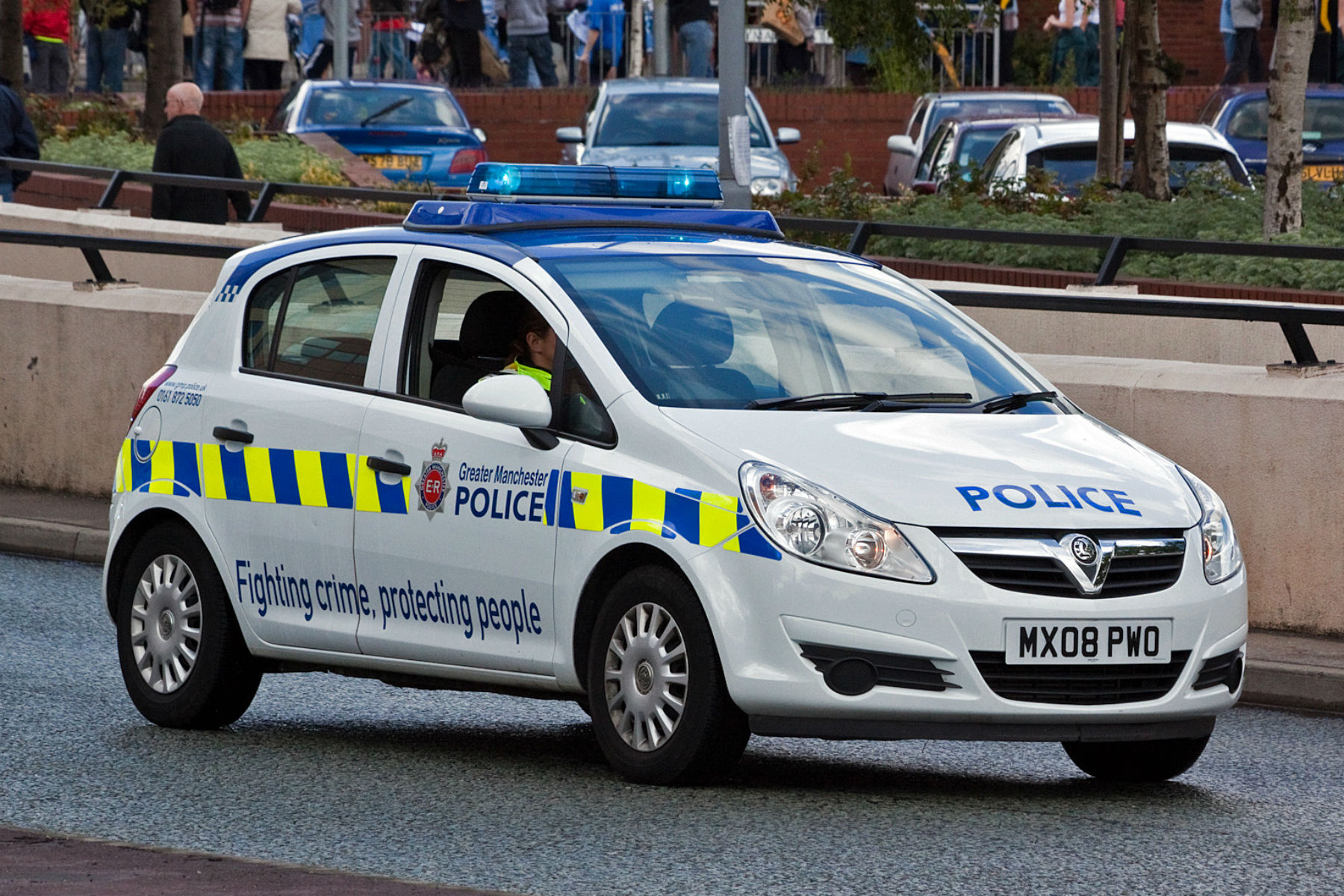
Police say they are having to respond to emergency calls in Vauxhall Corsas not equipped with sirens following budget cuts made by the Government.
West Midlands Police have had to use the Vauxhalls – which are kitted with blue lights but no sirens – to reach emergency calls over 100 times in the last 12 months, according to reports.
The force has 109 Vauxhall Corsa patrol cars on its fleet, intended for non-emergency use only. Budget cuts, however, mean they’re being used to respond to urgent 999 calls.
Officers are told they’re not allowed to break the rules of the road without sirens – leading to ‘huge frustration’ as they struggle to make their 15 minute target to reach crime scenes.
Superintendent Kerry Blakeman, from the West Midlands Police’s operations department, told local newspaper the Express and Star: “Any officer can respond to an incident if they are suitably trained to drive at speed and are in an appropriate vehicle – with lights and siren.
“Officers who are not appropriately trained and/or driving an appropriate vehicle can attend an incident as quickly and safely as possible while complying with the Road Traffic Act just as members of the public should.
“Incidents graded as ‘immediate’ are responded to as soon as possible, usually in a matter of minutes and on many occasions require the use of lights and sirens.
“At no point was the Corsa intended for response work as it is a low performance vehicle.”