Volkswagen has issued a warning to motoring journalists that the fuel consumption and CO2 values in its media database ‘may be incorrect’.
Following on from last week’s revelation that it had discovered “irregularities in CO2 levels” in around 800,000 cars, the firm is warning the press that its media site may now be wrong.
Volkswagen scandal: CO2 emissions now in question
“Please take into consideration the CO2 emissions and therefore the fuel consumption data published on the VW media services website are therefore subject to reservation until this has been resolved and may be incorrectly stated.”
VW says the CO2 for around 800,000 cars may have been set too low: “the majority have diesel engines” but petrol models are also affected, for the first time in the Volkswagen emissions scandal.
The revelation last week that engineers may have cheated with CO2 emissions comes after Volkswagen admitted 11 million vehicles worldwide have been fitted with a ‘defeat device’ to cheat NOx emissions tests.
“Volkswagen will do everything in its power to clarify the further course of action as quickly as possible and ensure the correct CO2 classification for the vehicles affected.”
Last week, VW CEO Matthias Müller told EU officials Volkswagen would pay any additional costs related to revised CO2 emissions data, rather than customers: in the UK, VED road tax is linked to CO2.
It is not yet clear how VW would fund any costs involved in revised fuel consumption figures, should it confirm the 800,000 cars are returning fewer miles per gallon than first thought, though.
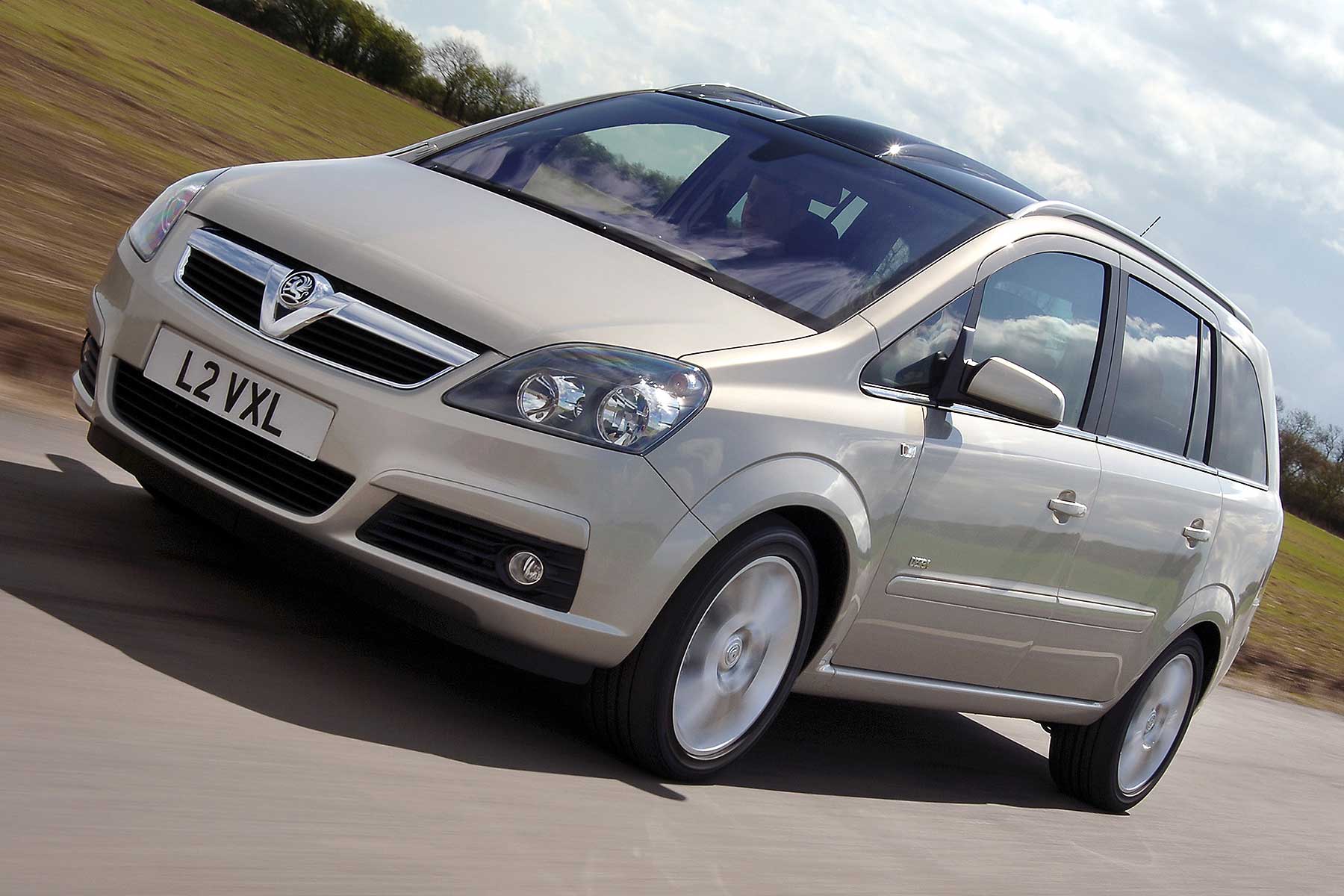
Vauxhall chairman and managing director Rory Harvey has released a video (watch it below) addressing customers about the recent reports of its Zafira model bursting into flames.
In the video, Harvey apologised for the issue and said: “Our investigation has found evidence of improper repairs of the blower motor resistor and its thermal fuse, which is designed to protect the blower motor system.”
Motoring Research has discovered hundreds of cheap Vauxhall Zafira blower motor resistors being sold on eBay. While it’s not confirmed if they’re linked to the fires, the internet parts are unlikely to be genuine and will correspond with Vauxhall’s implication that cars have been repaired incorrectly.
Harvey added: “At this stage, further analysis is ongoing towards verifying the root cause of the fires. This leads me to why it has taken some time to find the root cause and provide an answer.
“Unfortunately, fires in cars can provide a major challenge to investigators as many are damaged beyond investigation. As such we need to get to the root cause through a detailed analysis of a significant number of vehicles.”
But owners have reacted sceptically to the issue. Darren Lee McCarney posted in the Vauxhall Zafira car fires Facebook group, which originally highlighted the fires, saying: “Vauxhall has made a statement heavily guided by a legal team. That video wasn’t a man concerned for people lives, that was a video of a well-prepared legally-versed puppet promising nothing more than we are already getting.”
Stephen Mitchell added: “He doesn’t want to speculate only facts, yet he is blaming non-genuine parts. Says are cars are safe after the checks but doesn’t know the root cause! What about cars that have had genuine parts fitted and gone up! A carefully worded statement about what we already know to try pull wool over our eyes to make them look good!”
Only Zafira B models, built between 2005 and 2014 are affected, and only those fitted with the standard air conditioning unit, rather than the similar-looking climate control system.
Vauxhall is now writing to 220,000 owners asking them to take their Zafira to their local dealership for a free inspection. Any suspect components will be changed free of charge.
The manufacturer is yet to confirm if any other models are affected.
The Environmental Protection Agency (EPA) has revealed that other diesel engines may be affected by the Volkswagen emissions scandal after finding evidence of a defeat device on 3.0-litre TDI Audi, Porsche and Volkswagen models.
The defeat device “increases emissions of nitrogen oxide (NOx) up to nine times EPA’s standard,” says the U.S. agency – which has issued a second notice of violation of the Clean Air Act to Volkswagen AG.
The EPA states the following models are affected:
2014 Volkswagen Touareg
2015 Porsche Cayenne
2016 Audi A6 quattro, A7 quattro, A8, A8L, Q5
“VW has once again failed its obligation to comply with the law that protects clean air for all Americans,” said the EPA’s Cynthia Giles.
The latest violations affect around 10,000 cars sold since the 2014 model year, plus “an unknown volume of 2016 models”.
Volkswagen has since released a statement denying the allegations. The firm said it “wishes to emphasise that no software has been installed in the 3-litre V6 diesel power units to alter emissions characteristics in a forbidden manner”.
Random testing
The latest Volkswagen Group Clean Air Act violation was discovered during a randomised screening process of U.S. diesel cars conducted by the California Air Resources Board.
“These tests have raised serious concerns about the presence of defeat devices on additional VW, Audi and Porsche vehicles,’ said CARB executive officer Richard Corey.
“This is a very serious public health matter. ARB and EPA will continue to conduct a rigorous investigation that includes testing more vehicles until all of the facts are out in the open.”
The first notice of violation was issued to Volkswagen AG by the EPA on 18 September, after it discovered the presence of emissions test cheat code that caps NOx emissions during official testing – but lets vehicles emit up to 40 times the legal limit during on-road use.
The EA 189 2.0-litre TDI is the engine in question.
Since then, Volkswagen’s share price has plummeted as the firm has found 11 million vehicles worldwide contain defeat device coding.
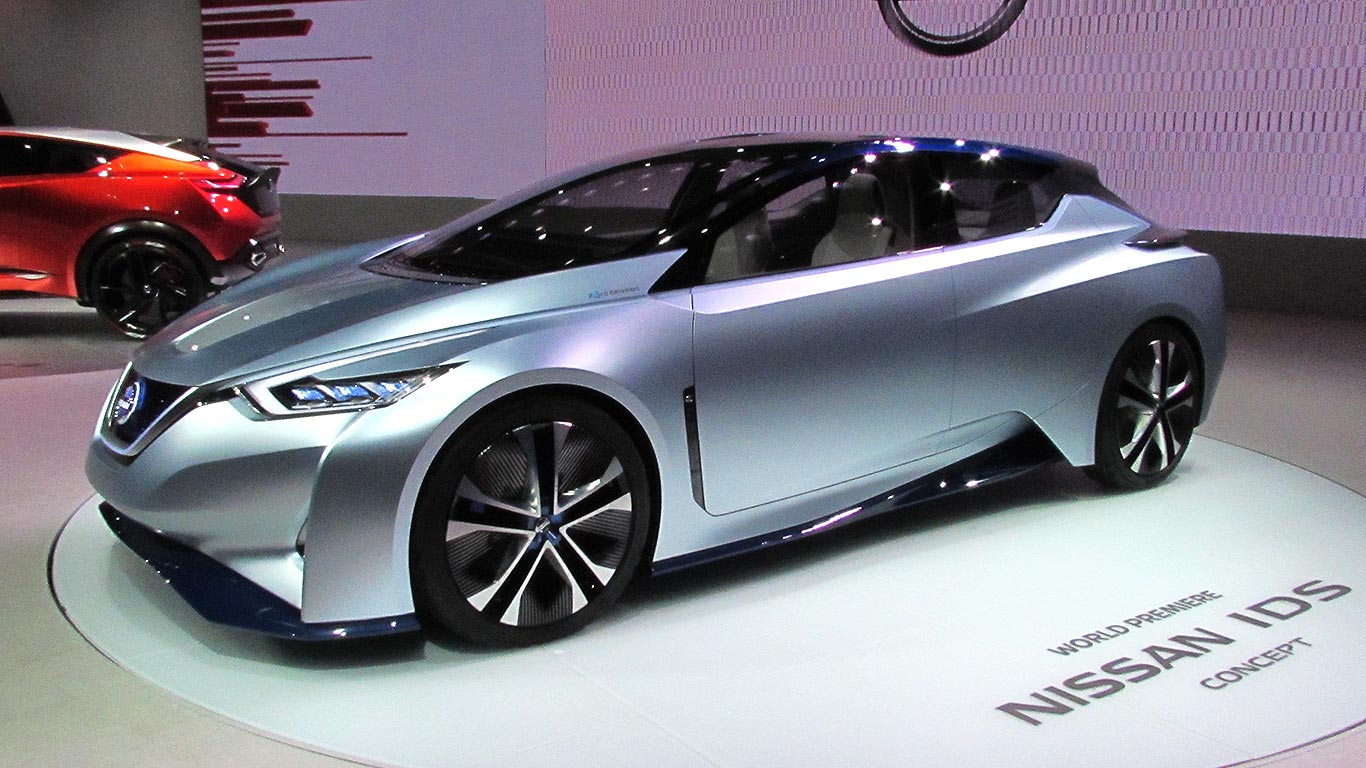
Nissan has revealed the IDS Concept at the Tokyo Motor Show 2015 to demonstrate its take on the autonomous car of the future – and provide a clear tease as to how the next-generation LEAF EV will look.
The IDS Concept is a zero-emissions EV that blends autonomous self-driving car functionality with artificial intelligence. This, says Nissan, helps give autonomous drive tech real-world relevance – something the firm is planning to launch on several vehicles within the next five years.
Nissan says the IDS Concept offers two functions, Manual Drive and Piloted Drive. Intriguingly, it will learn the driver’s own style and apply this to piloted driving: the cars will perform slightly differently, based on who’s been driving them previously.
Potentially some self-driving Nissan IDS Concepts will autonomously corner, accelerate and brake more quickly and sportily than others!
Nissan is keen to emphasise the fun-to-drive part and says the driver will still remain engaged even when the car is driving itself. This is an important factor in occupants having confidence in autonomous cars.
“Two zeroes”
Nissan president and CEO Carlos Ghosn said: “Nissan’s forthcoming technologies will revolutionize the relationship between car and driver, and future mobility.”
“Nissan Intelligent Driving improves a driver’s ability to see, think and react. It compensates for human error, which causes more than 90 percent of all car accidents.”
It’s part of Nissan’s aspirations for zero fatalities and zero emissions, “in our mission to help create a sustainable car-based society”. The firm dubs this the ‘two zeroes”.
Two interiors
The IDS Concept has two interior layouts, one for each driving mode. In Manual Drive, all seats face forward, the steering wheel, dials and head-up display are all present, and interior lighting switches to blue: this is said to improve the ability to concentrate.
However, in Piloted Drive, the steering wheel folds away and the dashboard slides back below the windscreen, replaced by a large flatscreen instead. Seats rotate inwards, the interior is illuminated by soft light and all driving-related functions are handled either by AI or driver voice and gesture control.
Nissan reckons it’s like relaxing in a living room.
Drivers can switch between modes using the PD Commander between the front seats. When in Piloted Drive, this is the only control the driver can operate.
Multi-function exterior
The exterior panels are also functional. For example, there’s an illuminated silver bodyline LED strip that switches to red when pedestrians and cyclists are nearby – this is to assure them the car knows they’re there. The dashboard also has an electronic display that can flash text messages to pedestrians.
The Nissan IDS Concept wears lightweight carbon fibre bodywork that’s just 1,380mm high to lower the aerodynamic drag.
Wheels are large in diameter but relatively narrow in section, like on a BMW i3, again, to reduce drag. It’s a wheel-at-each-corner design to maximise interior space.
High-power EV
The IDS Concept has a 60kWh battery – twice the size of the revised Nissan LEAF we drove recently – and Nissan says the low weight, sleek aerodynamics and low stance “meet the need to drive long distances”.
Today’s extended-range LEAF can do up to 155 miles on a full charge, and the IDS Concept has double the battery capacity. With these other improvements in the EV drivetrain too, a driving range of 400 miles or more per charge seems likely.
For added convenience, the IDS Concept has wireless charging.
Future EV: future LEAF?
The big question is, does the IDS Concept preview the next Nissan LEAF? It seems almost certain the next-generation LEAF will include elements of its styling, such as the crossover-look stance and space-efficient proportions.
Remember, Nissan continues to have huge success with the Qashqai and Juke in Europe; it seems natural for its groundbreaking EV to incorporate similar elements.
We can also expect the next LEAF to be much more aerodynamic, perhaps with bigger, narrower tyres and plentiful body-smoothing features.
What’s also interesting is the autonomous element. Nissan says this is going to happen sooner than we think: a car that has a reconfigurable dashboard may be a bold step for 2020, but having more autonomous functionality on the already highly networked LEAF would also be logical.
Nissan knows the LEAF has done the groundwork in preparing the world for mainstream EVs: its successor can fully capitalise on this if the firm gets the styling and the functionality right. The pretty, clever IDS Concept suggests it’s preparing to roll out another EV revolution in the next few years…
Research has discovered that 80% of UK speed cameras lead to ‘hard braking activity’ – when drivers slam on their anchors in a bid to avoid a fine.
The analysis by telematics company Wunelli defines ‘hard braking’ as a change of speed of 6.5mph or more over one second. That’s aggressive enough to propel a bag on the passenger seat into the footwell.
The speed camera most likely to result in hard braking is located close to the end of the M4 motorway, heading into central London – followed by one on Rochdale Road in Middleton, Manchester.
In third place is a camera heading north out of Hemel Hempstead, Hertfordshire, on the Leighton Buzzard road.
On average, the research found that hard braking increases on average by 689% in locations with speed cameras.
Wunelli founding director, Paul Stacy, said: “These findings question whether speed cameras are serving their purpose as a road safety tool or whether they are instead encouraging poor driving behaviour.
“Driving behaviour analysis is now possible on a range of vehicle factors. If you wanted to identify which car driver is least likely to be involved in an accident based on the driving behaviour we have recorded, they would be the owner of an estate car, gold colour, four-wheel drive and about £10k in value.”
The 10 speed camera sites most likely to trigger hard braking
10: Watergate Bank, Consett Road (A692), Gateshead
9: Western Avenue (A40), Ruislip, west of A4180 junction
8: A4010, High Wycombe
7: Chester Road (A556), Mare, Knutsford, Cheshire
6: Garstang Road, Bilsborrow, Preston
5: Iver Lane (B470), Uxbridge, Middlesex, London
4: B5206, north of Shevington, Wigan
3: Leighton Buzzard Road (A4146), north of Hemel Hempstead
2: Rochdale Road, Middleton, Manchester
1: M4, eastbound, near Boston Manor train station, London
Can you remember 1965? It was the year the Beatles performed the first stadium concert in the history of music, and Tom and Jerry made their debut. Cigarette advertising was banned on British TV, the Sound of Music premiered and Churchill was buried.
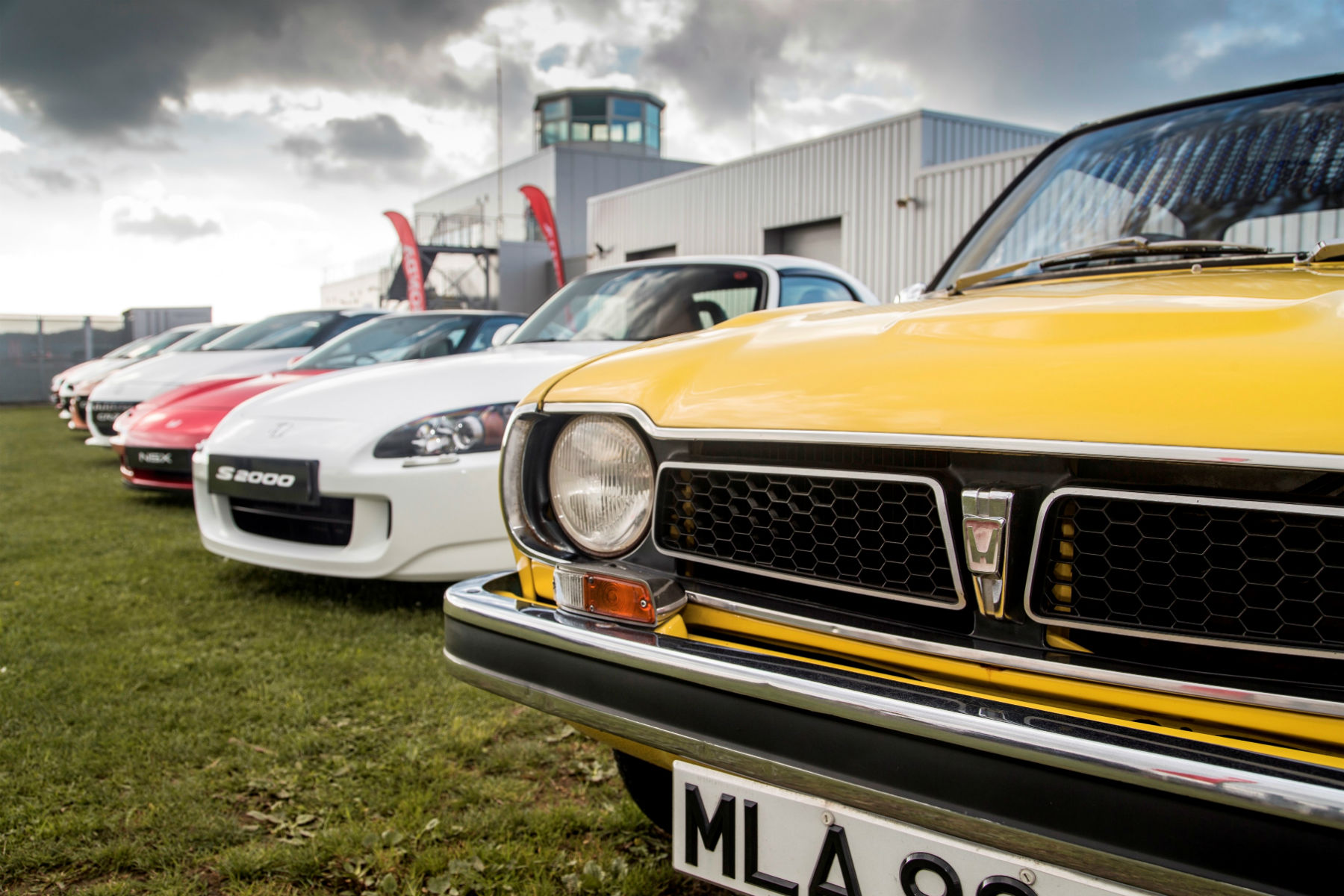
But it was also the year Honda first came to the UK – meaning it’s now celebrating 50 years of selling, er, things here.
Why ‘things’? Well, although you may think of Honda as being that company that makes the Jazz (your nan’s pride and joy, right?), it also makes record-breaking hot hatches, trusty all-terrain vehicles and even lawnmowers. So, for its 50th birthday party, Honda got together a load of its things and we went along to try them out.
Honda Civic Type R
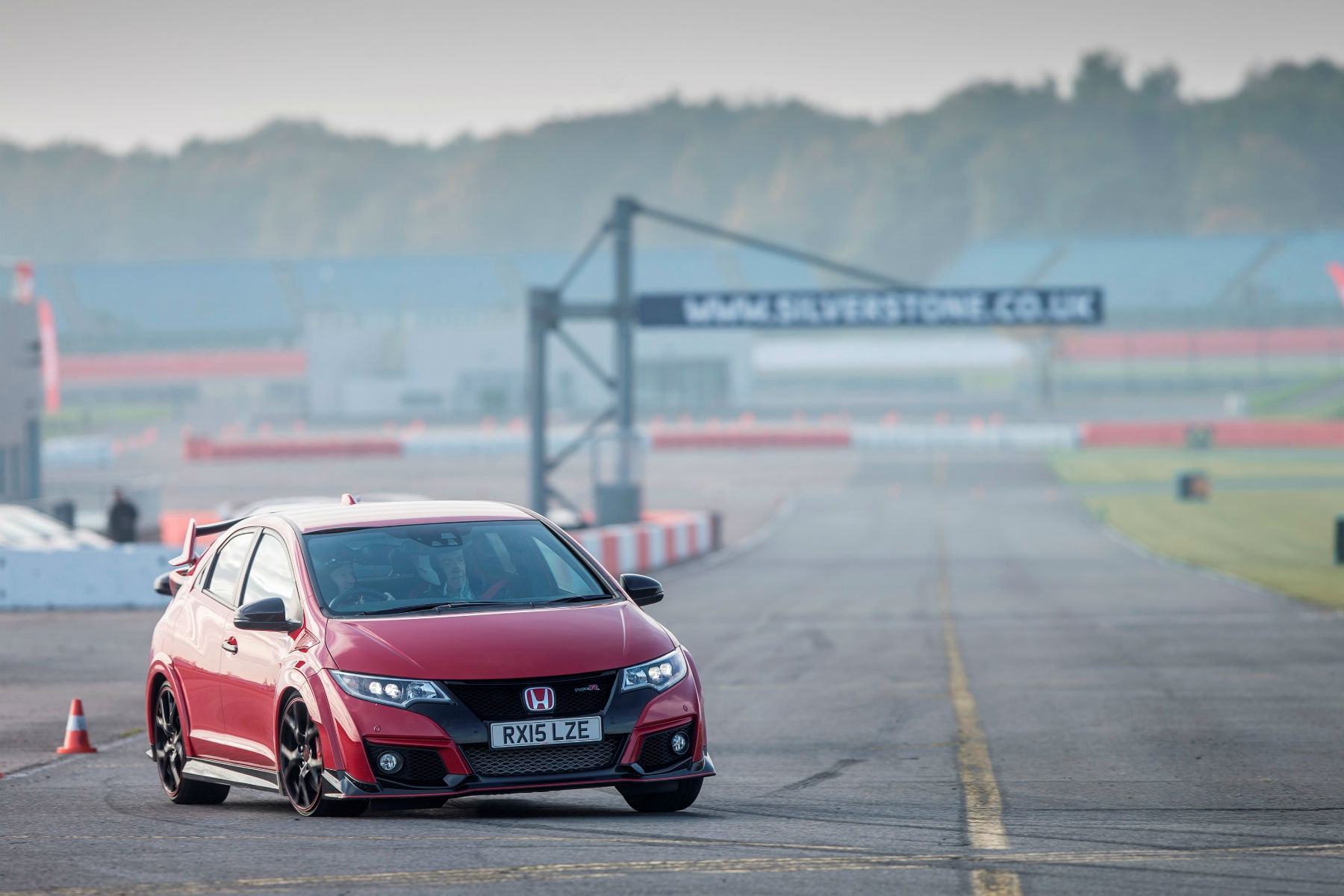
We’ve already spent a lot of time in the new Civic Type R, but there’s nothing quite like a soaking-wet race track for showing off just how capable it is. With 310hp going through the front wheels, there is only so much its systems can do to prevent torque steer if you chuck it into a greasy corner with too much throttle. But lift off at that moment and enjoy the Type R’s adjustability. It’ll go properly sideways very easily, while depressing your right foot brings it nicely back into line and makes you feel like Gordon Shedden.
That’s until you have a passenger ride with Gordon Shedden. Which we did. The Scot, crowned British Touring Car Champion for the second time just a few weeks ago, manages to hold a conversation while teasing the Type R with the handbrake and showing just how far that adjustability extends when you’re one of the country’s handiest drivers.
Go karts
You could say the Honda Civic Type R ‘handles like a go kart’, but we won’t. Not only because it’s a lazy cliche, but also because, on a wet track, you could say it handles better than a go kart.
Honda let us loose on a tight, twisty track in one of its karts – only it was very, very damp. With little more than four wheels, a seat and an engine, it’s very easy to find yourself understeering towards a tyre wall and wishing you had the Civic Type R’s clever electronics to make you look more skillful than you actually are.
Still, engage your brain and learn how to extract the best out of the karts (stamp on the brakes until the back end starts to swing around and then drift, yo) and you’ll have an awful lot of fun in them – if not achieve a particularly good lap time.
ATV
Honda offers free training with the sale of all its new all-terrain vehicles. You may scoff but if you’ve never ridden one before, it’s definitely worth it. Rik Mayall and Ozzie Osborne both diced with death following serious quad bike accidents – and they were both experienced riders.
But that’s enough of the scary stuff. Hammering around the off-road site at Silverstone (we stayed away from the circuit on the ATVs…), you can have an absolute blast at relatively low speeds. It takes a little bit of getting used to – the hand throttle, for example – and they don’t turn quite like a go kart. But for farmers and those who need to tackle tough terrain, there really is little else that comes close.
Lawn mower
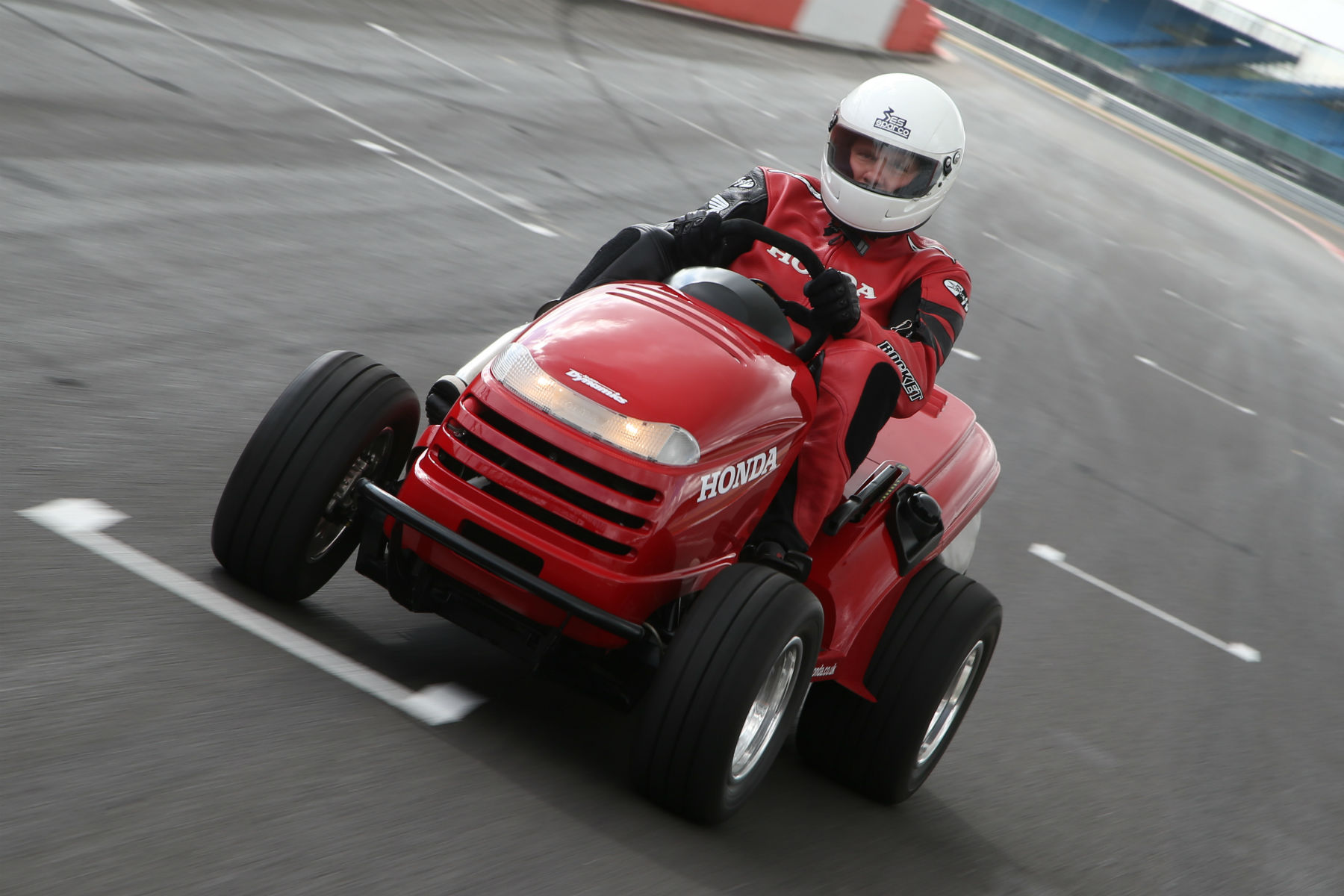
Honda holds the world record for the fastest ever lawn mower – bagged last year with its 109hp Mean Mower, capable of 130mph. That thing is nuts – created with input from Matt Neal and Gordon Shedden, it boasts a high-carbon steel chassis and a 2.0-litre engine from a Honda VTR Firestorm.
We weren’t allowed to drive that at Silverstone (something about health and safety), but we did get a go on a more down-to-earth (common or garden?) mower. The only complication here is that the accelerator is operated using the left-hand pedal, with reverse on the right and a brake in the middle. Yup, we promptly reversed it into a fence.
Still, in keeping with a theme that’s starting to become clear, it’s amazing how much fun it’s possible to have in something many regard as little more than a tool. Seriously, if you’ve got an acre or two, invest in one of these.
Motorbike
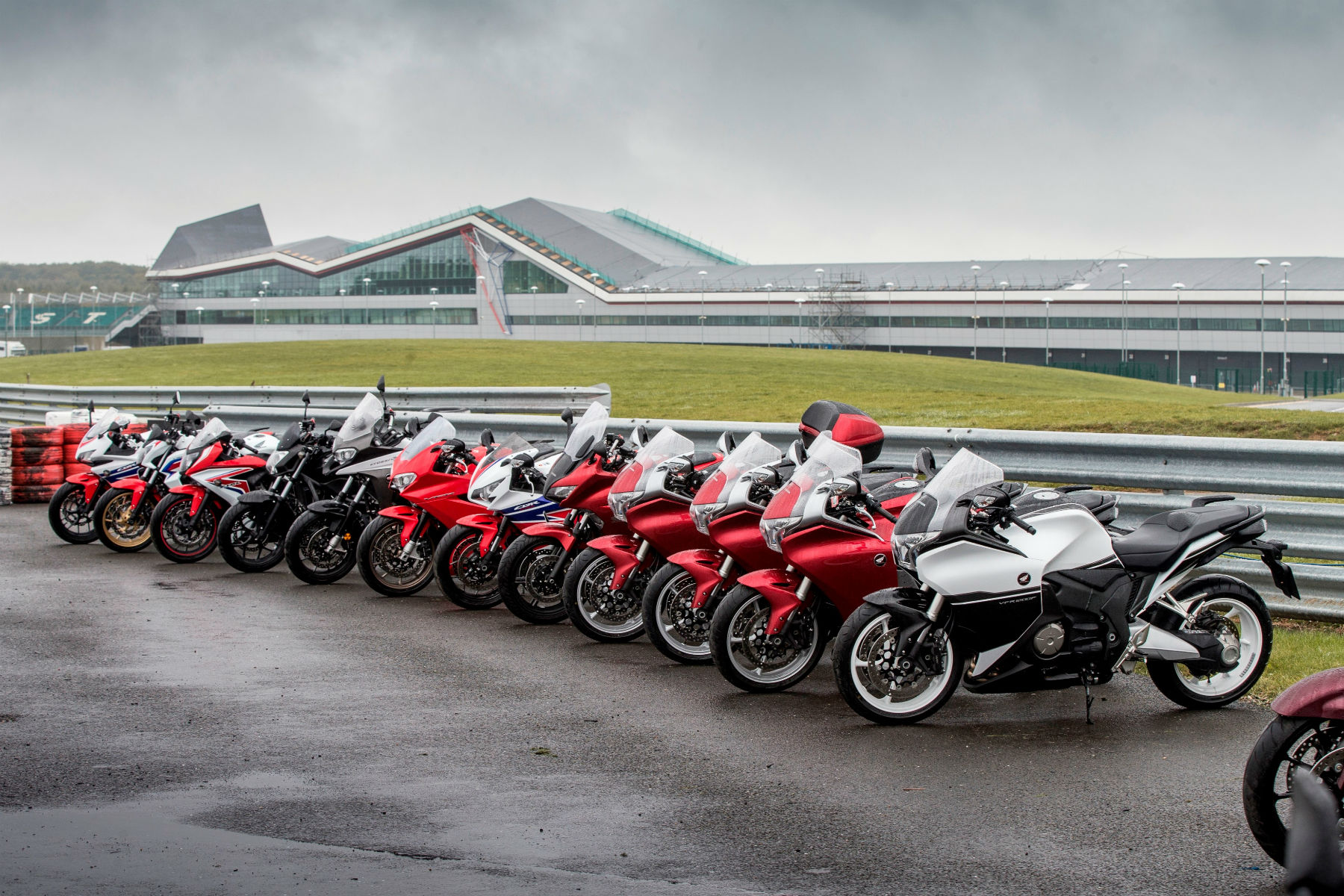
And finally, Honda let us loose on a motorbike. We say ‘let us loose’, but a lack of motorbike licence meant we were restricted to a pillion ride. However, it still made for an exciting experience for someone who has never been on a bike before. It’s not as scary as you may expect – pootling through the countryside is pleasurable even at a gentle pace.
The Honda VFR1200F we ‘rode’ is powered by a 170hp V4 engine, combined with a dual-clutch transmission that provided almost-imperceptible gearchanges.
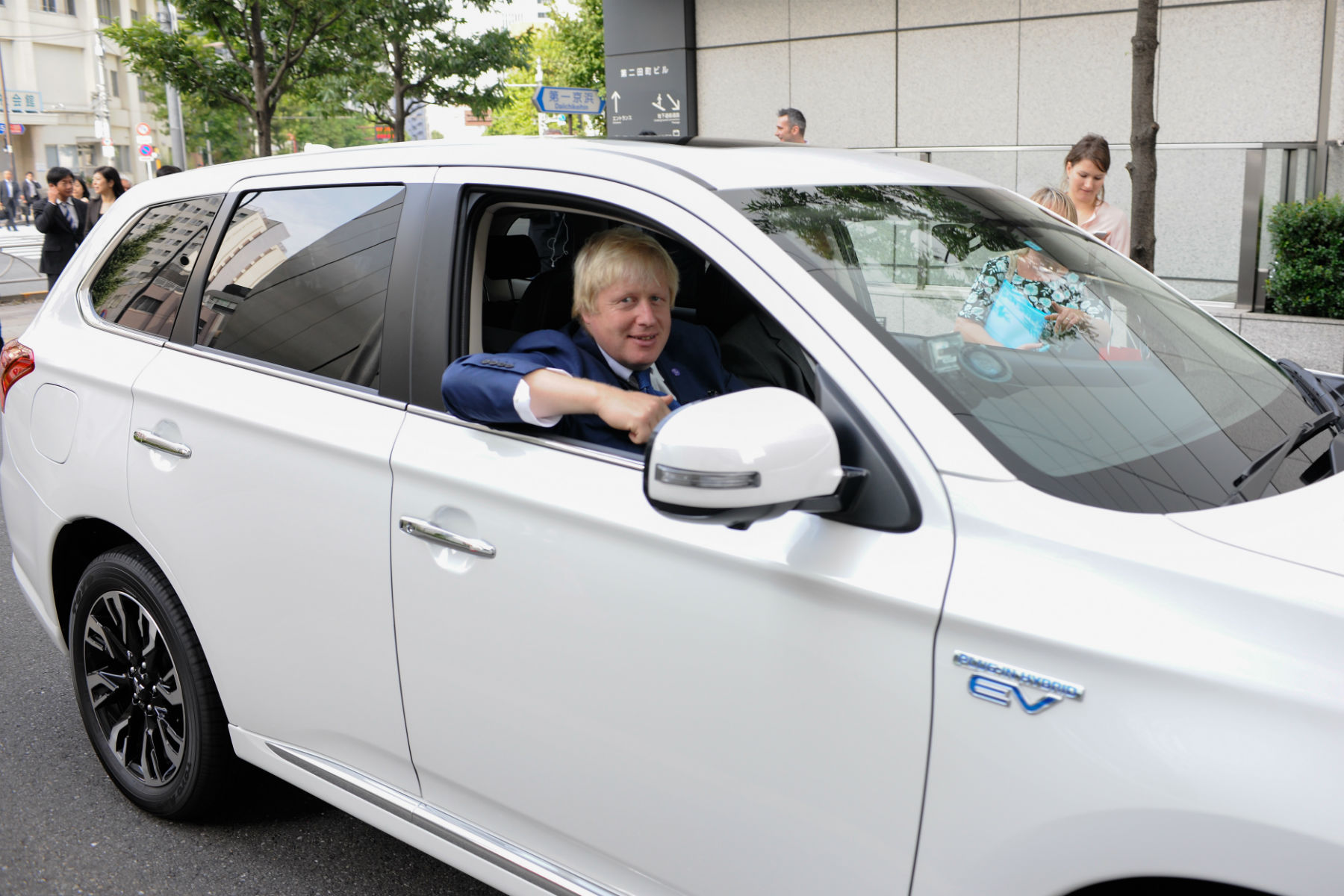
We first saw the facelifted Mitsubishi Outlander PHEV at this year’s New York Motor Show, but now London Mayor Boris Johnson has been to Japan for an early drive of the new model.
It comes a day after it was revealed that Johnson had already placed an order for the new hydrogen-powered Toyota Mirai.
European specifications for the new Outlander PHEV are yet to be confirmed, but an improvement of around 8% in efficiency is expected. This would translate in a combined MPG of 159mpg and emissions of 40g/km CO2.
Mr. Osamu Masuko, Mitsubishi Motors Corporation Chairman and CEO said: “We greatly appreciate the significant progress the Mayor’s initiatives in London have made to encourage the uptake of ultra-low emission vehicles. We are very proud that the Mayor has taken this opportunity to unveil our new Mitsubishi Outlander PHEV here in Tokyo today.”
The Outlander PHEV is able to cover 32 miles under electric power alone before the petrol engine kicks in. It can offers a combined range of around 540 miles.
With the help of the government’s plug-in car grant, Mitsubishi has so far offered the Outlander PHEV at a price that proves competitive against conventionally-powered rivals.
With all the tax breaks that it brings, it’s proved to be a very successful vehicle for Mitsubishi in the UK. It’s hoping that this success will continue with the launch of next year’s smaller ASX.
Now watch what Boris got up to after he pulled off the covers of the new Mitsubishi Outlander PHEV in Japan…
Transport for London has bought one of the first Toyota Mirai hydrogen fuel cell cars to be sold in Britain, Mayor of London Boris Johnson has confirmed.
The zero-emissions car will be tested in the British capital to “see everything Mirai can do and… take another great step towards improving air quality in our city and protecting the health of Londoners,” said Johnson.
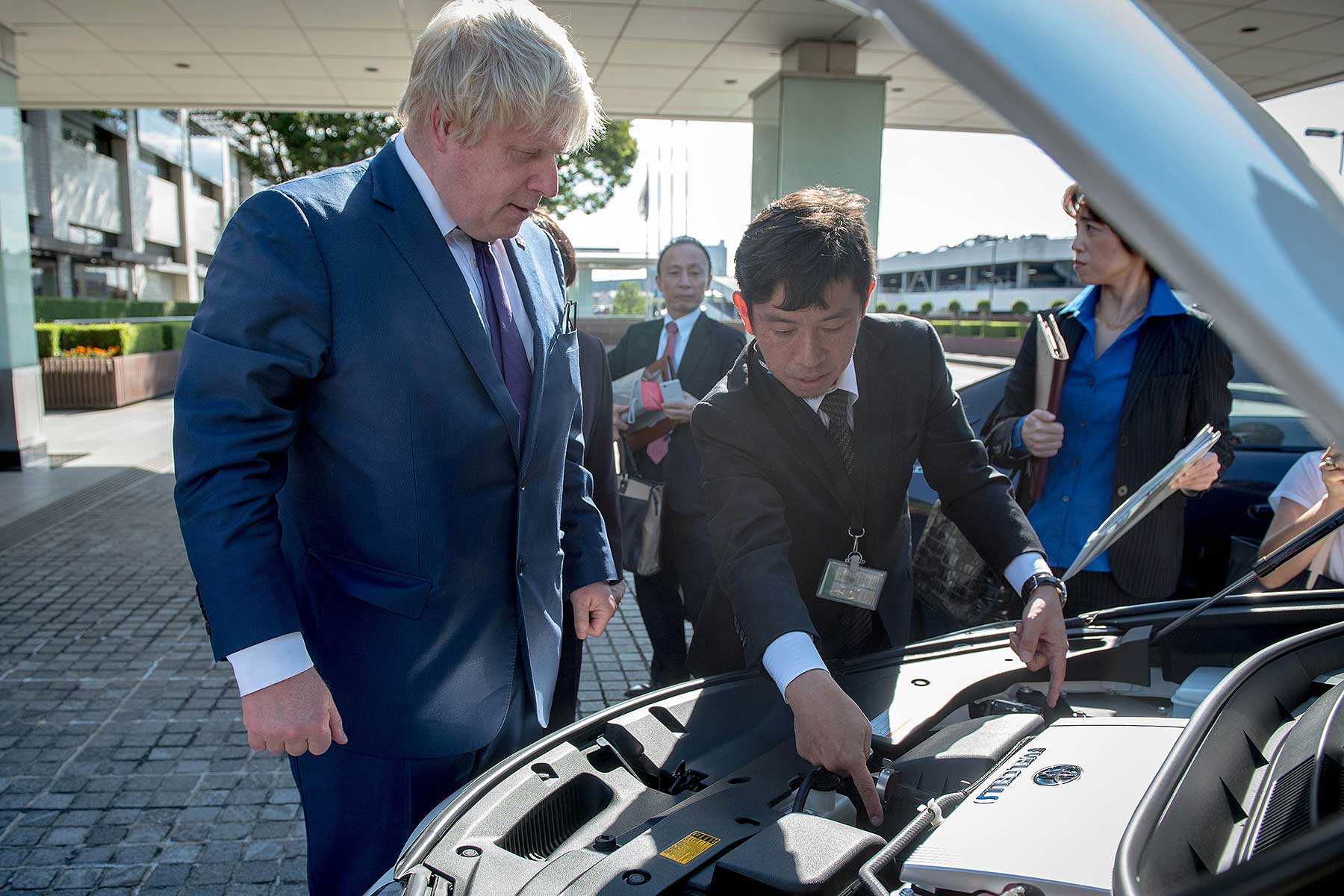
During a three-day trade mission to Japan, Boris Johnson drove the Mirai at a Toyota test facility; he also spoke with senior Toyota execs about how London could become a key market for alternative fuel cars.
Johnson also hopes the arrival of the Mirai will help kick-start development of a hydrogen refuelling infrastructure in London – something he considers ‘important first steps towards the wider adoption of the technology’.
“We applaud the mayor’s commitment to embracing new technology in his mission to make London a leading global city for low-emission, low-carbon transport,” said Toyota GB president and MD Paul Van der Burgh.
“The success of hydrogen will require constructive dialogue and action, bringing together industry, national governments and city authorities like London to share and develop skills and experience and to communicate the benefits that can be delivered to business and to individuals.
“Our Mirai fuel cell vehicle is a milestone in the history of the motor car and opens up unprecedented opportunities for cleaner, sustainable transport.”
Earlier in the year, Toyota took an unprecedented step towards accelerating the development of the hydrogen fuel cell car – by giving away all the patents it developed while creating it.
A poll by Apester has found that 69% of motorists say they’re ‘less likely to purchase a Volkswagen’ after the #dieselgate scandal, in which 9.5 million cars worldwide are believed to be affected.
More than half (54%) of those polled said this is because they don’t trust Volkswagen engineers, while 27% said they don’t want to drive a car that pollutes too much. A further 19% said they care too much about their reputation to drive a Volkswagen – saying they don’t want to be seen driving one.
The scandal affects diesel models across Volkswagen Group, with premium brand Audi saying it’s not overly concerned about losing sales.
More on the Volkswagen emissions scandal on Motoring Research
Audi launches emissions scandal VIN car checker
Volkswagen emissions recall to begin in January 2016
France ‘to begin move out of diesel’
No road tax hike for VWs with illegal software, UK government confirms
‘No collusion’ in car industry over emissions tests says SMMT
Realistic fuel consumption tests? Careful what you wish for
SEAT: 700,000 cars affected by VW emissions scandal
RAC calls for more stringent lab tests following VW emissions scandal
Volkswagen emissions scandal: new diesel info website to advise customers
Audi: 2.1 million cars contain cheat code software
Switzerland bans Volkswagen Group sales
VW scandal: Matthias Müller becomes CEO, priority is to ‘win back trust’
VW scandal: who is Matthias Müller?
Volkswagen: ‘We are sorry. And will put it right.’
#Dieselgate: company cars set for a nasty shock?
Dieselgate latest: what we’ve learnt – LIVE
SMMT says Volkswagen emissions scandal ‘not an industry-wide issue’
Volkswagen U.S. boss: ‘we totally screwed up’
Volkswagen diesels ‘manipulate US emission testing: VW CEO ‘deeply sorry’
Campaign groups are calling for lower speed limits in urban areas in a bid to reduce the amount of NOx pollutants being emitted from diesel cars.
Research by Imperial College London found that the average Euro 4 compliant diesel (between 1.4- and 2.0-litres) emits an extra 8.2% of NOx at 30mph – 0.81g/km compared to 0.74g/km.
In 2014, 37% of cars on UK roads were diesels – so reducing speed limits in urban areas could lead to a substantial reduction of NOx emissions.
The research is being highlighted by the 20’s Plenty for US campaign group, which says a blanket reduction of speed limits in urban areas will improve safety as well as improving air quality.
20’s Plenty for Us founder and campaign director, Rod King MBE, said: “A 20mph built up limit simply, immediately and effectively reduces dirty fumes. This government should urgently wake up to the air quality gains from 20mph. Lower speeds give so many road safety, active travel and public health benefits.”
The research also suggest that CO2 emissions from diesel cars in urban areas could be reduced by around 1% by decreasing speed limits in town and city centres to 20mph – but it would have the opposite effect on petrol cars, increasing CO2 emissions from these by around 2%.
As a result, the study found that 100 cars (a representative mix of petrols and diesels) would emit 24,591g/km CO2 at 20mph, compared to 24,309g/km at 30mph. That’s an increase of 282.5g/km CO2.
 Volkswagen has issued a warning to motoring journalists that the fuel consumption and CO2 values in its media database ‘may be incorrect’.