Infiniti has officially opened its first ever European production facility with the launch Q30 today leaving the assembly line in Sunderland – bringing £250 million new investment and 300 new jobs to Britain.
It’s yet another boost to Nissan’s booming Sunderland factory, which now employs a total of 6,700 people to produce the Q30 compact premium car from the same base as the Nissan Qashqai, Juke and Note.
British Q30 production means Infinitis are now made in five plants, in four countries, on three continents. The UK plant comes online as 2015 sales already exceed 2014 levels – and the Q30 is the next step in Infiniti’s long-awaited arrival as a viable premium alternative to Audi and BMW in Europe.
Nissan chief performance officer Trevor Mann has worked at Sunderland since it opened in 1985 and says the Q30’s arrival begins “an exciting new chapter in the Infiniti story, and I can’t think of a better place to start than here”.
The Q30 will now be exported from Britain to Europe, China and America; Infiniti estimates 1,000 extra jobs in the supply chain, on top of the 300 jobs directly at Sunderland.
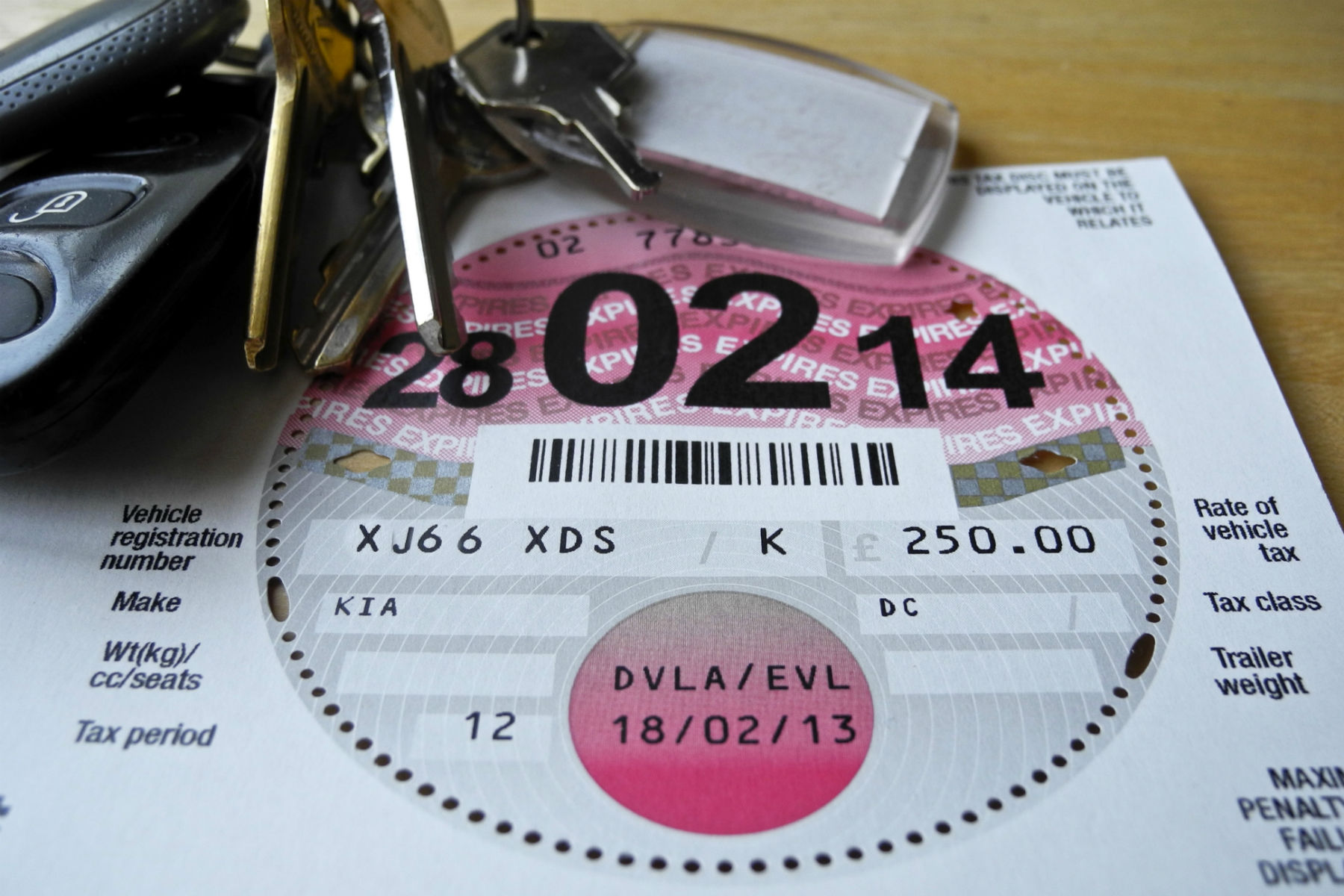
The number of untaxed cars on Britain’s roads has more than doubled since the paper tax disc was abolished, according to statistics released by the Department of Transport.
In 2013 the estimated number of unlicensed vehicles in use on UK streets was 210,000 (0.6%), but in 2015 this figure rose to 1.4%.
In total 560,000 of vehicles (1.5%) were unlicensed in 2015. This is the highest level for eight years and equates to £80 million worth of potential revenue that was lost.
The rise demonstrates the consequence of the abolition of the paper tax disc, which came into force on 1 October 2014, according to the RAC.
RAC chief engineer David Bizley said: “These are very worrying and disappointing statistics indeed. Sadly, the concerns we raised about the number of car tax evaders going up at the time the tax disc was confined to history have become a reality.
“The RAC believes it is vital that this survey is repeated in 12 months’ time – if not sooner – rather than in the normal two-year period so we can establish once and for all whether the increase is simply a temporary result of the new system.”
The DVLA has responded by saying the new system makes it easier than ever for people to tax their cars.
DVLA Chief Executive Oliver Morley said: “Almost 99% of all vehicles on the road are correctly taxed: that’s around £6 billion in vehicle tax passed to the Treasury every year. We write to every registered vehicle keeper in the UK to remind them when their tax is due and we have introduced a range of measures to make vehicle tax easy to pay. At the same time we are taking action against those who are determined to break the law.”
Chancellor George Osborne has announced that drivers of diesel company cars will continue to pay an extra 3% in tax following “the slower than expected introduction of more rigorous EU emissions testing”.
Osborne said the Government would continue to support the development of ultra-low emission vehicles, but the planned axe of a 3% diesel car supplement for company car drivers would be delayed until 2021.
RAC urges George Osborne to cut costs for motorists
Previously, plans were in place to drop the supplement – meaning drivers of diesel company cars would pay the same benefit-in-kind (BIK) tax as those with petrol cars emitting the same CO2.
Last night, the Society of Motor Manufacturers and Traders (SMMT) president Gareth Jones urged the Government not to penalise the industry following the Volkswagen emissions scandal.
He said: “Create the conditions that allow us to develop the quality products for which we are world-renowned. Back us to create the jobs, economic growth and prosperity that Britain needs. We have shown we can deliver; work with us to make sure that success continues.”
The Chancellor today announced he’d be spending more than £5 billion on roads maintenance and was creating a £250 million pothole fund. A further £250 million would be invested in Kent’s motorway infrastructure in a bid to relieve some of the congestion caused by Operation Stack.
Osborne also confirmed he would bring forward reforms to the compensation culture around minor motor accident injuries.
He said: “This will remove over £1bn from the cost of providing motor insurance. We expect the industry to pass on this saving, so motorists see an average saving of £40-50 per year off their insurance bills.”
Ford of Britain chairman and MD Andy Barratt expects the UK to remain the biggest market in the world for the new Focus RS, despite the £29,995, 350hp hot hatch now being a global Ford Performance car.
Speaking as he pulled the covers off the very first early-build production-spec car, Barrett said the UK will “without doubt take the lion’s share of production” – and confirmed that the firm already has almost 2,000 orders for the new five-door RS.
Read more:
New Ford Focus RS cheaper, quicker than Honda Civic Type R
Official: Ford Focus RS to produce 350hp
The Stig drives Forza Ford Focus RS to Gamescom
“Without the UK, Ford wouldn’t have produced the Focus RS. We’re the dominant market for it – it was Britain that took two-thirds of volumes for the old five-cylinder RS, so it was much easier to make a business case for it.”
Barratt expects to sell around 4,000-4,500 new Focus RS in Britain during the car’s lifetime, and says it will be very hard to secure extra units for the UK, such is the expected global demand for the car. “We’re almost at daily production capacity already, and that’s before anyone’s seen or sat in a production-spec car.”
The Ford chairman – who was launch manager on the original Focus RS – is also expecting very strong retained values for the new car. Used market experts have already seen the car, “and we pointed out to them that secondhand examples of the old one are still selling for almost list price…
“We’re thus expecting to offer extremely competitive lease deals on the new car to entrepreneurs and small business owners keen to run a fast family hatchback.”
Britain v Australia
Focus RS product boss David Calder does, however, expect newfound competition for the new car – from another right-hand drive market, Australia.
“It’s being officially sold there [in full production volume] for the first time and the Australians are already responding very positively to it. We haven’t had to fight for right-hand drive cars before, but if enthusiasts down under start to demand more cars, we may have a battle on our hands.”
However, despite it being sold globally, Calder added that the UK will remain the spiritual heartland for the Focus RS. “RS is very much a strong ‘asset’ brand in Britain that commands a huge following.
“We’re already seeing thousands of enthusiasts putting their orders in and this fantastic early response will ensure the UK will be the key market for the new car.”
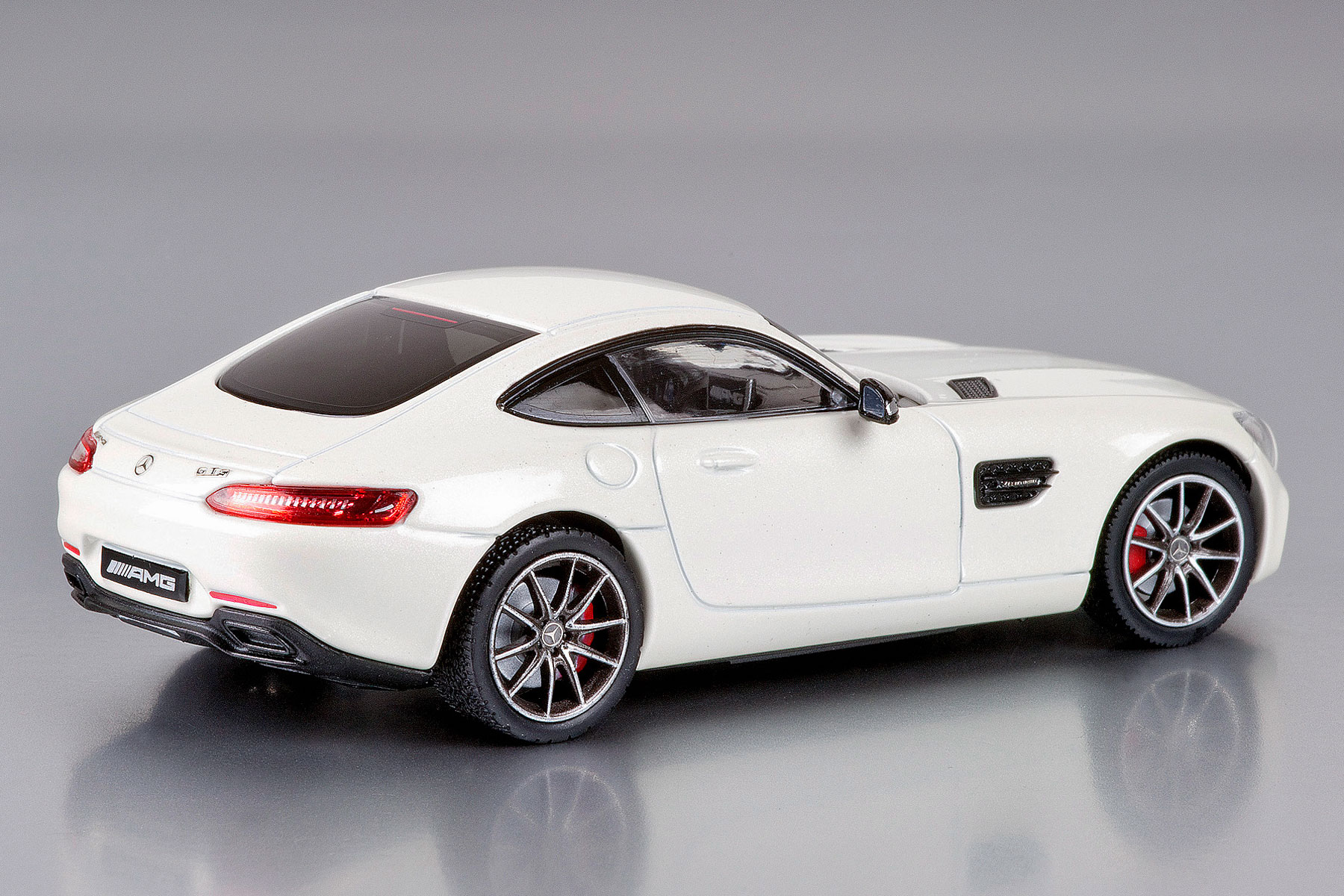
Readers of German model car magazine Modell Fahrzeug have voted Mercedes-Benz as the ‘top benchmark brand’ for miniature replicas of its cars.
Readers were also able to vote for a total of 162 model cars in 22 categories. Four miniatures based on Mercedes-Benz vehicles came first in their field. These include a 1/43 scale Mercedes-AMG GT and a remote control Unimog.
Fans can currently buy a total of 350 Mercedes-Benz model cars in various scales.
Which Mercedes-Benz would you like to see a model of?
You may have heard – Volkswagen Group is currently in the doghouse thanks to the dieselgate emissions scandal, which saw share prices plummet and caused senior executives to walk out. Out of the 11 million VW Group cars worldwide believed to have been sold with the ‘defeat device’, 2.1 million of these were Audis.
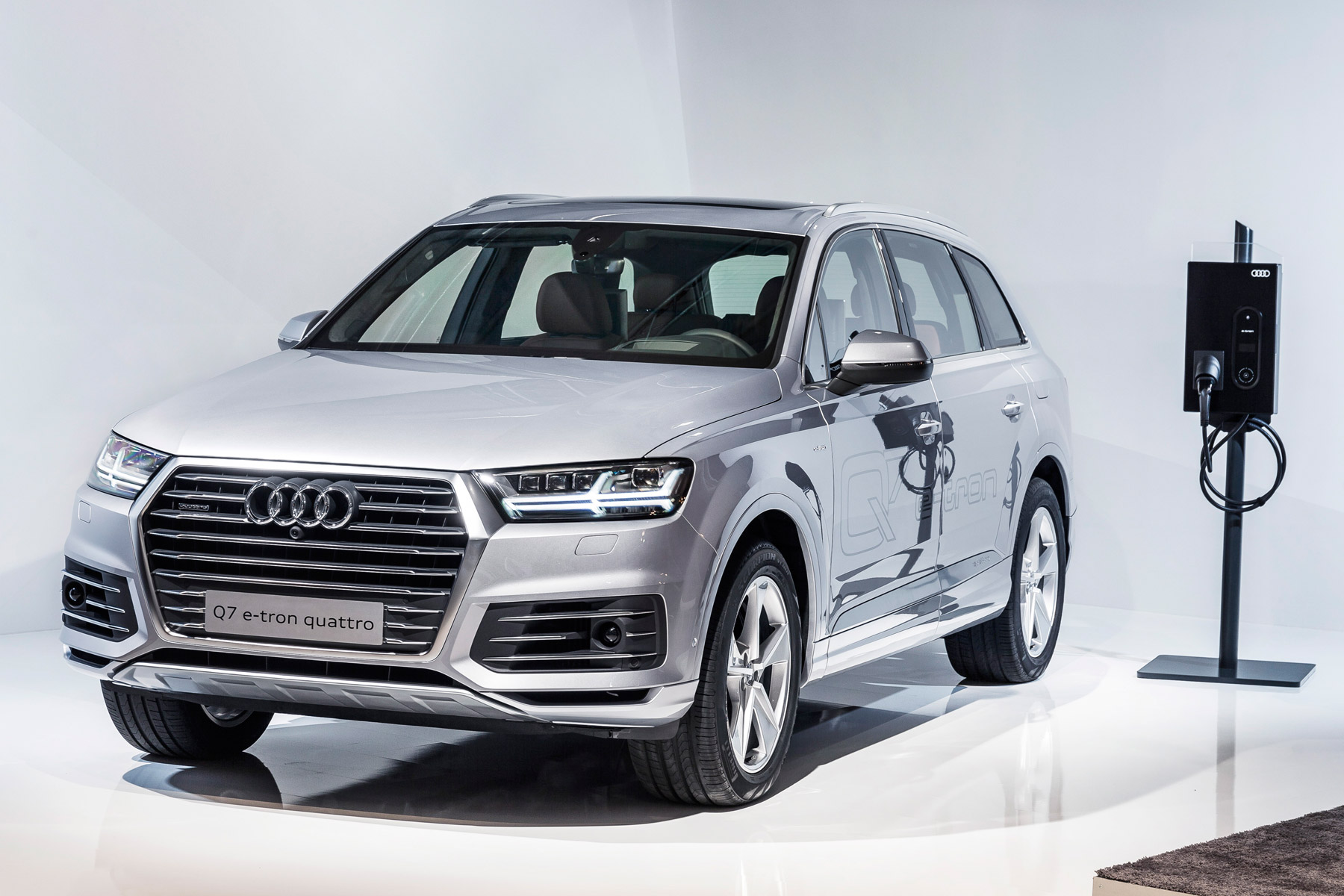
Audi Q7 e-tron: Two-Minute Road Test
Confidence in Audi, as with all Volkswagen brands, will undoubtedly have taken a knock. As a firefighting measure, VW last month announced that it would be prioritising development of plug-in hybrid models – and the range-topping Phaeton would be an all-electric ‘halo’ car, showing off the manufacturer’s future technology.
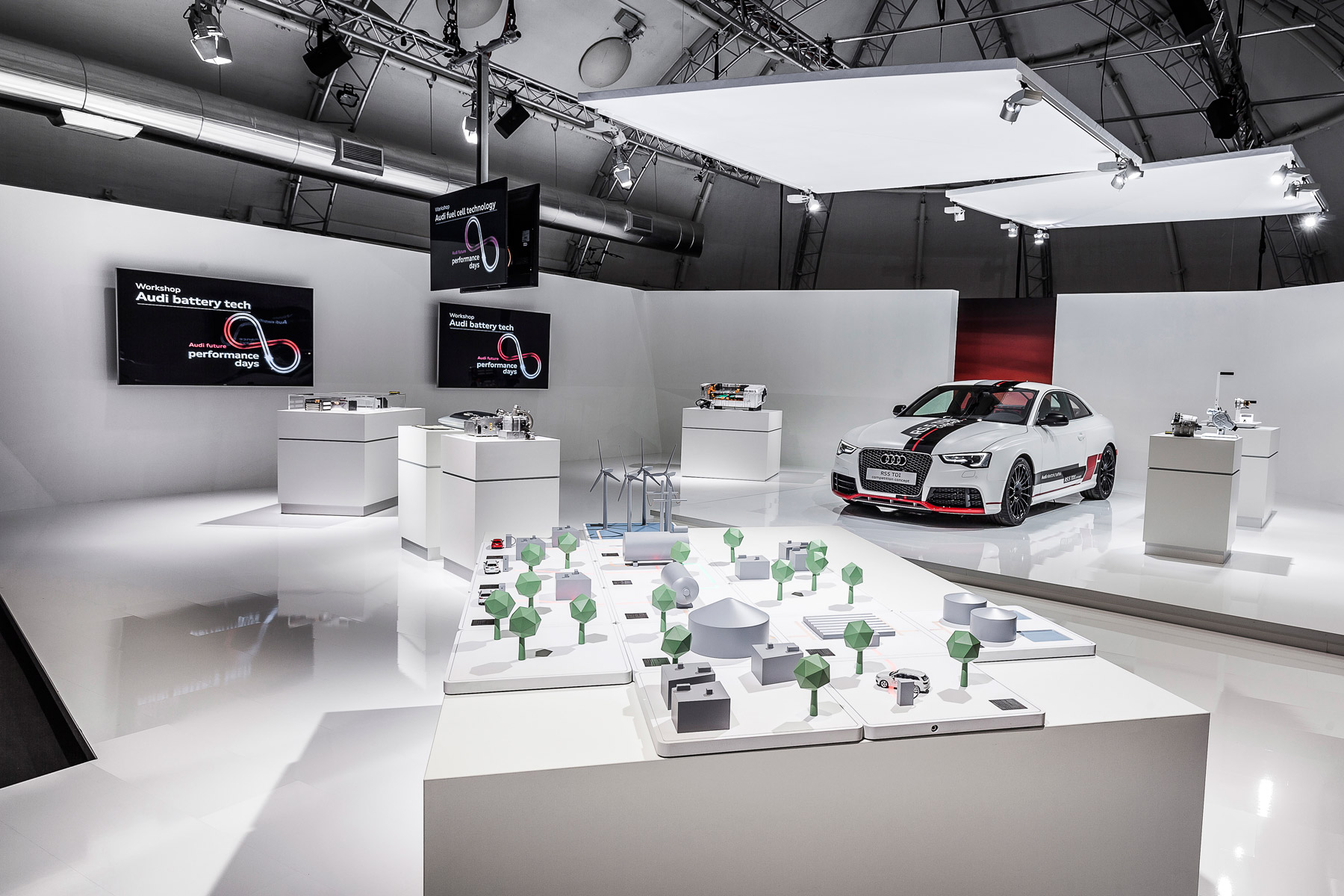
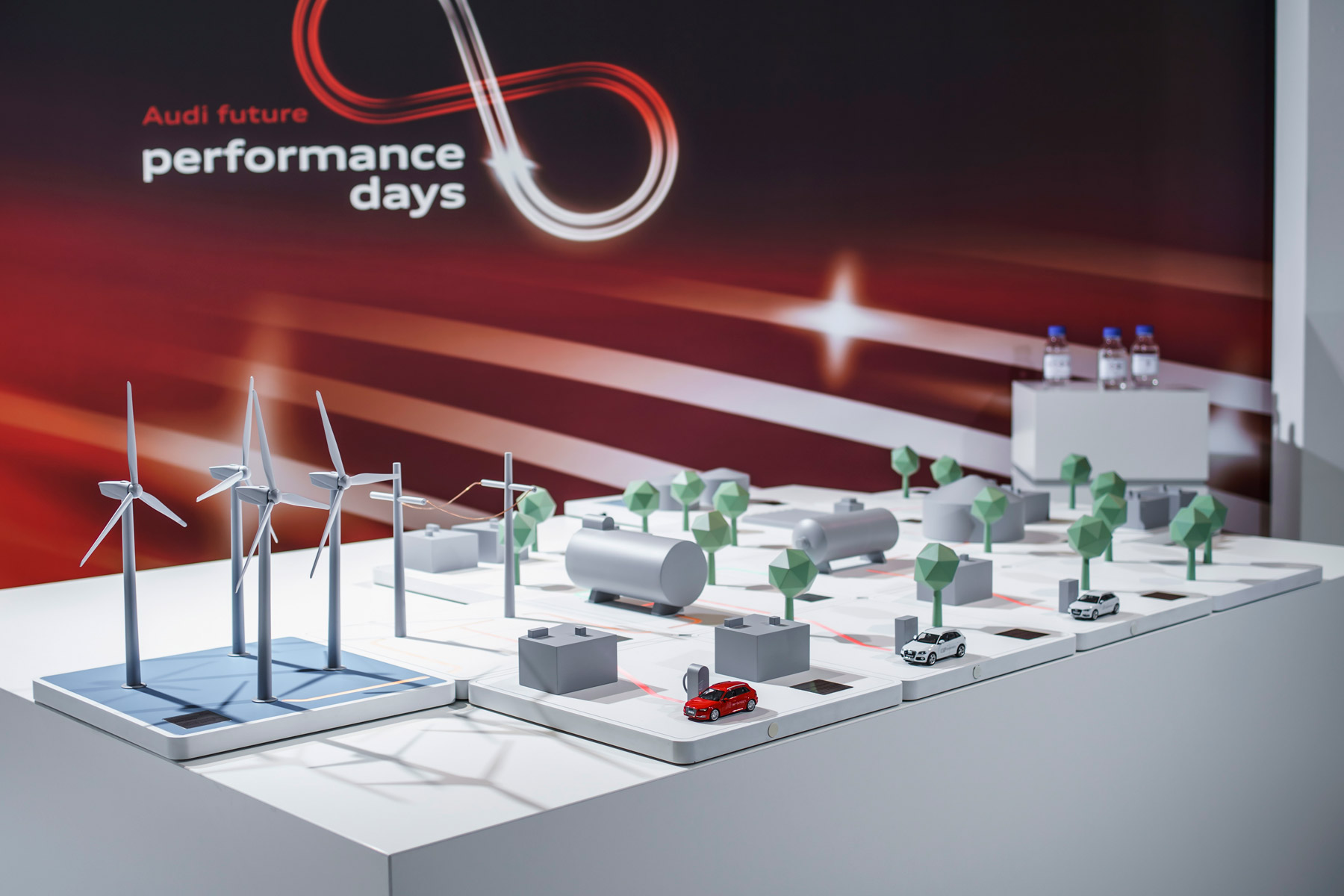
But what about Audi? How will Volkswagen Group’s premium marque move forward after taking a bit of a beating from dieselgate? We visited one of its ‘future performance days’ to drive the new Audi Q7 e-tron and find out what exactly it’s doing to prove its eco-credentials in the future. Here are six key findings we discovered – will they be enough to save Audi’s reputation?
Developing batteries
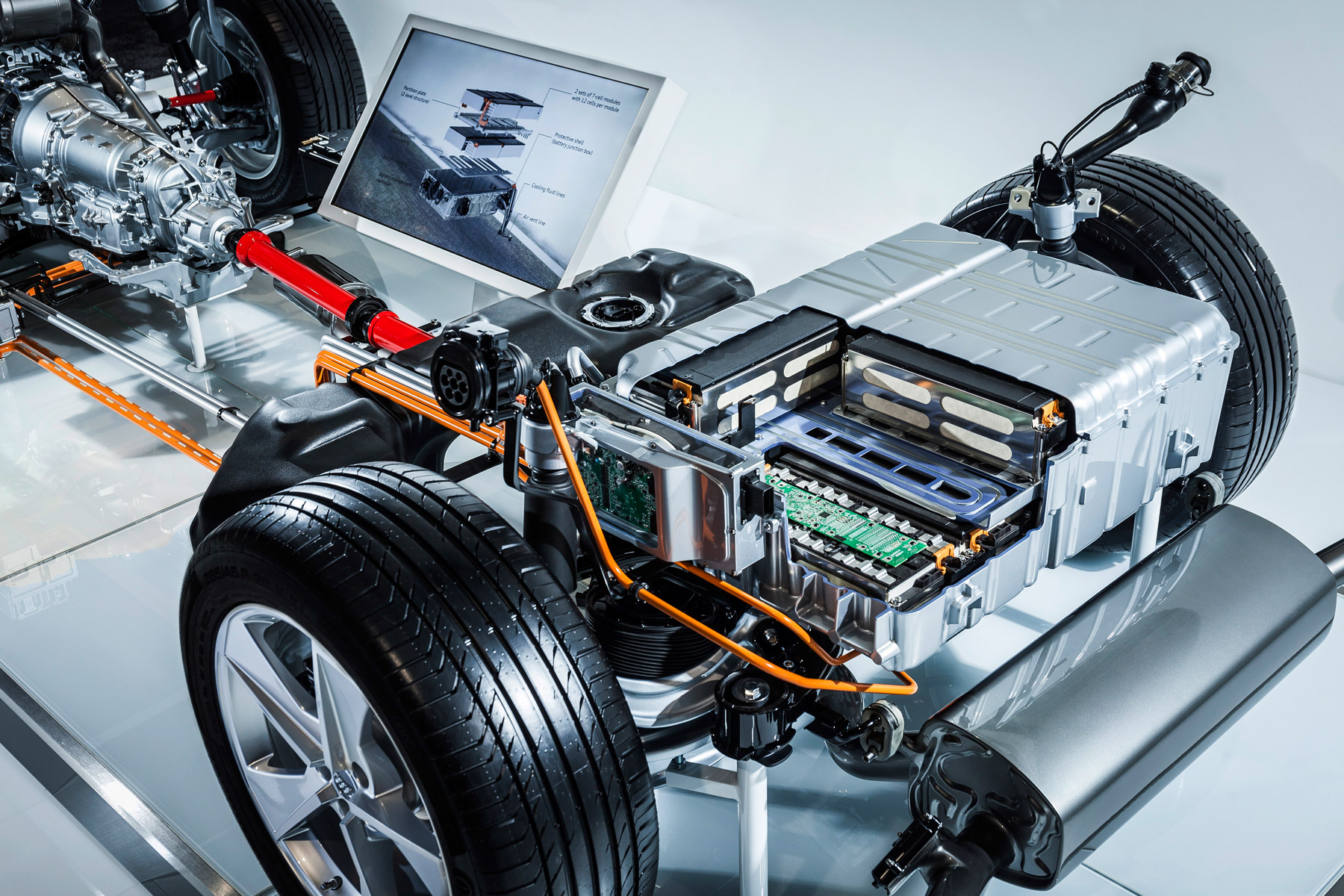
There’s one stand-out feature that makes a particular electric or hybrid model more competitive than its rival: the battery. Manufacturers are constantly developing their batteries – making them smaller and more efficient. Audi has opened a competence centre for high-voltage battery technology at Gaimersheim, close to its main Ingolstadt plant.
Here, Audi specialists are working on batteries for a wide range of future models. The company says that, without exception, its battery structure follows a uniform modular concept. So, just as the majority of Volkswagen Group cars are based on the same modular platform, in the future they will all share the same batteries.
Audi’s battery module, a cuboid aluminium housing slightly smaller than a shoe box, weighs just 13kg. It can accommodate different shapes and sizes of cells: including the round cells found in the R8 e-tron 2.0, prismatic cells (each about the size of a paperback book) or long, flat pouch cells.
While round cells are capable of storing a high amount of energy, they’re not as versatile as prismatic or pouch cells. These are more adaptable to the way they’re configured – so, while round cells are more suitable for electric-only vehicles, prismatic and pouch cells can provide maximum energy (and a longer range) or maximum power, or a combination of both. This makes them ideal for plug-in hybrid vehicles.
Over the last three years, Audi says, it has increased the capacity of prismatic cells by 50% – from 25 Ah to 37 Ah. That makes them more efficient and – over the same period – battery costs have also fallen dramatically. That means electric and hybrid vehicles are becoming an increasingly sensible proposition.
Added convenience
One of the main reasons many of us are cautious about new technology is the concern that it just isn’t convenient. How many chargers are there? How long does it take? How far can I go? We’re used to being able to stop at a fuel station, fill up with petrol or diesel within a matter of minutes and not have to return for at least another 400 miles.
But Audi is demonstrating ways that electric-powered cars could be even more convenient than the combustion-engined motors we’re used to. The next step, says Audi, is faster charging times.
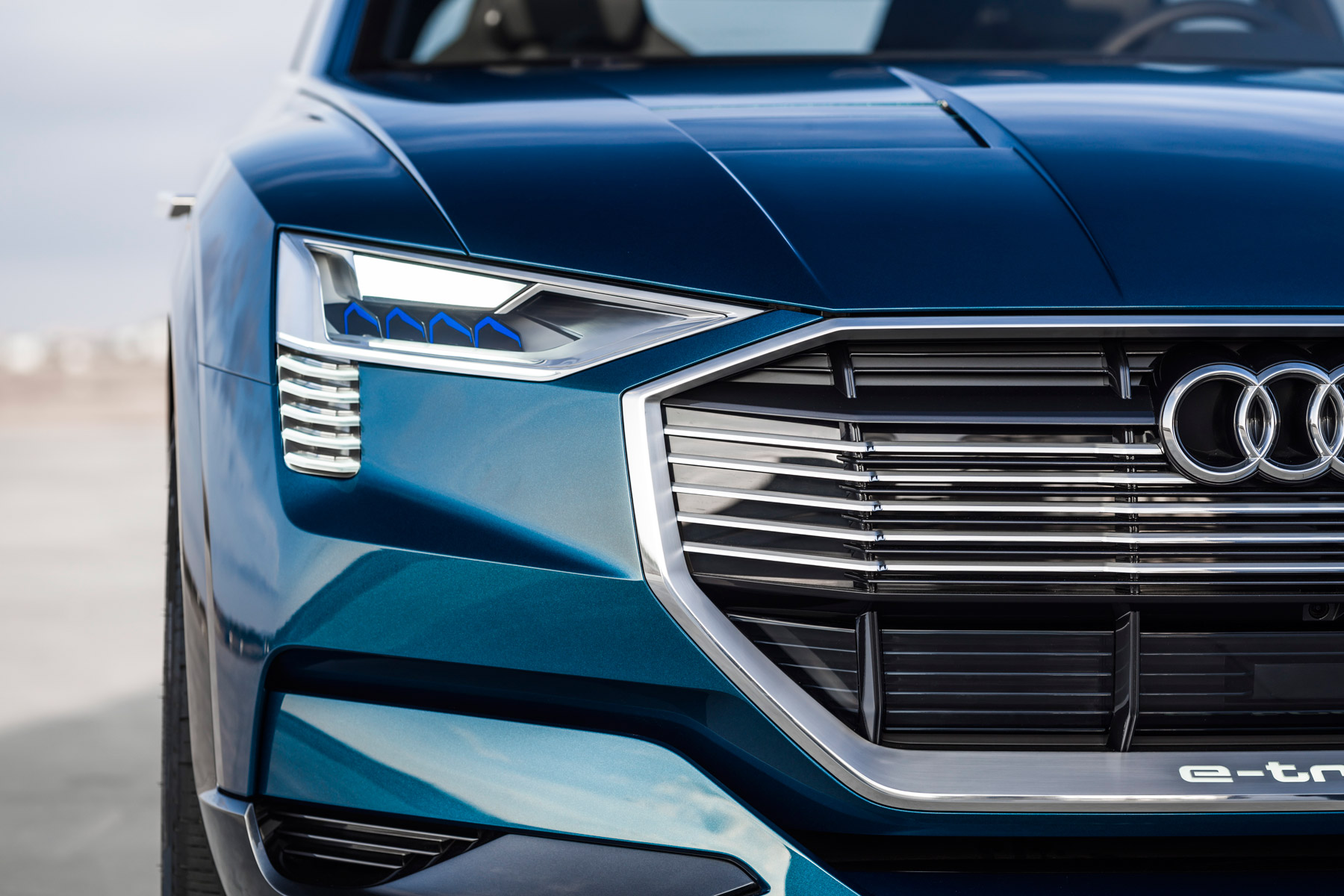
Using 150 kW direct current charging, due to be rolled out from 2017, Audi’s e-tron quattro concept would be able to charge its 95 kWh battery to 80% capacity in less than half an hour – providing a range of around 250 miles. A full charge, meanwhile, would take 50 minutes – and would provide enough power to cover more than 310 miles.
When you think that you only have to charge your car for 50 minutes every 310 miles, it starts to make a little more sense. But Audi admits there are limitations – saying direct current charging is ‘virtually impossible’ in the private infrastructure due to the limited grid power. Essentially, you won’t be able to charge your car this quickly at home without the plug overheating.
So what does it propose instead? Within two years it’ll be launching Audi wireless charging (AWC). Here, the car charges directly from the grid using a floor charging plate. When you drive your Audi e-tron within a few metres of the electric charging plate, it will establish radio contact with the car and, with Audi’s piloted parking systems, will even be able to manoeuvre itself into place.
Fuel cell development
Hydrogen-powered cars are tipped by many to be ‘the next thing’ in alternatively-fuelled vehicles. Audi has been developing them for years – we first saw the A2 H2 in 2004, and then followed the first- and second-generation fuel cell Q5s.
Its latest fuel cell car is the Audi A7 h-tron. Despite other manufacturers, including Hyundai and Toyota, already having hydrogen cars on the market, Audi is insisting that the h-tron is definitely nothing more than a prototype demonstrator. An engineer told us, “we won’t launch a fuel cell car until there’s the infrastructure.”
Currently there are just four hydrogen fuelling stations in the UK – all of which are in the South East.
We took the A7 h-tron for a brief drive and found it to be eminently likeable. It’s almost silent – apart from a few whirring noises that would be abolished if it made it as a production car, engineers assured us. But it’s as easy to drive as a conventional car (if not easier), providing the levels of comfort you’d expect from a premium car without the noise and vibrations traditionally associated with turbodiesels.
In fact, it seems almost production-ready. Engineers would tell us whether hydrogen is now a priority following the emissions scandal, but it does beg the question, why would they invest so much money into the development of fuel cell cars if they weren’t expecting them to go into production in the near future?
Turning water and CO2 into diesel
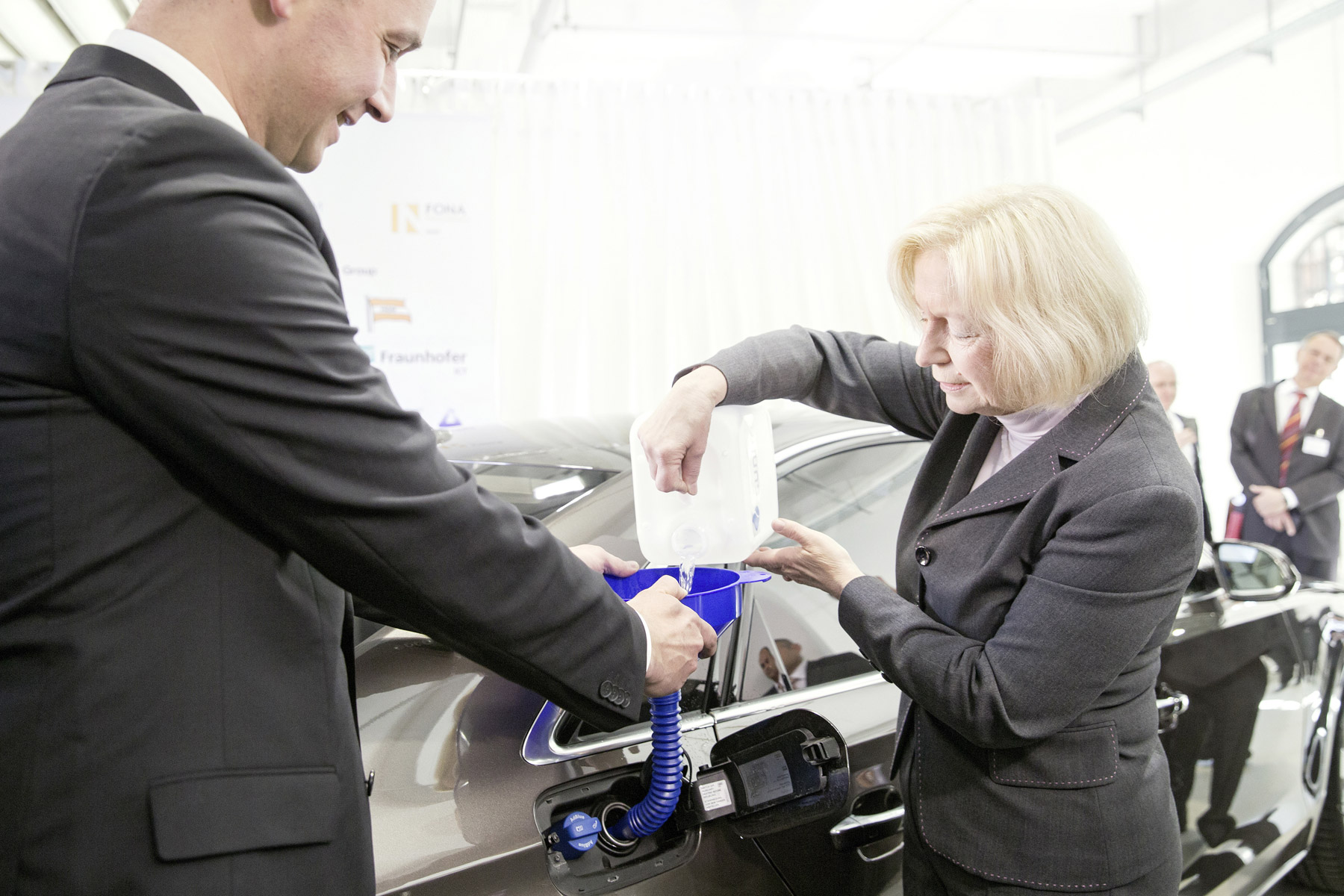
Imagine if you could make your own diesel out of water and carbon dioxide, rather than relying on fossil fuels? That’s exactly what Audi is able to do – with its Dresden e-diesel production plant opening in 2014. Earlier this year, Germany’s federal minister for education and research, Johanna Wanka, put some of Audi’s synthetic diesel in her official car, a 3.0-litre diesel A8.
She said: “This synthetic diesel, made using CO2, is a huge success for our sustainability research. If we can make widespread use of CO2 as a raw material, we will make a crucial contribution to climate protection and the efficient use of resources, and put the fundamentals of the ‘green economy’ in place.”
The fuel uses CO2 provided by a biogas facility, as well as a portion extracted from the ambient air through direct air capturing.
This reacts with hydrogen, extracted from water by means of high-temperature electrolysis. The result is a liquid known as ‘blue crude’, which is similar to fossil crude oil. It can then be turned into Audi’s e-diesel and can be mixed with regular diesel, or used as a fuel in its own right.
And it’s not just diesel that Audi’s creating. Its range of e-fuels, including e-gas, e-gasoline and e-ethanol all bind as much CO2 during production as they emit during combustion.
E-gas is created at Audi’s plant in Werlte. It creates a synthetic methane gas from water and carbon dioxide, with the help of wind power. As part of the process, it creates hydrogen that can be used to power fuel-cell cars such as the Audi A7 h-tron.
Energy recuperation
Manufacturers are getting increasingly clever when it comes to recuperating wasted energy. Most hybrid and electric vehicles, for example, will capture any energy being lost through braking and use it to charge up their batteries – meaning you don’t have to coast everywhere for it to be as efficient as possible.
But how else can energy be recuperated? One area in which carmakers have largely failed to make energy gains is through the suspension. But Audi is working on a clever rotary damper system that captures the kinetic energy usually converted into (and lost through) heat when it absorbs bumps in the road. This system would work particularly well on the UK’s bumpy roads. Essentially, when you hit a pothole, that energy is being converted into fuel. Clever or what?
Recycling used batteries
It’s no secret that batteries have a limited lifespan. The majority of us now own smartphones – and we all know that, after just a year, we have to charge them up more often.
The same is true of the batteries used to power electric cars. Audi designs these to last at least 90,000 miles or eight years, after which owners can replace them to enjoy the length of range their car was capable of when they bought it.
Disposing of electric vehicle batteries responsibly represents a challenge. But, after this period, Audi says there is still a lot of life left in their batteries – and as such, it’d be a waste to simply chuck them away. Under the banner of ‘from road to grid’, Audi is working on a concept of converting old batteries into stationary energy stores.
Essentially, used batteries will be piled up and used to store energy captured from the sun via solar panels. This power can then be pumped back into the grid when needed. Although Audi’s trial setup near Ingolstadt uses solar panels, there’s no reason why the batteries couldn’t be used to store energy from various forms of renewable energy sources, such as wind turbines.
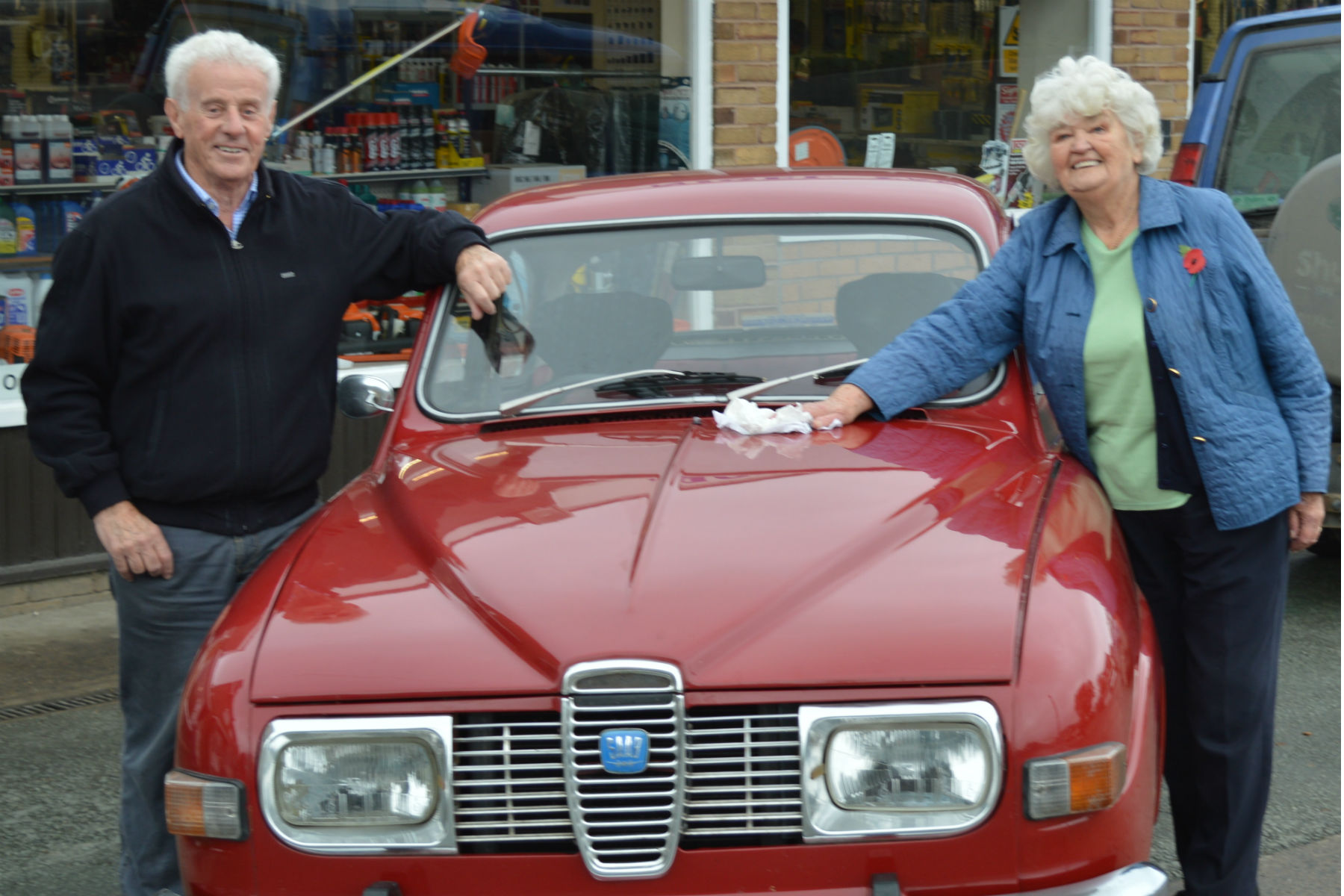
Saab fan and garage owner James Edwards couldn’t resist buying a Saab 96 at a classic car auction in October.
When he got the car home he discovered that his father had sold the car, registration number BAW 77IL, when it was new 43 years earlier.
1960 Saab 96: new arrival
John Edwards, 81, who retired from running Westbury Garage in 1996, fell in love with the Saab in 1972. He was so taken with it that he photographed it and hung its picture on the garage wall for many years.
He sold it for £1,023 and hadn’t seen it again until James brought it home from the Richard Edmonds’ Chippenham auction on 25 October.
Former garage employee, Doris Williams, now aged 86, was also reunited with the car, which she had washed while it was up for sale.
James Edwards said: “I was amazed to discover Dad had sold the car all that time ago. I knew there was a local connection, but had no idea it was such a strong one.”
Auctioneer Richard Edmonds added: “When James told us the story about the car and his father, we were blown away. I feel like we’ve played matchmaker in this story, which is wonderful for us and our team.”
James will display the car at Westbury Garage and use it occasionally. He is researching the car’s history, and would like any previous owners to contact him by email info@westburyonline.co.uk.
Volkswagen has issued a warning to motoring journalists that the fuel consumption and CO2 values in its media database ‘may be incorrect’.
Following on from last week’s revelation that it had discovered “irregularities in CO2 levels” in around 800,000 cars, the firm is warning the press that its media site may now be wrong.
Volkswagen scandal: CO2 emissions now in question
“Please take into consideration the CO2 emissions and therefore the fuel consumption data published on the VW media services website are therefore subject to reservation until this has been resolved and may be incorrectly stated.”
VW says the CO2 for around 800,000 cars may have been set too low: “the majority have diesel engines” but petrol models are also affected, for the first time in the Volkswagen emissions scandal.
The revelation last week that engineers may have cheated with CO2 emissions comes after Volkswagen admitted 11 million vehicles worldwide have been fitted with a ‘defeat device’ to cheat NOx emissions tests.
“Volkswagen will do everything in its power to clarify the further course of action as quickly as possible and ensure the correct CO2 classification for the vehicles affected.”
Last week, VW CEO Matthias Müller told EU officials Volkswagen would pay any additional costs related to revised CO2 emissions data, rather than customers: in the UK, VED road tax is linked to CO2.
It is not yet clear how VW would fund any costs involved in revised fuel consumption figures, should it confirm the 800,000 cars are returning fewer miles per gallon than first thought, though.
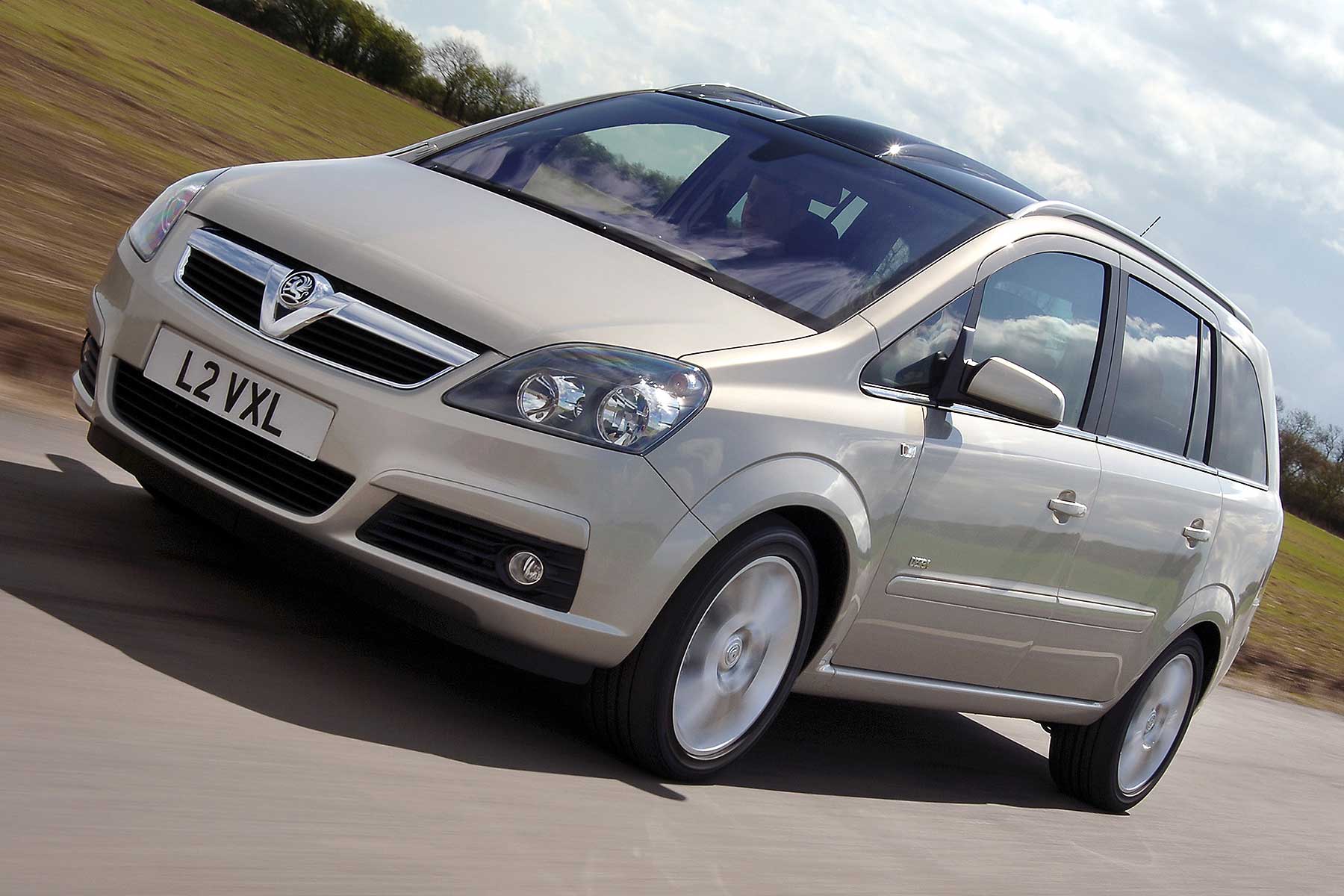
Vauxhall chairman and managing director Rory Harvey has released a video (watch it below) addressing customers about the recent reports of its Zafira model bursting into flames.
In the video, Harvey apologised for the issue and said: “Our investigation has found evidence of improper repairs of the blower motor resistor and its thermal fuse, which is designed to protect the blower motor system.”
Motoring Research has discovered hundreds of cheap Vauxhall Zafira blower motor resistors being sold on eBay. While it’s not confirmed if they’re linked to the fires, the internet parts are unlikely to be genuine and will correspond with Vauxhall’s implication that cars have been repaired incorrectly.
Harvey added: “At this stage, further analysis is ongoing towards verifying the root cause of the fires. This leads me to why it has taken some time to find the root cause and provide an answer.
“Unfortunately, fires in cars can provide a major challenge to investigators as many are damaged beyond investigation. As such we need to get to the root cause through a detailed analysis of a significant number of vehicles.”
But owners have reacted sceptically to the issue. Darren Lee McCarney posted in the Vauxhall Zafira car fires Facebook group, which originally highlighted the fires, saying: “Vauxhall has made a statement heavily guided by a legal team. That video wasn’t a man concerned for people lives, that was a video of a well-prepared legally-versed puppet promising nothing more than we are already getting.”
Stephen Mitchell added: “He doesn’t want to speculate only facts, yet he is blaming non-genuine parts. Says are cars are safe after the checks but doesn’t know the root cause! What about cars that have had genuine parts fitted and gone up! A carefully worded statement about what we already know to try pull wool over our eyes to make them look good!”
Only Zafira B models, built between 2005 and 2014 are affected, and only those fitted with the standard air conditioning unit, rather than the similar-looking climate control system.
Vauxhall is now writing to 220,000 owners asking them to take their Zafira to their local dealership for a free inspection. Any suspect components will be changed free of charge.
The manufacturer is yet to confirm if any other models are affected.
The Environmental Protection Agency (EPA) has revealed that other diesel engines may be affected by the Volkswagen emissions scandal after finding evidence of a defeat device on 3.0-litre TDI Audi, Porsche and Volkswagen models.
The defeat device “increases emissions of nitrogen oxide (NOx) up to nine times EPA’s standard,” says the U.S. agency – which has issued a second notice of violation of the Clean Air Act to Volkswagen AG.
The EPA states the following models are affected:
2014 Volkswagen Touareg
2015 Porsche Cayenne
2016 Audi A6 quattro, A7 quattro, A8, A8L, Q5
“VW has once again failed its obligation to comply with the law that protects clean air for all Americans,” said the EPA’s Cynthia Giles.
The latest violations affect around 10,000 cars sold since the 2014 model year, plus “an unknown volume of 2016 models”.
Volkswagen has since released a statement denying the allegations. The firm said it “wishes to emphasise that no software has been installed in the 3-litre V6 diesel power units to alter emissions characteristics in a forbidden manner”.
Random testing
The latest Volkswagen Group Clean Air Act violation was discovered during a randomised screening process of U.S. diesel cars conducted by the California Air Resources Board.
“These tests have raised serious concerns about the presence of defeat devices on additional VW, Audi and Porsche vehicles,’ said CARB executive officer Richard Corey.
“This is a very serious public health matter. ARB and EPA will continue to conduct a rigorous investigation that includes testing more vehicles until all of the facts are out in the open.”
The first notice of violation was issued to Volkswagen AG by the EPA on 18 September, after it discovered the presence of emissions test cheat code that caps NOx emissions during official testing – but lets vehicles emit up to 40 times the legal limit during on-road use.
The EA 189 2.0-litre TDI is the engine in question.
Since then, Volkswagen’s share price has plummeted as the firm has found 11 million vehicles worldwide contain defeat device coding.
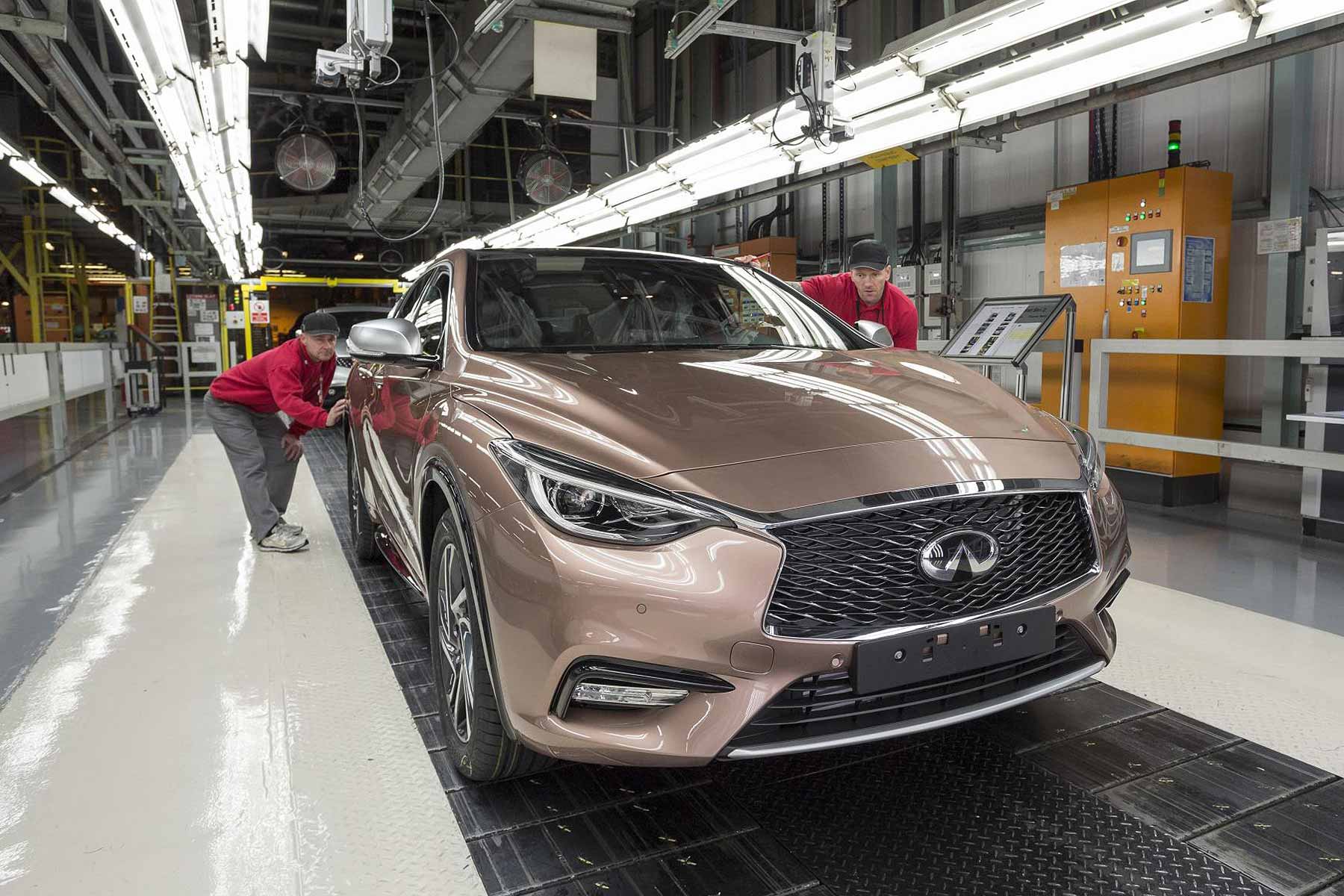 Infiniti has officially opened its first ever European production facility with the launch Q30 today leaving the assembly line in Sunderland – bringing £250 million new investment and 300 new jobs to Britain.