Home Blog Page 540

70 years of Ferrari: the greatest from each decade

0

70 years of Ferrari: the greatest from each decadeIn 1947, just eight years after leaving Alfa Romeo, Enzo Ferrari built the first car to wear a Ferrari badge. Now, 70 years later, it’s left to us to select the cars that define the history of the Prancing Horse.

“The best Ferrari is the next one,” as Enzo Ferrari famously said, so on that basis the best is yet to come. But how did we go about selecting the greatest Ferraris from the past 70 years?

It’s a highly subjective opinion, of course, but by selecting two from each decade, it focused our minds on choosing the very best. This means that some Ferraris that might have made an overall list of the top 10 will have missed out.

  • Justin Bieber is selling his modified Ferrari 458
  • Ferrari 328 GTS review: Retro Road Test
  • More car news on Motoring Research

1940s: Ferrari 125 S70 years of Ferrari: the greatest from each decade

Enzo Ferrari worked at Alfa Romeo for ten years, heading up the Scuderia Ferrari racing department. He left in 1939 and – cutting a long story short – formed a company called Auto Avio Costruzioni, developing a car at a workshop in Modena. But this wasn’t the first car to wear a Ferrari badge. No, that honour belongs to the 125 S.

By Enzo’s own admission, the 125 S’s racing debut was “a promising failure”, but it laid the foundations for the next 70 years. After just five months, the 125 S had achieved six wins from 14 races.

1940s: Ferrari 166 MM70 years of Ferrari: the greatest from each decade

Enzo’s first car – the Auto Avio Costruzioni 815 – was designed by Carrozzeria Touring of Milan and, eight years later, Ferrari returned to the coachbuilder to pen the body of the 166 MM (Mille Miglia). It wasn’t the first Ferrari, but it was arguably the most significant to date, becoming a dominant force in motorsport and setting a trend for a succession of barchettas and spiders.

It made its debut at the 1948 Turin Motor Show, with the show car sprayed red and featuring a real leather interior. Significantly, the 166 MM enjoyed success at Le Mans, Spa and the Mille Miglia.

1950s: Ferrari 250 GT California Spider70 years of Ferrari: the greatest from each decade

Selecting the two greatest Ferraris from the 1950s is slightly trickier. The 250 GT California Spider makes the cut, but not because of its role in Ferris Bueller’s Day Off. This is one of the most beautiful cars ever built and ranks amongst the most expensive cars ever sold at auction. Indeed, a barn-find 250 GT SWB California Spider sold for $18.5m in 2015.

The LWB (long-wheelbase) version was built between 1958 and 1960, while the SWB (short wheelbase) was in production from 1960 to 1962. It’s the SWB that’s the more valuable of the two and as such it should slot into the 1960s category. But when you discover what we’ve chosen for the 60s, you’ll understand why we’re including the 250 GT California Spider under the banner of the 1950s.

1950s: Ferrari 250 Testa Rossa70 years of Ferrari: the greatest from each decade

Our second choice is the 250 Testa Rossa, so called because of its red valve covers. It became one of the most successful cars in Ferrari’s history, but this was no track-only special. These 3.0-litre V12-engined cars were road legal, despite looking like Formula One race cars.

The 300hp 250 TR could reach speeds of up to 170mph, propelling it to victory in the 1957 World Sports Car Championship, Ferrari’s third consecutive win. In 2014, chassis 0704 sold for a record £24 million. Historian Marcel Massini described that car as one of the top five Ferraris on the planet. Just one reason why we’ve included the 250 Testa Rossa on our list of true greats.

1960s: Ferrari 250 GTO70 years of Ferrari: the greatest from each decade

The first name down on the team sheet and the reason why there’s only one berth available in the 1960s category. It is, of course, the 250 GTO, probably the best Ferrari… in the world. Formidable on the track, and just as good on the road, Ferrari managed to dodge homologation rules by building just 36 cars.

A prototype was tested by Stirling Moss, before being unveiled to the public in February 1962. A year earlier, Enzo Ferrari had described the Jaguar E-Type as the most beautiful car ever made. With its long bonnet, ‘droop snoot’ nose and stubby tail, the 250 GTO could rival the E-Type in the beauty stakes. A star was born.

1960s: Ferrari 365 GTB4 ‘Daytona’70 years of Ferrari: the greatest from each decade

The 50s and 60s were a golden era for Ferrari, so much so that we’ve been forced to leave out cars that could otherwise have beaten Ferraris from different decades. The 365 GTB4 was unveiled at the 1968 Paris Motor Show, and was immediately christened the ‘Daytona’, in honour of Ferrari’s 1-2-3 victory at the 24-hour race in 1967.

This was the last 12-cylinder Ferrari announced before Fiat took control in 1969, with Maranello sticking to the front-engine layout, at a time when mid-engined cars were in fashion. Early cars featured a strip of Plexiglass in front of the lights, but this was replaced by pop-up units to comply with US safety legislations. In 1969, Ferrari launched a spider version, which accounted for 10% of sales. Either way, the ‘Daytona’ is arguably the coolest Ferrari ever built.

1970s: Ferrari 308 GTB/GTS70 years of Ferrari: the greatest from each decade

And so to the 1970s, where we start with the Ferrari 308 GTB and GTS. These were hugely significant cars for the marque, delivering sales success previously unknown to Ferrari. The 308 GTB came first, at the 1975 Paris Motor Show, and was the first Ferrari to feature a fibreglass body.

Later, Ferrari returned to traditional pressed steel and aluminium, before the arrival of the 308 GTS in 1977. The most famous targa-topped model is arguably the 1984 car, driven by Tom Selleck in the Magnum P.I. TV series. In January 2017, it sold at auction for £144,150.

1970s: Ferrari Berlinetta Boxer70 years of Ferrari: the greatest from each decade

Leaving aside the Dino-badged models for a moment, the Berlinetta Boxer (BB) represented a turning point for Ferrari. Launched in prototype form at the 1971 Turin Motor Show, the 365 GT4 BB was powered by a central-longitudinally mounted V12 engine, enveloped in a body designed by Pininfarina.

In 1976, the 365 GT4 BB evolved into the BB and later into the BBi, complete with Bosch fuel injection. Eric Clapton is a fan, so much so that he commissioned Ferrari to build a tribute to the BB using a Ferrari 458 Italia. The result was a one-off SP-12, which cost ‘Slowhand’ a cool £3m.

Ferrari 288 GTO70 years of Ferrari: the greatest from each decade

Selecting two Ferraris to represent the 1980s was an easy task. The Ferrari GTO – commonly referred to as the 288 GTO – was built to compete in Group B rallying, but when the FIA pulled the plug, the GTO was left without a party to attend. As a result, the GTO never raced, leaving all 272 units to fall into private hands.

As you’d expect from a race-bred, 400hp twin-turbocharged V8 supercar, demand was high, so much so that Ferrari sold each one to order, before the car went into production. In any other company, this would have been the greatest car of the decade. But Ferrari had another ace up its sleeve…

1980s: Ferrari F4070 years of Ferrari: the greatest from each decade

The 250 GTO might be the purists’ choice as the greatest Ferrari of all time, but the F40 would win if judged on universal appeal. It’s the poster star for a generation; the supercar we grew up wanting.

It was the last new-car presentation attended by Enzo Ferrari before his death in 1988, and built to celebrate the 40th anniversary of the marque. Like the 250 GTO, it felt like a race car for the road, with extensive use of composite materials for the chassis, a glassfibre body and a stripped-back interior. Such was the demand, Ferrari built 1,311 F40s between 1987 and 1992.

1990s: Ferrari 456 GT Venice70 years of Ferrari: the greatest from each decade

For the first time since the 365 GTB4, Ferrari returned to a front-engine layout for the launch of the 456 GT. It was the ultimate GT car, featuring a 5.5-litre V12 engine and a sumptuous interior with space for four. Good enough to make our list of greatest Ferraris? Not quite…

If you’ve got the funds, anything is possible, as demonstrated by the sublime 456 GT Venice. Prince Jefri Bolkiah of Brunei liked the idea of a 456 GT wagon so much, he ordered seven units from Pininfarina. He purchased six of them, each one costing a cool $1.5m.

1990s: Ferrari F35570 years of Ferrari: the greatest from each decade

Beautiful, isn’t it? On looks alone, the F355 is worthy of consideration when producing a list of great Ferraris. Although the shape was inspired by the 348, Pininfarina spent a huge amount of time perfecting the aerodynamics of the F355, moving the game on considerably.

Note the air intakes, which you can see, and the flat bottom, which you can’t: two factors that optimised airflow distribution. The aerodynamics helped the F355 to achieve a top speed of around 183mph, while a later car – called the F1 – featured Formula One style paddles behind the steering wheel.

2000s: Ferrari Enzo70 years of Ferrari: the greatest from each decade

In 2002, the Ferrari Enzo represented the very pinnacle of supercar development. It was, almost quite literally, a Formula One car for the road, right down to its use of composite materials, advanced aerodynamics and top speed of 350km/h (217mph). It was a fitting tribute the company’s founder, who had died 14 years earlier.

Ferrari built 400 units, each one featuring a chassis made entirely from carbon-fibre and aluminium honeycomb sandwich panels. It was also the first Ferrari road car to feature carbon-ceramic disc brakes.

2000s: Ferrari 430 Scuderia70 years of Ferrari: the greatest from each decade

None other than Michael Schumacher helped develop the Ferrari 430 Scuderia, with the F1 driver completing lap after lap on the Nürburgring in an attempt to hone the car to within a millimetre of perfection. The result was a car with 510hp, a top speed of 198mph and a 0-62mph time of 3.6 seconds. But while these figures might be good for Top Trumps, they only tell half the story.

It’s not that the standard 430 wasn’t a great car, it’s just that the ‘Scud’ took things to an entirely new level. The F1-SuperFast2 gearbox reduced shifts to a 60 thousandths of a second, the F1-Trac differential was straight out a Grand Prix car, while other details included a new rear diffuser and a specific Gurney flap on the engine cover.

2010s: Ferrari FF70 years of Ferrari: the greatest from each decade

One car is a shoe-in for the current decade, but what of the other choice? We’ve opted for the Ferrari FF, on the basis that it took the marque in a new direction. When it was unveiled in 2011, the motoring world looked on with amazement. Here was Ferrari’s first four-wheel-drive car, with enough space to seat four people in total comfort.

It was a clever move by Ferrari, not least because it allowed the brand to expand into new markets, such as China, where supercar owners like to take their family along for the ride. It was also the first time a V12 engine had been mated to a seven-speed dual-clutch F1 gearbox.

2010s: Ferrari LaFerrari70 years of Ferrari: the greatest from each decade

Ferrari built 500 LaFerraris, 499 of which were sold on an invite-only basis. The remaining car was sold at auction to raise money for the Italian earthquake disaster. It raised £5.5 million, five times more than the cost when new.

That it’s one of the greatest Ferraris of all-time is in no doubt. Indeed, Ferrari liked it so much, it decided to christen it ‘The Ferrari’.

Ferrari J5070 years of Ferrari: the greatest from each decade

What about the cars that got away? We could make a strong case for the 458 Italia, which straddles two decades. Then there’s the F12 Berlinetta, the F12tdf, the Dino 246, 250 GT Lusso, 330 GTS, 488 Spider… the list could go on.

But what of the present and the future? In December 2016, Ferrari unveiled the J50, another limited edition built to celebrate the 50th anniversary of Ferrari in Japan. Only 10 will be built.

Ferrari 70th Anniversary70 years of Ferrari: the greatest from each decade

In 2017, Ferrari will celebrate 70 years in the business by creating 70 bespoke cars. Seventy liveries will be rolled out, each one created just the once for every car in the current range.

All the cars will come complete with a 70th anniversary logo, along with a plate stating the name of the model that inspired it. Of course, you’ll already know this, as you will have received an invitation to place an order. Here’s to the next 70 years.
Advertisement

Ford Mustang slammed for two star Euro NCAP crash test

0

Ford Mustang slammed for two star Euro NCAP crash test

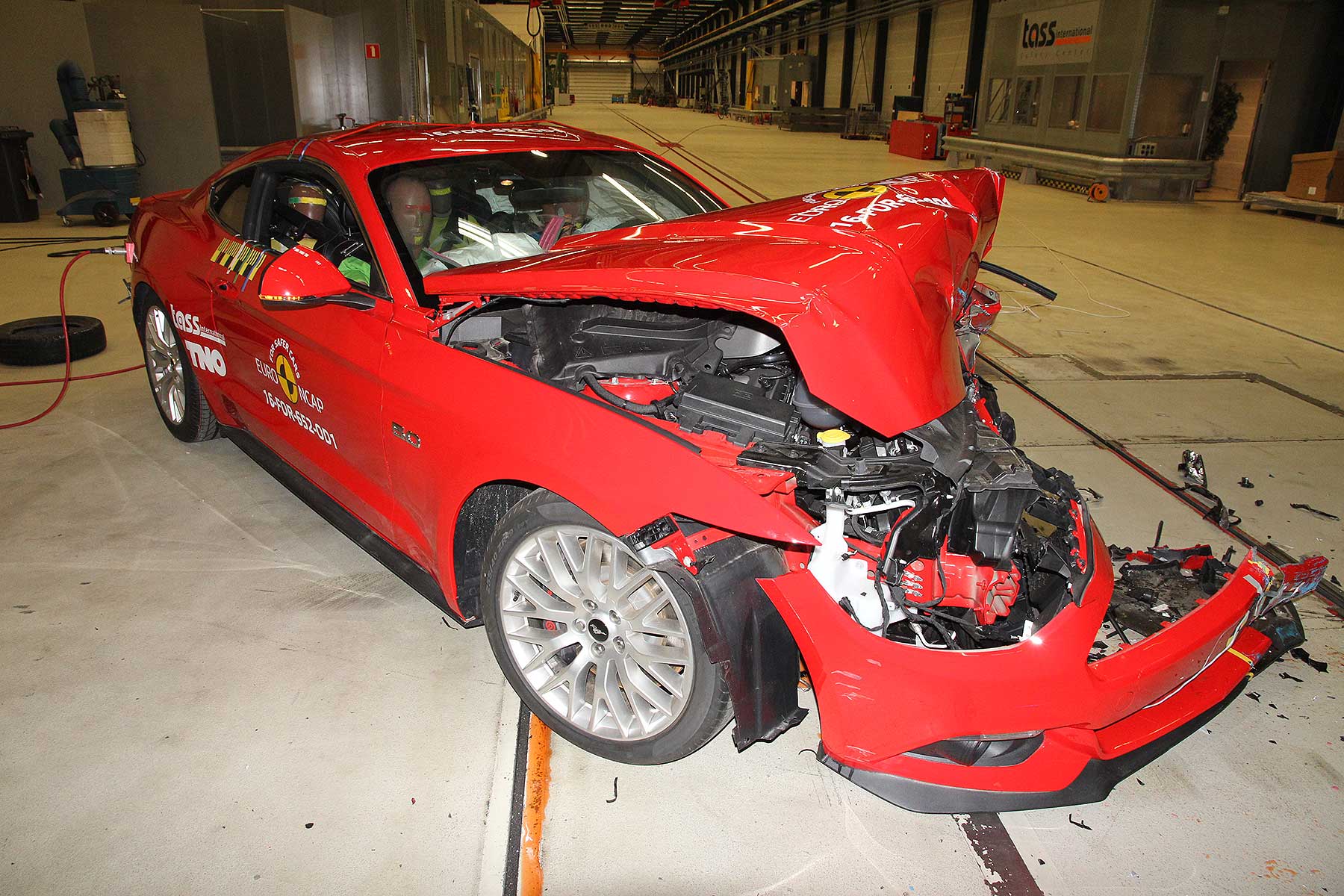
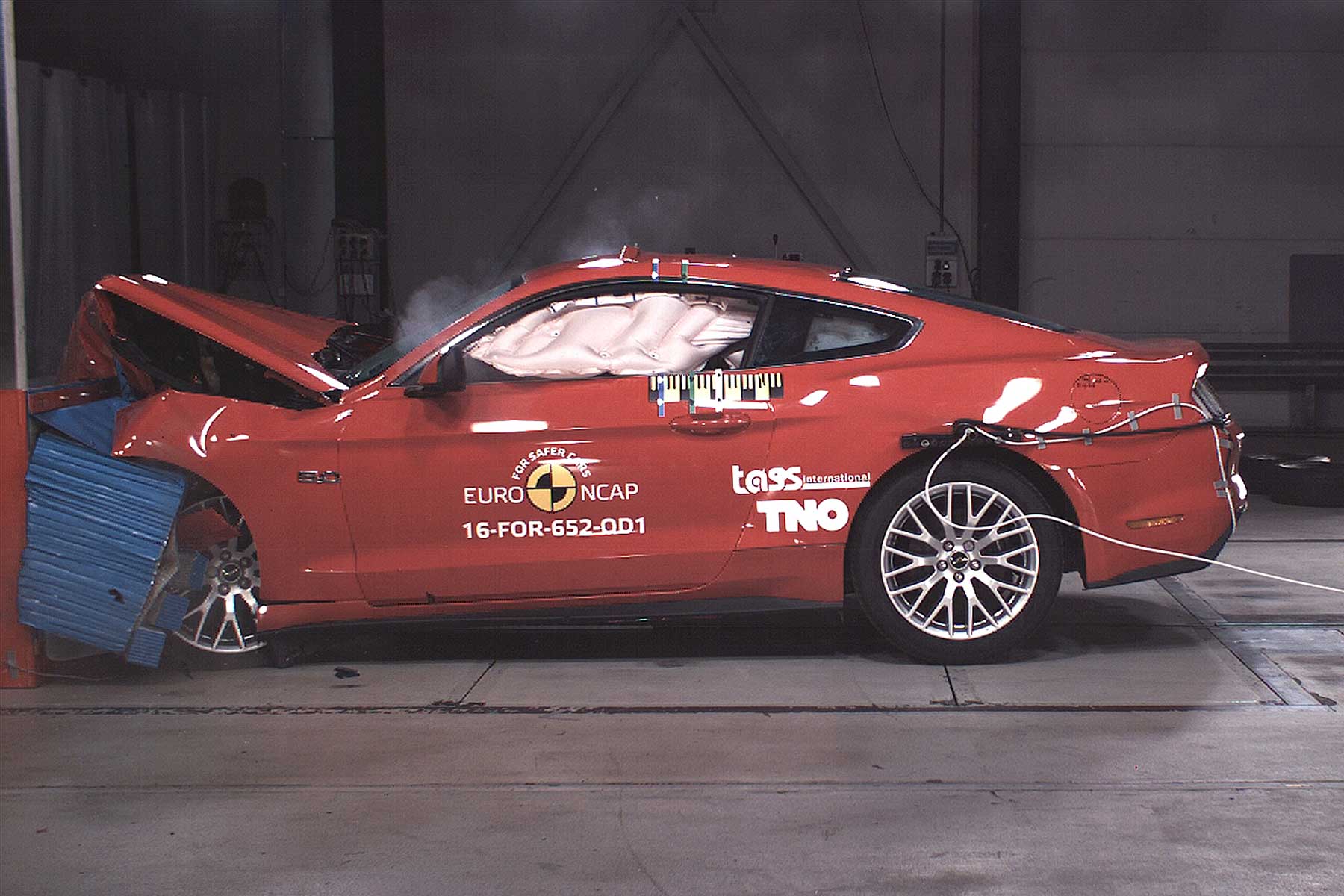
The Ford Mustang has become the first car from a mainstream car manufacturer to be given a two-star Euro NCAP safety rating since 2008.

Thatcham, the company that oversees the official NCAP crash test, has criticised Ford for selling the Mustang in the UK without important safety technology that’s available in the USA.

“Ford has made a deliberate choice,” explains Thatcham Research’s director of research, Matthew Avery.

“The car has been designed to score well in less wide-ranging US consumer safety tests and only minor updates have been made to meet required European (pedestrian) safety regulations.

“This has resulted in poor adult and child protection scores and the high-tech radar collision warning system that is available to US consumers not being available here in the UK. The two-star Euro NCAP rating is the consequence.”

During the test, the driver and passenger airbags failed to inflate sufficiently in an offset front collision.

In the full-width front impact test, a rear passenger was found to slide under their seatbelt. Rear seatbelt pre-tensioners and load-limiters would prevent this, Thatcham says.

Ford Mustang slammed for two star Euro NCAP safety rating.

A facelift for the Mustang, due to go on sale in September 2017, will have extra safety technology as standard, Ford says, including pre-collision assist and lane-keep assist. This could result in a higher NCAP score when re-tested.

“This really bucks the trend,” adds Avery. “Car buyers are increasingly benefiting from improved safety functionality and features, and this applies equally to cars in the sports roadster category as to family cars.

“We have concerns about the Ford Mustang’s crash protection of adults and children which also makes it unsuitable for having rear passengers. On top this, it does not have basic life-saving technology like autonomous emergency braking that is available even on the Ford Fiesta, and the recently-launched Ford Edge.”

Ford has hit back, telling Motoring Research the Mustang is “fundamentally a safe car,” achieving five stars for pedestrian safety, four for front occupants and three for child occupants. Despite this, a spokesman admitted they found the overall result “disappointing”.

NCAP has also tested the new Volvo S90 and V90 – both of which have been awarded five stars and praised for their “class-leading safety”.

“It does make you wonder if anything rubbed off on Ford from the Volvo/Ford partnership,” concludes Avery.

Advertisement

Driving to France? You’re risking a fine if you don’t display this sticker

0

Driving to France? You're risking a £117 fine if you don't display this sticker

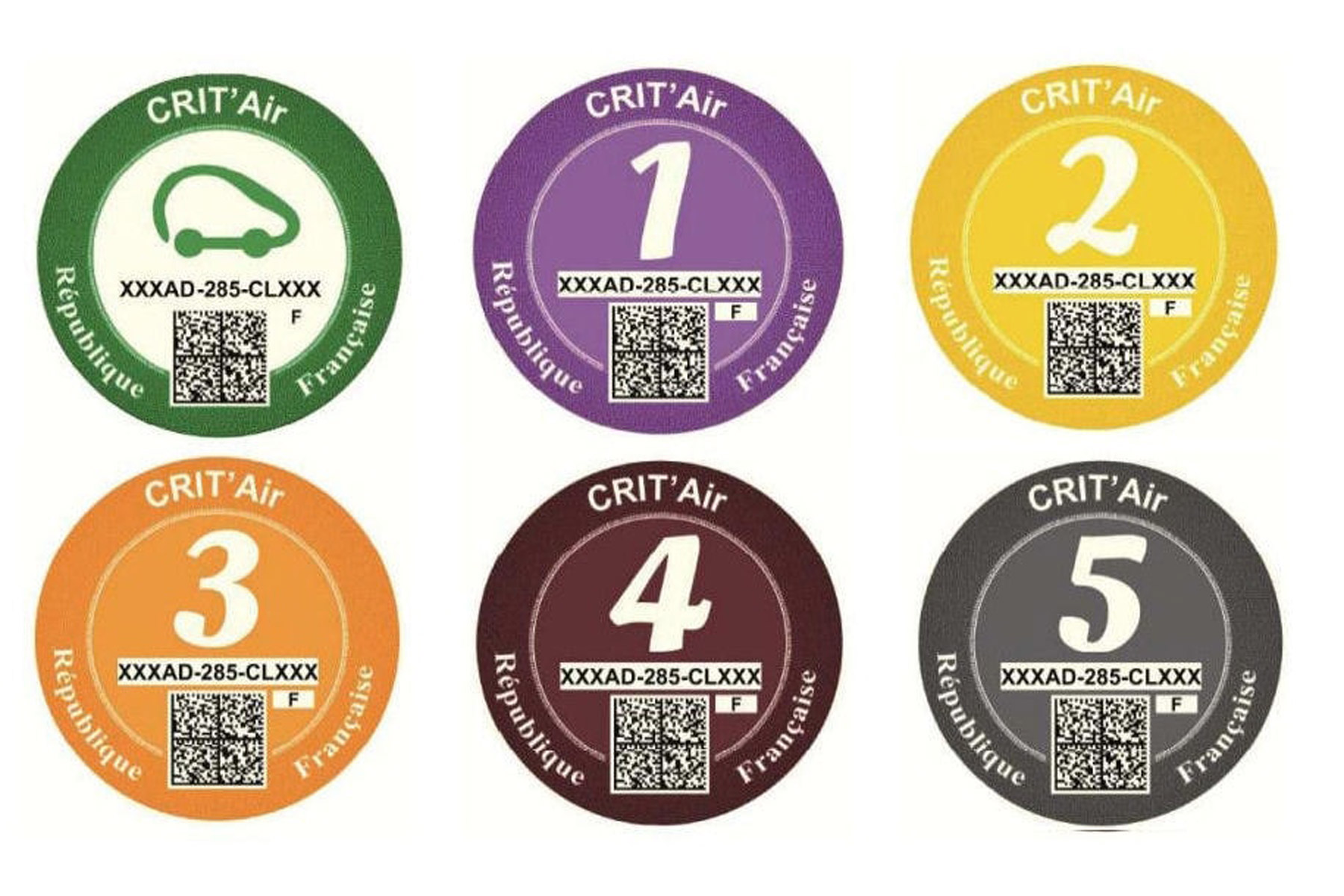
A new emissions system being introduced in cities across France could see British drivers hit with fines of up to £117 if they don’t display a special sticker that can be bought for just £3.20.

The Crit’Air vignette was introduced in Lyon and Grenoble on 1 January, with Paris following on Sunday 22 January.

  • Travelling to France? Do not stock up on fuel in cans warns RAC
  • 7 new laws drivers need to know
  • More car news on Motoring Research

It puts vehicles into six categories based on their emissions: from the cleanest electric or hydrogen-powered cars (Crit’Air 1), to the dirtiest (Crit’Air 6). The categories correspond to the six European Union emission standards for cars – dating back to 1992 when Euro 1 was introduced.

Drivers in Paris failing to display a sticker could be hit with an on-the-spot fine of between €68-135 (£58 to £117).

There’s a catch, though – the website where you can buy the vignette is only available in French, making it difficult for British holidaymakers to comply with the regulations. An English language website is expected in the near future.

The RAC’s European breakdown spokesman Simon Williams said: “Anyone caught without a sticker risks a fine of up to £117, although we understand the French police are likely to be lenient in the early days.”

If you’re expecting to drive through Grenoble, Lyon or Paris you’ll need to know the European emissions standard of your vehicle to apply for the sticker. If your car is a modern Euro 5 or 6 standard vehicle (including all cars registered since September 2009), you’ll be able to find its category in section D2 of the V5.

The ultimate aim is to ban the highest emitting vehicles from cities across France – particularly on days where pollution is particularly high.

Vehicles that are too old to be given a vignette (including cars registered before 1997) are already banned from being driven in Paris between 8am on 8pm on weekdays.

Advertisement

Norfolk sports car manufacturer Zenos has gone into administration

0

Norfolk sports car manufacturer Zenos has gone into administration

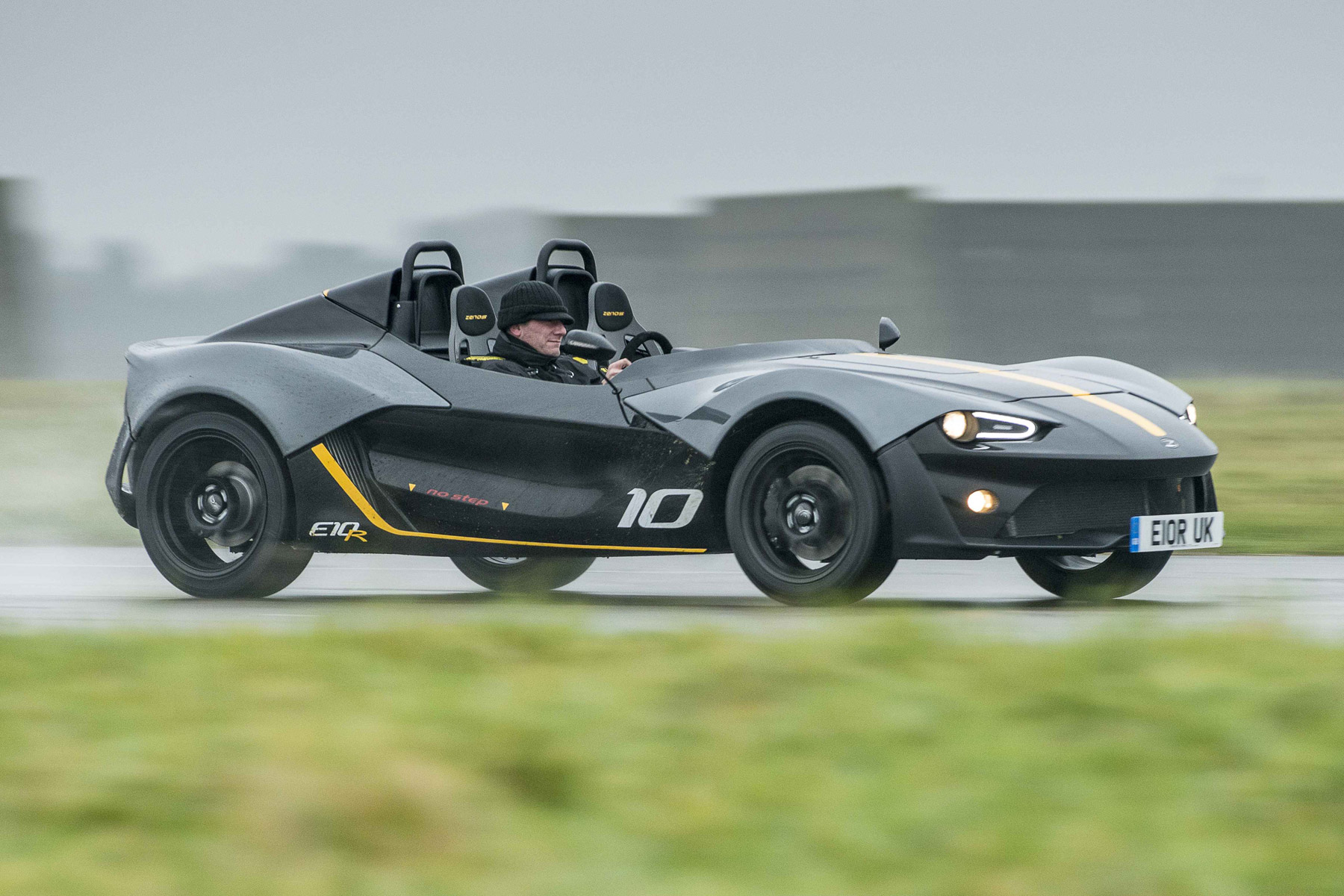
The start-up manufacturer of the brilliant Zenos E10 has gone into administration, blaming a “recent downturn in trade” for its misfortunes.

Norfolk-based Zenos employs more than 20 employees and was originally founded by ex-Caterham and Lotus employees Ansar Ali and Mark Edwards.

“Zenos Cars Limited has appointed Irvin Cohen and Gary Shankland of Begbies Traynor (London) LLP as joint administrators of the company, following a recent downturn in trade,” explains the firm in a release earlier today.

“The appointment was made by the board of directors of the company on 16 January 2017 after cancelled export orders in late 2016 resulted in a shortfall in funding, forcing the business to cease trading.”

The carmaker’s managing director, Mark Edwards, said: “It is with great disappointment that the board has had to take this step.

“We still believe that our products offer unrivalled affordable fun and we have already made very good progress in developing the next product in our strategy.”

The company offered no-thrills sports car available from as little as £24,995 – and even offered tempting finance packages for its line-up.

When Motoring Research drove the Zenos E10 S in 2015, we awarded it five stars, concluding: “It’s brilliant to drive, exciting to look at and sit in, wonderfully purist and pleasingly modern.”

The administrators have said they’re not giving up hope that a buyer can be found.

“We are currently open to speaking with parties interested in securing a future for the business and would request that any enquiries are made directly with our London office,” said Gary Shankland, joint administrator and partner at Begbies Traynor.

Advertisement

Young drivers warned: lie about your insurance and lose your car

0

Young drivers warned: lie about your insurance and lose your car

The RAC has discovered that almost half of young drivers are willing to name a parent as the main driver of their car in a bid to save money on insurance.

The motoring organisation’s survey of 500 17 to 24-year-olds found that 47% didn’t see the problem with ‘fronting’ – despite it being an illegal practice that could leave your car uninsured.

This is despite the majority (57%) of young motorists questioned admitting they realise the act is against the law.

“Fronting is where someone other than the main driver of a car is said to be the policyholder,” said the RAC’s insurance director Mark Godfrey. “In the case of a young driver who is the most frequent driver of a vehicle, this tends to be a parent with a longer, proven good track record as a driver and therefore attracts a lower insurance premium than their son or daughter would.”

With 18- to 20-year-old drivers paying £993 a year for car insurance on average, it’s not a surprise to see young people resorting to desperate measures in a bid to save cash.

The RAC says that young men know more than young women about fronting – perhaps because of the myth that males pay more for their insurance than women.

Godfrey added: “It’s important for anyone who has done this to realise that it could result in invalidating the policy for everyone covered by it, not just the young driver concerned. What’s more, its illegal activities like this that increase the overall cost of insurance for all young drivers.

“The fact our research shows more young males are aware of fronting may be because they think their insurance premiums will be higher than young women’s which, of course, is no longer the case since the EU ruling that gender cannot be used in determining premium prices.”

If drivers are found to be fronting, their insurance company might refuse to pay out in the case of a crash, and could force them to compensate for damage caused to other vehicles.

You could also be refused insurance in the future, be charged more – and the police could hit you with a £300 fine and six penalty points for driving without insurance. Your car could also be confiscated.

The RAC says young drivers should reduce their car insurance costs by legal methods such as buying a car with a smaller engine or having a telematics ‘black box’ system fitted to monitor their driving behaviour.

Advertisement

2017 VED road tax rules: a five-minute guide

0

changes to road tax 2017

From 1 April 2017, Vehicle Excise Duty – commonly known as road tax – is set for some major changes. If you’re looking to buy a new car in 2017, you really need to know about these and how they might affect you.

First things first – if you own a car registered before 1 April 2017, the changes don’t affect you. But if you’re in the market for something new, you have until the end of March 2017 if you don’t want to be stung by the reforms.

And that’s because, while there’s good news for some, the majority of drivers could be left out of pocket. Read on to find out more.

  • Car buyers: buy now or pay more road tax from 2017
  • DVLA: £412m lost tax disc revenue ‘completely wrong’
  • Find the latest car deals on Motoring Research

Why is the system changing?

Cast your mind back to the budget of summer 2015, when the Chancellor of the Exchequer announced an overhaul of the current system. According to then Chancellor, George Osborne, the changes are required to fill a hole in the Treasury’s coffers.

In simple terms, you’re buying too many super-efficient petrol and diesel cars, and with a taxation system based on CO2 emissions, the government has been left out of pocket. Indeed, Osborne claimed that, under the current system, 75% of new cars would be eligible for free road tax by 2017.

Something had to give.

What are the changes to road tax?

The rate of Vehicle Excise Duty (VED) will still be split into 13 bands and calculated on a vehicle’s CO2 emissions. Only cars with 0g/km CO2 emissions will be eligible for free road tax. This is a big deal.

Since March 2001, new cars emitting less than 130g/km CO2 have been tax exempt in the first year, and subject to a sliding scale of taxation for each year thereafter. For example, buy a car in band B (101-110g/km) and you’ll pay nothing in the first year and just £20 from year two.

From April 2017, the cost will rise considerably. Not only will you pay £140 in the first year, you’ll also pay £140 in the second year and each year thereafter. So at the end of year three you’ll have spent £420 on tax – £380 more than if you bought the same car a month earlier.

The first-year rate of tax is based on a sliding scale, ranging from free road tax for electric and hybrid vehicles, to £2,000 for cars with CO2 emissions in excess of 255g/km. From the second year, all but the zero emissions cars move to flat rate of £140.

This is potentially good news for buyers of the least efficient cars on sale. Take the Bentley Flying Spur with a V12 engine. With CO2 emissions of 335g/km, under the current system you’ll pay £1,120 in the first year and then a hefty £515 from the second year.

Using the new system you’ll have to find £2,000 for the first year, but the second year rate drops to the standard £140. Keep the car for a few years and you’ll be quids in. But there is a catch…

From April, all vehicles with a list price of over £40,000 – including zero emission cars – will attract an additional rate of £310, payable each year for five years from the end of the first vehicle licence. At this point it drops to the standard rate.

Which means a Tesla Model S will cost £310 a year – a big shock for those who might be expecting free road tax.

Is it worth buying a car before April?

If you’re in the market for an efficient petrol, diesel or hybrid vehicle, it’s almost certainly worth registering it before the end of March. Indeed, industry experts are expecting one of the busiest months on record, as buyers also rush to grab a car with a new 17-plate.

Say, for example, you buy a new Suzuki Celerio with a 1.0-litre engine emitting 99g/km CO2. Register the car before the end of March and you’ll pay no road tax whatsoever. From April, you’ll pay £120 in year one and then £140 from year two. Three years on and you’re £400 out of pocket.

The case isn’t quite as clear cut when it comes to the least efficient vehicles, and much will depend on how long you intend to keep the car. There’s also the penalty for £40,000 cars to take into consideration.

Oh, and don’t think you’ll be able to escape the £310 fee by negotiating the price down below £40,000. The government will use the published list price. Go easy on the options, too, as these could push your car beyond the £40k mark.

Do the changes affect my current car?

Tax rates for vehicles registered on or before 31 March 2017 will not be affected by the changes.

VED bands and rates for cars first registered on or after 1 April 2017

CO2 emissions (g/km) First year rate Standard rate*
0 £0 £0
1 – 50 £10 £140
51 – 75 £25 £140
76 – 90 £100 £140
91 – 100 £120 £140
101 – 110 £140 £140
111 – 130 £160 £140
131 – 150 £200 £140
151 – 170 £500 £140
171 – 190 £800 £140
191 – 225 £1200 £140
226 – 255 £1700 £140
Over 255 £2000 £140

*Cars with a list price of over £40,000 when new pay an additional rate of £310 per year on top of the standard rate, for five years.

Advertisement

Detroit Motor Show 2017: in pictures

0

Detroit Motor Show 2017Detroit has seen hard times, but it’s still America’s Motor City – and home of its most important car show. We reveal the cars and trucks making headlines at the Cobo Centre, from the bold Audi Q8 concept seen here to Kia’s exciting new sports saloon.

Audi Q8Detroit Motor Show 2017

The Q8 concept previews Audi’s forthcoming SUV flagship – due in 2018. It’s sleeker than the current Q7, with a sweeping, coupe-style roof. Powered by a petrol/electric plug-in hybrid drivetrain, the 450hp Q8 will hit 62mph in 5.4 seconds.

Inside, the Q8 boasts four luxurious Nappa leather seats, plus an advanced version of Audi’s Virtual Cockpit with graphics projected onto the windscreen. Battery-charge time is two hours, with an all-electric range of 37 miles. We reckon the Range Rover should be worried…

Kia Stinger GTDetroit Motor Show 2017

Kia wants to sex-up its image, and a brawny, V6-engined sports coupe is a good way to do so. The 370hp Stinger GT will take on the Audi S4, BMW 340i and Mercedes-AMG C43 when it arrives in Europe in late 2017.

The Stinger GT’s platform comes from Hyundai’s Genesis luxury saloon, but with a stiffer chassis for sharper handling. Buyers will have a choice of four engines, including a four-cylinder diesel. But it’s that 167mph twin-turbo V6 we’re really excited about.

Volkswagen I.D. BuzzDetroit Motor Show 2017

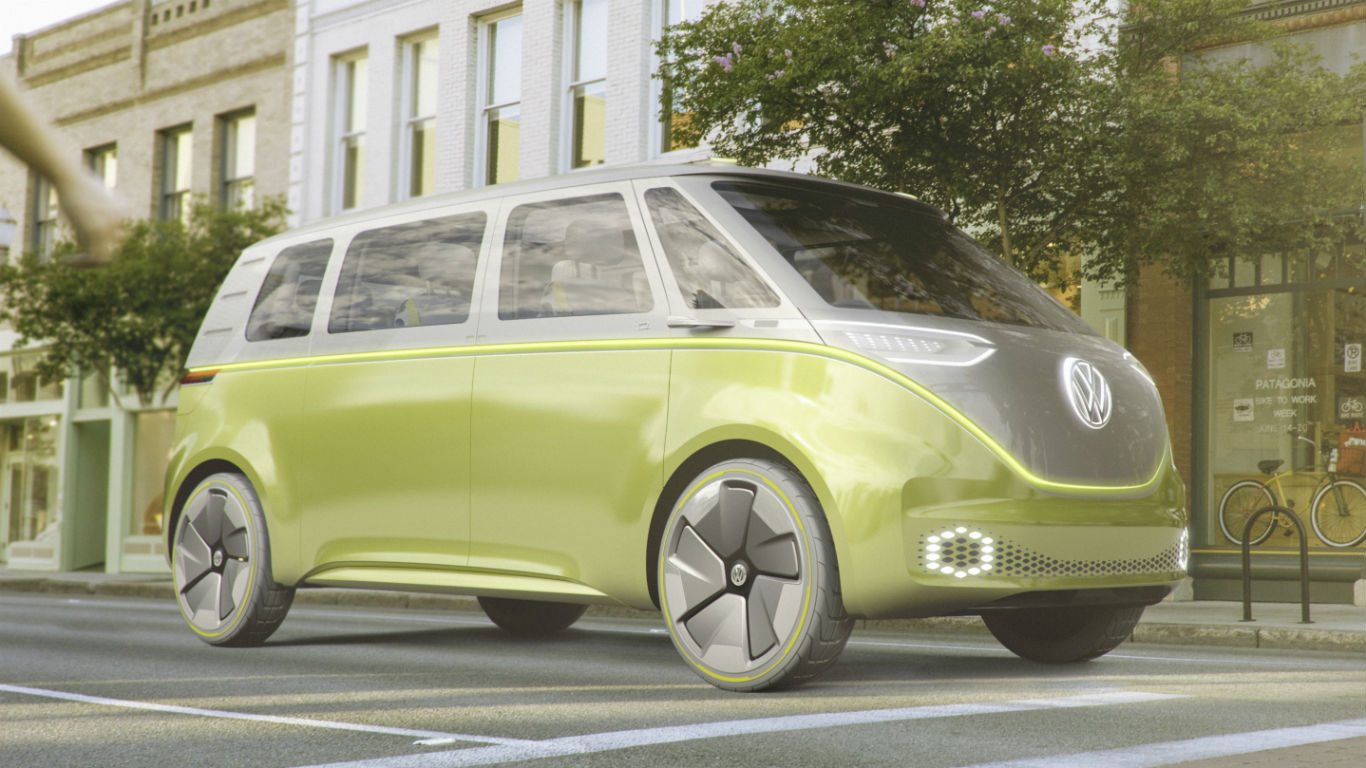
What? Yet another VW Microbus concept? Yes, but this one stands a good chance of being built – and let’s hope so. The all-electric I.D. Buzz uses Volkswagen’s new scalable MEB platform. Quoted power output is 369hp and range is 373 miles.

The eight-seat I.D. Buzz can also drive itself. Push the steering wheel and it disappears into the dash as the car slips into ‘I.D. Pilot’ mode. This uses cameras, lasers and radar sensors to detect other road users. Oh, and the rear seats turn into a bed, so you can nap while the I.D. Buzz does all the hard work.

Lexus LSDetroit Motor Show 2017

With dramatic looks influenced by the LF-FC concept car, the new Lexus LS luxury saloon debuted at Detroit. As you’d expect, it will be available with petrol/electric hybrid power, but the big news is a hydrogen fuel-cell option – following the lead of parent company Toyota and its hydrogen-powered Mirai.

While other companies such as Volkswagen bet on electric power, Toyota/Lexus hopes hydrogen will be the fuel of the future. The LS may emulate the LF-FC, with in-wheel electric motors for dynamic four-wheel drive.

Mercedes-AMG GT CDetroit Motor Show 2017

Taking pride of place on the Mercedes stand at Detroit is the Mercedes-AMG GT C. It’s the coupe version of the GT C Roadster, revealed last year. Slotting in between the GT S and GT R, the GTC’s 4.0-litre twin turbo V8 produces 550hp – the same as the soft-top version.

That means 62mph in 3.7 seconds and on to a top speed of 197mph – even quicker than the GT S seen here. It’s 35kg lighter than the Roadster, while the rear track is 57mm wider. The GT C will initially be launched as an Edition 50 special edition, celebrating 50 years of AMG, featuring black chrome trim and two paint colours: Designo Graphite Grey Magno and Designo Cashmere White Magno.

Audi SQ5Detroit Motor Show 2017

Alongside Audi’s Q8 concept at Detroit is this sporty little number: the 354hp SQ5. It’s powered by the same 3.0-litre turbocharged V6 as the S5 – a departure from the old model, which was diesel-only.

That power accelerates the near-two-tonne SUV to 62mph in 5.4 seconds, helped by its all-wheel-drive system. There’s also an optional rear Sport differential, which divides torque across the rear axle. Combine this with Sport mode for school-run heroics.

Ford BroncoDetroit Motor Show 2017

The original Ford Bronco was never sold in Europe, but it was a popular no-thrills 4×4 on sale in the USA for 30 years from 1966 to 1996. Although Ford hasn’t taken a concept Bronco to Detroit, it has revealed a Bronco graphic on its stand – with the words ‘coming in 2020’ underneath.

The firm hasn’t revealed much more information on the new Bronco, although it has hinted that it’ll be a rugged retro 4×4 with genuine off-road ability. It’s also said it’ll be a global vehicle and, although a decision hasn’t been made, it could be sold in the UK. Fans of the classic original are suitably excited.

Infiniti QX50Detroit Motor Show 2017

This attractive SUV is the new Infiniti QX50 concept. It follows the QX Sport Inspiration seen at the 2016 Beijing Auto Show, but is closer to being a production-ready rival to the Audi Q5, BMW X3 and Lexus NX. It could be exactly what Nissan’s premium brand needs to boost its image in Europe.

Power comes from Infiniti’s clever new 2.0-litre VC-T turbocharged petrol engine, which the brand is claiming will have the efficiency of modern turbodiesels. The QX50 concept also features clever autonomous tech – but the manufacturer says it’ll work with the driver, rather than taking over entirely.

Porsche 911 GTSDetroit Motor Show 2017

The controversial new flat-six 911 has now been given the GTS treatment: meaning an extra 30hp over the regular Carrera S (and 20hp more than its predecessor). Unfortunately, Porsche decided against revealing the GTS in the metal at Detroit, so you’ll have to settle for this press photo.

As you’d expect, here are a wide range of GTS models available: coupe, cabriolet or Targa, and two- or four-wheel drive. Oh, and you can choose between seven-speed manual or PDK auto gearboxes.

Volkswagen Tiguan AllspaceDetroit Motor Show 2017

Good news: from summer 2017, you’ll be able to buy a Volkswagen Tiguan with a slightly longer wheelbase and seven seats. That extra practicality means it’ll be an interesting, German alternative to the likes of the Nissan X-Trail.

It’s difficult to spot the external differences between the Allspace and the regular Tiguan, but anoraks will spy a 110mm longer wheelbase (the overall car is 215mm longer), while the bonnet and grille are also revised.

Advertisement

Flower power: Volkswagen I.D. Buzz concept revealed at Detroit

0

Flower power: Volkswagen I.D. Buzz concept revealed at Detroit

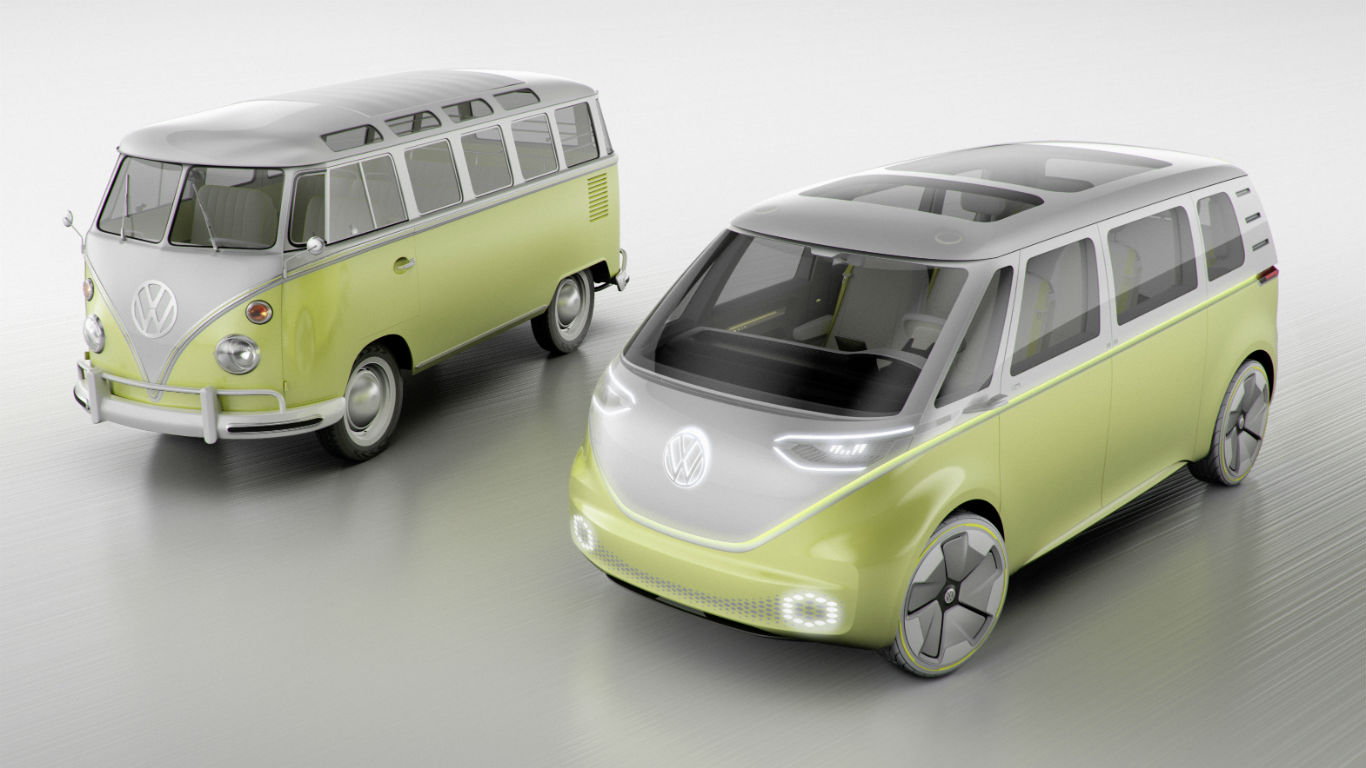
Ever wondered what a modern-day Volkswagen hippy van would look like? VW clearly has: hence the 2001 Microbus concept, the Bulli of 2011, last year’s Budd-e and, finally, the I.D. Buzz – set to be revealed at this year’s Detroit Auto Show.

With a push for eco-cars following the Dieselgate emissions scandal, now could be a good time to bring back flower power, this time in the form of an all-electric bus.

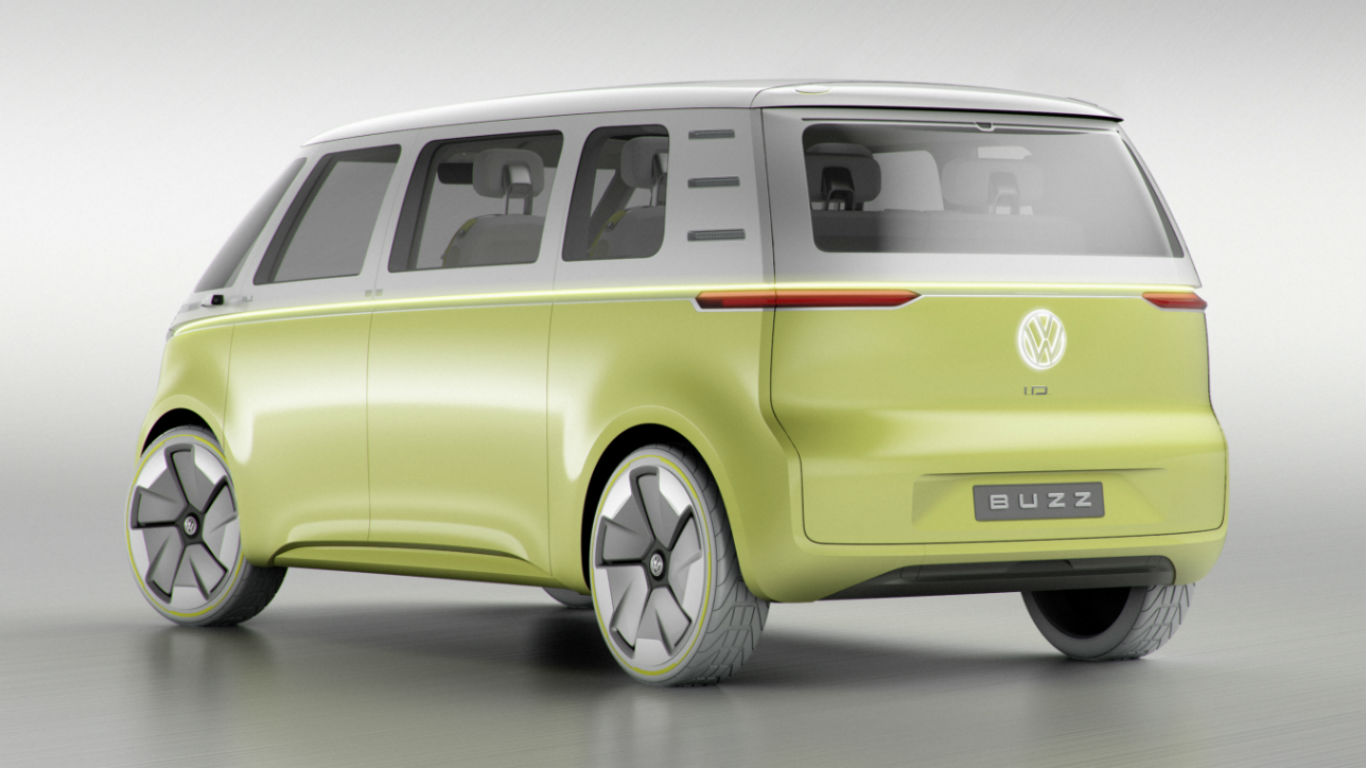
Based on an extended version of the firm’s new scalable MEB platform, the I.D. Buzz boasts a combined output of 369hp and an electric range of 373 miles. Naturally, it’s packed with autonomous functions: push the steering wheel and it disappears into the dash as the Buzz slips into ‘I.D. Pilot’ mode.

This decouples the steering column and uses laser sensors to detect other road users, while cameras, radar sensors and ultrasonic sensors monitor the van’s surroundings.

Flower power: Volkswagen I.D. Buzz concept revealed at Detroit

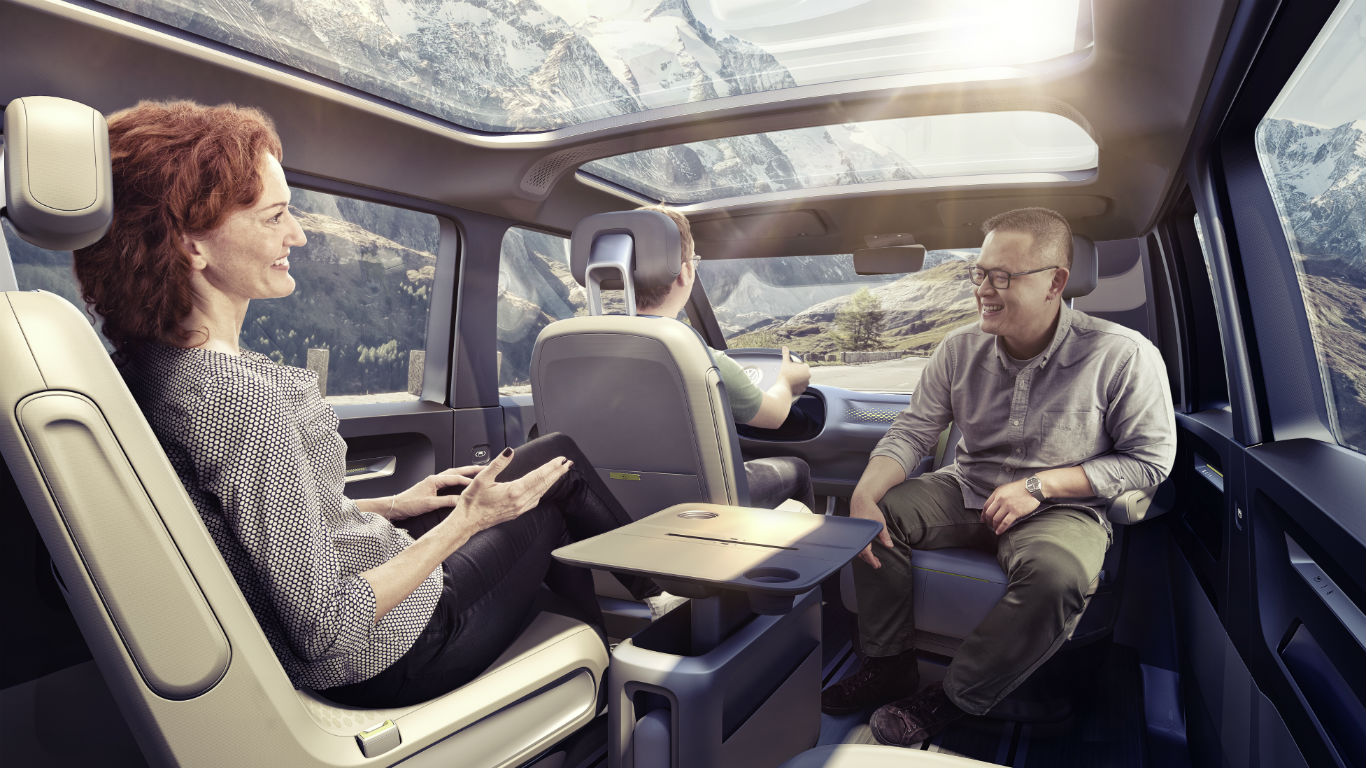
Inside, there’s room for eight people, with the front seats able to turn around and face the rear passengers once it’s in autonomous mode. The second row of seats can fold down and be used as a table, while the rear seats can be turned into a bed for overnight stays once the Buzz is stopped.

With a wooden floor, fancy coloured lighting and movable cushions, the interior is more homely than you might expect from a Volkswagen of the future.

There’s also a clever augmented reality head-up display. This projects virtual images from 23 to 49 feet ahead of the car – with the effect being ‘astonishingly realistic’, says VW.

Couldn’t the I.D. Buzz look a bit more… retro?

Flower power: Volkswagen I.D. Buzz concept revealed at Detroit

“The I.D. BUZZ is not a retro design on 22-inch wheels,” explains VW’s head of design, Klaus Bischoff.

“We have taken the logical next step forward in development, using what is in all likelihood the most successful design of its kind in the world. The entire design is extremely clean with its homogeneous surfaces and monolithic silhouette. The future and origins of Volkswagen design DNA combine here to create a new icon.”

There are some retro touches: the iconic ‘V’ on its front-end, for example, but the round headlights have been replaced by slim LED lights. These mimic the gestures of the human eye, says Volkswagen, allowing the Buzz to communicate with other traffic. When it’s parked up, the eyes appear closed, opening up to greet drivers and passengers.

When awakened, its lights ‘open’, while accelerating causes them to adopt a more aggressive look. During autonomous driving they truly act like eyes, looking in the direction the car is planning to turn.

Is the Volkswagen I.D. Buzz actually going to be sold?

Flower power: Volkswagen I.D. Buzz concept revealed at Detroit

The company is aiming to launch its first car on the new MEB platform by 2020, and these could be autonomous by 2025.

Does this mean the Volkswagen I.D. Buzz will make production? Not necessarily – and certainly not without a great deal of revision, as you’d expect as technology progresses.

The Detroit Auto Show kicks off today, so stay tuned for all the latest from the Cobo Centre.

Advertisement

UK Car of the Year 2017 winners revealed

0

UKCOTY 2017

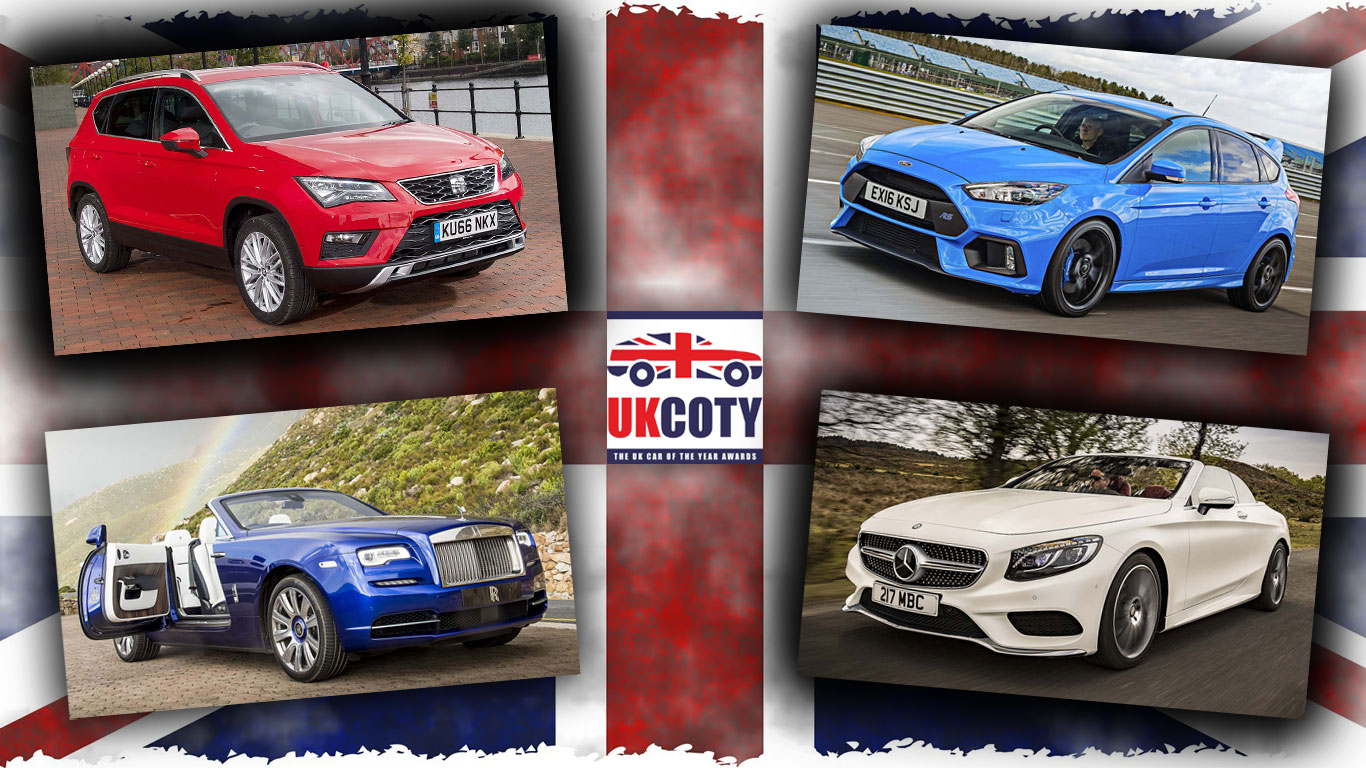
The UK Car of the Year awards is a car awards initiative focused purely on Britain. It aims to pick out the best models launched here over the past 12 months, from a shortlist of 56 freshly-launched models. Today, the shortlist of cars in 12 categories has been revealed.

27 British motoring journalists have helped decide the 2017 UK Car of the Year category winners. They become the latest models to triumph in the Great British car awards, which was established in 2014.

Previous winners include the BMW i3 in 2014, the BMW i8 in 2015 and the Mazda MX-5 in 2016. Next month, the overall 2017 winner will be announced, which will be one of the shortlisted cars here. So without further ado…

Best Small Hatch – Hyundai Ioniq

The new Hyundai Ioniq is taking on the popular Toyota Prius to become the choice of transport for eco-conscious urbanites and Uber drivers. You can buy electric and hybrid versions, while a plug-in hybrid is on its way this year. Our favourite is the fully-electric Ioniq.

Best Family Car – Toyota Prius

And here is the Ioniq’s main competitor, the Toyota Prius. For the purposes of the UK Car of the Year judging, the Prius is classed as a ‘family car’ while the Ioniq is a ‘small hatch’. Odd move, as they’re direct competitors – and the Ioniq is just 70mm shorter than the Prius.

The Toyota Prius was replaced in 2016 and, once you get past the obscure looks, the new model is a very likeable car. Definitely a UK Car of the Year contender.

Best Executive Car – Mercedes-Benz E-Class

UKCOTY 2017

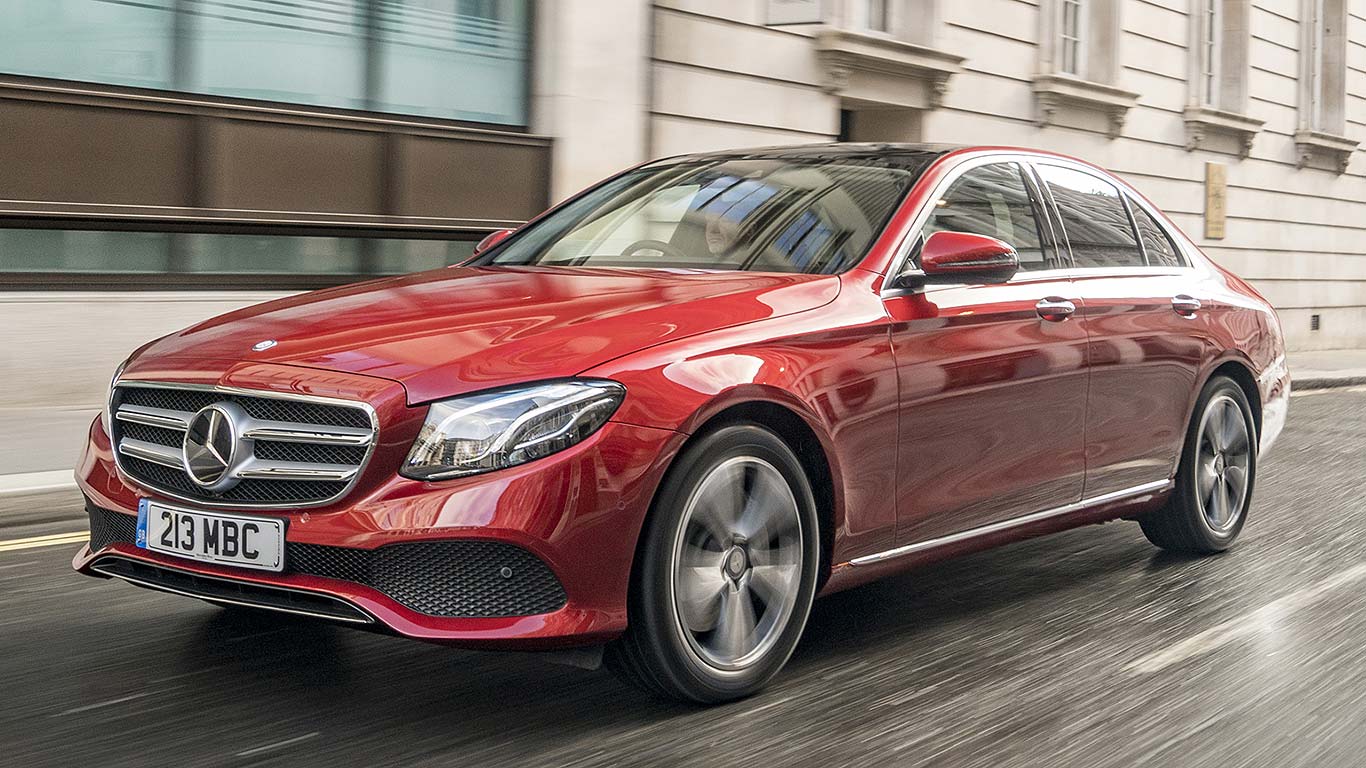
The latest Mercedes-Benz E-Class may not be groundbreaking in terms of its appearance, but the clever technology on offer makes it one of the best executive cars money can buy. The interior is lovely, too, while the driving experience – although not as sharp as the BMW 5 Series – is wonderfully serene.

Best Luxury Car – Rolls-Royce Dawn

Rolls-Royce are not just ordinary cars. They are automotive exhibitionists. Enter the Dawn, a four-seat luxury convertible version of the Wraith coupe. The doors are hinged at the front, the interior is epic, it’s fingertip-crisp to drive and it looks, well, outstanding. Outlandish, decadent and wonderful.

Best Estate Car – Volvo V90

Volvo has modernised the model that made it famous – the estate car. The latest V90 is an exceptionally accomplished premium machine that sees Volvo genuinely go head-to-head with BMW and Mercedes-Benz. The interior is beautiful, the drive is luxurious and it looks good too.

Best MPV – Renault Scenic/Grand Scenic

UKCOTY 2017

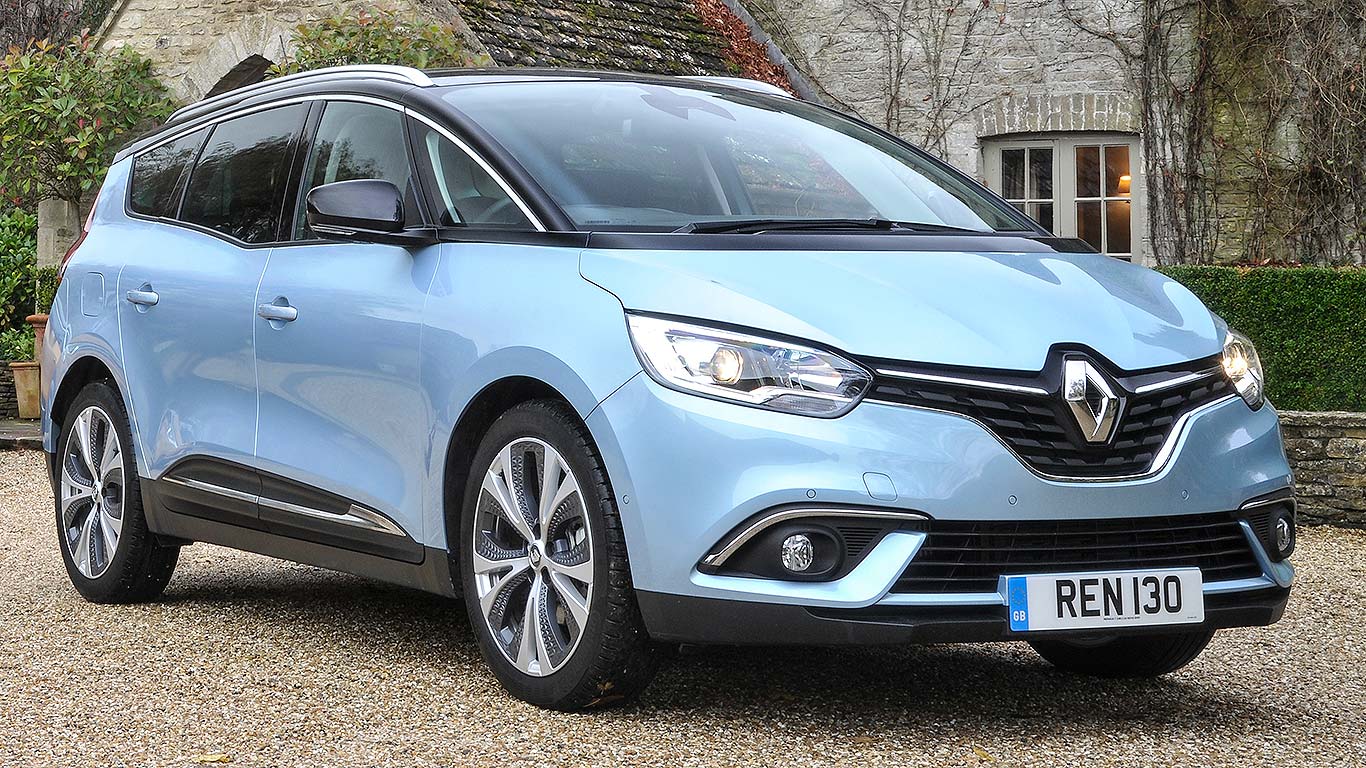
The latest Renault Scenic is a make-or-break model for the MPV sector. Sales have been declining as buyers switch instead to crossovers. So Renault has given its Scenic compact MPV range a crossover look, but with all the famed practicality still in tact. Let’s hope sales follow suit…

Best Crossover – SEAT Ateca

Seat’s first crossover has been a long time coming. It at last arrived in 2016, immediately providing stern competition to the class-leading Nissan Qashqai. Sharp pricing is on its side too: why buy a VW Tiguan when you could buy this instead?

Best Large Crossover – Jaguar F-Pace

Modern Jaguar has finally come of age with the superb F-Pace SUV. The new XE and XF were just the warm-up act for this Audi Q5 and Porsche Macan challenger, it seems: it’s an uncommonly well conceived machine.

Best Coupe – Porsche 718 Cayman

UKCOTY 2017

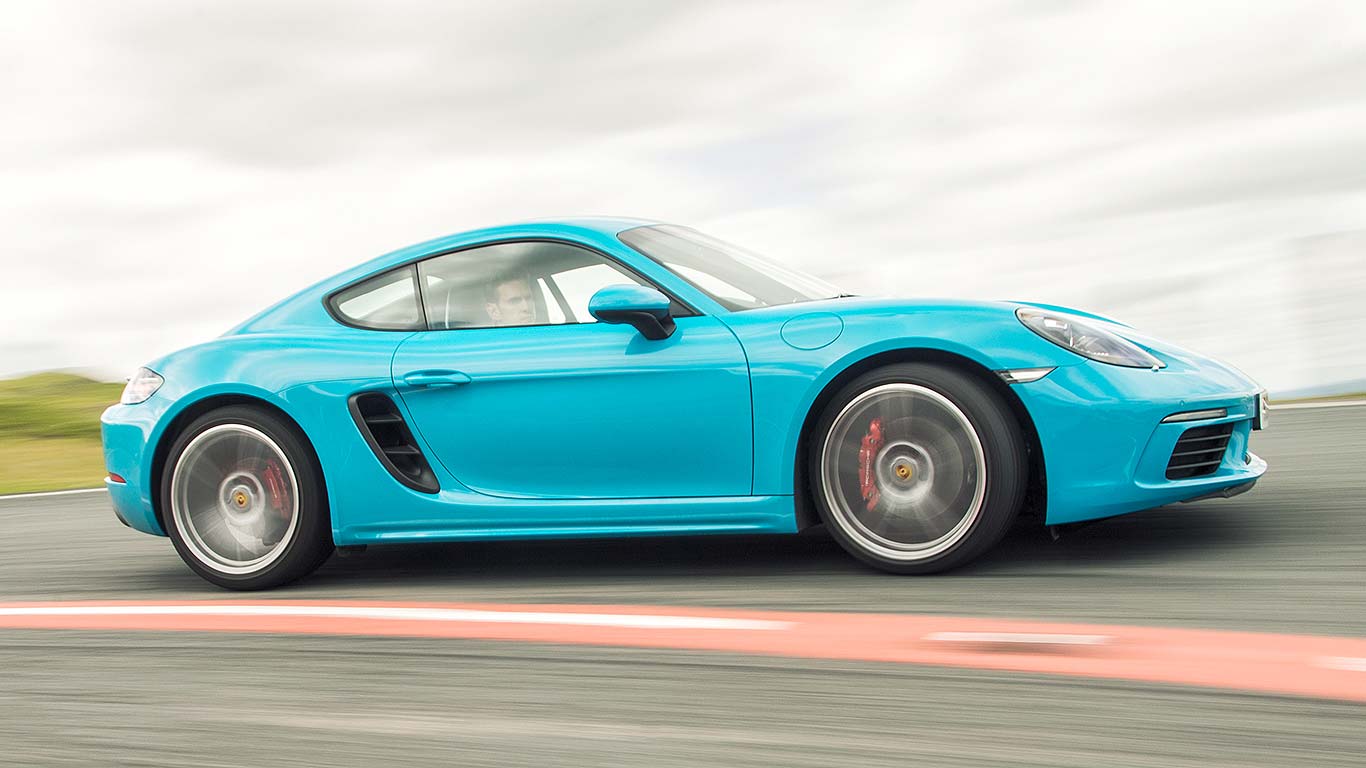
For some time now, the Porsche Cayman has been knocking on the door of the brilliant 911. With this new 718 Cayman, it’s now even more of an authentic cut-price 911 sports car. The only grumble is the noise of the new four-cylinder engines; everything else is brilliant.

Best Cabriolet – Mercedes-Benz S-Class Cabriolet

The most luxurious way for four people to experience open-top motoring on the planet. The S-Class limo is among the best cars in the world; this two-door Cabriolet continues the trend admirably.

Best Sports Car – Porsche 718 Boxster

When it facelifted the Boxster, Porsche controversially switched to a flat-four turbo engine for the new 718 Boxster. Some of the aural pizzazz has been lost, but there’s no doubt the overall car is now better than ever.

Best Performance Car – Ford Focus RS

UKCOTY 2017

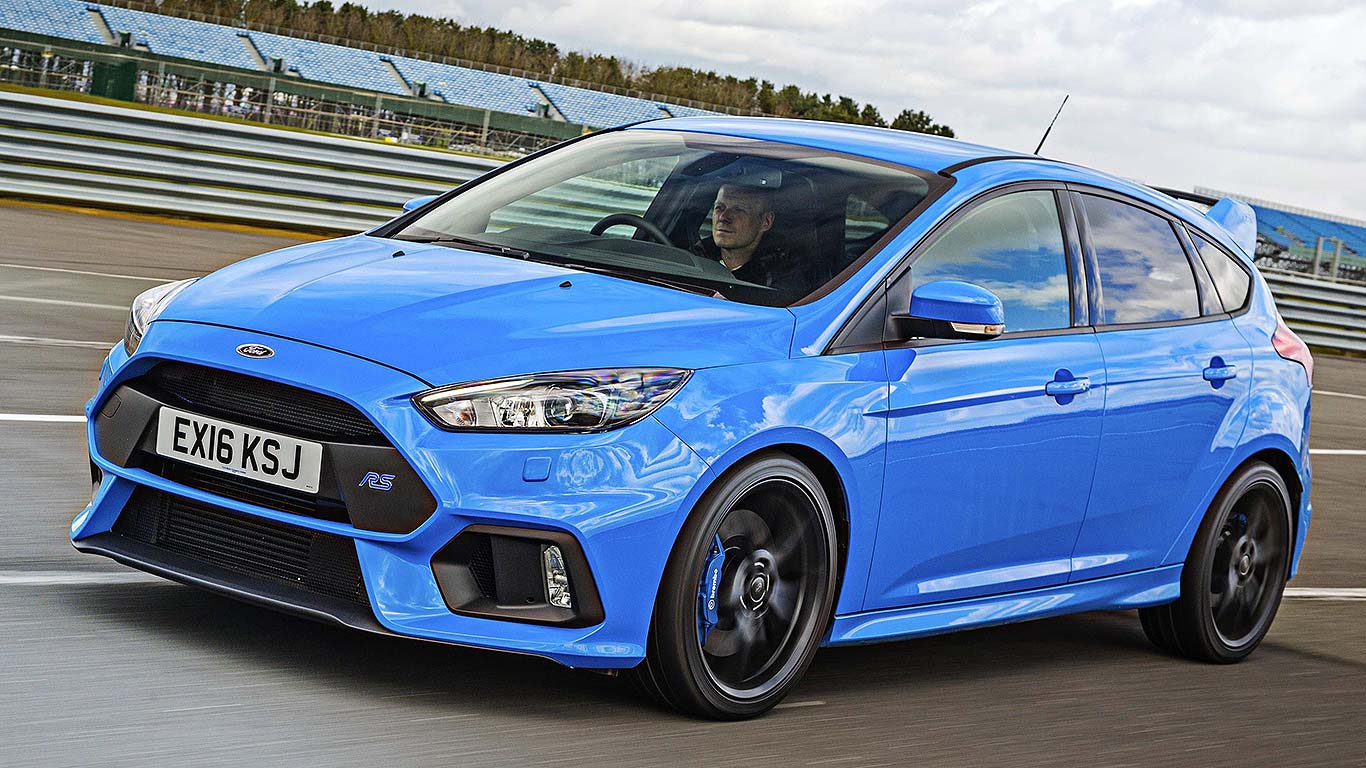
The exceptional Focus RS is the most thrilling new Ford in years – it’s a genuine modern great that is a worthy successor to past greats such as the SIerra RS Cosworth and Escort RS Cosworth.

The overall 2017 UK Car of the Year is..?

The overall winner will be one of these category winners, and will be announced on 24 February. We reckon the Jaguar F-Pace is in with a good shot, as is the Ford Focus RS and the Volvo V90… What’s your money on?

Advertisement

Cool car tech at CES 2017

0

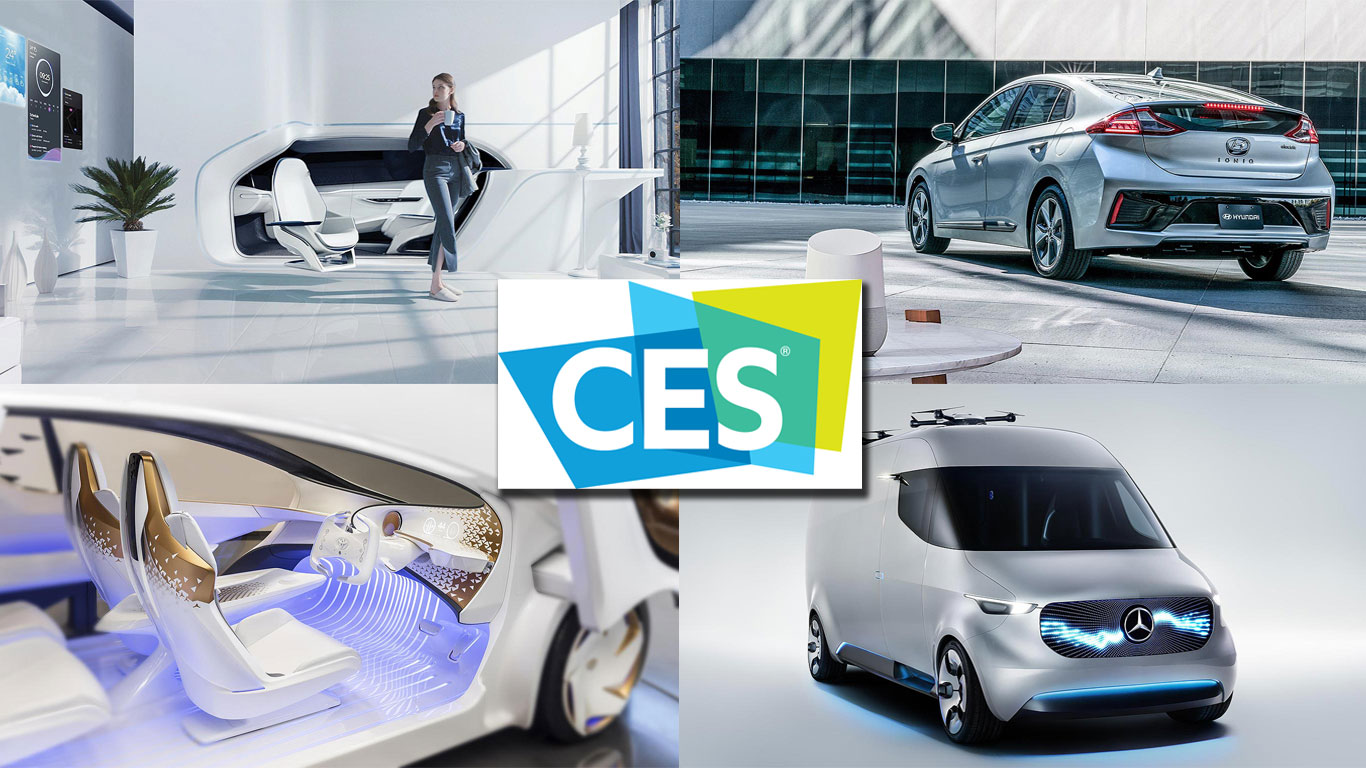
CES 2017 car techCES is 50 years old in 2017. In recent years, it feels like it’s become the Car Electronics Show, as auto makers move in and take over entire halls to show off the cars of the future. 2017 is no different.
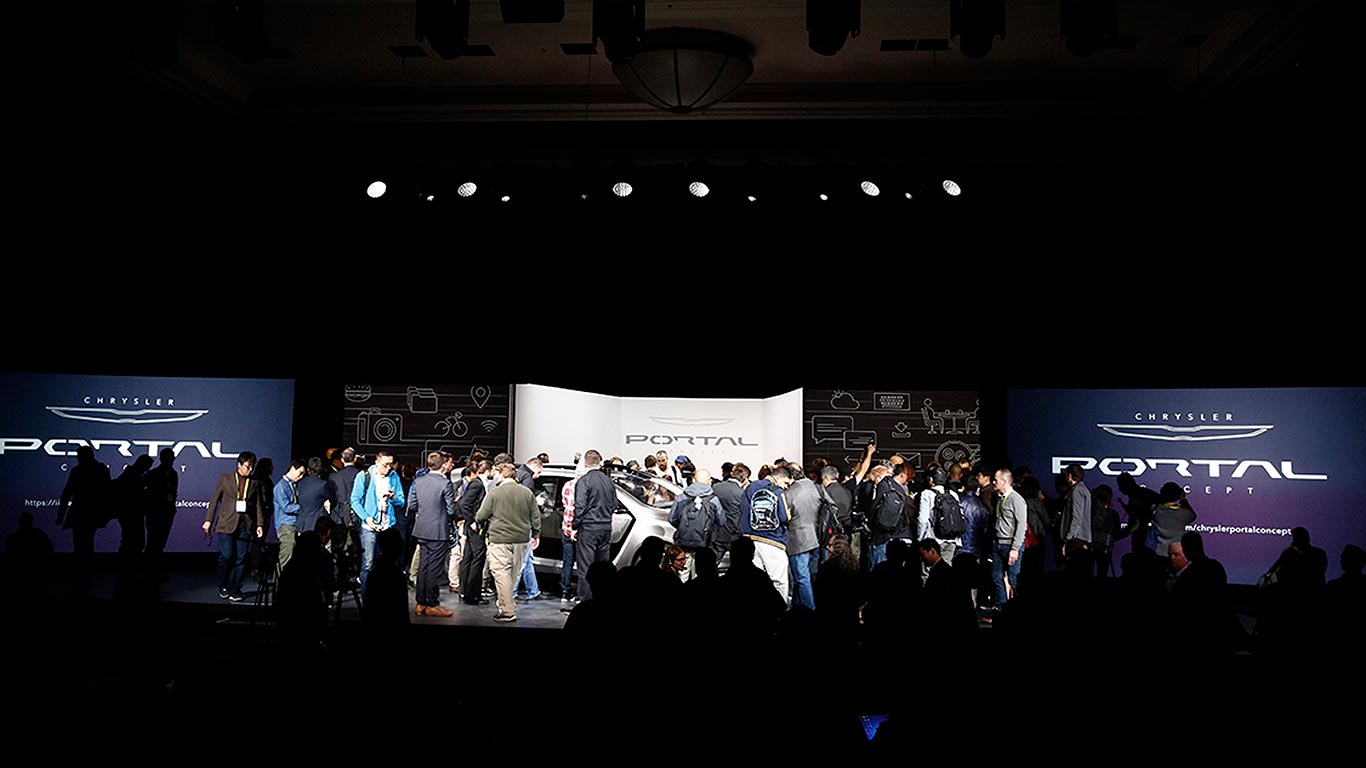
Join us as we reveal the cool car tech revealed at CES 2017.

The Car Electronics Show

CES 2017 car tech

Autos at CES 2017 are bigger than ever. Exhibition space is up by more than 20 percent over last year and now covers an area the size of four football pitches. Nearly 140 car tech exhibitors are showcasing products – both automakers, and the tech suppliers to them. Put together the pieces at CES 2017 and you really will see the car of the future.

Faraday Future FF 91

CES 2017 car tech

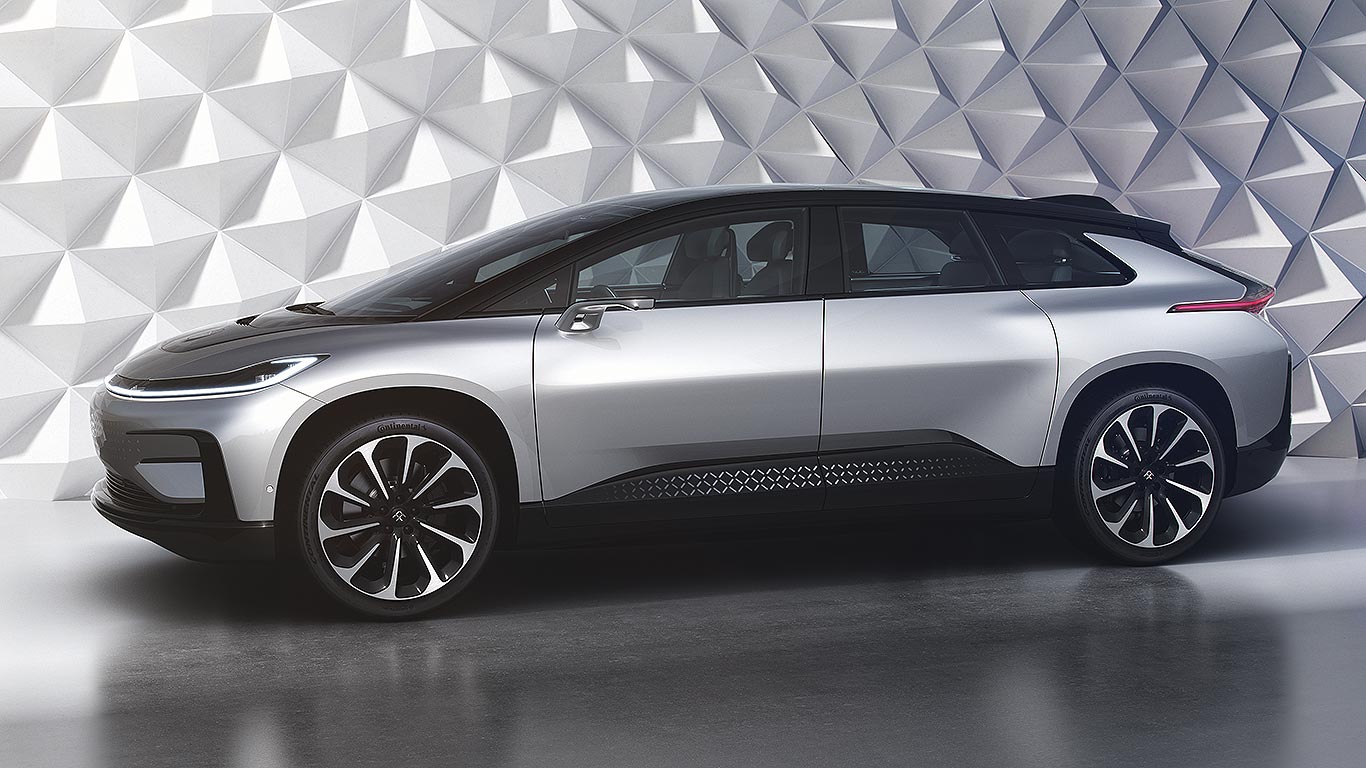
One of the most dramatic exhibits was the launch of start-up EV company Faraday Future’s new Tesla-beating concept, the FF 91. This has apparently already claimed a world record 0-60 mph time of just 2.39 seconds, making it the fastest EV on the planet. The firm also promises a 378-mile electric range.

The FF 91 SUV is scheduled for release in 2019. Following an initiative started by Tesla, the firm is now accepting $5,000 deposits for early adopters keen to be first in line. Will this help ease parent firm LeEco’s financial pressures, we wonder?

Chrysler Portal Concept

CES 2017 car tech

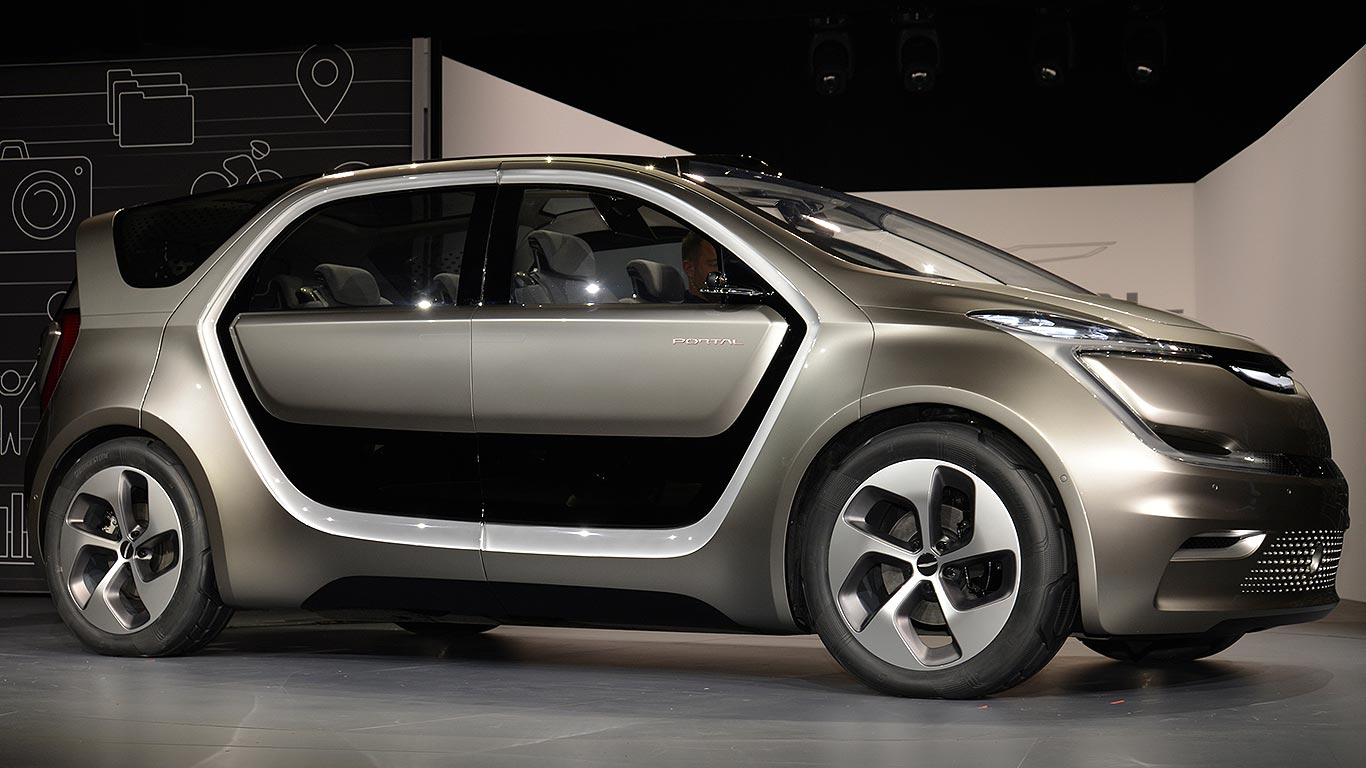
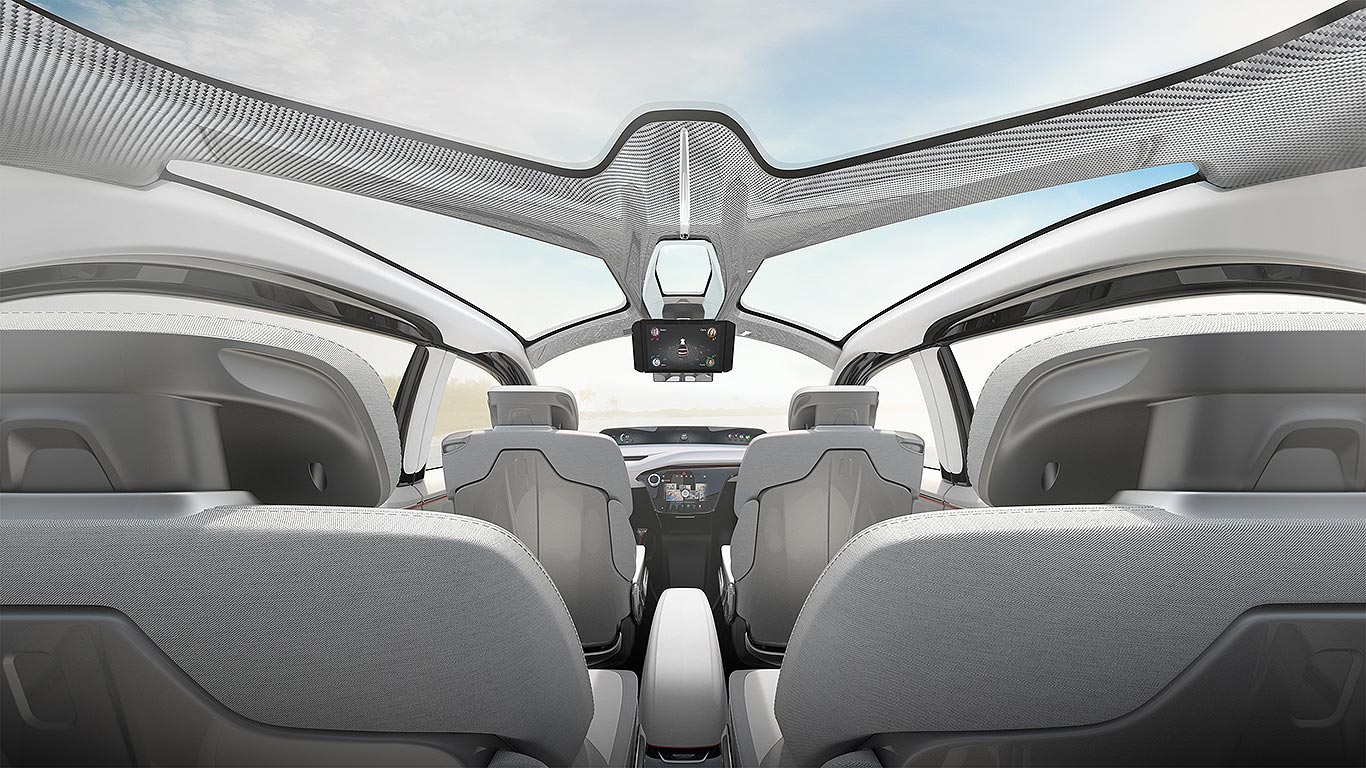
Welcome to the minivan of the future, or the ‘fifth generation’ of family transport that Chrysler says is focused on millennials. This is no car, it’s a ‘third space’, one that blends home and work. Interior space has been maximised and, naturally, it’s ready to connect with umpteen wireless devices.

Chrysler says it will offer SAE Level Three semi-autonomous driving; stepping up to Level Four fully-autonomous mode will be easy. The rest of the vehicle can be upgraded too, something millennials apparently demand as their lives develop. Tech partners include Samsung and Panasonic.

CES 2017 car tech

Fully electric, the Portal has a predicted range of more than 250 miles, and a DC Fast Charger gives 150 miles in 20 minutes. Are we looking at the next-generation Chrysler Pacifica coming some time in 2025? If so, it will be CES 2017 show-goers who’ve seen it first.

Toyota Concept-i

CES 2017 car tech

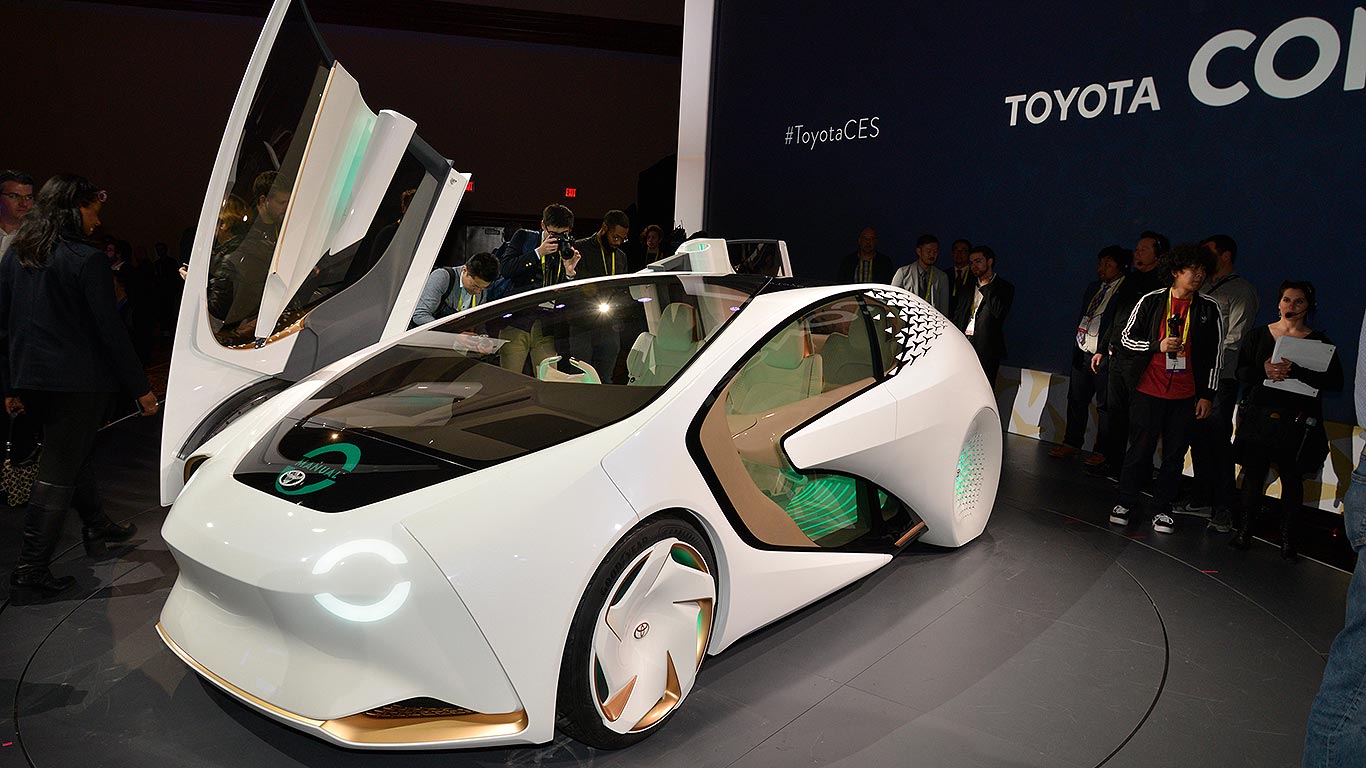
Check out this radical Toyota CES show star. Concept-i previews a ‘friendly’ car of the future that’s focused on you, apparently. Far from being autonomous robots, the cars of the future are going to be more engaging than ever – and it’s advanced artificial intelligence systems that will be key here.

CES 2017 car tech

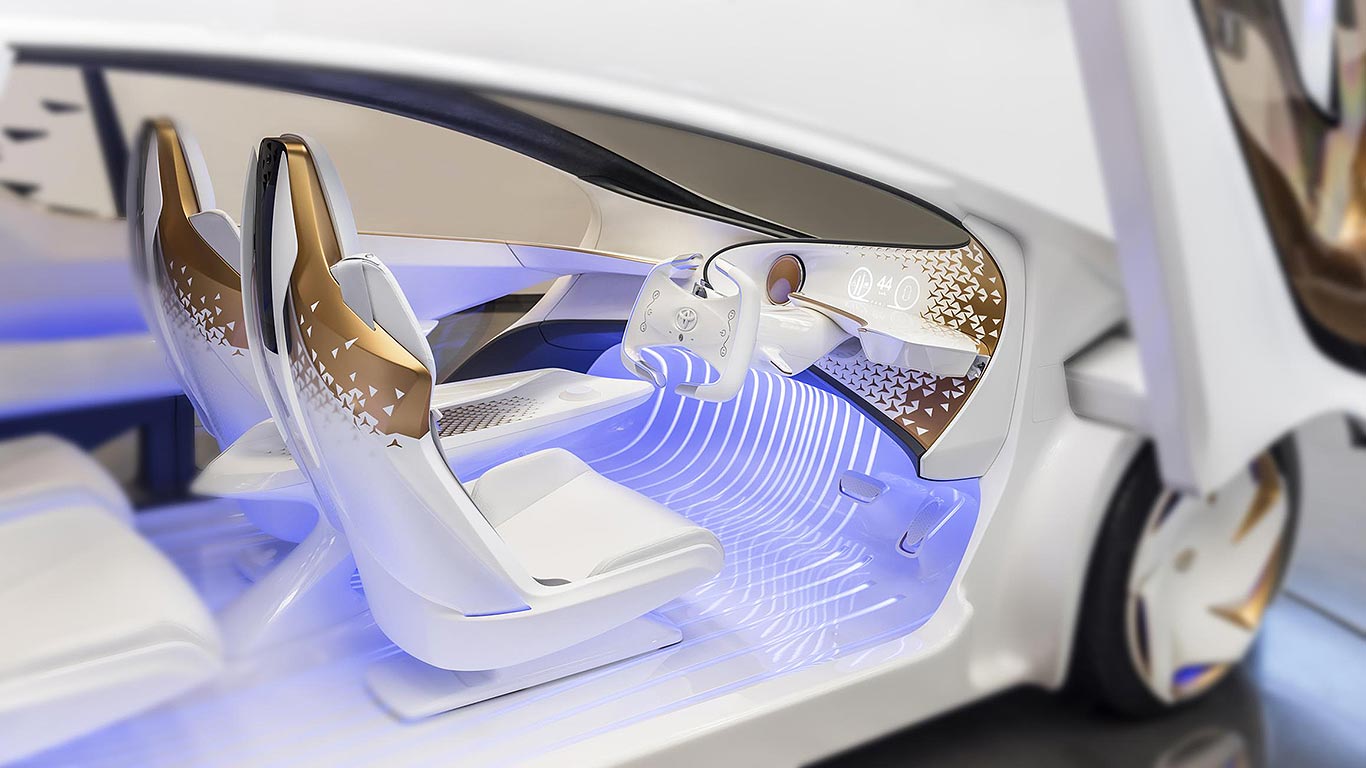
Concept-i has an AI Agent called Yui. They live in the centre of the dash and, rather than touch screens, help communicate with the driver, anticipate what they want and follow their commands: think Cortana for cars. Like the outside, it’s swoopy and cheery inside, shaped to help Yui use light, sound and touch to communicate with the occupants. What a happy car it is!

Hyundai Ioniq Scooter

CES 2017 car tech

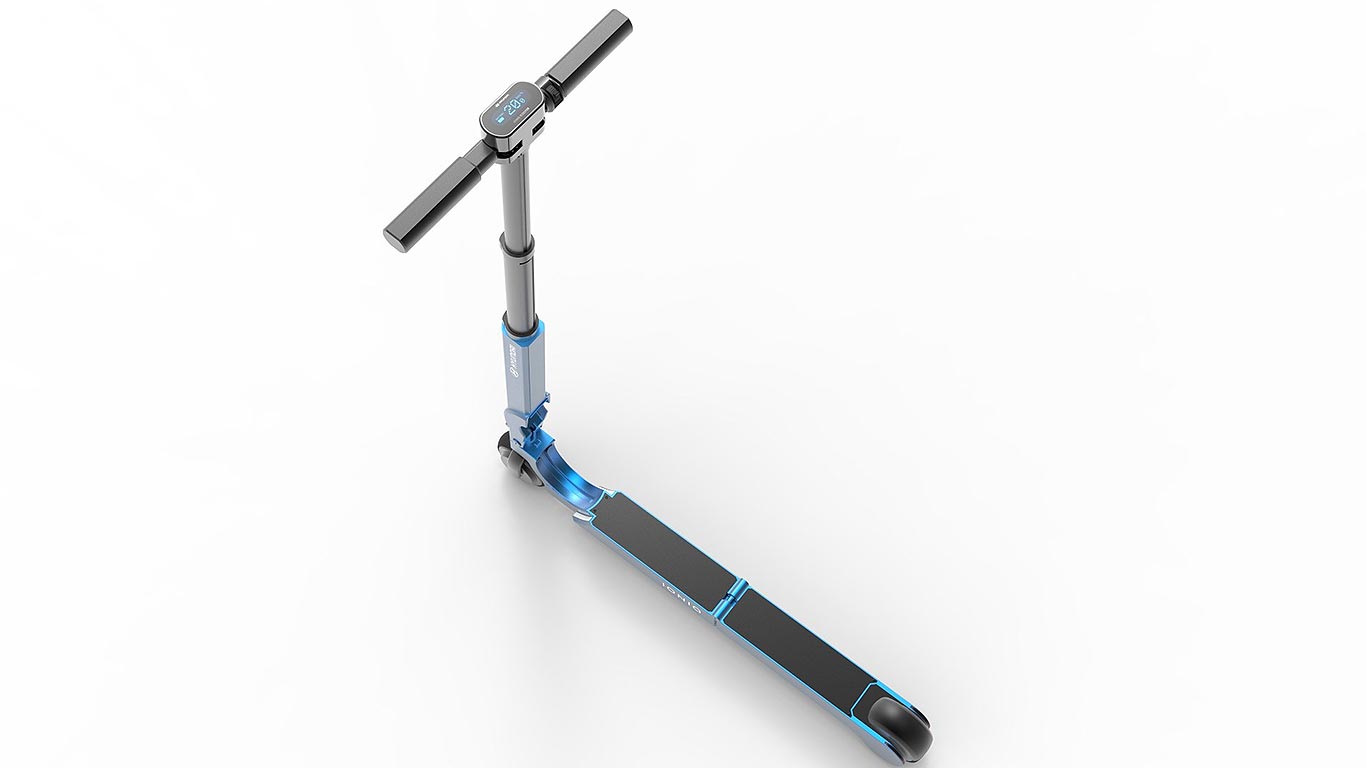
We love this. How to make travel in that ‘final mile’ between parking your car and reaching your destination easier? The Hyundai Ioniq scooter! It’s electrically-powered, can be unfolded with one hand and has lights front and rear. Accelerate or brake using a thumb-switch scroller. Where does it live? In the door of an Ioniq Electric, where it’s charged as you drive. We want one already.

Advertisement