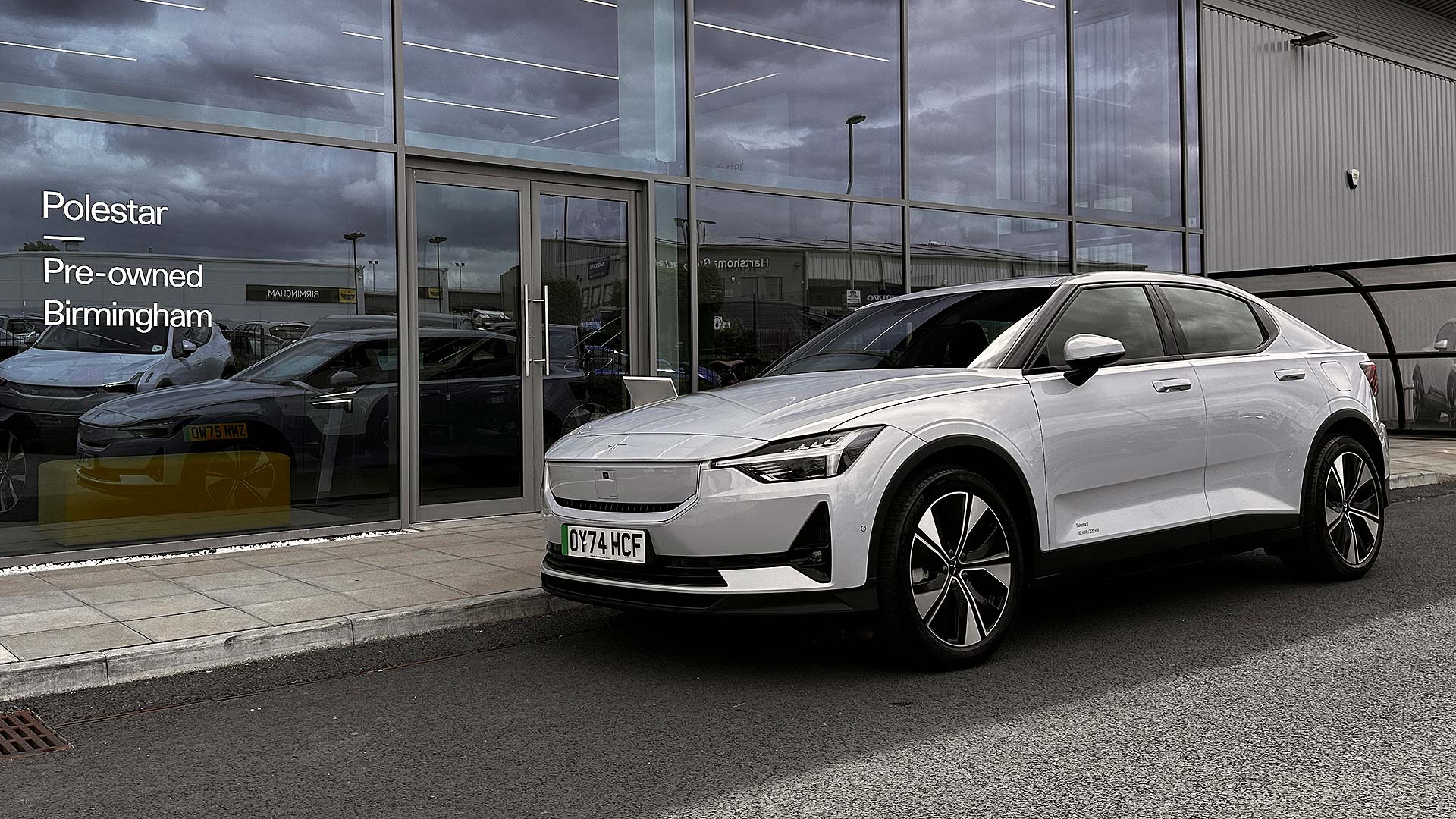
A used Polestar 2 – ‘pre-owned’ in the sporty Swedish brand’s terminology – looks like an increasingly tempting route into a long-range, stylish and good-to-drive EV.
Prices start from less than £18,000 if you visit the Polestar pre-owned website. For that, you get a fully approved used car that has undergone a 111-point inspection and comes with a two-year Polestar warranty.
This package also includes a battery health certificate. This helps you to see exactly what state the largest and most expensive component of your potential purchase is in – before you sign on the dotted line.
So, what’s not to like? That’s what I thought, which is why I decided to live with a used Polestar 2 for the next six months. Keep reading for regular updates – the newest instalments are at the top.
Used Polestar 2: report 2

I’ve just realised something. I never turn off the lane-keep assist in my used Polestar 2. There’s no need; it’s unobtrusive, rarely gets in the way and serves its intended purpose as a safety back-up, rather than an irritant.
This isn’t me being lazy, as it’s quite straightforward to disable it – certainly more so than in a lot of the other cars we drive here at Motoring Research. You simply press the little ‘car’ logo at the top of the home screen and all the shortcuts are there. It’s just that I don’t feel the need. Which is about as high praise as you can grant a piece of driver assistance (ADAS) tech.
I’m also tending to leave the speed limit bleeper on. Indeed, I’ve even switched on the setting that lets me know when a limit has changed. This is with a bit of self-preservation in mind, given the preponderance of 20mph zones that are popping up – but again, it’s helped by the speed limit warning being relatively discreet and far from annoying.
As for the tiny bleep each time there’s a speed limit change, this is proving invaluable. It’s backed up by the speed limit readout on the dashboard, which even previews upcoming speed limit changes with a countdown (in yards) to when the new limit is enforced.
Some may think it depressing that it has come to this – that we’re having to keep such a beady eye out for speed limits and the dreaded cameras. That’s as may be, but at least the Polestar 2 gives me a fighting chance against them.
Used EV prices on the up

My time with the used Polestar 2 coincides with new research from Autotrader showing that used electric car prices are on the up. Overall, they’re up 3.8 percent, with three-to-five year-old EVs up by almost 10 percent.
Used electric cars are also now the fastest-selling type of secondhand vehicle in the market. They sell in an average of 26 days, a day faster than the average for all fuel types: further proof that they’re in hot demand.
This comes after years of what Autotrader calls ‘price correction’ – heavy depreciation to you and I. The switch to price growth has been gathering pace over the summer, and is in response to growing consumer demand, at last, for used EVs.
Tanya Sinclair of lobby group Electric Vehicles UK called it a “significant moment for the UK’s transition to electric driving. For too long, the debate focused on whether there would be a market for used EVs. The market has now answered that question.”
Making our time with the used Polestar even more timely: it’s a car whose value could soon be going up rather than down!
Polestar 2’s Harman Kardon audio

As my used Polestar 2 is fitted with the Plus Pack, it features an upgraded Harman Kardon audio system. This has a 600W power output transmitted through 13 speakers, with the dash-top central speaker carrying premium Harman Kardon branding. It also has so-called ‘Dirac Unison’ software that allows sound to be more precisely tuned, no matter what the genre of music.
A look at my Spotify playlists would certainly challenge it, as I like all sorts. Initially, I was a little underwhelmed by the Harman Kardon setup. It seemed OK, but hardly stood out – not like the memorable sound delivered by the best systems. Perhaps this is why Polestar offers an additional 1,350W Bowers & Wilkins audio upgrade, complete with distinctive tweeter on top of the dashboard?

So I played around with the settings a bit more. And finally found the one that transforms it; switching the sound experience from ‘all’ to ‘driver’. Finally, the sound became fully rich and enveloping, serving up the expected premium experience. It’s particularly lovely on certain music tracks, and doesn’t need a big punch of volume to serve up its best.
The native Spotify app is an added bonus, as it’s so easy to navigate through albums, playlists and liked tracks (and it seamlessly syncs – if you’re listening to an album on your device and then get into the car, it picks up where you left off).
If you love your music and are musing over a used Polestar 2, be sure to check for the Plus Pack to get Harman Kardon audio included.
Extending the used Polestar 2’s EV range

One of my favourite tricks is starting a journey in Google Maps, and checking the predicted percentage remaining in the battery. Then… driving smoothly and economically to see how much I can improve it by journey’s end.
The best I’ve achieved is a 10 percent battery boost from the start of a journey to the end, which is very satisfying indeed. Often, it’s the difference between a quick en route rapid charge and getting back home without having to plug in. And the Polestar 2’s generous range – easily in excess of 300 miles – bolsters the convenience yet further.
Then there’s the sheer clarity of knowing exactly how much range you will have at any given time in the journey. Such predictive tools help to make living with an EV painless. It always surprises me when I drive other electric cars and find their systems just aren’t as slick as Polestar’s Google-derived setup.

As for the range itself, the summer months saw a full charge serve up 350 miles. Not bad for a used Polestar 2 that now has 17,000 miles on the clock.
Used Polestar 2: report 1

What better way to put a new car to the test than with a 1,000-mile road trip? And so it was that, less than a week after picking it up, the used Polestar 2 and I found ourselves rolling into Le Shuttle Folkestone at 5am.
We were bound for Le Mans, and I was there getting early as I had a lunchtime meeting at the track. The day before had been painless, trekking from Birmingham to a hotel just outside Folkestone. I’d grabbed a quick charge at Cobham services on the M25, but wasn’t fretting about ending the day fully charged.

That’s because I knew there were some Tesla Superchargers at the Le Shuttle terminal – ones that were open to all EVs. At 59p per kWh, it was a no-brainer, so I swallowed the 3:45am alarm call and grabbed a large coffee after plugging in.

Used Polestar 2’s built-in Google Maps tech
Both of us duly recharged, I made my way to the train. The car was showing a 95 percent charge and 280 miles of range. The Tesla Supercharging had cost me just £12. I’d need another stop to reach Le Mans, but this is where the magic of both Polestar and French infrastructure combine.
You see, thanks to the built-in Google mapping, the car is able to calculate the best place to stop en route, causing me the least inconvenience. It chose somewhere after a couple of hours, but I can also set a minimum charge level to not drop below – and even set a minimum charge to remain when arriving at my destination.

I’d love to report more drama, but it was all utterly painless. The first stop was only 20 minutes; enough time for a quick coffee and email catch-up, before getting underway again with 80 percent charge.
I didn’t actually need another stop before Le Mans, but figured it might be busy on the Sunday rush back to Calais. I therefore chose to arrive at the circuit with a big chunk of charge in order to allow some breathing space for the return trip.

Helpfully, I found another Tesla Supercharger six miles from Le Mans, in a pretty little shopping centre, but there were numerous options – all faithfully highlighted by Google Maps, and accessible simply via a tap on the navigation screen.

I was there with Shell and BMW, so I parked the Polestar next to a similarly fly-splattered BMW M3 and left it there for the weekend. I’d use either my fold-up bike or BMW’s shuttles to get around for the next few days.
Here was another bike the Polestar’s boot had easily swallowed – this time with the seats up, and with plenty of room left over for camping essentials.

Zero range anxiety driving a used Polestar 2 in France
After a busy couple of days, work demands meant I had to dash back on Sunday afternoon, with the aim of getting home to Birmingham ready to start the working week. It was an even more formidable 500-mile, one-hit journey, but we’re way past that being an electric car nightmare these days.
The Polestar factored in all the charging stops, and I added an extra one at Calais (again using cut-price Tesla energy), plus another quick one at Cobham as I was hungry. Over 1,000 miles and not a single moment of either range anxiety or charge anxiety.

How was I finding the Polestar? A lovely, long-distance express. Powerful, long-range EVs naturally seem to make great cruisers, because of their refinement, the power on tap and the ease of swallowing hundreds of miles in one go. The Polestar 2 was proving particularly so, helped by its bluster-free, wind-cheating shape that seemed to waft along beautifully at French autoroute speeds.
EVs also seem to be less tiring, keeping you fresher and more alert on long trips.
Getting to know the used Polestar 2

Direct access to podcasts through the Spotify app kept me entertained, while the climate control discreetly cocooned me from the French heatwave. A tweak using the touchscreen gave a quick switch from mph to kph – with all the speed limits bleeping in kilometres, too. Very handy, as the gendarmes are extra-eager during the Le Mans weekend…
As my Polestar 2 has the Pilot Pack, it comes with Pixel LED headlights, which can be automatically adjusted for driving on the right-hand side of the road. It’s not something I benefited from much during the height of summer, but is useful to know for any Euro-trips later in the year.

It was a great way to get to know my new used Polestar 2. It had also proven totally fault-free during the trip, even if I did arrive back home with it a bit dustier than when I left. Here’s to the next few months discovering what it’s like to live with a bargain used Polestar 2.
Introducing the used Polestar 2
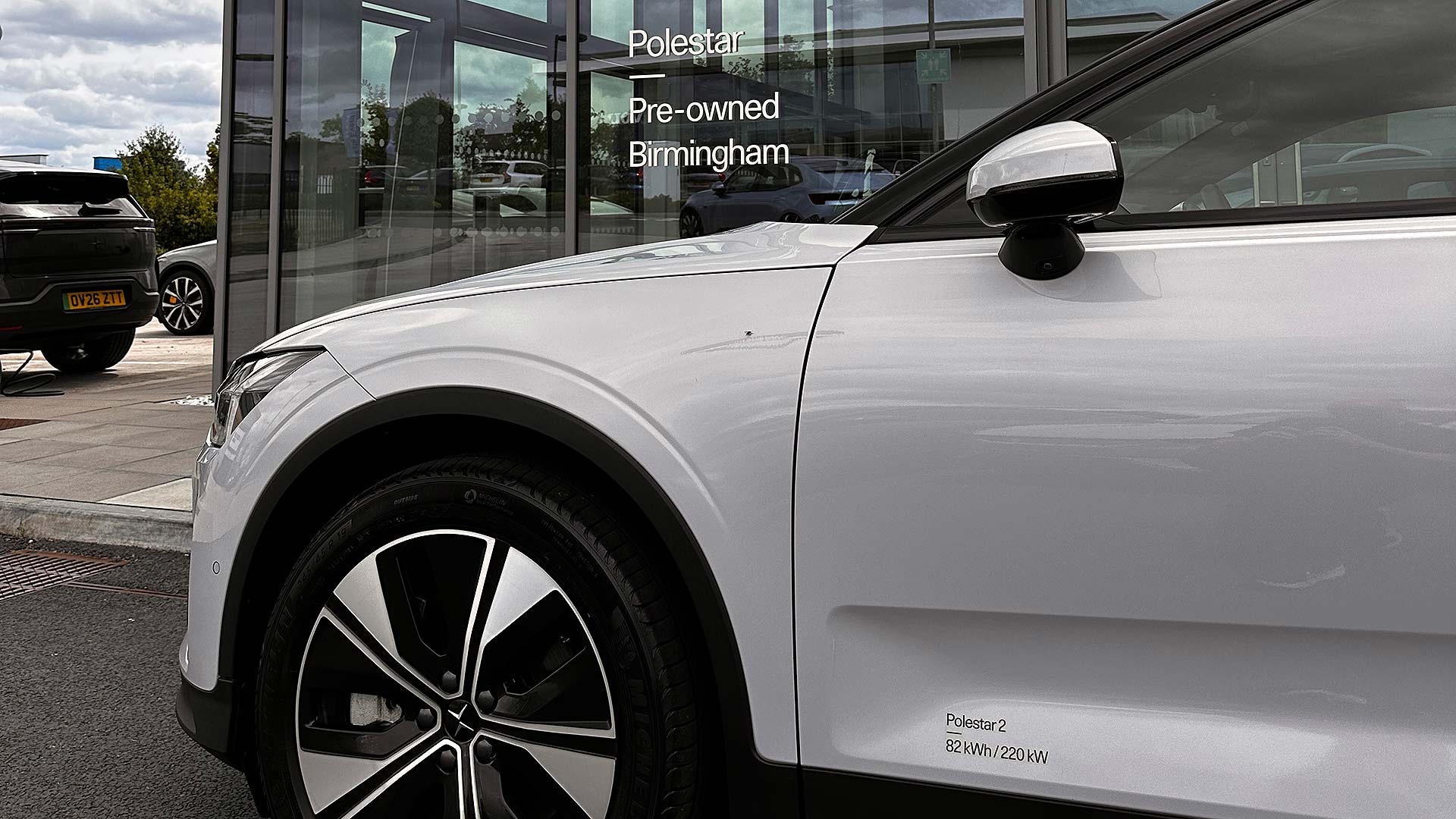
Polestar has, to date, sold several tens of thousands of cars in the UK. A large proportion of these are the Polestar 2, its breakthrough Tesla Model 3-challenger. The car was introduced in 2021 and remains on sale today, priced from around £42,000. The current model scored four-and-a-half stars in our review earlier this year.
It means there’s no end of choice on the Polestar pre-owned programme. The options for pre-configured personsalisation are near-endless, as well.
Many pre-owned Polestars can be found at one of the firm’s two used car super-sites, located in Birmingham and Bury St Edmunds. Polestar plans to open more of these due to demand. The Birmingham site I collected my car from, (a few minutes from either J5 or J6 on the M6) will be the template for many of them.
Choosing the right Polestar 2 spec
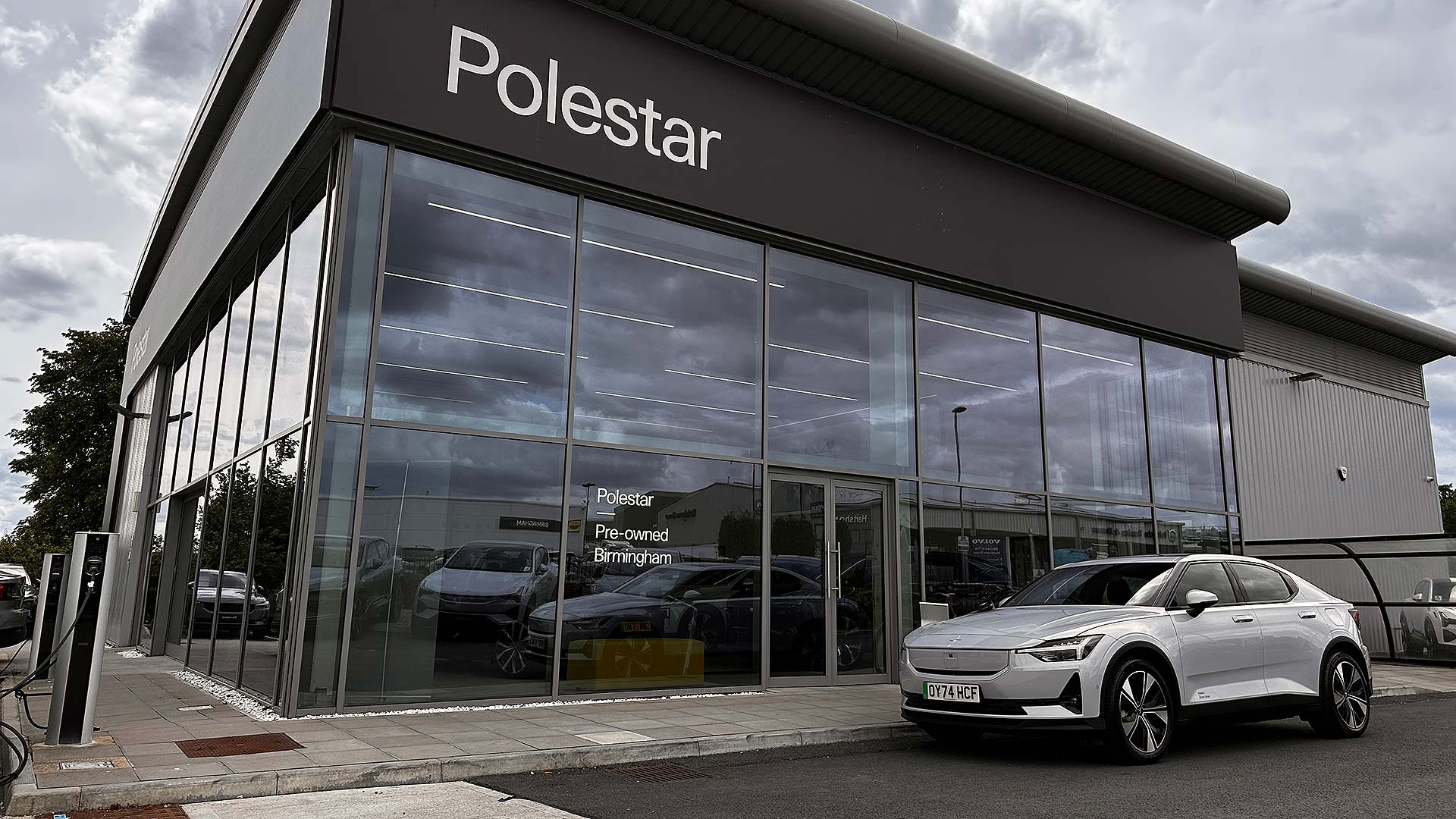
Polestar located the car for me. I’d decided to go for a 2024 model, one of the earliest facelift cars. This update brought a series of improvements, including the highly unusual switch from front- to rear-wheel drive in the interests of efficiency.
I wanted a long-range car, but only the single motor version, rather than the racy Performance, to maximise the distance I could cover between charges. The car that was located, resplendent in Magnesium silver metallic, also had the desirable Pilot and Plus packs already fitted.
It has an 82kWh battery, of which 75kWh is usable. This gives it an official, WLTP-tested range of 379-406 miles, which is not to be sniffed at. Nor is 295hp, which serves up 0-60mph in 5.9 seconds. The battery can DC rapid-charge at up to 150kW – not as speedy as the new Polestar 3, but quick enough.
The Plus pack, which cost an additional £4,000 when new, includes a range of desirable goodies such as a heat pump, 13-speaker Harman Kardon audio system, heated rear seats, a panoramic roof, wireless smartphone charger and WeaveTech ‘vegan’ upholstery. The latter looks like sportswear and I rather like it.
The Pilot pack (£2,000) is less exciting, focusing on driver assistance tech, although the blind-spot warning system is nice to have. I’m also looking forward to trying out the pixel LED headlights, which have active bending functionality to help when cornering.
The beauty of buying used is that you don’t have to worry about forking out to add these options; you simply choose a car with them already fitted. The configurator makes this easy by adding check boxes to narrow down your search – even down to your preferred paint colour and size of alloy wheels.
Taking delivery of a used Polestar 2
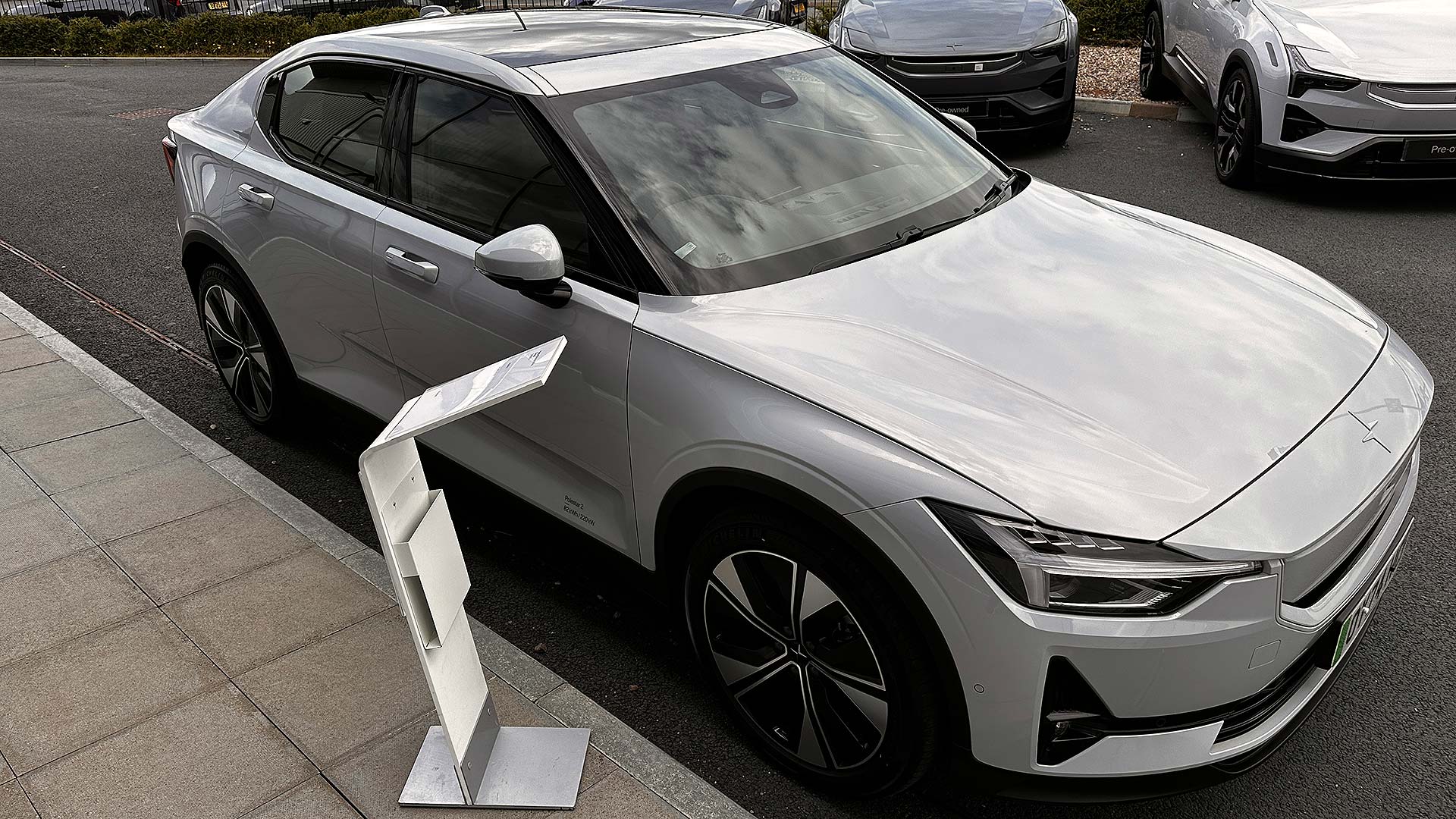
Polestar Birmingham pre-owned is a dream for the brand’s enthusiasts. It’s packed with models, all available to buy, many for less than half their prices when new.
I didn’t realise it, but when I arrived, my car was sitting outside, complete with presentation plinth telling the world that it was mine. Registration plate apart, you’d swear it was brand-new.
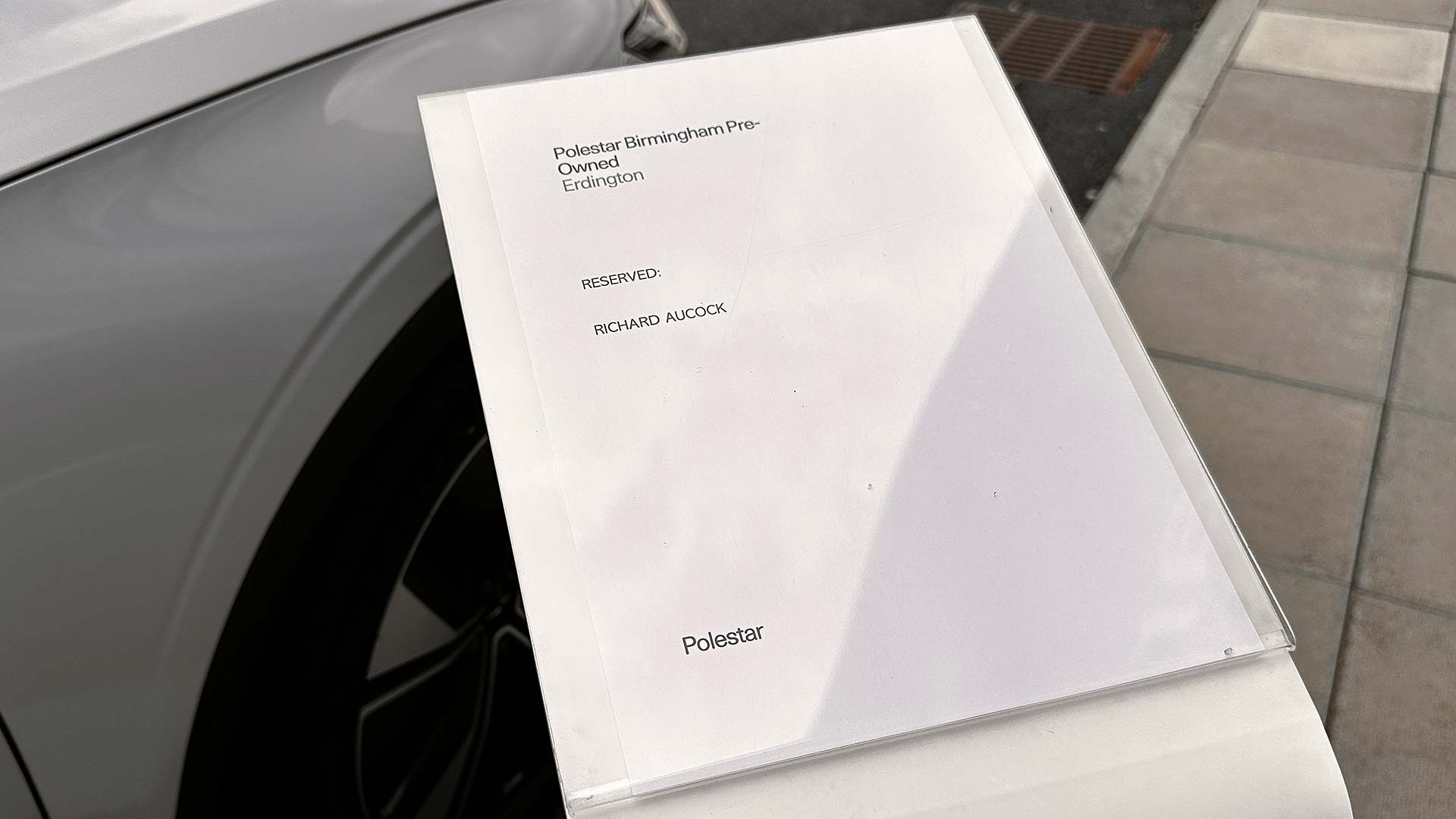
Such a high level of preparation is one of the benefits of Polestar’s used car scheme. All vehicles showed a similarly meticulous level of detailing – the valet team are clearly proud of their work.
Inside the showroom, I was met by sales executive Allister, who grabbed me a coffee before taking me through the handover process. For many people, he explained, a used Polestar is their first EV, so this is an important step in helping bring them up to speed.
Before the handover, he added, many customers may have been through a video call, to help them pick the right car and clear up any initial questions. “We do them from all over the country – there’s a very positive response to video calls.”
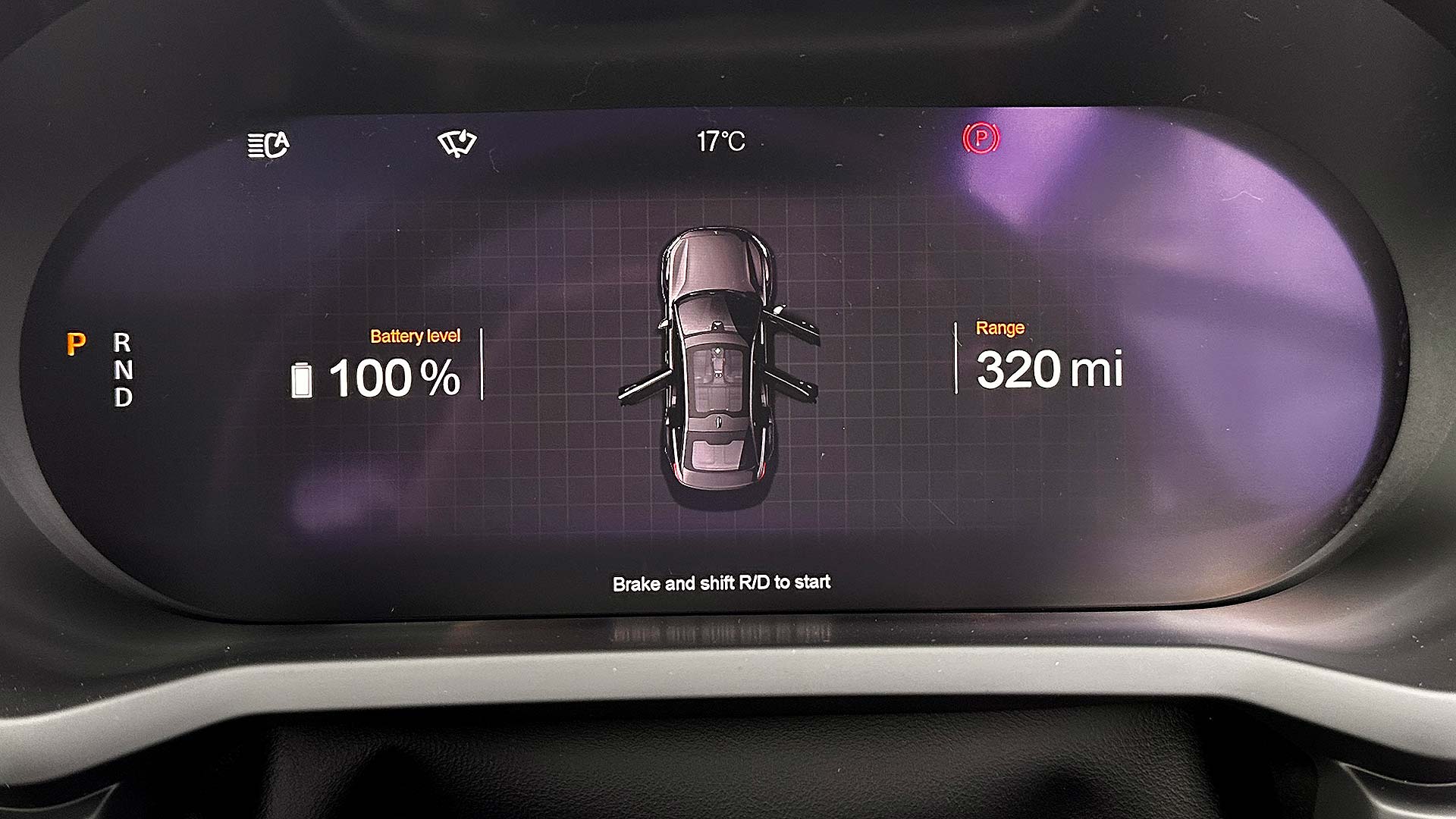
If I were actually buying this car, there’d be paperwork too, although much of it is now digital, says Allister – including the history and other records. He does print out a copy of the battery health certificate for me though. Mine shows 96 percent.
This was backed up by an encouraging 320-mile range showing from the 100 percent charged battery.
Into the new used Polestar 2
Then it’s into the car. You might think you’d like to get this over with as quickly as possible, so you could just drive away and enjoy your new Polestar, but hold your horses. Like most new cars, the ‘2’ is heavily digital, and time with an expert like Allistair is invaluable.
I’ve driven plenty of Polestars before and yet I learned loads. Useful tips included swiping down within each of the four home screen sections to access all the apps, and how to set a profile for each of the two keys – so the electric seat will automatically move into position for either me or Mrs A. as we get in.
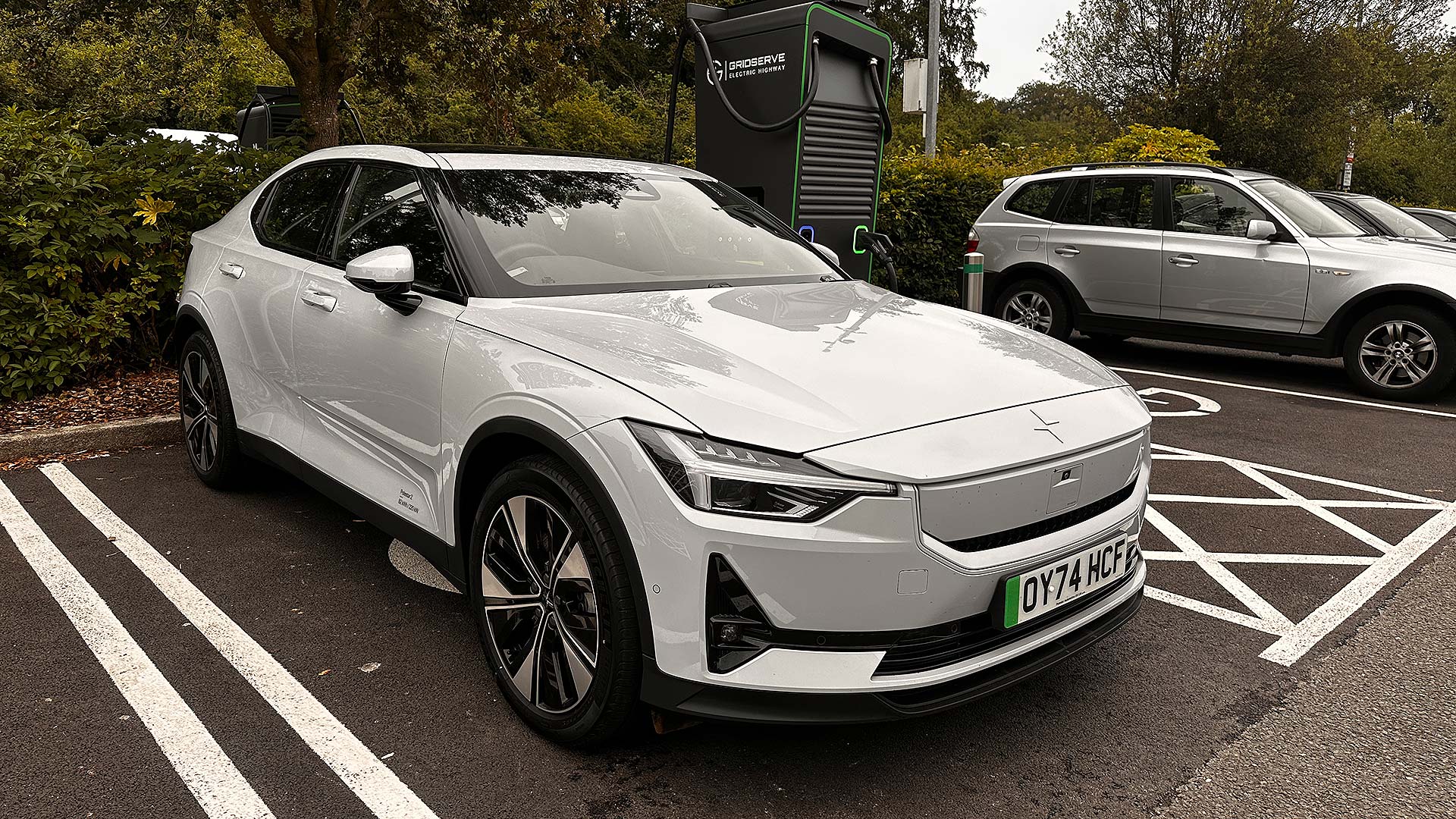
First impressions of the interior were that it was as immaculate as the exterior. Even the software gives the ‘as-new’ experience, thanks to regular over-the-air updates from the Google Android-based system. This is one of the real advantages of so-called software-defined vehicles as they age.
Duly infused with expert-level insight, it was finally time to head off in my new (but used) Polestar 2. The odometer read 12,775 miles and the plan is to add many thousands more, putting this Polestar thoroughly to the test. Let the long-term review adventure commence…
ALSO READ:
