It was one of those drives that has lingered long in my memory. I collected the car at a hotel overlooking Monaco’s Port Hercules, then headed inland on one of Europe’s greatest driving roads: the Route Napoleon. Snaking through the foothills of the French Alps, it was the perfect playground for Aston Martin’s then-new DB12.
Three years later, I’m back in the south of France for the press launch of a new DB12. Following in the tyre tracks of the DBX S and Vantage S, the Aston Martin DB12 S offers more power, sportier styling and a sharper chassis. The Top Trumps numbers are 700hp, 0-62mph in 3.5 seconds and a 202mph maximum. You can order a coupe for £205,000 or the drop-top Volante for £218,500.
There wasn’t much wrong with this car to begin with; my 2023 review concluded by declaring it ‘a sumptuous grand tourer in the best tradition’. Will the ‘S’ treatment push the DB12 (literally) out of its comfort zone?
Keeping buyers coming back
Although introduced as a ‘halo model’, the DB12 S is truthfully more of a mid-life facelift. “With the DBX and Vantage, we’ve already seen the ‘S’ derivatives taking more than 95 percent of sales,” says Neil Hughes, Aston Martin’s director of product strategy. If orders for the DB12 S follow a similar trajectory, you can expect the ‘standard’ car to be quietly phased out in the coming months.
Broadly speaking, the ‘S’ versions are part of a strategy to keep customers coming back. Shortly after joining Aston Martin from Bentley, CEO Adrian Hallmark spoke about his plans for rapid renewal: “There’s got to be a reason to buy another, better Vantage, and two years after that, another, better Vantage”. The same goes for the DB12.
No question, Hallmark faces an uphill struggle to convert his “safe, calm and boring” business plan into sustained profitability. Yet despite its very public travails in Formula 1, Aston Martin’s range of road cars is the best it has ever been. We awarded the DBX S a full five stars and the mid-engined Valhalla has also earned rapturous reviews. More than any other model, though, the DB12 is a lodestone: the car that defines the company. It needs to be memorable for the right reasons.
DB12 S gains visual muscle
The DB12 S displayed outside the launch venue is Synapse Orange – an eye-popping paint colour more befitting of a Lamborghini. Thankfully, Aston Martin has resisted the urge to pepper its body with scoops and spoilers, so the car’s silhouette – still recognisably related to Ian Callum’s epochal DB7 of 1994 – is almost identical.
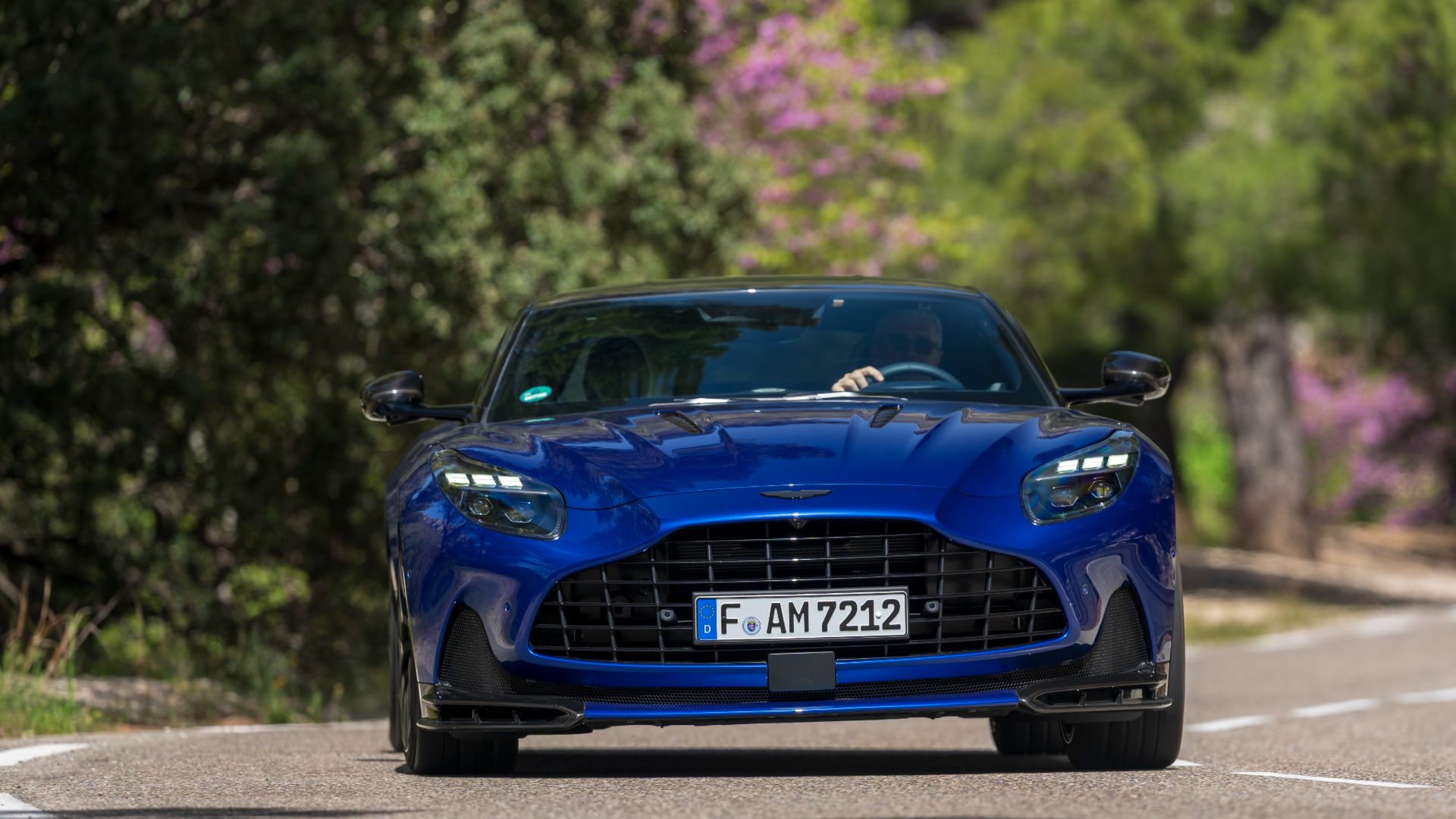
Design director Marek Reichman walks around to point out what has changed. A deeper, more sculpted splitter “visually widens the front bumper”, while new bonnet louvres – in gloss black or optional carbon fibre – help expel air from the ‘hot vee’ turbocharged engine.
There’s more gloss black on the sill skirts, which make the car look lower, along with ‘S’ badges in red glass enamel below the side strakes. As before, the wheels measure 21 inches and come wrapped in bespoke, AML-branded Michelin Pilot Sport S 5 tyres.
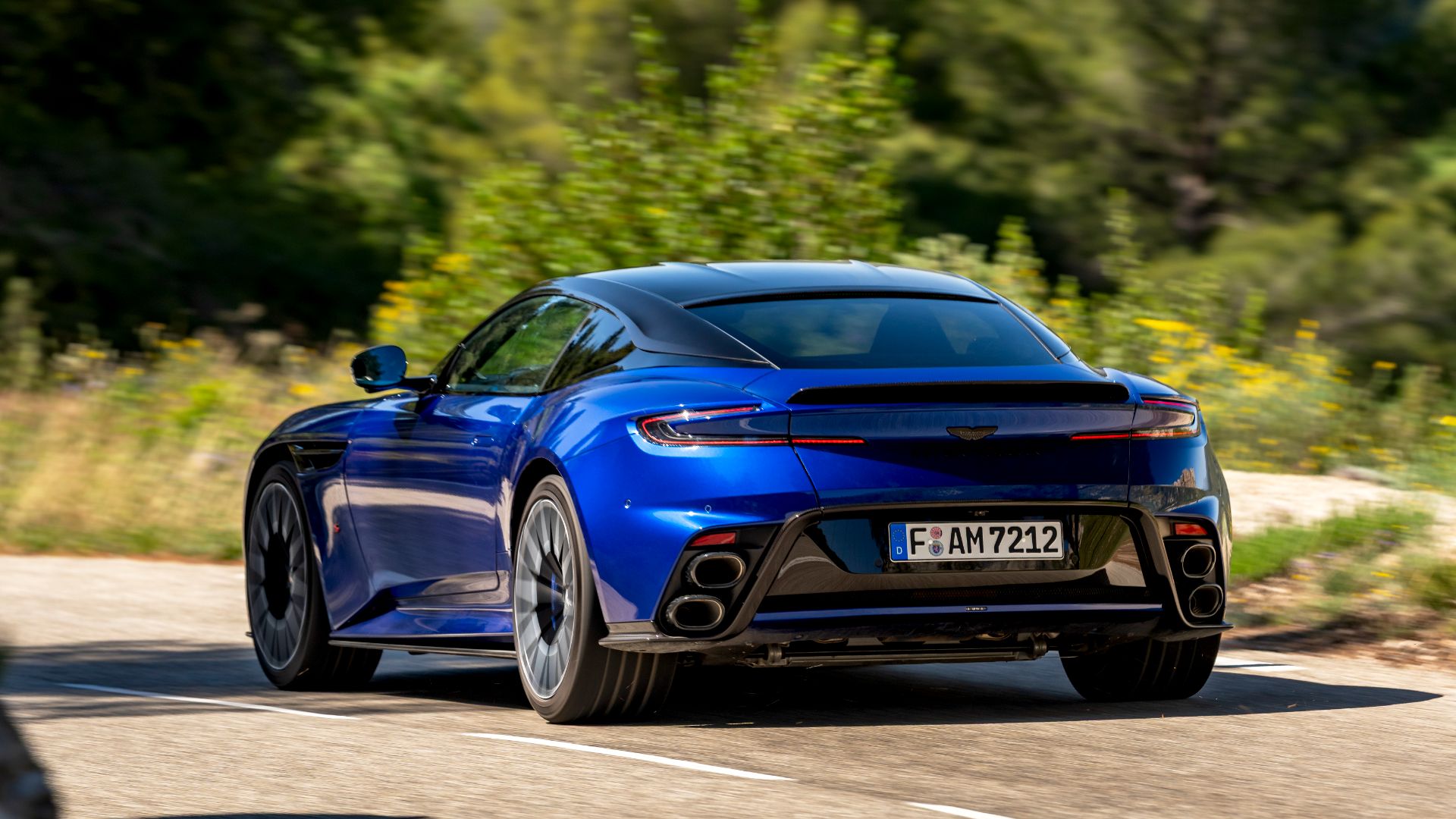
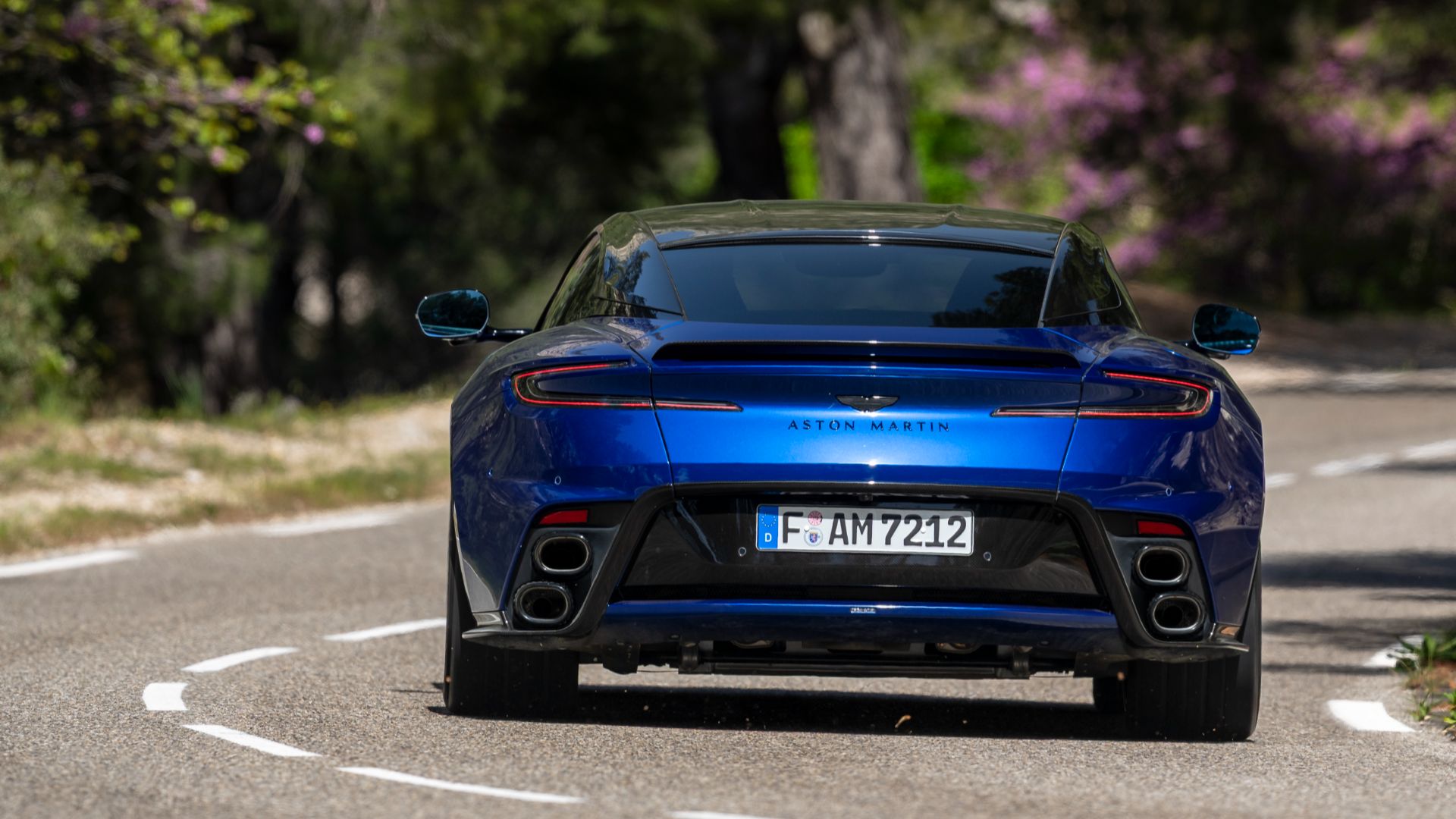
Its posterior is where the ‘S’ differs most from its stock sibling. New quad tailpipes – “the number one request from Aston Martin customers,” says Neil Hughes – are stacked within a broader, more aggressive diffuser. Look closely and you’ll also spot a small fixed spoiler atop the rear deck.
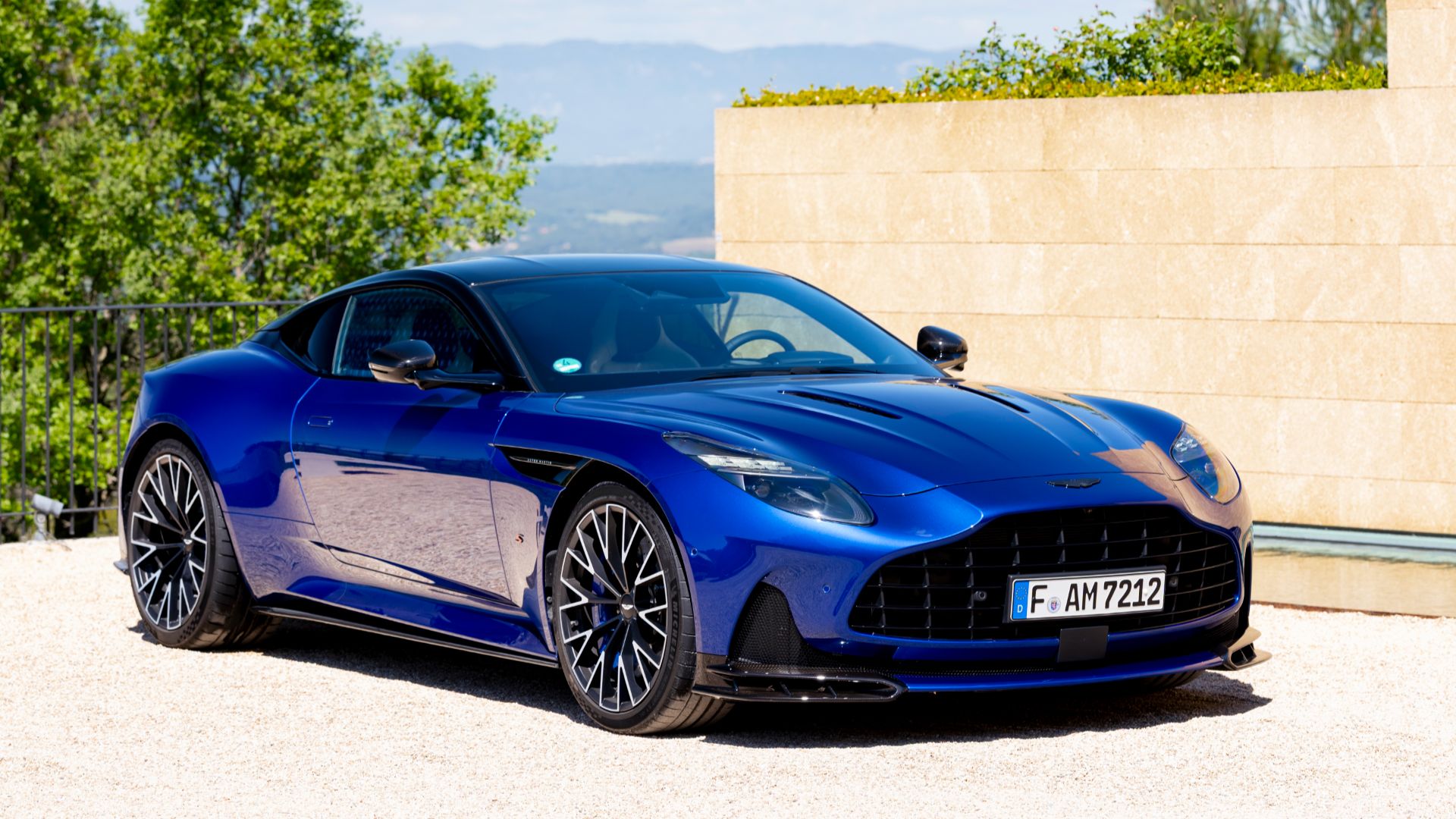
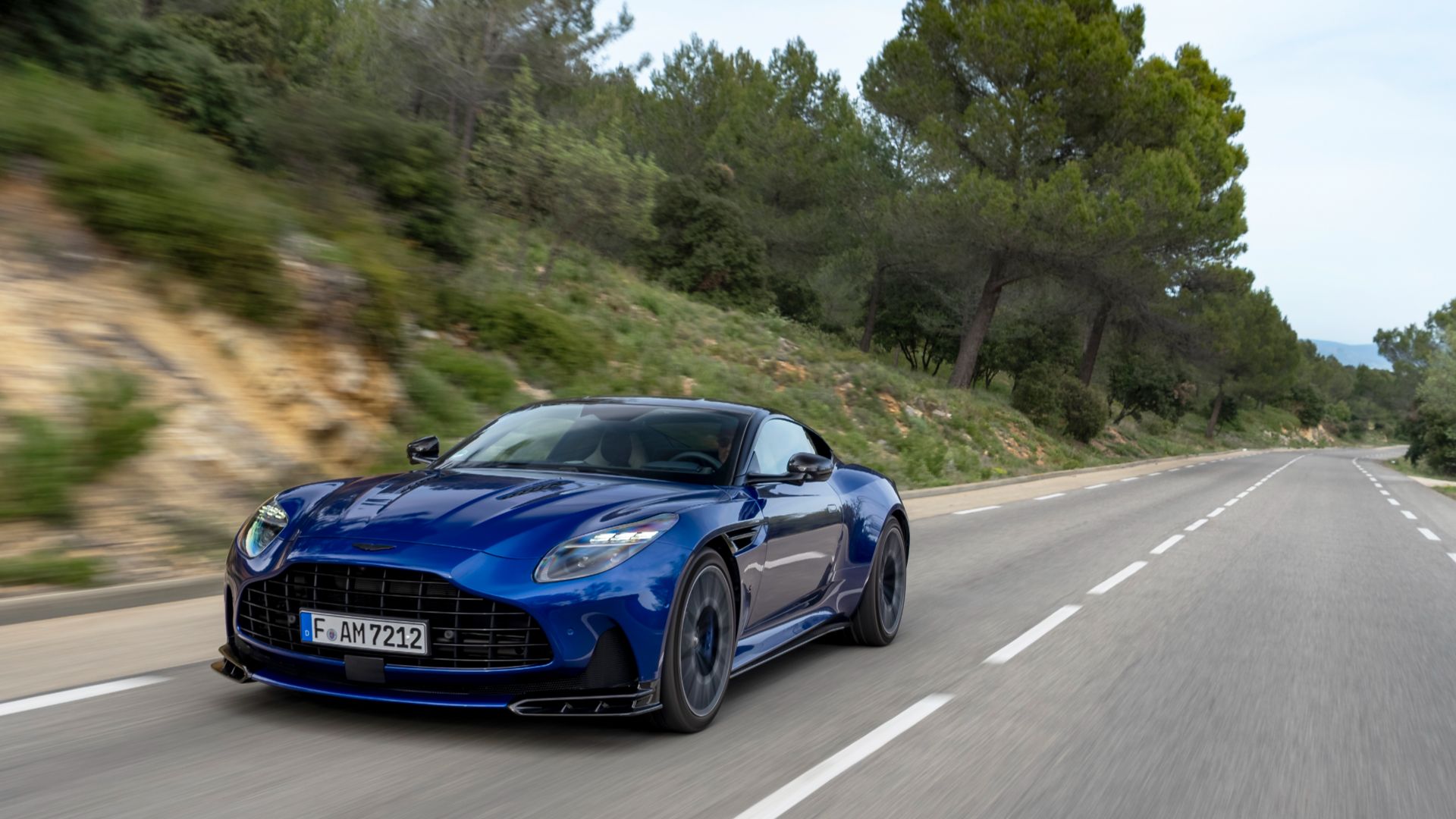
Style is subjective, of course, but I reckon a DB12 S in Ion Blue, as pictured here, makes a strong case for being the best looking new car you can buy. And the glamorous Volante is even prettier.
Turn up the bass
Under its power-bulged bonnet, the 4.0-litre V8 gains a token 20 horses, for a total of 700hp at 6,000rpm. Maximum torque is unchanged, at 590lb ft from 3,000rpm. Drive does to the rear wheels via a quicker-shifting automatic gearbox and an electronic differential, with torque vectoring across the back axle.
Elsewhere, the electric power steering, suspension geometry, Bilstein DTX adaptive dampers and corner braking control (CBC) system have all been recalibrated. There’s also a stiffer rear anti-roll bar and carbon-ceramic brakes are now standard, cutting unsprung weight by 27kg. Customers can save a further 11.7kg by opting for the Akrapovic titanium exhaust system, notes Hughes – and enjoy “improved bass frequencies” as a bonus.
A knurled rotary controller on the centre console – now ringed in red anodised aluminium – offers a choice of GT, Sport, Sport Plus, Wet and Individual modes, with the latter allowing the driver to mix and match settings to suit their personal preference.
Inside the Aston Martin DB12 S
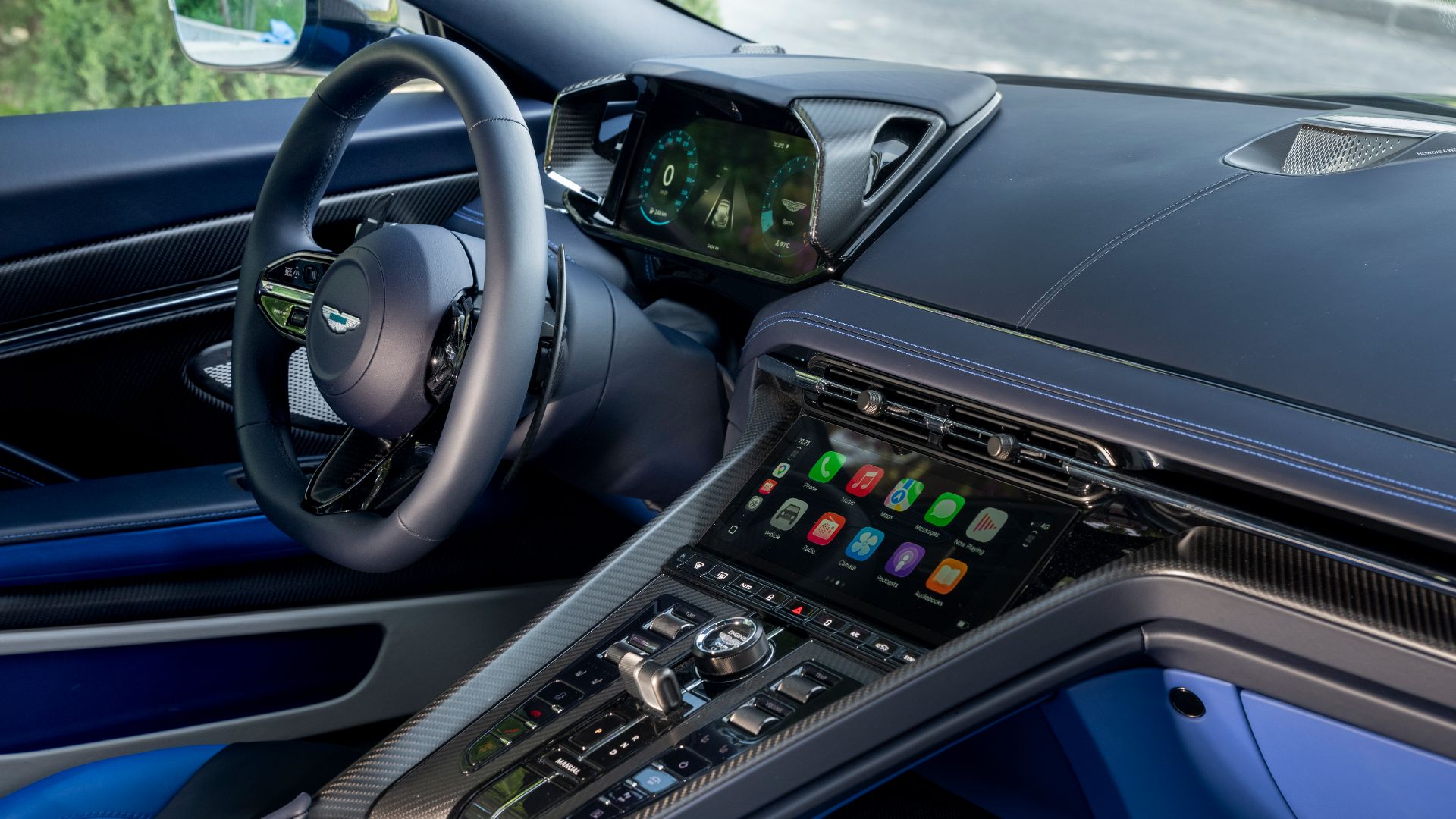
“In dynamic terms,” says Hughes, this car is “more aligned with a Ferrari Amalfi than a Bentley Continental GT.” That’s certainly borne out by the DB12’s driving position, which feels much lower and more laid-back than the stiff-upper-lip Bentley.
You can still spot bits of plastic Mercedes-Benz switchgear, including the column stalk and seat controls, but the days of making excuses for Gaydon’s interiors are long gone. Fit and finish are excellent, and the 10.25-inch touchscreen is straightforward to use.
Lest we forget, Aston Martin was also the first carmaker to introduce Apple CarPlay Ultra, which allows iPhone users to access vehicle-specific functions, from switching on your heated seat to disabling the cursed lane assist, without exiting the CarPlay interface.
It’s also easy to forget the DB12, uniquely among Aston Martin’s sports cars, has a pair of rear seats. These are very much of the ‘2+2’ variety, and most likely to serve as extra luggage space, but they do enhance usability – particularly given the coupe’s boot holds a modest 262 litres. The Volante is markedly less practical, with only two seats and a 206-litre boot – shrinking to just 169 litres with the roof retracted.
Brawn to be wild
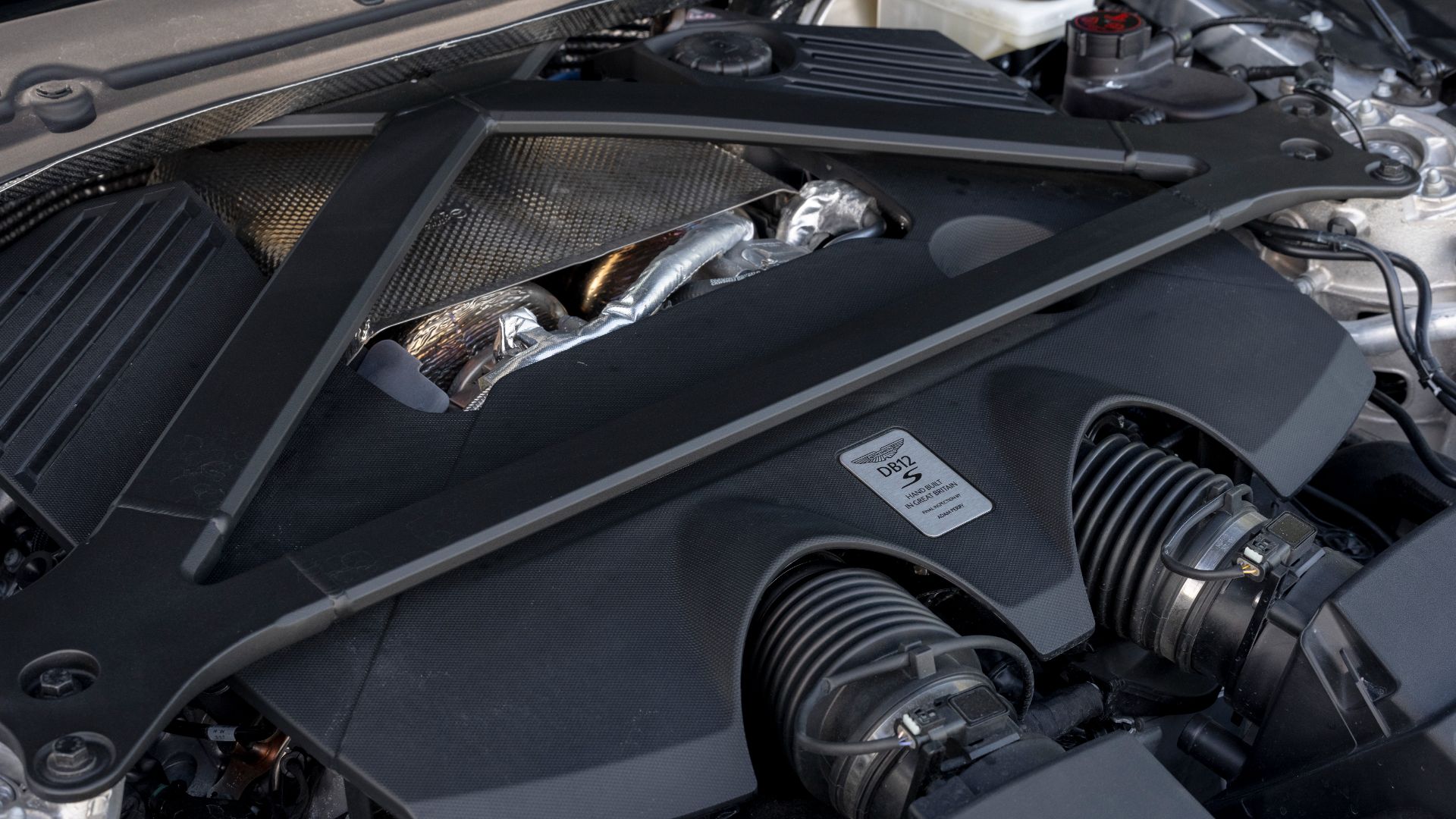
EU noise legislation means we’ve got used to new cars sounding a bit underwhelming, so I’m pleased to report the DB12 S (somehow) bucks this trend. Thumb its start button and the big front-mounted V8 erupts into life, then settles to a deep, metronomic throb. Further up the rev range, its voice hardens to a serrated snarl, then finally an exultant, thunderous roar – all amplified by the must-have titanium exhaust.
The DB12 S doesn’t deliver the instant wallop of some hybrid-assisted rivals – the new Porsche 911 Turbo S, for example – but its throttle pedal is so nicely calibrated you don’t miss that ‘always on’ immediacy. Likewise, the Aston’s eight-speed ZF automatic gearbox isn’t as sharp or pre-cognitively quick as a dual-clutch transmission, but its more relaxed nature is a good match for the tractable, torque-rich V8.
When the DB12 was first launched, it outgunned even the flagship Bentley Continental GT Speed. Rivals have caught up to some extent, but while it doesn’t have the over-engined, absurdly potent swagger of a V12 Vanquish, the ‘S’ is still a fabulously fast car – one that feels even quicker than the on-paper figures suggest.
Its powertrain also has two distinct personalities. In default GT mode, the DB12 S feels tailor-made for cruising along the Côte d’Azur. Switch into Sport Plus, though, and it goes from hedonistic grand tourer to fully fledged supercar.
A dynamic masterclass
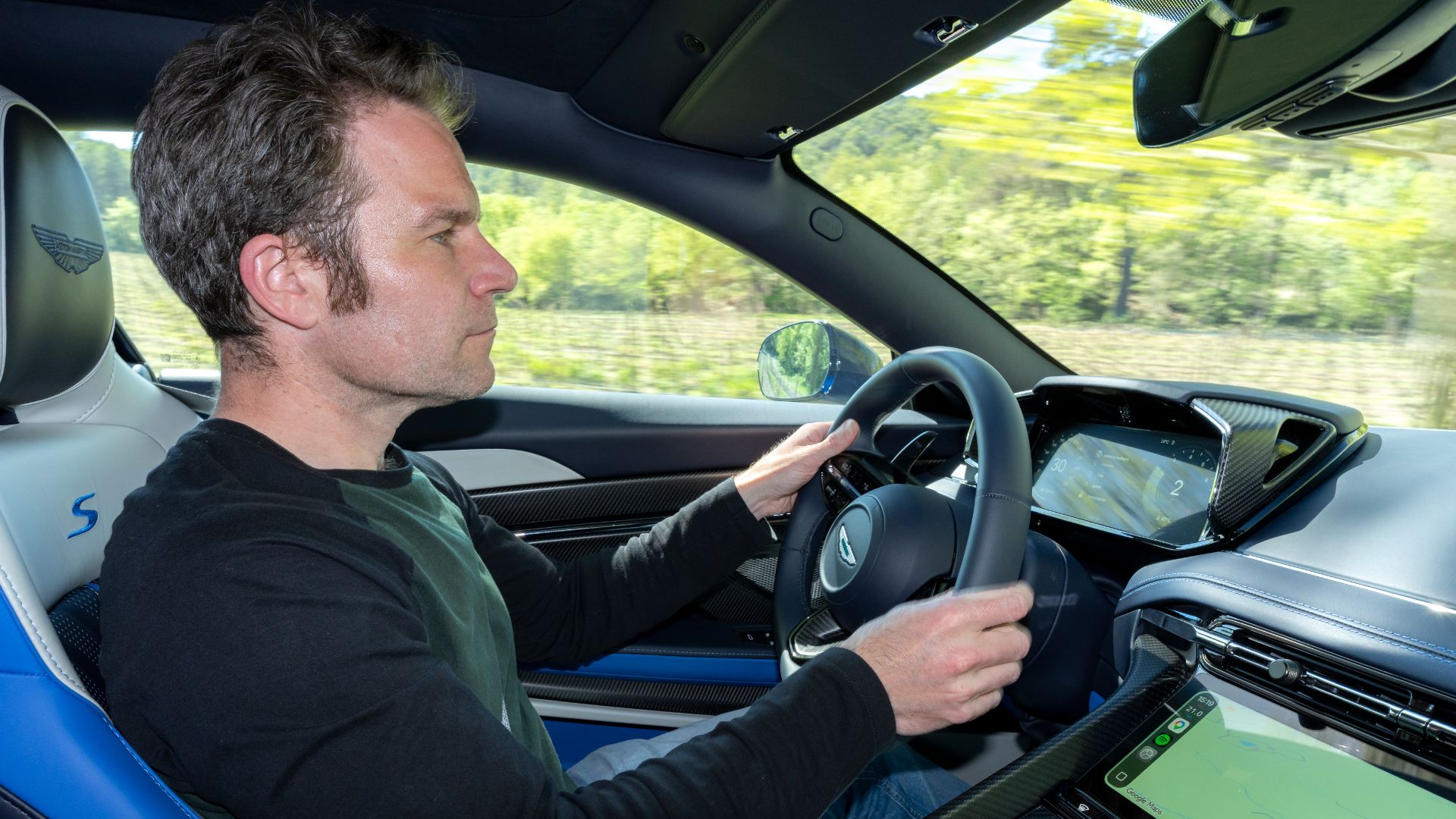
Much of the DB12’s dynamic character derives from its Ferrari-style e-diff and six-axis IMU (Inertial Measurement Unit), an advanced accelerometer that Hughes says can “predict the car’s responses, rather than simply reacting to them”.
The efficacy of such systems is, of course, all in the calibration. Fortunately, Aston Martin’s head of vehicle performance, Simon Newton, is one of the best chassis engineers in the business. I don’t pretend to fully understand the tech, but the result is a car that flows beautifully along the road, building your confidence as a driver.
The steering now has greater fidelity, the brakes are easy to modulate and body control is exceptional for such a large, relatively heavy car (1,820kg in coupe guise). It’s a more polished package than the regular DB12 – and in a completely different league to the DB11 of yore.
Ultimately, mid-engined alternatives such as the McLaren Artura and Maserati MCPura are more focused and engaging on challenging mountain roads. But the Aston Martin’s ace card is its pliant ride and long-legged comfort. I can think of few cars I’d rather drive from London to Scotland, or across Europe – even if the cost of super unleaded totaled considerably more than a budget flight.
Verdict: Aston Martin DB12 S
The changes made to the DB12 S could potentially have left its driver feeling like a badly mixed vodka martini: more shaken, less stirred (you just couldn’t resist, could you? – Ed). Unlike the edgier, more visceral Vantage, being ‘better’ doesn’t necessarily mean turning things up to 11. Or indeed 12.
Impressively, Aston Martin has managed to sharpen handling and feedback without eroding the refinement and effortless muscularity you’d expect from a GT car. I’m not sold on the styling changes, but this is still an achingly beautiful machine. And the driving experience lives up to those looks.
Aston Martin really is knocking it out of the park at present, and it deserves greater sales success. If customers need a reason to come back, the new DB12 S provides more than a few.
ALSO READ:
Aston Martin Vantage Roadster 2025 review
Aston Martin Valhalla spec secrets: How to configure a hypercar
