
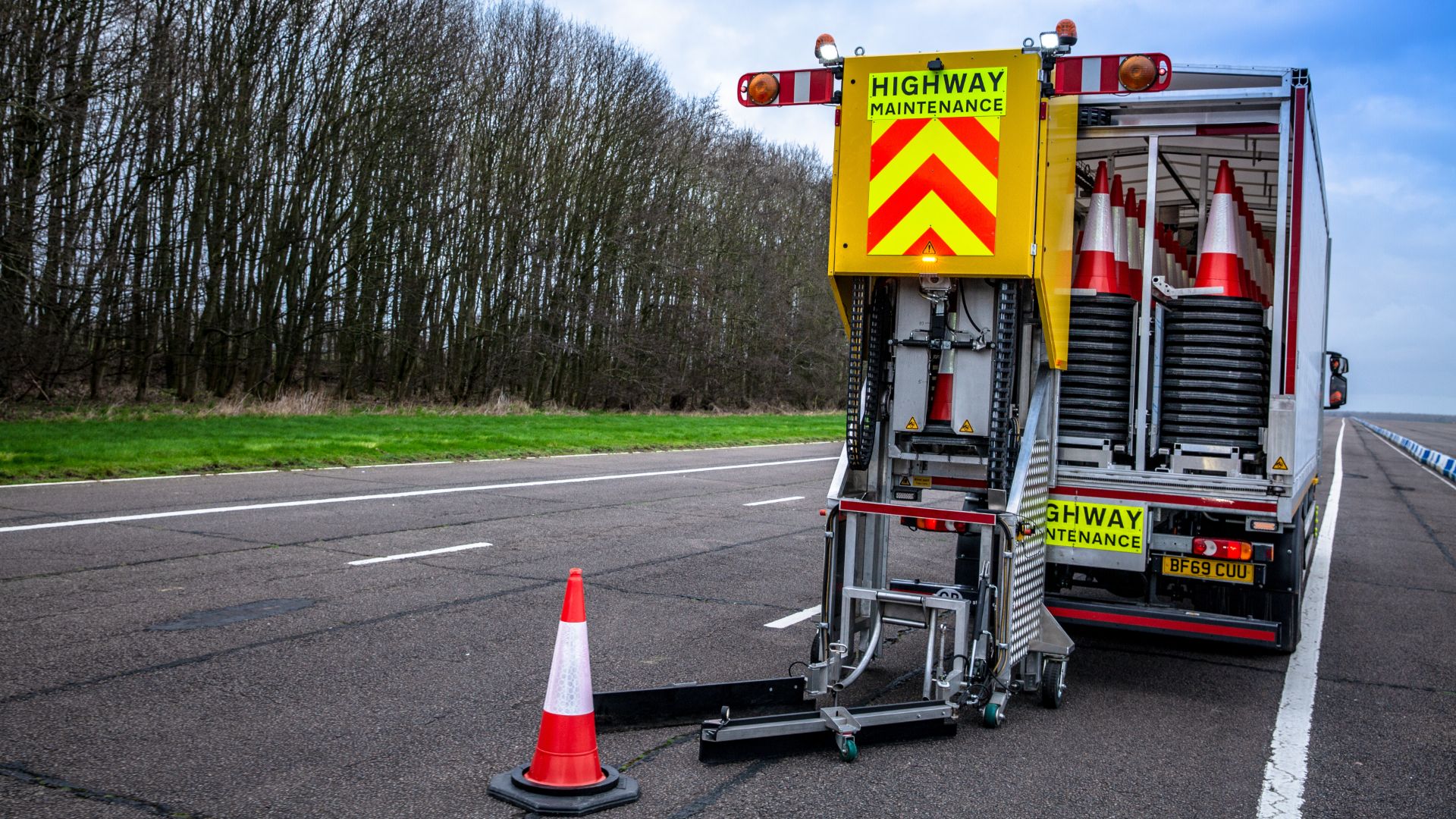
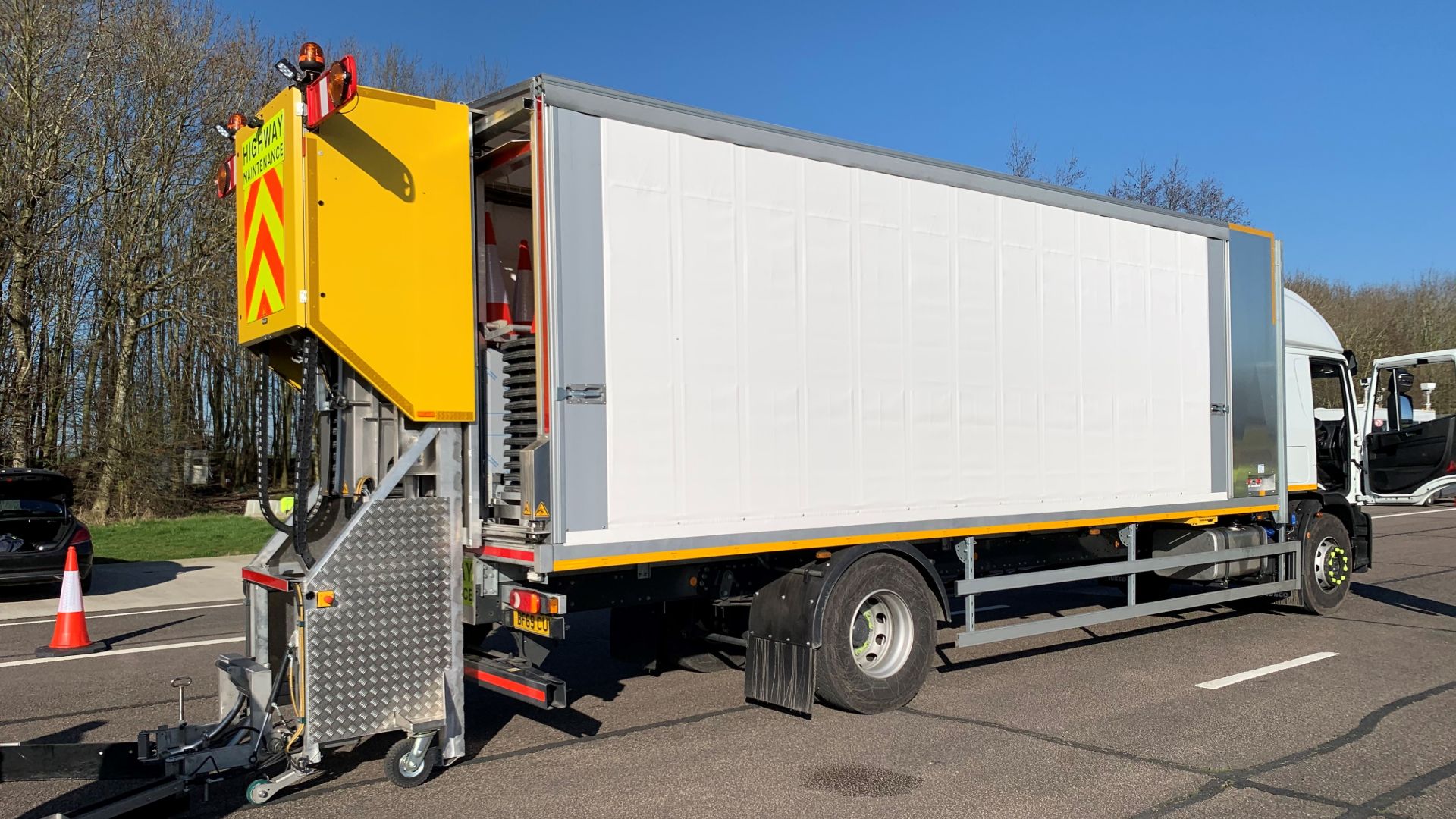
Highways England has released details of new vehicles designed to place cones at roadworks. The machines will reduce risk for road workers.
The automated cone-laying machines will take the place of two workers hanging from a truck, placing cones as it drives along.
Around 260-300 cones are required for a 2.5-mile road closure. That means workers shift between five and six tonnes of cones, each weighing 10kg, over the course of a shift.
Include other objects such as frames, signs, lamps and sand bags, and that’s an eight- to 10-tonne payload. A single kilometre of cone-laying takes 15 minutes. That means that live traffic exposure for these workers at present totals around two hours.
The process of establishing roadworks should also speed up. Pending further successful testing and refinement of the design, the cone-laying machines could be in service by the end of the year.
Two vehicles have been developed. One by Highway Care and one by King Highway Products. The former has been testing at Bruntingthorpe airfield, while the latter is due to be trialled next month. Highways England has invested £1.27 million into the scheme, via the Innovation Designated Funds programme.
Highways England set criteria for the machines, which must be safe in terms of all road users and pose no risk to traffic. In terms of performance, they need to lay or collect cones at a rate of one every 10 seconds. Both machines are expected to be used if they both pass the tests.
“We are constantly looking for ways to improve safety for everyone who works and travels on our road network and have been delighted with the initial tests of this innovative vehicle,” said Highways England’s Martin Bolt.
“The first tests have been very positive. We have already received a lot of interest and support from the industry, applauding an initiative that will take the human element out of putting cones and therefore take away an element of potential risk.
“As well as taking away this physical and laborious task, these automated machines will also help us to redeploy the workforce to some of the many other traffic management duties.”