
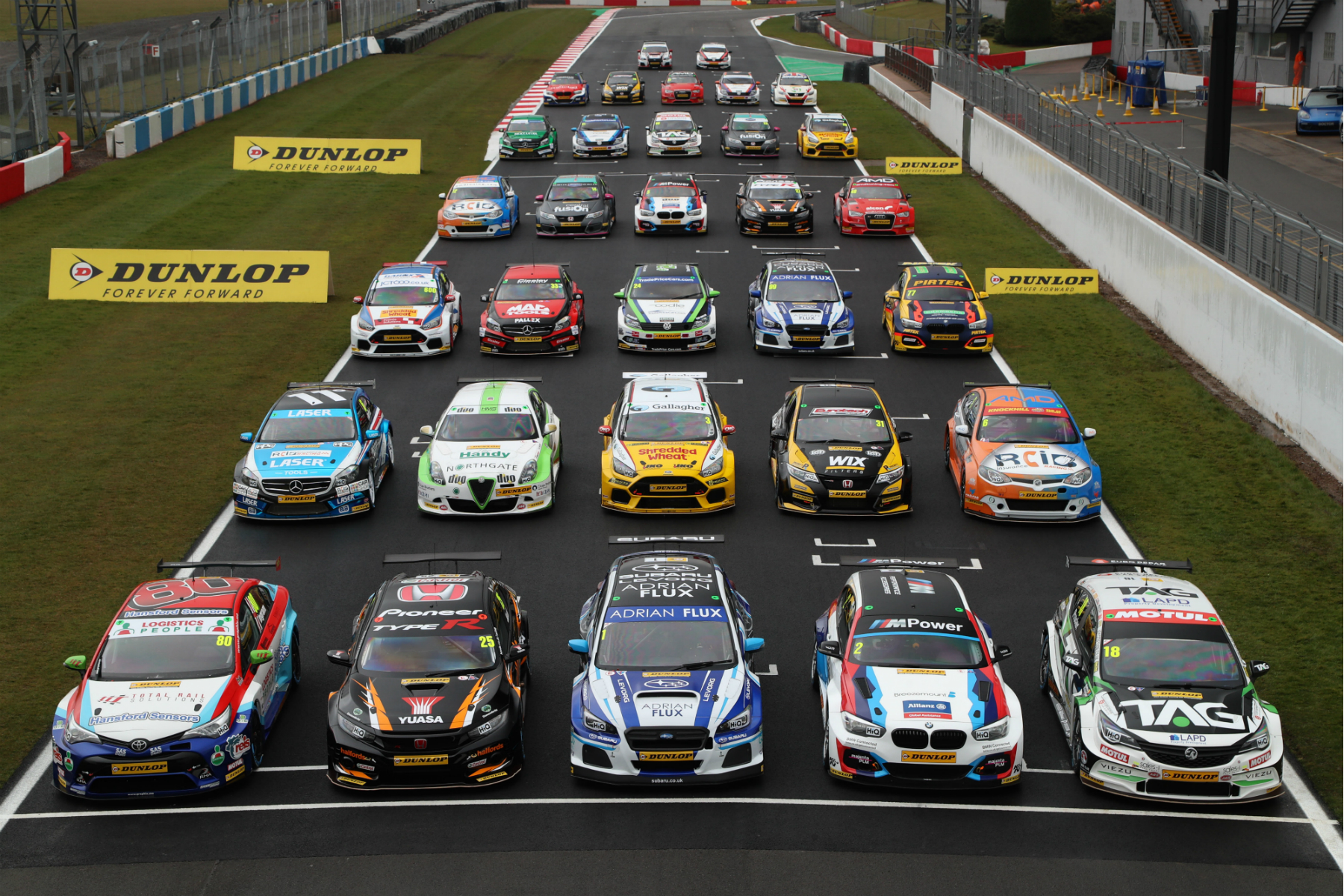
With rule changes on the horizon starting from 2020, how racers in the British Touring Car Championship (BTCC) are going to look, sound and go is beginning to take shape. The latest and most dramatic development is that they will be hybridised from the start of the 2022 season.
That’s right… series organiser TOCA has confirmed that the BTCC, one of the more down-to-earth motorsport series, is looking at electrification, joining the upper echelons of WEC, Formula 1 and obviously, Formula E.
That’s not to say that the cars themselves will change very much. The implementation of the technology should be on a base spec level. That means every car will get a standard power unit to complement the internal combustion engine. How and when that power unit is used to boost the cars throughout the race will become a part of each team’s race strategy.
Alan Gow, BTCC Series Director, outlined the extent of the changes to the current cars: “Different to hybrid development within the likes of Formula 1, this certainly shouldn’t – and won’t – be an ‘extreme’ technical exercise, but rather will be one which we will introduce within our NGTC technical regulations relatively seamlessly and very cost-effectively.
“Just as importantly, by incorporating hybrid it keeps the BTCC absolutely relevant to manufacturers, sponsors and the public… with the added benefit of further enhancing our great racing.
Watch a Volvo ESTATE race in the BTCC!
[universal_video_player settings_id=’1′]
“Drivers will have a given reserve of additional hybrid power to use during each race, which will provide an extra element of race-craft and excitement to the fantastically close and entertaining racing that is the hallmark of the BTCC.”
@DunlopBTCC to introduce hybrid technology. Interesting. BTCC never stops evolving….
— David Addison (@addison1972) August 1, 2018
While this general outline is good to go, the minutiae of the technical specifications is still to be decided, with the BTCC Technical Working Group (TWG) set to go over the detailed engineering over the course of the next 12-18 months. Some of the current cars should have such systems engineered in during 2020 and beyond for testing purposes, ahead of the full grid going hybrid from 2022.
How hybridisation will effect manufacturer perceptions of and involvement in the sport will be interesting to see…
Read more:
- The Toyota Camry is making a comeback – as a hybrid
- Every new McLaren will be a hybrid by 2025 – and there will be another P1
- Halfords will service your hybrid car from £89
