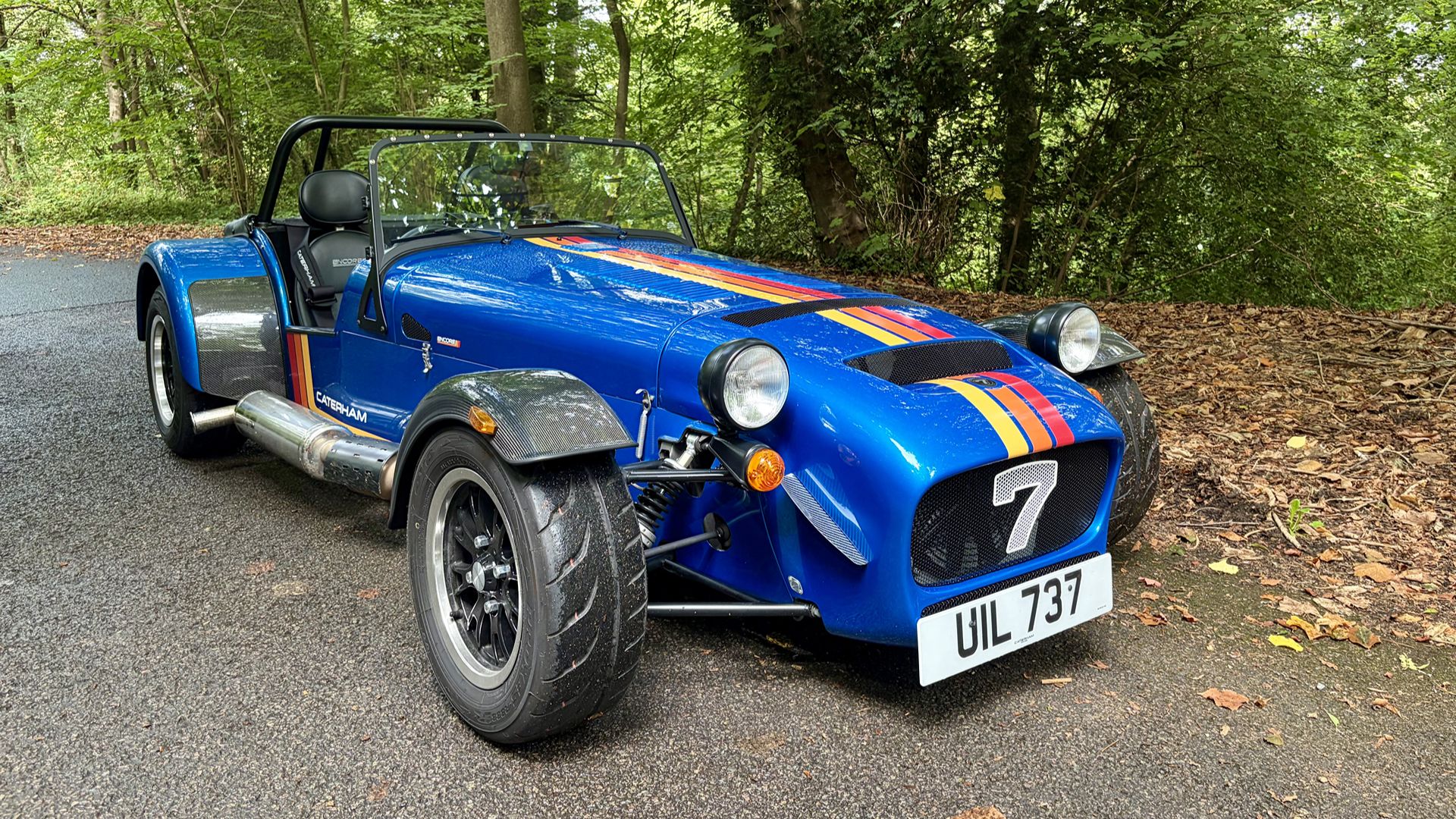
Caterham is a small town on the southern tip of the London suburbs, just beyond the ULEZ but within the M25. I moved here about 18 months ago, but have always lived in the area.
Google the word ‘Caterham’, though, and you won’t be presented with news about the roadworks on Church Hill or the new coffee shop on Croydon Road. That’s because this town is best known – faintly famous, even – as the birthplace of Caterham Cars.
The Caterham Cars story begins in 1973, when Graham Nearn bought the rights to carry on building the Lotus Seven – a basic, lightweight two-seater powered by a four-cylinder Ford engine. Seven assembly moved to Dartford in 1987, but a showroom survived next to Caterham station until 2013. I can remember staring through the windows as a child, intrigued by these strange, bug-eyed sports cars.
Today, I’m getting behind the wheel of a new Caterham Seven. It too is powered by a four-cylinder Ford engine – and its appearance has scarcely changed since 1973 (or indeed 1957, when the original Lotus was launched). But that’s kind of the point; for anyone acquainted with Sevens, driving one always feels familiar. A bit like, well, coming home.
Derived from the Seven 310
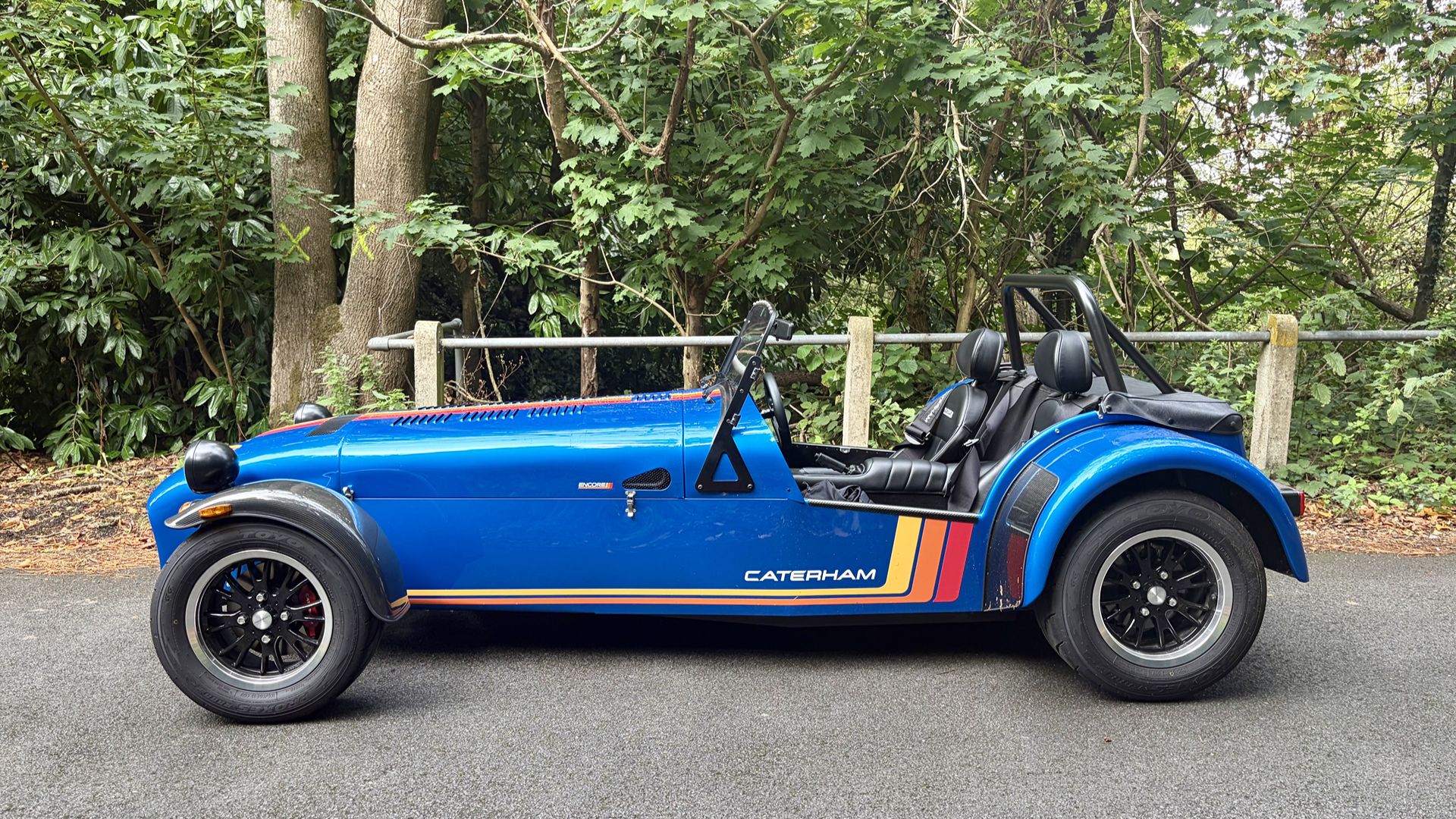
Caterham has been using Ford’s all-aluminium 1.6-litre Sigma engine since 2006, and stockpiled a batch of them after the Blue Oval halted production in 2020. However, it is now down to the final 25 cars, marking the end to this era with a special edition Seven: the 310 Encore.
For the uninitiated, Caterham offers a range of outwardly similar sports cars, from the beautifully basic 85hp Seven 170 to the supercar-baiting 314hp Seven 620. There are retro-styled roadsters and full-blooded racing cars in the mix, too.
The 154hp Seven 310 was itself a special edition of sorts. It began as an option pack for the middle-ranking 270, with a bit of extra power and a sharper setup. However, Caterham soon acknowledged the 310’s popularity by making it a permanent fixture in the model lineup.
Aside from the naturally aspirated Ford engine, the basics are a five-speed manual gearbox, rear-wheel drive and a kerb weight of 540kg. To put that latter figure into context, a Jaecoo 7 SHS, currently the UK’s best-selling car, tips the scales at around 1,800kg.
Welcome to the New Order
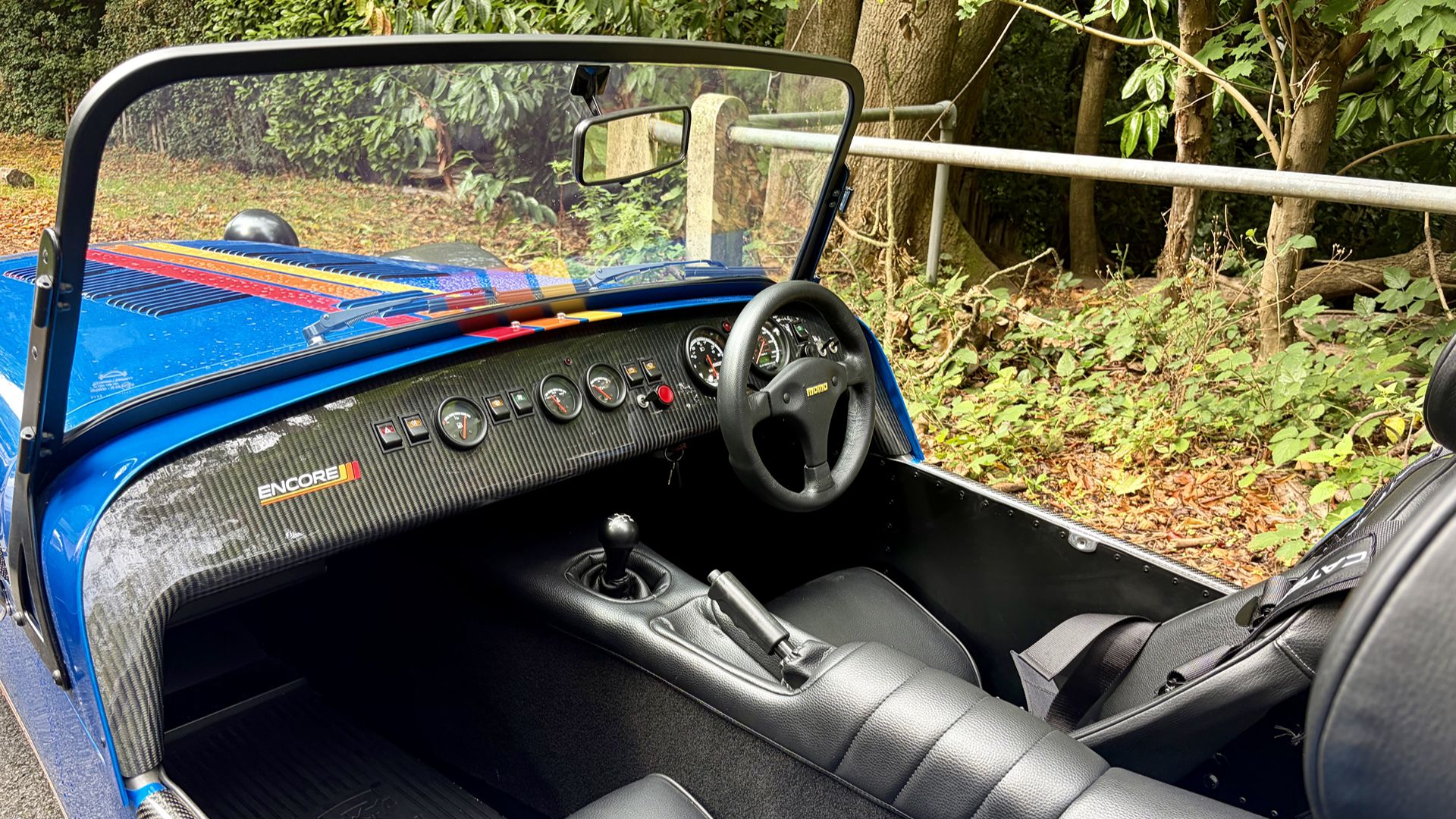
You can spot an Encore straight away thanks to its full-length body stripes, which are replicated on the side panels. There’s also an attention-grabbing choice of paint colours, each one named after a famous song: Blue Monday (pictured here), Orange Crush, Goodbye Yellow Brick Road, Green Light, White Noise or Back in Black.
Further aesthetic mods include a vented, aero-optimised nose cone from the Seven 620, a radiator grille from the 420 Cup, front wings in exposed carbon fibre and anodised black (rather than chrome) trim. Two-piece 13-inch Apollo alloy wheels are shod with semi-slick Toyo R888R tyres.
Both regular and wide-body ‘SV’ configurations are available – the latter aimed at those who struggle to squeeze into the confines of a standard Seven. Dynamic upgrades run to sports suspension with a wider track, moveable spring platforms and an adjustable rear anti-roll bar. You also get a limited-slip differential and beefier 254mm front brakes with four-piston calipers and a racing-spec master cylinder.
Mind the side exhaust
Last but certainly not least, there is the Ford Sigma engine, presented here in its highest state of tune, with spikier dual overhead camshafts, a lightened flywheel and a reprogrammed ECU. A total of 154hp, along with 124lb ft of torque, equates to 0-62mph in 4.8 seconds and a blustery maximum of 127mph.
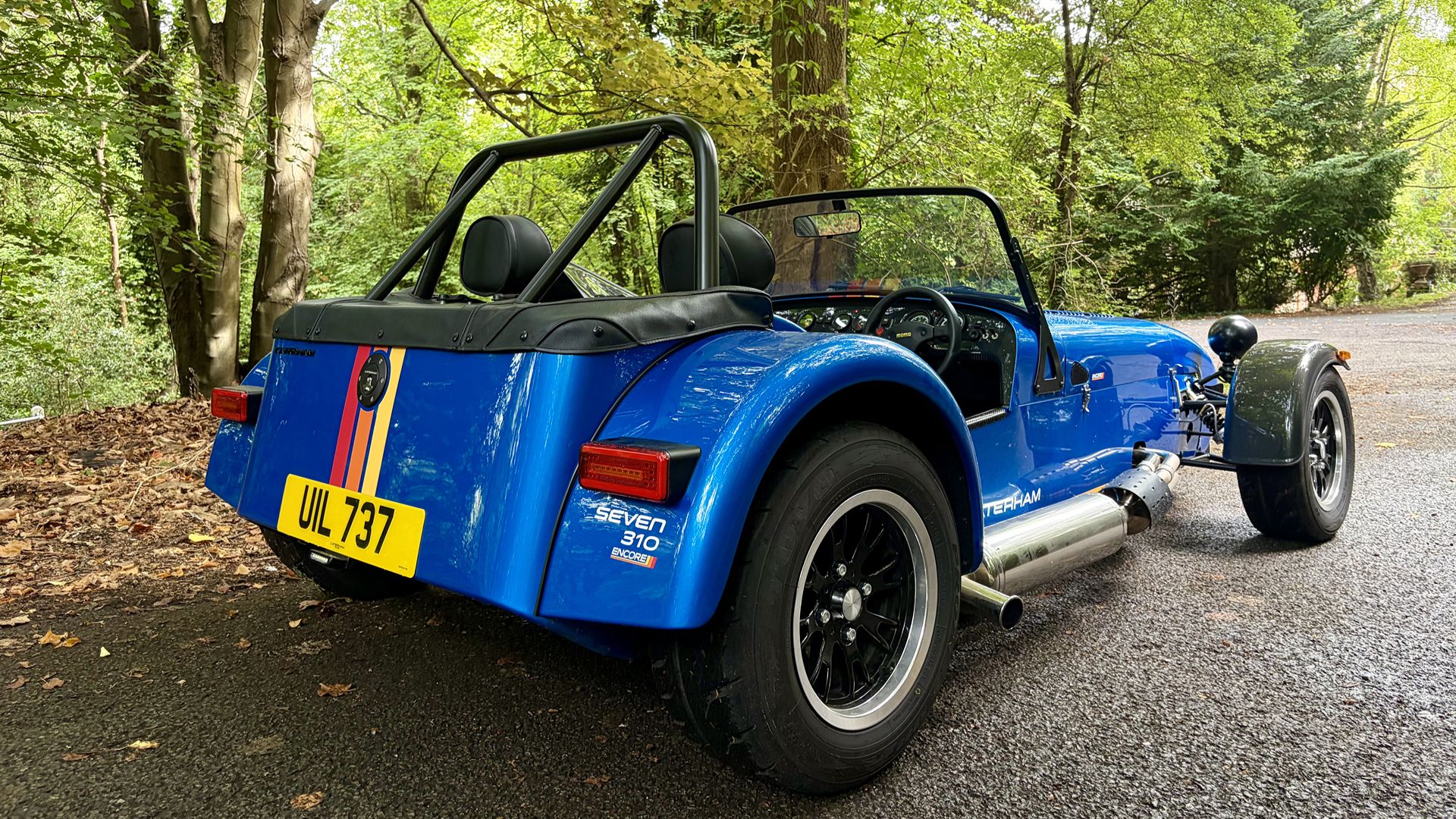
It all breathes through a side-mounted exhaust that exits just underneath your right ear – and makes stepping into a Seven while wearing shorts a perilous process. Like me, you will probably scorch your shin once on the hot tailpipe, then never make that mistake again. You can also detach the tiny Momo steering wheel to make access easier.
Unlike the hard-shell buckets of Caterham’s racier ‘R’ models, the Encore has softly padded leather seats that I found very accommodating. There’s still the pre-flight faff of four-point harness belts, though, and you won’t find any other concessions to comfort. Still, Radio 4 would be inaudible above the mechanical cacophony, while air conditioning is provided by the great outdoors.
Lean and roofless
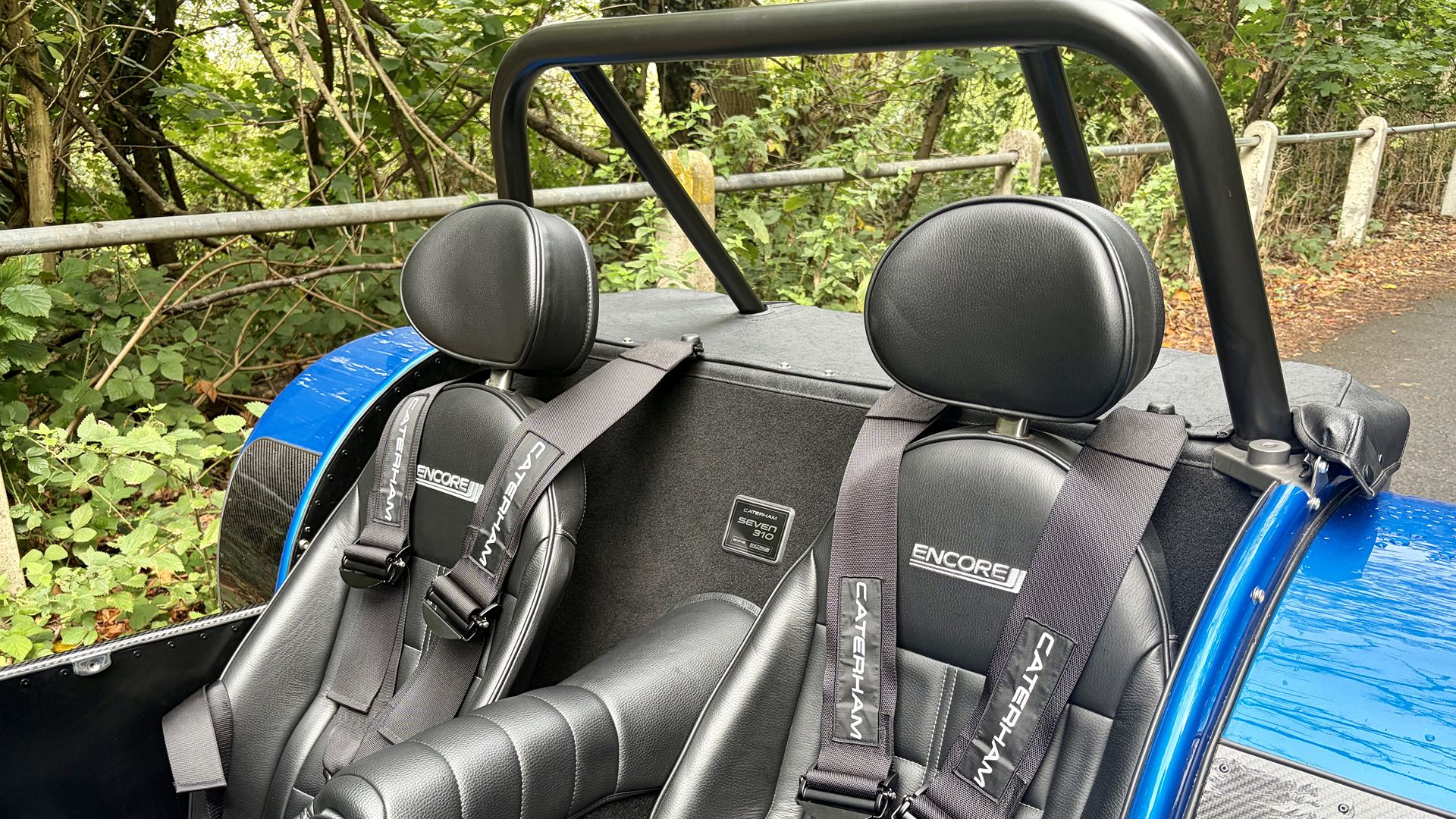
Believe it or not, a roof is optional on the 310 Encore (£1,000), but it’s a box that British buyers will need to tick. Removing the tight-fitting fabric top takes about five minutes and involves a lot of metal poppers, but no grazed knuckles or swear words – unlike British sports cars of old. Once rolled up, you can store it in the Seven’s boot, which has just enough space for a few shopping bags.
You can also detach the lightweight doors for the full al fresco effect, although there is nowhere to store them within the car. Still, a doorless Seven provides one of the most unique vistas in motoring, with jostling suspension up ahead and the road rushing past inches beneath your elbow.
The carbon fibre dashboard is a flat panel with simple rocker switches and small, Encore-branded dials. You fumble around beneath the steering wheel to slot in the dainty key, then prod a bright red engine start button. Encore une fois? Don’t mind if I do…
Driving the Caterham Seven 310 Encore
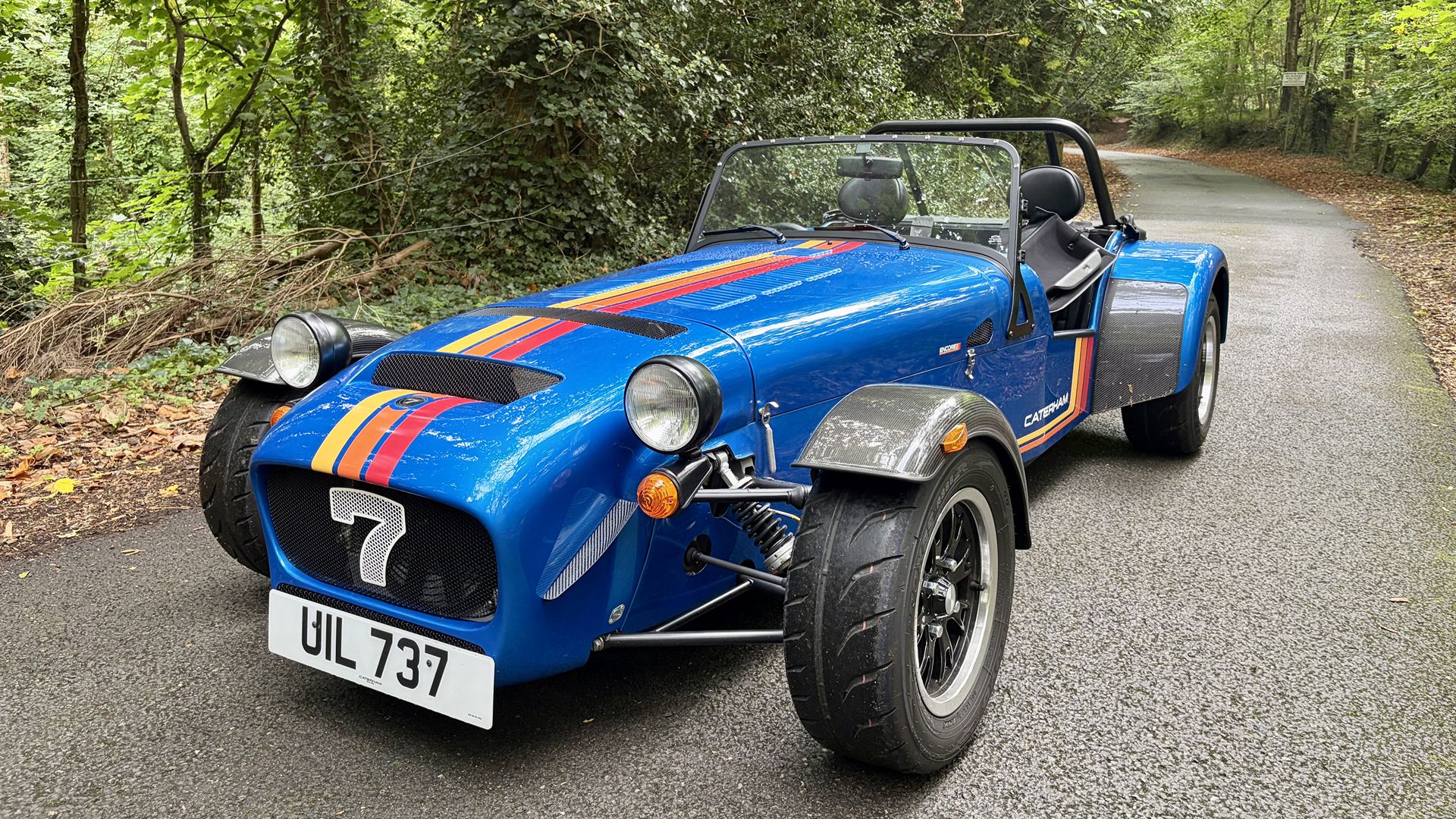
Even after so many years (and so many special editions), there is nothing quite like a Seven. This isn’t a car you can drive while thinking about those infuriating tailbacks on Church Hill, or whether you’d prefer oat milk in your latte. Instead, you roll up your sleeves and immerse yourself in the experience.
Sitting so far back in the car, right above the rear axle, with the long, louvred bonnet stretching out ahead, feels odd at first. There’s an initial rotational inertia caused by having the engine at one end and the driver/passenger at the other, which encourages you to commit to a corner, aim the inside front wheel at the apex then use the throttle to trim your angle of attack. It sounds difficult – daunting, even – but feels the exact opposite. Even on damp roads and lightly treaded tyres, the Seven doesn’t try to catch you out.
You feel the car’s lightness through every input and response. From its endlessly chatty steering to its resolute, track-tuned damping, the Encore bubbles with effervescent energy. If you want a car for road trips and weekends away, it’s probably all a bit much. But for a dusk drive on a summer evening, or blasting away the cobwebs on a winter morning, it’s just the tonic. The best Caterham Seven I’ve driven, in fact.
A sign-off for the Sigma
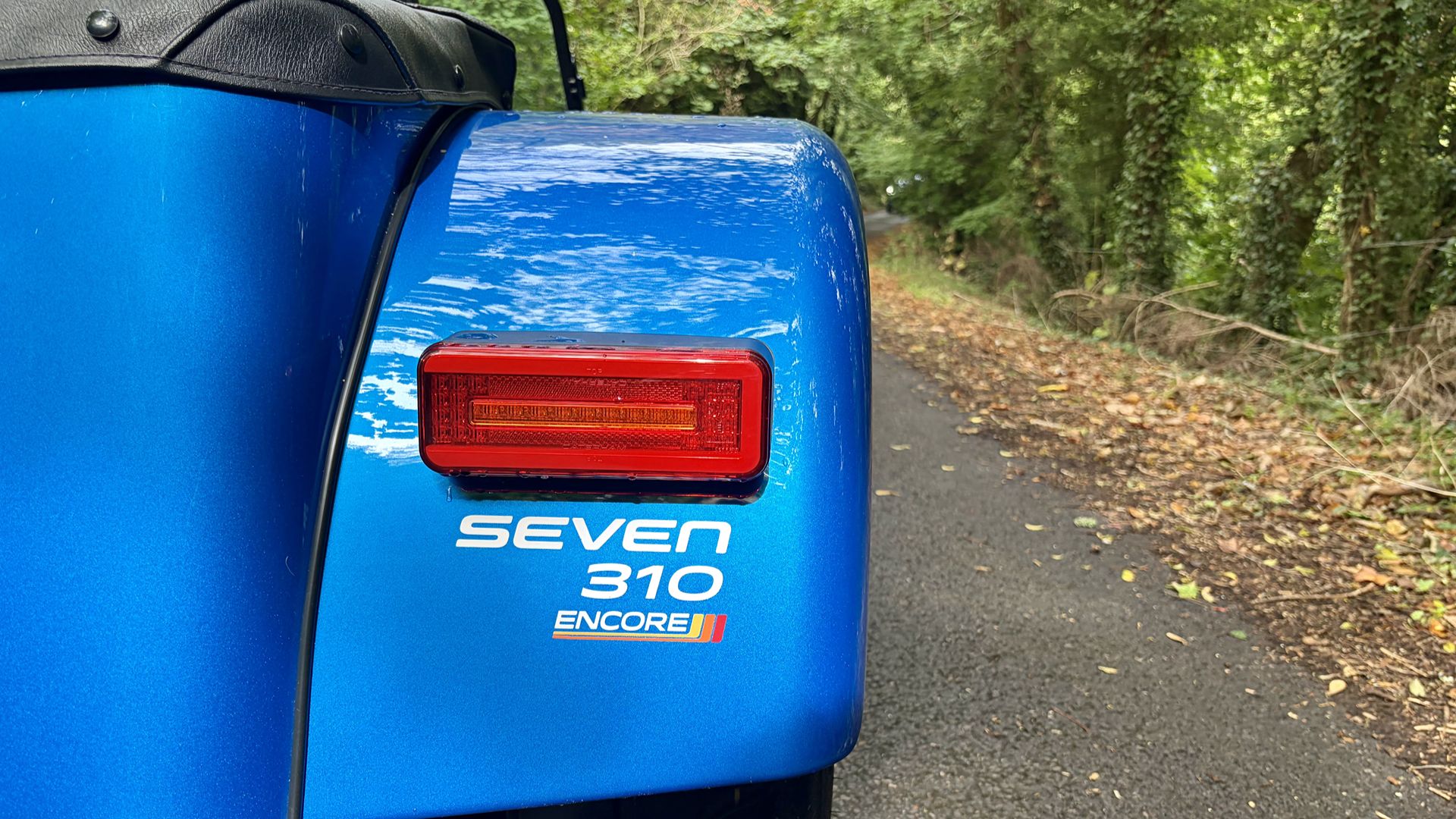
In some Sevens, the engine feels secondary to the chassis, a supporting actor rather than the headline star. That isn’t the case here. The Sigma unit punches hard, revs furiously and barks like classic rally car, with a fusillade of thuds and pops on the over-run. While the 2.0-litre Ford Duratec engine in Caterham’s 360, 420 and 620 models is ultimately more powerful, it isn’t as crisp or charismatic.
The manual gearbox comes from a Mazda (the MX-5, presumably) and its wonderfully mechanical, wrist-flick shift helps you to stoke the engine’s enthusiasm. The pedals are well placed for heel-and-toe downshifts, too – provided you have smallish feet. My size eight trainers were fine, but larger folk might need to wear dedicated driving shoes. Or even drive barefooted.
Not once while blasting around Surrey and Kent did I feel that the Encore needed more urge. A power-to-weight ratio of around 300hp per tonne is plenty on the public road, especially when you don’t have any electronic aids to dilute the drama and/or save you from yourself. How refreshing to drive a new car where job one isn’t figuring out how to switch off all the bleeping assistance systems. Pun very much intended.
Besides, in a Seven you don’t need to go fast to have fun. Even ambling around with the doors off is a lovely way to pass the time. Particularly in the Caterham’s home town, where it attracts “nice car” comments every time I clamber out, hopping inelegantly over that hot exhaust.
Verdict: Caterham Seven 310 Encore
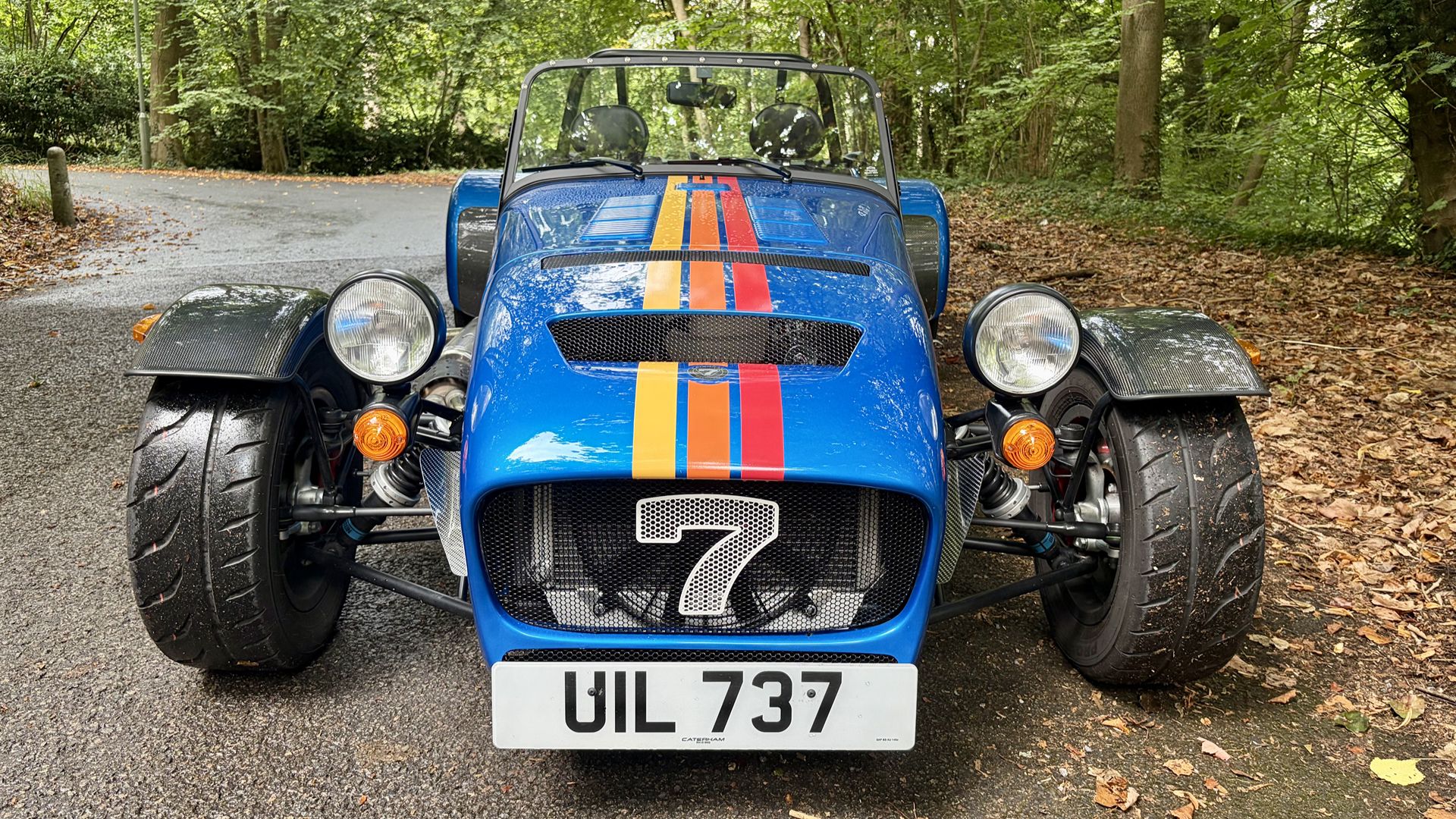
The 310 Encore costs £39,995 if you build it yourself, or an additional £2,595 if the Dartford factory does the spannering for you. That seems a lot for a car with no more mod-cons than a skateboard, but consider that a Lotus Emira costs at least £79,500, while the cheapest Porsche 911 is now £105,200. And neither can match the sheer driving joy of a Seven.
Caterhams are also well known for their very limited depreciation, which should soften the financial blow. Alternatively, you could just buy one and keep it forever, confident in the knowledge that the legislators will eventually figure out a way to ban simple, fun cars like this one.
There is speculation that a turbocharged 1.3-litre engine from Horse Powertrain – already used in the Caterham Academy race cars – will replace the Sigma soon. In the meantime, the Encore makes for a fitting and rather wonderful finale. You’d better move fast, though; at the time of writing, only a handful of the 25 build slots are left. If you buy one, bring it to Caterham and say hello.
ALSO READ:
