
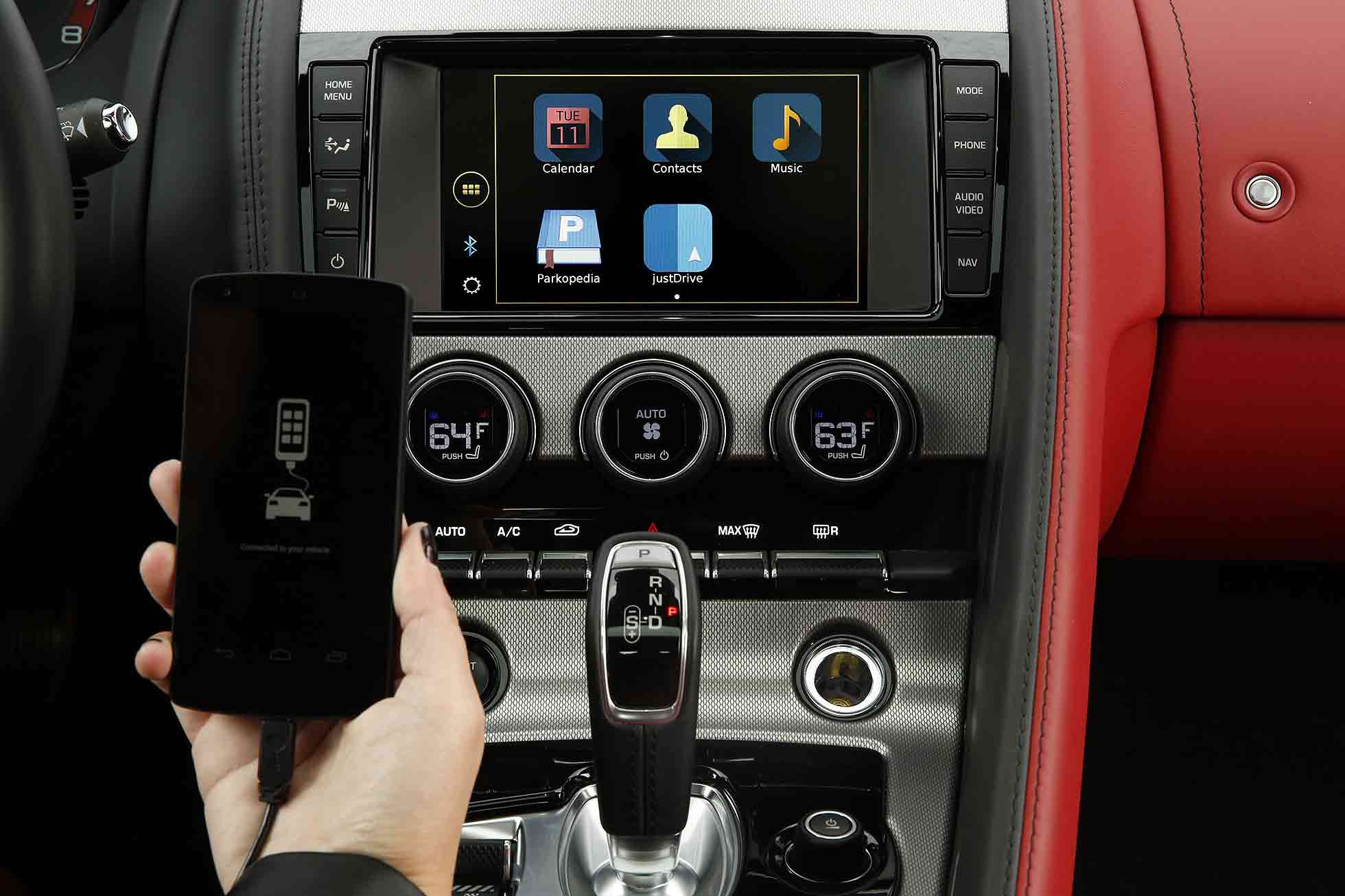
 Jaguar Land Rover’s in-car infotainment technology will become the automotive industry benchmark within three years, engineering director Dr Wolfgang Ziebart has predicted.
It will do this by embracing the smartphone and allowing owners to fully incorporate and use their devices – and their apps – within in-car systems.
“We are decoupling infotainment functionality from the car and instead bringing in the smartphone. In the future, most apps and technology will come from the smartphone, not the car.”
JLR is set to harness smartphone functionality more comprehensively than any other manufacturer, said Dr. Ziebart, an approach he believes is “absolutely the right way to go.
“Instead of spending huge amounts on technology that, due to Moore’s Law, is two generations out of date even at launch, we are instead making our cars into platforms to host smartphone features.”
Key to this is JLR’s new InControl technology, using brand-exclusive technology from component supplier Bosch. “No rival [yet] has the level of connectivity between smartphone and car that we have.”
JLR is also working with Intel to develop platforms and systems, and has recently opened a new Technology R&D centre in Portland, Oregon, to facilitate collaborations with Silicon Valley.
‘Be more like Apple’
The collaborative approach is at odds with the car industry norm, said Ziebart, who believes other car companies will eventually have to follow JLR’s lead here.
“A billion smartphones are sold each year, compared to 80 million cars – only 15 per cent of which may have high-level infotainment. There’s no way the car industry can compete with the programming activity within the smartphone industry: it should instead embrace it and look to bring it into the car in the most seamless way possible.
“This is what we will do with our new infotainment platform.”
There’s clear demand from customers for this, he added: 20 per cent of global buyers would switch their car brand if a rival offered a better infotainment system.
“In Europe, we are perhaps blinkered, because the switch rate here is only 8 per cent. But in China, it’s 40 per cent – to buyers there, luxury is not wood and leather, but the quality of the infotainment system…”