The cars Jaguar got right – and very wrong
-

Jaguar’s hits and misses
© JaguarIt won’t have escaped your notice that Jaguar has been in the news, but we’re not here to talk about the Type 00 concept or the new brand. Instead, we’ve been thinking about Jaguar’s history: the times when it got something right, plus those when everything didn’t go according to plan. We’re not saying these are the best or worst Jaguars, but here are a dozen cool cats and six that should have tried harder.
-

Jaguar E-type
© JaguarAs sure as night follows day, we were always going to start with the Jaguar E-type. Widely considered one of the most beautiful cars of the 20th century, the E-type arrived in 1961 and rewrote the sports car rulebook. Fast, glamorous and affordable, it was the coupe or roadster to be seen in. Production continued until 1975, by which time it had put on a bit of weight but gained a V12 engine.
-

Jaguar XJ6
© JaguarIn many ways, the Jaguar XJ6 was a better car than the E-type. So good, in fact, that production lasted from 1968 until 1986, although the 12-cylinder XJ12 continued until 1992. In fact, the design language remained until the launch of the X351 in 2009. A remarkable innings for a car that replaced several models, saw off many rivals and spawned a stunning coupe variant.
-

Jaguar XE SV Project 8
© JaguarJaguar wasn’t exaggerating when it called the XE SV Project 8 a four-door supercar. Developed by its Special Vehicle Operations (SVO) division in Coventry, it featured a 600hp 5.0-litre V8 and cost around £150,000. The performance figures were astonishing: a 200mph top speed and 0-60mph in 3.3 seconds. Sadly, just 300 cars were built.
-

Jaguar XK120
© JaguarDesigned and developed in just three months by a team led by the supremely talented William Lyons, the Jaguar XK120 was no less influential than the E-type. Unveiled at the 1948 Earls Court Motor Show, at a time when the country was still feeling the effects of the Second World War, it was the world’s fastest production car. How fast? The clue’s in the name.
-

Jaguar Mk2
© JaguarOn a list of the best automotive facelifts, the Jaguar Mk2 would be close to the top. Launched in 1959, the Mk2 was a comprehensive update of the old 2.4 Litre and 3.4 Litre models, with a subtle restyling job and a wider track. It was good, but better was to come with the arrival of the 3.8-litre version, which became a star of road and track – not to mention the getaway car of choice for members of the criminal underworld.
-

Jaguar XKSS
© JaguarLaunched in 1957, the XKSS was essentially a road-going version of the famous D-type race car, but only 16 were built before a fire destroyed Jaguar’s Browns Lane factory. Powered by a 3.5-litre six-cylinder engine, the XKSS was phenomenally quick, with a top speed of 150mph and the ability to hit 60mph in around five seconds. In 2016, Jaguar announced a run of hand-built continuation models with a price tag of around £1 million.
-

Jaguar XE
© JaguarThe Jaguar XE deserved to sell in higher numbers. It arrived in 2015 to take on the Audi A4, BMW 3 Series and Mercedes-Benz C-Class, a fight it was destined to lose, such is Germany’s stranglehold on the compact executive car market. That’s a shame, because while the XE lacks the glamour, speed and significance of some of Jag’s most famous cars, it was a brilliant four-door saloon.
-

Jaguar SS100
© JaguarYet another hugely significant car, this time because it could hit 100mph. With a price tag of just £395 (£23,500 today), it was the country’s cheapest car to break the ton. Powered by a 3.5-litre straight-six engine, the SS100 was the first car to bear the Jaguar name, although it wouldn’t be used as a brand until 1945.
-

Jaguar D-type
© JaguarJaguar dominated the Le Mans 24 Hours in the 1950s, winning the famous race on five occasions. The D-type secured three of those, with consecutive victories between 1955 and 1957. Although it was an evolution of the C-type, the D-type featured a magnesium-alloy monocoque, disc brakes all round, more aerodynamic styling, alloy wheels and a new four-speed gearbox.
-

Jaguar XK8
© JaguarIn many ways, the Jaguar XK8 had it easier than the XJS. Rather than replacing a legend in the shape of the E-type, the XK8 had the less terrifying task of succeeding the XJS, which never captured the imagination quite like its predecessor. Launched in 1996 as a coupe, a convertible arrived later, with all versions powered by a V8 engine. It was at its best in supercharged XKR guise.
-

Jaguar XJ X300
© JaguarLaunched in 1994, the ‘X300’ XJ was the first all-new Jaguar to be launched under Ford ownership. Jaguar’s reputation received a much-needed boost as quality and reliability improved, but the star of the show was the XJR – the company’s first supercharged car. Thanks to 326hp, the XJR could hit 60mph in 6.6 seconds and reach a limited top speed of 155mph.
-

Jaguar I-Pace
© JaguarMost people expected Audi, BMW or Mercedes-Benz to take the electric fight to Tesla, but Jaguar surprised everyone when it launched the I-Pace. This was in 2018, when the I-Pace had the premium electric SUV sector to itself. A lot has changed in the intervening years, but the I-Pace’s impact cannot be overstated. It proved that an electric SUV could be good to drive, while offering an official 298 miles of range.
-

Jaguar C-X75
© JaguarWhich brings us to the cars Jaguar got wrong. We’re not saying that the Ian Callum-penned C-X75 was a bad car – quite the opposite, in fact – but we still haven’t forgiven Jaguar for not putting it into production. A disgruntled Callum used elements of the C-X75 in the design of the I-Pace, but the closest it got to reality was a role in the 2015 James Bond film Spectre.
-

Jaguar XJ220
© JaguarAgain, nobody is saying the XJ220 isn’t anything short of spectacular, but it was a commercial disaster for Jaguar. It was unveiled in 1988 as a four-wheel-drive concept car, only to launch four years later with a V6 engine and rear-wheel drive. Not good news for those who had placed deposits of £50,000 to secure the big cat. Few were willing to spend £470,000 on the new version, despite its 212.3mph top speed, meaning many cars were sold for half-price.
-

Jaguar E-Pace
© JaguarGiven the excellence of the Jaguar F-Pace, the smaller E-Pace should have been great. Unfortunately, it looked a little lost in a sector dominated by brilliant compact SUVs such as the Volvo XC40, Range Rover Evoque and BMW X2. Unlike the I-Pace and F-Pace, it was dull to drive, with a lack of space and questionable reliability among the other problems.
-
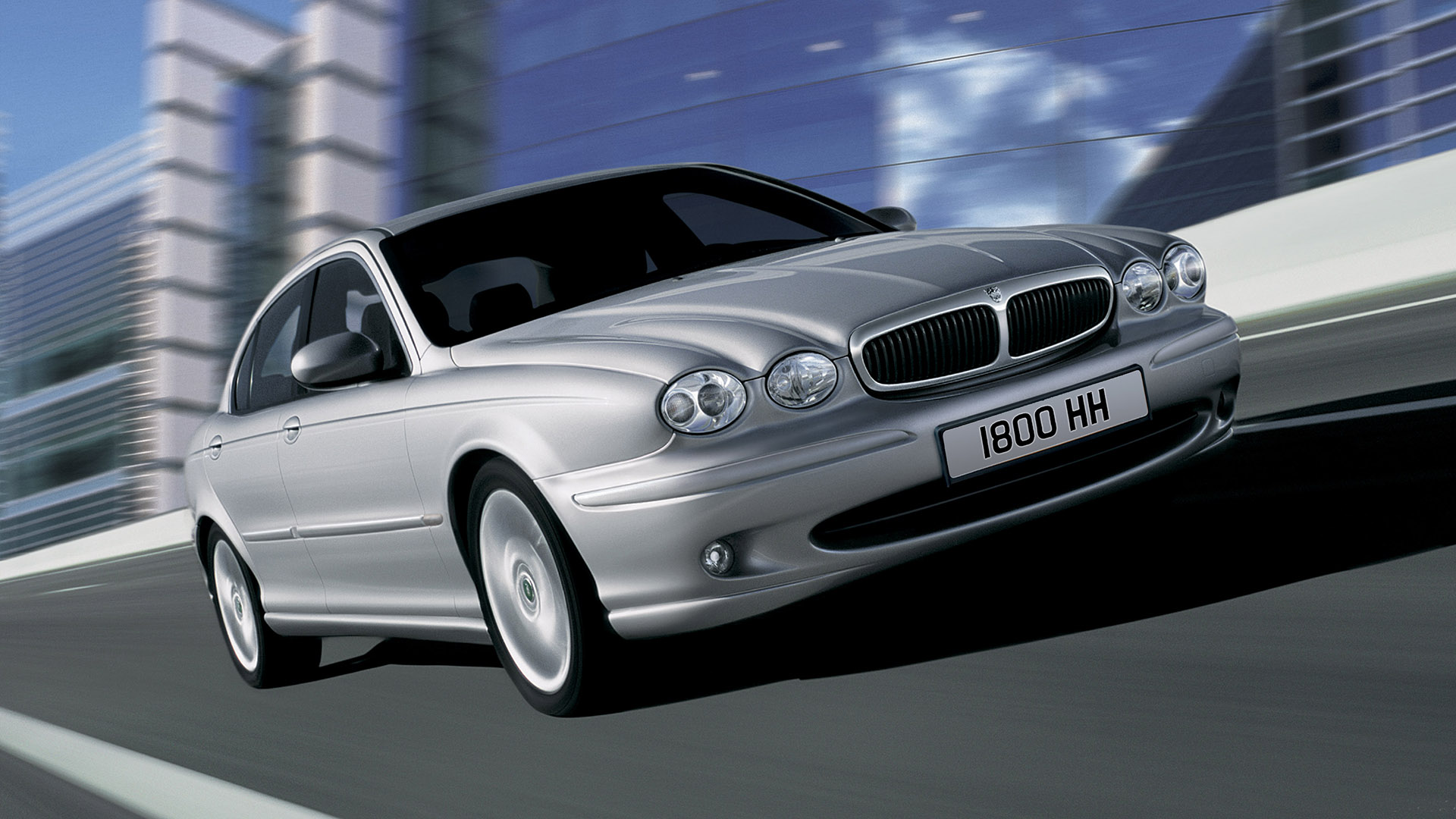
Jaguar X-Type
© JaguarThe Jaguar X-Type wasn’t a bad car, but we were left with a sense that it could have been so much better. It never managed to lose the ‘posh Mondeo’ tag, even though it shared surprisingly little with the Ford. However, its rivals were so much better. The BMW 3 Series was sharper to drive, the Alfa Romeo 156 was better looking and both the Audi A4 and Mercedes-Benz C-Class had more badge appeal in this particular sector. Financially, it was a disaster, with Jaguar reportedly losing €4,600 (around £3,800) on every X-Type sold.
-

Jaguar S-Type
© JaguarThe Jaguar S-Type was everything the Type 00 isn’t. Love it or hate it, the new concept represents a fresh approach; a glimpse into the future rather than a nod to the past. Some people criticised the S-Type for using history to appeal to mature buyers, rather than targeting a younger audience. In fairness, it’s getting more appealing with age and Ian Callum’s 2004 restyle was a success.
-

Jaguar XJ-S
© JaguarLaunched in 1975, the Jaguar XJ-S (later called ‘XJS’) had the unenviable task of following the E-Type. Although it was unquestionably the right car for the 1970s, many people were expecting a lighter and more agile sports car in the spirit of the E-Type, not a large and luxurious grand tourer. Quality problems plagued early cars, but it lived on until 1996, by which time it had evolved into a superb GT. It seems to have come back into fashion recently, too.
