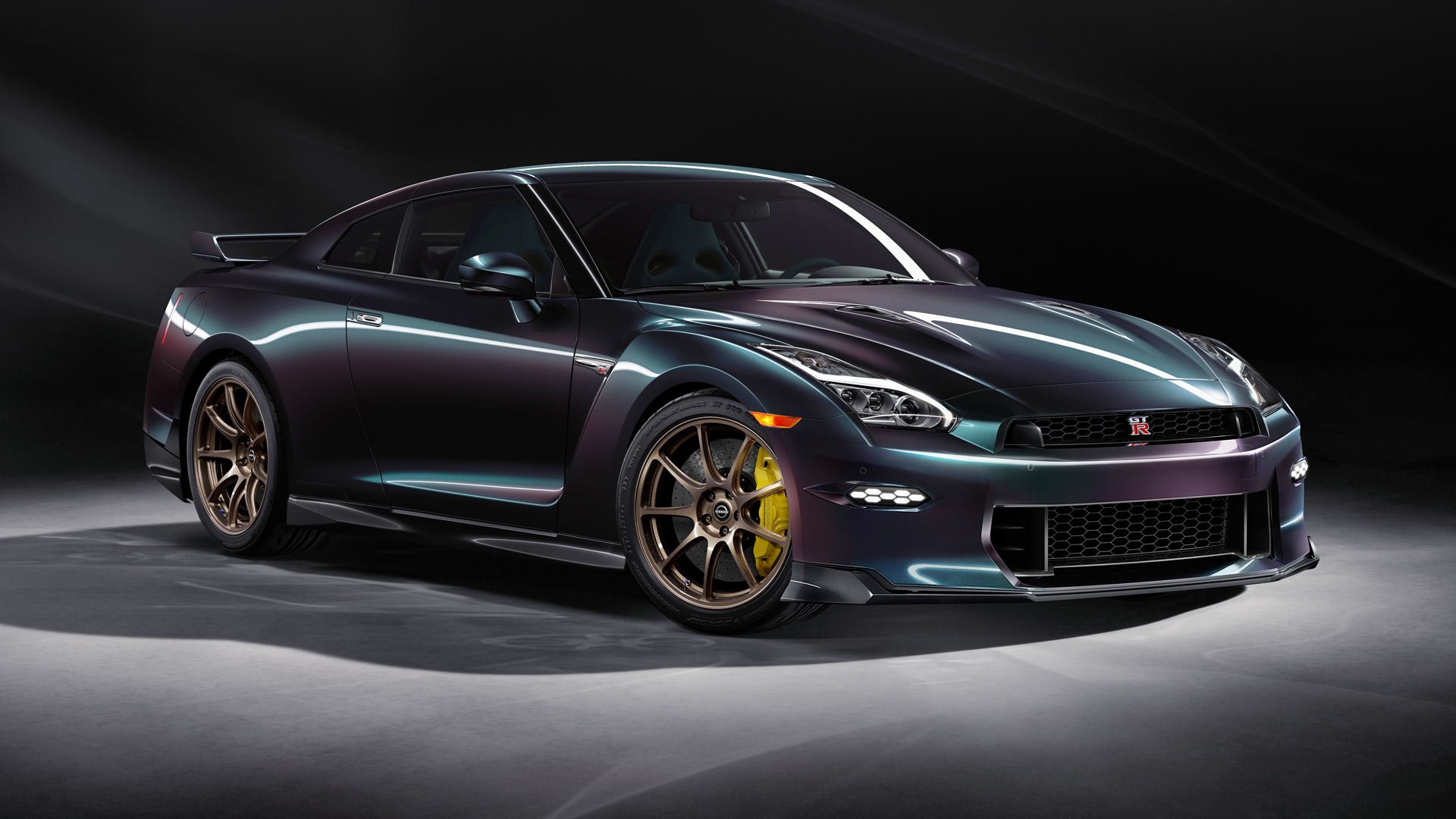
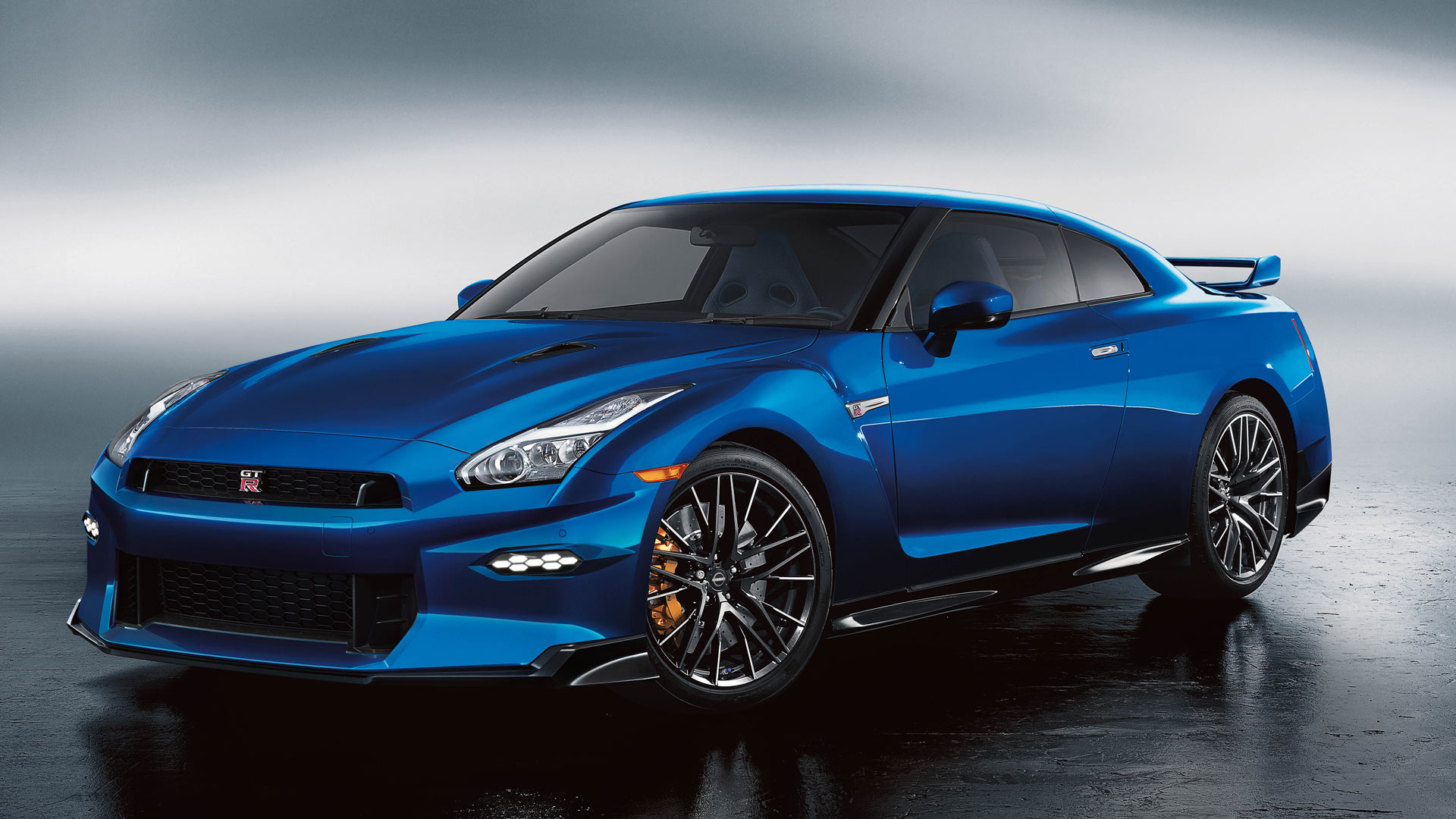
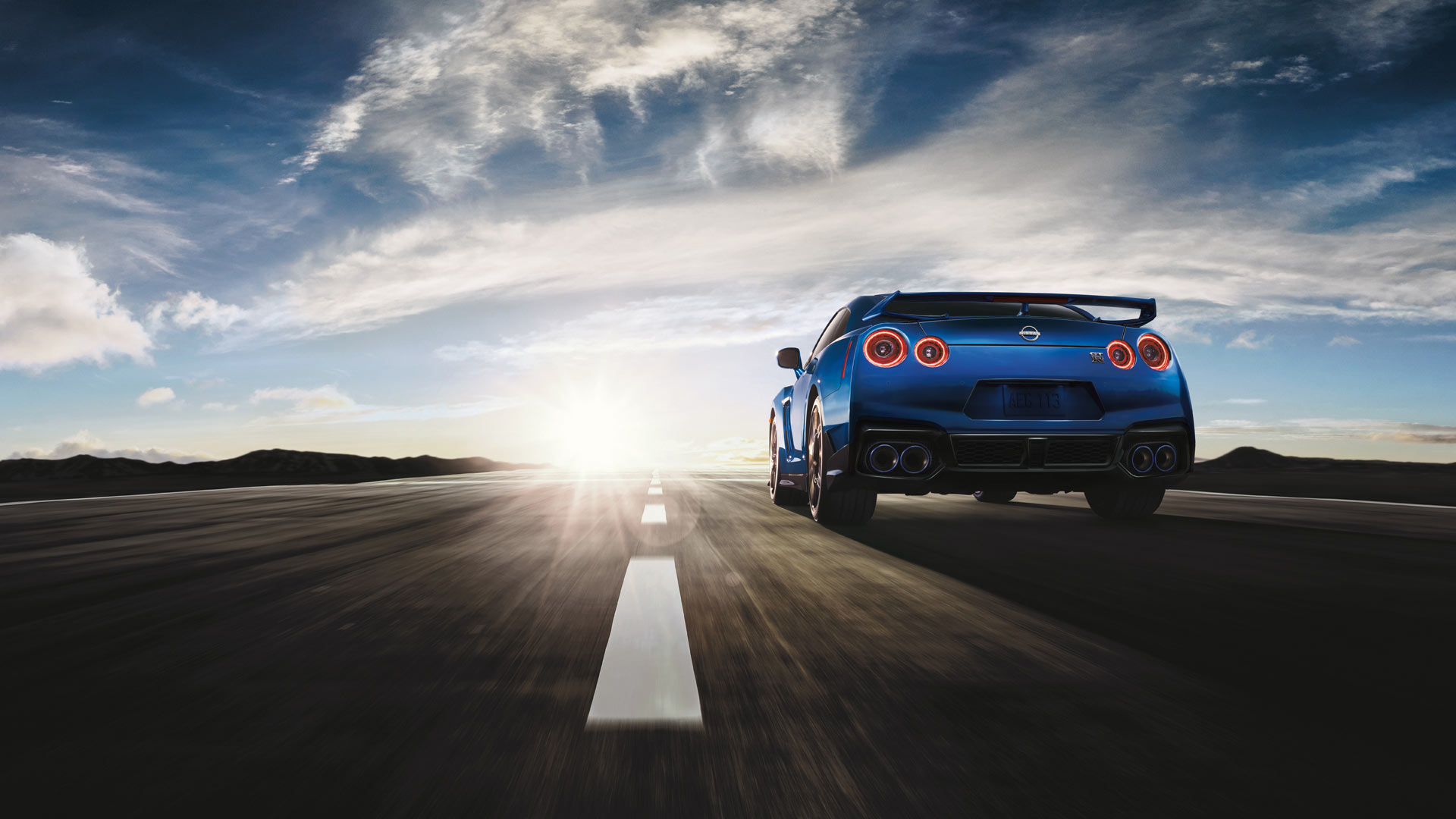
Two new special editions of the Nissan GT-R have been announced, both of them paying homage to the history of this storied Japanese supercar.
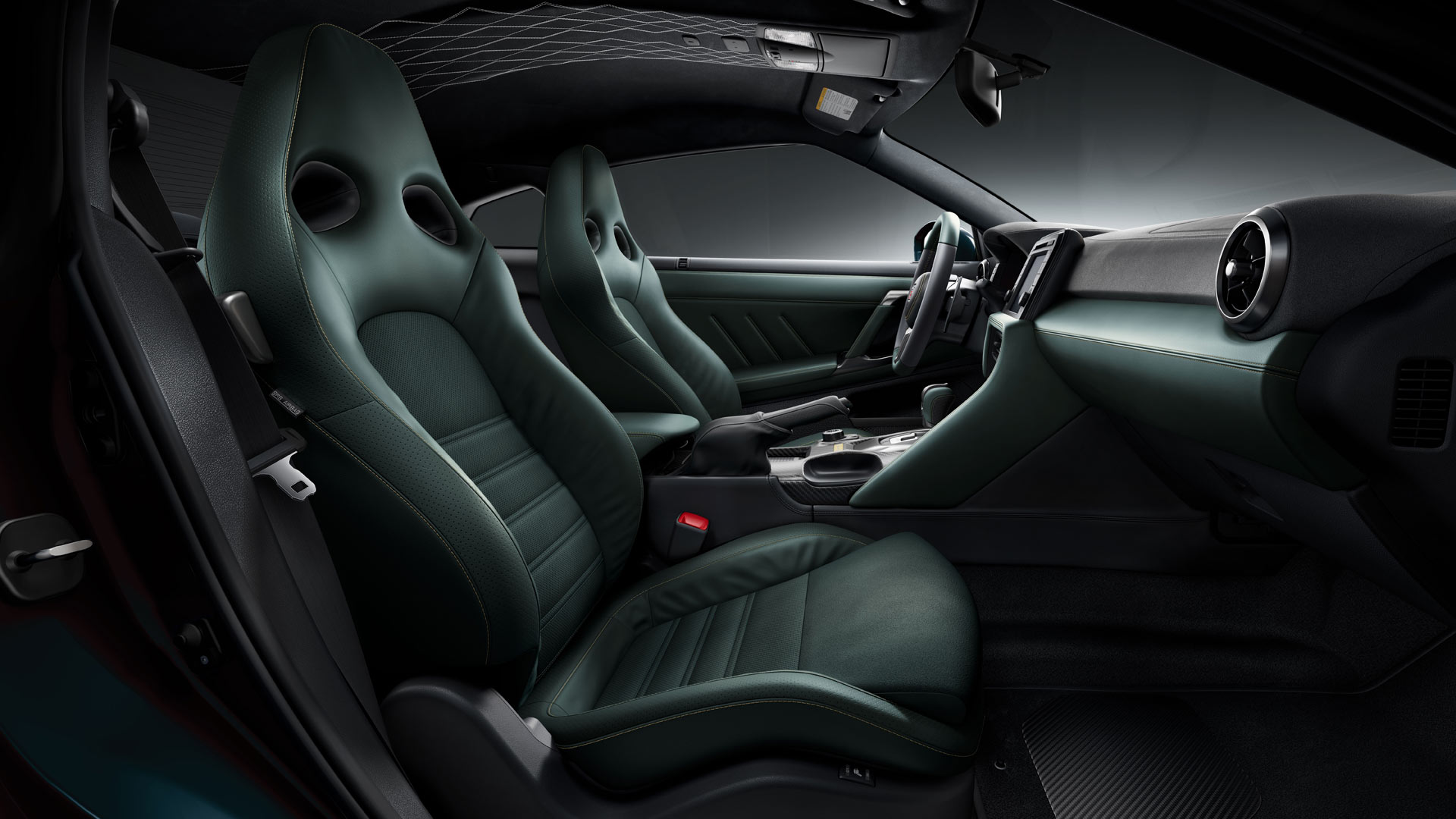
Bolstering the current 2024 model range, the GT-R T-Spec Takumi and Skyline Editions major on exclusive paint colours and interior finishes.
There is a catch for UK enthusiasts, though. Only buyers in North America will be able to purchase one of these limited-production models.
2024 Nissan GT-R Skyline Edition
Bayside Blue was one of the most iconic paint colours associated with the R34-generation Nissan Skyline GT-R.
Nissan officially retired the colour when R34 production ended in 2007. However, it was revived briefly in 2019, featuring on the Nissan GT-R 50th Anniversary Edition.
Now Bayside Blue is back again for the GT-R Skyline Edition, with Nissan saying the special model ‘references the abundant beauty found in skylines across Japan’. The colour is combined with a new Sora Blue interior finish.
Like other models in the 2024 GT-R lineup, the Skyline Edition features a 565hp version of Nissan’s twin-turbocharged V6 engine, combined with all-wheel drive.
2024 Nissan GT-R T-spec Takumi Edition
The GT-R T-Spec Takumi Edition is a tribute to the eponymous takumi master craftspeople who assemble the 3.8 litre V6 engine by hand.
For this special model, a red-etched plate beneath the bonnet acknowledges the person who built that specific engine, rather like the badges found on Mercedes-AMG vehicles. A gold VIN plate is added for good measure.
Takumi Edition cars come finished in stunning Midnight Purple, with a contrasting Mori Green interior. Carbon-ceramic brakes and a set of 20-inch gold-painted RAYS forged alloy wheels are included as part of the standard T-Spec equipment.
Racing against the clock
Nissan has built more than 40,000 examples of the ‘R35’ GT-R since production commenced in late 2007.
Sales for European markets ended in 2022, following the introduction of new drive-by noise regulations in the EU and UK. The GT-R was also removed from sale from Australia in 2021 due to changing side-impact rules.
Nissan is yet to confirm how long the GT-R has left in other global markets, although rumours suggest the recently announced 2025 model year could be the last for this long-lived legend.
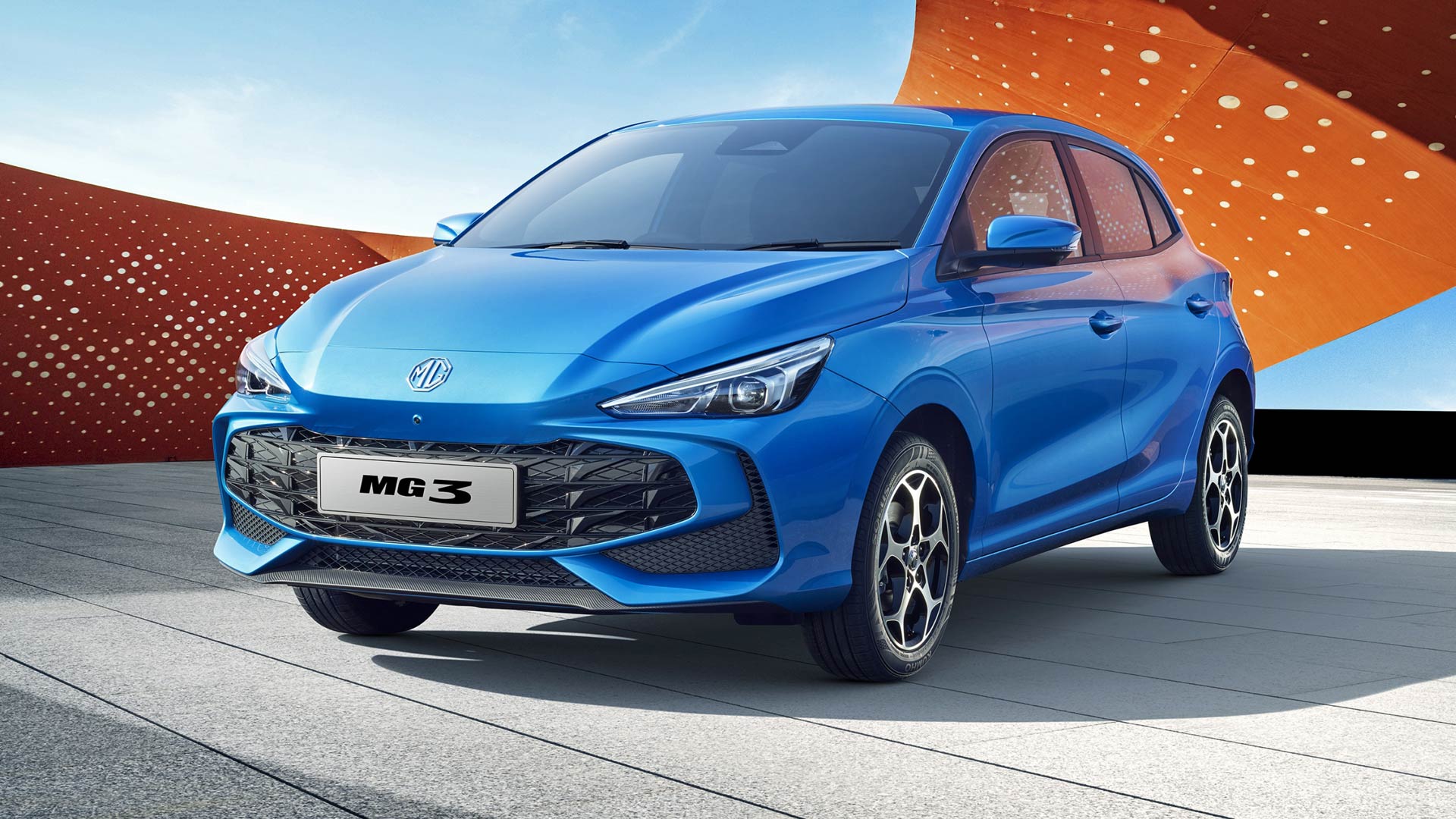
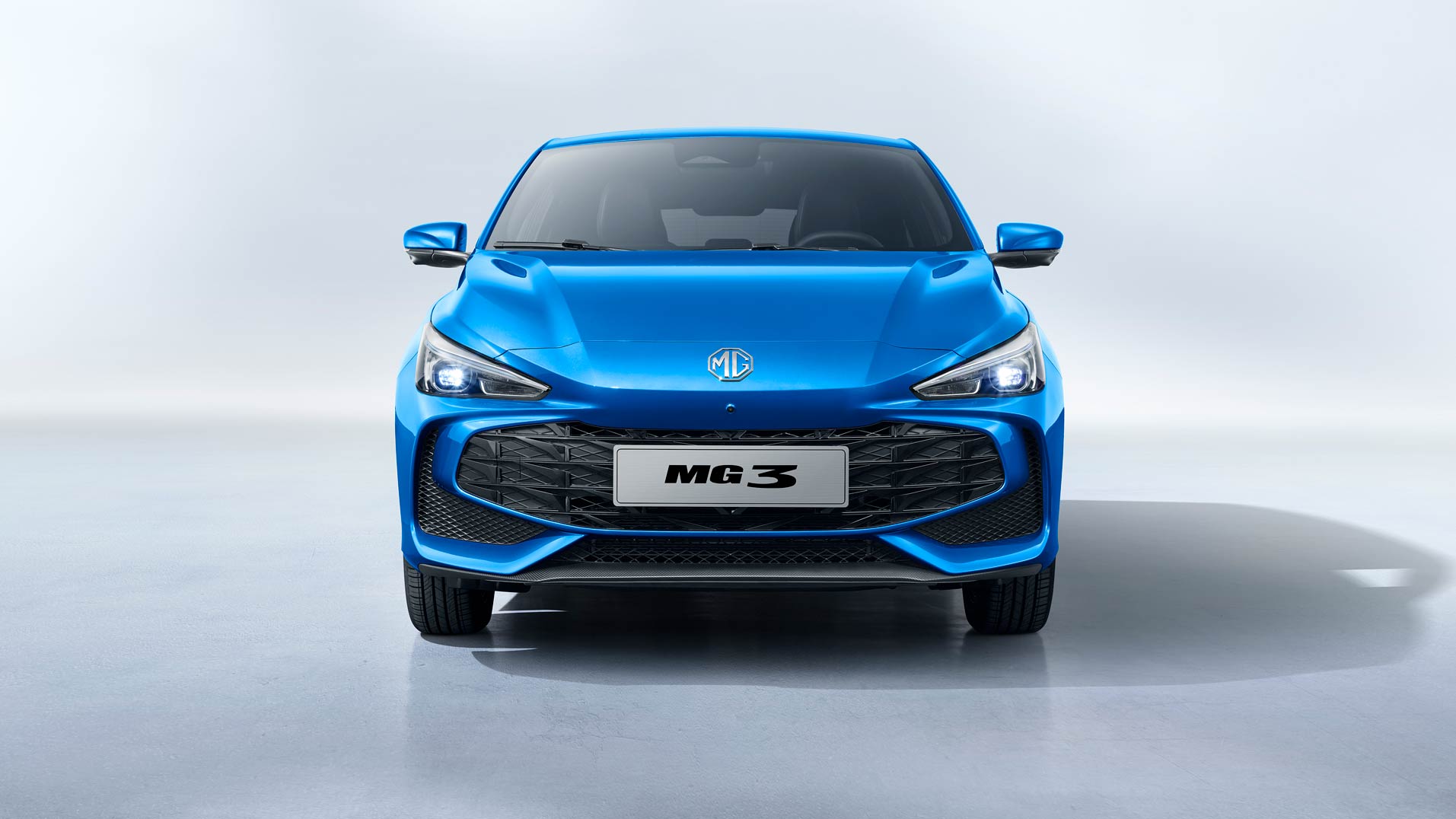
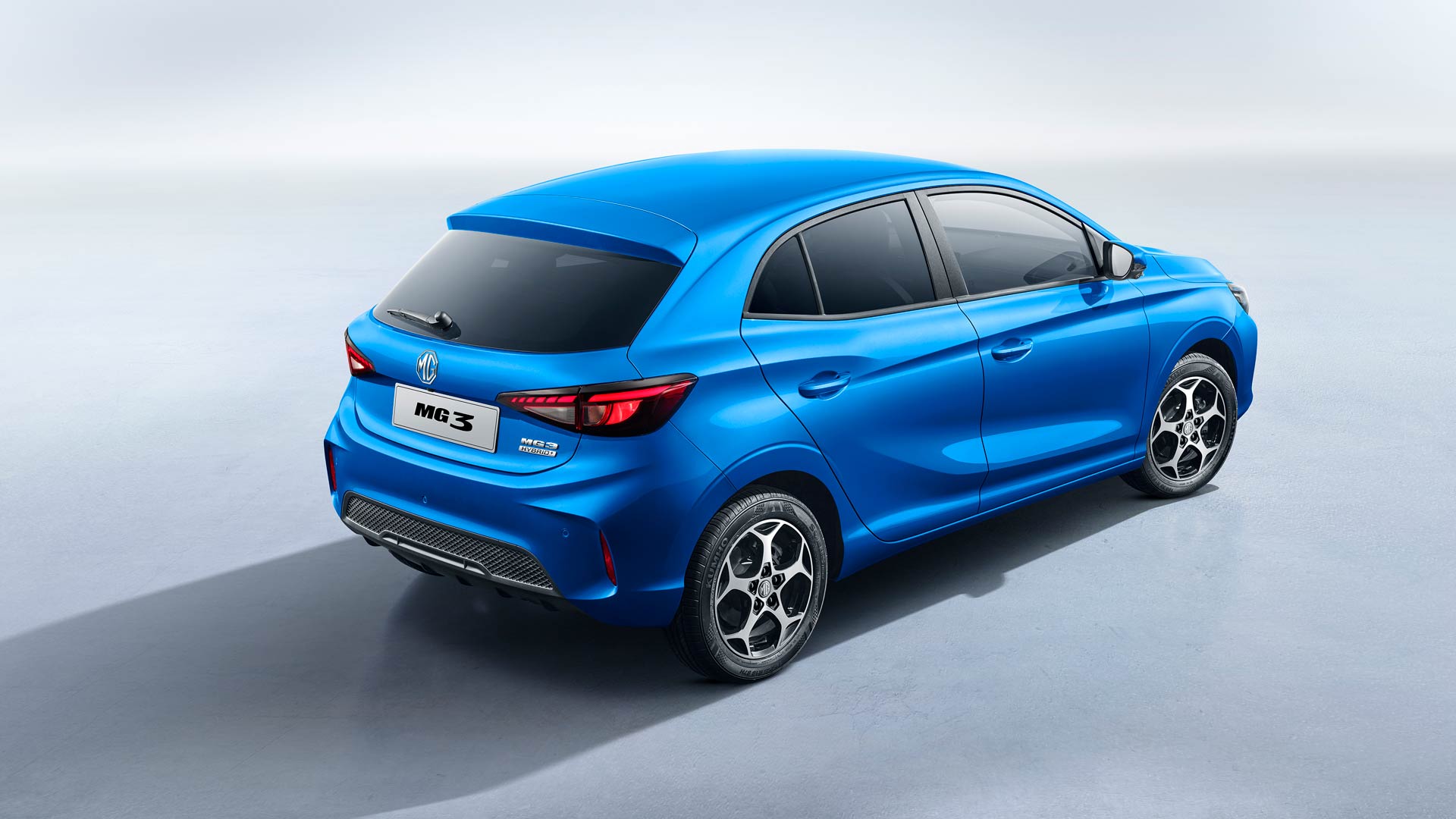
Following its debut at the recent Geneva Motor Show, MG has announced prices and specifications for the all-new MG3 Hybrid+.
The Chinese brand’s latest supermini is available to order in the UK now. And with the formerly best-selling Ford Fiesta now consigned to the history books, MG aims to make a big impact in the small car sector.
Among the promises for the MG3 Hybrid+ are generous levels of standard equipment and an efficient petrol and electric powertrain.
Tuned for British roads
The previous-generation MG3 developed a reputation for neat handling and strong value for money, but was hampered by its gutless 1.5-litre petrol engine.
As its name suggests, the new MG3 Hybrid+ combines a petrol engine with an electric motor. Working together, they can generate 192hp, allowing the car to accelerate from 0-62mph in 8.0 seconds.
An official fuel consumption figure of 64.2mpg, with CO2 emissions of 100g/km, are major improvements on the outgoing model. A 1.83kWh battery allows for fully electric driving over short distances in urban areas.
The company’s UK development team, based at Longbridge in Birmingham, has tailored the MG3’s suspension setup to better suit British roads.
Strong levels of equipment
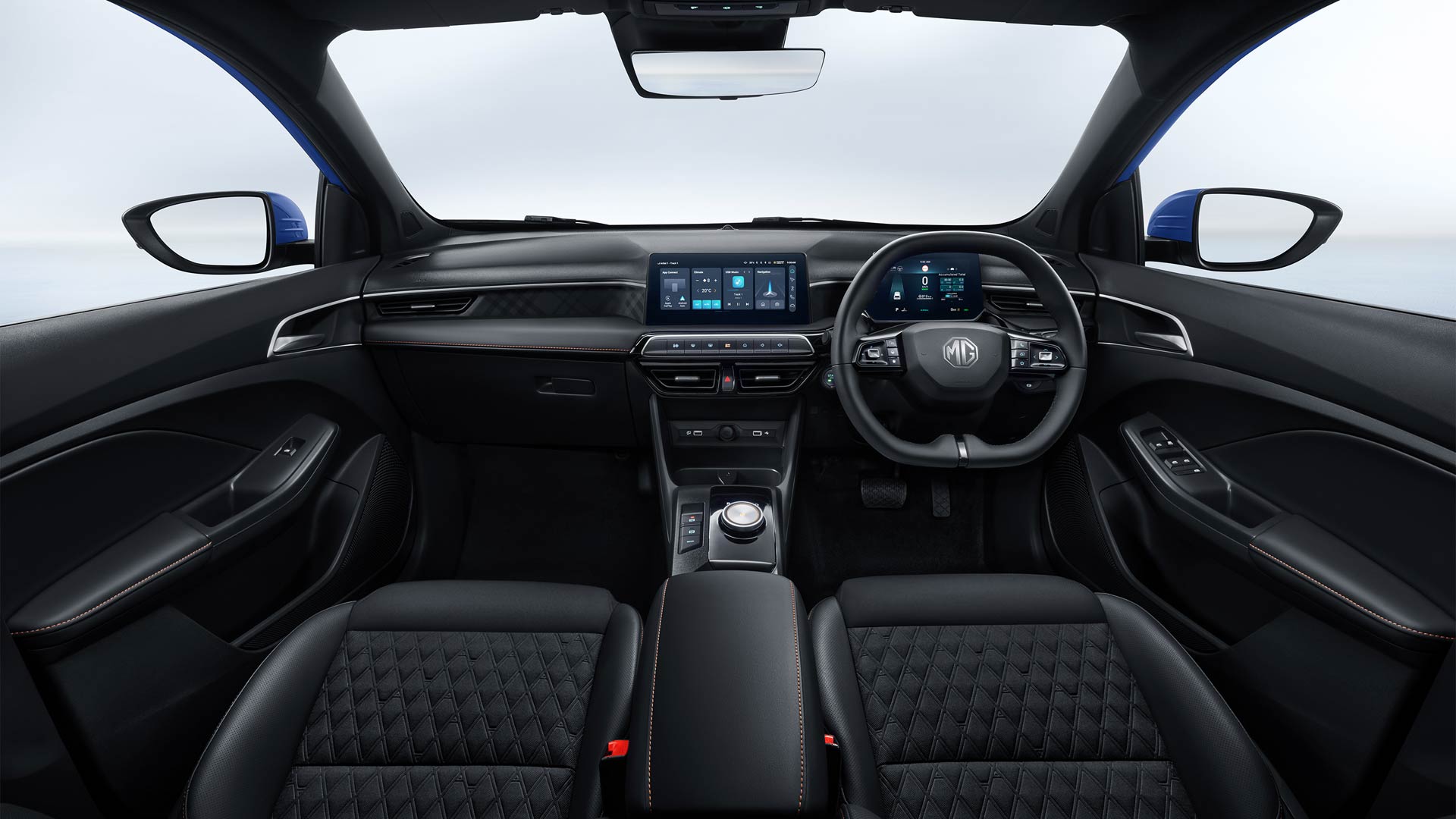
Prices for the MG3 Hybrid+ start from £18,495 for the entry-level SE version, which comes with 16-inch alloy wheels, satellite navigation, rear parking sensors and a reversing camera. Apple CarPlay and Android Auto smartphone connectivity are included for good measure.
Standard safety equipment for the SE model is extensive, with autonomous emergency braking, front-collision warning, lane-departure warning, emergency lane-keep assist and adaptive cruise control.
Opting for the range-topping Trophy version lifts the price to £20,495, but adds heated front seats, a heated steering wheel, LED projector headlights and a 360-degree parking camera. Compared to the cloth seats found in the SE, the Trophy also benefits from leather-style upholstery with cloth inserts.
A lengthy seven-year or 80,000-mile warranty comes with all MG3 Hybrid+ models, too.
‘Affordable, practical and fun-to-drive’
MG hopes its new supermini will build on the success enjoyed by the MG4 EV during 2023. The company’s cheapest electric car ended the year as one of the UK’s best-selling EVs – and collected a host of awards.
David Allison, head of product and planning for MG Motor UK, said: “There is still a very strong demand for the affordable, practical and fun-to-drive supermini, and we believe the MG3 Hybrid+ will appeal to many customers.”
MG was recently confirmed as the brand taking centre-stage at this year’s Goodwood Festival of Speed, which will celebrate the marque’s centenary.
Last year, a driver was arrested after making an illegal U-turn on the M4. Obviously, such a manoeuvre is madness on a motorway, but a U-turn can also be difficult and dangerous even on regular roads.
As its name suggests, a U-turn involves making a 180-degree turn in the road. In one complete manoeuvre, the car ends up facing in the opposite direction. A U-turn is not to be confused with a three-point turn, which involves reversing.
Although it is legal to make a U-turn in the UK, there are places and situations where the manoeuvre is prohibited. Get it wrong and you risk three points on your driving licence and a fine. Worse, you could endanger the lives of other road users.
When is making a U-turn illegal?
The most obvious indication that U-turns are prohibited is the ‘No U-turn’ sign. This is a red outer circle surrounding a black ‘U’ with a line through it (see images above and below).
However, as this page on the Transport for London website explains, you should also pay attention to signs showing the direction you must take.
A U-turn is also considered illegal if one of the following happens:
You cross a kerb
You cross double white lines in the centre of the road
You are driving on a one-way street
How to make a U-turn
A U-turn should be a last resort, especially in busy urban areas. U-turns are often performed when a driver misses a turn, so they tend to be the result of a rushed decision, with less thought for road safety.
In busier traffic situations, pull up at the side of the road if possible, consider your options, then make an informed choice. If in doubt, turn left or right at the next junction and obey the traffic laws before re-entering the road in the opposite direction.
You should consider the following:
Is it safe and legal to make a U-turn?
Will I endanger or inconvenience other road users?
Is the road wide enough to complete the manoeuvre in one turn?
Do you have clear visibility of the road?
If you must perform a U-turn, be aware that it will take a few seconds to complete, so make sure the oncoming traffic is clear before starting the manoeuvre.
When it’s safe to do so, check your mirrors, indicate right, check your mirrors again (including any blind spots), then make the turn. Cancel the indicator and check the rear-view mirror when the manoeuvre is complete.
Keep an eye open for motorcyclists, cyclists and pedestrians, as they might not be visible in your mirrors. There’s also a chance they won’t be aware you are making a U-turn.
If you want to U-turn on a road with a designated filter lane on the right-hand side, turn on your indicator and wait for the oncoming traffic to clear. Don’t rush it – make sure you have enough space to complete manoeuvre without stopping or having to reverse.
Pay attention to the traffic lights, too – the filter lane might not work in tandem with the lanes on your left. Above all, take your time and observe the road carefully before making a U-turn.
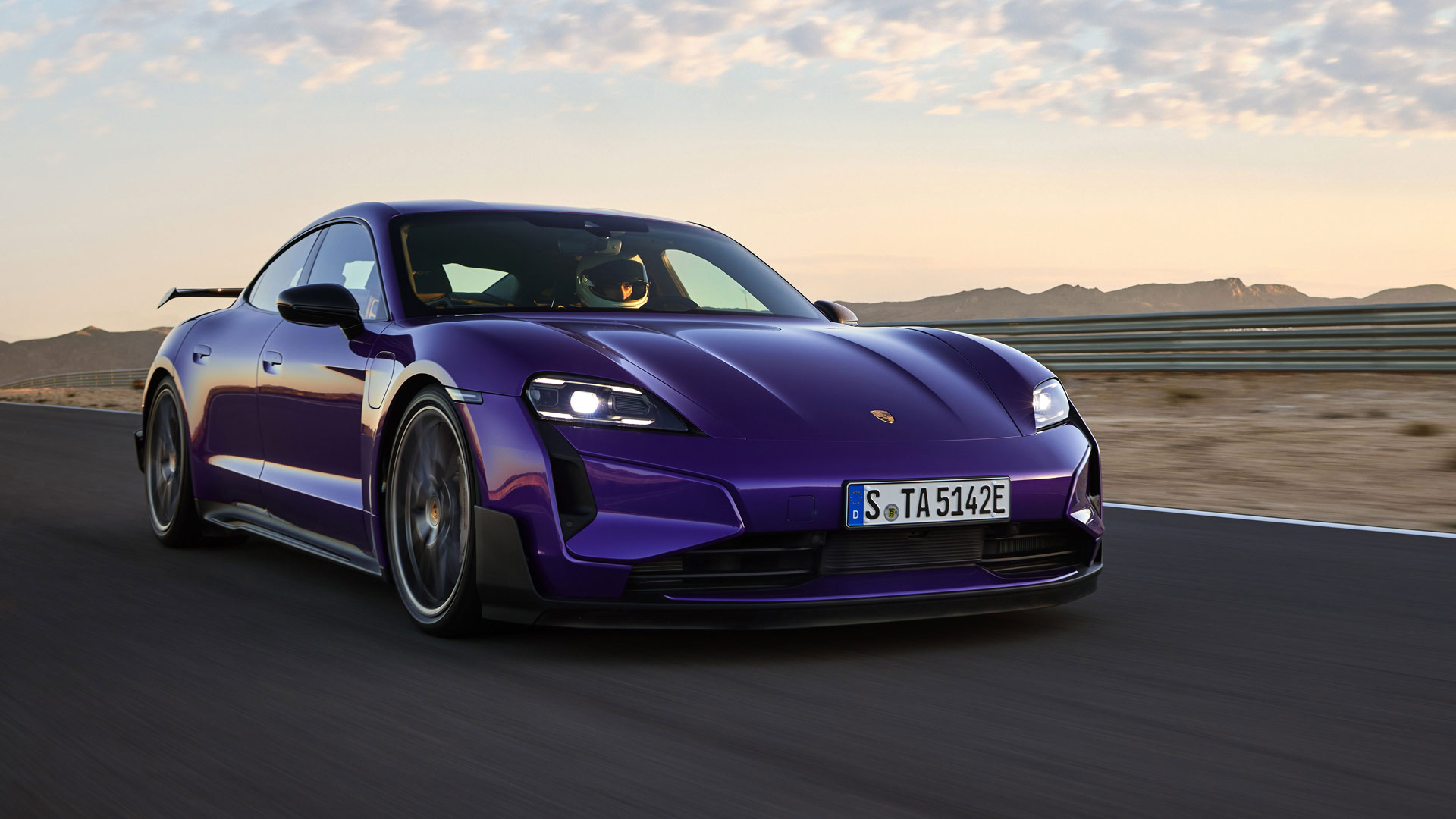
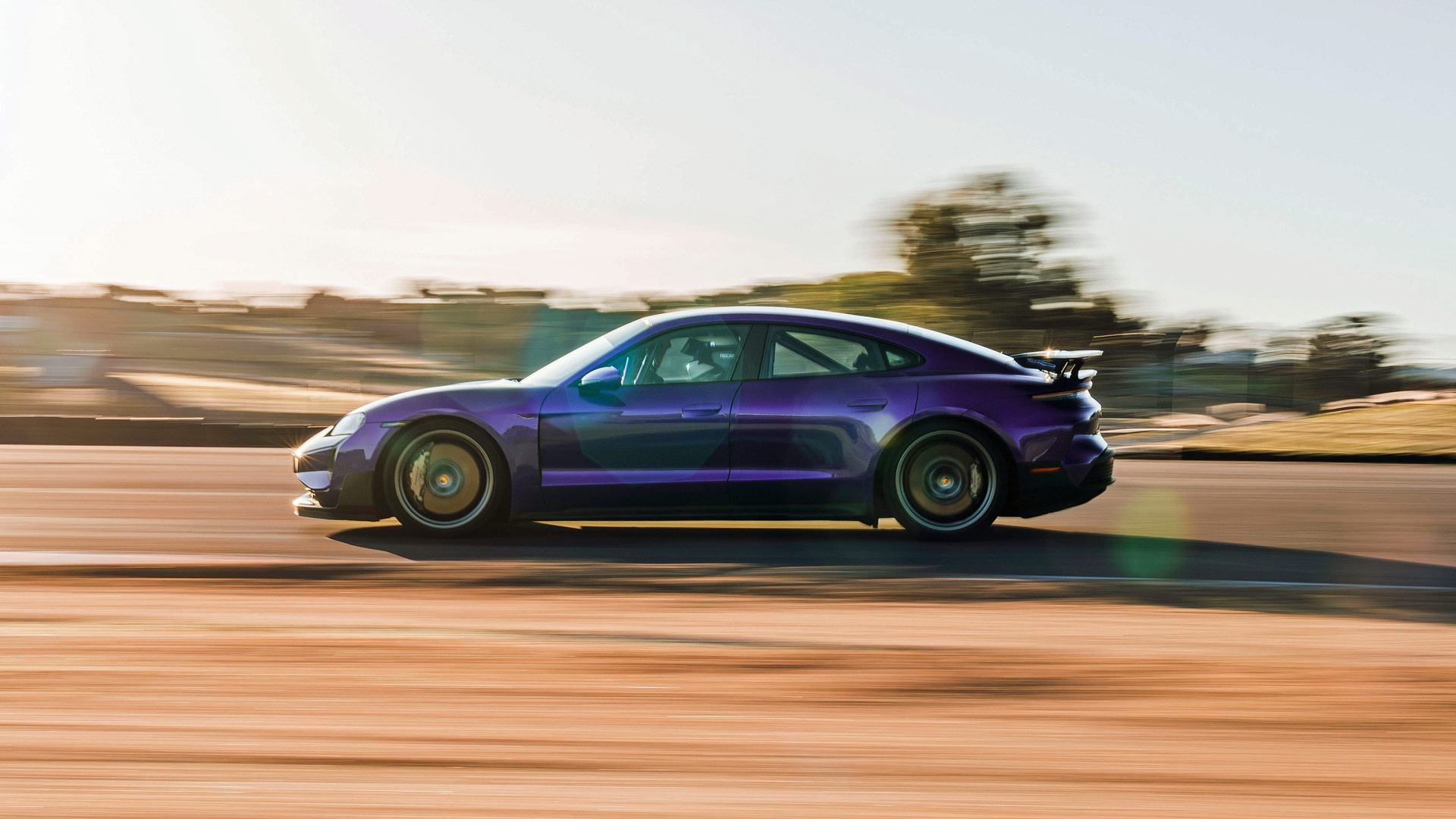
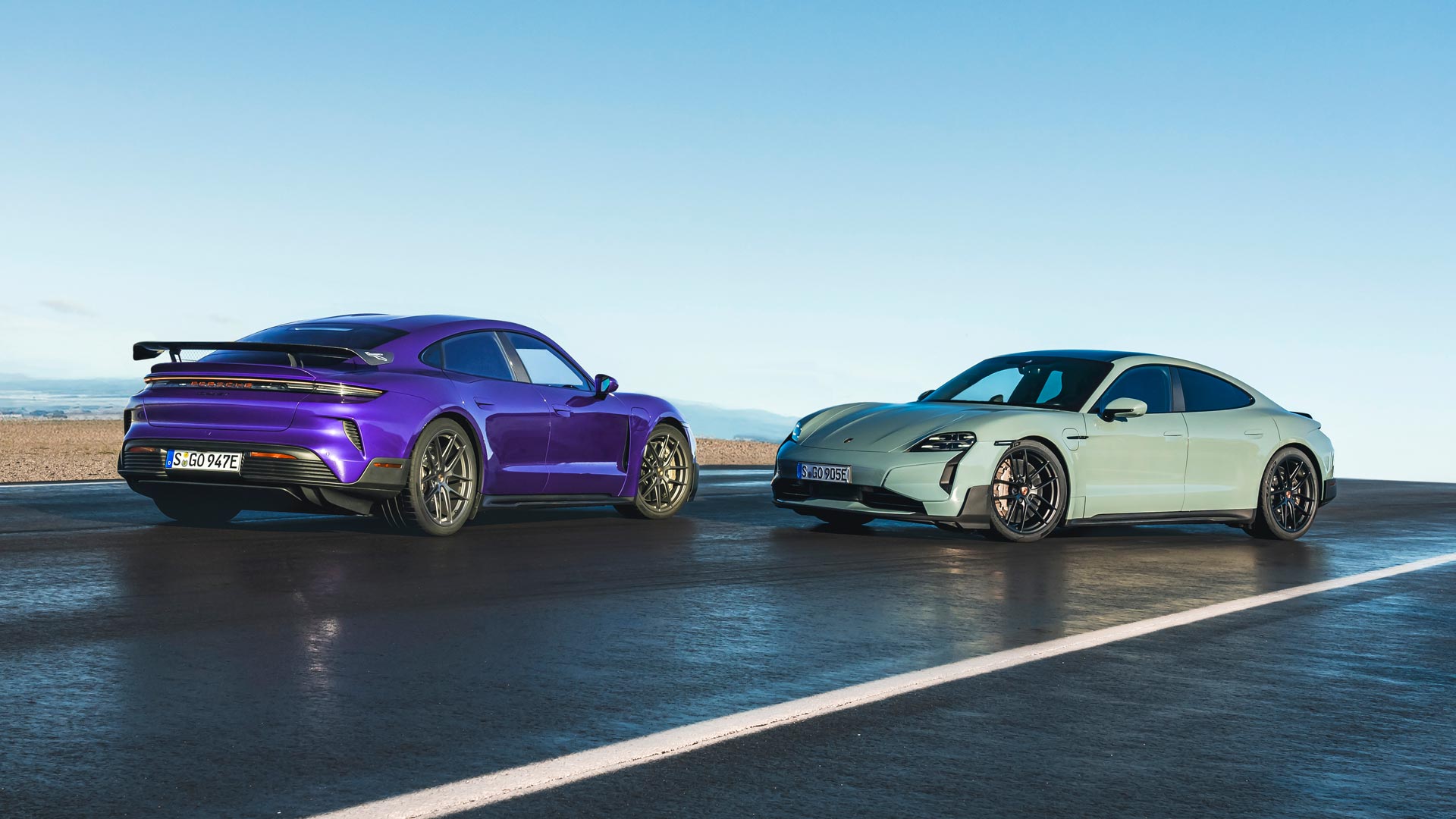
Dodge may have staked its claim to producing the world’s first electric muscle car with the new Charger, but Porsche has been busy breaking lap records with the Taycan Turbo GT.
The flagship electric saloon becomes the German company’s most powerful production car to date. And, despite having only just been revealed, the Taycan Turbo GT already boasts two lap records to its name.
Fitted with the optional Weissach Package designed for circuit driving, the Turbo GT made light work of setting hot laps around Laguna Seca and the Nürburging Nordschleife.
The most powerful production Porsche
In everyday driving, the Taycan Turbo GT produces a really-quite-adequate 789hp, but engaging Launch Control increases this total to 1,033hp via an overboost function. Peak output is a faintly ludicrous 1,108hp, accompanied by 988lb ft of torque.
This heady maximum is only available for two seconds, but that’s enough to accelerate the Turbo GT from 0-62mph in a mere 2.3 seconds – or 2.2 seconds with the Weissach Package.
The latter version also offers a 190mph top speed instead of ‘just’ 180mph for the regular Taycan Turbo GT.
Bolstering the Turbo GT’s incredible performance is a weight saving of 75kg versus the Taycan Turbo S. This is achieved through the extensive use of carbon fibre, including lightweight bucket seats. Revisions to the standard carbon-ceramic brakes, which have gold-painted calipers, save 2kg alone.
More aero and less weight
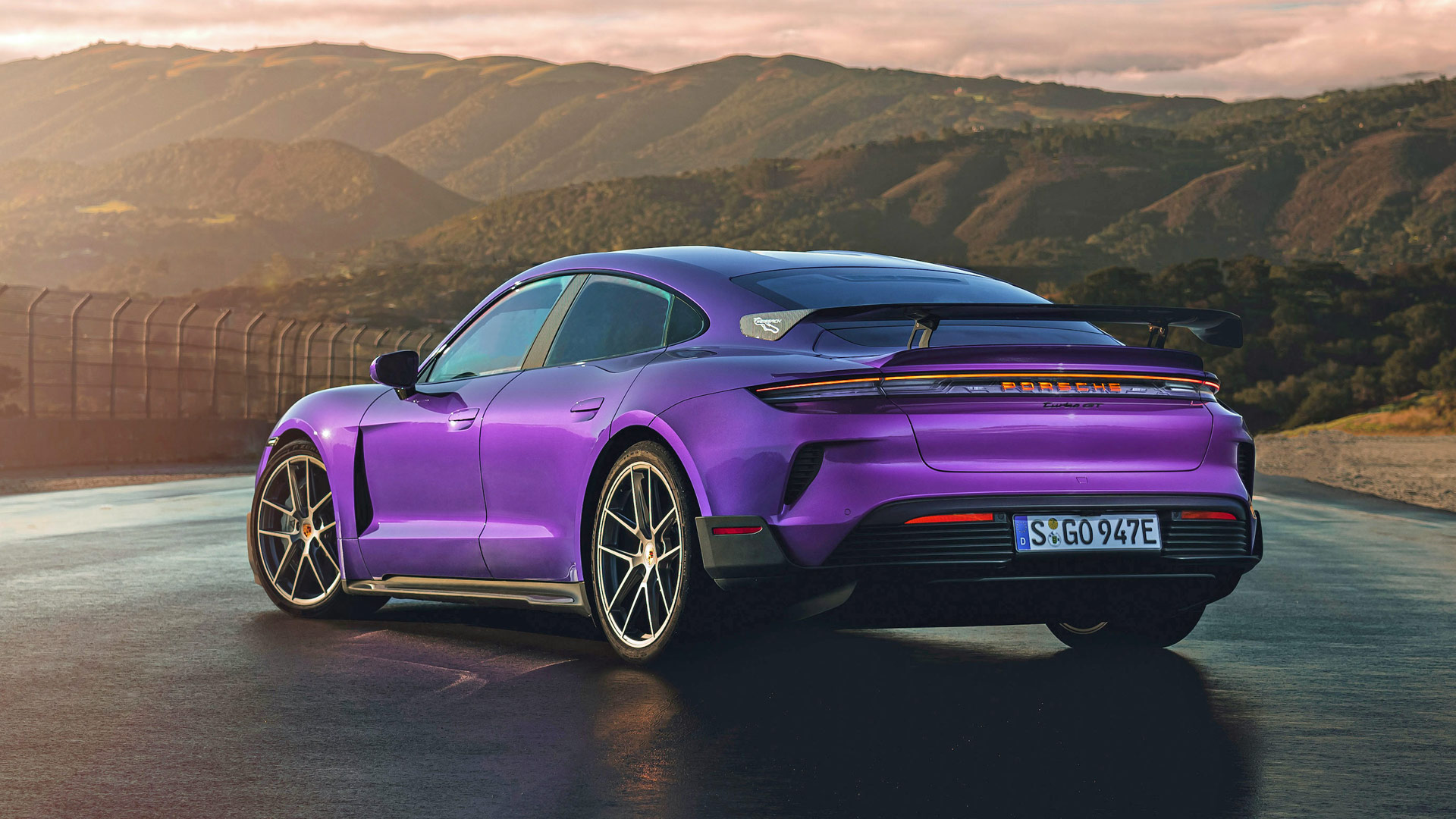
Setting Weissach Package cars apart from the standard Taycan Turbo GT are a new front splitter and fixed rear wing. Combined, they result in a downforce figure of 220kg, aiding on-track performance.
Despite its large rear spoiler, the Weissach Package saves a further 70kg in weight, partly by ditching the Taycan’s rear seats. Porsche also removes the rear speakers for the Bose sound system, and fits the Weissach model with only one charging port.
Despite the Turbo GT’s mighty performance, however, it is still a usable electric car. The official WLTP-tested range is 345 miles, and it can be charged from 10 to 80 percent capacity in 18 minutes using a suitable rapid charger.
Dream it, drive it
Unsurprisingly, given its huge performance and specification, prices for the Porsche Taycan Turbo GT start at a sizeable £186,300. The hardcore Weissach Package is actually a no-cost option, but an inevitable foray into the options list will likely ramp up the price still further.
Orders are open now, and Porsche hopes to deliver the first batch of completed cars to customers this spring. The Taycan Turbo GT is also available on Porsche’s online configurator, ready for potential customers – or electric dreamers – to create their ideal specification.
Off-road versions of the Porsche 911 are increasingly popular, with safari-spec conversions of classic models available from companies such as Kalmar Automotive and Tuthill Porsche.
Even Porsche itself has got in on the act, launching the rugged 911 Dakar last year. Click here to read our review.
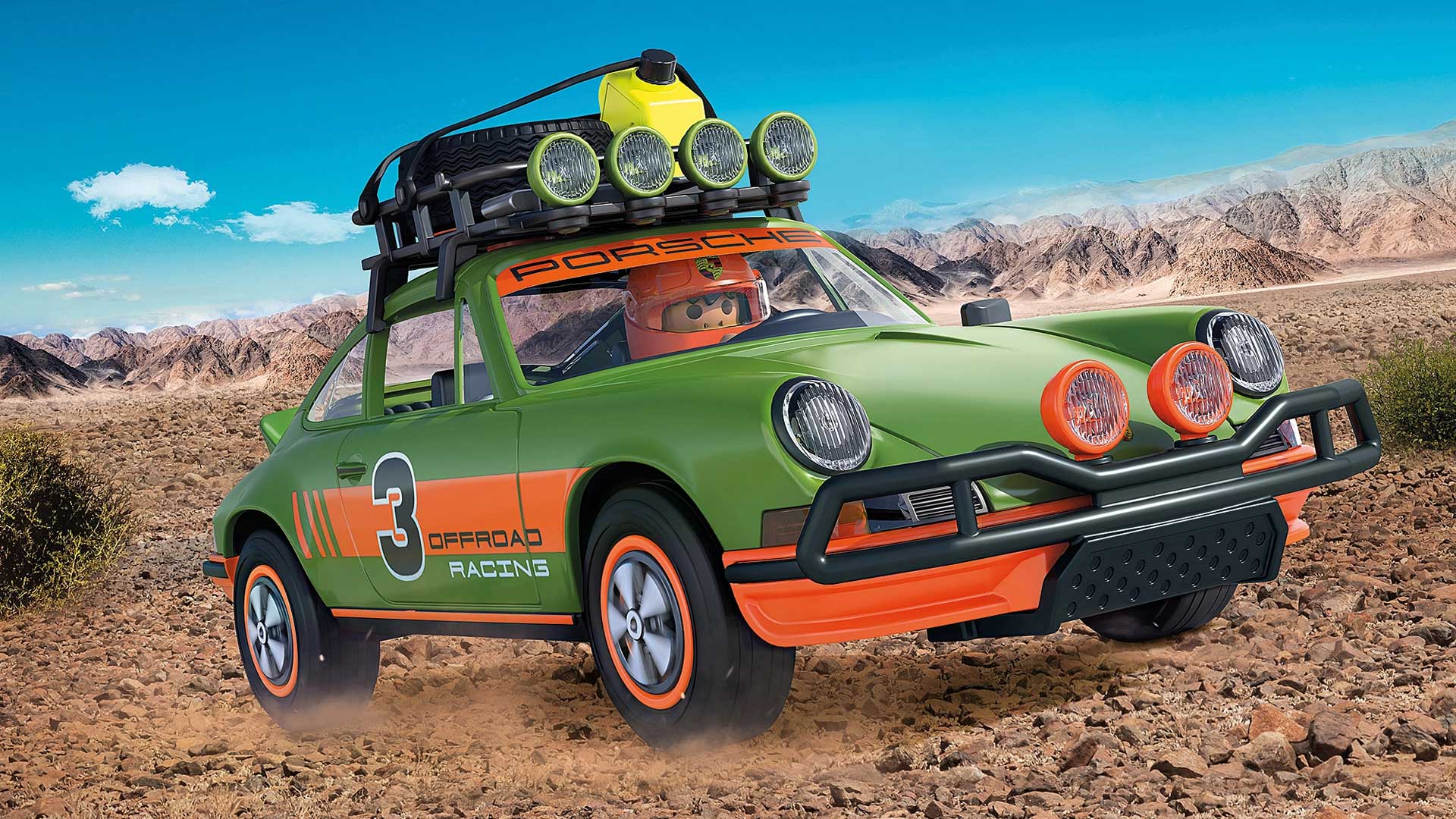
For those on a smaller budget, or who don’t have a driving licence yet, Playmobil has an alternative. Joining the growing ranks of officially licensed models is its rather impressive Porsche 911 Carrera 2.7 RS Offroad.
Ready to off-road
Original 911 Carrera 2.7 RS rally cars are rare, and using a desirable road-going version to create a safari-ready machine would be sacrilegious to many Porsche enthusiasts. However, Playmobil has no such concerns.
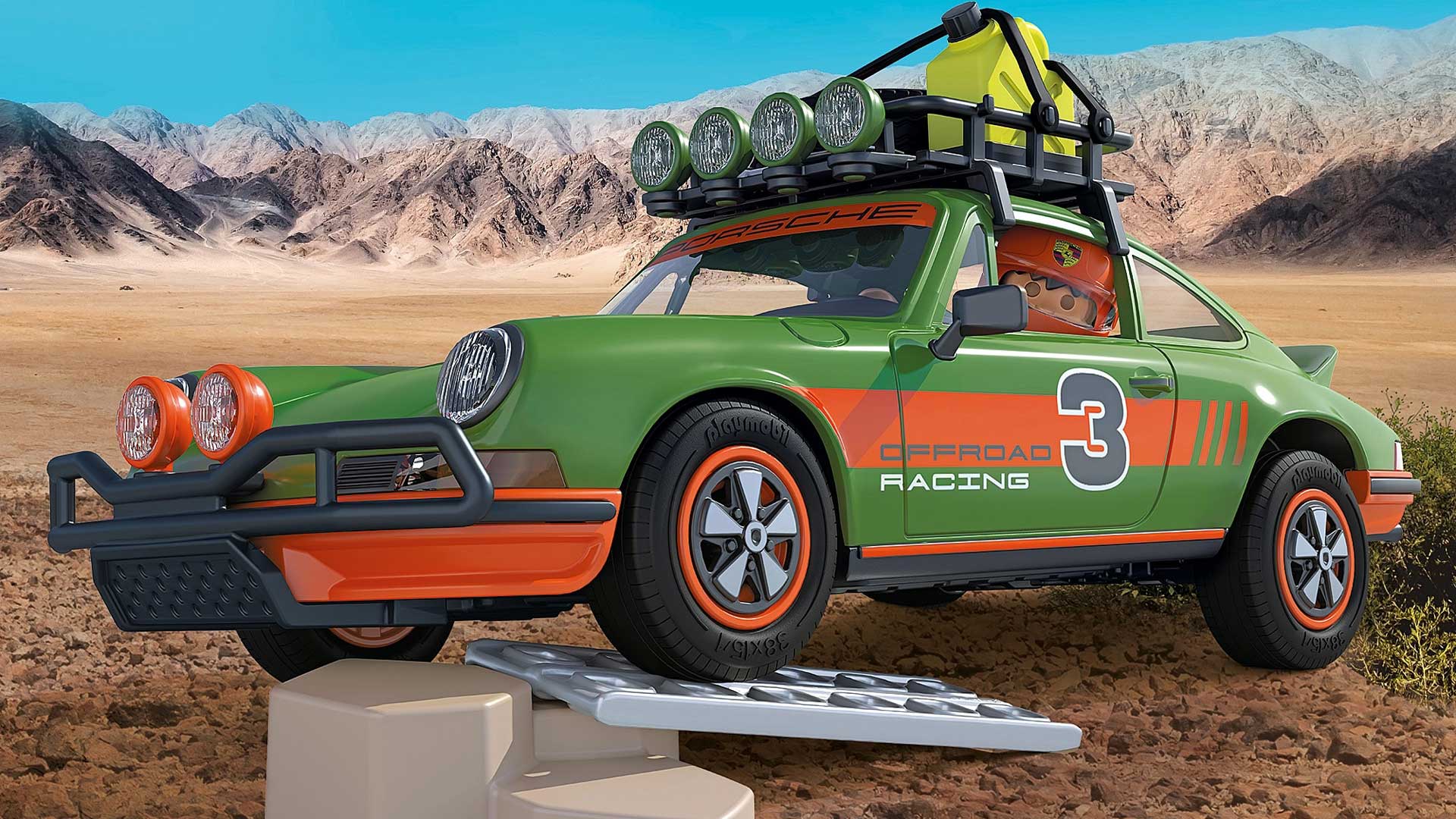
The company has taken its existing Carrera 2.7 RS model, increased its ride height for better ground clearance and then fitted chunky off-road tyres. Just like with a proper safari conversion.
There is also a substantial front bumper with underbody protection and extra driving lights, plus a roof rack carrying four more large spotlights.
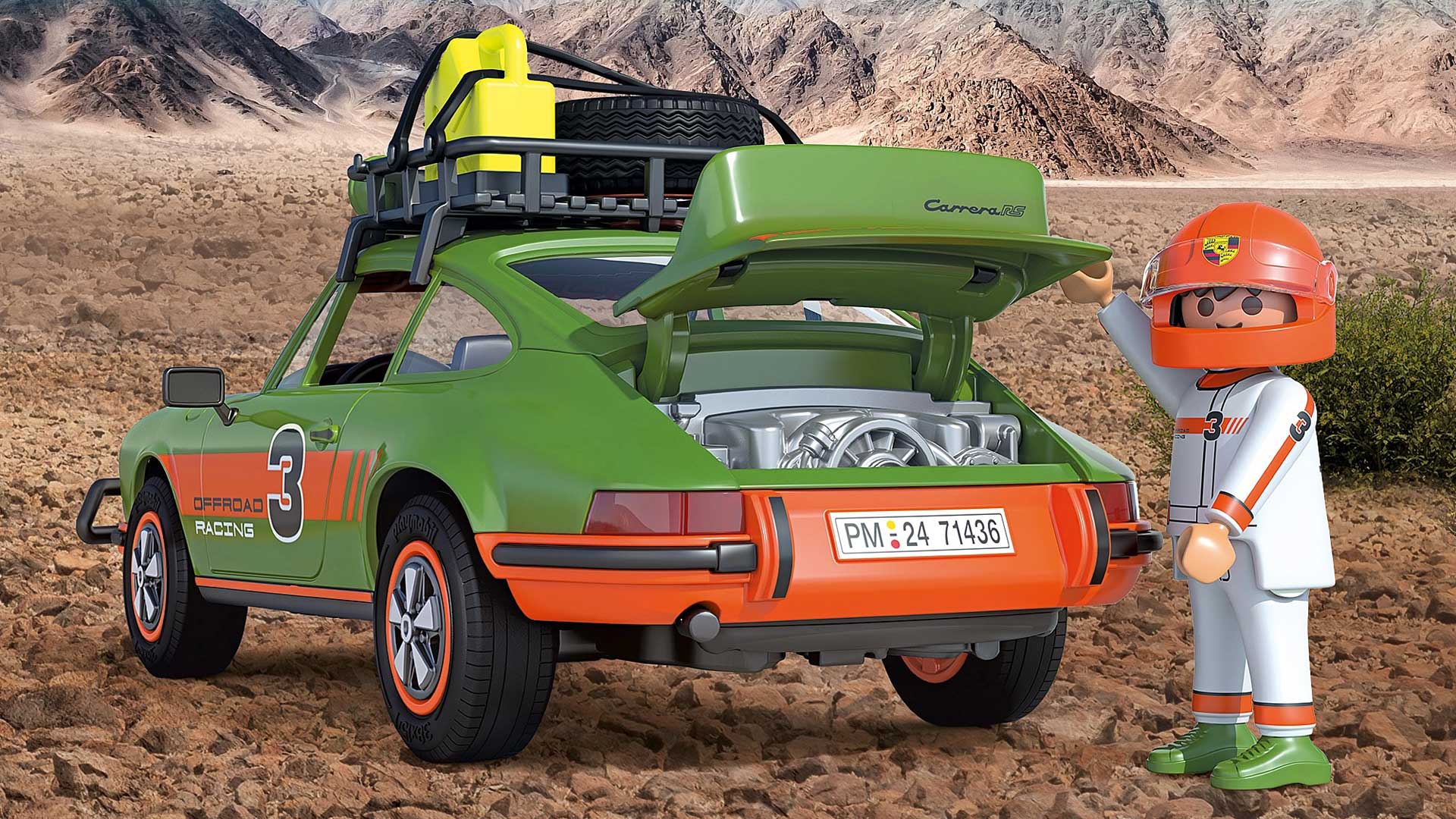
A jerry can and spare wheel are also stored on the roof rack, along with a shovel and a sand ladder if the going gets tough.
An affordable classic Porsche
The roof of the 911 Carrera 2.7 RS is removable to access its detailed interior. The engine cover opens to reveal a replica air-cooled flat-six, complete with its prominent central fan.
Measuring just over 25cm in length, the safari-spec Playmobil Porsche 911 will be aimed at children aged five and older when it reaches the shops later this month.
A price tag of £59.99 certainly makes it more affordable than the $2.5 to $3 million (£1.9 to £2.3 million) estimated for this 911 RS rally car at auction last year.
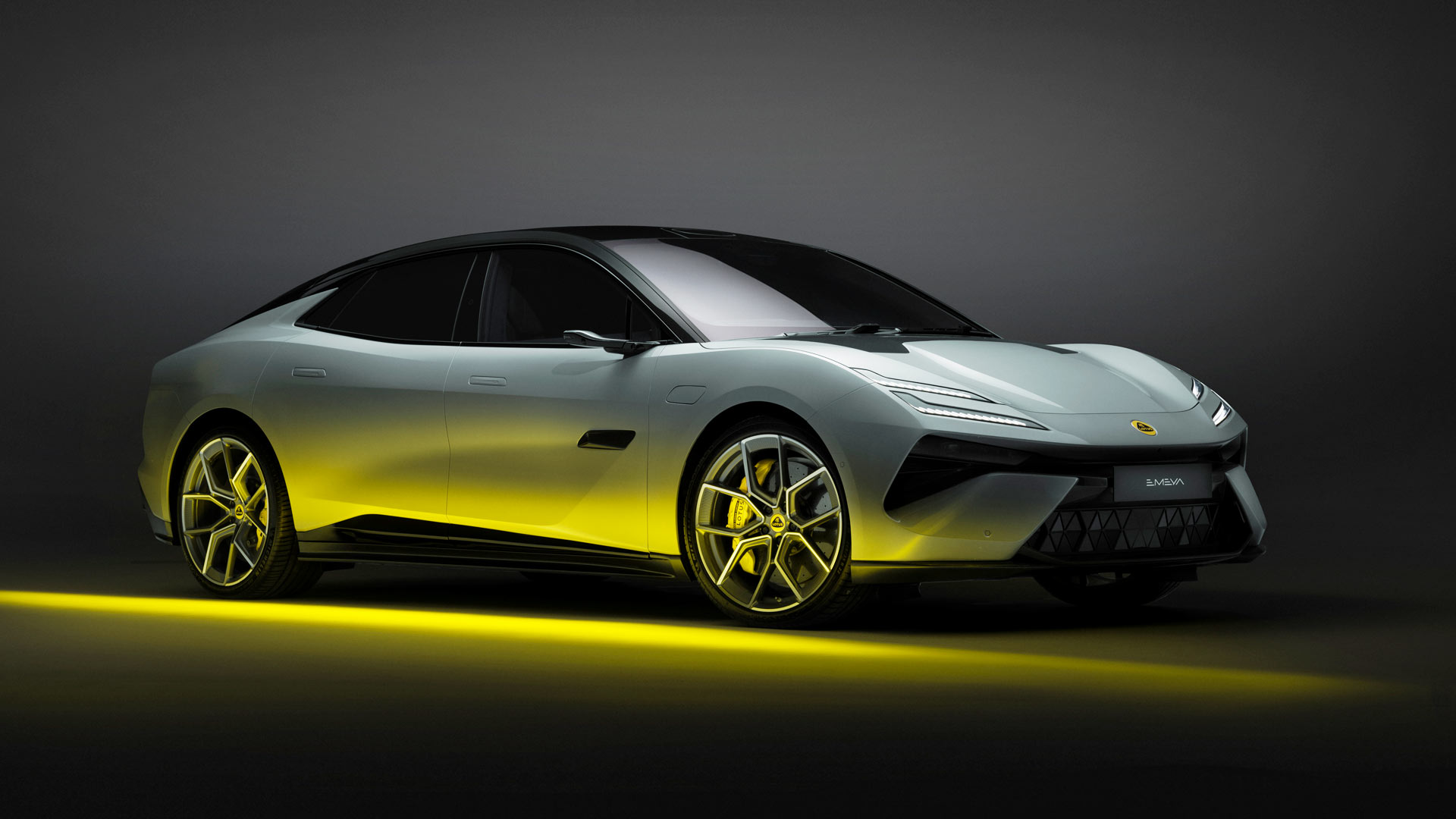
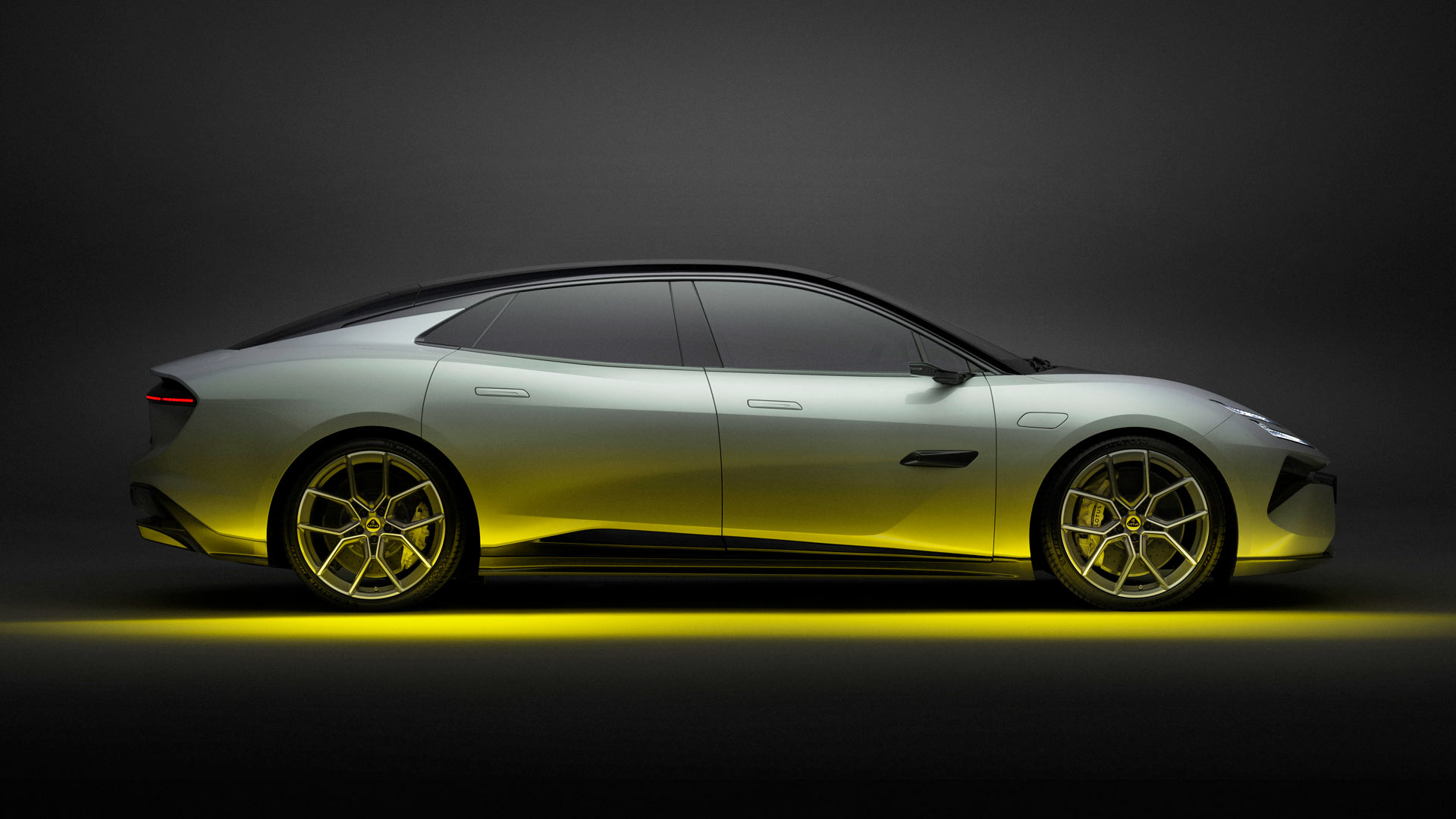
More details of the forthcoming Lotus Emeya have been announced, including prices for UK customers.
Described as the British company’s first ‘hyper-GT’, the electric saloon is said to offer world-class performance and handling.
Lotus has also released an online configurator for potential buyers to create their perfect specification – and place an order ahead of the Emeya reaching showrooms this summer.
Its pricing and specification will see the Lotus challenge sporting and luxurious EVs such as the Porsche Taycan and BMW i5.
Premium prices and performance
Prices for the Lotus Emeya will start from £94,950. The entry-level model comes with 20-inch alloy wheels, active air suspension, four-zone climate control and a KEF premium audio system.
The standard Emeya has a power output of 603hp, and can accelerate from 0-62mph in 4.15 seconds. A top speed of 155mph cannot match the infamous Lotus Carlton from the 1990s, however.
Priced from £107,450, the mid-range Emeya S adds 21-inch wheels, upgraded brakes with six-piston calipers and privacy glass.
The flagship Emeya R will set you back £129,950, but offers a power output of 905hp. The 0-62mph sprint takes just 2.78 seconds, with top speed increased slightly to 159mph.
Intelligent EV navigation
When it comes to electric range, Lotus says its cell-to-pack layout helps boost battery performance by up to 20 percent.
Choosing either the Emeya or Emeya S means owners can cover between 310 and 379 miles when the car is fully charged. The more powerful Emeya R provides a smaller range of 270 to 301 miles.
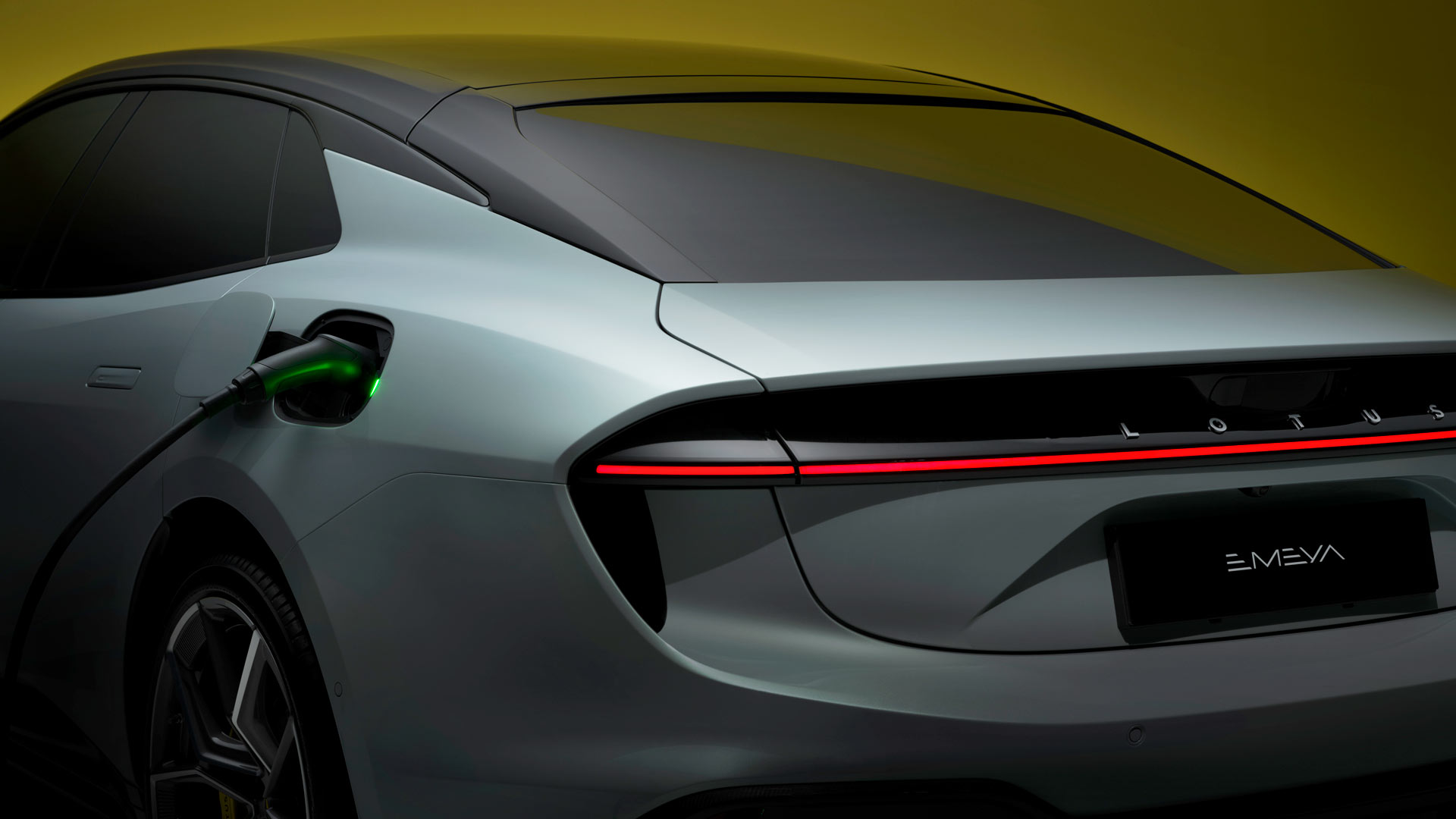
Making use of a compatible DC 350kW rapid-charging device, the Emeya can recharge its batteries from 10 to 80 percent in only 18 minutes.
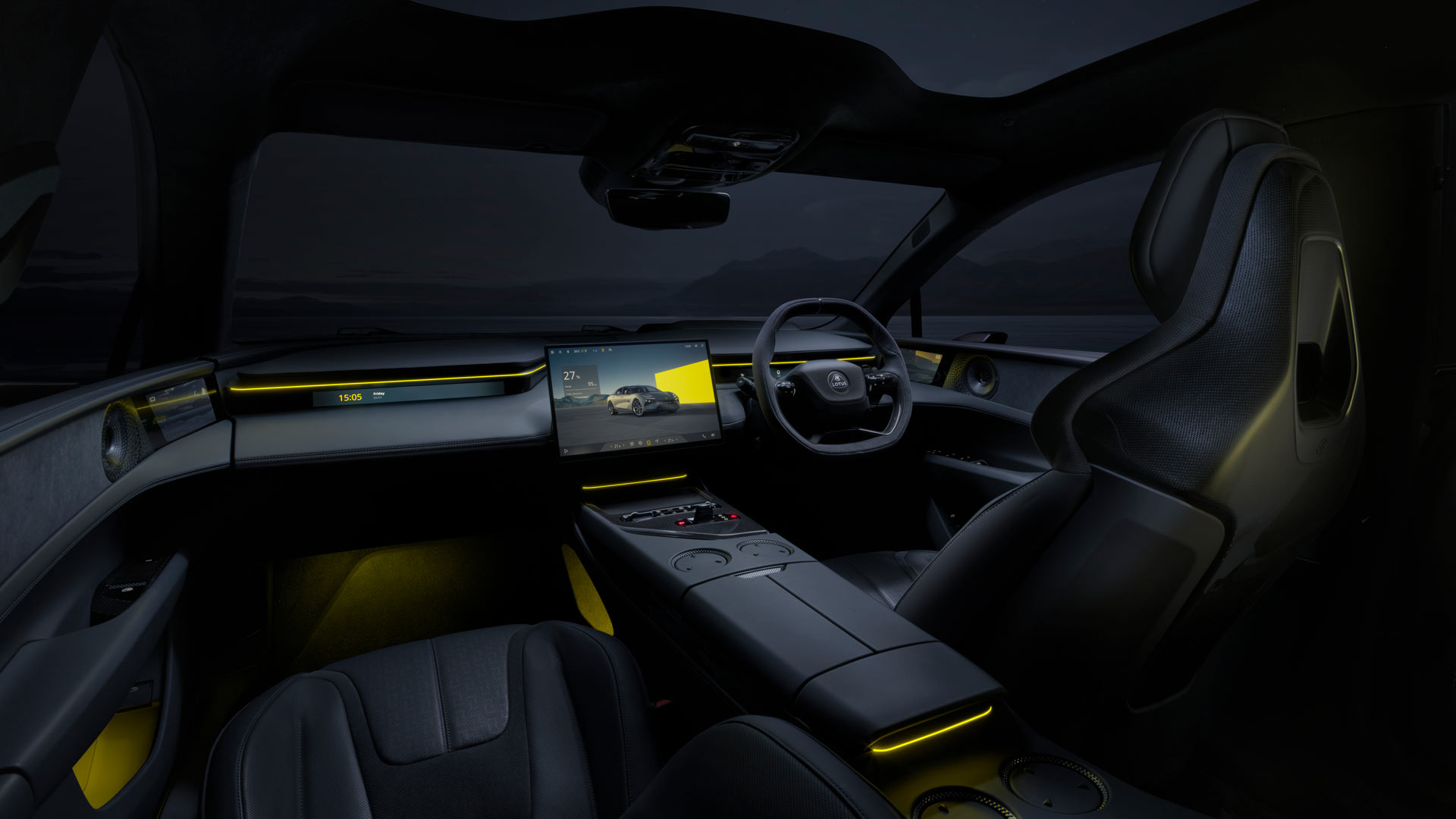
The standard 15.1-inch HD OLED Lotus Hyper OS infotainment system incorporates intelligent EV routing. This can learn individual journeys and patterns, helping to maximise battery range.
“Electric cars do not have to be boring”
Lotus CEO Feng Qingfeng said: “Electric cars do not have to be boring. We are combining our rich sports car heritage with the latest cutting-edge technologies to redefine what it means to drive an electric vehicle.
“Emeya seamlessly blends exceptional ride and handling with world-class luxury, performance, comfort, connectivity and range – bringing drivers the ultimate grand tourer package with the unrivalled driving experience of a true Lotus.”
Lotus launched the Emeya for the Chinese market earlier this year. British and European buyers will have to wait until the third quarter of 2024 to get their hands on finished cars.
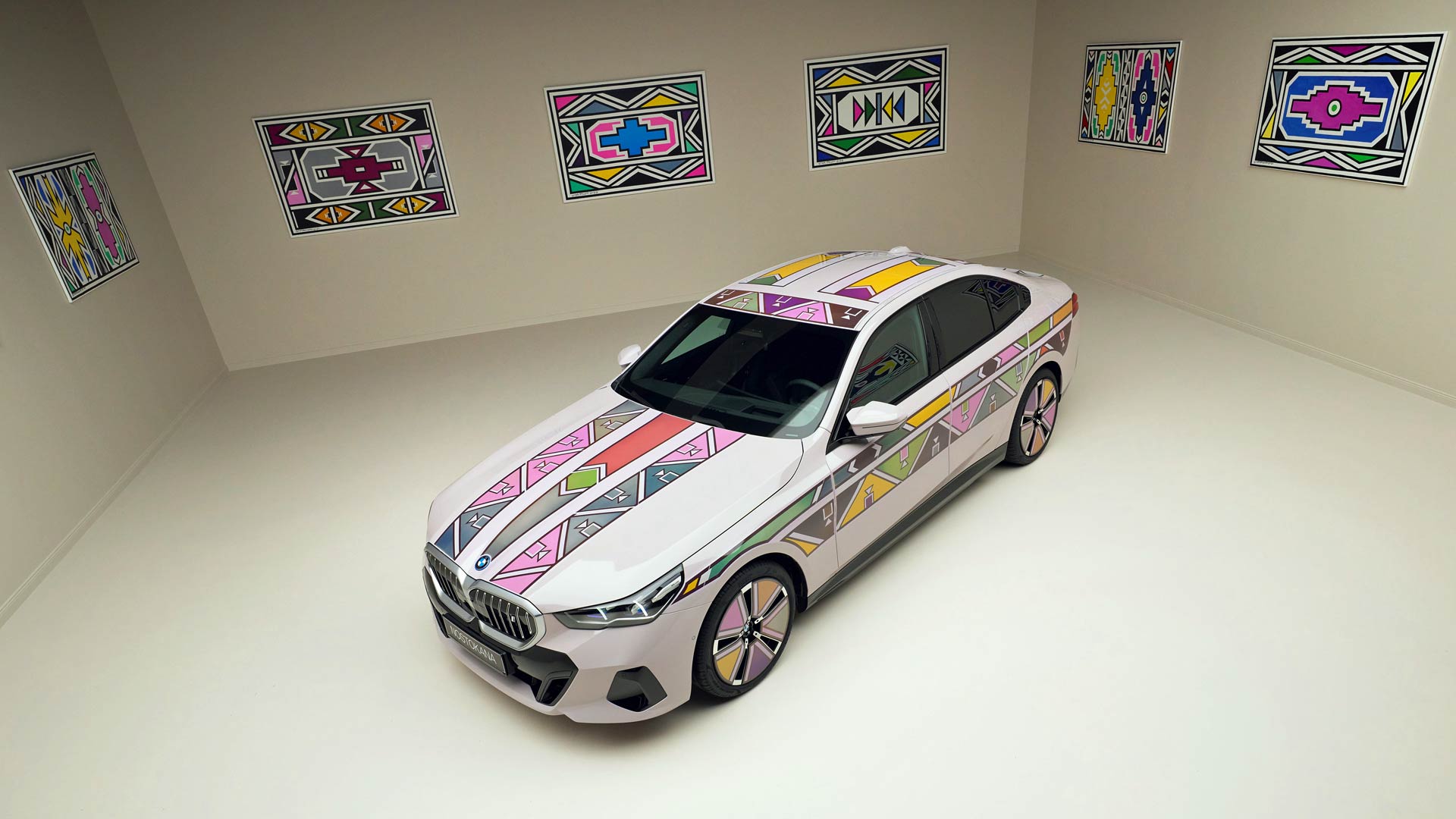
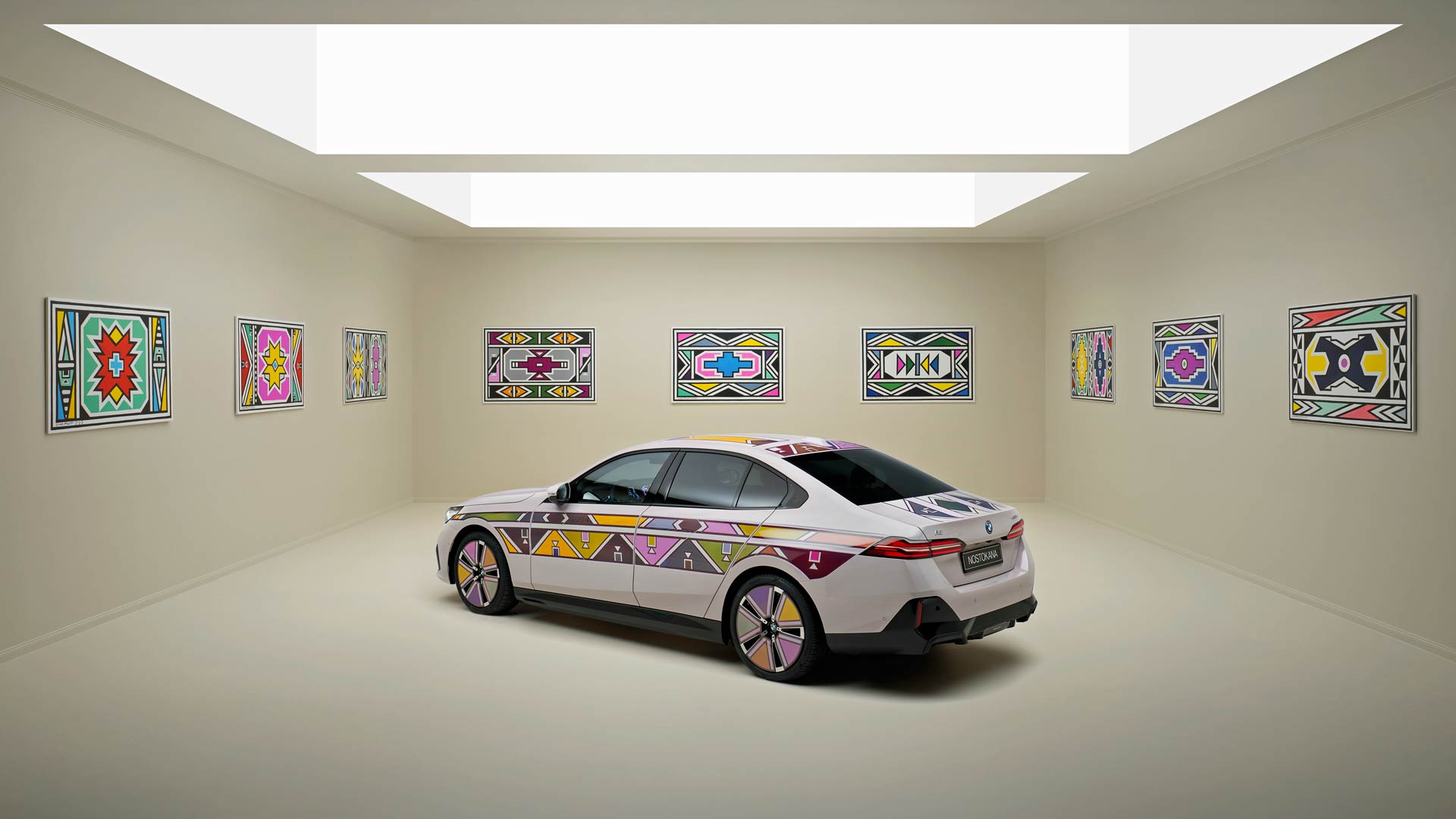
A homage to one of BMW’s most recognisable Art Cars has been unveiled at the Frieze Los Angeles event.
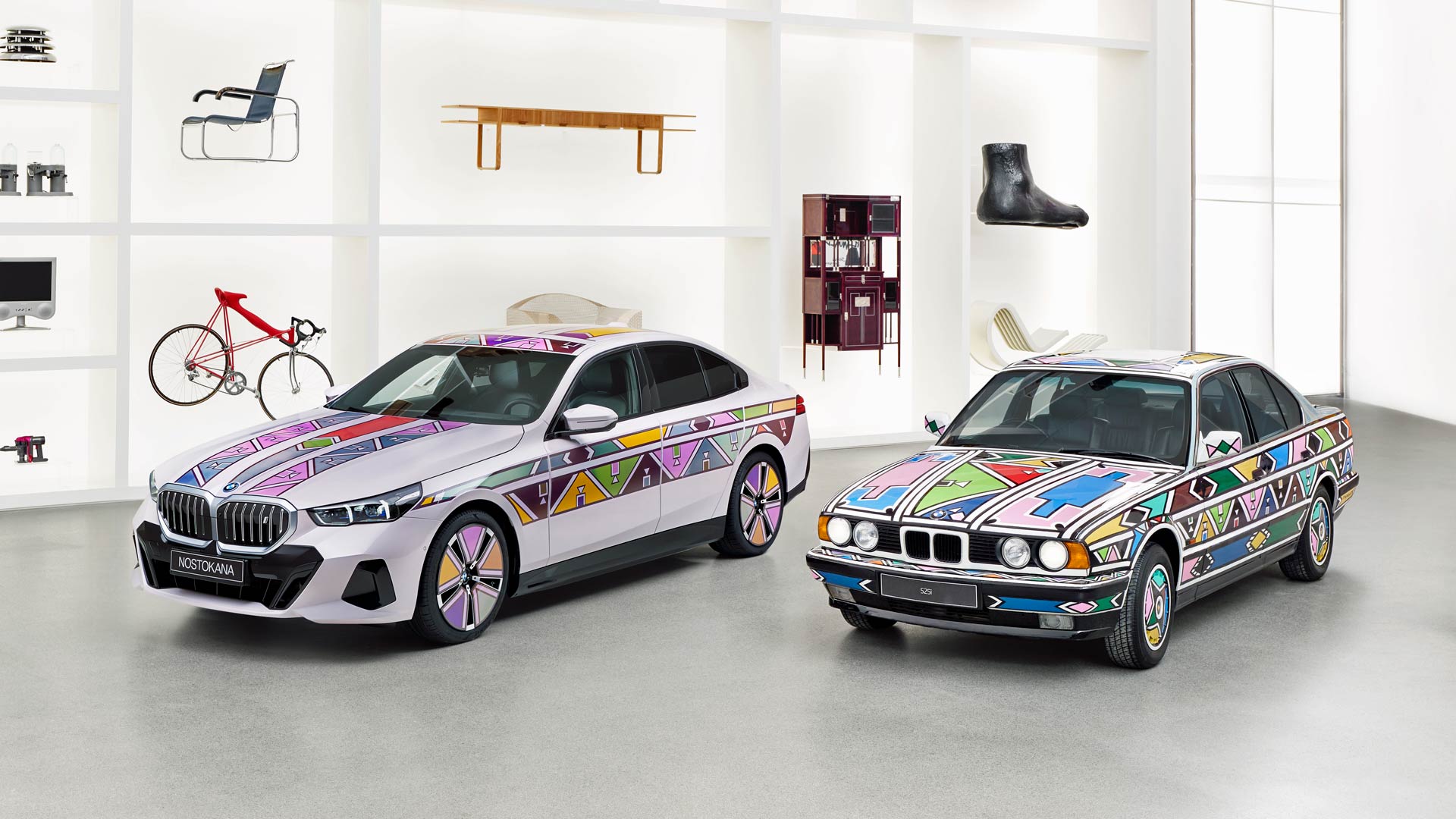
The BMW i5 Flow Nostokana is intended as a tribute to the 5 Series Art Car from 1991, created by Esther Mahlangu.
One of South Africa’s best-known artists, the distinctive style of 88-year-old Mahlangu’s work has been combined with modern technology to create a new Art Car. The one-off electric i5 takes its ‘Nostokana’ name from Mahlangu’s first son.
A cutting-edge canvas
Esther Mahlangu was the first woman, and the first African, to create an Art Car when she painted the BMW 525i in 1991. Using elements that reference her Ndebele heritage, the brightly coloured 5 Series has been displayed around the world, including at the British Museum in 2017.
For its innovative tribute, BMW has used E-Ink technology on the body of an i5 saloon. Almost 1,350 sections of E-Ink film, which can be separately controlled, have been applied to the sides, roof, bonnet and boot of the i5.
This allows for the colour and pattern shown to be changed by varying the electrical current applied, similar to an e-book reader.
The result is a constantly changing pattern in the style of Mahlangu’s painting, combined with sounds that increase in intensity as the artwork evolves on the car.
‘Technology itself becomes art’
BMW has demonstrated its E-Ink technology before, using it on the iX Flow concept in 2022. This could transform from having white to black bodywork instantly. Multi-coloured E-Ink was also used on the BMW i Vision Dee concept.
It points to a future where owners could rapidly change the exterior colour of their car.
Adrian van Hooydonk, head of BMW Group Design, commented: “The BMW i5 Flow Nostokana honours the history of the BMW brand and continues the story of our global cultural engagement in a unique way. It combines art and design through progressive technology. Here, technology itself becomes art”.
Esther Mahlangu added: “It is fascinating to me to see how modern technology can expand my art and make it accessible to a completely new audience”.
With the i5 Nostokana on display in Los Angeles, the company will also show the original 1991 5 Series Art Car in Cape Town as part of an exhibition dedicated to Mahlangu’s work.
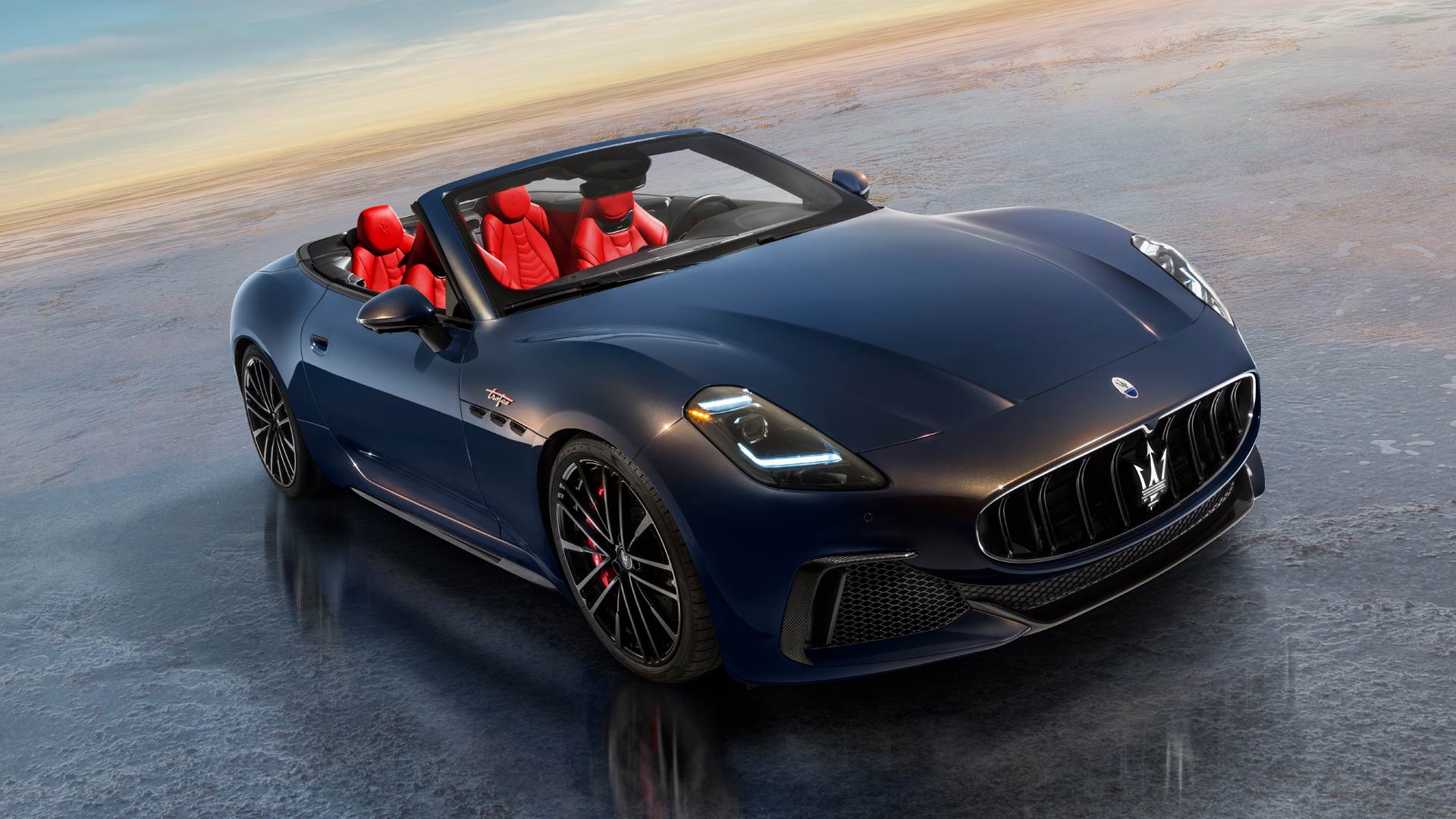
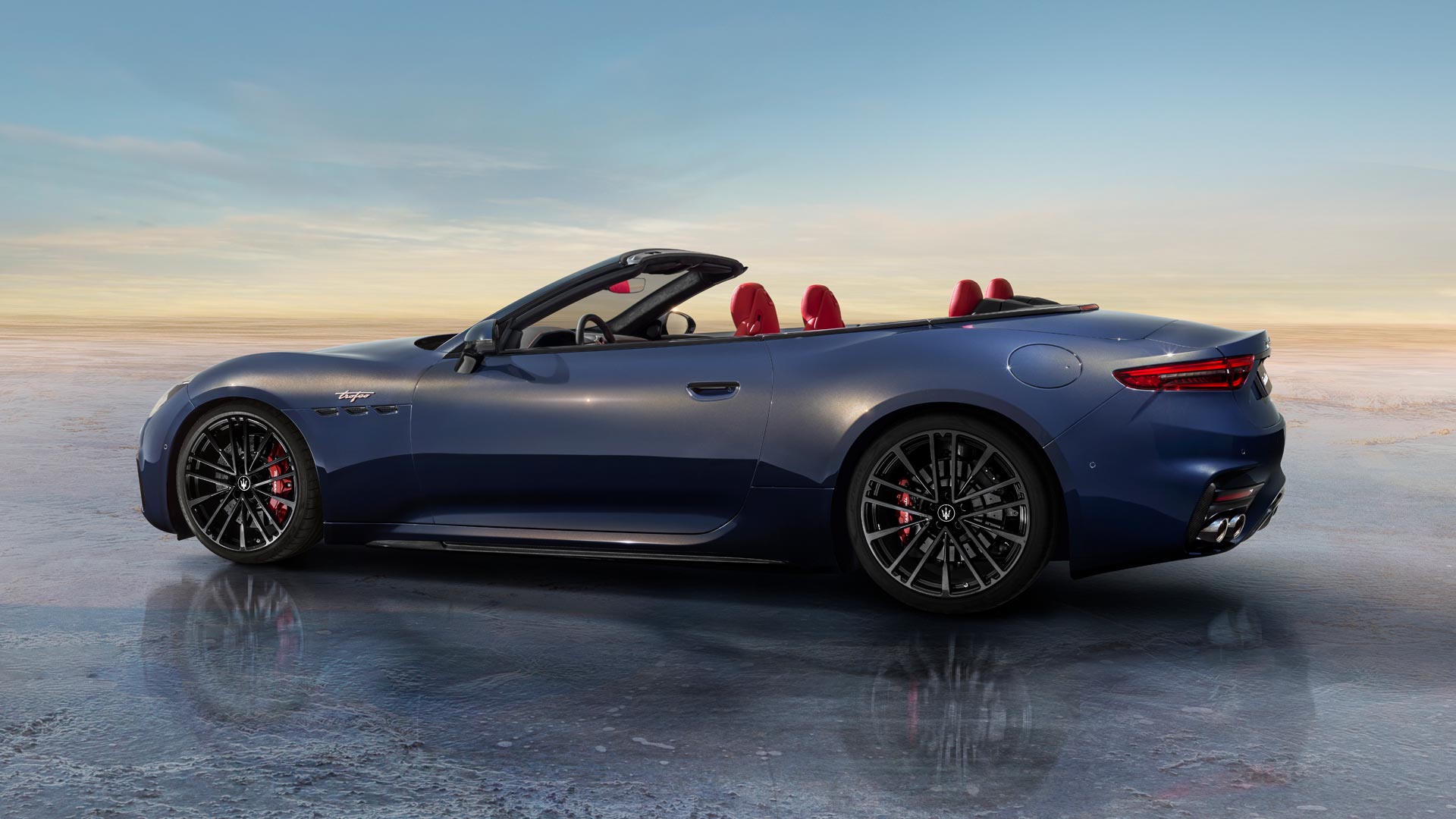
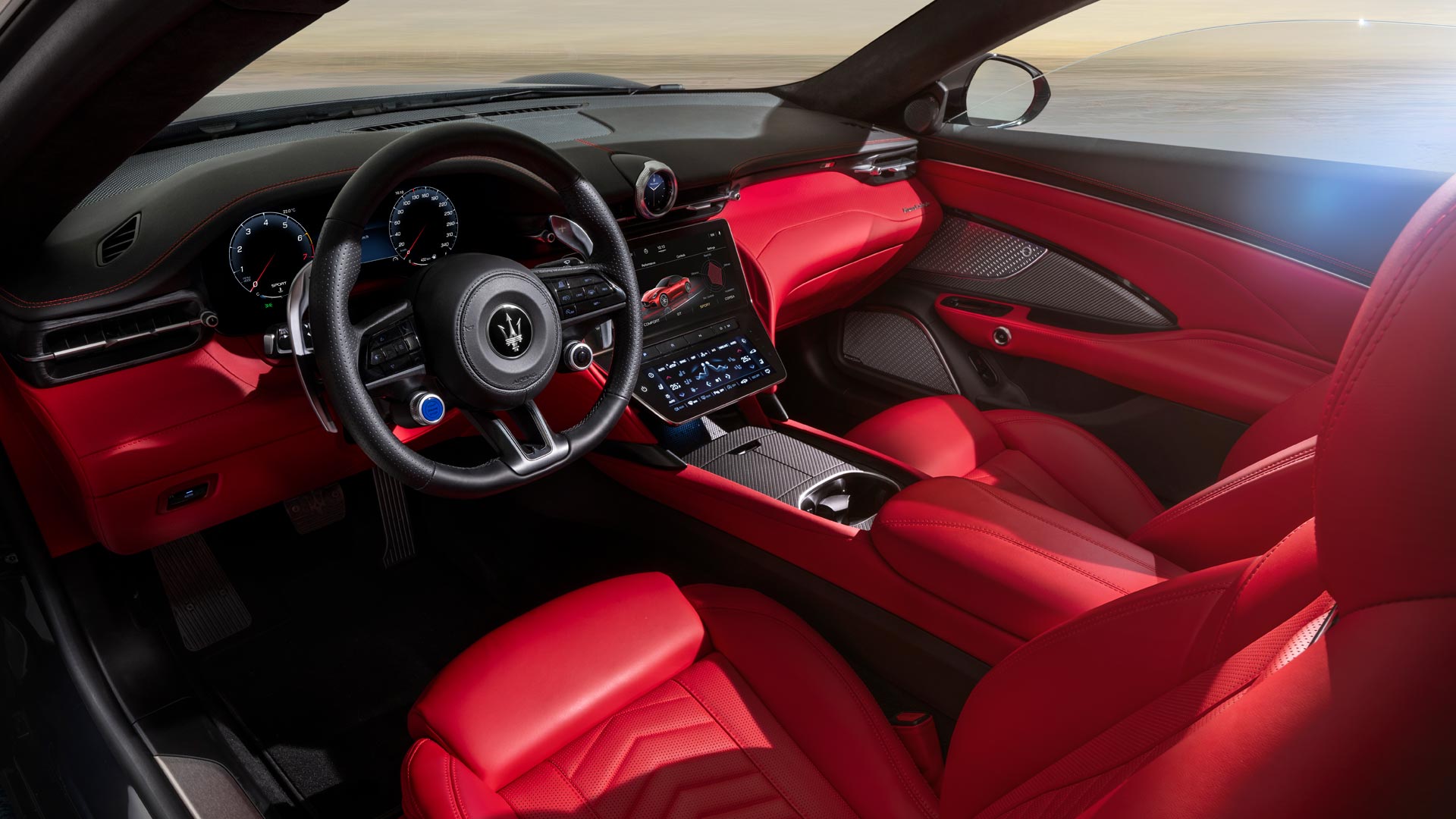
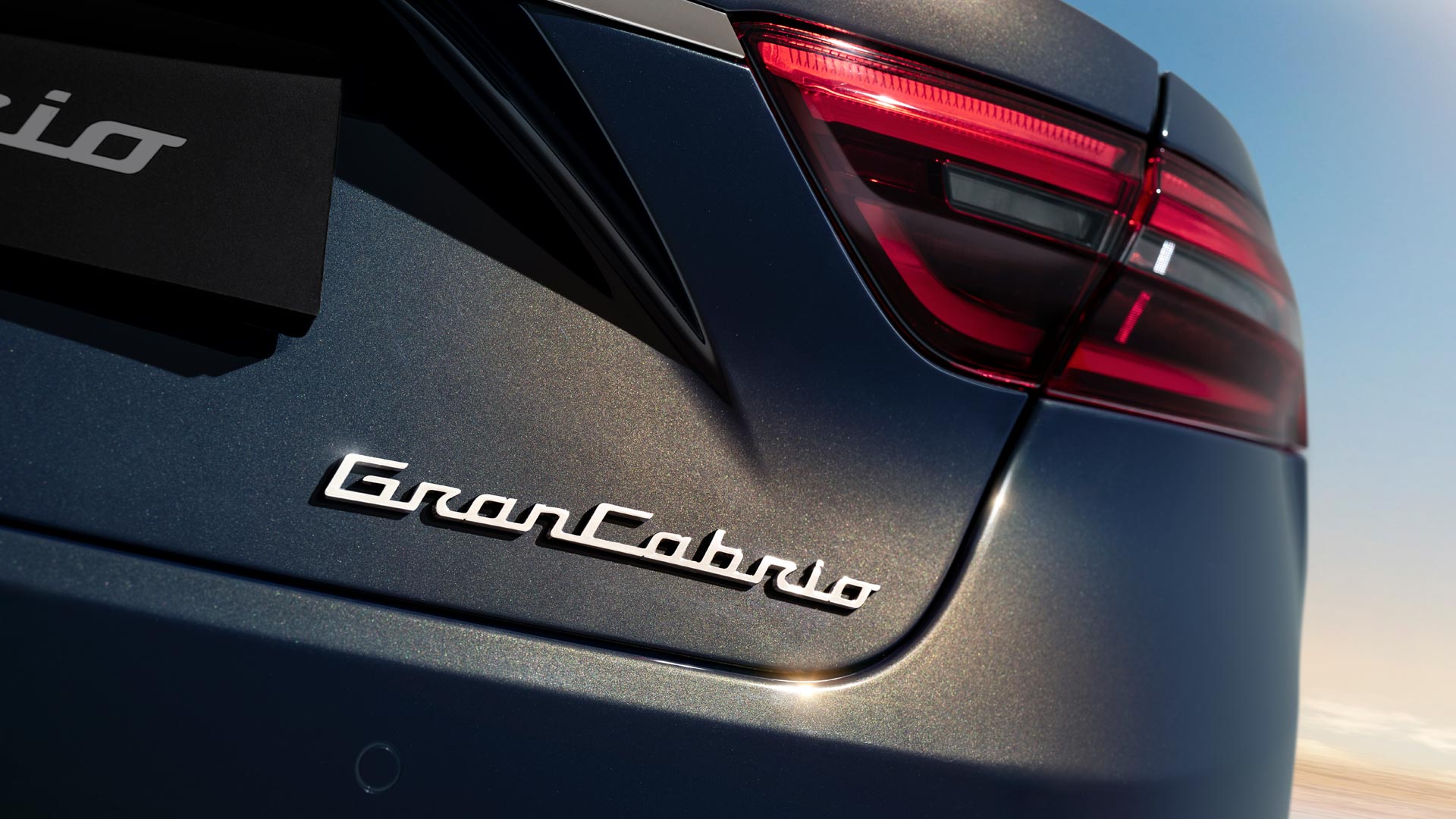
Following on from the new GranTurismo, Maserati has added the head-turning GranCabrio convertible to its refreshed range.
The open-air GT is said to be dedicated to driving enthusiasts who ‘demand the greatest levels of comfort and style’.
Much is shared with the GranTurismo coupe, including the same V6 petrol or fully electric powertrain options, along with all-wheel drive.
‘Grand tourer par excellence’
In contrast to the regular GranTurismo, Maserati has dispensed with entry-level Modena trim for the GranCabrio.
That makes Trofeo spec the starting point for the spyder model, with an upgraded version of the 3.0-litre twin-turbo V6 ‘Nettuno’ petrol engine and an eight-speed ZF automatic gearbox fitted as standard.
A power output of 550hp, along with 479lb ft of torque, allows the GranCabrio Trofeo to accelerate from 0-62mph in just 3.6 seconds. A top speed of 196mph also makes the al fresco Maserati only a fraction slower than its fixed-roof sibling.
Aflagship 761hp electric Folgore model will join the range soon, with a likely price tag of close to £200,000.
Rapid performance, rapid roof
Designed to be a genuine four-seater, the GranCabrio has a fabric roof to save space and weight versus a folding hard-top. It can be opened in 14 seconds and operates at speeds of up to 31mph.
A three-stage neck warmer heating system is standard, while buyers can also specify an optional Windstop device to reduce turbulence inside the cabin.
The opening roof does sacrifice some boot space, however. The GranCabrio offers a luggage capacity of 172 litres, compared to 310 litres in the GranTurismo.
Bespoke options available
Following the reveal of the GranCabrio, the Trofeo version can now be configured to your dream specification through the Maserati website.
Alternatively, orders for the GranCabrio can also be placed via Maserati dealers. Prices start at just under £169,500, but diving into the extensive options list – such as paint from Maserati’s bespoke Fuoriserie range, for example – could ramp up this total considerably.
Success on race circuits around the globe in 2023 has given Aston Martin buyers a new favourite paint colour.
Motorsport-inspired Racing Green has become the brand’s most chosen option, based upon new car retail data.
Last year, Aston Martin found that almost one quarter of customers (24 percent) picked from one of nine shades of green for their new supercar or SUV.
Among these, the distinctive Aston Martin Racing Green, offered in either a gloss or satin finish, was the top choice for buyers.
Nine shades of green
Aston Martin Racing Green now accounts for 12 percent of new models sold, up from seven percent the previous year. The colour was only added to the brand’s palette in 2021, intended to celebrate Aston Martin’s return to Formula One.
Peak interest in the green paint colour coincided with Fernando Alonso taking a historic podium finish for the Aston Martin F1 team.
Alonso’s third place in the season-opening Bahrain Grand Prix created a 29 percent increase in traffic to the Aston Martin website, along with a spike in orders for Racing Green-painted cars.
The success of Aston Martin Racing Green has seen traditional favourite colours slip down the popularity rankings. Xenon Grey was the second most popular colour in 2023, followed by Magnetic Silver.
The Fernando Alonso effect
Aston Martin’s Formula 1 involvement has already proved to be a positive influence for sales. Nearly three quarters (72 percent) of those buying F1-inspired special editions were new to the brand.
In addition, Aston Martin experienced a 20 percent increase in online configurations sent to dealers on race weekends, compared to non-race weekends in 2023.
Marco Mattiacci, chief brand and commercial officer at Aston Martin, said: “Our presence on the grid has propelled the brand onto the global stage, but also captured the imagination of loyal and new customers who are specifying more cars in green than ever before.
“Just as James Bond made the Silver Birch paint tone synonymous with DB5 and the brand more broadly, 60 years on, Aston Martin’s on-track success is putting Racing Green at the forefront of customers’ minds when purchasing their Aston Martin.”
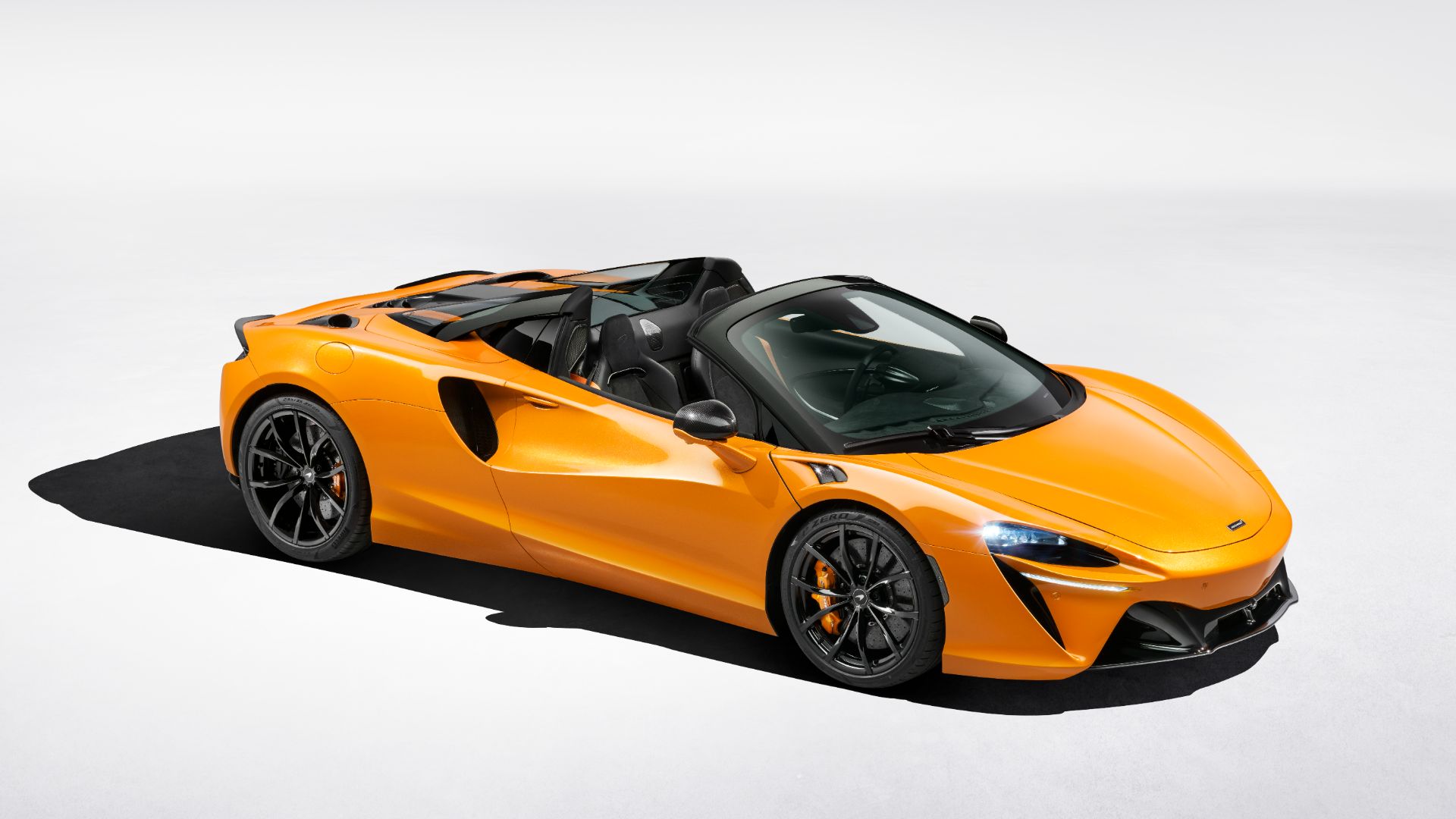
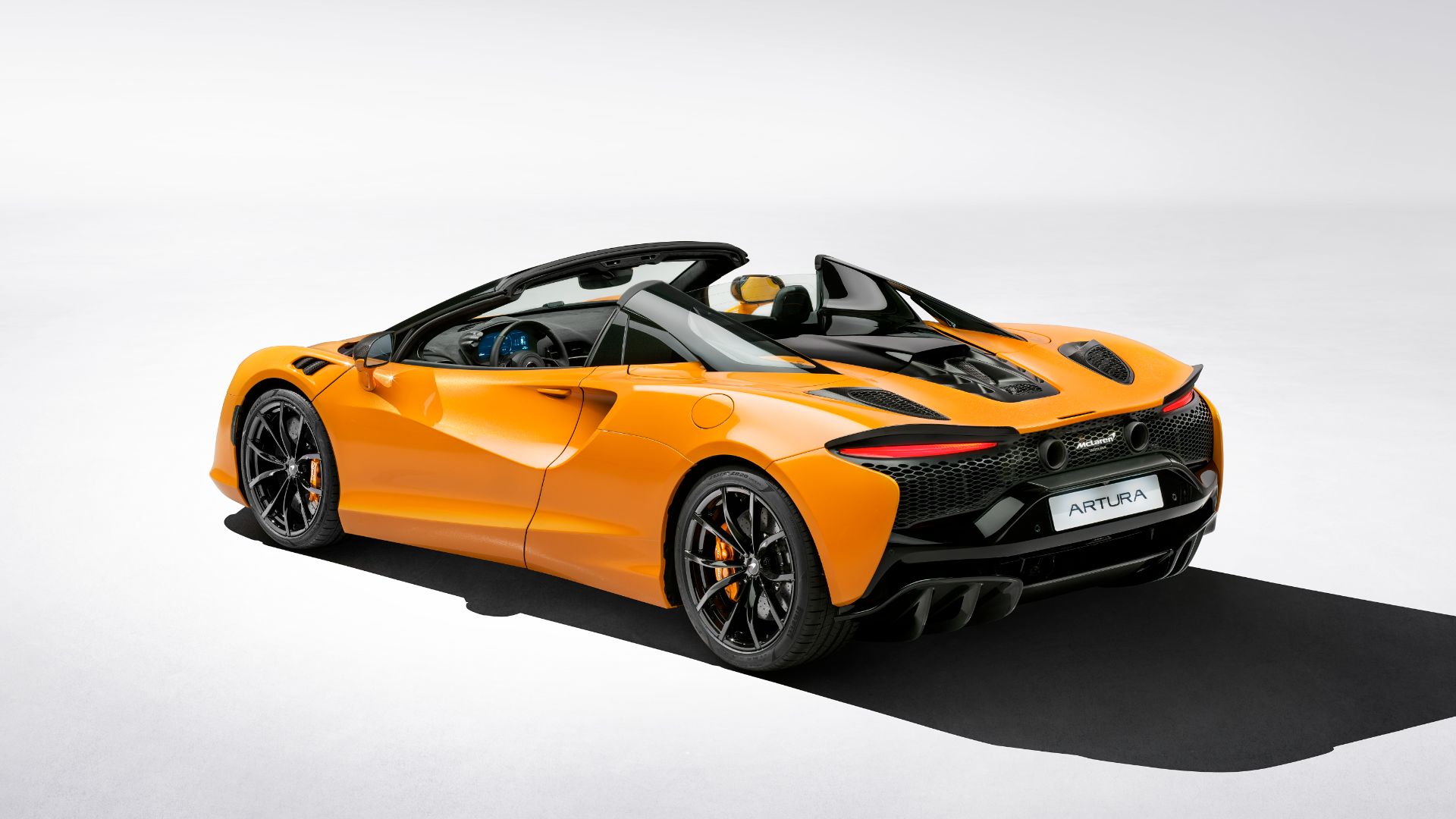
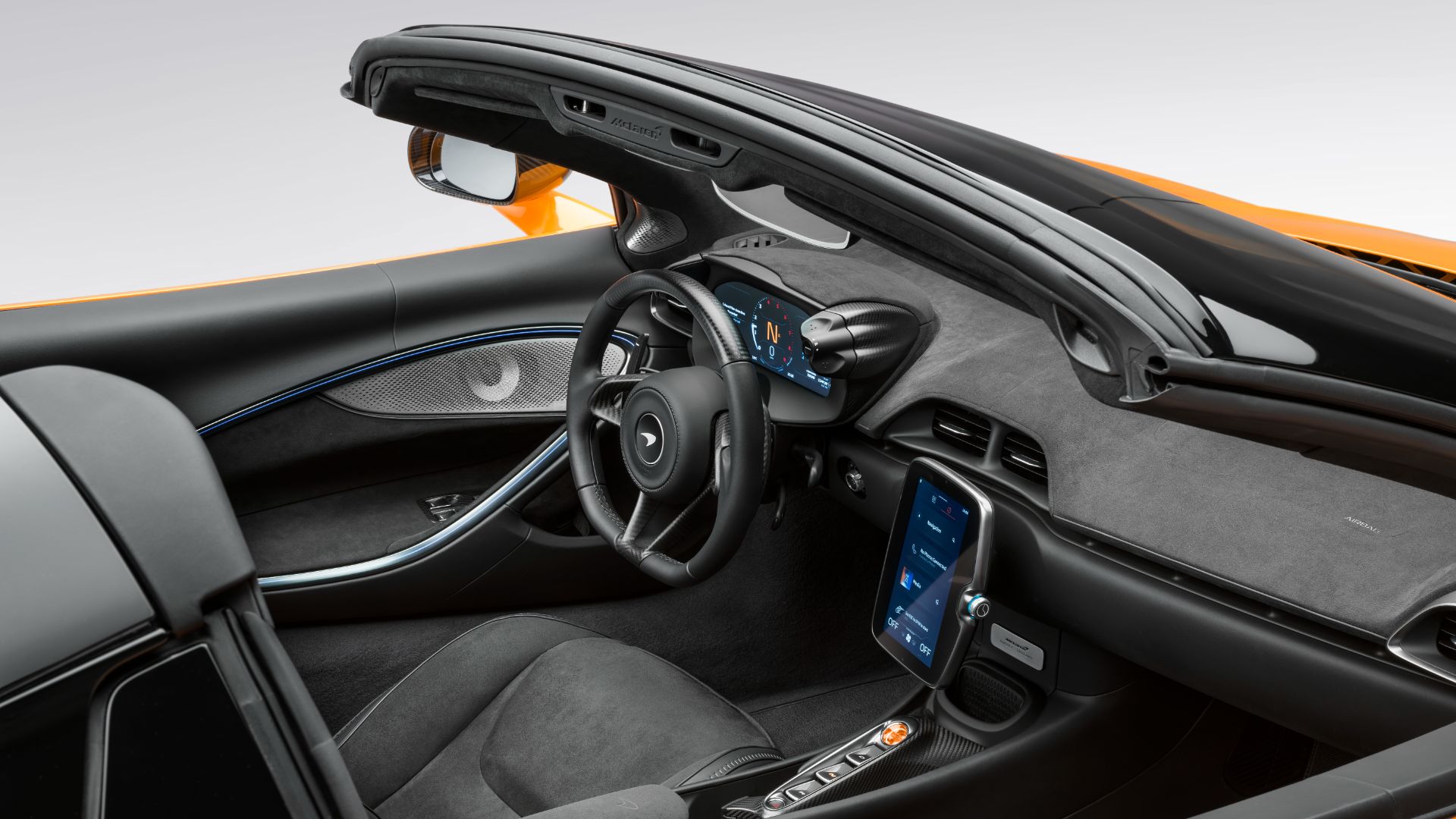
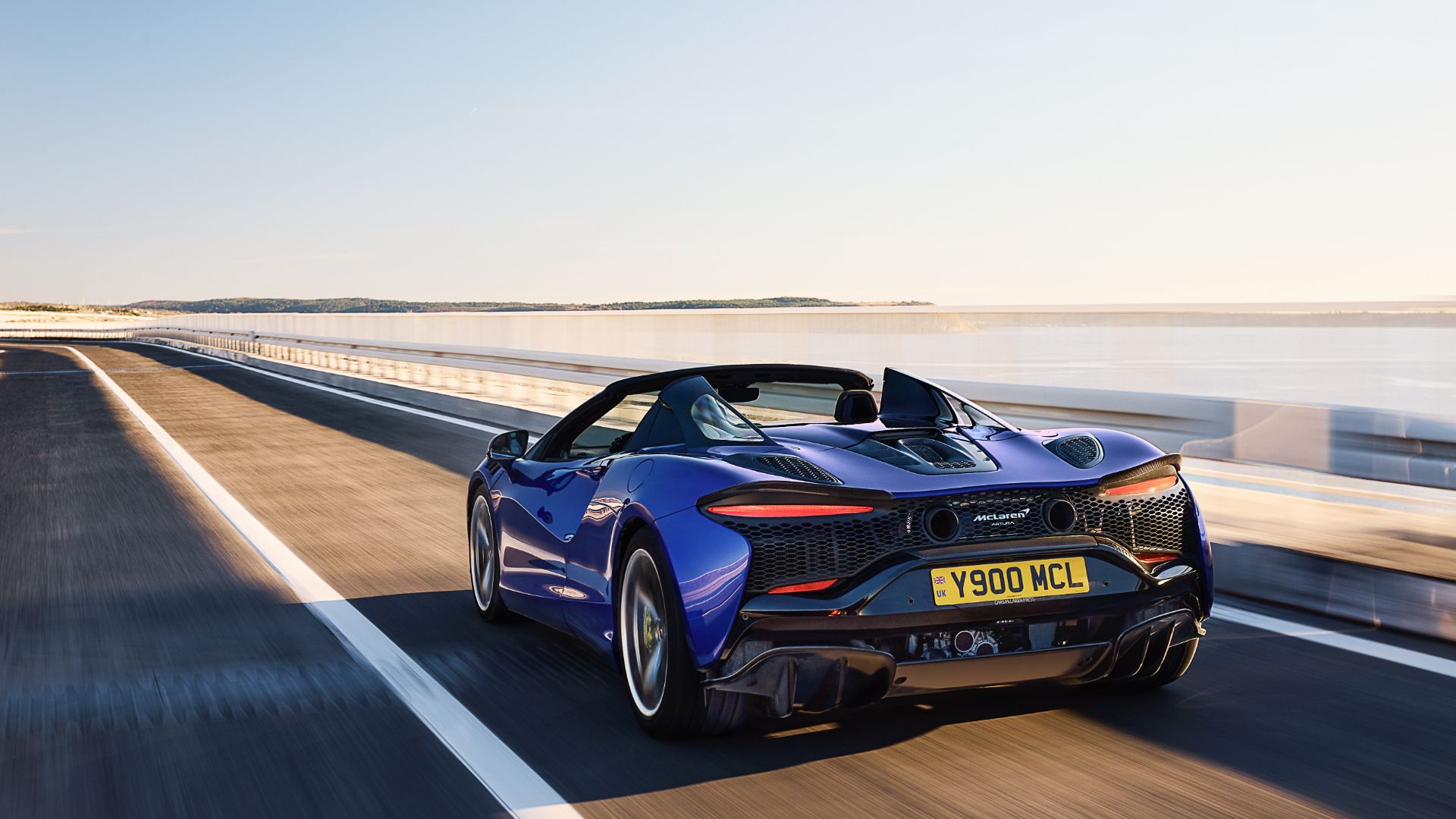
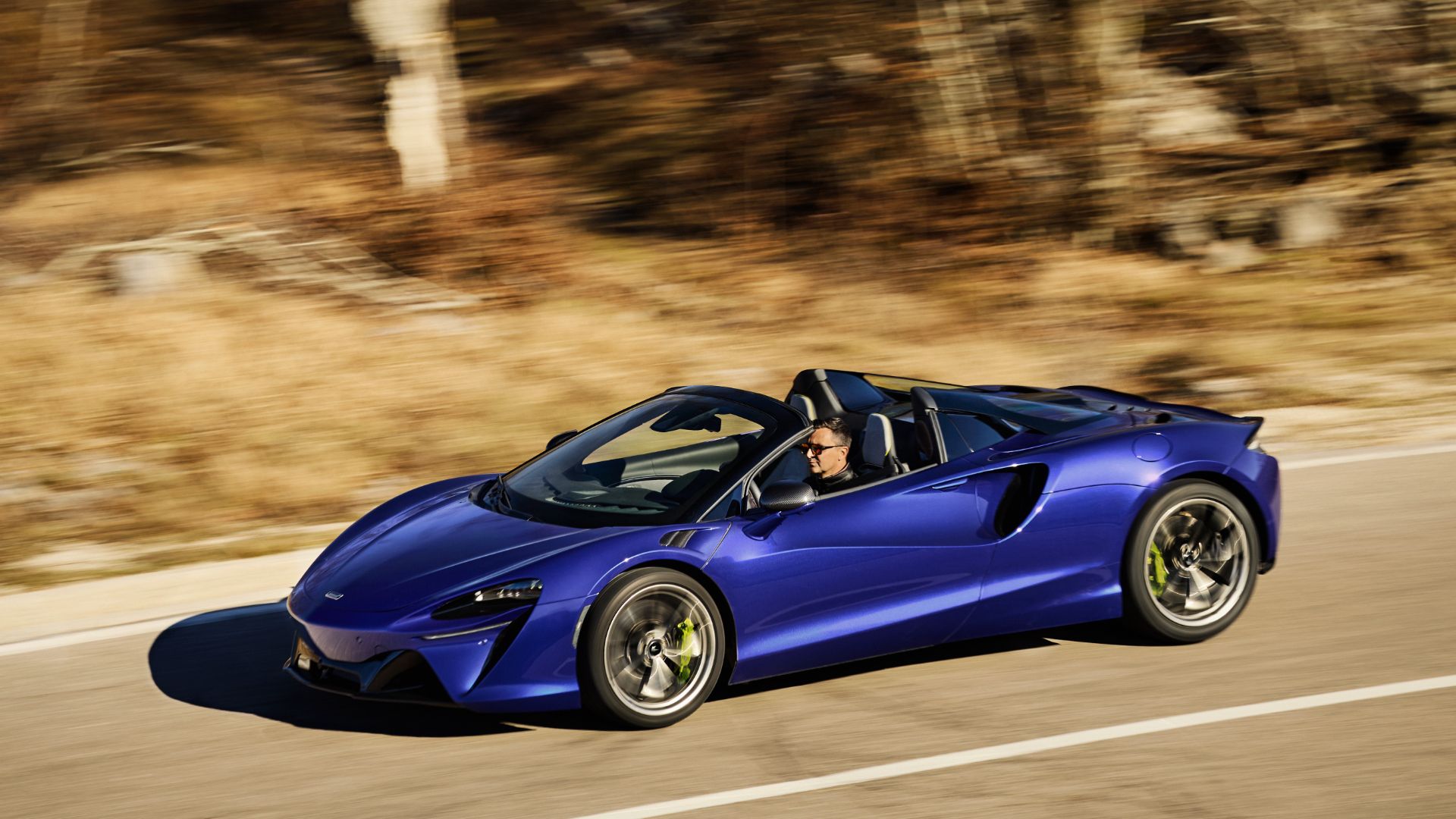
McLaren has lifted the lid off its plug-in hybrid supercar. The new Artura Spider promises more power, ‘no compromise’ dynamic performance, a spicier soundtrack and option to go al fresco.
Priced from £221,500 – a premium of around £20,000 over the Artura coupe – the Spider is available to order now, with first deliveries expected this summer.
We visited McLaren’s futuristic factory in Woking for a secret preview of the Artura Spider, followed by a chat with the senior engineers who developed it. Read on for everything we know so far.
Open to the elements
There is more to the Artura Spider than just a new roof, but that’s the headline news here. Powered by eight electric motors, it disappears acrobatically and near-silently beneath the rear deck in 11 seconds – and at speeds up to 31mph.
The roof itself is made from unpainted carbon fibre composite, with an optional electrochromic glass panel that goes from opaque to transparent at the touch of a button.
Made in Sheffield, the Spider’s ultra-rigid ‘MCLA’ carbon fibre chassis requires no extra strengthening to compensate for its opening top. However, the roof motors and mechanism mean 62kg of added weight.
McLaren quotes a lightest dry figure of 1,457kg, plus a kerb weight of 1,560kg: measured with all fluids and the fuel tank 90 percent full. “Either way, we have the lightest convertible supercar in its class,” says chief engineer Andy Beale.
More power, more range
The Artura Spider also gains an extra 20hp, bringing total output to 700hp at 7,500rpm. Key performance stats are identical to its coupe sibling: 0-62mph in 3.0 seconds and a top speed of 205mph.
Achieved via a software tweak for the 3.0-litre twin-turbocharged V6, the extra power makes its presence felt between 4,000rpm and the 8,500rpm redline. Maximum torque is unchanged at 531lb ft, but the axial flux motor contributes an instant 166lb ft for electrified throttle response.
McLaren has also reworked the eight-speed dual-clutch gearbox, introducing a new ‘pre-fill’ function that pressurises the hydraulic fluid to reduce shift times by 25 percent. And proving that you can, occasionally, have your cake and drive it, the Artura offers a longer zero-emissions range: up from 19 miles to 21 miles with the powertrain in fully electric E-Mode.
Thank you for smoking
We’ll come to the cosmetic differences in a minute, but there are further changes beneath the Spider’s skin. New damper valving and improvements to its innovative ‘ethernet’ electronic architecture make the adaptive suspension up to 90 percent quicker to react. “We’ve increased the bandwidth of the car,” explains Andy Beale, a veteran of 21 years at McLaren. “It combines a more supple ride with better body control.”
Beale also highlights the new brake cooling ducts, which provide “greater stopping power and consistency at high speeds”, and the retuned exhaust system with its “cleaner tone” and greater crescendo as the revs rise.
Oh, and if all that sounds a bit serious, a new “spinning wheel pull-away” function complements the existing launch control, allowing you to blast off in clouds of dramatic tyre smoke – and probably vaporise a pair of Pirelli P Zeros in the process. Note: don’t try this at the drive-thru.
The future is orange
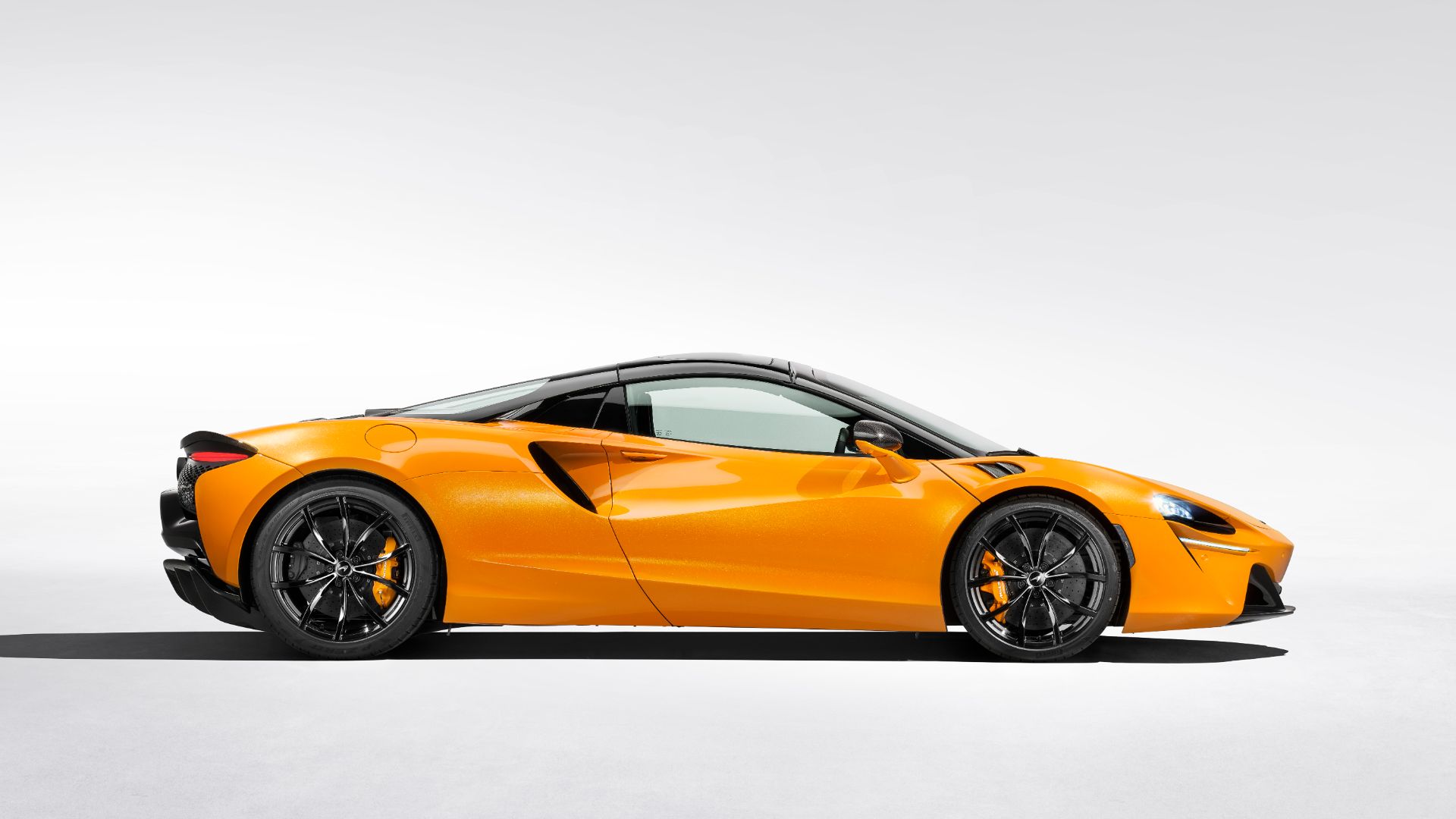
With the technical briefing complete, Artura programme manager Michael Norrington takes us for a walk around the first pre-production Spider. Resplendent in Papaya Spark – a pearlescent version of McLaren’s trademark bright orange, seen above – it outshines even the sparkling white tiles of the factory’s inner sanctum.
Unsurprisingly, most of the design changes are focused around the Spider’s rear end. The ‘hot vee chimney’, which vents heat from the hybrid powertrain, has moved backwards by around 200mm to avoid scorching the folded roof, and now has additional air intakes on either side.
Unique to the Spider are shapely rear buttresses made from motorsport-style clear polycarbonate. “They were a real engineering challenge,” admits Norrington, “but they have two functions: improving visibility and channelling cold air into the engine compartment.”
Look closely and you’ll also spot small gurneys on the windscreen header rail, designed to deflect air over the cabin, plus the new vertical rear window. The latter drops down electrically so your ears can enjoy unfettered access to the snarling 120-degree V6, even on a wet day in Woking.
Get yourself connected
McLaren CEO Michael Leiters says the Spider offers “even higher levels of connection, without any compromise in everyday driving.” We’ll test that claim at the launch in a few months’ time, but the regular Artura has already set a high bar. Our review described it as ‘a multi-faceted and very modern kind of supercar… efficient and unobtrusive when you’re not in the mood, then riotously fast and entertaining when conditions allow’.
In the meantime, the good news is that most of the improvements made to the Spider will be carried across to the coupe, as part of a 2025 model-year update.
Existing Artura owners can also visit their McLaren dealer to receive the 700hp power upgrade free of charge. The electric range extension won’t be offered, however, as doing so would contravene homologation rules and require the car to be re-registered.