

The increasing use of electric cars is generating new road-trip debates, in particular about who should foot the bill for EV charging.
New research shows British motorists are split over EV charging etiquette, ahead of one of the year’s busiest travel periods.
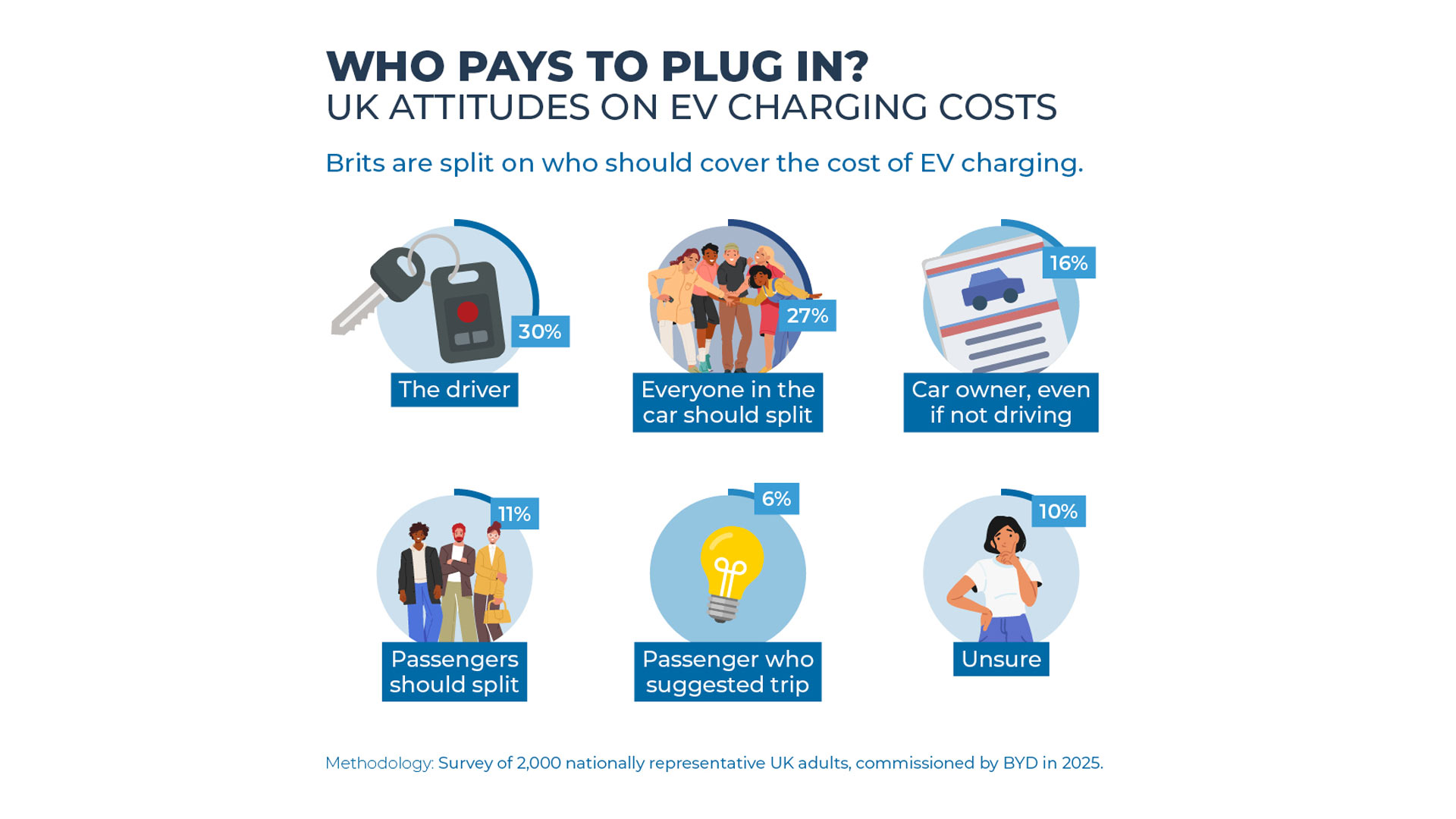
One in three (30 percent) of those surveyed by Chinese marque BYD said they believed the driver should be responsible for EV charging costs.
However, more than a quarter (27 percent) think that costs should be split evenly between everyone on the trip.
Some 16 percent argued that the car owner, not necessarily the driver, should pay for charging. And six percent said the passenger who suggested the journey should be responsible.
Younger generation say the driver should pay
Those aged between 18 and 24 were most likely to favour the driver paying, with 35 percent endorsing this option.
By comparison, 25 to 34 year olds (31 percent) and 35 to 44 year olds (30 percent) were the only age groups where most respondents thought the cost of electric car charging should be split between all passengers.
Overall, 10 percent admitted they simply don’t know the rules about sharing EV charging costs, with many navigating this issue for the first time.
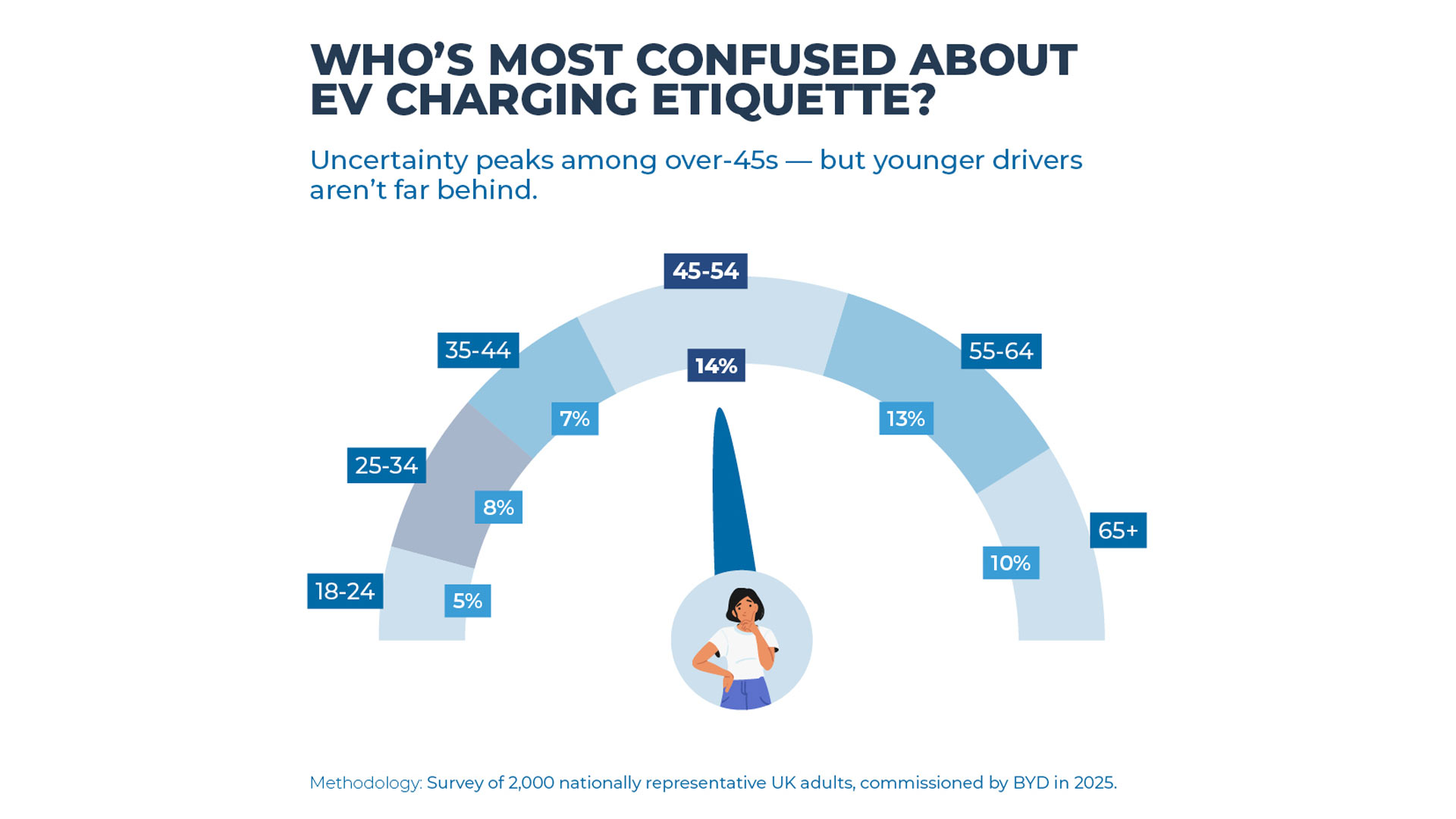
Survey respondents aged between 45 and 54 said they were most uncertain about the correct etiquette for electric car charging expenditure.
A new automotive cultural shift
BYD spoke to Laura Akano, an etiquette expert, who suggested: “The most polite way to raise the topic of EV charging costs with passengers is to propose splitting the cost equally, especially if you are the driver or owner of the vehicle.
“Drivers should let passengers know in advance if they are expected to chip in for charging costs. This helps to prevent any awkwardness or misunderstanding. It is in poor taste to retrospectively ask for a contribution towards charging after completing the journey.”
Steve Beattie, sales and marketing director at BYD UK, commented “We’re seeing a cultural shift play out in real time. As more people experience life in an electric vehicle, they’re questioning old assumptions about driving, including who pays, when and how.”
ALSO READ:
Renault 5 and 4 boosted by full £3,750 Electric Car Grant
Why’s it different foe EVs & ICE? I have another question about pay-per-mile though? If I do 20-30% of my travels over the channel, do I still pay UK Gov for every mile? And, what about those coming over the channel, how do they pay for the miles they travel?